説明
Antique Japanese Sword Katana Signed by Sukesada with NBTHK Hozon Certificate
【Description】
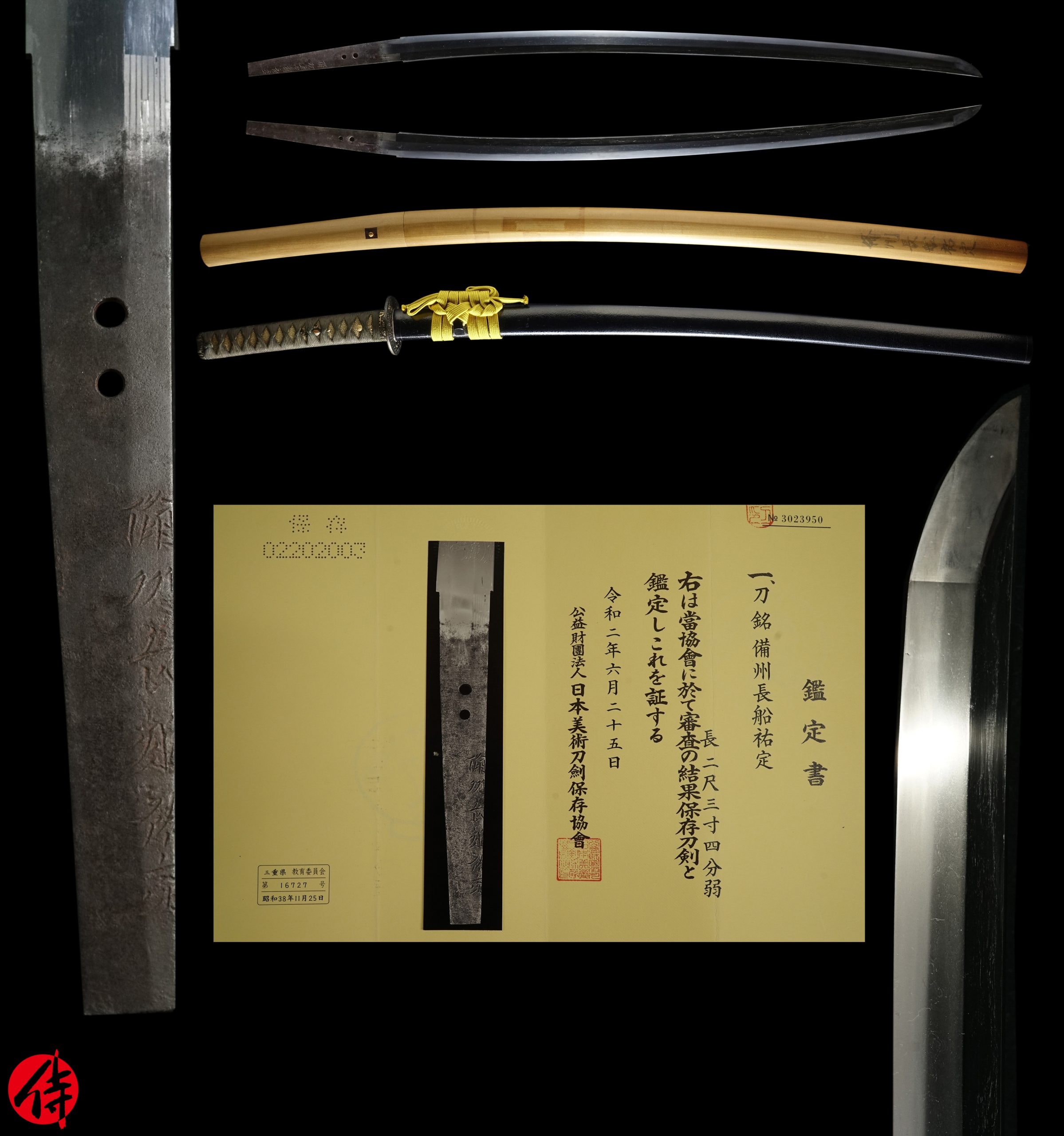
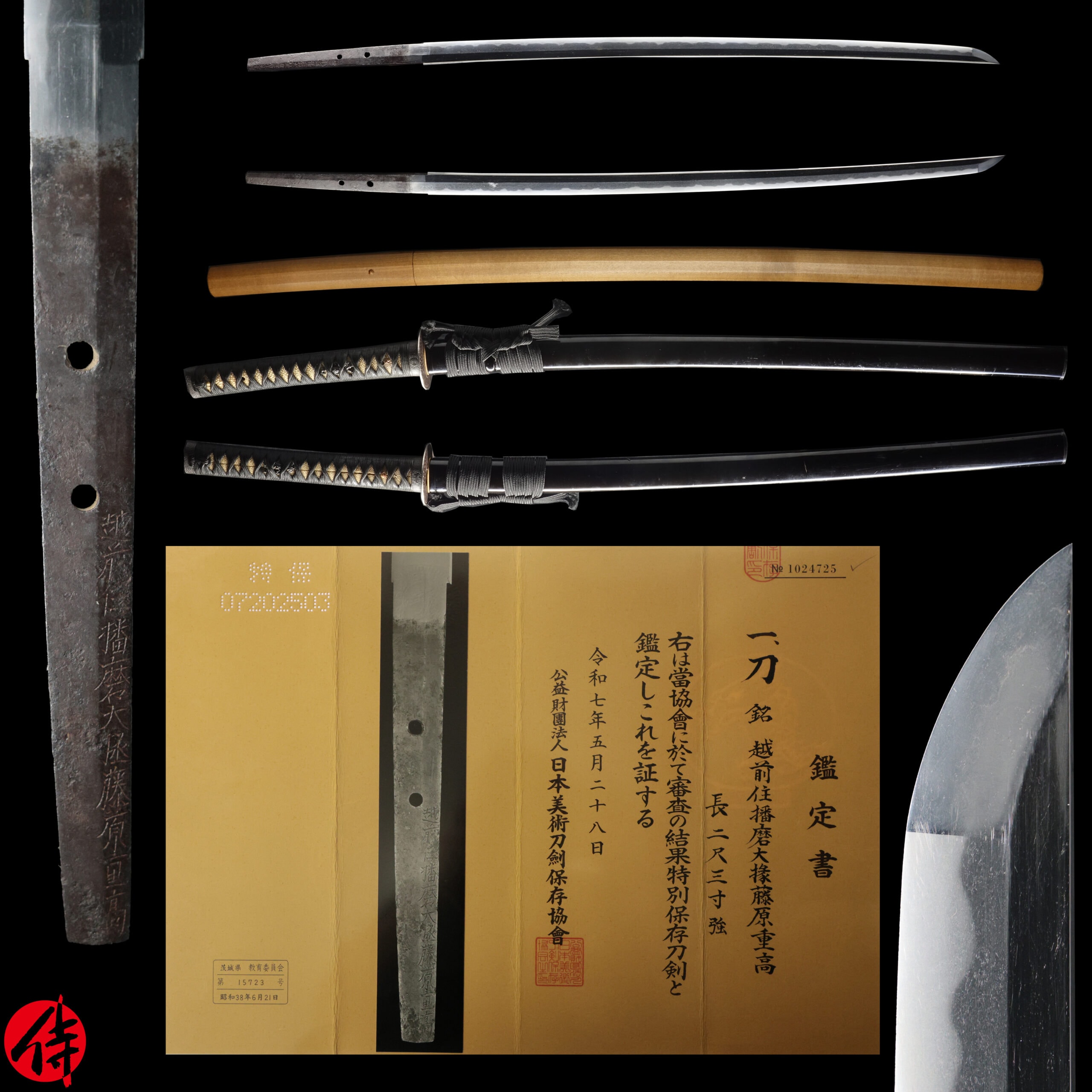
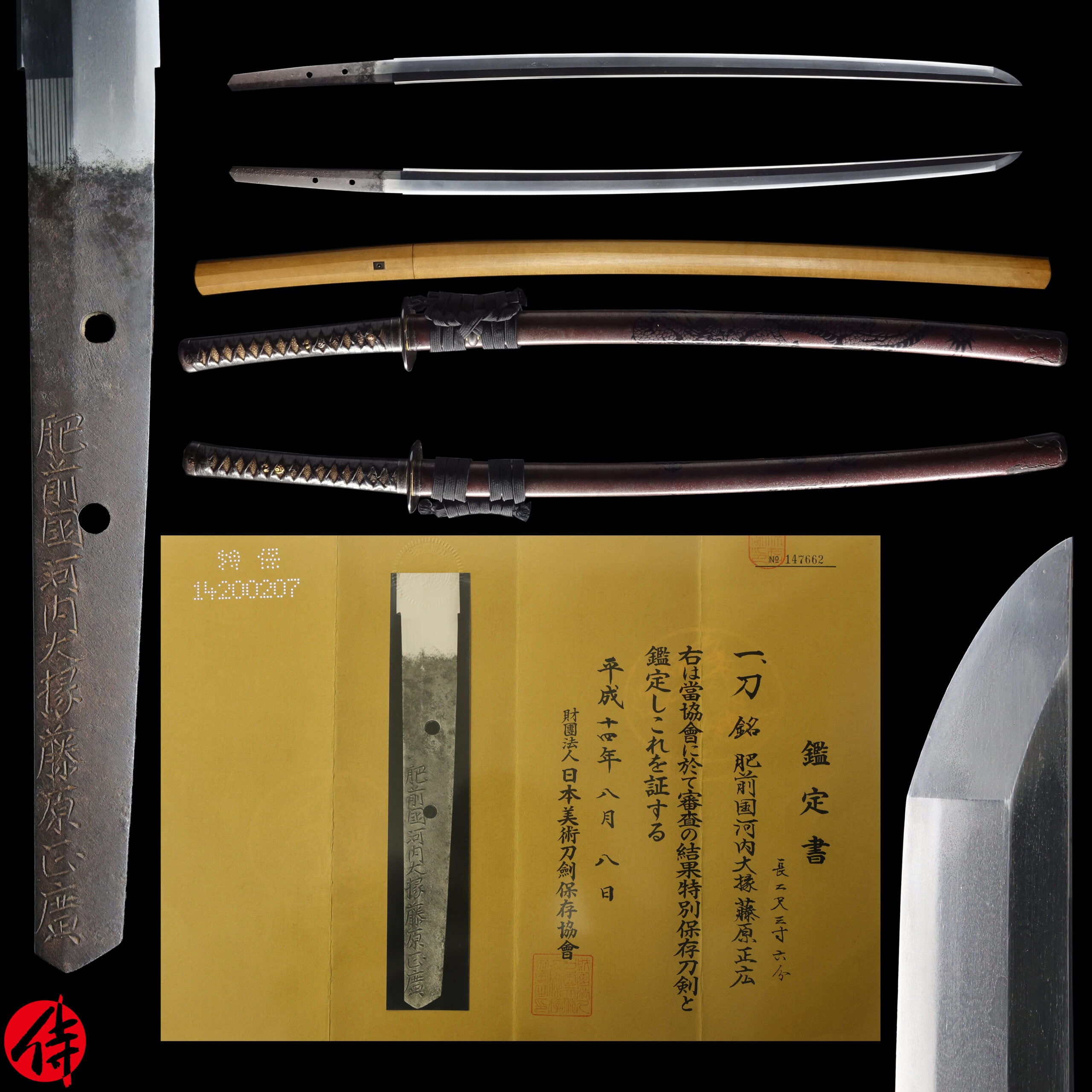
This blade has a signature of Bishu Osafune Sukes.According to NBTHK, this blade was forged in the late Muromachi period. We contacted them to confirm this information.
Those who forged swords in the Bizen province(Okayama prefecture) at the end of the Muromachi Period(1492-1569 A.D) are called Matsu Bizen(Matsu mean the end). Sukesada school was one of the most famous schools and it flourished for generations among Osafune schools(The head branch). There were various styles forged by the generations of Sukesada during this period. There were about 60 swordsmiths who used Sukesada as his maker’s name in the Samura history. Bizen is the birthplace of Bizen Den,one of the most famous Japanese sword tradtion along with Yamashiro Den, Soshu Den, Mino Den and Yamato Den.
The swordsmiths in Bizen produced many swords during the Muromachi period as it was in the middle of the Sengoku period(Warring state period), and the demand for swords increased among strong feudal lords. The length of this blade is efficient and must have been easy for its owner to handle back then. The blade also comes with a beautiful set of Katana style Koshirae. It would be nice to have a piece that was forged in the warring state period, when there was so much rivalry between warlords.
This sword has a Hozon certificate issued by NBTHK. This authentication paper was only given to Japanese swords, worth preserving by Nihon Bijutsu Touken Hozon Kyokai(the Society for the Preservation of the Japan Art Sword).
【Blade】
Cutting Edge Length(Nagasa)
:
71.3
cm(28.07 inches)
Curvature(Sori)
:
1.8 cm(0.70 inches)
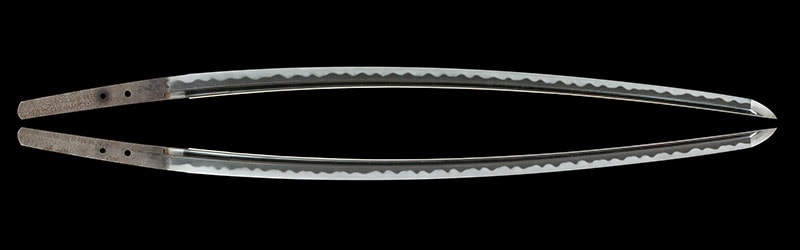
Hamon
:
The blade pattern created by the tempering process
Jimon
:
Visible surface pattern on the steel
Nakago
:
Nakago is the tang of the Japanese sword. It has the signature of Bishu Osafune Sukesada(備州長船祐定)
【Other Details】
Fuchi-Kashira
:
A pair of matching sword fittings that cover the upper and bottom parts of its sword hilt.
Tsuka and Menuki
:
Tsuka is the handle of the Japanese sword and Menuki is its decoration . It has dragon decoration.
Tsuba and Habaki
:
Tsuba is the handguard for the Japanese Sword and Habaki is the equipment to make the blade not touch its scabbard inside. It prevents the blade from getting rusty and chipped.
Saya
:
Saya is the scabbard for the Japanese sword.
Authentication Paper
:
NBTHK Hozon Certificate for the blade
NBTHK, also known as Nihon Bijutsu Touken Hozon Kyokai (the Society for the Preservation of the Japan Art Sword), is one of the oldest Japanese sword appraising organizations in modern-day Japan. They authenticated the blade on June 25th in the 2nd year of Reiwa(2020). They appraised it as Hozon Touken, the blade worth preserving for Japanese society. The purchaser will receive this original certificate as well.
Registration Number :
Mie
16727
The Board of Education in Mie prefecture issued a registration paper for this sword . In order to obtain this paper, the sword needs to be traditionally hand forged. With this paper, its owner can legally own an authentic Japanese sword in Japan.
—————————————————————–
【About us】
Samurai Museum is located in Tokyo, Japan, exhibiting antique artifacts related to the Samurai history. Samurai Museum Shop is the place for those who are interested in Japanese culture and craftsmanship. We deal with antique Samurai swords/armor, traditional crafts made in Japan and so on.
【
Japanese Sword& Export Process
】
The Japanese swords we deal with are hand-forged edged swords made in Japan. It was made from the traditional carbon steel called
TAMAHAGANE(玉鋼)
. Samurai Museum is familiar with the proper legal procedure for an antique/ authentic Japanese sword to be exported from Japan. We have sent more than 350 Japanese swords to amazing owners who appreciate its historical value.
Each Japanese sword is registered under the Agency for Cultural Affairs and the Board of Education in Japan.They issue a r