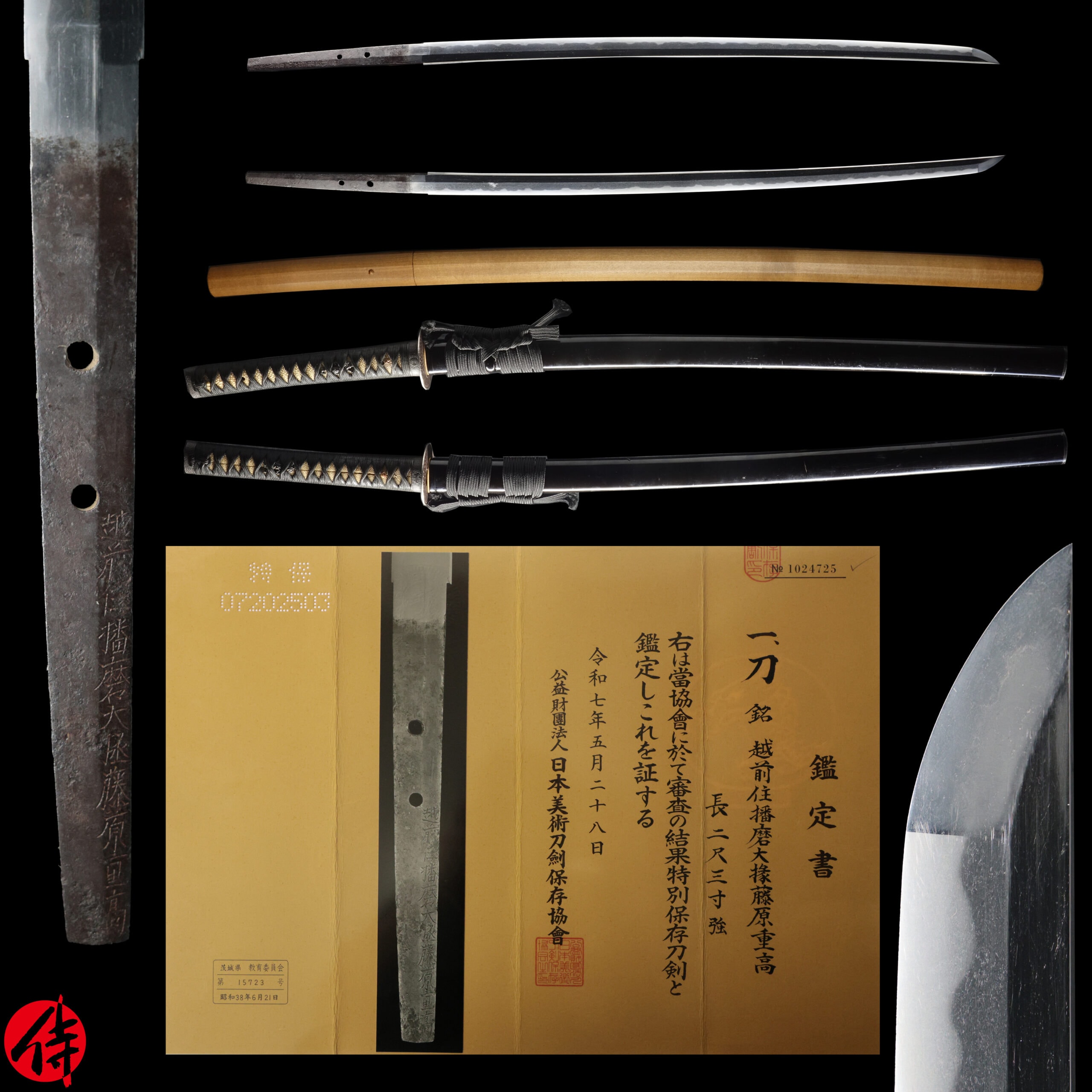
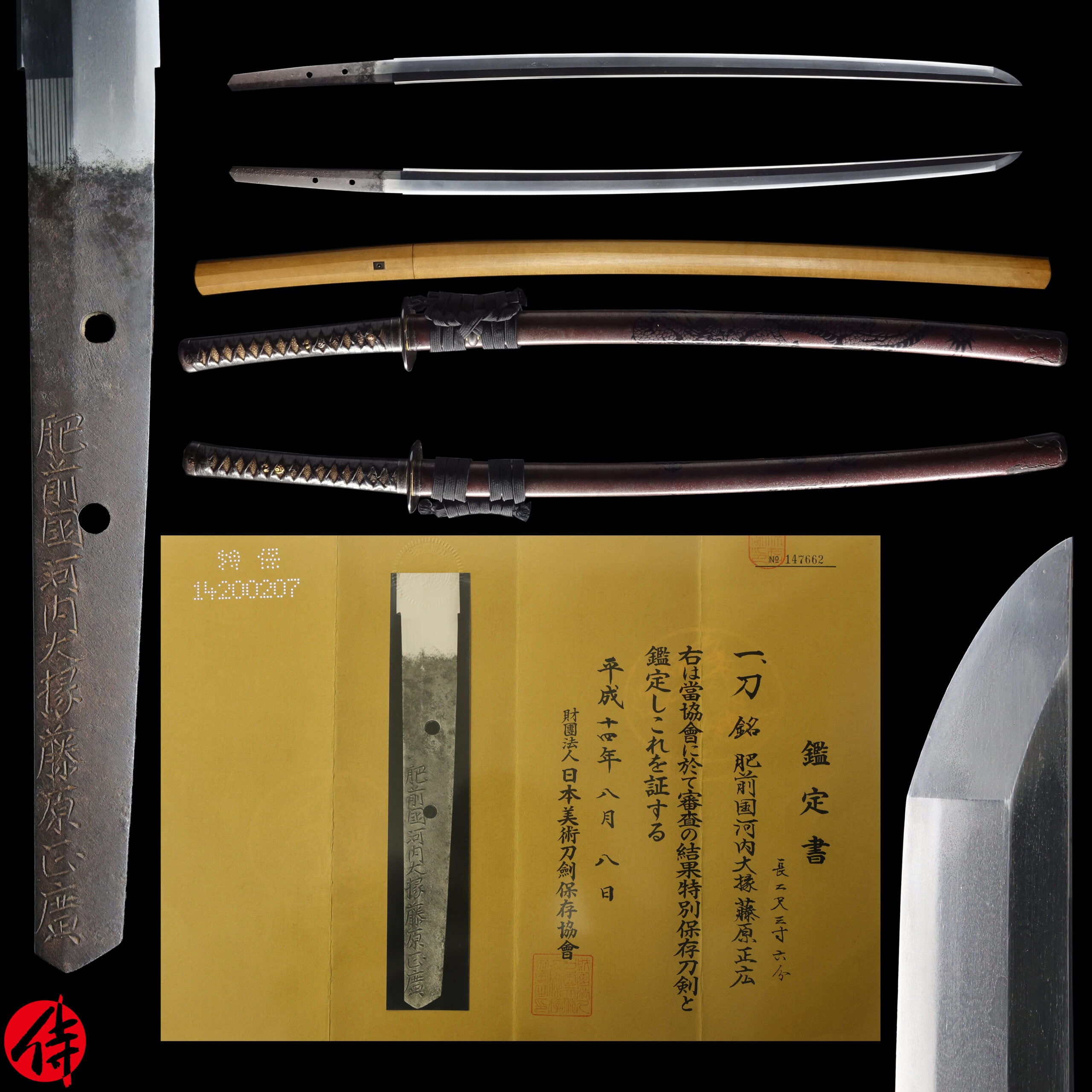
説明
Antique Japanese Sword Katana Signed by Sukesada with
NBTHK
Hozon
Certificate
【Description】
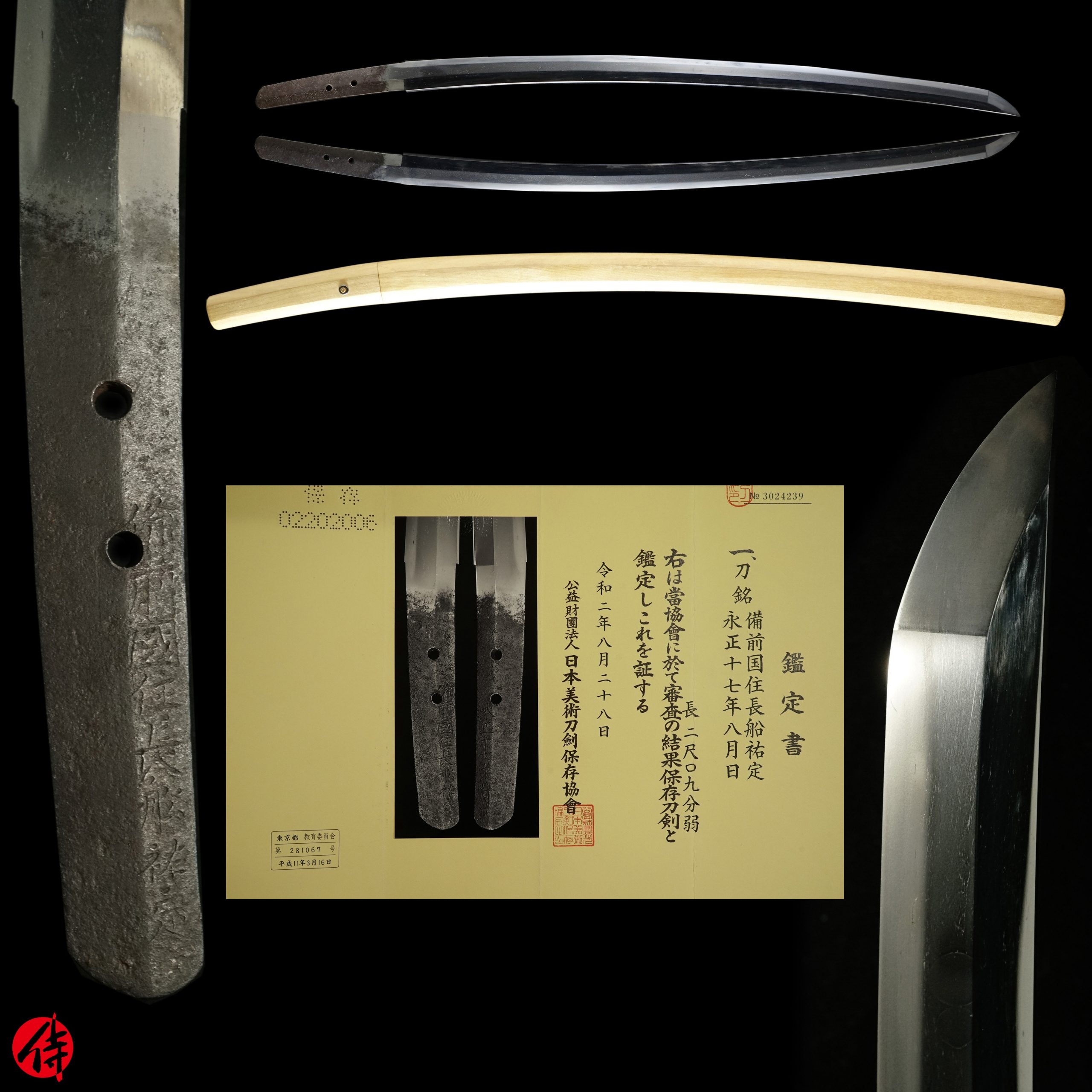
This blade has a signature of Osafune Sukesada on the front and 17th year of Eisho in August in the back. The 17th year of Eisei is 1520 A.D, meaning it was forged 500 years ago.(the late Muromachi period)
Those who forged swords in the Bizen province(Okayama prefecture) at the end of the Muromachi Period(1492-1569 A.D) are called Matsu Bizen(Matsu mean the end). Sukesada school was one of the most famous schools and it flourished for generations among Osafune schools(The head branch). There were various styles forged by the generations of Sukesada during this period. There were about 60 swordsmiths who used Sukesada as his maker’s name in the Samura history. Bizen is the birthplace of Bizen Den,one of the most famous Japanese sword tradtion along with Yamashiro Den, Soshu Den, Mino Den and Yamato Den.
The swordsmiths in Bizen produced many swords during the Muromachi period as it was in the middle of the Sengoku period(Warring state period), and the demand for swords increased among strong feudal lords. The length of this blade is efficient and must have been easy for its owner to handle back then. It would be nice to have a piece that was forged in the warring state period, when there was so much rivalry between warlords.
The curvature of this sword is breathtakingly amazing to observe and this blade was originally made for one-hand use. We assume it must have been practical apply this blade in battle fields.
It comes with a Shirasaya case(traditional wooden case for the blade). If you look for sword mountings for this blade, we could arrange it with extra cost. Please feel free to ask for the detail us if you are interested.
This blade is appraised a Hozon certificate issued by NBTHK. This authentication paper was only given to Japanese swords, worth preserving by Nihon Bijutsu Touken Hozon Kyokai(the Society for the Preservation of the Japan Art Sword).
【Blade 】
Cutting Edge Length(Nagasa)
:
63.3 cm( 24.9 inches)
Curvature(Sori)
:
1.9 c
m( 0.74 inches)
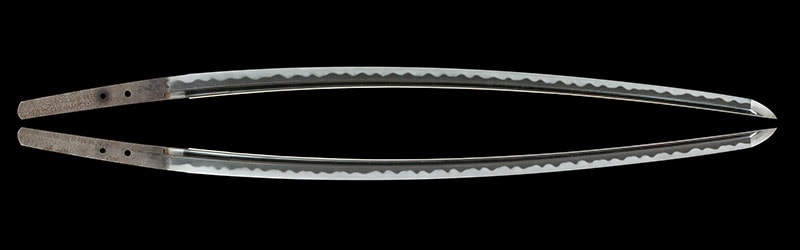
Hamon
:
The crystalline structure which forms along the cutting edge of a blade as a result of the hardening process
Jimon(Jihada)
:
visible steel surface pattern created by folding and hammering during forging process
【Other details】
Nakago
:
Nakago is the hilt of the Japanese sword.
Japanese swordsmiths left the black rust on the tang because it prevents red rust while the tang is in its handle. And the discoloration of the tang was created over time, and it is a great indicator for a Japanese sword specialist to estimate when the sword was forged.
Habaki
:
Habaki is the equipment to make the blade not touch its scabbard inside. It prevents the blade from getting rusty and chipped.
Authentication Paper
:
NBTHK Hozon Certificate for the blade
NBTHK
, also known as Nihon Bijutsu Touken Hozon Kyokai (the Society for the Preservation of the Japan Art Sword), is one of the oldest Japanese sword appraising organizations in modern-day Japan. They authenticated the blade on August 28th in the second year of Reiwa(2020). They appraised it as Hozon Touken, the blade worth preserving for Japanese society. The purchaser will receive this original certificate as well. We can also translate what is written into English and make a
PDF file
for your record if you request.
Registration Number :
Tokyo 281067
The Board of Education in Tokyo prefecture issued a registration paper for this sword . In order to obtain this paper, the sword needs to be traditionally hand forged. With this paper, its owner can legally own an authentic Japanese sword in Japan. This paper will need to be returned to the board of education when the sword being shipped abroad but you can receive a copy of it.
—————————————————————–
【About us】
Samurai Museum is located in Tokyo, Japan, exhibiting antique artifacts related to the Samurai history. Samurai Museum Shop is the place for those who are interested in Japanese culture a