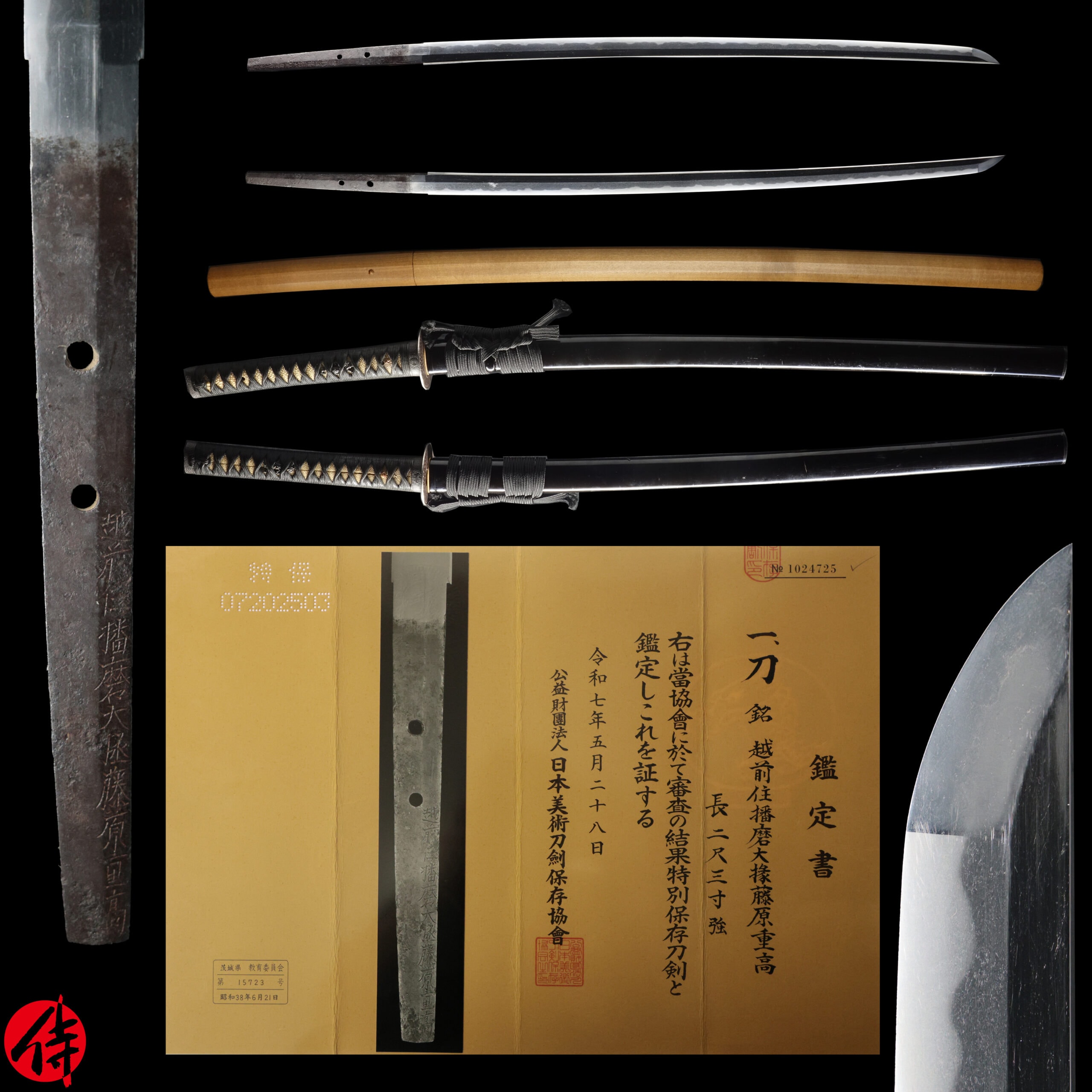
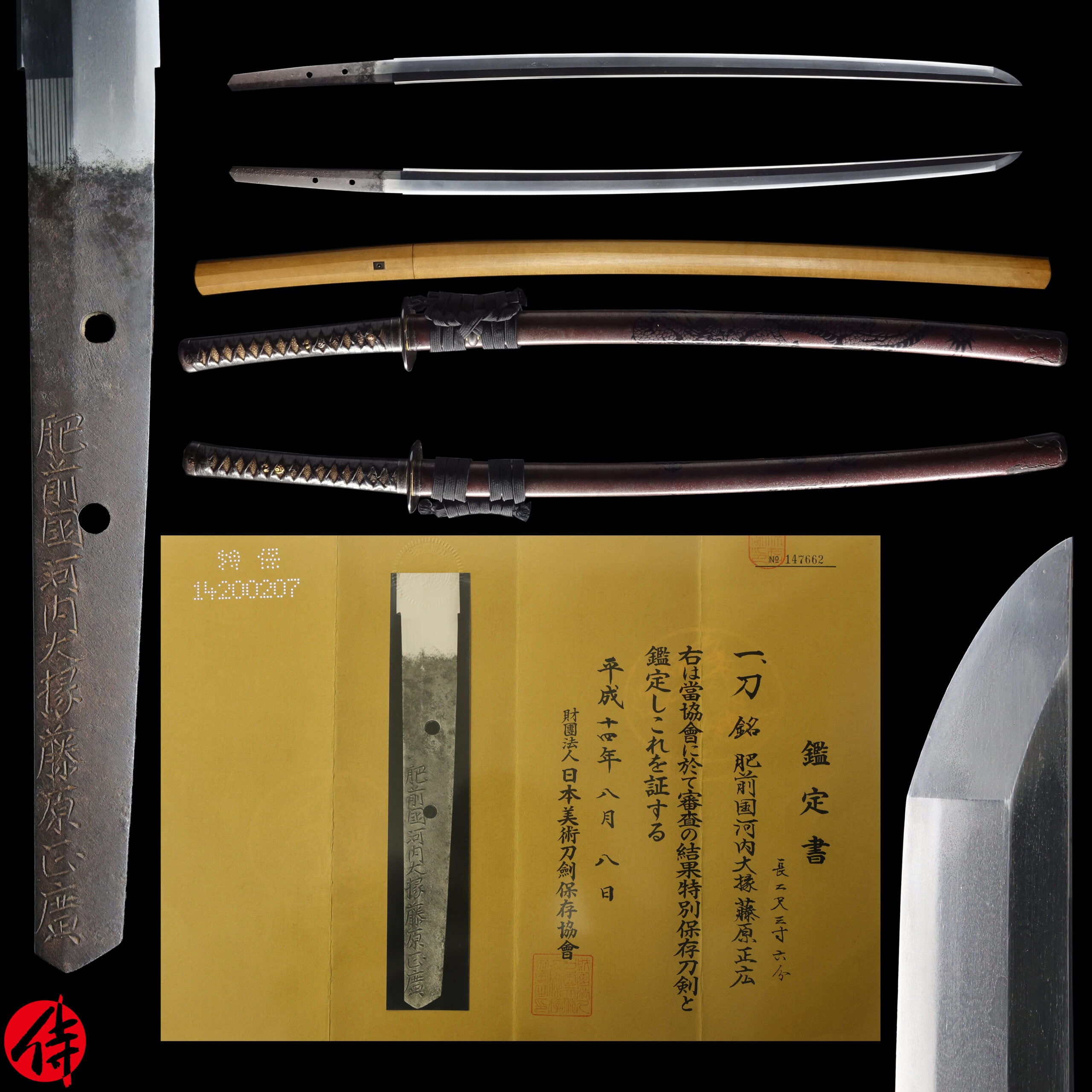
説明
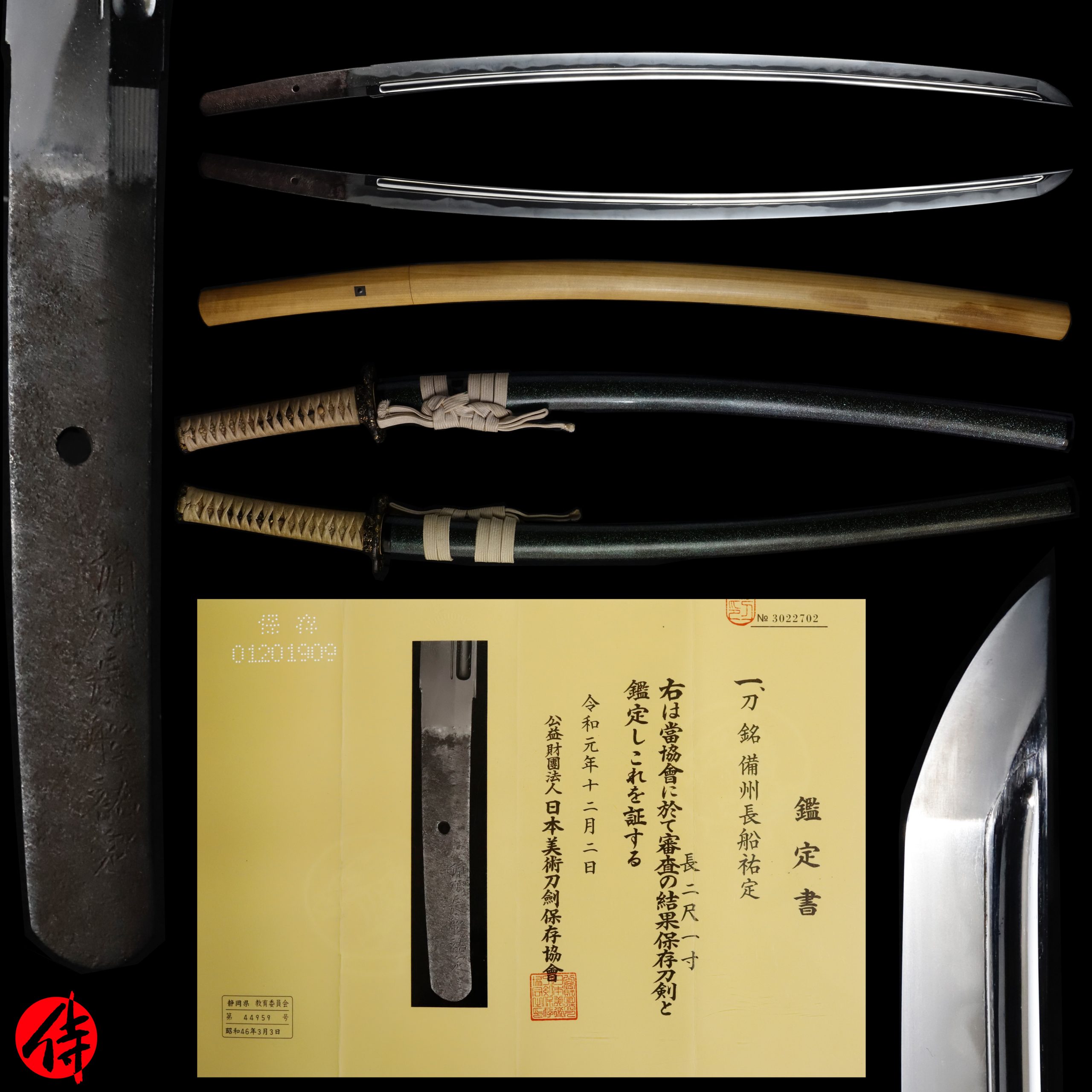
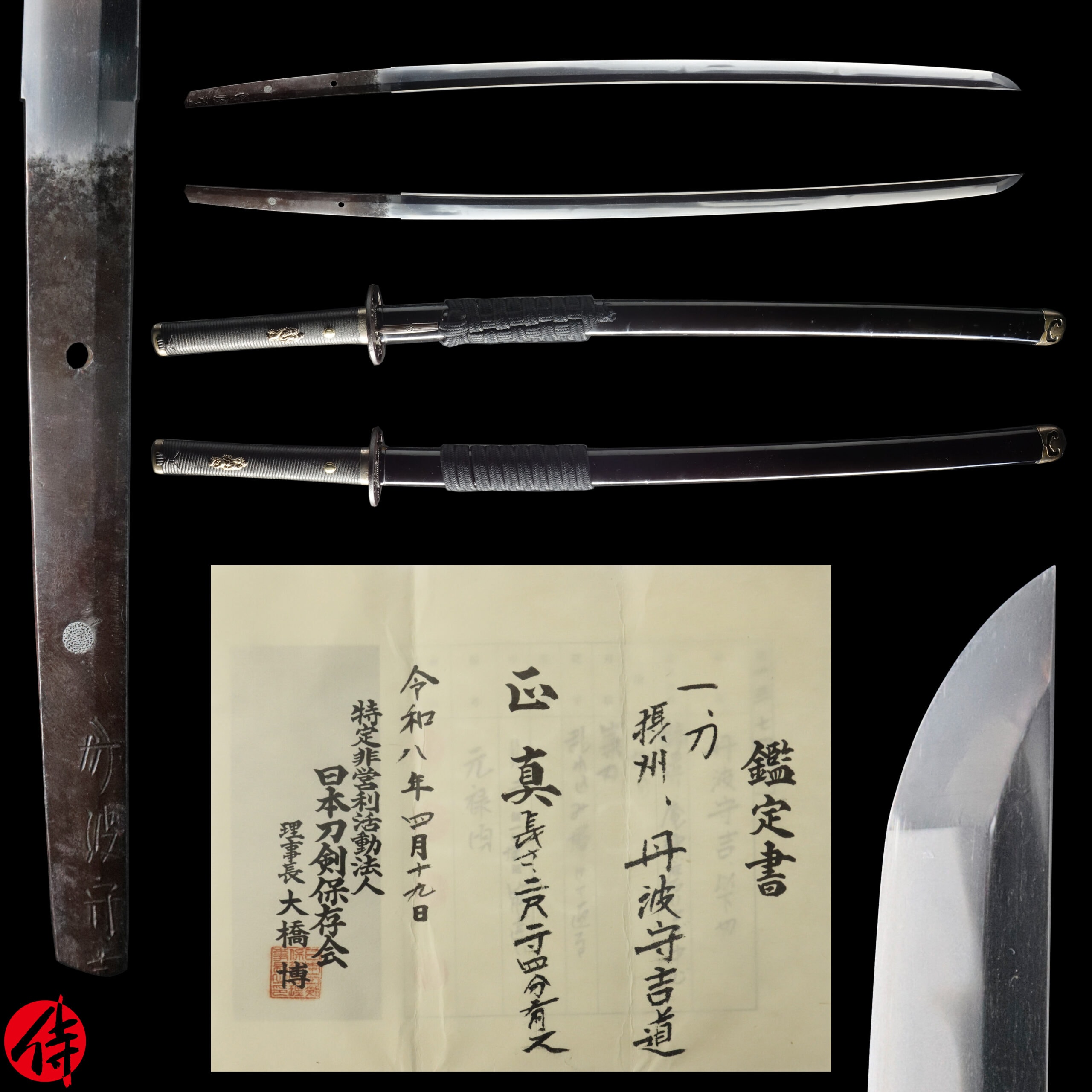
Antique Japanese Sword Katana Signed by Bishu Osafune Sukesada with NBTHK
Hozon
Certificate
【Description】
This blade has a signature of Bishu Osafune Sukesada(備州長船祐定). We believe it was forged in around the late Muromachi period(450-500 years old) based on its characteristic and the fact that it received Hozon certificated from NBTHK.
Those who forged swords in the Bizen province(Okayama prefecture) at the end of the Muromachi Period(1492-1569 A.D) are called Matsu Bizen(Matsu mean the end). Sukesada school was one of the most famous schools and it flourished for generations among Osafune schools(The head branch). There were various styles forged by the generations of Sukesada during this period. There were about 60 swordsmiths who used Sukesada as his maker’s name in the Samurai history. Bizen is the birthplace of Bizen Den, one of the most famous Japanese sword tradition along with Yamashiro Den, Soshu Den, Mino Den and Yamato Den.
The swordsmiths in Bizen produced many swords during the Muromachi period as it was in the middle of the Sengoku period(Warring state period), and the demand for swords increased among strong feudal lords. The length of this blade is efficient and must have been easy for its owner to handle back then. It would be nice to have a piece that was forged in the warring state period, when there was so much rivalry between warlords.
This sword has a Hozon certificate issued by NBTHK. This authentication paper was only given to Japanese swords, worth preserving by Nihon Bijutsu Touken Hozon Kyokai(the Society for the Preservation of the Japan Art Sword).
【Blade】
Cutting Edge Length(Nagasa)
:
63.8 cm(
25.1 inches)
Curvature(Sori)
:
2.0
cm(0.79 inches)
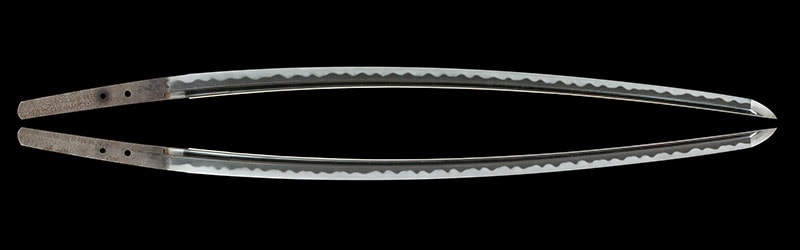
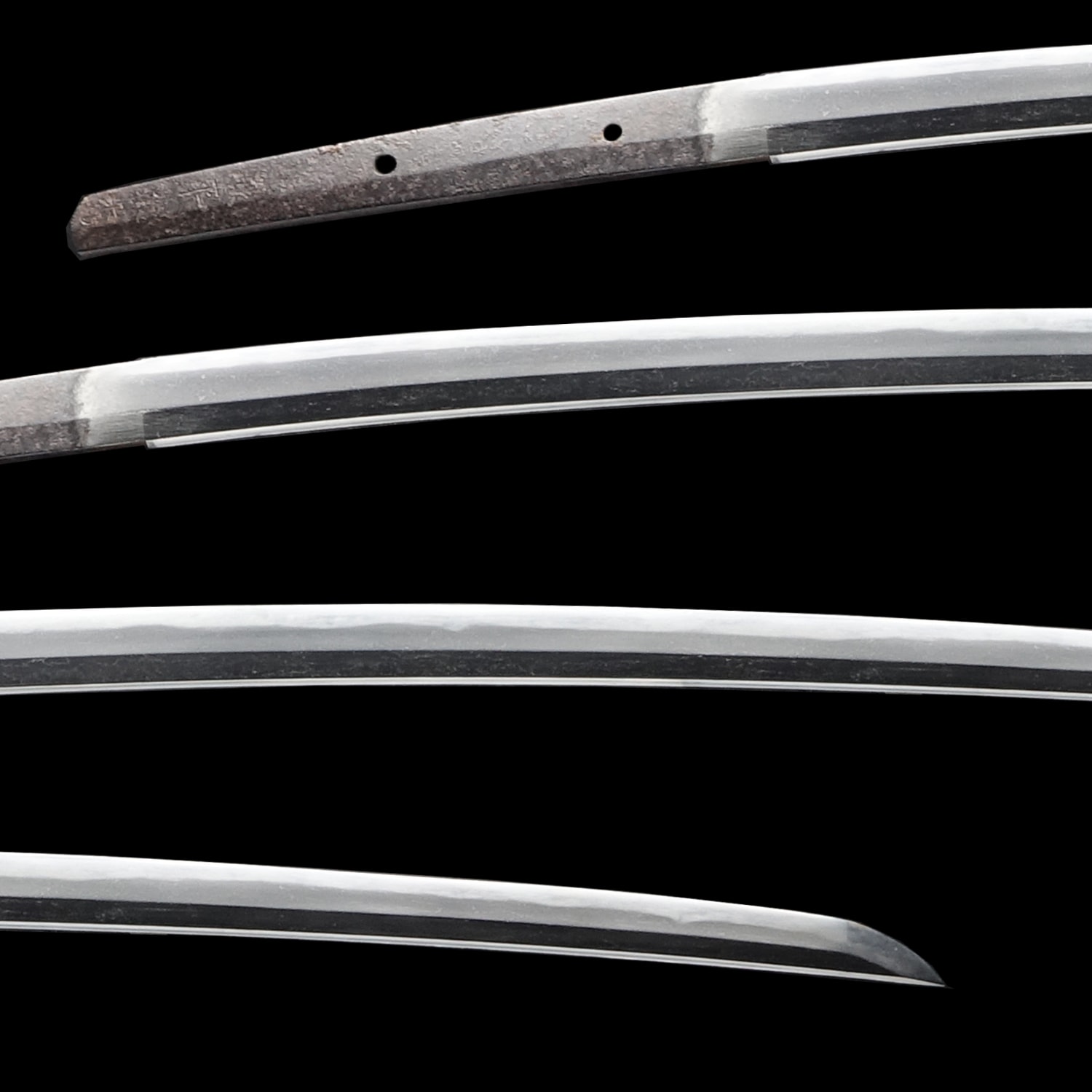
Hamon
:
The crystalline structure which forms along the cutting edge of a blade as a result of the hardening process
Jimon(Jihada)
:
visible steel surface pattern created by folding and hammering during forging process
Nakago
:
Nakago is the tang of the Japanese sword.
Japanese swordsmiths left the black rust on the tang on purpose to prevent red rust while the tang is in its handle. And the discoloration of the tang was created over time, which is a great indicator for a Japanese sword specialist to estimate when the sword was forged.
【Other Details】
Koshirae:
Koshirae is the mounting of the Japanese sword. There are several parts that consist of Koshirae such as Saya(Sabbard), Tsuka( Handle), Tsuba(Handguard).
Fuchi-Kashira
:
A pair of matching sword fittings that cover the upper and bottom parts of its sword hilt.
Flowers and autumn insects (such as crickets and mantis) are designed for this Fuchi Kashira. Chrysanthemum and mantis, they are fall season words in Haiku (a short Japanese poem of seventeen syllables). As chrysanthemum’s petals form radially, it has been likened to the sun. That is why this flower pattern is treated as the symbol of perpetual youth and longevity or good health.
About the mantis, this insect is generally called Kamakiri in Japanese. And it is also called “Ogami-Mushi (拝み虫),” or “Inori-Mushi (祈り虫)” in Japanese. Both of these names mean a praying insect. Mantises hold their arms together, and their long wings cover their lower bodies. As this posture looks like a priest who prays to God, the mantis is likened to a “praying mantis.” Mantises lay well. Therefore mantis is considered a symbol of children.
Tsuka and Menuki
:
Tsuka is the handle of the Japanese sword and Menuki is its decoration.
A kind of flower is the motif of this Menuki. By using the same type of design with other sword mountings, the entire appearance has a unity.
Tsuba and Habaki
:
Tsuba is the handguard for the Japanese Sword and Habaki is the equipment to make the blade not touch its scabbard inside. It prevents the blade from getting rusty and chipped.
Yotsu-Mokkou-shaped Tsuba has Kozuka and Kougai holes. Several flowers are designed for this Tsuba. These plants might be Aki-no-Nanakusa (秋の七草, the seven flowers of autumn). Aki-no Nanakusa is constituted with