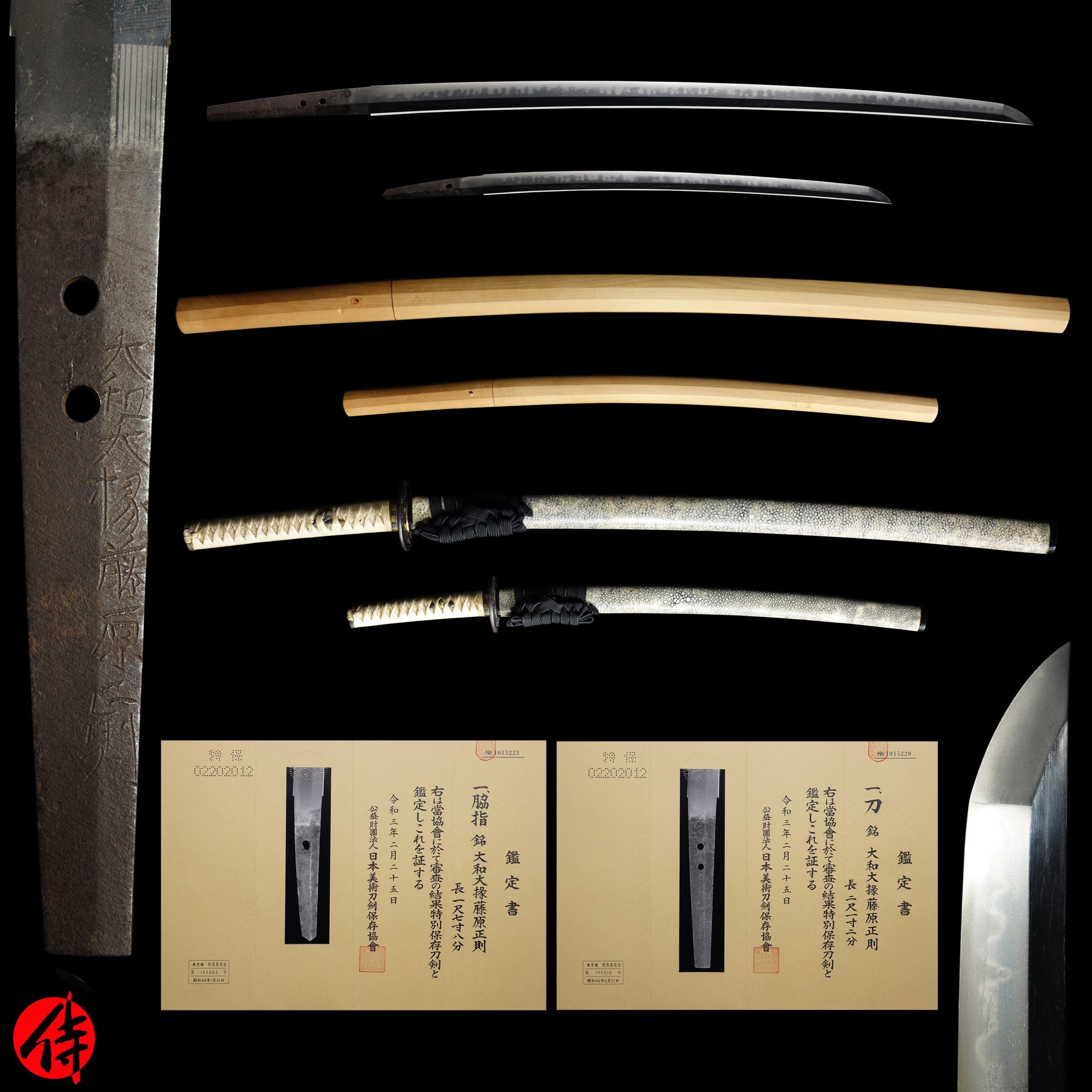
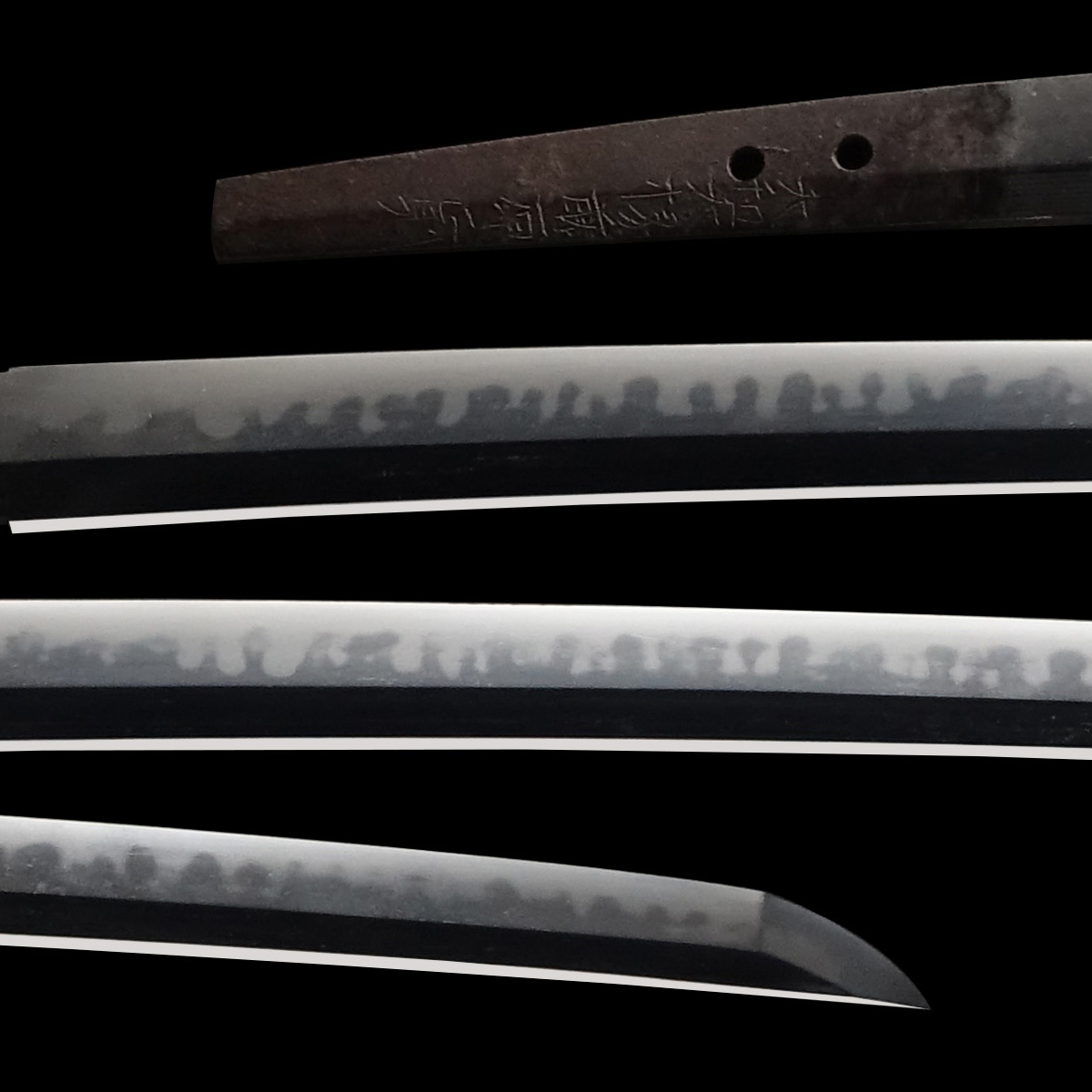
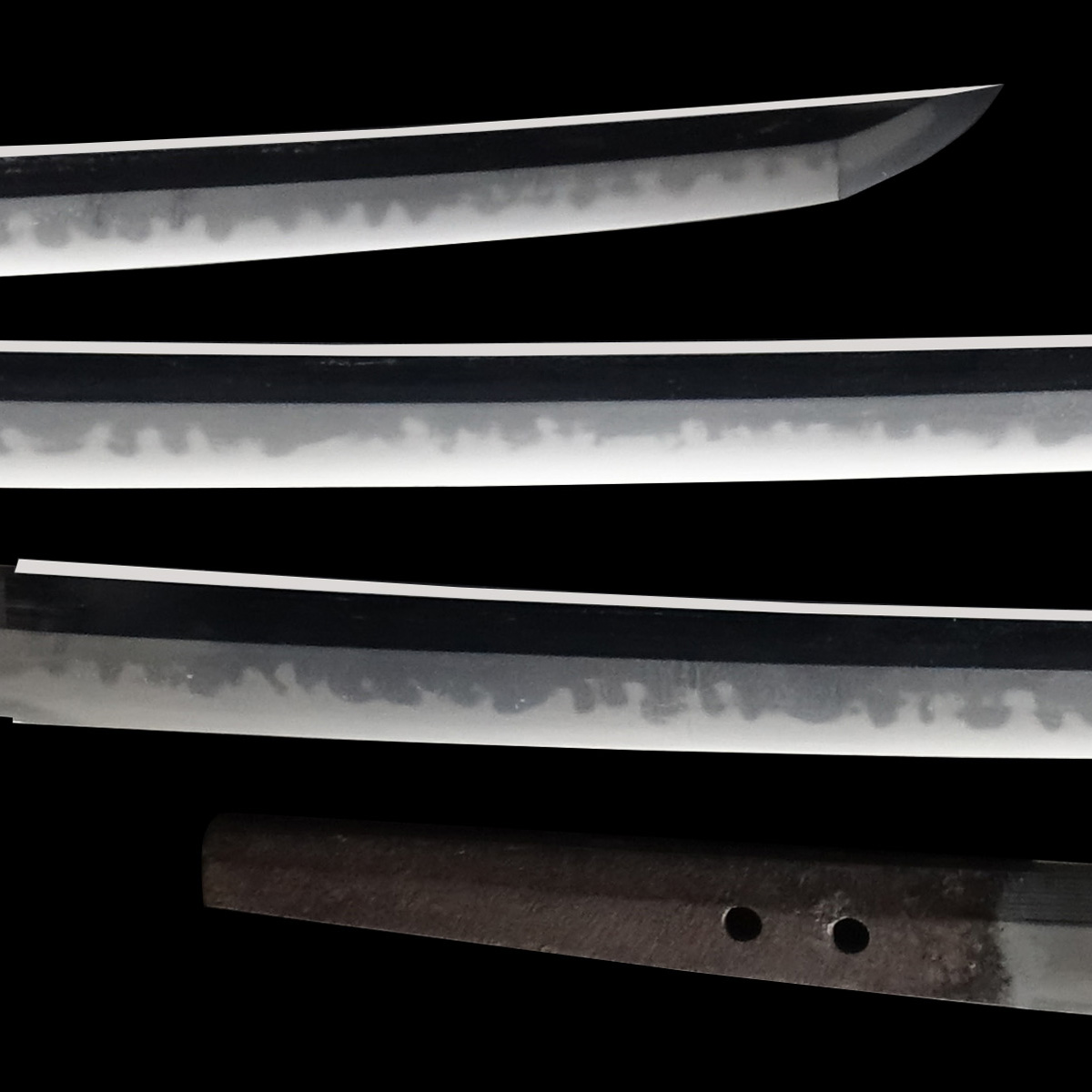
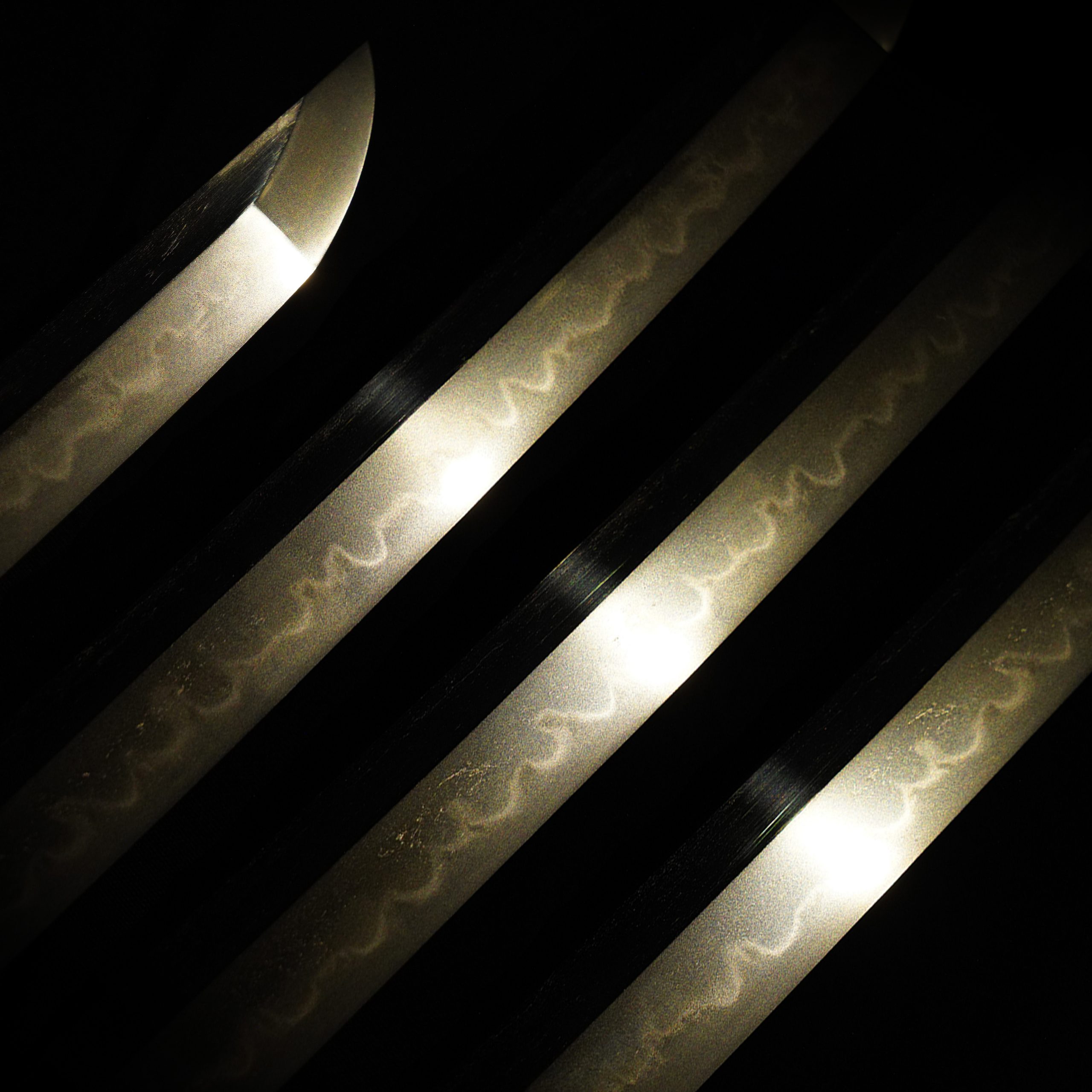
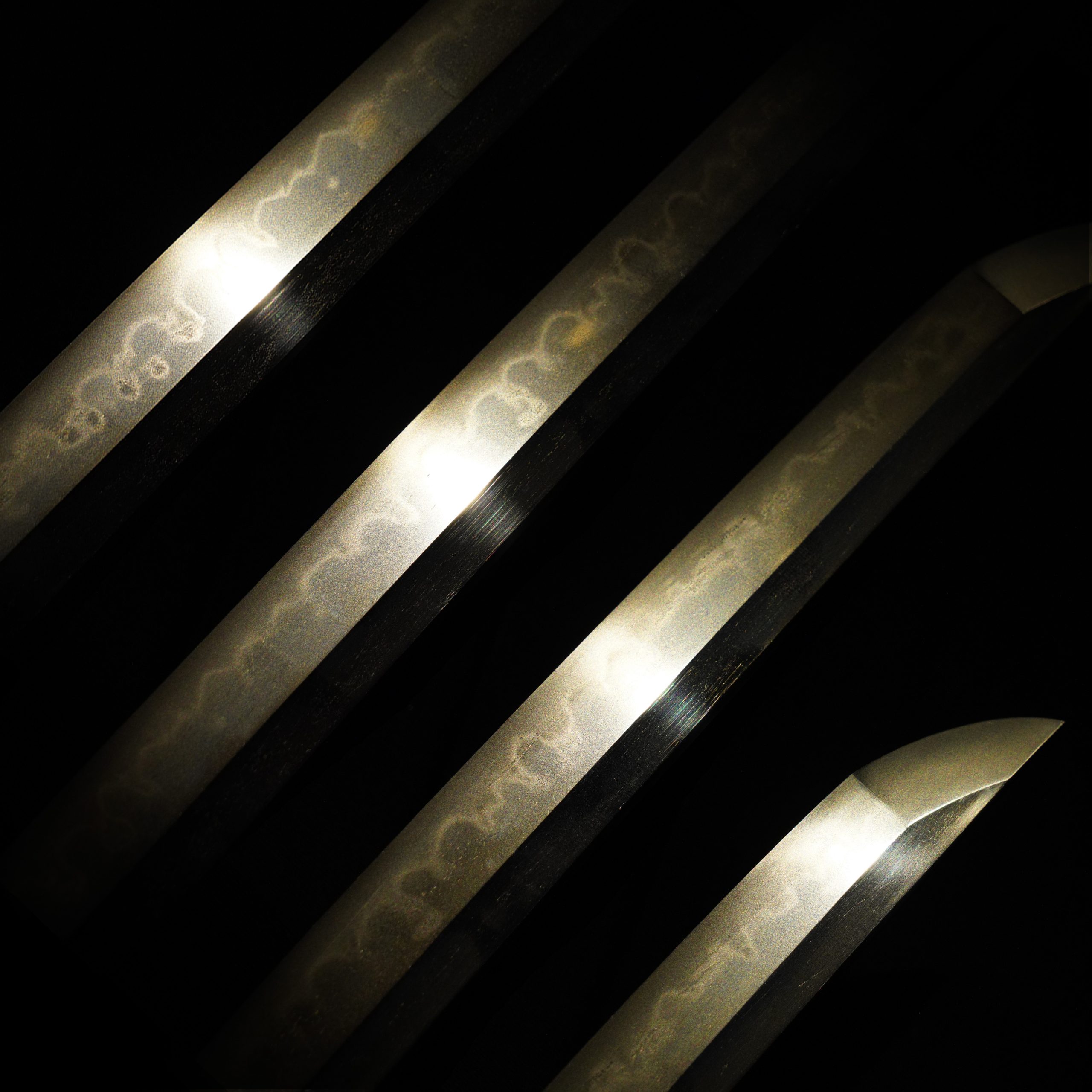
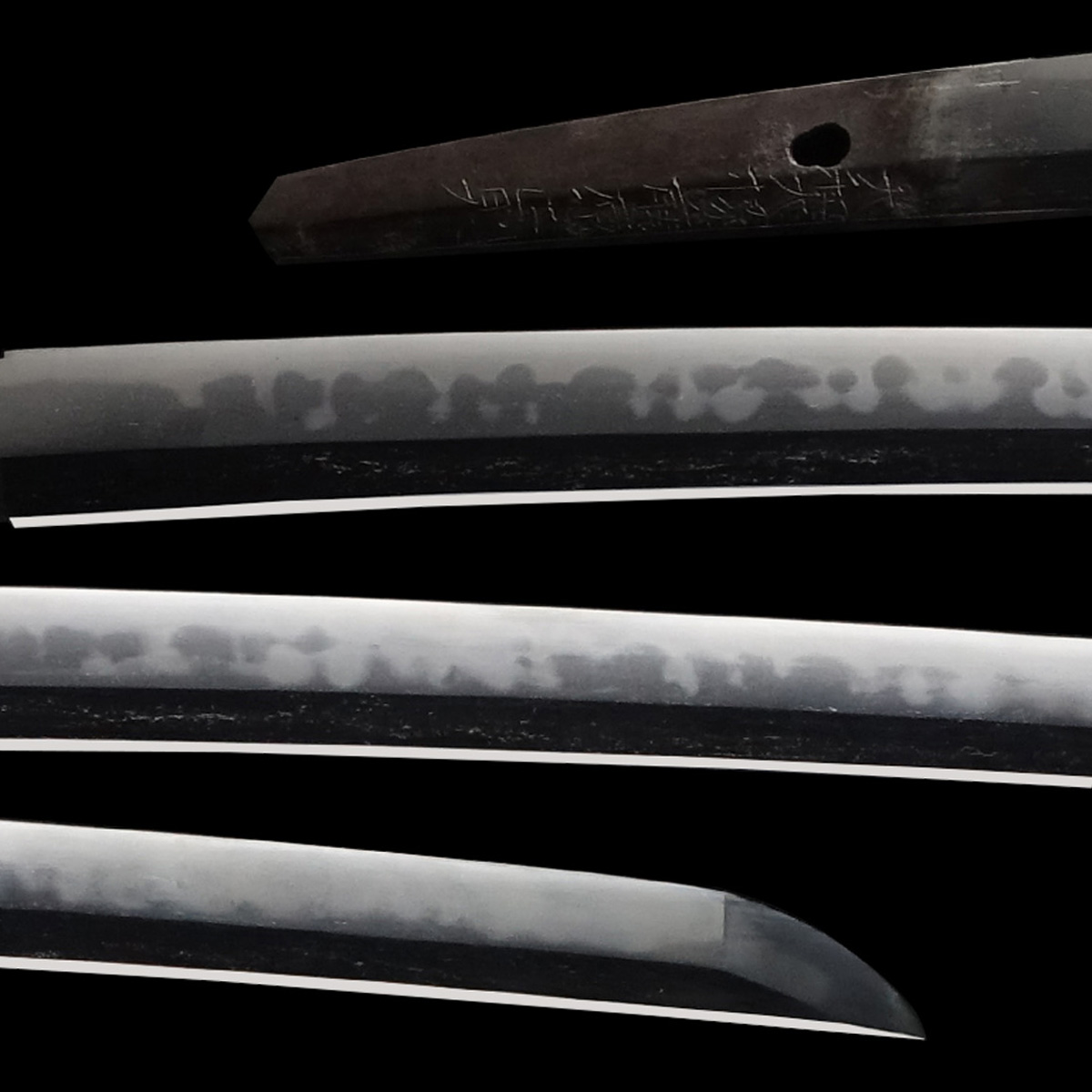
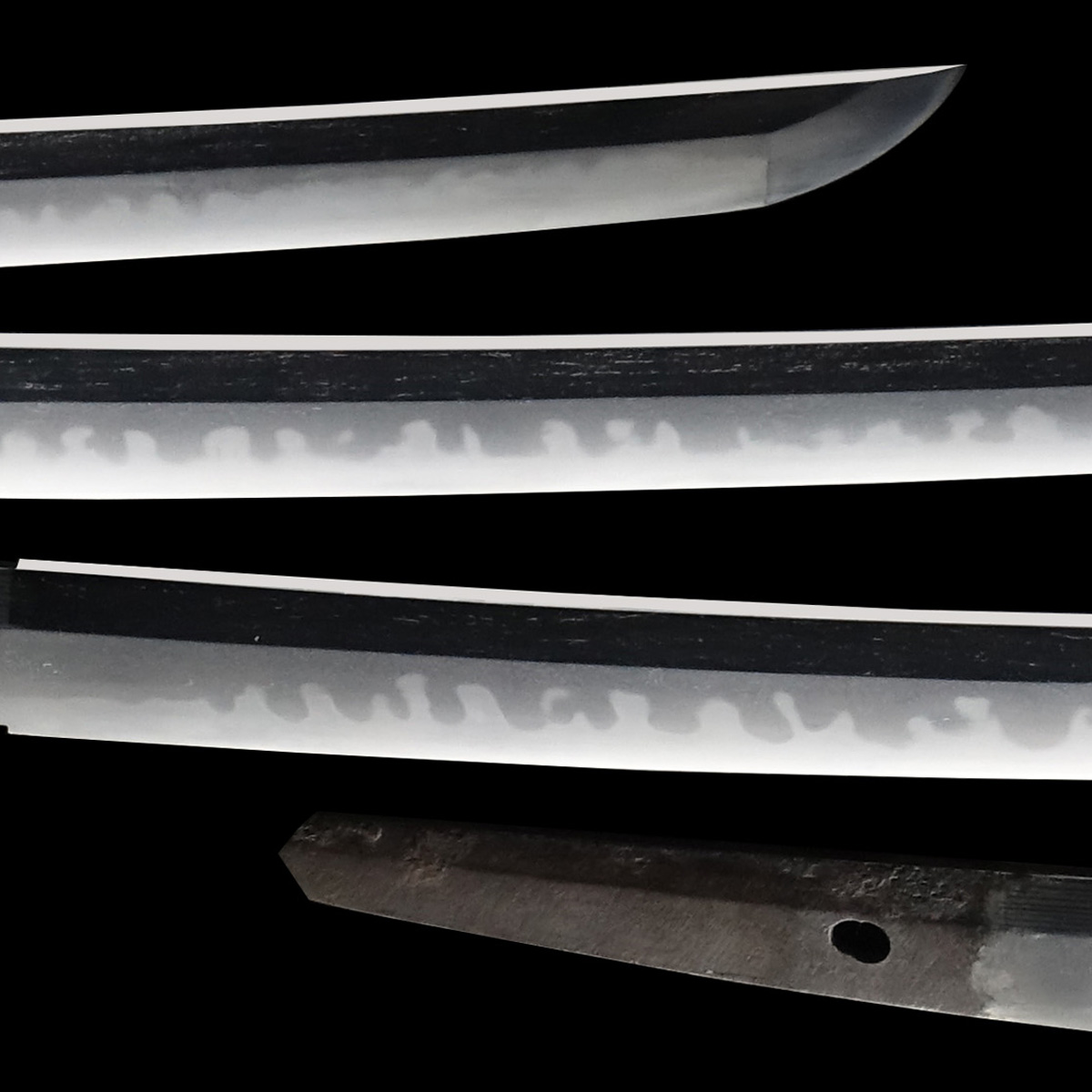
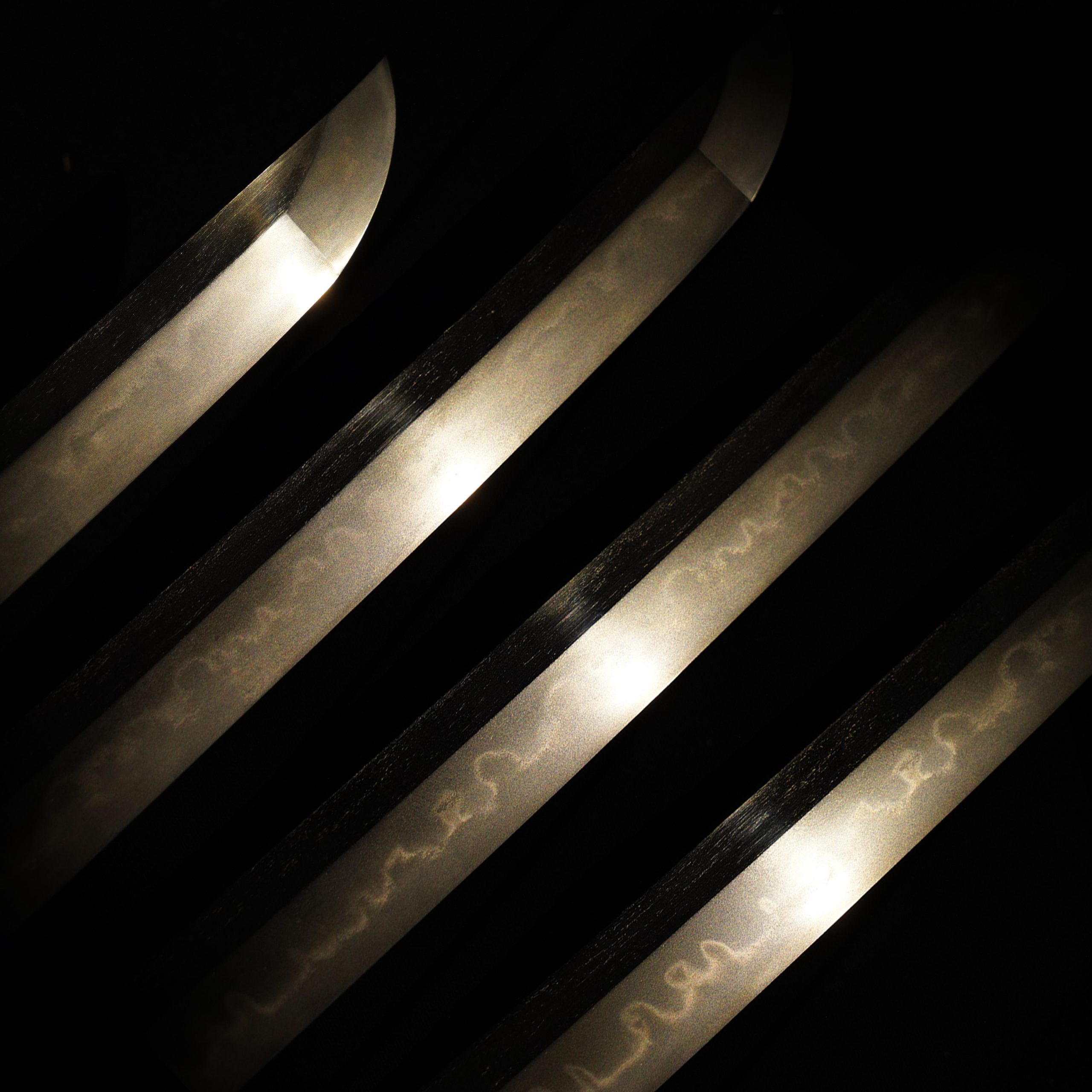
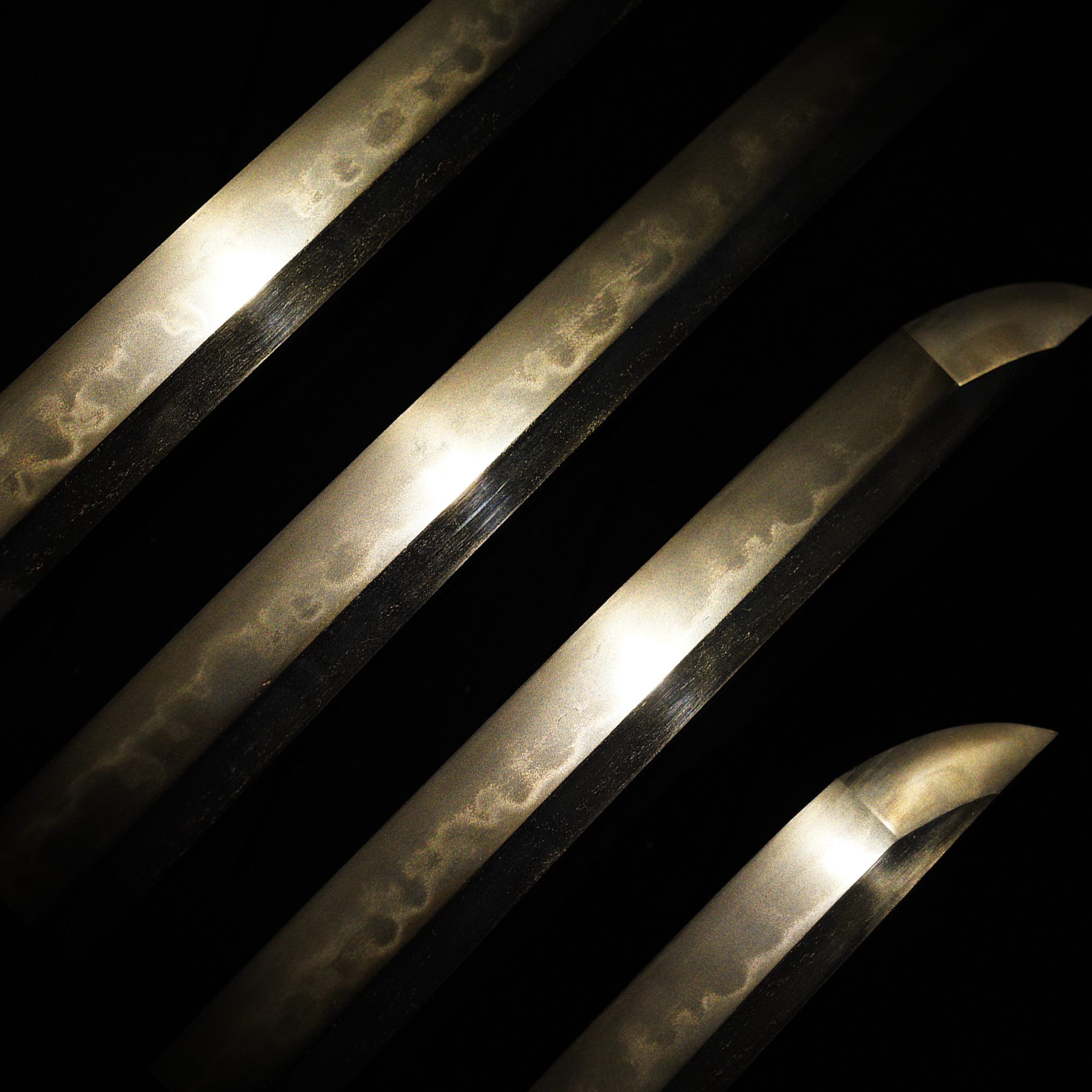
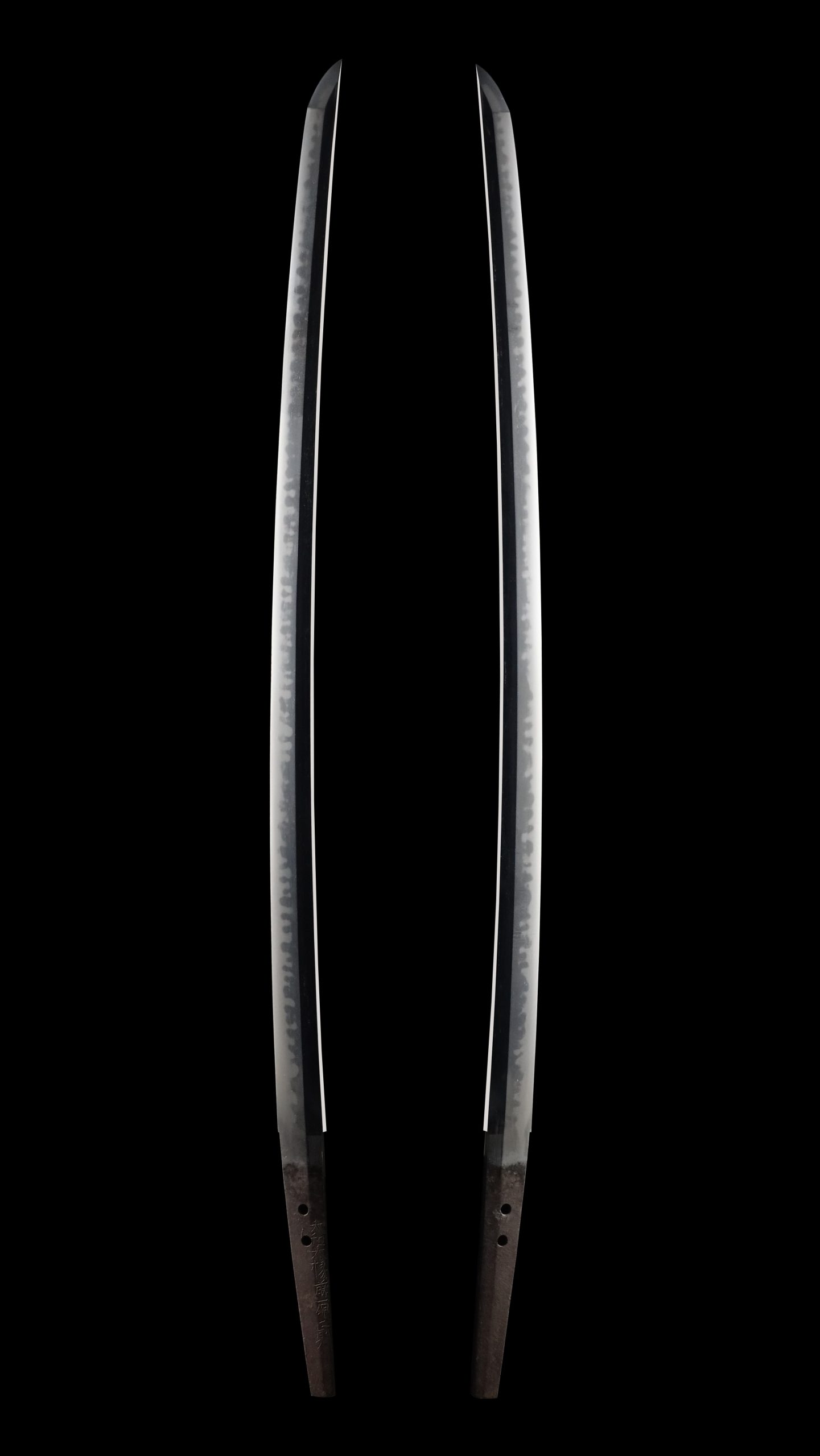
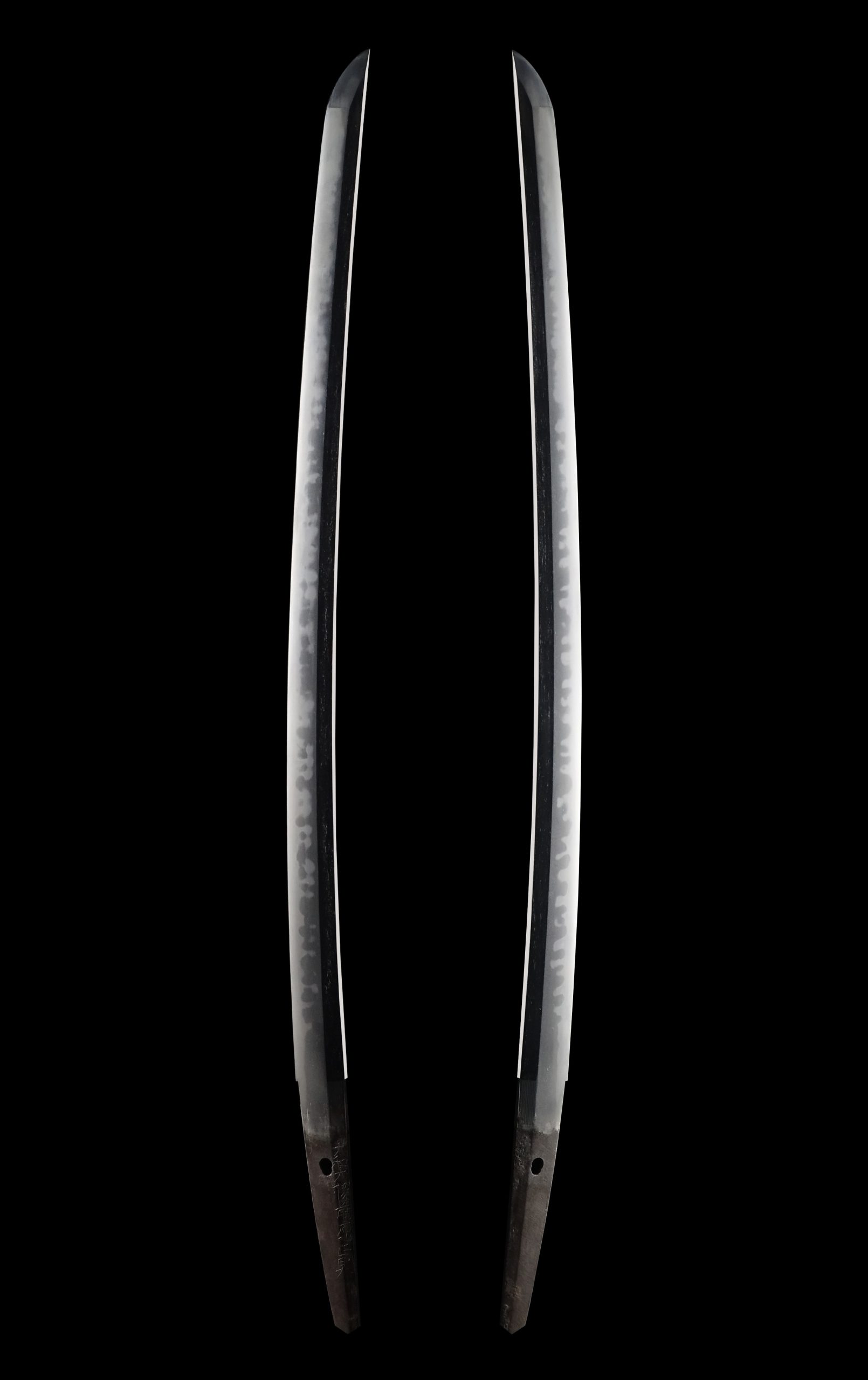
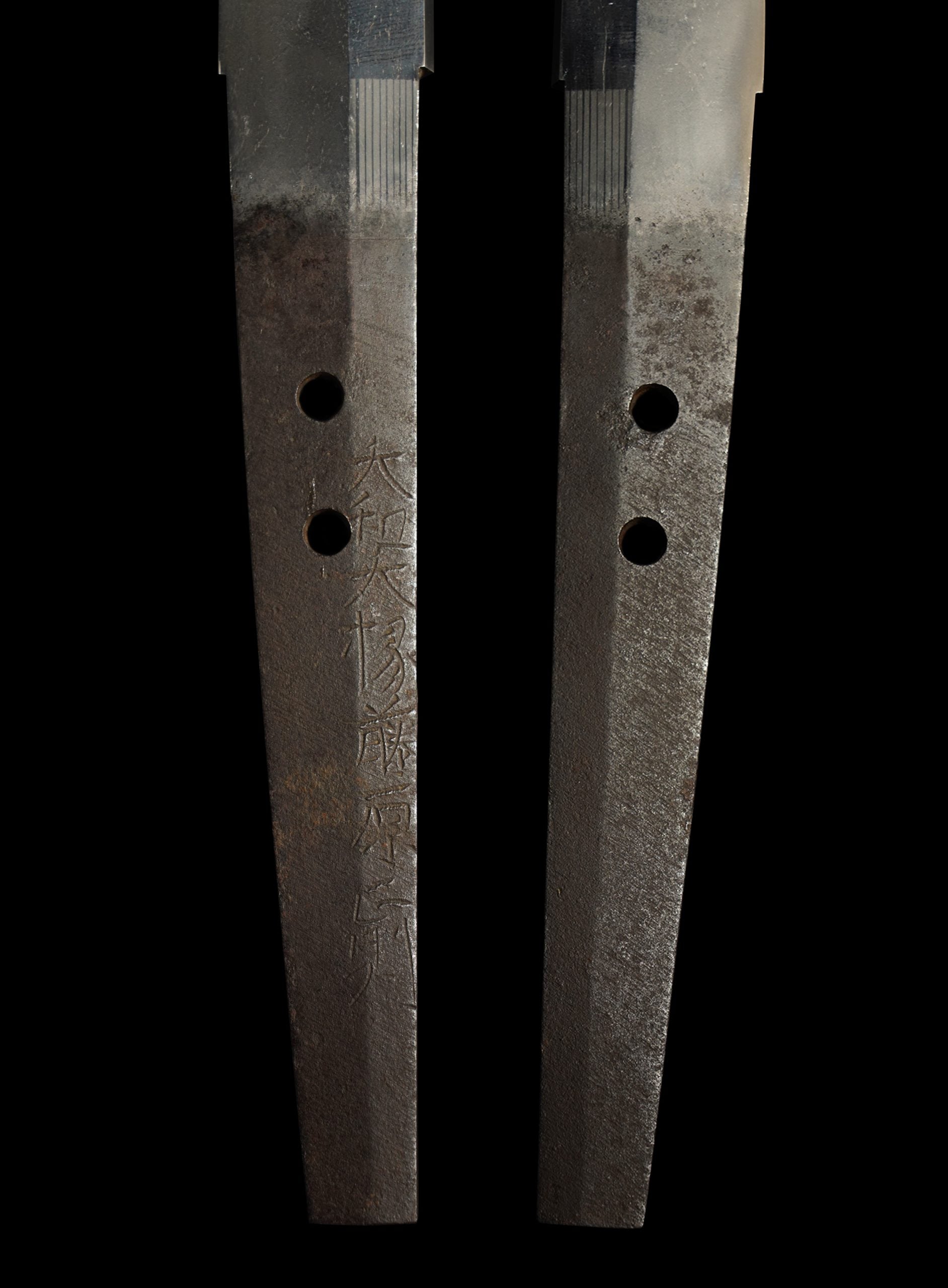
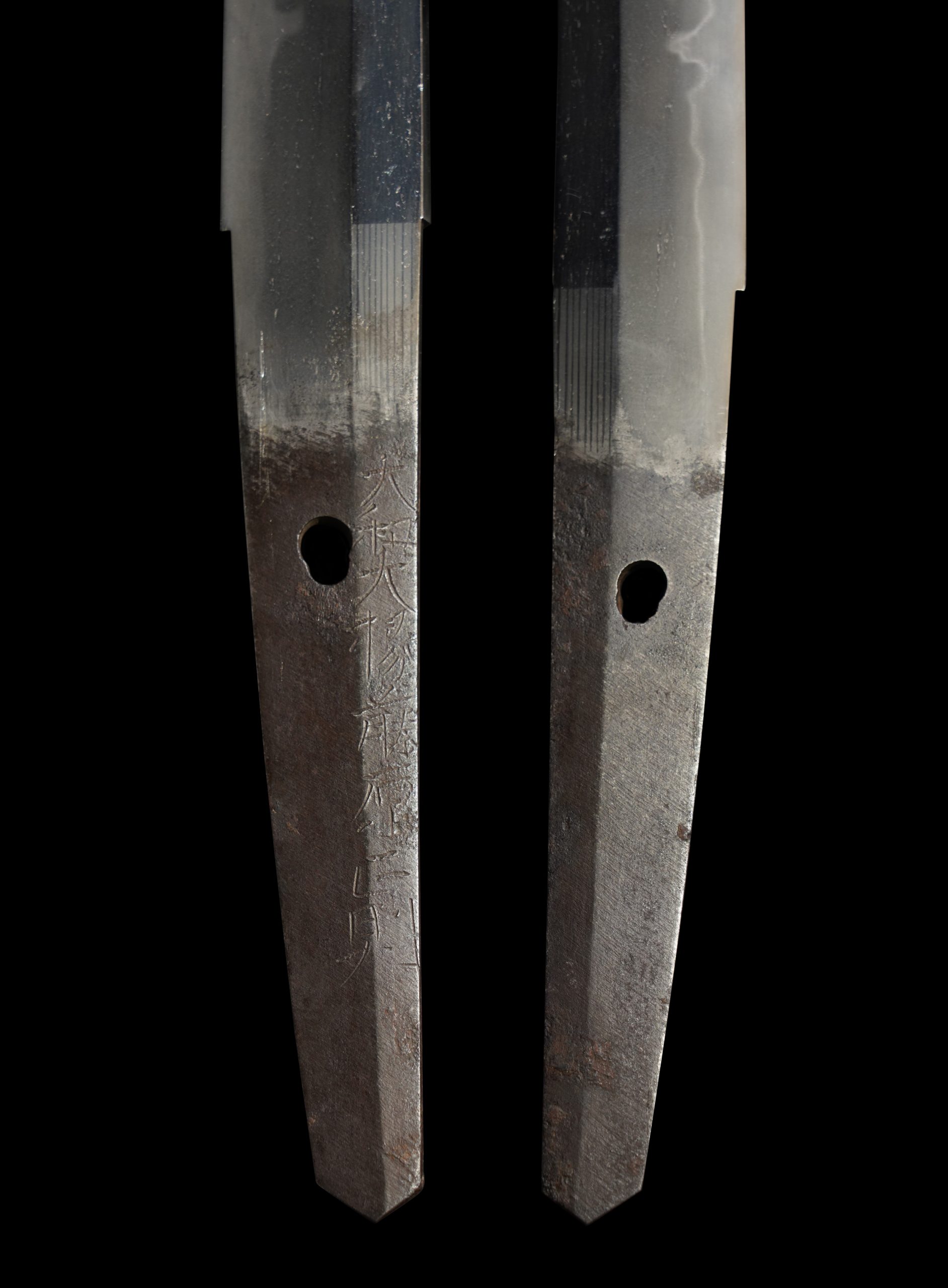
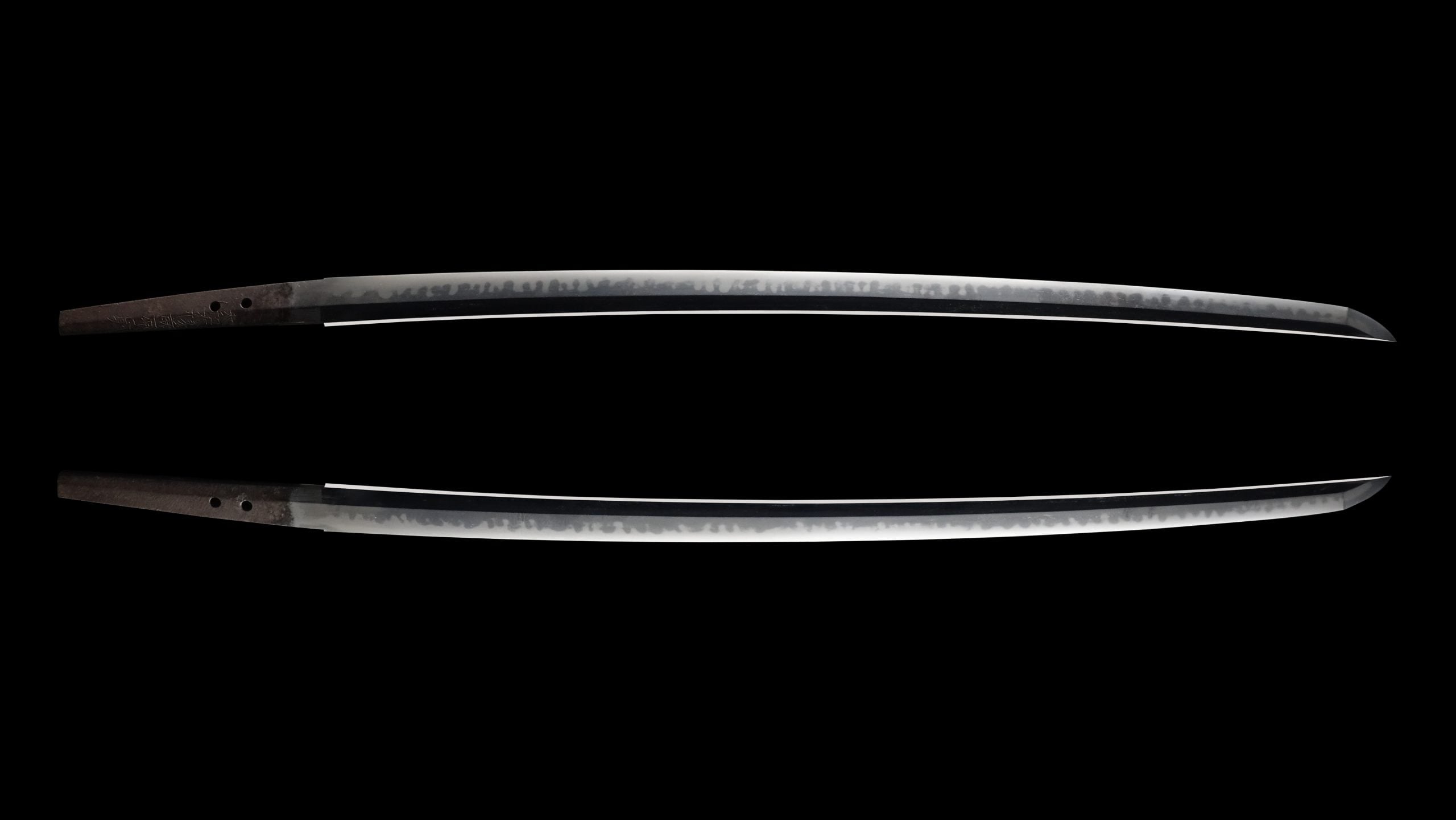
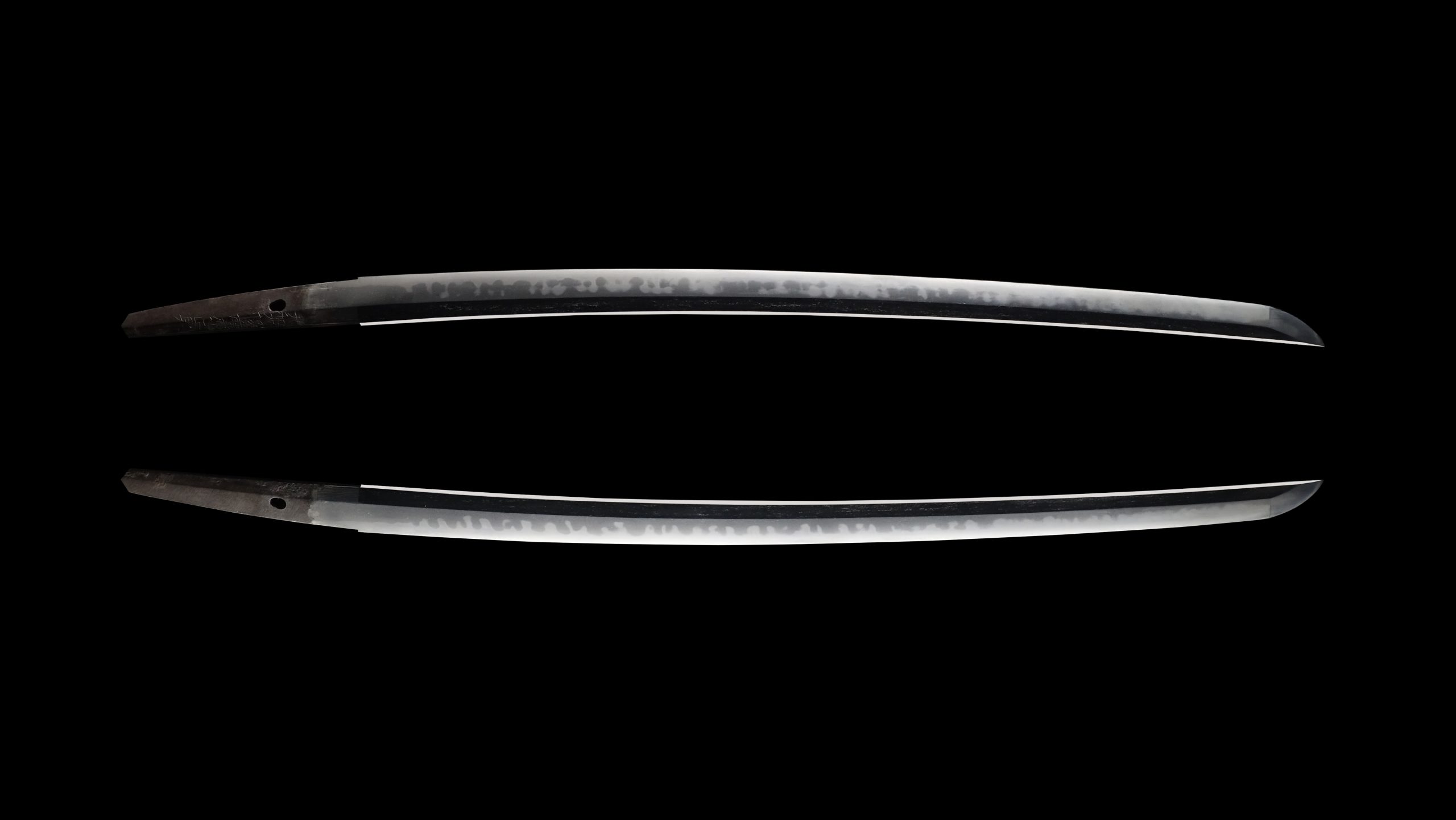
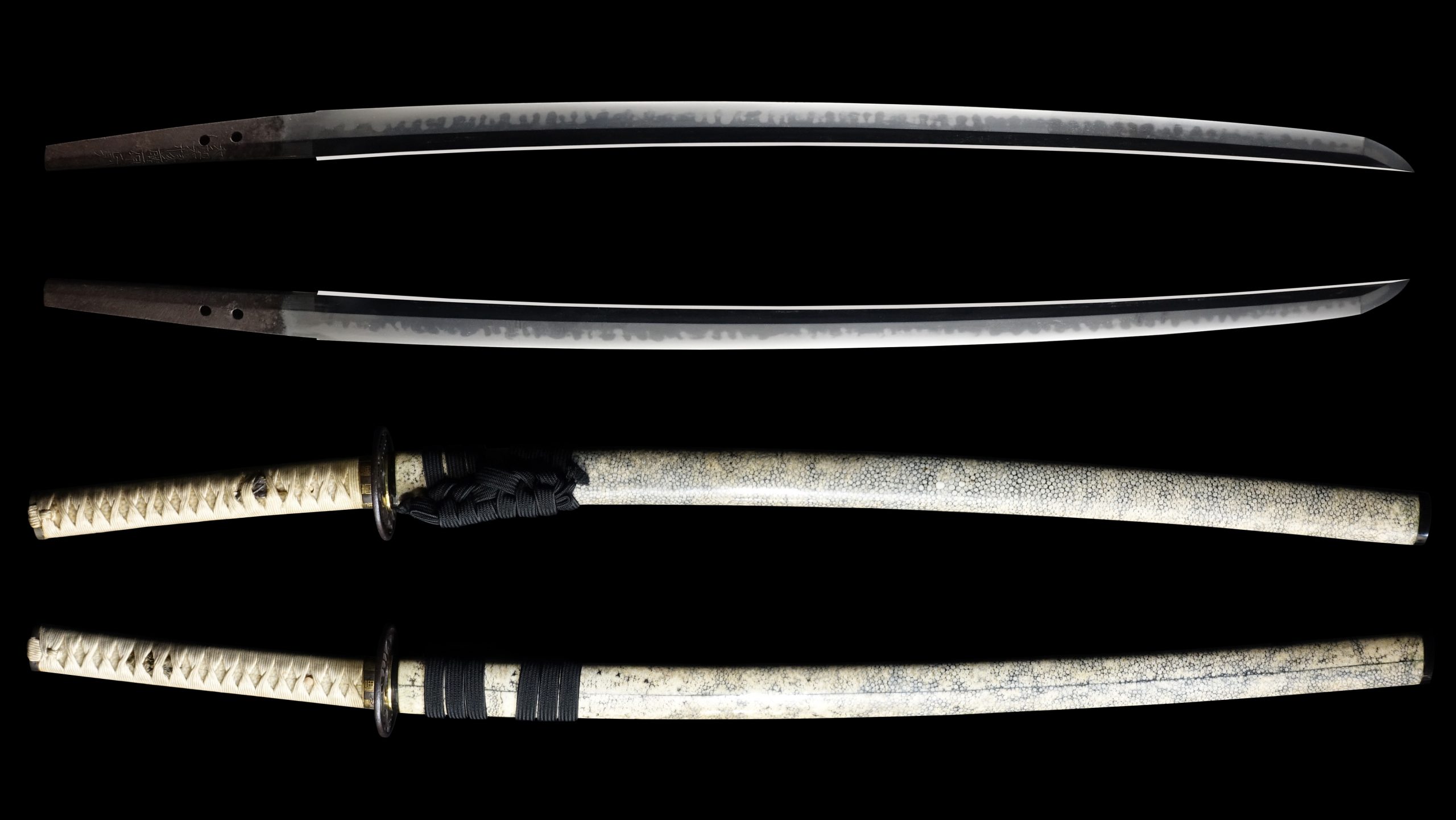
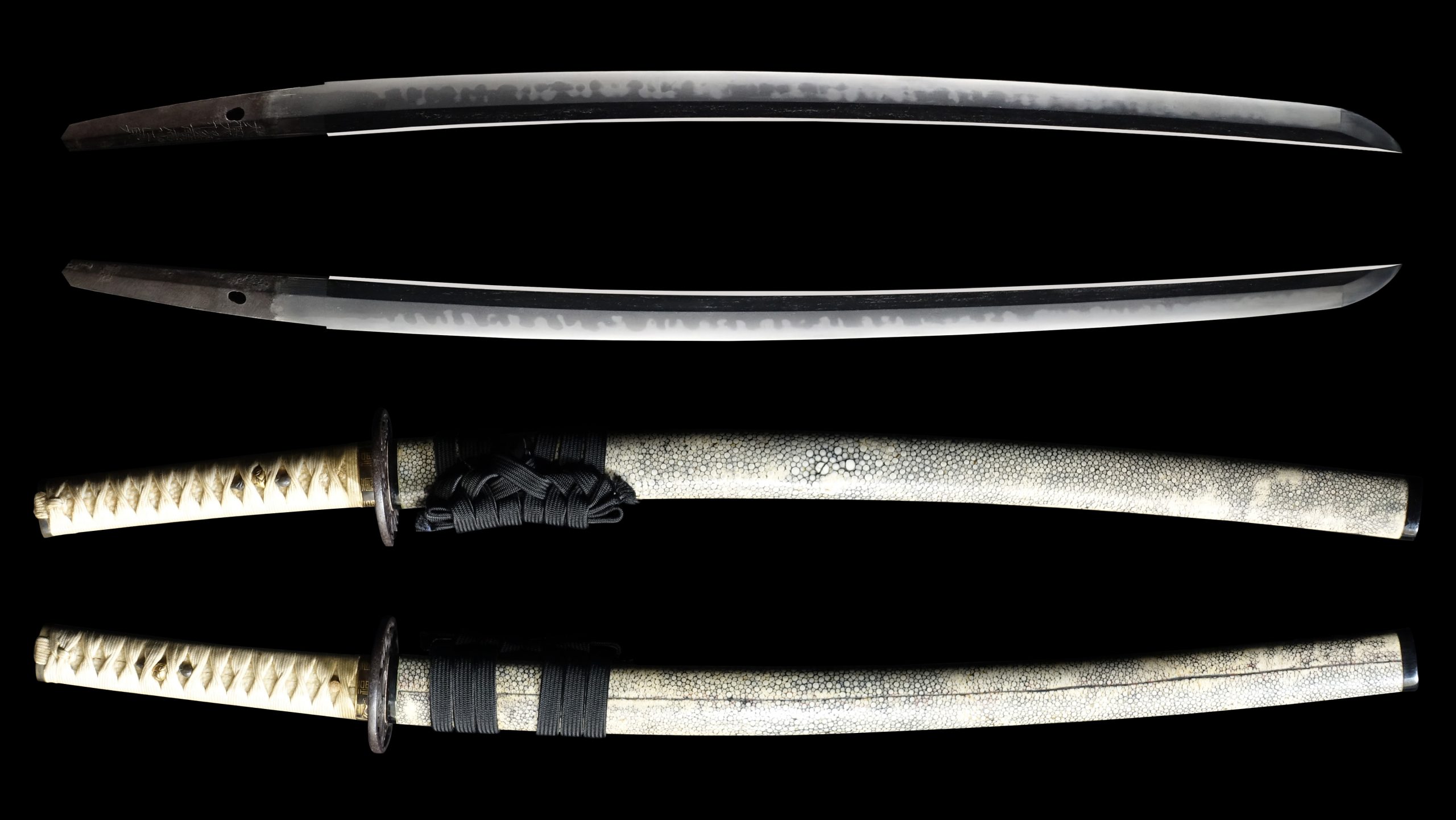
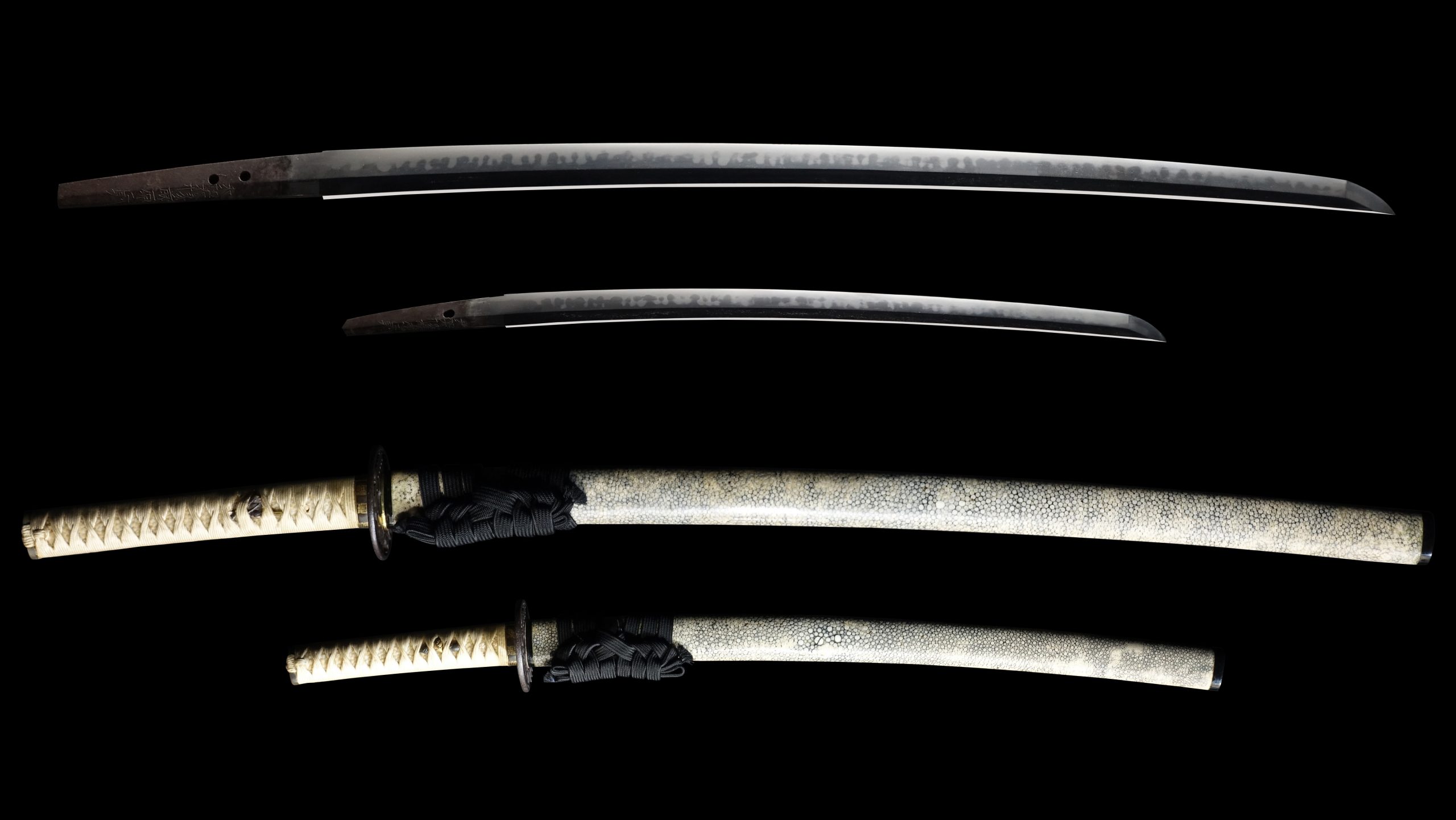
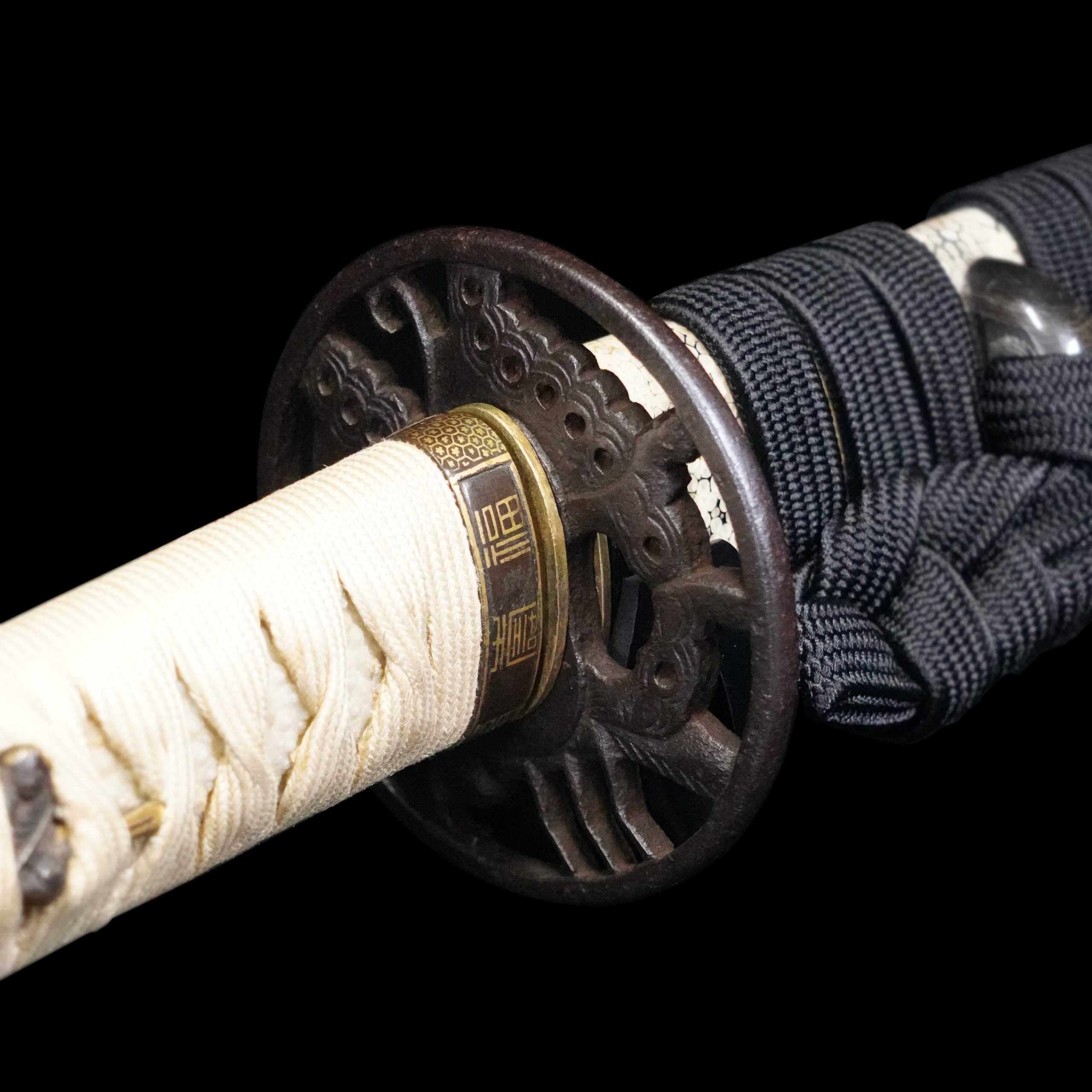
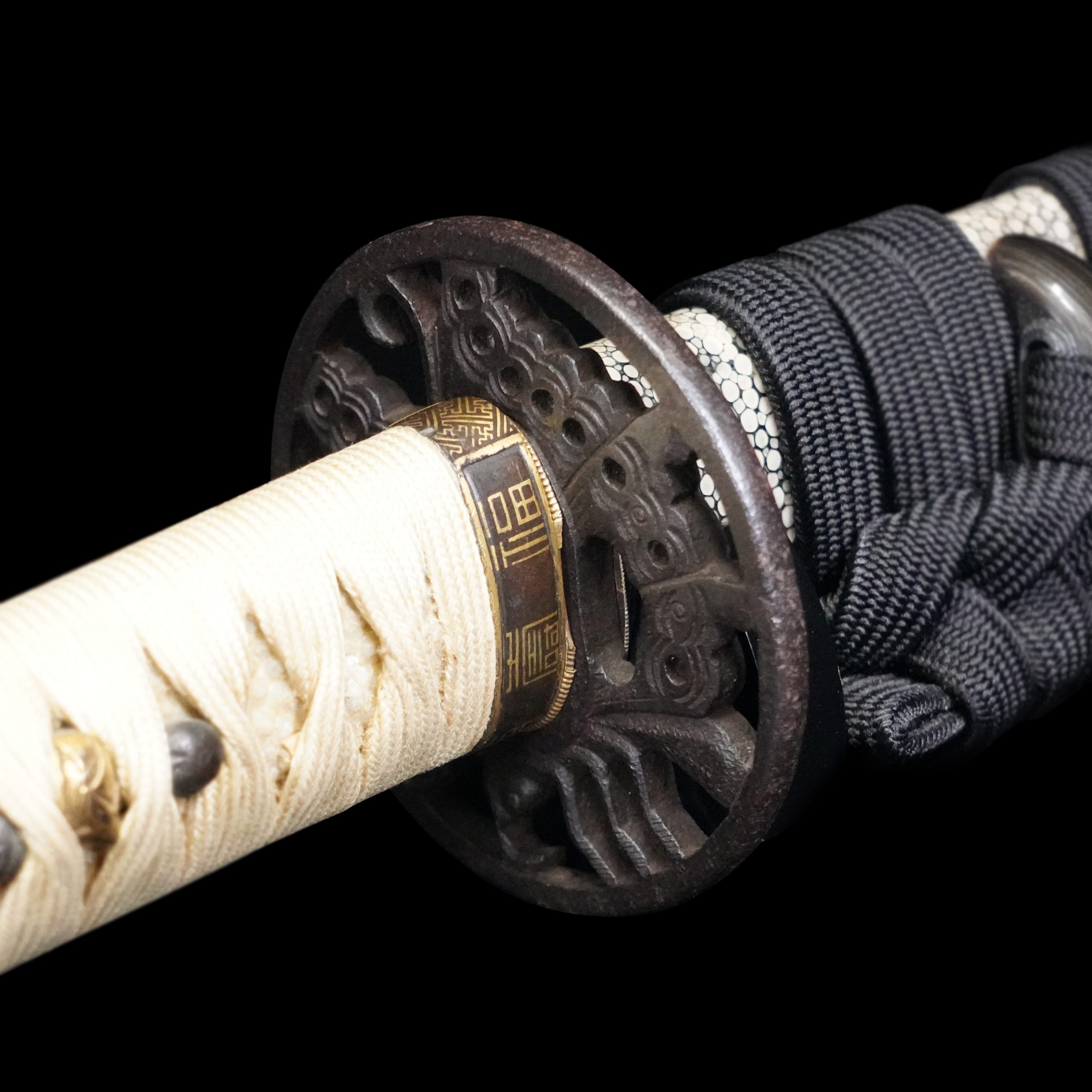
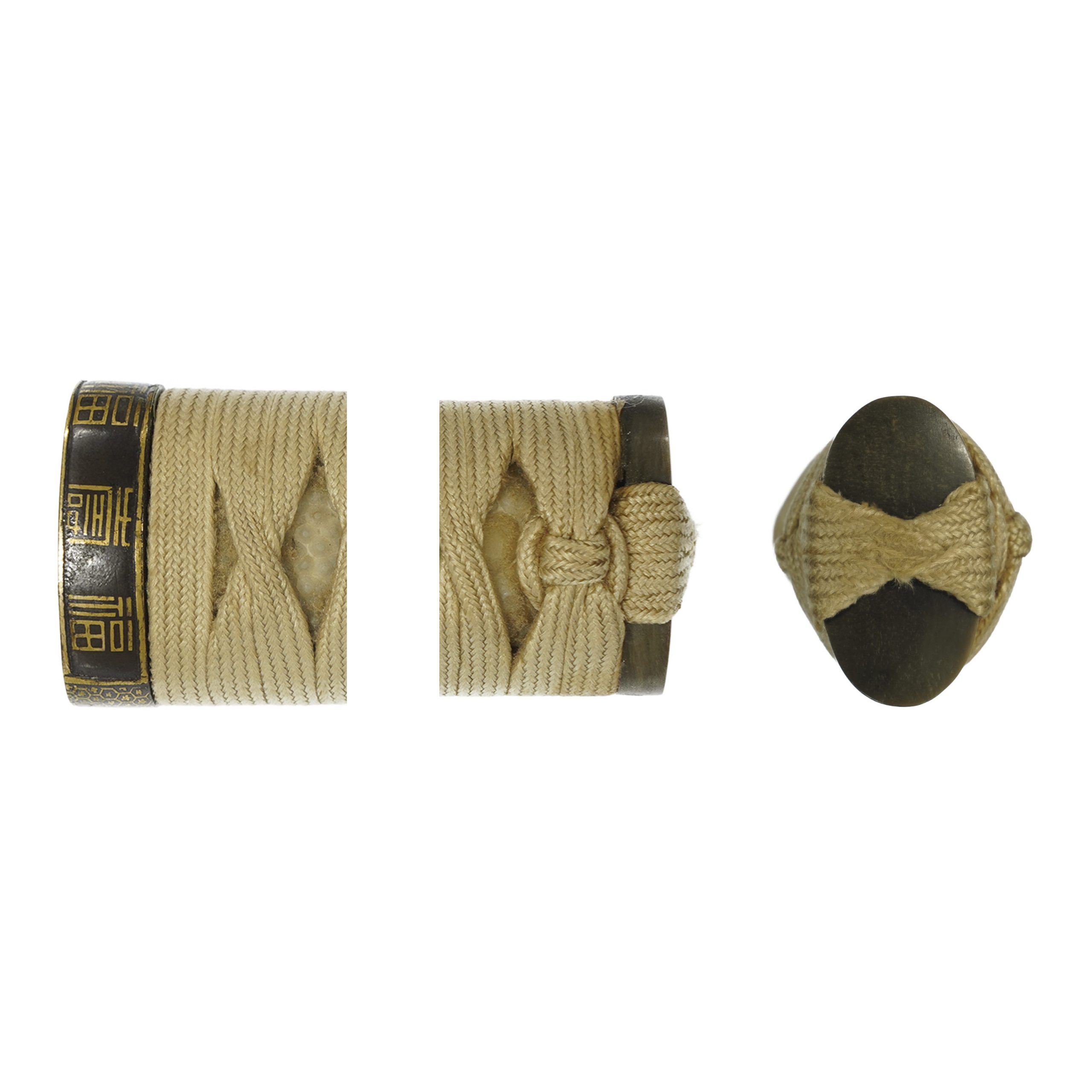
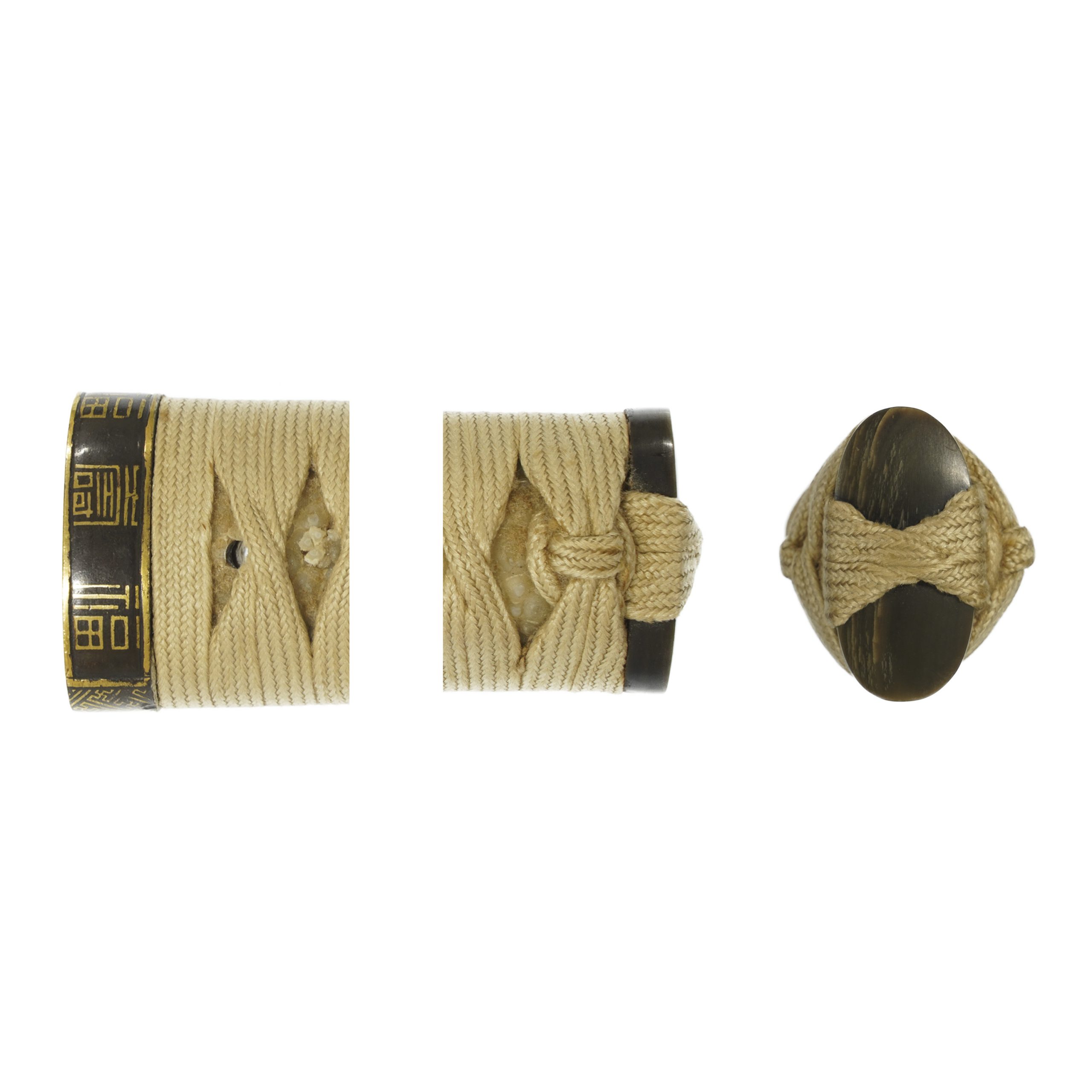
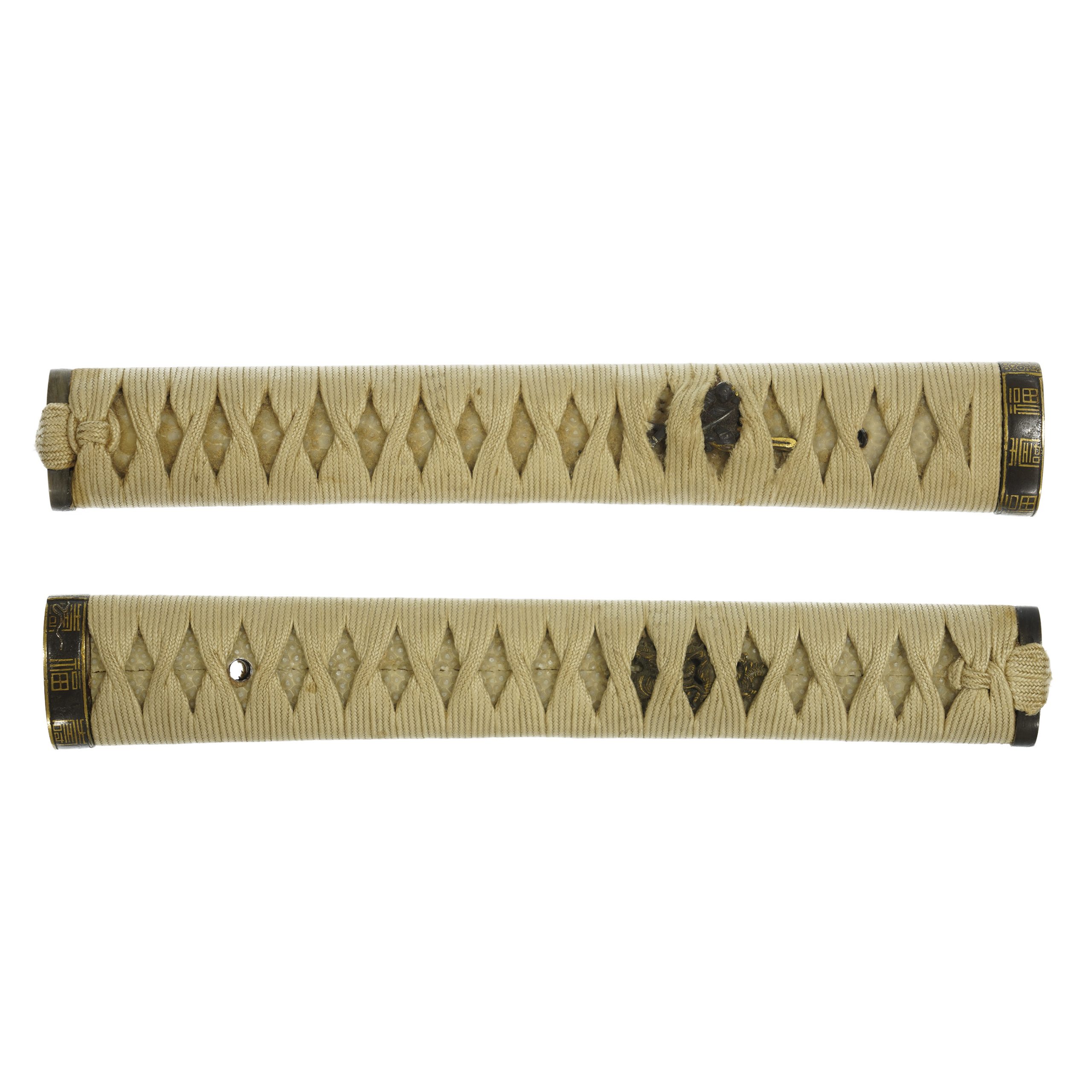
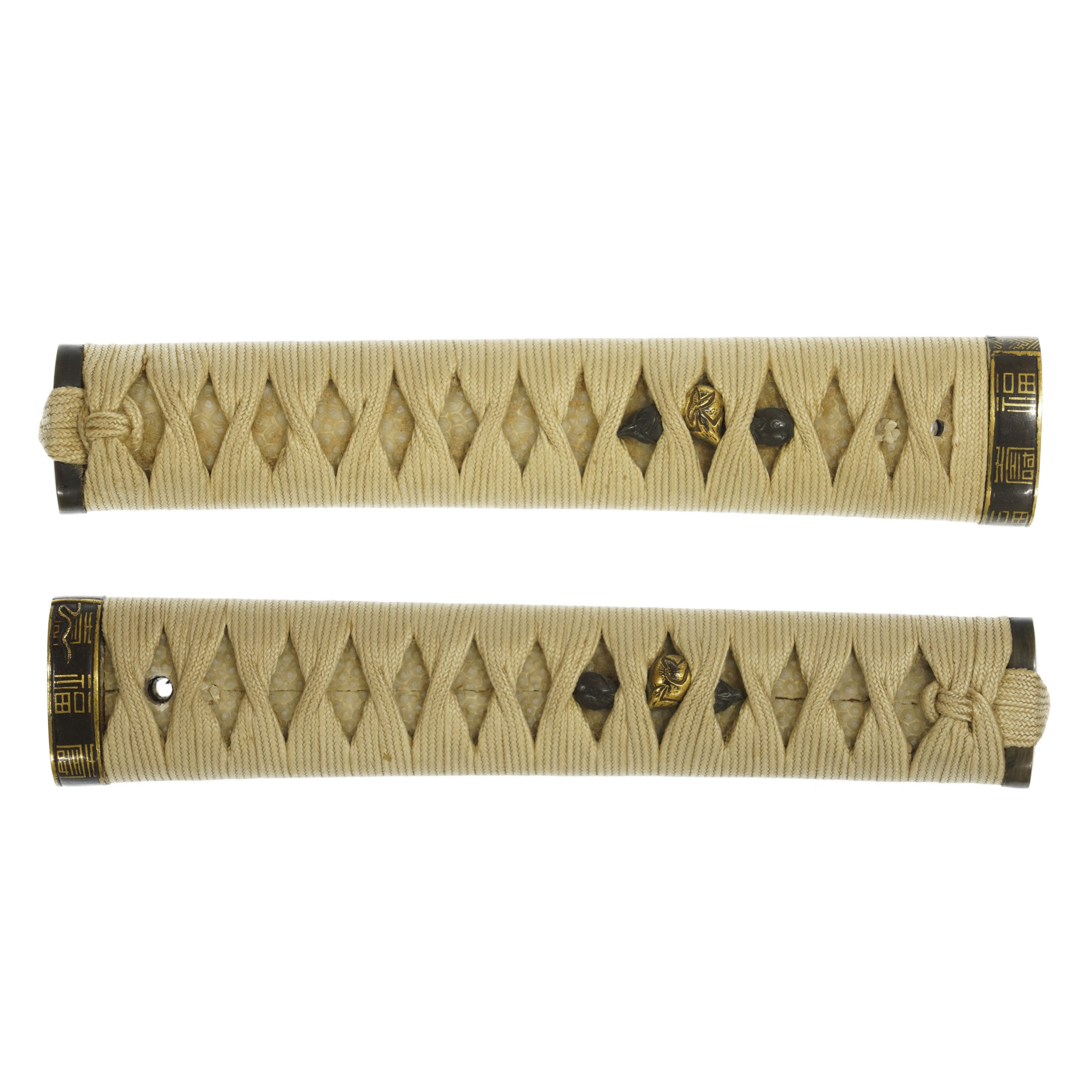
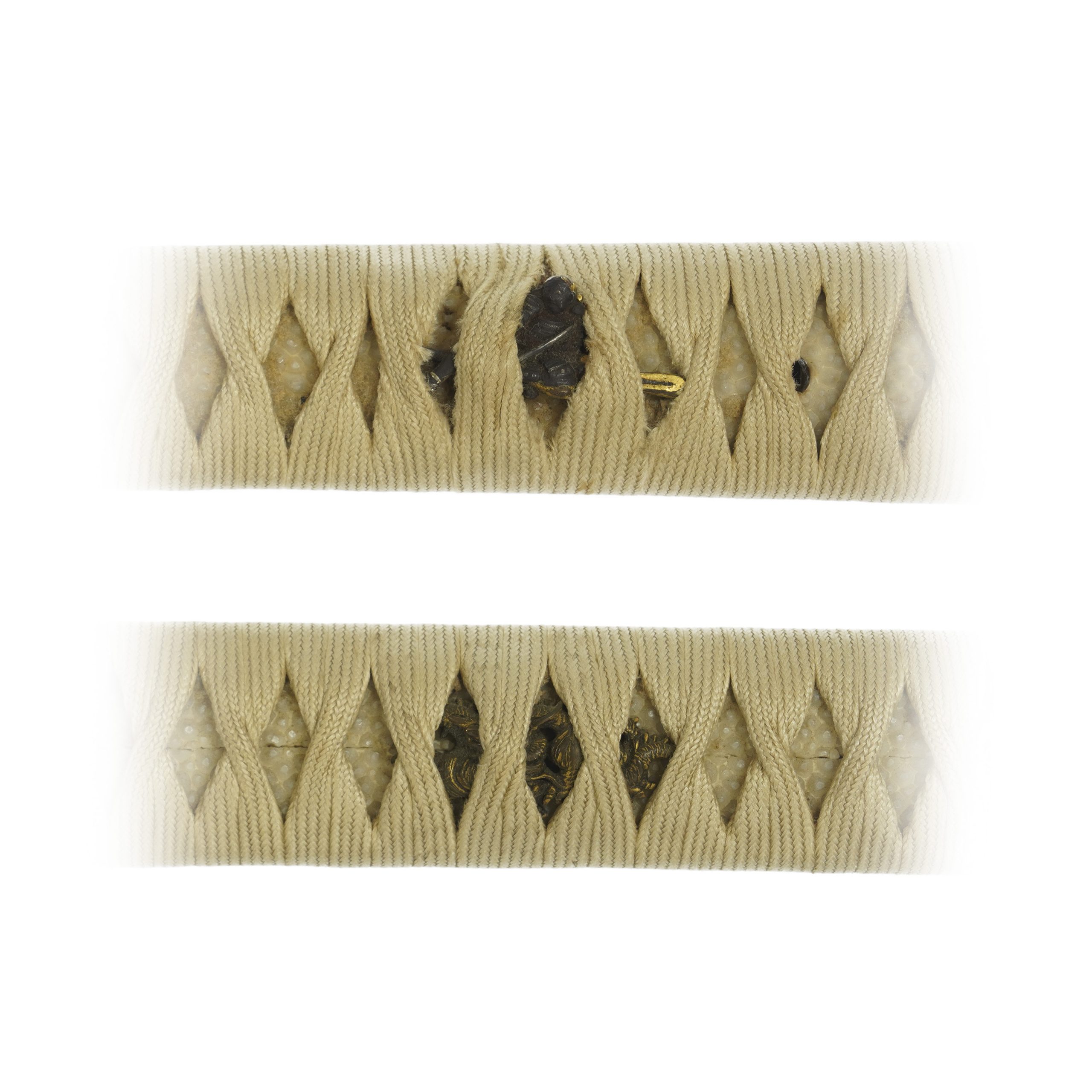
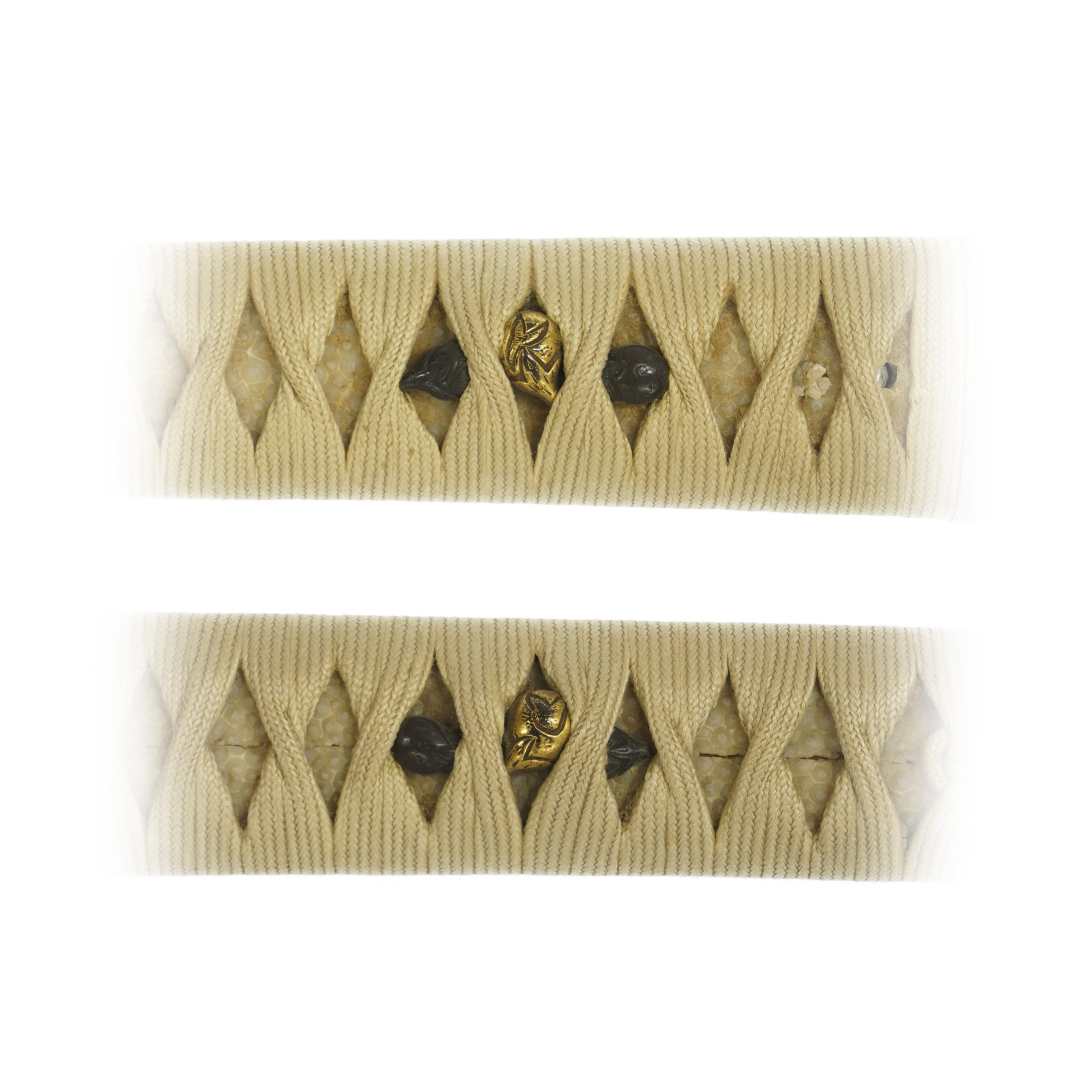
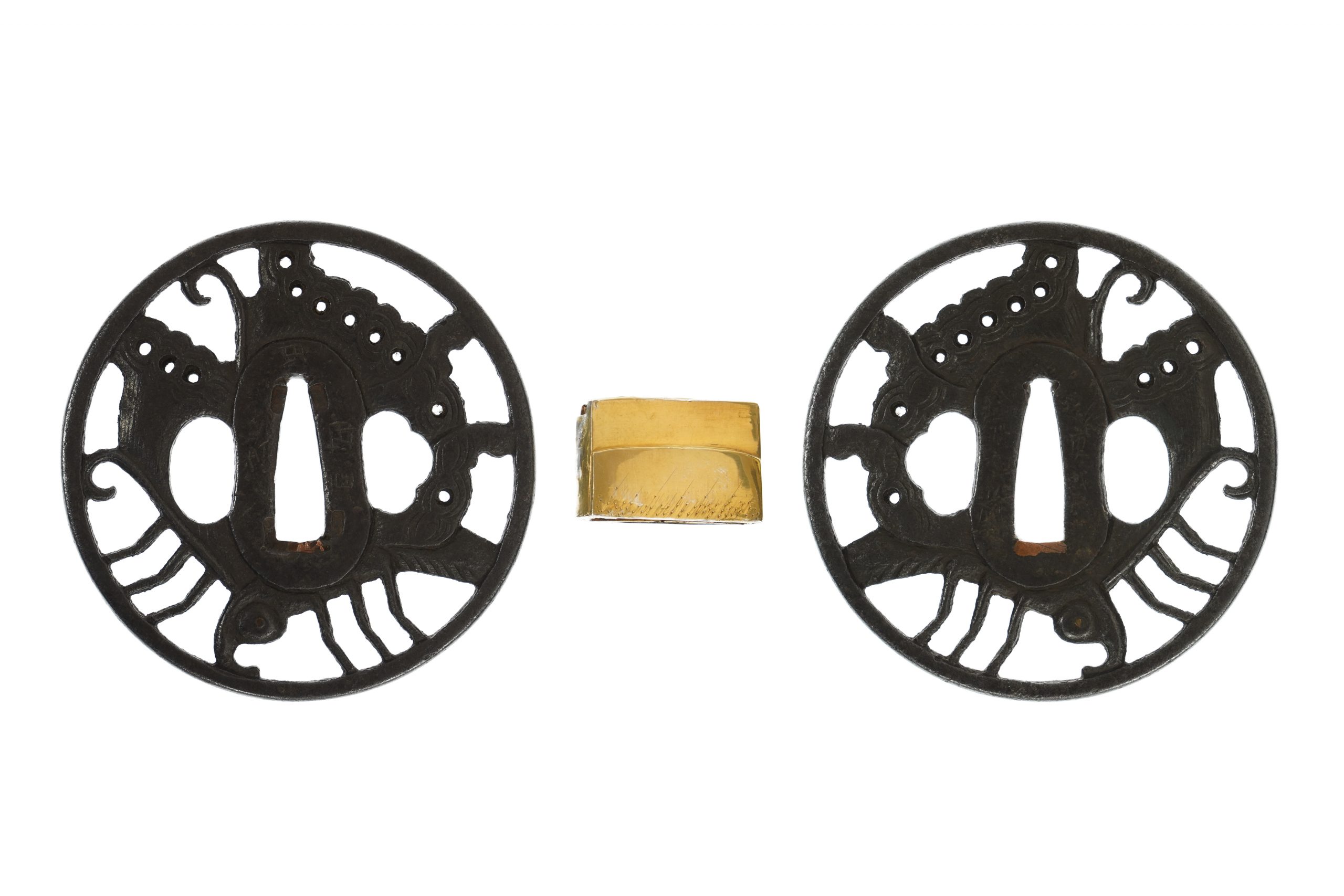
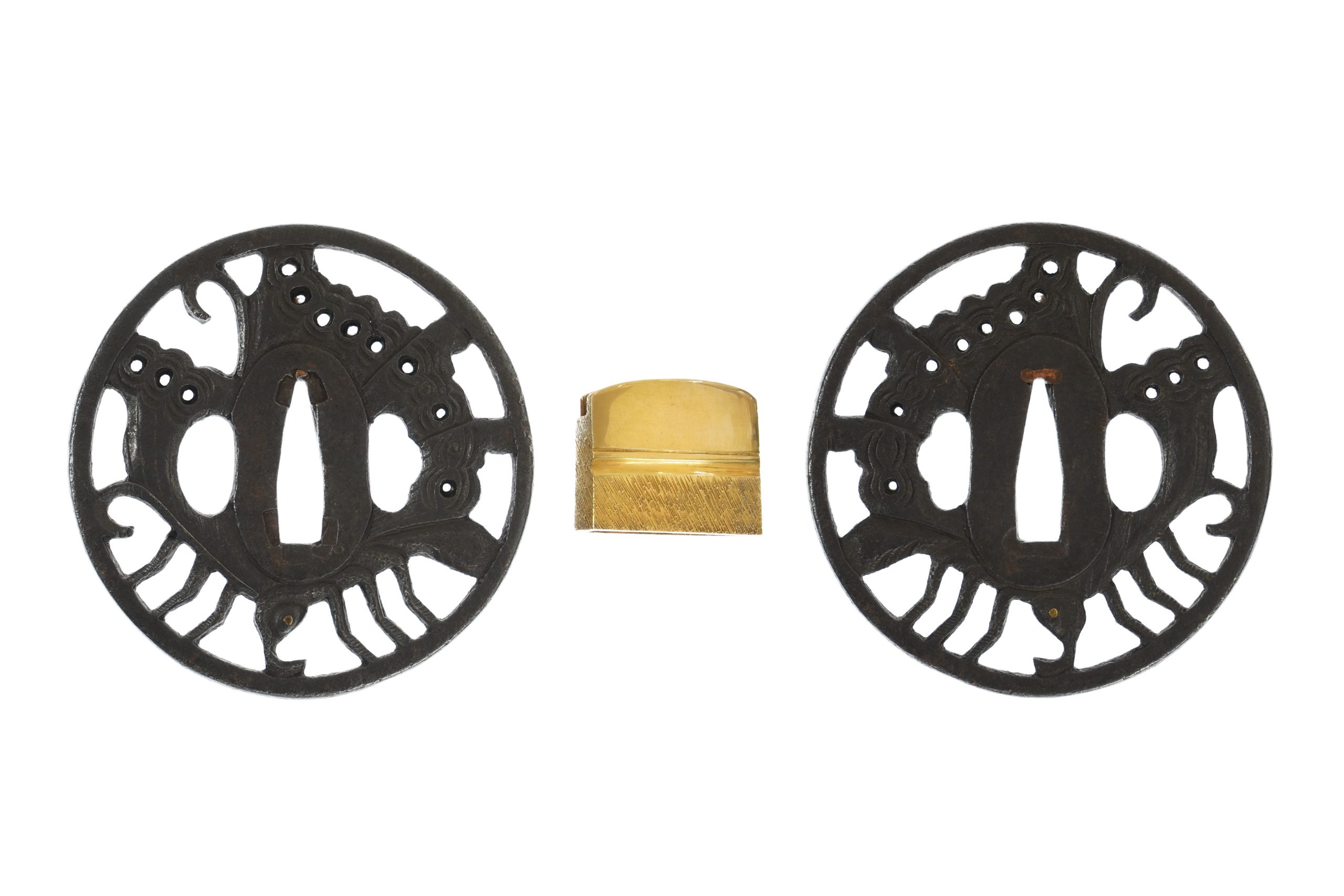
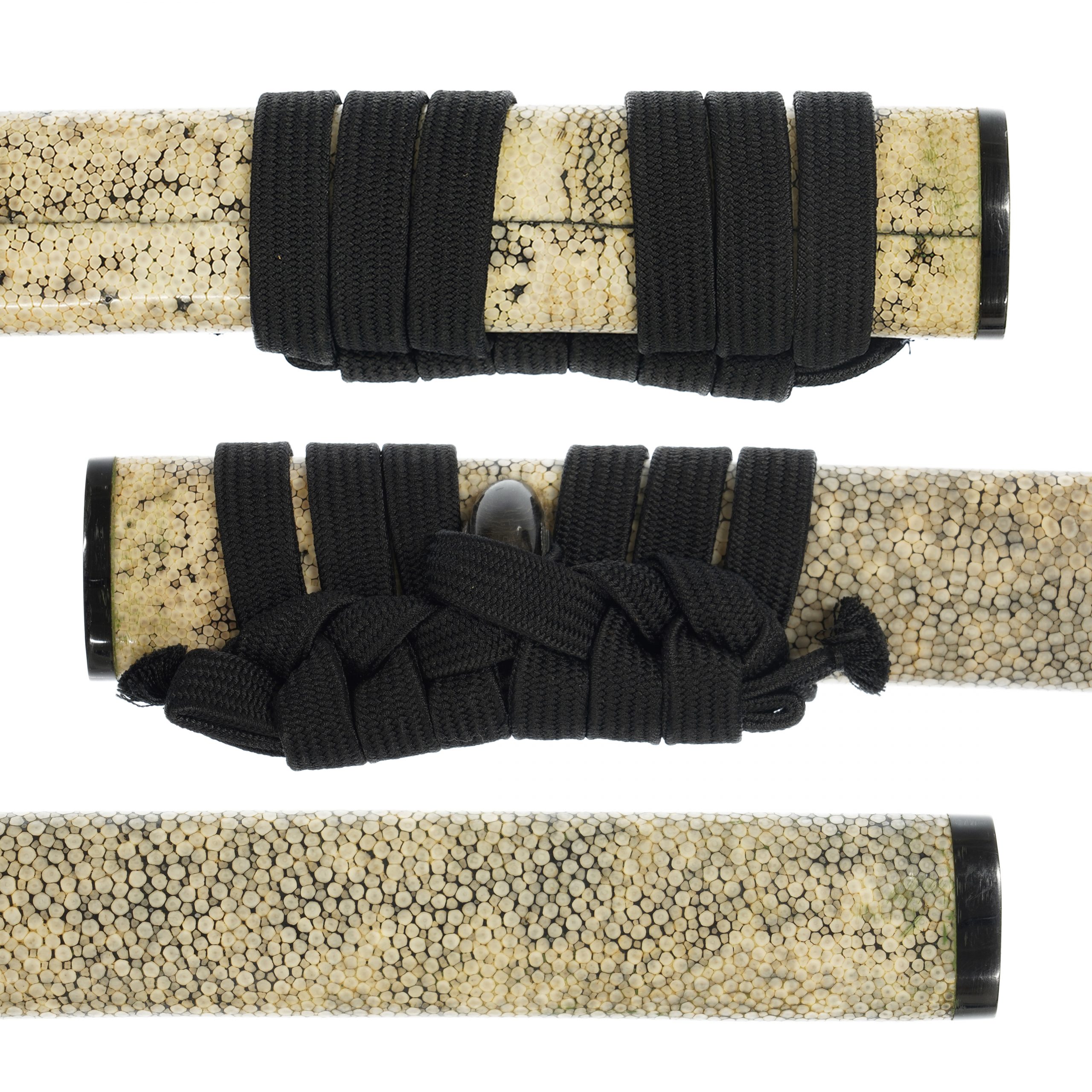
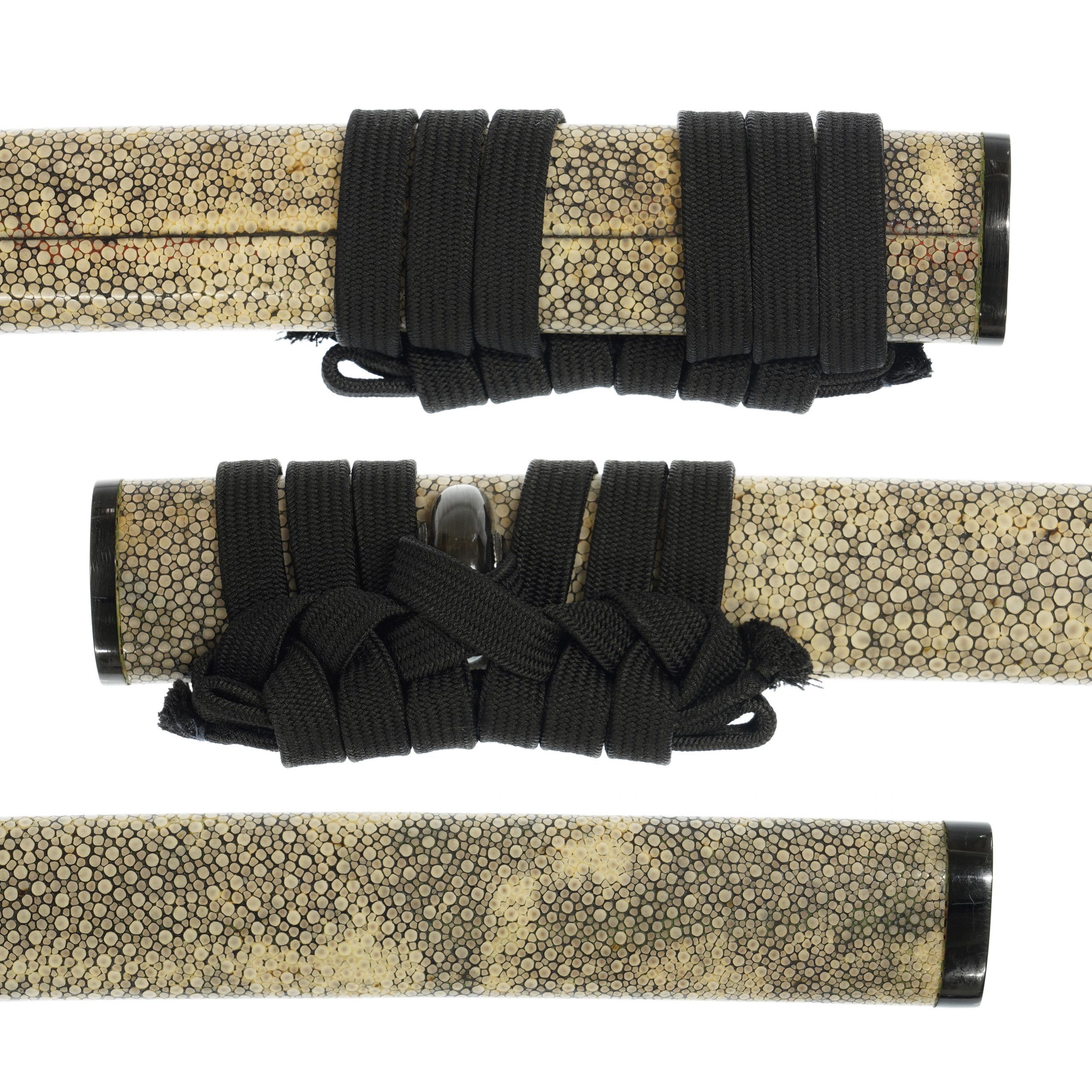
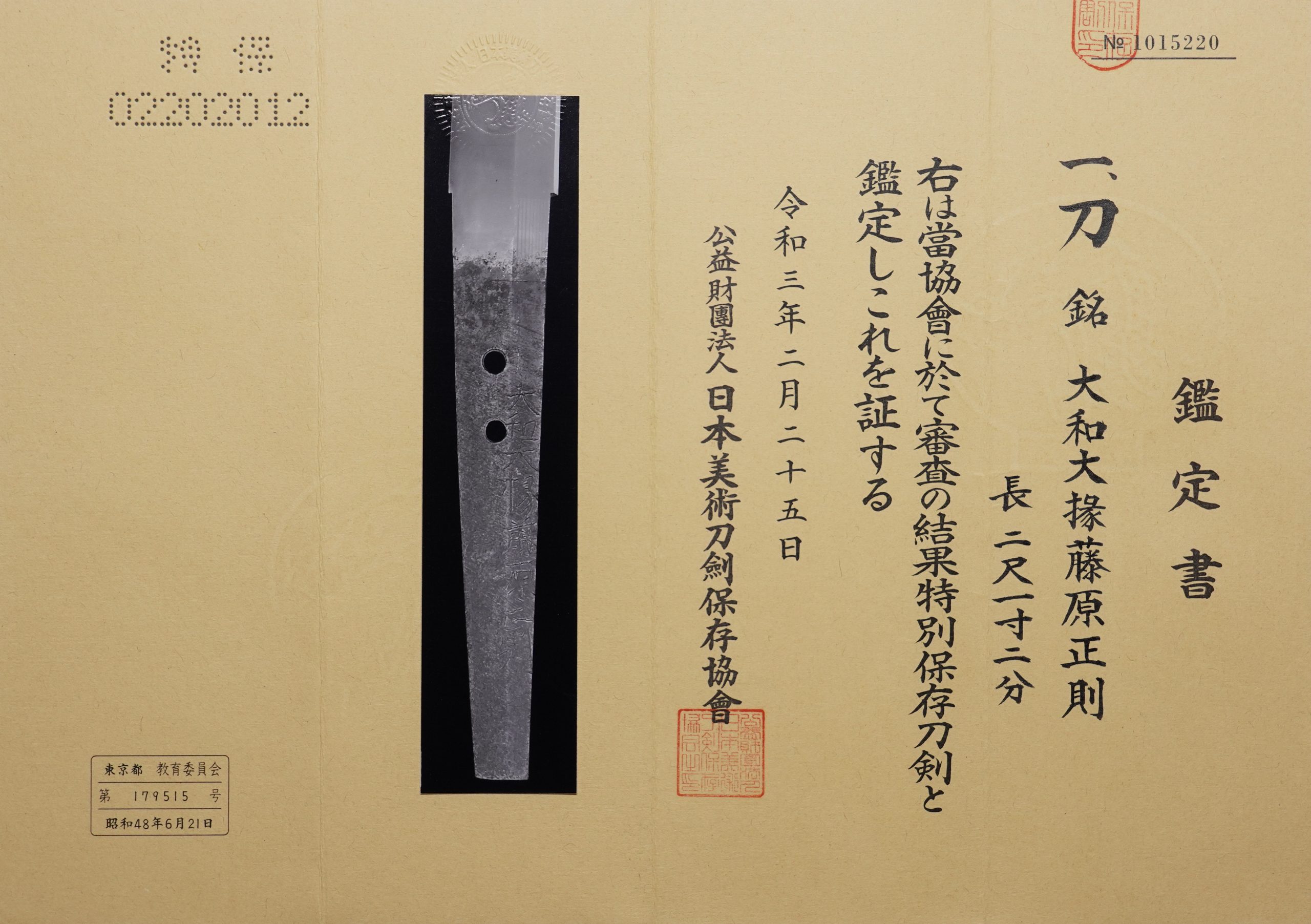
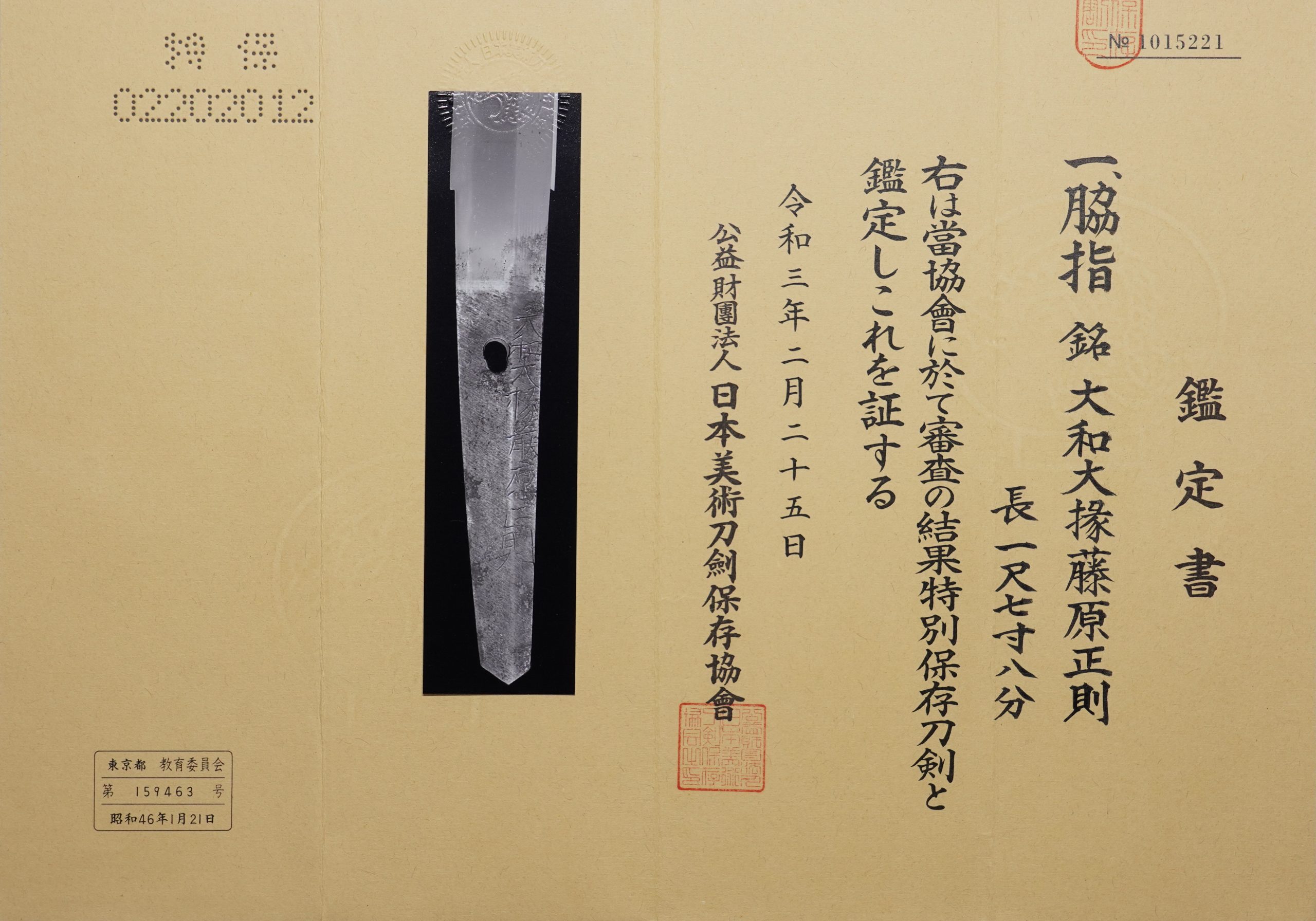
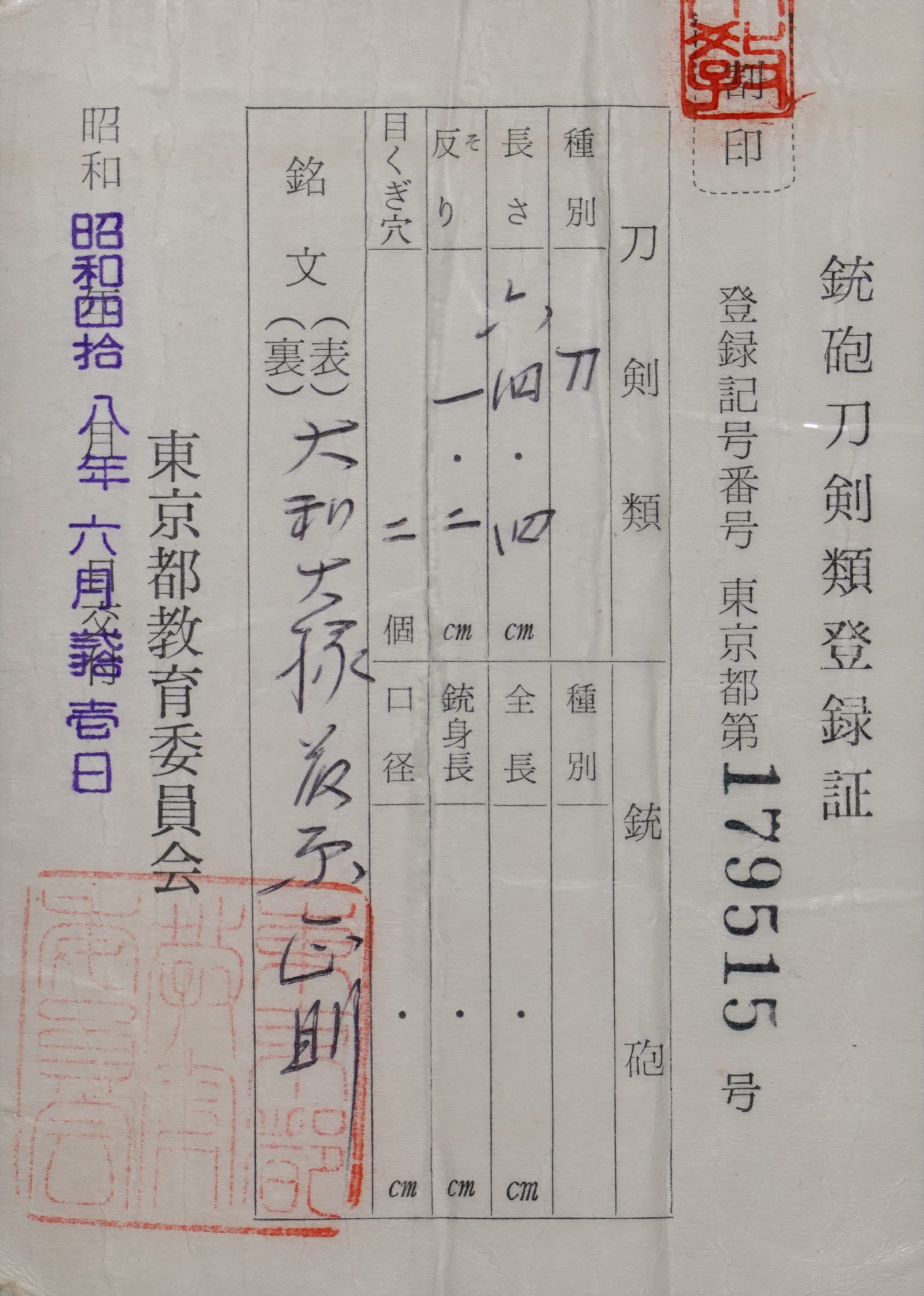
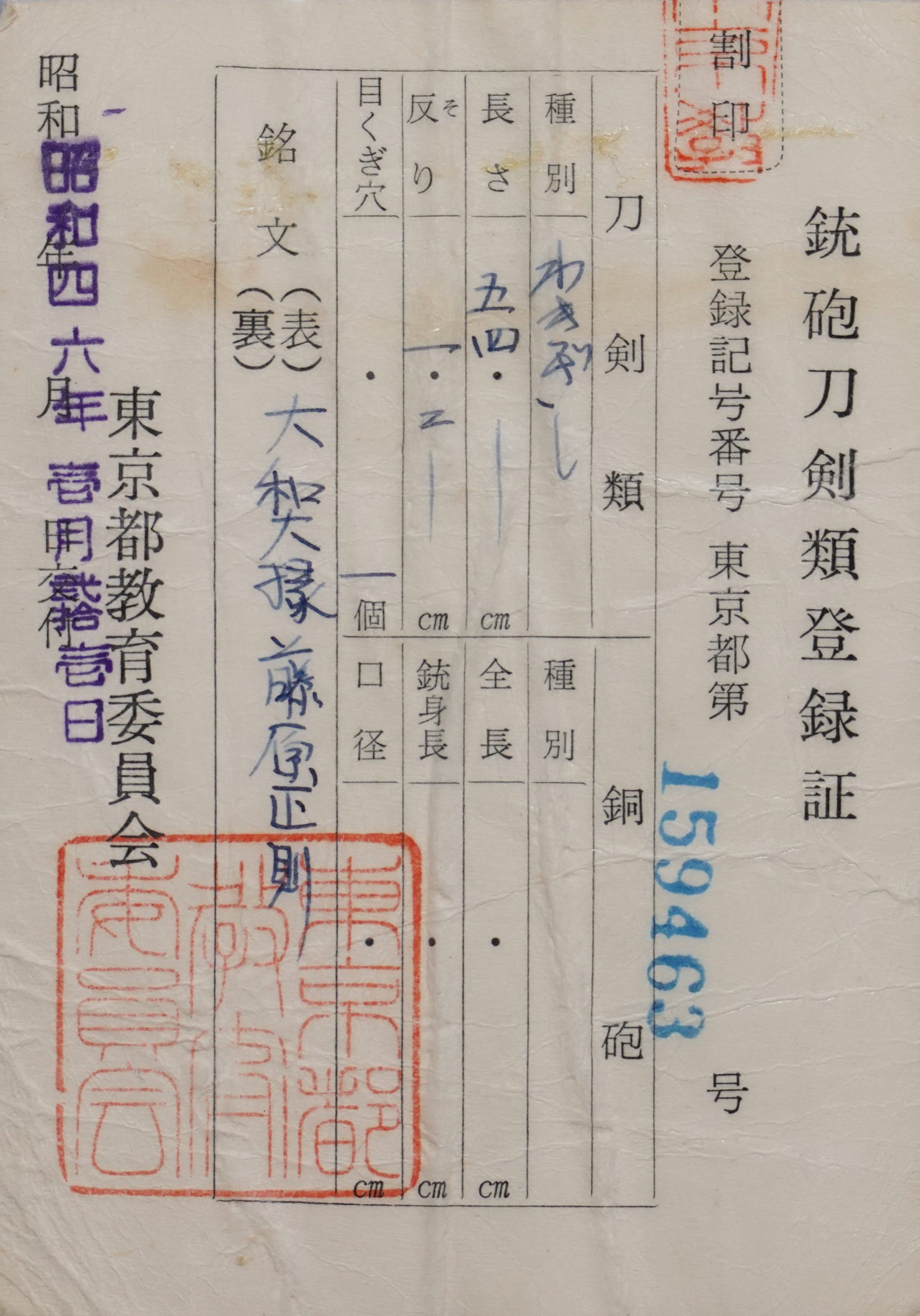
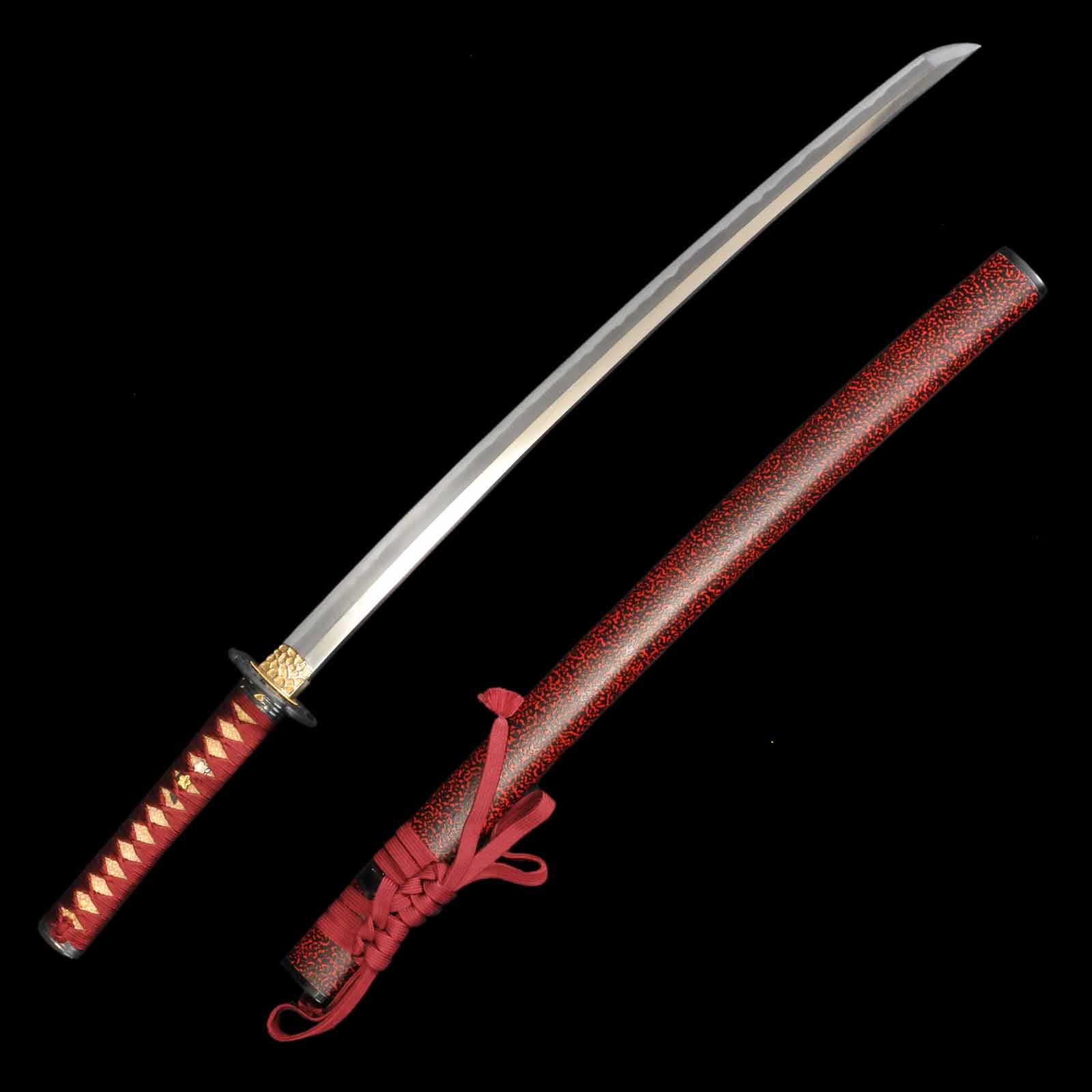
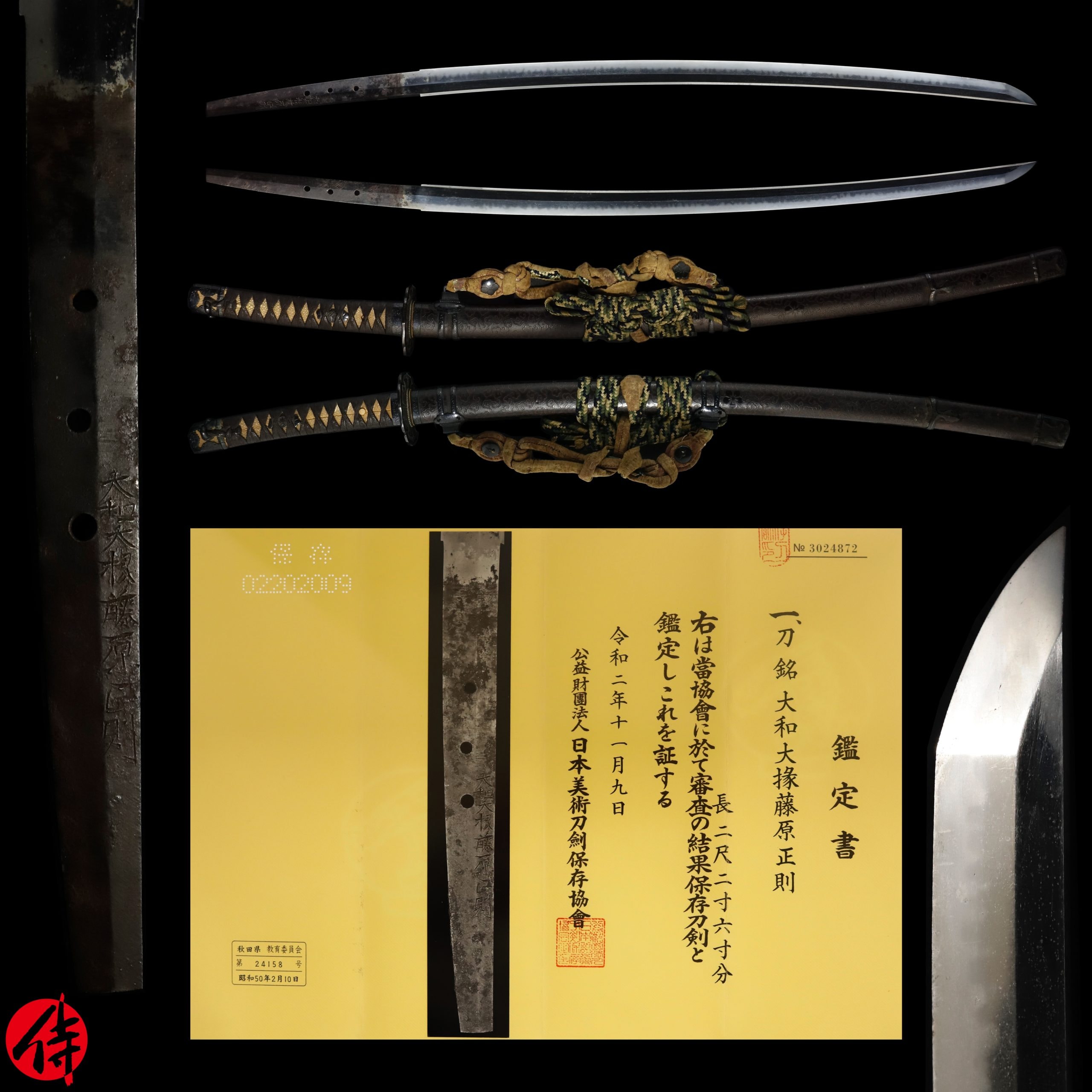
Antique Japanese Sword Daisho Signed by Masanori with NBTHK Tokubetsu Hozon Certificate 【Description】 Swordsmith This blade was forged by Yamato Daijyo Fijiwara Masanori(大和大掾藤原正則), who was born in Miyatsu city, Tango koku(northern Koyoto prefecture). Based on his remaining work, he was active during the early Edo period(the 13th year of Keisho-the fourth year of Keian :1608-1651 ). Masanori is famous for having forged extremely sharp blades and was popular among high-class Samurai. It is said that he was a descendant of Yamashiro koku Sanjyo Yoshinori(山城国三条吉則), one of the most famous swordsmiths during the Muromachi period(Prior to Edo period). After learning the sword-forging technique from his father, Norimitsu(則光) in Miyatsu city, Norimitsu, he moved to Kyoto city. Masanori eventually was noticed and supported by Matsudaira Hideyasu, the third son of Tokugawa Ieyasu, the founder of the Edo government. Hideysu was the feudal lord of Echizen province during the early Edo period. He then moved to Echizen province to serve the Matsudaira clan. He became an Okakaekaji for Matsudaira Tadanao(松平忠直), who was the first son of Matsudaira Hideyasu. An Okakaekaji means those who exclusively forged swords for specific Samurai or clan. It was honorable for any makers to serve this position back then. The swords forged during the Keicho era(1596-1615) are generally called Keicho Shinto. Osaka castle, Himeji castle, and other gorgeous-looking castles were constructed during this time. Many feudal lords preferred fancy-looking items, and this trend applied to Japanese sword making as well. You can see a gorgeous Midare tempering line on this blade. What is Daisho? Daisho is a pair of two Japanese swords Samurai carried. During the Edo period, having Daisho in public places was considered social status for Samurai. Furthermore, Samurai were required to wear them under the law back then. Daisho is written as 大=Big and 小=Small. Dai part means Katana, and Sho part means Wakizashi. They have such a fancy appearance that we believe a high-ranked Samurai owned them. Both scabbards are also coated with stingray skin. We are confident you would like this pair of Daisho Koshirae. And based on the style of the sword mounitng, they are categorized as DENCHU KOSHIRAE(Sword mountings for entering a castle), which is very formal style of the mountings. Appraisal This blade is appraised as a Tokubetsu Hozon Token(特別保存刀剣) issued by NBTHK(Nihon Bijutsu Touken Hozon Kyokai:日本美術刀剣保存協会). This authentication paper was only given to authentic Japanese swords, especially well preserved and high quality with artistic value. 【 Blade】 -Katana Cutting Edge Length(Nagasa) : 64.4 cm( 25.35 inches) Curvature(Sori) : 1.2 cm(0.47 inches) -Wakizashi Cutting Edge Length(Nagasa) : 54.0 cm( 21.26 inches) Curvature(Sori) : 1.2 cm(0.47 inches) Hamon : The crystalline structure which forms along the cutting edge of a blade as a result of the hardening process Jimon(Jihada) : visible steel surface pattern created by folding and hammering during forging process -Katana -Wakizashi Nakago : Nakago is the tang of the Japanese sword. Japanese swordsmiths left the black rust on the tang because it prevents red rust while the tang is in its handle. And the discoloration of the tang was created over time, and it is a great indicator for a Japanese sword specialist to estimate when the sword was forged. Koshirae: Koshirae is the mounting of the Japanese sword. There are several parts that consist of Koshirae such as Saya(Sabbard), Tsuka( Handle), Tsuba(Handguard). Fuchi-Kashira : A pair of matching sword fittings that cover the upper and bottom parts of its sword hilt. At the Fuchi part, there are several letters that are written in an old typeface. These letters are inlaid with golden metal (probably brass). The Kikkou (亀甲, turtle’s shell) pattern is designed for the Fuchi part of the Katana’s handle. It is a continuous geometric pattern connecting regular hexagons up and down. According
在銘 · 寛文


Echizen Shinto (Fukui, Echizen); signing Yamato Daijo Fujiwara Masanori · 越前 · 1596-1615頃
現在2点販売中
正則は作を大和大掾藤原正則と長銘に切り、年紀のもっとも古いものは慶長十三年(一六〇八)で、以後元和二年(一六一六)、寛永元年(一六二四)、慶安四年(一六五一)に及ぶ。この年紀の幅は、彼を江戸時代初期に越前福井に住した越前刀工の初代に位置づけ、初二代の康継と同時代に活躍したことを示す。説明書は一説としてのみ、山城三条吉則の末葉と伝え、本国を丹後国宮津とし、後に越前福井に移り住んだとする。越前康継のごく傍らに置いて恐らくその門人とし、然らずとするも「その影響を受けていることは否定し難い」[[c:2]]と加える。同名は彼の後も数代に続いたが、長銘と生ぶ茎をもってその手を伝えるのは、この初代正則の指定四口である。
常の作風はまず地鉄に読まれる。流れてやや肌立つ板目(四口すべてに板目、三口に肌立ち、二口に流れごころ)に地沸つき、大振りの刀には地景が入り、地鉄は時に黒ずむ。その上を走る刃文は互の目・大互の目・尖り刃・矢筈風の刃を交えた乱刃で、小沸つき、帽子は乱れ込んで小丸に返る。だが説明書が立ち返るのは線の個々の特徴ではなく匂口の性格であり、それはやや沈みごころとなって、総じて「匂口の沈んだ刃で、一般に関物に近い」[[c:3]]とまとめられる。この沈む匂口は、流れて肌立つ地鉄と相俟って、賑やかな作にわたる彼の最も恒常的な見どころである。
すべての作が賑やかなわけではない。薙刀の一口で手は静まり、鍛えは細かな小板目でわずかに肌立ちごころとなり、地沸つき、刃文は足の入る直刃に落ち着いて小沸つき、帽子は直ぐに小丸となる。説明書はこの直刃を乱刃と並べて彼がしばしば焼くものとし、その一口を「地鉄が精美で地刃の出来がよく整った」[[c:4]]と評する。これは流れる乱れの手に対する律された対の作域であり、彼の越前の修練が華やかな作と同様に静かな作域をも備えていたことを示す。
力量の極みはまた別にある。第七回の指定刀、四口中もっとも古いこの一口は彼の野心の極みで、身幅広く大鋒に結び、表は片切刃造、裏は鎬造に造り込み、いわゆる切刃貞宗にならう。棟焼頻りにかかる肌立つ板目の上を双文大乱が走り、足・葉頻りに入り砂流かかり、裏は皆焼となって、帽子は突き上げて掃きかけ沸つく。表には三鈷剣を彫る。この刀について説明書は、出来優れ「殆んど初代康継に迫るものがあり、同作中これに比すべきものがない」[[c:5]]と記す。片切刃の造込はこの一口限りではなく薙刀にも見える彼の記録上の特色だが、貞宗の様式が名指され、その野心が十全に実るのはこの刀においてである。
越前新刀の犇めく中で正則を画するものは、隣人との対比よりも彼自身の地刃の特色から引くのがよい。流れて肌立つ板目と沈む匂口は、説明書が彼の関物への近さと結ぶ印であり、常の作をひとつにまとめる。これに対して片切刃の作と貞宗写しの野心作は、より古くより大きな作風への手の伸ばしである。第二十三回の薙刀について本会は「地刃に正則の特色が濃く」[[c:6]]現れるとし、同じ一口で彫物も見事とする。彼は同派の評にあって、常の作は関物に近く、しかし最上の日には自国新刀の祖たる康継に迫る刀を打ち得た工である。
正則の指定は重要刀剣四口、刀二口・薙刀二口で、いずれも生ぶ茎に長銘を有する。国宝・重要文化財・特別重要刀剣はこのうちになく、四口のいずれにも記録された伝来や所持者の名はない。説明書が同作中比すべきものなしとする貞宗写しの第七回の刀が彼の最も名高い作であり、直刃の静かな一口と彼自身の特色の濃い一口の二薙刀が、小さいながらも一貫した作群を整える。収集家にとって彼の作は時折市場に現れるにとどまり、その最良の一口は出れば画期となる。彼の手になる有銘の越前刀・薙刀は、指定文化財のように手の届かぬものではないが、市場に出ることは稀であり、沈む匂口と流れて肌立つ地鉄の明らかに現れた一口は、追い求めるよりも待つことに報いる。
正則の位置づけを、日本刀全体および伝統・時代・時期ごとに示します。各位(随一・屈指・有数・著名)は、NBTHK および文化庁による指定に加え、三作や名物帳などの歴史的栄誉を加味したものです。
各項目を選ぶと評価方法が表示されます。
保存刀剣のうち、出来が一層優れ、保存状態も良好と認められたものです。再刃や、室町・江戸期の多くの無銘作は対象外となり、保存刀剣より高い基準が課されます。
日本美術刀剣保存協会(NBTHK)は、1948年に設立され、文化庁の監督を受ける公益財団法人で、東京・刀剣博物館に本部を置きます。専門の審査員が出品作を直接審査し、美術的・歴史的価値に応じた鑑定書を発行します。NBTHKの鑑定書は、日本刀および刀装具の真正性を示す最も広く認知された基準です。
NBTHK公式サイトReturns/exchanges limited to defects caused by shipping (except willful misconduct or gross negligence by the company); customers must contact within 72 hours of receiving the product.
Antique Japanese Sword Daisho Signed by Masanori with NBTHK Tokubetsu Hozon Certificate 【Description】 Swordsmith This blade was forged by Yamato Daijyo Fijiwara Masanori(大和大掾藤原正則), who was born in Miyatsu city, Tango koku(northern Koyoto prefecture). Based on his remaining work, he was active during the early Edo period(the 13th year of Keisho-the fourth year of Keian :1608-1651 ). Masanori is famous for having forged extremely sharp blades and was popular among high-class Samurai. It is said that he was a descendant of Yamashiro koku Sanjyo Yoshinori(山城国三条吉則), one of the most famous swordsmiths during the Muromachi period(Prior to Edo period). After learning the sword-forging technique from his father, Norimitsu(則光) in Miyatsu city, Norimitsu, he moved to Kyoto city. Masanori eventually was noticed and supported by Matsudaira Hideyasu, the third son of Tokugawa Ieyasu, the founder of the Edo government. Hideysu was the feudal lord of Echizen province during the early Edo period. He then moved to Echizen province to serve the Matsudaira clan. He became an Okakaekaji for Matsudaira Tadanao(松平忠直), who was the first son of Matsudaira Hideyasu. An Okakaekaji means those who exclusively forged swords for specific Samurai or clan. It was honorable for any makers to serve this position back then. The swords forged during the Keicho era(1596-1615) are generally called Keicho Shinto. Osaka castle, Himeji castle, and other gorgeous-looking castles were constructed during this time. Many feudal lords preferred fancy-looking items, and this trend applied to Japanese sword making as well. You can see a gorgeous Midare tempering line on this blade. What is Daisho? Daisho is a pair of two Japanese swords Samurai carried. During the Edo period, having Daisho in public places was considered social status for Samurai. Furthermore, Samurai were required to wear them under the law back then. Daisho is written as 大=Big and 小=Small. Dai part means Katana, and Sho part means Wakizashi. They have such a fancy appearance that we believe a high-ranked Samurai owned them. Both scabbards are also coated with stingray skin. We are confident you would like this pair of Daisho Koshirae. And based on the style of the sword mounitng, they are categorized as DENCHU KOSHIRAE(Sword mountings for entering a castle), which is very formal style of the mountings. Appraisal This blade is appraised as a Tokubetsu Hozon Token(特別保存刀剣) issued by NBTHK(Nihon Bijutsu Touken Hozon Kyokai:日本美術刀剣保存協会). This authentication paper was only given to authentic Japanese swords, especially well preserved and high quality with artistic value. 【 Blade】 -Katana Cutting Edge Length(Nagasa) : 64.4 cm( 25.35 inches) Curvature(Sori) : 1.2 cm(0.47 inches) -Wakizashi Cutting Edge Length(Nagasa) : 54.0 cm( 21.26 inches) Curvature(Sori) : 1.2 cm(0.47 inches) Hamon : The crystalline structure which forms along the cutting edge of a blade as a result of the hardening process Jimon(Jihada) : visible steel surface pattern created by folding and hammering during forging process -Katana -Wakizashi Nakago : Nakago is the tang of the Japanese sword. Japanese swordsmiths left the black rust on the tang because it prevents red rust while the tang is in its handle. And the discoloration of the tang was created over time, and it is a great indicator for a Japanese sword specialist to estimate when the sword was forged. Koshirae: Koshirae is the mounting of the Japanese sword. There are several parts that consist of Koshirae such as Saya(Sabbard), Tsuka( Handle), Tsuba(Handguard). Fuchi-Kashira : A pair of matching sword fittings that cover the upper and bottom parts of its sword hilt. At the Fuchi part, there are several letters that are written in an old typeface. These letters are inlaid with golden metal (probably brass). The Kikkou (亀甲, turtle’s shell) pattern is designed for the Fuchi part of the Katana’s handle. It is a continuous geometric pattern connecting regular hexagons up and down. According
在銘 · 寛文


Echizen Shinto (Fukui, Echizen); signing Yamato Daijo Fujiwara Masanori · 越前 · 1596-1615頃
現在2点販売中
正則は作を大和大掾藤原正則と長銘に切り、年紀のもっとも古いものは慶長十三年(一六〇八)で、以後元和二年(一六一六)、寛永元年(一六二四)、慶安四年(一六五一)に及ぶ。この年紀の幅は、彼を江戸時代初期に越前福井に住した越前刀工の初代に位置づけ、初二代の康継と同時代に活躍したことを示す。説明書は一説としてのみ、山城三条吉則の末葉と伝え、本国を丹後国宮津とし、後に越前福井に移り住んだとする。越前康継のごく傍らに置いて恐らくその門人とし、然らずとするも「その影響を受けていることは否定し難い」[[c:2]]と加える。同名は彼の後も数代に続いたが、長銘と生ぶ茎をもってその手を伝えるのは、この初代正則の指定四口である。
常の作風はまず地鉄に読まれる。流れてやや肌立つ板目(四口すべてに板目、三口に肌立ち、二口に流れごころ)に地沸つき、大振りの刀には地景が入り、地鉄は時に黒ずむ。その上を走る刃文は互の目・大互の目・尖り刃・矢筈風の刃を交えた乱刃で、小沸つき、帽子は乱れ込んで小丸に返る。だが説明書が立ち返るのは線の個々の特徴ではなく匂口の性格であり、それはやや沈みごころとなって、総じて「匂口の沈んだ刃で、一般に関物に近い」[[c:3]]とまとめられる。この沈む匂口は、流れて肌立つ地鉄と相俟って、賑やかな作にわたる彼の最も恒常的な見どころである。
すべての作が賑やかなわけではない。薙刀の一口で手は静まり、鍛えは細かな小板目でわずかに肌立ちごころとなり、地沸つき、刃文は足の入る直刃に落ち着いて小沸つき、帽子は直ぐに小丸となる。説明書はこの直刃を乱刃と並べて彼がしばしば焼くものとし、その一口を「地鉄が精美で地刃の出来がよく整った」[[c:4]]と評する。これは流れる乱れの手に対する律された対の作域であり、彼の越前の修練が華やかな作と同様に静かな作域をも備えていたことを示す。
力量の極みはまた別にある。第七回の指定刀、四口中もっとも古いこの一口は彼の野心の極みで、身幅広く大鋒に結び、表は片切刃造、裏は鎬造に造り込み、いわゆる切刃貞宗にならう。棟焼頻りにかかる肌立つ板目の上を双文大乱が走り、足・葉頻りに入り砂流かかり、裏は皆焼となって、帽子は突き上げて掃きかけ沸つく。表には三鈷剣を彫る。この刀について説明書は、出来優れ「殆んど初代康継に迫るものがあり、同作中これに比すべきものがない」[[c:5]]と記す。片切刃の造込はこの一口限りではなく薙刀にも見える彼の記録上の特色だが、貞宗の様式が名指され、その野心が十全に実るのはこの刀においてである。
越前新刀の犇めく中で正則を画するものは、隣人との対比よりも彼自身の地刃の特色から引くのがよい。流れて肌立つ板目と沈む匂口は、説明書が彼の関物への近さと結ぶ印であり、常の作をひとつにまとめる。これに対して片切刃の作と貞宗写しの野心作は、より古くより大きな作風への手の伸ばしである。第二十三回の薙刀について本会は「地刃に正則の特色が濃く」[[c:6]]現れるとし、同じ一口で彫物も見事とする。彼は同派の評にあって、常の作は関物に近く、しかし最上の日には自国新刀の祖たる康継に迫る刀を打ち得た工である。
正則の指定は重要刀剣四口、刀二口・薙刀二口で、いずれも生ぶ茎に長銘を有する。国宝・重要文化財・特別重要刀剣はこのうちになく、四口のいずれにも記録された伝来や所持者の名はない。説明書が同作中比すべきものなしとする貞宗写しの第七回の刀が彼の最も名高い作であり、直刃の静かな一口と彼自身の特色の濃い一口の二薙刀が、小さいながらも一貫した作群を整える。収集家にとって彼の作は時折市場に現れるにとどまり、その最良の一口は出れば画期となる。彼の手になる有銘の越前刀・薙刀は、指定文化財のように手の届かぬものではないが、市場に出ることは稀であり、沈む匂口と流れて肌立つ地鉄の明らかに現れた一口は、追い求めるよりも待つことに報いる。
正則の位置づけを、日本刀全体および伝統・時代・時期ごとに示します。各位(随一・屈指・有数・著名)は、NBTHK および文化庁による指定に加え、三作や名物帳などの歴史的栄誉を加味したものです。
各項目を選ぶと評価方法が表示されます。
保存刀剣のうち、出来が一層優れ、保存状態も良好と認められたものです。再刃や、室町・江戸期の多くの無銘作は対象外となり、保存刀剣より高い基準が課されます。
日本美術刀剣保存協会(NBTHK)は、1948年に設立され、文化庁の監督を受ける公益財団法人で、東京・刀剣博物館に本部を置きます。専門の審査員が出品作を直接審査し、美術的・歴史的価値に応じた鑑定書を発行します。NBTHKの鑑定書は、日本刀および刀装具の真正性を示す最も広く認知された基準です。
NBTHK公式サイトReturns/exchanges limited to defects caused by shipping (except willful misconduct or gross negligence by the company); customers must contact within 72 hours of receiving the product.