二世紀半の泰平のあいだ、刀は武器である以上に武士の身分の標章であった。江戸の実証と大坂の華やぎのように都市ごとの作風が育ち、時代の末には需要も細っていく。
 NihontoWatchNihontoWatch
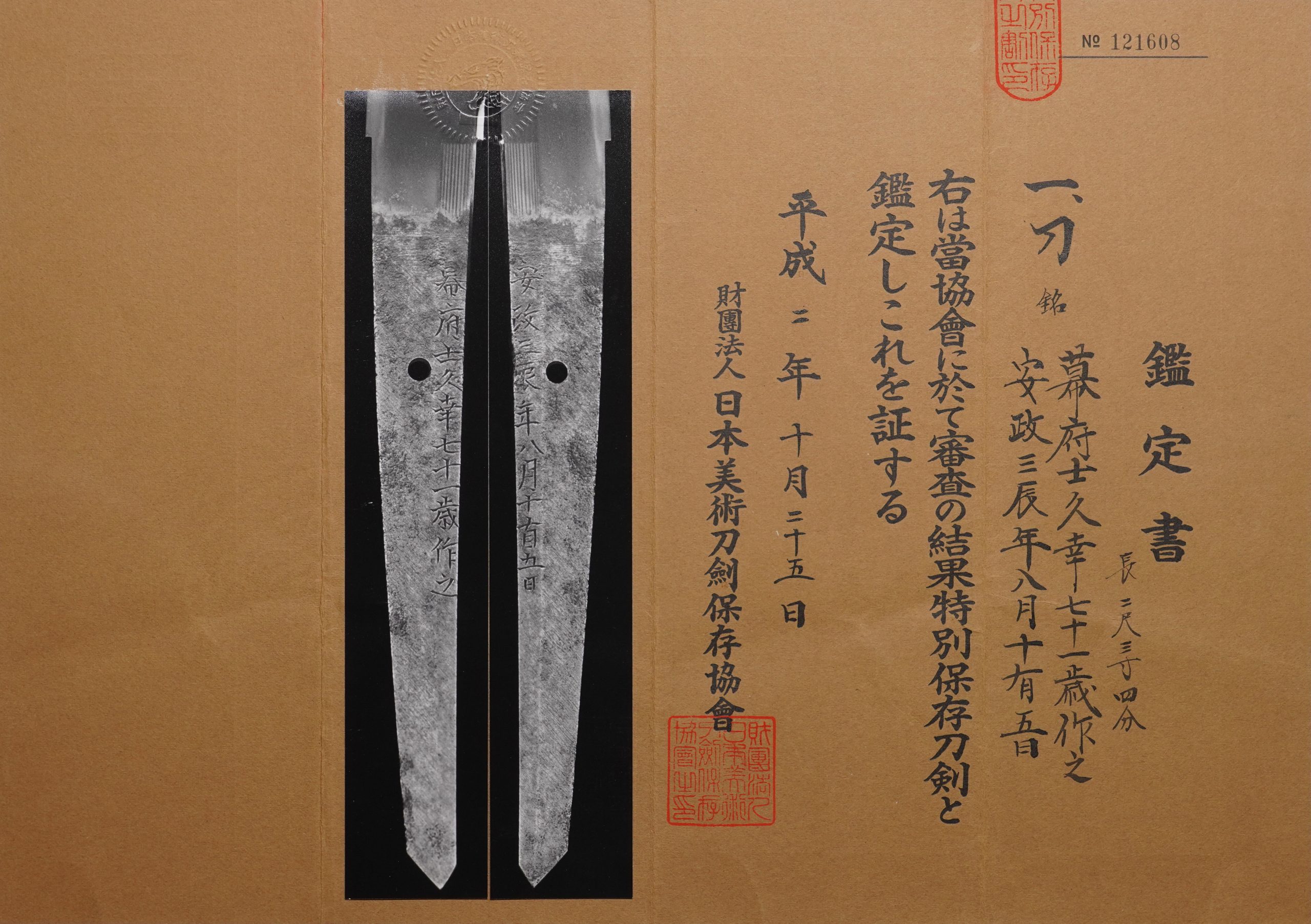
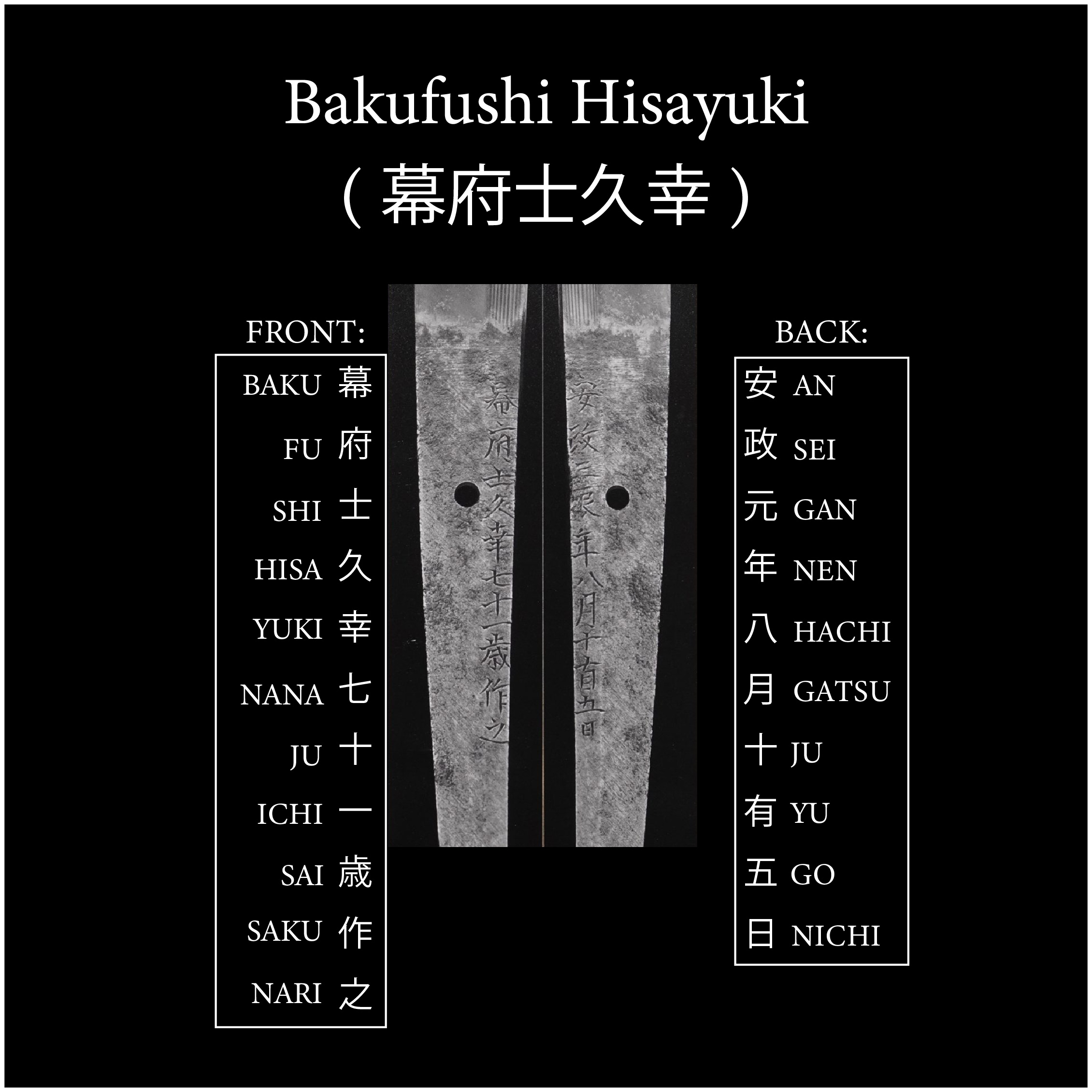
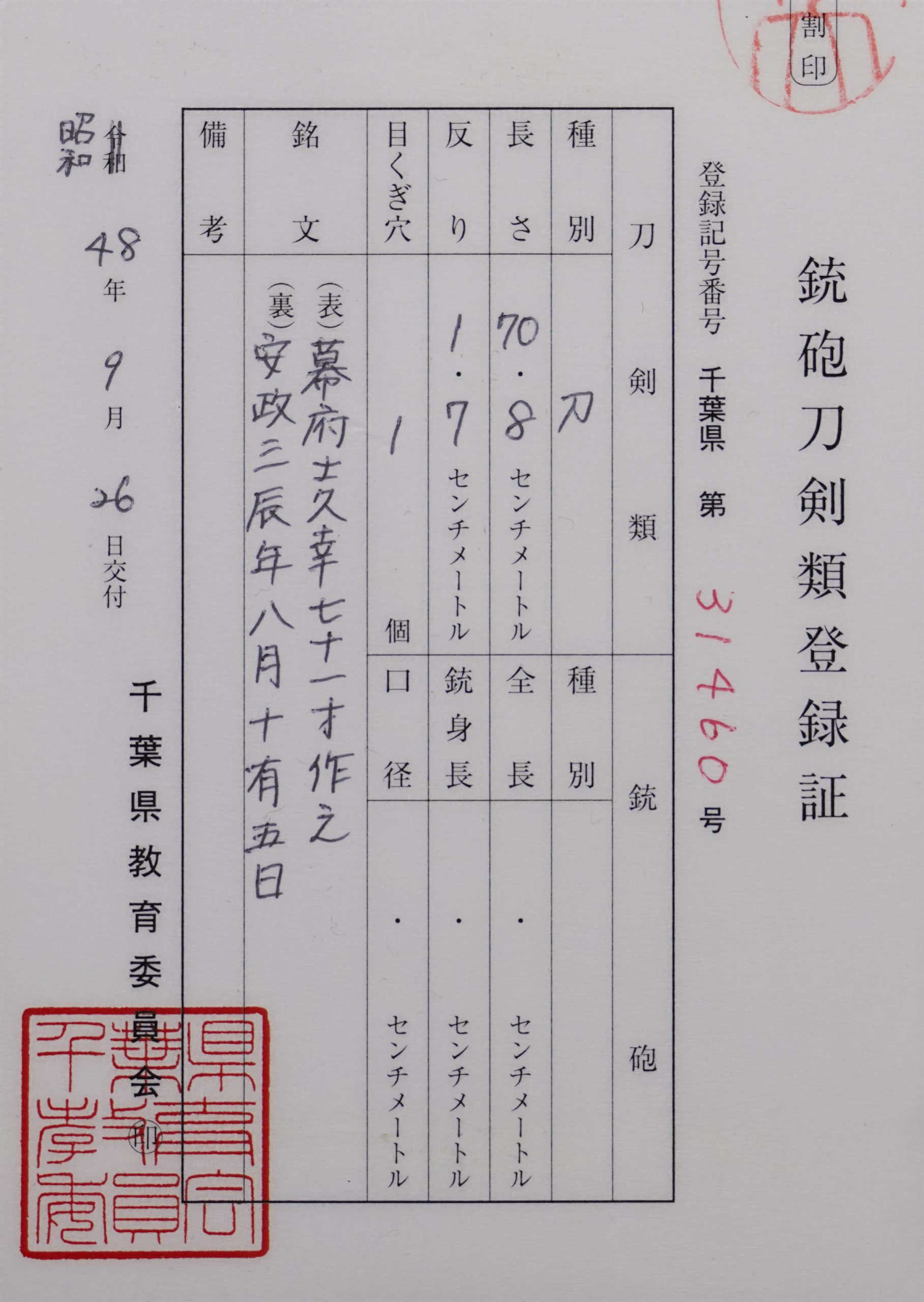
About Swordsmith This blade was signed by Bakufushi Hisayuki(幕府士久幸) on August 15th in the third year of Ansei era(1856) when he was 71 years old based on the signature and the NBHTK certificate. Bakushi Hisayuki is also known as Kawai Hisayuki(川井久幸). He was active in sword-forging at the end of the Edo period. He served Tokugawa Shogunate as a Samurai as well. He was ranked as Hatamoto(Guardian of the banner), a high-ranked direct retainer of Tokugawa Shogunate. While forging swords for the Tokugawa government, he also worked as a military officer, exceptionally skilled at using Yari(spear). He was born in the 6th year of Tenmei era(1786) as the first son of Kawai family, who belonged to Hamaoto rank under Tokugawa Shogunate. His family’s ancestor served Tokugawa Ieyasu(the first appointed Shogun in the Edo period) in Toe province(Shizuoka prefecture). And, Hisayuki’s family was a branch family and kept the Hatamoto ranking from his ancestors. Hisayuki’s real name is Kawai Kametaro(川井亀太郎). He lived in Koishikawa area in Edo city, Musashikoku. Being interested in sword-forging, Hisayuki first became an apprentice of Hosokawa Masayoshi school. He mainly learned his sword-forging technique under the master Shimizu Hisayoshi. Later on, he also studied craft from Nakayama Ikkansai Yoshihiro. It was pretty rare to become a swordsmith from a Samurai family’s background. We assume he was eager to improve his sword-forging technique by learning from different masters. During his career, he mainly focused on forging sharp and practical swords. Many of his remaining works are designed with a straight tempering line(Suguha). While he forged many Yari blades(spears), you rarely find a Katana blade signed by him. As a Samurai, he was also famous as the master of Yari fighting style. He died at the age of 83 in the first year of the Meiji era when the Tokugawa government lost its power. This blade was forged when he was 71 years old, and we feel his vitality by appreciating it. Based on how refined this sword is, we believe this blade was ordered by a high-class Samurai who served Tokugawa Shogun at the end of the Edo period. The Background History Japan enjoyed a relatively peaceful time from the early Edo period to the mid-Edo period(the 1600s-1760s) because of the stable economy and the powerful government run by Tokugawa Shogun. Samurai didn’t have many opportunities to utilize his Katana sword in public or on battlefields during this time. Thus, they carried their swords more as a symbol of their social status. The demand for weapons decreased accordingly compared to the previous Warring state period called Sengoku Jidai. (1467-1600) However, toward the end of the Edo period(1764-1876), the Japanese sword’s role changed dramatically. With the poverty spreading in Japan, there were so many riots initiated by the civilians. Japanese sword started to play an essential role in maintaining public safety. Pressure from foreign countries to open Japanese borders also forced Samurai to order strong-looking swords to survive this tumultuous time. We believe many swordsmiths, including Hisayuki, made great efforts to forged high-quality, practical blades for their masters to prepare for battles. There was a civil war between Tokugawa’s military government and the new Meiji government at the end of the Edo period. That means the original owner of this Katana might have seen the moment when Samurai’s life changed forever. This blade has a strong looking and must have been practical to use in that demanding time. You can see Yoshiyuki’s excellent craftsmanship by simply looking at this blade closely. We are confident you will be happy to own this piece of Samurai history. Appraisal This blade is appraised as a Tokubetsu Hozon Token(特別保存刀剣) issued by NBTHK(Nihon Bijutsu Touken Hozon Kyokai:日本美術刀剣保存協会). Fuchi-Kashira Horses and several types of flowers are designed for this Fuchi Kashira. Some parts are colored with golden metal. This Fuchi Kashira depicts horses relaxing in various plants; this work has a gorgeous look thanks to the effect of gold decoration. Tsuka and Menuki Same as the Fuchi Kasira, horses are designed for this Menuki. They are running, opening their legs widely, and give a neigh. Horses have been around human life for a long time, as our food and for transportation or carriage of luggage. In Japan, horses were thought of as vehicles for gods to be dedicated to shrines in ancient times. It is said it is the origin of Ema (絵馬, picture tablet used as an offering at a shrine) today. Horses had been used as a tool for rituals and festivals. After the age that Samurai appeared, wearing large armor or performing archery riding a hose became martial arts. Equestrian tactics became the pillar of military action and security activities. According to a theory, that is why the Japanese sword began to have a curve to make it suitable for slashing (the Japanese sword was straight in the beginning). Tsuba and Habaki Circle-shaped Tsuba made from iron. It seems this Tsuba depicts several motifs. For example, you would find a cherry blossom on the right upper side. There is a Matsuba (松葉, pine needle)-like design at the left side of the Kozuka hole. Also, an abstracted design of two wild geese is arranged under the pine needle. Cherry blossom is one of the seasonal things of spring, and it has been loved for a long time in Japan. Its pattern is designed not only for sword mountings but also for Kimono (着物, traditional Japanese costume) or furnishings. A theory says that the god of grain exists in cherry blossoms. Therefore, this flower pattern has been treated as the symbol of a plentiful harvest. The pine needle pattern has been treated as a lucky charm because the root of the two leaves are firmly connected and will not separate even if the leaves fall. Shoguns and Daimyos set their patterns in the Edo period and called Sadame Mon (定め紋). Tokugawa Tsunayoshi (1680-1709), the 5th Shogun of the Edo Shogunate, used the Matsuba design for his Sadame Mon. The pine tree itself is also one of the classical designs for Japanese people. As pine trees keep their green color throughout the years by withstanding severe heat and cold, this plant pattern represents eternal youth. The wild goose is a migratory bird that represents fall. This bird is engraved by not only a relistic figure but also a very simplified shape: Hiragana (ひらがな, a kind of Japanese letter) “he (へ)” shape that sometimes makes also wild goose. This motif is also popular for family crests. In this way, various designs are contained in one work; you would enjoy the design itself and the meaning of each motif. Authentication Paper They authenticated the blade on Oct 25th in the 2nd year of Heisei (1990). They appraised it as a Tokubetsu Hozon Touken, the blade especially worth preserving for Japanese society.

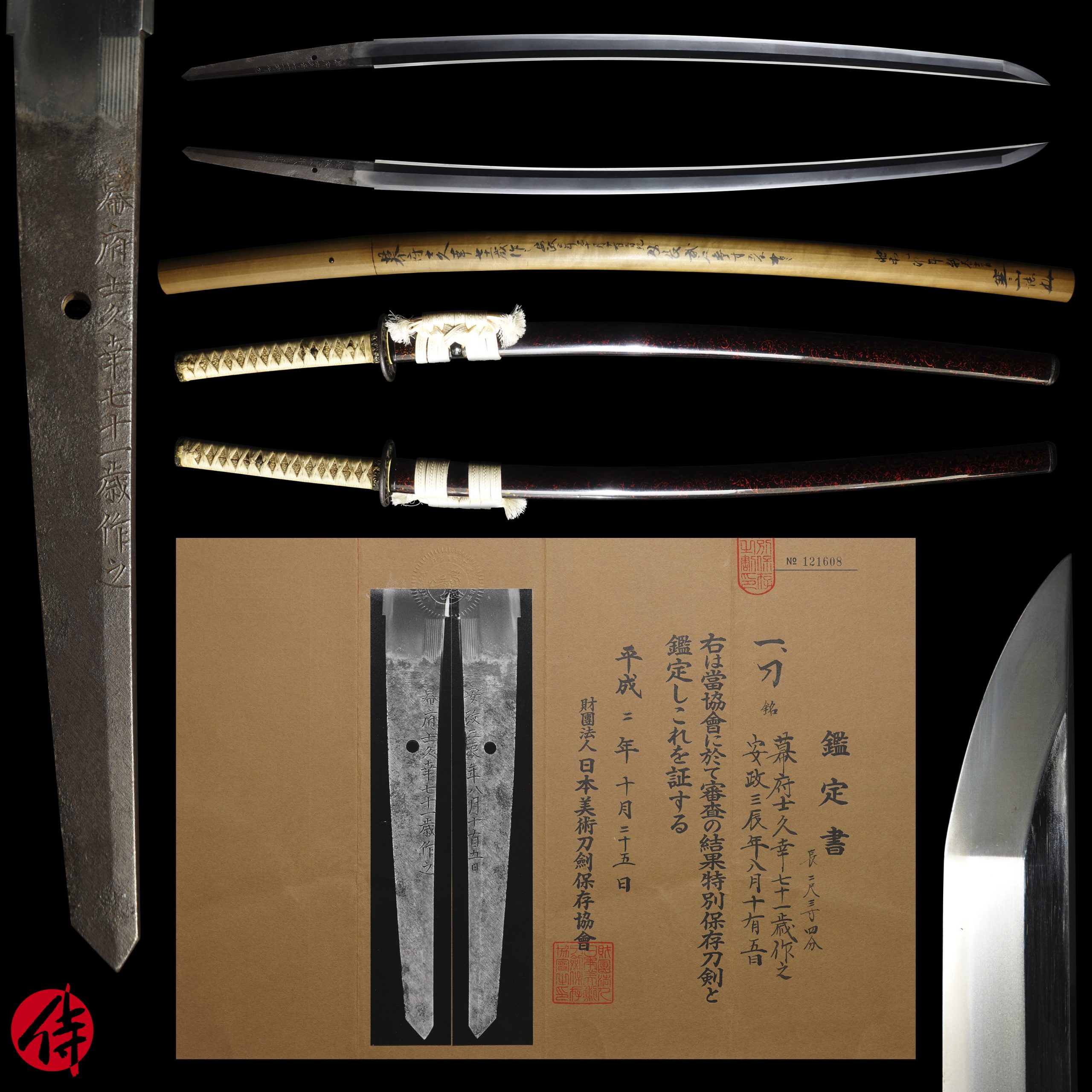
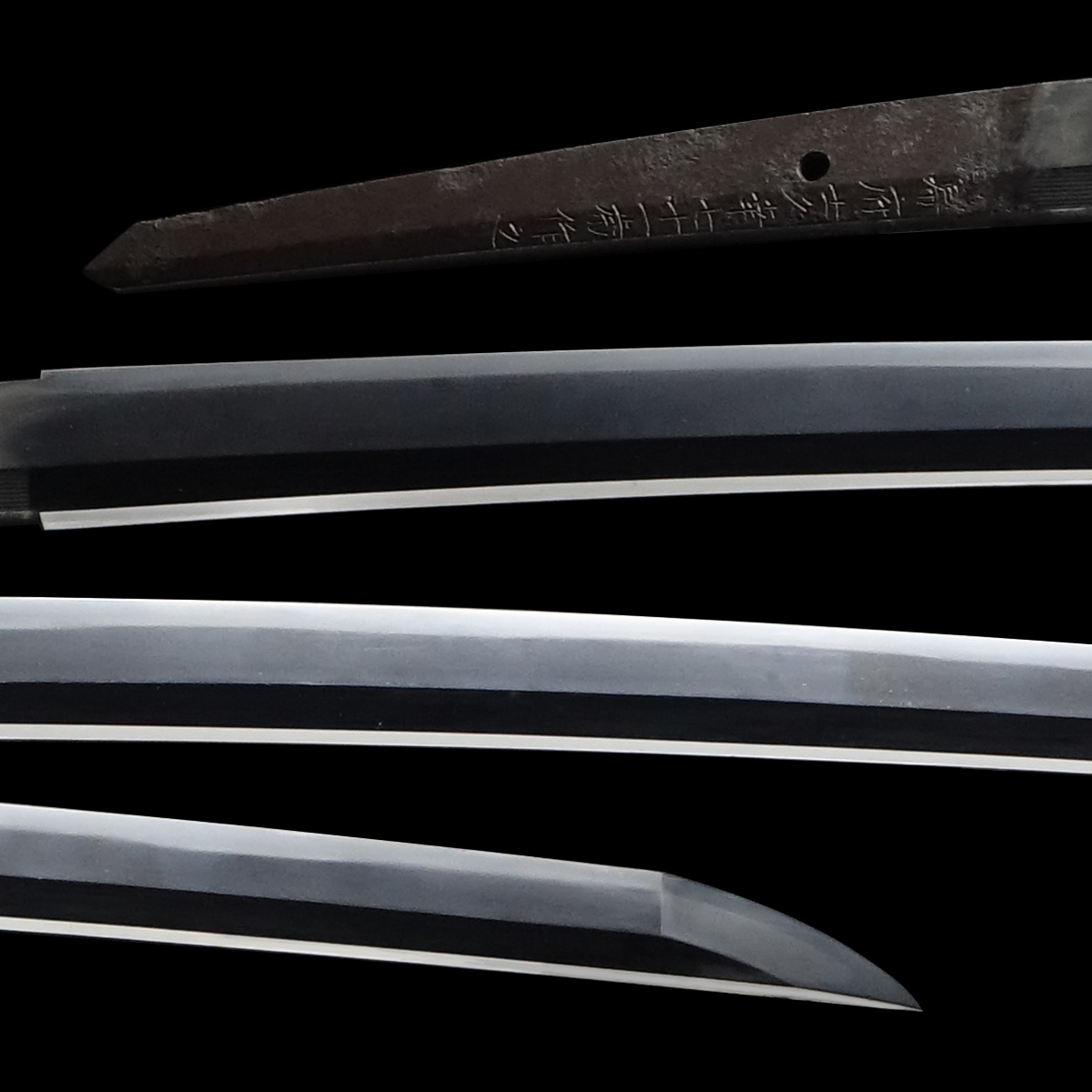
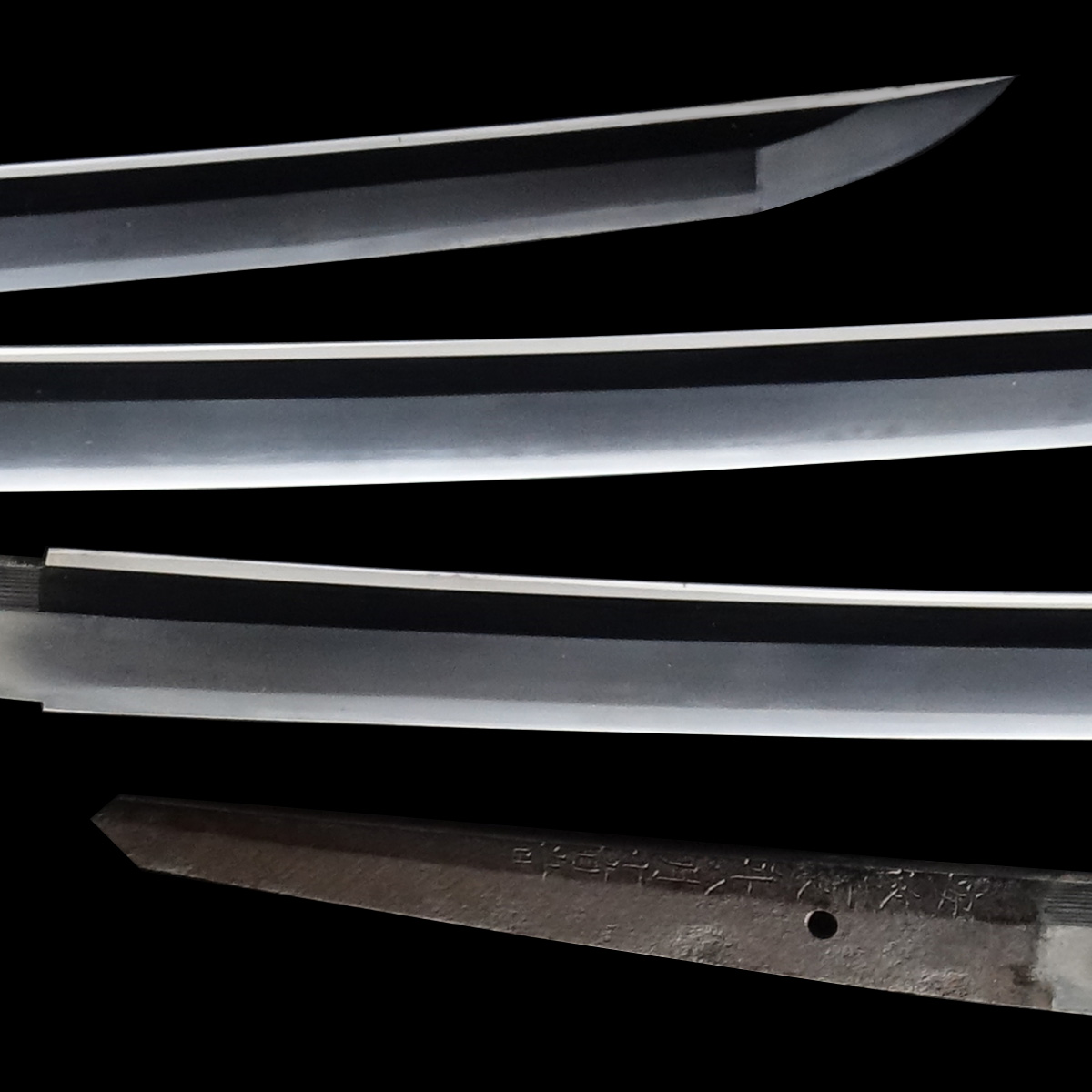
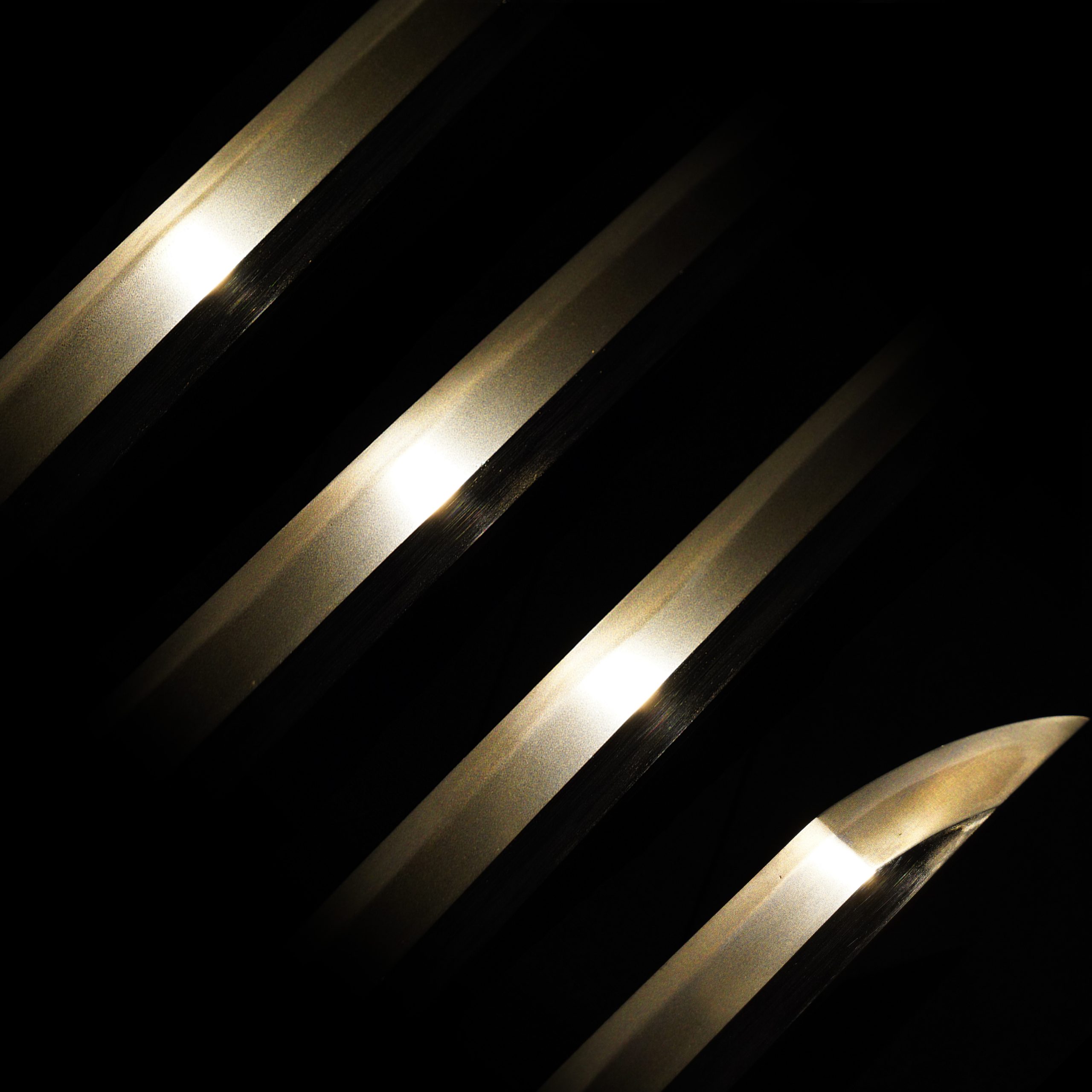
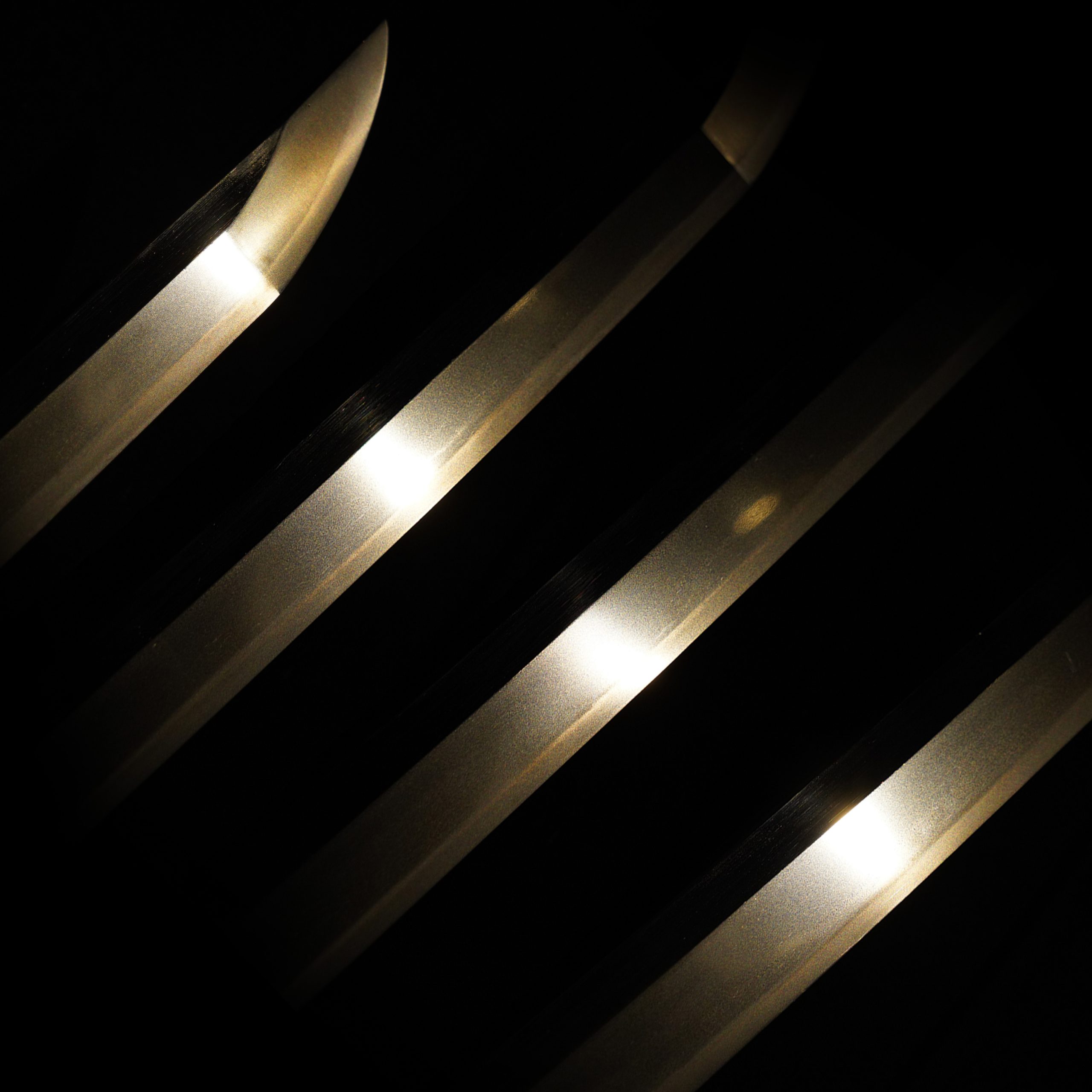
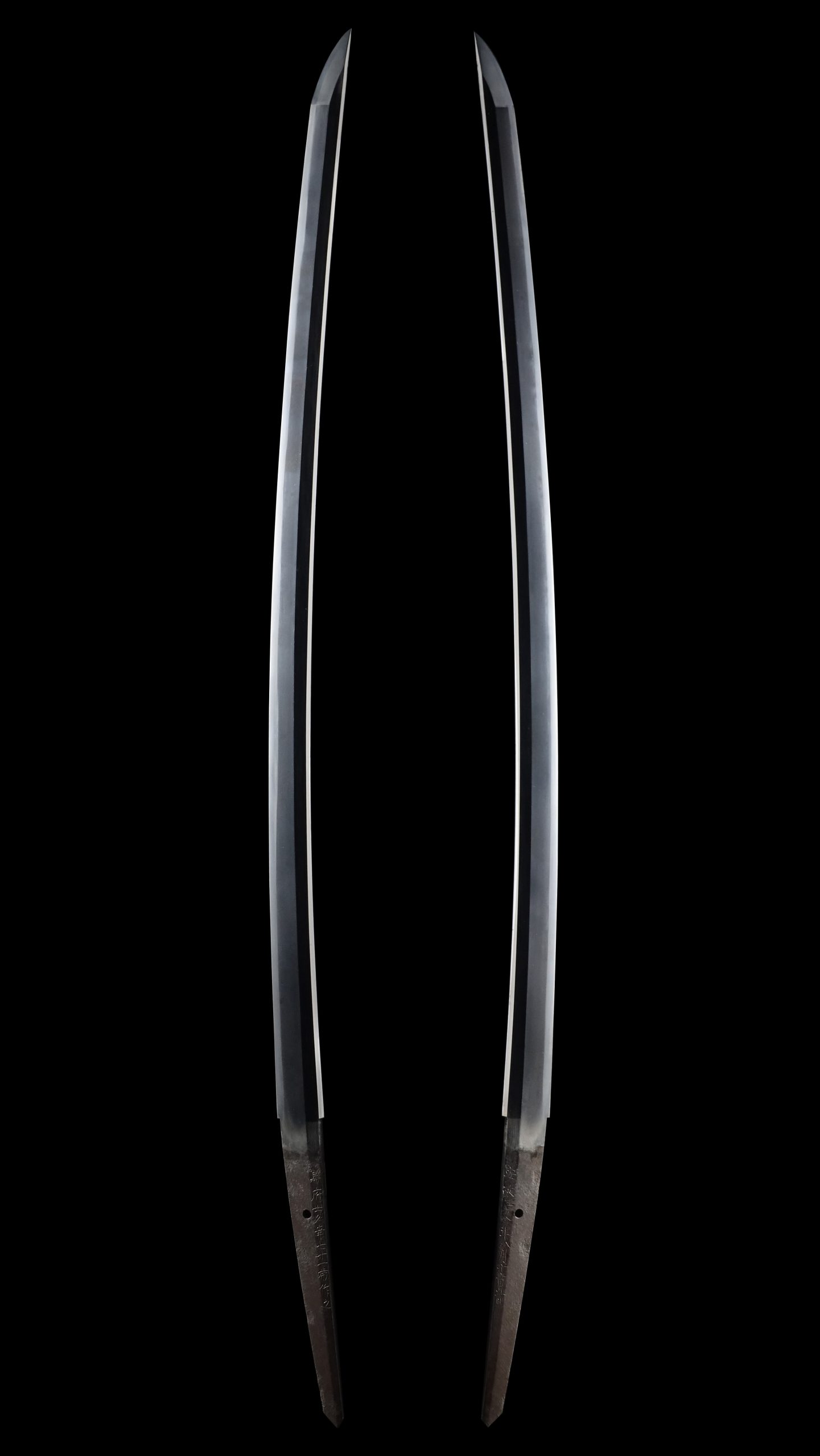
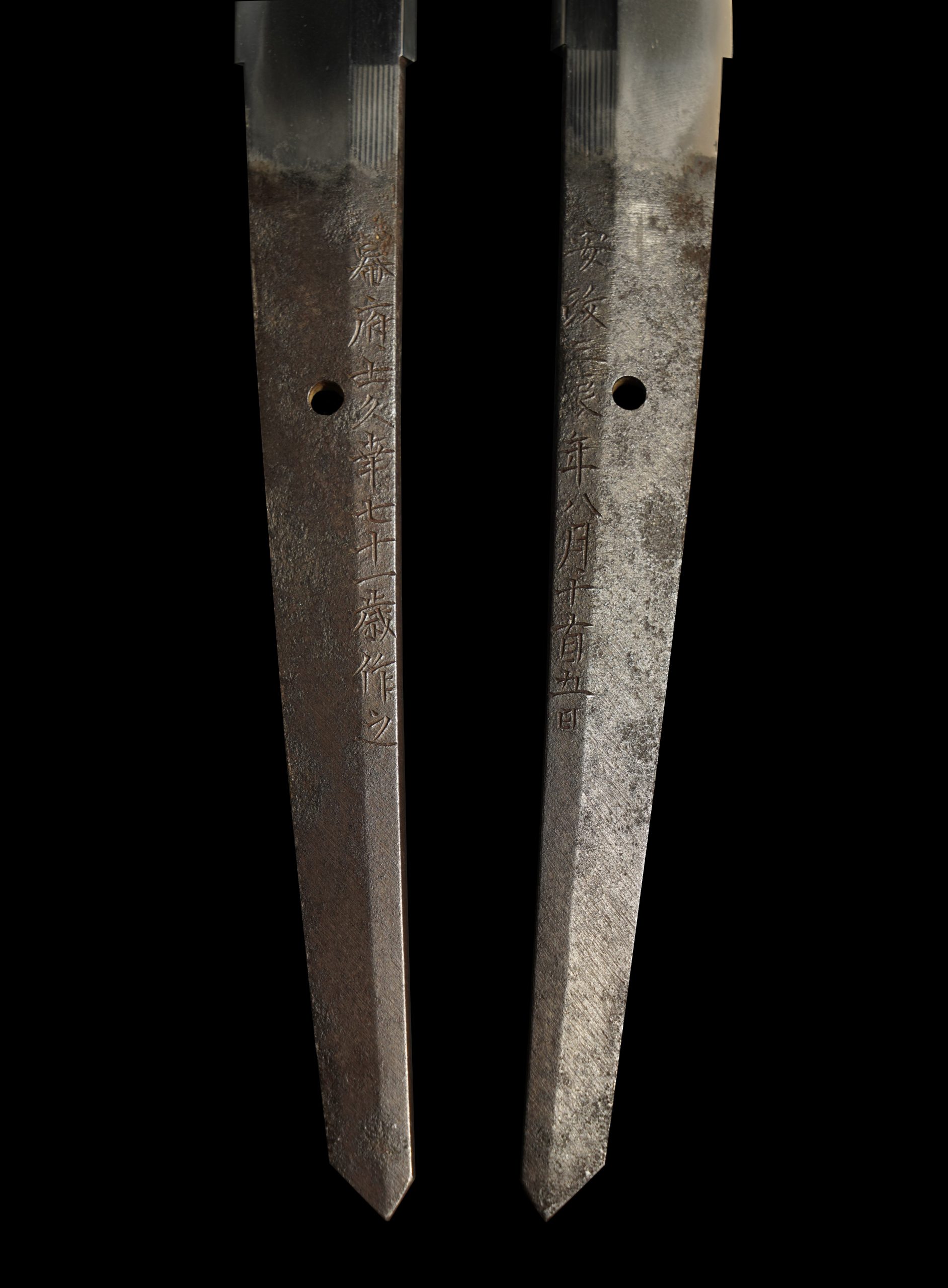
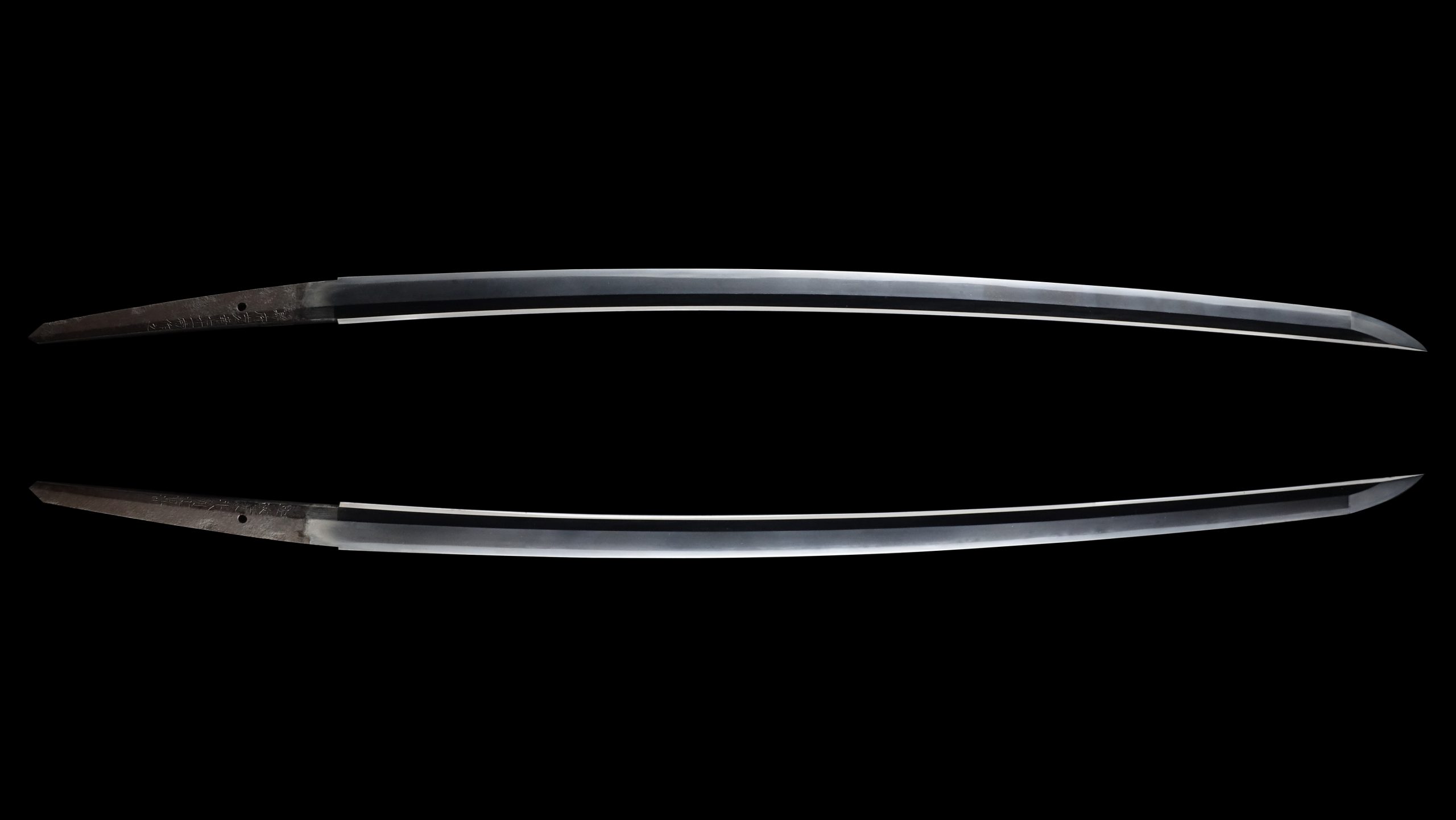
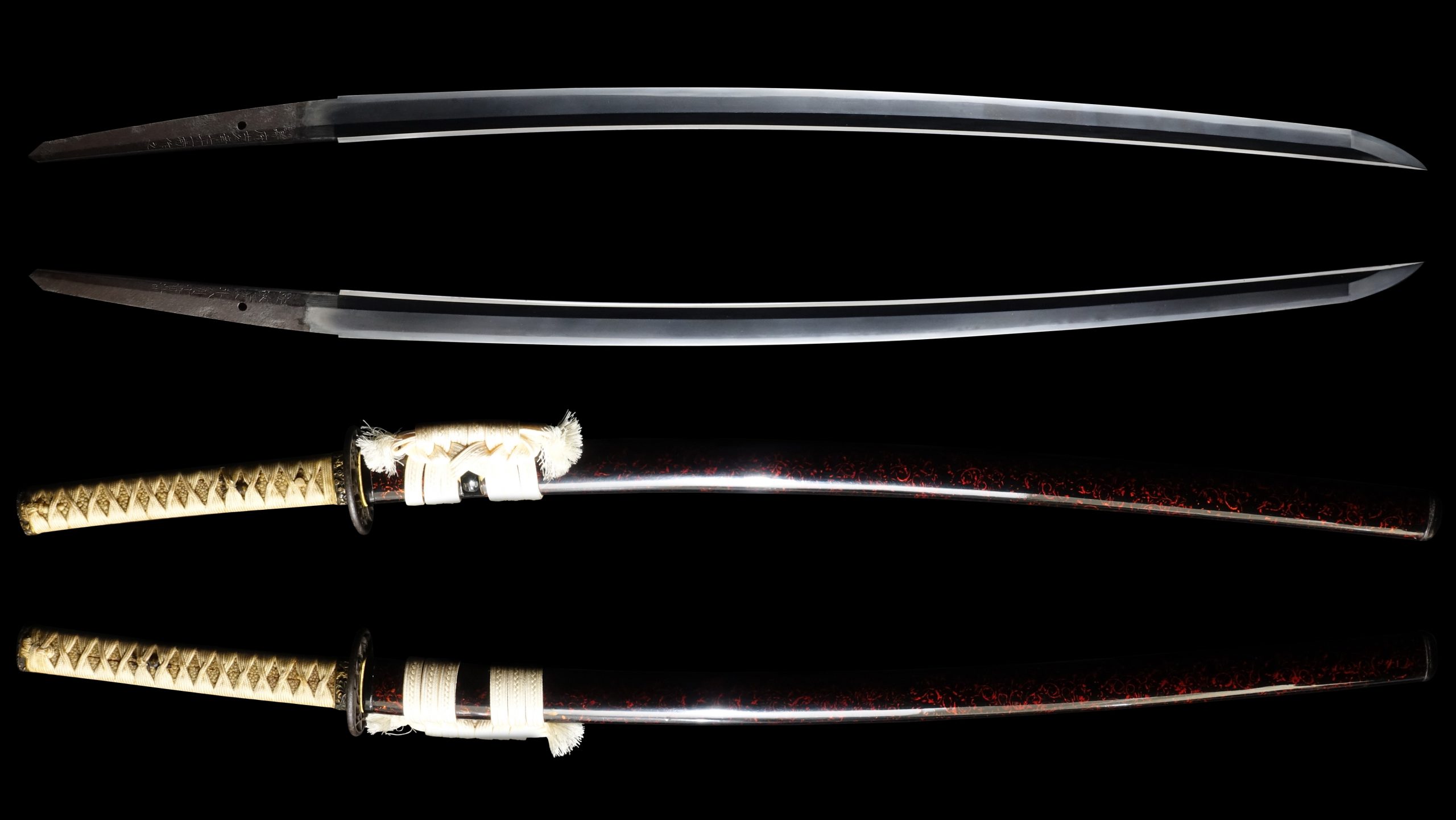
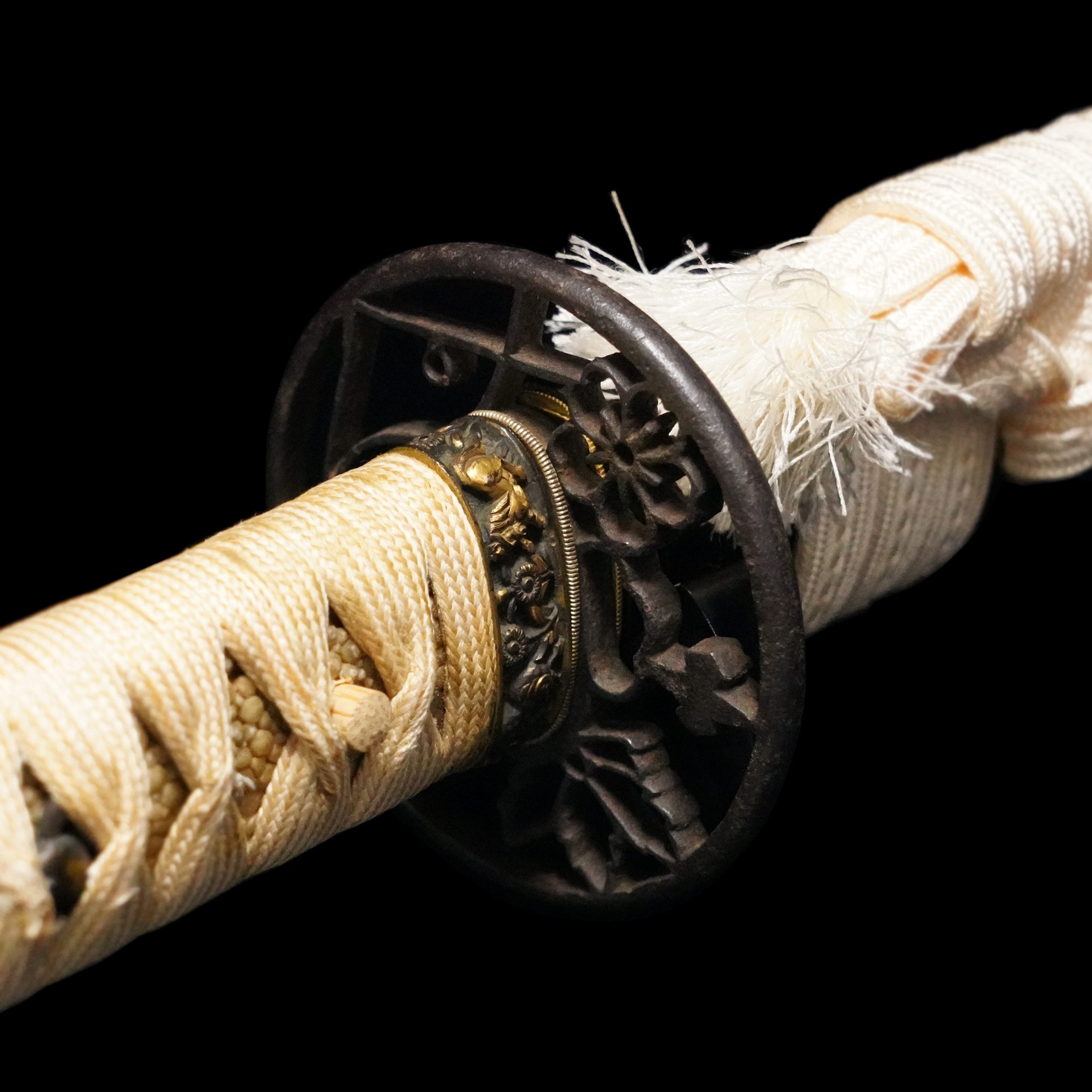
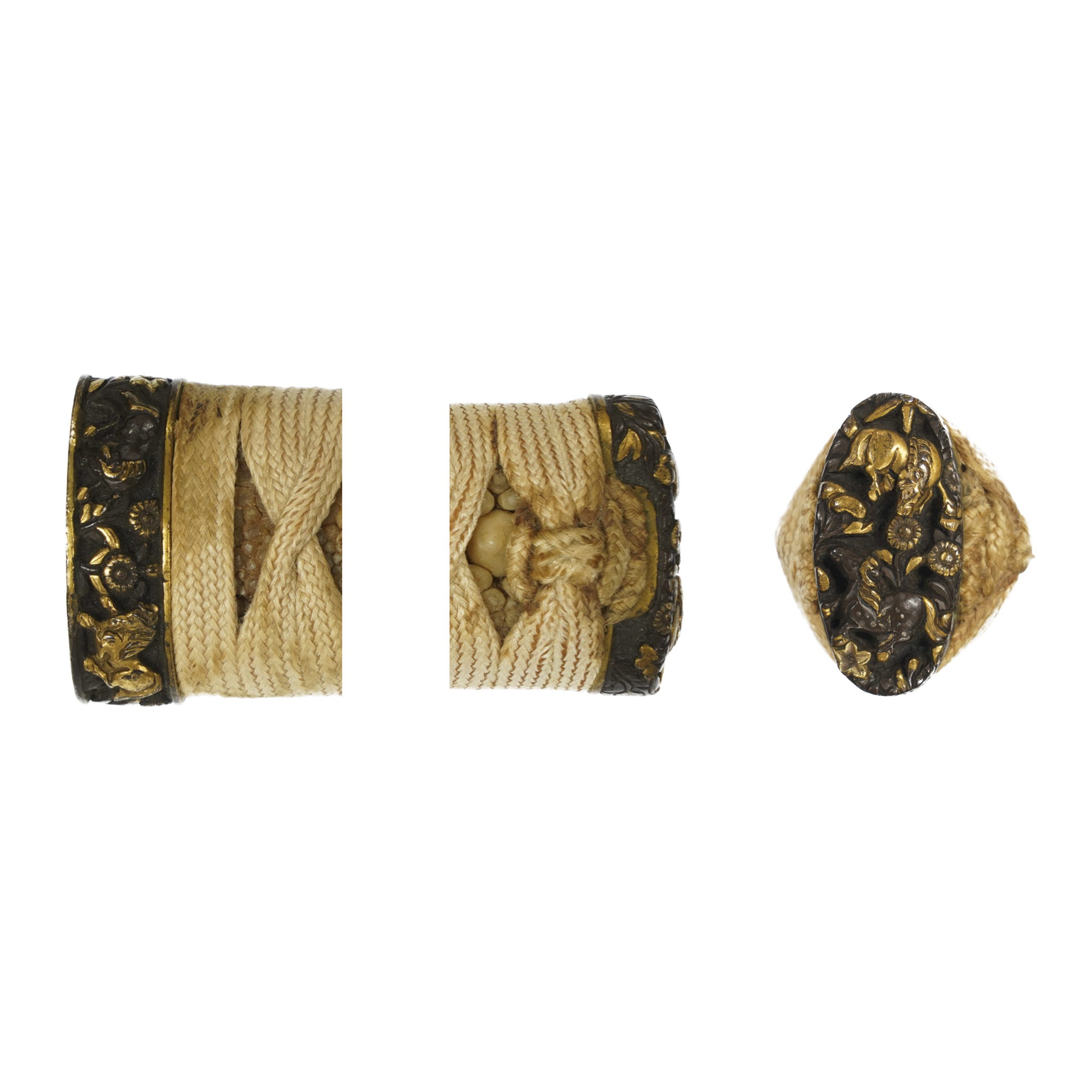
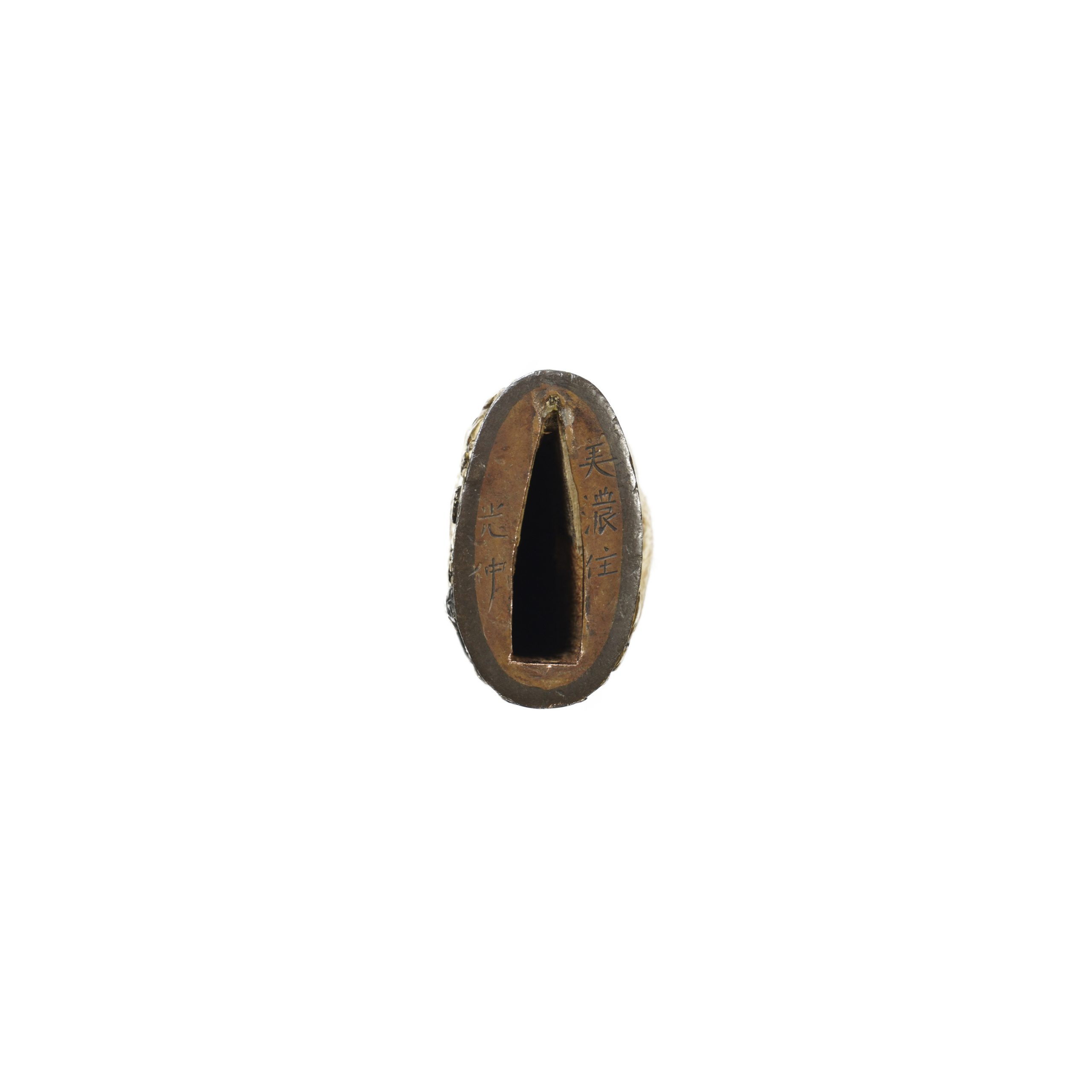
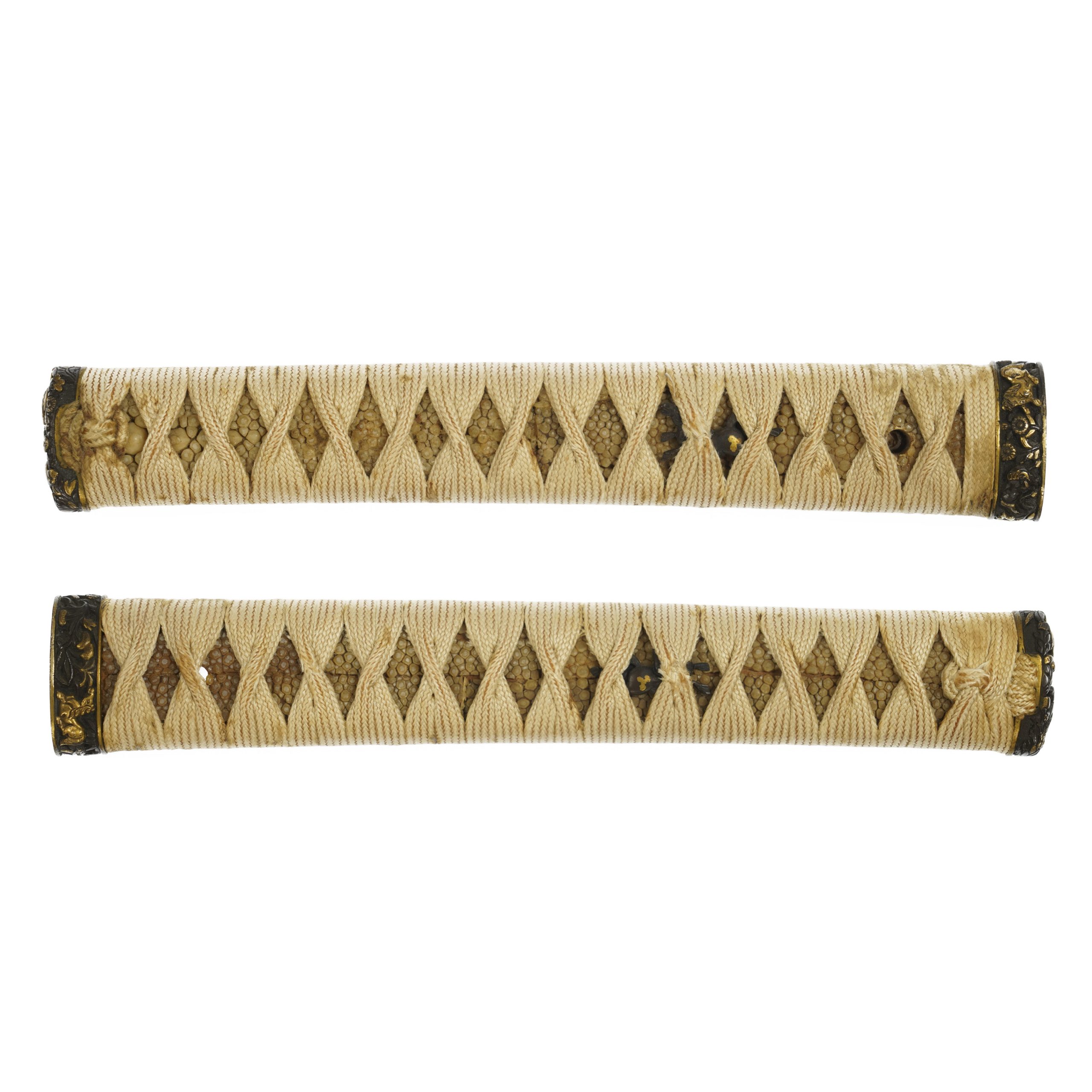
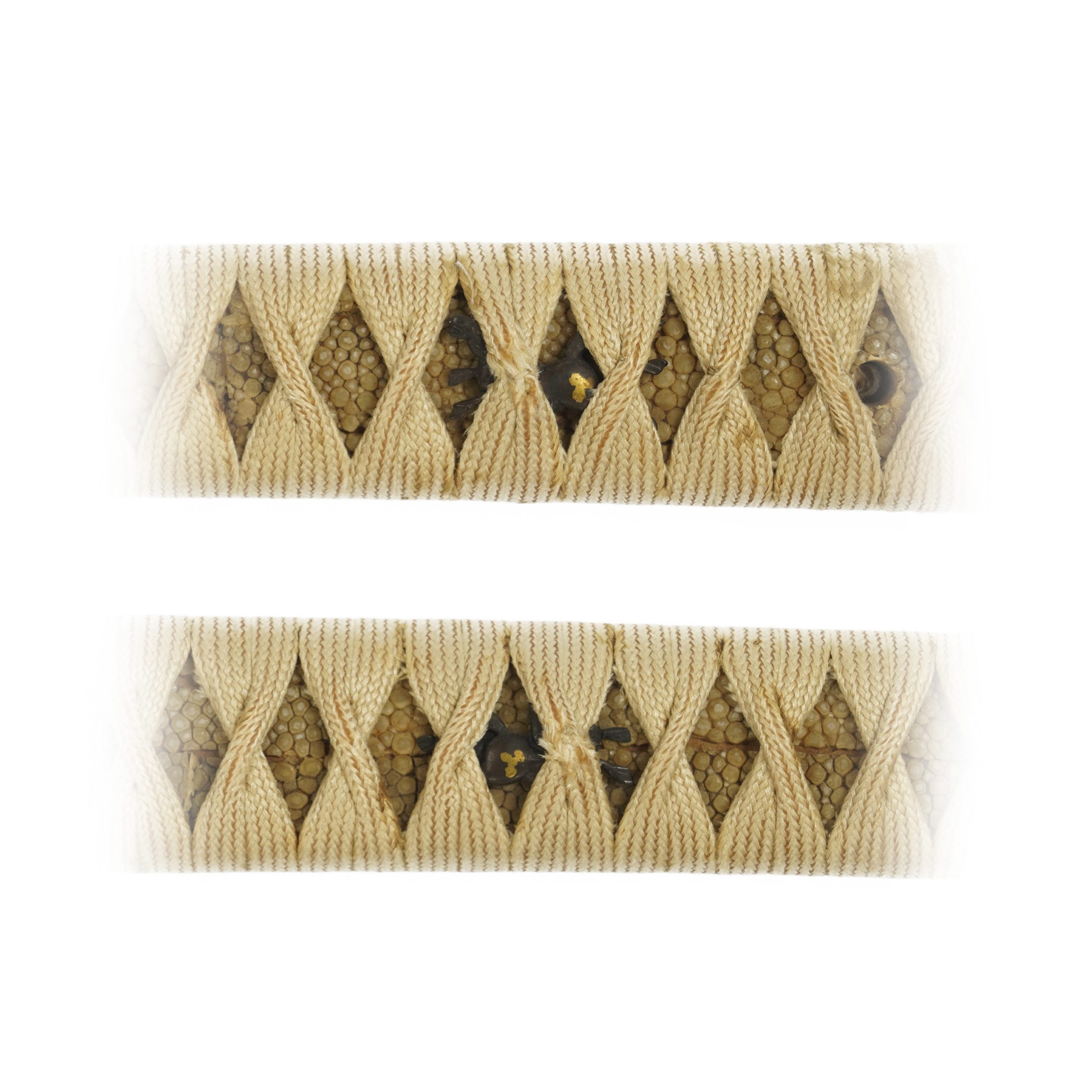
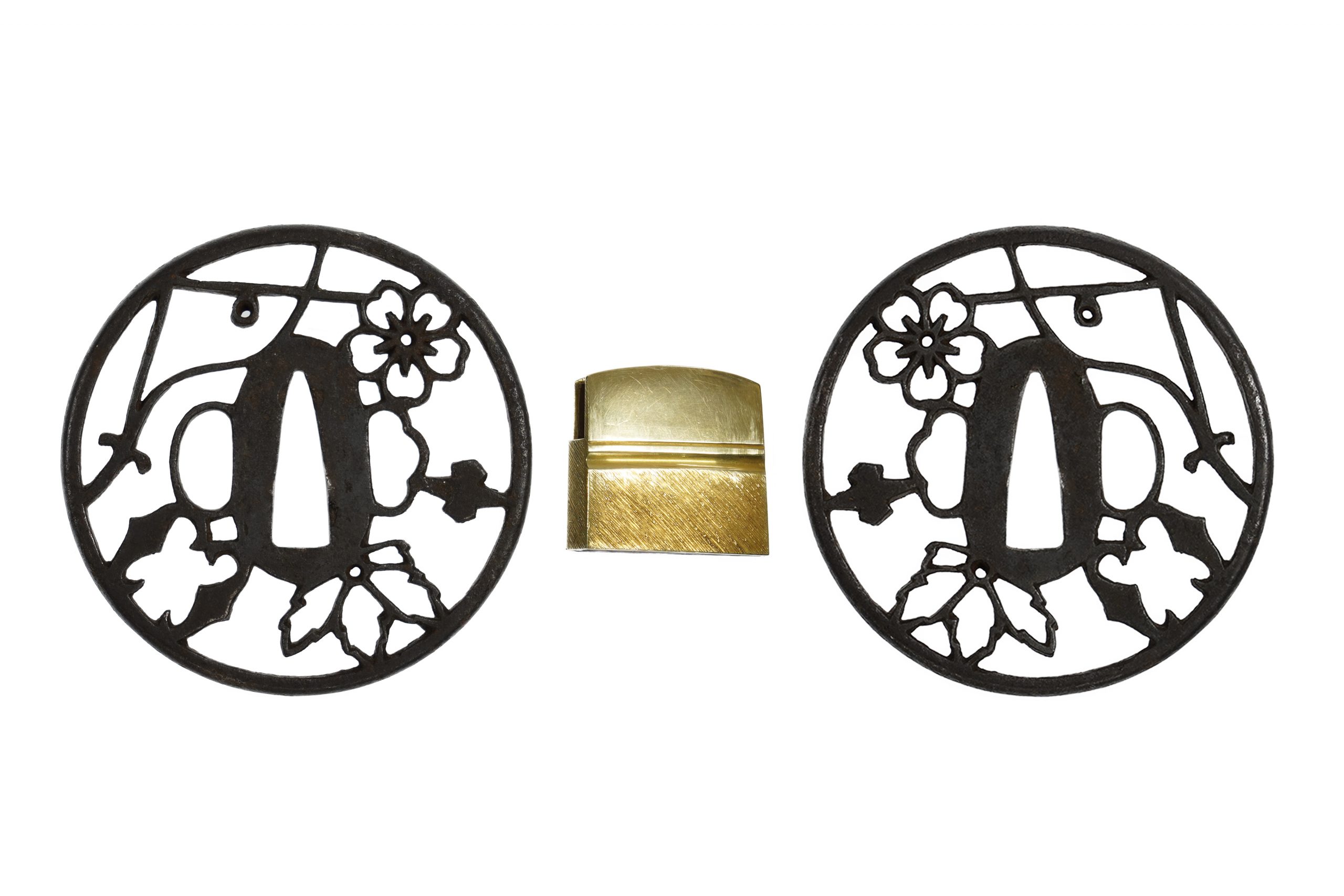
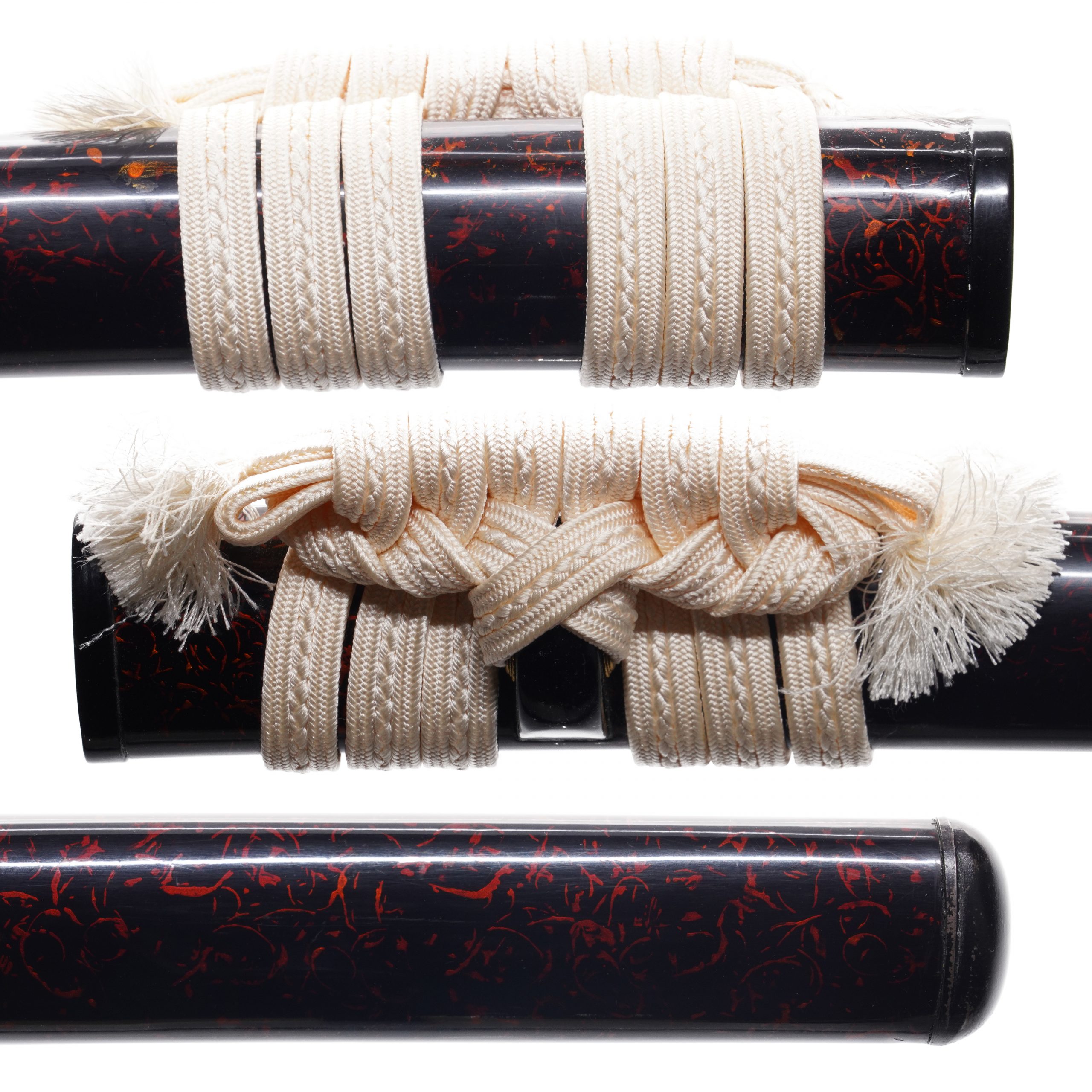
販売店の記載のまま
(翻訳なし) 店主の原文のまま表示しています。正確さの確認を通った翻訳のみを表示します。
武蔵 · 1818-1830頃
藤代 上作 · 刀剣大鑑 上位60%
現在2点販売中
江戸時代
二世紀半の泰平のあいだ、刀は武器である以上に武士の身分の標章であった。江戸の実証と大坂の華やぎのように都市ごとの作風が育ち、時代の末には需要も細っていく。
保存刀剣のうち、出来が一層優れ、保存状態も良好と認められたものです。再刃や、室町・江戸期の多くの無銘作は対象外となり、保存刀剣より高い基準が課されます。
日本美術刀剣保存協会(日刀保)は、1948年に設立され、文化庁の監督を受ける公益財団法人で、東京・刀剣博物館に本部を置きます。専門の審査員が出品作を直接審査し、美術的・歴史的価値に応じた鑑定書を発行します。日刀保の鑑定書は、日本刀および刀装具の真正性を示す最も広く認知された基準です。
日刀保公式サイトReturns/exchanges limited to defects caused by shipping (except willful misconduct or gross negligence by the company); customers must contact within 72 hours of receiving the product.