売切れ
Tokuho売切れ
Early Antique Katana Signed by Kinmichi for sale | Samurai Museum Shop
売却済
世界81社の刀剣商を横断追跡 · 価格履歴 · 売却アーカイブ
仕様
長さ
65.8 cm
反り
1.4 cm
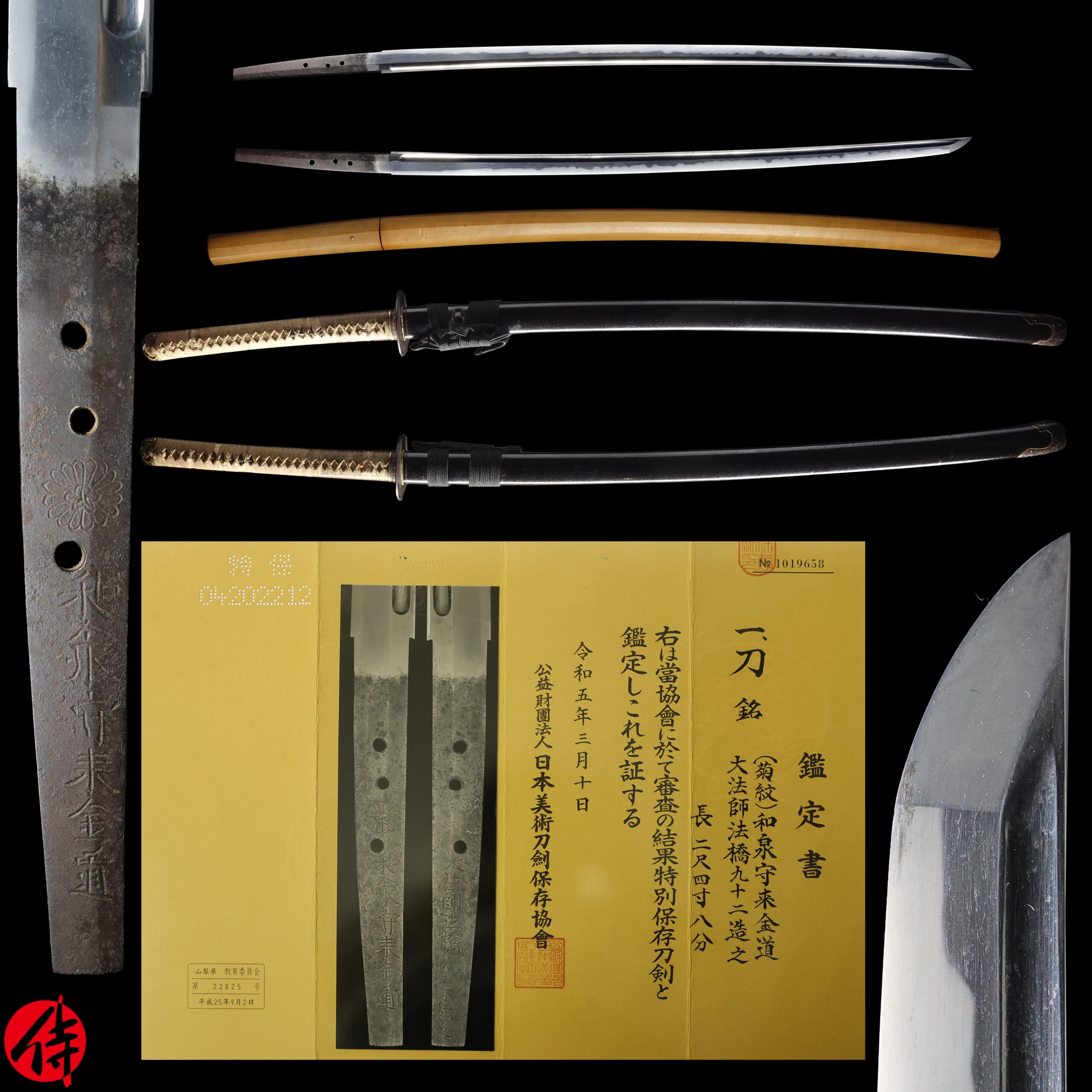
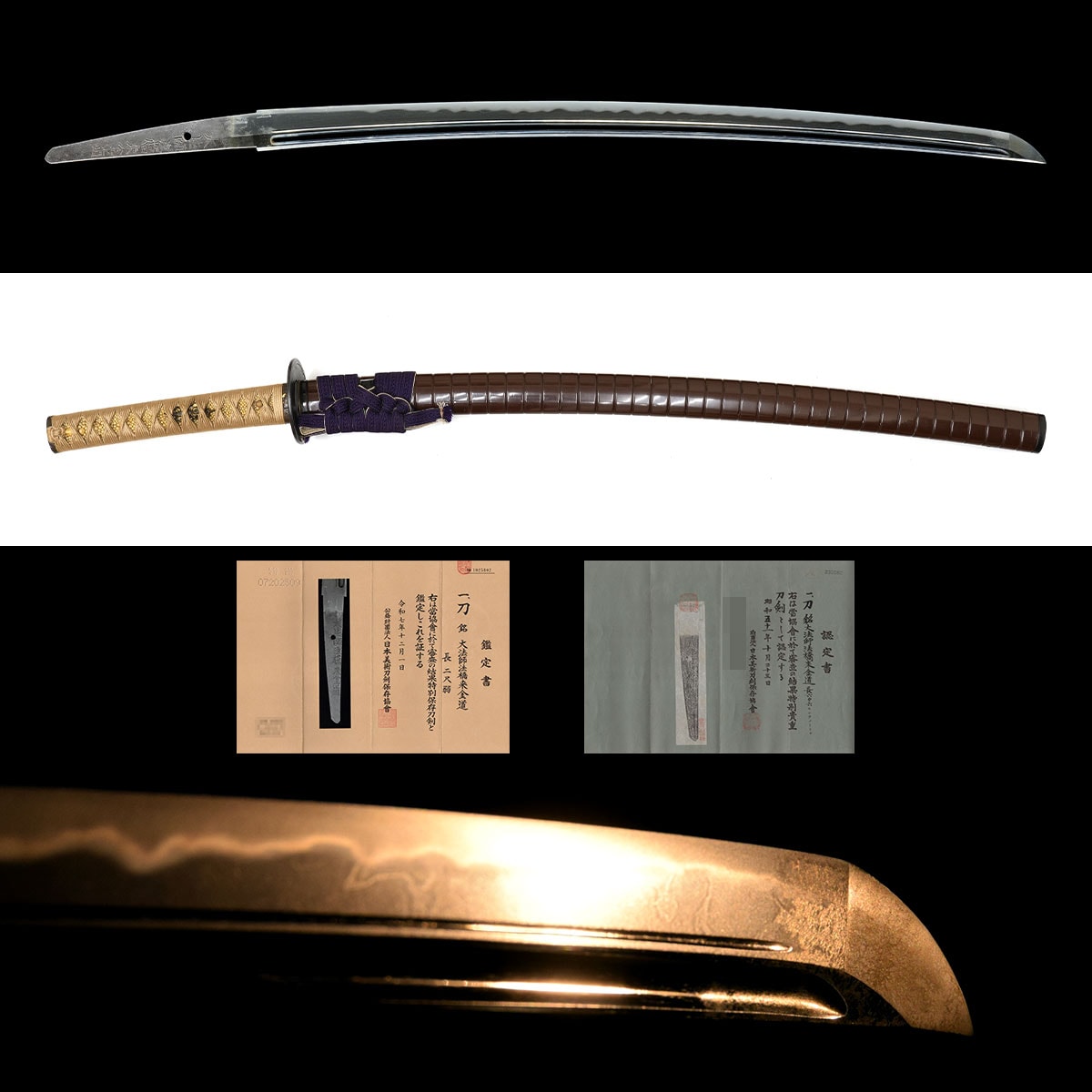
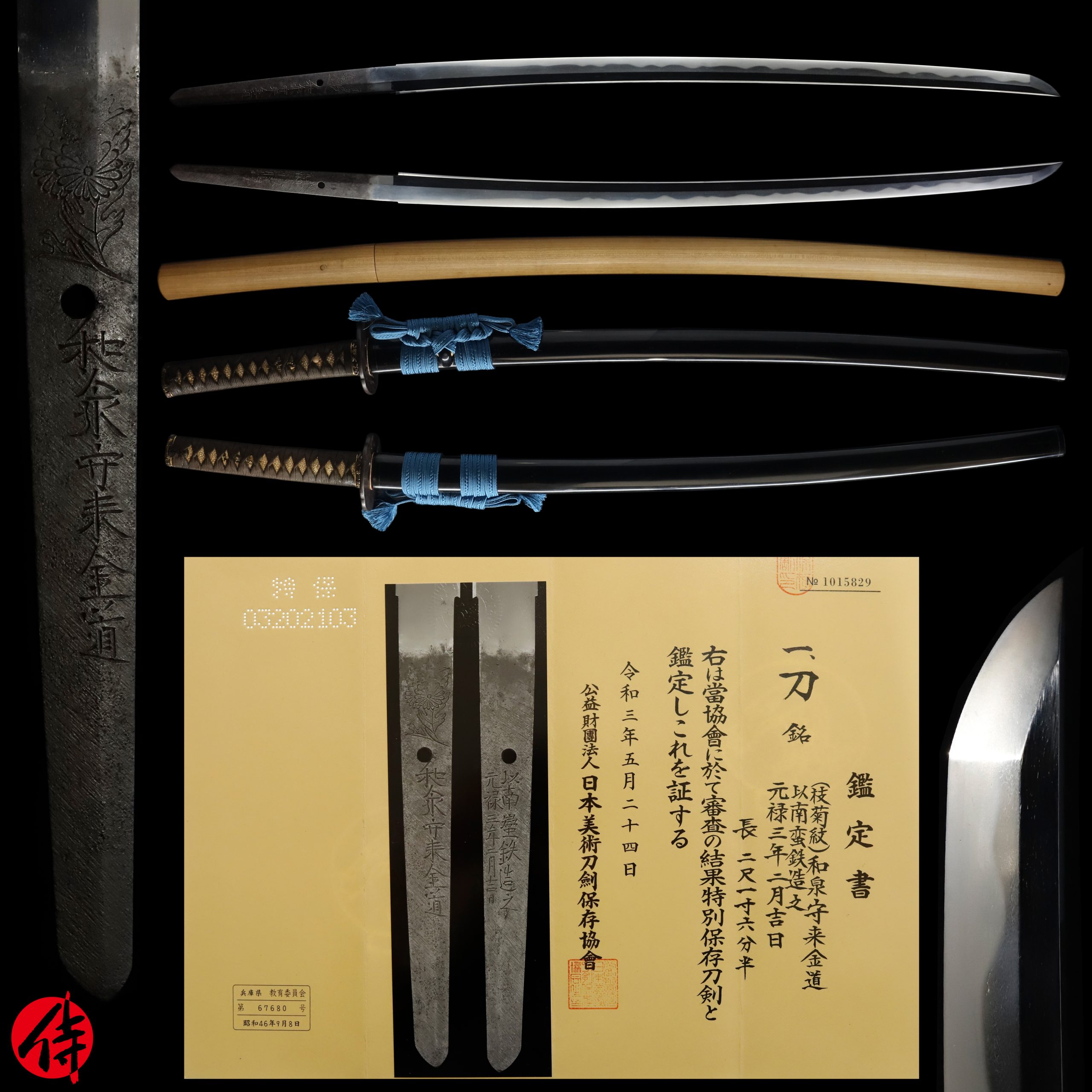
Antique Japanese Sword Katana Signed by Kinmichi with NBTHK Tokubetsu Hozon Certificate 【Description】 This blade was forged by Izumi no Kami Rai Kinmichi(和泉守来金道) in third year of the Genroku era(1690: early Edo period). The swordsmith’s name Kinmichi lasted fifth generations during the early-mid Edo period. Based on the signature and the date it was forged, we believe it was forged by the third-gen Kinmichi. The first-gen Kinmichi was called Izumi no Kami Kinmichi(和泉守金道) or Fujiwara Rai Kinmichi(藤原来金道), the second son of Seki Kanemichi(関兼道). Seki Kanemichi was originally from Mino province, exclusively forging blades for Shingen Takeda, a famous feudal lord. Later on, he moved to Kyoto in 1593 by bringing his four sons, Iga no Kami Kinmichi(伊賀守金道)、Izumi no Kami Rai Kinmichi(和泉守来金道), Tanba no Kami Yoshimichi(丹波守吉道) and Echu no kami Masatoshi(越中守正俊). Seki Kanemichi established Mishina school in Kyoto, one of the most prestigious schools in the early Edo period. The first-gen Izumi no Kami Rai Kinmichi was known as Kyoto Gokaji(京都五鍛冶), five prestigious swordsmiths living in Kyoto in the early Edo period. He was allowed to inscribe a chrysanthemum emblem, which is the symbol of the Japanese emperor. His sword-forging technique was so great that the emperor licensed him to use this emblem, which was quite honorable for any swordsmiths. Kinmichi called himself RAI(来) Kinmichi because he revitalized a traditional RAI-style in the Edo period. RAI(来) is one of the oldest schools, initially founded in Kyoto and prospered during the Kamakura period. Third-gen Kinmichi was also allowed to sign his signature with chrysanthemum emblem, forging blades in Kyoto in the early Edo period(Mid-Late 17 century). He often forged swords in collaboration with his father, the second-gen Kinmichi. There are a few remaining works created by both swordsmiths. The third-gen Kinmichi was the older brother of the second-gen Omi no Kami Hisamichi, another famous swordsmith in the early Edo period. The third-gen Kinmichi also received the title of Daihoshi Hokyo(大法師法橋) in 1672. Daihoshi Hokkyo was one of the highest titles given to Buddhist monks back then. This blade is appraised as a Tokubetsu Hozon Token (特別保存刀剣) issued by NBTHK(Nihon Bijutsu Touken Hozon Kyokai:日本美術刀剣保存協会). This authentication paper was only given to authentic Japanese swords, especially well preserved and high quality with artistic value. 【 Blade】 Cutting Edge Length(Nagasa) : 65.8 cm( 25.9 inches) Curvature(Sori) : 1.4 cm( 0.55 inches) Hamon : The crystalline structure which forms along the cutting edge of a blade as a result of the hardening process Jimon(Jihada) : visible steel surface pattern created by folding and hammering during forging process Nakago : Nakago is the tang of the Japanese sword. Japanese swordsmiths left the black rust on the tang because it prevents red rust while the tang is in its handle. And the discoloration of the tang was created over time, and it is a great indicator for a Japanese sword specialist to estimate when the sword was forged. Koshirae: Koshirae is the mounting of the Japanese sword. There are several parts that consist of Koshirae such as Saya(Scabbard), Tsuka(Handle), Tsuba(Handguard). Fuchi-Kashira : A pair of matching sword fittings that cover the upper and bottom parts of its sword hilt. This Fuchi Kashira is decorated with autumn flowers designs such as chrysanthemum or Japanese bellflower. In Japan, there is a group of plants that represent this season; Aki-no Nanakusa (秋の七草, the seven flowers of autumn). The Japanese bellflower is included in it. Other plants are Japanese pampas grass, bush clover, kudzu vine, etcetera. The design that combines flowers that grow naturally in the autumn field (chrysanthemum, in this case) with the seven flowers of autumn is called the Akikusa (秋草, autumn plant) pattern. It has been favored as a tasteful motif among Japanese people. A long time ago, the chrysanthemum was used as a medicine for obtaining a lon
 NihontoWatchBETA
売却済
世界81社の刀剣商を横断追跡 · 価格履歴 · 売却アーカイブ
65.8 cm
1.4 cm
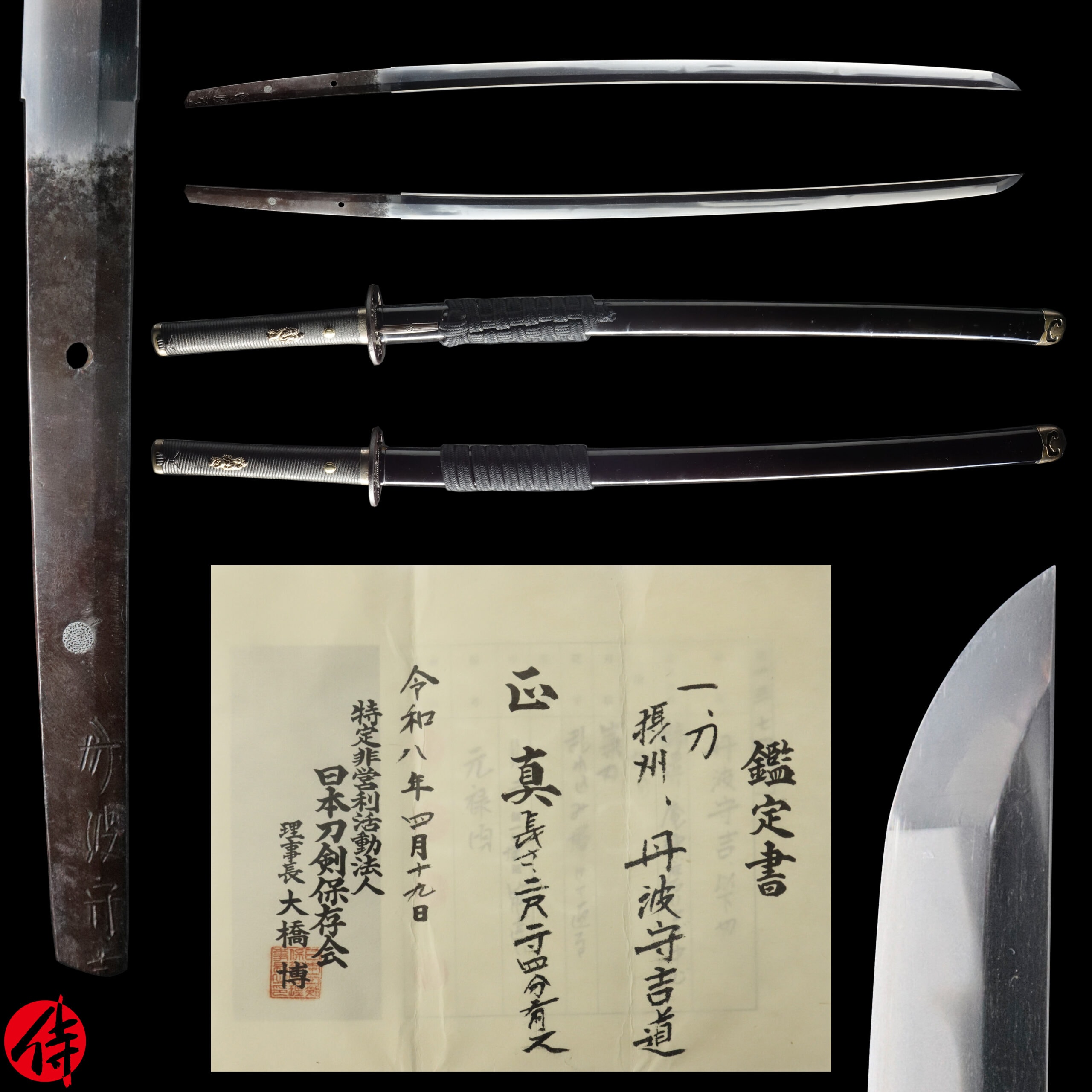
Mid Edo Katana signed by Tanba no Kami Yoshimichi for sale| Samurai Museum Shop E-mail FB Messenger Skip to content Menu Close Samurai Museum Shop Products Antique Japanese Sword Katana signed by Tanba no Kami Yoshimichi NTHK Kanteisho Certificate Updated: 22 Jun 2026 Antique Japanese Sword Katana signed by Tanba no Kami Yoshimichi NTHK Kanteisho Certificate
$7,441
Muromachi Katana signed by Naminohira Yasuhide for sale
$7,751
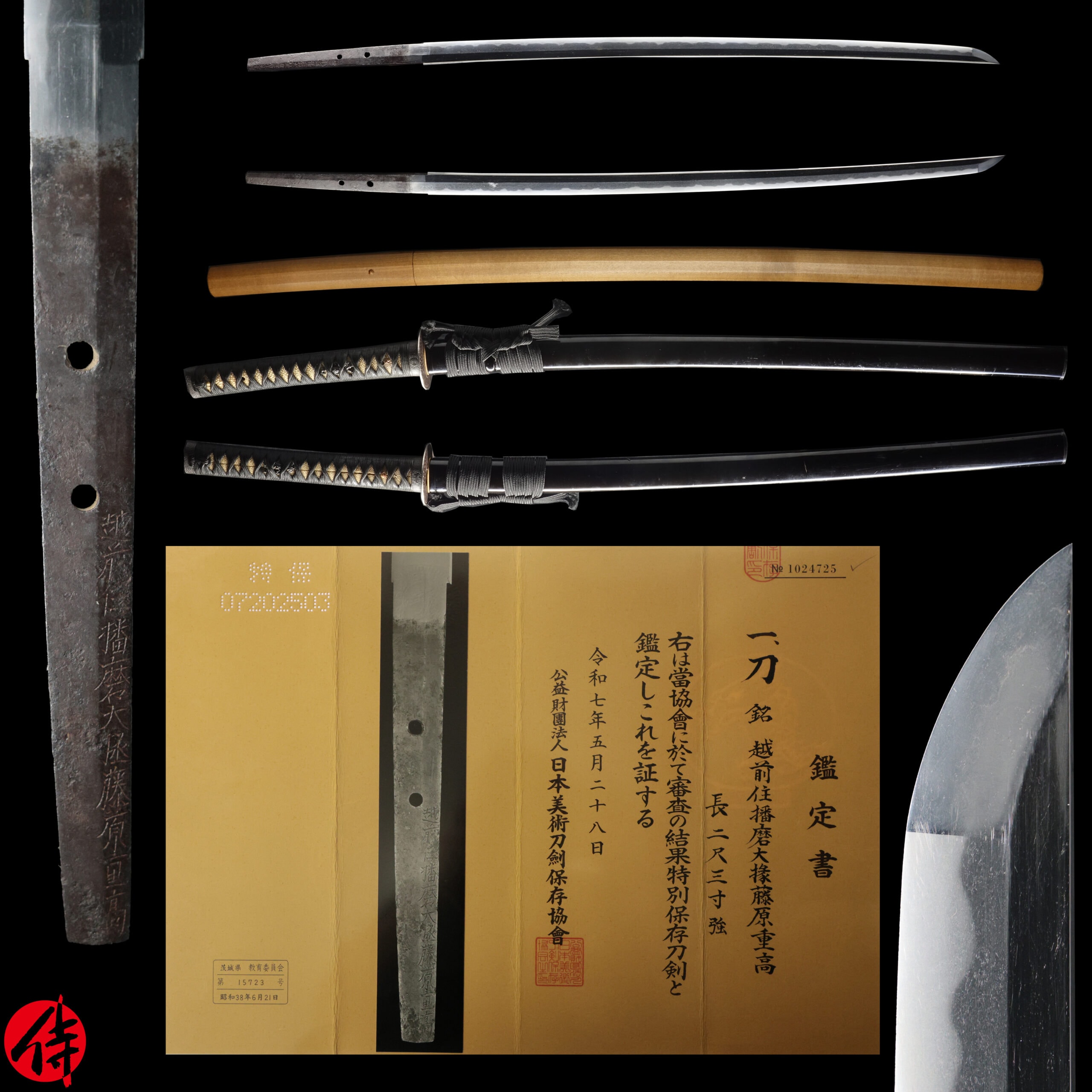
Early Edo Nihonto signed by Shigetaka for sale
$7,131
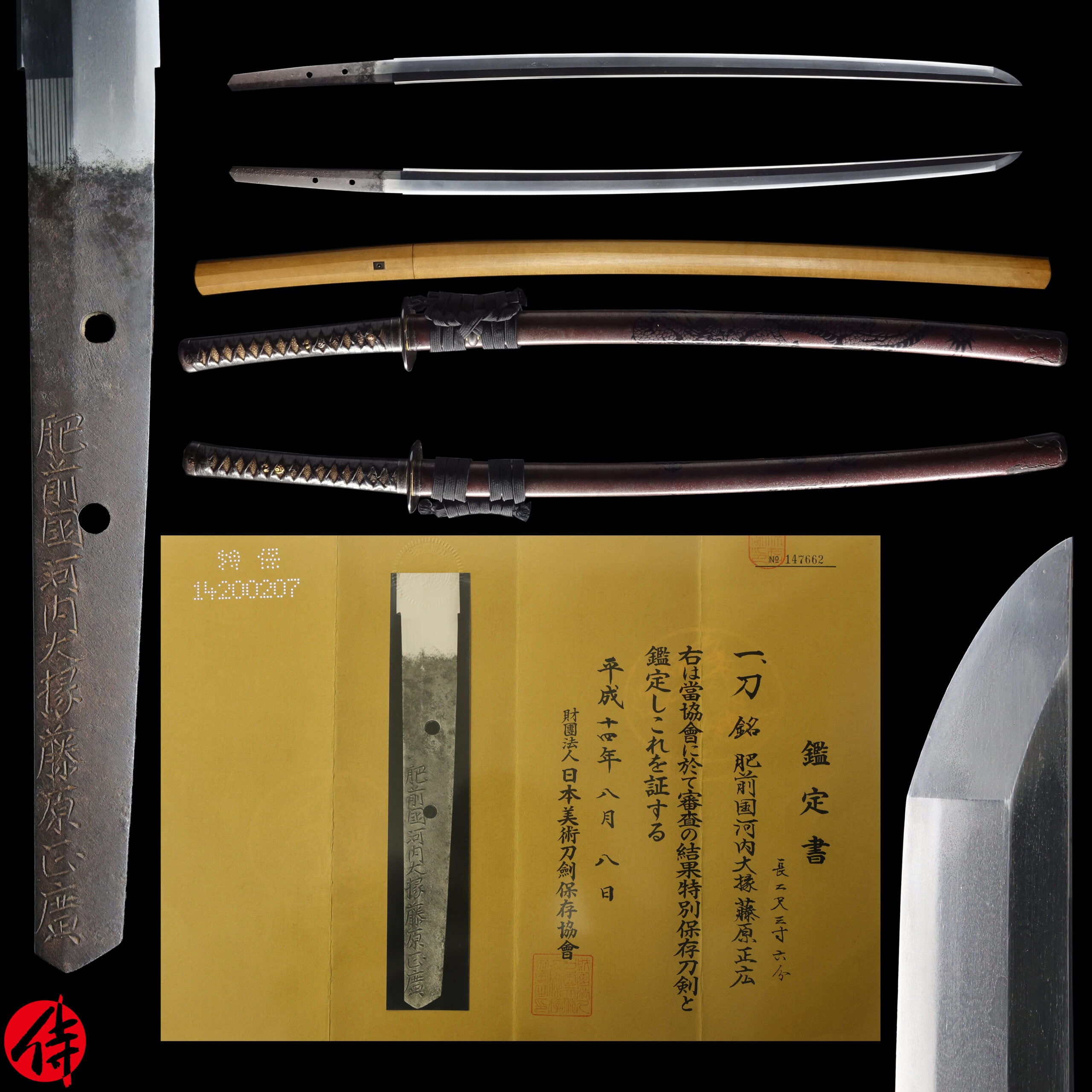
Antique Japanese Sword Katana Signed by Masahiro NBTHK Tokubetsu Hozon Certificate
$7,751
Antique Japanese Sword Katana Signed by Kinmichi with NBTHK Tokubetsu Hozon Certificate 【Description】 This blade was forged by Izumi no Kami Rai Kinmichi(和泉守来金道) in third year of the Genroku era(1690: early Edo period). The swordsmith’s name Kinmichi lasted fifth generations during the early-mid Edo period. Based on the signature and the date it was forged, we believe it was forged by the third-gen Kinmichi. The first-gen Kinmichi was called Izumi no Kami Kinmichi(和泉守金道) or Fujiwara Rai Kinmichi(藤原来金道), the second son of Seki Kanemichi(関兼道). Seki Kanemichi was originally from Mino province, exclusively forging blades for Shingen Takeda, a famous feudal lord. Later on, he moved to Kyoto in 1593 by bringing his four sons, Iga no Kami Kinmichi(伊賀守金道)、Izumi no Kami Rai Kinmichi(和泉守来金道), Tanba no Kami Yoshimichi(丹波守吉道) and Echu no kami Masatoshi(越中守正俊). Seki Kanemichi established Mishina school in Kyoto, one of the most prestigious schools in the early Edo period. The first-gen Izumi no Kami Rai Kinmichi was known as Kyoto Gokaji(京都五鍛冶), five prestigious swordsmiths living in Kyoto in the early Edo period. He was allowed to inscribe a chrysanthemum emblem, which is the symbol of the Japanese emperor. His sword-forging technique was so great that the emperor licensed him to use this emblem, which was quite honorable for any swordsmiths. Kinmichi called himself RAI(来) Kinmichi because he revitalized a traditional RAI-style in the Edo period. RAI(来) is one of the oldest schools, initially founded in Kyoto and prospered during the Kamakura period. Third-gen Kinmichi was also allowed to sign his signature with chrysanthemum emblem, forging blades in Kyoto in the early Edo period(Mid-Late 17 century). He often forged swords in collaboration with his father, the second-gen Kinmichi. There are a few remaining works created by both swordsmiths. The third-gen Kinmichi was the older brother of the second-gen Omi no Kami Hisamichi, another famous swordsmith in the early Edo period. The third-gen Kinmichi also received the title of Daihoshi Hokyo(大法師法橋) in 1672. Daihoshi Hokkyo was one of the highest titles given to Buddhist monks back then. This blade is appraised as a Tokubetsu Hozon Token (特別保存刀剣) issued by NBTHK(Nihon Bijutsu Touken Hozon Kyokai:日本美術刀剣保存協会). This authentication paper was only given to authentic Japanese swords, especially well preserved and high quality with artistic value. 【 Blade】 Cutting Edge Length(Nagasa) : 65.8 cm( 25.9 inches) Curvature(Sori) : 1.4 cm( 0.55 inches) Hamon : The crystalline structure which forms along the cutting edge of a blade as a result of the hardening process Jimon(Jihada) : visible steel surface pattern created by folding and hammering during forging process Nakago : Nakago is the tang of the Japanese sword. Japanese swordsmiths left the black rust on the tang because it prevents red rust while the tang is in its handle. And the discoloration of the tang was created over time, and it is a great indicator for a Japanese sword specialist to estimate when the sword was forged. Koshirae: Koshirae is the mounting of the Japanese sword. There are several parts that consist of Koshirae such as Saya(Scabbard), Tsuka(Handle), Tsuba(Handguard). Fuchi-Kashira : A pair of matching sword fittings that cover the upper and bottom parts of its sword hilt. This Fuchi Kashira is decorated with autumn flowers designs such as chrysanthemum or Japanese bellflower. In Japan, there is a group of plants that represent this season; Aki-no Nanakusa (秋の七草, the seven flowers of autumn). The Japanese bellflower is included in it. Other plants are Japanese pampas grass, bush clover, kudzu vine, etcetera. The design that combines flowers that grow naturally in the autumn field (chrysanthemum, in this case) with the seven flowers of autumn is called the Akikusa (秋草, autumn plant) pattern. It has been favored as a tasteful motif among Japanese people. A long time ago, the chrysanthemum was used as a medicine for obtaining a lon
NihontoWatchBETA売却済
世界81社の刀剣商を横断追跡 · 価格履歴 · 売却アーカイブ
65.8 cm
1.4 cm
Mid Edo Katana signed by Tanba no Kami Yoshimichi for sale| Samurai Museum Shop E-mail FB Messenger Skip to content Menu Close Samurai Museum Shop Products Antique Japanese Sword Katana signed by Tanba no Kami Yoshimichi NTHK Kanteisho Certificate Updated: 22 Jun 2026 Antique Japanese Sword Katana signed by Tanba no Kami Yoshimichi NTHK Kanteisho Certificate
$7,441
Muromachi Katana signed by Naminohira Yasuhide for sale
$7,751
Early Edo Nihonto signed by Shigetaka for sale
$7,131
Antique Japanese Sword Katana Signed by Masahiro NBTHK Tokubetsu Hozon Certificate
$7,751