売切れ
Hozon売切れ
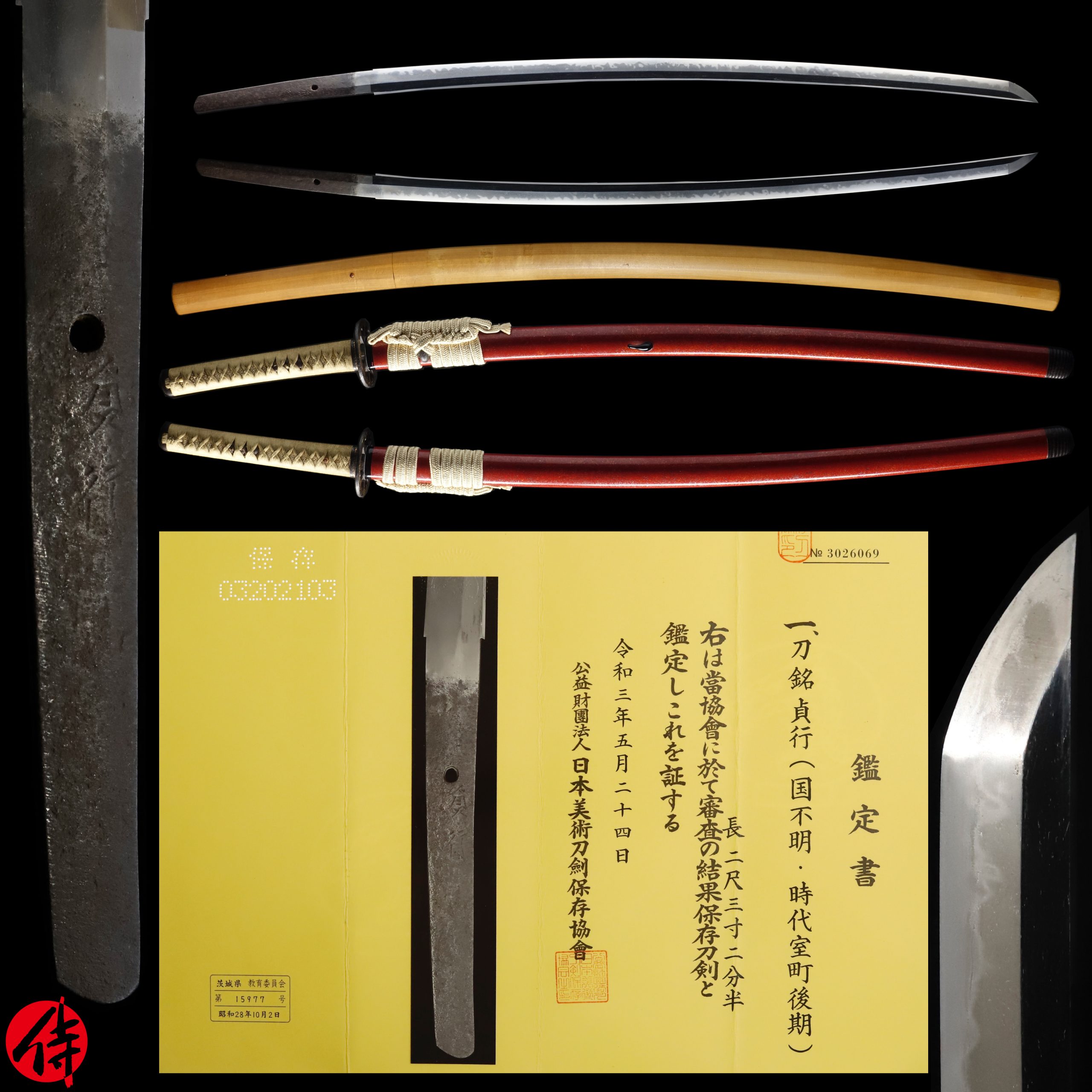
Antique Japanese Sword Katana Signed by Sadayuki NBTHK Hozon Certificate
売却済
世界81社の刀剣商を横断追跡 · 価格履歴 · 売却アーカイブ
仕様
長さ
70.4 cm
反り
2 cm
Antique Japanese Sword Katana Signed by Sadayuki with Hozon Certificate 【Description】 According to NBTHK that authenticated this blade, it was forged by Sadatsugu in the late Muromachi period(450-500 years old). There were more than one swordsmith who signed as Sadatsugu back then and NBTHK doesn’t specify which Sadatsugu forged this blade. Nevertheless, you can see great sword-forging technique from the late Muromachi period. Based on the characteristic of the blade, we can easily assume this blade was forged in the Bizen domain (today’s Okayama prefecture), which is famous for Bizen Den, one of the five most famous Japanese sword tradition. When this blade was forged, Japan was in the warring state called Sengoku Jidai where there were so many rivalry and wars between regional feudal lords. The length of this blade is more than 70 cm long and must have been easy for its owner to handle it back then. It would be nice to have a piece that was forged in the warring state period. This blade has very intricate Hamon (tempering line) and Sadatsugu must have been skilled enough to make such beatiful Hamon on this blade. The entire width is relatively narrow from the bottom to the tip, which makes this blade look elegant. This blade is appraised as a Hozon Token(保存刀剣) issued by NBTHK(Nihon Bijutsu Touken Hozon Kyokai:日本美術刀剣保存協会). This authentication paper was only given to authentic Japanese swords, well preserved with artistic value. Please keep in mind that there are a couple of Kitae Kizu on the blade as well as tiny black rust spots. If you like to know the detailed condition, please feel free to contact us. 【 Blade】 Cutting Edge Length(Nagasa) : 70.4 cm( 27.7 inches) Curvature(Sori) : 2.0 cm( 0.79 inches) Hamon : The crystalline structure which forms along the cutting edge of a blade as a result of the hardening process Jimon(Jihada) : visible steel surface pattern created by folding and hammering during forging process Nakago : Nakago is the tang of the Japanese sword. Japanese swordsmiths left the black rust on the tang because it prevents red rust while the tang is in its handle. And the discoloration of the tang was created over time, and it is a great indicator for a Japanese sword specialist to estimate when the sword was forged. Koshirae: Koshirae is the mounting of the Japanese sword. There are several parts that consist of Koshirae such as Saya(Scabbard), Tsuka(Handle), Tsuba(Handguard). Fuchi-Kashira : A pair of matching sword fittings that cover the upper and bottom parts of its sword hilt. A type of arabesque pattern is designed on this Fuchi part and is inlaid with golden paint (probably gold or brass). It is a design in which stems and leaves of vines are twined and make curves. As ivy has a strong vitality and grows up without interruption, people regarded this design as a symbol of prosperity and longevity. In Japanese, the vine is called Tsuru (蔓), and it has another pronunciation; “Man.” There is a word 万 (it is also read Man), which means thousand. In the arabesque pattern, leaves and vines are connected like Obi (帯, belt). The word “帯” can also be read “Tai.” Due to its pronunciation, the term “代 (Tai)” is associated. From this word-association game, an idiom 万代 is associated, and it means a thousand generations. In other words, we could imagine that people used this design wishing prosperity and longevity for their clans for a long time. At the Kashira part, a cloud pattern might be designed, and the gold paint is applied to it, the same as the Fuchi part. Tsuka and Menuki : Tsuka is the handle of the Japanese sword and Menuki is its decoration. It is challenging to judge the motif of this Menuki by seeing the gaps from the Tsukamaki thread. We could say that it seems golden paint was initially applied to it. Although some coloring has already flaked off due to aging, we hope you will enjoy it as a part of an antique texture. Tsuba and Habaki : Tsuba is the handguard for the Japanese Sword and Habaki is the
 NihontoWatchBETA
売却済
世界81社の刀剣商を横断追跡 · 価格履歴 · 売却アーカイブ
70.4 cm
2 cm
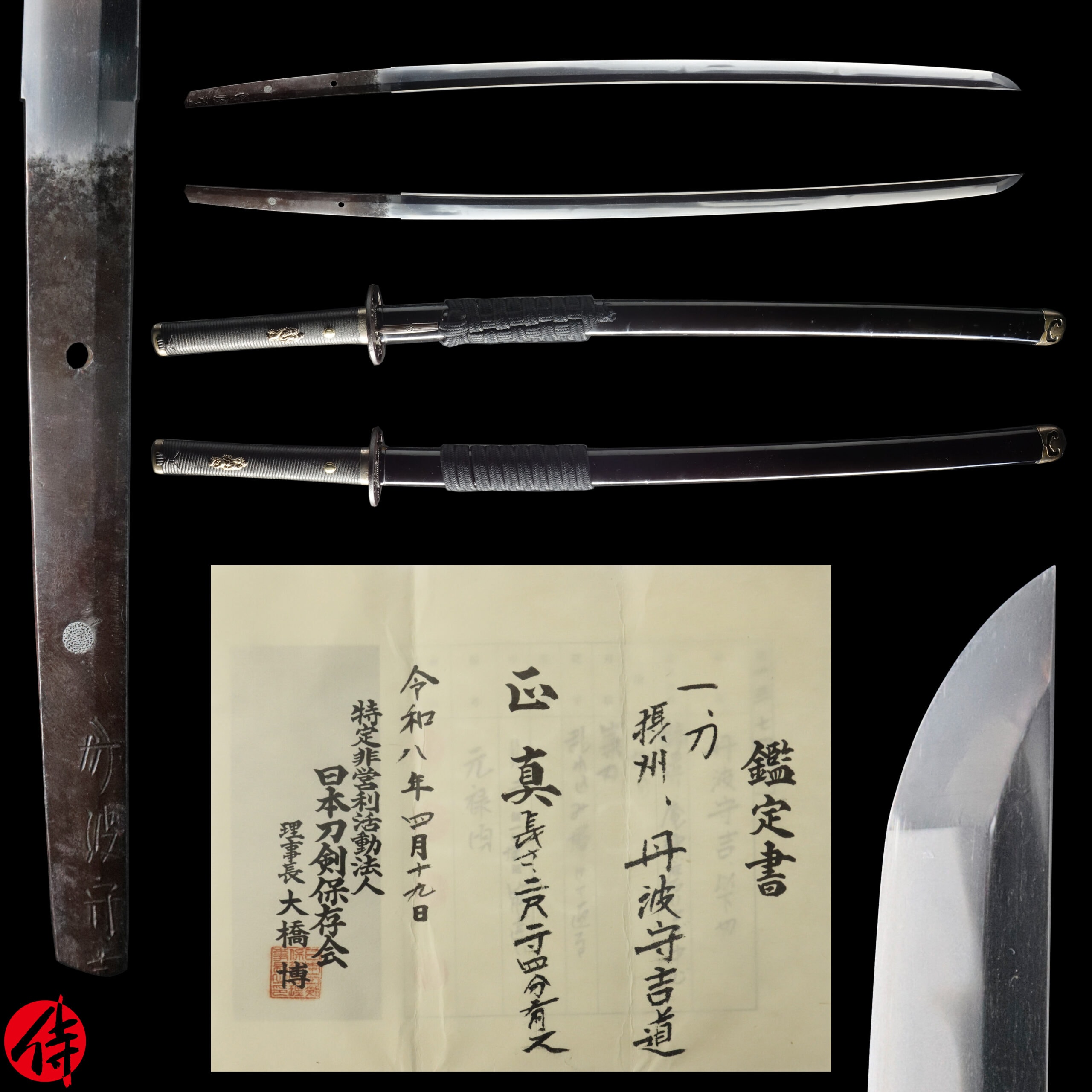
Mid Edo Katana signed by Tanba no Kami Yoshimichi for sale| Samurai Museum Shop E-mail FB Messenger Skip to content Menu Close Samurai Museum Shop Products Antique Japanese Sword Katana signed by Tanba no Kami Yoshimichi NTHK Kanteisho Certificate Updated: 22 Jun 2026 Antique Japanese Sword Katana signed by Tanba no Kami Yoshimichi NTHK Kanteisho Certificate
$7,441
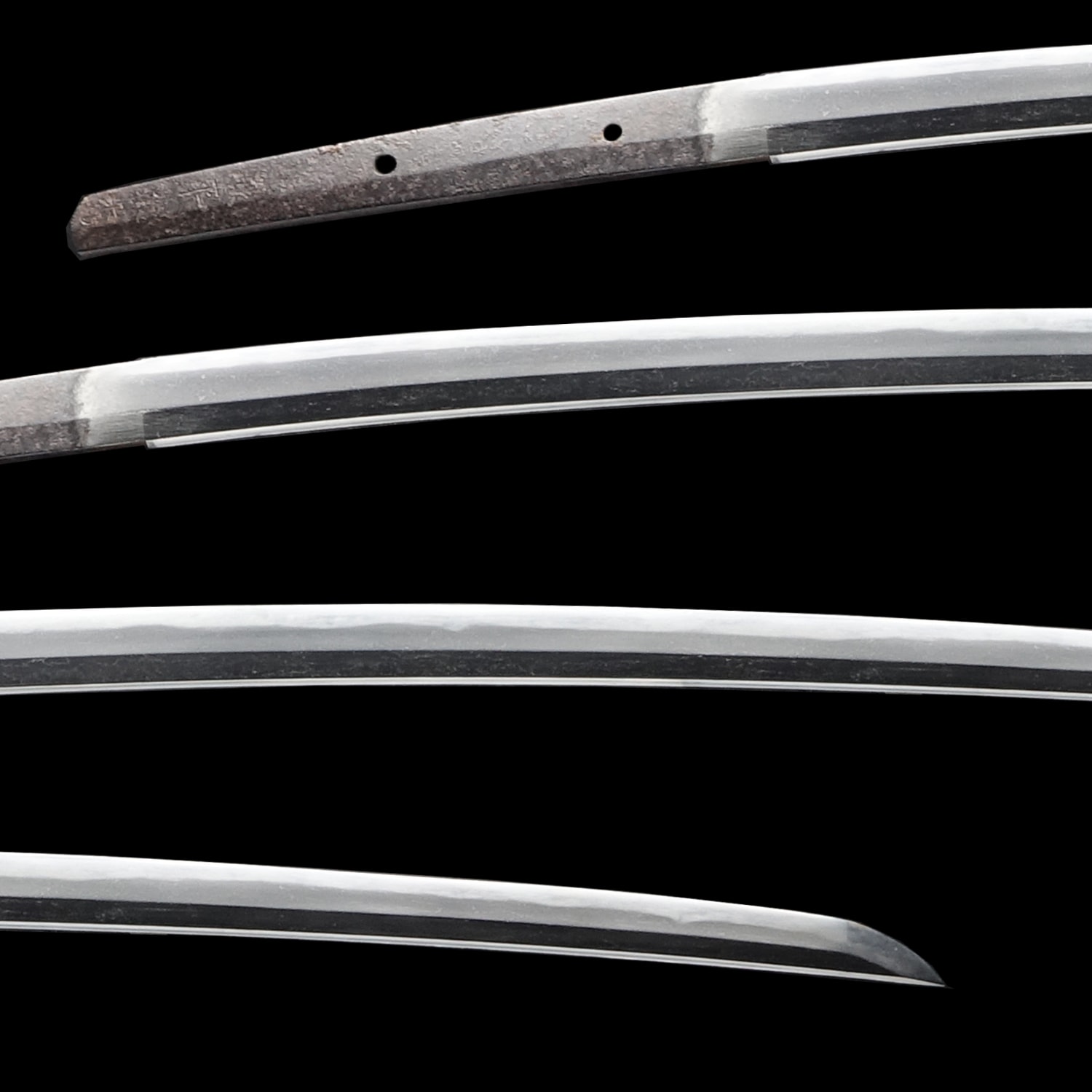
Muromachi Katana signed by Naminohira Yasuhide for sale
$7,751
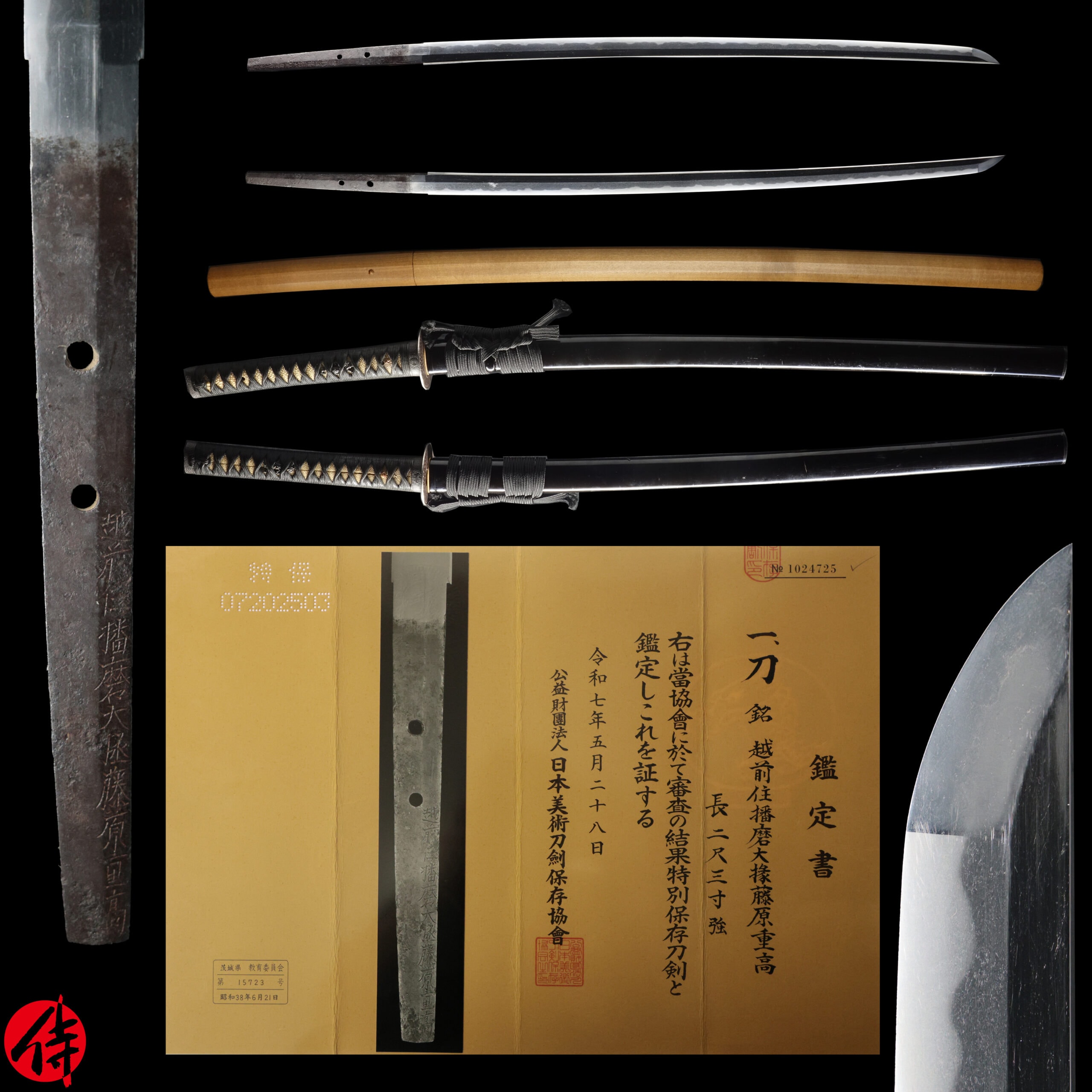
Early Edo Nihonto signed by Shigetaka for sale
$7,131
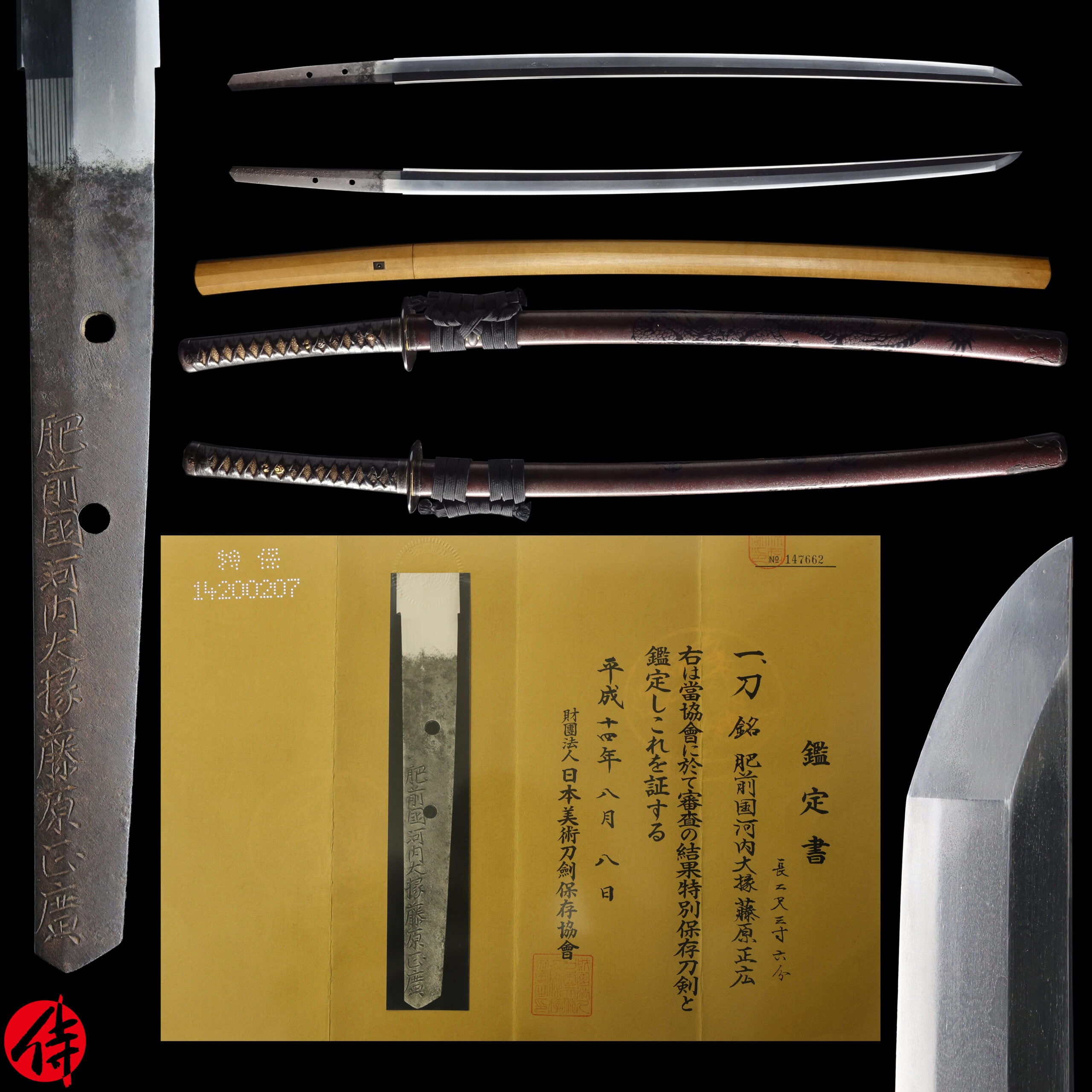
Antique Japanese Sword Katana Signed by Masahiro NBTHK Tokubetsu Hozon Certificate
$7,751
Antique Japanese Sword Katana Signed by Sadayuki with Hozon Certificate 【Description】 According to NBTHK that authenticated this blade, it was forged by Sadatsugu in the late Muromachi period(450-500 years old). There were more than one swordsmith who signed as Sadatsugu back then and NBTHK doesn’t specify which Sadatsugu forged this blade. Nevertheless, you can see great sword-forging technique from the late Muromachi period. Based on the characteristic of the blade, we can easily assume this blade was forged in the Bizen domain (today’s Okayama prefecture), which is famous for Bizen Den, one of the five most famous Japanese sword tradition. When this blade was forged, Japan was in the warring state called Sengoku Jidai where there were so many rivalry and wars between regional feudal lords. The length of this blade is more than 70 cm long and must have been easy for its owner to handle it back then. It would be nice to have a piece that was forged in the warring state period. This blade has very intricate Hamon (tempering line) and Sadatsugu must have been skilled enough to make such beatiful Hamon on this blade. The entire width is relatively narrow from the bottom to the tip, which makes this blade look elegant. This blade is appraised as a Hozon Token(保存刀剣) issued by NBTHK(Nihon Bijutsu Touken Hozon Kyokai:日本美術刀剣保存協会). This authentication paper was only given to authentic Japanese swords, well preserved with artistic value. Please keep in mind that there are a couple of Kitae Kizu on the blade as well as tiny black rust spots. If you like to know the detailed condition, please feel free to contact us. 【 Blade】 Cutting Edge Length(Nagasa) : 70.4 cm( 27.7 inches) Curvature(Sori) : 2.0 cm( 0.79 inches) Hamon : The crystalline structure which forms along the cutting edge of a blade as a result of the hardening process Jimon(Jihada) : visible steel surface pattern created by folding and hammering during forging process Nakago : Nakago is the tang of the Japanese sword. Japanese swordsmiths left the black rust on the tang because it prevents red rust while the tang is in its handle. And the discoloration of the tang was created over time, and it is a great indicator for a Japanese sword specialist to estimate when the sword was forged. Koshirae: Koshirae is the mounting of the Japanese sword. There are several parts that consist of Koshirae such as Saya(Scabbard), Tsuka(Handle), Tsuba(Handguard). Fuchi-Kashira : A pair of matching sword fittings that cover the upper and bottom parts of its sword hilt. A type of arabesque pattern is designed on this Fuchi part and is inlaid with golden paint (probably gold or brass). It is a design in which stems and leaves of vines are twined and make curves. As ivy has a strong vitality and grows up without interruption, people regarded this design as a symbol of prosperity and longevity. In Japanese, the vine is called Tsuru (蔓), and it has another pronunciation; “Man.” There is a word 万 (it is also read Man), which means thousand. In the arabesque pattern, leaves and vines are connected like Obi (帯, belt). The word “帯” can also be read “Tai.” Due to its pronunciation, the term “代 (Tai)” is associated. From this word-association game, an idiom 万代 is associated, and it means a thousand generations. In other words, we could imagine that people used this design wishing prosperity and longevity for their clans for a long time. At the Kashira part, a cloud pattern might be designed, and the gold paint is applied to it, the same as the Fuchi part. Tsuka and Menuki : Tsuka is the handle of the Japanese sword and Menuki is its decoration. It is challenging to judge the motif of this Menuki by seeing the gaps from the Tsukamaki thread. We could say that it seems golden paint was initially applied to it. Although some coloring has already flaked off due to aging, we hope you will enjoy it as a part of an antique texture. Tsuba and Habaki : Tsuba is the handguard for the Japanese Sword and Habaki is the
NihontoWatchBETA売却済
世界81社の刀剣商を横断追跡 · 価格履歴 · 売却アーカイブ
70.4 cm
2 cm
Mid Edo Katana signed by Tanba no Kami Yoshimichi for sale| Samurai Museum Shop E-mail FB Messenger Skip to content Menu Close Samurai Museum Shop Products Antique Japanese Sword Katana signed by Tanba no Kami Yoshimichi NTHK Kanteisho Certificate Updated: 22 Jun 2026 Antique Japanese Sword Katana signed by Tanba no Kami Yoshimichi NTHK Kanteisho Certificate
$7,441
Muromachi Katana signed by Naminohira Yasuhide for sale
$7,751
Early Edo Nihonto signed by Shigetaka for sale
$7,131
Antique Japanese Sword Katana Signed by Masahiro NBTHK Tokubetsu Hozon Certificate
$7,751