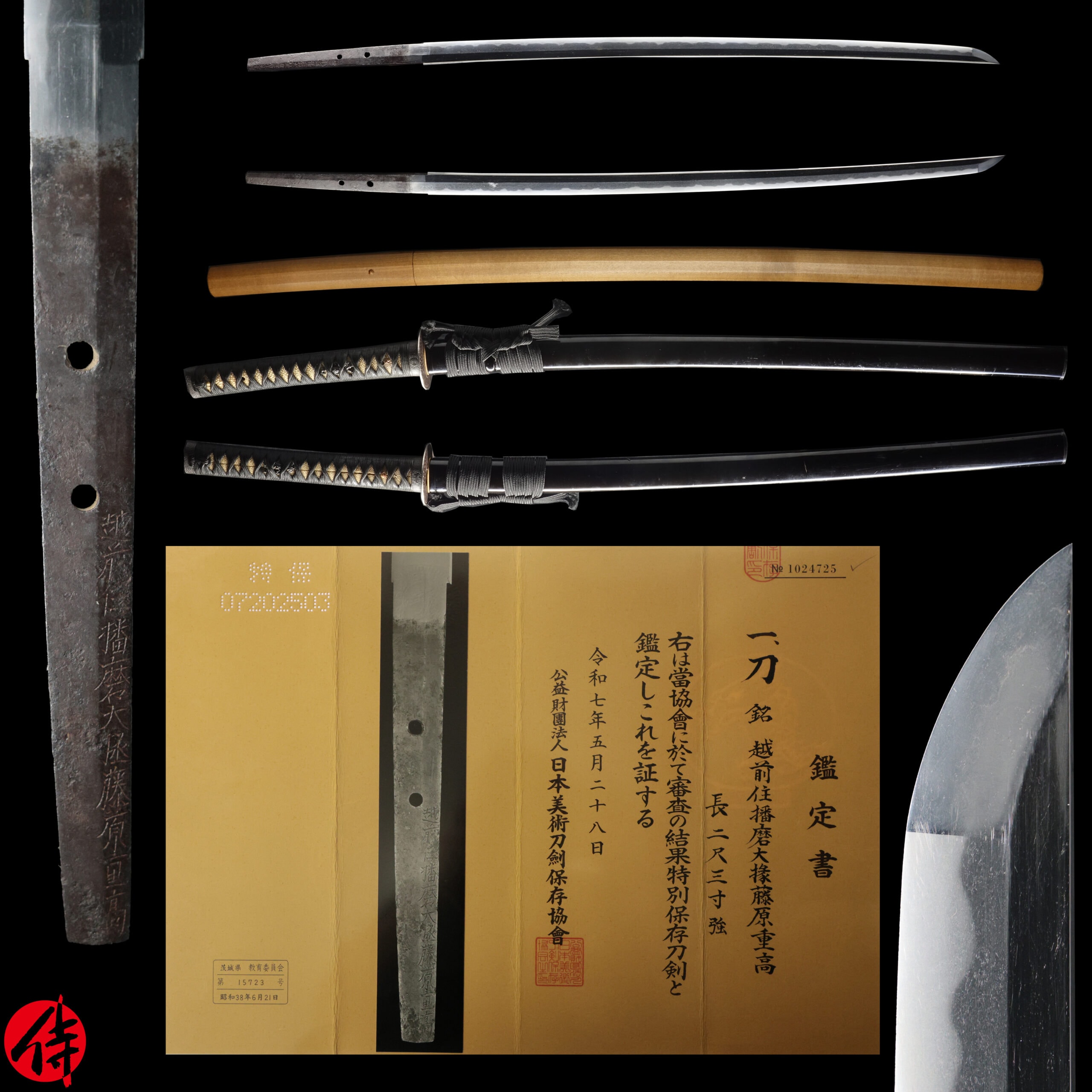
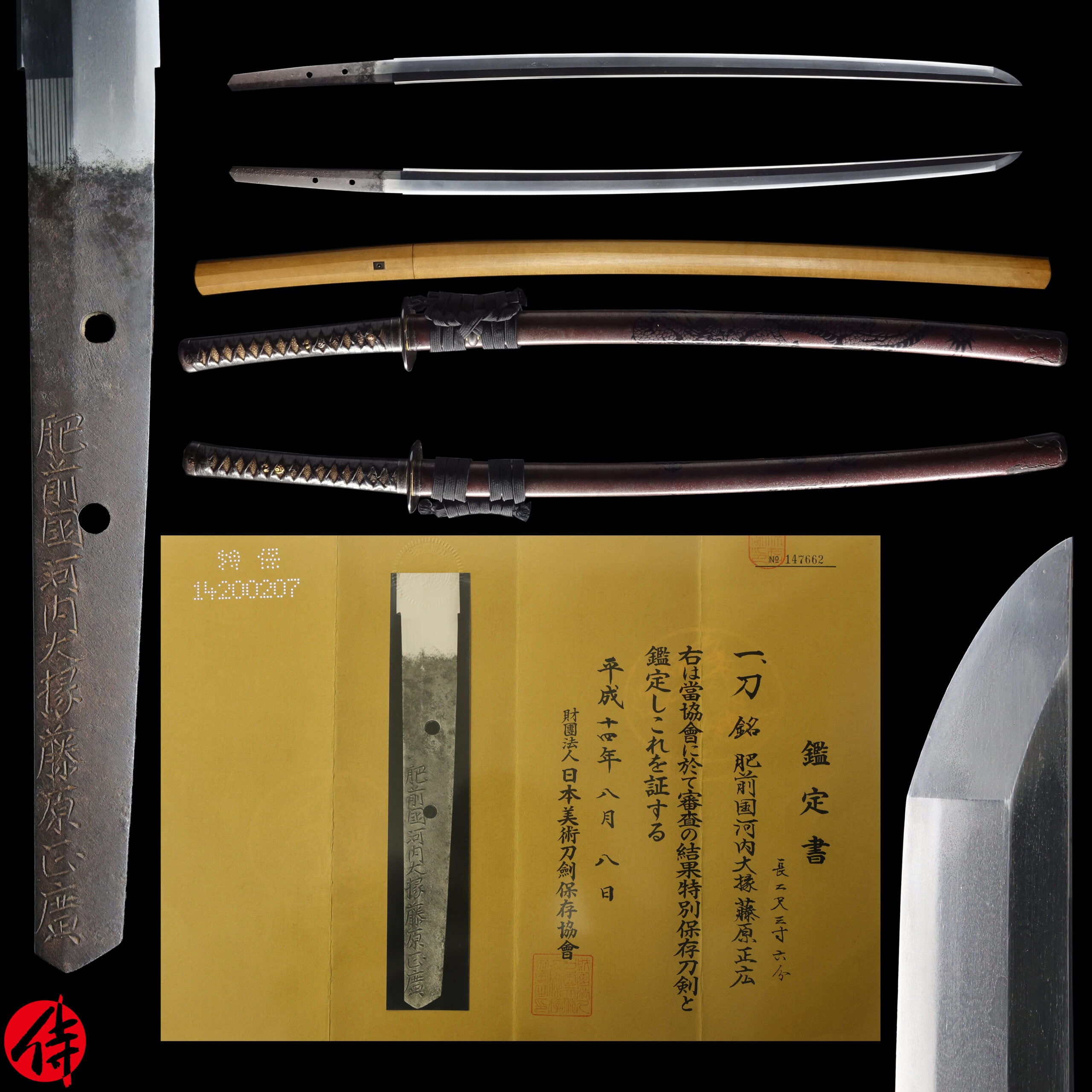
説明
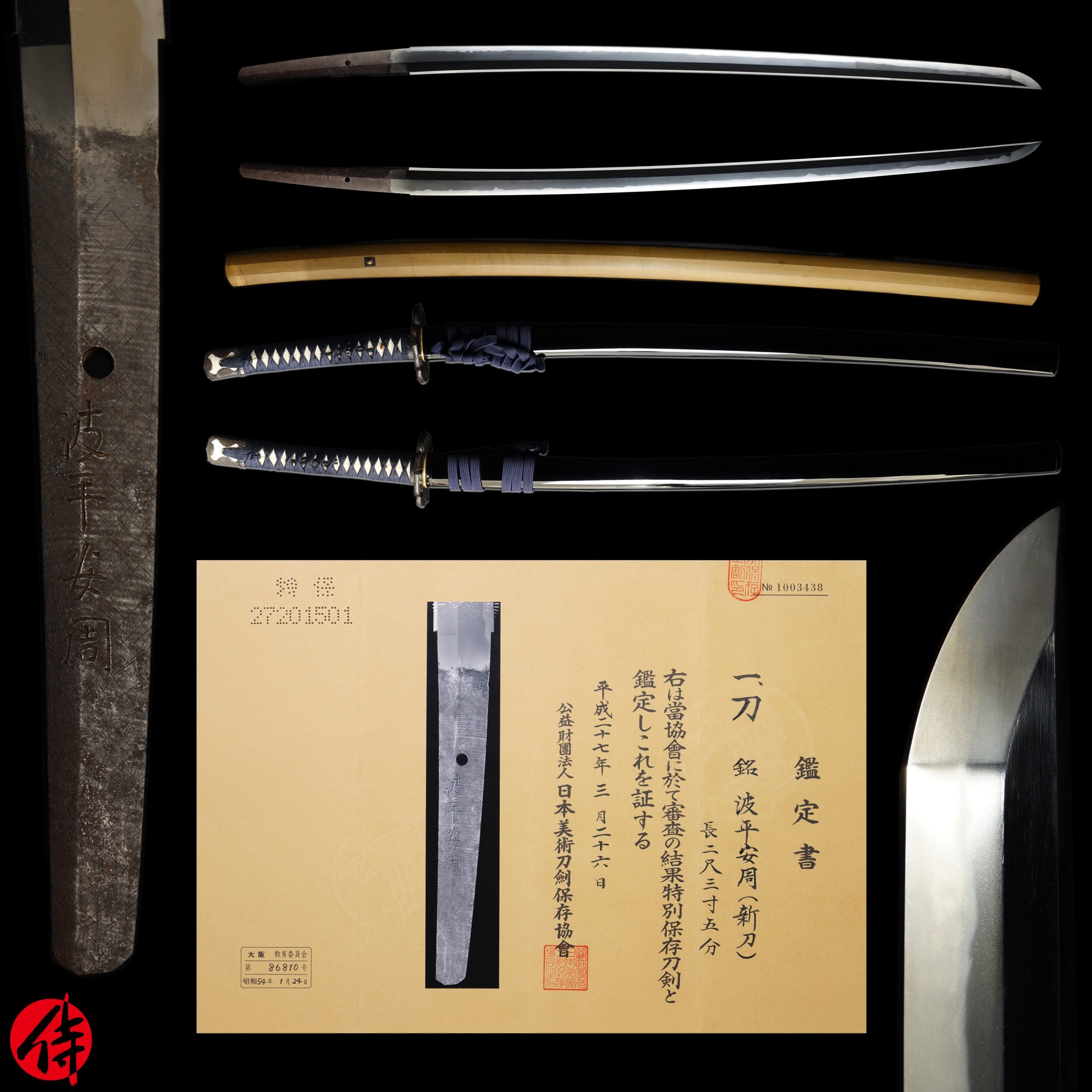
Antique Japanese Sword Katana Signed by Yasuchika with
Tokubetsu Hozon
Certificate
【Description】
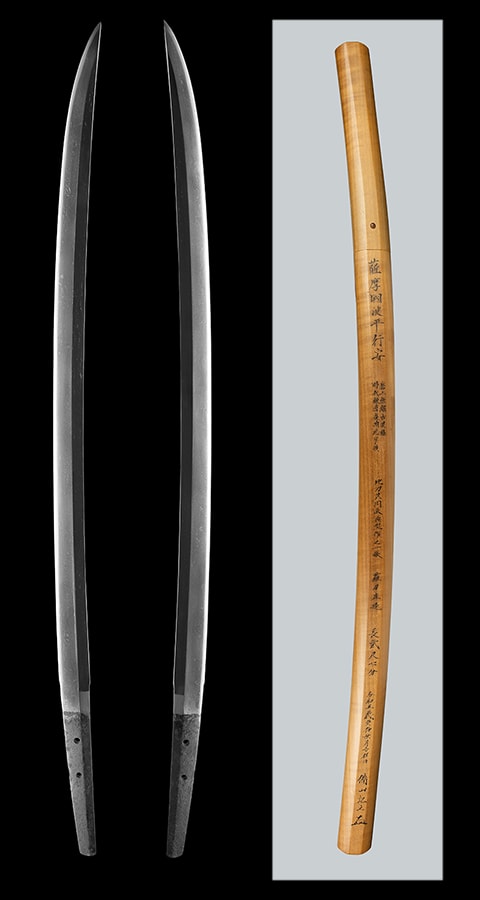
Naminohira Yasuchika(波平安周) is a swordsmith who was active during Kyoho era(1716-1736: Mid- Edo period). He belonged to a prestigious school whose master was Naminohira Yasukuni. Naminohira is a place located in the Satsuma domain(today’s Kagoshima prefecture). Naminohira Yasukuni, his master, was 57th head of Naminohira school.
Naminohira(波平) was one of the most influential schools in Satsuma domain founded by a Yamato-Den swordsmith Masakuni(正國) during the late-Heian period(Late 12th century). They were known for having their smith name with one of these letters, 行(Yuki) or 安(Yasu).
The Naminohira swords were cherished among Samurais in the marine army, mainly because the name Naminohira(波平) means “Tides are quiet.” in Japanese.
The origin of the name Naminohira dates back to the school’s foundation. It is said that the founder Masakuni was able to calm the waves by dedicating his sword to the sea when his school from Yamato sailed to live in Satsuma domain. Since then, he began to use the title “Naminohira Yukiyasu (波平行安)” – “Tides are quiet, ’tis an easy way.” From the late-Heian period until the end of Samurai times(Late 19th century), the Naminohira family had kept the mastership for a thousand years.
Yasuchika was a swordsmith from the Naminohira family back in the mid-Edo period. He would like to apply the authentic Yamato-Den techniques in his craft. His work appears to have features that derive from Yamato-Den; razor-edge sharpness and exceptional strength.
Satsuma province had many Samurais and smiths back in the day, making it difficult for most smiths to keep their jobs through the era. However, the Naminohira school always remained prominent in the evolving sword industry – and their work is still beloved by Katana fans to date.
This blade is appraised as Tokubetsu Hozon certificate issued by NBTHK. This authentication paper was only given to Japanese swords, especially worth preserving by Nihon Bijutsu Touken Hozon Kyokai(the Society for the Preservation of the Japan Art Sword).
【 Blade】
Cutting Edge Length(Nagasa)
:
71.2 cm(28.0 inches)
Curvature(Sori)
:
1.1 cm( 0.43 inches)
For more detailed measurement of the blade/sword mounting
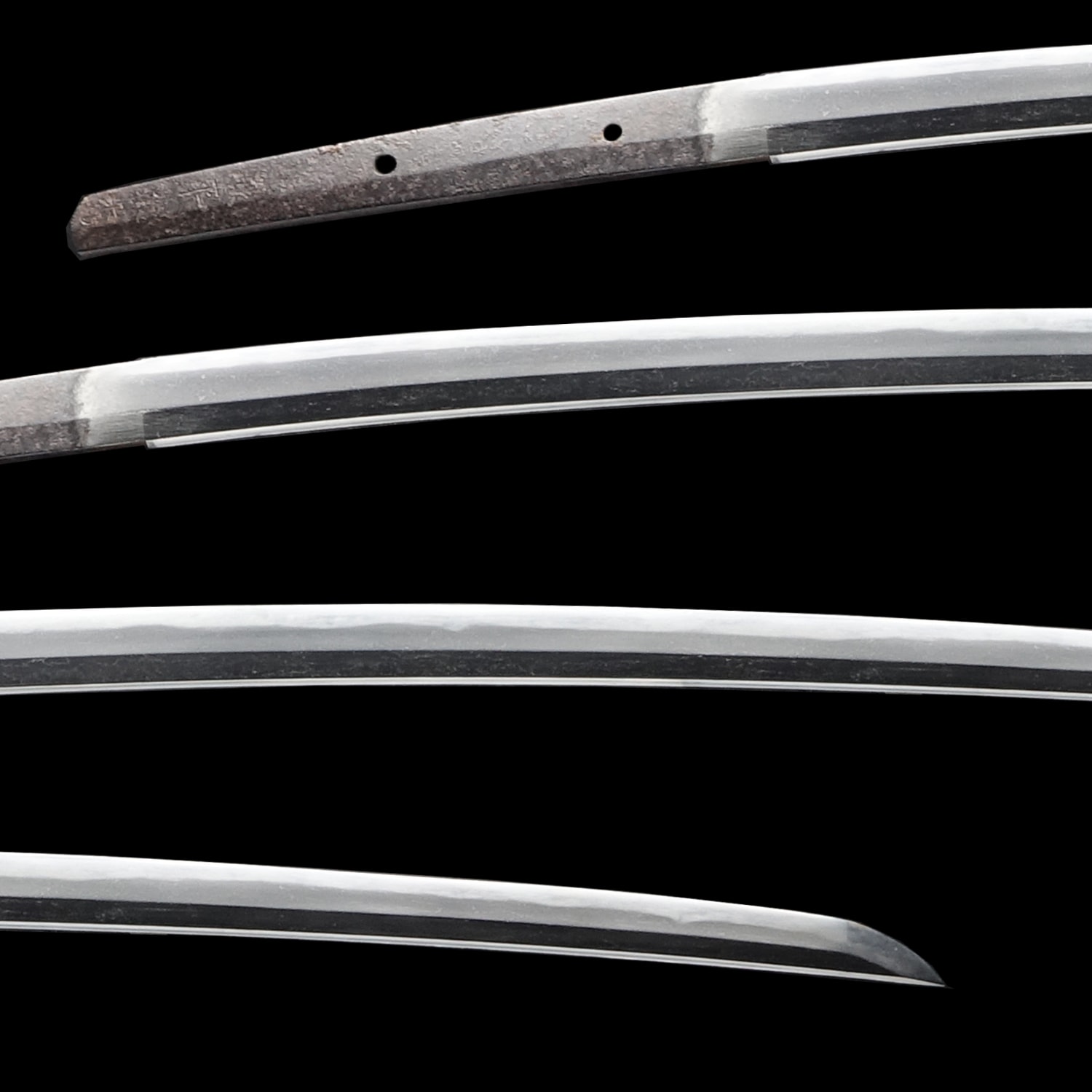
Hamon
:
The crystalline structure which forms along the cutting edge of a blade as a result of the hardening process
Jimon(Jihada)
:
visible steel surface pattern created by folding and hammering during forging process
Nakago
:
Nakago is the tang of the Japanese sword.
Japanese swordsmiths left the black rust on the tang because it prevents red rust while the tang is in its handle. And the discoloration of the tang was created over time, and it is a great indicator for a Japanese sword specialist to estimate when the sword was forged.
Koshirae:
Koshirae is the mounting of the Japanese sword. There are several parts that consist of Koshirae such as Saya(Scabbard), Tsuka( Handle), Tsuba(Handguard).
Fuchi-Kashira
:
A pair of matching sword fittings that cover the upper and bottom parts of its sword hilt.
It seems the this Kashira part initially had the design separated by the thin lines. The small dots are designed for the Fuchi. The silvery metal is applied to these dots and remains its glitter color. As this Fuchi Kashira does not have showy decorations, it brings out the impressive design of the Menuki’s motif; skull.
Tsuka and Menuki
:
Tsuka is the handle of the Japanese sword and Menuki is its decoration.
The skull is the motif of this Menuki. Folded bones are placed under the head. This motif has been used for the linings of the Kimono (traditional Japanese costume) since the Edo period. According to a theory, the skull pattern was thought that it would work as an amulet to protect people from evil spirits. It also has the meaning Kesshi (決死, desperate, be prepared to give up the life for accomplishing something). Therefore, we would like to imagine that Samurais loved this motif becaus