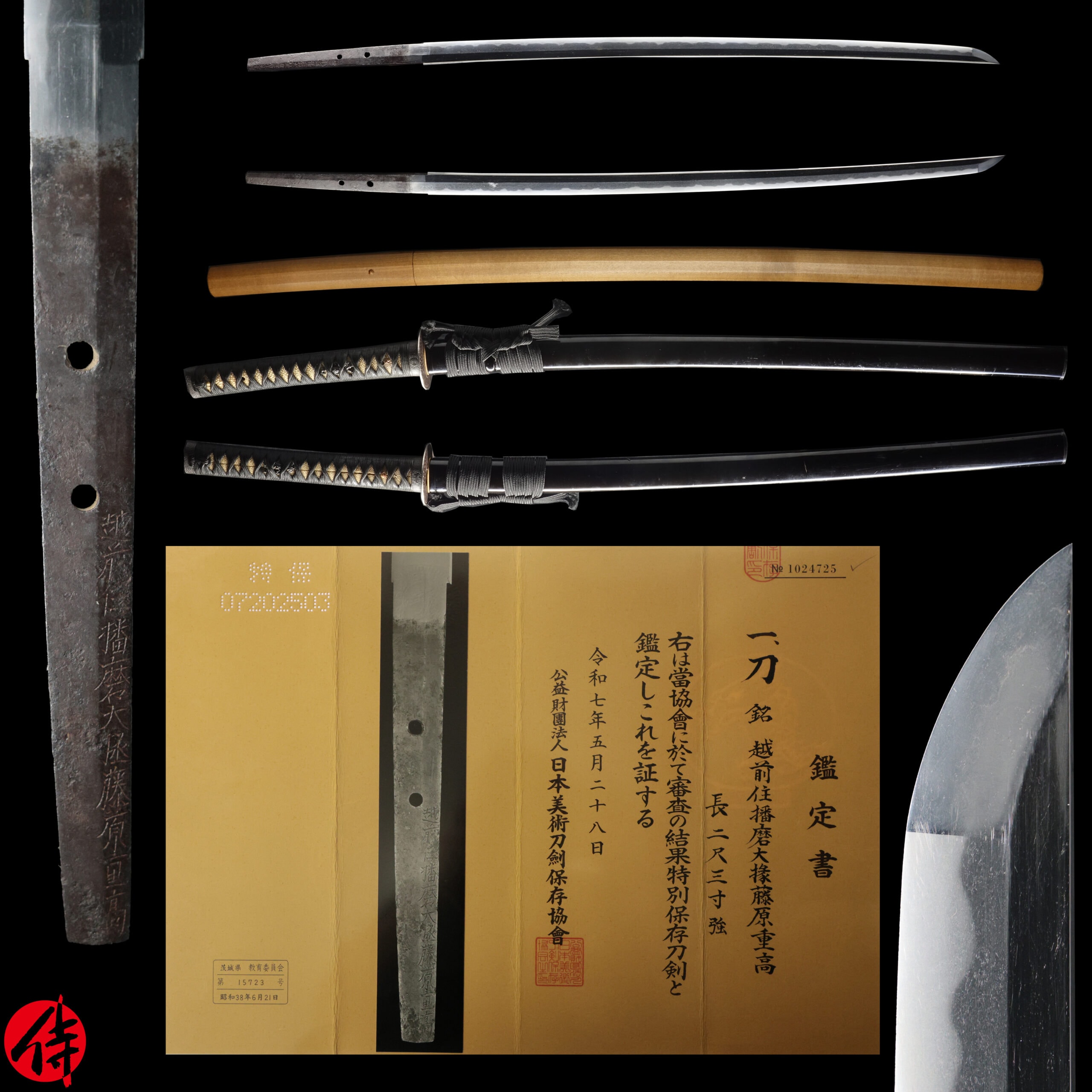
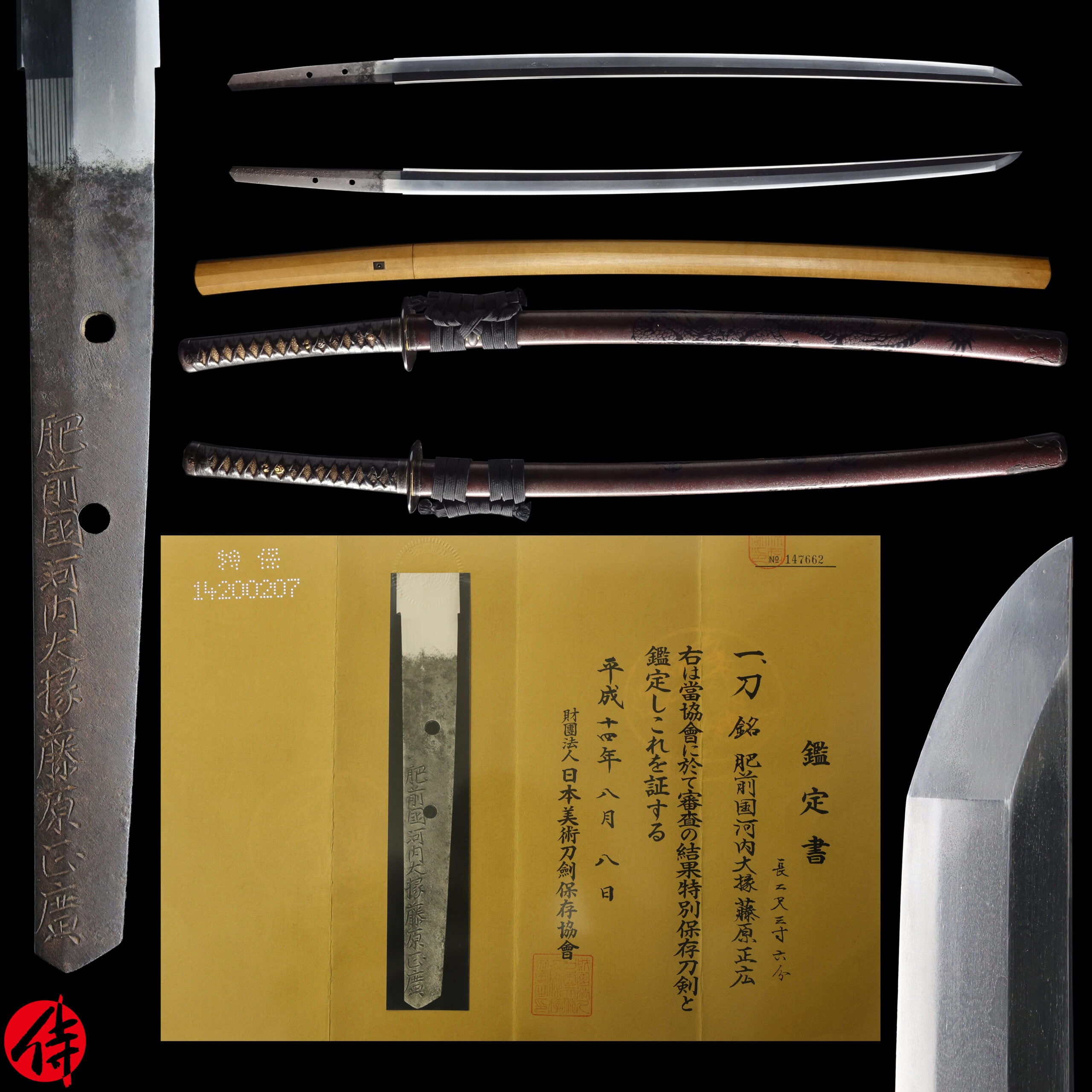
説明
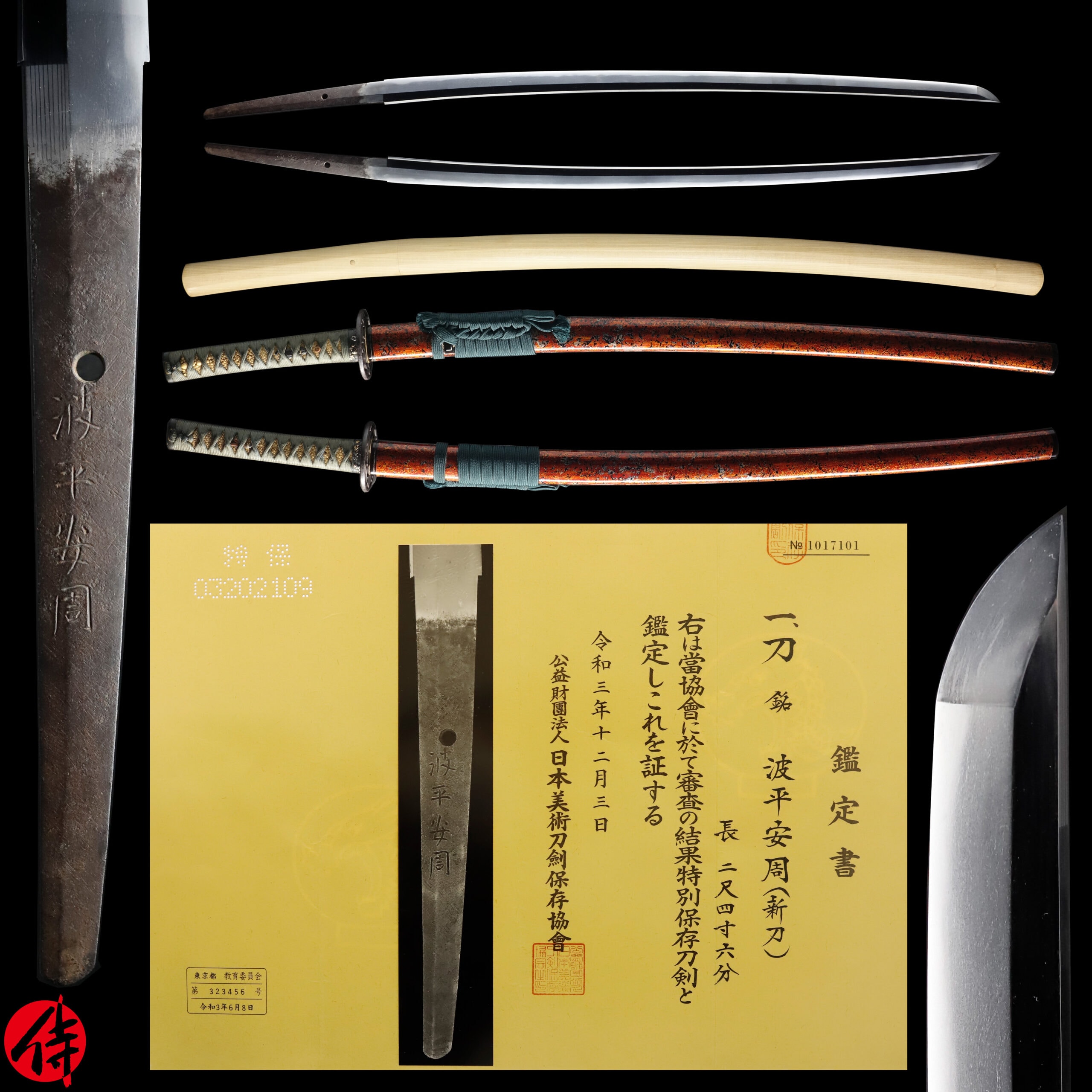
Antique Japanese Sword Katana Signed by Yasuchika with
Tokubetsu Hozon
Certificate
【Description】
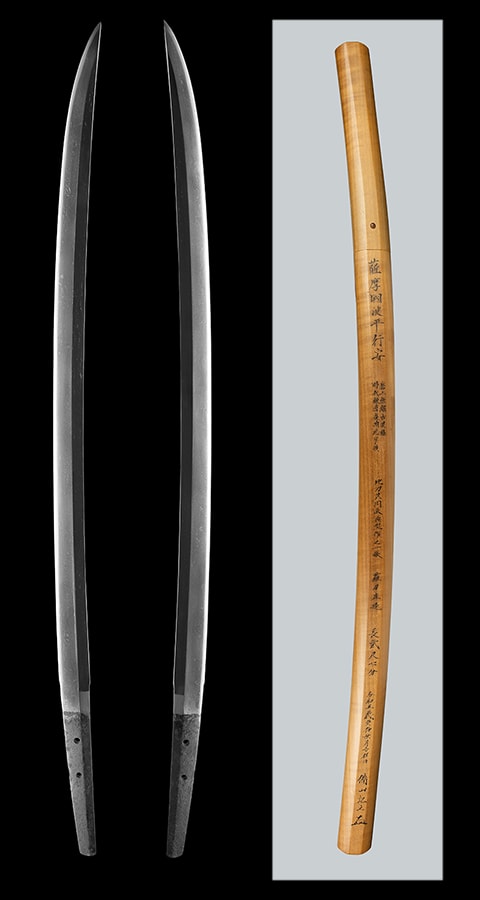
This blade was signed by Naminohira Yasuchika(波平安周), who was active during Kyoho era(1716-1736: Mid- Edo period). He belonged to a prestigious school whose master was Naminohira Yasukuni. Naminohira is a place located in the Satsuma domain(today’s Kagoshima prefecture). Naminohira Yasukuni, his master, was 57th head of Naminohira school.
Naminohira(波平) was one of the most influential schools in Satsuma domain founded by a Yamato-Den swordsmith Masakuni(正國) during the late-Heian period(Late 12th century). They were known for having their smith name with one of these letters, 行(Yuki) or 安(Yasu).
The Naminohira swords were cherished among Samurais in the marine army, mainly because the name Naminohira(波平) means “Tides are quiet.” in Japanese.
The origin of the name Naminohira dates back to the school’s foundation. It is said that the founder Masakuni was able to calm the waves by dedicating his sword to the sea when his school from Yamato sailed to live in Satsuma domain. Since then, he began to use the title “Naminohira Yukiyasu (波平行安)” – “Tides are quiet, ’tis an easy way.” From the late-Heian period until the end of Samurai times(Late 19th century), the Naminohira family had kept the mastership for a thousand years.
Yasuchika was a swordsmith from the Naminohira family back in the mid-Edo period. He would like to apply the authentic Yamato-Den techniques in his craft. His work appears to have features that derive from Yamato-Den; razor-edge sharpness and exceptional strength.
Satsuma province had many Samurais and smiths back in the day, making it difficult for most smiths to keep their jobs through the era. However, the Naminohira school always remained prominent in the evolving sword industry – and their work is still beloved by Katana fans to date.
It is appraised as a
Tokubetsu Hozon Token
(特別保存刀剣) issued by NBTHK(Nihon Bijutsu Touken Hozon Kyokai:日本美術刀剣保存協会). This authentication paper was only given to authentic Japanese swords, especially well preserved and high quality with artistic value.
【 Blade】
Cutting Edge Length(Nagasa)
:
74.6 cm(29.4 inches)
Curvature(Sori)
:
1.5 cm( 0.60 inches)
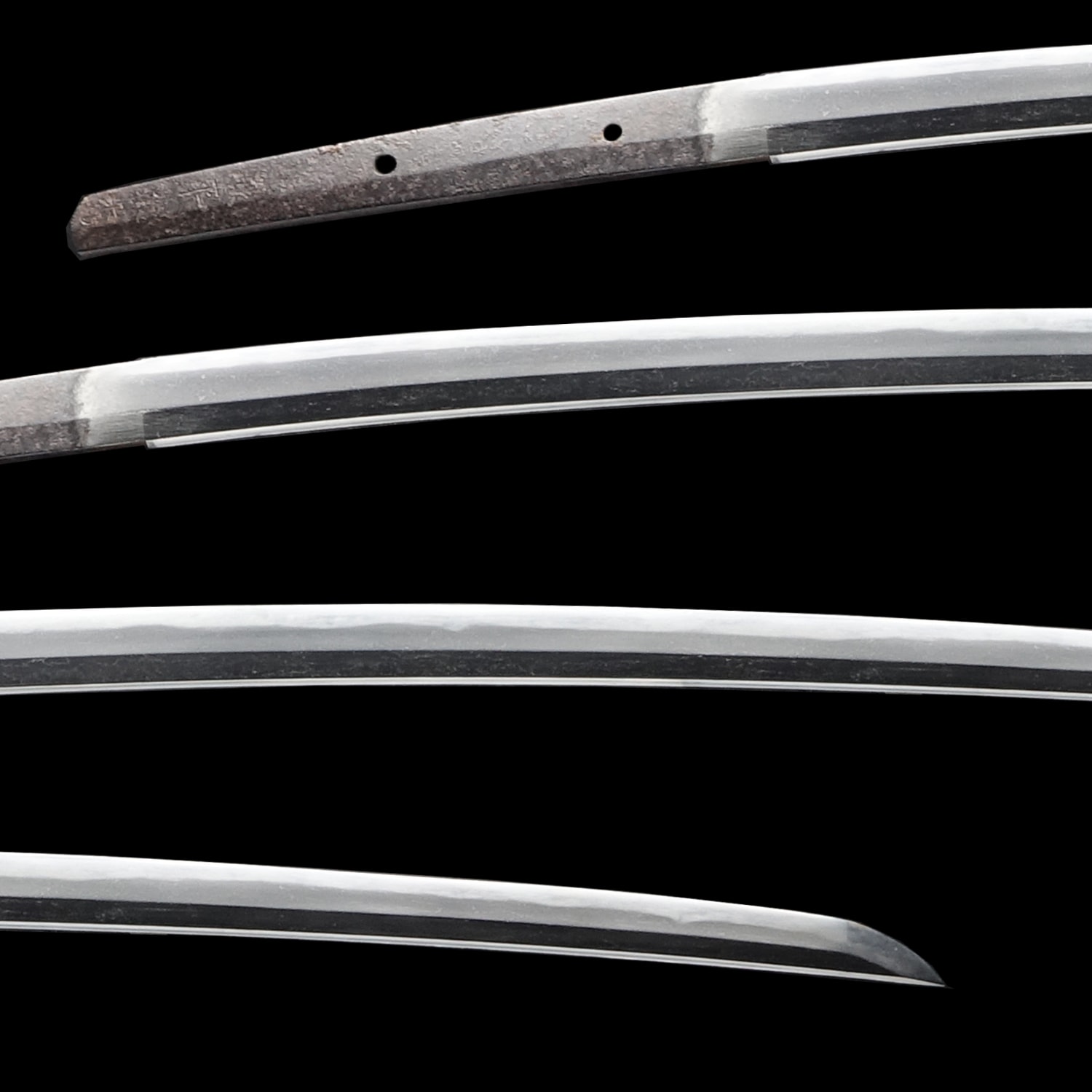
Hamon
:
The crystalline structure which forms along the cutting edge of a blade as a result of the hardening process
Jimon(Jihada)
:
visible steel surface pattern created by folding and hammering during forging process
Nakago
:
Nakago is the tang of the Japanese sword.
Japanese swordsmiths left the black rust on the tang because it prevents red rust while the tang is in its handle. And the discoloration of the tang was created over time, and it is a great indicator for a Japanese sword specialist to estimate when the sword was forged.
Koshirae:
Koshirae is the mounting of the Japanese sword. There are several parts that consist of Koshirae such as Saya(Scabbard), Tsuka(Handle), Tsuba(Handguard).
Fuchi-Kashira
:
A pair of matching sword fittings that cover the upper and bottom parts of its sword hilt.
The surface of this Fuchi Kashira is decorated with the Nanako-Ji (魚子地) technique. This process makes a uniform minimal protrusions pattern by hitting the Nanako-Ji Tagane (魚子地鏨, a chisel for this technique) on a metal surface. This decorative technique is often seen on sword mountings.
About the design, you would find the figures of men enjoying conversations. They are outside by the trees that grow around them and the mountain in the distance. You could feel the peaceful atmosphere from the facial expressions of the people chatting. Although some colorings have already faded due to aging, we could see that gold and silvery paints were initially applied here and there. We estimate that this Fuchi Kashira used to look more gorgeous than it does now. However, since this fading is also due to aging, we would like you to enjoy it as an antique texture.
Tsuka and Menuki
:
Tsuka is the handle of the Japanese sword and Menuki is its decoration.
It is