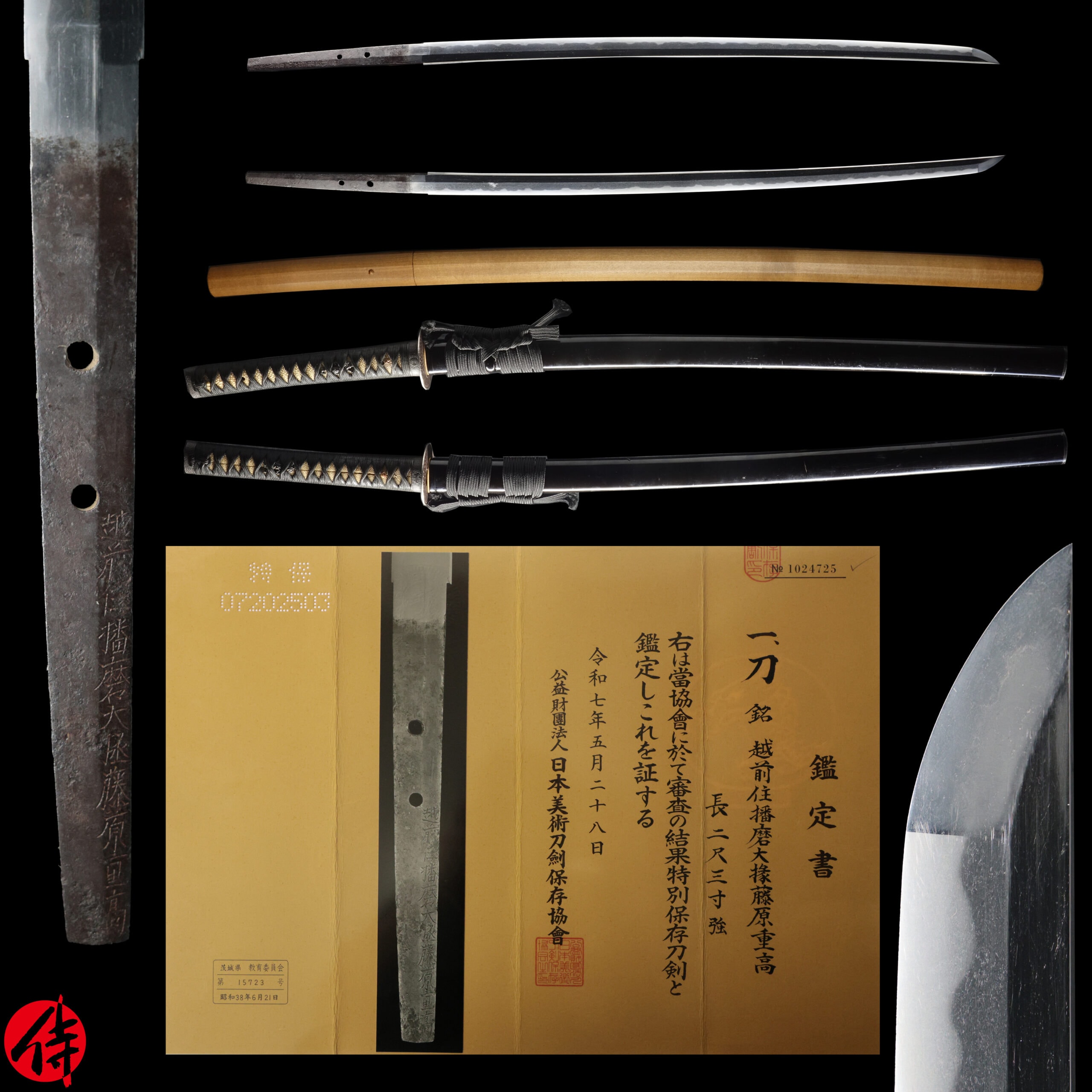
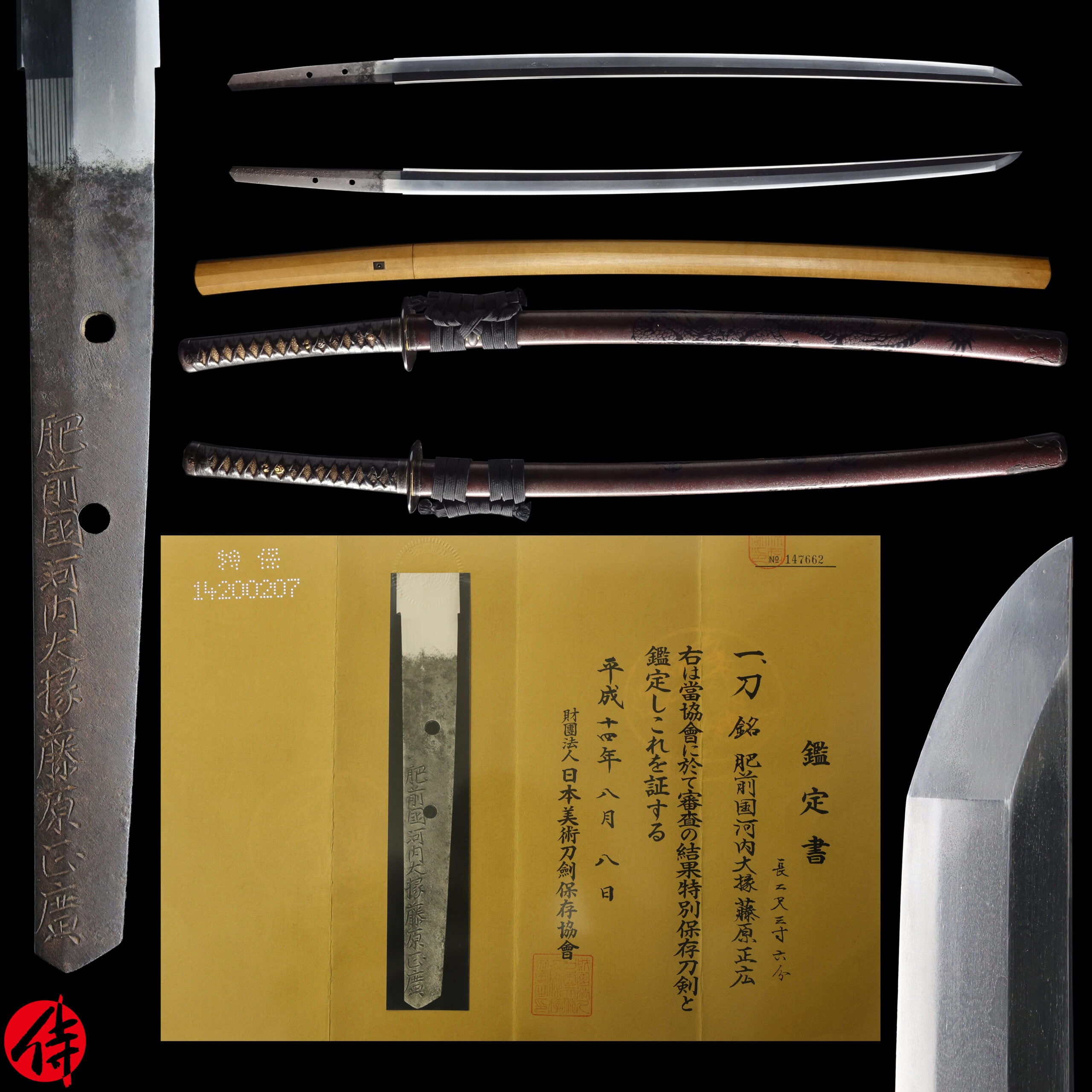
説明
Antique Japanese Sword Katana Signed by Fujiwara Kunikane with
Tokubetsu Hozon
Certificate
【Description】
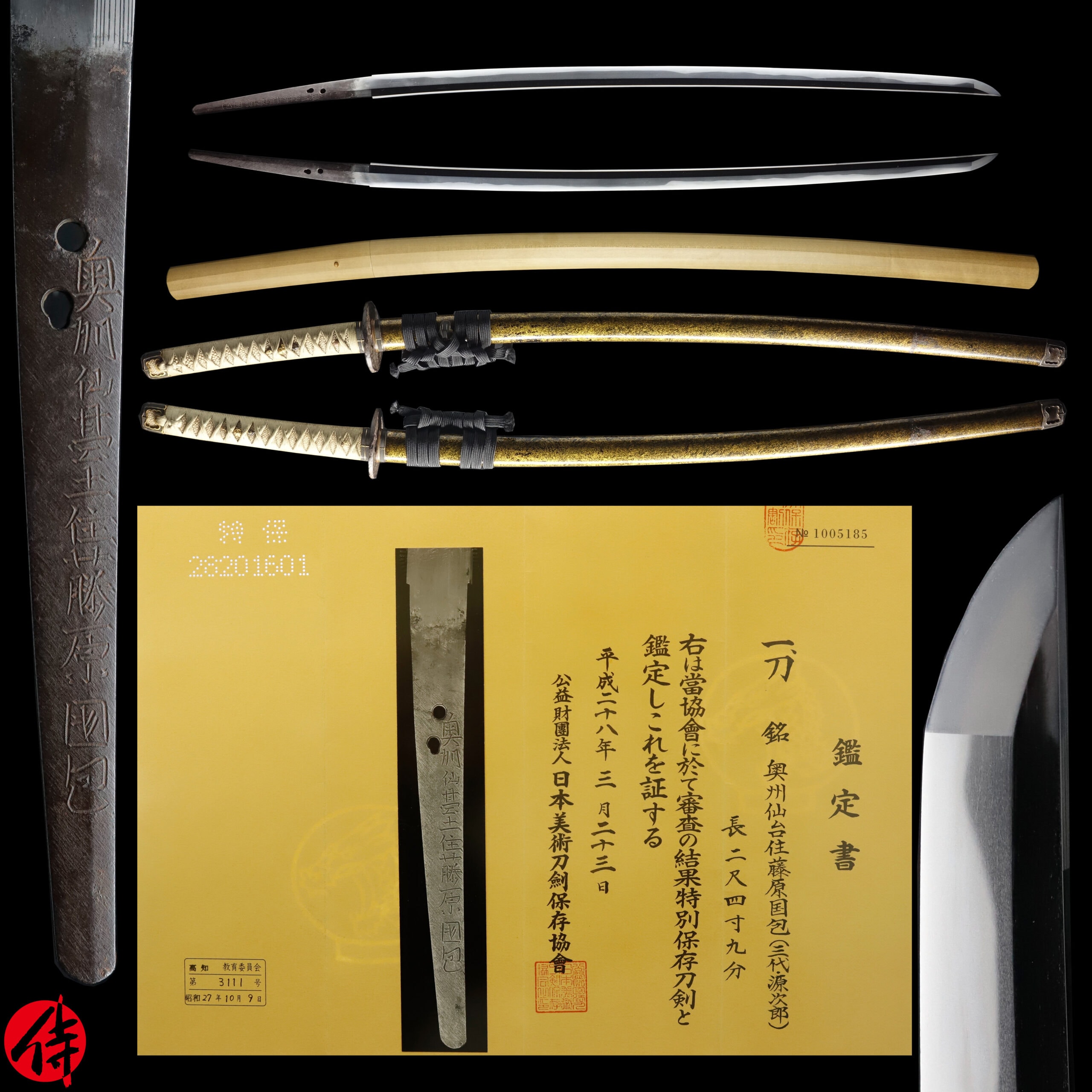
This blade was signed by Oshu Sendai Jyu Fujiwara Kunikane (奥州仙台住藤原国包) during the early-mid Edo period (1673-1704). The maker’s name Kunikane lasted 13 generations. According to its NBTHK’s appraisal, it was made by the third-gen Kunikane, also known as Genjiro (源次郎). He was active for 25 years between 1672-1697 (Early-Mid Edo Period). Oshu is the province’s name, and Sendai is the city’s name in Miyagi prefecture. This engraving means that Kunikane lived in this area when he forged this blade.
The first-gen Kunikane was a descendant of the Hosho school members in Yamato province (Today’s Nara prefecture). The first-gen was famous for serving Date Masamune, one of the most famous feudal lords in Japanese history and a legendary figure even today. Under Date Masamune’s order, the first-gen Kunikane was sent to Kyoto in 1614 to become an apprentice of Etchu no Kami Masatoshi, who belonged to Mishina school and was one of the most famous swordsmiths in Kyoto back then. After mastering superb craftsmanship, Kunikane returned to Mutsu province, another name for Oshu, in the fifth year of the Genwa era (1619). He received the honorable official title of Yamashiro Daijo for his excellent sword-forging techniques in the third year of the Kan-ei era (1626).
The maker’s name Kunikane lasted thirteen generations until the early Meiji period. And they all served the Date clan exclusively, forging high-quality blades. And they pursued their ancestor’s sword-forging styles from Hosho school in Yamato province (Today’s Nara prefecture).
The third-gen Kunikane was born in 1633 as the son of the second-gen Kunikane. The third-gen took over his father’s school in the first year of the Enpo era (1673). There are not many remaining blades forged by the third-gen. Nevertheless, you can see the superb level of craftsmanship in this blade. The third-gen died at the age of 73 years old in 1705.
If you are looking for an antique Japanese sword related to the Date clan or Date Masamune, we are confident you will be pleased to add this Katana to your collection.
It is appraised as a
Tokubetsu Hozon Token
(特別保存刀剣) issued by NBTHK(Nihon Bijutsu Touken Hozon Kyokai:日本美術刀剣保存協会). This authentication paper was only given to authentic Japanese swords, especially well preserved and high quality with artistic value.
【 Blade】
Cutting Edge Length(Nagasa)
:
75.4 cm (29.7 inches)
Curvature(Sori)
:
1.36 cm (0.53 inches)
Hamon
:
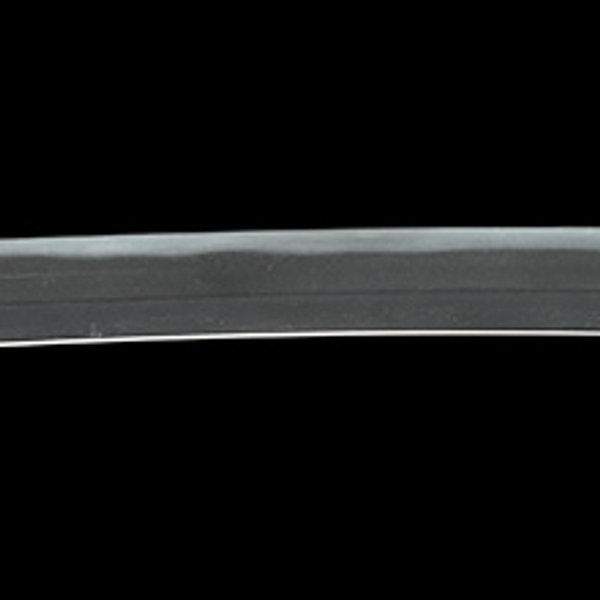
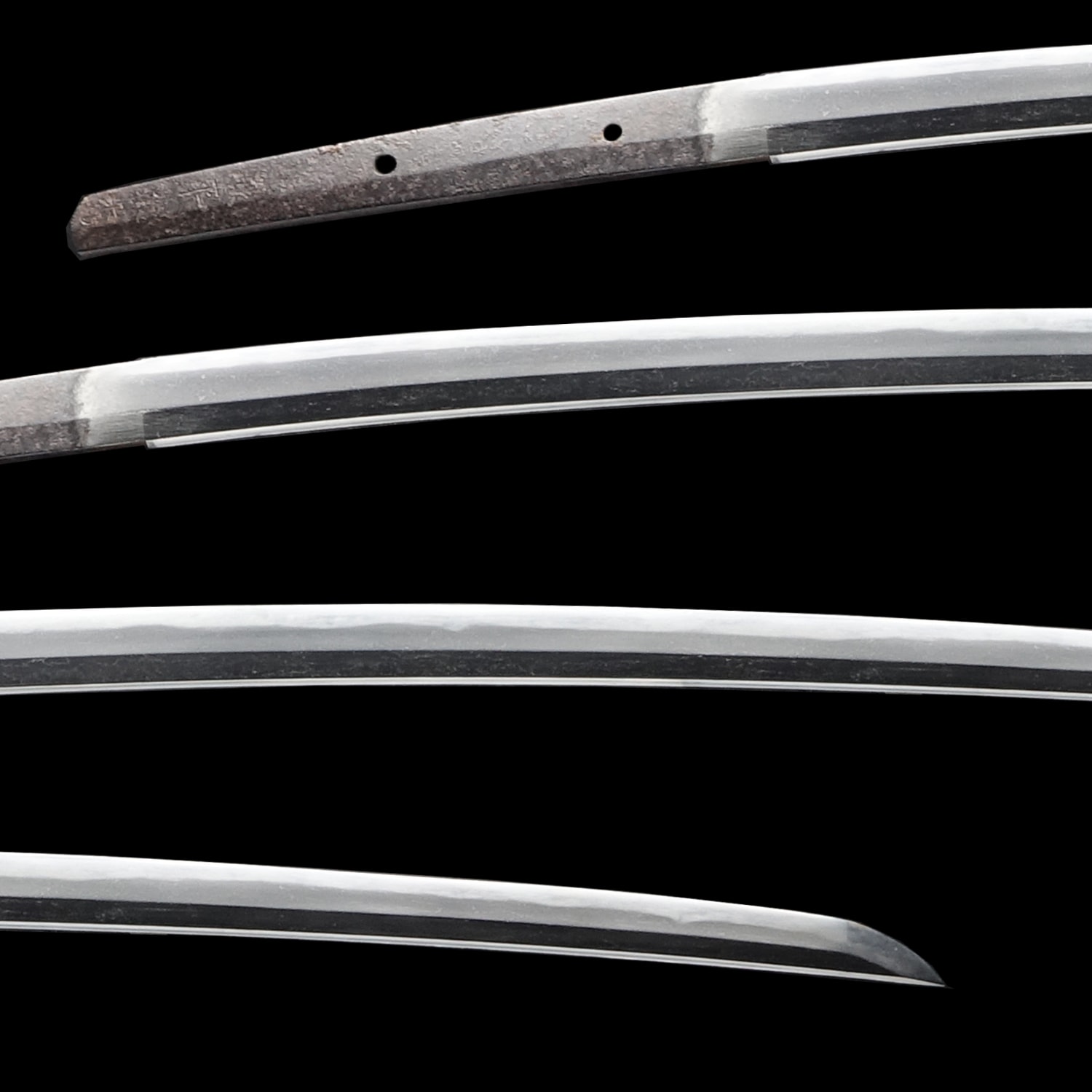
The crystalline structure which forms along the cutting edge of a blade as a result of the hardening process
Jimon(Jihada)
:
visible steel surface pattern created by folding and hammering during forging process
Nakago
:
Nakago is the tang of the Japanese sword.
Japanese swordsmiths left the black rust on the tang because it prevents red rust while the tang is in its handle. And the discoloration of the tang was created over time, and it is a great indicator for a Japanese sword specialist to estimate when the sword was forged.
Koshirae:
Koshirae is the mounting of the Japanese sword. There are several parts that consist of Koshirae such as Saya(Scabbard), Tsuka(Handle), Tsuba(Handguard).
Fuchi-Kashira
:
A pair of matching sword fittings that cover the upper and bottom parts of its sword hilt.
The surface of this Fuchi Kashira is decorated with the Nanako-Ji (魚子地) technique. This process makes a uniform minimal protrusions pattern by hitting the Nanako-Ji Tagane (魚子地鏨, a chisel for this technique) on a metal surface. This decorative technique is often seen on sword mountings.
Although some colorings have faded due to aging, we could see that golden paint was initially applied to the edges of this Fuchi Kashira. This coloring adds decorativeness to this work.
Tsuka and Menuki
:
Tsuka is the handle of the Japanese sword and Menuki is its decoration.
Some rabbits are designed on this Menuki. The Kanji letter for a rabbit is written as “兎” in Ja