説明

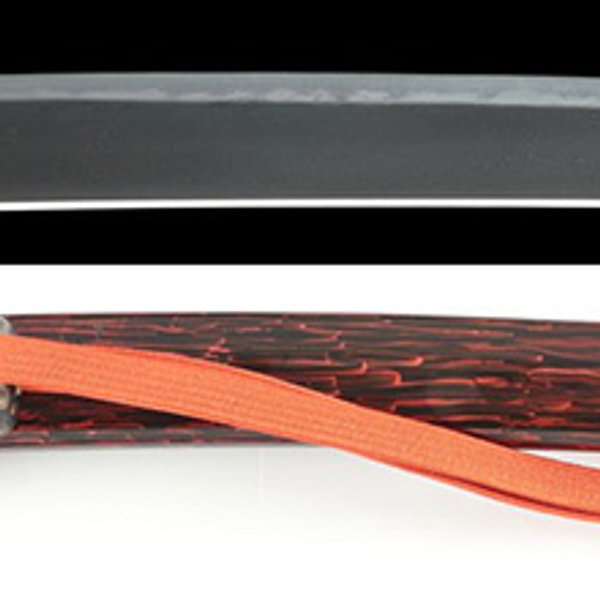
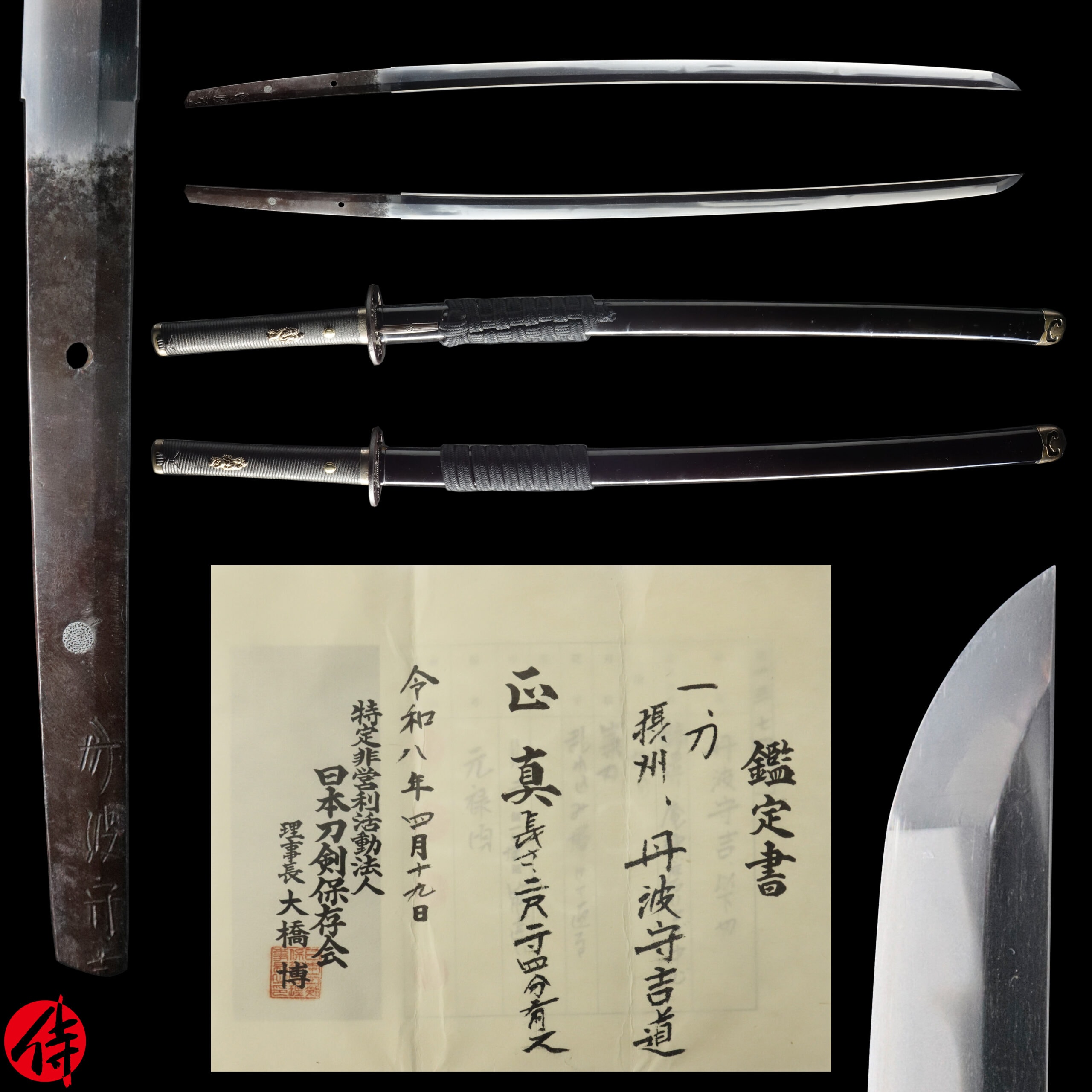
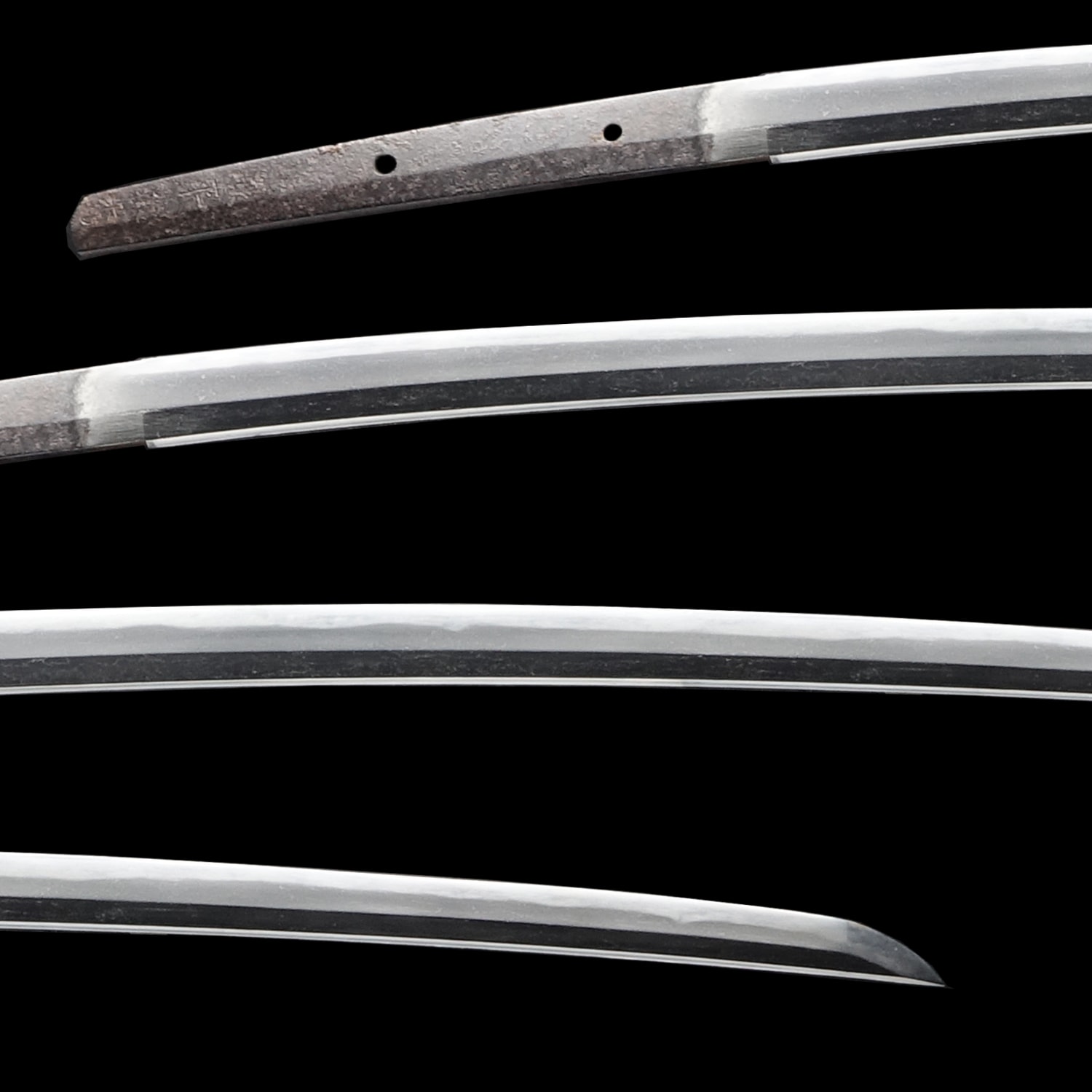
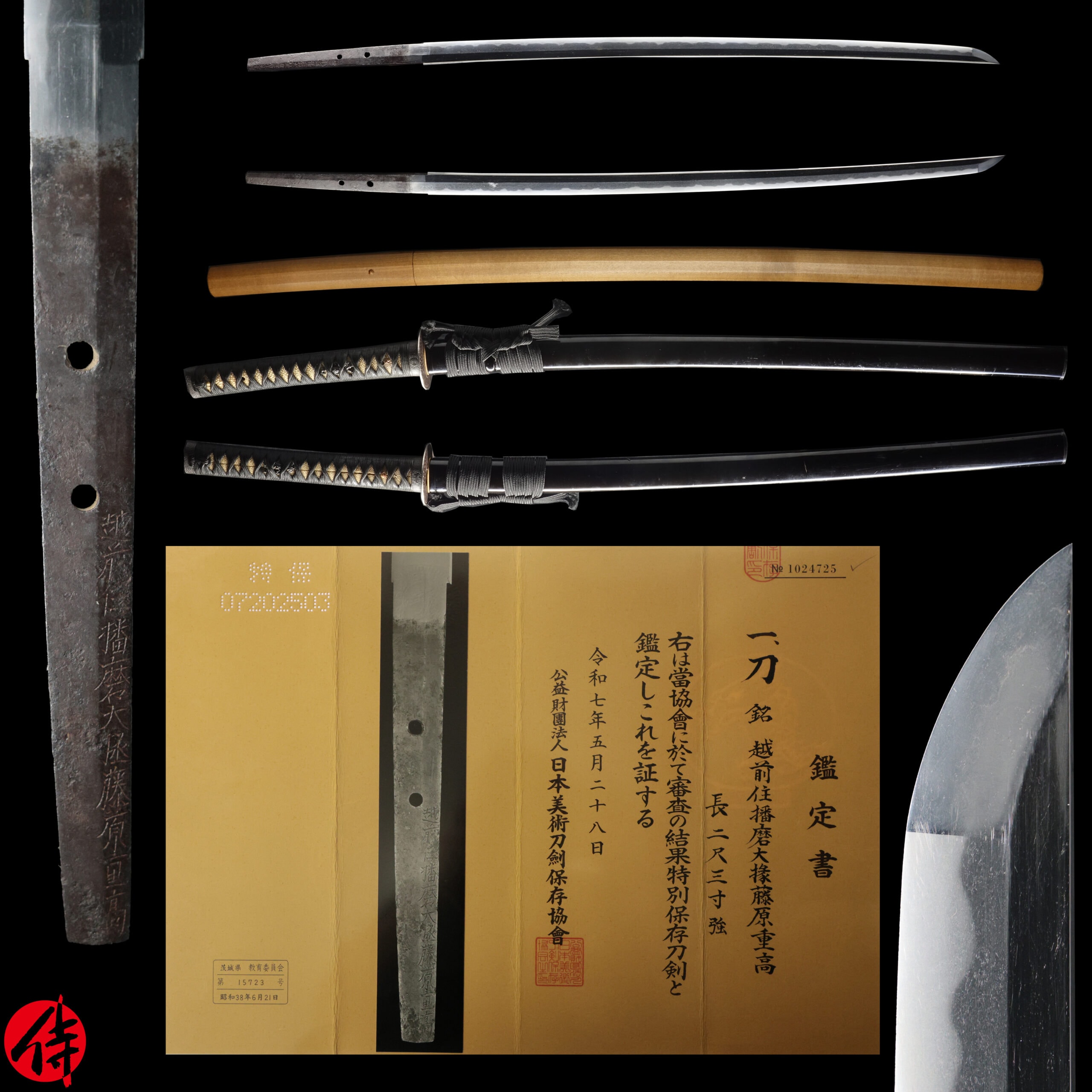
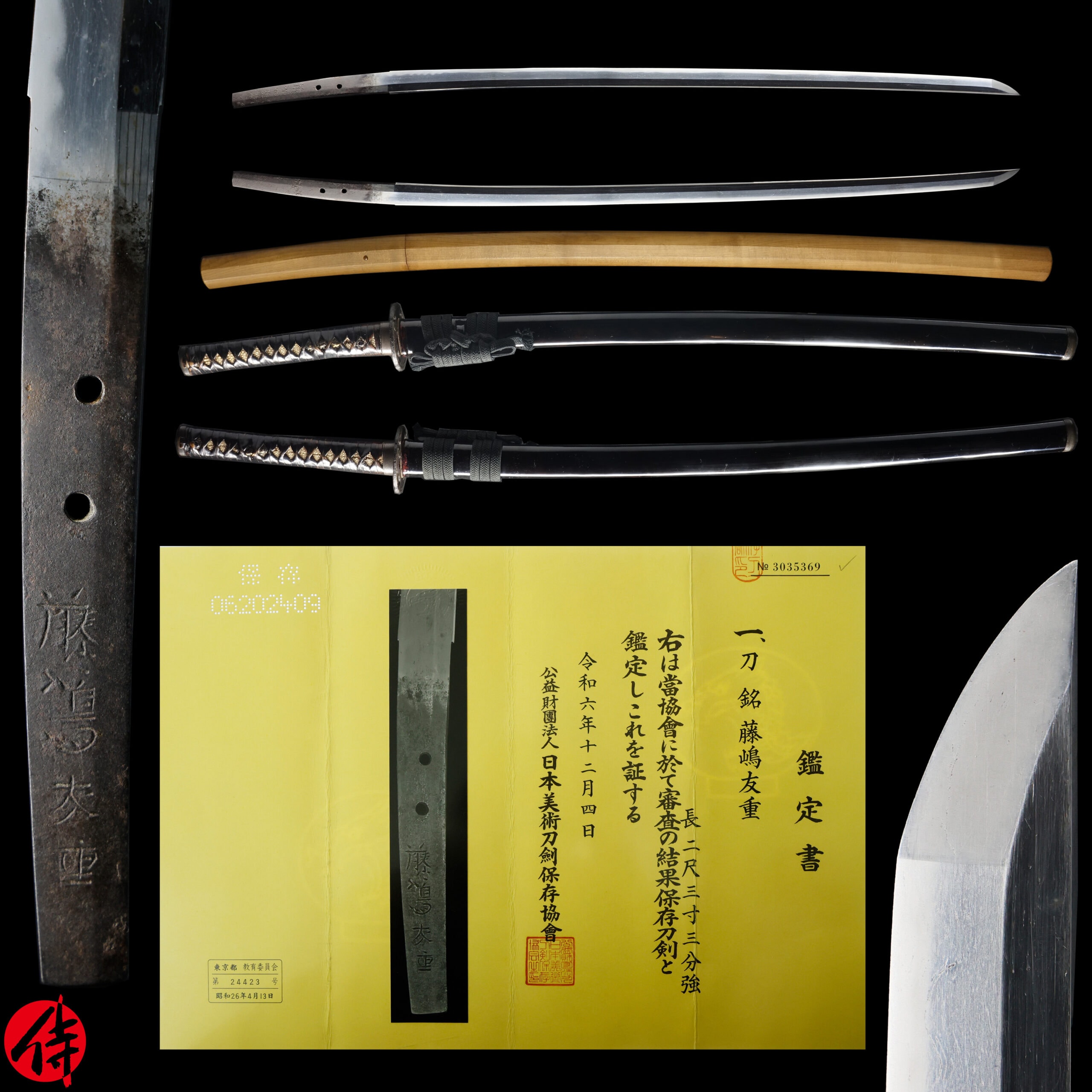
Antique Japanese Sword Katana signed by Tomoshige with NBTHK Hozon Certificate 【Description】 This blade was signed by Fujishima Tomoshige (藤嶋友重), whose maker’s name lasted several generations from the early Nanboku period to the end of the Edo period (Early 14th-Late 19th century). According to NBTHK, which appraised this blade, it was made by a late gen Tomoshige, who was considered to be active in the late Muromachi period (the late 15th century). Though it is not clear when this blade was exactly forged, the time when the late gen Tomoshige was active, the late Muromachi period, is also called the Sengoku Jidai and there were many rivalries and wars between regional feudal lords to expand their land or gain political control. The generations of Tomoshige forged blades in Kaga domain (Today’s Ishikawa prefecture). It is said that the first-gen Tomoshige was an apprentice of Rai Kunitoshi (来国俊), one of the most famous swordsmiths in Yamashiro province (Today’s Kyoto) during the late Kamakura-early Nanbokucho period (Late 13th-early 14th century). And the first-gen Tomoshige settled in Kaga domain and founded the school. In the late Muromachi period, Maeda clan started to control Kaga domain. Maeda clan was originally a retainer of the Oda family, who ruled Owari province (today’s Nagoya area in Aichi prefecture). The Maeda clan was one of the most influential families in Samurai history. The first head of the Maeda clan was Toshiie Maeda. He climbed the social ladder of Samurai society and became the feudal lord of Kaga Province (today’s Ishikawa prefecture). He had a vast rice fief that fed 100 million grown-up adults, which is called Hyakuman Goku. Toshie Maeda had a close tie with Oda Nobunaga and Hideyoshi Toyotomi. Since Tomoshige lived in this domain, he likely served the Maeda clan. This blade is appraised as a Hozon Touken (保存刀剣) issued by NBTHK (Nihon Bijutsu Touken Hozon Kyokai: 日本美術刀剣保存協会). This authentication paper was only given to authentic Japanese swords, well preserved and high quality with artistic value. *Please keep in mind that there are a few noticeable Kitae Kizu on this blade. If you like to know the detailed condition of this blade, please feel free to contact us. 【 Blade】 Cutting Edge Length(Nagasa) : 70.6 cm(27.7 inches) Curvature(Sori) : 0.9 cm(0.35 inches) Hamon : The crystalline structure which forms along the cutting edge of a blade as a result of the hardening process. Jimon (Jihada) : Visible steel surface pattern created by folding and hammering during forging process. Kissaki : Kissaki is the tip of the Japanese sword. Nakago : Nakago is the tang of the Japanese sword. Japanese swordsmiths left the black rust on the tang because it prevents red rust while the tang is in its handle. And the discoloration of the tang was created over time, and it is a great indicator for a Japanese sword specialist to estimate when the sword was forged. Koshirae : Koshirae is the mounting of the Japanese sword. There are several parts that consist of Koshirae such as Saya (Scabbard), Tsuka (Handle), Tsuba (Handguard). Fuchi-Kashira : A pair of matching sword fittings that cover the upper and bottom parts of its sword hilt. Tsuka and Menuki : Tsuka is the handle of the Japanese sword and Menuki is its decoration. This menuki features a chrysanthemum motif, depicted along with its branches and leaves. In Japanese culture, the chrysanthemum holds deep symbolic meaning. Introduced from China, it has long been associated with longevity, rejuvenation, and good health. The flower’s radiating petals are often likened to the sun, representing life and vitality. Because of these associations, the chrysanthemum has been used as a symbol of the imperial family in Japan and is considered a noble and auspicious emblem. The inclusion of branches and leaves adds a naturalistic and elegant touch to the design, emphasizing the harmony between nature and craftsmanship in traditional Japanese sword fittings. Tsuba and Habaki : T

Antique Japanese Sword Katana Signed by Tomoshige| Samurai Museum Shop E-mail FB Messenger Skip to content Menu Close Samurai Museum Shop Products Antique Japanese Sword Katana signed by Tomoshige NBTHK Hozon Certificate
売切れ
Hozon売切れ

Antique Japanese Sword Katana Signed by Tomoshige| Samurai Museum Shop E-mail FB Messenger Skip to content Menu Close Samurai Museum Shop Products Antique Japanese Sword Katana signed by Tomoshige NBTHK Hozon Certificate

売却済

世界81社の刀剣商を横断追跡 · 価格履歴 · 売却アーカイブ

仕様

長さ

70.6 cm

反り

0.9 cm

作者について

Fujishima Tomoshige友重

1 御物14 重要刀剣

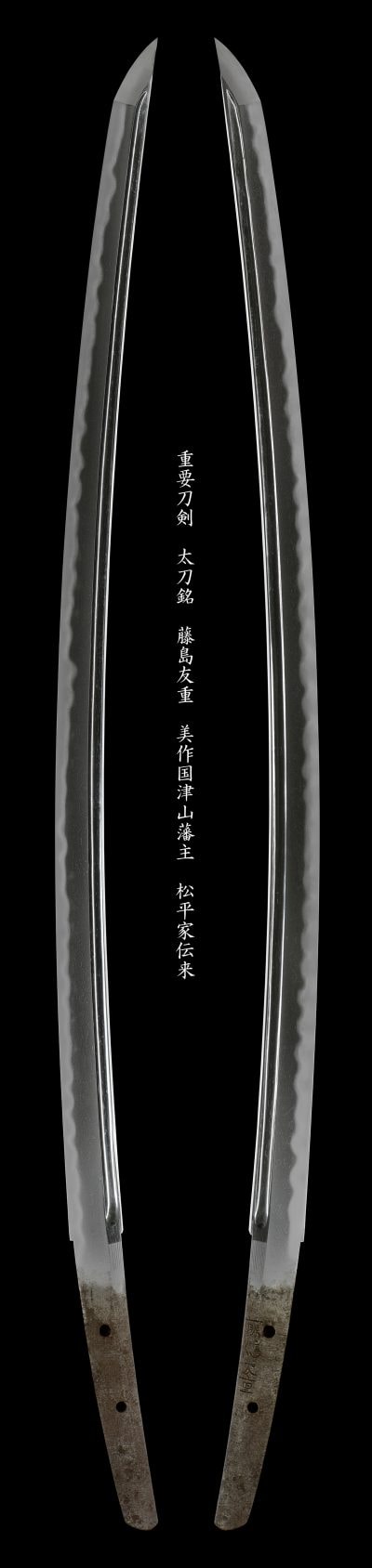
友重は加賀国藤島に住した藤島派の祖にして代表工であり、その名は南北朝末から室町を経て近世にまで数代にわたる。年紀の見られる最も古い作は応永二年の短刀で、説明はその年紀を名跡全体の編年の軸とする。初代は俗に山城の来国俊の門人、あるいは同国真景の門と伝えるが、説明は作ごとに殆ど同文でそのいずれをも疑い、「来国俊とは作風的に結ばれず」、真景とは年代的に肯定し難いとして、作風・茎仕立よりすればむしろ大和物の系統、大和尻懸の手に近いものと判ずる。最古の作と思われる熱田神宮の太刀が、その来国俊からの隔たりを裏づけると読まれる。現存する作に南北朝期を遡るものはない。 友重の見どころはその地鉄にある。板目に杢を交え、流れごころに肌立って、地沸つき地景入り、かねは際立って黒みをおびる。説明はまさにこれを同派一番の見どころとして、「地鉄が肌立ちごころで黒みを帯びる」のが一つの見どころと記し、北国物の徴とする。これに互の目乱れを焼き、箱がかった刃・尖り刃・角ばる刃をのたれ・小のたれとともに交え、処々複式風の乱れとなる。その作柄を説明は「備前気質と美濃風が混在した感のある乱れ刃」と呼び、足やや長く入り、総体に沸づいて荒めの沸をむらに交え、砂流しかかり金筋入り、処々に小さな飛焼を交える。帽子は直ぐまたは乱れ込んで小丸となり、しばしば掃きかける。彼を彼たらしめるのはこの取り合わせ、すなわち大和を素地とする黒いかねの上に、二つの他伝を借りた躁ぎ立つ焼刃を置くところにある。 地鉄はなお仔細に見るに値する。そこに同派と同工が読まれるからである。板目は山城の作のようなつんだ小板目には締まらず、流れて肌立ち、槍・薙刀では柾目に寄った肌となって、その地のうち最も大和を素直に示す。黒みは研ぎの偶然ではなくかね自体の性質であり、説明はこれを北国の地に直結させて、ある年紀の短刀に「地がねの色が黒みを帯びているところに北国物の見どころが示され」と記す。数口の地には淡く白気映りが立つが、これは備前の華やかな映りではなく、静かな映りである。刃文は地に応えて自らの混在を示す。角ばる刃・箱刃は典型作の取り立てての見どころとされ、足は長く入り、匂口は沸となり時に深めの匂となって、働きは絶え間なくとも決して華美に流れない。 この一本領の内に、説明は短刀を別に立てる。短刀では同派の手が穏やかになり得て、鍛えは小板目につみ、焼刃は細直刃あるいは低い小のたれに小互の目・小沸を交え、匂口は時にうるんでほつれ・湯走りを交え、帽子は小丸となって、一口には返り深く地蔵風となる。長寸の作が箱刃・尖り刃の乱れを帯びるのに対し、短刀は同派の大和の素地が最も素直に現れる作域であり、なお黒いかねに北国の徴を保つ。いま一つ、年紀のある作はさらに大和へ寄る。応永十六年の脇指は直刃を基調に小さな刃を交えて帽子を焼きづめとし、説明はこれを常にみる作域に比して「大和気質が看て取れる」一方、かねの黒みに「北国風の肌合が明示されている」と読む。時代の遡る数少ない友重の年紀作として、同工の作域を知る資料となる。名はほぼ在銘で、指定作一四口中一三口が生ぶ茎、藤嶋友重の四字銘が最も多く、時に友重の二字銘、長銘は一口にのみ遺る。説明は銘字と年紀を併せて応永の友重と鑑する。 友重を、その作が想わせる諸派から分かつものは、借りた他派の特徴ではなく彼自身の地に根ざした働きにある。彼の乱れは互の目と長い足において備前の作に似るが、箱がかった刃と尖り刃、肌立つ黒い地、絶えずかかる砂流しが、素直な備前丁子からこれを引き離す。ある脇指は青江風と読まれ、ある短刀は直江志津・石州直綱に比される。彼の作が間に立つ美濃と北国の線である。師の問題は大和へ向けて消去法で定まり、作風の上で来国俊にも、年代の上で真景にも結ばれない。彼は北陸道藤島の作風の祖として立ち、同地域の越中・越前の工と気脈を通じ、名跡は黒く肌立つ地と箱刃・尖り刃の乱れという同じ固定した特質のままに数代続いて、応永の工が最も高く評価され、室町の作が最も多く現存する。 彼の作一四口は重要刀剣に列し、藤代は同工を中上作とする。その白眉は一口の大身槍で、藤島友重と銘して三鈷剣と「妙見大菩薩」の神号を彫り、説明はこれを同派・同名の槍中の傑作たるにとどまらず「同時代を代表する名槍の一本である」と判ずる。現存する彼の薙刀は稀有とされる。伝来は彼自身の作に記された二家に集まる。応永頃の刀の一口は稲葉家に伝来し、短刀の一口は皇室の御物に列する。これらは市場の品ではなく長く家に伝えられた重宝であり、また友重その人は入手し得ぬ名というわけでもない。その指定作は時に売立や商家に現れ、重要の友重は、忍耐ある蒐集家にとって稀ながら現実に出会い得る作である。それは頂点の希少ゆえというより、一口の黒いかねの作が北国一派の総体をその地に湛えるところにこそ値する。

刀剣商

サムライミュージアム

samuraimuseum.jp

売切れ