二世紀半の泰平のあいだ、刀は武器である以上に武士の身分の標章であった。江戸の実証と大坂の華やぎのように都市ごとの作風が育ち、時代の末には需要も細っていく。
 NihontoWatchNihontoWatch
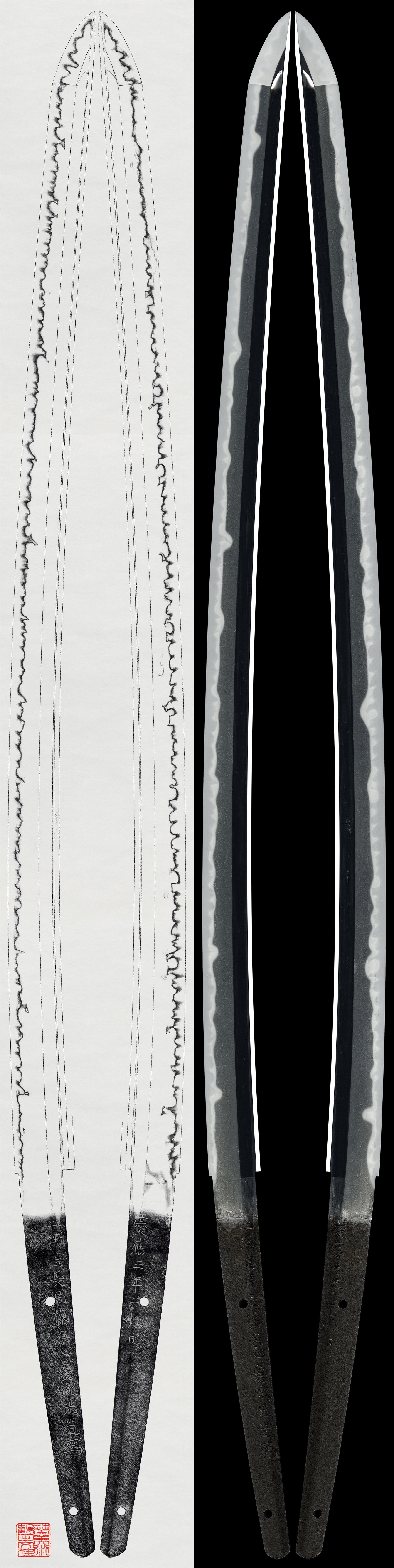
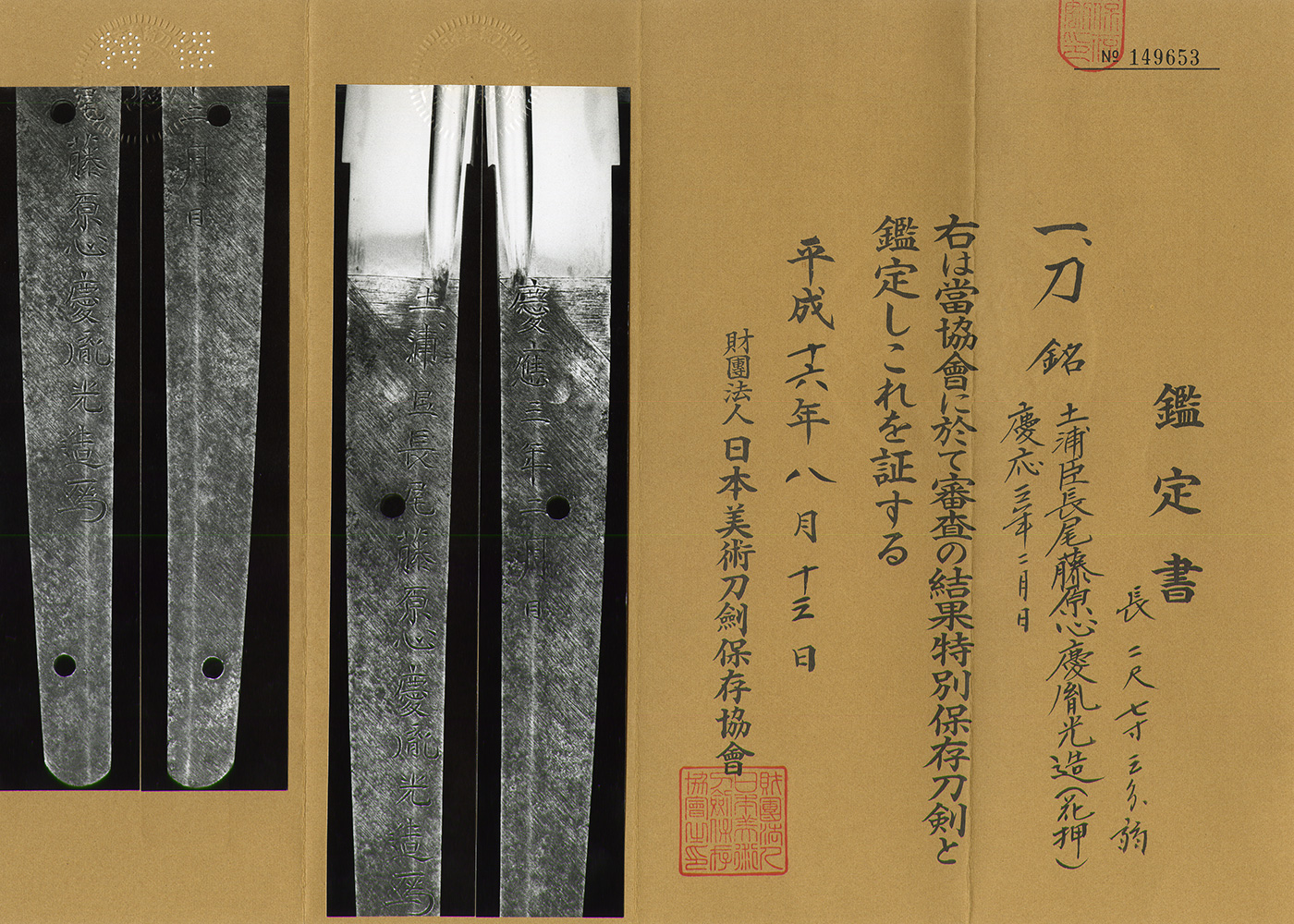
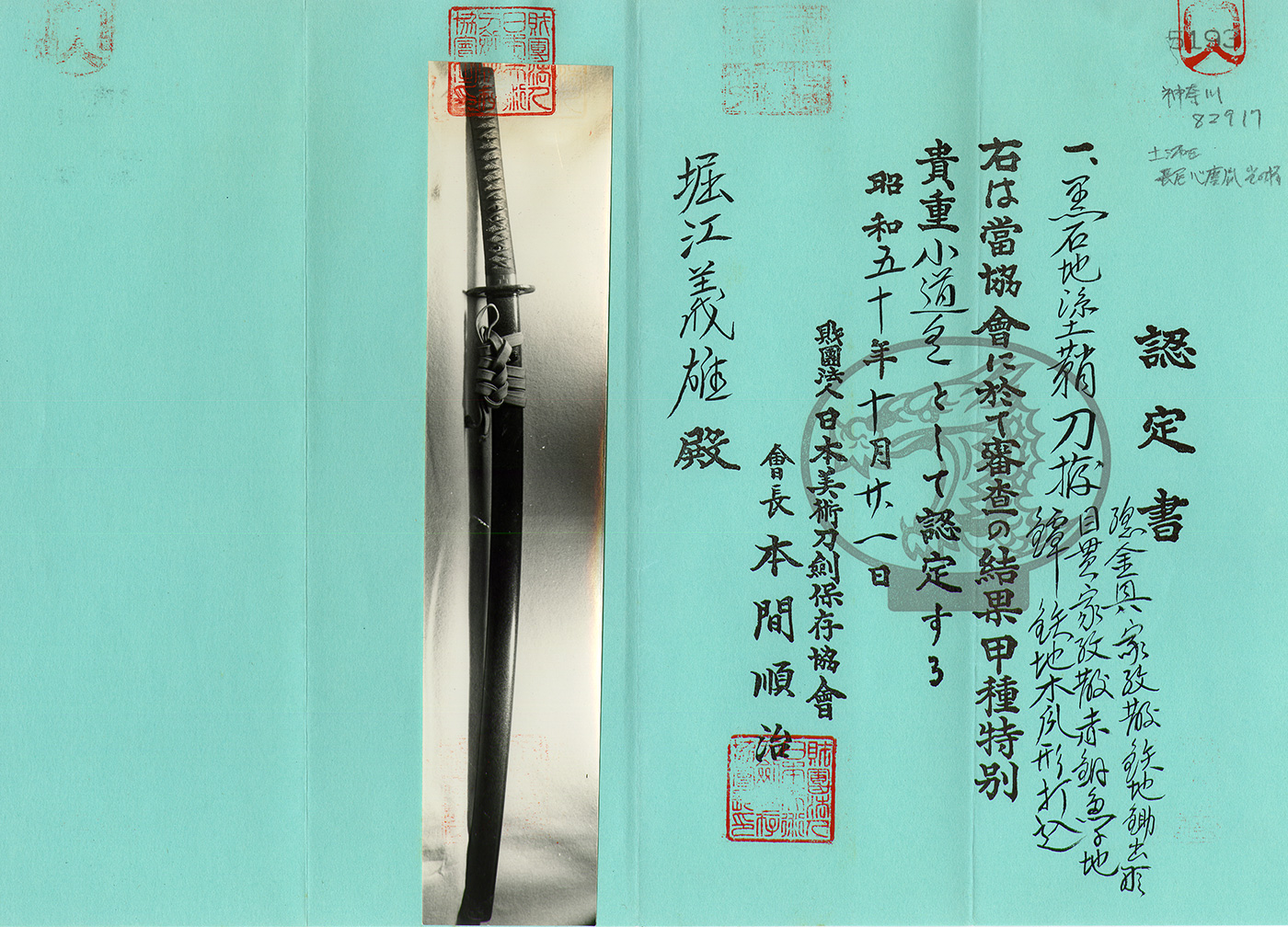
Ordering Number: 26224Katana in Shirasaya, with Koshirae (NBTHK Tokubetsu Hozon Token)(Koshirae: NBTHK Koshu Tokubetsu Kicho Tosogu)Signature: Tsuchiura-shin Nagao Fujiwara Shinkei Tanemitsu Tsukuru (kao)Dated February, Keio 3 (1867)土浦臣長尾藤原心慶胤光造(花押)慶應三年二月日Shinshinto: Chujo-saku: Musashi.(We divide 4 sections for each sword as Saijyo Saku, Jyojyo Saku, Jyo Saku and Regular Saku).This blade is ranked as Jyojyo Saku among the works of Tsuchiura-shin Nagao Fujiwara Shinkei Tanemitsu.Habaki: Single-layer silver-covered habaki.Blade Length: 82.7 cm (32.56 in).Curvature: 1.4 cm (0.55 in).Mekugi Hole: 2.Width at Base (Motohaba): 3.52 cm (1.39 in).Width at Yokote: 2.59 cm (1.02 in).Thickness of rim (Kasane): 0.77 cm (0.30 in).Sword Weight: 1105 g.Era: late Edo period. Dated February, Keio 3 (1867).Shape: A magnificent and powerful katana with wide mihaba, thick kasane, and deep curvature.A bohi is carved into the blade.The blade length is an impressive 82.7 cm (32.56 in).Jigane: Well-forged ko-itame hada with clearly visible grain.Hamon: Ko-nie-deki gunome-midare.The boshi becomes irregular and returns in a small rounded form.Features: Shinkei Tanemitsu was born on April 14, Tenpo 3 (1832), in Hitachi Province (present-day Ibaraki Prefecture).He became a disciple of Naotane and later served as the official swordsmith of the Tsuchiura Domain.His workmanship closely resembles that of Naotane.Examples of such extraordinary length combined with such robust proportions are extremely rare.This is a remarkable work.Koshirae:Tsuba: Rounded-square iron tsuba inscribed “Shinkei Tanemitsu Tsukuru,” and additionally dated “Keio 3, Hinoto-U” (1867).A truly fascinating tsuba.Fuchikashira and Kojiri: Iron fittings carved with the Mitsuishi crest.Saya (Scabbard): Ishimeji-finished saya.Menuki: Mitsuishi crest design.Aoi Art’s Comment: While this is not an especially lavish koshirae, the fact that the tsuba is also signed by Shinkei Tanemitsu makes it particularly interesting.The Mitsuishi c
NihontoWatch



常陸 · 1865-1868頃
刀剣大鑑 上位76%
現在1点販売中
江戸時代
二世紀半の泰平のあいだ、刀は武器である以上に武士の身分の標章であった。江戸の実証と大坂の華やぎのように都市ごとの作風が育ち、時代の末には需要も細っていく。
保存刀剣のうち、出来が一層優れ、保存状態も良好と認められたものです。再刃や、室町・江戸期の多くの無銘作は対象外となり、保存刀剣より高い基準が課されます。
日本美術刀剣保存協会(NBTHK)は、1948年に設立され、文化庁の監督を受ける公益財団法人で、東京・刀剣博物館に本部を置きます。専門の審査員が出品作を直接審査し、美術的・歴史的価値に応じた鑑定書を発行します。NBTHKの鑑定書は、日本刀および刀装具の真正性を示す最も広く認知された基準です。
NBTHK公式サイト返品をご希望の場合、お客様が受領されてから3日以内にお知らせください。この期間を過ぎますとキャンセルはお受けできかねますので何卒ご了承ください。なお当社へのご返送は、5営業日以内の発送をお願いしております。なおキャンセルは販売した当時の状態がそのまま保持されている事が条件となりますのでお取り扱いには十分ご注意下さい。