徳川の泰平のもと、大小は法度の定める身分の制服となり、需要は城下町、とりわけ江戸に集まった。工芸は二つに分かれる。目利きのための華やかな鑑賞の作と、截断の結果を金象嵌に刻む実証の刀である。
 NihontoWatchNihontoWatch
The Enju school traces its roots to the Kikuchi area of Higo province in Kyûshû, rising to prominence from the late Kamakura through the Nanbokuchô period under its founder Rai Kunimura (来国村), reportedly a grandson of the celebrated Yamashiro smith Rai Kuniyuki (来国行). Centuries later, Nobukatsu – born Takenaga Kizaemon (武永喜三右衛門) – carried that lineage into the Shinshintô era. He trained first under Mimasaka‘s Tada Masatoshi (多田正利), before his domain commissioned him to study in Edo under Hosokawa Masayoshi (細川正義) of Tsuyama. Active from 1844 to 1867, he became particularly celebrated for his yari (spears), and passed away in 1871 at the age of 75. This delightful tanto carries the hallmarks of the classic Enju tradition: a wonderfully active ayasugi-hada with rich ji-nie and impressive dark channels of chikei coursing through the body of the blade. The hamon is a bright, lively suguha that periodically splits into niju-ba in the manner of Yamato-den, and spectacular rivers of kinsuji flow through the temper line most impressively. The boshi turns in a long, round ko-maru kaeri. The ubu nakago retains its original kiri-yasurime file marks and bears the clear five-character signature Enju Nobukatsu saku. The accompanying aikuchi-tanto-koshirae is lacquered in glossy black (kuro-ronuri) and is certified to the Late Edo period (1780-1868) by NTHK-NPO Kanteisho. The oversized menuki depicting Hotei – the Japanese god of contentment and happiness, the Laughing Buddha, guardian of children – are cast in shakudô and gold, and bring a cheerful, auspicious energy to an already excellent package. The tsuka is wrapped in katate-maki style, and the saya retains its antique leather sageo. A sword that carries genuine positive energy, and which also holds strong promise for NBTHK Tokubetsu Hozon at the next shinsa.
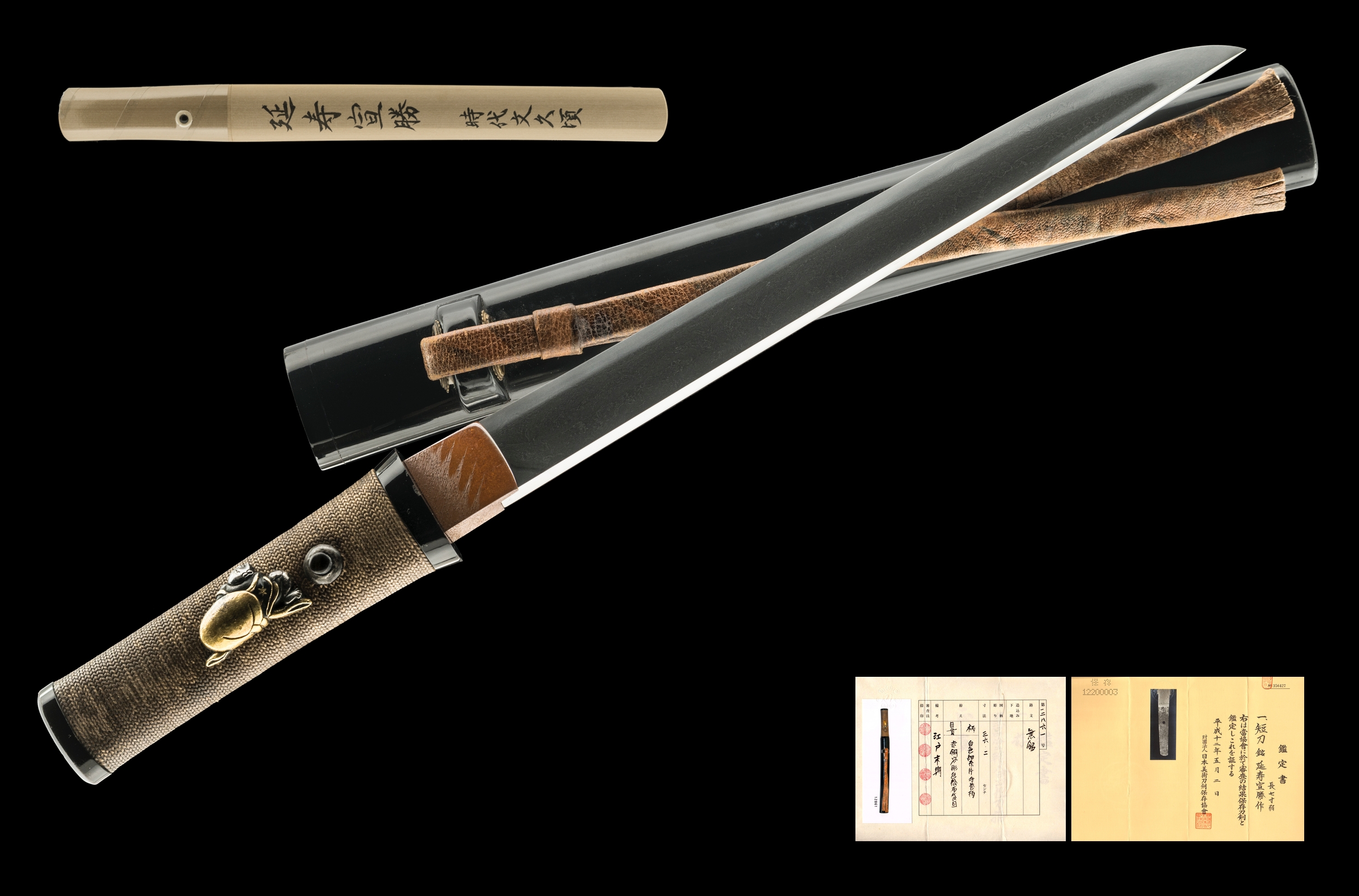
販売店の記載のまま
肥後 · 1844-1848頃
刀剣大鑑 上位95%
江戸時代
徳川の泰平のもと、大小は法度の定める身分の制服となり、需要は城下町、とりわけ江戸に集まった。工芸は二つに分かれる。目利きのための華やかな鑑賞の作と、截断の結果を金象嵌に刻む実証の刀である。
銘が正しい、または無銘でも年代・国・系統を確実に指摘できる、保存に値する真正の作と鑑定されたものです。
日本美術刀剣保存協会(NBTHK)は、1948年に設立され、文化庁の監督を受ける公益財団法人で、東京・刀剣博物館に本部を置きます。専門の審査員が出品作を直接審査し、美術的・歴史的価値に応じた鑑定書を発行します。NBTHKの鑑定書は、日本刀および刀装具の真正性を示す最も広く認知された基準です。
NBTHK公式サイトAll swords come with a three-day inspection period beginning from the date of delivery. If not satisfied, the sword may be returned within this period for a full refund of the purchase price. Outside of this period, all sales are final. Swords purchased on a layaway payment plan are not eligible for the three-day inspection period.