室町は刀剣業を産業に変えた。徒歩の集団戦とともに打刀が興り、長船と関は数打ち物と注文打ちを並行して産し、勘合貿易は日本刀を数万振の単位で海外へ運んだ。
 NihontoWatchNihontoWatch
Skip to content ITEM# UJKA417 – Catalogue 42 – Sold A Masatoshi Katana (坂倉関正利) This muscular katana was forged by second-generation Sakakura no Seki swordsmith Masatoshi , who flourished at the close of the warring Muromachi period during the Kôji era (1555~1558), as Japan was consumed by the Sengoku-jidai . His father, shodai Masatoshi, was the son of Masayoshi who founded the school in the late 1400s. The chiselled character for ‘Masa’ bears a striking resemblance to signatures found on blades of the Sôshû Sengo Muramasa school – giving weight to the theory that Masatoshi was the son, or direct student, of the Eishô -era Masazane who worked also in Ise. A warrior energy pulses through this freshly polished blade, showcasing both Sôshû and Mino influences at their most vivid. The jihada presents as a fine mixture of nagare-hada and itame-hada, alive with ji-nie and chikei. The hamon runs in a vibrant $1 punctuated by leaping tobiyaki, droplet-like yô , pointed togari , streaming sunagashi and bright kinsuji. The bôshi closes in a striking jizô form – a profile strongly associated with the Sengo Muramasa school, and perhaps the most telling fingerprint of Masatoshi’s lineage. The nakago is shortened ( suriage ) but retains the characteristic funagata profile of the Sôshû Sengo tradition. Unique Japan assembled a handsome set of antique Edo-period koshirae to complement this blade. The saya is a kuro-ronuri uchigatana-koshirae lacquered in glossy black (late Edo, 1780~1868). The polished iron tsuba from the Sho-ami school of Kyôto features a snowflake design encircled by woven hats, with crosshatched gold inlay along the rim. The fuchi-kashira, attributed to the Shônai Shôami school (mid-Edo, 1700~1780), depict shishi lions and peonies in bold relief. The pure white silk tsuka is wrapped in naka katatemaki over black-lacquered samekawa, with courageous chidori plover birds flying over waves as the menuki. Masatoshi is ranked ryô-wazamonô for the consistently excellen
NihontoWatch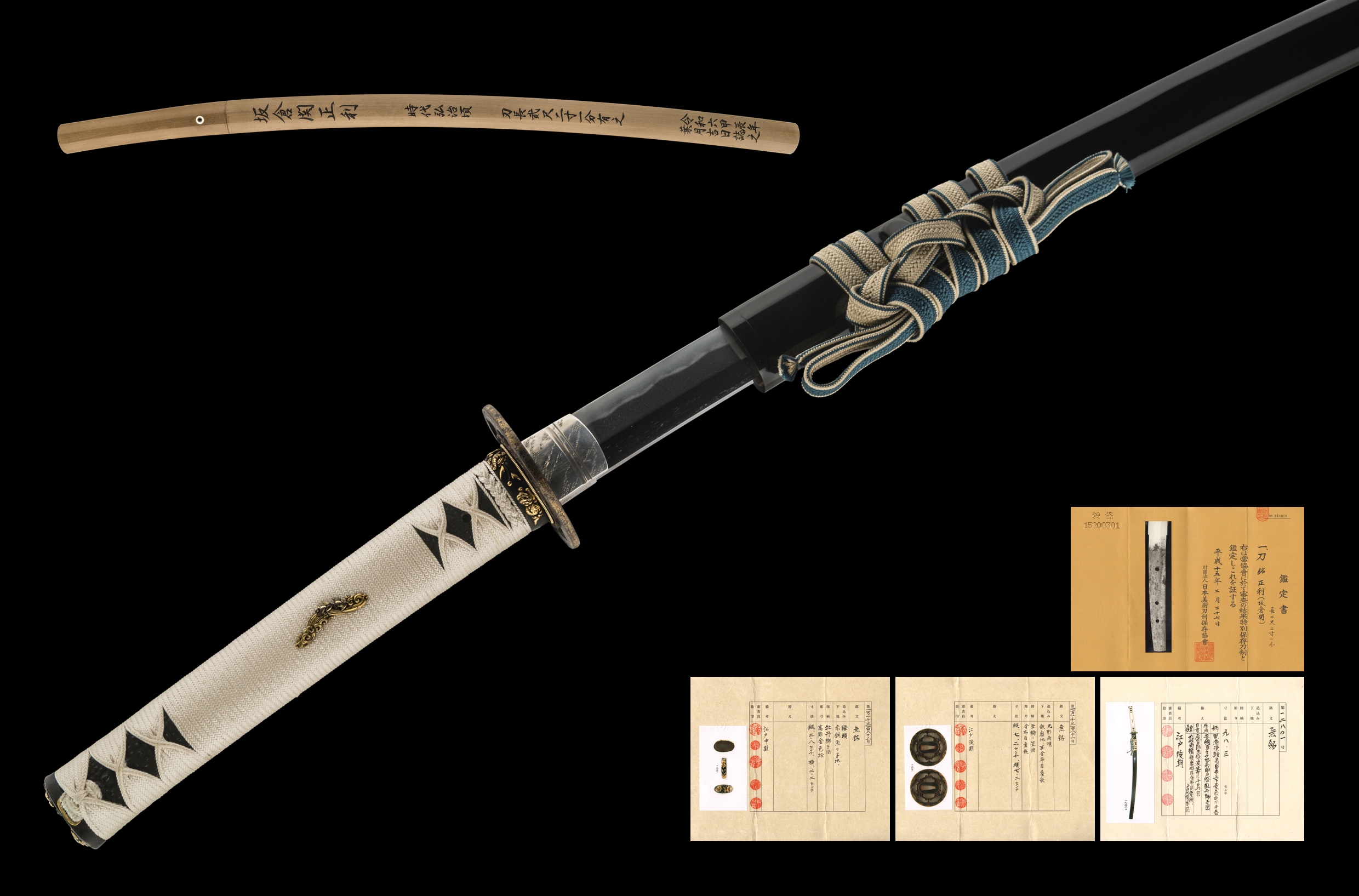
美濃 · 1532-1555頃
刀剣大鑑 上位49%
現在1点販売中
室町時代
室町は刀剣業を産業に変えた。徒歩の集団戦とともに打刀が興り、長船と関は数打ち物と注文打ちを並行して産し、勘合貿易は日本刀を数万振の単位で海外へ運んだ。
保存刀剣のうち、出来が一層優れ、保存状態も良好と認められたものです。再刃や、室町・江戸期の多くの無銘作は対象外となり、保存刀剣より高い基準が課されます。
日本美術刀剣保存協会(NBTHK)は、1948年に設立され、文化庁の監督を受ける公益財団法人で、東京・刀剣博物館に本部を置きます。専門の審査員が出品作を直接審査し、美術的・歴史的価値に応じた鑑定書を発行します。NBTHKの鑑定書は、日本刀および刀装具の真正性を示す最も広く認知された基準です。
NBTHK公式サイトAll swords come with a three-day inspection period beginning from the date of delivery. If not satisfied, the sword may be returned within this period for a full refund of the purchase price. Outside of this period, all sales are final. Swords purchased on a layaway payment plan are not eligible for the three-day inspection period.