二世紀半の泰平のあいだ、刀は武器である以上に武士の身分の標章であった。江戸の実証と大坂の華やぎのように都市ごとの作風が育ち、時代の末には需要も細っていく。
 NihontoWatchNihontoWatch
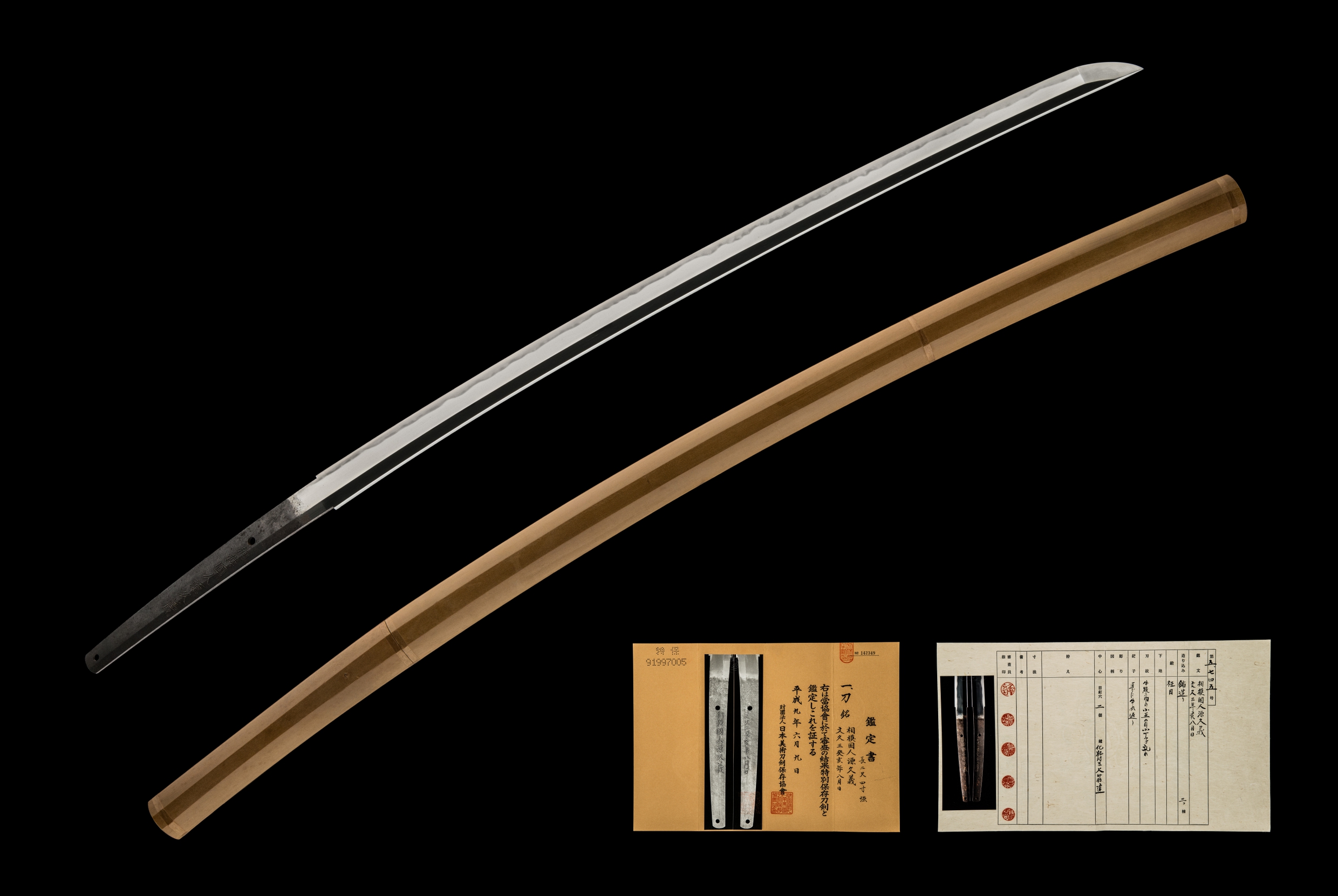
Shimizu Hisayoshi occupies a quietly exceptional place in the Shinshintô era. A direct student of Hosokawa Masayoshi – himself one of the grandmaster Suishinshi Masahide’s finest pupils – Hisayoshi absorbed the rigorous forging principles of a lineage that traced back through some of the period’s most celebrated names. His civilian name was Shimizu Sogoro, and he worked primarily in the Sôshû tradition from his base in Sagami province, producing blades known for their robust kasane, generous hira-niku, and powerful presence. He died on 15th September 1868, leaving behind a relatively small but quietly distinguished body of work. This katana defies every expectation one might bring to a Chujo-saku smith. The blade weighs a formidable 995 grams, with a moto-kasane of 8.2mm that communicates authority from the moment it is lifted. But it is the jihada that stops you cold: a pure, flawlessly executed masame-hada, the grain running in clean parallel lines along the blade in the manner of the ancient Yamato tradition. It is the kind of jihada most closely associated with the Hôshô School of the Kamakura period, and it is extraordinarily difficult to reproduce with any conviction. Hisayoshi has pulled it off completely. This is not a sword that plays to type – it is a sword that reveals the full measure of a smith working at the height of his powers. The hamon is a lively ko-gunome with ko-choji, enriched throughout with generous sunagashi and chikei. The temper line is tighter than one typically associates with Hisayoshi, bringing additional refinement to what is already a blade of remarkable character. In recognition of its quality, it has earned both NBTHK Tokubetsu Hozon certification and the NTHK-NPO’s highest designation, Yushusaku – the equivalent of NBTHK Juyo Token in that organisation’s ranking. A custom koshirae was planned for this sword at the time of sale, a fitting complement to a blade that rewards the closest attention.
取扱店 Unique Japan
販売店の記載のまま
武蔵 · 1830-1844頃
藤代 中上作 · 刀剣大鑑 上位76%
現在2点販売中
江戸時代
二世紀半の泰平のあいだ、刀は武器である以上に武士の身分の標章であった。江戸の実証と大坂の華やぎのように都市ごとの作風が育ち、時代の末には需要も細っていく。
保存刀剣のうち、出来が一層優れ、保存状態も良好と認められたものです。再刃や、室町・江戸期の多くの無銘作は対象外となり、保存刀剣より高い基準が課されます。
日本美術刀剣保存協会(NBTHK)は、1948年に設立され、文化庁の監督を受ける公益財団法人で、東京・刀剣博物館に本部を置きます。専門の審査員が出品作を直接審査し、美術的・歴史的価値に応じた鑑定書を発行します。NBTHKの鑑定書は、日本刀および刀装具の真正性を示す最も広く認知された基準です。
NBTHK公式サイトAll swords come with a three-day inspection period beginning from the date of delivery. If not satisfied, the sword may be returned within this period for a full refund of the purchase price. Outside of this period, all sales are final. Swords purchased on a layaway payment plan are not eligible for the three-day inspection period.