 NihontoWatchNihontoWatch
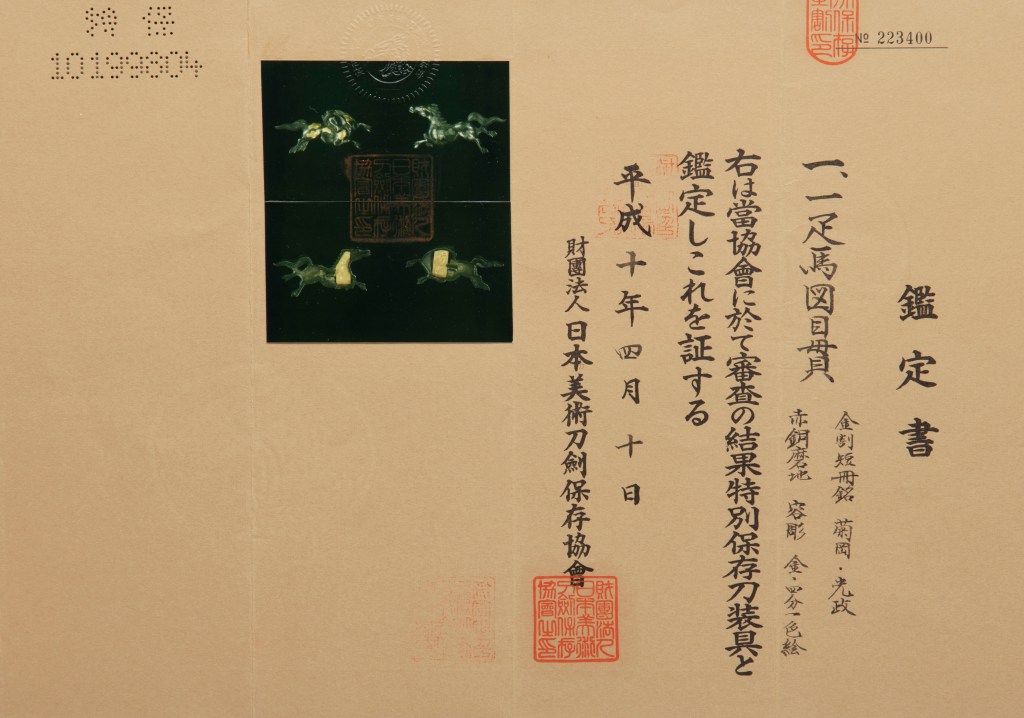
The emergence of the stylistically creative approach known as “machibori” or “town carving” was established by the Yokoya master, Somin. His training in the Goto tradition were the foundation of his skillset, but the constraints of the Goto tradition denied a larger creative expression. Somin sought to expand beyond convention and established a renaissance of tosogu design. The Machibori style thus stood in stark contrast to “Iebori” or “house carving” that refers to the traditions of the Goto and Yoshioka schools that catered to the Shogunate and other powerful families. The Yokoya school in turn gave birth to subsequent schools such as the Yanagawa, founded by Yanagawa Naomasa that tuned their own styles and interpretations, while also harkening back to the origins of Machibori in fundamental and timeless themes such as Peonies and Shishi that emulated the Yokoya approaches. These creations were luxurious and exuberant thus attracting the mercantile classes, who were unconstrained to the mandates or dictations of tosogu design. The Kikuoka school was founded by Mitsuyuki. He was born in 1750 to a culturally educated family of haiku and waka poets, and continued in this profession while also studying metalwork with Yanagawa Naomitsu. Mitsuyuki’s grandfather was named To’emon Fusayuki and originally hailed from Iga province before moving to Edo sometime in the Genroku era (1688-1704). He took the Poet name of Senyro establishing the first generation of this name that his grandson, Mitsuyuki, would later assume as the third generation. Mitsuyuki died in October of 1800 at the young age of 51. Records reflect on the fact that the Kikuoka family was plagued by premature deaths of its members. Mitsuyuki was had succeeded as head of the family eventhough he was not the first born. Mitsuyuki’s son, Mitsutomo would become the 2nd generation head of the school in 1799, just prior to Mitsuyuki’s death and since Mitsuyuki was quite young when he died in October of 1800 at the age of 51, it could be speculated that Mitsuyuki’s death was anticipated. Mitsutomo had taken the head of the school because his older brother, Hideyuki, had already died at the age of 21. Mitsutomo himself died in April of 1813 at the age of 38, less than 13 short years after his father, leaving reconciliation of the problem of succession to Mitsuyuki’s younger brother, Samonji Mitsumasa. Mitsumasa and the other members of the Kikuoka school decided that Mitsushige would assume the 3rd generation leadership of the school. Around all these unfortunate deaths within the Kikuoka school, Mitsumasa clearly stood out as the anchor that held the school in place during turbulent times. Mitsumasa was Mitsuyuki’s younger brother and had supported Mitsuyuki when he decided to become a metalworker after studying with Yanagawa Naomitsu. Mitsumasa also assumed care for Mitsutomo and Mitsushige after the death of his older brother, thus ensuring the continuation of the school. It is interesting that Mitsumasa, though clearly a highly skilled artist as seen from his many extant works, did not assume the helm of the school. The directives of Mitsuyuki would thus appear to have been quite clear on the subject of succession, and proves the loyalty and dedication Mitsumasa held for his older brother. The workmanship of the Kikuoka school can accurately be described as poetry in sculpture. The poetic influence is manifestly illustrated by lively, exuberant, and intricate design work that explored the width and breadth of the machibori freedom of aesthetic. The usage of the highest quality materials is also evident, such as the deep lustrous blue-black shakudo, also shows their uncompromising commitment to excellence. These menuki are skillfully formed as seen from the perimeter edge which is both thick and very consistent in its thickness showing great control during the forming. The signature panels, called “tanzaku” are in solid gold and signed in the precise Kaisho block script that is firmly associated with Kikuoka craftsmen, as established by Mitsuyuki. This precision even garnered criticism the famous Unno Shomin who commented that Mitsuyuki must have wasted an entire day chiseling his signature. This set is signed Kikuoka Mitsumasa and certified by the NBTHK with a Tokubetsu Hozon Tosogu paper. It is a beautifully crafted pair that is everything one could expect of the Kikuoka craftsman and would be a fine addition to any collection. These would also combine with the Kikuoka Kozuka listed here to make a lovely futokoromono. On Consignment

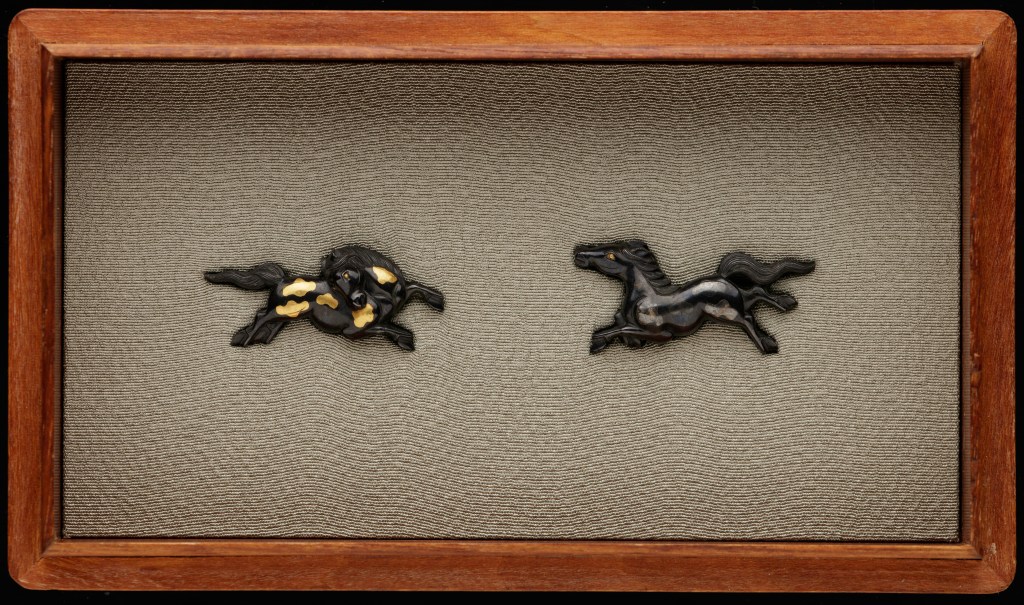
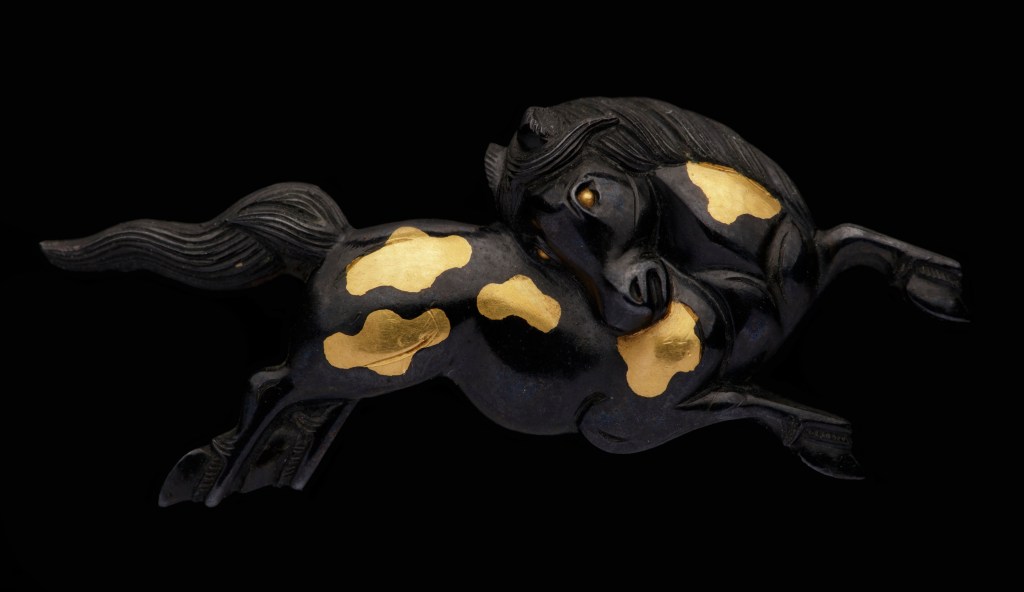
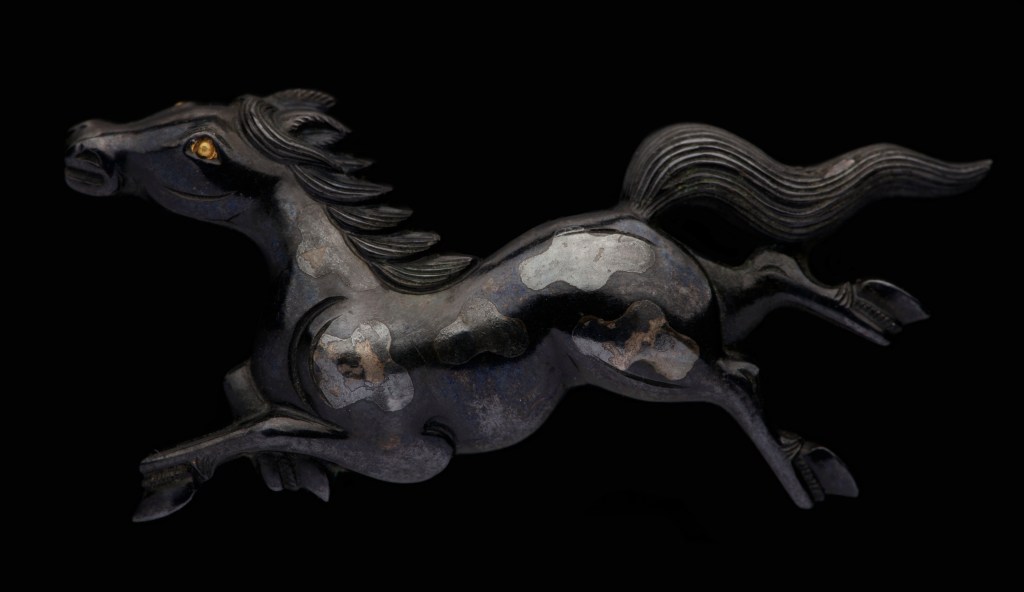
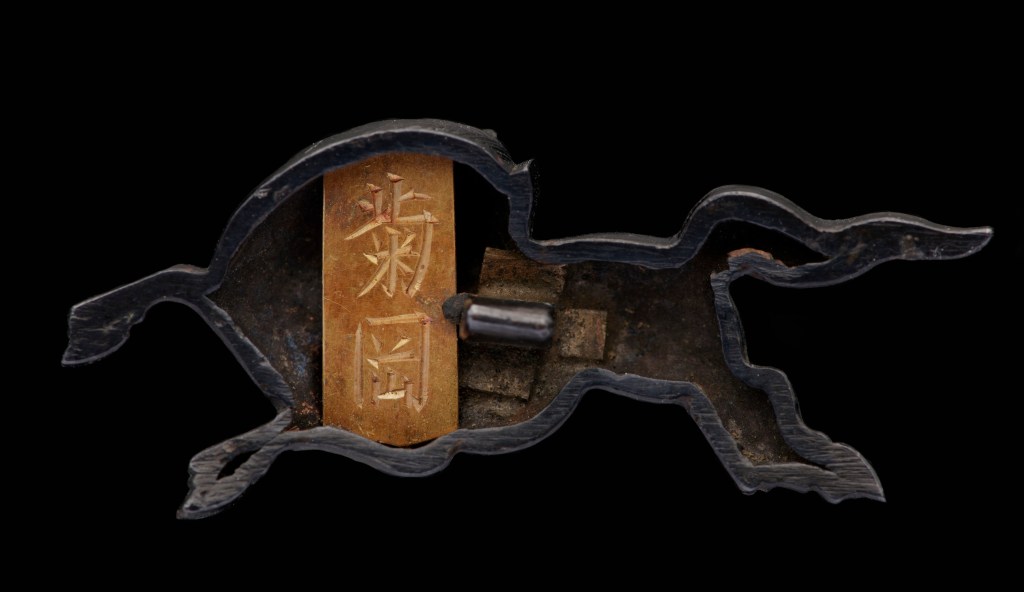
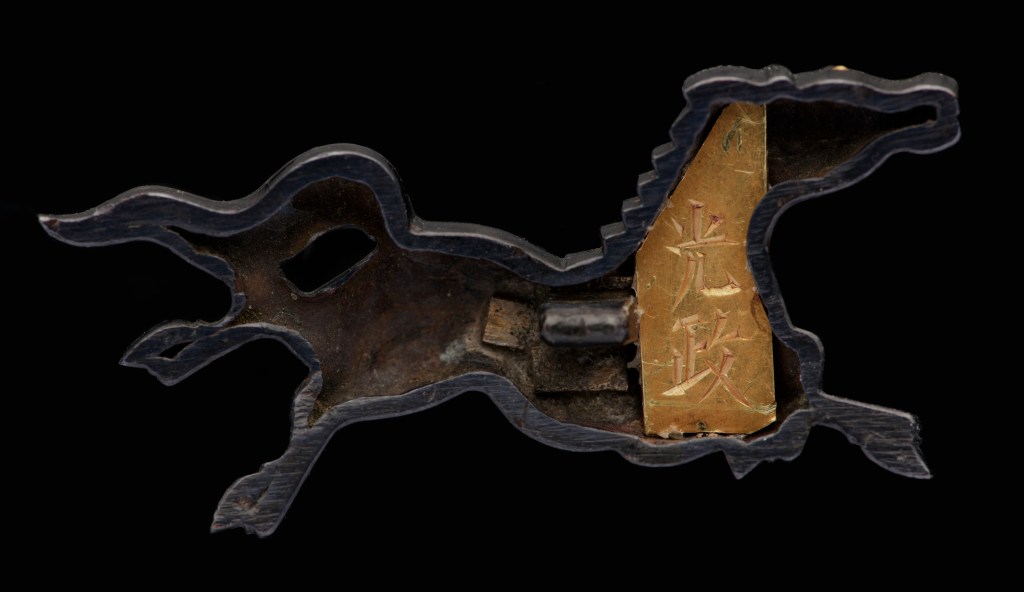
光政
宝暦〜文政(1759-1824)
在銘
特別保存
町彫 · 1759-1824頃
現在2点販売中
光政の位置づけを、日本刀全体および伝法・時代・時期ごとに示します。各区分(随一・屈指・有数・著名)は、NBTHK および文化庁による指定に加え、三作や名物帳などの歴史的栄誉を加味したものです。
各項目を選ぶと評価方法が表示されます。
町彫 · Edo
現在12点販売中
菊岡派は、横谷派柳川直光の門人である菊岡光行(活剣子)が江戸に樹立した町彫の一流派である。光行は寛延三年(一七五〇)神田鍛冶町に生まれ、柳川家の薫陶を得て大成した後、独立して菊岡派の祖となった。実弟の菊岡光政(宝暦九年生、文政七年歿)もまた柳川直光の門に学び、独立後は神田於玉ヶ池に住して探良斎・一箕菴・珉涼と号した。光行・光政の兄弟は江戸の有力金工であるとともに、俳諧師としても著名な文化人であり、共に父祖からの譲り名「沾涼」を号とした。光行はさらに「活剣子」の号を愛用し、寛政十二年(一八〇〇)五十一歳で没している。二代目は光行の子・光朝が継ぎ、三代目の光重は元来柳川直光の門人であったが光行の養子となり、光朝歿後に菊岡家を継承した。光政の子・菊岡光利は通称左平次、南仙斎また晩年は沾遊と号し、文久三年(一八六三)に歿した。さらに光利の門人に雲水軒利信(島根清次郎)がおり、また高松藩の抱え工・乗雲斎茂義は光重に学んで江戸で光重の娘と結婚するなど、横谷―柳川―菊岡と連なる町彫主軸の系譜は幕末まで途絶えることなく受け継がれた。 菊岡派の作風は、赤銅魚子地に金紋を施し、裏哺金とする構法を基本とし、目貫には金無垢地の容彫工法を用いる点に一貫した特徴がある。彫法は横谷風の高彫色絵・据文を主体とし、審査において繰り返し「精巧堅実な彫技」と評される周到かつ力強い鏨使いを旨とする。題材は獅子を最も得意とし、その姿態は「横谷獅子」「柳川獅子」に近いとされるほど本流の風格を備える。獅子のほか動物・鳥類・人物・麒麟等の霊獣、さらには式三番の能道具に戯れる鼠、仁王と朝比奈の力競、舞鶴、親子鶏、虎、初春の吉祥図など、町彫らしい垢抜けた画題を幅広く手がけた。三所物・二所物といった揃金具を得意の形式とし、小柄・笄には赤銅魚子地金紋裏哺金、目貫には金無垢容彫という構法で統一する例が多い。兄弟の合作も知られ、光行が金無垢容彫の目貫を製作し光政が赤銅魚子地の小柄・笄を彫り足した獅子図三所物は、「菊岡流の精悍な獅子の見所を遺憾なく発揮」[[c:3]]したものと称えられている。 菊岡派は横谷―柳川と連なる町彫主軸の正統な継承者として、その技量と格調において高い評価を受けている。光行の作風は「宗珉、柳川派によく似ており、技術も宗珉に迫るほどのものもある」[[c:4]]と評され、とりわけ総金無垢造の獅子図二所物は「斬新で力強さに光行の本領がうかがえる」[[c:5]]とされた。猛禽図鐔は「菊岡光行の最高作の一枚」[[c:6]]として、高彫色絵の象嵌と巧みな表裏構図が称賛されている。光利の虎三所物を用いた腰刀拵は「後藤家に範をとった町彫の上手」[[c:7]]の力作と位置づけられ、光利の獅子図三所物は「横谷―柳川―菊岡と続く町彫主軸の力量を感じさせる見事な出来映え」と評された。利信の麒麟図大小揃金具のように現存作が少ない工人の遺例も、「菊岡流」の彫口の緻密さとその技術の高さを伝える貴重な作として重んじられている。審査の説示が一貫して強調するのは、菊岡派が横谷・柳川の系統に位置する流派として、その「精巧堅実な彫技」を「遺憾なく発揮」している点であり、江戸町彫の本流たる格調と技術的練達がこの一門の本質的な価値として認められている。 詳しく見る →
保存刀装具のうち、出来・保存状態が一層優れ、銘文や作風に資料的価値の高いものと認められたものです。
日本美術刀剣保存協会(NBTHK)は、1948年に設立され、文化庁の監督を受ける公益財団法人で、東京・刀剣博物館に本部を置きます。専門の審査員が出品作を直接審査し、美術的・歴史的価値に応じた鑑定書を発行します。NBTHKの鑑定書は、日本刀および刀装具の真正性を示す最も広く認知された基準です。
NBTHK公式サイトCertificate reading — 銘 菊岡・光政