 NihontoWatchNihontoWatch
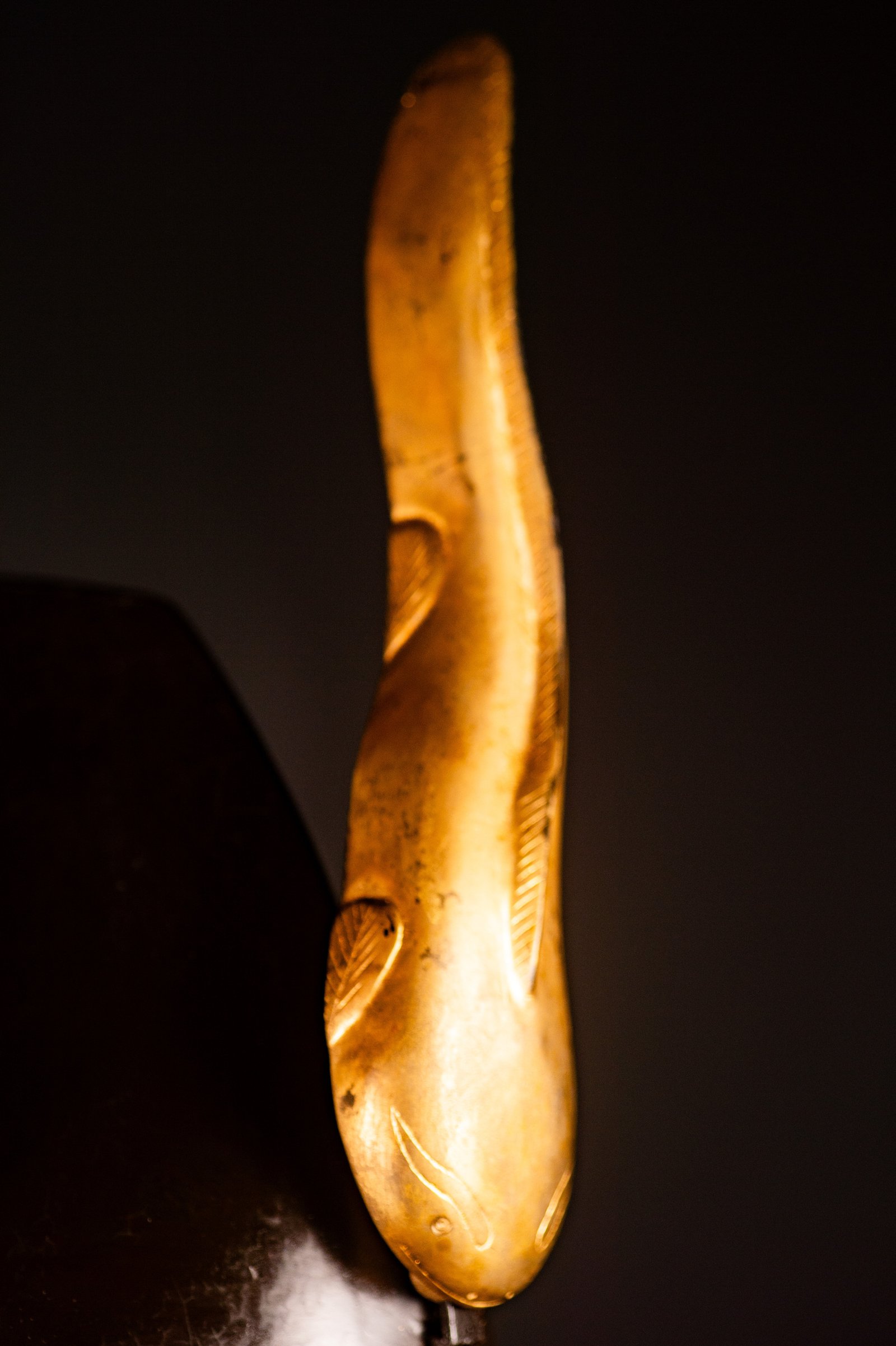
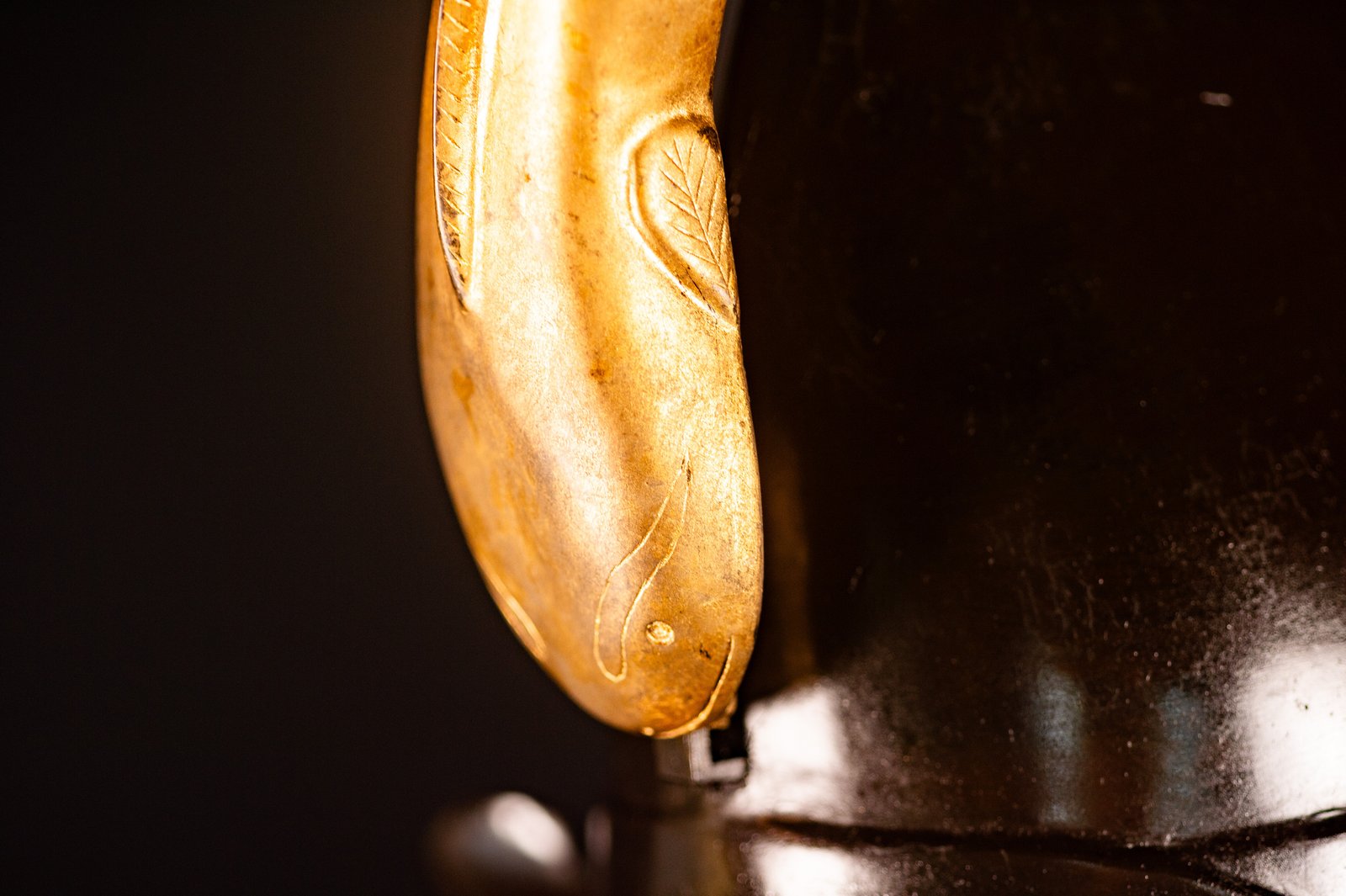
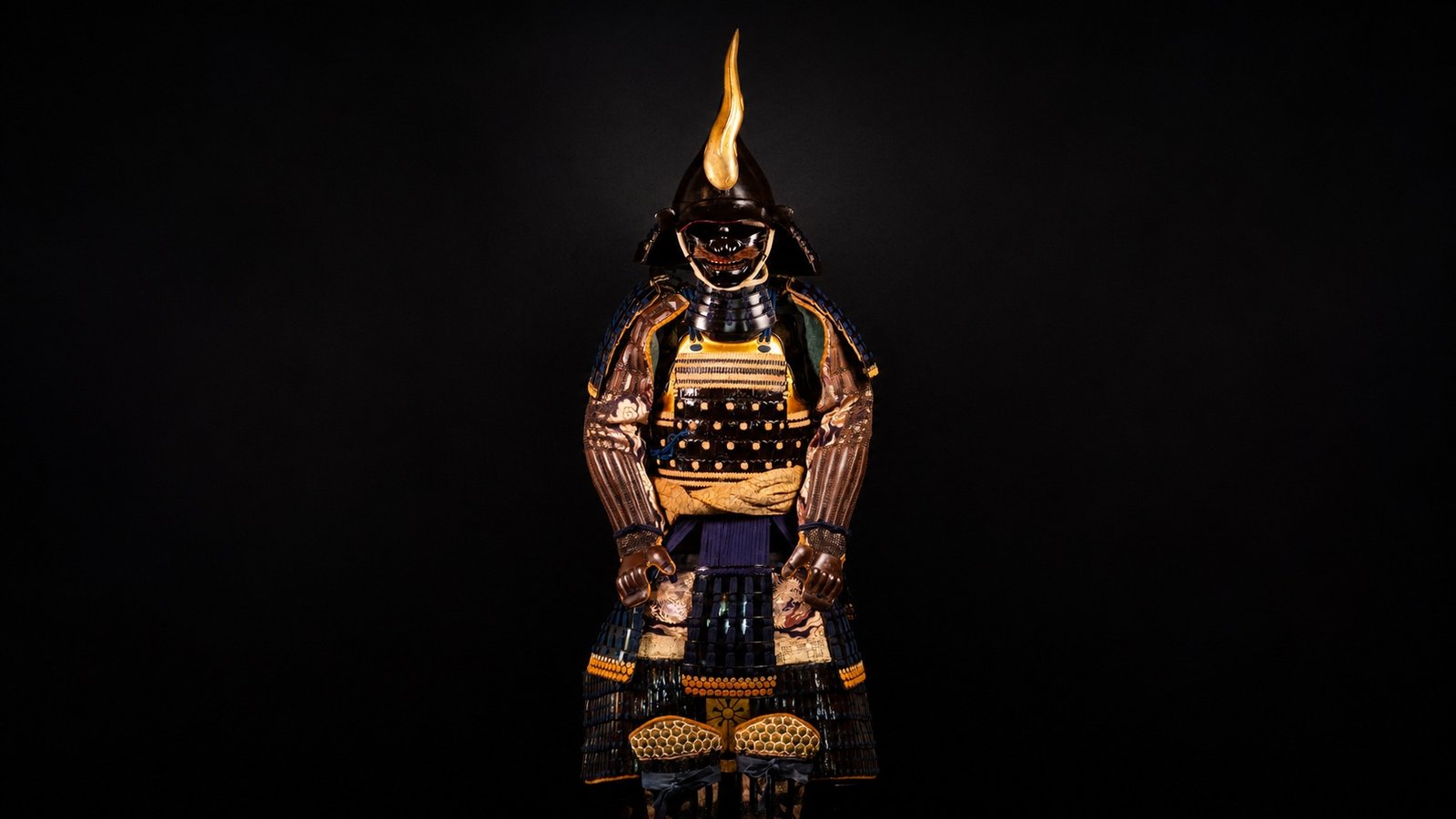
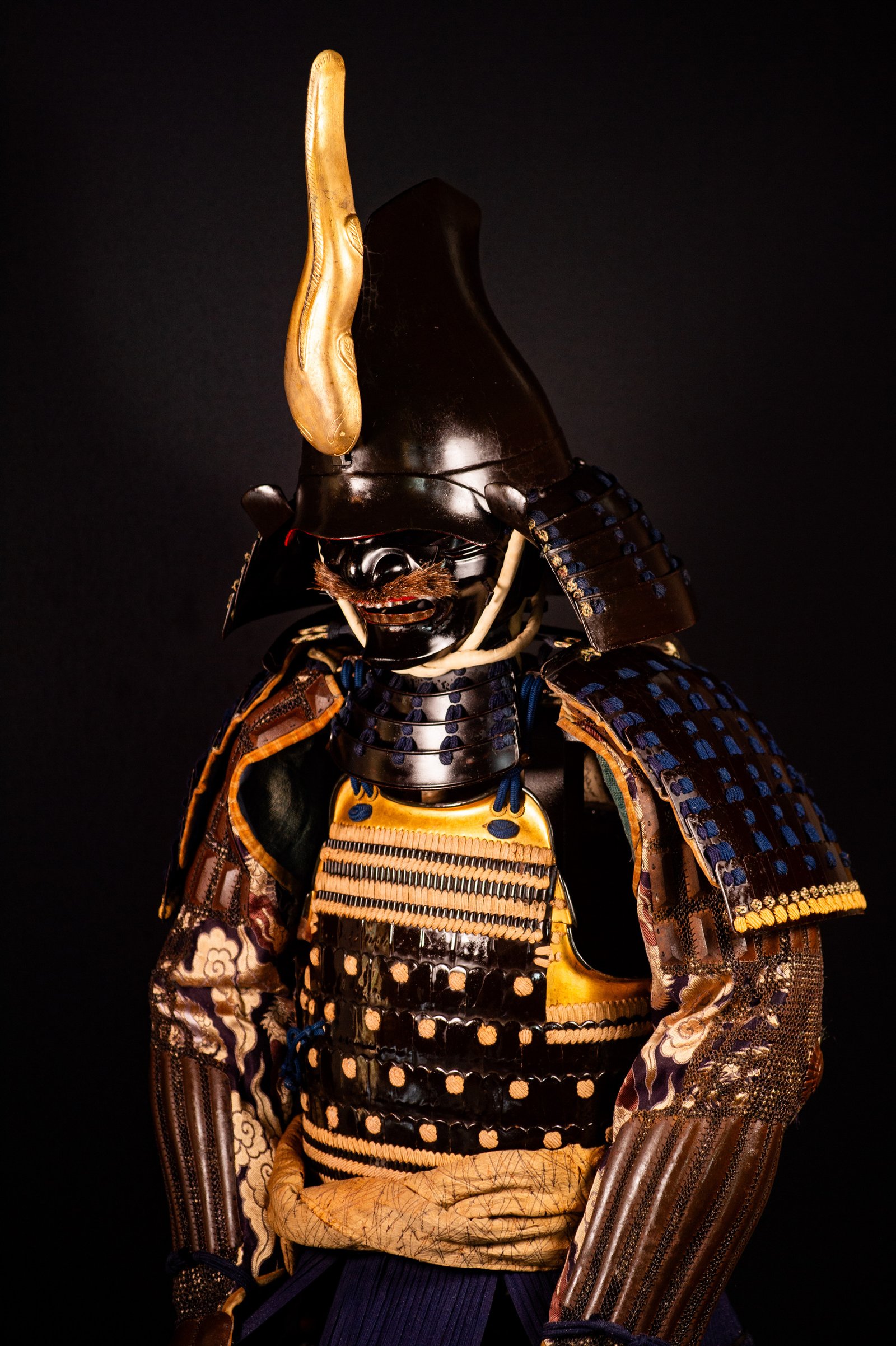
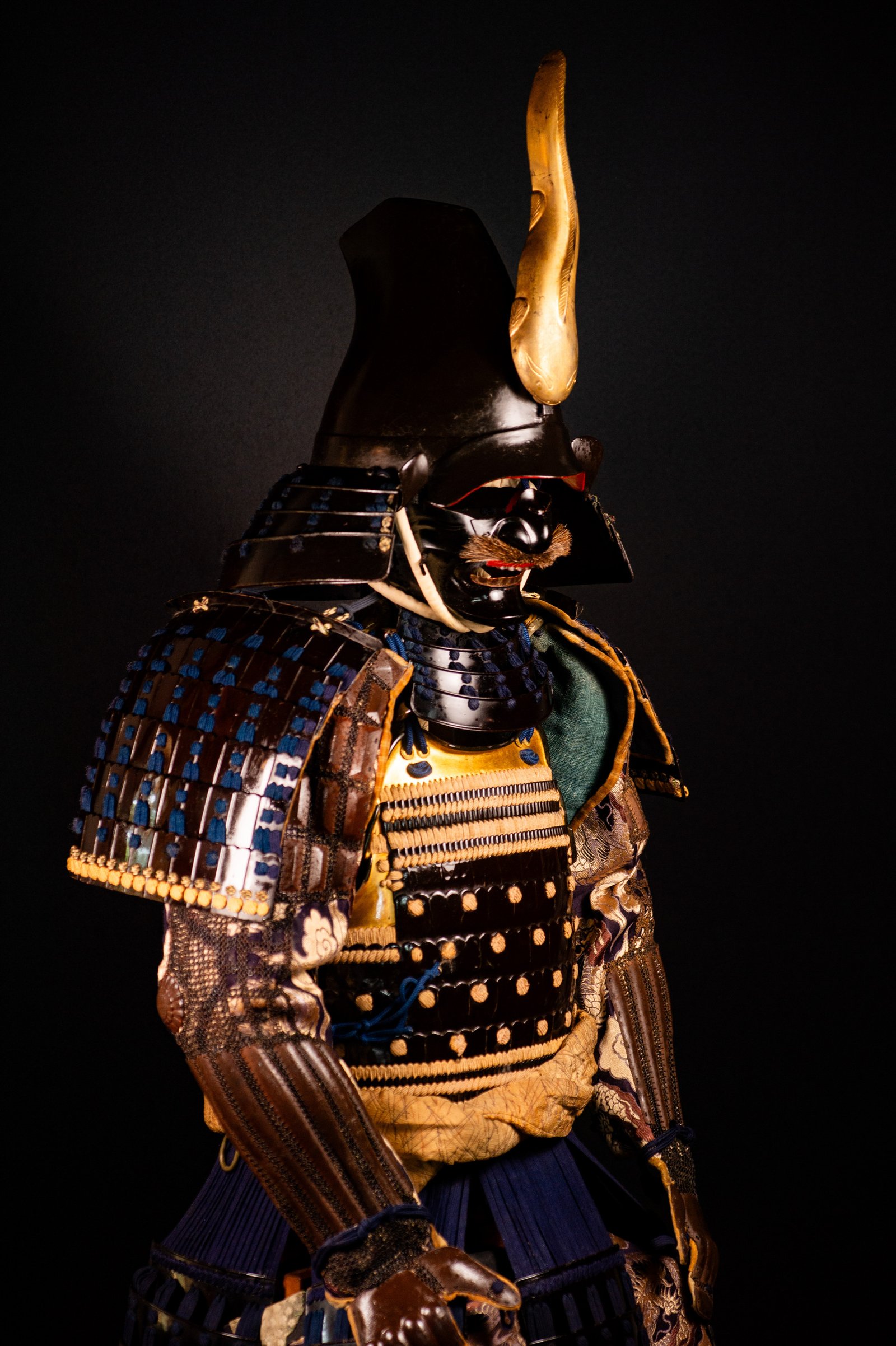
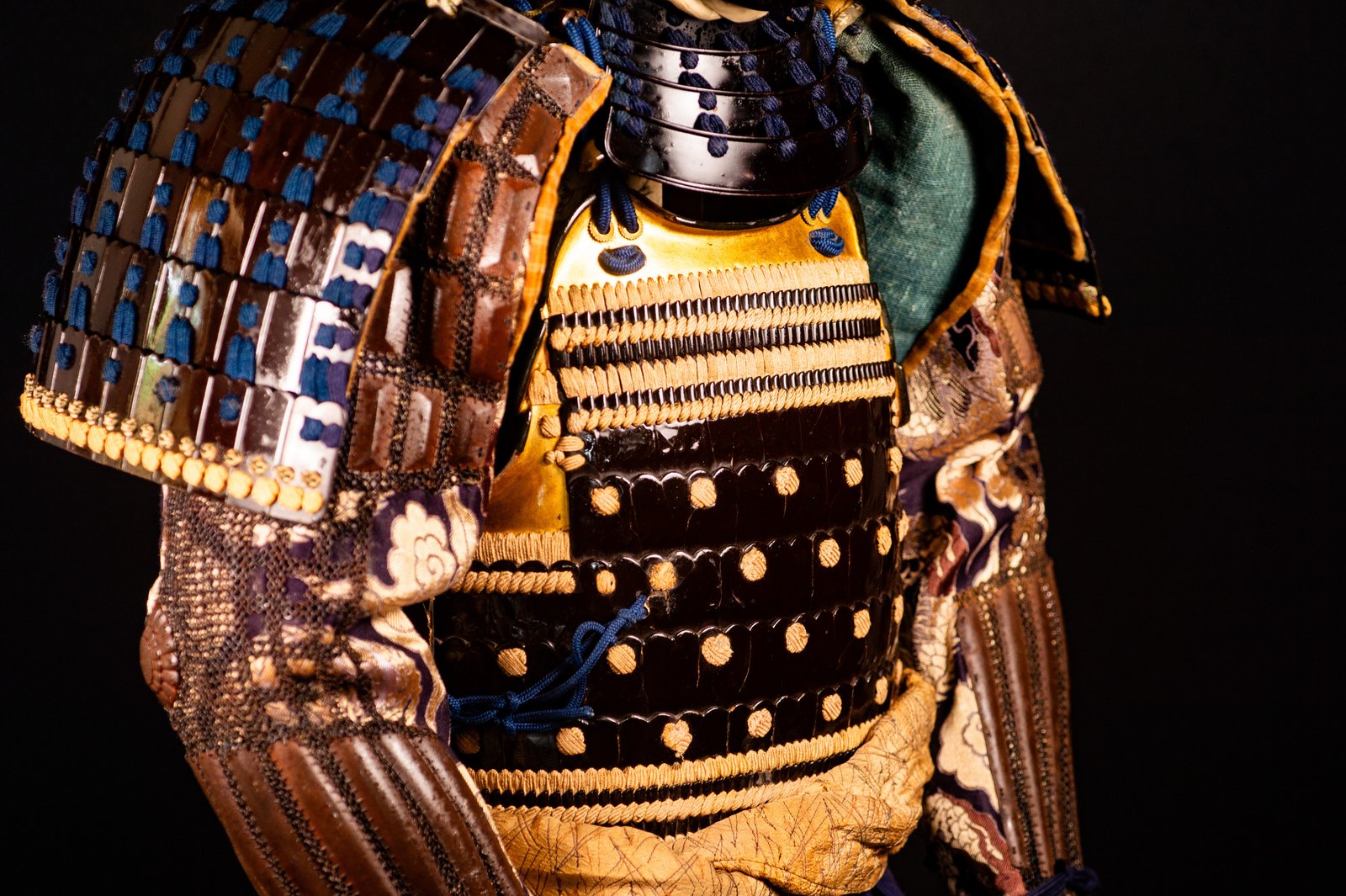
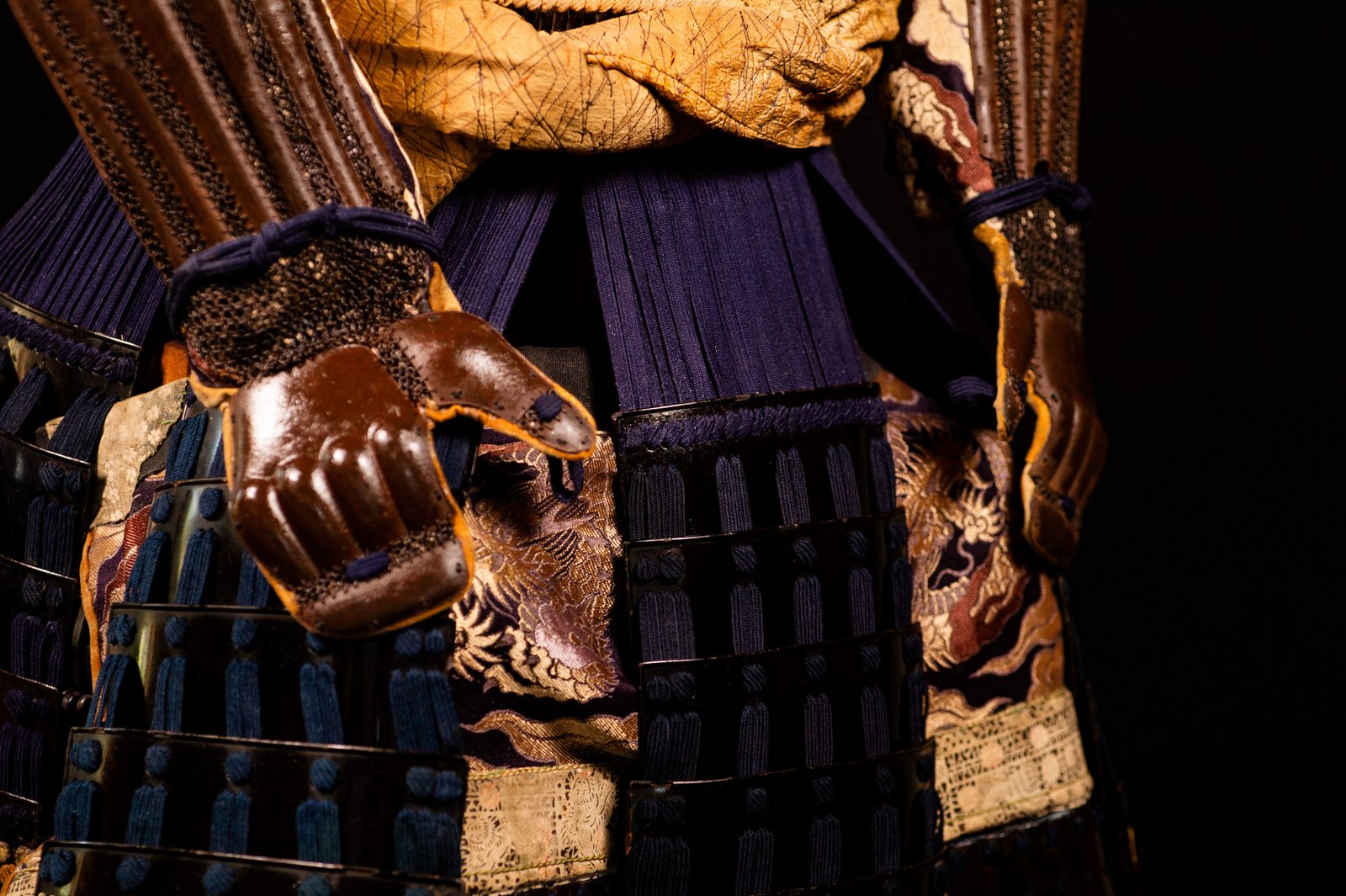
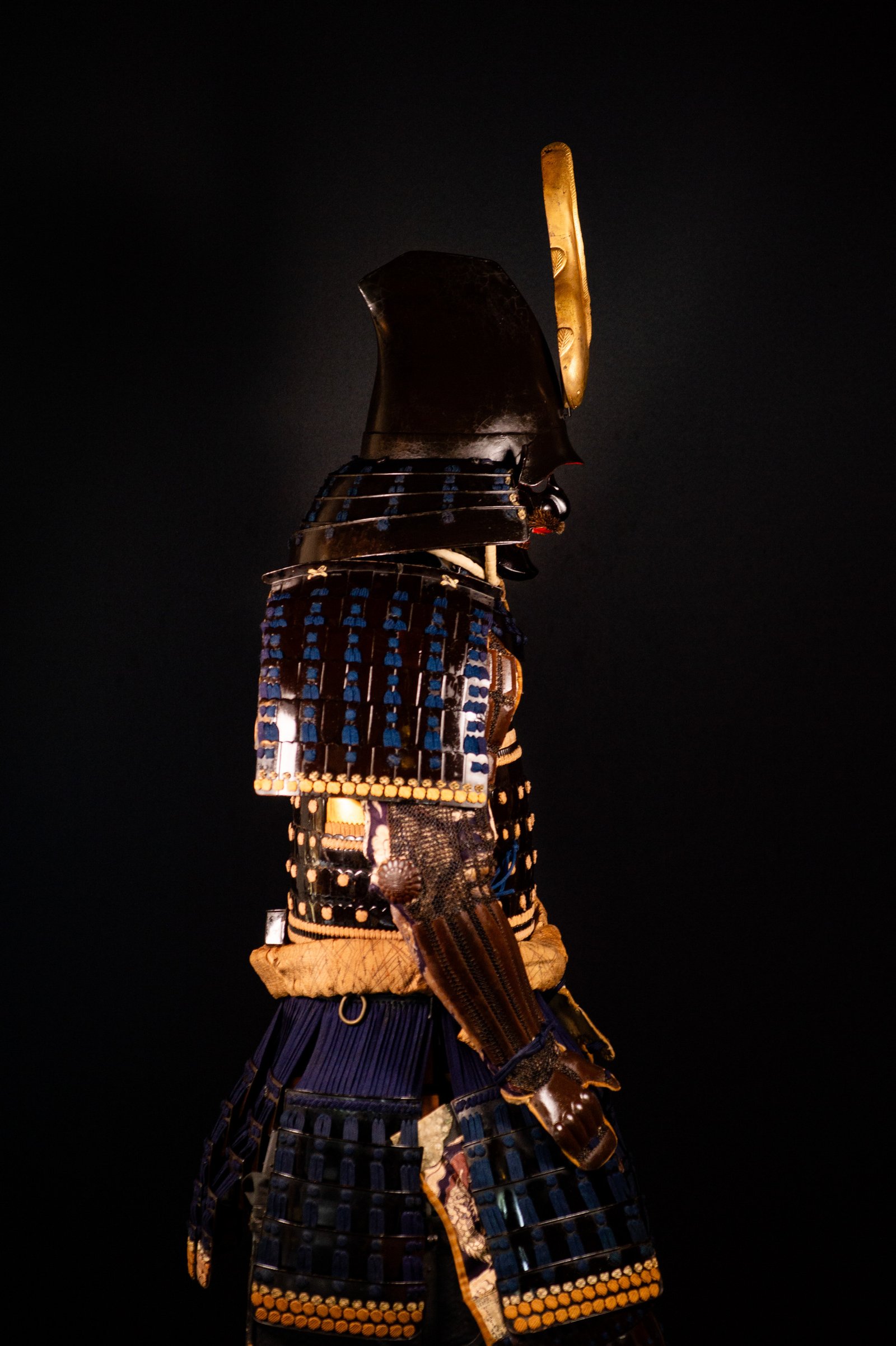
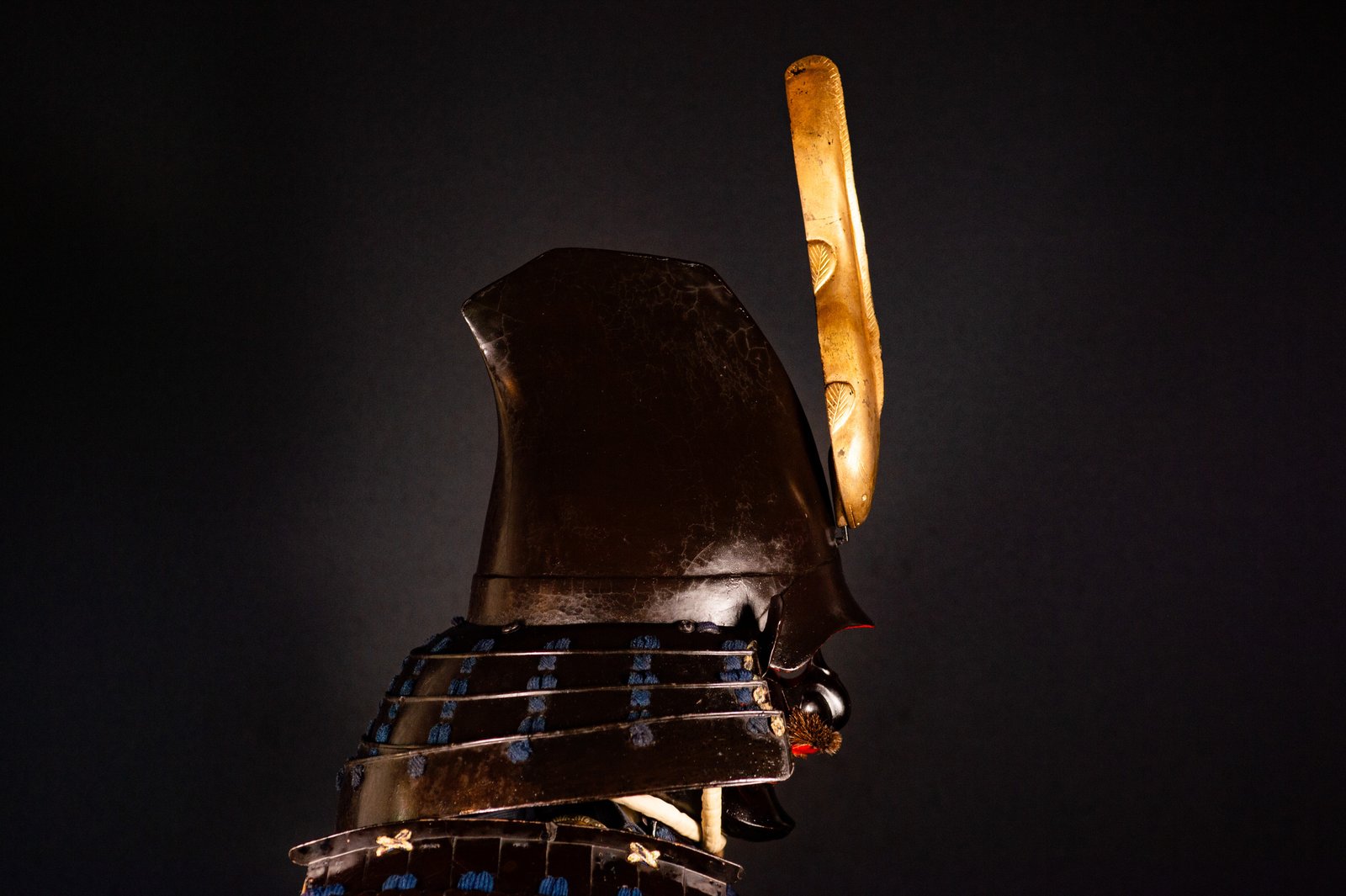
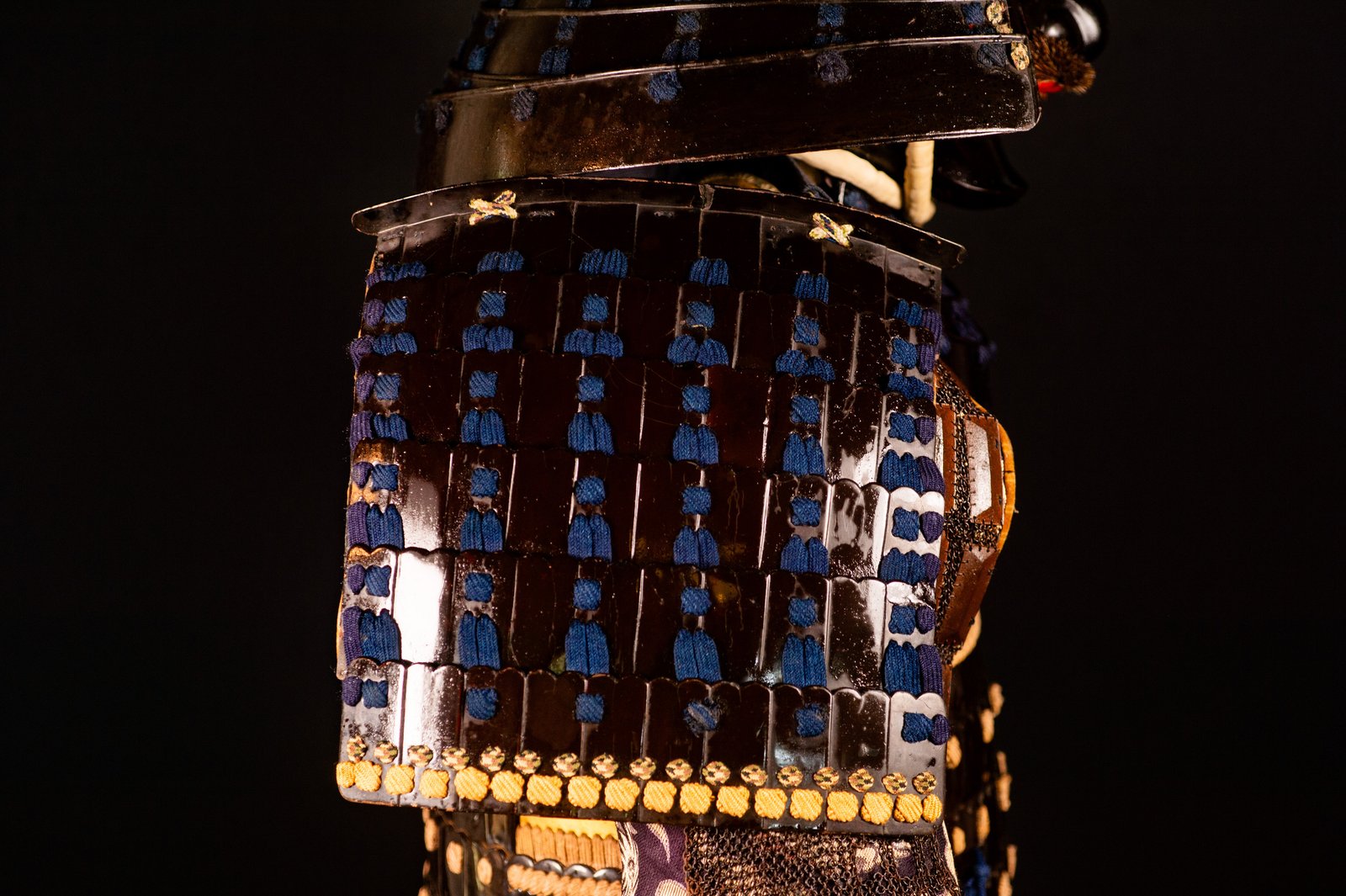
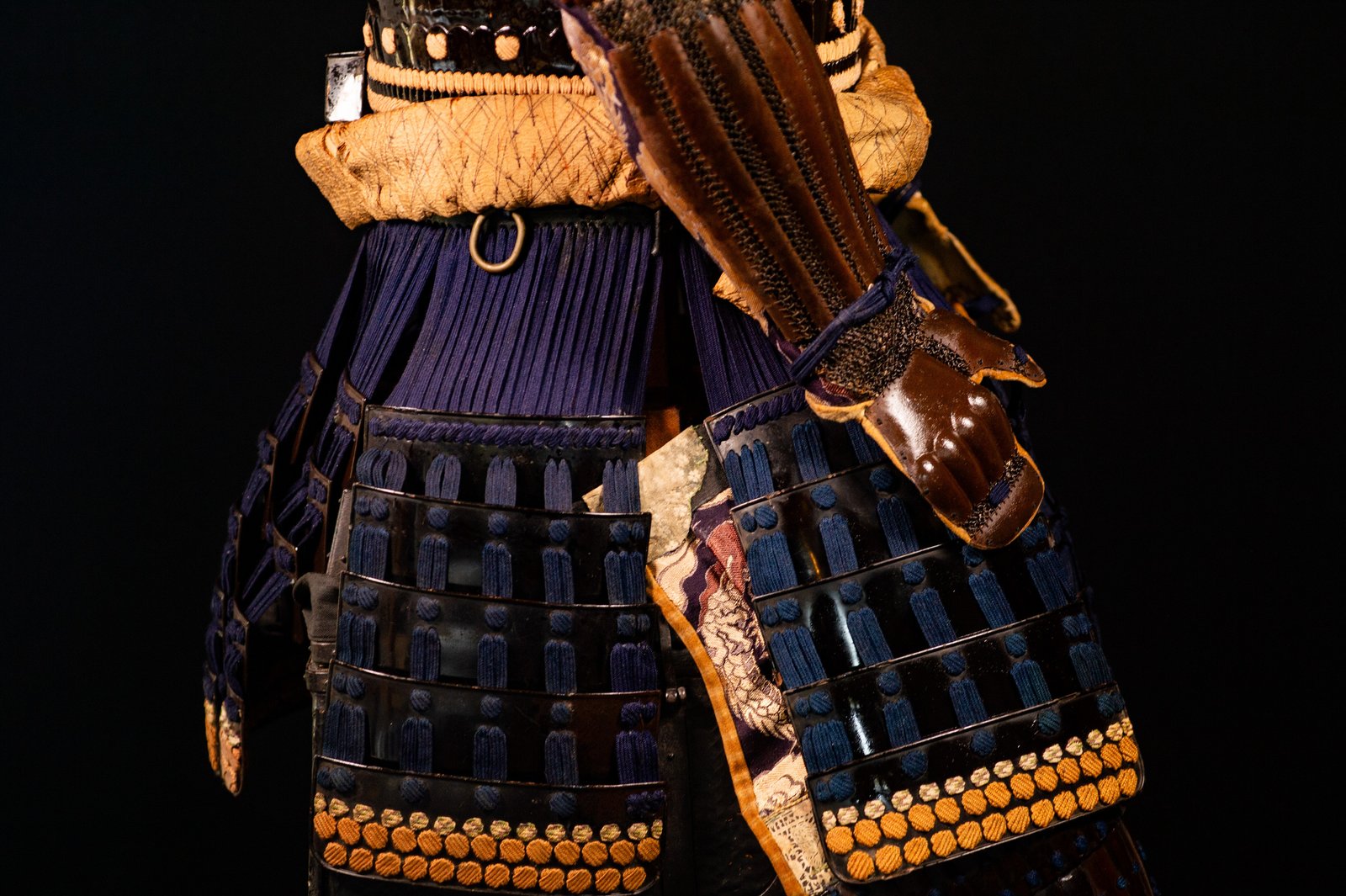
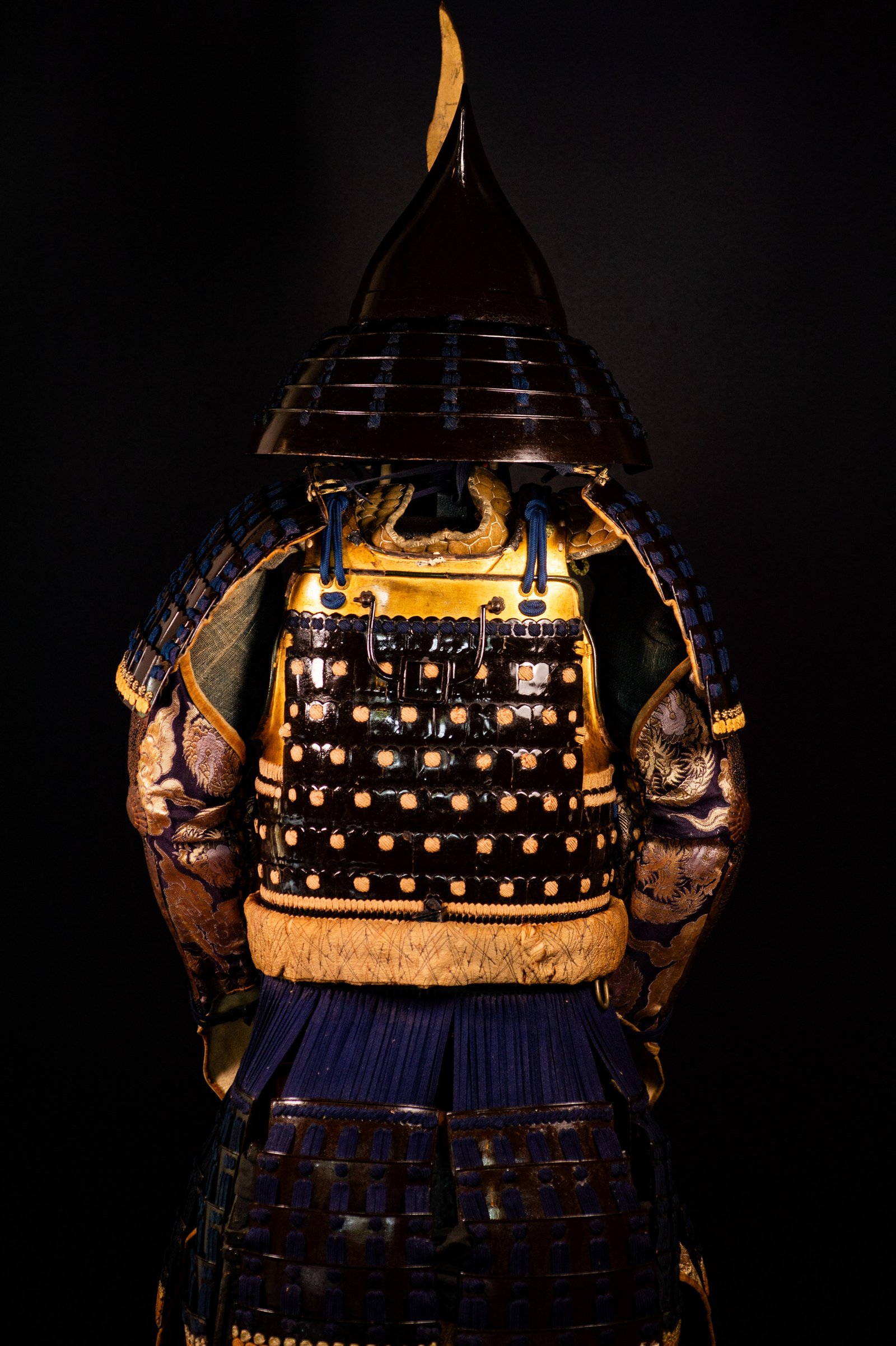
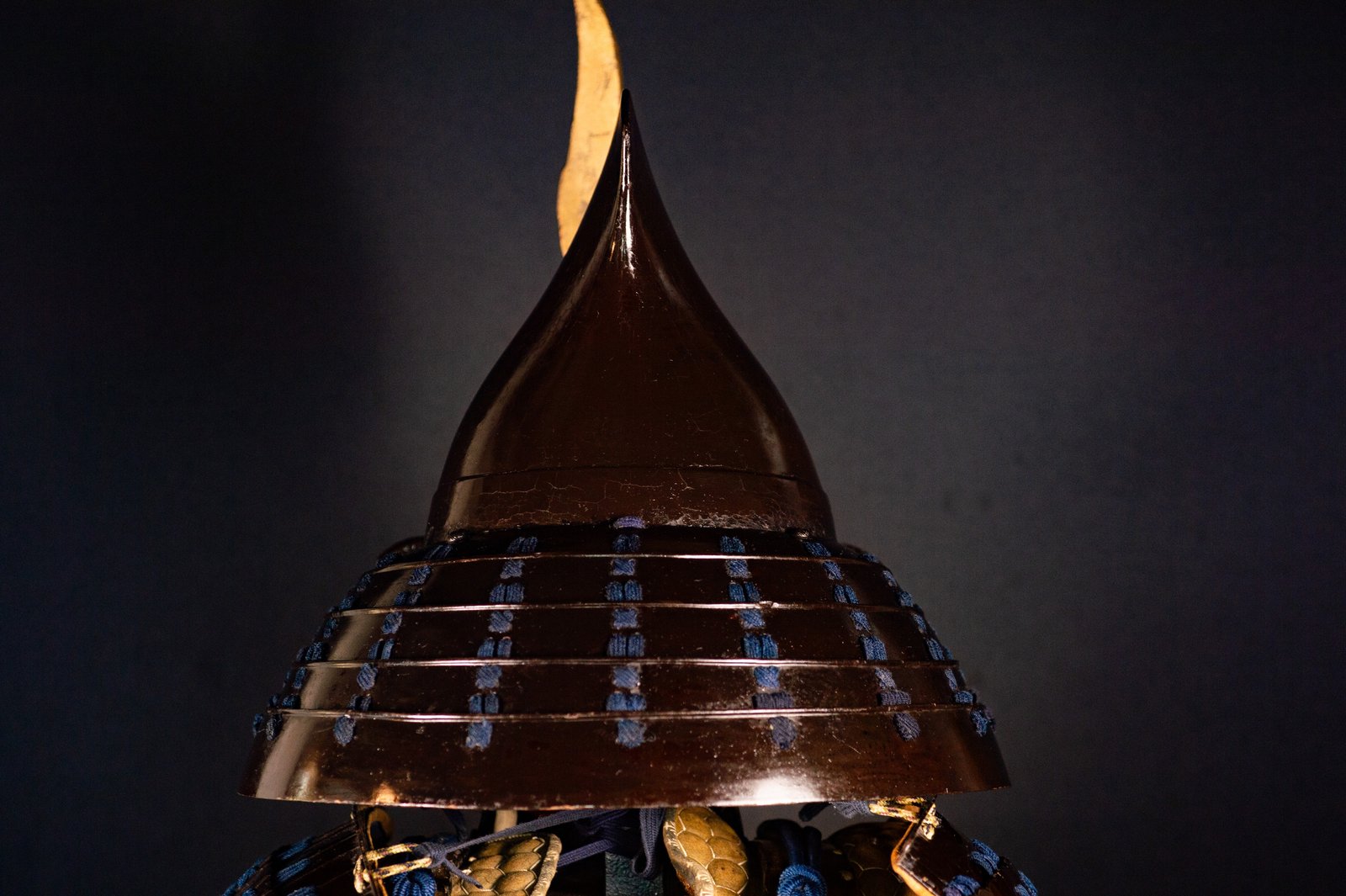
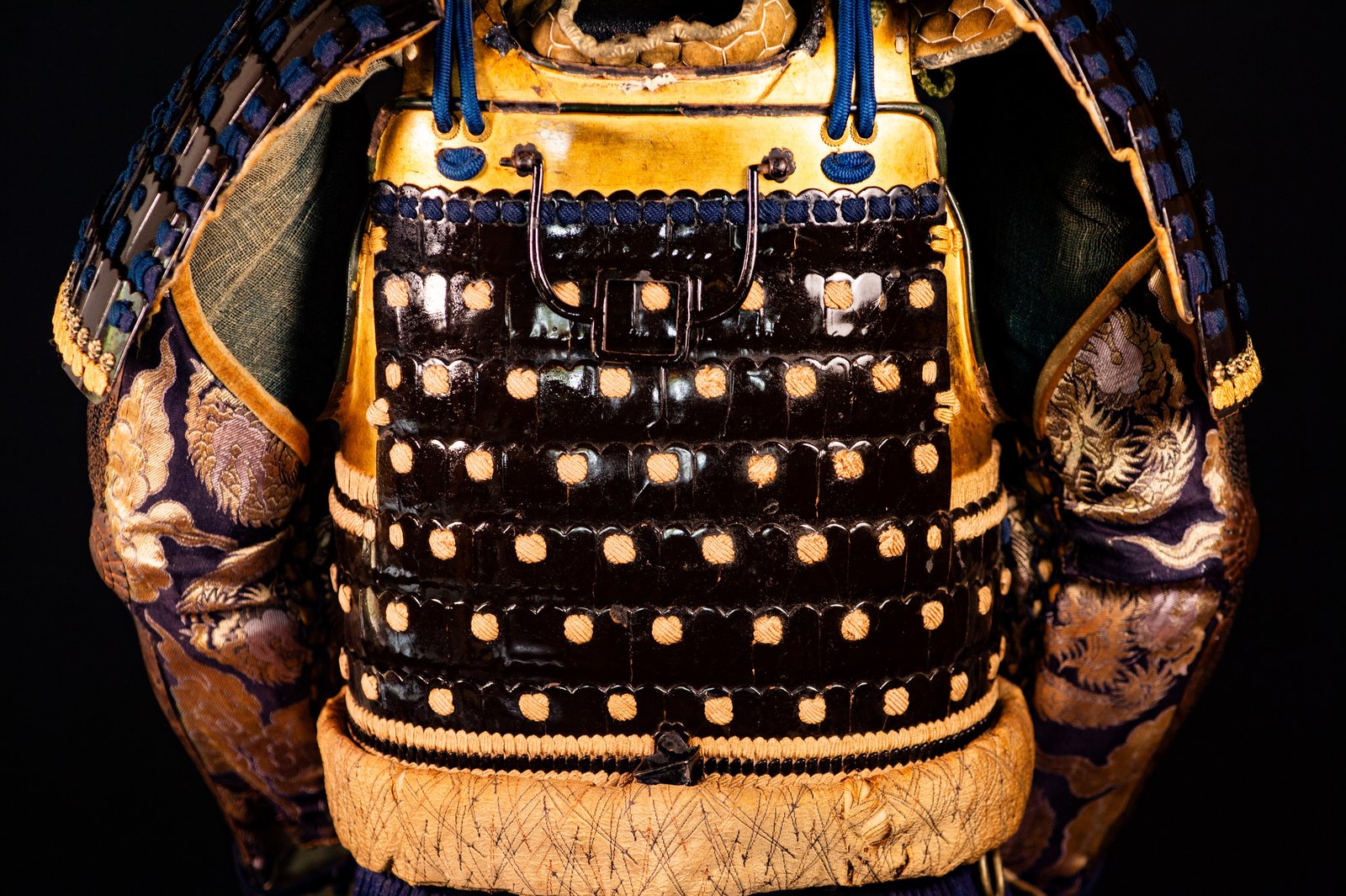
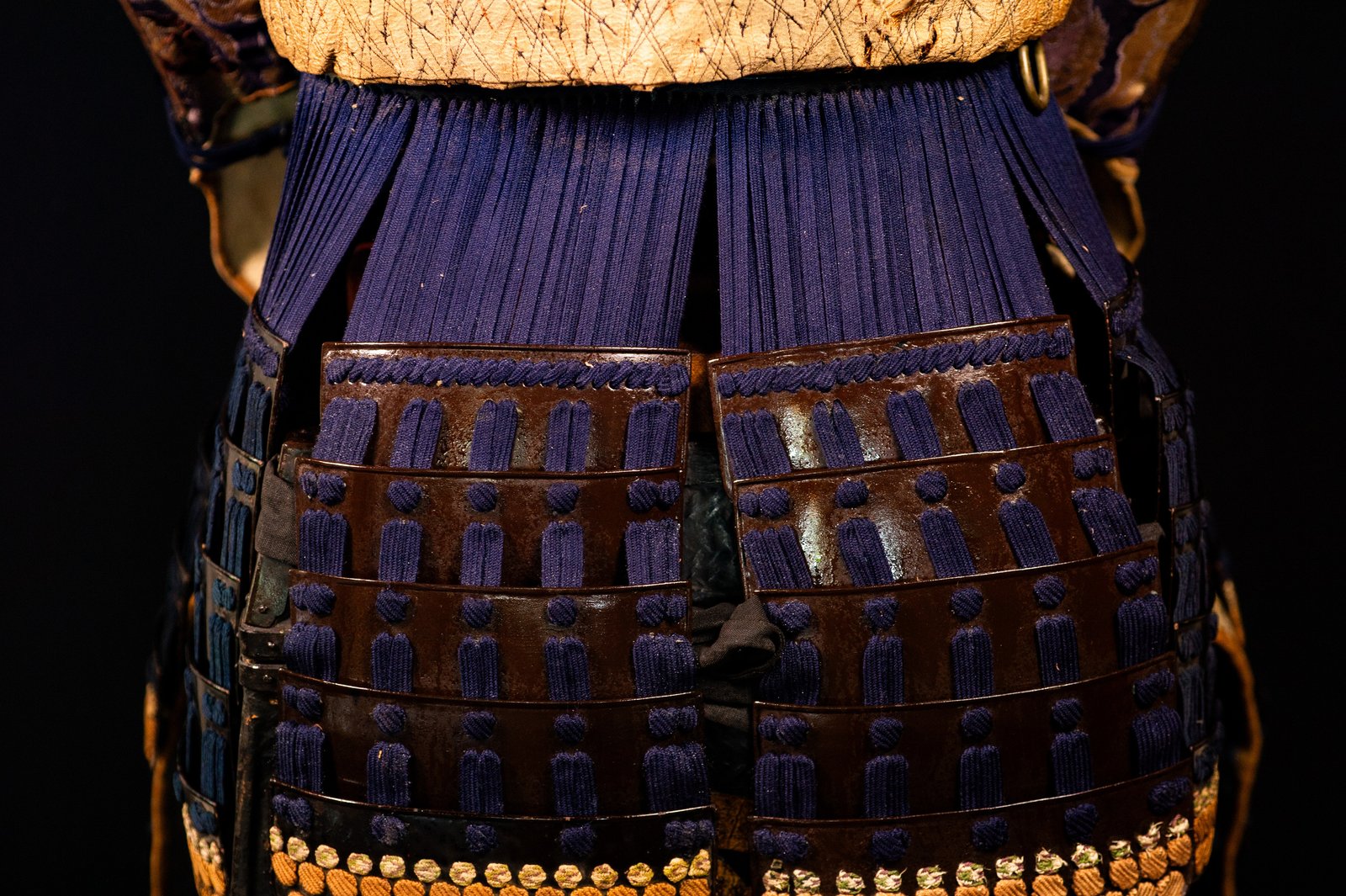
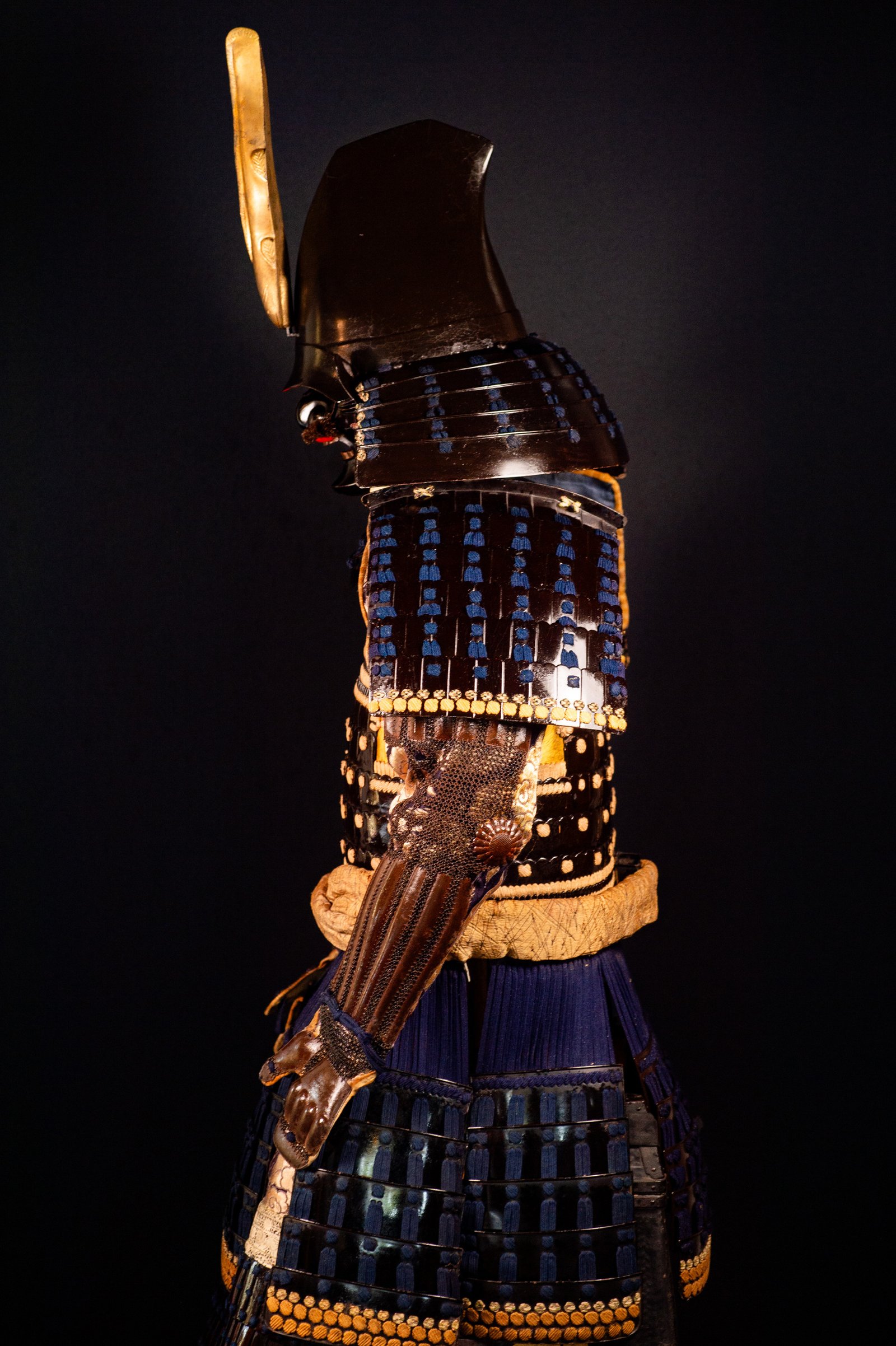
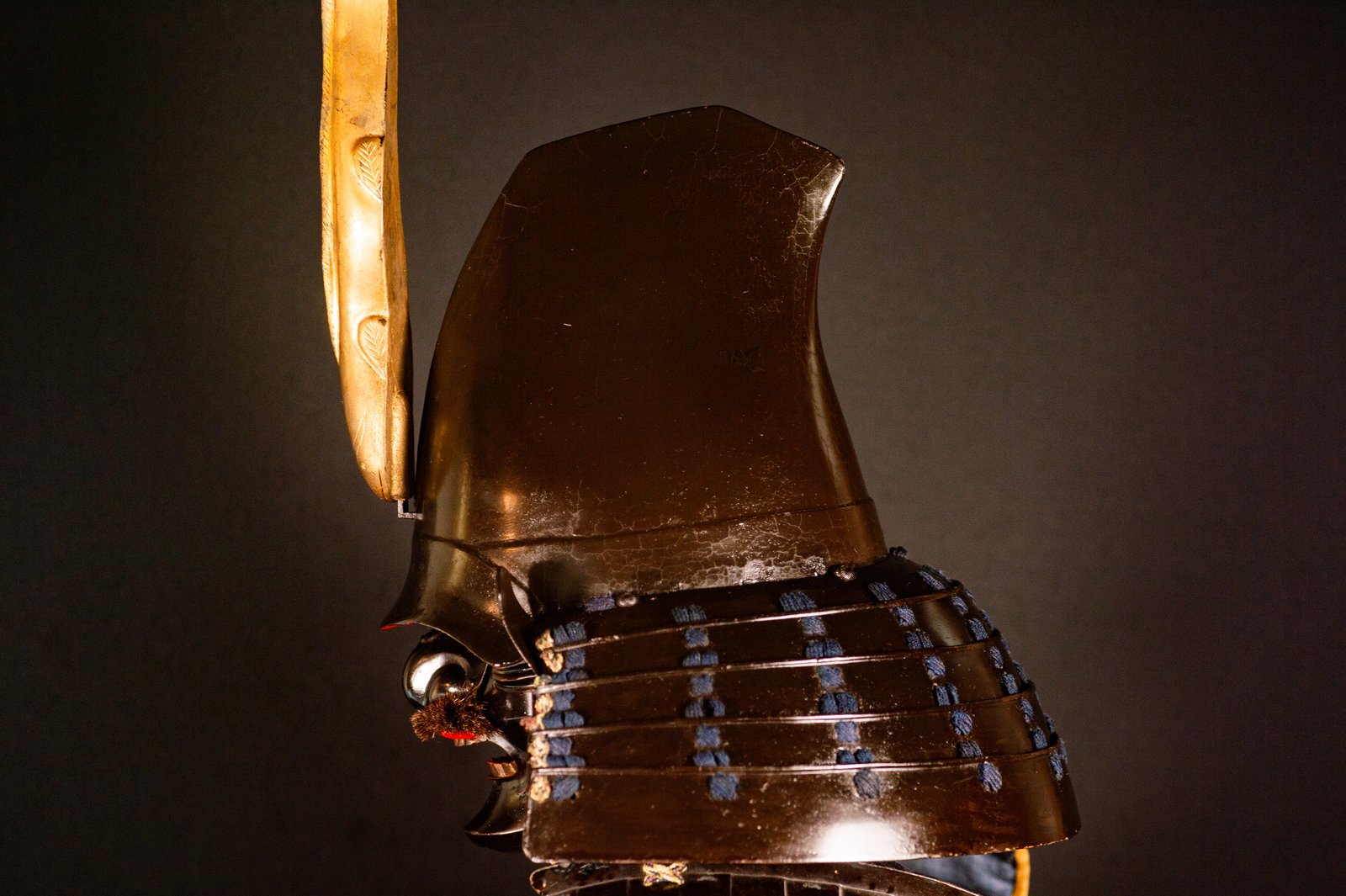
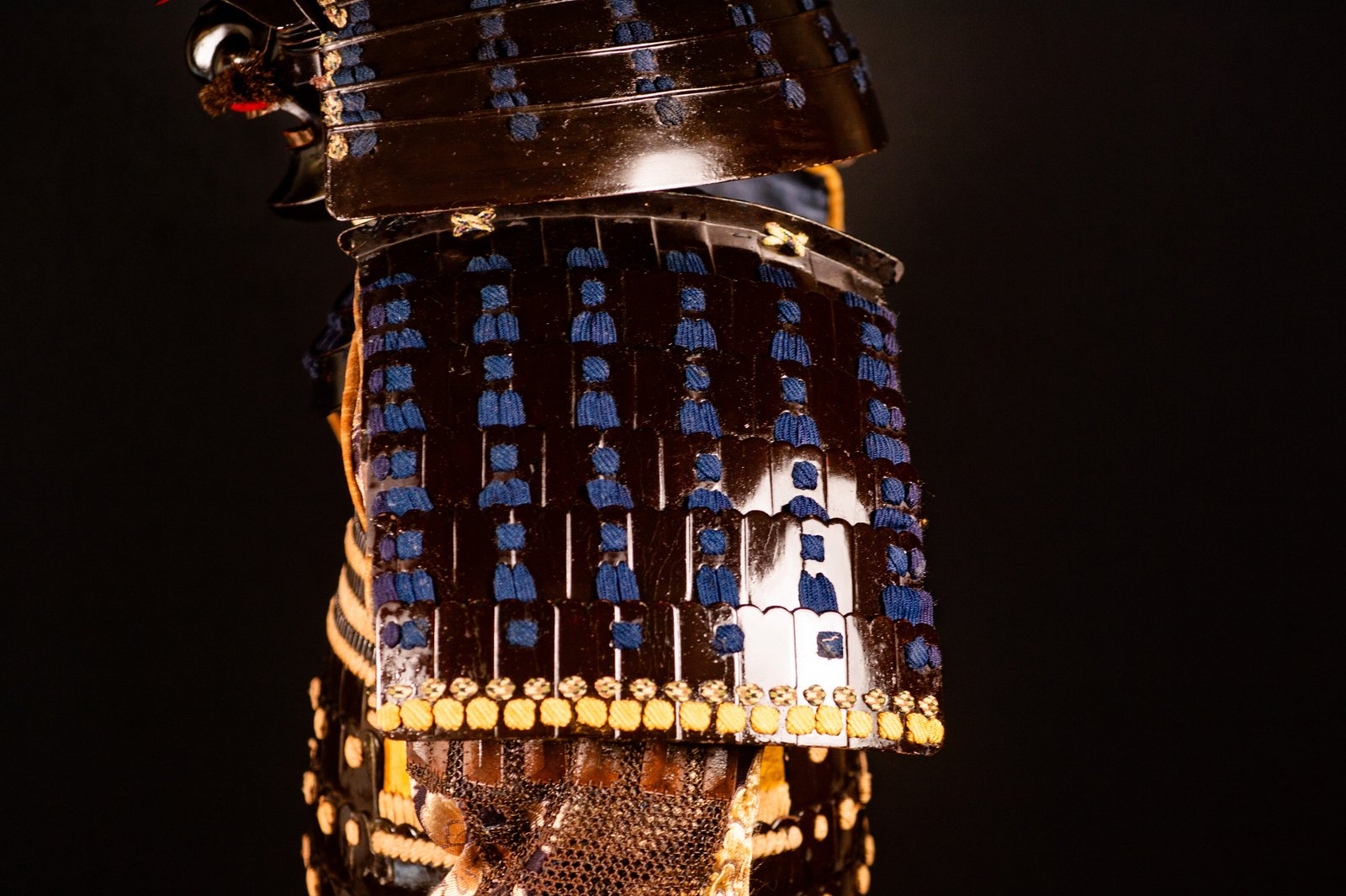
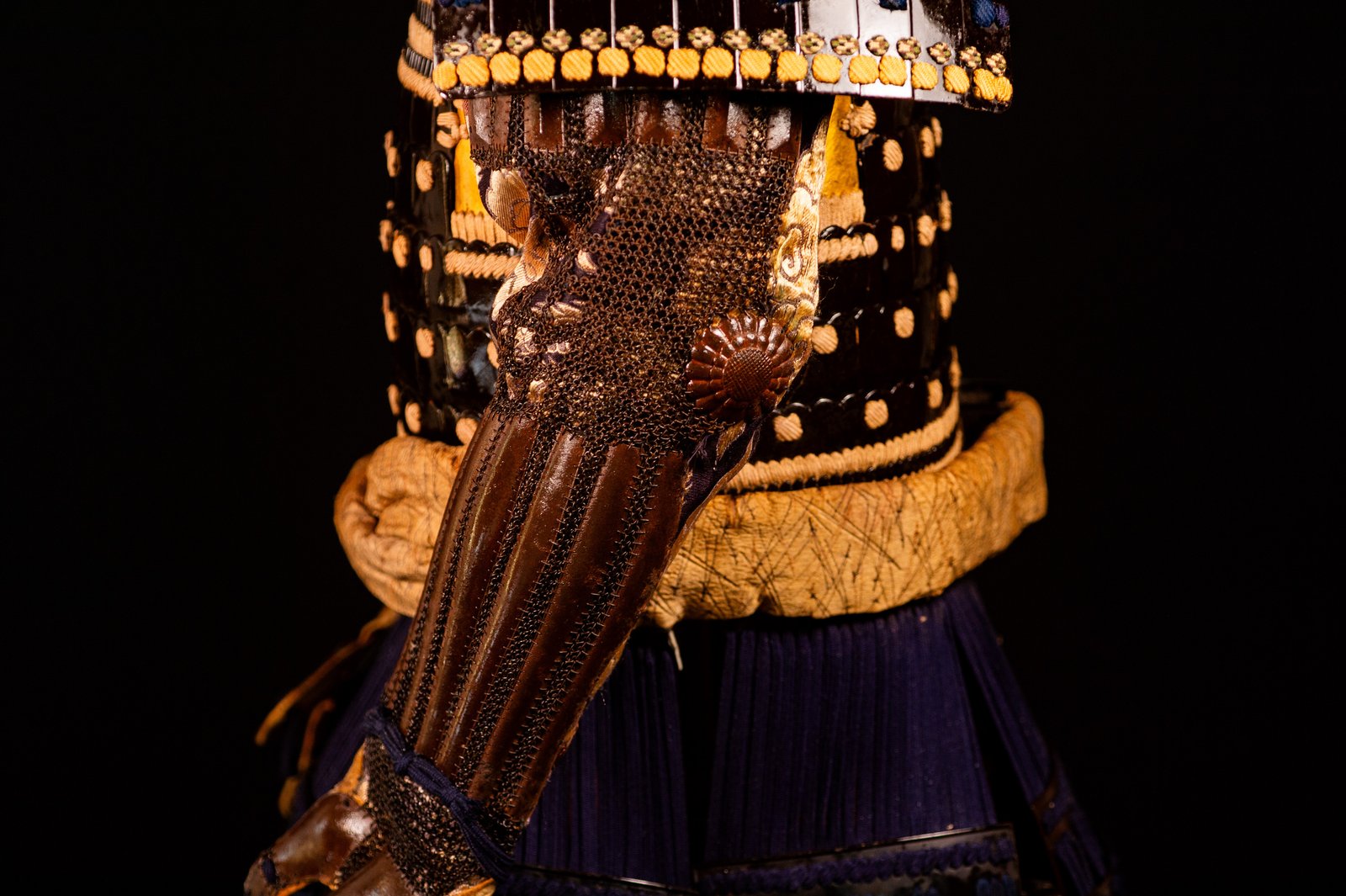
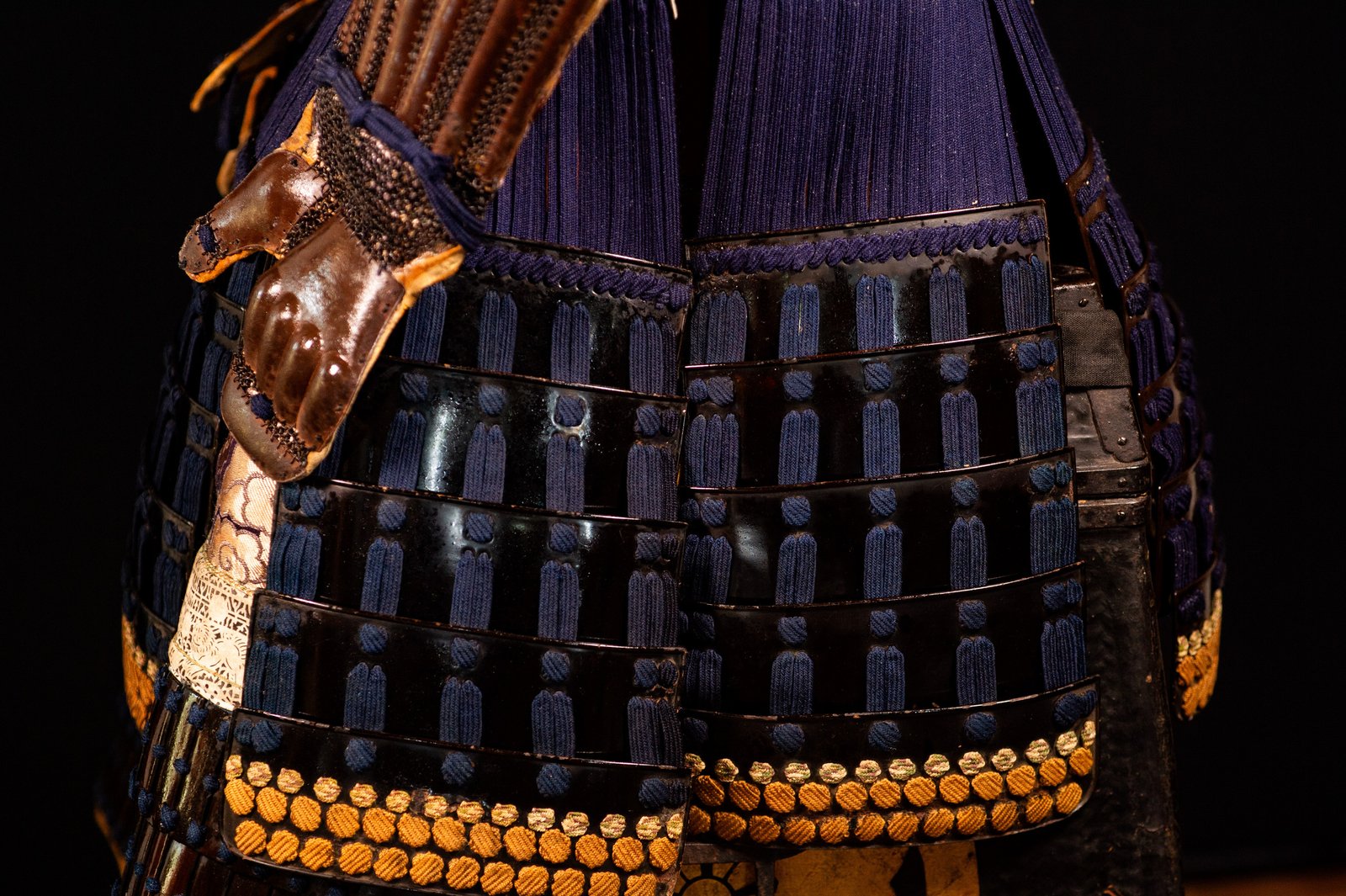
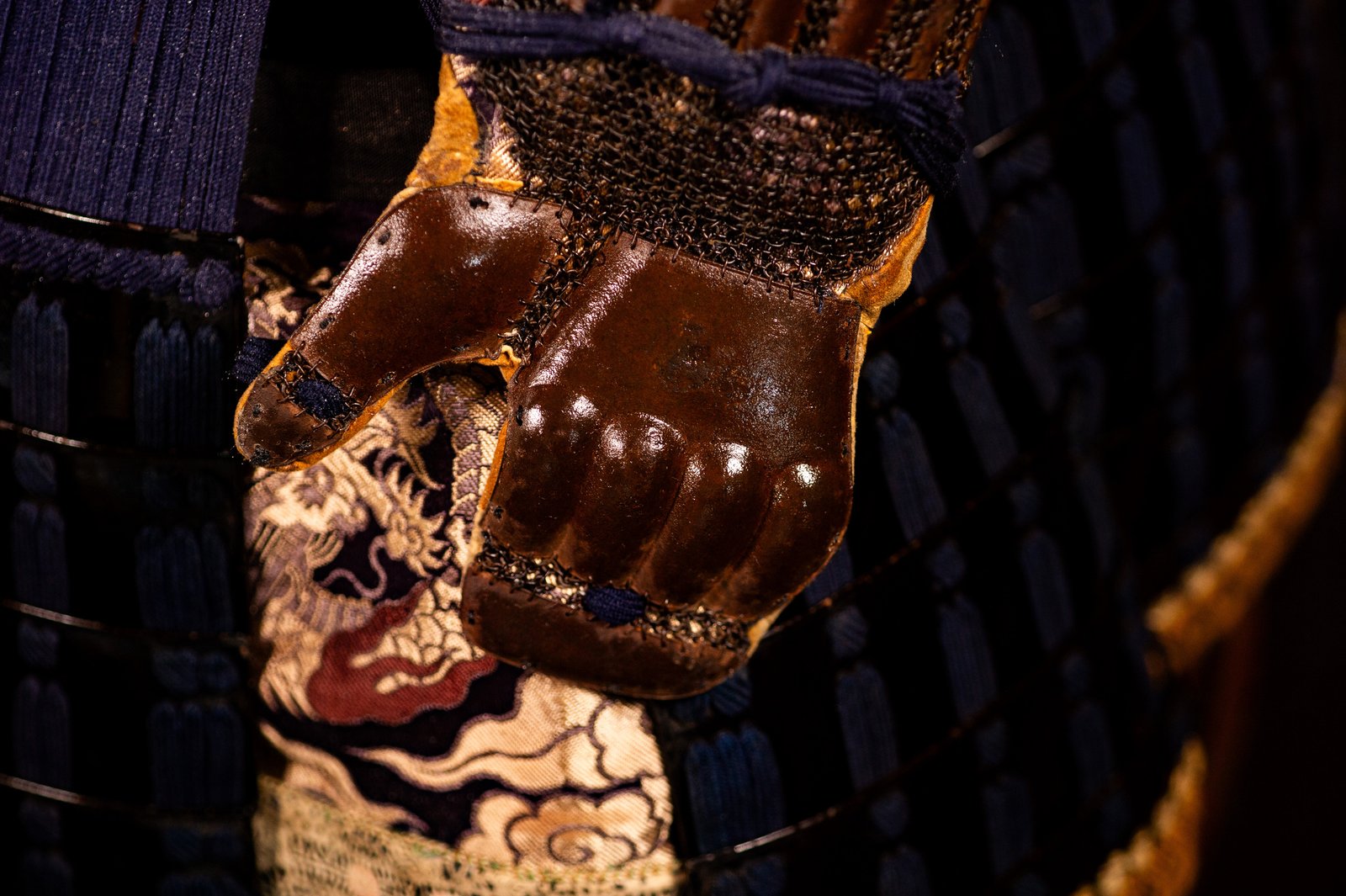
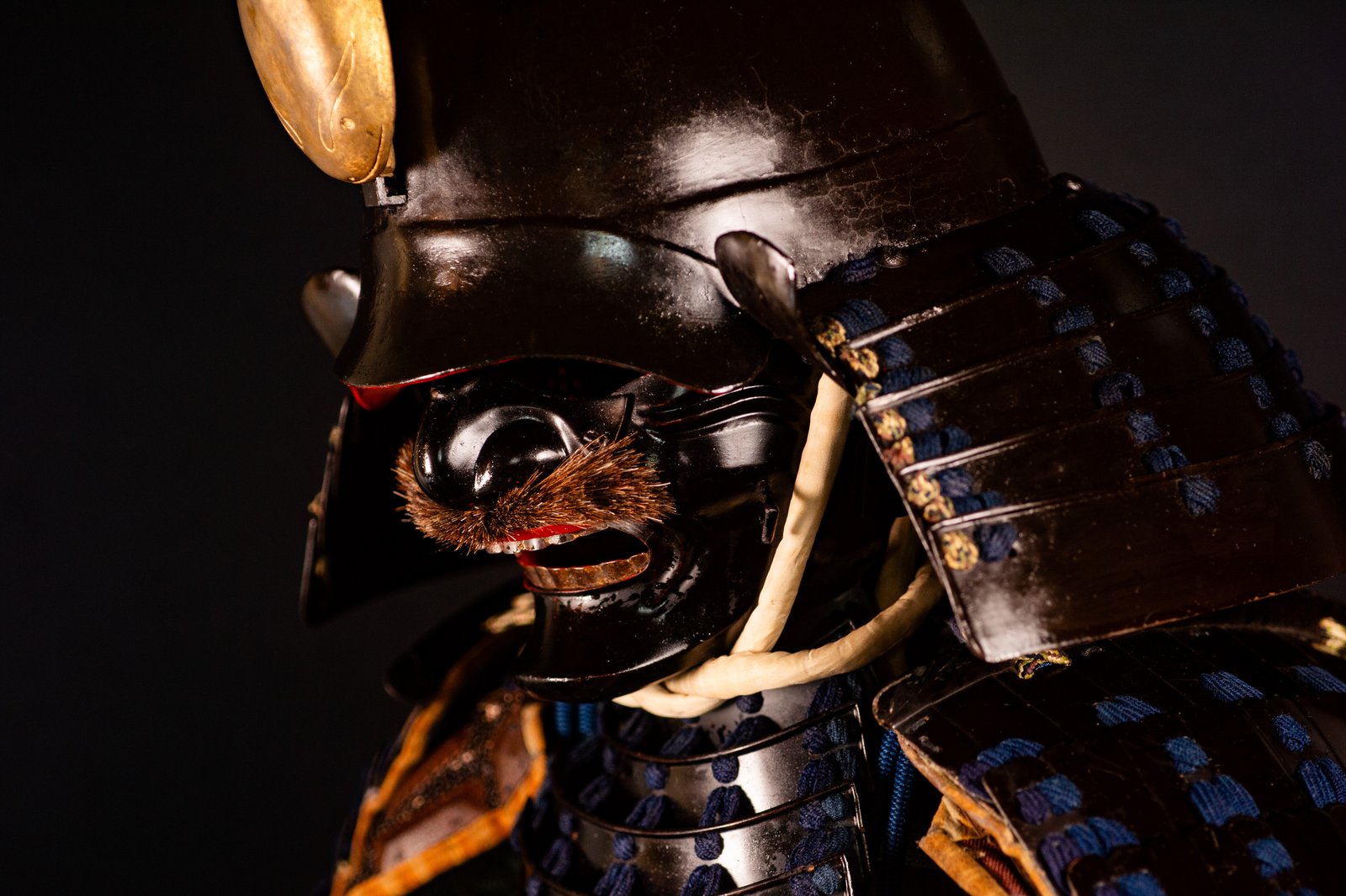
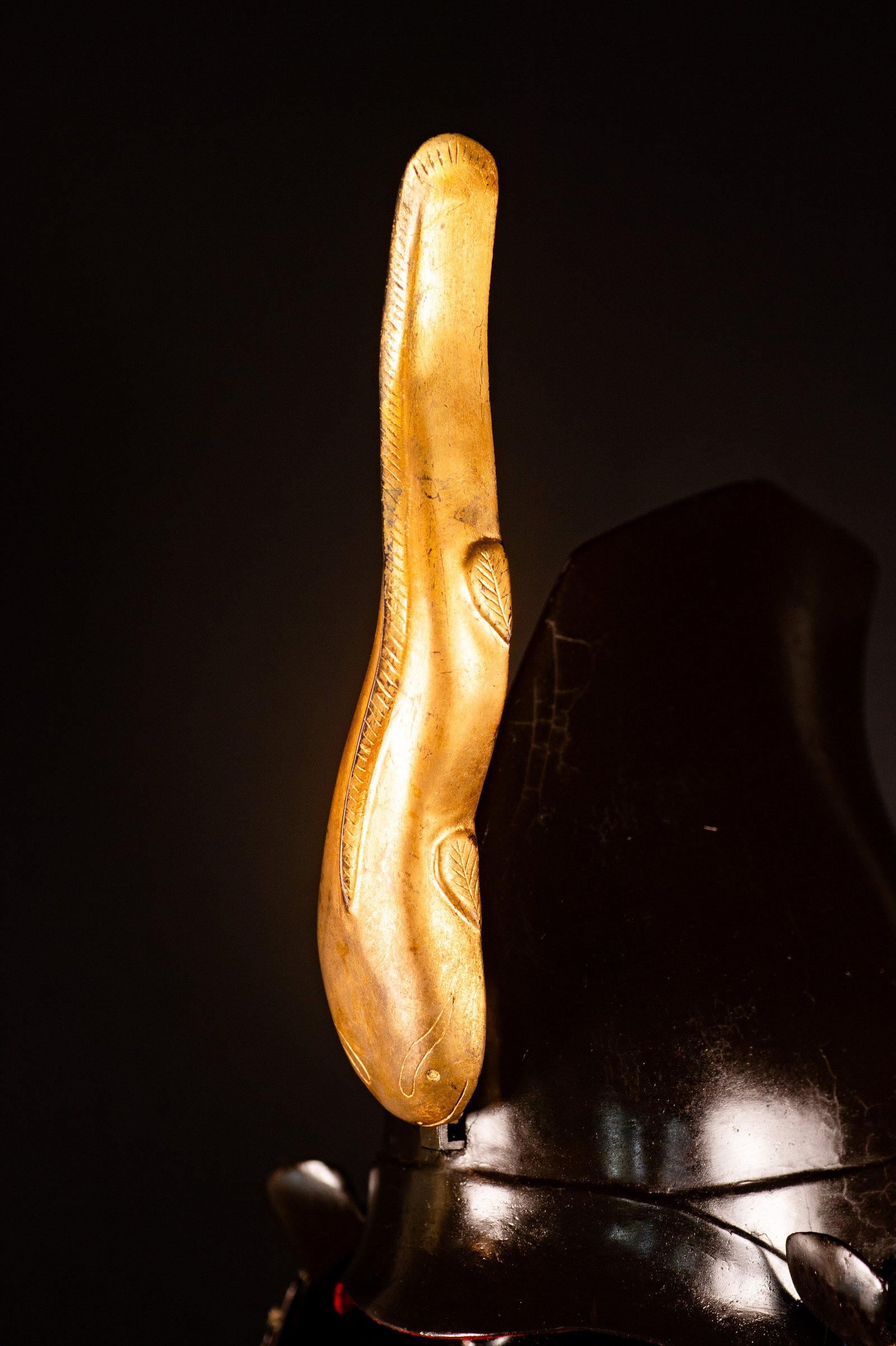
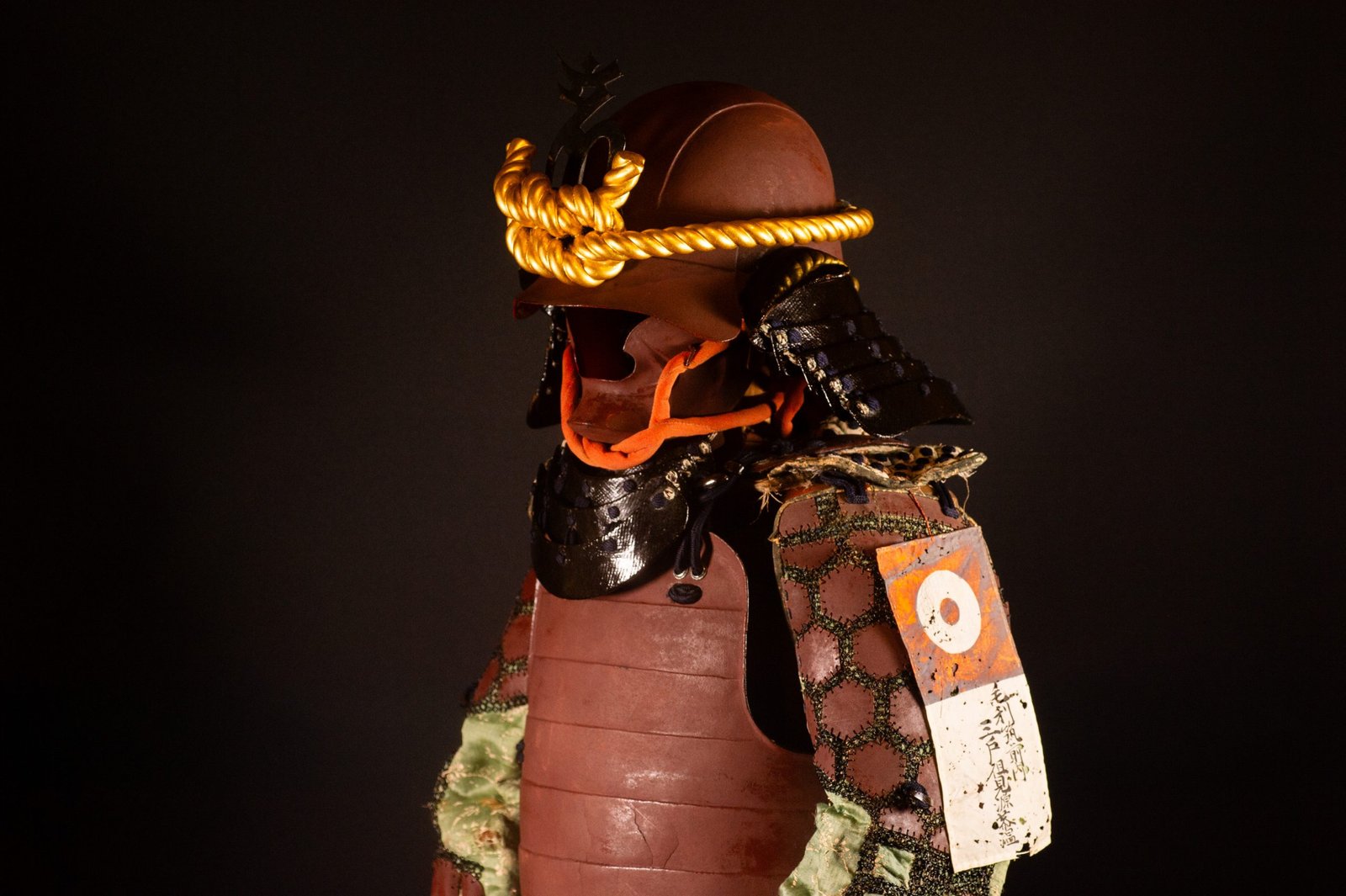
Edo Period · 18th Century · Tōsei Gusoku with Tall Lacquered Kabuto · Gilded Namazu Maedate · Black-Lacquered Menpō · Kozane Dō · Dragon Brocade Kote A striking Japanese tōsei gusoku of the Edo period, dating to the 18th century, distinguished by an unusually tall lacquered kabuto and a remarkable gilded namazu (catfish) maedate. The armour combines deep brown-black lacquer, dark indigo and blue lacing, pale ochre-orange knotwork, gilded fittings and richly patterned textile. Its most immediate visual feature is the extraordinary vertical silhouette of the helmet: a high, tapering bowl surmounted at the front by an elongated gold catfish crest that rises far above the head. Below it, a black-lacquered iron menpō with natural-hair moustache gives the ensemble an imposing expression, while the cuirass, shoulder guards, arm defences and lower armour combine lacquered plates, silk lacing, chain mail and brocade into a highly decorative but structurally coherent suit. Overall Character of the Armour This gusoku is built around contrast. The dark polished lacquer of the helmet, shoulder guards and cuirass forms the visual foundation, while gold, cream, orange and blue appear in carefully controlled areas of lacing, metalwork and textile. The verticality of the helmet and crest is balanced by the broad sode and the layered lower body protection, producing a silhouette that is immediately recognisable from both the front and profile. Rather than relying on excessive ornament across every surface, the armour concentrates its strongest visual elements in the helmet, the gilded upper cuirass, the patterned sleeves and the contrasting silk lacing. The Helmet (Kabuto) The kabuto is the defining element of the ensemble. Its bowl rises into a tall, tapering form with a pronounced pointed summit. The surface is covered in a deep brown-black lacquer that retains a strong gloss while showing visible age, including fine craquelure, rubbing and small irregularities in the finish. Viewed from the side, the exaggerated height of the bowl becomes particularly apparent. The shape gives the helmet a highly individualised profile and places it within the broader tradition of visually distinctive Japanese helmets designed to create an immediately recognisable silhouette. A low peak projects over the face, while the sides transition into the articulated neck protection below. The Namazu Maedate Mounted vertically to the front of the helmet is an exceptional gilded namazu maedate, representing a catfish. The crest is elongated and slightly curved, rising well above the summit of the kabuto. Its gilded surface is modelled in low relief and engraved with stylised anatomical details, including fins along the body. The gold surface retains variations in tone, small dark marks and traces of wear that remain visible in close examination. The namazu is an unusual and culturally resonant motif in Japanese art. In traditional belief, a giant subterranean catfish was associated with the movement of the earth and the causing of earthquakes. The motif became particularly prominent in Edo-period visual culture. Here the catfish is recorded as the iconographic subject of the crest; no specific personal, clan or family attribution is claimed from the motif alone. The Shikoro and Helmet Lacing The shikoro, or neck guard, descends from the helmet in multiple horizontal lacquered lames. The lames are finished in the same deep brown-black lacquer as the bowl and connected by regularly spaced dark blue and indigo silk lacing. The contrast between glossy lacquer and matte textile is particularly clear when the helmet is seen from the side and rear. The lower section widens around the neck, providing both protection and a visual transition from the narrow vertical helmet to the broad shoulders of the armour. Small decorative ties and contrasting pale-gold knots appear along the lower edges of the associated plates. The Face Defence (Menpō) The face is protected by a black-lacquered iron menpō. It is modelled with strongly defined cheeks, a prominent nose and an open mouth. The interior of the mouth is picked out in red lacquer, creating a sharp contrast against the polished black surface. A full natural-hair moustache extends across the upper lip and reinforces the forceful character of the mask. The menpō is secured around the head and neck with thick pale padded cords, clearly visible from the side. Below the mask, articulated lacquered throat plates continue the protective structure toward the upper cuirass and are laced in dark blue. The Cuirass (Dō) The dō is constructed from horizontal rows of small lacquered plates or scales arranged in a close lamellar structure. The principal field is finished in deep glossy black-brown lacquer. Regular pale ochre-orange lacing points form a repeated pattern across the surface, giving the cuirass a disciplined geometric rhythm. The upper section is framed by a broad gilded plate, pierced for dark blue cords and visually separating the throat area from the darker body below. Several horizontal bands of pale lacing cross the upper chest, while a dark blue securing cord is tied at the side. The polished lacquer is not uniformly pristine. Close photographs show surface variation, light rubbing and small age-related marks that remain visible rather than having been concealed by heavy restoration. The Rear of the Dō The reverse preserves the same black-lacquered lamellar construction as the front. The upper edge is framed in gold, with pairs of blue cords passing through the plate. Iron fittings are mounted centrally on the rear of the cuirass. The back view is particularly useful for understanding the construction of the armour, as the regular rows of lacquered plates and pale lacing can be seen without the visual interruption of the frontal decorative elements. The dark lacquer, gold edging and patterned textile of the sleeves create a strong but restrained contrast from the rear. The Shoulder Guards (Sode) The large sode are composed of broad horizontal lacquered lames arranged in graduated rows. Their brown-black lacquer is connected by regularly spaced blue and indigo silk lacing, with a lower border of small pale-gold and ochre knots. Close inspection reveals the individual cords passing through the plates as well as minor surface wear, small losses and variations in the lacquer associated with age. The lower edge of each shoulder guard is finished with a dark hair fringe, which provides a softer visual transition between the rigid plates and the textile-and-chain construction of the sleeves below. The Arm Defences (Kote) The kote are among the richest textile elements of the armour. They combine iron chain mail (kusari) with long fluted lacquered forearm plates mounted over patterned silk textile. The brocade is woven with elaborate dragon and cloud motifs in muted gold, cream, brown and purple tones against a dark ground. The design remains visible around the upper arms and along the sides of the torso. The combination of patterned silk, dark chain mail and vertical lacquered splints gives the sleeves a markedly different texture from the highly polished cuirass and shoulder guards. The Hand Guards (Tekkō) The backs of the hands are protected by articulated tekkō formed from shaped lacquered metal plates. The plates retain a warm brown surface with visible age and are connected to the chain-mail sleeves at the wrists. Their construction allows protection to extend over the hand without completely sacrificing articulation. The Waist and Lower Armour At the waist, a broad padded textile band in a warm golden-beige tone separates the cuirass from the lower armour. The textile shows a dense network of fine dark linear markings and visible creasing from age and use. Below it, long panels of deep indigo textile support the articulated lower plates. The contrast between this saturated blue-purple fabric and the dark lacquer is one of the most characteristic colour relationships in the ensemble. The Kusazuri The kusazuri descend from the waist in separate articulated sections. Each section consists of horizontal dark-lacquered plates connected by dense indigo lacing. The lower rows are finished with bands of pale-gold and ochre knots, echoing the decorative treatment of the shoulder guards. Seen from the side, the overlapping sections demonstrate how the lower armour could provide protection while retaining the flexibility necessary for movement. The Haidate The haidate, or thigh protection, continue the dark-lacquer-and-indigo palette of the lower armour. Rows of lacquered plates are attached to broad textile panels with dense dark blue lacing. The sections are arranged independently so that they could move with the legs rather than forming a single rigid skirt. Patterned brocade appears between and behind several of the plated sections, visually connecting the lower armour with the rich textiles used on the kote. Textiles, Brocade and Colour The textile components are an important part of the visual character of this gusoku. Dark indigo and blue lacing dominate the helmet and lower armour, while pale cream, gold and ochre cords create contrast across the cuirass and along the edges of the plates. The sleeves introduce a more elaborate decorative vocabulary through silk brocade woven with dragons and cloud forms. Gold appears selectively rather than uniformly: on the namazu crest, the upper cuirass fittings and decorative textile details. Against the dark lacquer, these areas become natural focal points. The resulting palette of black-brown lacquer, indigo, muted gold, cream and purple gives the armour considerable richness without losing visual coherence. Condition The armour presents the visible signs expected of an historical Edo-period ensemble and retains an attractive, naturally aged surface. The lacquer shows areas of rubbing, fine scratches, small losses and craquelure, particularly on the tall helmet bowl and along exposed edges. The gilded namazu maedate shows tonal variation, small dark marks and wear to the surface. The lacing has mellowed unevenly in colour, with some areas appearing deeper blue and others more faded. The textile elements show age-related creasing, wear, localised fraying and surface soiling. The brocade remains legible, with the dragon-and-cloud decoration still clearly visible. The metal and lacquered components retain differences in gloss and patina consistent with the varied materials and exposed surfaces of the armour. These signs of age have not been described as defects to be concealed; they form part of the physical history and appearance of the gusoku. Collector’s Value The principal distinction of this gusoku lies in the combination of a highly individual helmet with a coherent and richly finished armour. The towering kabuto gives the suit an immediately recognisable profile, while the unusually large gilded namazu maedate provides an iconographic element that is considerably less conventional than the more frequently encountered crescents, horns or simple heraldic crests. The visual impact of the helmet is supported rather than overwhelmed by the remainder of the armour: polished dark lacquer, disciplined blue and pale lacing, gilded details and dragon-patterned brocade create a consistent decorative vocabulary from the shoulders to the lower body. The multiple surviving viewpoints are also important for studying the piece. Front, profile, rear and detailed photographs reveal not only its display presence but the construction of the shikoro, dō, sode, kote, kusazuri and haidate, as well as the natural ageing of lacquer, textile and lacing. A visually distinctive 18th-century Japanese tōsei gusoku, centred on a towering lacquered kabuto with an exceptional gilded namazu maedate. Its black-brown lacquer, indigo lacing, gilded details and dragon brocade create a powerful and coherent ensemble from every angle. The armour combines the strong silhouette and individualised ornament associated with Edo-period samurai display with the complex construction of a functional gusoku, making it particularly compelling both as an historical object and as a major display piece.
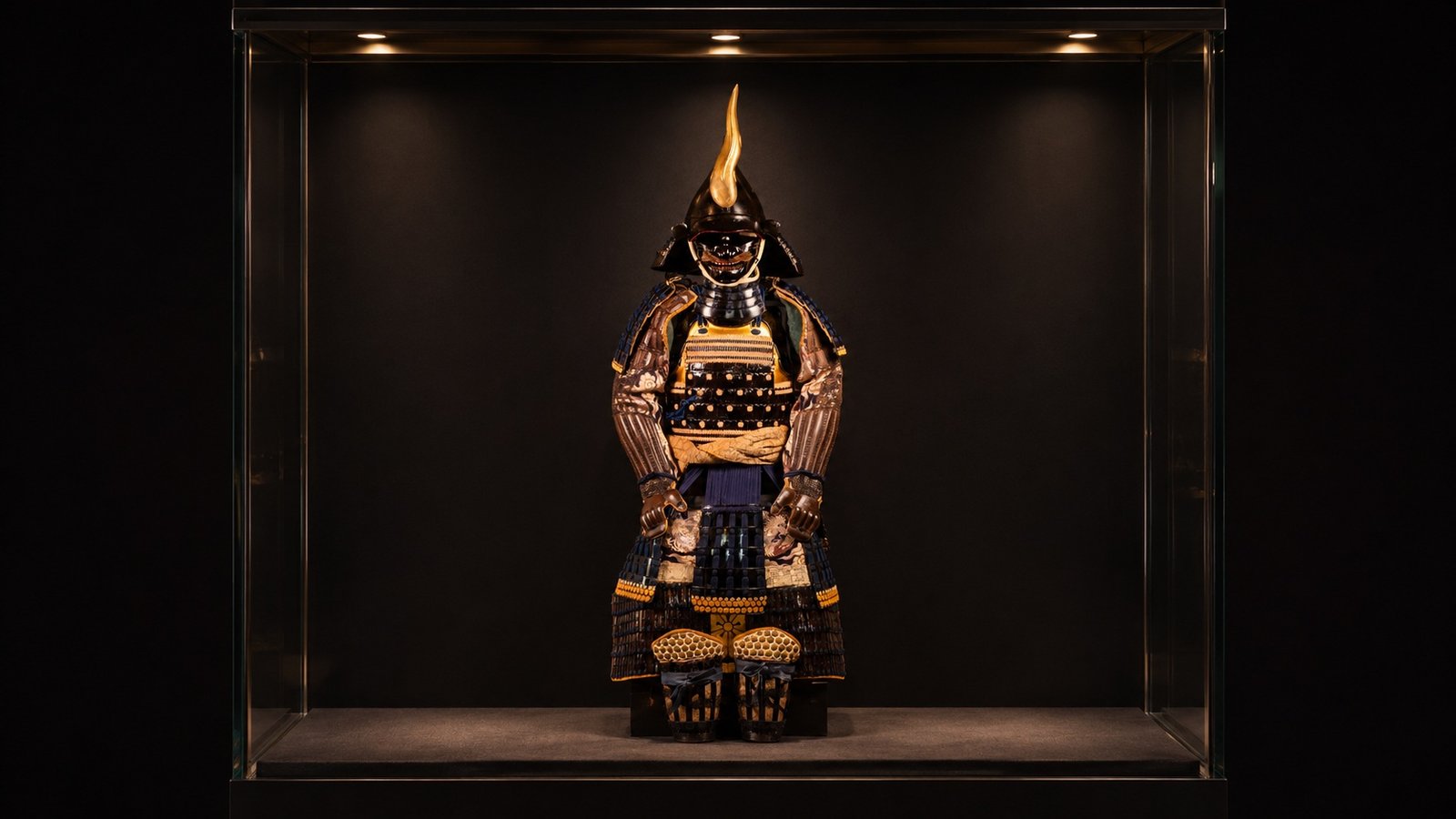
当世具足
具足一連(完備)
無銘
毛引威 · 紺
Namazu (catfish) maedate
江戸
販売店の記載のまま
(翻訳なし) 店主の原文のまま表示しています。正確さの確認を通った翻訳のみを表示します。
刀剣商の出品ページで鑑定書を確認できませんでした。甲冑武具は通常、日本甲冑武具研究保存会の鑑定を受けます。鑑定書がない場合、極めは刀剣商の見解にとどまり、第三者による確認は行われていません。ご購入前に刀剣商へ鑑定書の有無をお問い合わせのうえ、慎重にご判断ください。
14-day return if items arrive damaged or in unexpected condition; customer bears return shipping + insurance; items returned in original condition with all accessories; antique armour non-returnable; only regular priced items refundable; shipping costs non-refundable.
€6,800