室町は刀剣業を産業に変えた。徒歩の集団戦とともに打刀が興り、長船と関は数打ち物と注文打ちを並行して産し、勘合貿易は日本刀を数万振の単位で海外へ運んだ。
 NihontoWatchNihontoWatch
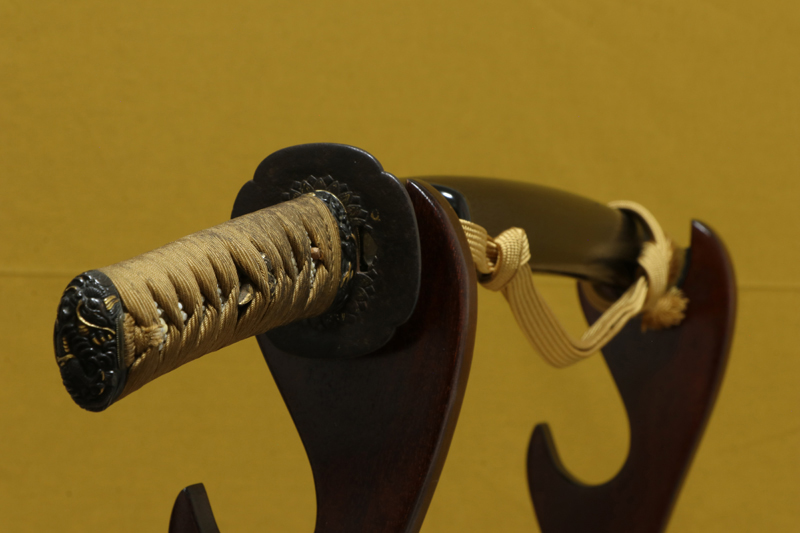
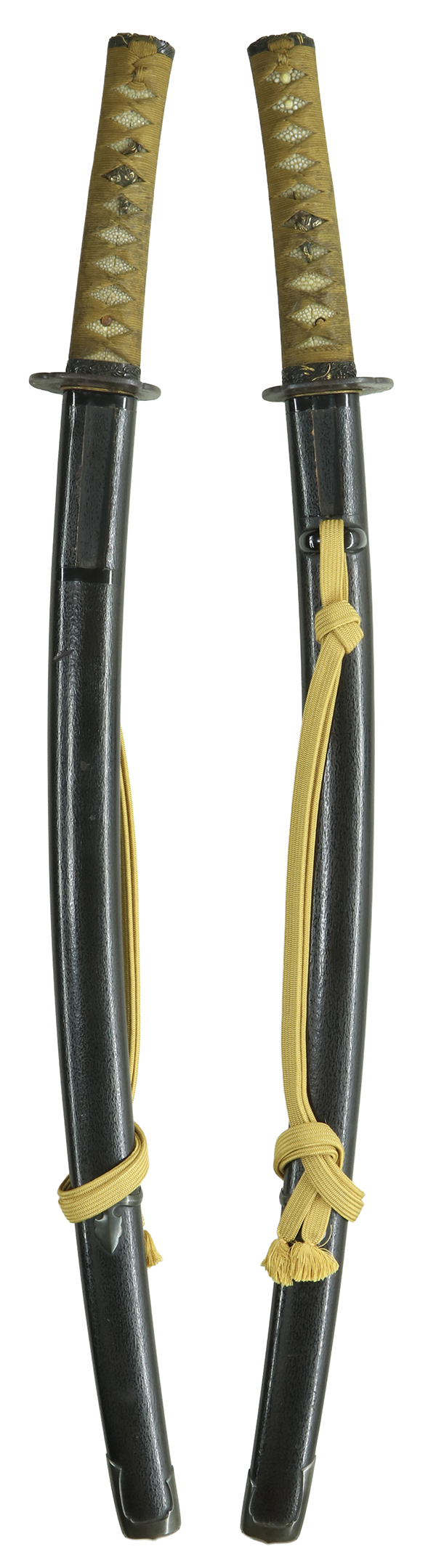
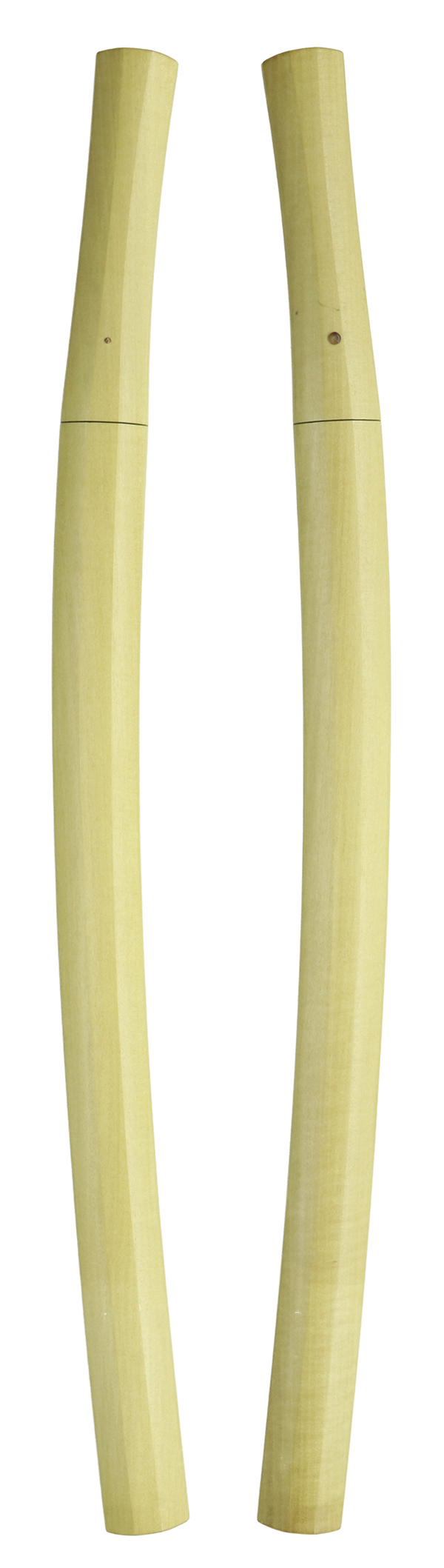
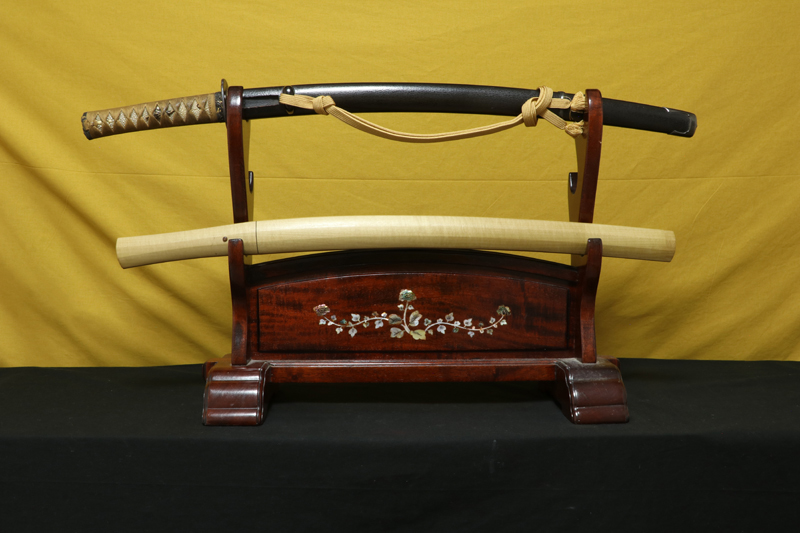
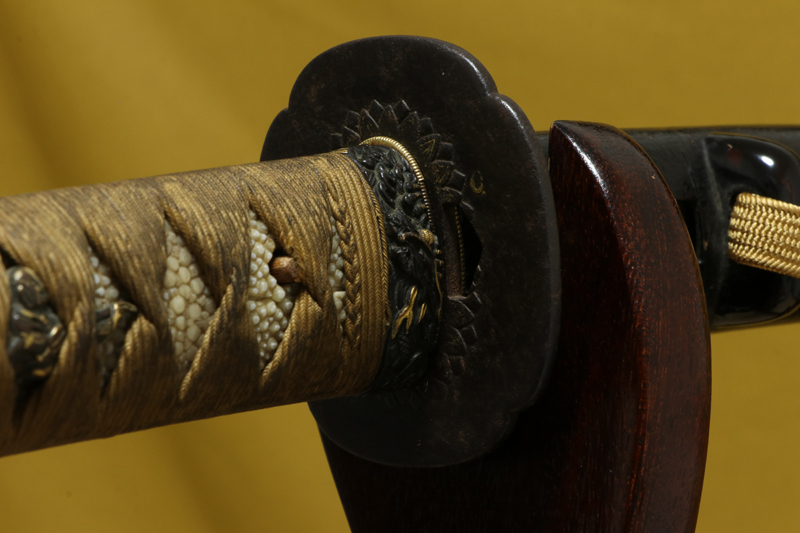
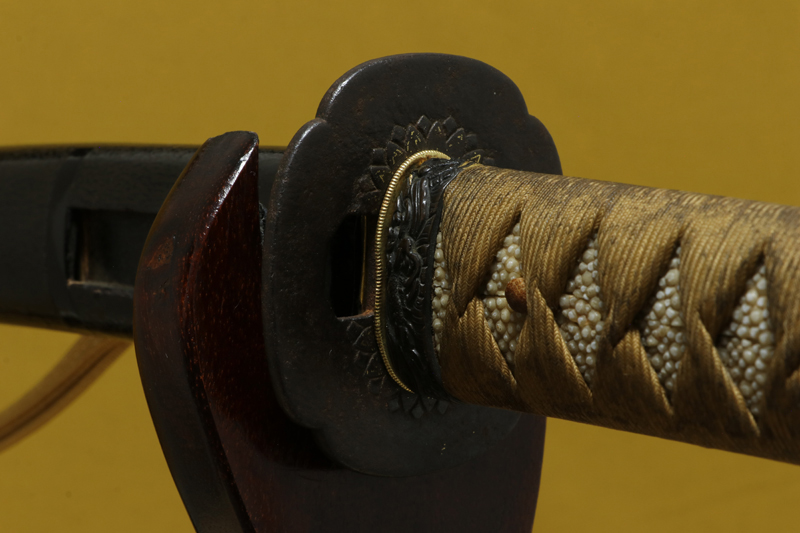
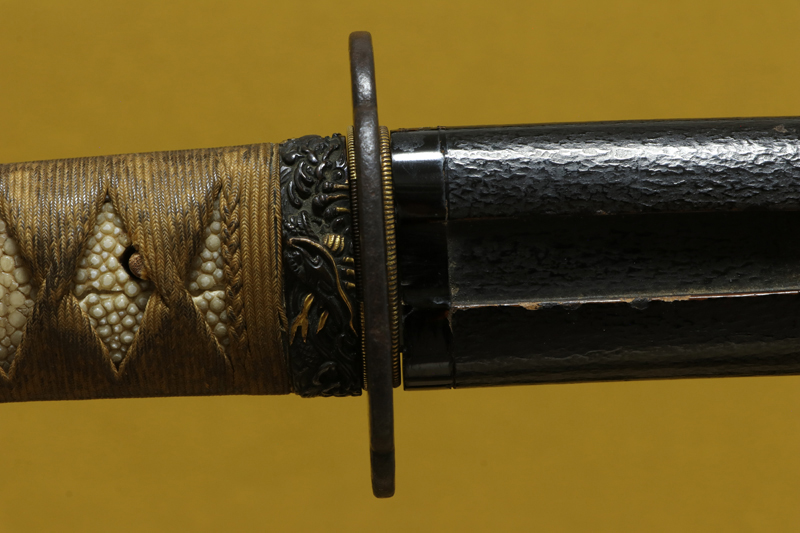
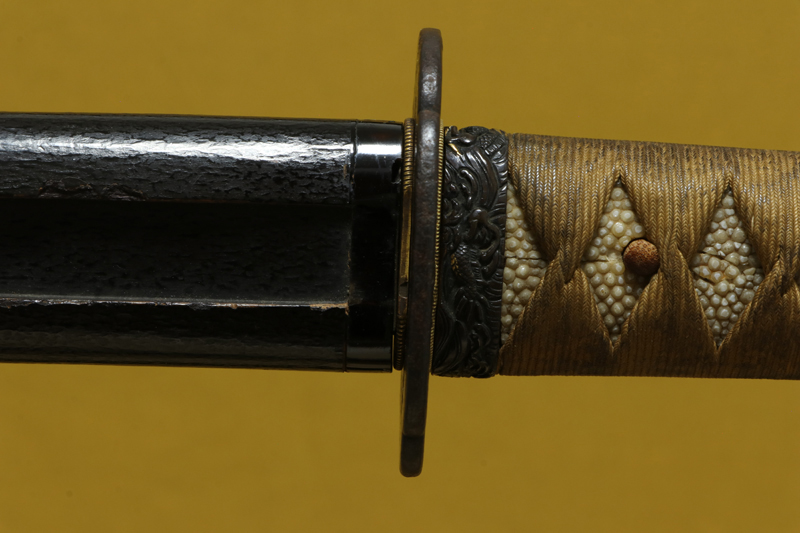
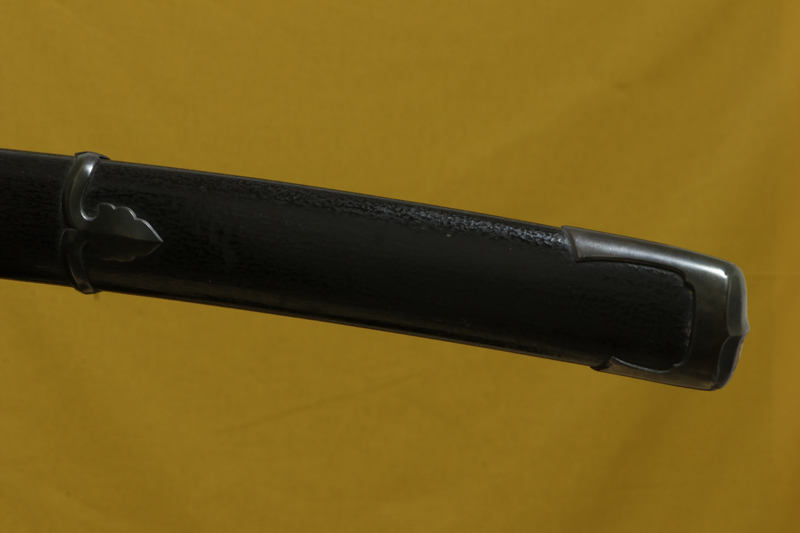
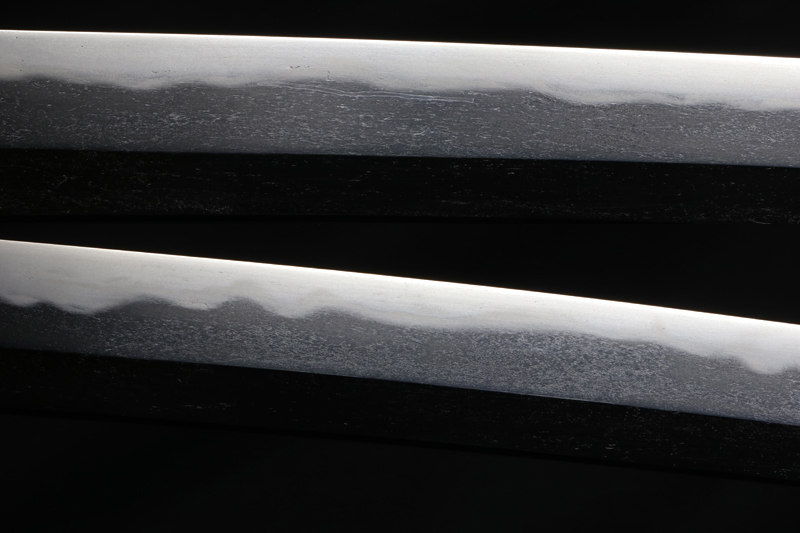
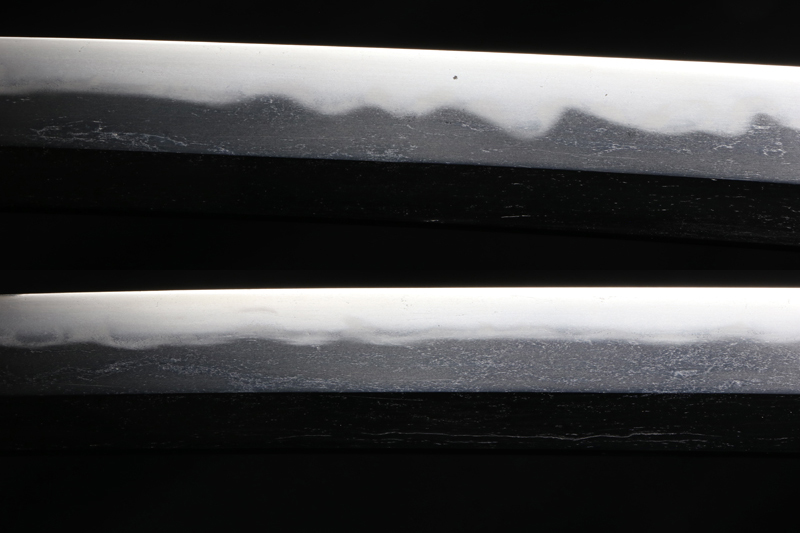
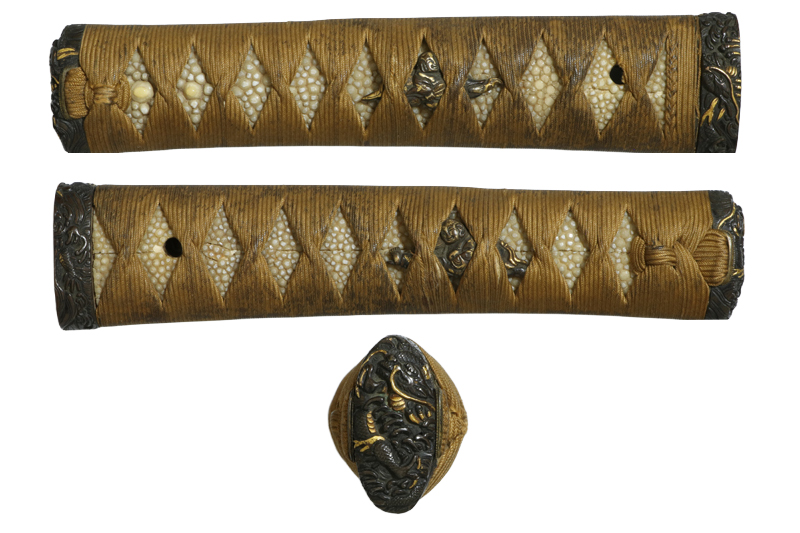
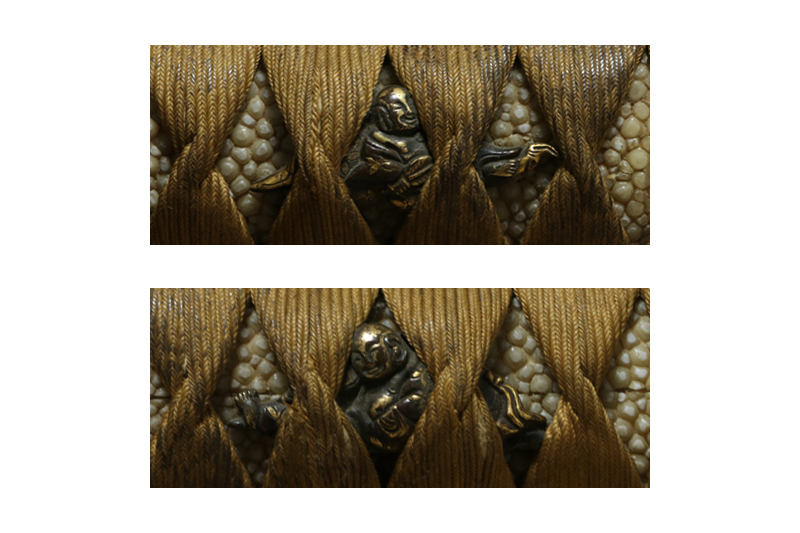
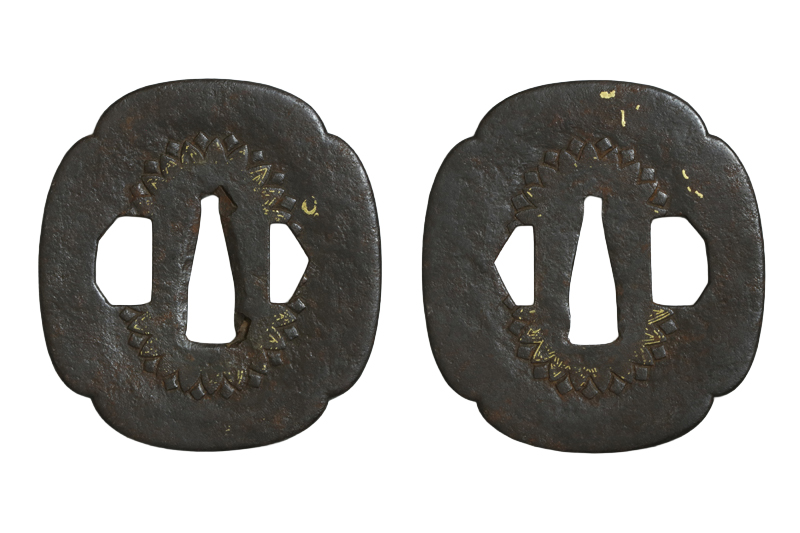
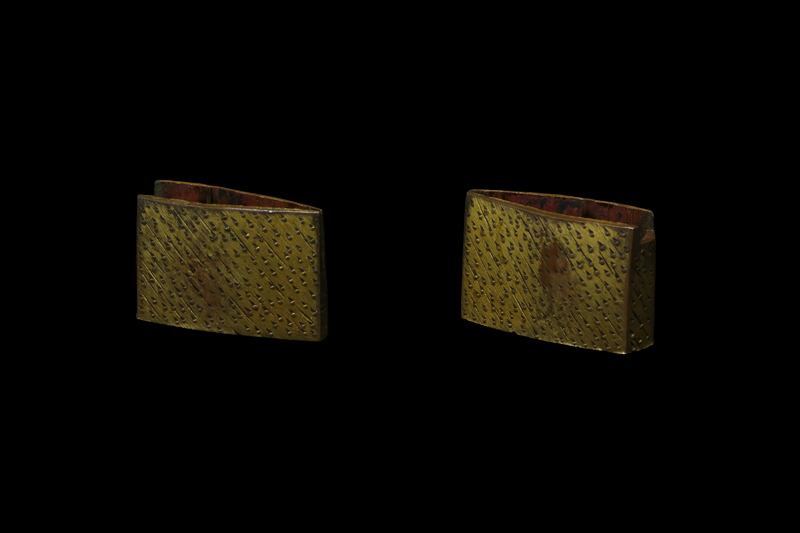
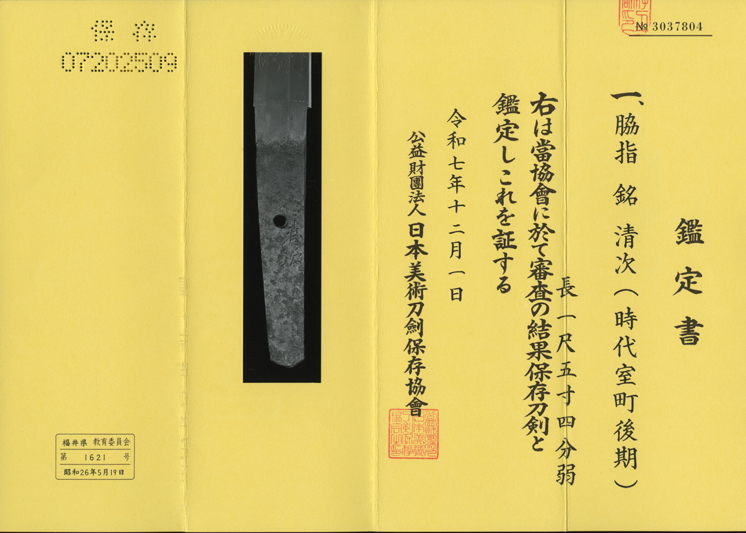
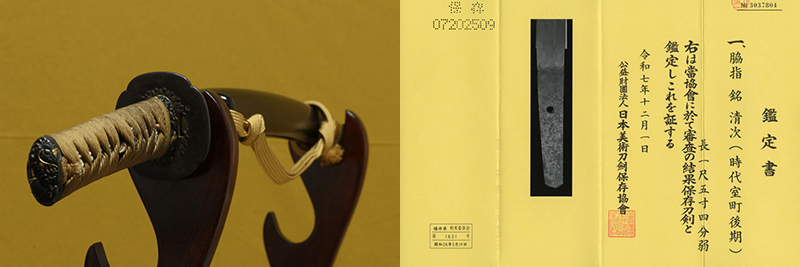
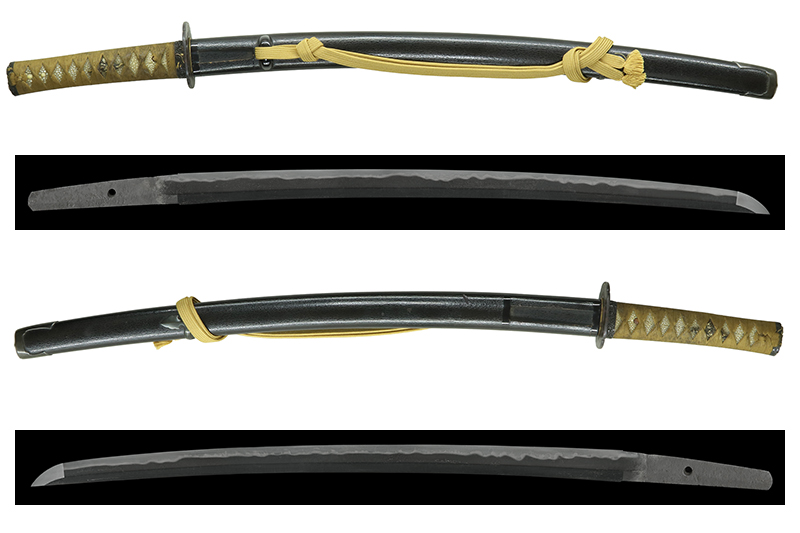
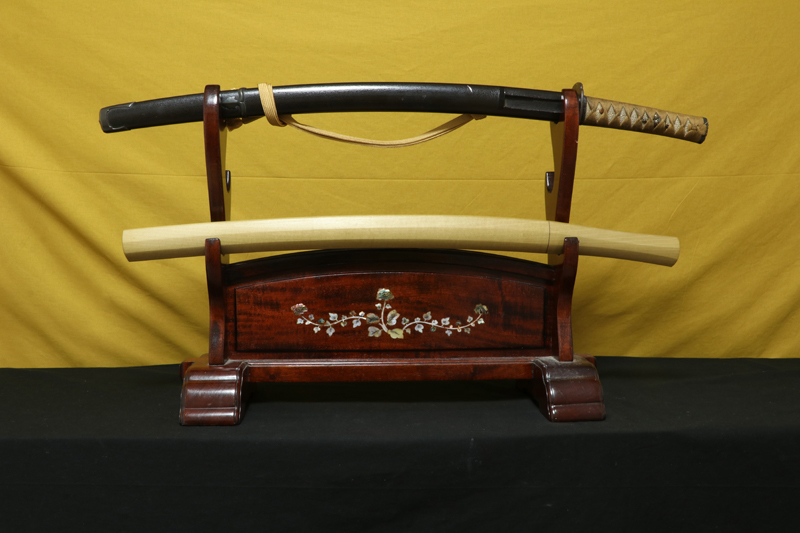
Hozon Token Koto Kiyotsugu with Koshirae and Shirosaya 室町時代後期・永正頃の刀工、清次の在銘脇差です。 流れ柾がかった板目肌に、金筋や二重刃が働く互の目乱れを焼いた優品。 龍図金具を備えた上質な江戸拵付きで、刀身・拵ともに状態良好。 保存刀剣鑑定書付きの希少な在銘古刀で、コレクションにおすすめの逸品です。 This is a signed wakizashi by Kiyotsugu, a swordsmith active around the Eisho era during the late Muromachi period. A fine blade featuring flowing itame-hada with masame patterns and a gunome-midare hamon with kinsuji and nijuba. Accompanied by high-quality Edo-period koshirae with dragon-themed fittings. Both the blade and koshirae are in good condition. A rare signed Koto wakizashi with NBTHK Hozon Token certification, highly recommended for collectors. 「刀姿 sword figure」 鎬造り庵棟、身幅重尋常、鳥居反り中鋒。茎は生で筋違い鑢がかかり、茎尻は栗尻。 Shinogi-zukuri with an iori-mune, standard mihaba and kasane, torii-zori, and a chu-kissaki. The nakago is ubu with sujikai yasurime and a kurijiri tip. 「地鉄 jigane」 地鉄は板目肌が流れ柾かかり地沸付く。 The jigane is itame-hada with flowing masame patterns and ji-nie. 「刃紋 hamon」 刃紋は互の目乱れ、刃縁小沸付き砂流しかかり、刃中は葉が入り金筋が働き二重刃になる。釯子は乱れ込み掃きかけ尖り返る。 The hamon is gunome-midare with ko-nie along the habuchi and sunagashi. The ha features yo, kinsuji, and nijuba. The boshi is midare-komi with hakikake, ending in a pointed tip with kaeri. 「特徴 detailed」 清次は室町時代後期、永正頃に活躍した刀工で、「関住清次」とも銘を切ります。 本作は、流れ柾がかった板目肌に互の目乱れを焼き、刃中には金筋や二重刃が働く、見どころ豊かな脇差です。古研ぎながら地刃はよく見え、鑑賞に十分な状態を保っています。 拵は江戸時代のもので、縁頭には立体感豊かな龍の彫刻が施され、鞘には赤銅製の柏葉と鐺を備えた上質な仕立てです。保存状態も概ね良好です。 近年、保存刀剣鑑定書を備えた在銘の脇差は少なくなっており、特に古刀となれば一層希少です。 保存刀剣鑑定書付きの貴重な在銘古刀で、鑑賞・コレクションにおすすめの逸品です。 Kiyotsugu was a swordsmith active around the Eisho era (1504–1521) during the late Muromachi period. He also signed his works “Seki-ju Kiyotsugu.” This wakizashi features an itame-hada with flowing masame patterns and a gunome-midare hamon, displaying remarkable activities such as kinsuji and nijuba. Although the blade retains an old polish, the jigane and hamon remain clearly visible and in good condition for appreciation. The Edo-period koshirae features fuchi-kashira decorated with deeply carved, three-dimensional dragon motifs. The saya is fitted with high-quality shakudo kashiwaba and kojiri fittings. The overall condition is also quite good. Signed wakizashi accompanied by NBTHK Hozon Token certification are becoming increasingly scarce, especially those dating from the Koto period. A rare and valuable signed Koto wakizashi with NBTHK Hozon Token certification, highly recommended for appreciation and collection. 「拵 koshirae」 ハバキ(habaki):素銅地金鍍金の五月雨鑢。 鍔 (tsuba):鉄地槌目木瓜形柊の図。 縁頭 (fuchikashira):赤銅地龍の図。 目貫 (menuki) :布袋の図。 柄 (tsuuka):鮫は親粒が付き巻鮫、柄巻は正絹金茶色の諸捻り巻。 鞘 (saya):黒石目塗、小柄櫃・笄櫃付き。 「刀身の状態 condition of blade」 研:古研ぎですが、地刃は良く見えます。 傷:欠点に成るような傷は有りません。


美濃 · 1504-1521頃
刀剣大鑑 上位87%
現在1点販売中
室町時代
室町は刀剣業を産業に変えた。徒歩の集団戦とともに打刀が興り、長船と関は数打ち物と注文打ちを並行して産し、勘合貿易は日本刀を数万振の単位で海外へ運んだ。
銘が正しい、または無銘でも年代・国・系統を確実に指摘できる、保存に値する真正の作と鑑定されたものです。
日本美術刀剣保存協会(日刀保)は、1948年に設立され、文化庁の監督を受ける公益財団法人で、東京・刀剣博物館に本部を置きます。専門の審査員が出品作を直接審査し、美術的・歴史的価値に応じた鑑定書を発行します。日刀保の鑑定書は、日本刀および刀装具の真正性を示す最も広く認知された基準です。
日刀保公式サイトご購入頂いた商品の到着してから3日以内であれば返金もしくは交換対応をいたします。返品時の送料と返金する際の振込手数料はお客様のご負担とさせていただきます。
¥280,000