二十世紀は二度この工芸を殺しかけた。戦時の歪みと、占領下の禁令である。1948年の日刀保設立と1953年の作刀再開が刀を美術として再建し、人間国宝と無鑑査がその頂に立つ。
 NihontoWatchNihontoWatch
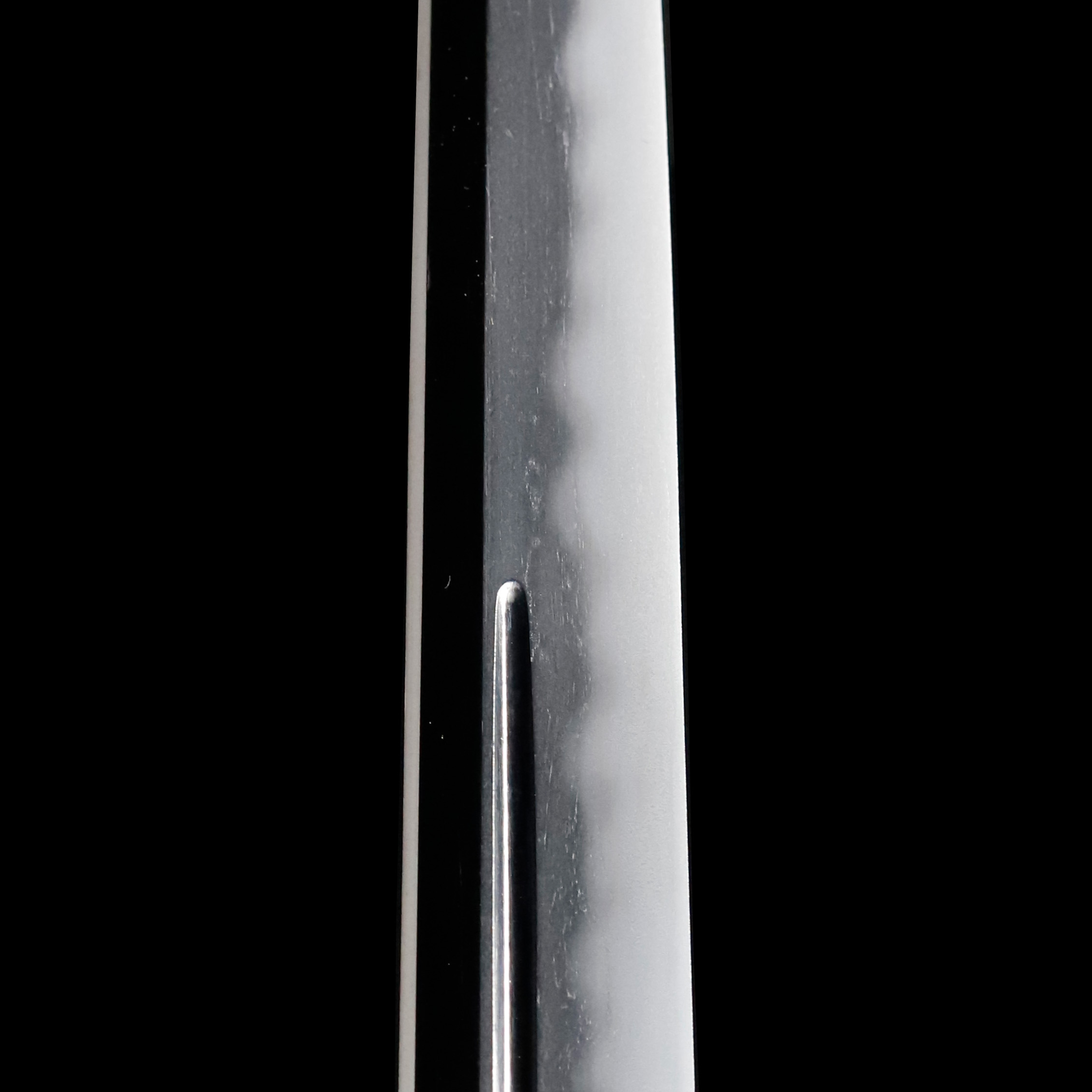
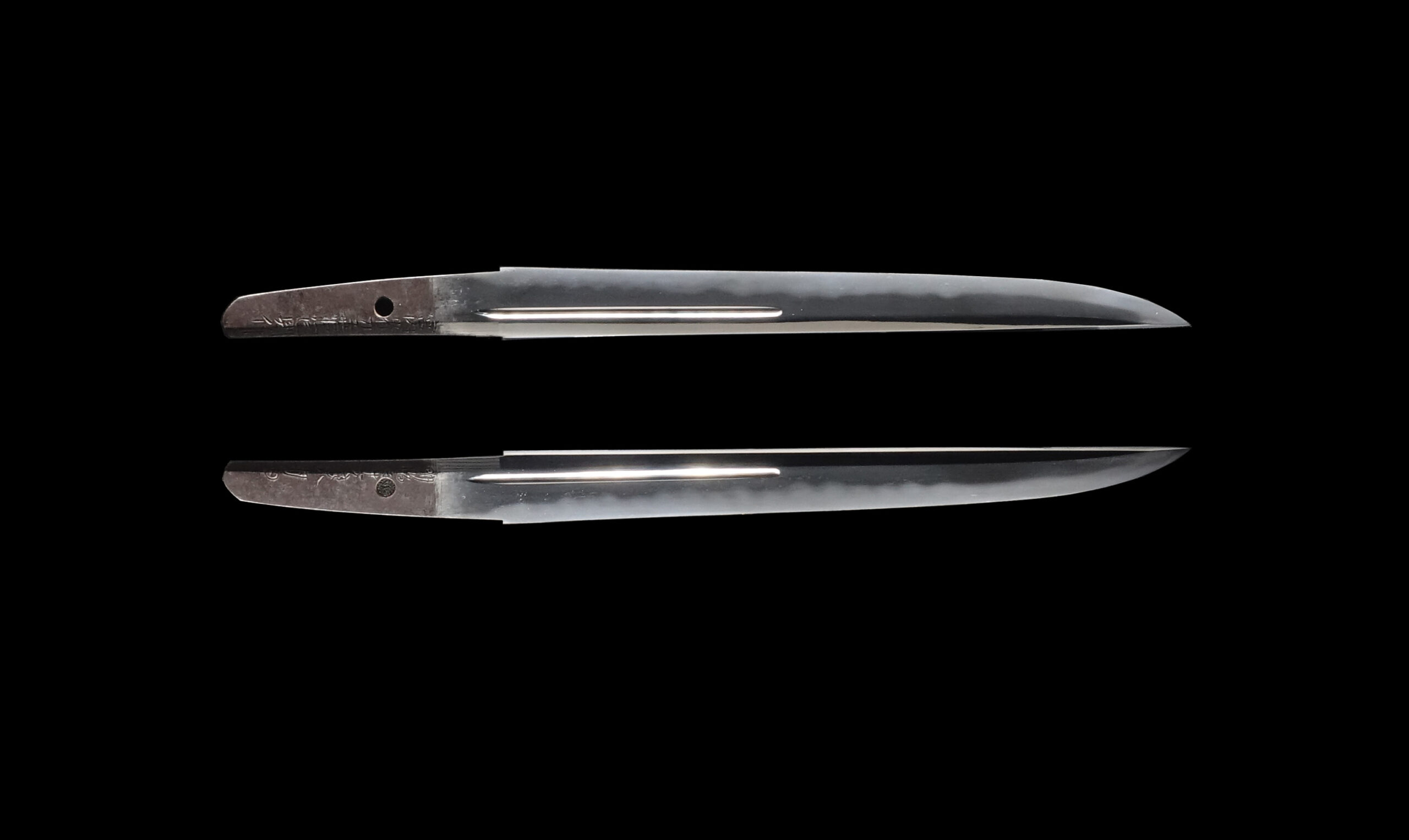
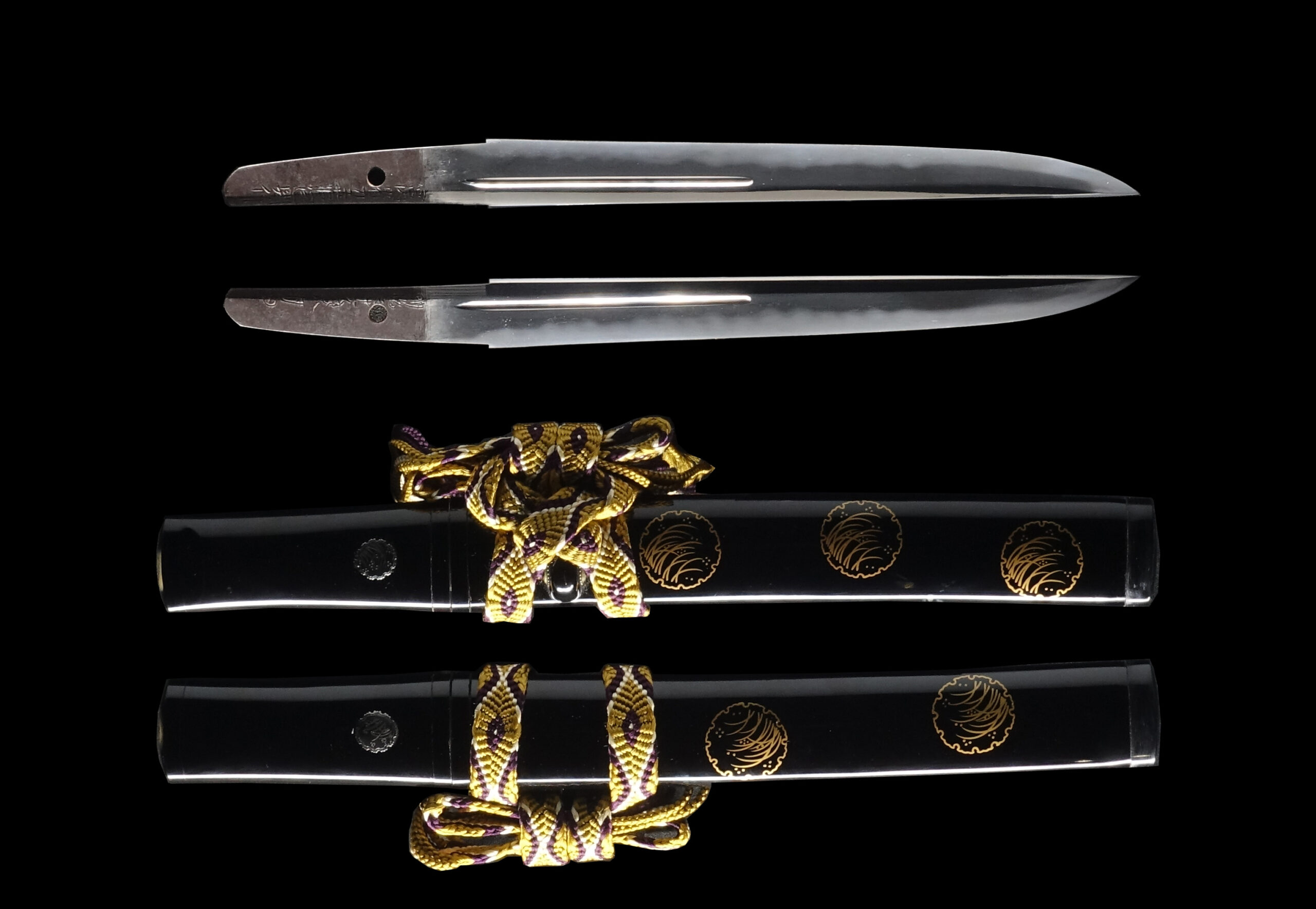
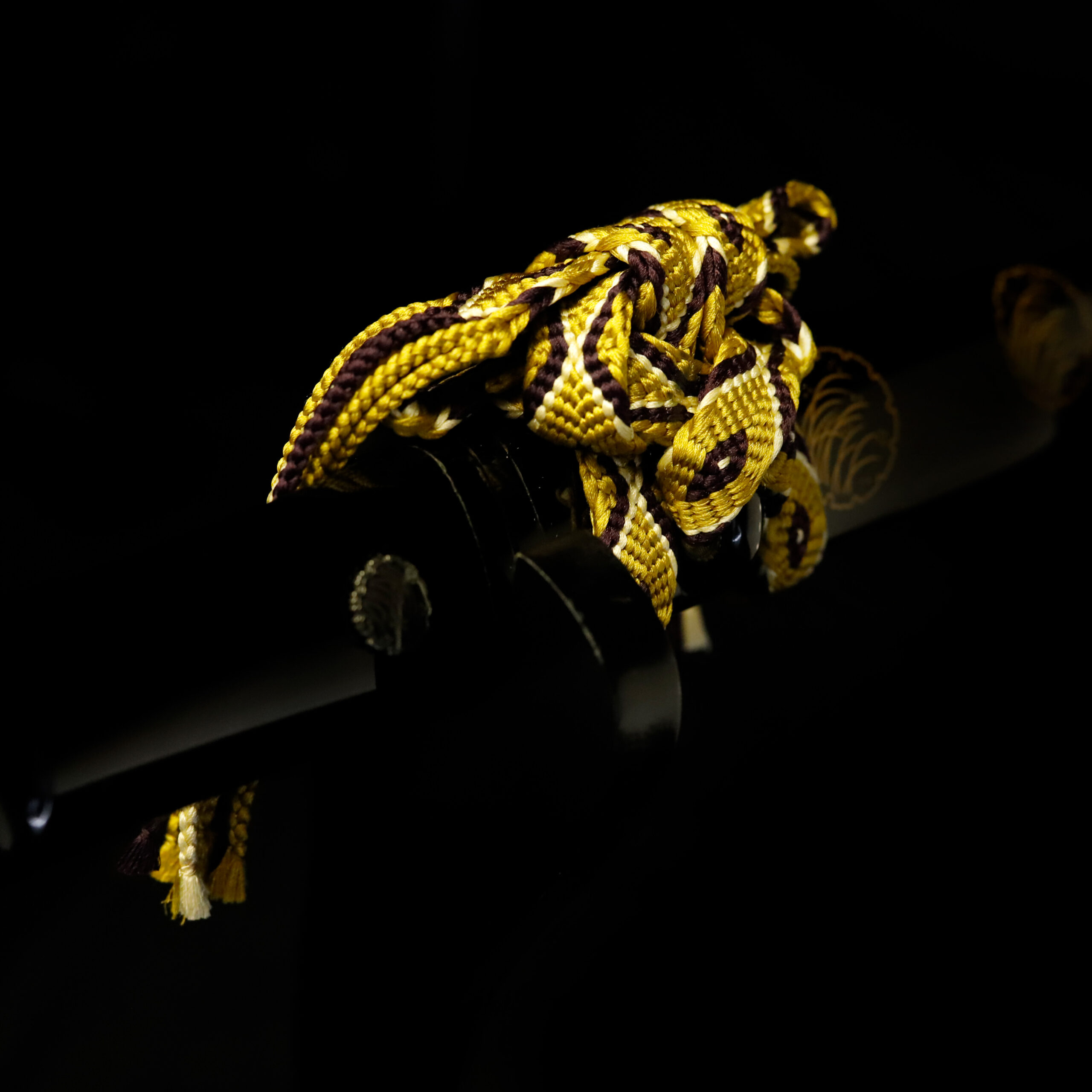
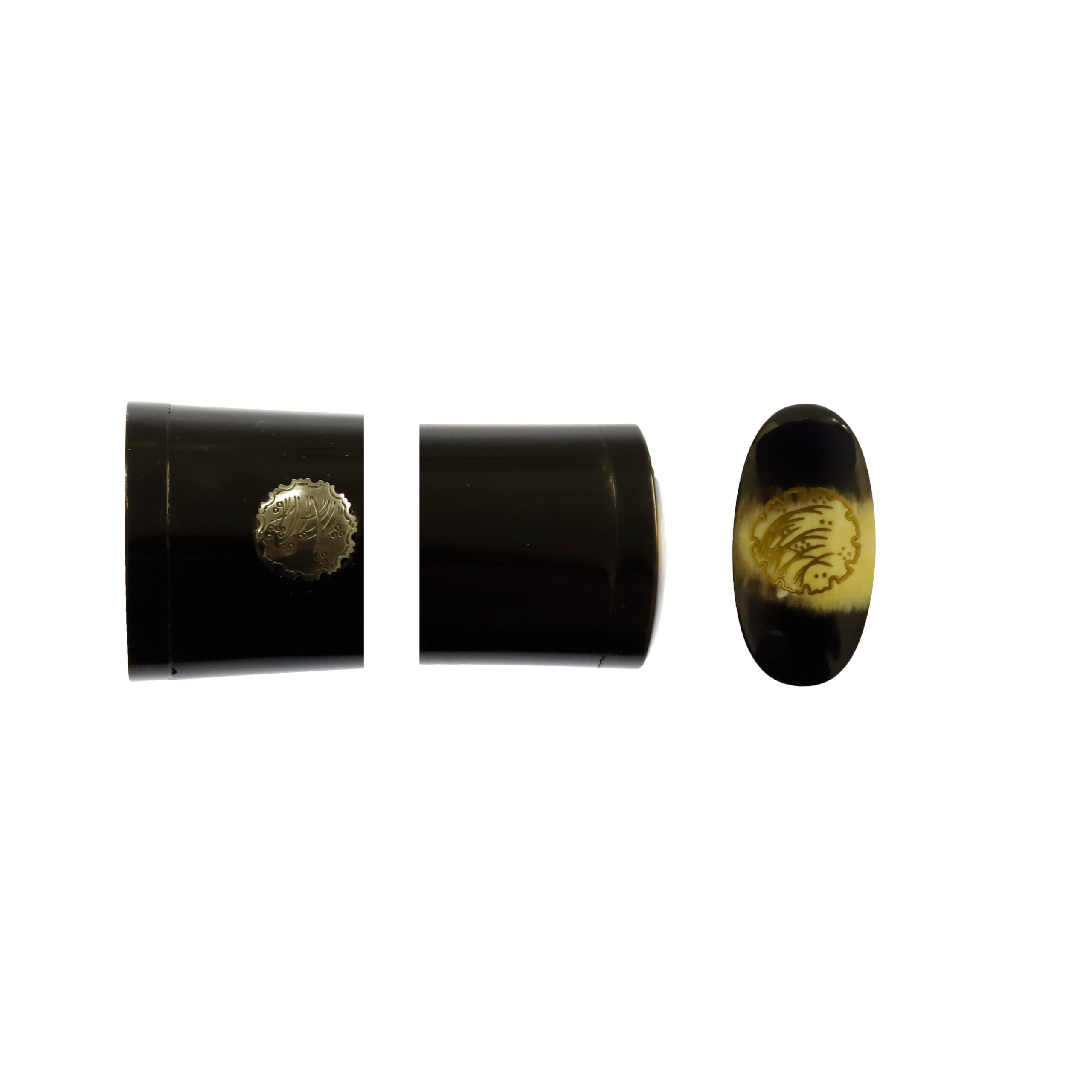
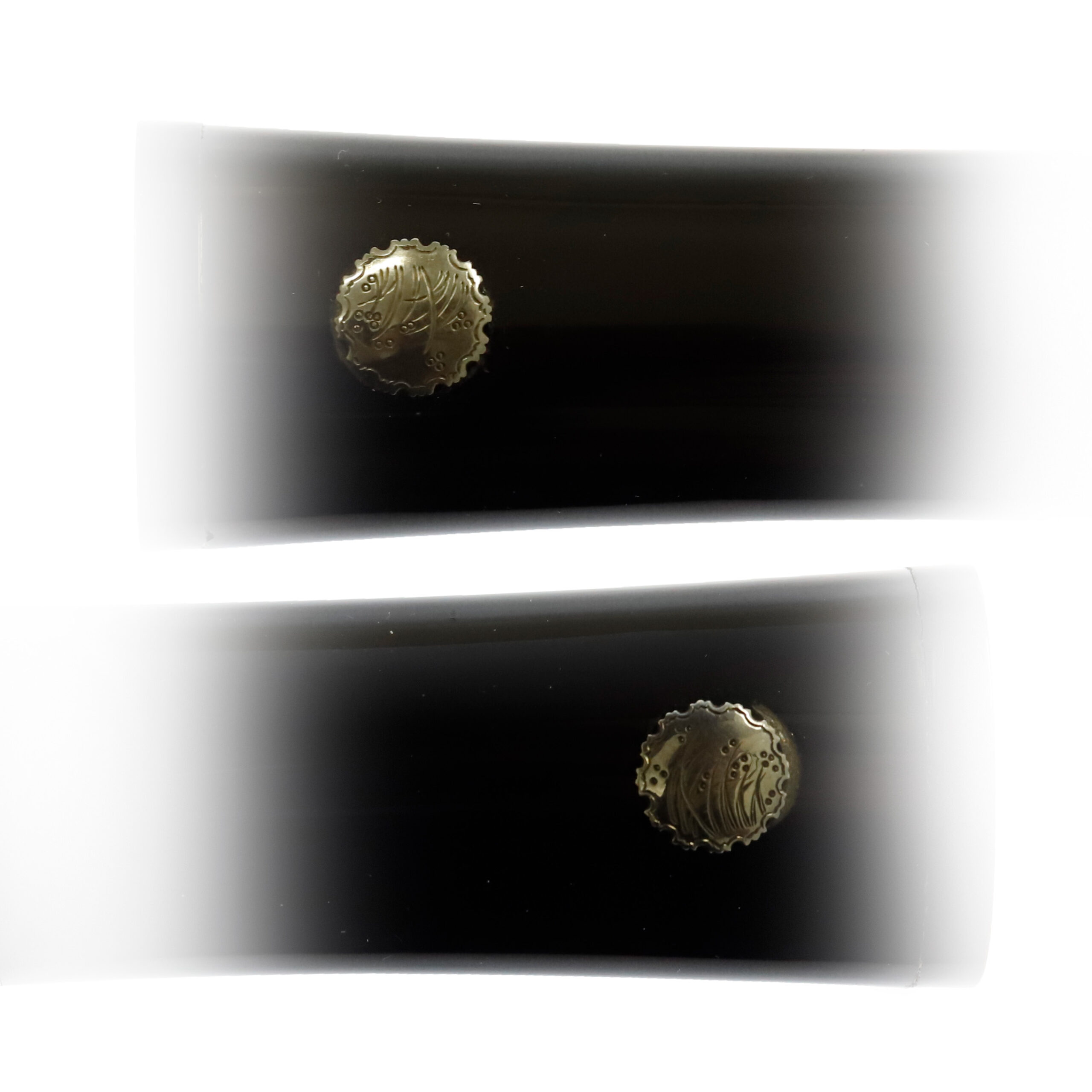
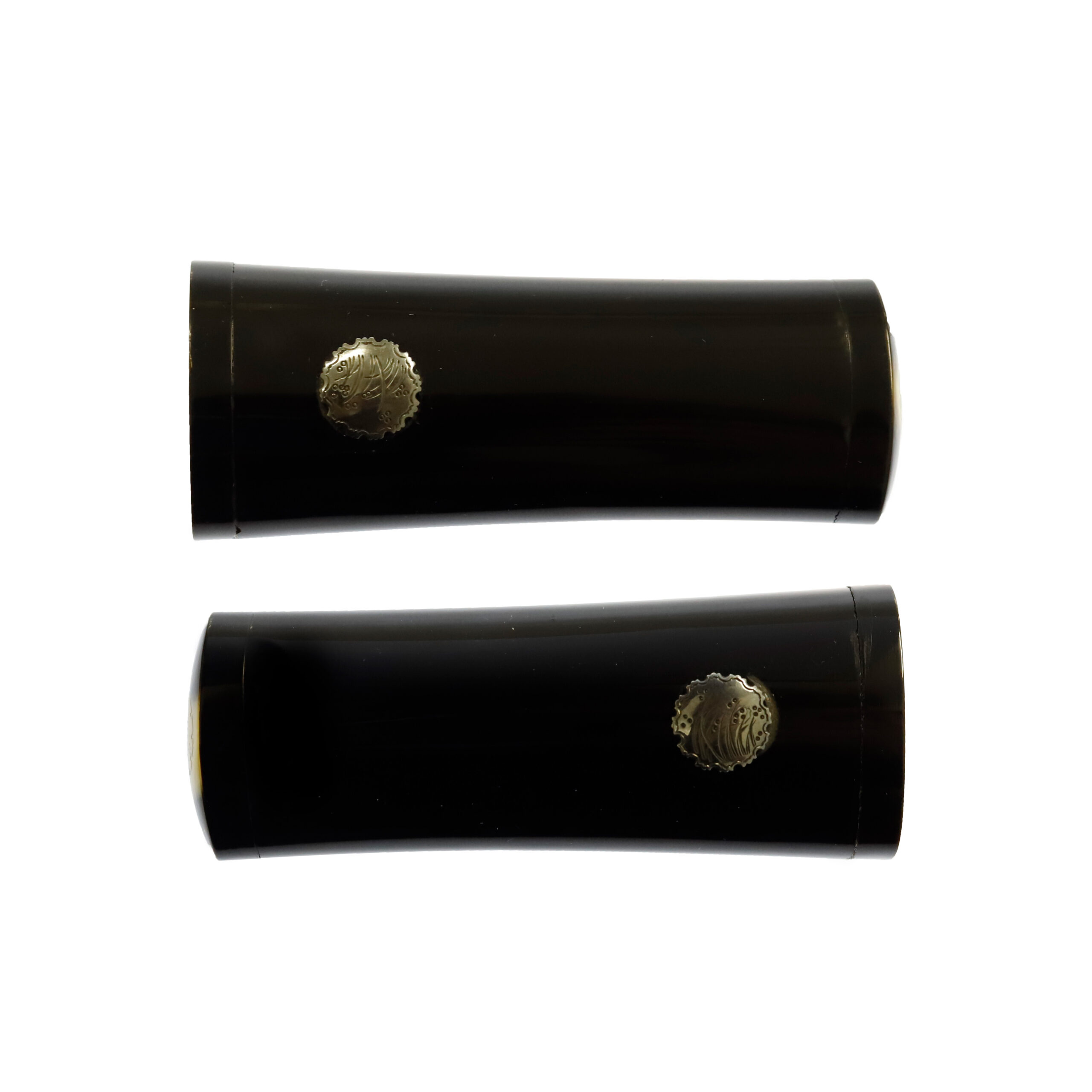
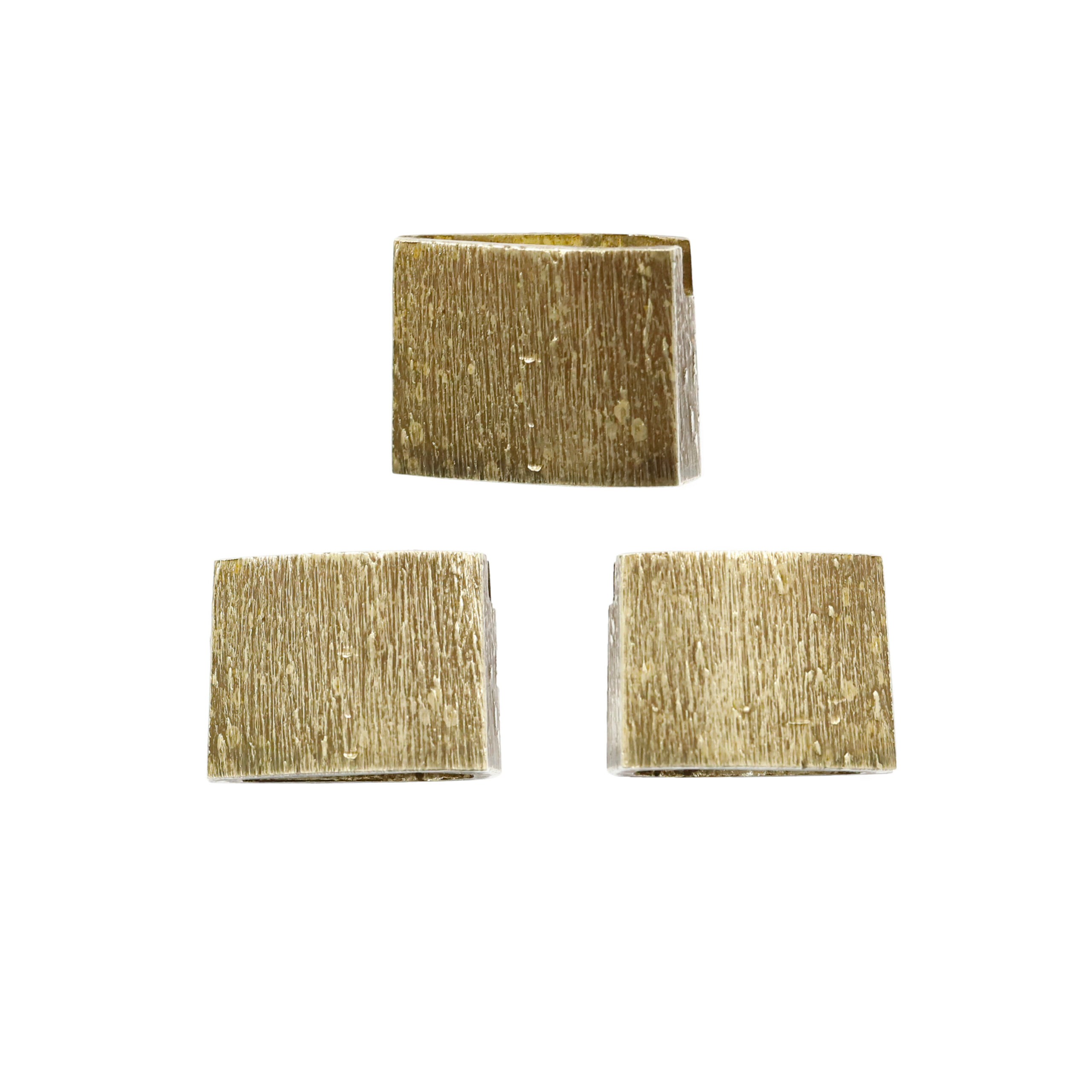
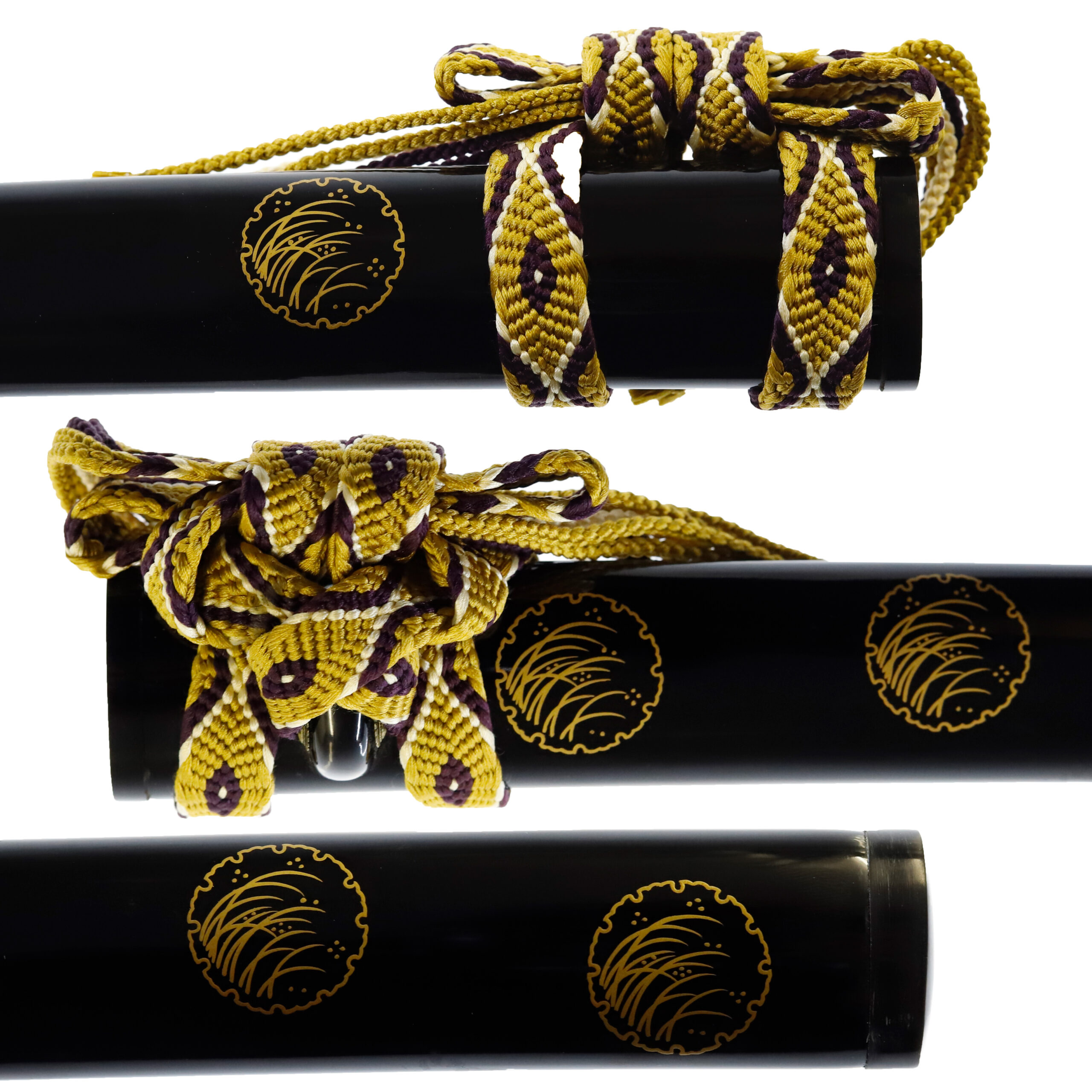
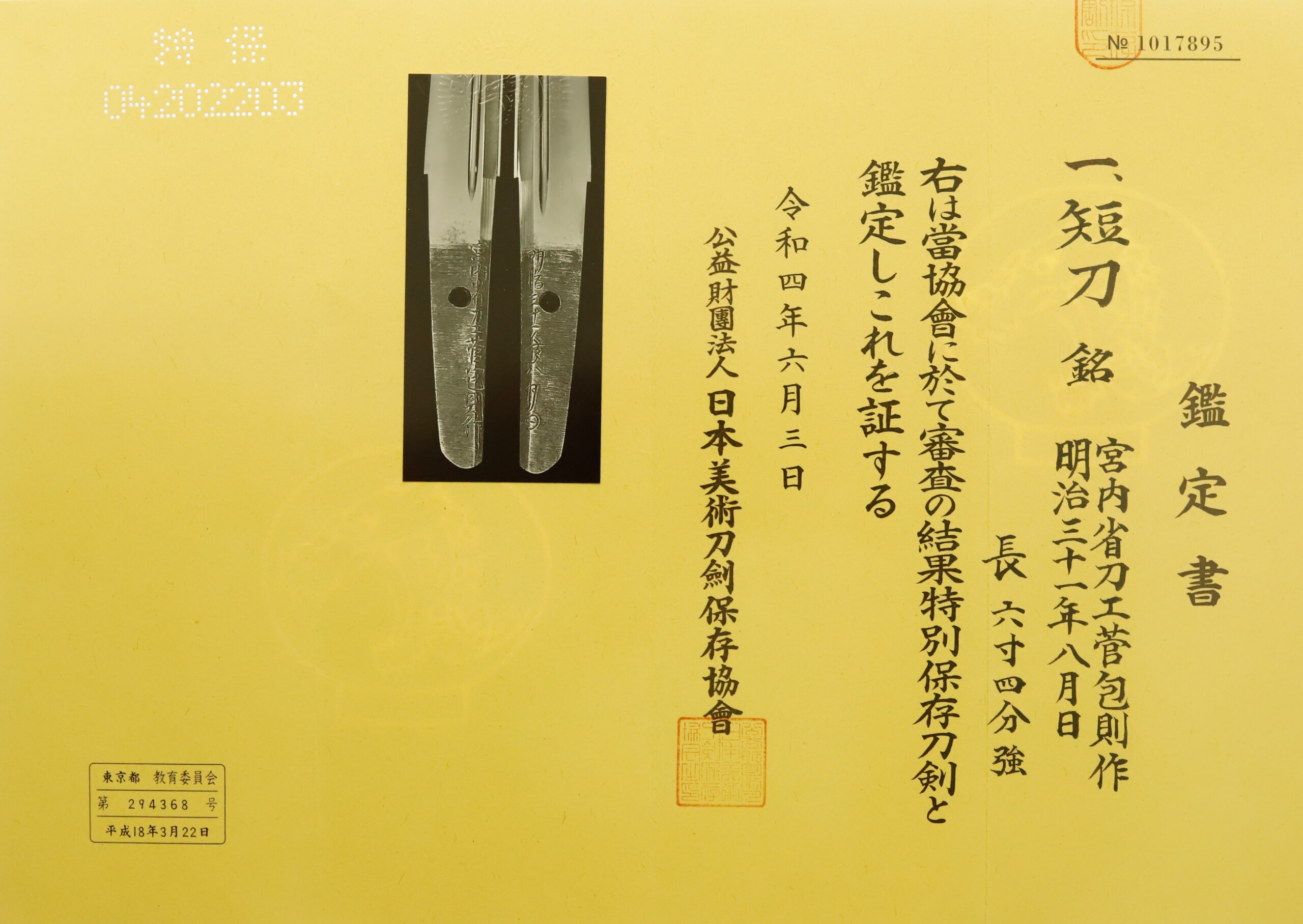
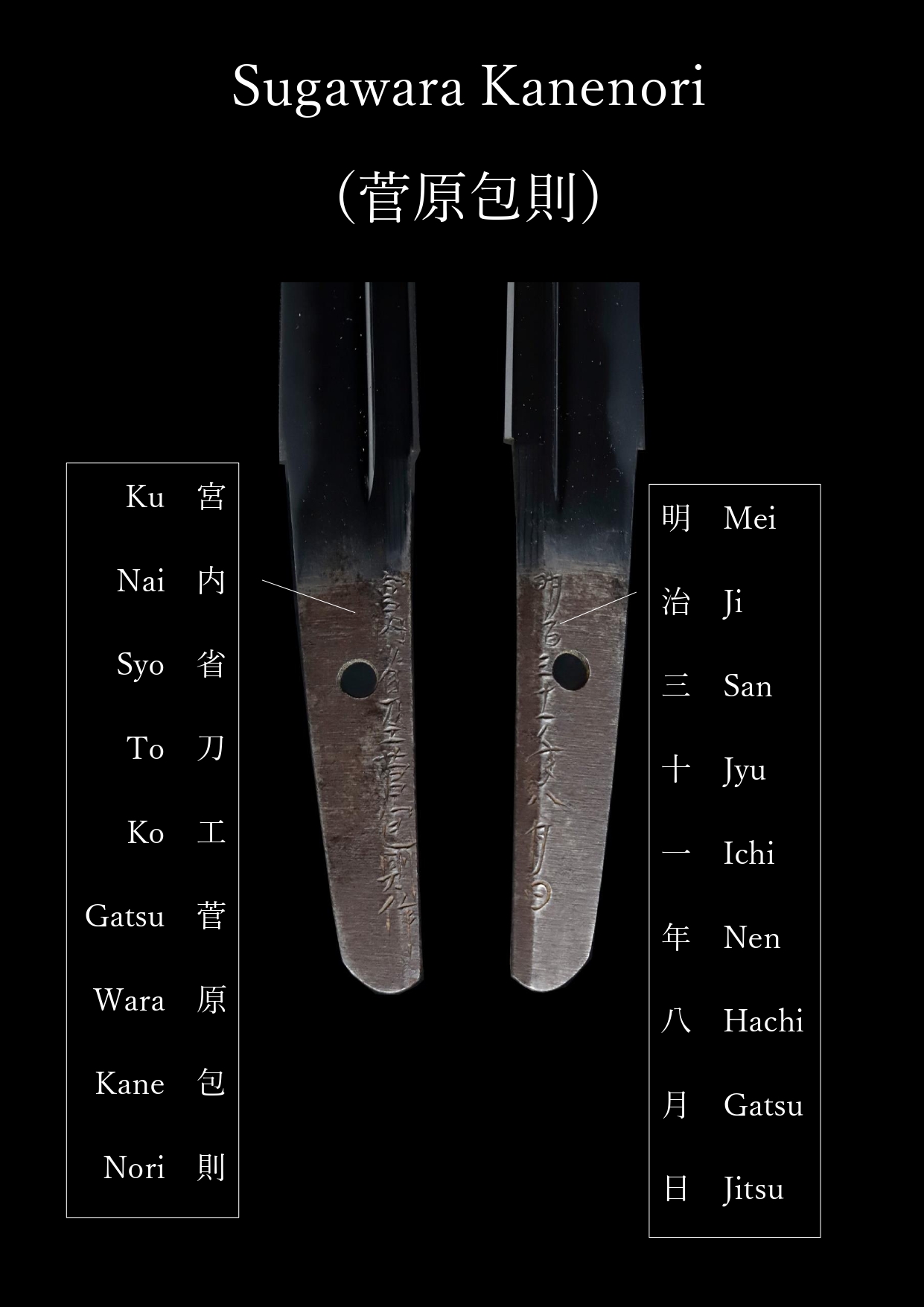
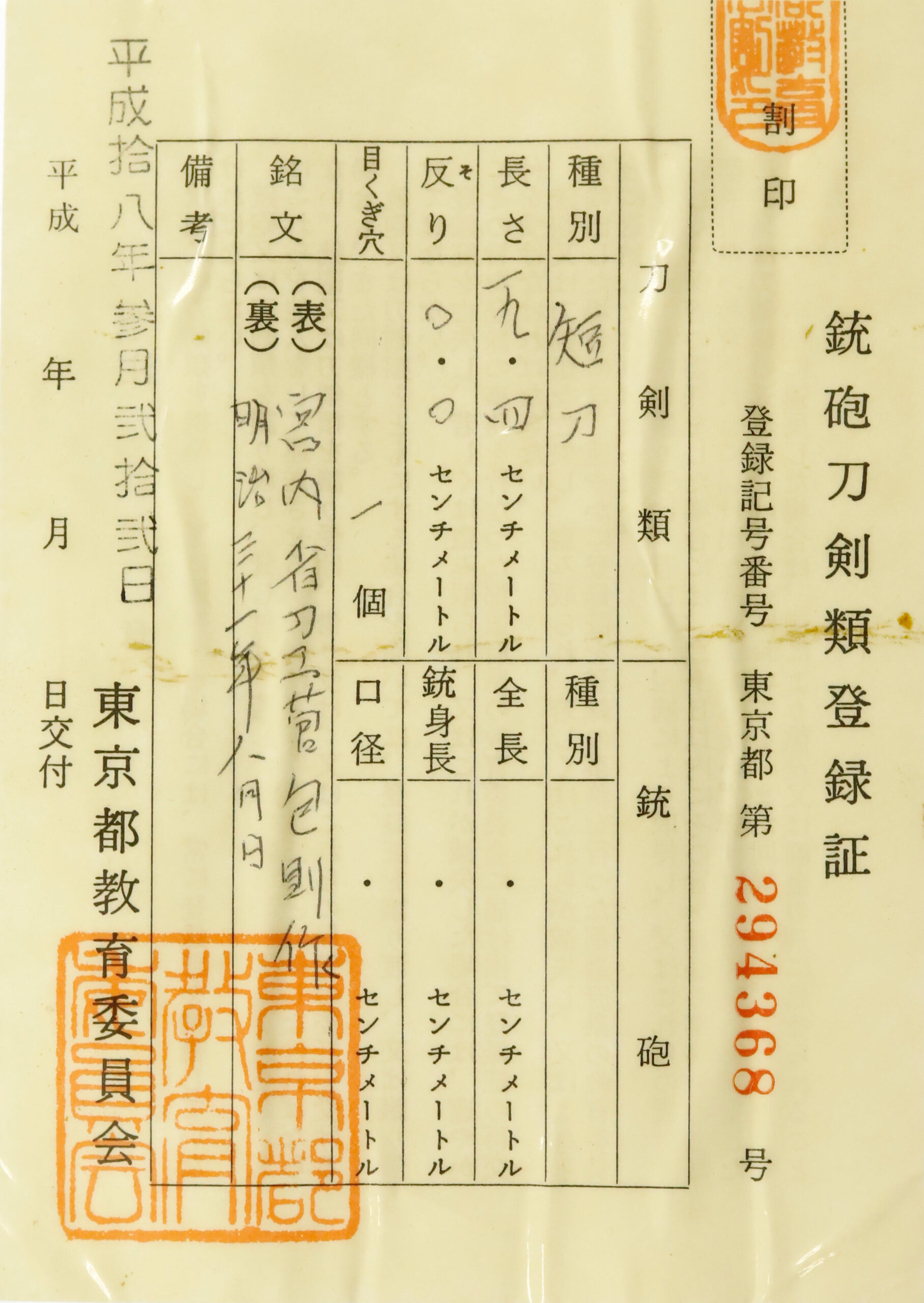
This blade was signed by Sugawara Kanenori (菅原包則) in August the 31st year of the Meiji era (1898). The signature also says Kunaisho Toko (宮内省刀工), which means that he served the Ministry of the Imperial Household as a swordsmith. He is also known as Miyamoto Kanenori among Japanese sword experts and collectors. Kanenori was born in Hoki province (Today’s Tottori prefecture) in the first year of the Tenpo era (1830: The end of the Edo period). He was the second son of a Sake brewery father. His birth name was Miyamoato Shigahiko. He decided to become a swordsmith because of Hoki Yasutsuna, a famous swordsmith living in the same province during the late Heian period (Late 12th century). From childhood, he often visited swordsmiths residing in his neighborhood and loved learning Japanese sword forging. When he was 22 years old (1851), he went to Osafune village in Bizen province (Today’s Okayama prefecture). And he became an apprentice for Yokoyama Sukekane (横山祐包), a renowned swordsmith in that area. He spent seven years mastering Bizen sword-forging tradition called BIZEN DEN from Sukekane. And after finishing his apprenticeship, he received 包(Kane) letter from his master. And he started to name himself Miyamoto Kanenori. In 1857, he returned to Hoki province and served Arao Naonari, who was in the high-rank position in the region. Kanenori exclusively forged blades for this lord for a few years. In 1863, Kanenori moved to Kyoto and established a sword-forging site there. He created many blades for Samurai who originally belonged to Choshu domain (Yamaguchi prefecture), living in Kyoto to overthrow the Tokugawa government back then. When Kanenori started his career, it was the end of the Edo period when the military government of Samurai (Tokugawa Shogunate)controlled Japan, and feudal society was the norm. There was plenty of demand for weapons from Samurais back then. However, in 1868, there was a civil war (Boshin war) between Tokugawa’s Shogunate government and the new Meiji imperial government. After this battle, the Tokugawa shogunate was ousted, and the imperial government gained control. The whole feudal system was dismantled, and the new government took the social status of Samurai. The demand for Japanese swords decreased dramatically from the beginning of the Meiji era. Many swordsmiths lost their jobs or changed their career. However, Kanenori kept forging swords until he died at the age of 97 (1926). Kanenori was eventually recognized by Arisugawanomiya Taruhiro Shinou (有栖川宮 熾仁親王), a royal family. And he received Noto no Kami, an honorable official title, in the third year of the Keio era (1867). After participating in the Boshin war, Kanenori forged a blade for the emperor Meiji to commemorate his enthronement. Kanenori also created blades for the emperor Taisho and Showa. He was also ordered to forge special ceremonial swords for Fushimi Inari shrine, Yasukuni shrine, and Ise shrine. These facts indicate that he was one of the most renowned swordsmiths in the post Samurai era. In the post-Samurai period, he played an essential role in the Japanese sword. In 1906(the 39th year of Meiji), he received Teishitsu Gigeiin(帝室技芸員: Nationally-designated Important intangible cultural property). The government recognized his contribution to preserving the tradition of Japanese sword forging. He forged swords in Hoki (Tottori prefecture), Kyoto, and Tokyo. Considering that the signature says he was a Kunaisho Toko, we believe this blade was made in Tokyo. This blade is appraised as a Tokubetsu Hozon Token(特別保存刀剣) issued by NBTHK(Nihon Bijutsu Touken Hozon Kyokai:日本美術刀剣保存協会). Koshirae The same crest is designed on all the sword mountings of this Tanto. For example, Fuchi Kashira, Menuki, and even the scabbard. We believe it is the family crest of its former owner. The family crest is one of the unique Japanese cultures that has continued from ancient times to today. It represents one’s lineage, rank, and social standing of a family. According to a theory, during the period that strong clans gained renown, people started using the family name. The land name was used as the family name to distinguish the family members who moved to other areas from the others. Therefore, a family crest has a role in showing the family name. After that, court nobles and Samurai families also started using family crests. They favorably used family crests for arms such as swords or armor. This mark is categorized in the Susuki (薄/芒, Japanese pampas grass) design and is called the Yukiwa-ni Susuki Mon(雪輪に芒文). Yukiwa (雪輪) means a snow ring in Japanese. It is considered that snow is the sign of a plentiful harvest. Especially if snow in the New Year, people thought that year would have a bumper crop. According to a theory, the snow crystal pattern itself was born in the Muromachi period (1336-1573), and people started incorporating it as a motif of family crests since the Edo period. About the Susuki design, this plant has been used as an offering to Gods. And some people have used it as an amulet to protect people from evil spirits. Also, in Japan, there is a group of plants that represent the autumn season that is called the Aki-no Nanakusa (秋の七草, the seven flowers of autumn). The Susuki is included in this group, and it shows how long this plant has been familiar to Japanese people. Authentication Paper They authenticated the blade on Jun. 3rd in the 4th year of Reiwa (2022). They appraised it as Tokubetsu Hozon Touken, the blade especially worth preserving for Japanese society.

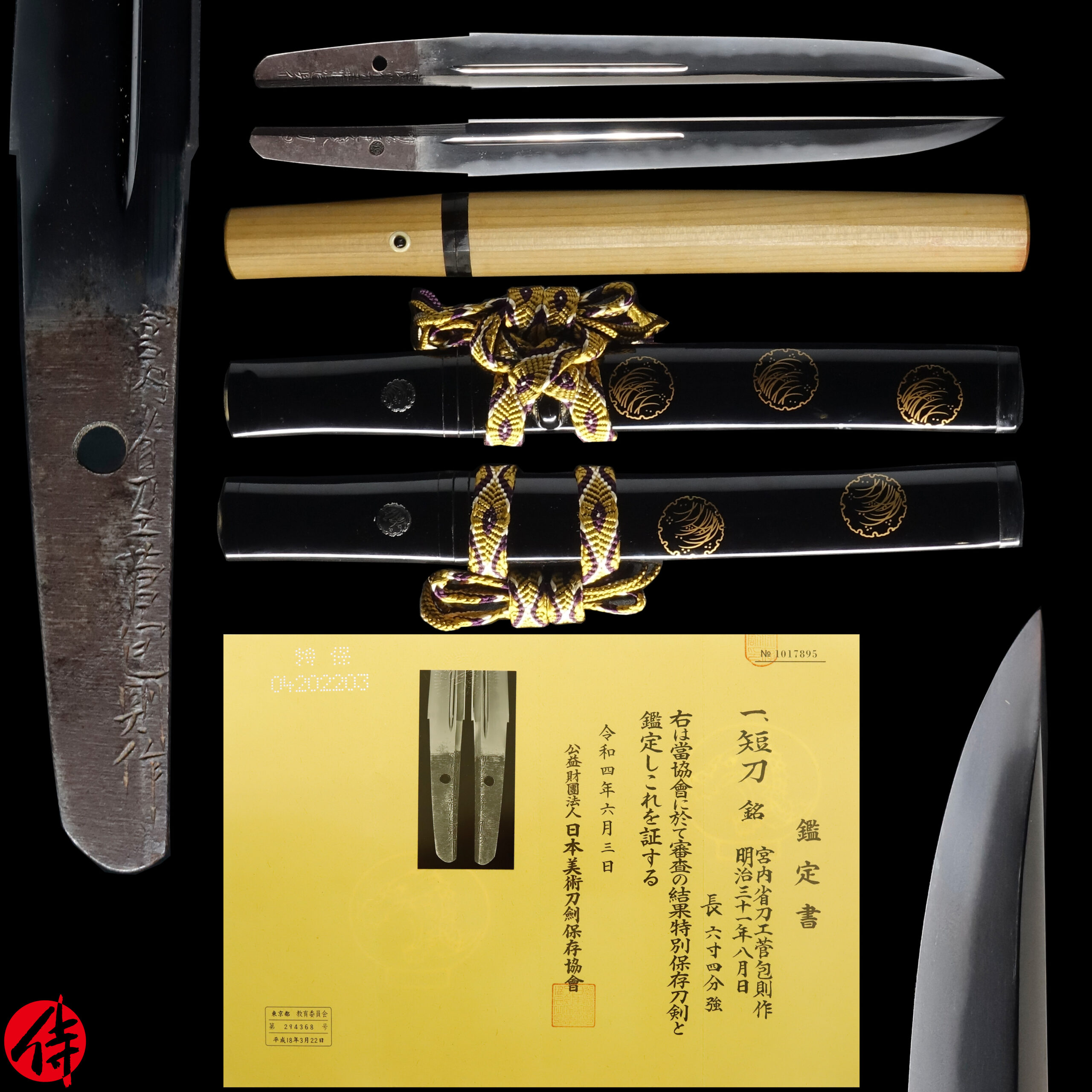
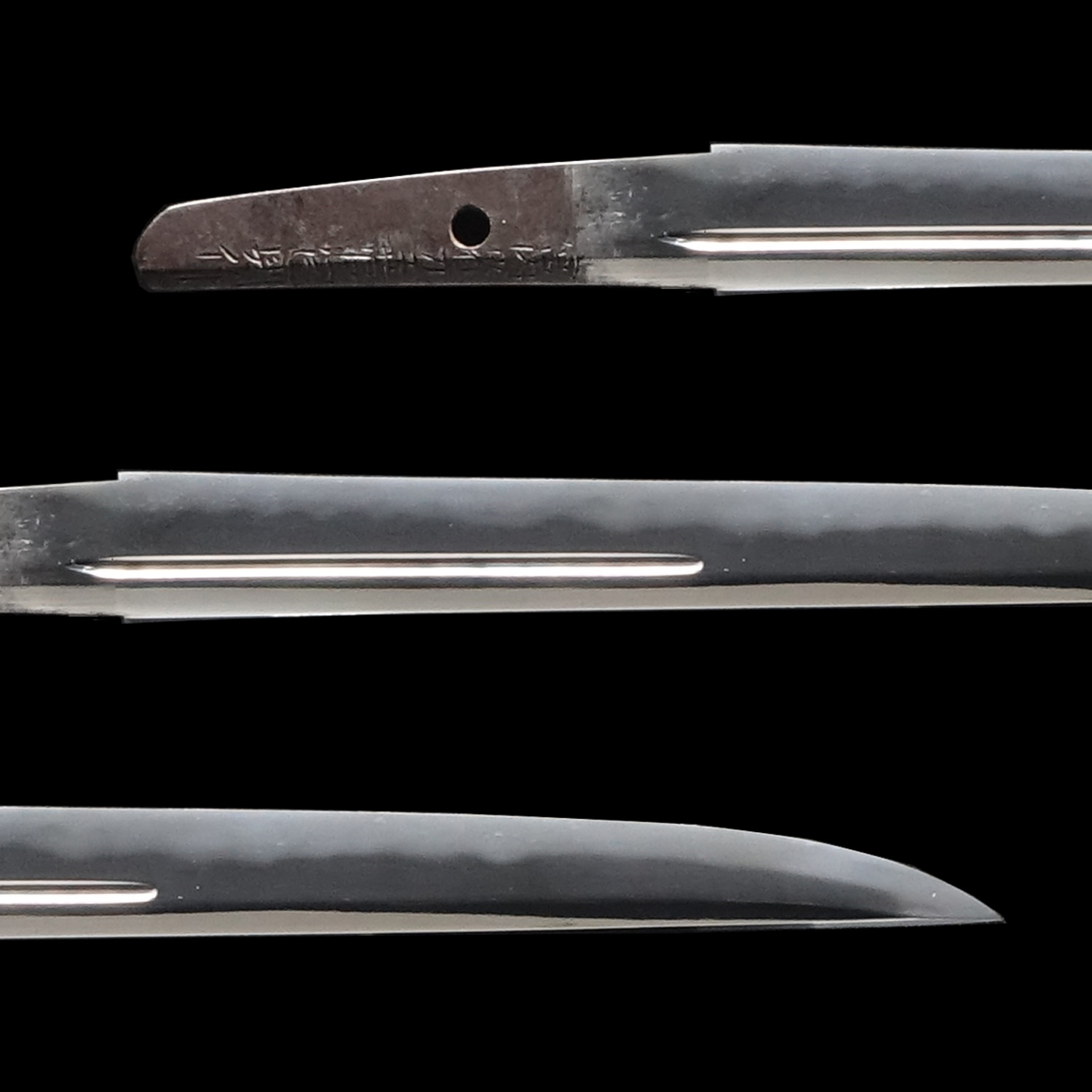
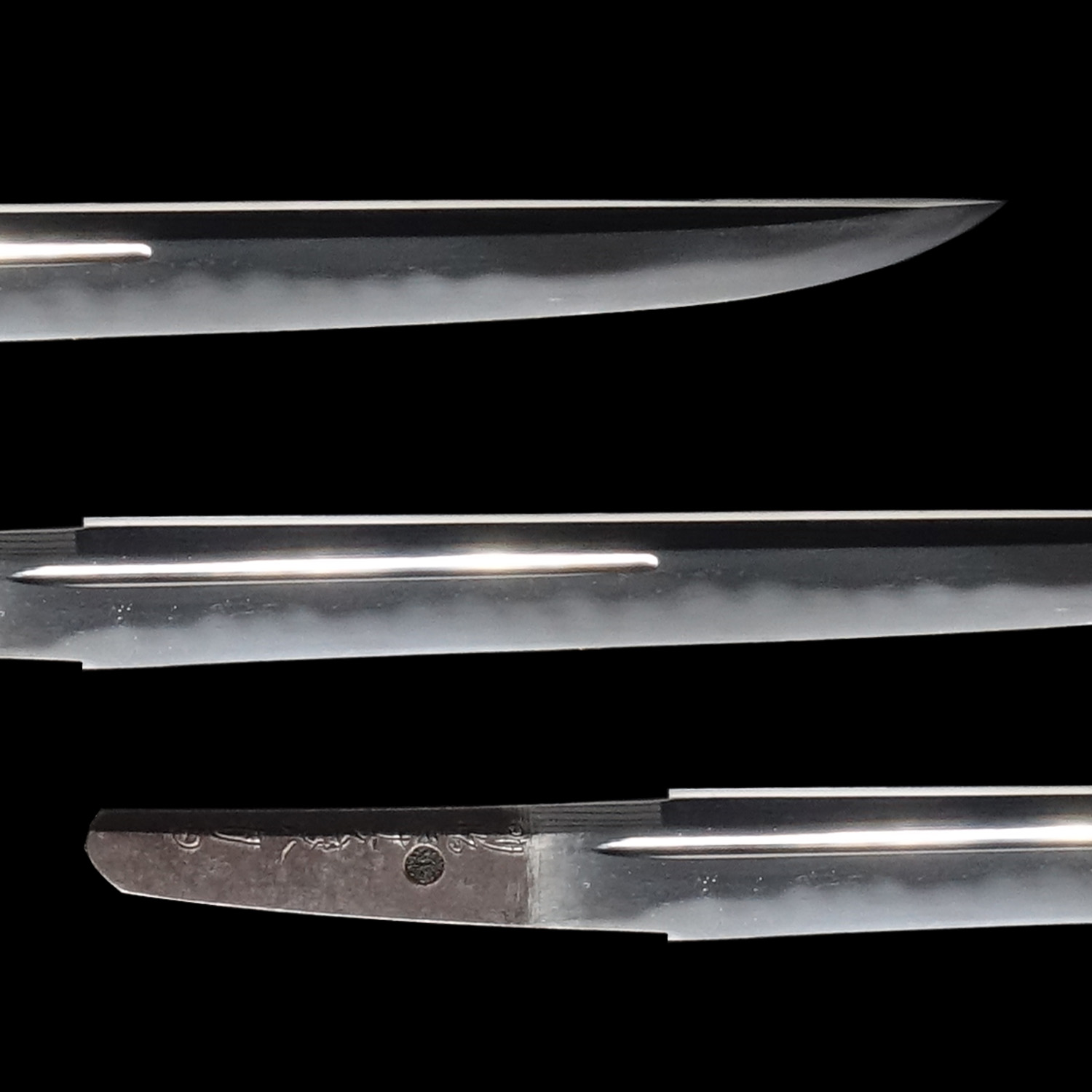

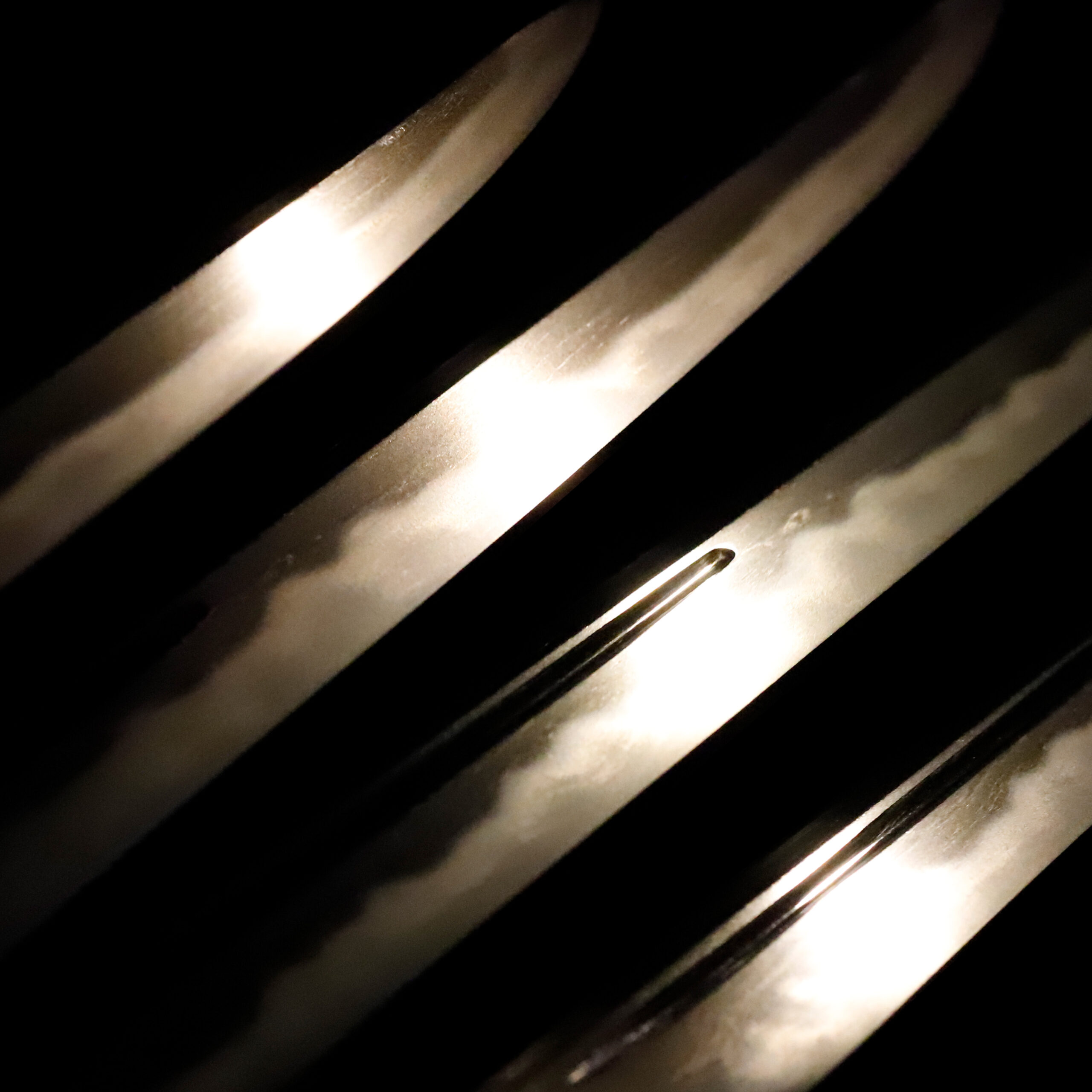
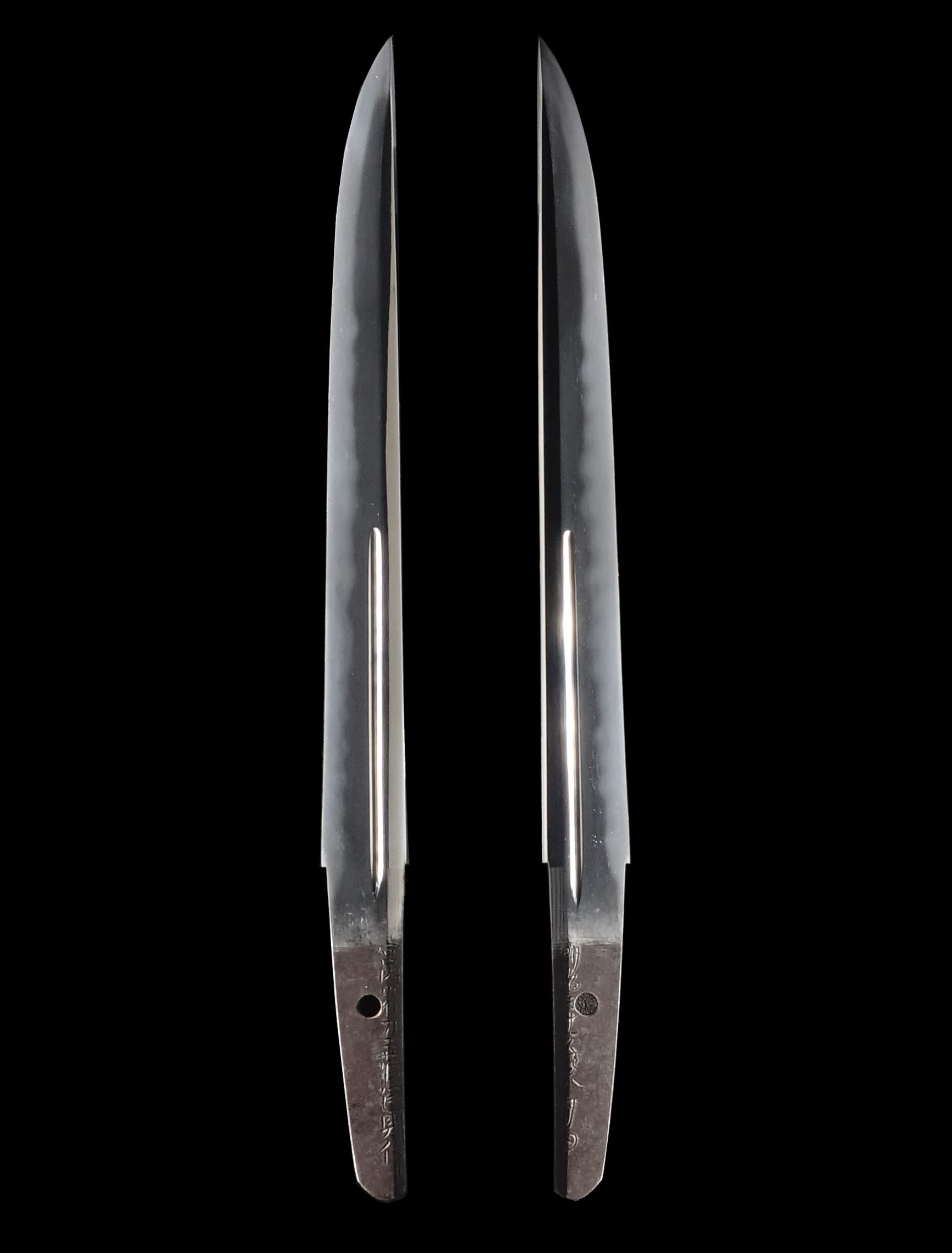
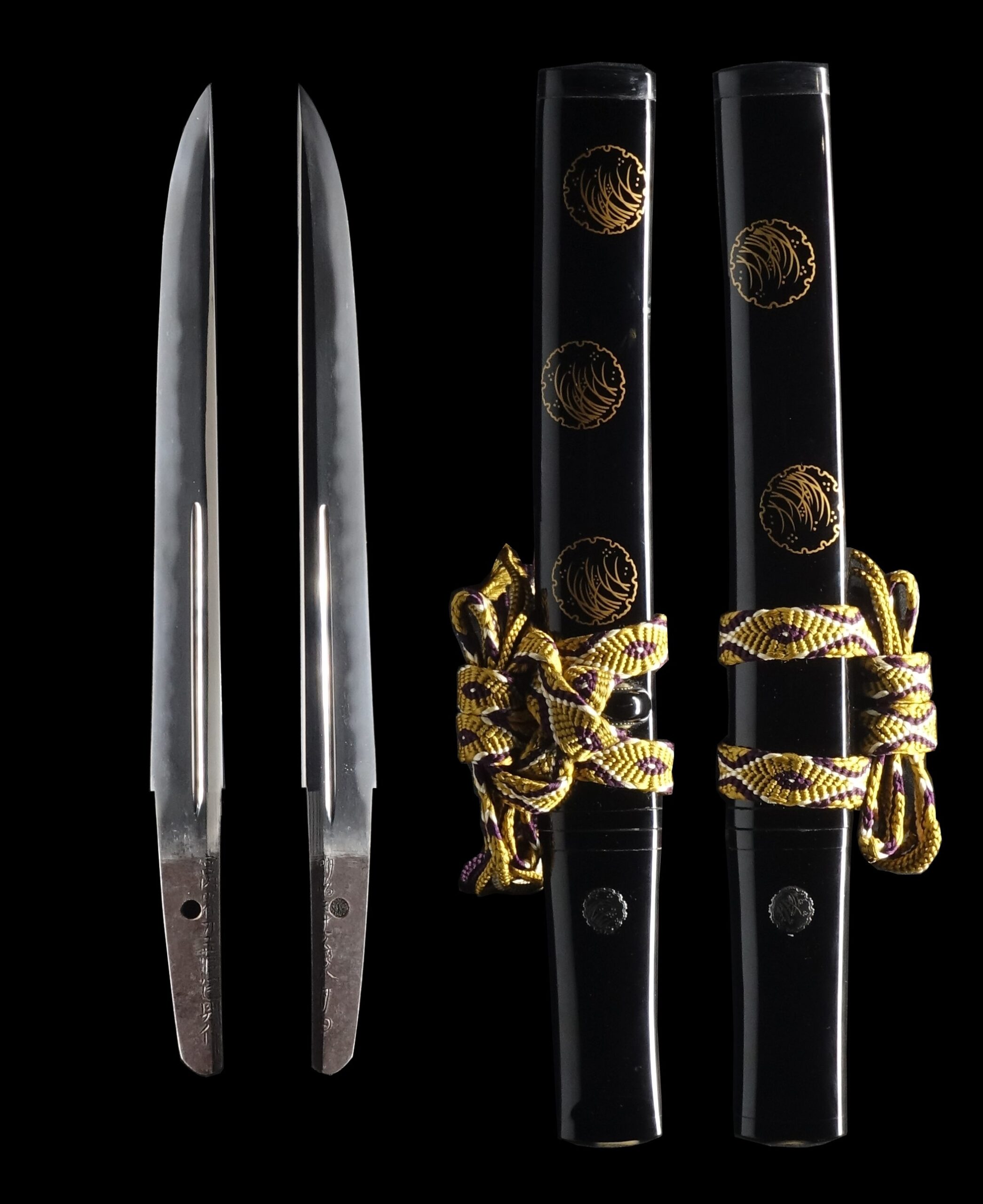
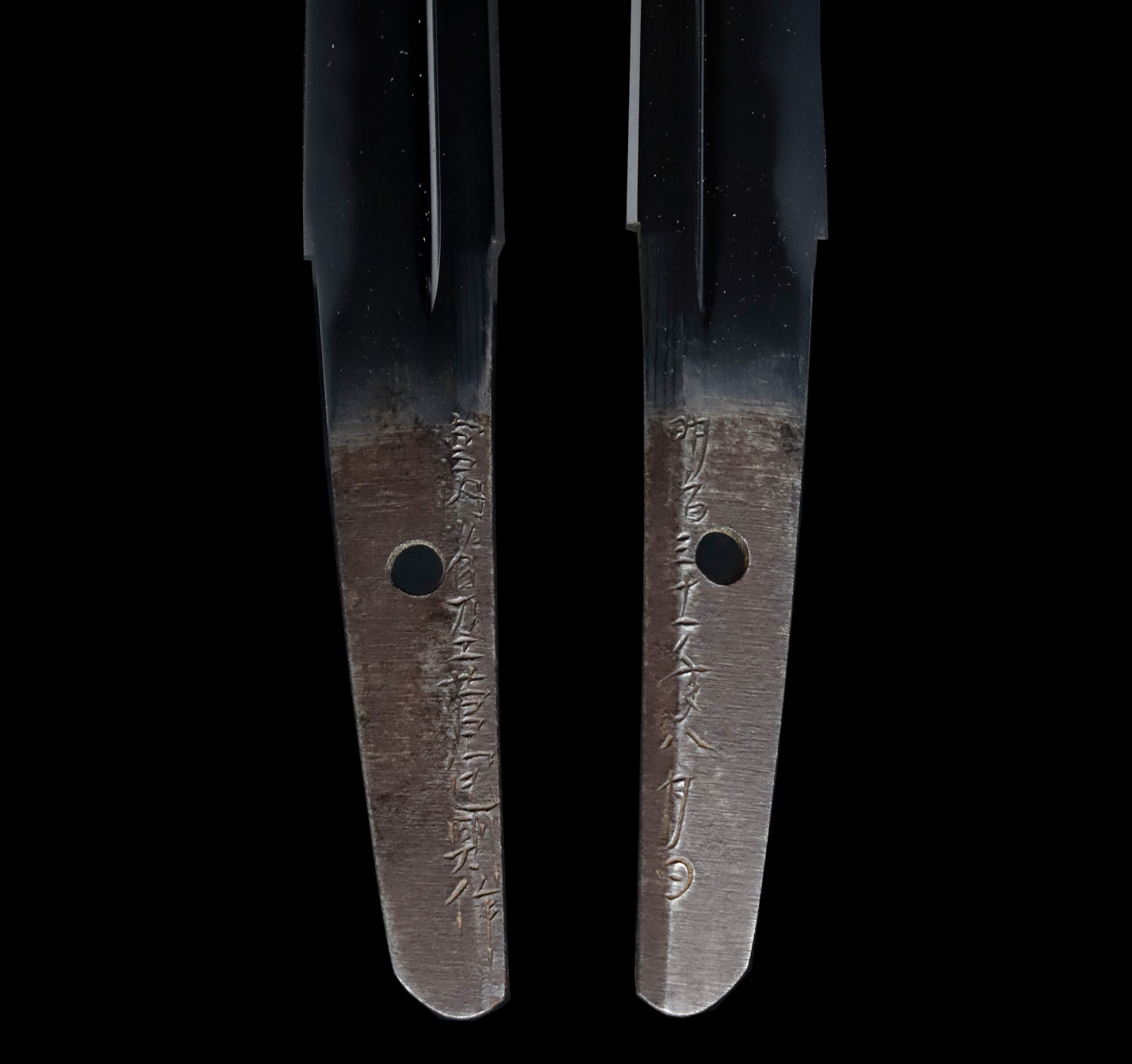
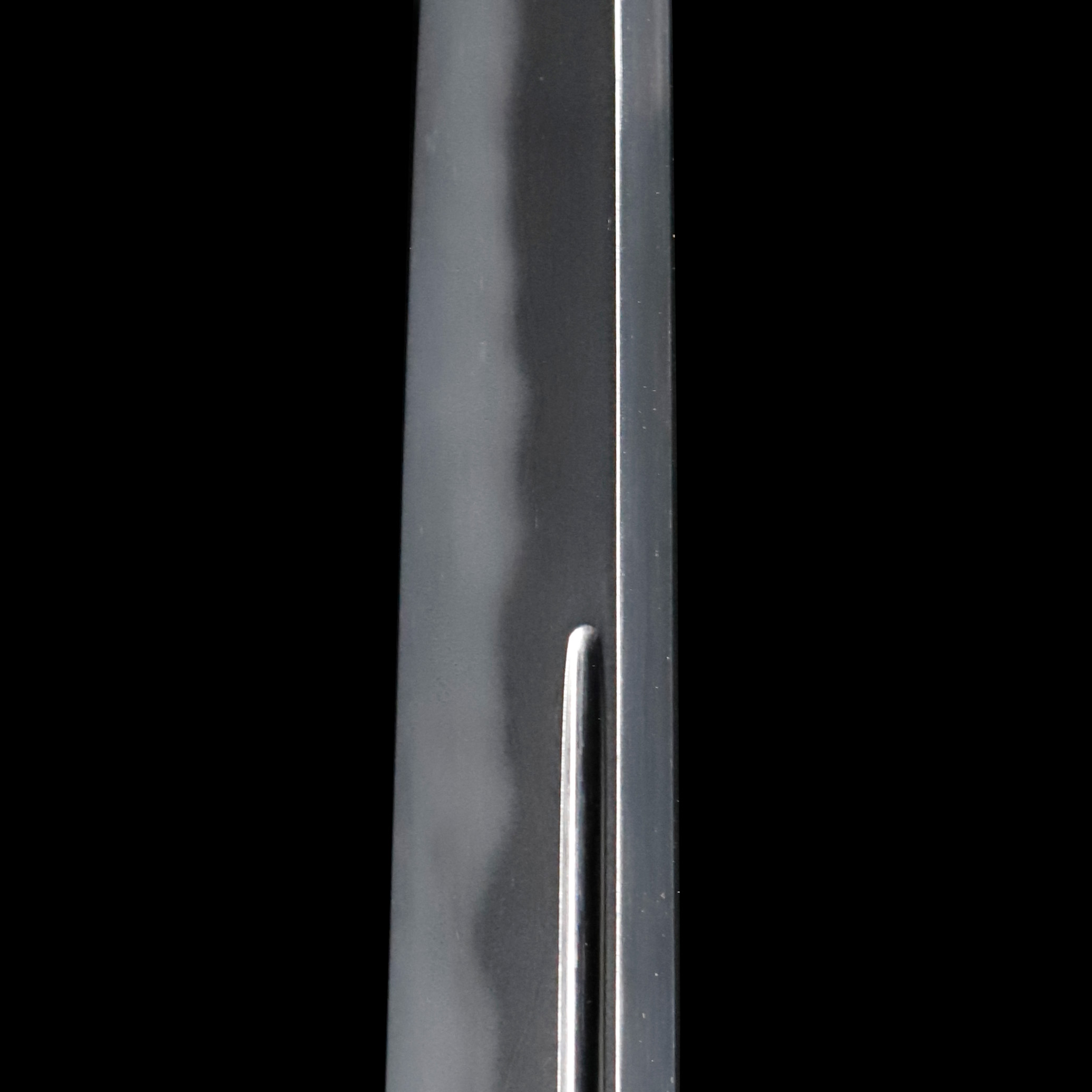
販売店の記載のまま
伯耆 · 1861-1864頃
現在2点販売中
昭和から現代へ 断絶と再生
二十世紀は二度この工芸を殺しかけた。戦時の歪みと、占領下の禁令である。1948年の日刀保設立と1953年の作刀再開が刀を美術として再建し、人間国宝と無鑑査がその頂に立つ。
保存刀剣のうち、出来が一層優れ、保存状態も良好と認められたものです。再刃や、室町・江戸期の多くの無銘作は対象外となり、保存刀剣より高い基準が課されます。
日本美術刀剣保存協会(NBTHK)は、1948年に設立され、文化庁の監督を受ける公益財団法人で、東京・刀剣博物館に本部を置きます。専門の審査員が出品作を直接審査し、美術的・歴史的価値に応じた鑑定書を発行します。NBTHKの鑑定書は、日本刀および刀装具の真正性を示す最も広く認知された基準です。
NBTHK公式サイトReturns/exchanges limited to defects caused by shipping (except willful misconduct or gross negligence by the company); customers must contact within 72 hours of receiving the product.