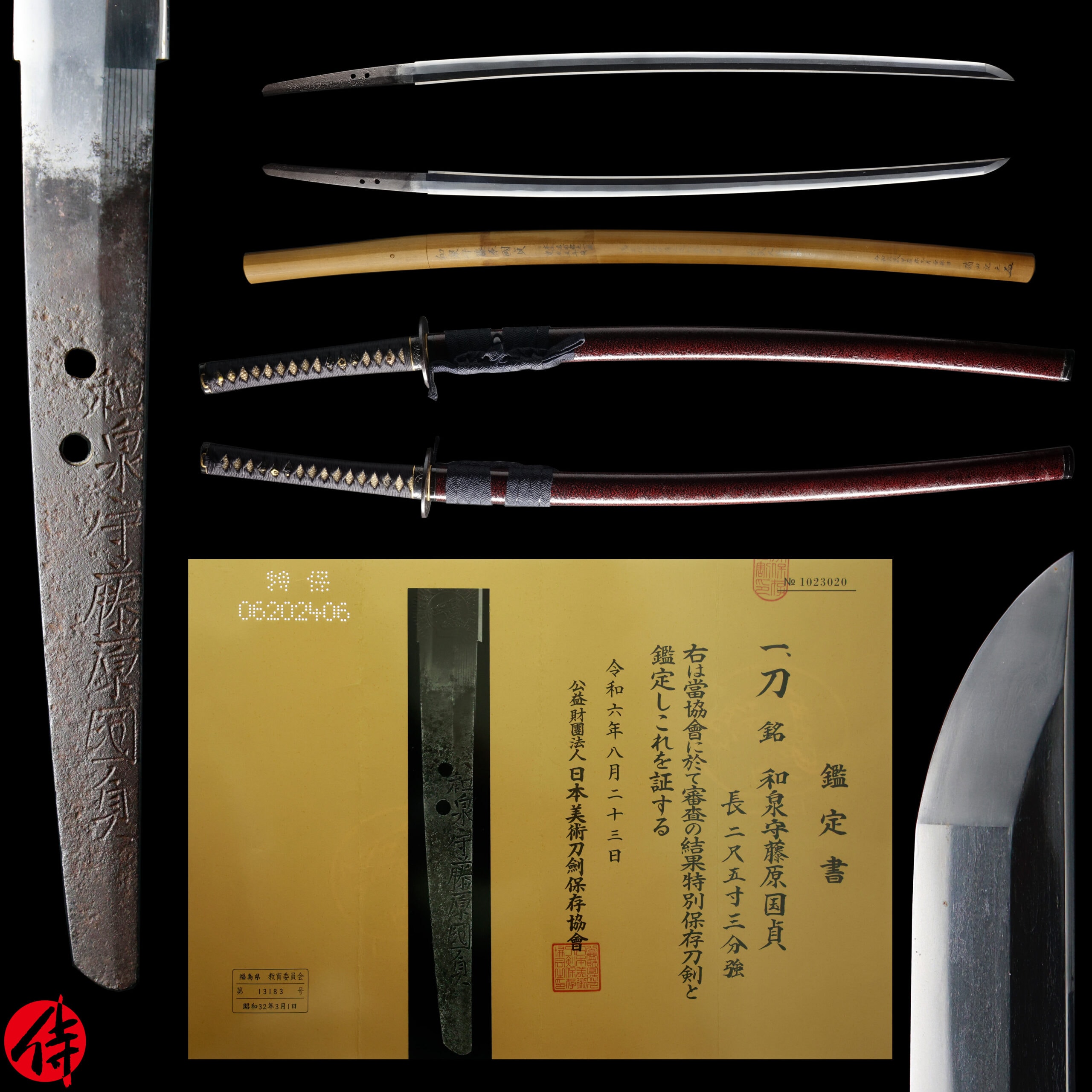
説明

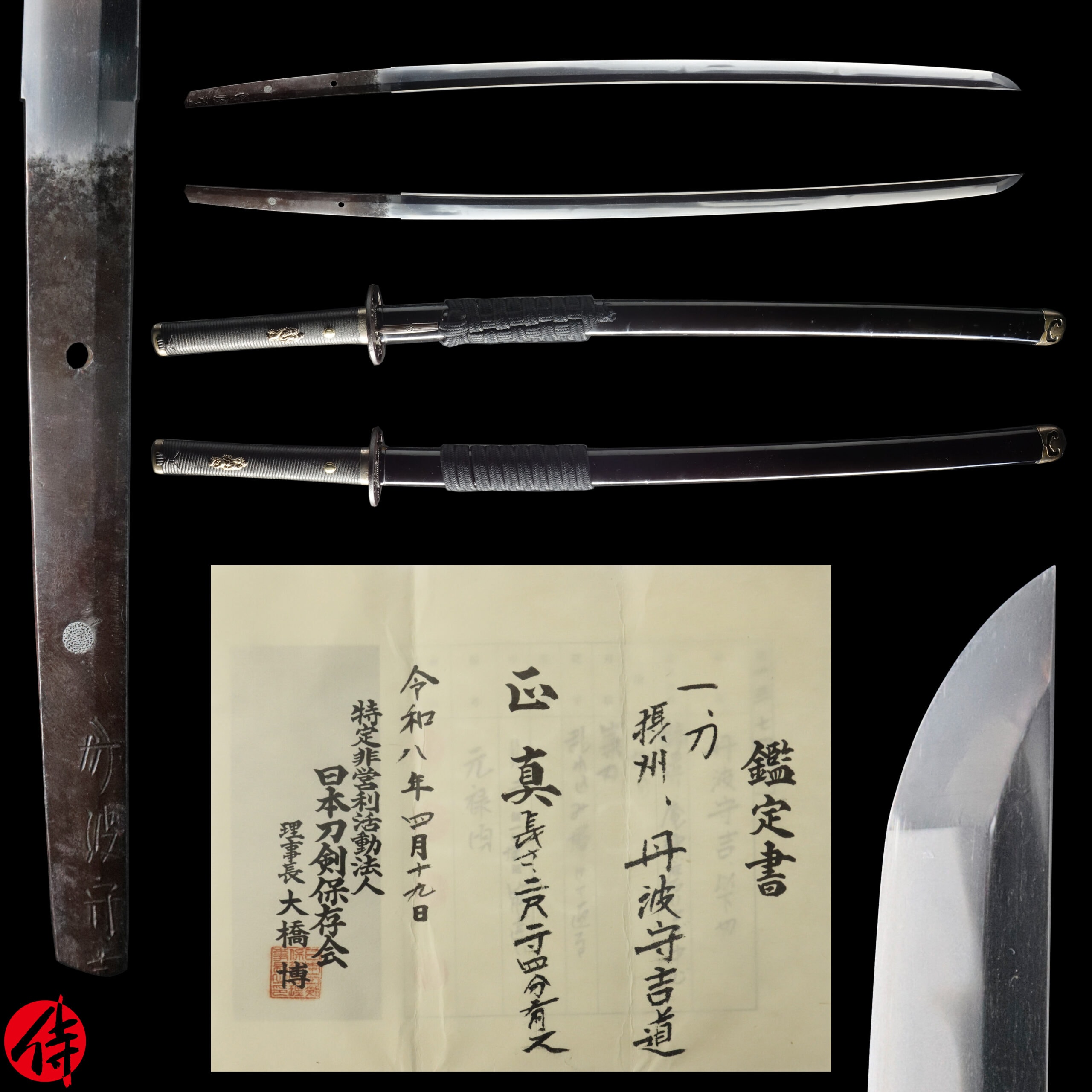
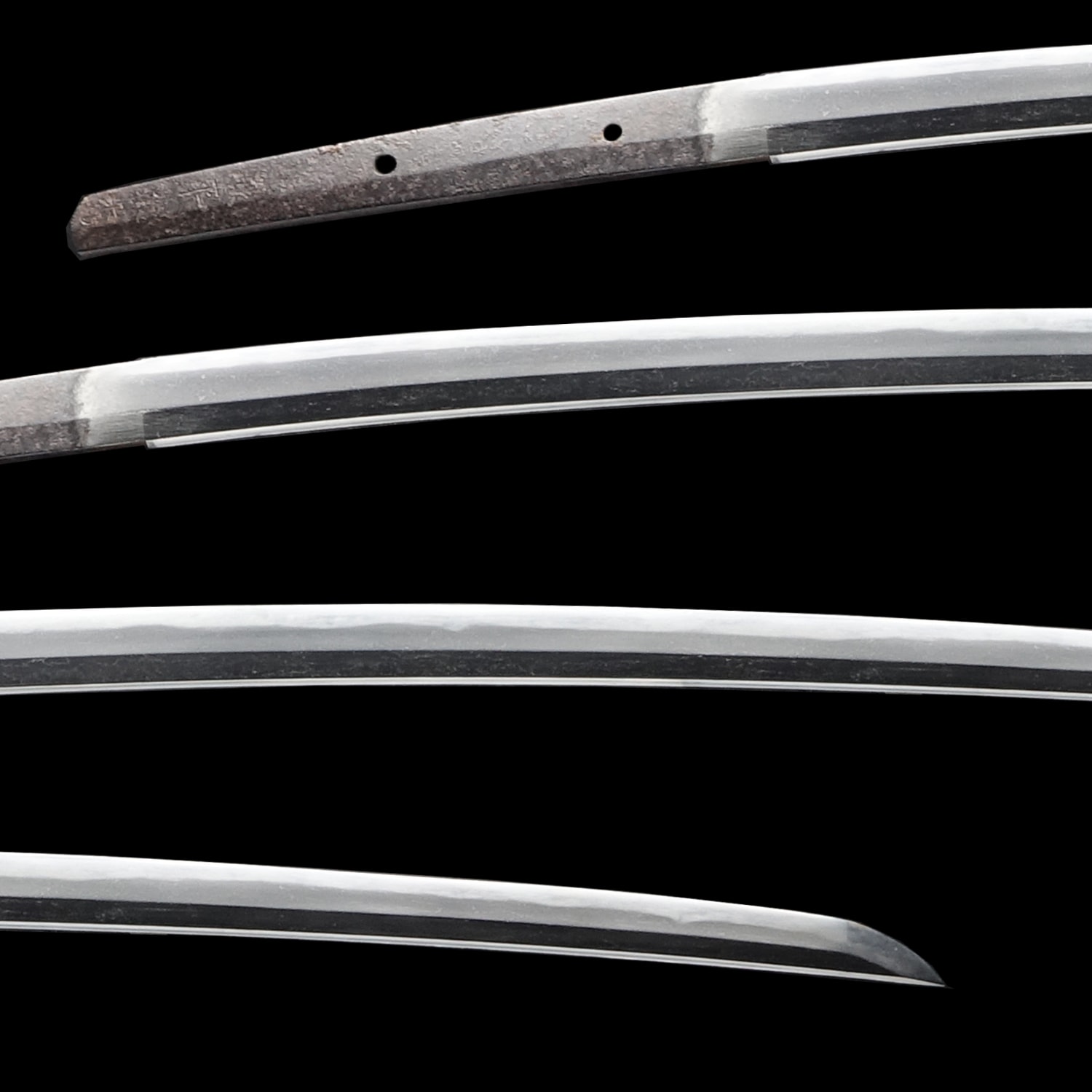
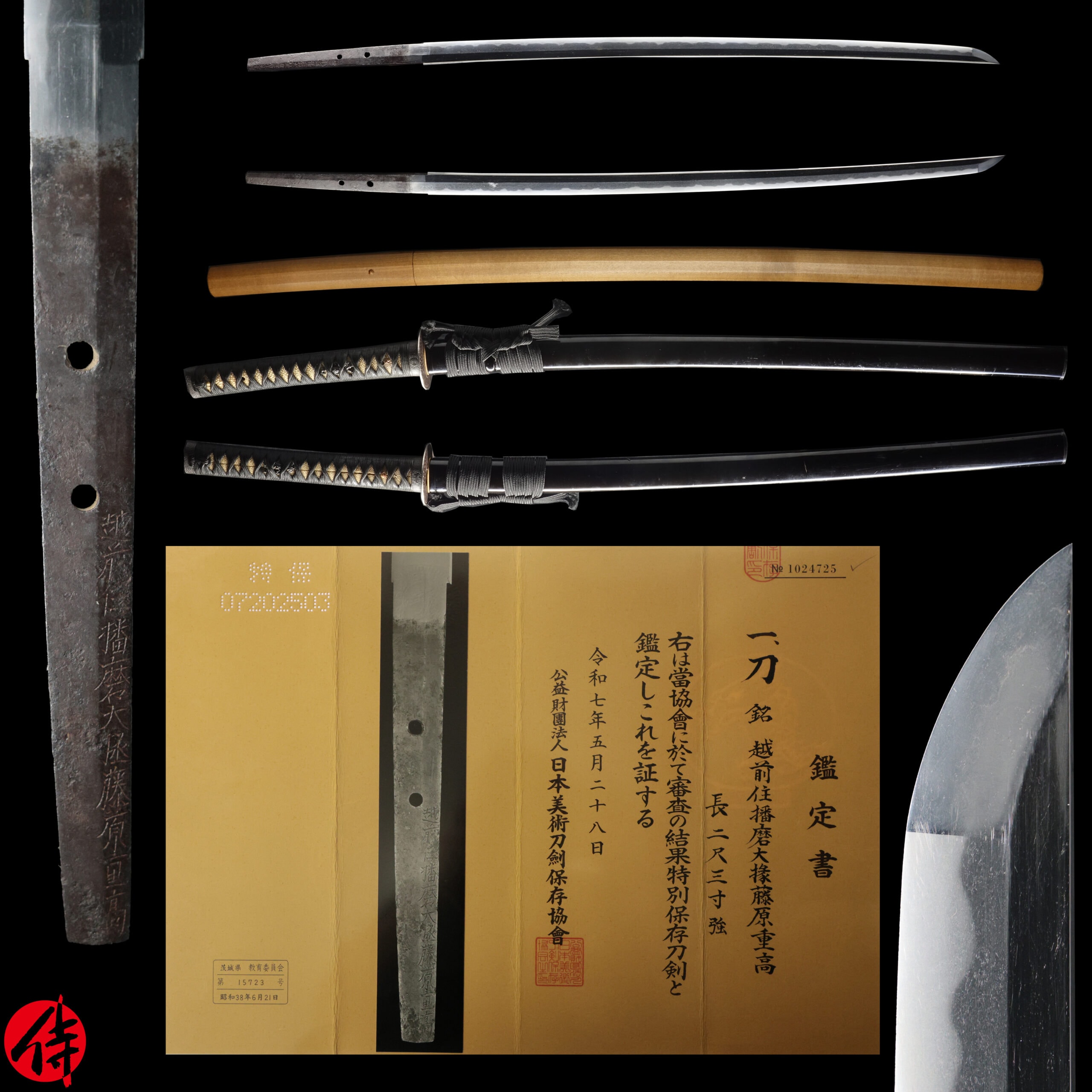
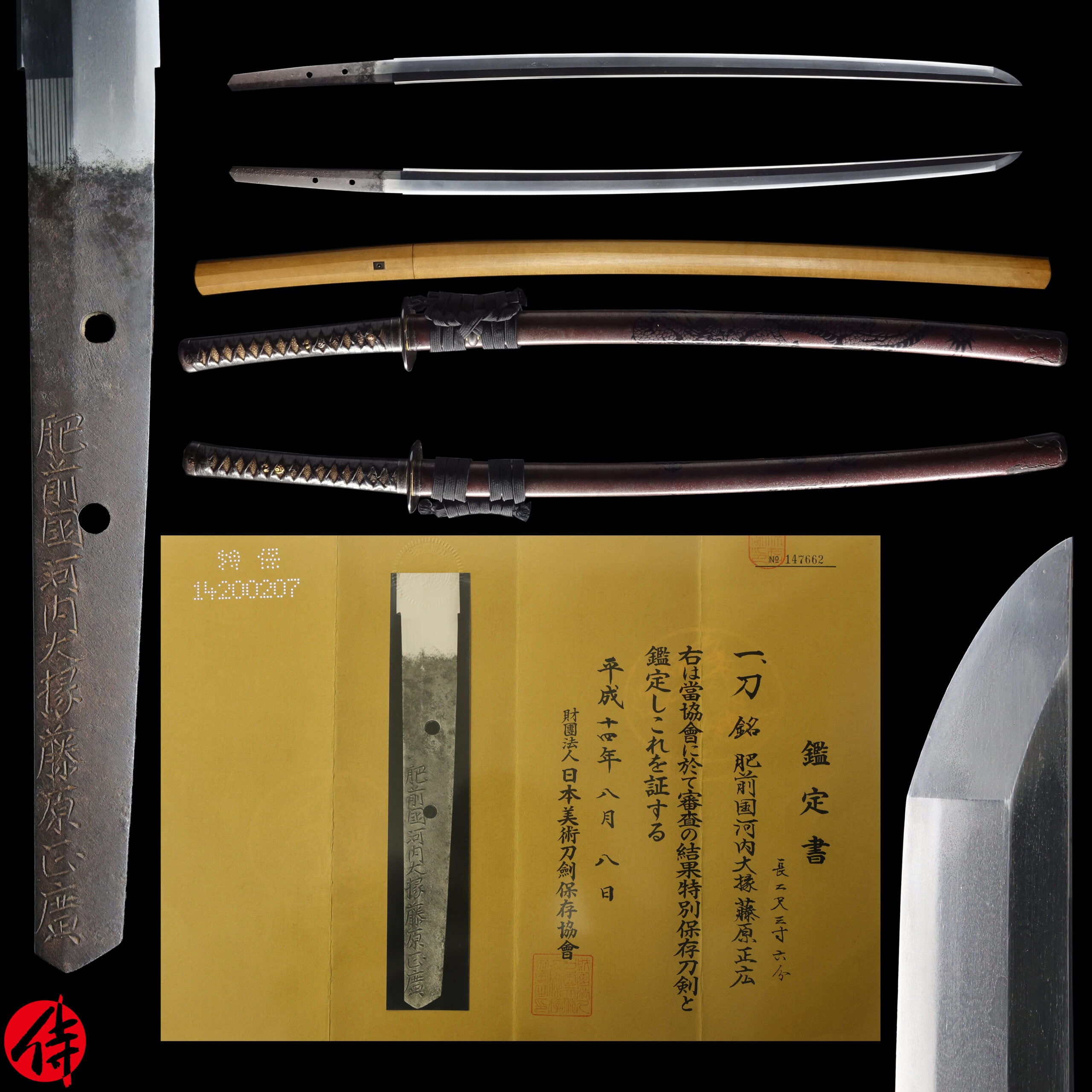
Antique Japanese Sword Katana Signed by Izumi no Kami Fujiwara Kunisada with NBTHK Tokubetsu Hozon Certificate 【Description】 Summary This blade was signed by Izumi no Kami Fujiwara Kunisada (和泉守藤原国貞), who was especially active during 1624-1648 (Early Edo period) in Settsu province (today’s Osaka). Kunisada, also known as Inoue Yoshihiro, was born in the 17th year of the Tensho era (1589) in the southern part of Miyazaki prefecture (Kyushu island). Later on, he moved to Kyoto and became an apprentice of Horikawa Kunihiro, one of the most famous swordsmiths in the early Edo period(early 17th century). He also learned the sword-forging technique from a senior apprentice, Echigo no Kami Kunitomo. Kunisada moved to Osaka in 1620 after his master, Kunihiro, was deceased. He became an independent swordsmith in Osaka city. He was trusted by the third-gen head of Obi domain (Miyazaki prefecture), Ito Sukehisa, and Kunisada was able to receive the title of Izuminoakami in 1623 because of Sukehisa’s support. He is known as one of the most influential swordsmiths to make Osaka a famous place for sword-forging in the early Edo period. Osaka was the center of business back then. Many renowned swordsmiths moved to Osaka to meet the demand from high-class Samurais. His son Inoue Shinkai is also a well-respected swordsmith and trained many apprentices who later became famous swordsmiths. Inoue Shinkai also signed Kunisada at the beginning of his career. To distinguish Kunisada and his son, the first-gen is called Oya Kunisada (Father Kunisada). The second-gen is called Shinkai Kunisada. He died at the age of 63 in 1652. His blades are known as Owazamono, extremely sharp blades. He is one of the most famous swordsmiths in Osaka during the early Edo period. It is said that Horibe Yasube (堀部保兵衛), one of famous 47 Ronin used one of Kunisada’s work. Osaka Shinto The blades forged by the first-gen Kunisada are categorized as Osaka Shinto. Shinto is Japanese Sword terminology that refers to the swords forged during 1596-1781. The blades made in the Osaka area during this period are called Osaka Shinto. There are many famous swordsmiths in this Osaka Shinto era. After Hideyoshi Toyotomi built Osaka castle, Osaka city flourished as a castle town and became the business center. Many swordsmiths moved to Osaka to look for better opportunities. They not only forged swords for those Samurai who lived in Osaka but also for feudal lords nationwide. Ikanshi Tadatsuna (Awataguchi Omi no Kami Tadatsuna), Inoue Shinkai (his son), and Tsuda Sukehiro are the most famous among many swordsmiths. One of the most notable characteristics of Osaka Shinto is its beauty in Jigane. Jigane is a visible steel surface pattern created by folding and hammering during the forging process), which made it possible by the location of Osaka. Osaka had close access to the Tamahagane (special carbon steel to make Japanese swords) production sites. The swordsmiths residing in Osaka were able to get high-quality carbon steel from these sites. Appraisal It is appraised as a Tokubetsu Hozon Token (特別保存刀剣) issued by NBTHK (Nihon Bijutsu Touken Hozon Kyokai:日本美術刀剣保存協会). This authentication paper was only given to authentic Japanese swords, especially well preserved and high quality with artistic value. *Please keep in mind that there is a couple of tiny Kitae Kizu on the blade. If you like to know the detailed condition, please feel free to contact us. 【Blade】 Cutting Edge Length(Nagasa) : 77.12 cm (30.37 inches) Curvature(Sori) : 1.21 cm (0.47 inches) Hamon : The crystalline structure which forms along the cutting edge of a blade as a result of the hardening process Jimon(Jihada) : visible steel surface pattern created by folding and hammering during forging process Kissaki : Kissaki is the tip of the Japanese sword. Nakago : Nakago is the tang of the Japanese sword. Japanese swordsmiths left the black rust on the tang because it prevents red rust while the tang is in its handle. And the

Antique Japanese Sword Katana Signed by Izumi no Kami Fujiwara Kunisada NBTHK Tokubetsu Hozon Certificate
売切れ
Tokuho売切れ

Antique Japanese Sword Katana Signed by Izumi no Kami Fujiwara Kunisada NBTHK Tokubetsu Hozon Certificate

売却済

世界81社の刀剣商を横断追跡 · 価格履歴 · 売却アーカイブ

仕様

長さ

77.12 cm

反り

1.21 cm

作者について

Horikawa Kunisada國貞

3 重要美術品1 御物3 特別重要刀剣81 重要刀剣

和泉守国貞は、元和七年八月紀の刀に「摂州大坂住藤原国貞」と銘を切っており、この一銘がその人と時とを定める。すなわち、すでに大坂に居を構えた堀川門の工であり、やがて大坂独自の鍛刀の伝統となるものの草創に立つ。世に「親国貞」と称するのは、説明書が明記するように、その嗣である後の井上真改、すなわち「養子井上和泉守国貞」と区別するためである。本工は日向に生まれ、京に上って堀川国広の門に入ったというが、慶長十九年に国広が歿した時、国貞はわずか二十五歳であり、その初期の作風・銘振りから、実際には兄弟子の越後守国儔に倣ったものと鑑られる。師国広の没後、同門の河内守国助とともに大坂に移り、元和九年に和泉守を受領し、晩年は入道して道和と号し、慶安五年に六十三歳で歿した。まさに「大坂鍛冶の開拓者の一人」である。 その典型は、慶長新刀の趣ある身幅広く堂々たる刀で、元先の幅差少なく、重ね厚く、中鋒または大鋒に延びる。鍛えは板目にしばしば杢を交え、やや肌立ちごころとなり、地沸厚く地景頻りに入る。肌の開くところを説明書はザングリとした堀川派の地と呼び、師の地鉄を大坂へ伝えたものとする。その地鉄の上に、のたれを基調として互の目・小互の目・丁子を交え、刃は江戸ぶりの直ぐな短い焼出しより起こり、匂深く小沸よくつき、砂流し・金筋かかり、しばしば棟焼や流れる飛焼を交える。帽子は直ぐに小丸、あるいは乱れ込んで掃きかけ、やや長く、または深く返る。最上手の作には彫物を加え、櫃中に真の倶利迦羅を浮彫にし、梵字に護摩箸を添える、説明書が特色ある見事と評し本工の見どころに数える彫である。 地鉄は刃の下に終始変わらぬ地である。板目に地沸厚く地景頻りに入る肌が各作に現れ、時にあのザングリとした肌に立ち、時によくつむ。匂口深く明るく、刃縁の小沸は変わらぬところで、その働きは高い丁子の房ではなく足・葉、砂流し・金筋に托される。第二十七回特別重要刀剣のある刀が幅広く覇気ある出来に向かうところを、説明書は、事実上の師である国儔よりむしろ国広自身の悠揚せまらざる作域に近いとし、小丸下がりの帽子と棟焼の頻出を親国貞自身の見どころとして挙げる。匂口は時に深く、時に沈みごころとなり、その匂口と沸のつき方に意を凝らした変化こそ、本工の手の一部である。 作には三つの面が通う。第一はこの堀川の地に焼く典型ののたれ互の目の刀である。第二は師たちを遡る相州風の手で、説明書はある重要刀剣を、丁子目立たずしかも盛んな、師に倣った志津風の作とし、ある脇指を「相州貞宗の風を模して出来がよい」とする。第三は晩年の明るく穏やかな直刃で、説明書は「親国貞の直刃出来は上手ながら」、現存するものは頗る少なく、その作が「一見してむしろ二代真改の作に近い」と記す。この晩年に道和の草書銘が属し、説明書はこれを晩年の作とし、二代の井上真改が代作代銘に多く任じたと伝える。ある草書の刀が初代自身の作か真改の代銘か、またこうした作を二代真改国貞と読むべきか否かは、説明書がなお研究に委ねるところである。 本工を分かつものは、その極めの言うところである。古備前・山城のよくつんだ小板目に対して、立つザングリの地と直ぐの焼出しより起こるのたれは、備前丁子ならぬ大坂新刀の手であり、子真改の一層明るく精良な鉄に対して、初代の手は大坂の伝統が育つより粗く覇気ある根として読まれる。説明書は河内守国助とともに本工をその草創の頭に置き、事実上の師国儔をその背後に、師国広をさらにその背後に置き、嗣の真改がその名を最も名高い世代へと継ぐ。 収集の観点では、手の届くところにありながら稀な、大坂新刀の大名跡である。藤代の極めは上々作。国宝はなく、重要文化財もない。その記録は重要刀剣に数多く、特別重要刀剣三口と戦前の重要美術品数口に及び、特別重要刀剣・重要刀剣の級に八十四口が立つ。残る来歴は名高く、皇室、真田家、生国日向の伊東家を経た作があり、ある重要美術品は今佐野美術館に蔵される。説明書はその在銘刀に最上の言葉を惜しまず、ある一口を「初代国貞の典型作で殊に匂口が深く華やかで同作中傑出の一口」とし、相州風の特別重要刀剣を端的に「親国貞会心の一口」とする。その多くは伝えられて売買されず、特別重要刀剣・重要刀剣の級でも十年に数口が世に出るに過ぎない。健全な在銘の親国貞は、時に、根気をもって私蔵に入ることがあり、世に出れば確かな獲物であって、大坂の鉄の草創を語る一証である。

刀剣商

サムライミュージアム

samuraimuseum.jp

売切れ