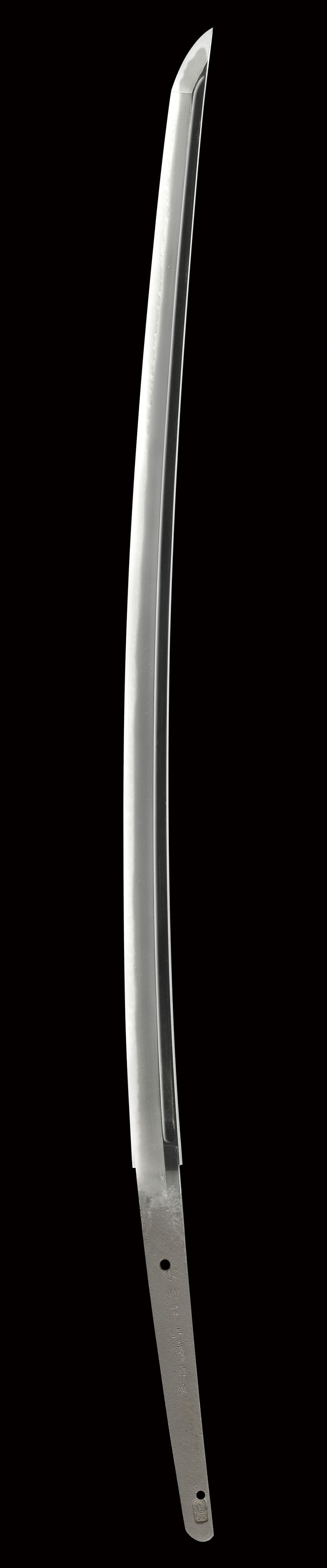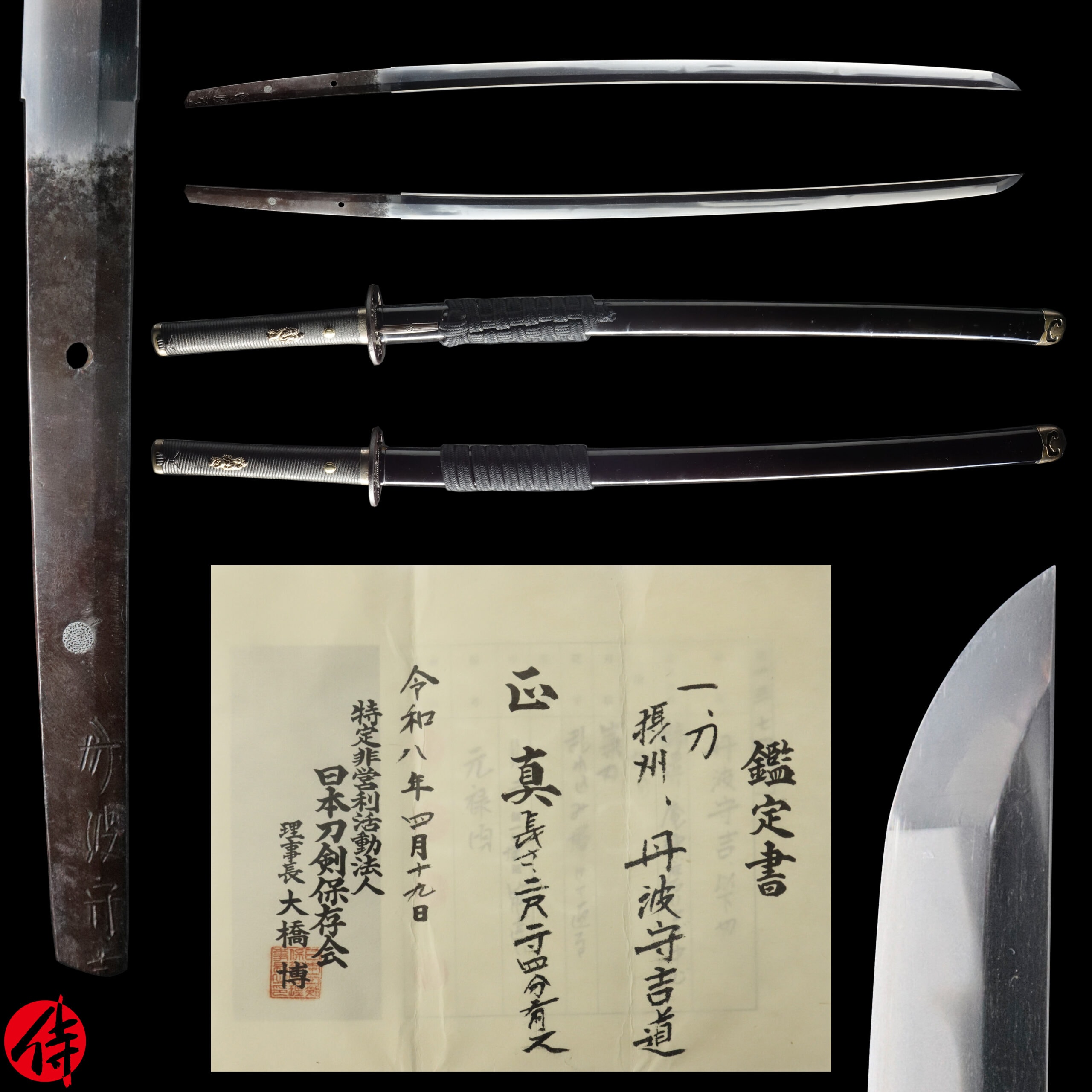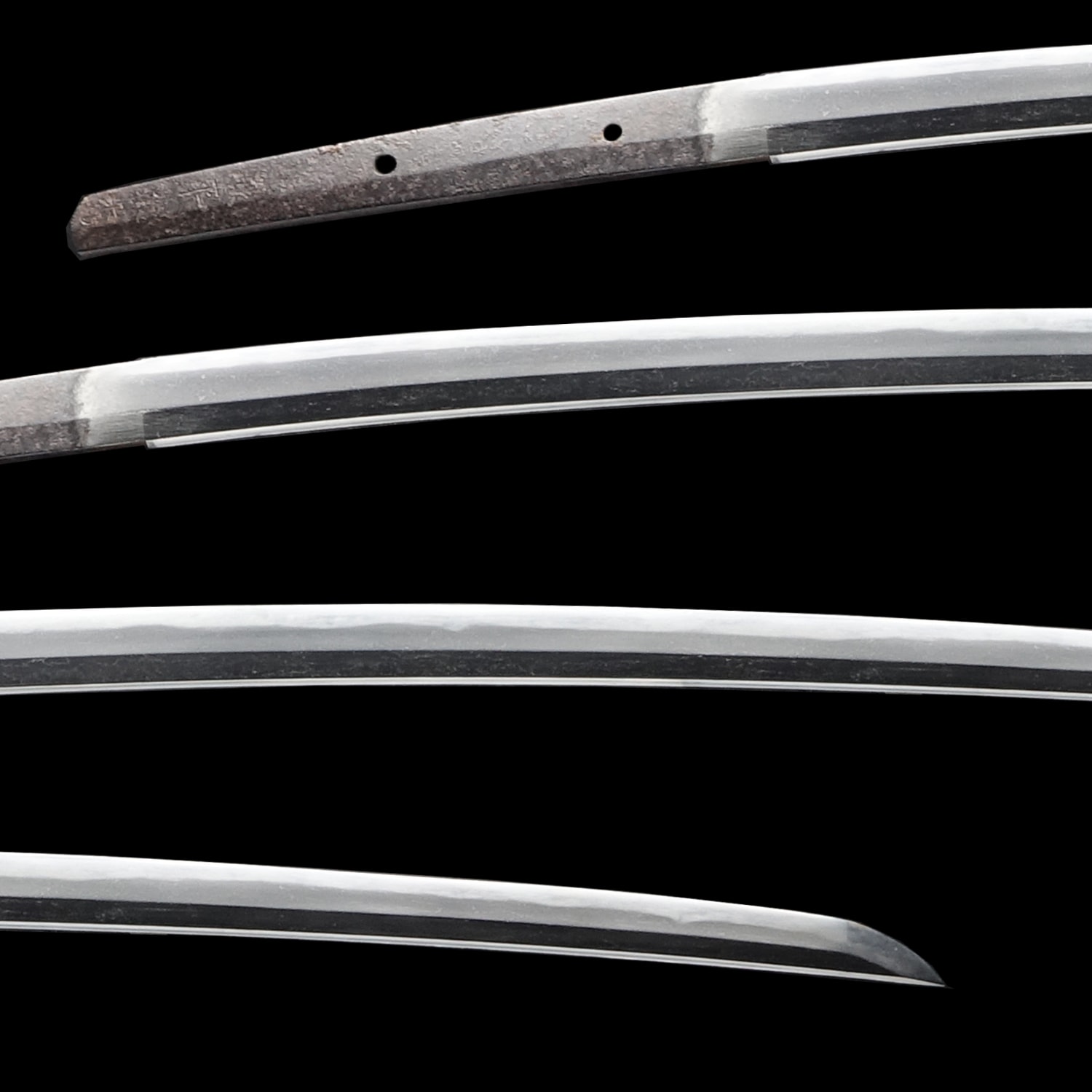
説明

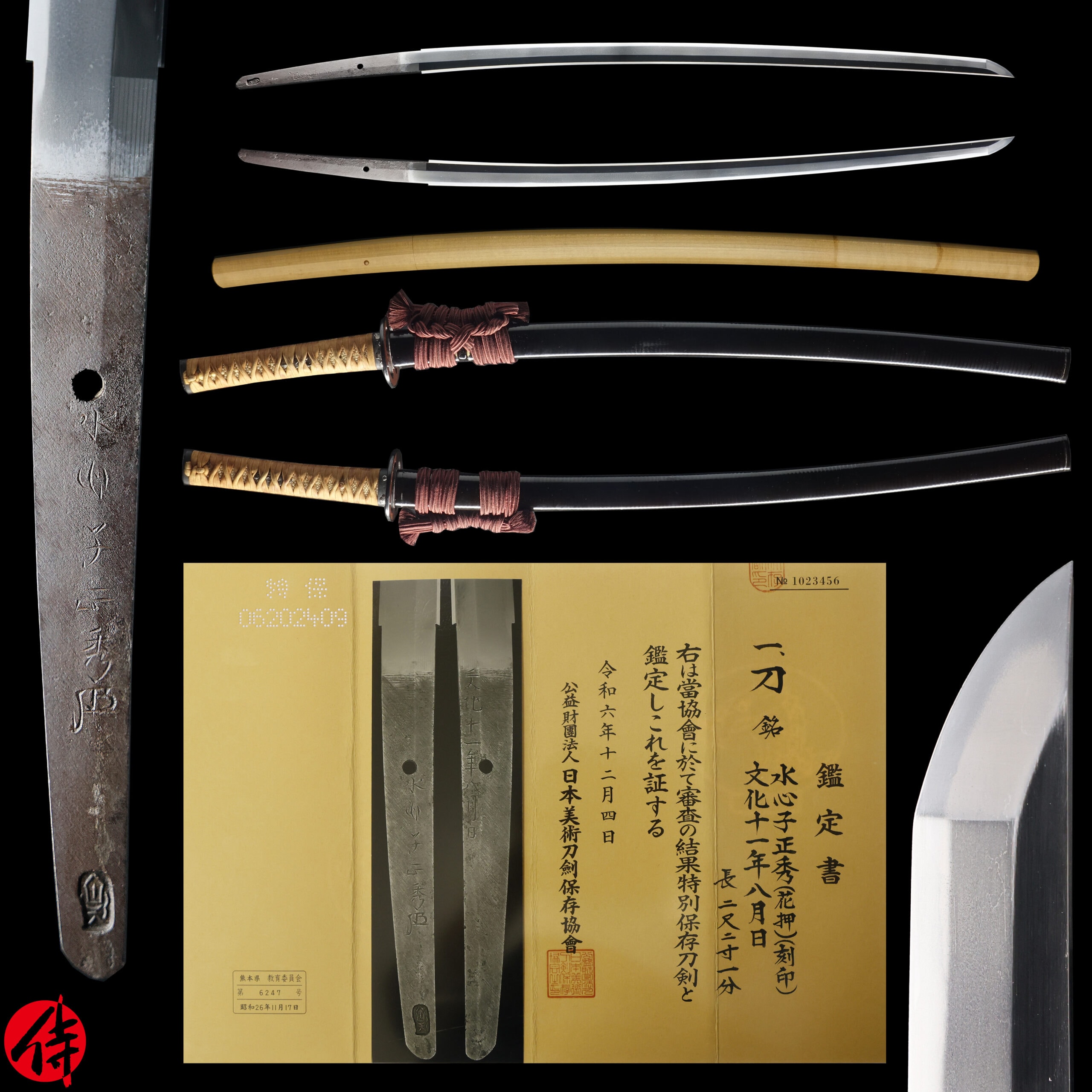
Antique Japanese Sword Katana Signed by Suishinshi Masahide with Tokubetsu Hozon Certificate 【Description】 This blade was signed by Suishinshi Masahide (水心子正秀) in August, the 11th year of the Bunka era (1814). He was especially active during the late Edo period (1781-1820). The signature has Kao (花押: stylized signature) and Kokuin (刻印: stamped signature). Suishinshi Masahide (水心子正秀) was one of the most famous and innovative swordsmiths at the end of the Edo period. He was born in the third year of the Kan-En era (1750) in the Yonezawa domain in Dewa province (Today’s Yamagata/Akita prefecture). His birth name was Suzuki Sanjiro (鈴木三治郎). When he was about 18 years old, he started learning blacksmithing techniques from a local blacksmith named Yoshizawa Sanjiro, who specialized in producing farming tools in Dewa Koku. Later on, Masahide decided to become a swordsmith. In 1771, when he was 22 years old, he moved to Musashi Koku (Today’s Tokyo) to become an apprentice of Miyagawa Yoshihide, also known as Shitahara Yoshihide. Masahide learned sword-forging techniques under this master, who belonged to Shitahara School, one of the most prestigious schools in this area. After finishing his apprenticeship, he returned to Dewa Koku. His craftsmanship was widely recognized in the province. In 1774, Masahide started to serve Akimoto Tsunetomo, the head of the domain, because of his superb sword-forging techniques. It is said that he began to use Suishinshi as his title during this time and changed his maker’s name to Kawabe Gihachiro Masahide. In 1781, he moved to Edo City, settling in a house owned by the Akimoto clan. He was always curious to know various sword-forging techniques. He started to search how Japanese swords were made during the late Heian-Azuchi Momoyama period (late 12th-late 16th century: KOTO era), especially the ones made with SOSHU DEN and BIZEN DEN traditions. He often visited the offsprings of renowned swordsmiths in the old days to know the secret of old sword-forging techniques. One of the most notable episodes is when he visited Yamamura Tsunahiro, an offspring of Masamune, one of the historical figures in Japanese sword forging. And he improved his craftsmanship there as well. Back in the day, the mainstream Japanese swords were less curved and muscular. However, he started to feel something was missing in those blades made in his days by exploring ancient Japanese swords. Therefore, he announced Token Fukko Ron (刀剣復古論), where swordsmiths need to go back to the old way the blades were forged. This theory resonated with many sword makers back then. Eventually, this theory became mainstream. While he published about ten books on how to forge Japanese swords and other related topics, he was also passionate about training his apprentices. Many apprentices who had learned sword-forging techniques from him later became famous swordsmiths, such as Chounsai Tsunatoshi and Takei Naotane. Considering this fact, he played an essential role in the late Edo period. He is listed as Edo Sansaku (One of the three most prestigious swordsmiths). The other two are Taikei Naotane (大慶直胤)and Minamoto Kiyomaro (源清麿). In his biography, he mentioned that he had forged 369 swords in his career. However, only about 100 of them are identified in Japan. Most of them were Wakizashi swords. It is extremely rare to see a Katana blade signed by him. Fujishiro Yoshio wrote a book called Token Jiten (Japanese Sword Dictionary). He is one of the most reputable Japanese sword experts in modern times. He categorized swordsmiths into five categories (Saijyo Saku, Jyojyo Saku Jyo Saku, Chu Jyo Saku, Chu Saku) regarding the reputation and skill of swordsmiths during the Shinto Shin To era (Late Edo period). Saijyo Saku is in the highest position. This chart often reflects how prominent a Japanese swordsmith is. Masahide is categorized as a Saijo Saku swordsmith. It is appraised as a Tokubetsu Hozon Token (特別保存刀剣) issued by NBTHK (Nihon Bijutsu Touken

Antique Japanese Sword Katana Signed by Suishinshi Masahide NBTHK Tokubetsu Hozon Certificate
売切れ
Tokuho売切れ

Antique Japanese Sword Katana Signed by Suishinshi Masahide NBTHK Tokubetsu Hozon Certificate

売却済

世界81社の刀剣商を横断追跡 · 価格履歴 · 売却アーカイブ

仕様

長さ

66.9 cm

反り

1.51 cm

作者について

Suishinshi Masahide正秀

1 重要美術品3 御物24 重要刀剣

水心子正秀は、寛延三年(一七五〇)出羽国赤湯に川部儀八郎として生まれ、初め鈴木宅英、のち英国と銘し、武州下原の鍛冶吉英に学び、安永三年正秀と改め、山形秋元家に仕え、のちに江戸浜町に移って、文政八年七十六歳で歿、作刀は約五十年に及んだ。彼は新々刀の祖にして、刀はすべて鎌倉の昔に復すべしとする復古刀運動の主唱者である。その物語で最も重きをなすのは、彼が育てた者たちであろう。多くの門弟のうちに、復古刀論を実地に示した大慶直胤、のちの二代正義細川守秀が立つ。説明書は正秀自身の才のありかについて珍しく率直であり、それは彼が唱えたことで知られる理論にはなかった。 その典型の手は大坂写しで、壮年の頃まで大坂新刀の名工に私淑して作ったものであり、説明書はこれを彼の最も優れた作と呼ぶ。よくつんでしばしば無地風に約む小板目に地沸厚くつき、その上に津田助広の濤瀾風の大互の目を波のごとくに焼き、多く直ぐに長く焼出し、足入り、匂深く匂口明るい。いま一つの大坂の作風は、井上真改・直改に倣う直刃・広直刃調で、匂深く沸よくつき、稀に一竿子忠綱を思わせるものもある。最上の写しにも終始あらわれる見どころは変わらない。無地風の地へ刃中から黒味がちの荒い粒の沸がこぼれるのである。説明書は真改をねらった一口にこれを「彼の手癖が見られる」と名指し、助広の濤瀾の一口には「これにもその手癖が示された典型的な一口」と記す。 地鉄はこのすべての変わらぬ地である。小板目が細かによくつみ、しばしば無地風の平らかさに近づき、地沸がよくつき、処々やや叢となる。説明書は鉄を綺麗で冴えると称え、すぐにそれを限定する。真改写しについて、地がねは綺麗ながら「黒ずんだ荒沸がつき」、「めくらがねに近く」、地肌があらわれぬ盲人がねに近いと書く。その地の上に刃文は匂深く沸よくつき、多く荒めで、帽子は直ぐに小丸、時に焼深く丸く、稀に玉を一つ焼く。本来の古刀の映りは彼の引出しにはなく、乱れ映りは初期の一口にのみ名指されるに留まり、後に弟子が地に甦らせたごとき確かな映りではない。 その記録は二つの面に明瞭に分かれ、説明書はその区分に語らせる。前者の大坂写しを彼の強みとし、後者の理念の歳月の復古刀をより冷静に扱う。備前伝は終始焼刃が浅く、のたれに互の目・時に尖りごころの刃を交え、一口は箱がかったのたれに矢筈風の刃を交え僅かに飛焼かかる。相州伝は五郎正宗に私淑して五郎正秀と称した敬意に示されるとおり、流れてやや肌立つ板目の上にのたれに互の目を交え、砂流しかかる。正直な時代色はそのすべてを貫き、古備前のごとき純然たる匂出来ではなく総体に荒い沸がつく。ある助広写しについて極めは、初期の大坂写しと晩年の復古刀との間で、「出来はむしろ前者に佳作を見る」と記す。在銘・有年紀で、楷書にも草書にも切り、年ごとに変化に富むその銘は、彼を新々刀の名工のうちでも最も正確に知り得る一人とする。 ゆえに彼を分かつのは鑑定の難問ではなく、系統のうちの率直な位置である。彼は復古の頭に立つ師であり、説明書はその役を飾らない。備前伝・相州伝について「その技は弟子の大慶直胤に及ばない」と明記する。その見どころはほかにある。典型の明るく華やかな濤瀾と広い真改の直刃、そして近い大坂写しの背後にも連衆の手を読ませる地へこぼれる荒い沸である。最上の写しは本科に近く、説明書はこれを「殆んど本科に迫るものがある」とし、ある天明の一口を「いわゆる大坂写しの傑出の一口」と呼ぶ。理念よりもこの写しの精緻さこそ、記録の称えるところである。 収集の観点では、正秀は鑑定の難問ではなく、在銘・有年紀の開かれた一書である。藤代の極めは上々作。国宝はなく重要文化財もなく、その記録は重要刀剣と戦前の重要美術品を通じ、約二十五口の指定作のうち二十四口が重要刀剣の級にあり、いずれも安永から文化に亘る在銘・有年紀の作である。来歴の知れるものは僅かで、嘉永ならぬ享和三年紀の重要美術品の刀一口は皇室・宮内省を経て滋賀の財下郷共済会に伝わり、その藩工としての務めは山形秋元家に結びつく。説明書はその傑作を名指し、初期天明の刀を「いわゆる大坂写しの傑出の一口」と呼び、金象嵌の双龍の銘をもつ珍しい大小を「同作中の優品」とし、仙台十代国包やのちの二代正義細川守秀との珍しい合作を好資料として賞する。多作にして在銘ゆえ、正秀は鎌倉の大名跡のごとく手の届かぬものではない。在銘・有年紀の大坂写しは時に上級に世に出るところで、その一口を得ることは、江戸の作刀が古作へと向き直ったその時を、向き直らせた人の手のうちに蔵することである。

刀剣商

サムライミュージアム

samuraimuseum.jp

売切れ