大坂は町人の都であり、刀も金の流れに従った。脇差一腰しか許されぬ町人のための贅沢な作、助広の濤瀾乱れ、大坂正宗と呼ばれた真改。率直に言えば、見られるために作られた刀である。
 NihontoWatchNihontoWatch
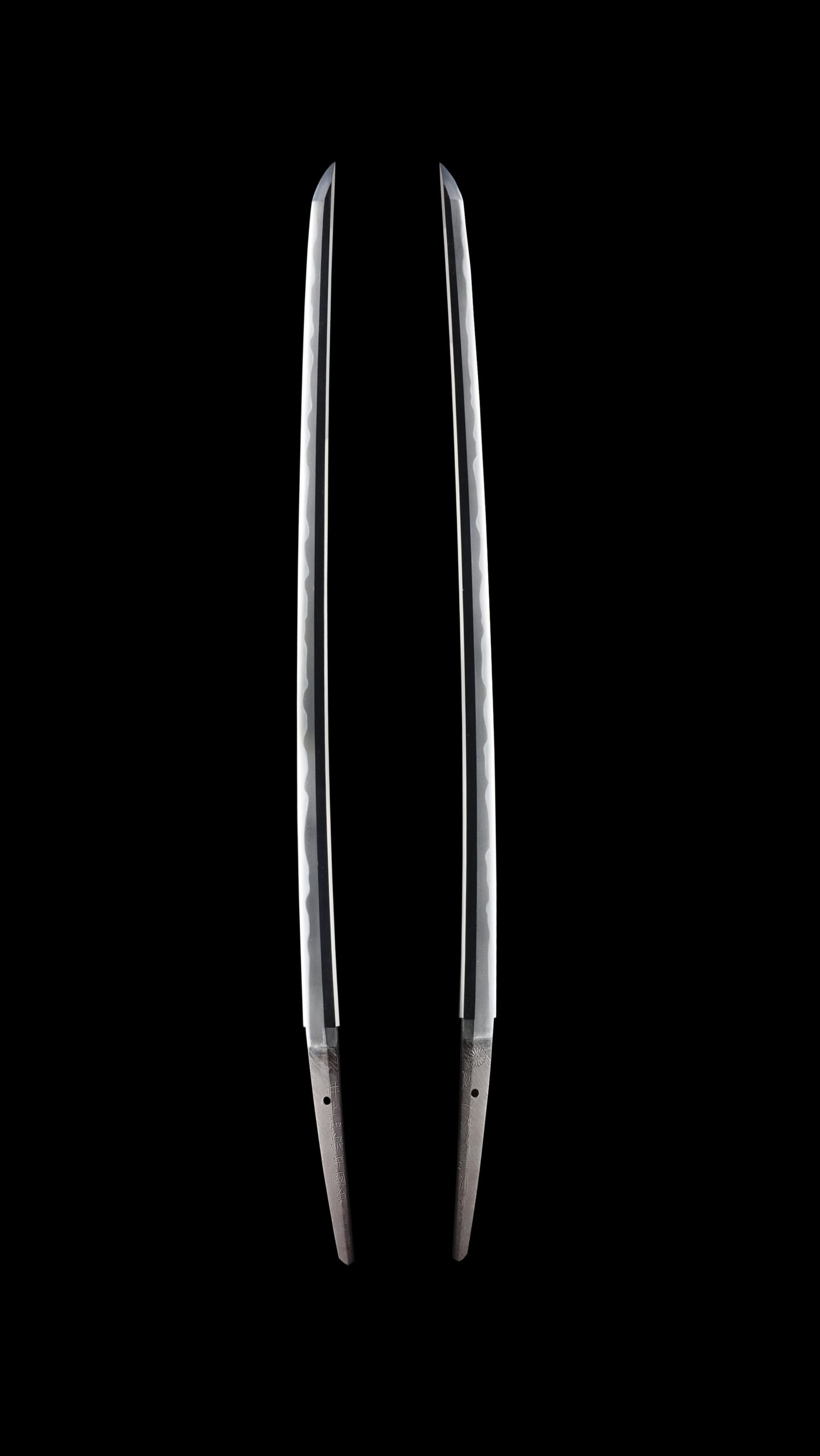
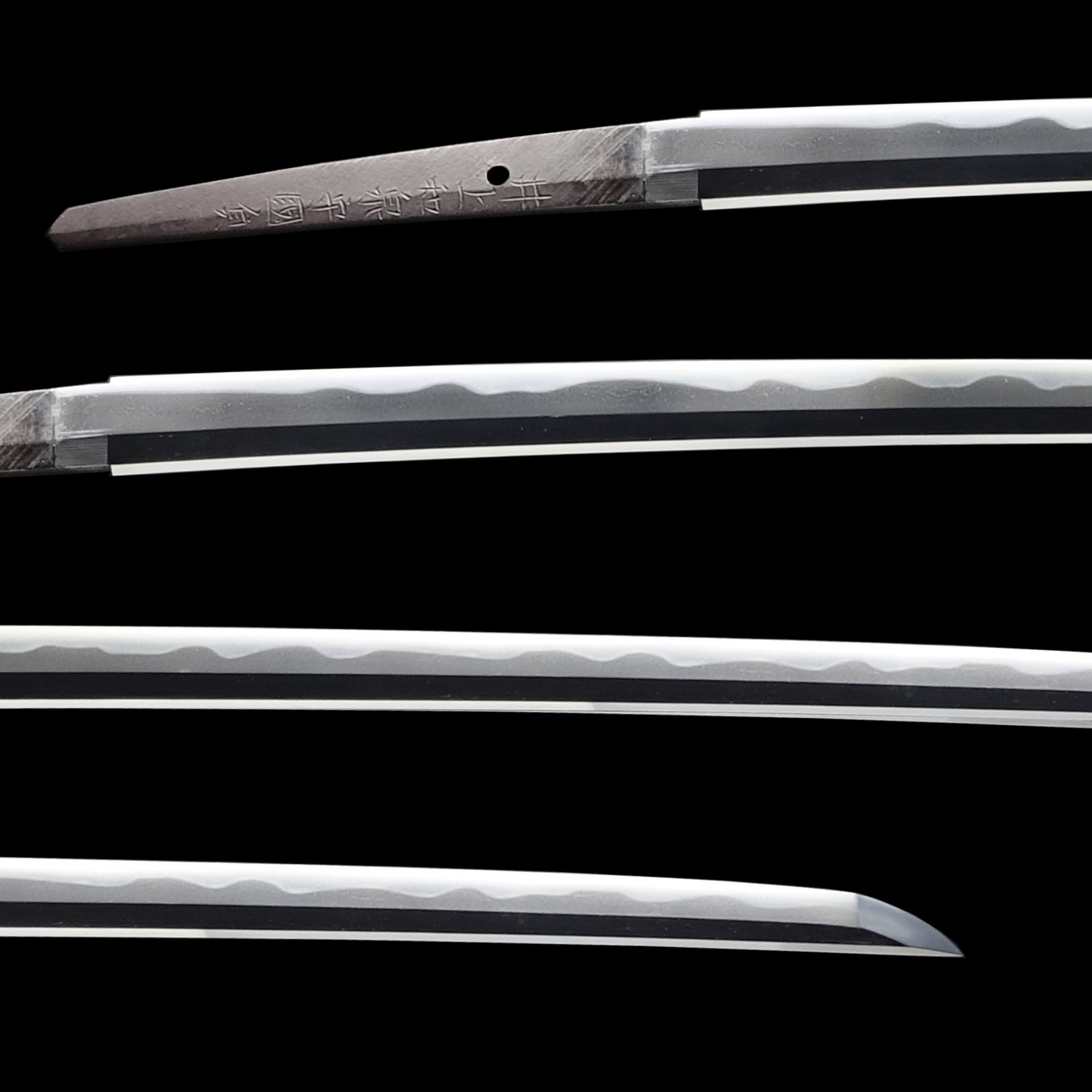
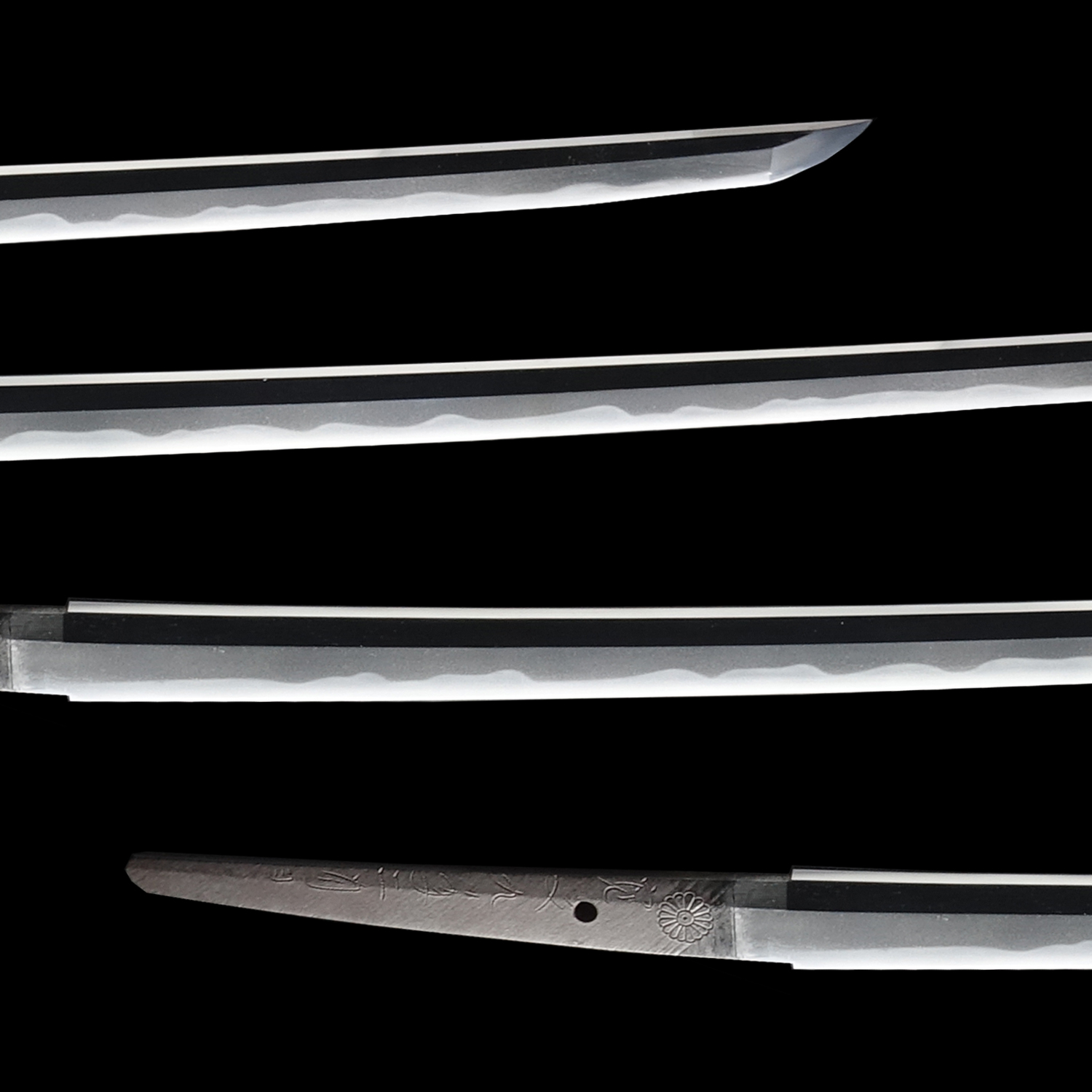
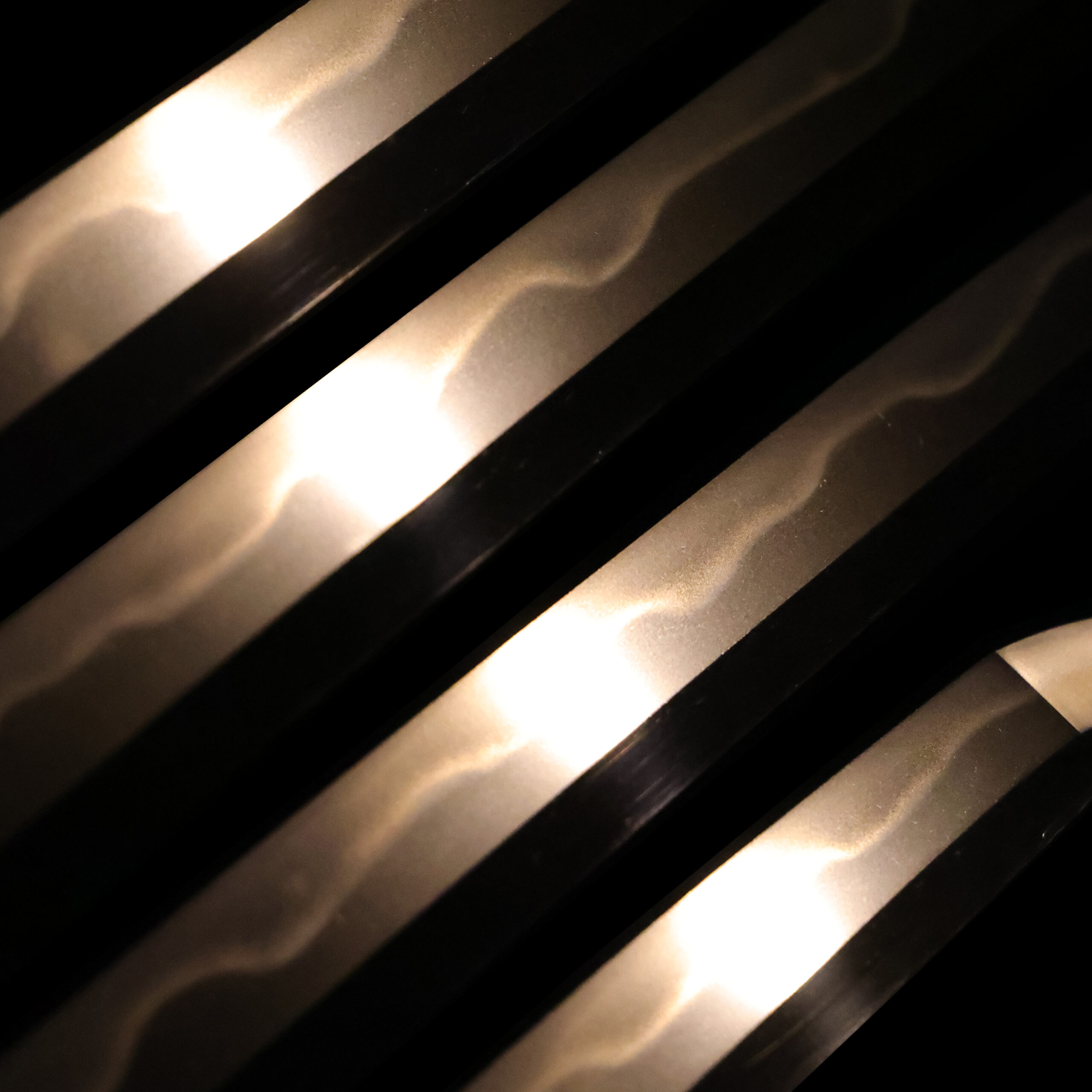
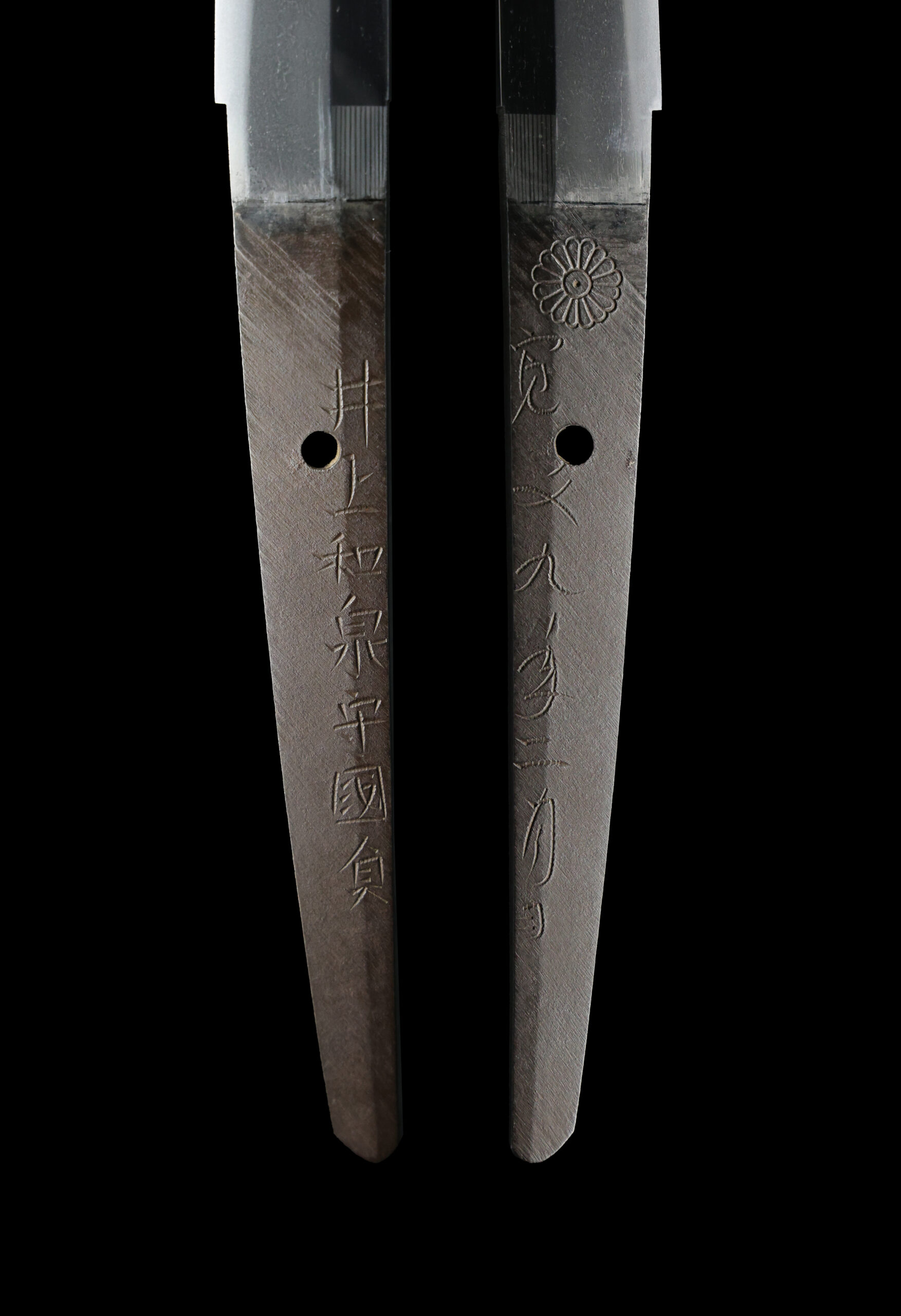
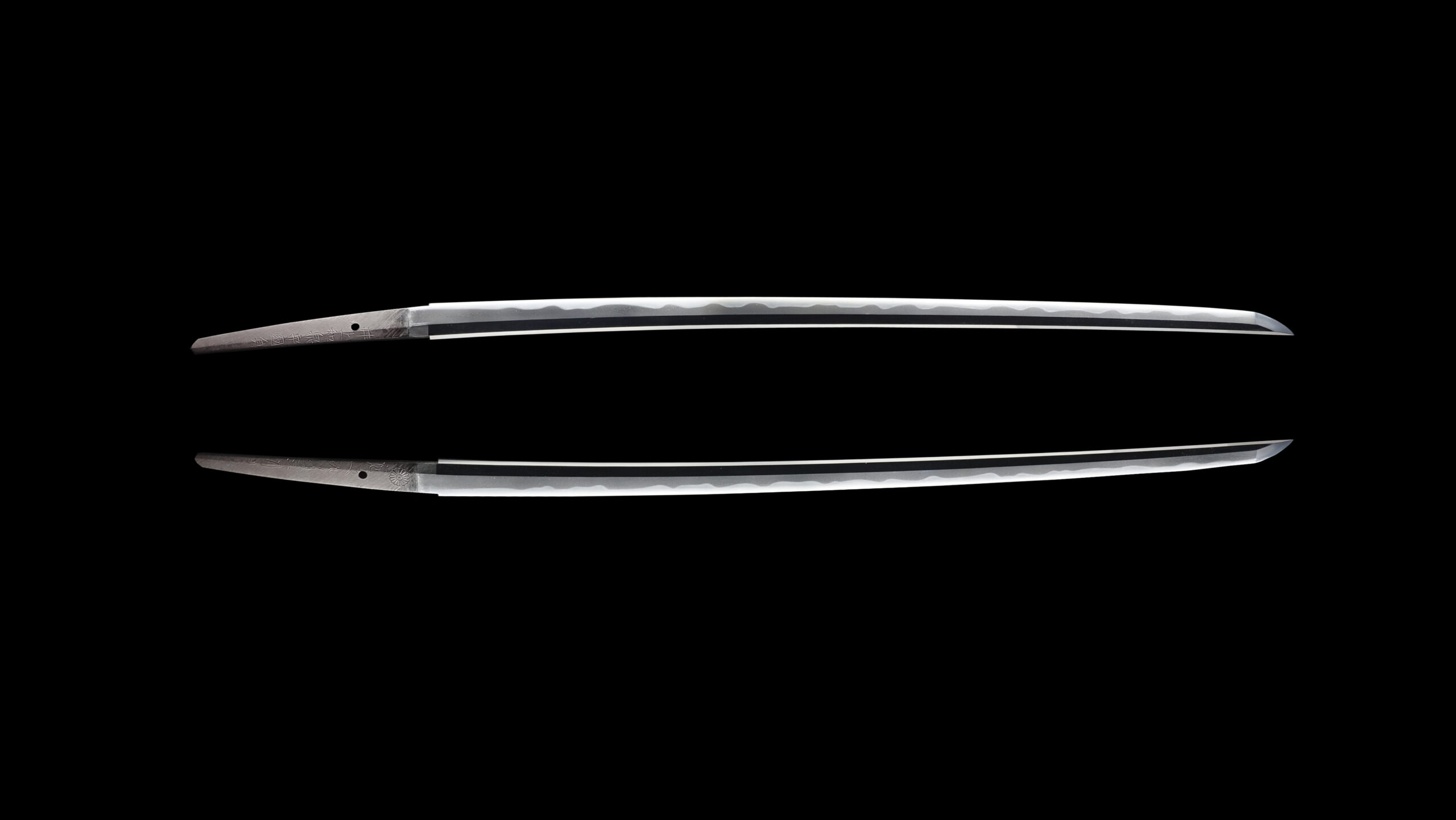
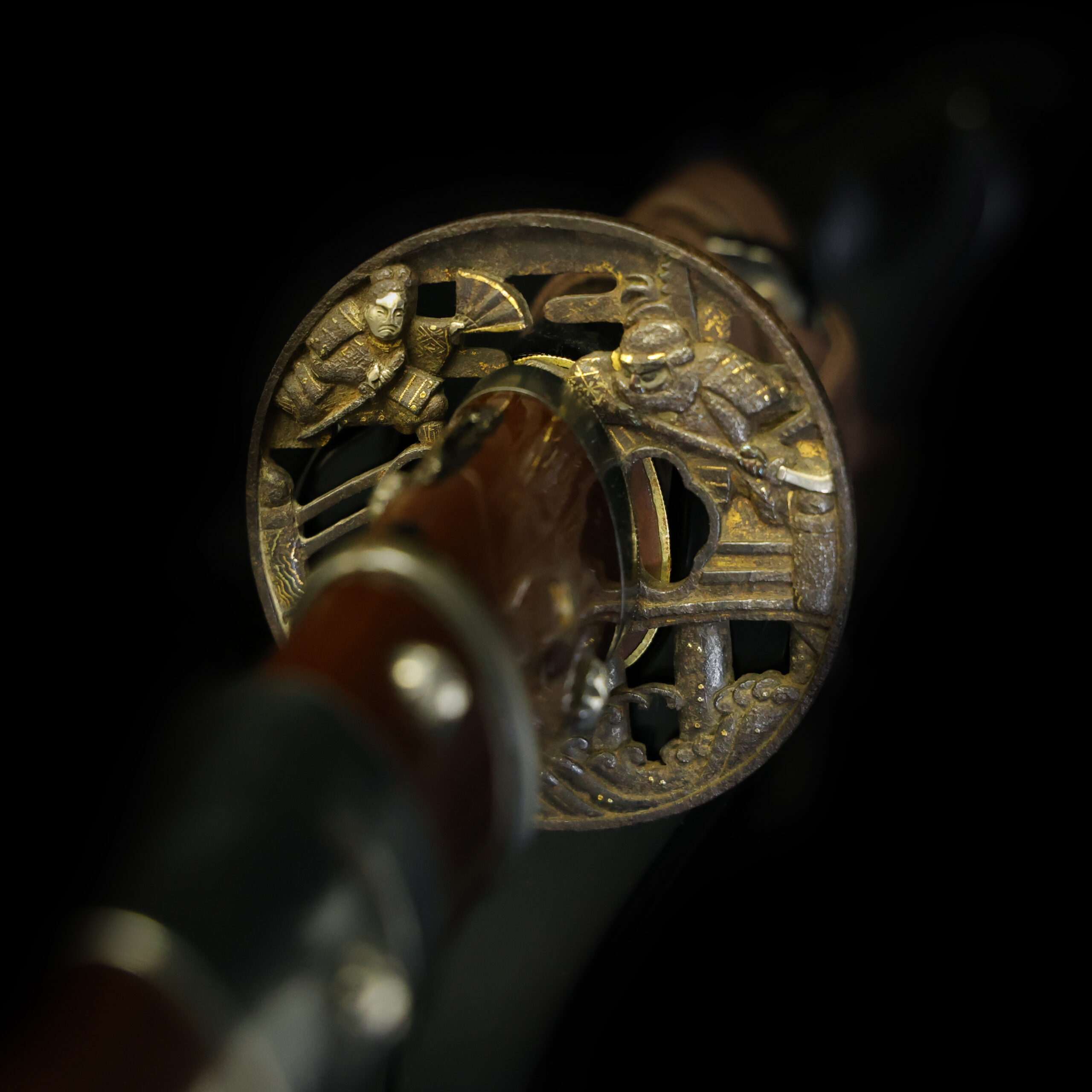
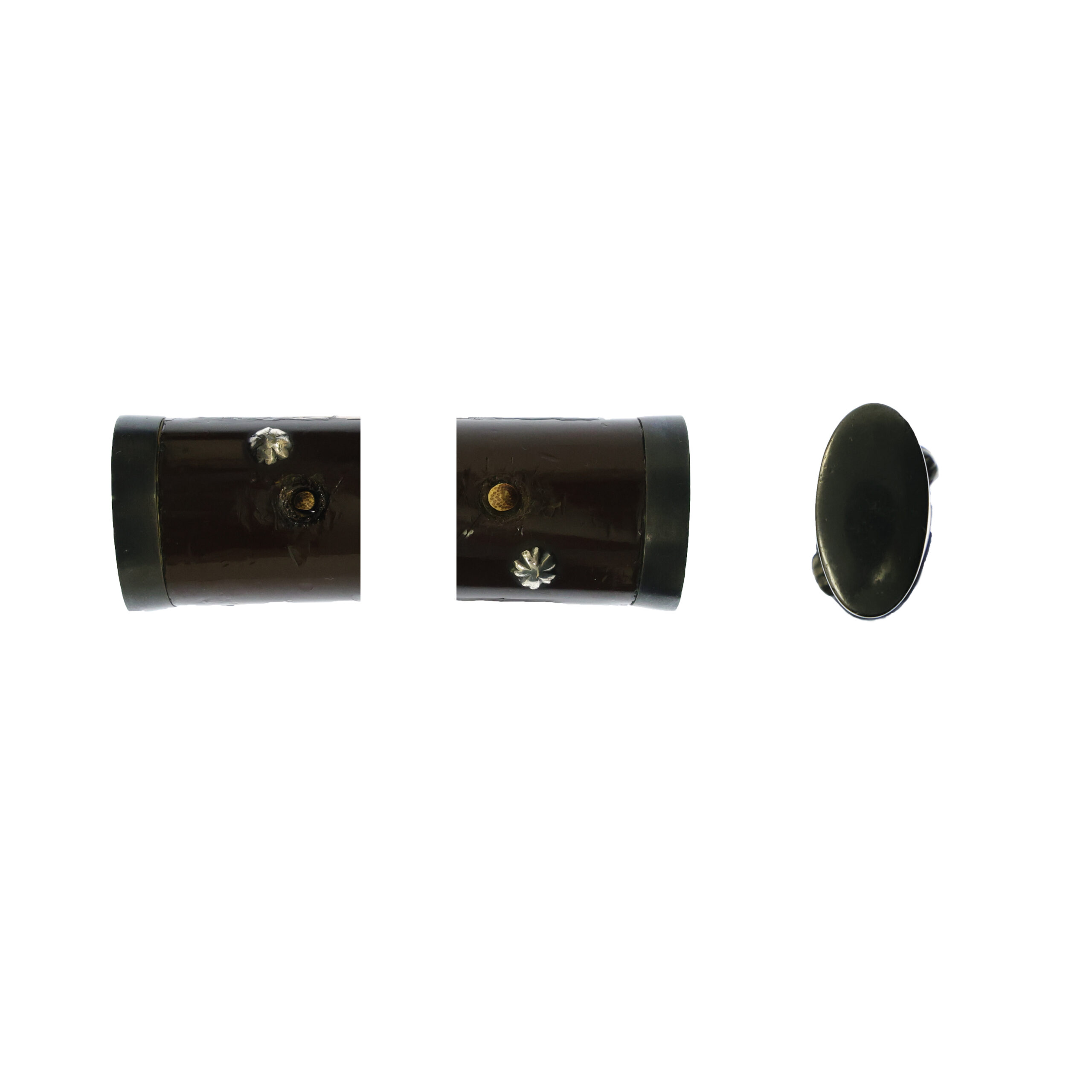
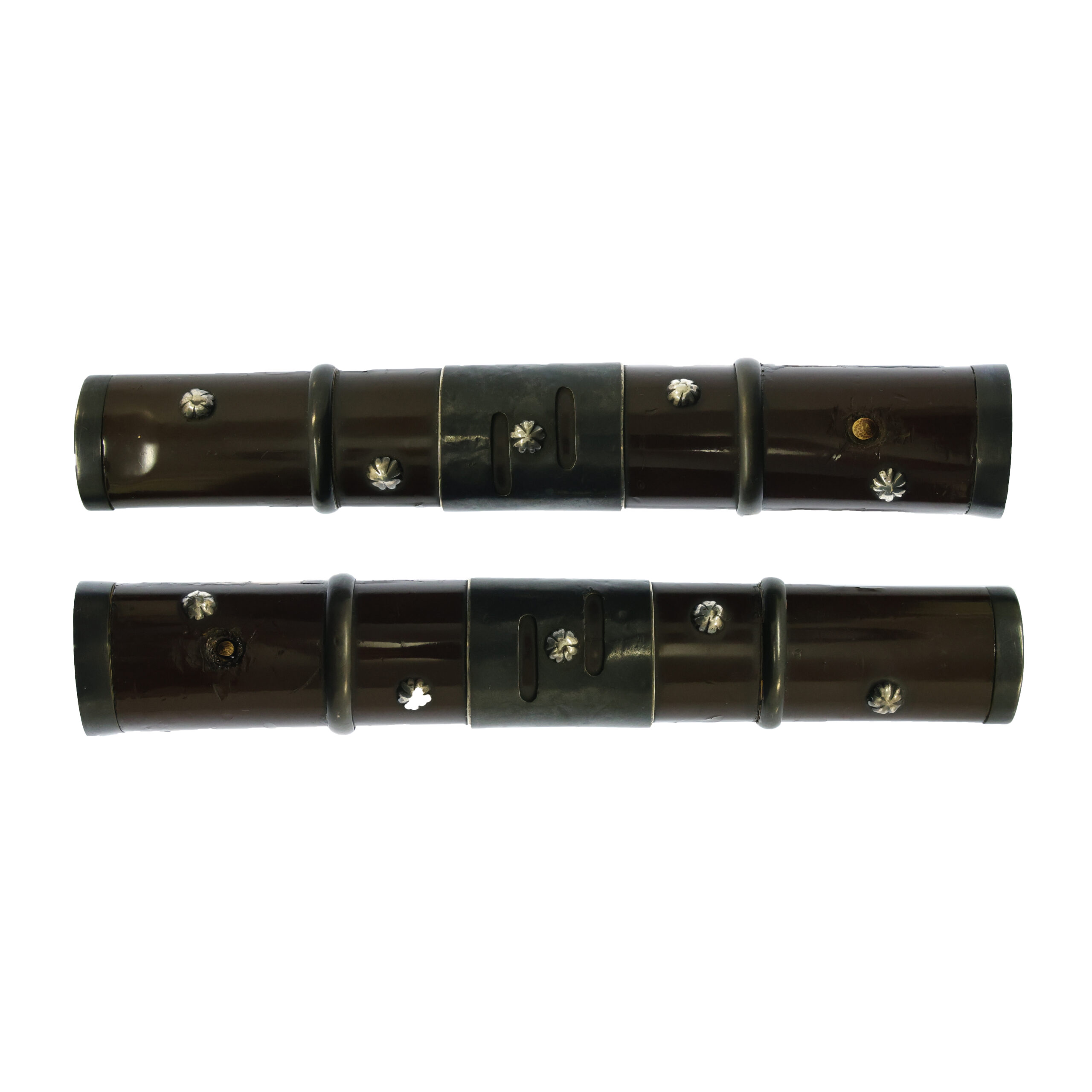
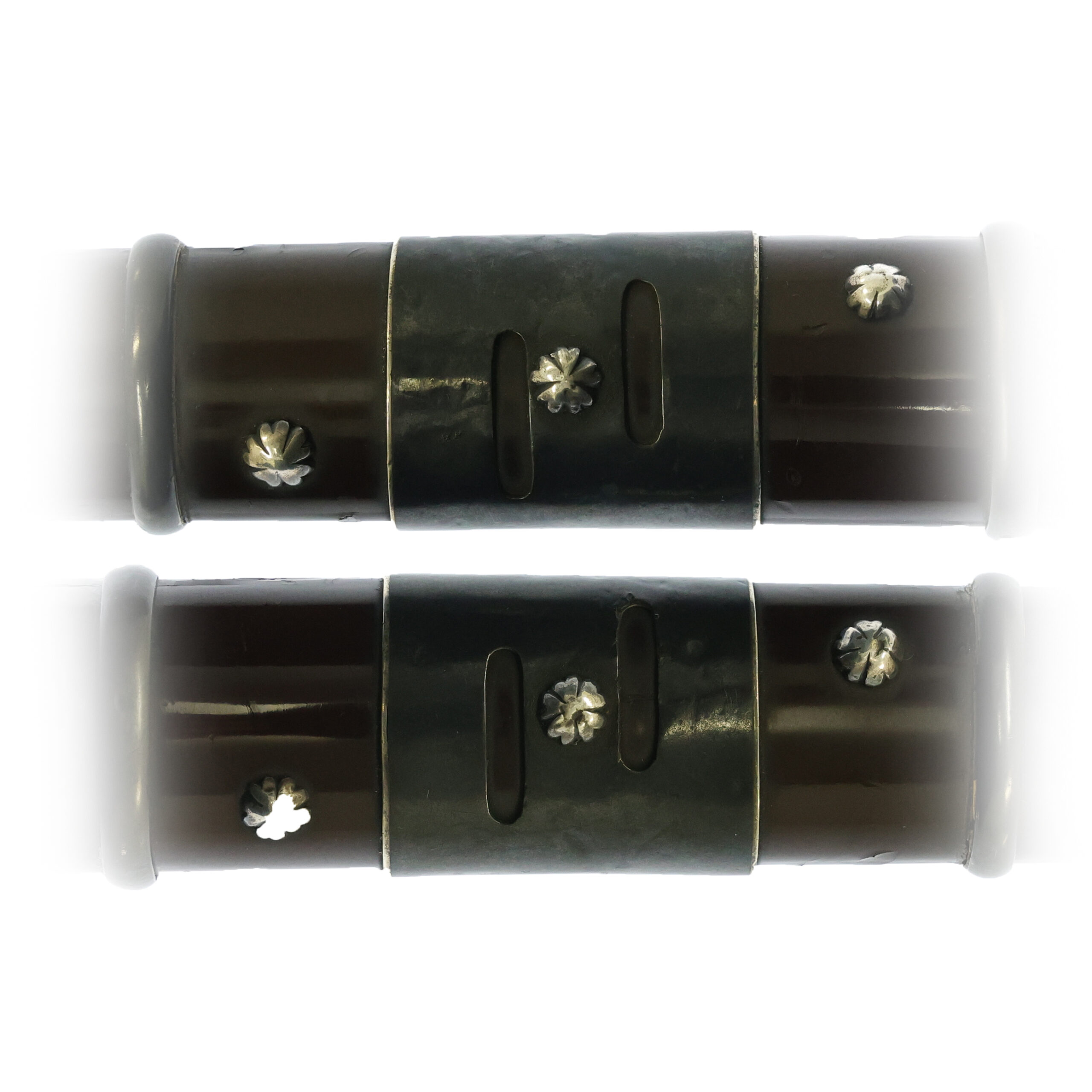
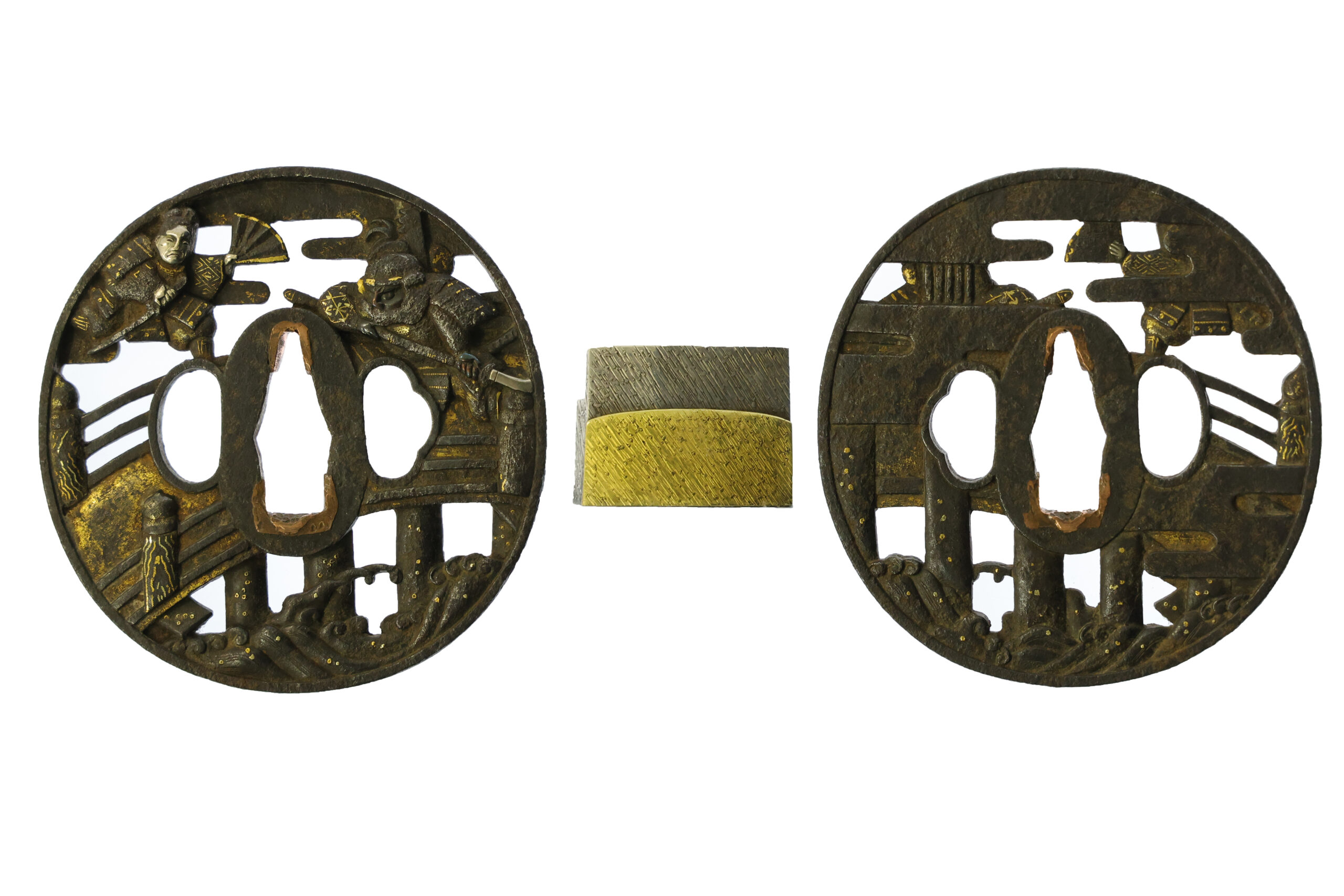
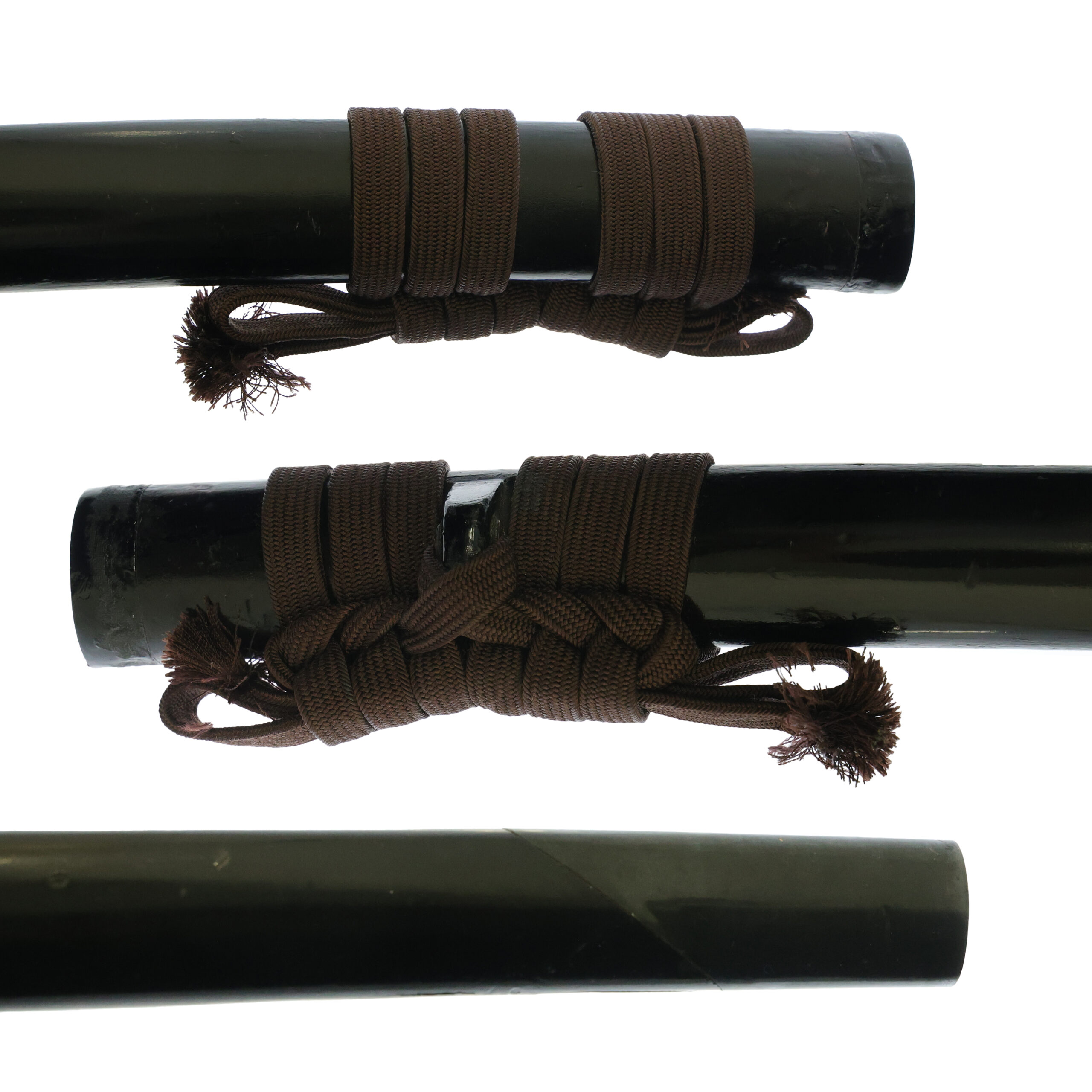
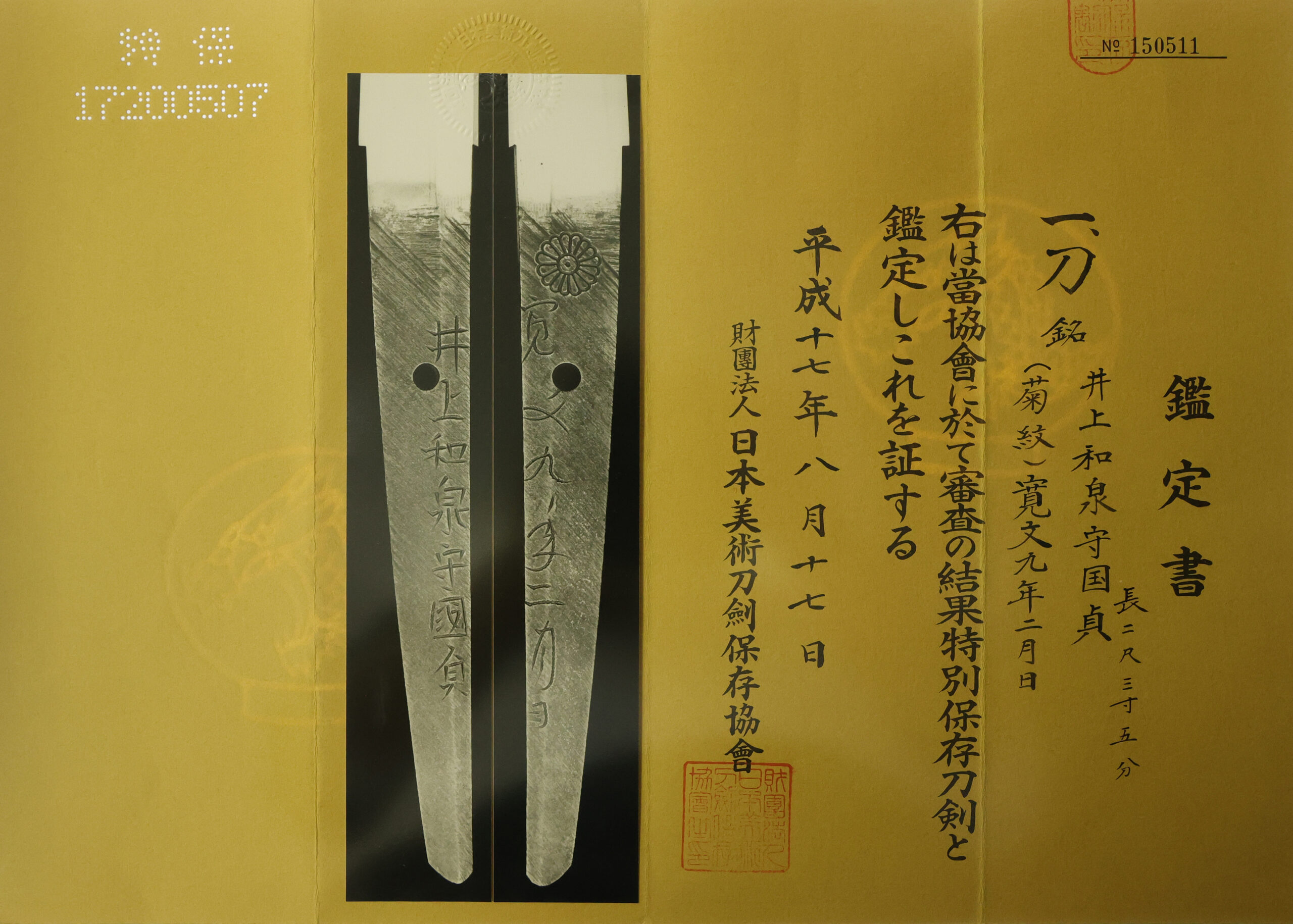
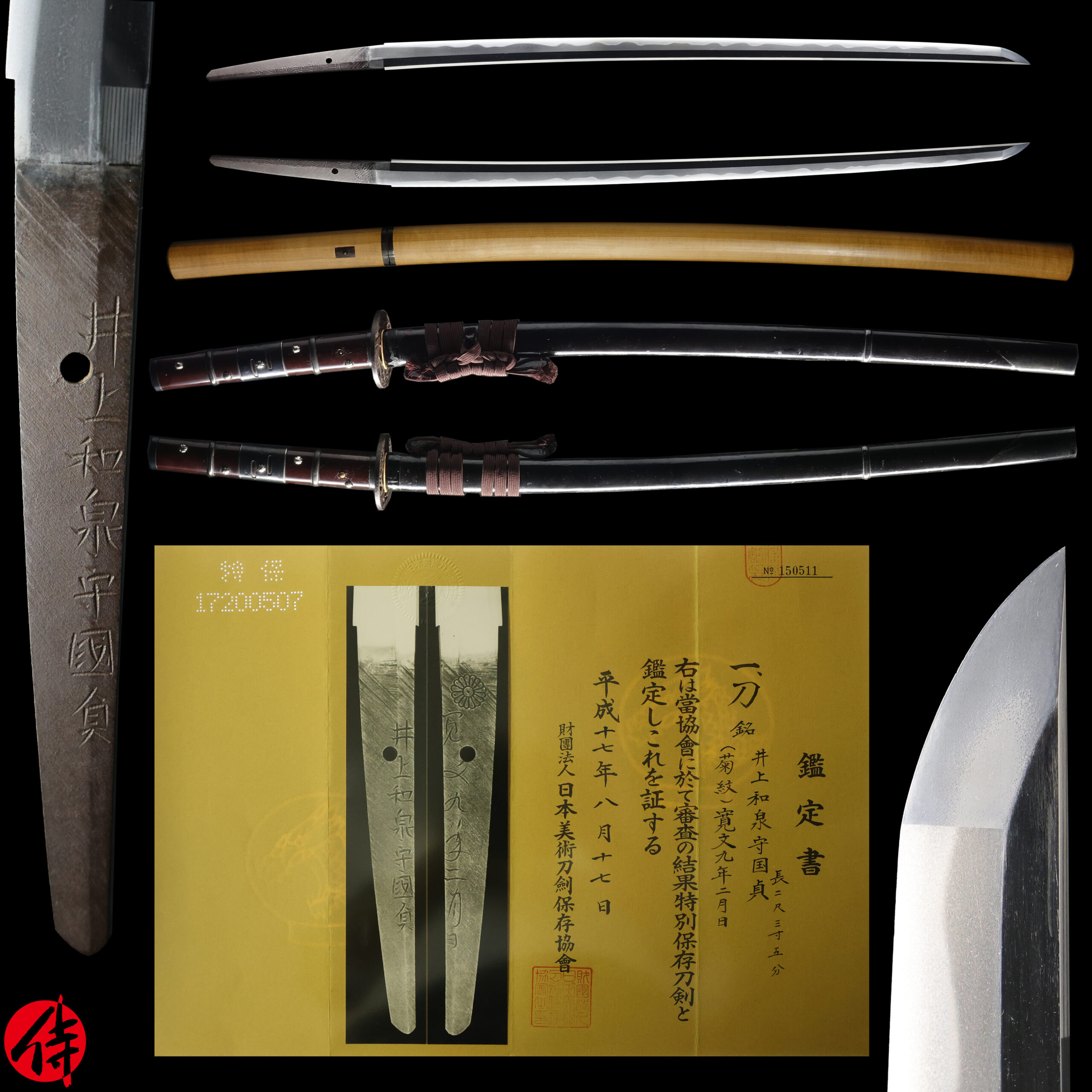
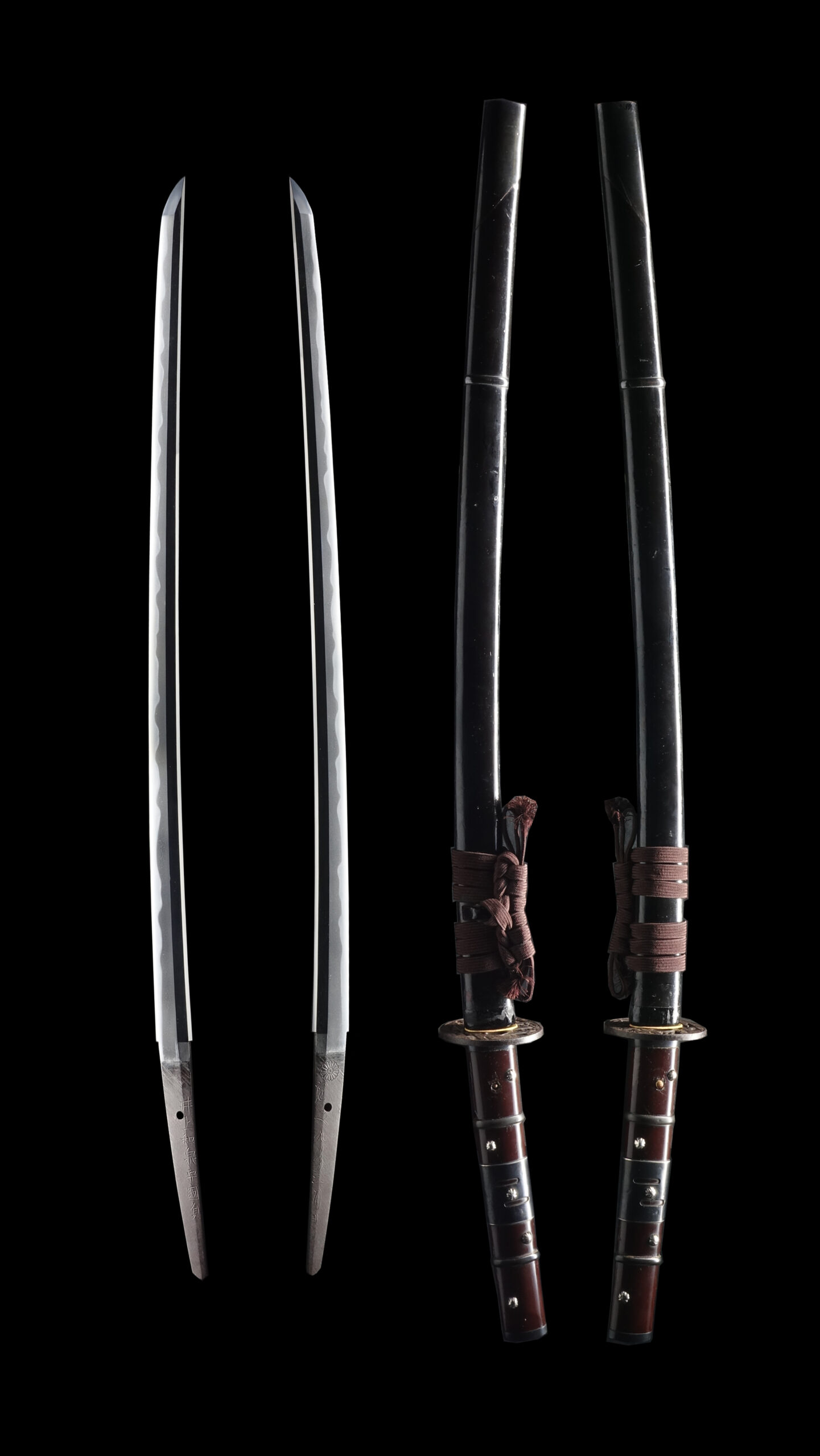
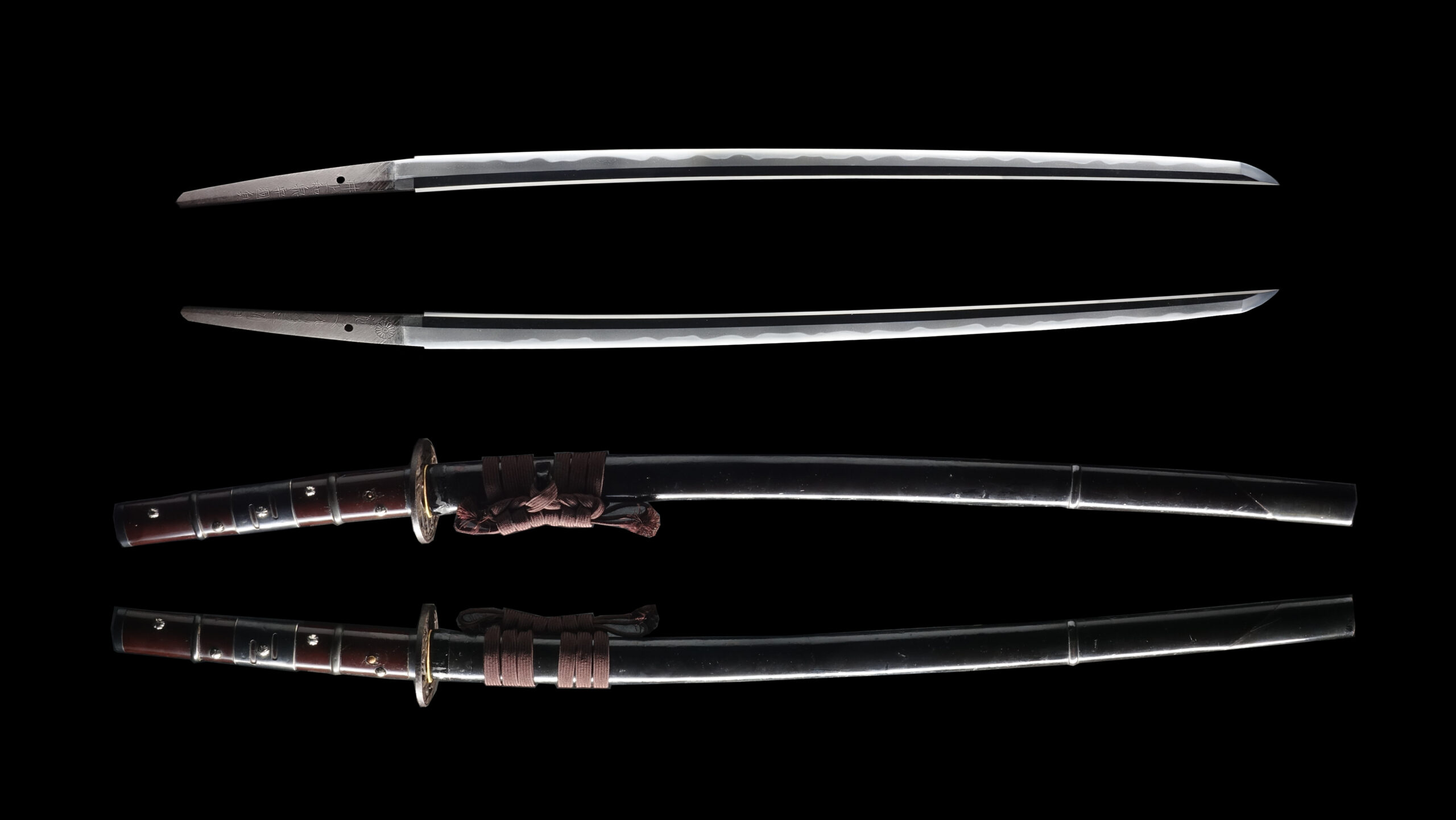
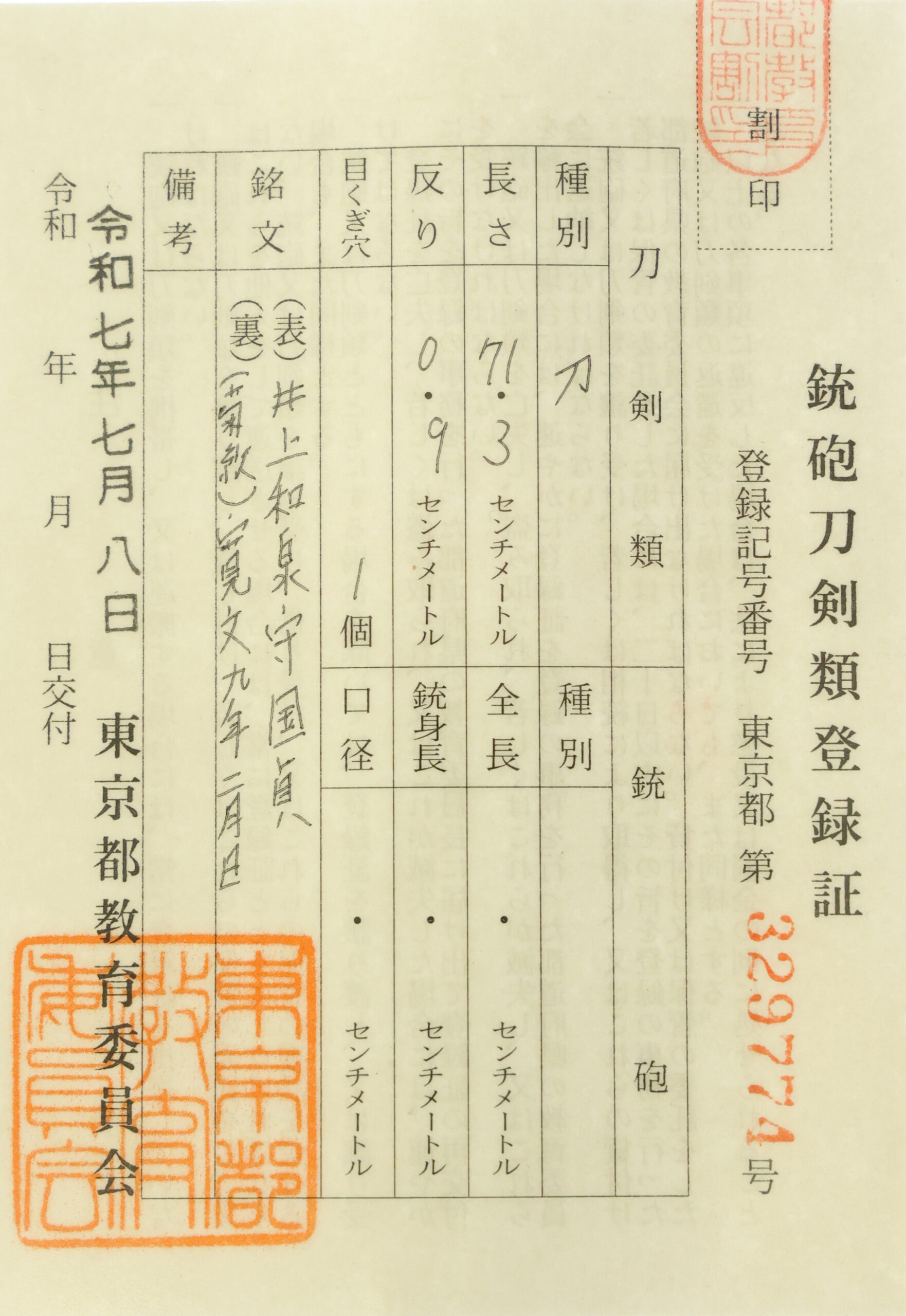
This blade was signed by Inoue Izumi no Kami Kunisada (井上和泉守国貞) in the 9th year of the Kanbun era (1668: the early Edo period). He is also known as the second-generation Kunisada, more commonly known by his name Inoue Shinkai (井上真改). He was active during the early Edo period, primarily between the 1640s and 1680s, and is widely regarded as one of the greatest swordsmiths of Osaka. Shinkai was born in the 7th year of the Kan-Ei era (1630) as the second son of the first-generation Kunisada, who had been a prominent disciple of Horikawa Kunihiro. Shinkai inherited his father’s name “Kunisada” early in his career , signing his works with that name before later adopting the signature “Inoue Shinkai.” For this reason, to distinguish between the two generations, the father is referred to as “Oya Kunisada” (Father Kunisada), while the son is known as “Shinkai Kunisada.” He received Izumi no Kami (和泉守) title in the first year of the Jo-Ou era (1652). Kami is honorable official title given by the imperial court for one’s excellent craftsmanship. During the Kei-an era (1648-1652), Shinkai often did Daisaku for his father. Daisaku is a regular act where an apprentice or a child of the swordsmith signs his master’s name with his master’s permission or forges a blade on behalf of the master. That means that his master highly acknowledged Shinkai’s craftsmanship. Considering the fact that Shinkai did Daisaku for his father, they must have had a very close relationship and trusted each other. In 1661, he was allowed to inscribe Kikumon (chrysanthemum emblem) , which is the symbol of the Japanese emperor. After receiving this honor, he changed his maker’s name to Inoue Izumi no Kami Kunisada. The back of the tang of this blade has this emblem. It is said that he changed his maker’s name from Inoue Izumi no Kami Kunisada to Inoue Shinai after the 12th year of the Kanbun era (1672). Considering this fact, we believe this blade was during 1652-1661. Shinkai elevated the reputation of the Osaka school of swordsmithing with his refined technique, impeccable craftsmanship, and elegant hamon (temper lines). His swords are known for their exceptional sharpness and durability. He trained many talented apprentices, helping to solidify Osaka as a major center for sword-making during the early Edo period. Shinkai passed away in 1682 at the age of 63, leaving behind a legacy that placed him among the finest smiths in Japanese sword history. Osaka Shinto The blades made by the second-gen Kunisada are categorized as Osaka Shinto. Shinto is Japanese Sword terminology that refers to the swords forged during 1596-1781. The blades made in the Osaka area during this period are called Osaka Shinto. There are many famous swordsmiths in this Osaka Shinto era. After Hideyoshi Toyotomi built Osaka castle, Osaka city flourished as a castle town and became the business center. Many swordsmiths moved to Osaka to look for better opportunities. They not only forged swords for those Samurai who lived in Osaka but also for feudal lords nationwide. Ikanshi Tadatsuna (Awataguchi Omi no Kami Tadatsuna), Inoue Shinkai (his son), and Tsuda Sukehiro are the most famous among many swordsmiths. One of the most notable characteristics of Osaka Shinto is its beauty in Jigane. Jigane is a visible steel surface pattern created by folding and hammering during the forging process), which made it possible by the location of Osaka. Osaka had close access to the Tamahagane (special carbon steel to make Japanese swords) production sites. The swordsmiths residing in Osaka were able to get high-quality carbon steel from these sites. It is appraised as a Tokubetsu Hozon Token (特別保存刀剣) issued by NBTHK (Nihon Bijutsu Touken Hozon Kyokai:日本美術刀剣保存協会). Tsuka and Menuki The tsuka of this sword is decorated with a scattered cherry blossom motif (桜散らし, Sakura-chirashi), in which cherry blossoms are delicately dispersed across the design. For the Japanese people, cherry blossoms hold deep cultural significance. They symbolize the fleeting nature of life, beauty in impermanence, and the changing of the seasons. Because the blossoms bloom brilliantly yet fall quickly, they have long been associated with both renewal and transience. This motif was especially favored by samurai, who identified with these values and incorporated cherry blossom designs into their arms and armor. *Please keep in mind that there is a couple of noticeable trace of restoration on the Tsuka. Tsuba and Habaki The design depicted on this tsuba portrays the legendary encounter between Ushiwakamaru (牛若丸, later known as Minamoto no Yoshitsune) and MusashiboBenkei (武蔵坊弁慶), one of the most celebrated master–retainer stories in Japanese history. According to legend, the two first met at Gojo Bridge—not the present-day bridge, but an earlier crossing located near what is now Matsubara Street in Kyoto. There, the youthful and agile Ushiwakamaru overcame the physically powerful Benkei, embodying the principle that “flexibility overcomes strength.” Following his defeat, Benkei pledged his lifelong loyalty to Ushiwakamaru, forming a bond that has become iconic in Japanese culture. This scene is best known as the famous episode in which Ushiwakamaru defeats Benkei by throwing a folding fan, a clever act that symbolizes his quick thinking and martial skill. The episode has been widely depicted in ukiyo-e prints, kabuki theater, and is even referenced in the traditional children’s song “Ushiwakamaru.” In such representations, the folding fan serves as a symbol of Ushiwakamaru’s ingenuity and strength. Saya This Saya is covered with black lacquer. Due to its high waterproof effect, lacquer has been used since ancient times in Asia. The blade of a Japanese sword is made of iron, and moisture is the greatest enemy of iron. For the purpose of carrying the blade without degrading it, people devised a method of coating the scabbard with lacquer. To prevent not only moisture but also rain and snow from penetrating the inside of the scabbard, it was necessary to apply multiple layers of lacquer. The Nushi (塗師, lacquerers) was born precisely because advanced techniques were required to handle the complicated processes. Authentication Paper They authenticated the blade on August 17th in the 17th year of Heisei (2005). They appraised it as Tokubetsu Hozon Touken, the blade especially worth preserving for Japanese society. *Please keep in mind that the registration number shown on this certificate is different from its current registration number. This is because the blade was re-registered after the certificate was issued on August 17th in 2005. The registration was re-issued on July 8th in 2024 in Tokyo. As you can see the signature, the shape of the Nakago and the location of the Nakago hole on the certificate are identical to that of this blade.

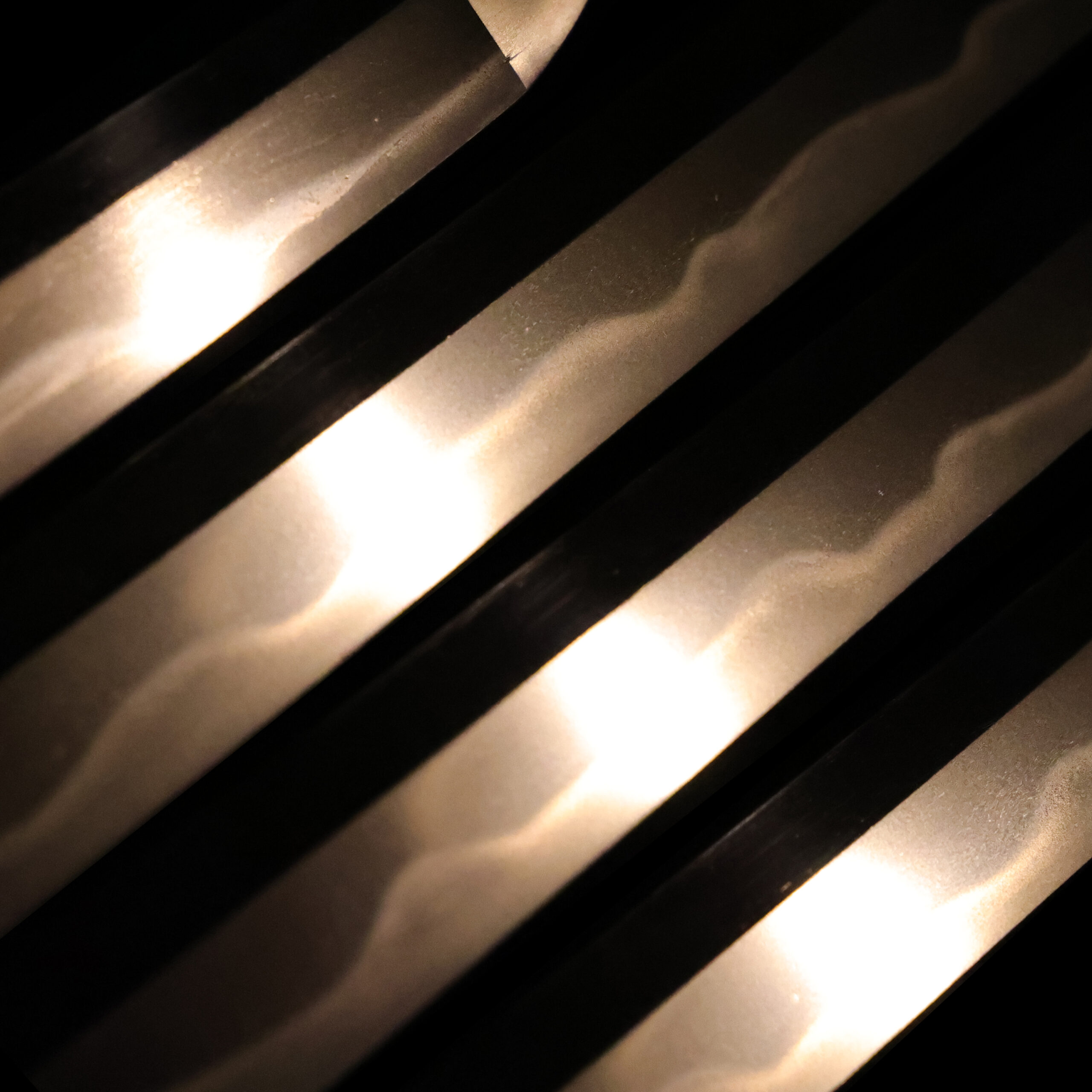
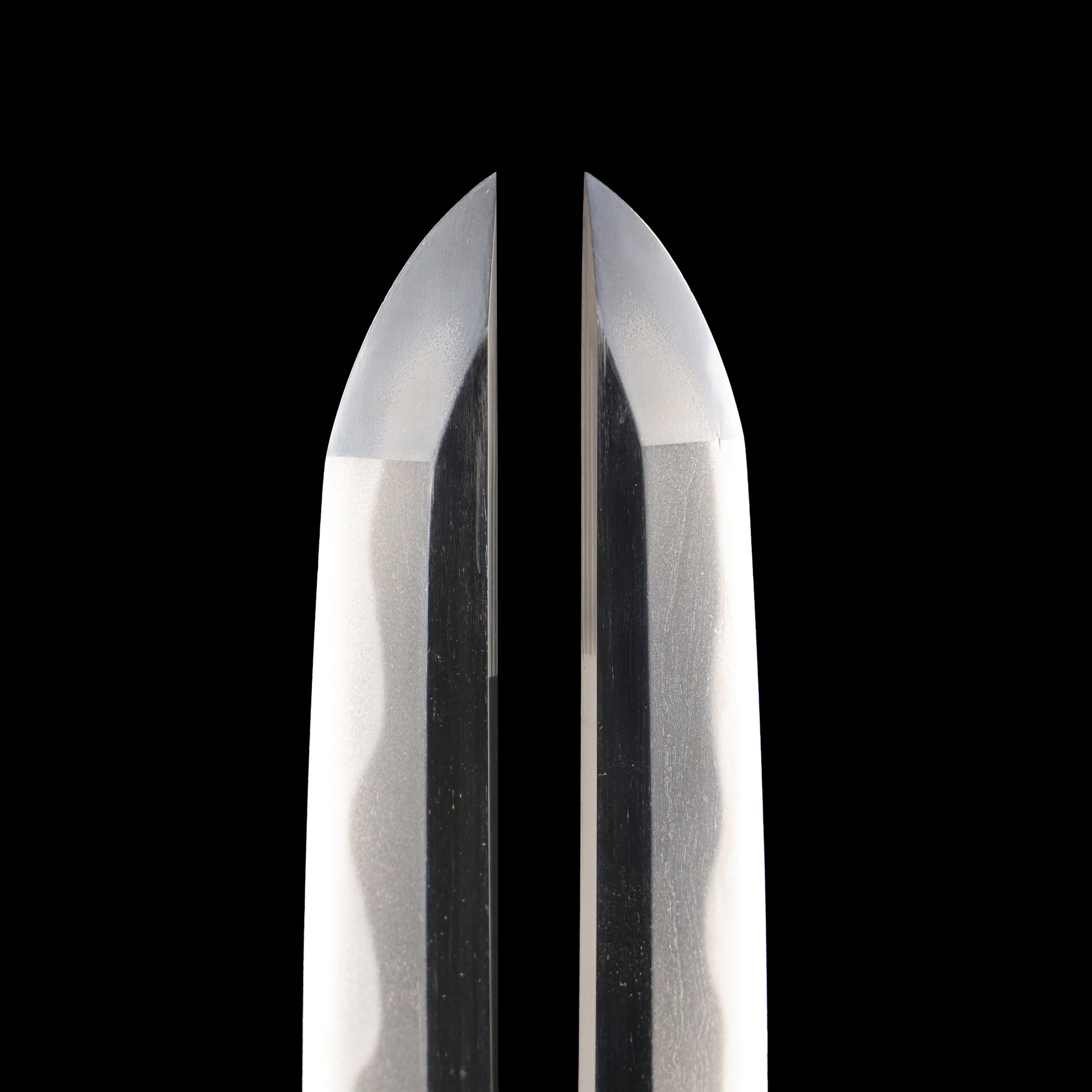
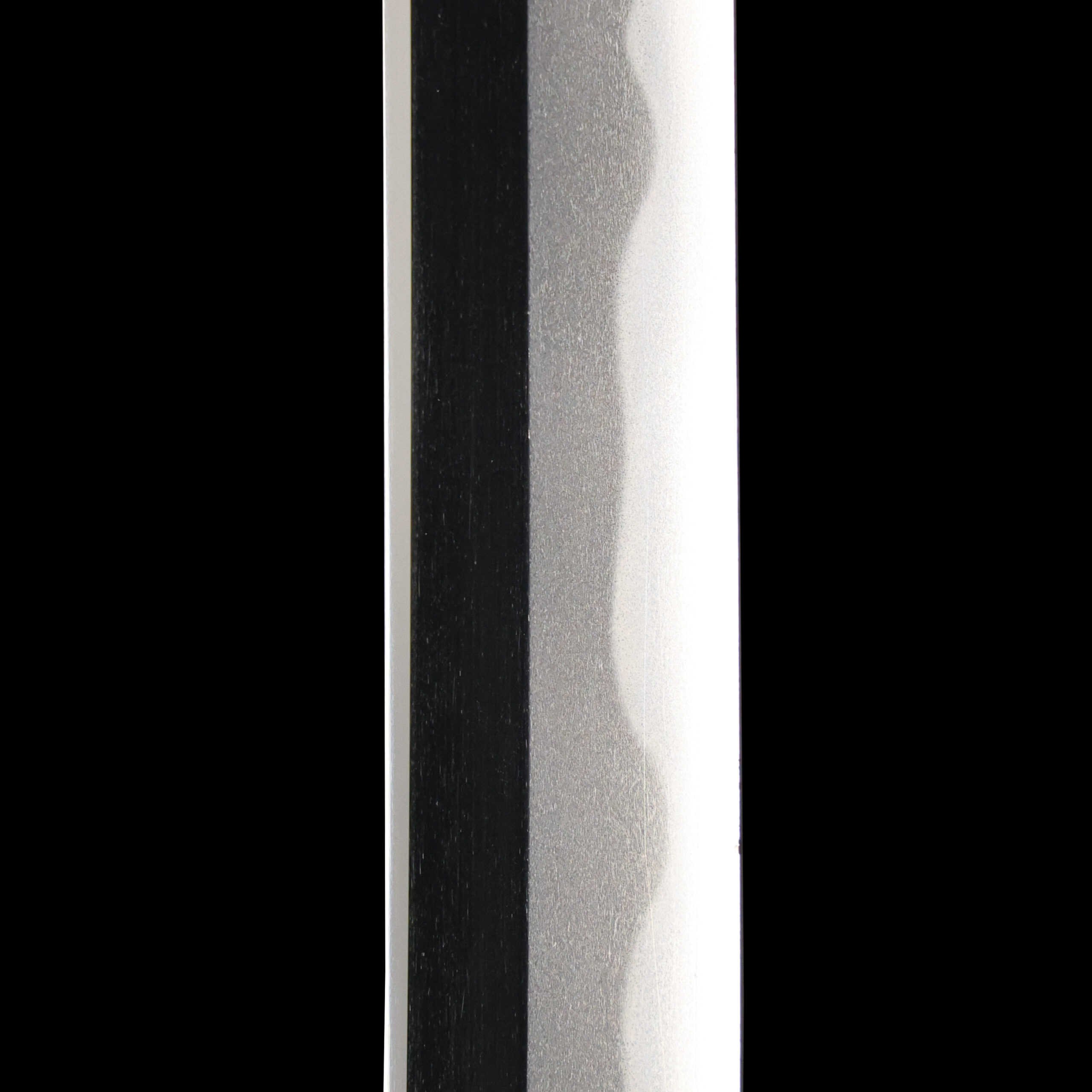
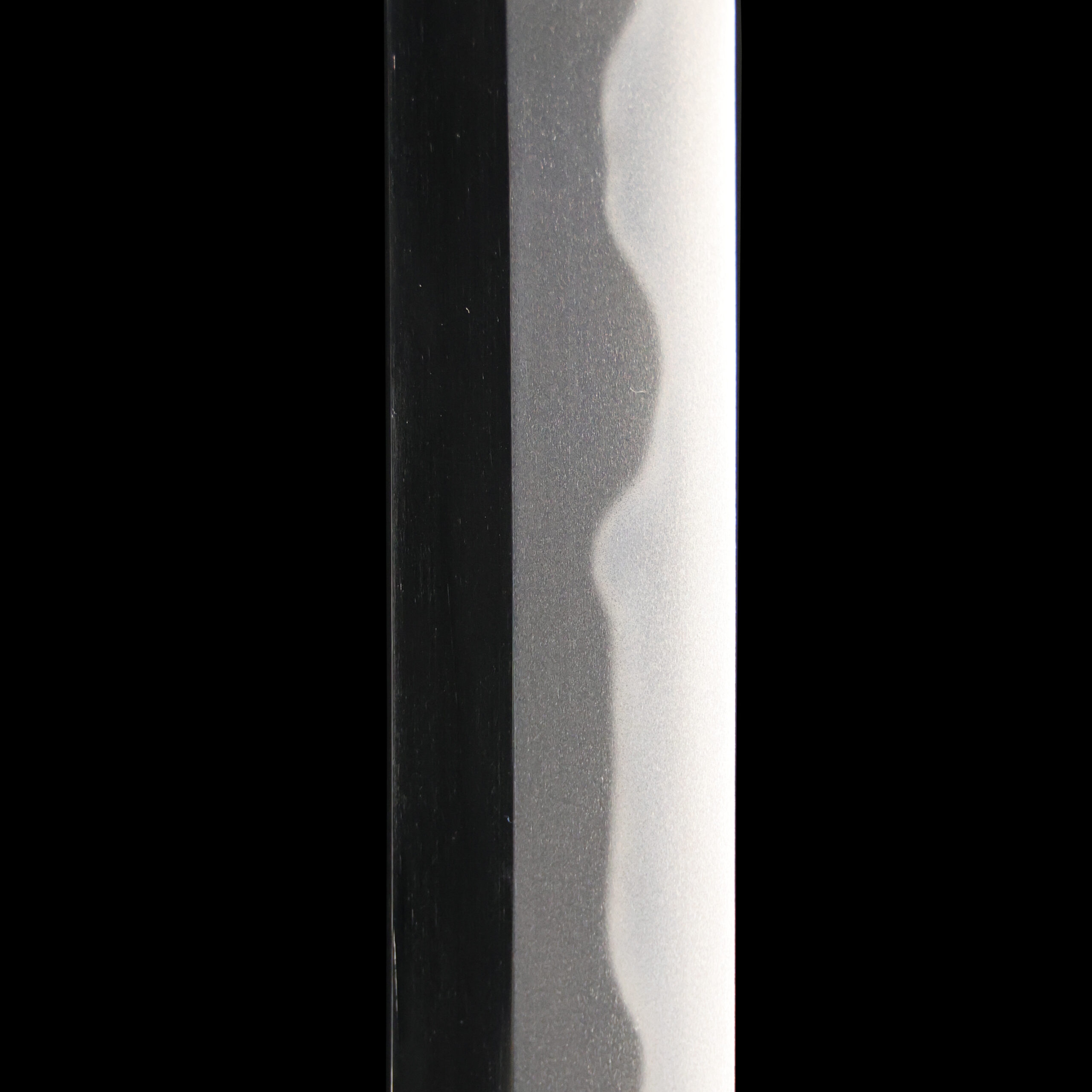
販売店の記載のまま
新刀 · 摂津
現在61点販売中
大坂新刀は、商都大坂を本拠として江戸前期から中期にかけて興隆した摂津の一門である。その草創は京の堀川一門にあり、堀川国広の門に学んだ和泉守国貞、親国貞こと国貞と河内守国助とが、慶長十九年に師の没した後そろって大坂へ下り、この地に鍛刀の家を興した。国助は伝に伊勢国の出にして石堂の流れを汲み、堀川より受け継いだ枯れた肌合とともに、古備前を慕う石堂の丁子をこの地にもたらした。そこへ大和文殊系の包保・包道に承けた越後守包貞が摂州に居を構え、肥後菊池より出て井上真改の門を叩いた貞則のごとき遊歴の工も加わって、堀川と石堂と文殊の脈が大坂の地で一つの作域に結ばれていった。やがて親国貞の子真改、津田越前守助広、一竿子忠綱らがあらわれ、寛文・延宝・元禄の頃にこの一門は最も華やぐ。 一門の作風は、まず明るく冴える大坂鍛えに標識を持つ。鍛えはよくつんだ無地風の小板目で、地沸が微塵に厚くつき、地景が細かにさかんに入り、鉄色は明るく潤う。その地の上に、刃区を直ぐに焼き出し、その上から己の刃文を起こすのが一門に通じる約束で、収集家のいう大坂焼出しである。匂口は終始深く明るく冴え、刃縁は締まる。この共通の文法の上に、各工はおのおのの差を置く。井上真改は華やかな乱れを焼かず、よくつんだ精美な地に浅いのたれを帯びた沸深き直刃を本領とし、相州の郷義弘への意図的な写しにその沸の妙味を尽くして、大坂正宗と称された。津田助広は波濤のごとくうねる濤瀾刃を創始し、真改の小沸の直刃と並んで両大関と仰がれる。一竿子忠綱は揃った長足の丁子に簾刃の濤瀾を交え、何にもまして真の倶利迦羅や鯉の滝上りを刻んだ一竿子彫をもって分かたれる。河内守国助の家は丁子の旗頭で、二代中河内は握り拳の頭を戴く拳形丁子を創始して新刀一文字と賞され、その弟肥後守国康や四男国輝もこの石堂の丁子と津田風の濤瀾を担った。越後守包貞は助広に倣う濤瀾に片山乱れと文珠の砂流しを通わせ、貞則は師真改の沸深き直刃をよく継いだ。共通するのは明るい匂口と直ぐの焼出し、異なるのは真改の沈める沸、助広の濤瀾、国助一門の丁子という、地の上に置かれた手の差である。 収集家が大坂新刀を求める理由は、鑑定の勘所が明快で、主要工の格が高いことにある。明るく冴える大坂鍛えと、刃を起こす直ぐの焼出しという二つの見どころは、地と刃のいずれにも紛れなく現れて工と作域を定める手懸りとなり、真改の沸深き郷写し、忠綱の一竿子彫、中河内の拳形丁子といった各工独自の標識が、そこに重なって名を分かつ。一門の作はおおむね在銘年紀で、銘そのものが時の標識となるため、由緒の確かさをもって賞翫される。真改や助広や忠綱の最上手は市に現れることが稀で、現れれば一頭地を抜く出来事となるが、包貞・国助・国康・国輝のごとき名手の在銘作は、辛抱をもって相応に相見え、大坂新刀へ分け入る手近な入口を提供する。来歴の知られる作は谷干城や山内家、皇室の蔵を経て近代に伝わり、美術刀剣としての魅力は、真改の沸と助広の濤瀾が後世の刀鍛冶に及ぼした影響とともに、商都大坂が新刀期に成し遂げた一個の到達を今に伝える。 詳しく見る →
大坂 町人の都の刀
大坂は町人の都であり、刀も金の流れに従った。脇差一腰しか許されぬ町人のための贅沢な作、助広の濤瀾乱れ、大坂正宗と呼ばれた真改。率直に言えば、見られるために作られた刀である。
保存刀剣のうち、出来が一層優れ、保存状態も良好と認められたものです。再刃や、室町・江戸期の多くの無銘作は対象外となり、保存刀剣より高い基準が課されます。
日本美術刀剣保存協会(日刀保)は、1948年に設立され、文化庁の監督を受ける公益財団法人で、東京・刀剣博物館に本部を置きます。専門の審査員が出品作を直接審査し、美術的・歴史的価値に応じた鑑定書を発行します。日刀保の鑑定書は、日本刀および刀装具の真正性を示す最も広く認知された基準です。
日刀保公式サイトReturns/exchanges limited to defects caused by shipping (except willful misconduct or gross negligence by the company); customers must contact within 72 hours of receiving the product.
Certificate reading — 銘 井上和泉守国貞(菊紋)寛文九年二月日