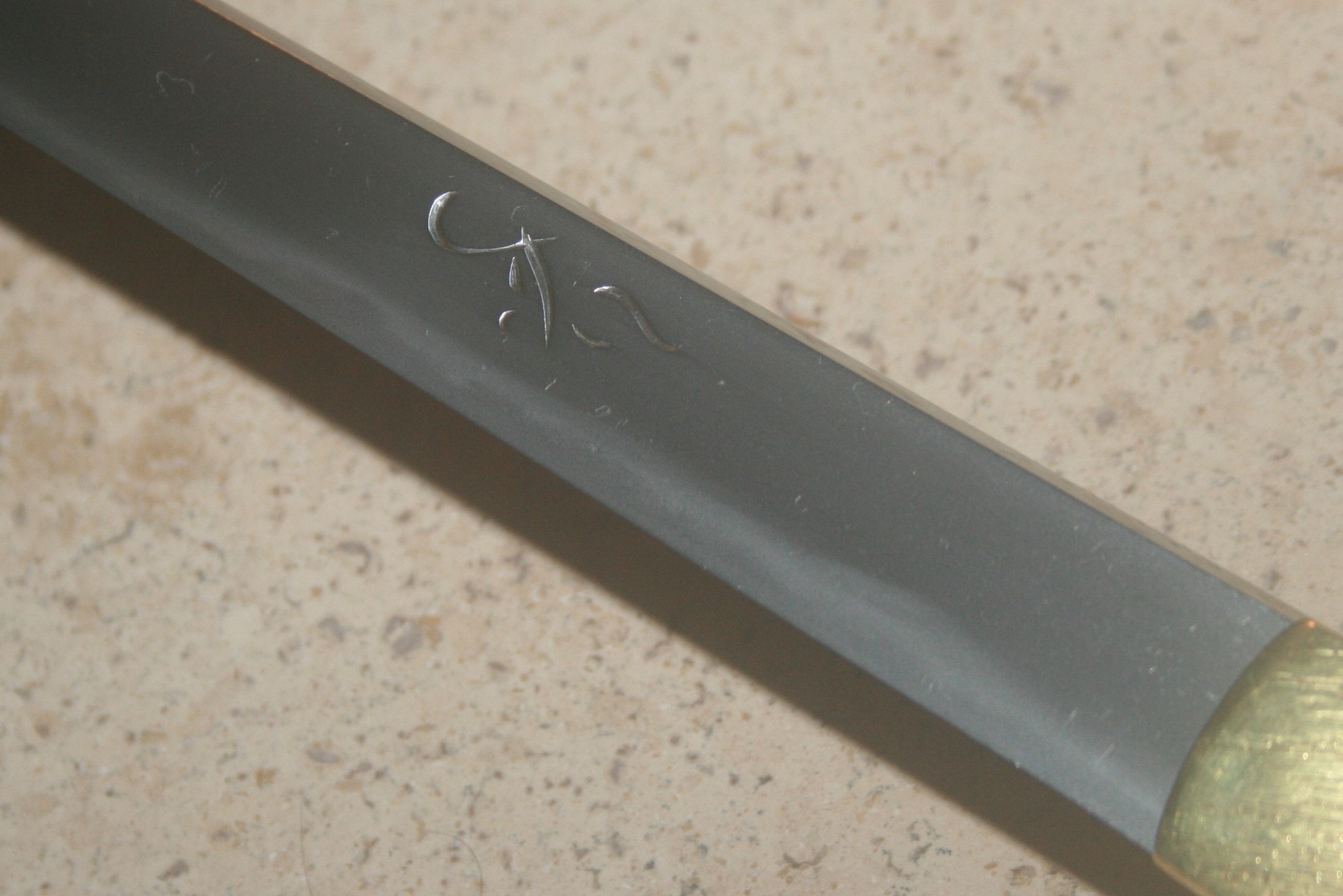
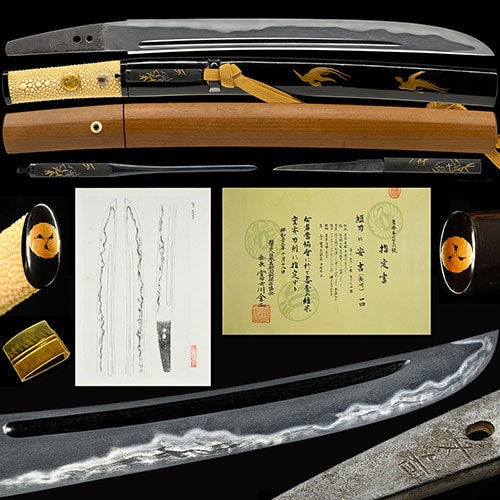
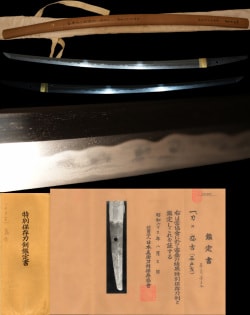
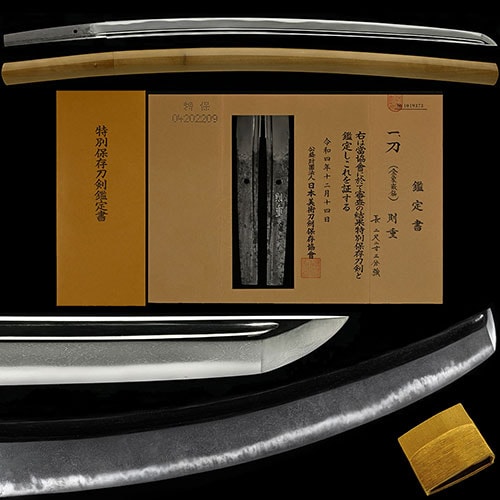
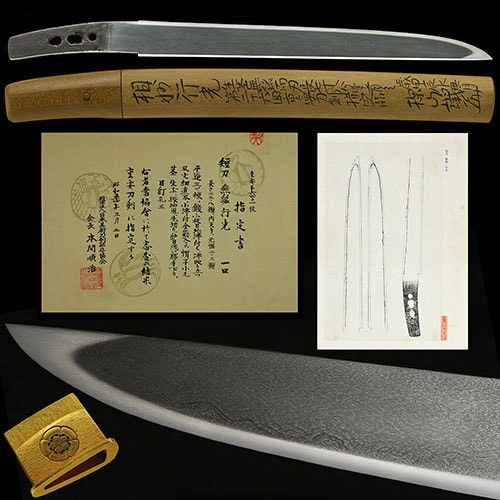
Sadayuki belonged to the Sa school of Chikuzen Province, a lineage that emerged in the early Nanbokucho period and broke decisively from the classical styles previously characteristic of Kyushu workmanship. Traditionally regarded as a student of Yukihiro, with an alternative transmission placing him under Yasuyoshi, Sadayuki is recorded with an extant date of Shohei 12 (1357) in the Umetada Oshigata, placing his activity squarely at the zenith of the Nanbokucho period. One theory holds that he later relocated to Aki Province. Signed works are few, and the overwhelming majority of attributions rely on kinzogan-mei appraisals, including examples authenticated by Hon'ami Koshitsu.
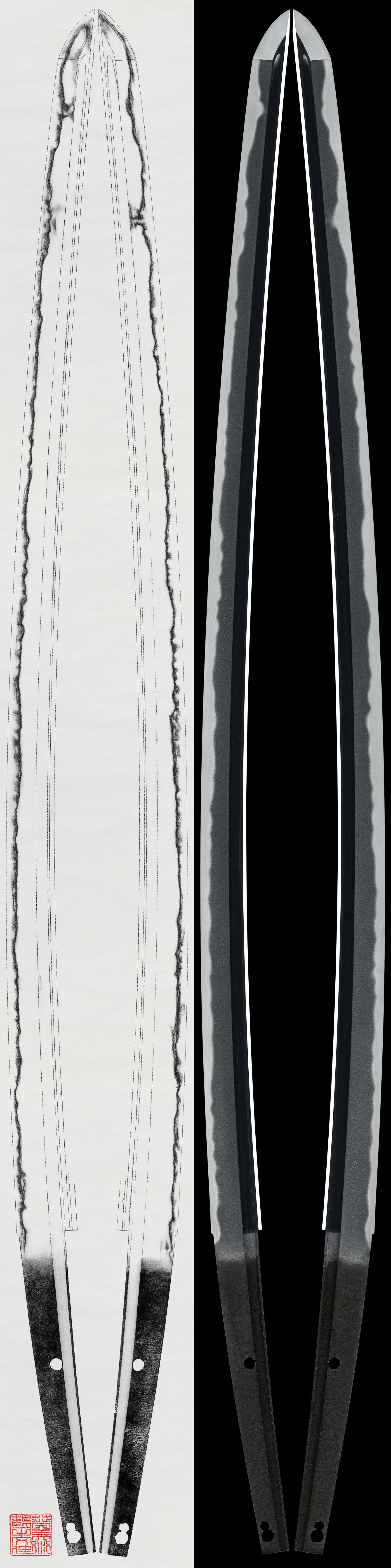
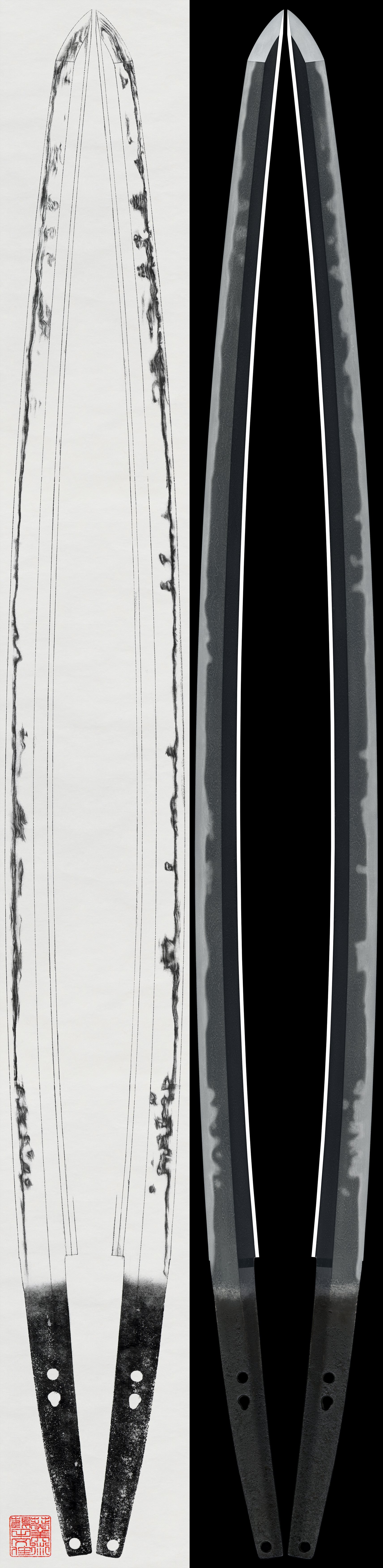
The designated pieces exhibit the unmistakable technical vocabulary of the Sa lineage in both jihada and hamon. The forging shows itame mixed with mokume and nagare-hada, with fine hada-dachi, thickly applied ji-nie, and abundant chikei, producing a bright and luminous jigane. The hamon is characteristically founded on a shallow ko-notare mixed with gunome, ko-gunome, and togariba, with strongly adhering nie and frequent hataraki including kinsuji, sunagashi, and intermittent yubashiri at the yakigashira. The boshi enters midare-komi and turns back with a pointed tendency, often showing hakikake. Where the nie is particularly thick, nie-kuzure appears along the habuchi, lending the temper a vigorous and expressive character.
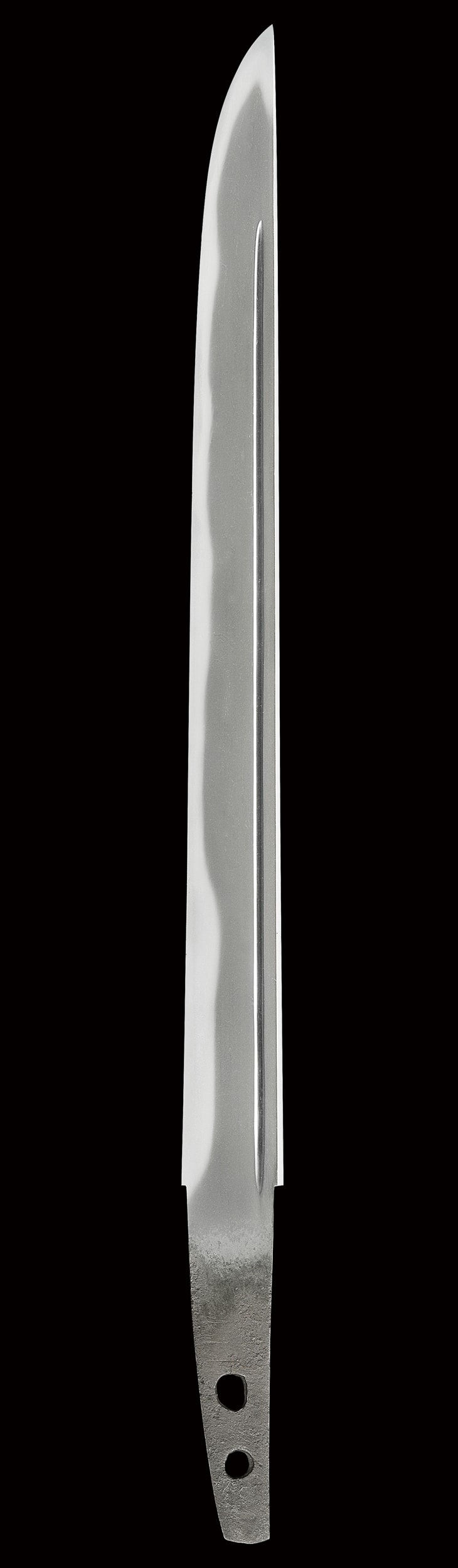
Sadayuki's works preserve the heroic proportions of their era: wide mihaba, extended chu-kissaki, and generous hiraniku in the long blades, and sunnobi hira-zukuri forms in the shorter pieces. Both ji and ha are consistently bright and clear, confirming the Sa school's refined sensibility, and the sound condition of these blades attests to the enduring quality of Sadayuki's forge craft.