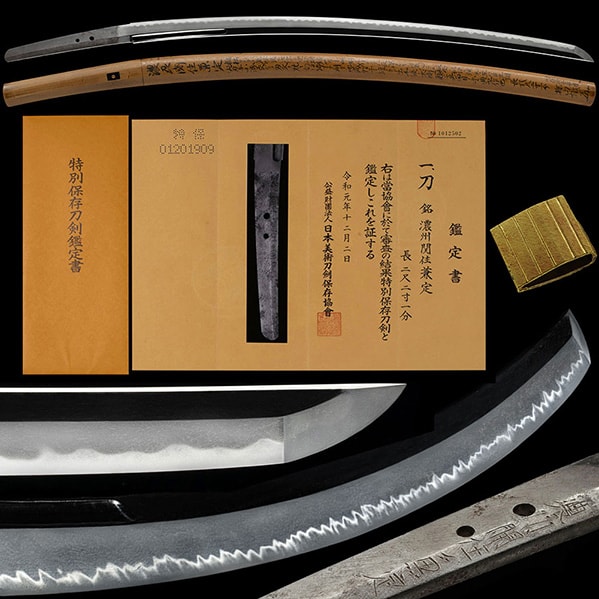
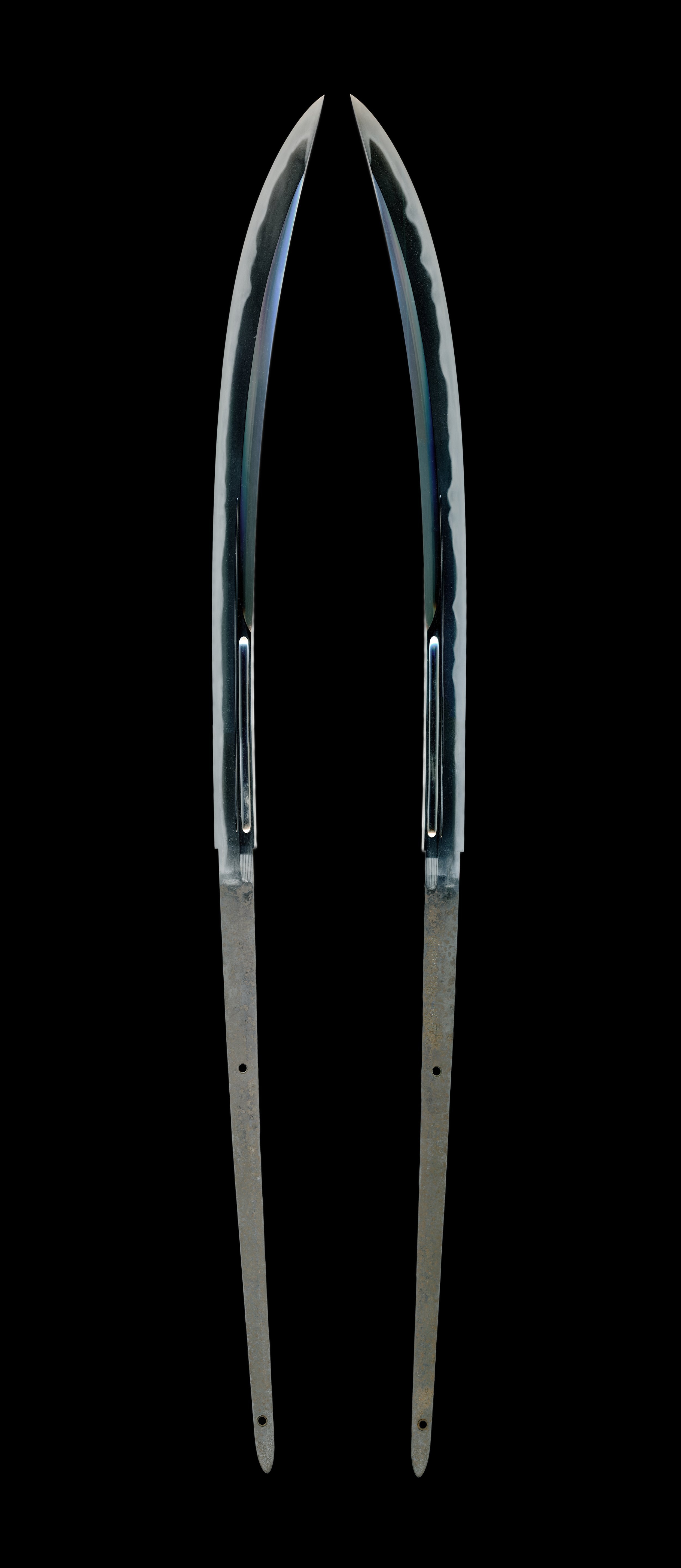
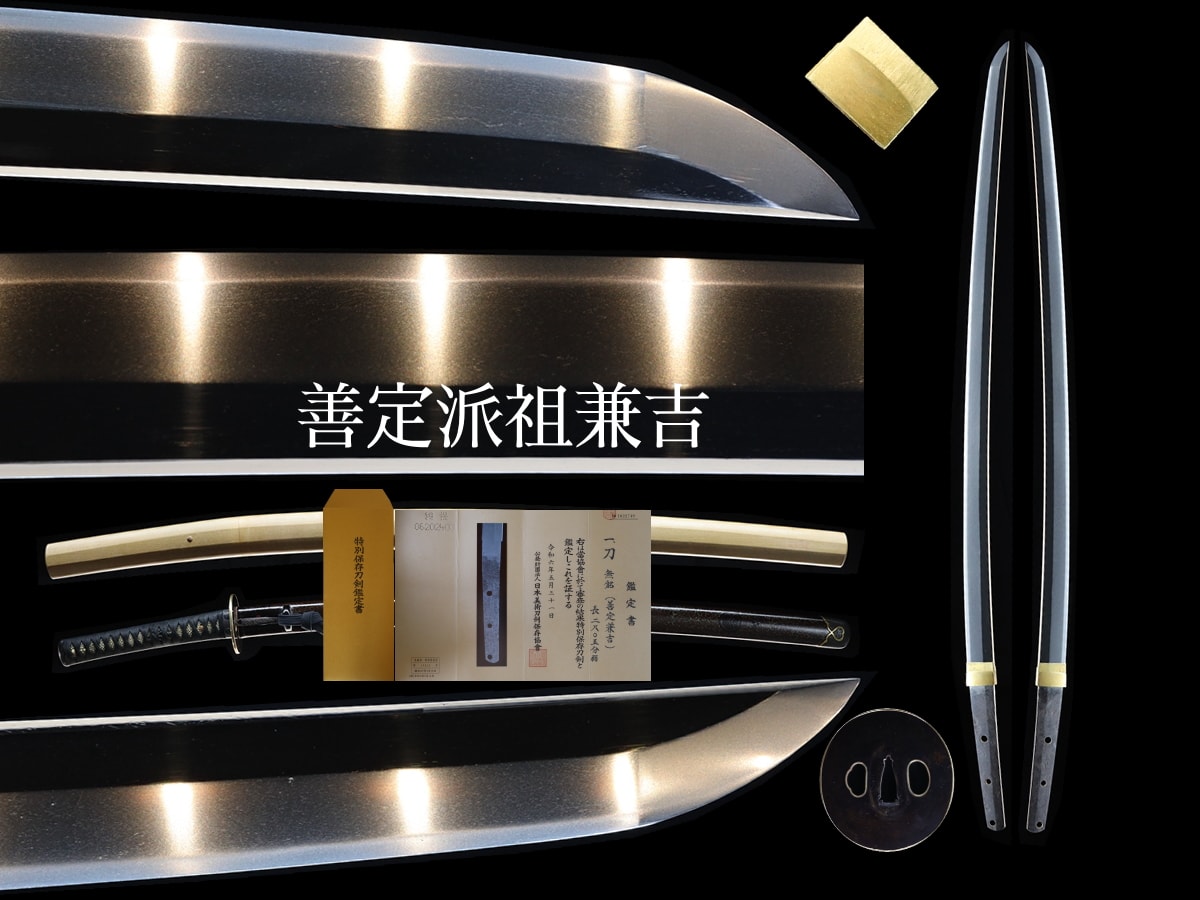
From the end of the Muromachi period into the early Shintō era, several Mino swordsmiths bore the name Daidō. The most prominent among them was Mutsu no Kami Daidō, whose signed and dated works survive from the Tenshō era, with recorded dates including Tenshō 2 (1574), 4 (1576), 13, and 18 (1590). Other smiths of the name carried various court titles -- Izu no Kami, Mikawa no Kami, Kawachi no Kami, and Shinano no Kami -- while still others signed without titles as "Seki-jū Daidō," "Gifu-jū Daidō," or "Heianjō-jū Daidō." Among the Mino smiths of this period, Mutsu no Kami Daidō is regarded as particularly highly skilled, "standing alongside Wakasa no Kami Ujifusa."
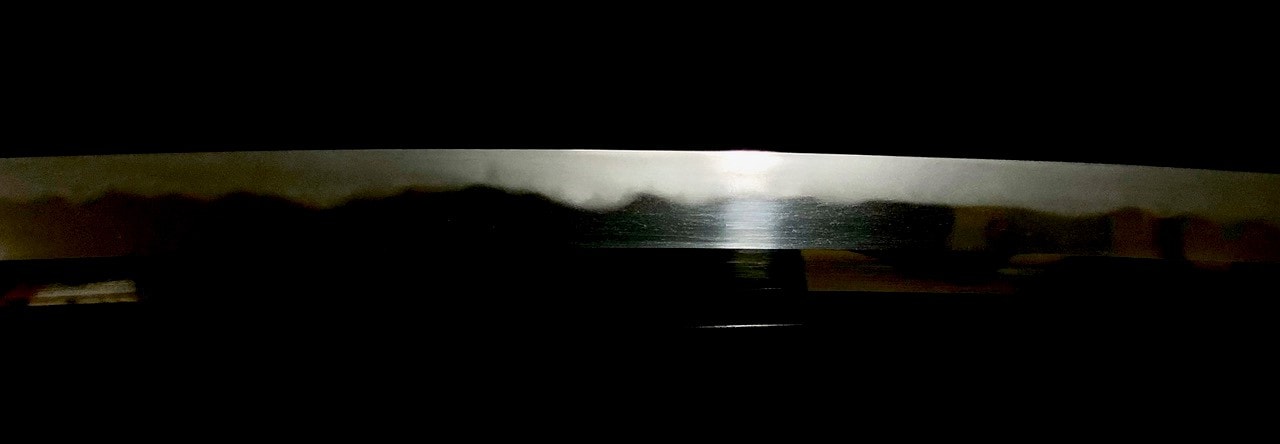
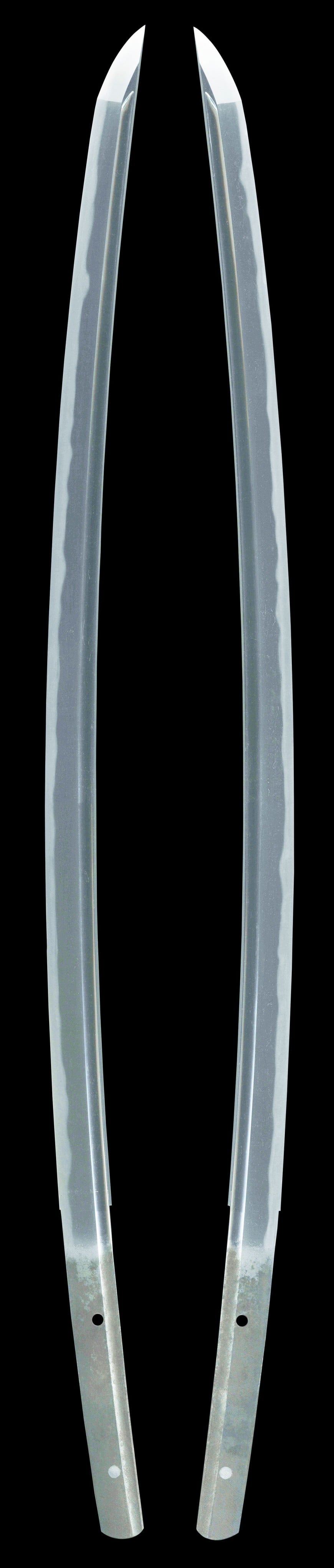
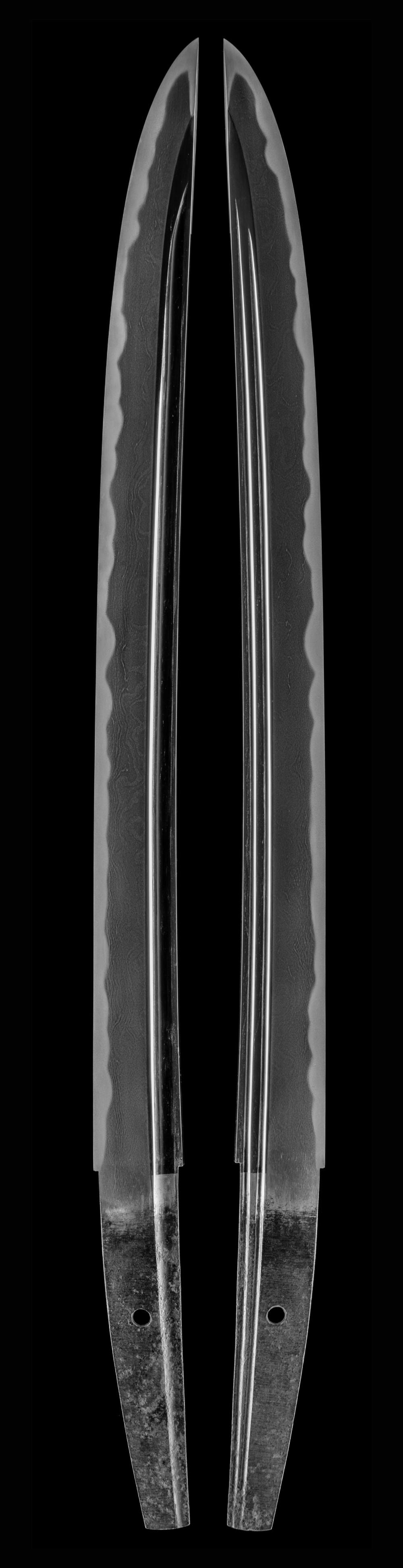
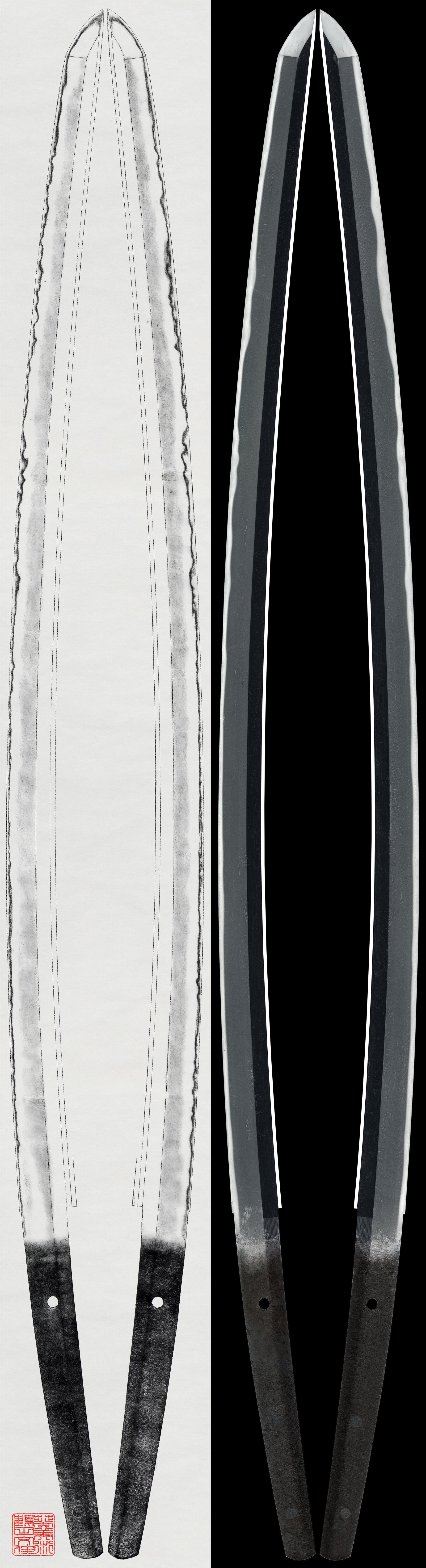
Daidō's forging typically shows ko-itame mixed with masame, with fine ji-nie well applied. His hamon is characteristically an ō-notare-based ko-gunome-midare, or a shallow notare mixed with ko-gunome, hakoba, and togari-ba; the nioiguchi is consistently described as tight and clear, showing lively variation, with ko-ashi and yō and adhering ko-nie. His bōshi tends toward midare-komi, turning back in a Jizō-like manner or with a pointed tendency. His sugata favors wide mihaba with imposing, dignified constructions, and he produced both katana and wakizashi in hira-zukuri. The carvings found on certain works -- including renderings of "Namu Myōhō Renge Kyō" and Kurikara -- are noted as "superb."
The NBTHK consistently describes Daidō's workmanship in jigane and hamon as "excellent," with blades that are kenzen and of especially fine quality among his oeuvre. His technical ability is characterized as "extraordinary," and the dated inscriptions on his works -- particularly the Minamoto surname and Tenshō-era dates -- are valued as significant documentary records of late-Muromachi swordsmithing in Mino Province.



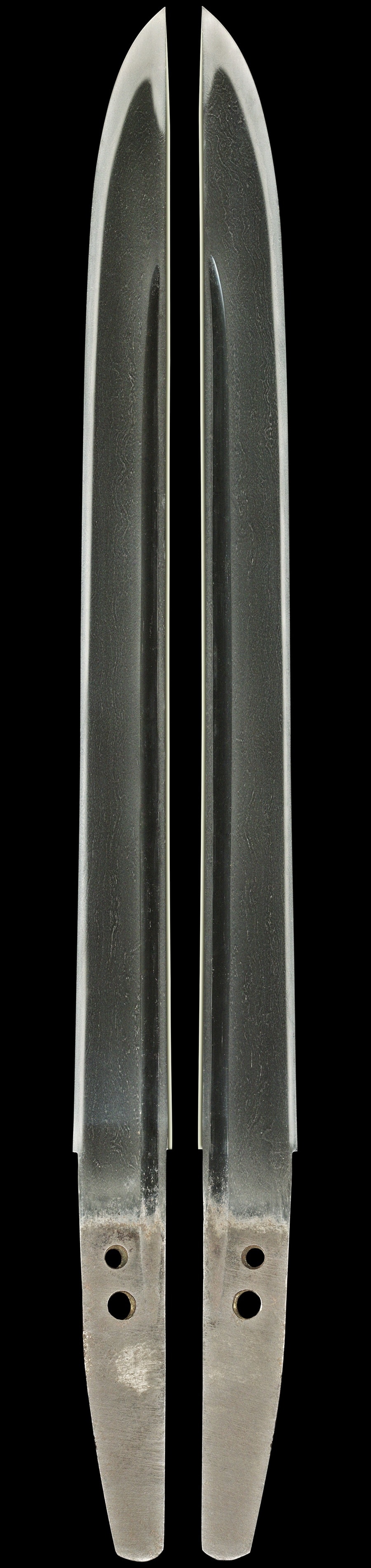
![Tanto - Hozon - 作 関派 - 短刀[氏房][日本美術刀剣保存協会]保存刀剣](/_next/image?url=https%3A%2F%2Fitbhfhyptogxcjbjfzwx.supabase.co%2Fstorage%2Fv1%2Fobject%2Fpublic%2Flisting-images%2Fworld-seiyudo%2FL747655%2F01.jpg&w=2560&q=90)