NihontoWatch MonNihontoWatch
MarketAuctionsEncyclopedia
NihontoWatch Mon

NihontoWatch

MarketAuctions
Encyclopedia
Overview·Historical importance·Designations·Dated Works·Provenance·Lineage·School
OverviewHistorical importanceDesignationsDated WorksProvenanceLineageSchool
  1. Schools
  2. Osaka Shinto
  3. Sadanori

Shinto Sadanori

貞則

Jūyō
Vol. 20, No. 292 · Katana

Shinto Sadanori

貞則

3 ranked works

Notable smith
ProvinceSettsuEraKanbun (1661–1673)PeriodEdoSchoolOsaka ShintoTraditionShintoTeacherShinkaiFujishiroJo sakuToko Taikan380(top 39%)TypeSwordsmithCodeSAD595
3Jūyō Tōken

Overview

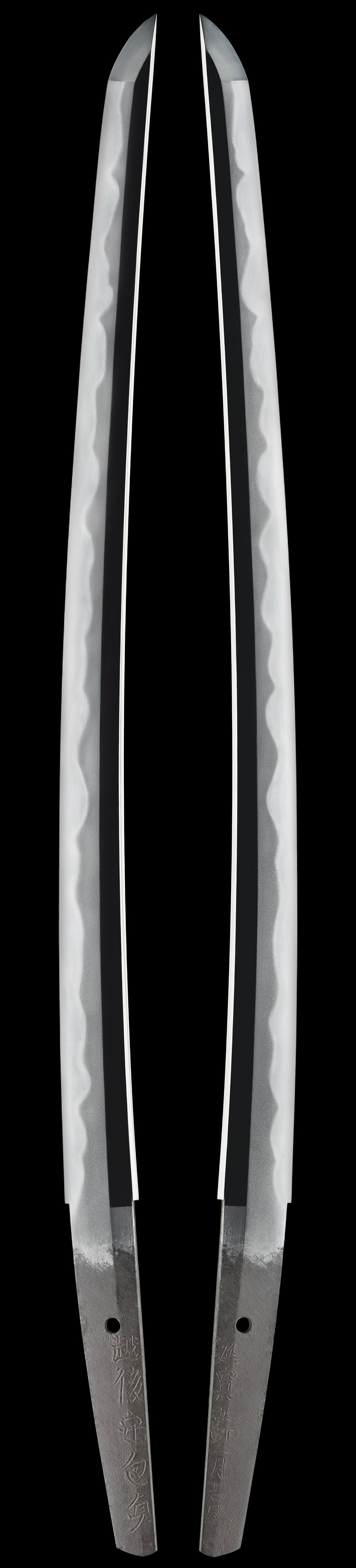
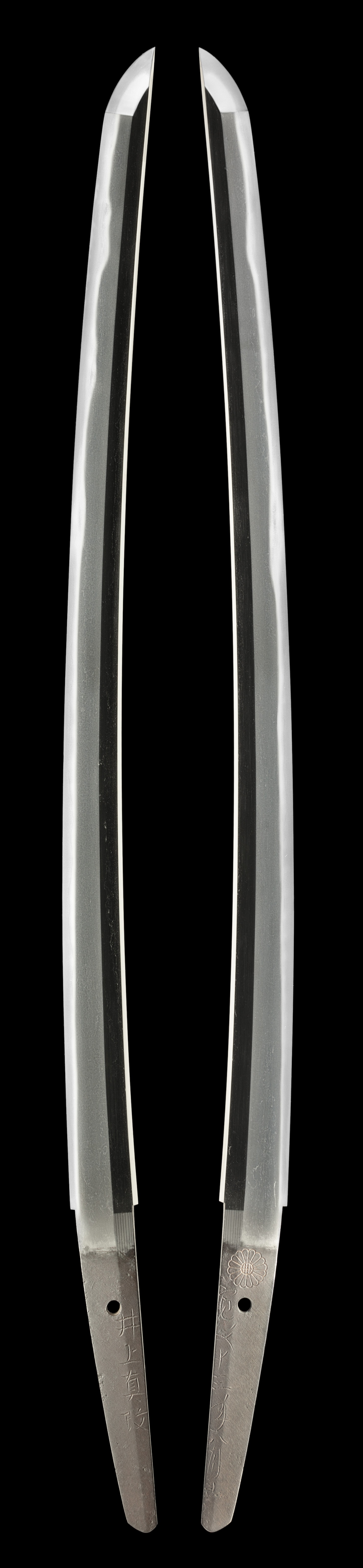
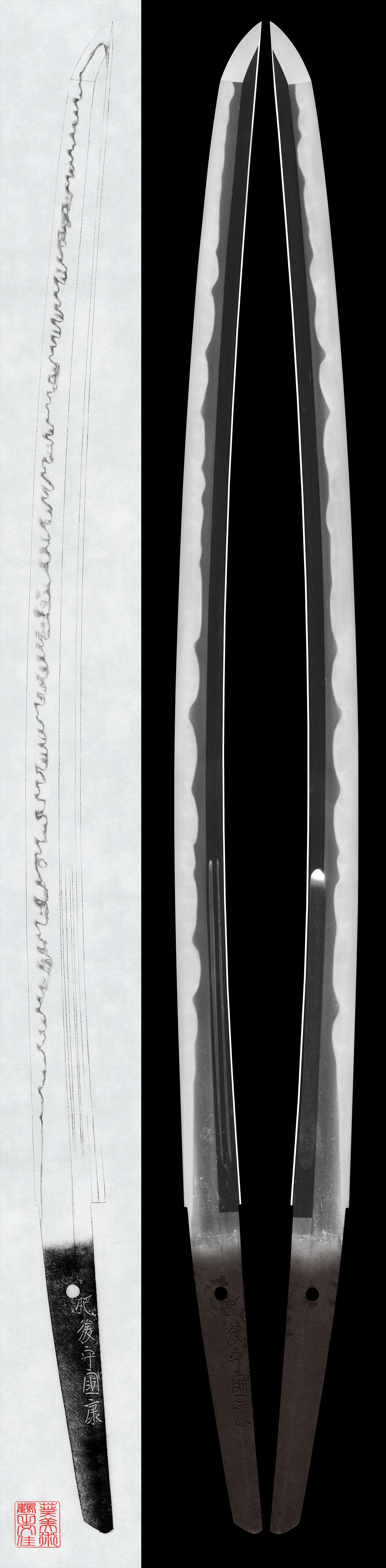
Suzuki no Kami Sadanori was a native of Kikuchi in Province whose common name was Saemon (also given as Sayuemon). He traveled to Osaka and studied under Inoue Shinkai, one of the foremost Osaka- masters. Thereafter he entered the service of the Naito family, and when the Naito were enfeoffed at Taira in Iwaki in Oshu, Sadanori accompanied them and relocated there. His signatures also confirm that he resided at in Rakuyo (Kyoto), lending his inscriptions considerable documentary value for tracing the geographic movements of Shinkai's disciples.

His manner of work encompasses , with , and patterns. The characteristically shows dense with thickly formed , and the is bright and clear. In his finest works, the deep and thickly adhering call to mind the style of his master Shinkai. One particularly notable -- tempered in a mixed with large , with deep , well applied, and a clear with slight -- demonstrates how closely he absorbed his teacher's approach. His tang work is also distinctive, with and bold, thick-chiseled long signatures, sometimes accompanied by .

Relatively few of Sadanori's works survive today; however, inheriting his teacher's style, he was recognized as a highly capable smith. The consistently note the connection to Shinkai in both and , characterizing one blade as "so accomplished that it calls to mind his master Shinkai" and proclaiming it "the finest masterpiece among Sadanori's works." His dated inscriptions -- ranging from Enpo 3 (1675) through Enpo 7 (1679) -- provide valuable chronological markers for the study of the Osaka- tradition and its reach into the Tohoku region through domain patronage.

Historical importance

Where Sadanori stands among comparable artisans: across all of nihontō, and within tradition, era, and period. The tiers (Foremost · Leading · Major · Notable) weigh official designations from the NBTHK and Japan's Agency for Cultural Affairs, together with historical honors of lasting repute such as the Sansaku and Meibutsu-chō.

随一
Foremost
屈指
Leading
有数
Major
著名
Notable

Select a lens to see how it's measured.

Designations

Kokuhō—
Jūyō Bunkazai—
Jūyō Bijutsuhin—
Gyobutsu—
Tokubetsu Jūyō—
Jūyō Tōken3

Elite Standing

Dated Works

Provenance

Currently Available

Lineage

TeacherShinkai
Sadanori
Student
  1. 1.Nobuzane延眞

Osaka Shinto School

Other artisans of the Osaka Shinto school

  1. 1.Shinkai真改13 for sale79designated
  2. 2.Tadatsuna忠綱3 for sale53designated
  3. 3.Kanesada包貞12 for sale78designated
  4. 4.Kanesada包貞3 for sale10designated
  5. 5.Kunisuke國助5 for sale10designated
  6. 6.Kuniyasu國康5 for sale7designated
  7. 7.Kuniteru國輝4designated
  8. 8.Kanemichi兼道1 for sale2designated
  9. 9.Kiho紀峰1designated
  10. 10.Kuniteru國輝1 for sale1designated
  11. 11.Kuniteru國輝1designated
  12. 12.Kunihira國平1designated

Sadanori

Sadanori(貞則) was a Japanese swordsmith of the Osaka Shinto school in Settsu province, active during the Kanbun (1661-1673) period.

The work follows the Shinto tradition.

Designated works by Sadanori include 3 Jūyō.