Suketaka's home province was Harima (Banshu). He studied under Kuroda Takazane, and in Kansei 10 (1798) received the honorary title Nagato no Kami. He died in Bunka 2 (1805) at the age of fifty-three. Throughout his career, Suketaka held Tsuda Echizen no Kami Sukehiro in deep private admiration, and this reverence defined his life's work. Among shinshinto period smiths who studied Sukehiro's toranba-style temper -- including Suishinshi Masahide and Tegarayama Masashige -- Suketaka is regarded as particularly skillful.
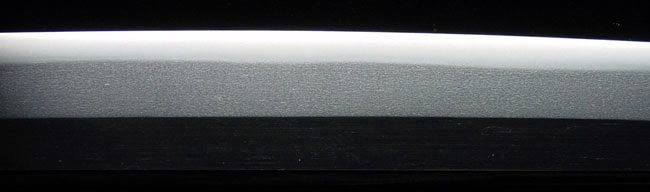
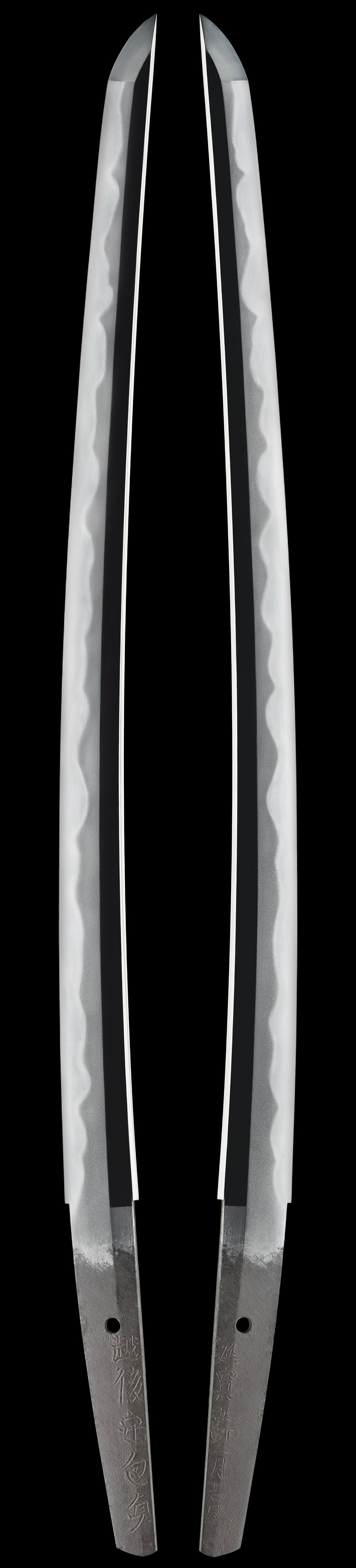
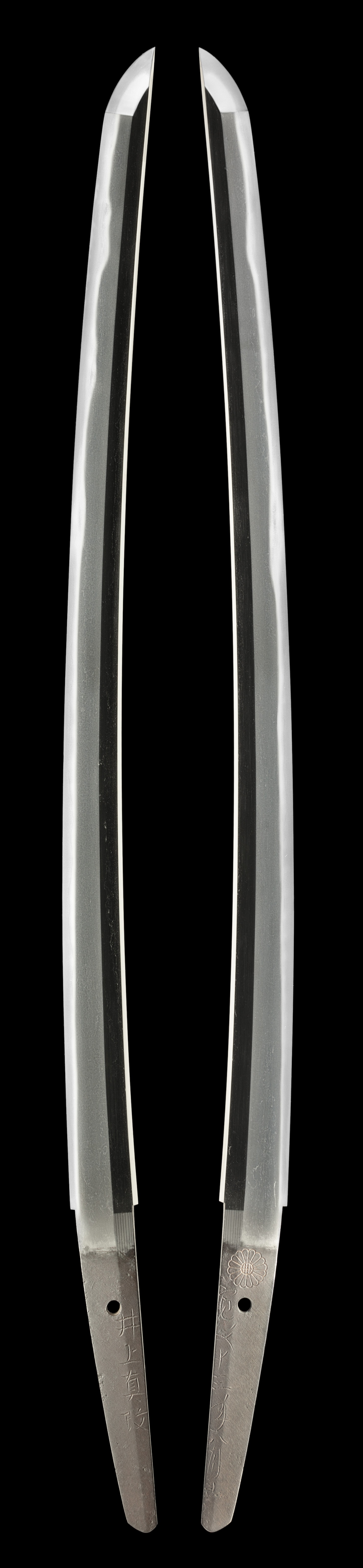
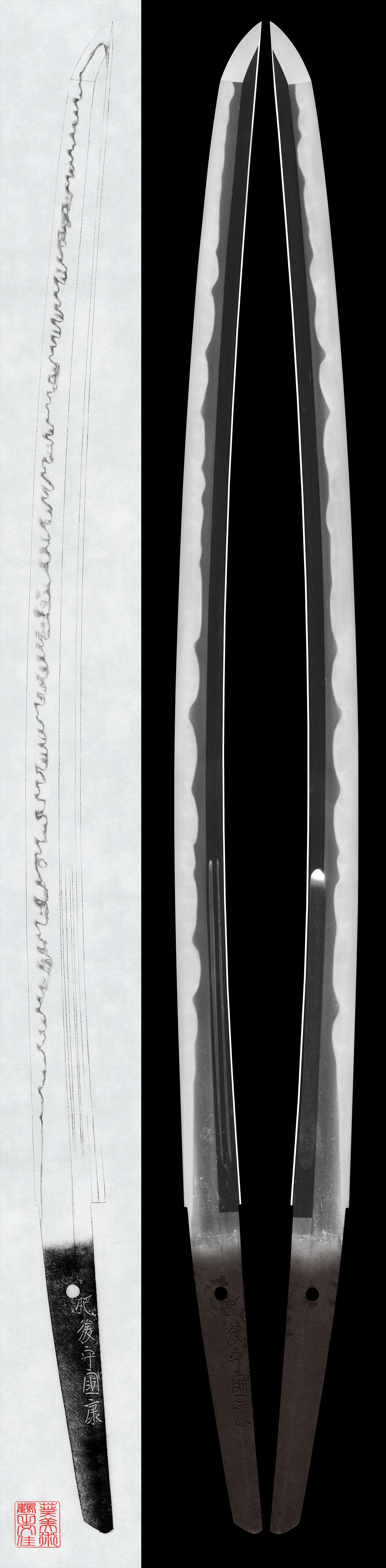
His blades consistently present a large-scaled taihai with somewhat wide mihaba, shallow sori, and an elongated chu-kissaki. The jihada is a ko-itame-hada so tightly forged it approaches muji, with ji-nie adhering and the jigane bright and clear. The hamon begins with a long yakidashi, then forms a toran-midare-like composition in which large gunome and gunome-choji intermix, creating conspicuous height variations and a billowing, wave-like effect. Thick ashi enter; the nioiguchi is deep; and nie adheres well, with ara-nie appearing in places. The nioiguchi is bright and clear throughout. The boshi is characteristically sugu with ko-maru, showing hakikake toward the tip. The long nakago and application of kesho-yasuri likewise emulate Sukehiro's manner.
The NBTHK notes that Suketaka's toran-midare is "truly so accomplished that it approaches the genuine article," though none among his contemporaries attains the degree of brightness seen in Sukehiro himself. His jigane is praised as carefully refined, evidencing high technical skill, and his works are consistently termed representative pieces. Matched daisho made as true pairs are noted as uncommon, adding to the documentary significance of such examples.