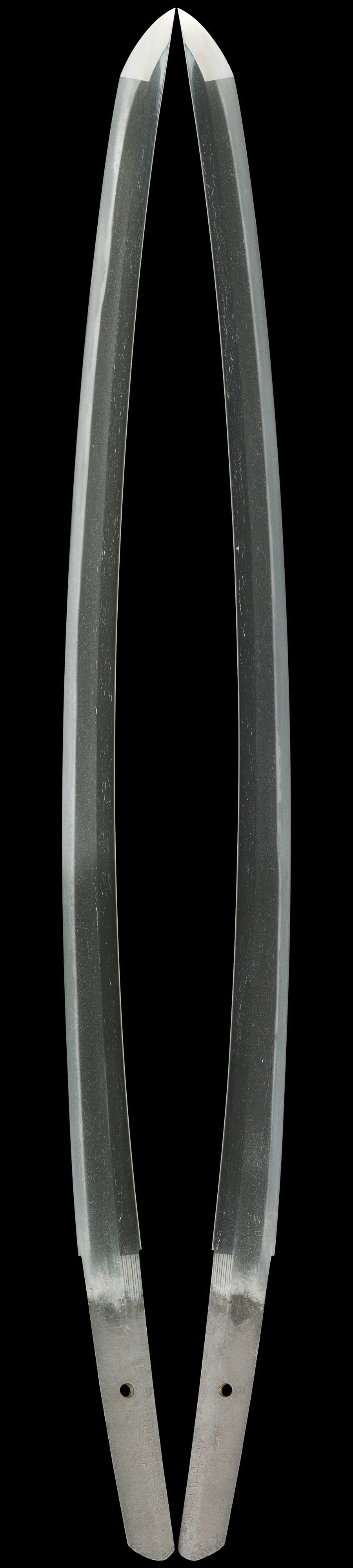
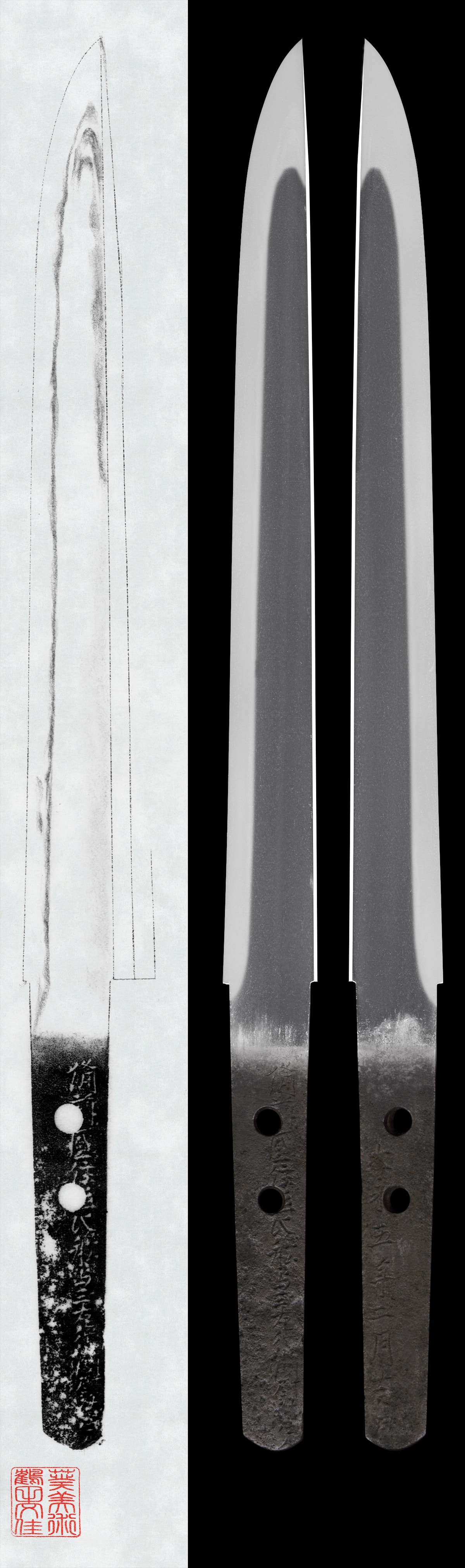
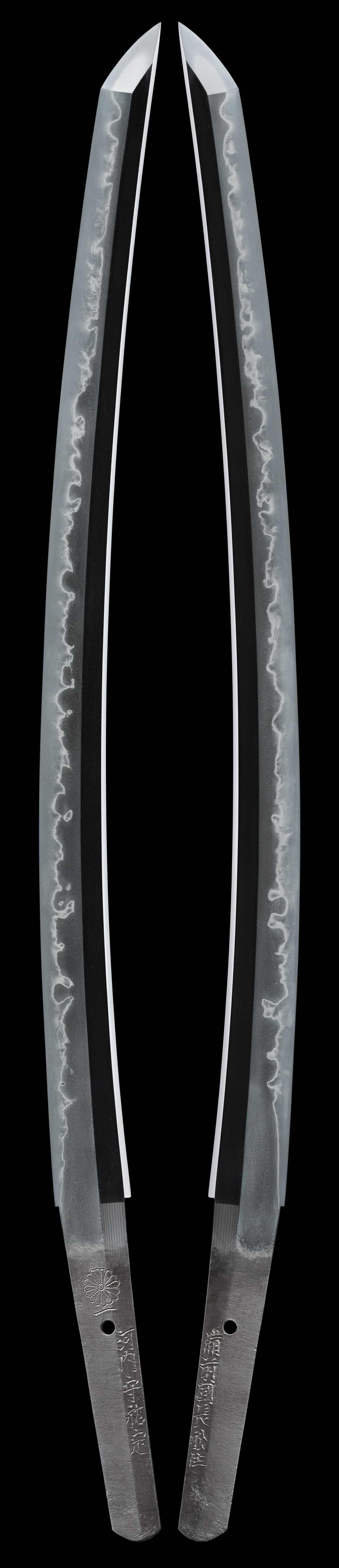
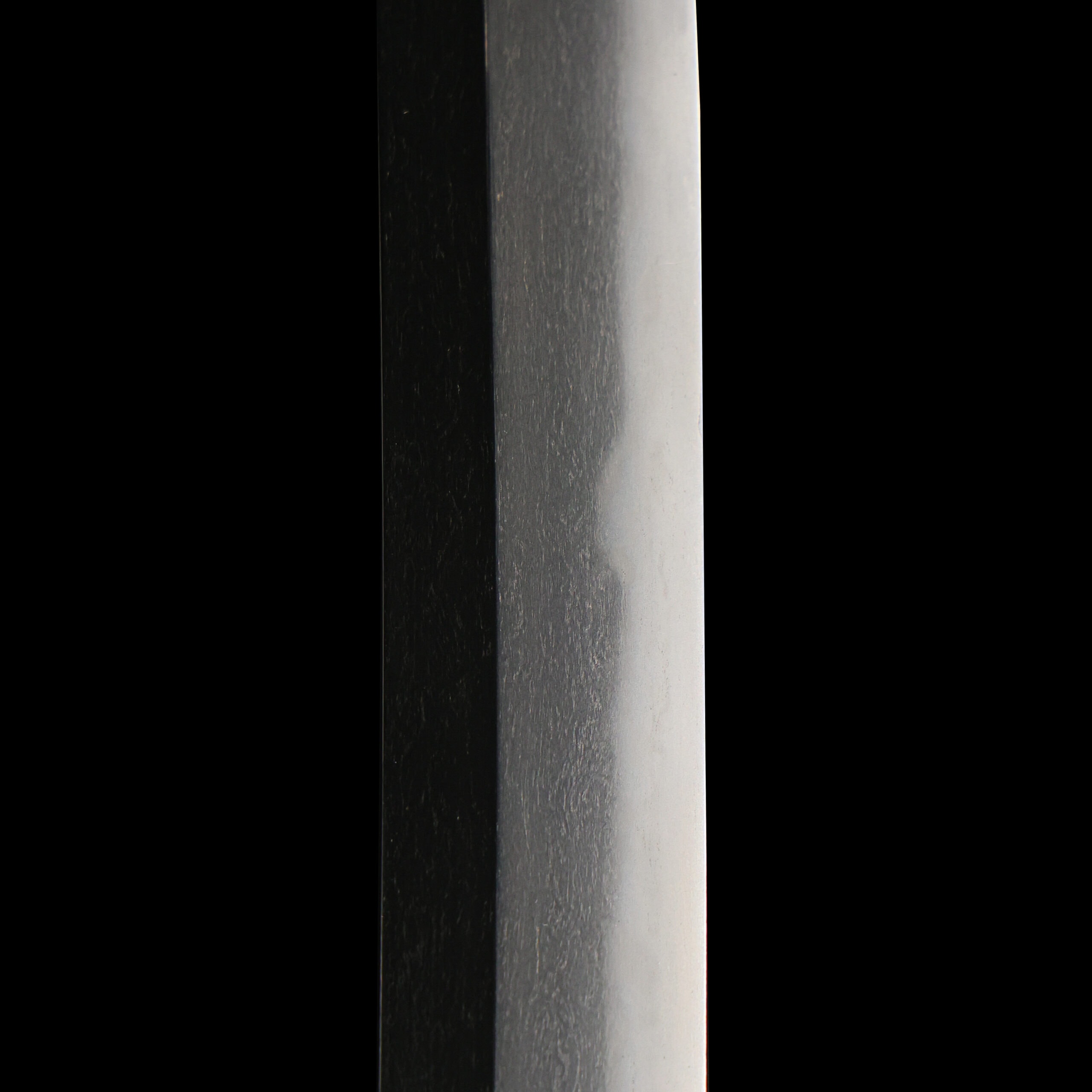
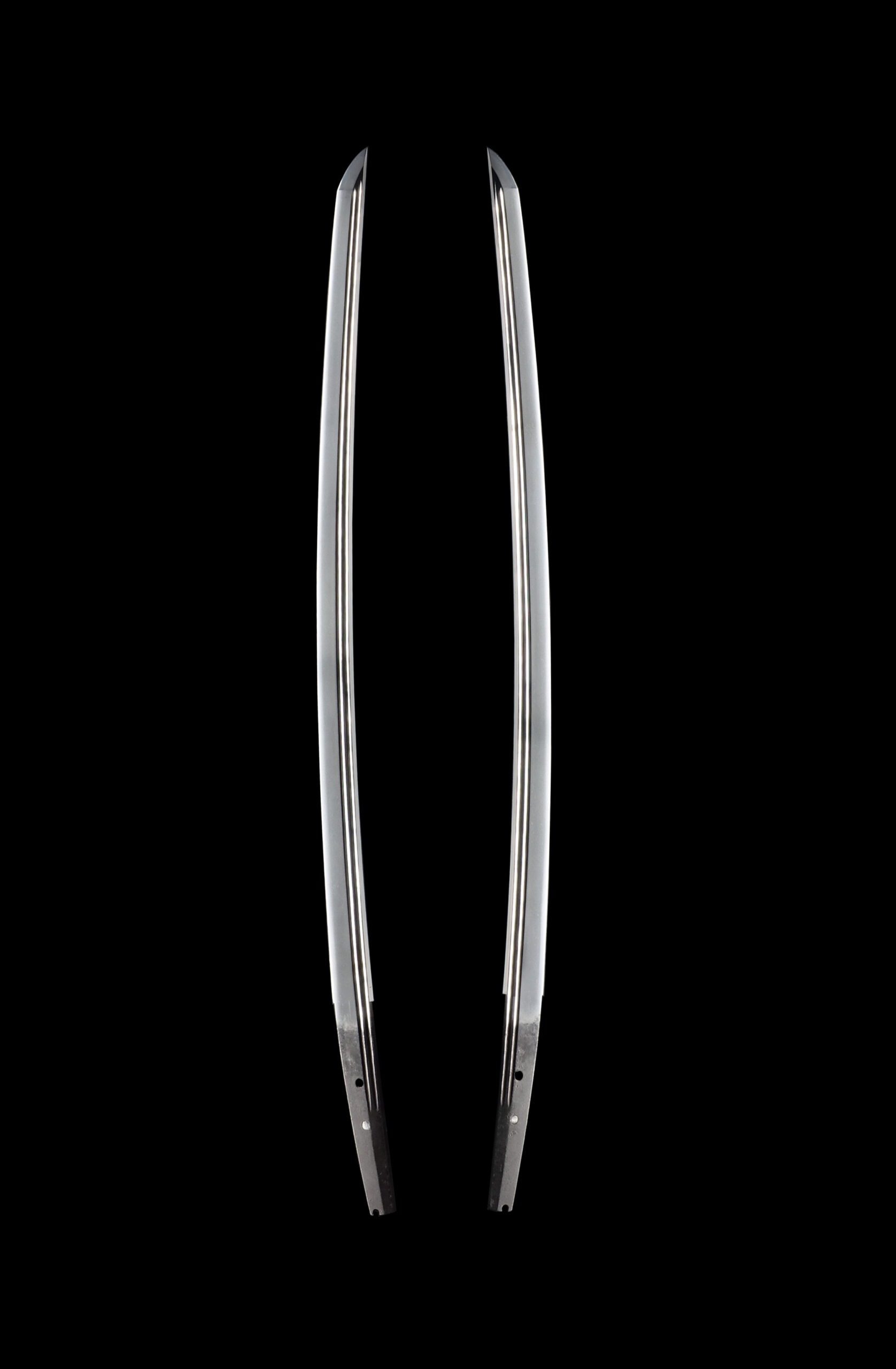
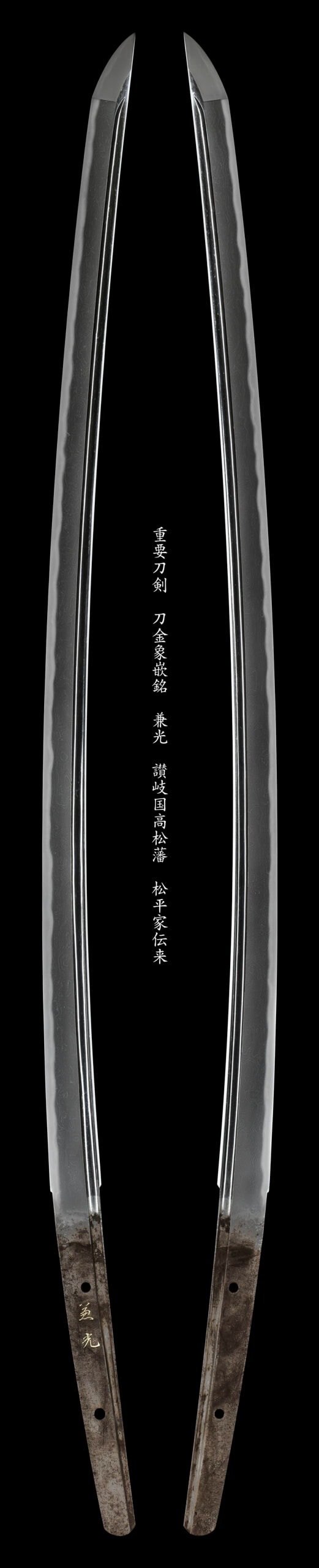
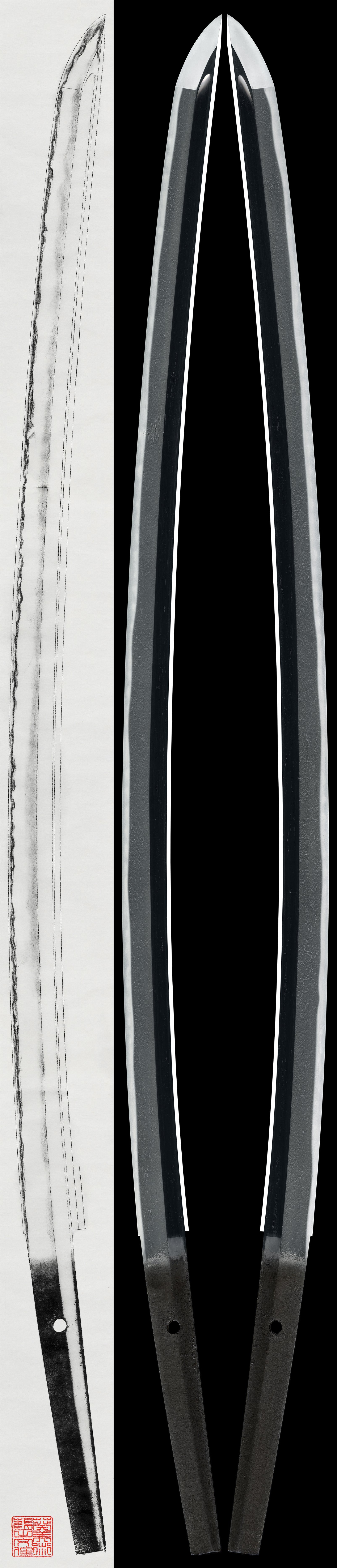
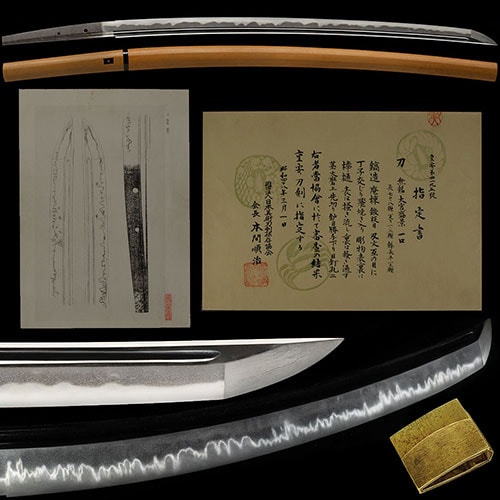
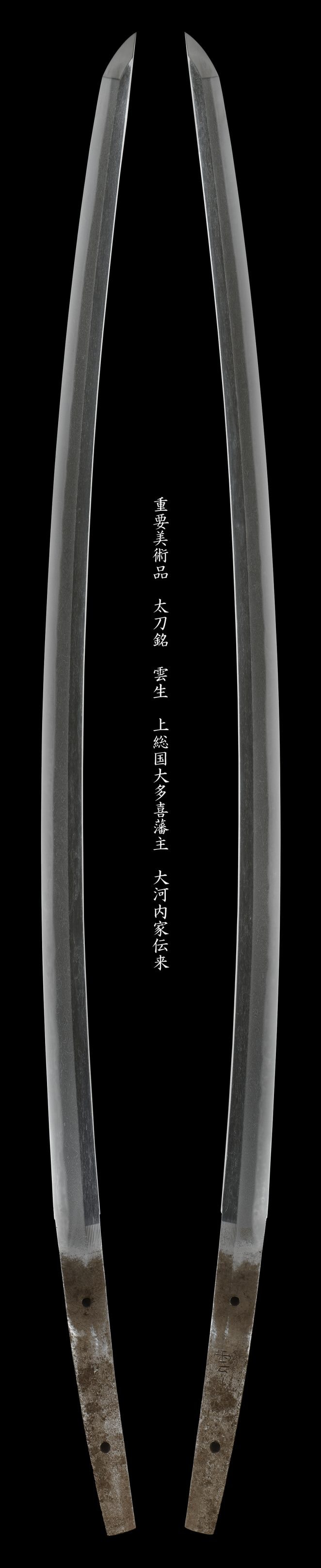
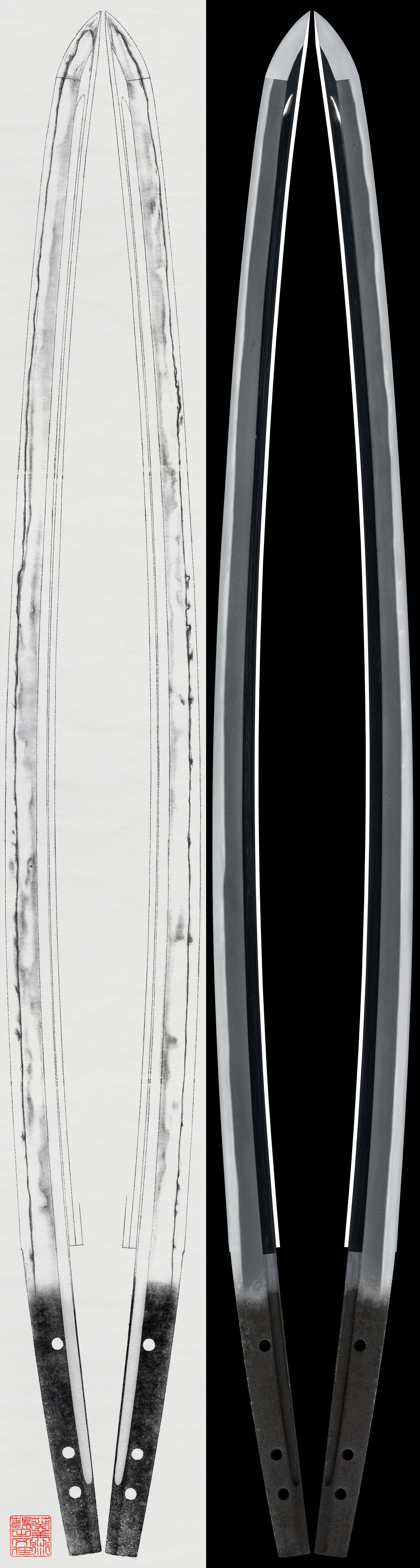
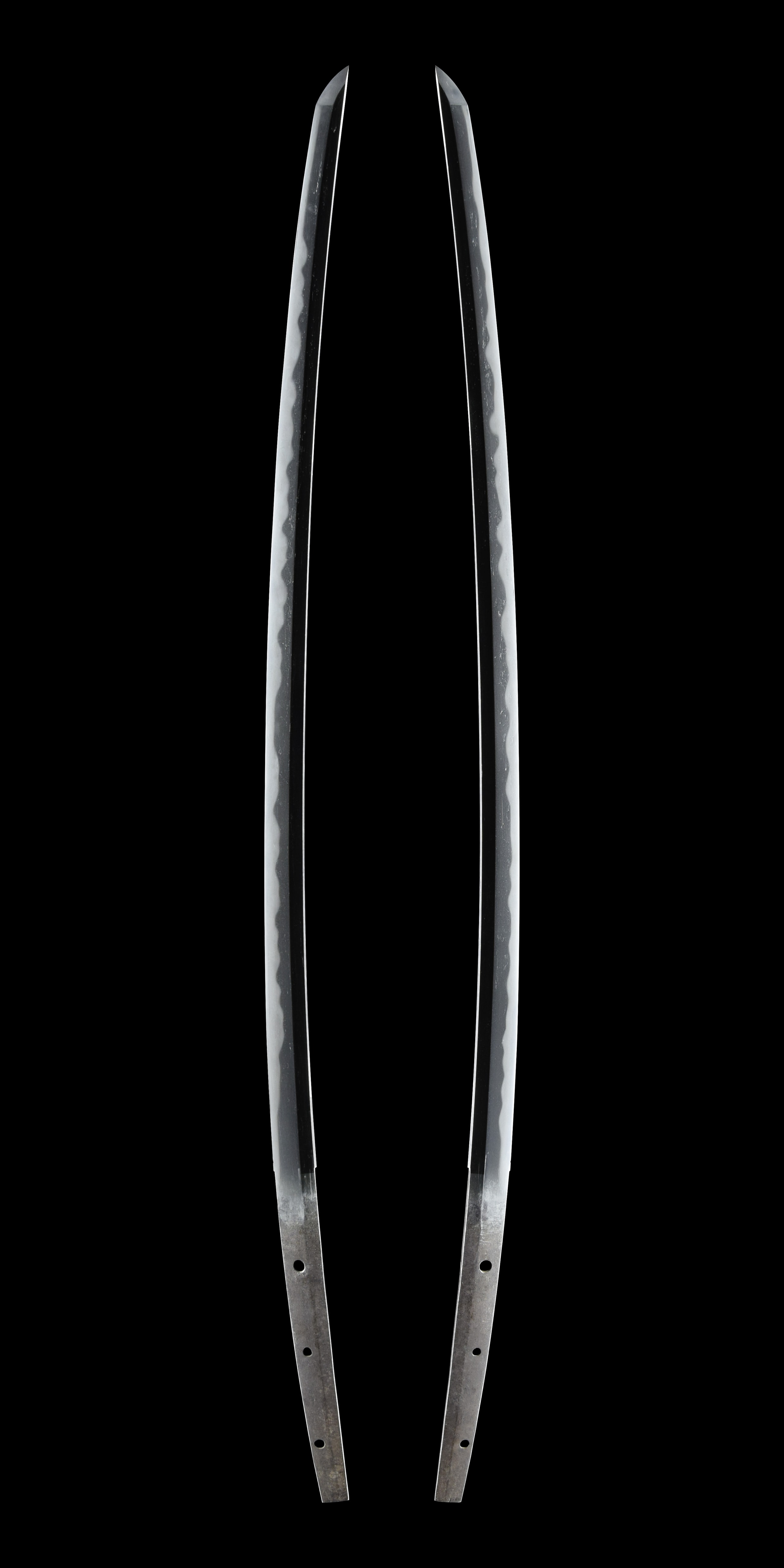
On a dated Chokyo 2, the eighth month of 1488, Sakyo no Munemitsu signed a thick- of withered , forged a closely packed with and bright , and over it set a that runs straight, mixes a little , breaks here and there into along the and carries , the bright. The published sources call it a masterpiece among his works, 「同作中の傑作と称して過言でない」. The blade states his case plainly. He was the second son of Rokurozaemon no Jo Sukemitsu and the younger brother of Ukyo no Katsumitsu, one of the representative names of the late- forges collectively called , and where his school was famous for a high, flamboyant temper he was famous for its opposite. The published record fixes him as an accomplished maker of the quiet line, and it is on that quiet line, not on the school's noise, that his hand is recognized.
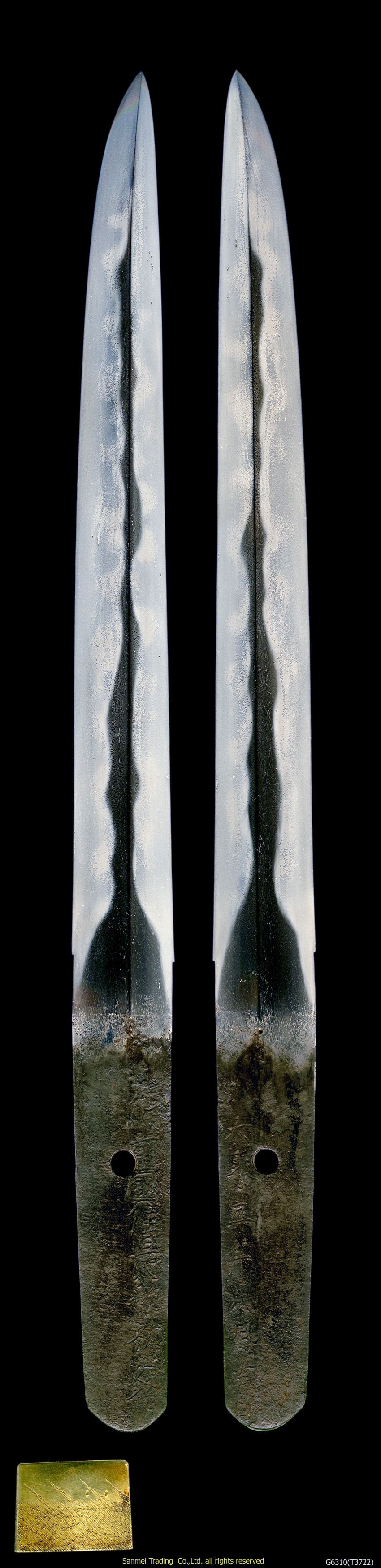
That individuality the published sources state in so many words: beyond the compound typical of , Munemitsu holds an established reputation as a superior maker of , 「直刃の上手として定評がある」. His characteristic blade is the standard late- katate-uchi , not greatly extended in length, with and a short, compact tang made for one-handed quick draw, over which he tempers a bright by turns slender, medium and broad. The dated Eisho of 1505 shows the manner at its surest, a broad into which is mixed, and working actively through it, adhering and rising, both and bright and clear. Set beside his brother the difference is one of scale and temperament rather than tradition. Comparing him with Katsumitsu, the published record observes that his pattern is of smaller-scale design, a manner frequently seen in Munemitsu's work, 「刃文が小模様で宗光によくみる作風を示している」, where Katsumitsu pushed the open-waisted into a louder, -rich flourish.
His is a tightly forged , the grain compact and refined, fine adhering and entering, and across it stands a , on the more archaic pieces a straight instead. It is this reflection over the packed steel that lends his its older flavour, and on the dated Bunmei of 1479 the published record notes the well-ordered , the standing and the slender with a tight as giving the blade an archaic air at first glance. On both faces he cuts the devotional carvings that mark work, a formal , seed-syllables, a plain , a four-pronged vajra and lotus pedestal, and shrine names such as and ; the published sources read these as the hand of collaborating specialist carvers and as a sign of the period and lineage rather than of any one smith. The runs straight to a small or large round on the blades, and turns where the temper grows busy.
Munemitsu was not confined to the quiet line, and the published record is careful to say so: examples exist of the compound , even if his is rated higher. In that register, best seen on the broad-bodied of the later Eisho years, he works over a with dense fine and a standing , the temper wide, the line an open-waisted mixed with , -, and a - manner, and entering, small scattered through it, and running, the bright and clear. The conspicuous within the the published sources place most often in Katsumitsu among smiths and next most often in Munemitsu, 「互の目の中に丁子刃が目立つ」, so that even at his most flamboyant the still reads him as the smaller-scaled of the two brothers. A separate strand of his record is documentary rather than stylistic. Because his career was long and because joint signatures survive both with his elder brother and with his nephew Jirozaemon no Jo Katsumitsu, the published record holds that the name Munemitsu likely ran into a second generation, the Eisho works belonging to the second, while granting that a firm boundary between the two is difficult to draw.
A large part of his surviving output is collaboration with the Katsumitsu line, prized under the joint name . These joint and are typical katate-uchi pieces, the a with and fine , the temper by turns a calm lightly mixed with and the school's open-waisted compound line, the and shrine carvings on both faces. Two of them are forged away from , on campaign at Kojima in in the Bunmei years, the inscription naming the place; one joint of 1486 is held to be of high documentary value beyond the quality of its work. The traditions the published sources record place the brothers at the Omi encampment in 1488 by command of the shogun Ashikaga Yoshihisa, setting up temporary forges across and , and fighting under Akamatsu Masanori. He stands as the technical peer of his fellow late- names Yosozaemon no Jo Sukesada and Gorozaemon no Jo Kiyomitsu, distinguished among them by his command of the straight temper; his bright over a refined and his clear set him apart without recourse to his brother's flourish.
Munemitsu sits among the better-documented of the smiths, and his designated record reflects it. A co-signed with Katsumitsu and forged at Kojima in in 1486 is a Bijutsuhin, recorded across the standard reference literature, and a joint Katsumitsu and Munemitsu stands as an Important Cultural Property. He has no National Treasure and no , but twelve of his blades have passed , and a of his is preserved in the Imperial collection. The accompanying han-dachi of one Eisho 6 , a variant-lacquer mounting with the -ni-hiki-take-suzume crest of its house, descends in the Sendai Date family and was itself designated for its quality. Provenance of recorded whereabouts is thin but distinguished, running to the Imperial Family, the Date house and the prewar owner Shudo Sei of Fukuoka. For a private collector the designated blades outside museums and old houses are the realistic encounter, the dated joint pieces especially valued for the light they throw on the late genealogy; signed and dated Munemitsu survive in fair number for a name, yet a sound example with a clear date comes to market only from time to time, a documented joint blade rarer still.