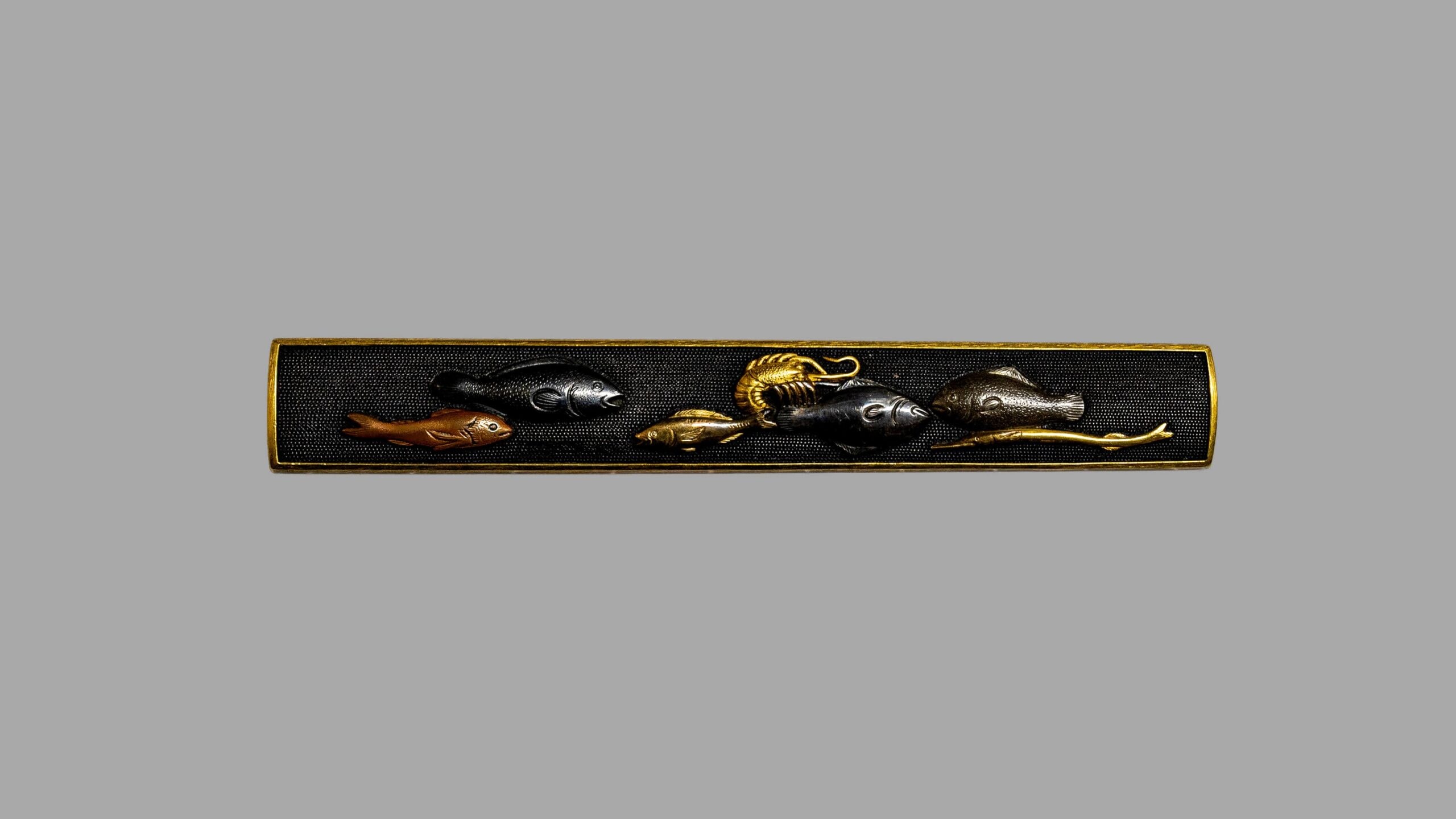
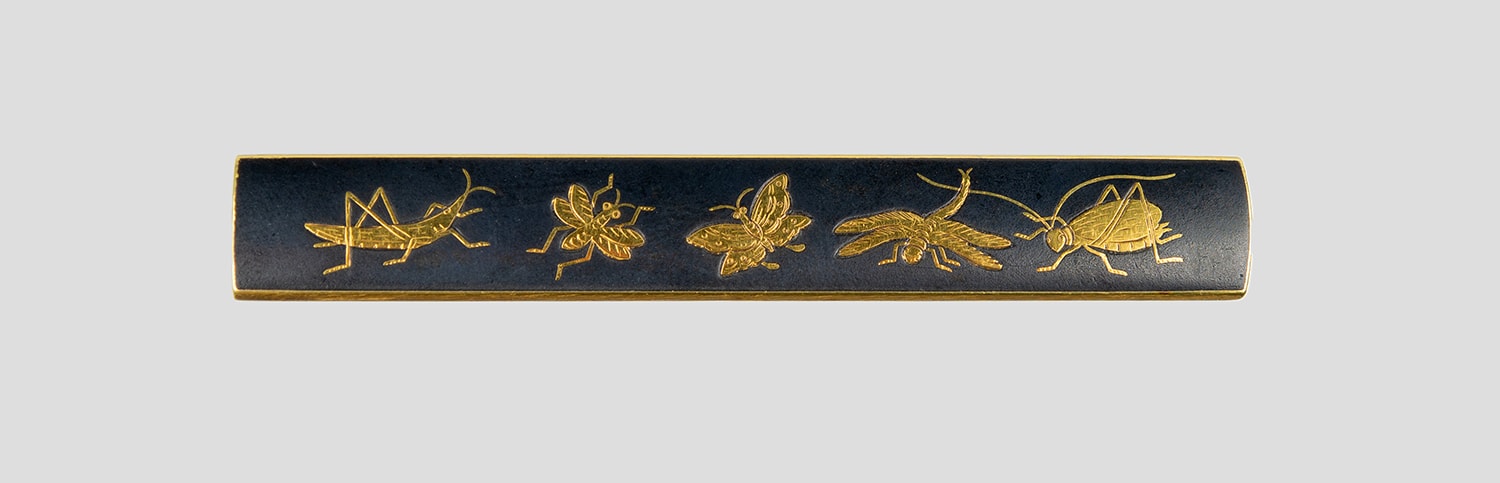
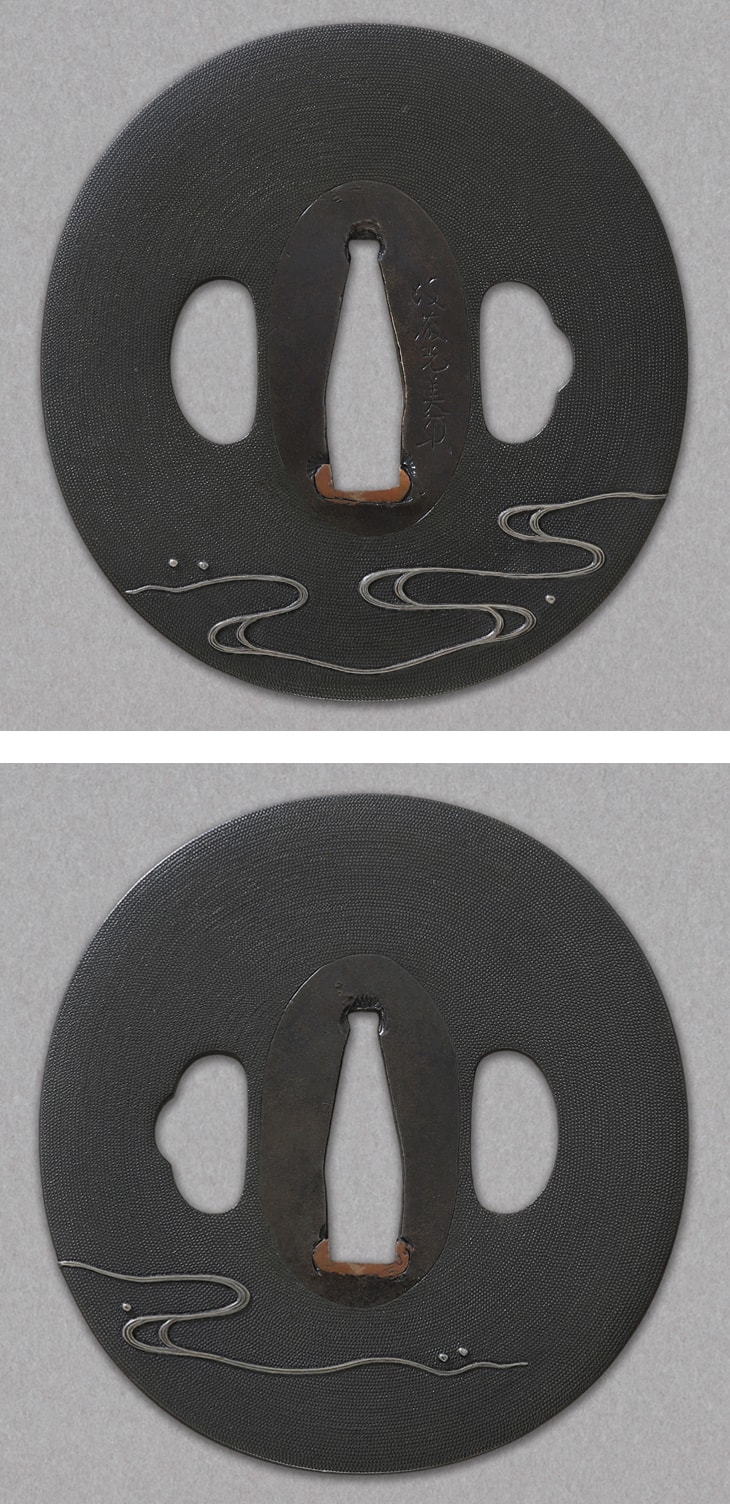
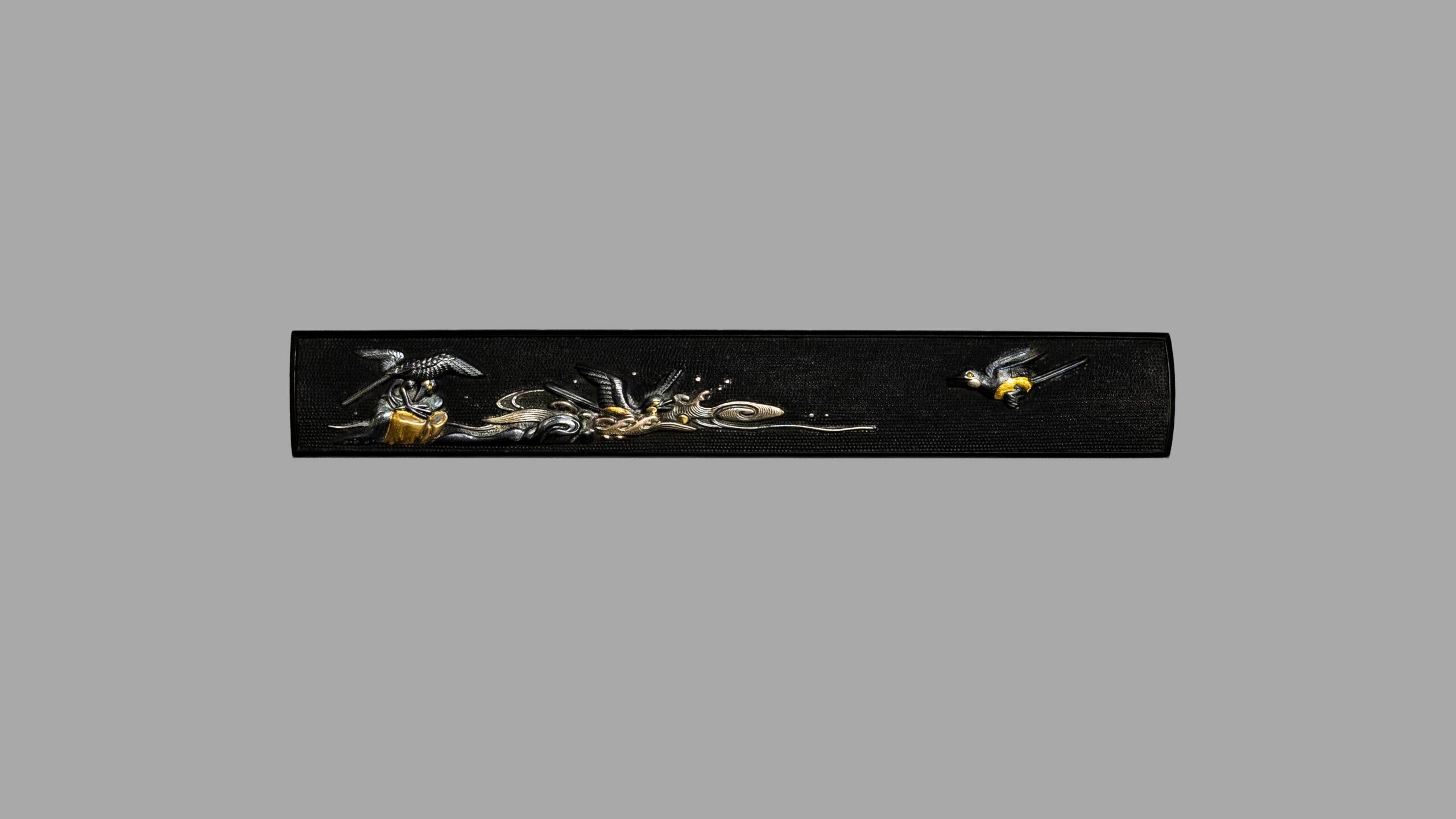
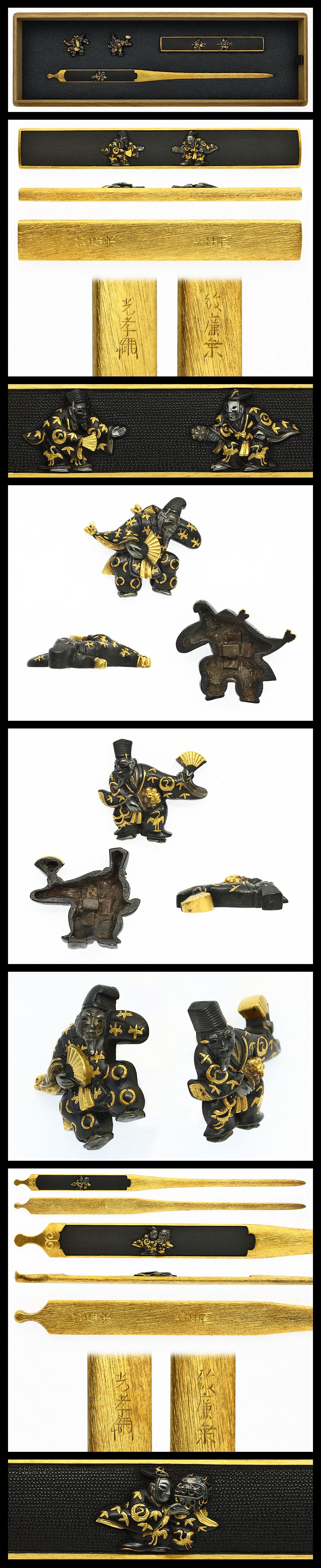
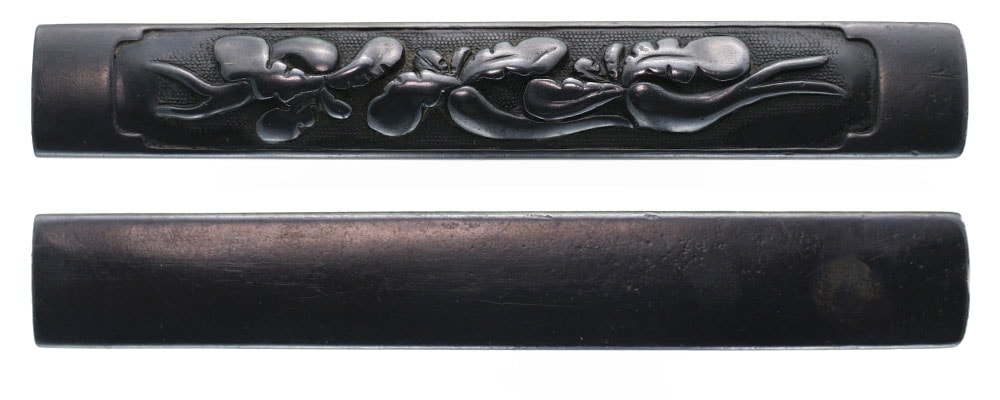
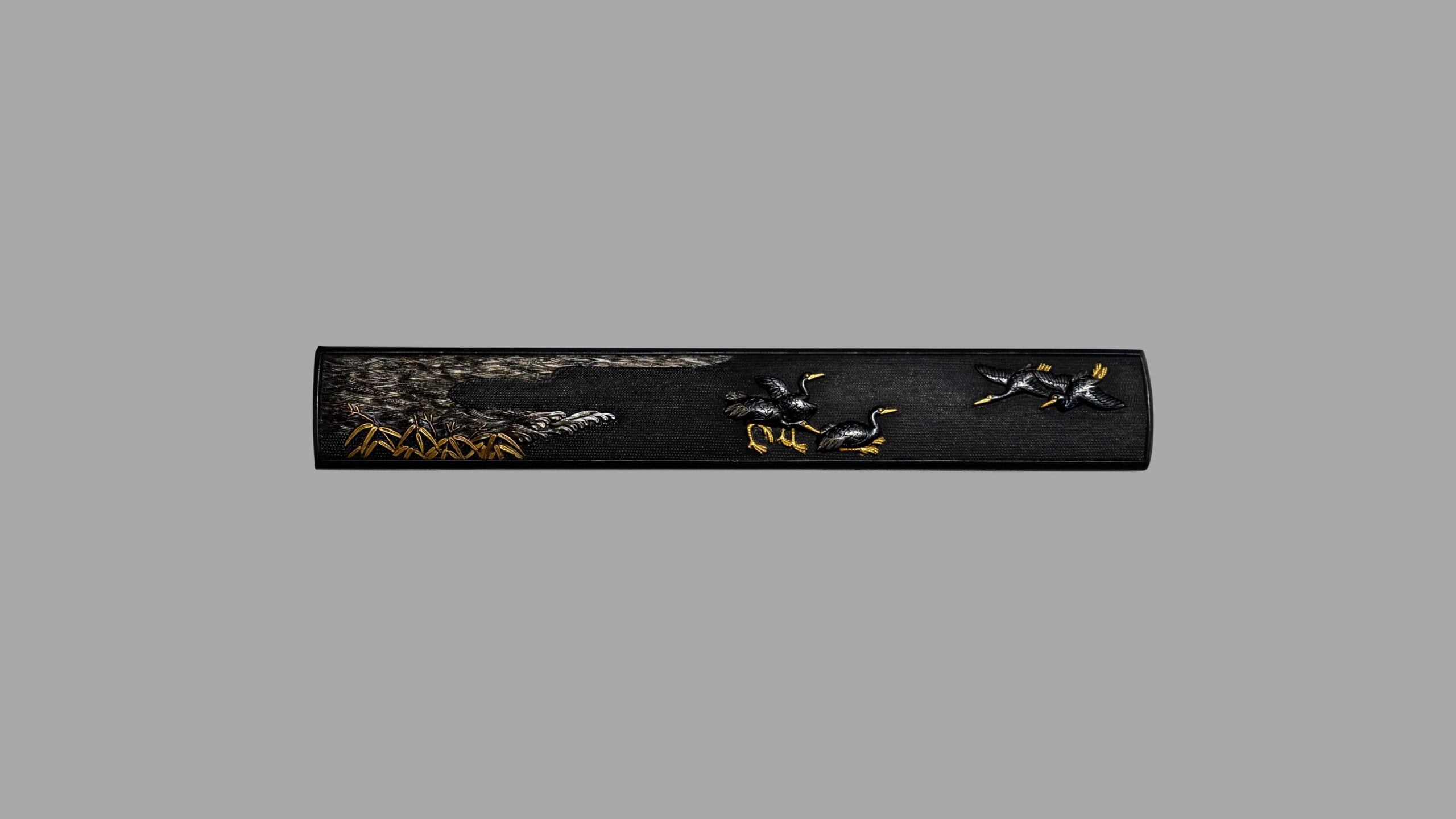
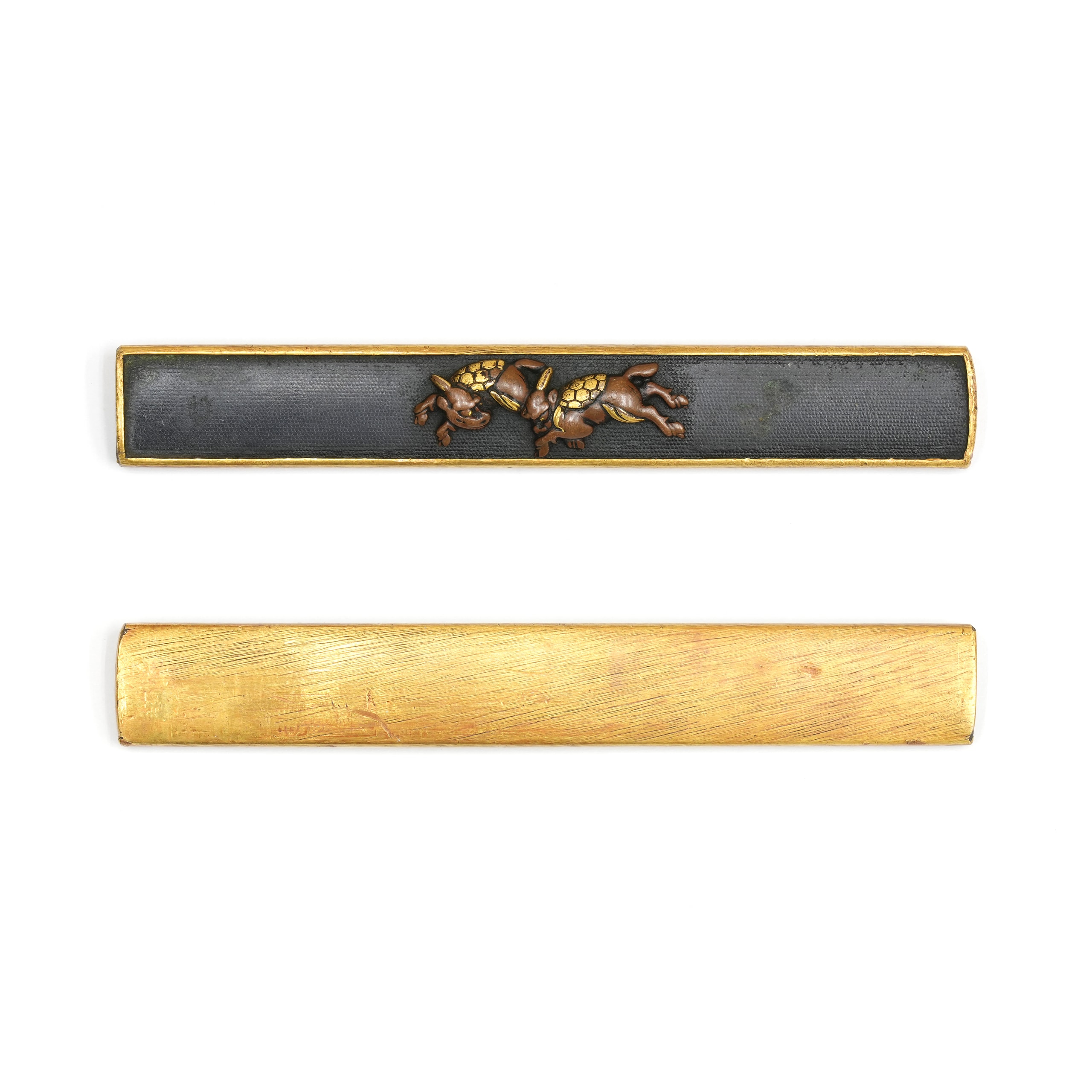
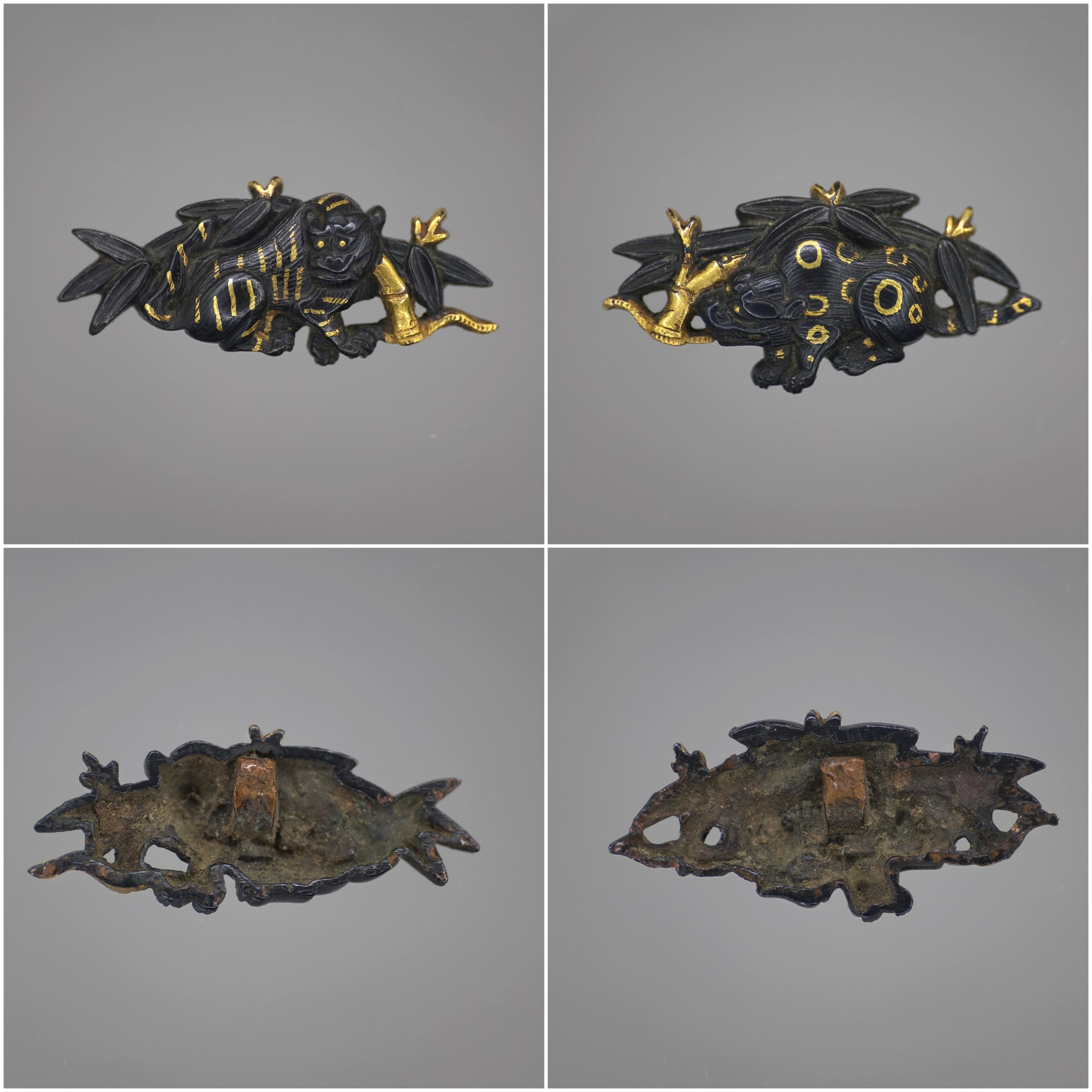
Goto Jujo Mitsumasa, also recorded as Kojo Mitsusato, was born in Genroku 2 (1689) as the legitimate son of the eleventh main-line master, Tsujo Mitsuhisa. His childhood name was Kameichi, and he later used the name Mitsuyuki. In the eleventh month of Kyoho 5 (1720), upon his father's retirement under the name Tsujo, Mitsumasa succeeded to the house, assumed the style Shirobei Mitsumasa, and became the twelfth head of the Goto main line. In this capacity he served not only as a master metalworker but as the principal appraiser and certifier of works by earlier Goto generations, issuing of considerable authority.
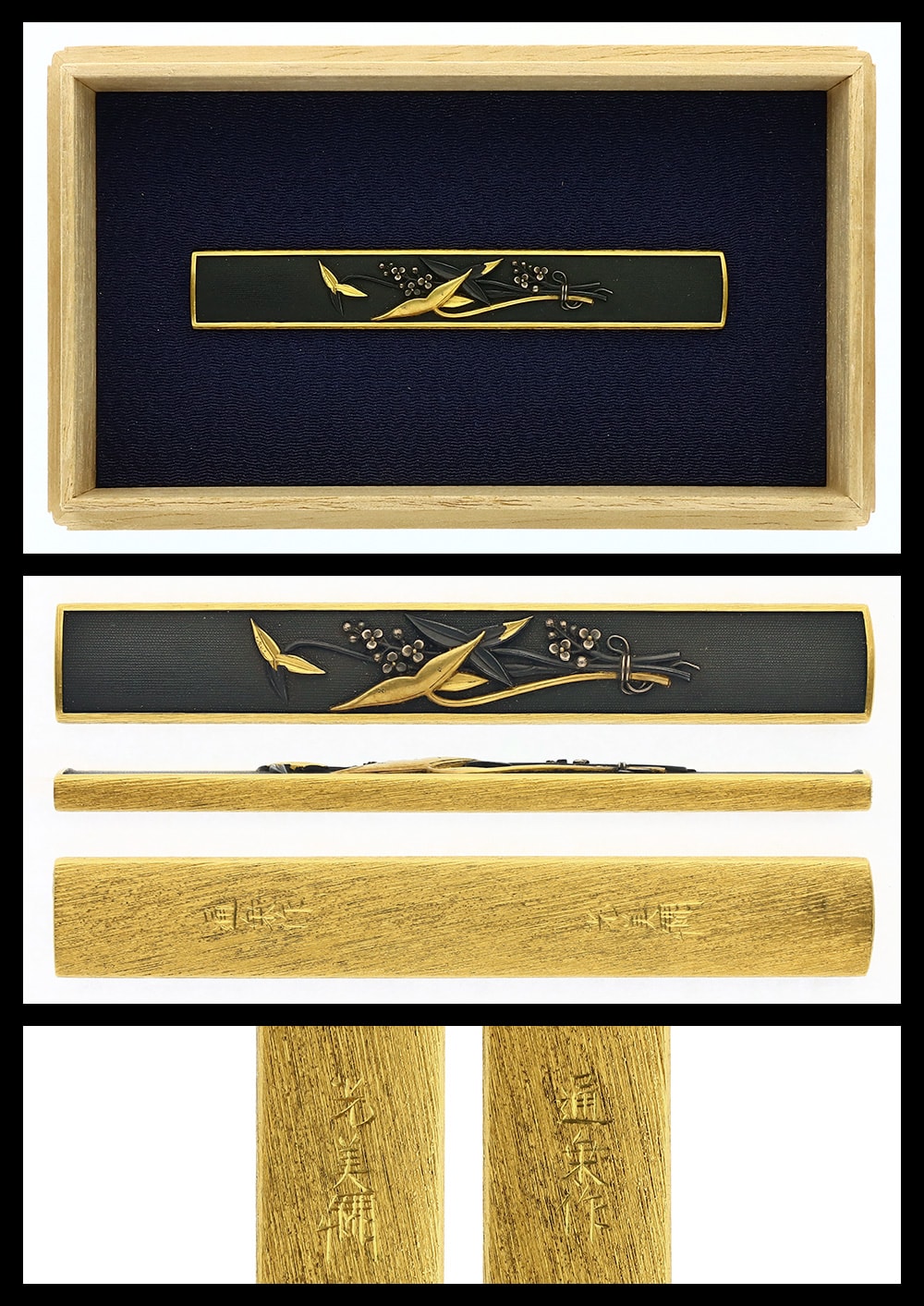
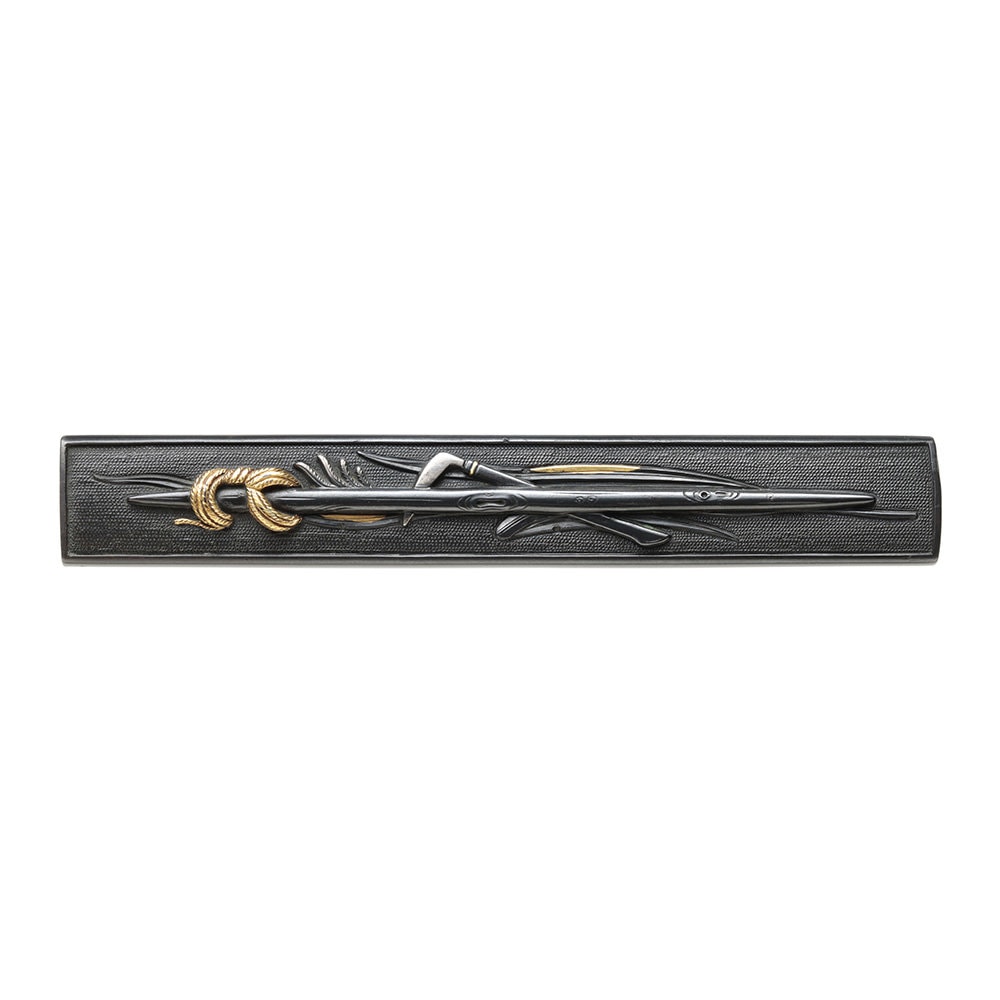
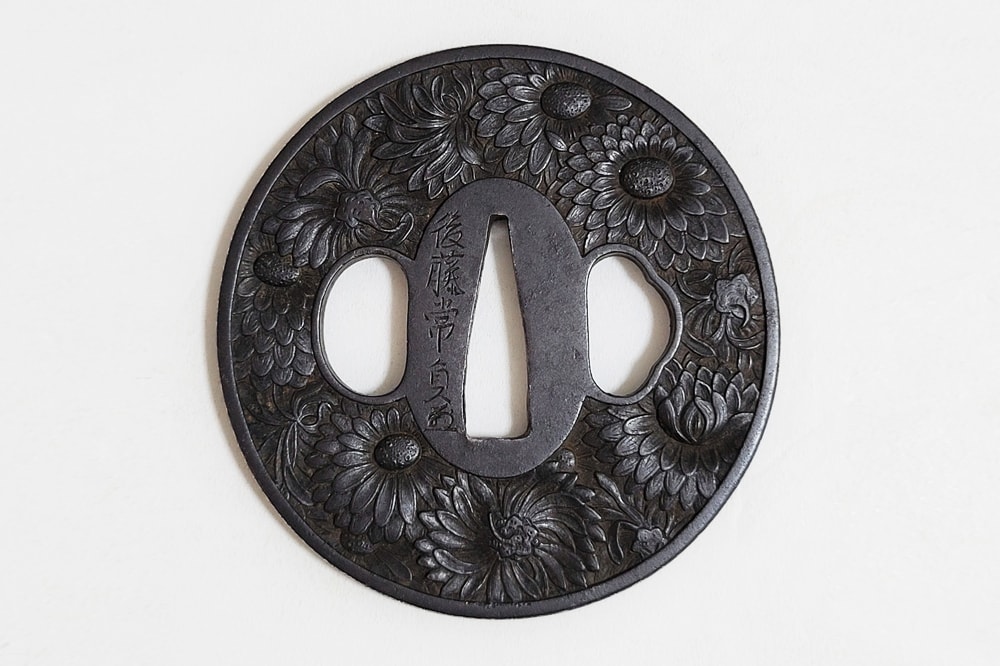
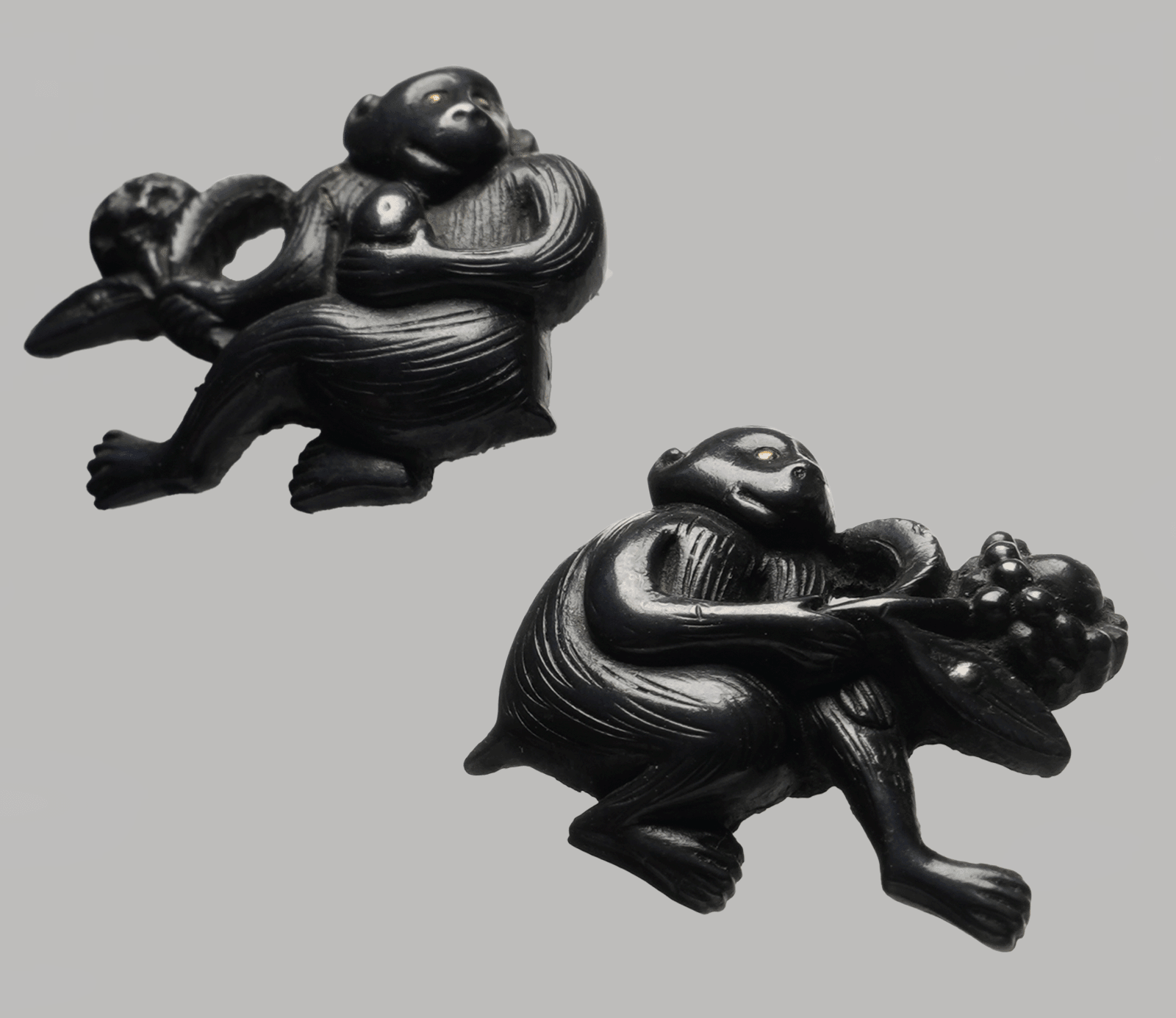
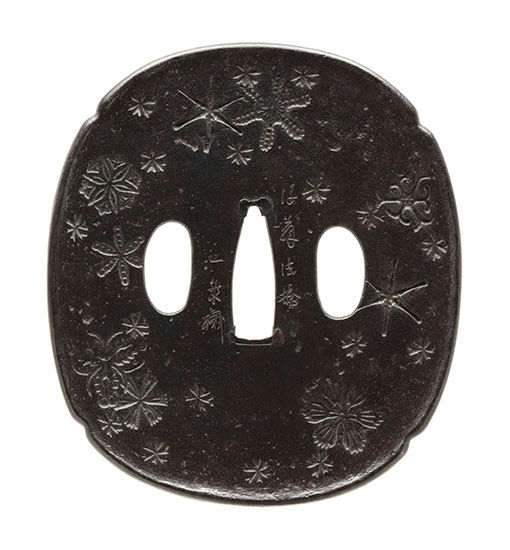
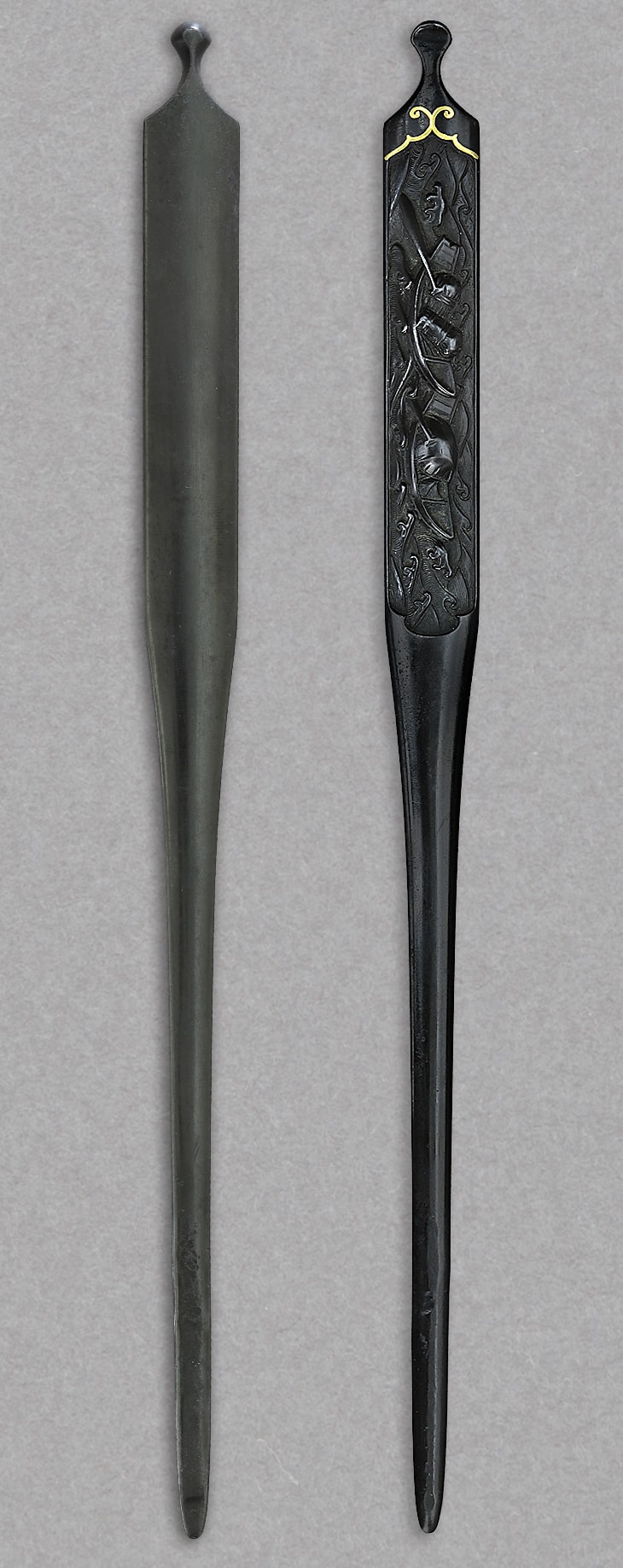
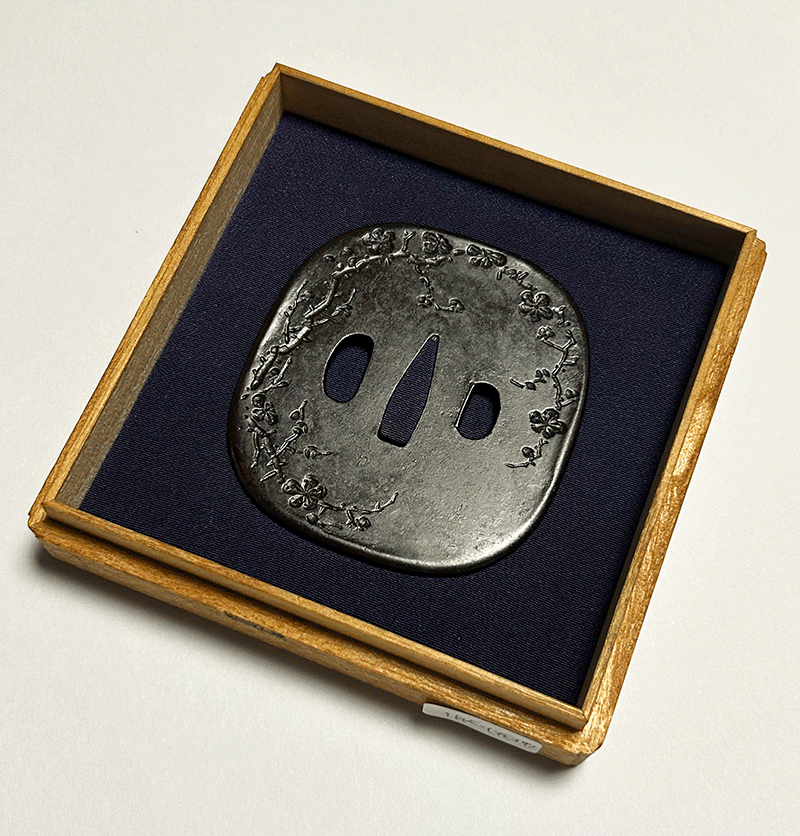
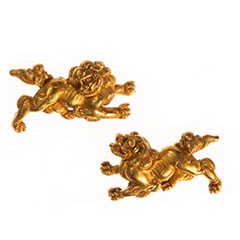
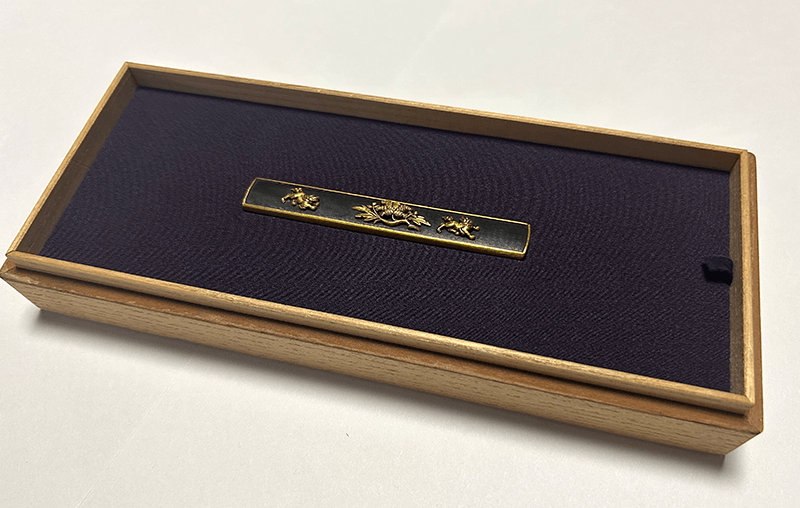
His own production is characterized by the consummate expression of the Goto house style. In works such as the coiling dragon , gold crests are arranged on grounds of the finest order, while executed in solid gold yobori display a convincingly animated bearing with great skill. The uchi-dashi is comparatively thick, and because a substantial quantity of gold is employed, the work possesses a palpable sense of weight and presence. Careful attention is given to auxiliary elements including the ne and reinforcing fittings. Throughout, the characteristic house style of the Goto is fully expressed, resulting in works of dignity and elevated tone. His appraisals of earlier masters — including certifications of third-generation Joshin's pieces — are equally discerning, attesting to deep connoisseurship of the lineage's historical methods.
As the twelfth head, Mitsumasa occupied a pivotal position bridging the classical and later Goto tradition. His carry authority comparable to an autograph signature, since they represent definitive judgments rendered with intimate knowledge of the house manner. Works bearing his authentication constitute important documentary material for the study of earlier Goto masters, while his own production stands as a model of formality and completeness. The recognizes his pieces as possessing a formality that may be taken as exemplary of the Goto house, affirming his role as both guardian and embodiment of the mainline tradition through the mid- period.