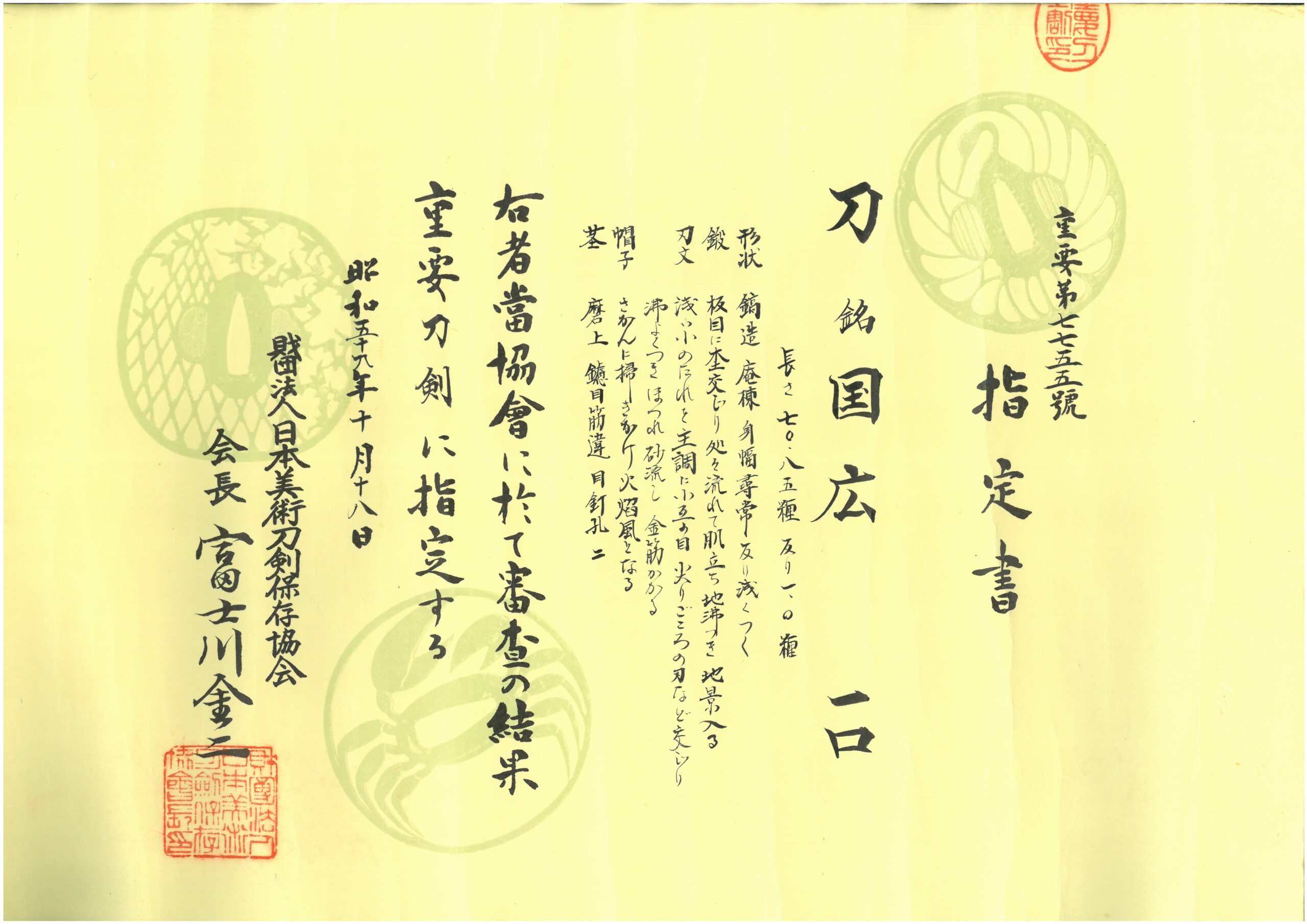
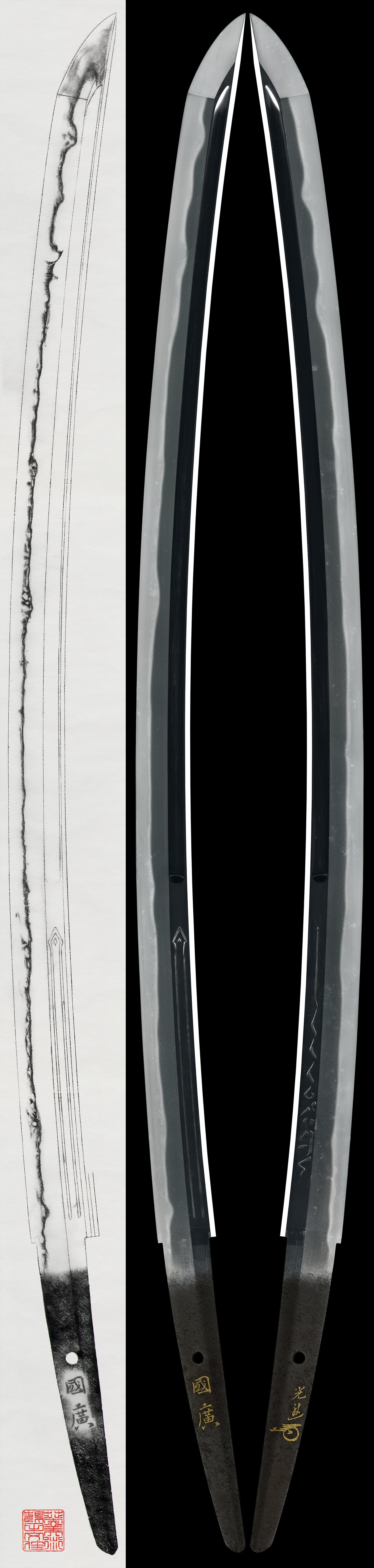
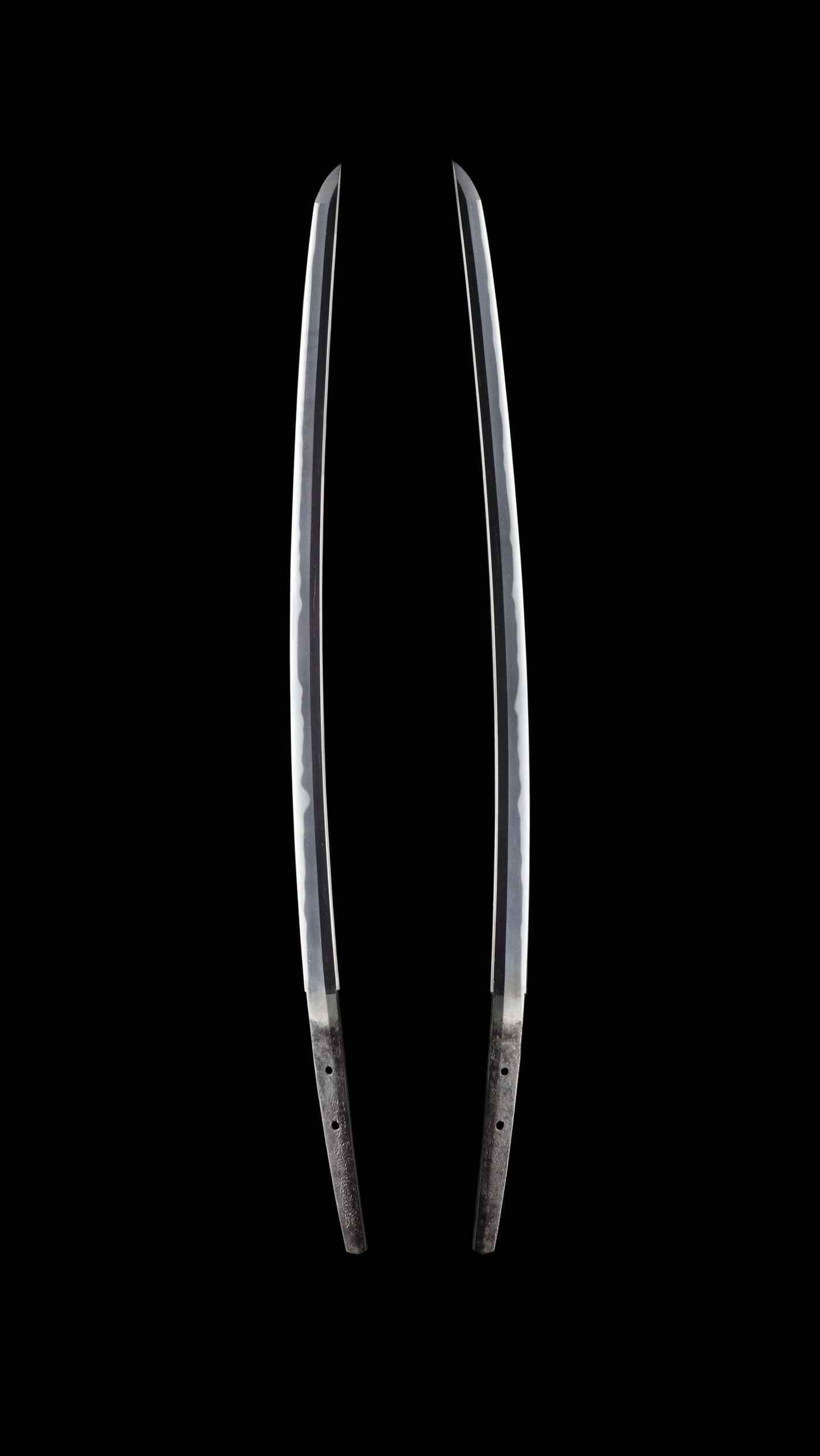
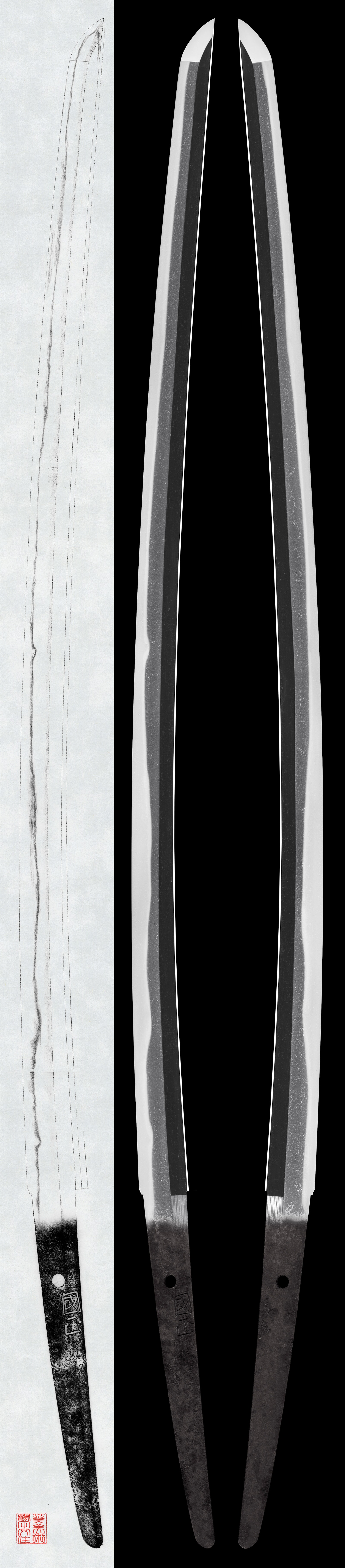
Awa no Kami Fujiwara Ariyoshi is recognized in -period sword treatises -- including the Kaji Hayamidashi and the Ichiran -- as a disciple of Kunihiro, resident in Kyoto. His sole dated work, a inscribed Keicho 2 (1597), predates the permanent settlement of Kunihiro at in Keicho 4 and is, apart from Kunihiro himself, the earliest dated blade among the master's followers. The craftsmanship of that sword already displays the skill of an upper-ranked craftsman (joko), and its style shares affinities with Kunihiro's celebrated "Yamanbagiri" (Important Cultural Property). From these observations, the concludes that Ariyoshi did not so much learn the later, fully formed manner as study more directly the style of the higher-ranked masters that underlies it. He is thus regarded as a transitional disciple from the period when Kunihiro was shedding the manner of "Furuya forging" and moving toward " forging," and as among the most senior pupils within the group.
Ariyoshi's forging is mixed with and coarse , with the grain standing up to present the so-called -- the rough, rugged texture distinctive to works. Thick forms, and enters well. His long swords display a flamboyant - into which are blended , , -like forms, pointed elements, and -like elements, producing a brilliant and varied pattern. and enter vigorously; adheres well, mixing in places with coarser to form uneven clusters. Long and run actively throughout, small appear, and the characteristically tends toward . His reveal a different register: a basis introducing near the for variation, while the steel bears a somewhat blackish tone with pronounced . His , by contrast, show a Seki coloration in the and , revealing the breadth of an unusually wide working range.
Extant works by Ariyoshi are exceedingly few; even counting , , , and together, they would likely not reach ten pieces. Yet the has consistently characterized each surviving example as "indispensable for research on this smith" and "extraordinarily precious as documentary material." His blades convey an archaic, time-worn flavor producing a subdued () taste, and collectively they illuminate the critical transitional moment in which the school took form. As source material for understanding both the individual artisan and the broader genesis of the tradition, Ariyoshi's works are regarded as precious and highly dependable.