Heianjō Hiroyuki, who bore the surname Shimizu, is a Keichō-era Kyoto smith of the school, one of the pupils the published sources regard as having entered Kunihiro's gate after the master had settled at Ichijō in the capital. His name itself is a small puzzle the judges work out from the blades. The common account holds that he first signed Hiroyuki with the character 弘, received the title Tango no Kami, and only then changed the first character of his name to 広. A single surviving signed Tango Daijō Fujiwara Hiroyuki upsets that order, since it shows he had already taken a Tango Daijō title earlier and was by then already writing 広, and a that carries the surname in its inscription fixes his family as Shimizu. The published sources call this Tango Daijō piece indispensable material for the study of the smith, and the point recurs across his entries.
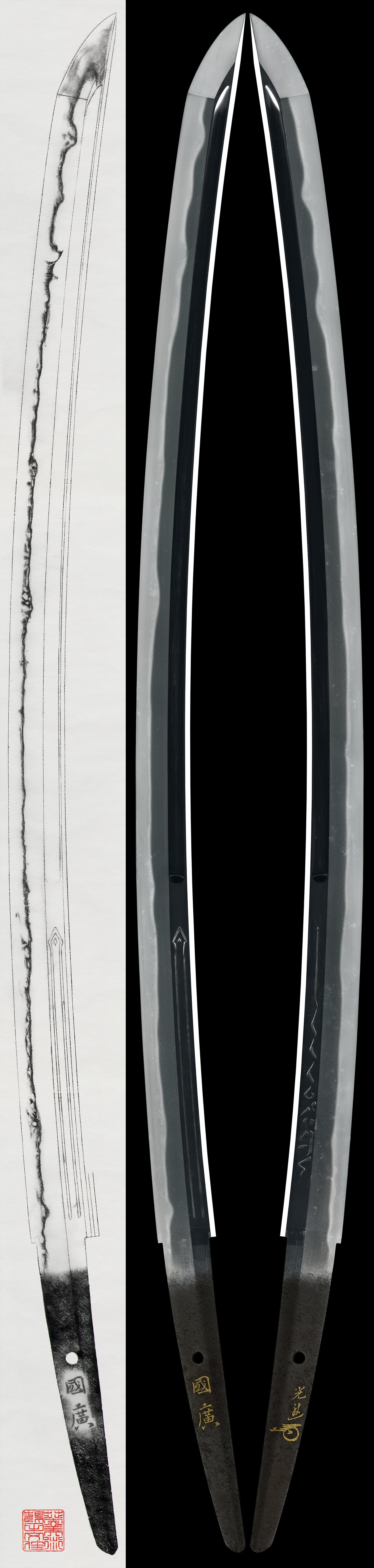
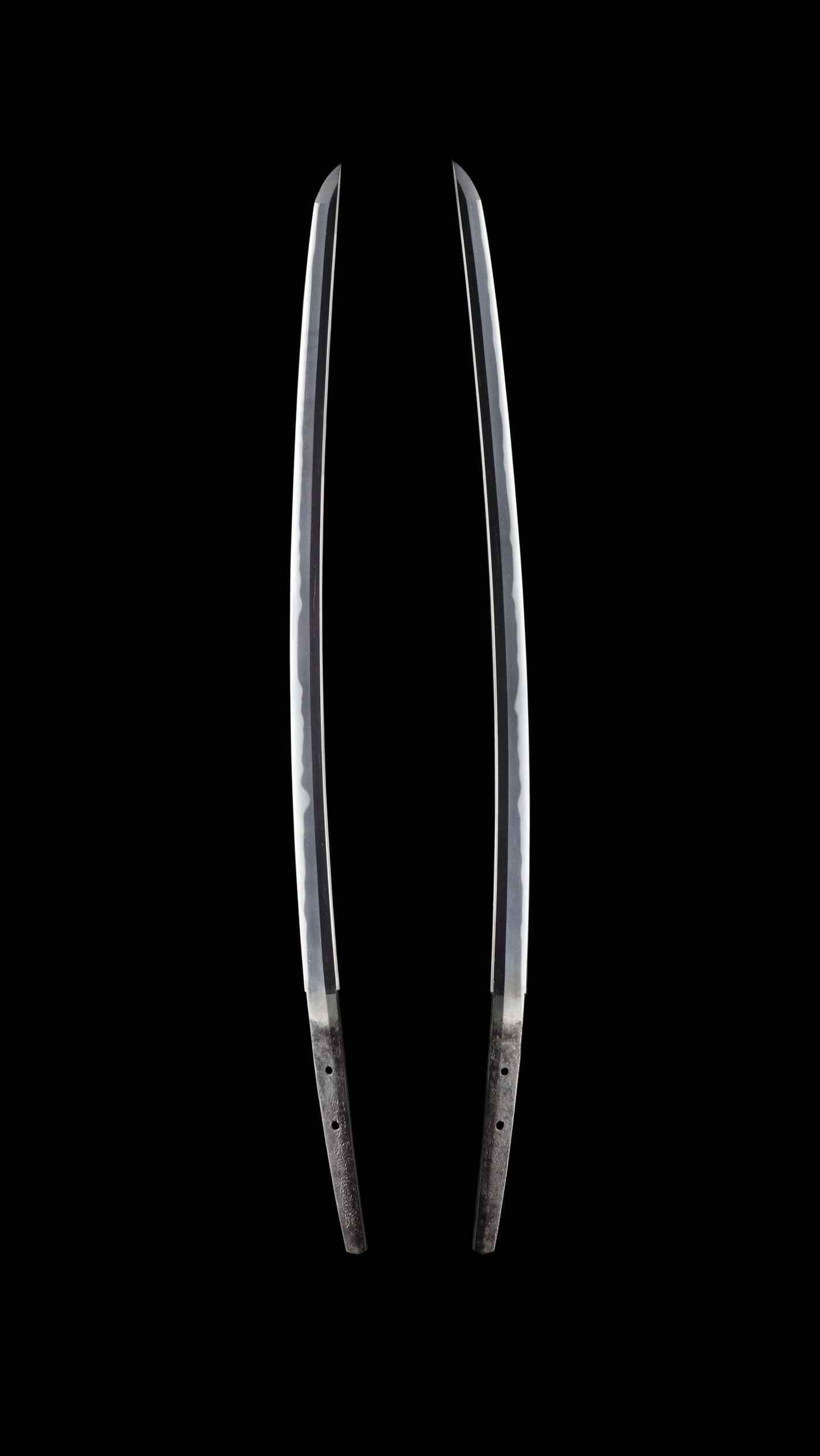
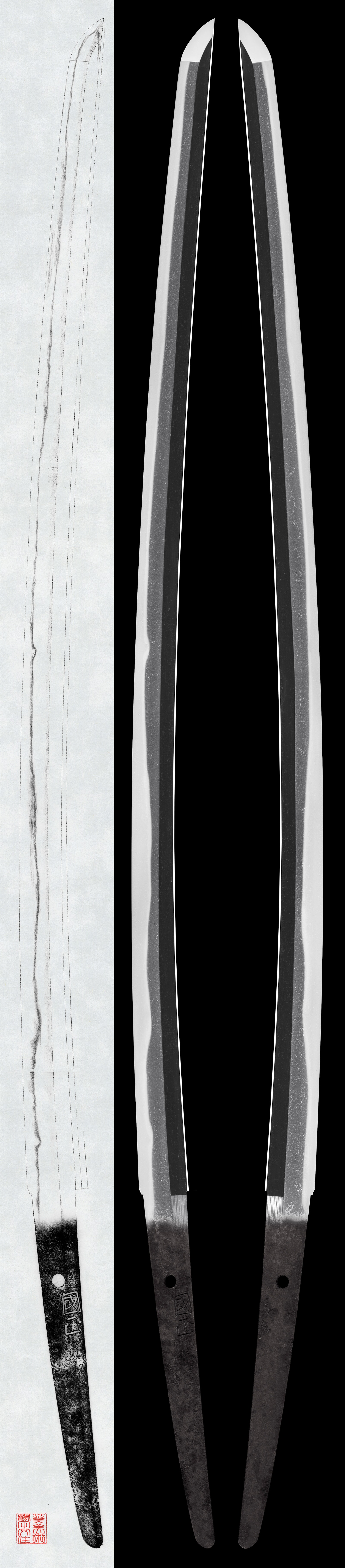
Hiroyuki works two manners over a single recognizable , and the larger part of his record is the quieter one. The published sources name the domain at which he was most adept within his school, calling more than one blade an example of "the he handled with the greatest skill." He tempers a narrow , often mixing a shallow small and , the entering, the laid well, and around the middle of the blade , and with fine and and frequent , the often a little subdued. Over this he sets his other and rarer hand, a the judges read as a copy of the superior masters, with thick at times coarse , broad running to a banded effect, long , vigorous and a swept up into a flame-like point. The first manner is gentle and antique, the second bold and rustic.
The is the constant beneath both. He forges a standing, dry mixed with and flowing grain, raised into the rough texture the published sources call the -, with dense fine and fine entering. What sets his steel apart within the school is its colour. The carries a markedly blackish cast that the judges read as this smith's particular flavour, and on his it draws the comparison they make explicit, an antique tone that "calls to mind that of old Yamato work." One is read as strongly Yamato in temperament, recalling old , while the and are called rare pieces that take Yamato workmanship as their model. The blackish gives even his Keichō- shapes the feel of an older age.
His surviving work divides cleanly by form and by period. The published sources note that and outnumber his , and that his dated pieces are confined, for reasons left unexplained, to the single Keichō 13 year, the few examples being an August and and a September , all signed 弘幸. The early 弘幸 and later 広幸 signatures, together with the Heianjō, Heianjō-jū and Heianjō -jū prefixes, let the judges place a given blade in his career. Within the register one takes Sadamune as its target, and the judges grant it is unusual for a smith most at home in to work so freely, the uneven and subdued confirming a hand even there. A -flavoured with a pointed -style is read instead as recalling Kunimichi and the smiths.
What sets Hiroyuki apart from his fellow pupils of Kunihiro is named in nearly every one of his entries, and it lies in the tang rather than the blade. Where the group cuts or file marks, Hiroyuki alone uses or an extremely shallow , so that the judges repeatedly write that "this smith alone uses ," an idiosyncrasy that makes him a distinctive presence within the school. His other distinctions are drawn from his own traits rather than borrowed from a rival: his is the calmest hand in a school known for -laden flamboyance, his blackish steel the most antique in colour, and his , when it comes, the most rustic and demonstrative. He stands in the second generation of the line, carrying Kunihiro's manner of standing and drifting into the early decades.
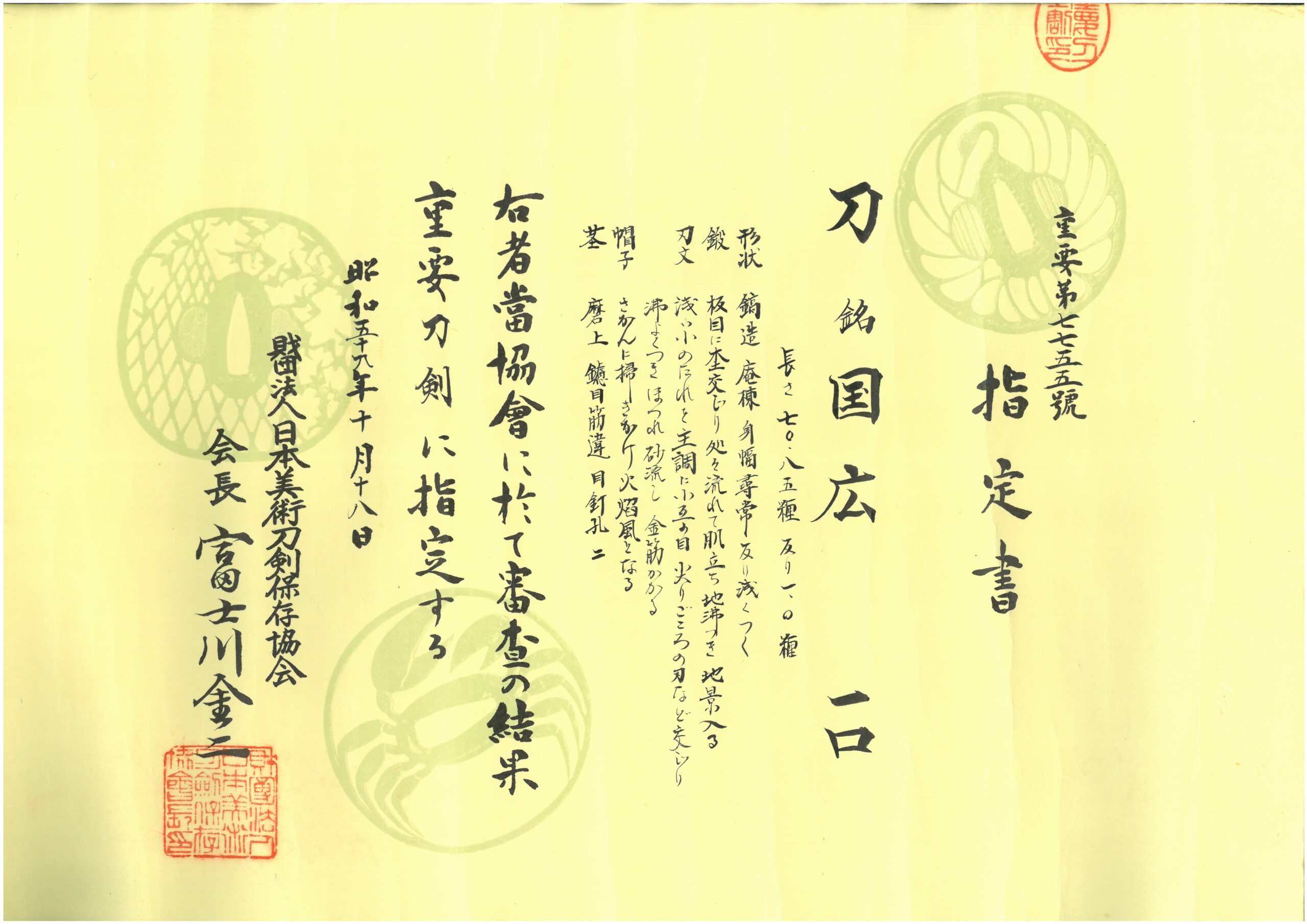
For the collector Hiroyuki is a rare and quiet name. Fujishiro grades him Jō . His surviving output is small, the published sources calling it comparatively few, and his record runs entirely through the rank, across many sessions, without a National Treasure or an Important Cultural Property among the designated works on record. Provenance is thin: his blades have passed through private hands in Japan and abroad, with one recorded in a Netherlands collection, but no house or museum is grounded in his own data, and the honest reading is that little of his work circulates. A signed Heianjō Hiroyuki, and above all one of the dated Keichō 13 pieces or the unique Tango Daijō the judges call "indispensable for research into Hiroyuki," comes to light only seldom, so that a privately held example is a notable thing for a collector to encounter, valued less for grandeur than as a document of how one pupil kept his own hand in and his own file in the tang.