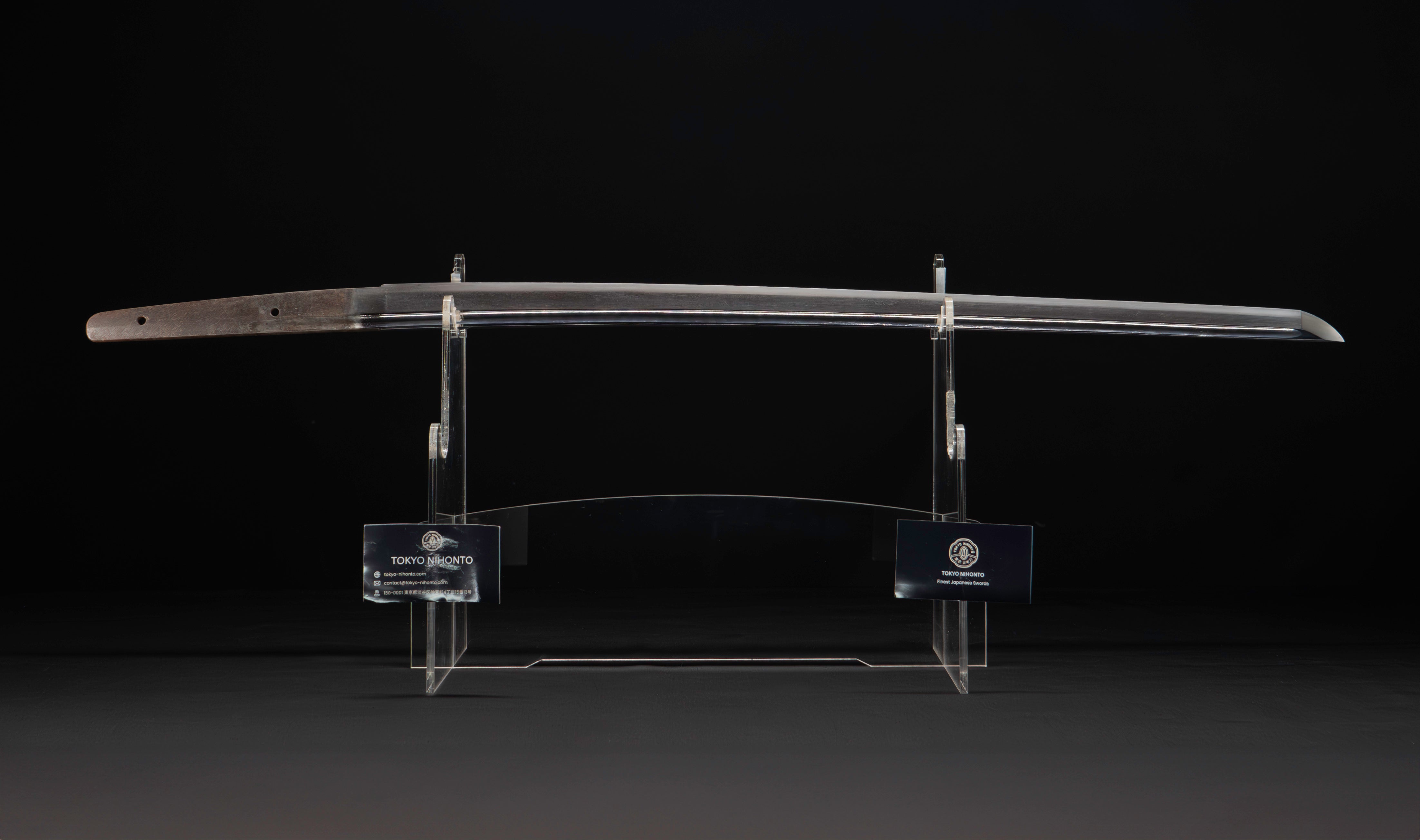
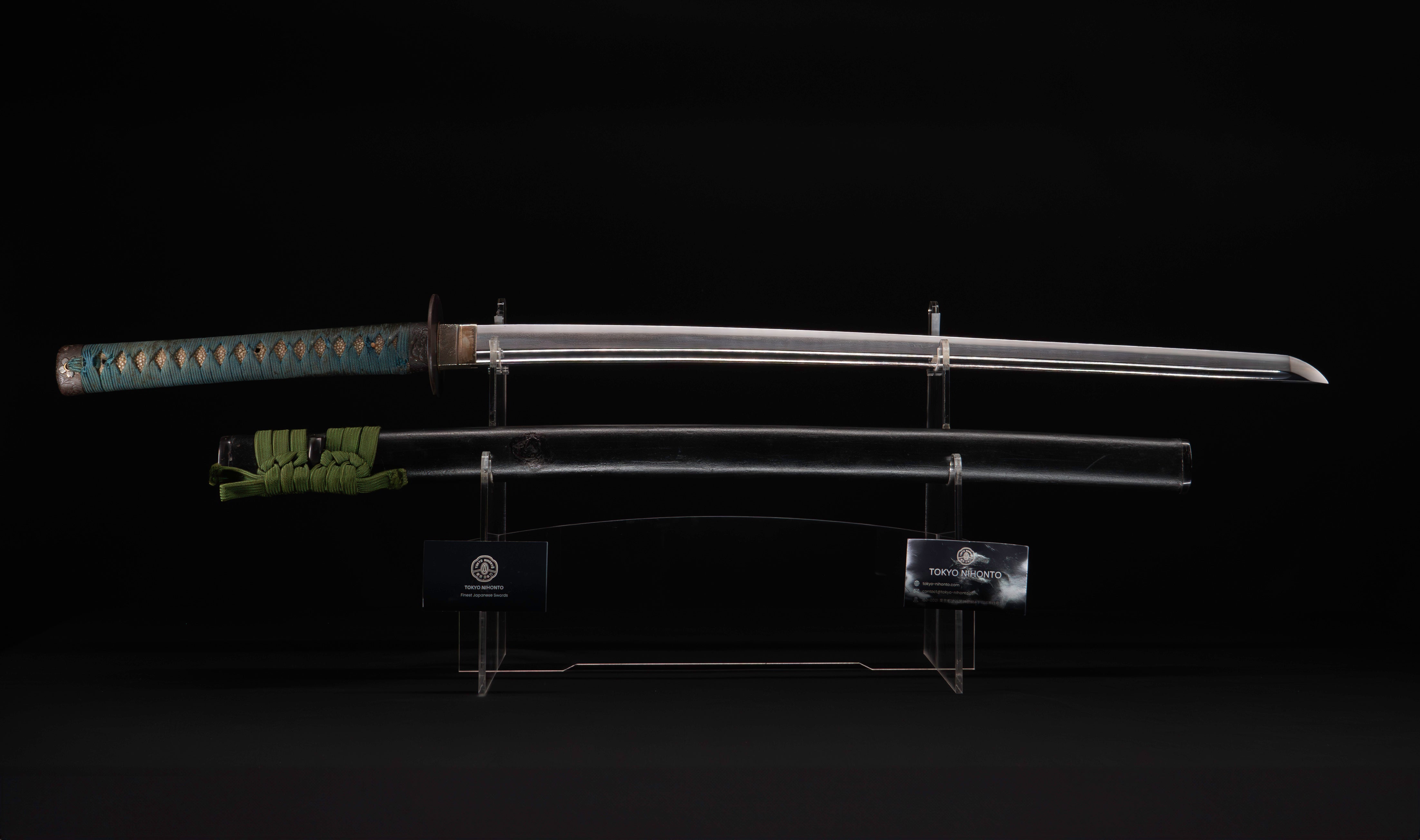
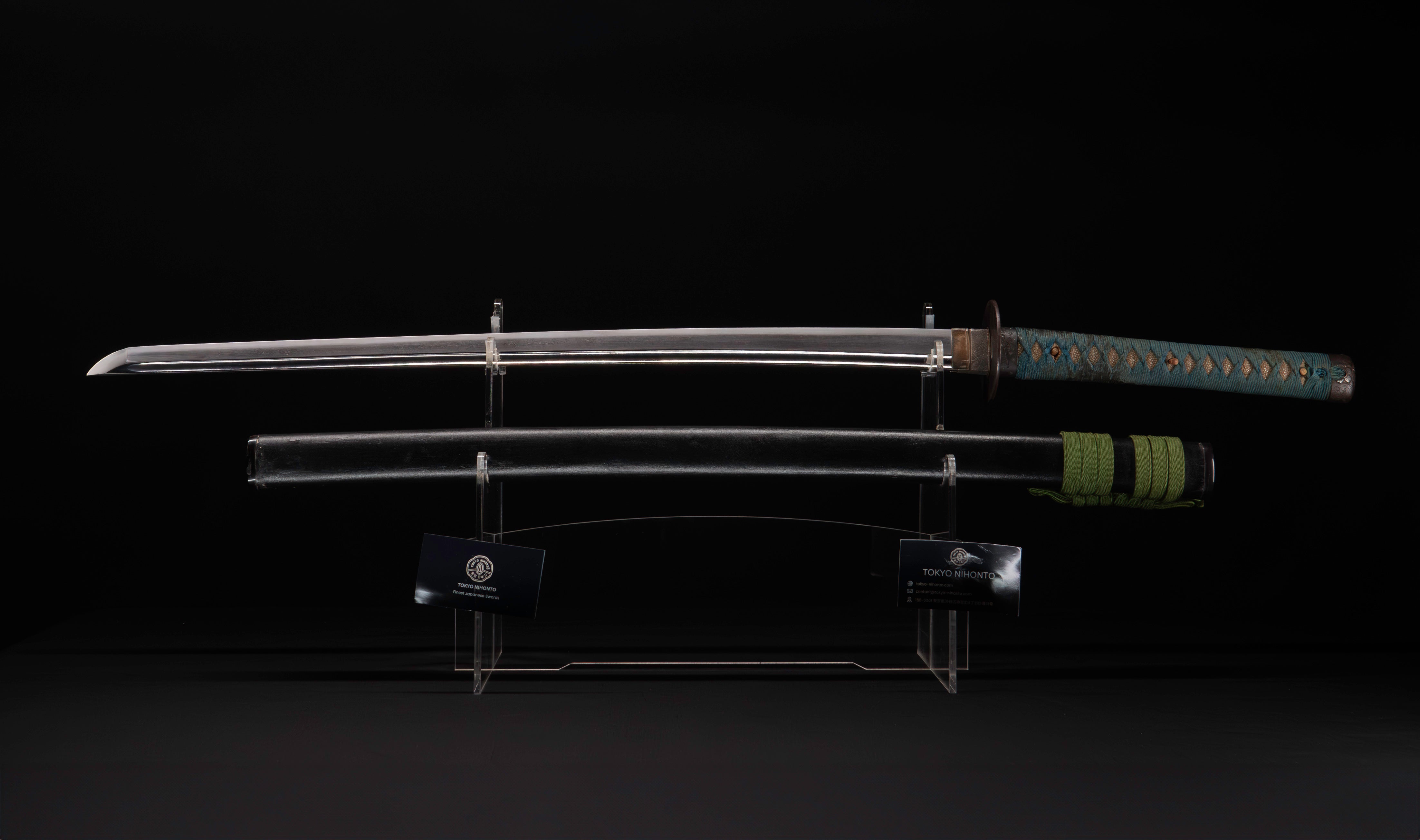
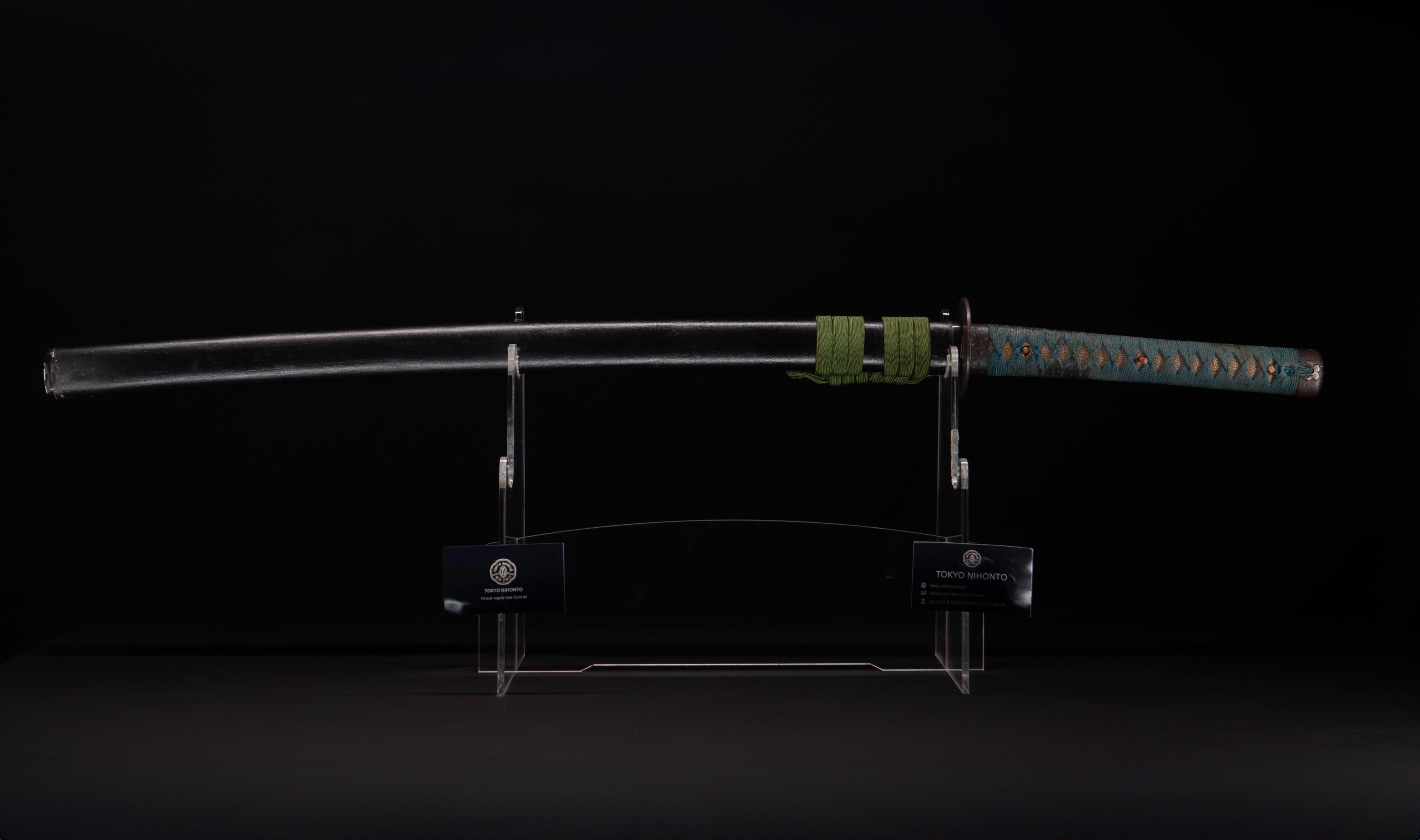
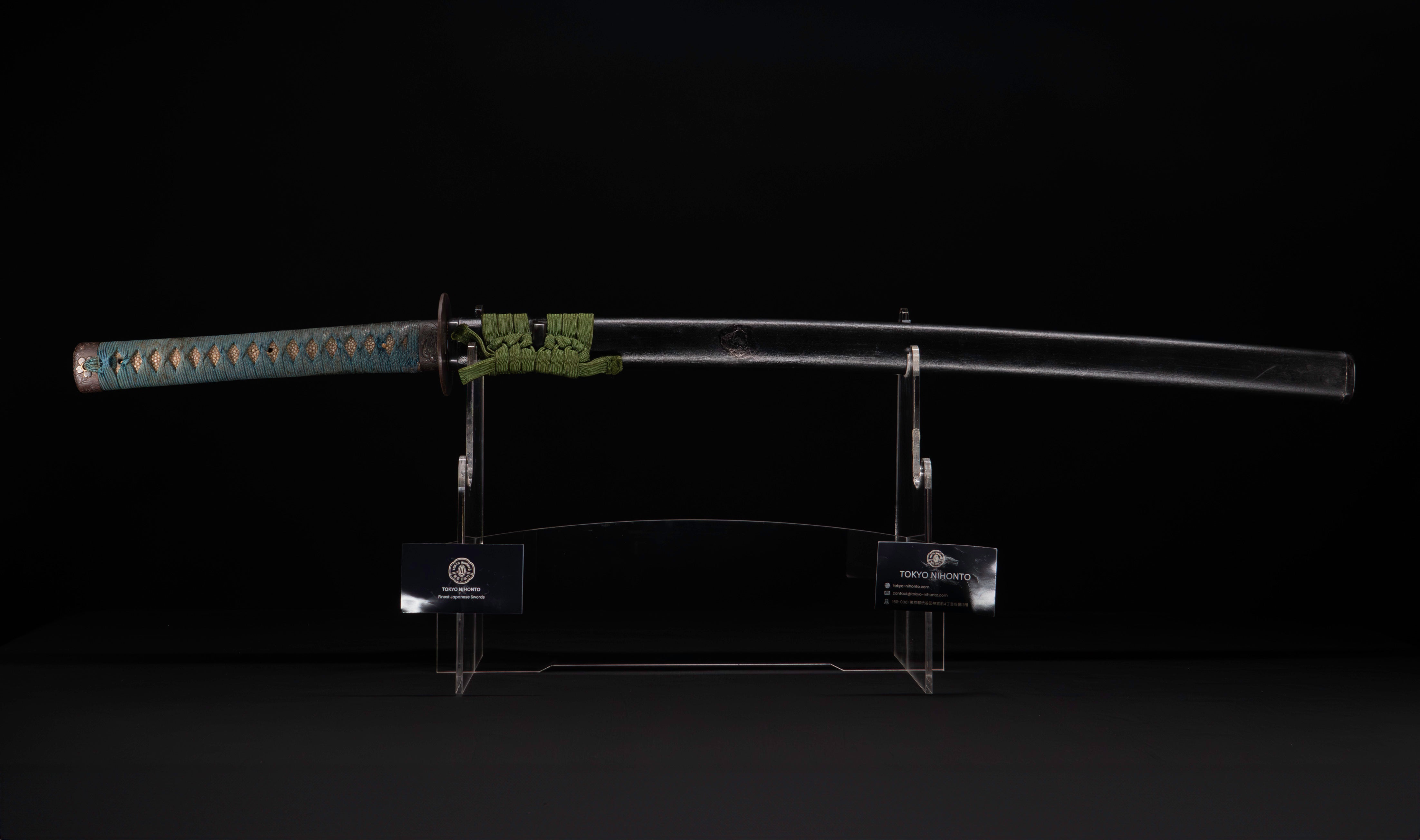
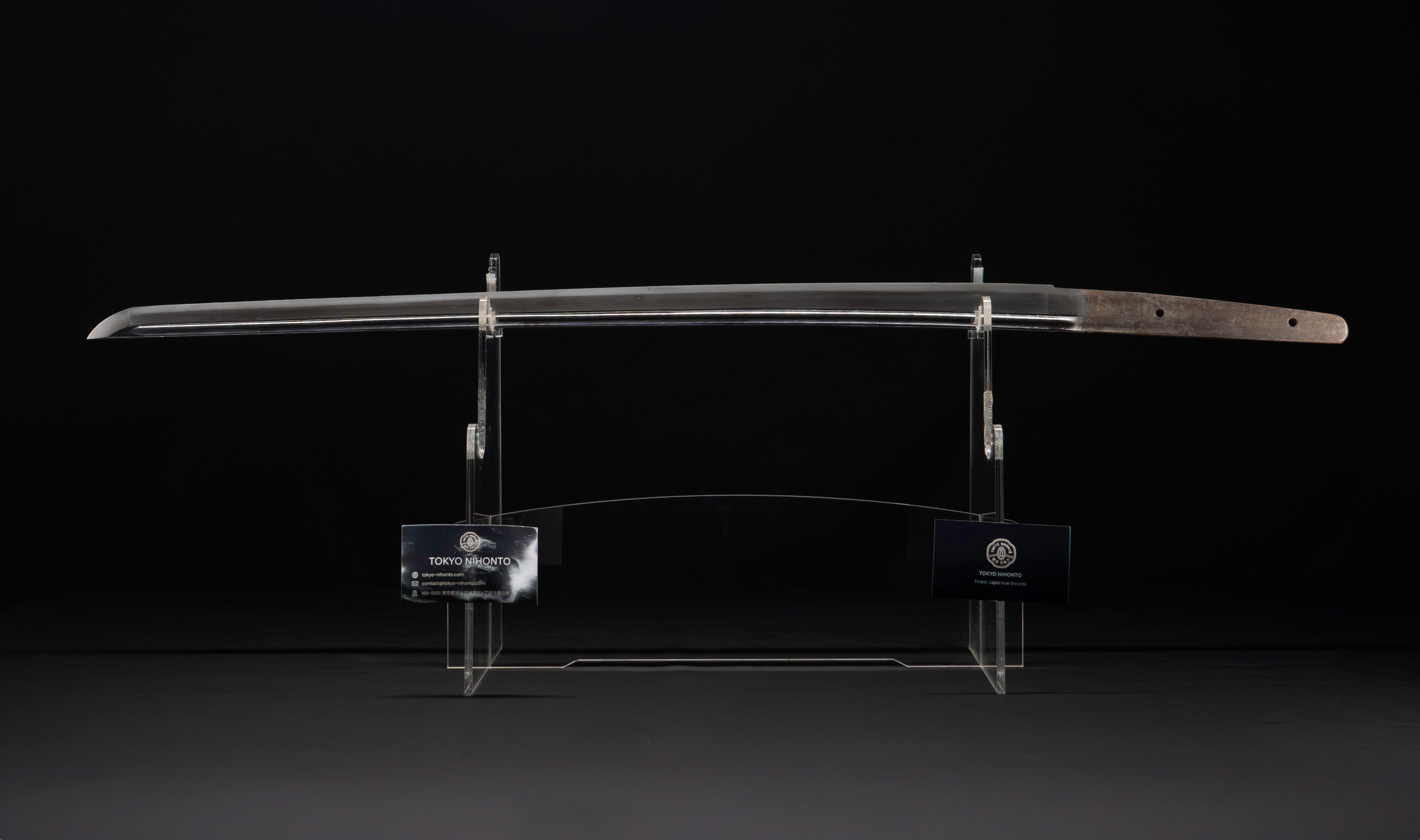
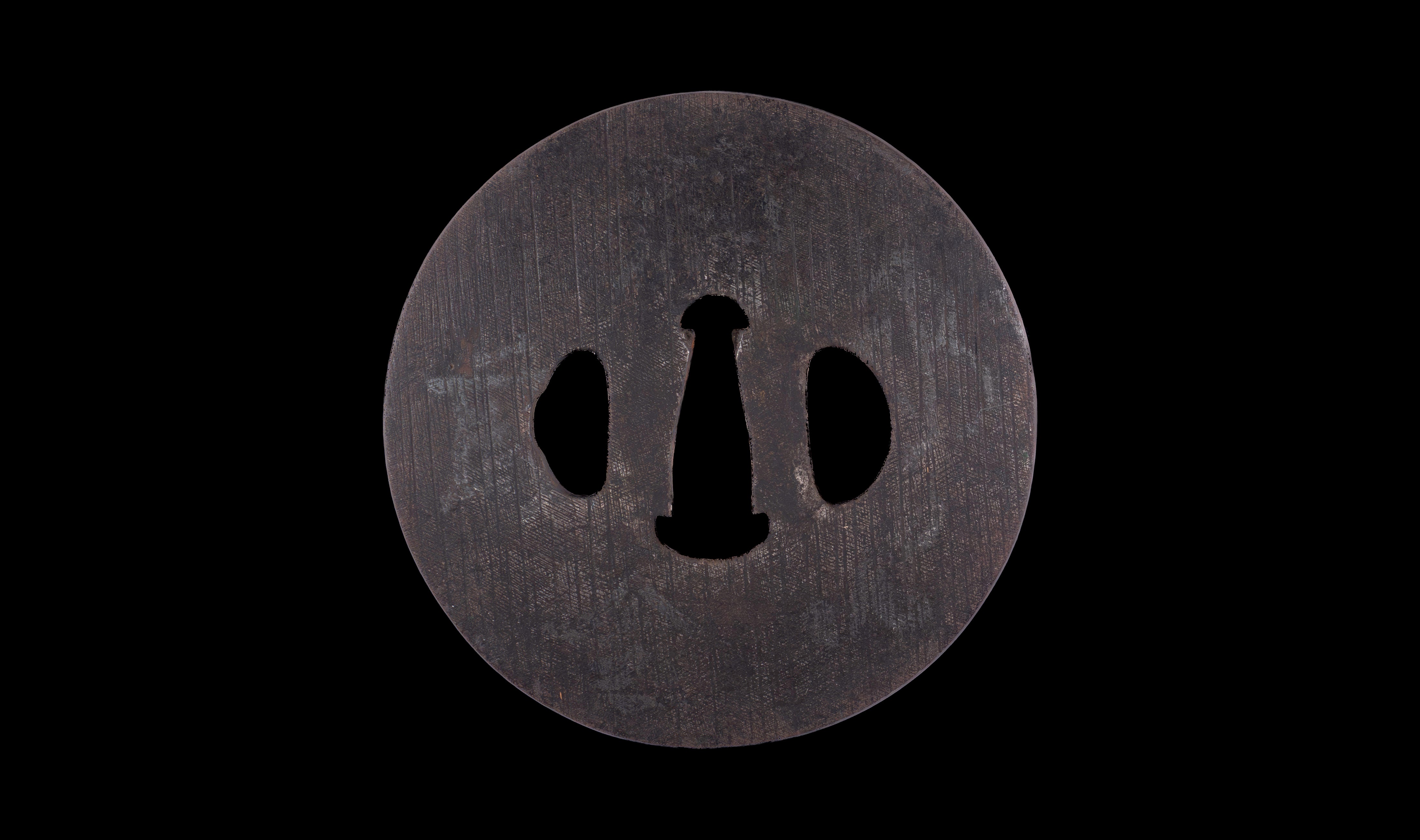
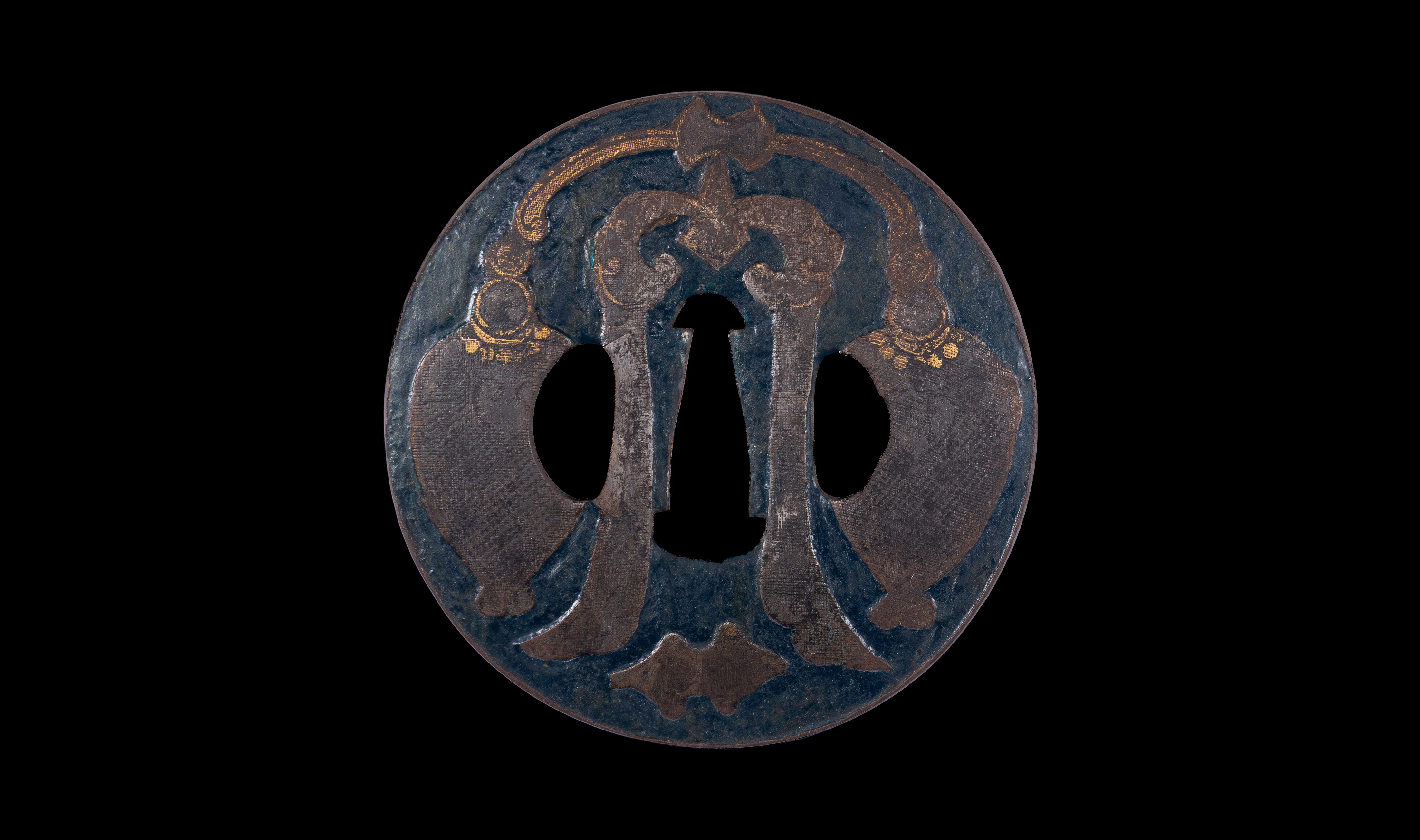
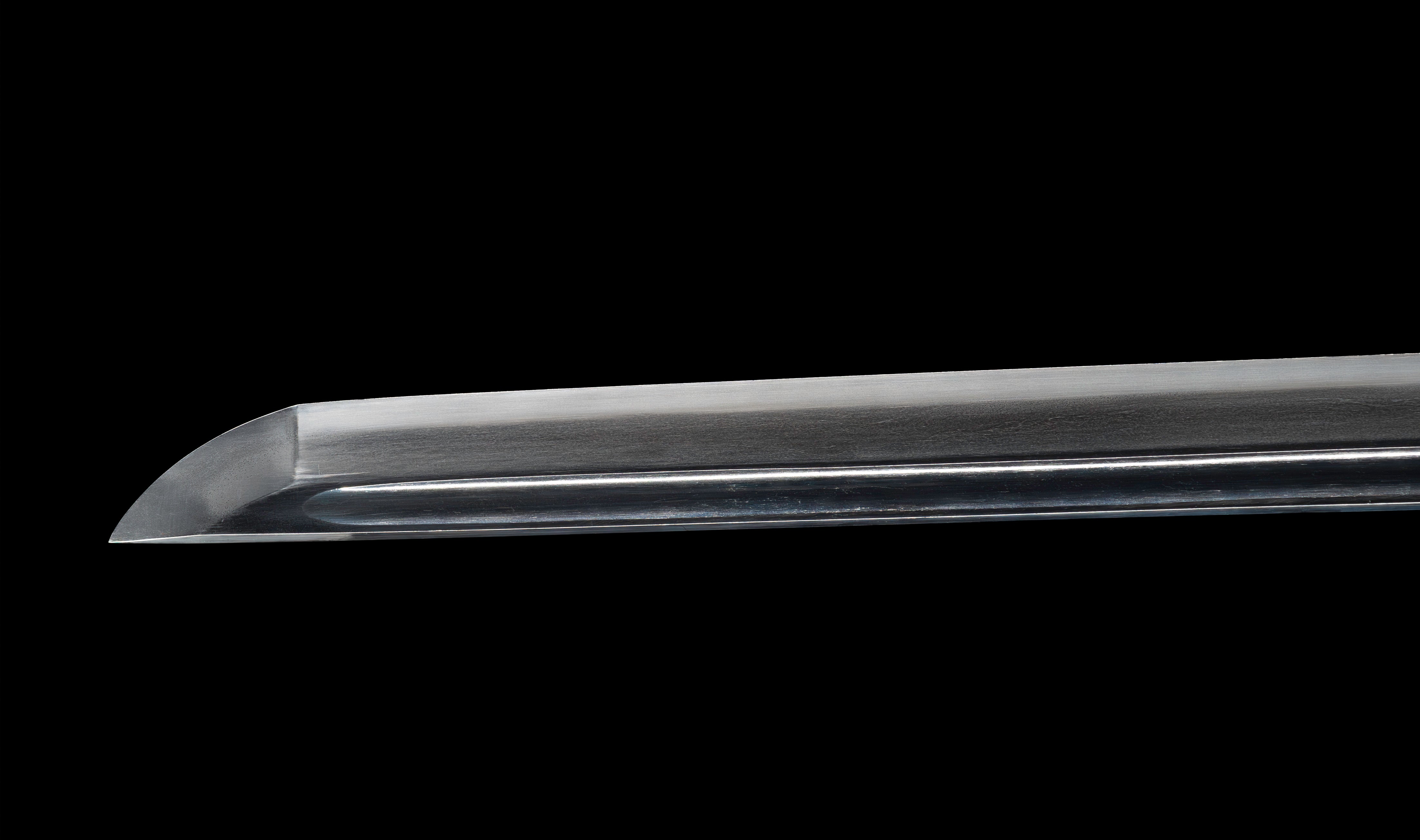
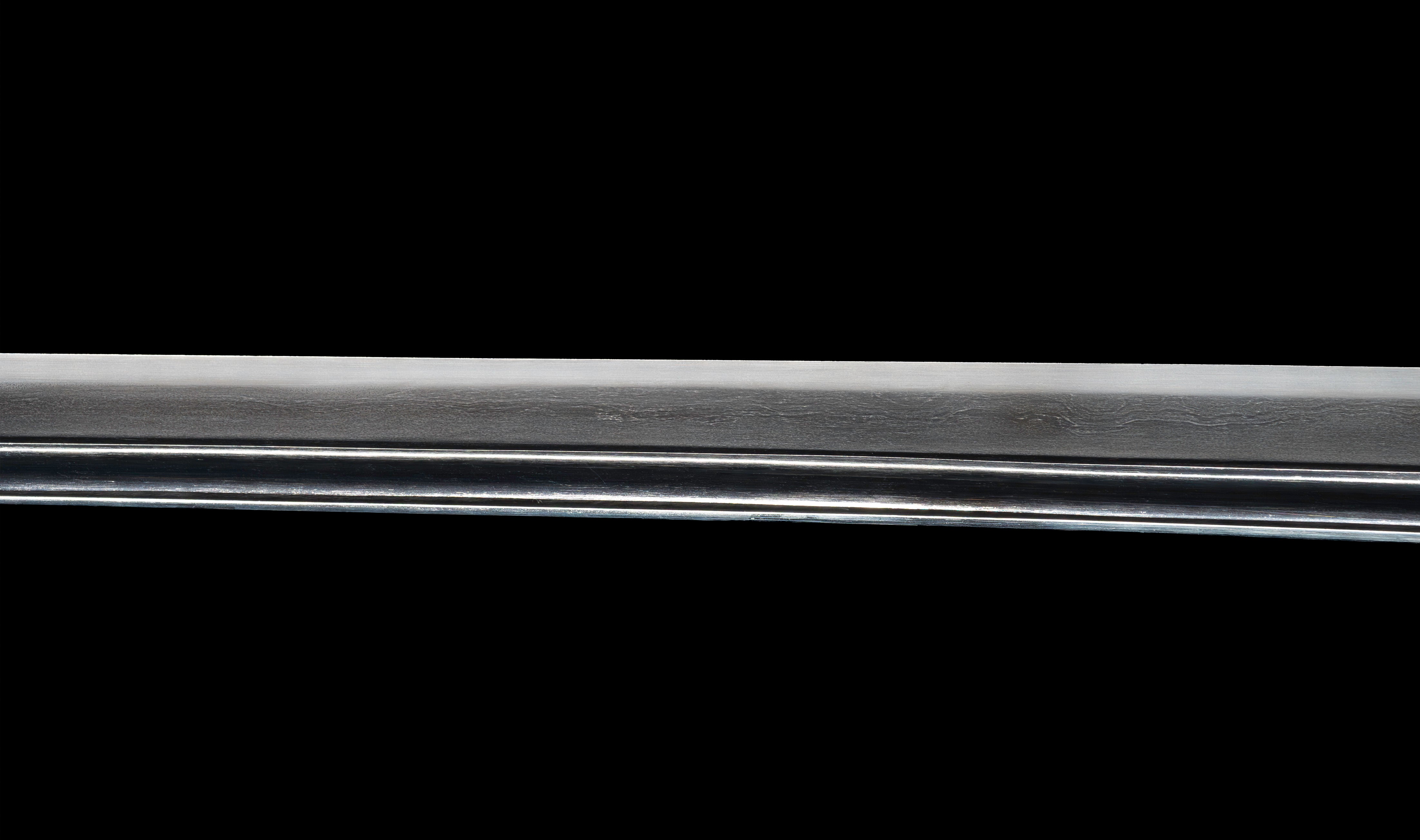
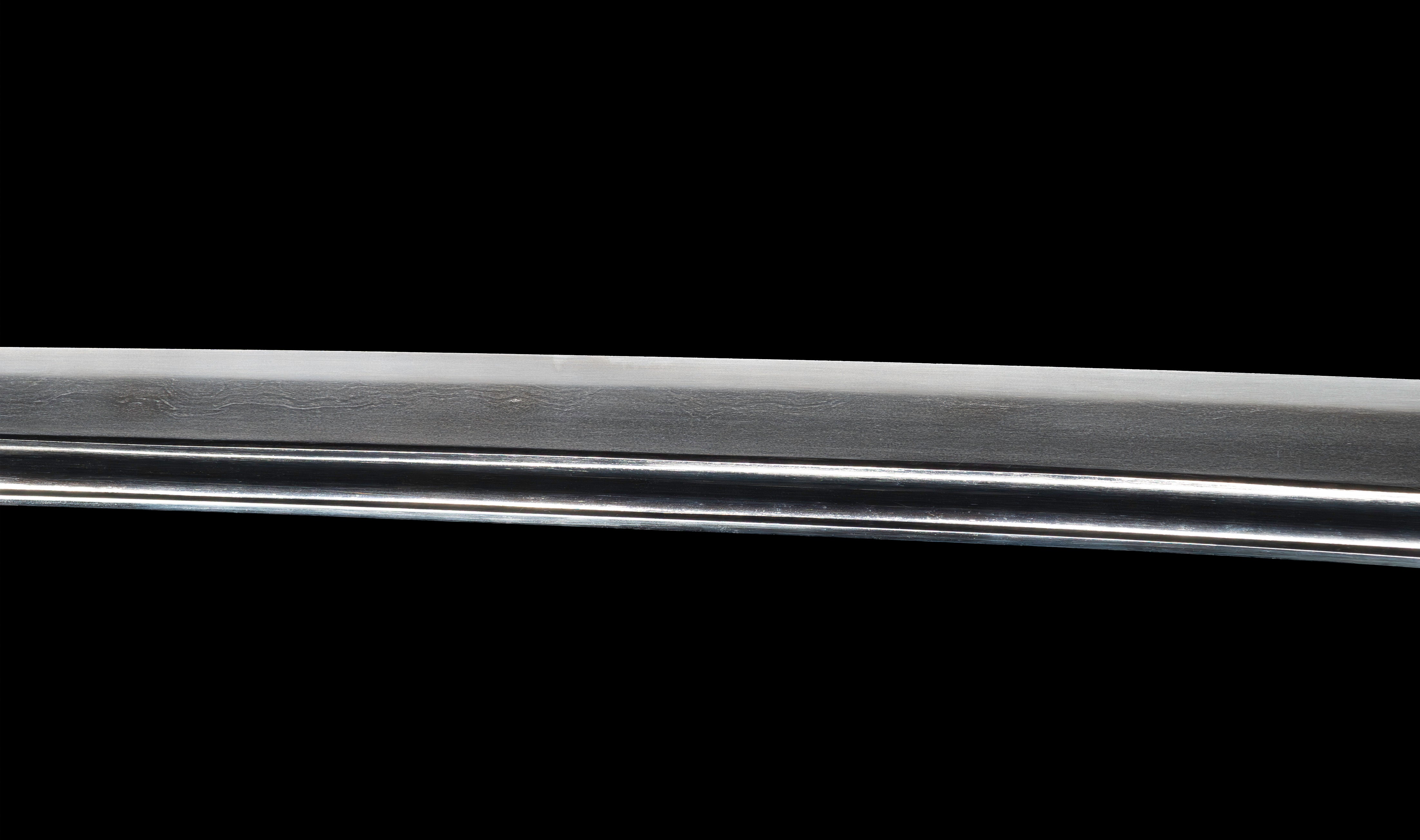
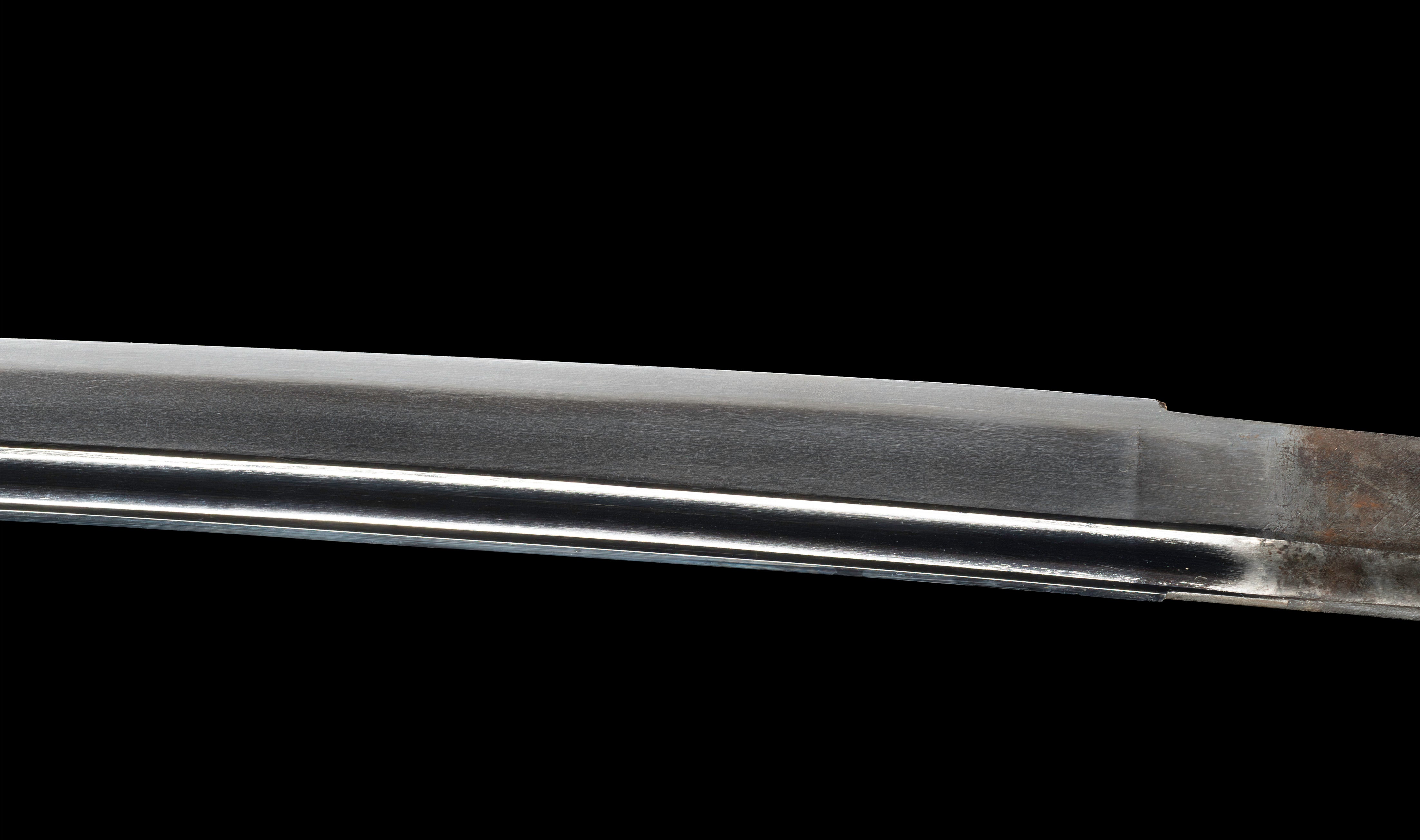
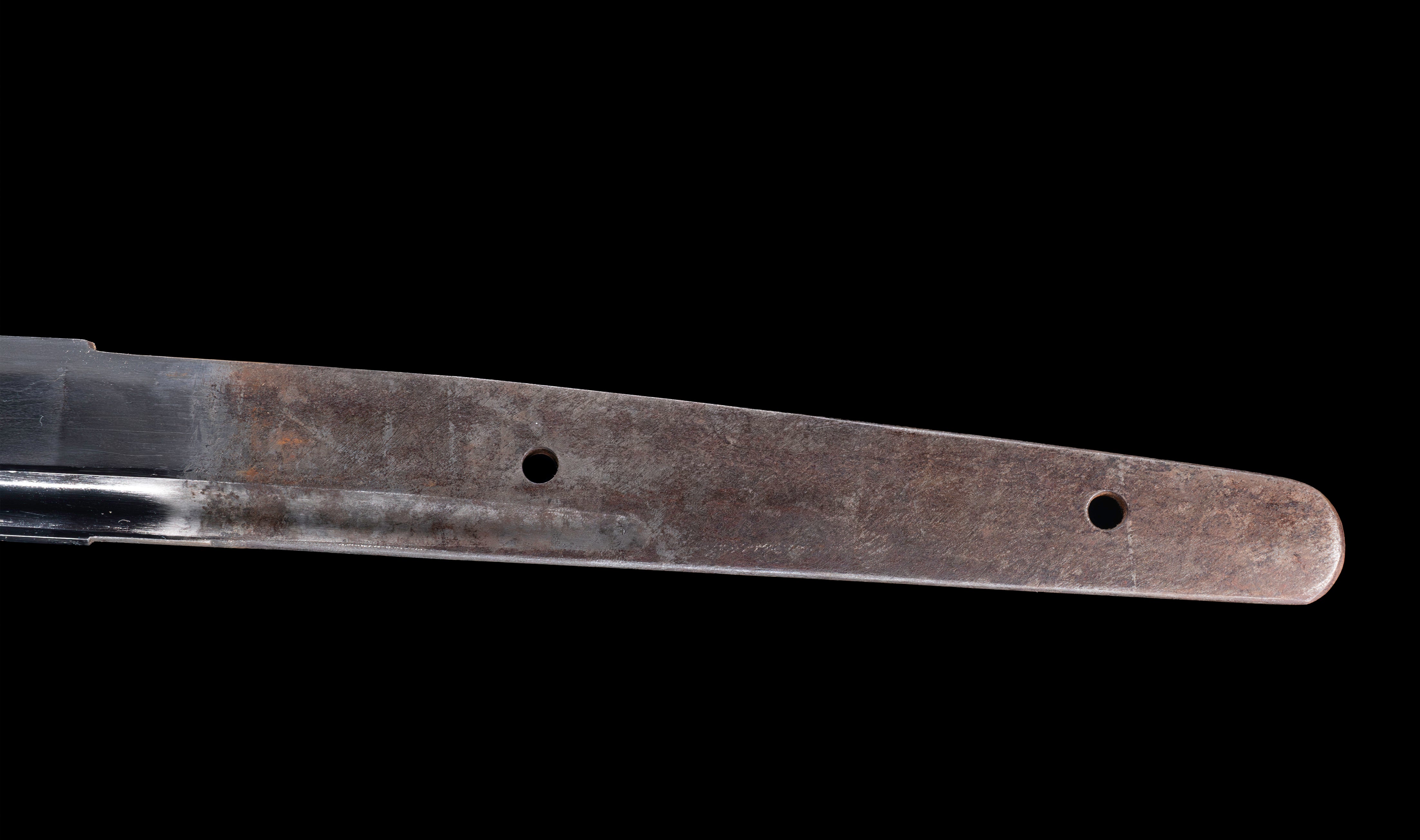
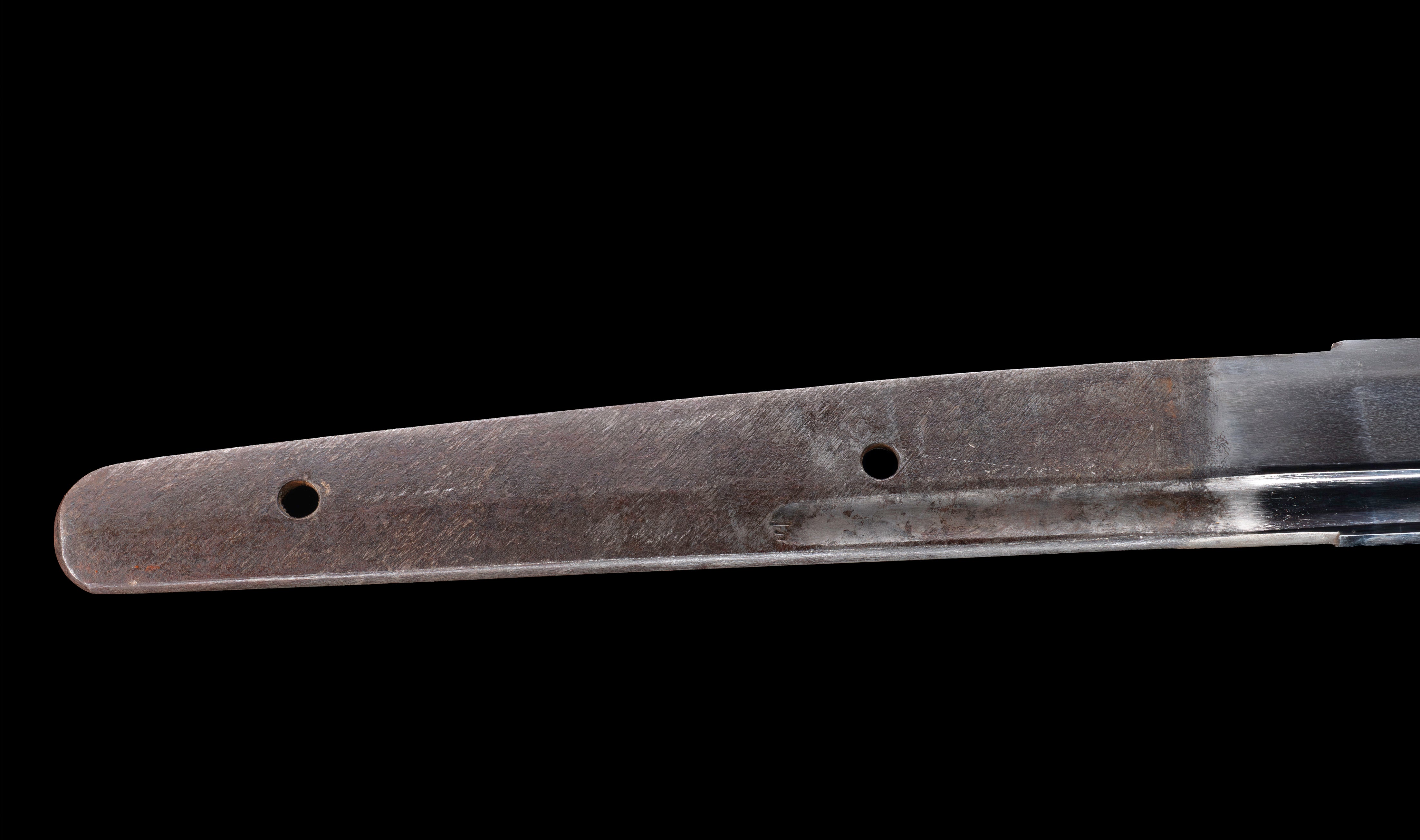
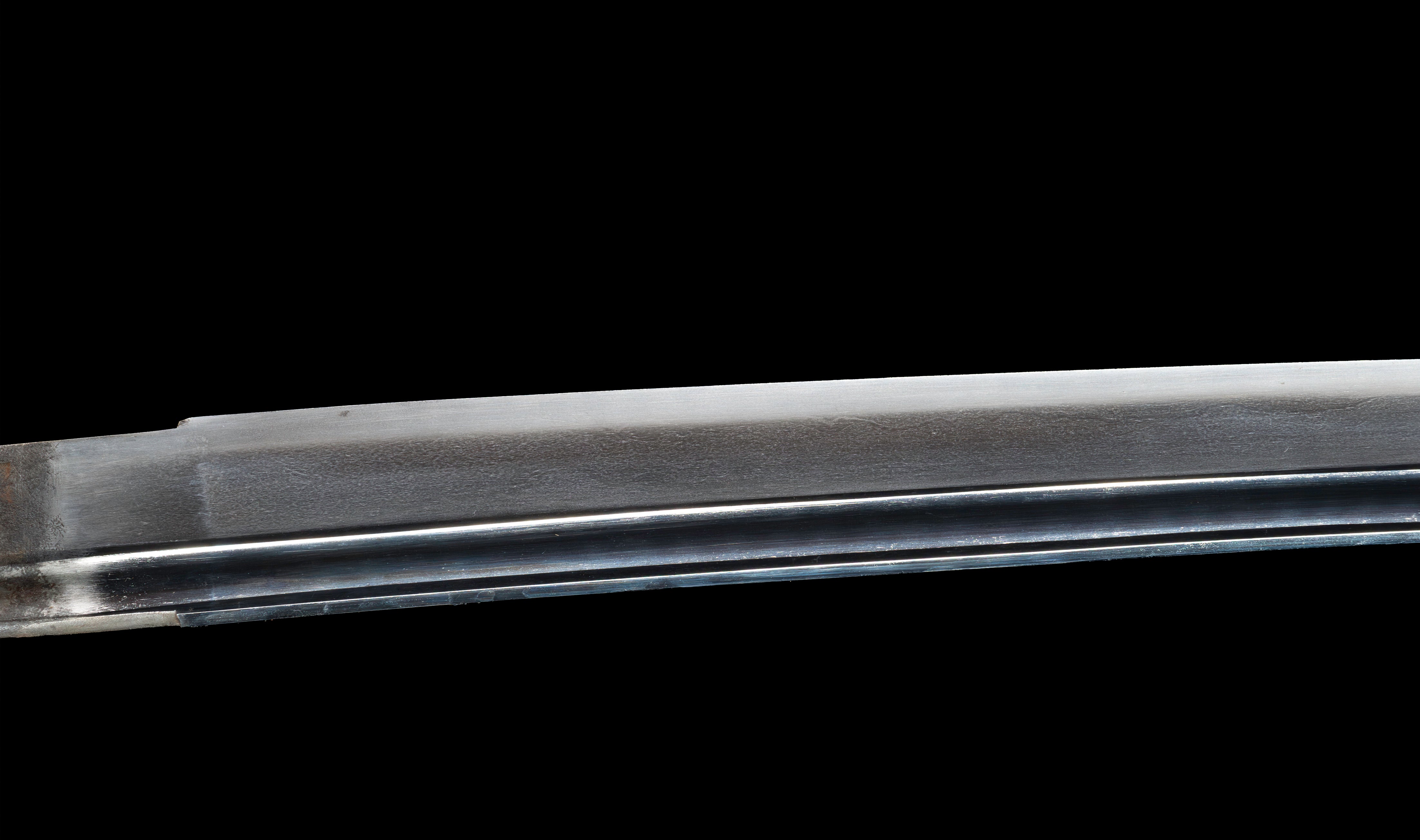
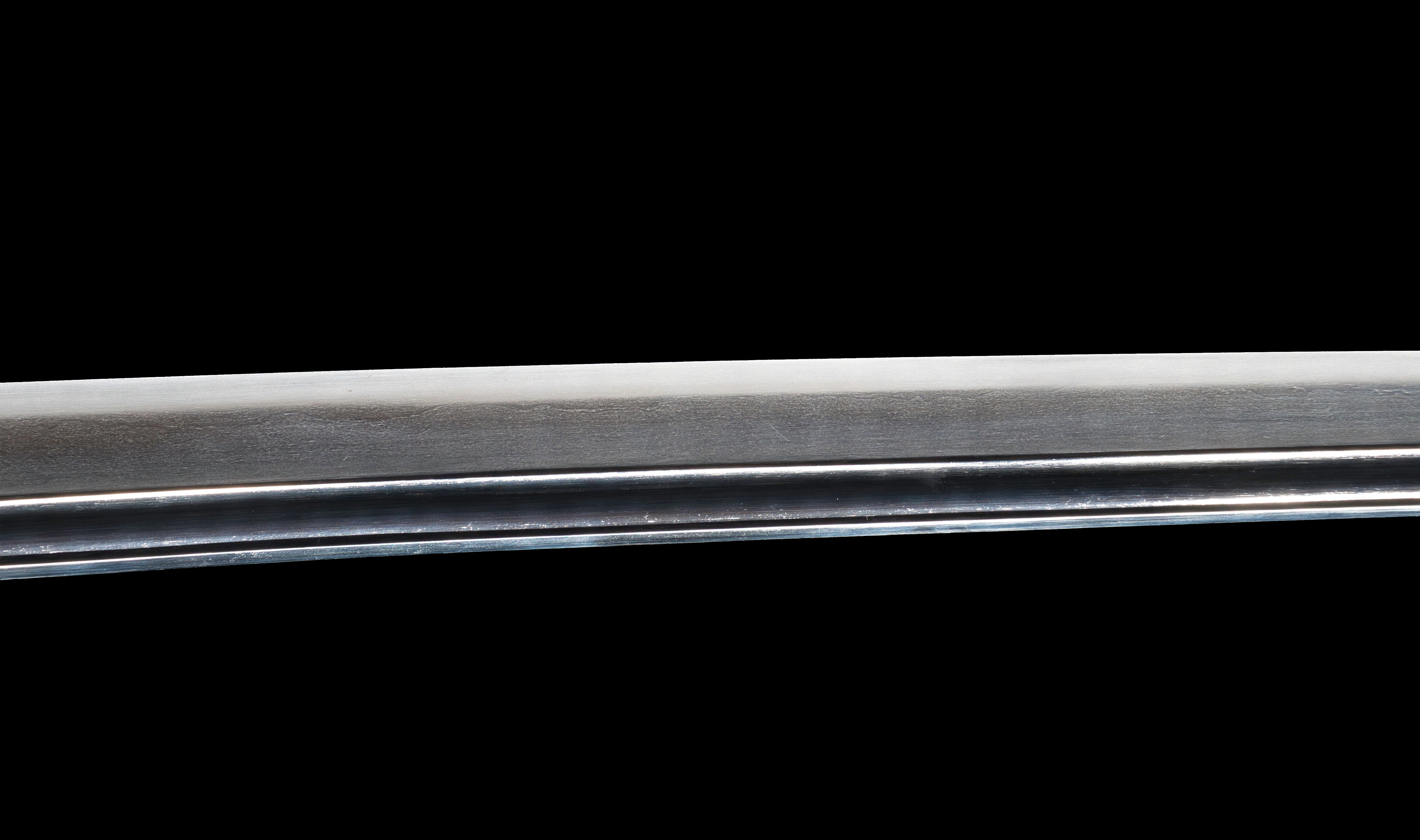
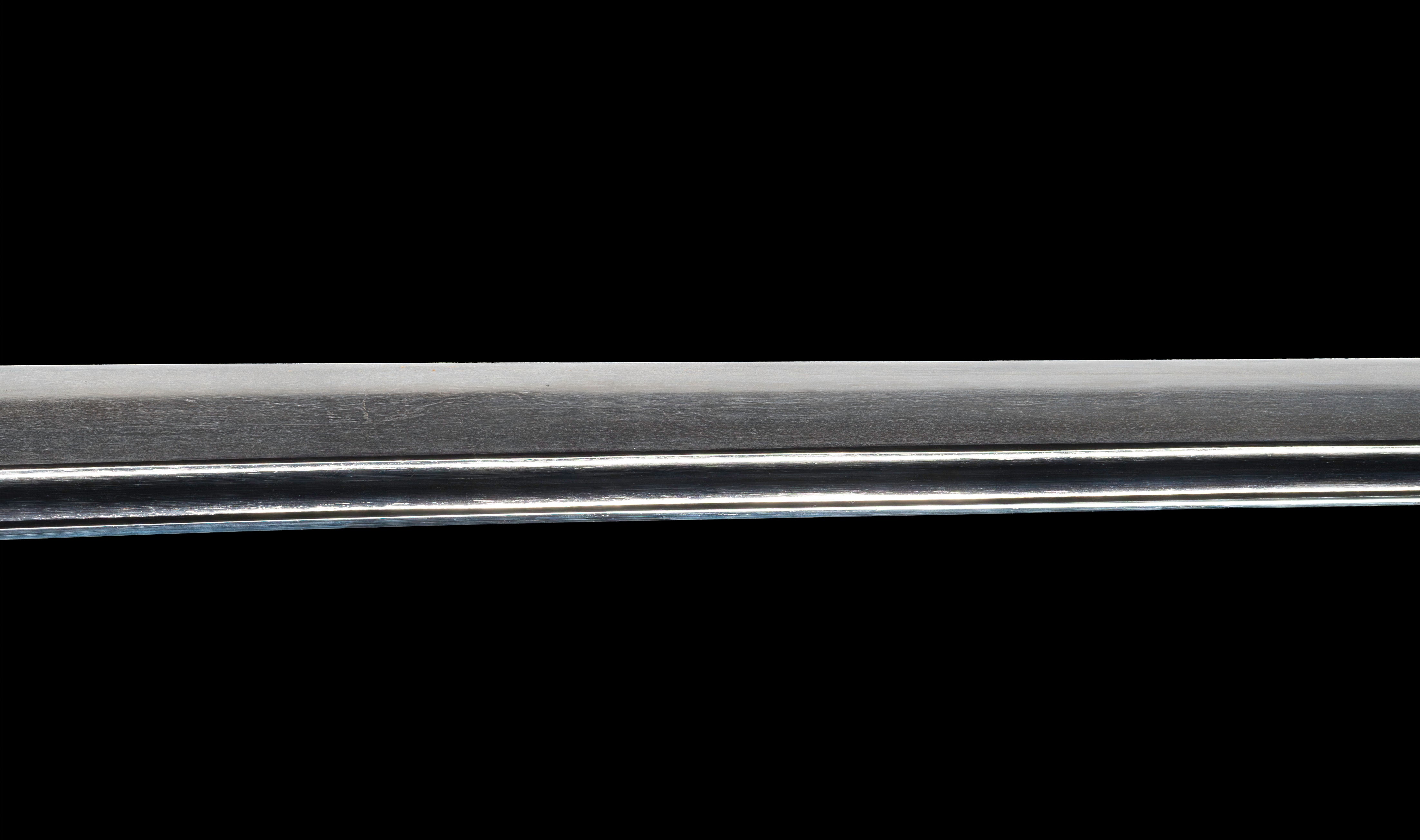
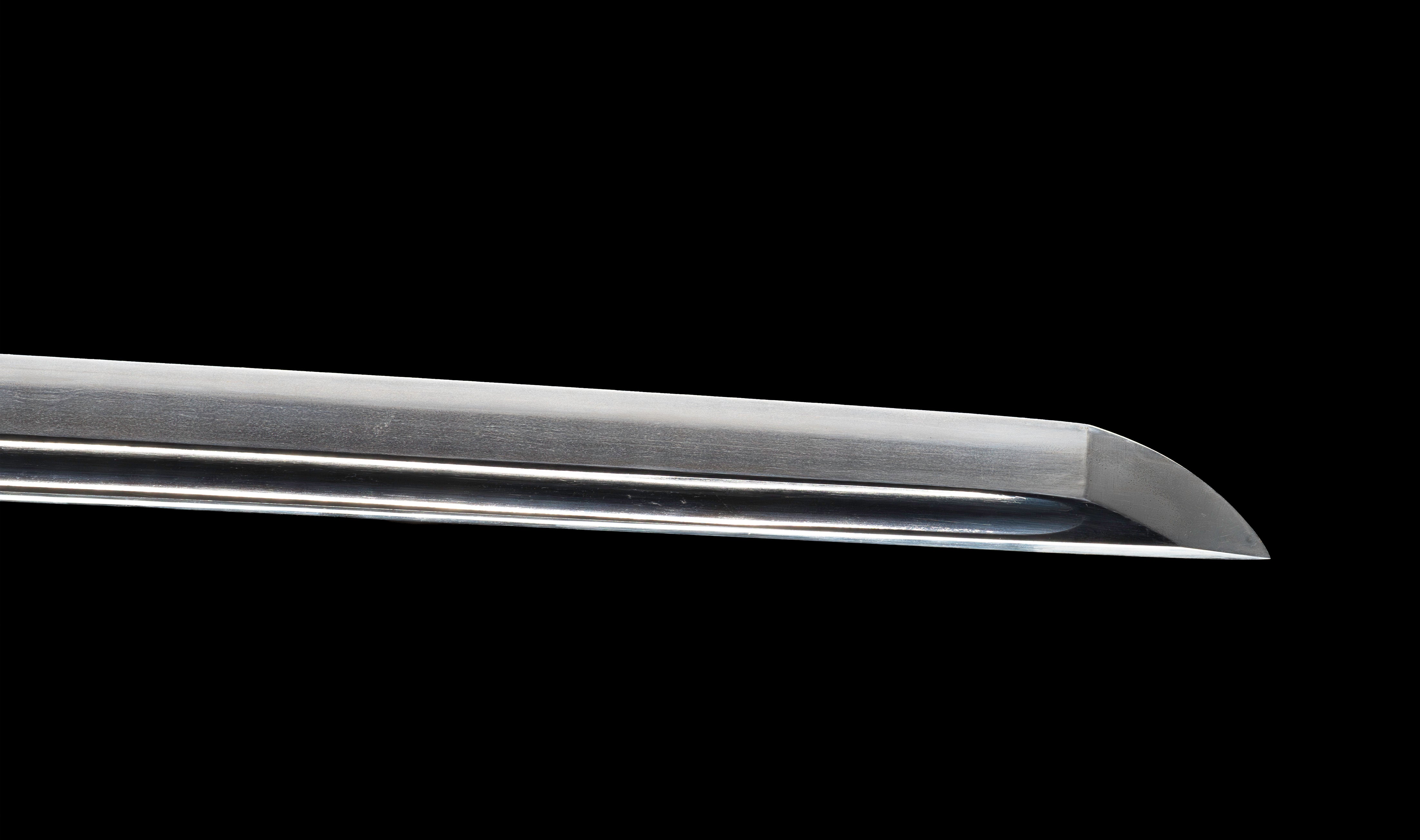
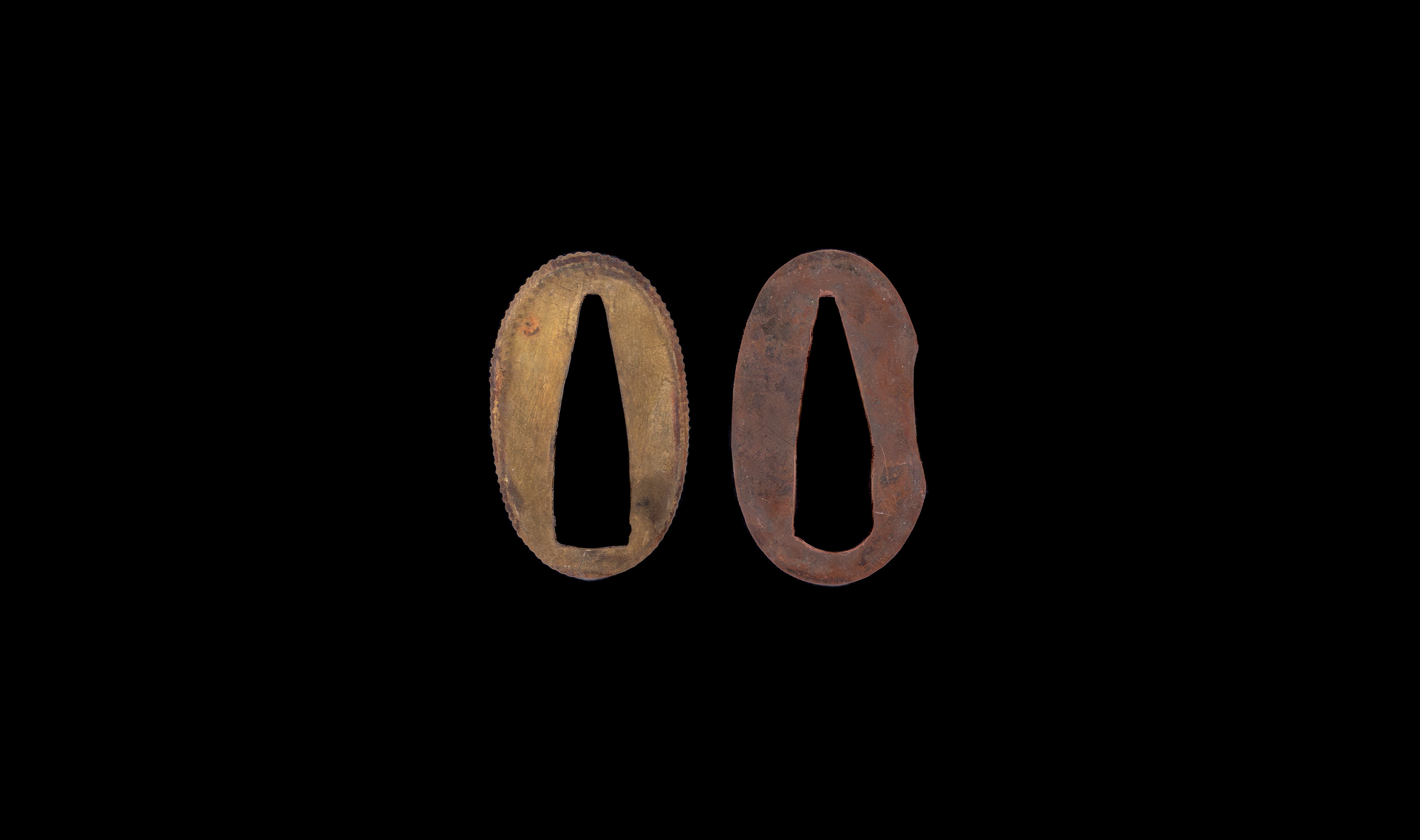
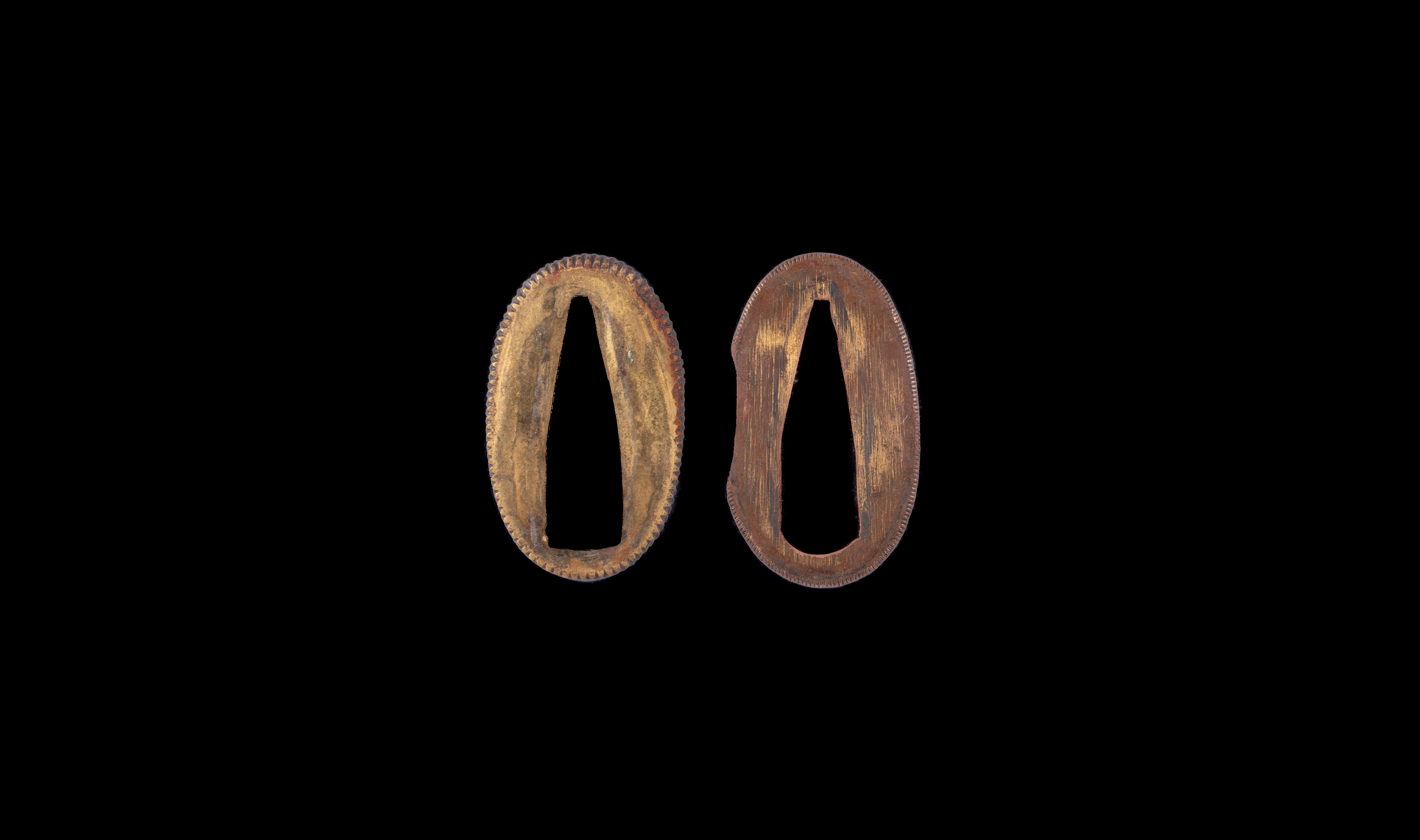
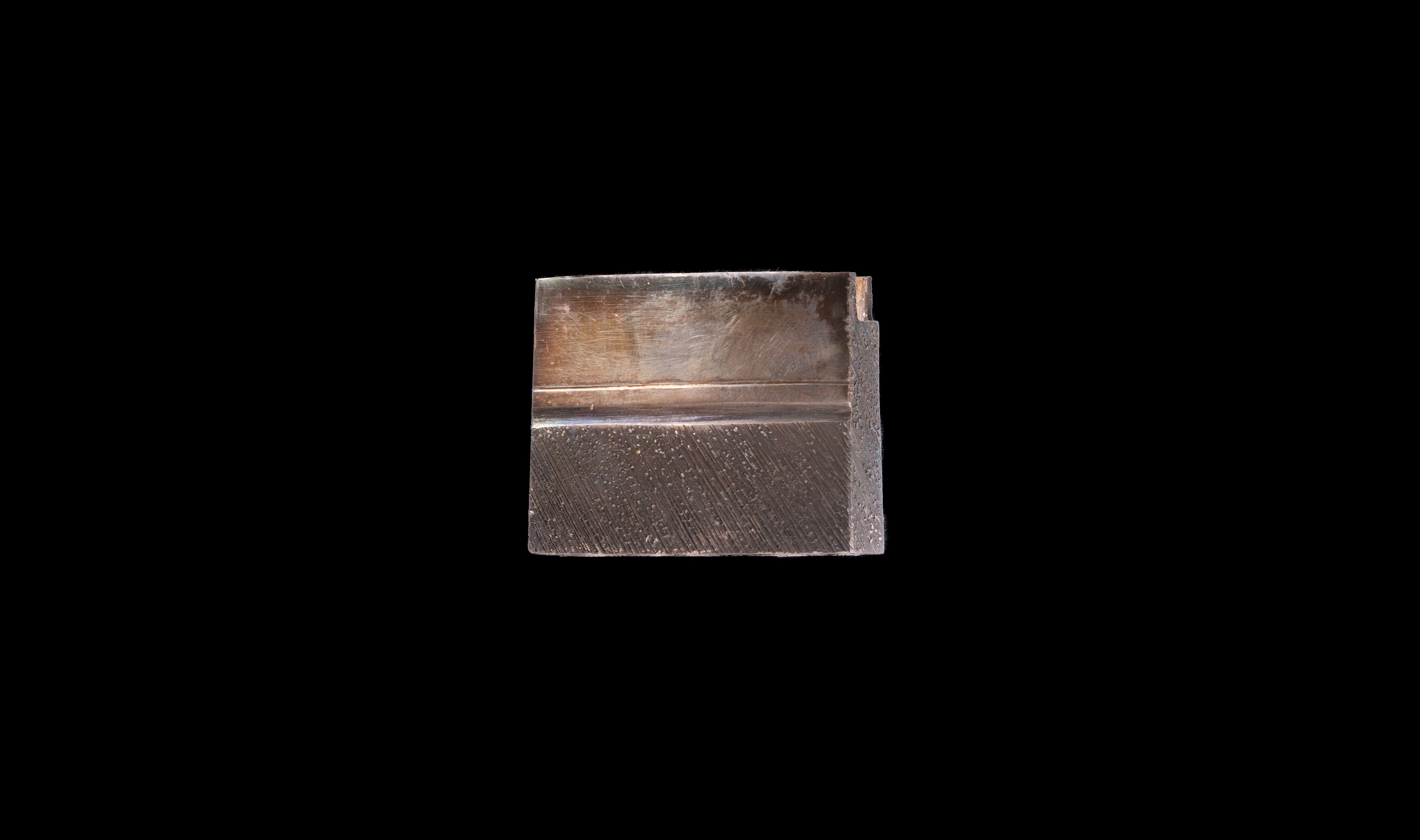
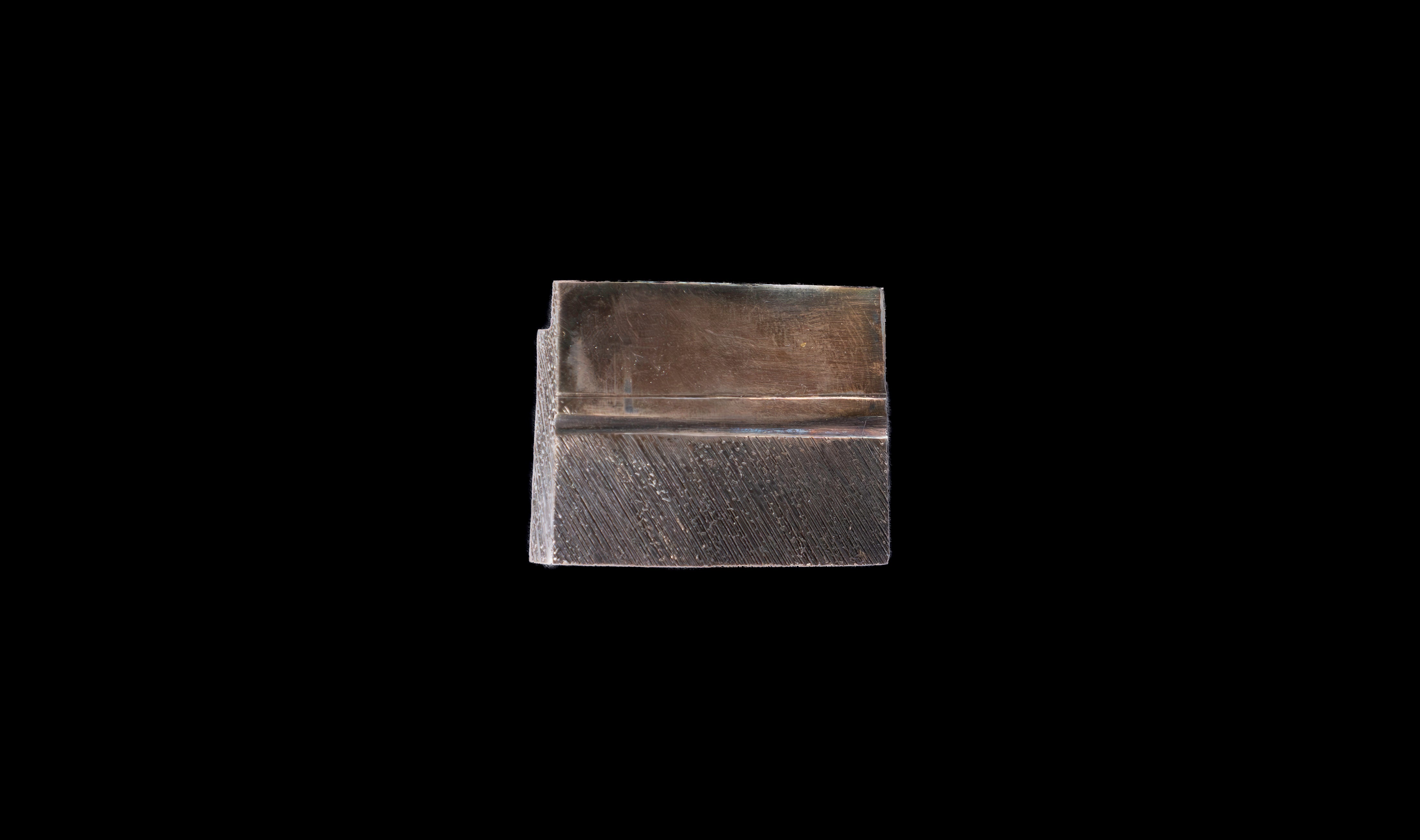
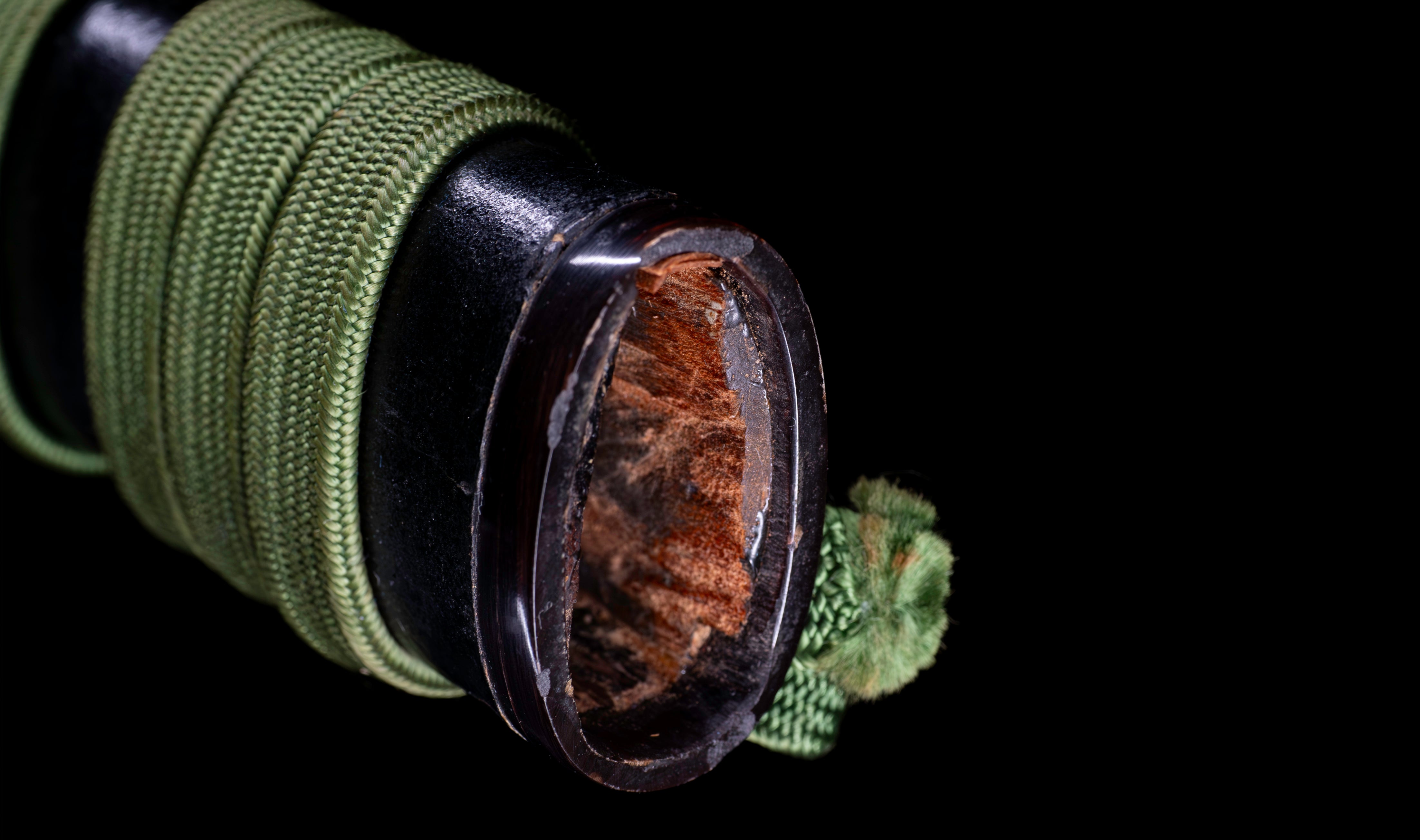
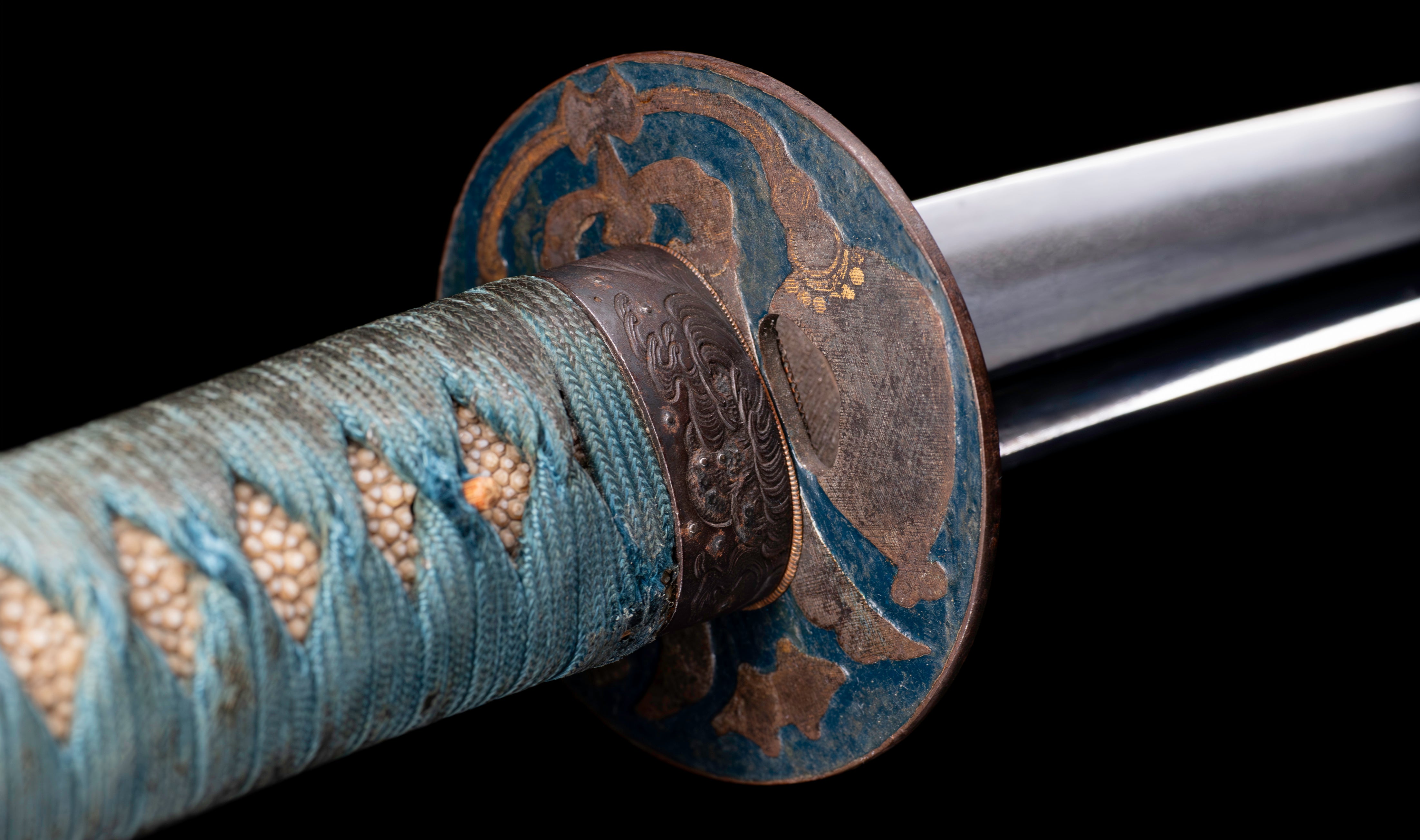
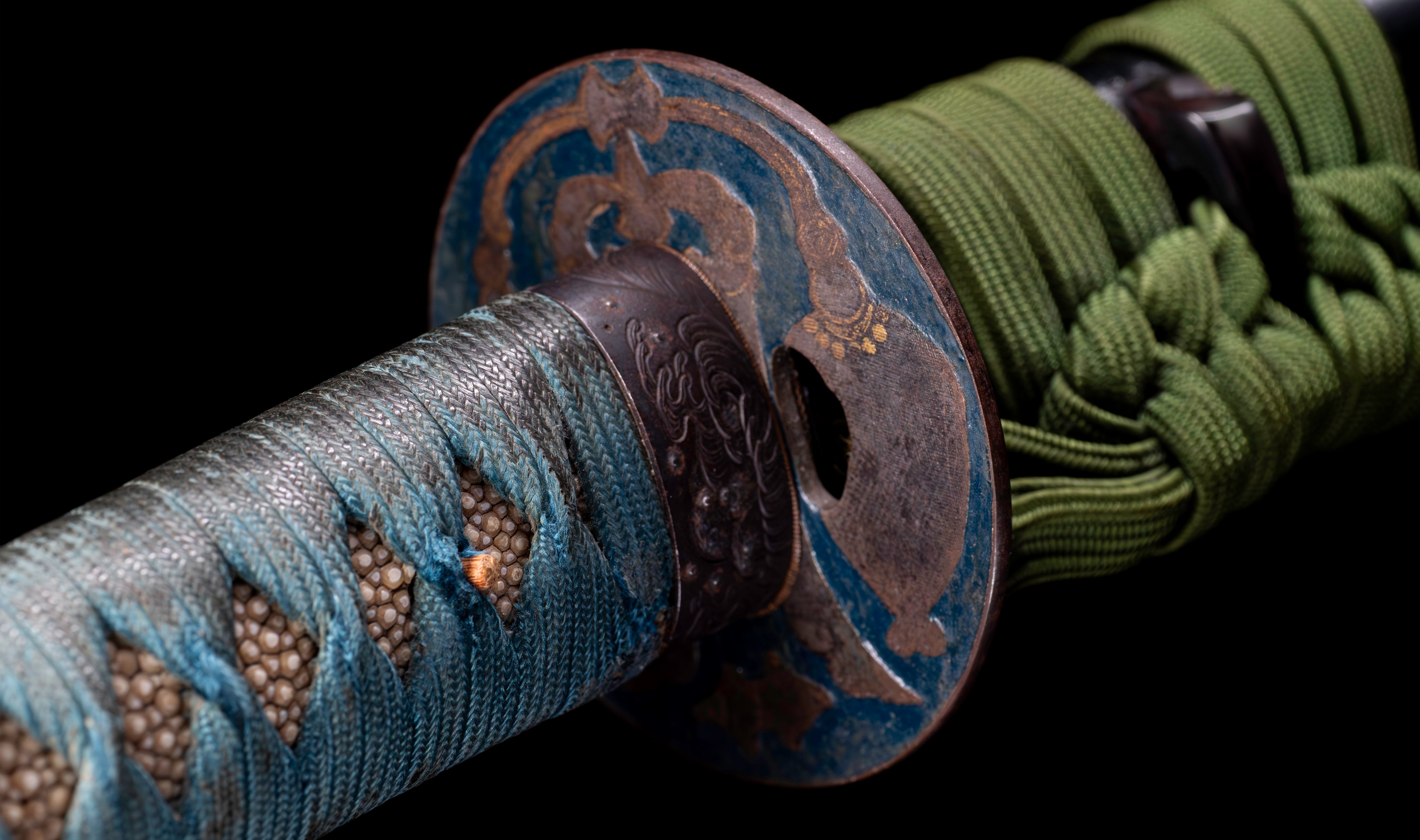
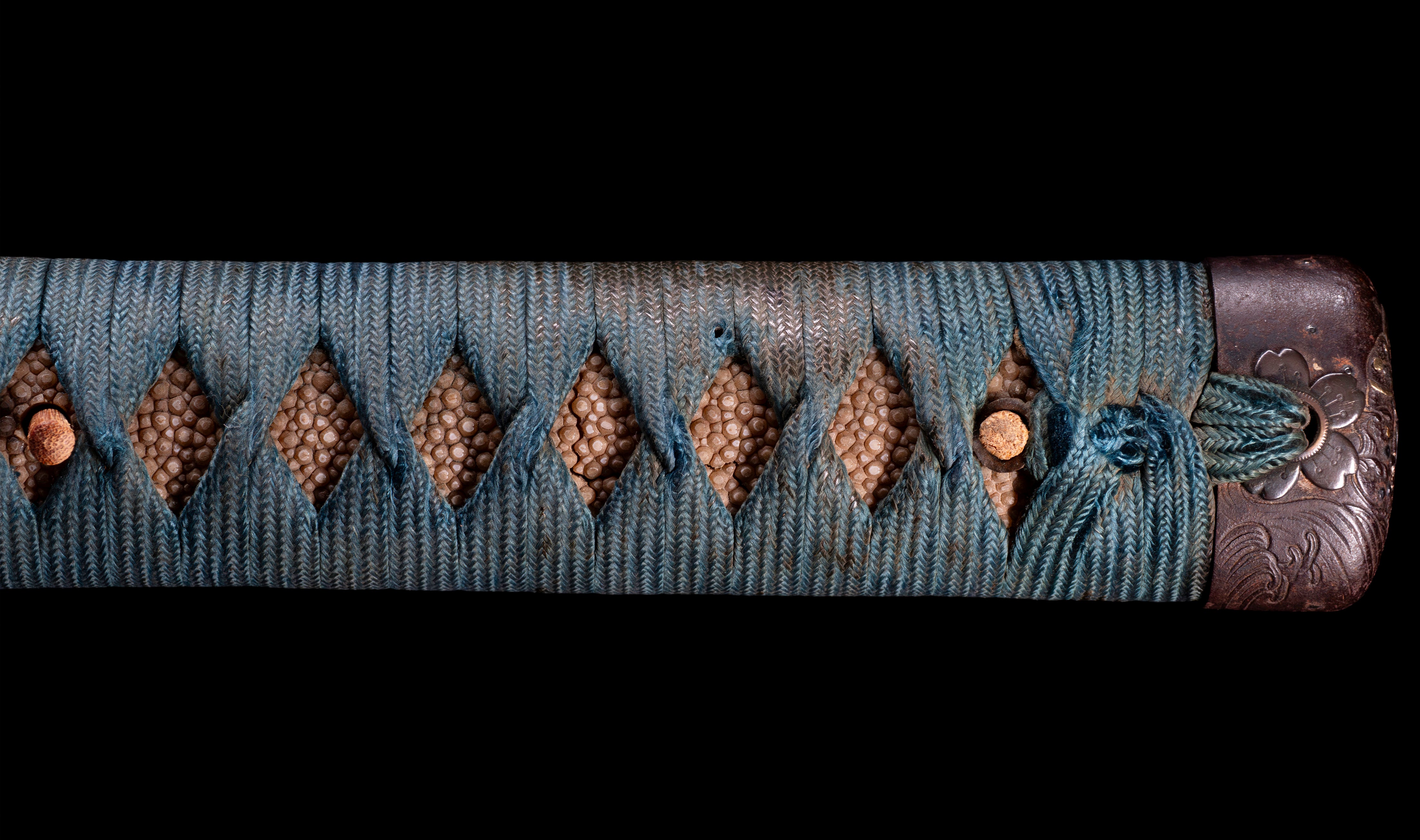
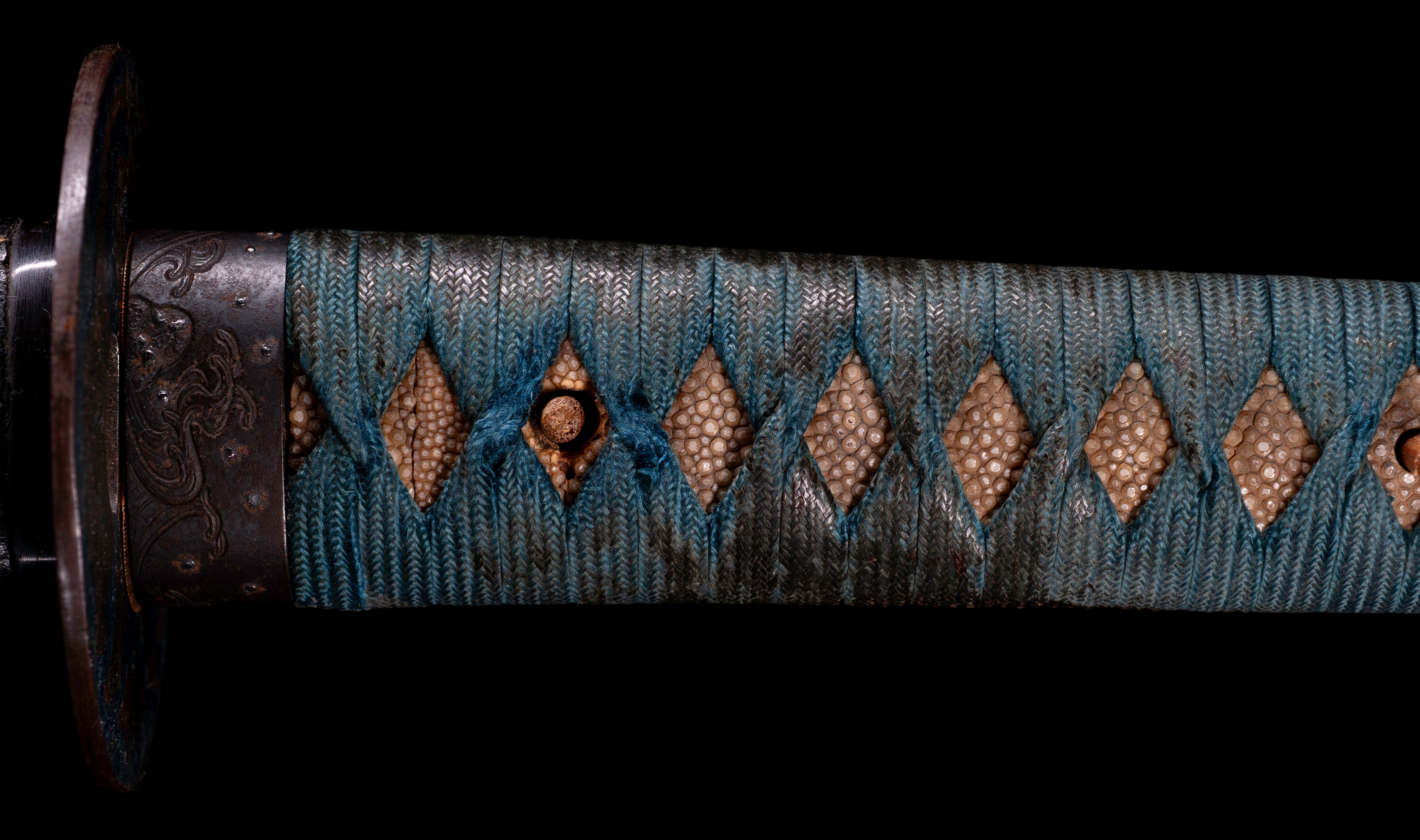
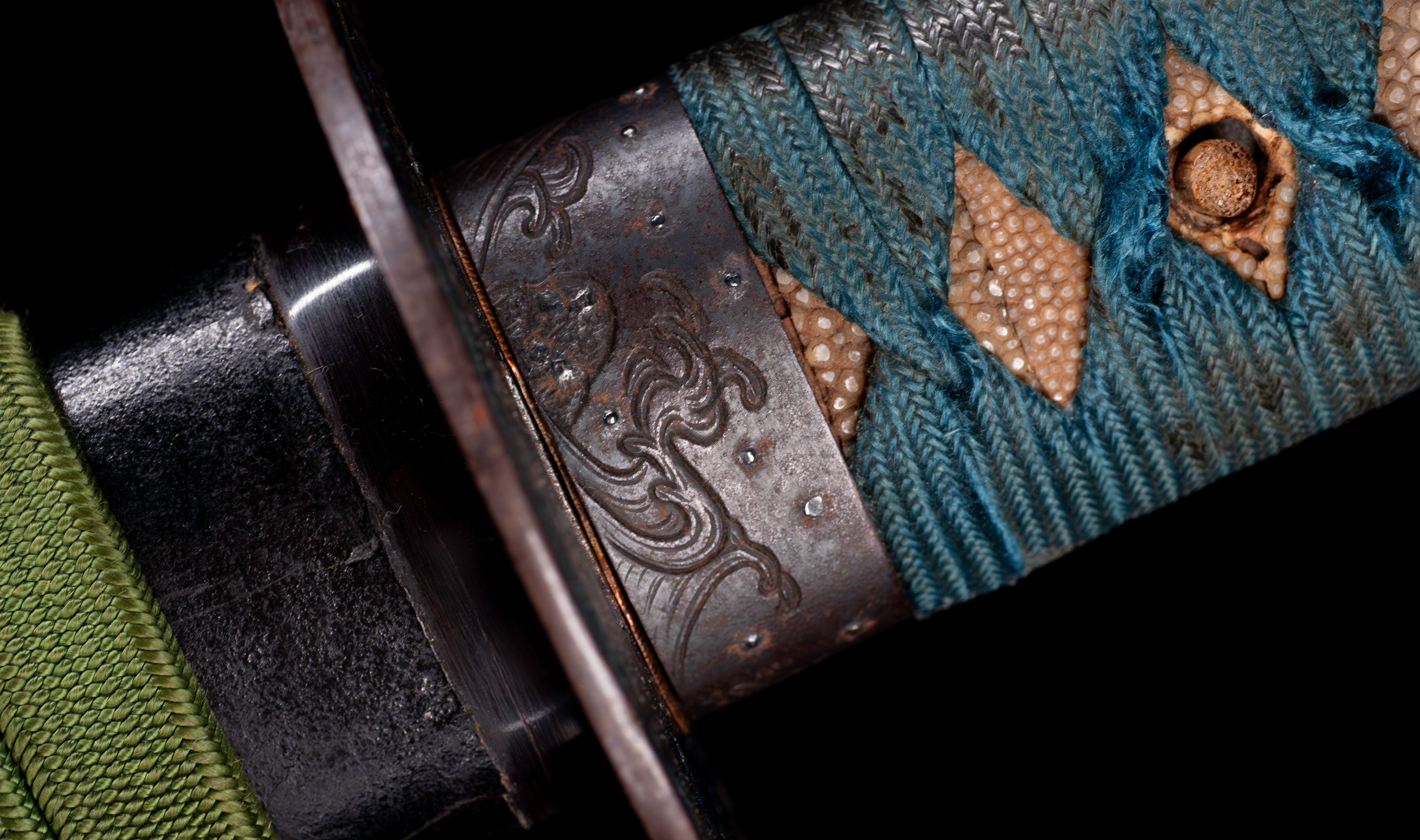
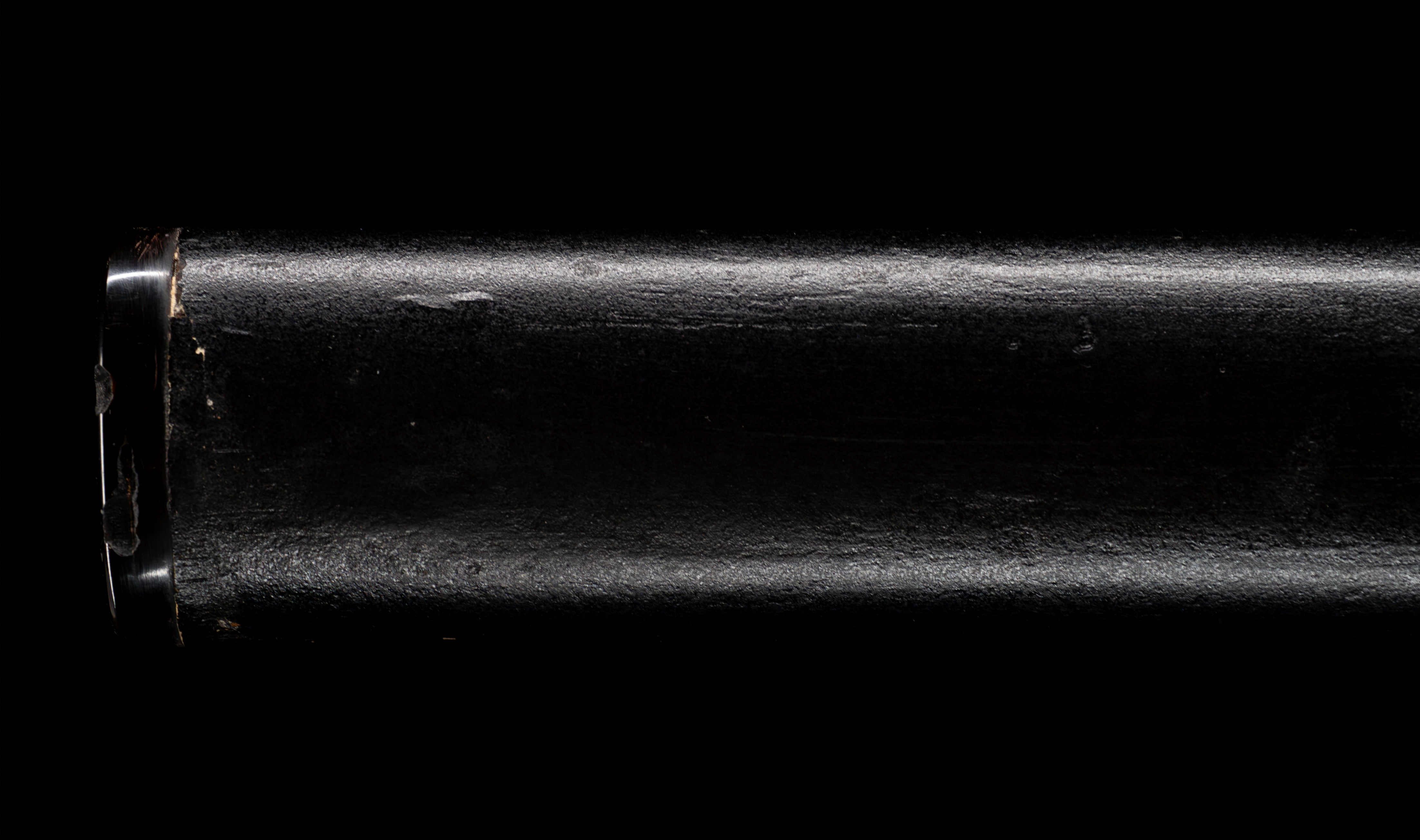
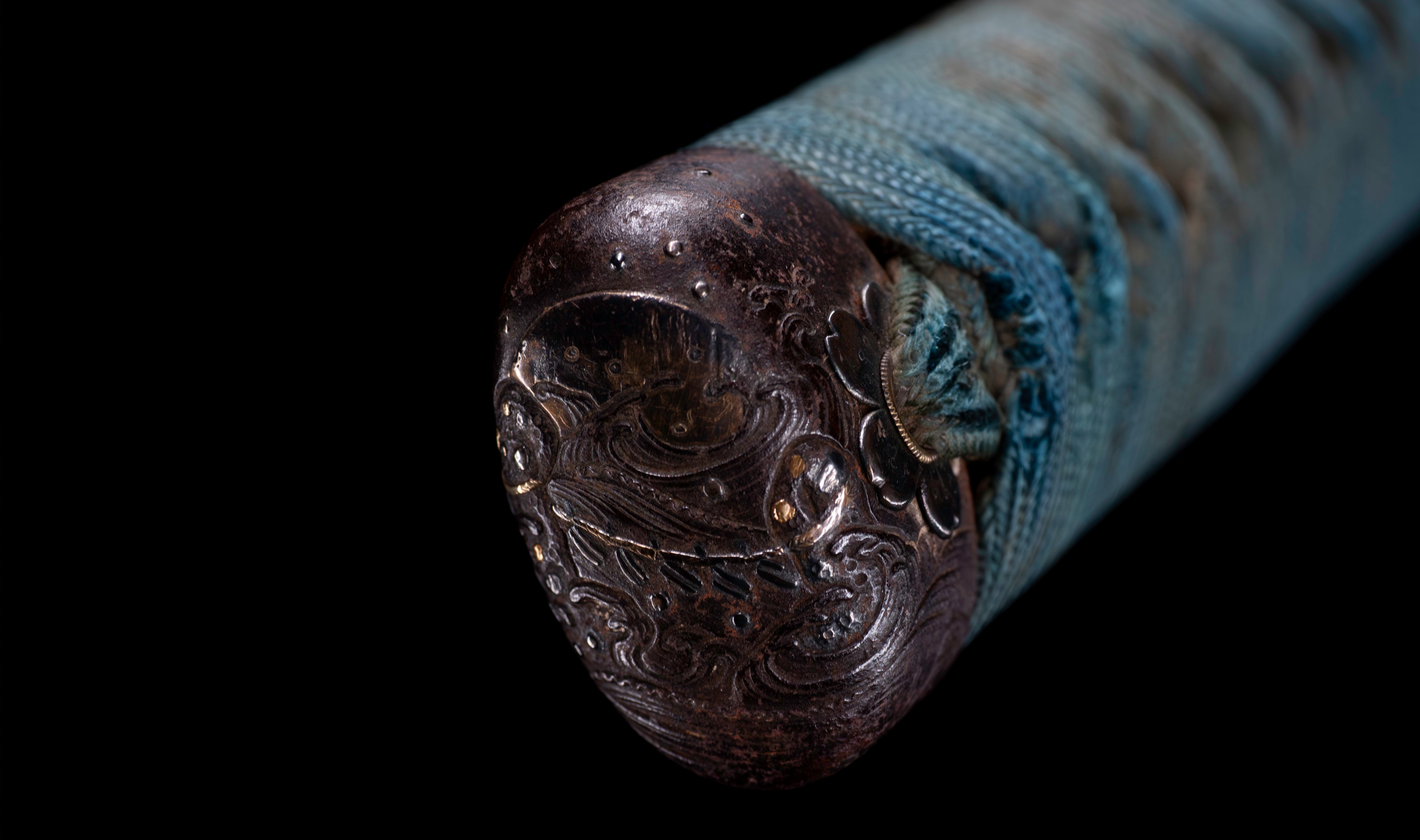
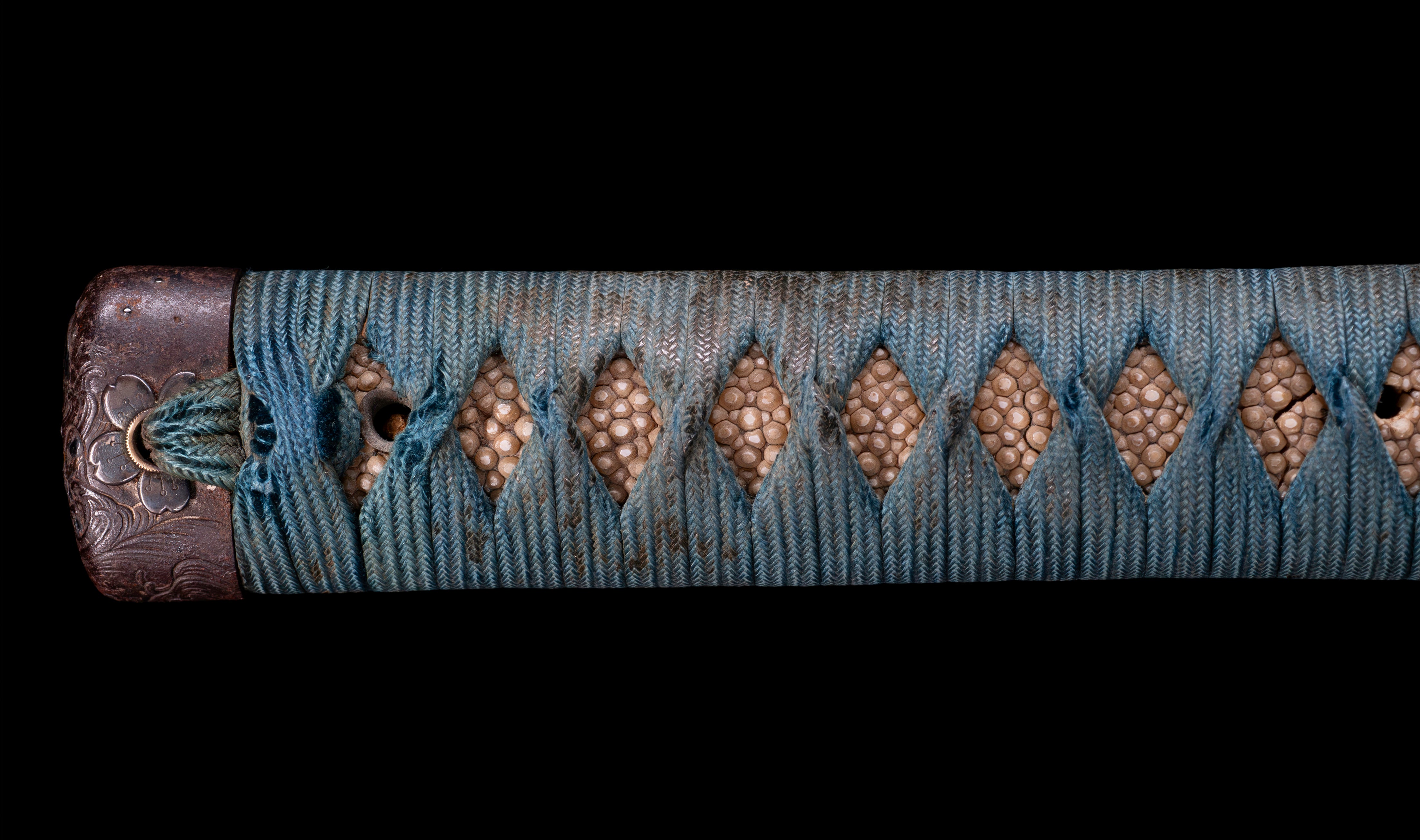
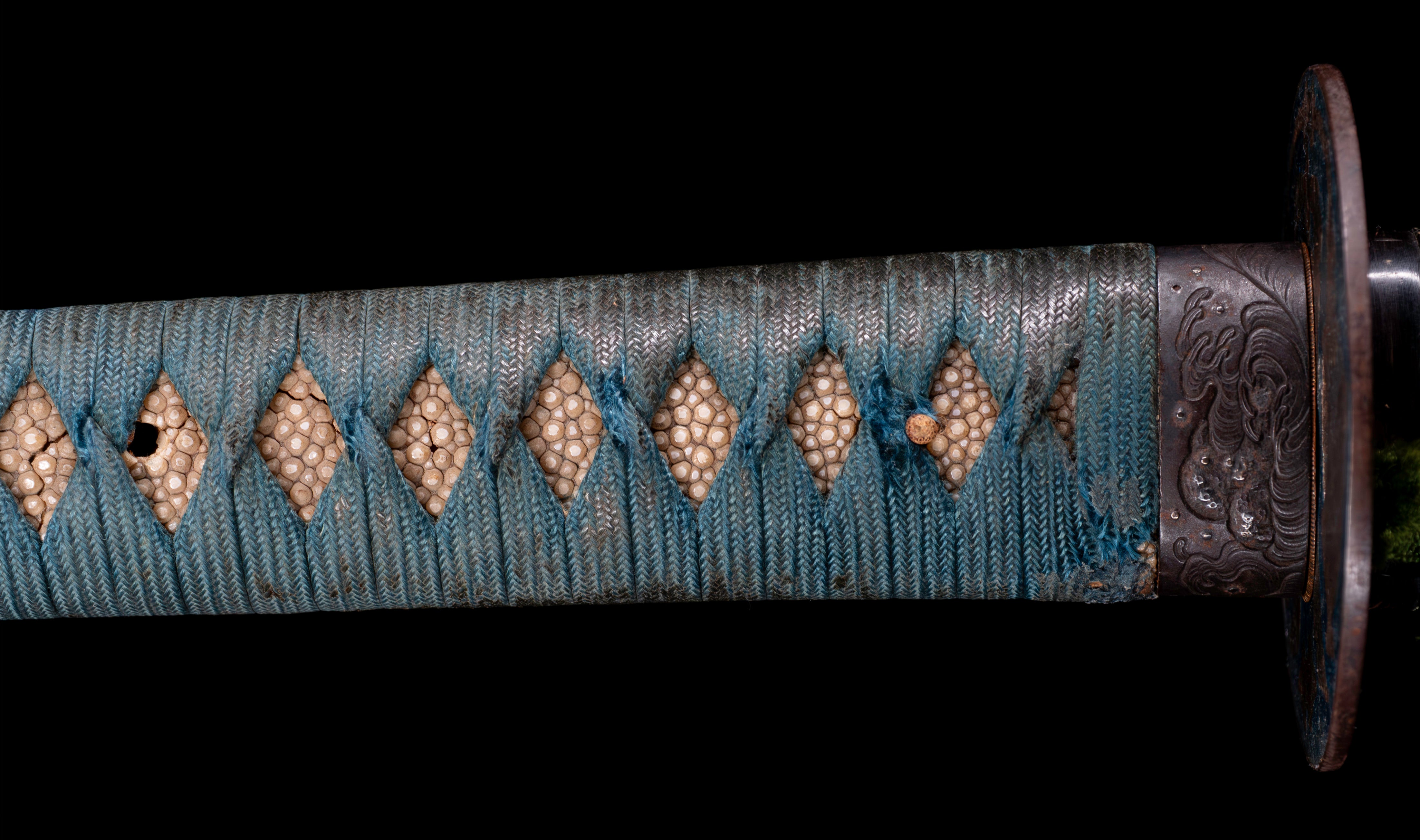
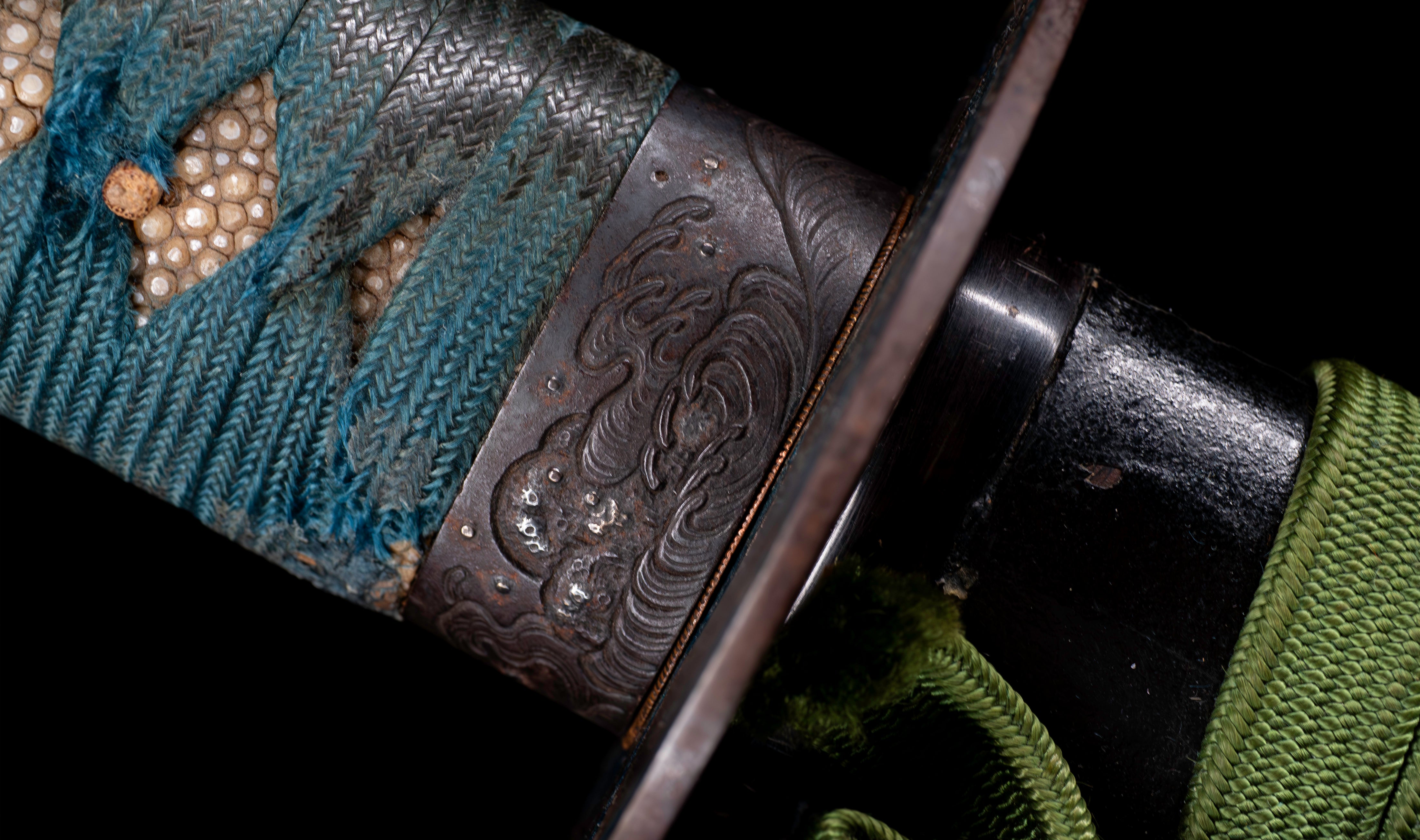
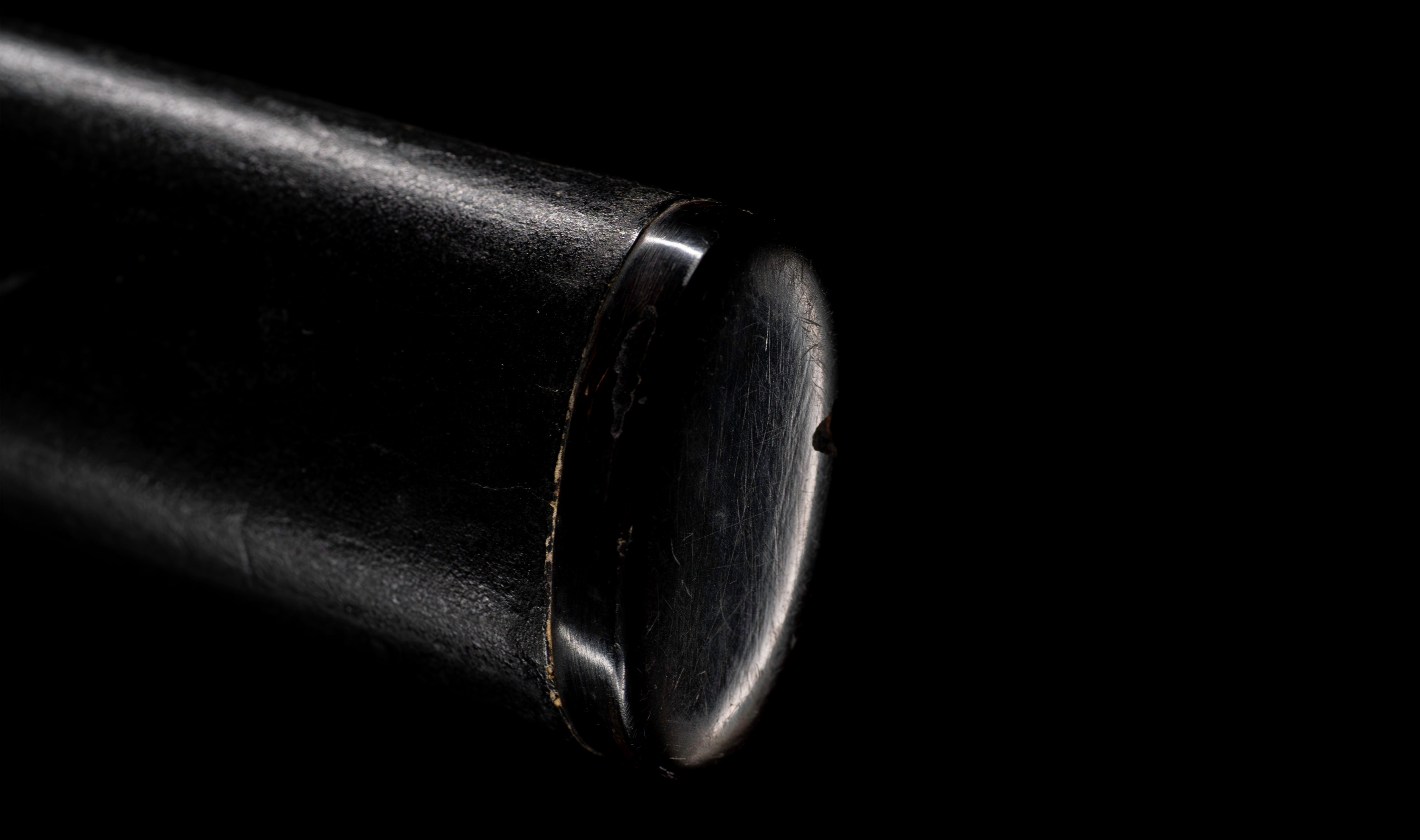
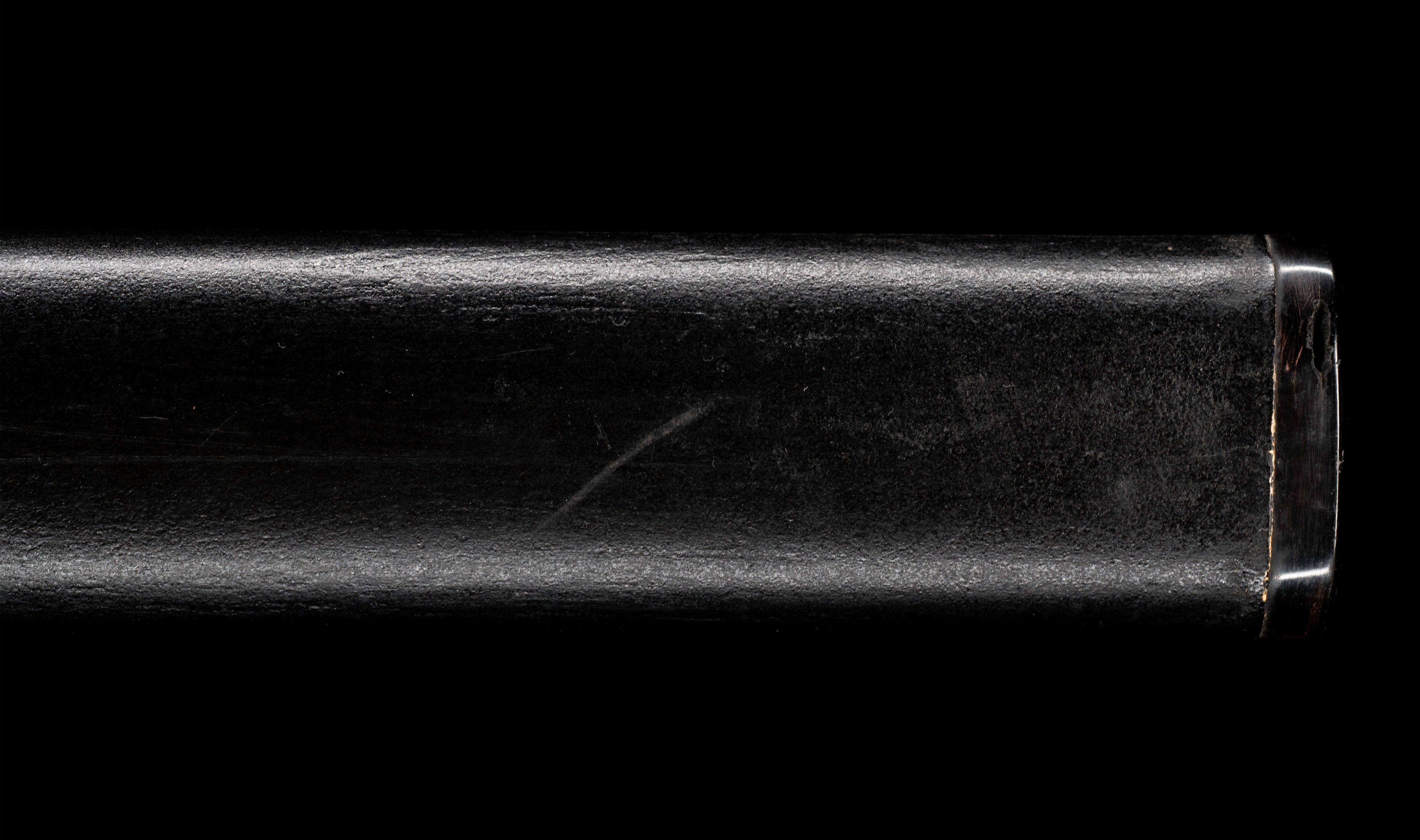
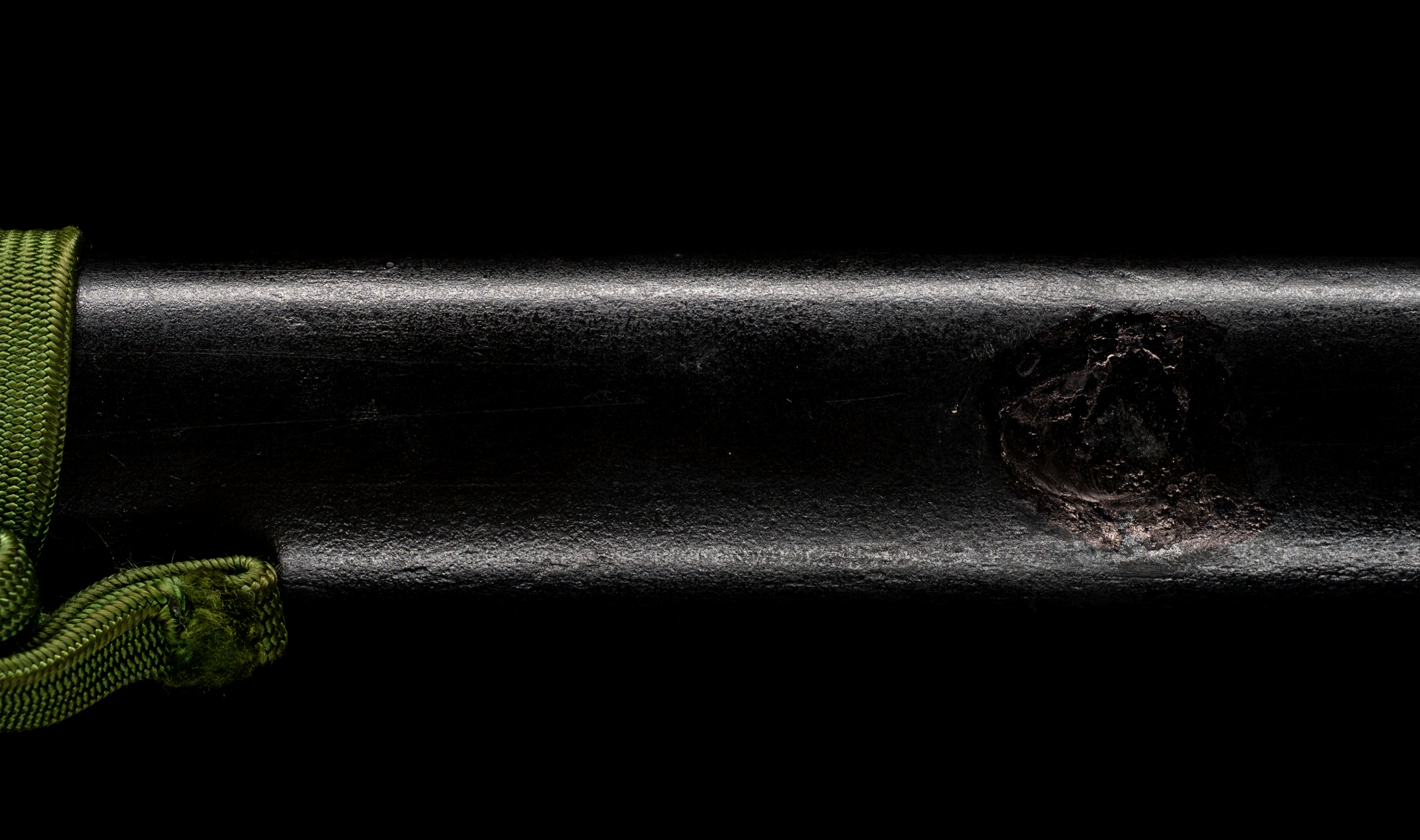
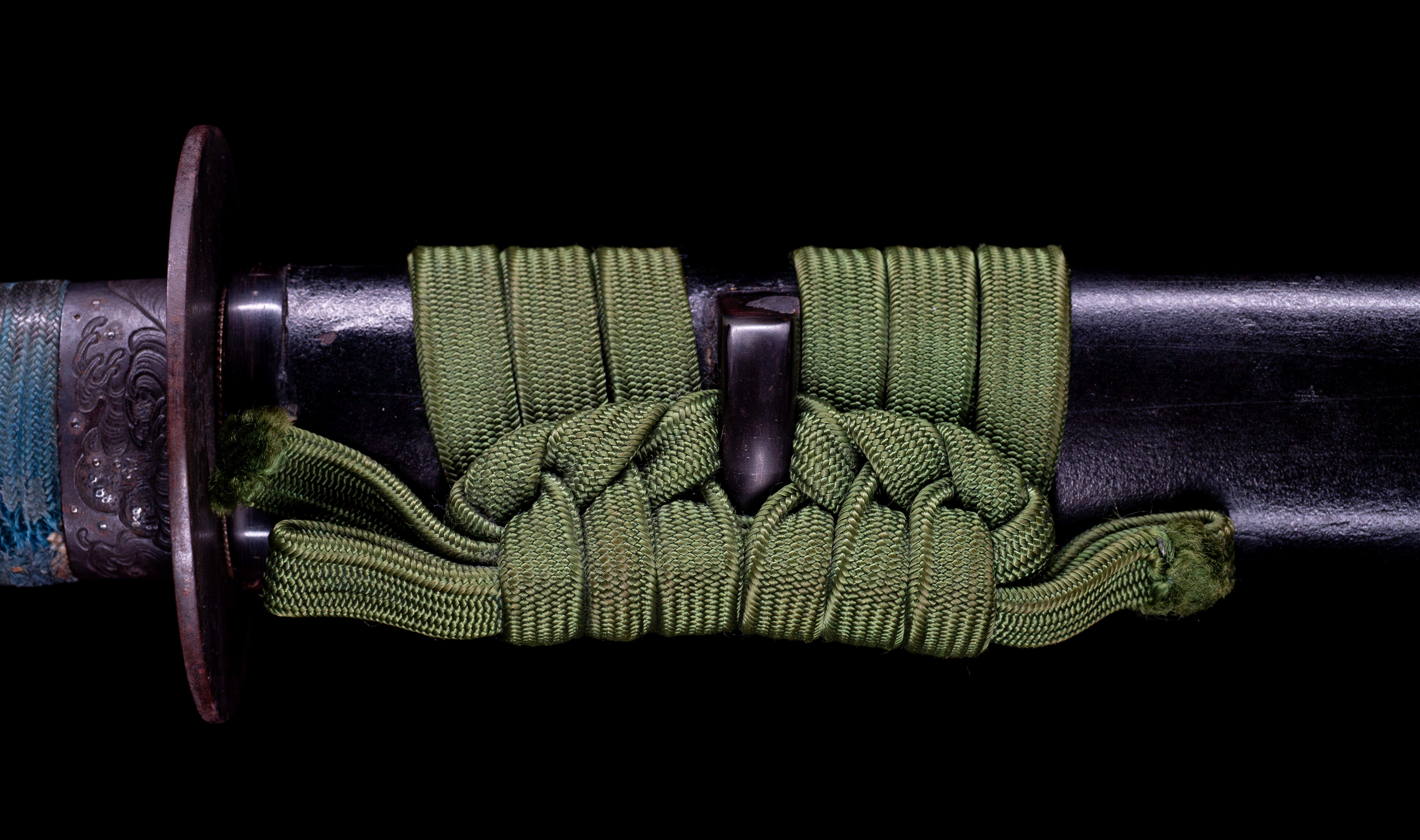
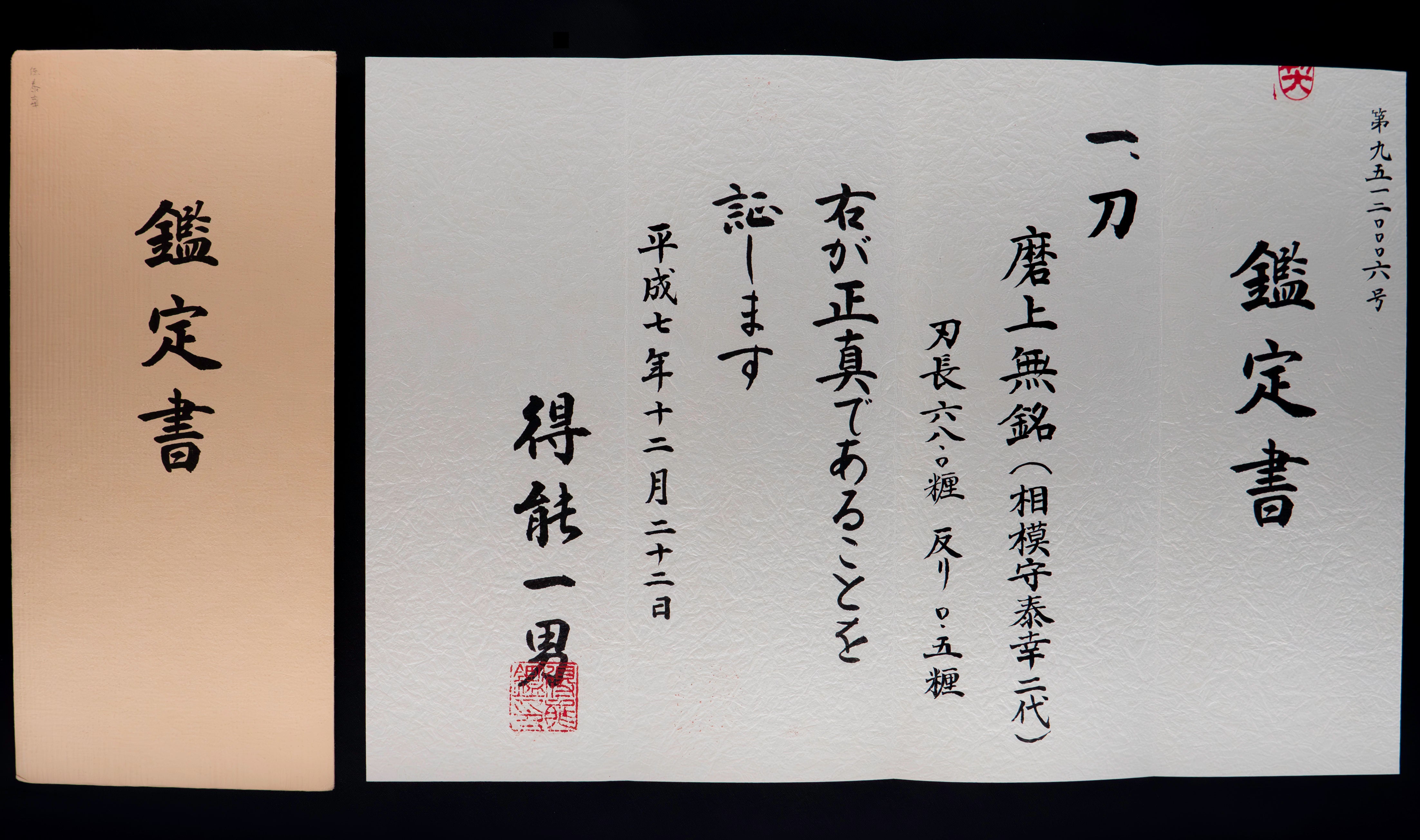
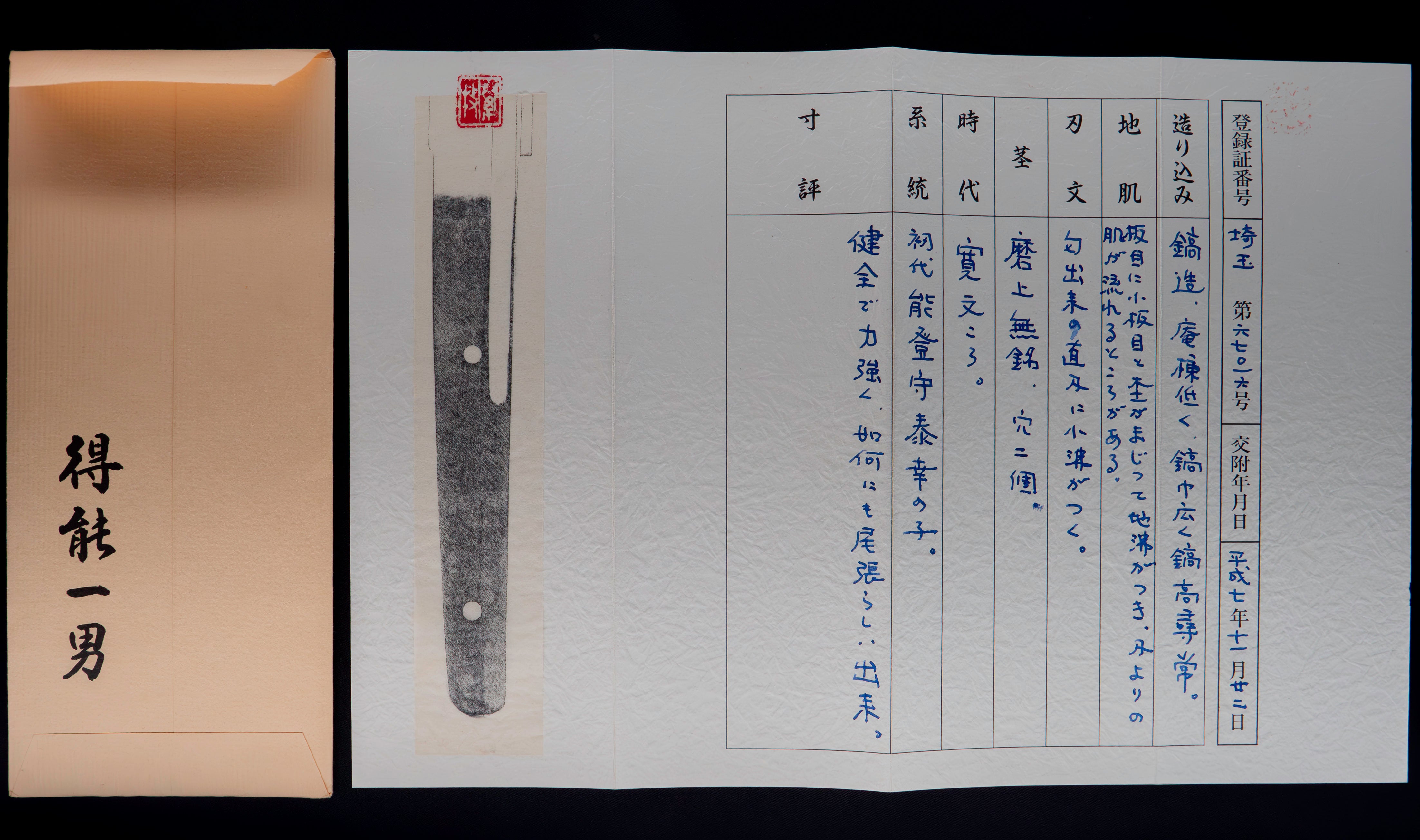
Signature (Mei): Ō-suriage mumei (shortened, unsigned), attributed to 相模守泰幸 二代 Sagami no Kami Yasuyuki, second generation, by Tokunō Kazuo Swordsmith: Sagami no Kami Fujiwara Yasuyuki 相模守藤原泰幸 , 2nd generation (private attribution) School / Tradition: Owari Seki 尾張関 , Mino tradition Period / Province: Edo period, shinto , around the Kanbun era (1661–1673), Owari Province (Nagoya) Certificate: Private appraisal certificate ( kanteisho ) no. 9512006 by Tokunō Kazuo 得能一男 , dated 22 December 1995. Japanese Registration (Tōroku-shō): Saitama no. 67016, issued 22 November 1995 Mounting: Complete katana koshirae , black roiro saya, iron tsuba with blue enamel ground, iron wave fuchi-kashira Blade Length (Nagasa): 68.0 cm Curvature (Sori): 0.5 cm Mekugi-ana: 2 Shape (Sugata): Shinogi-zukuri , low iori-mune , wide shinogi-ji , chū-kissaki , very shallow curvature Jihada: Itame mixed with ko-itame and masame , ji-nie , the grain flowing towards the edge Hamon: Suguha in nioi-deki with ko-nie Bōshi: Sugu with a ko-maru turn-back Habaki: Single-piece copper with diagonal yasurime A full-length Edo-period katana of 68.0 cm , attributed to Sagami no Kami Yasuyuki 相模守泰幸 , second generation, of Owari, by the sword scholar Tokunō Kazuo in a private appraisal certificate dated 1995. The blade is registered in Japan and comes complete in its koshirae. The shape is a shinogi-zukuri katana with a low iori-mune , a wide shinogi-ji and a chū-kissaki . Its most striking feature is the curvature: only 0.5 cm over 68 cm, an almost straight sword. That is the signature silhouette of the Kanbun era (1661–1673), when swordsmanship schools favoured straight, practical blades for fencing on foot, and the appraisal dates the blade to exactly that period. The hamon is a calm, disciplined suguha in nioi-deki with a scattering of ko-nie , running evenly the full length of the blade and into the point, where it turns back in a ko-maru . The steel is an itame mixed with ko-itame and masame , with ji-nie
 NihontoWatch