Summary
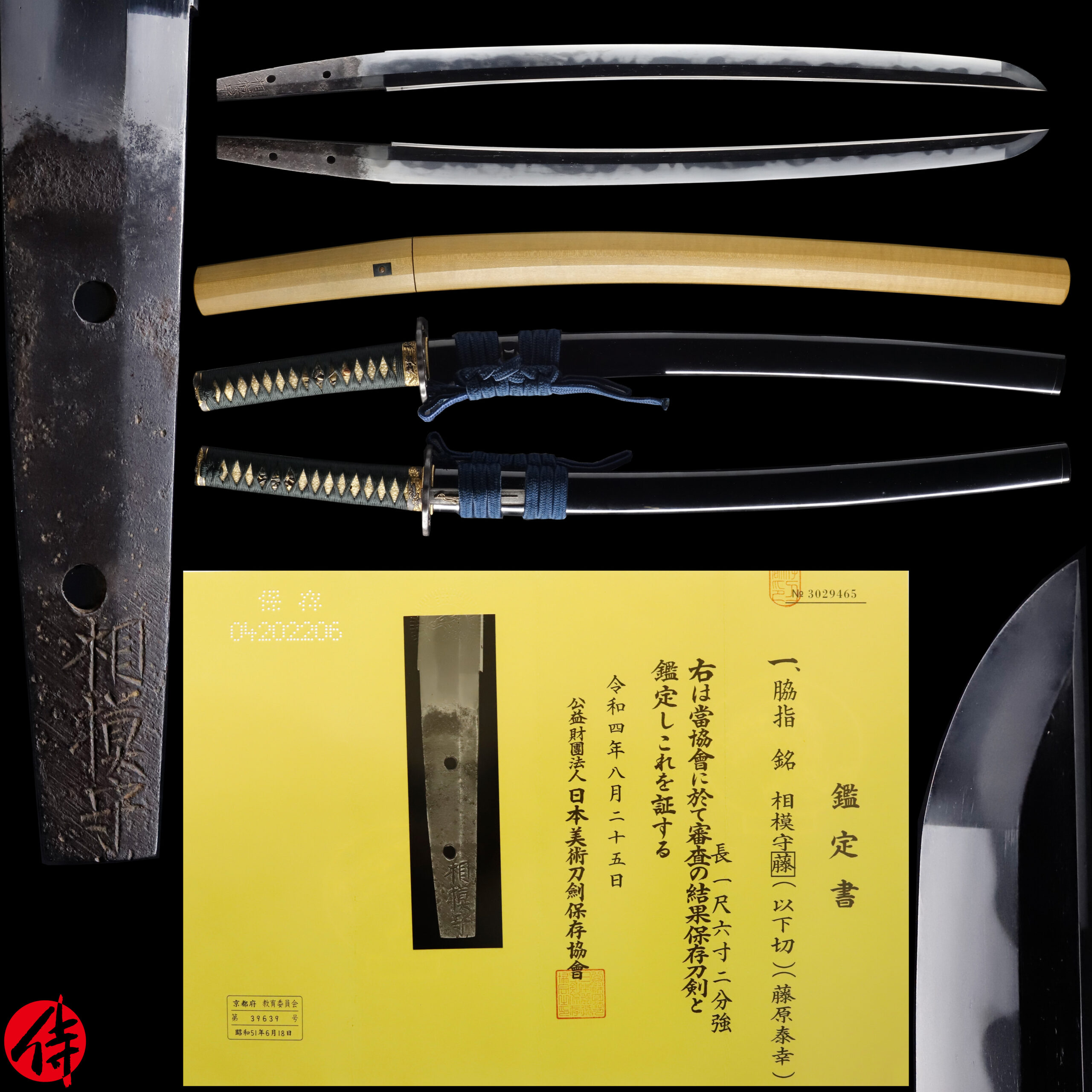
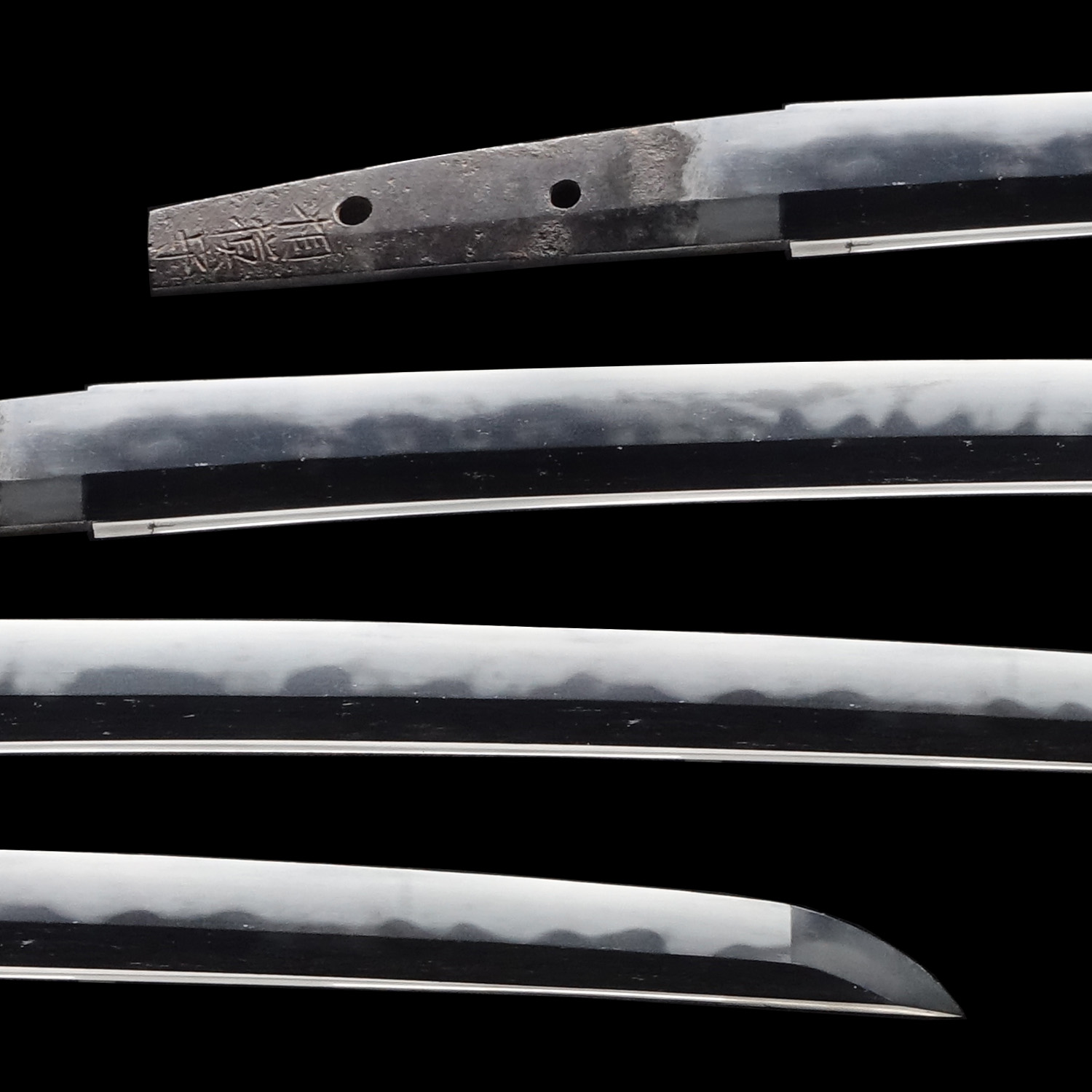
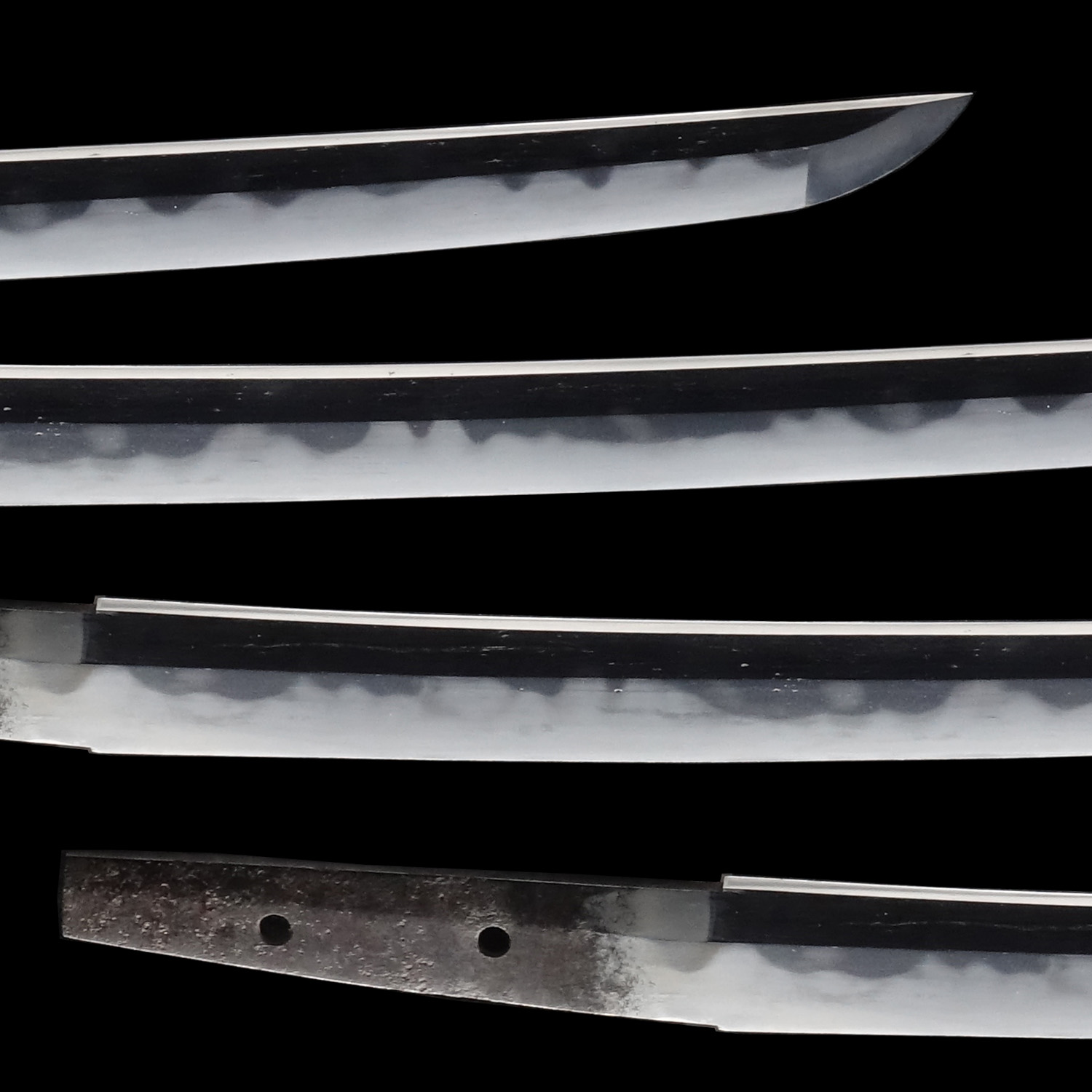
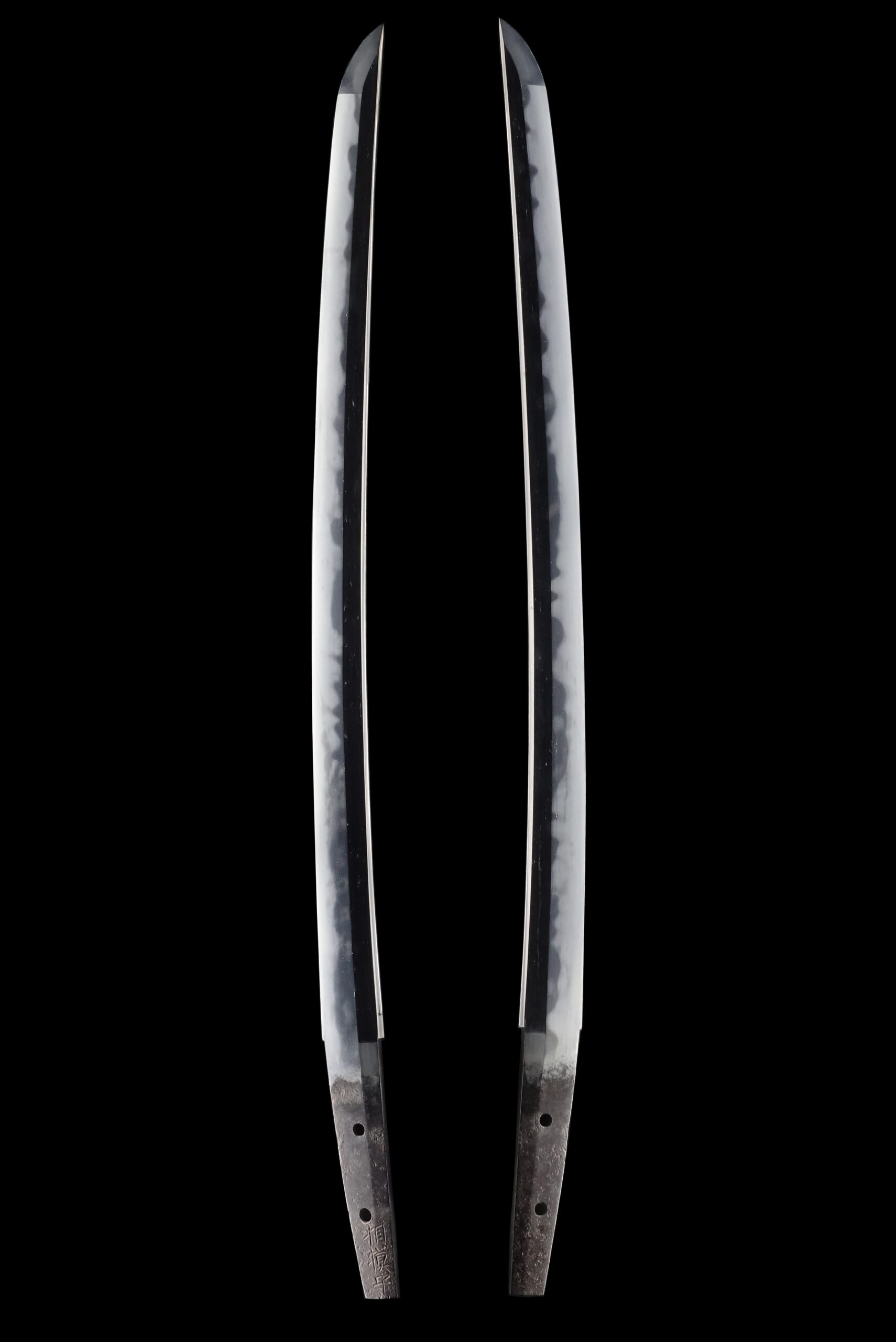
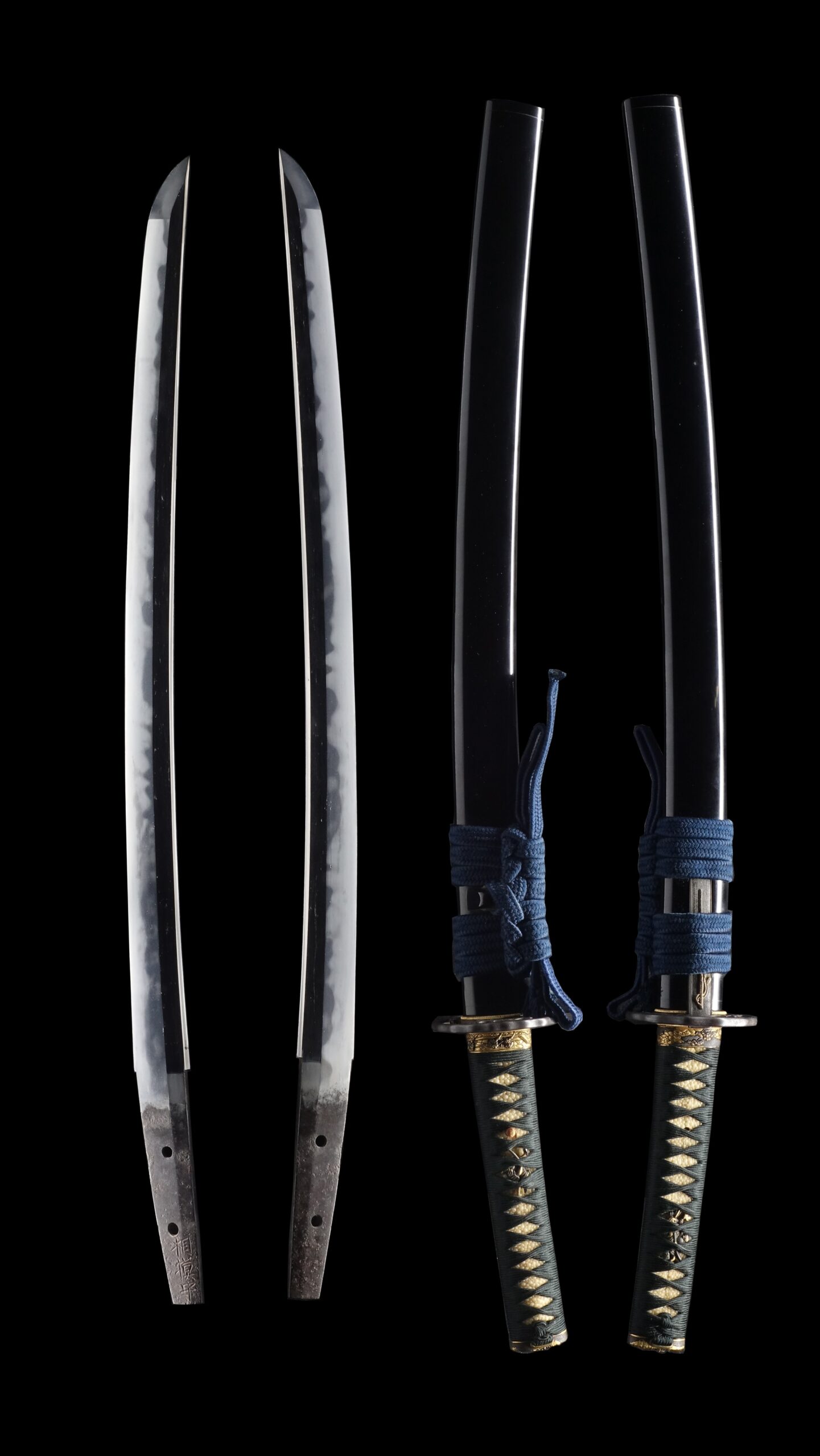
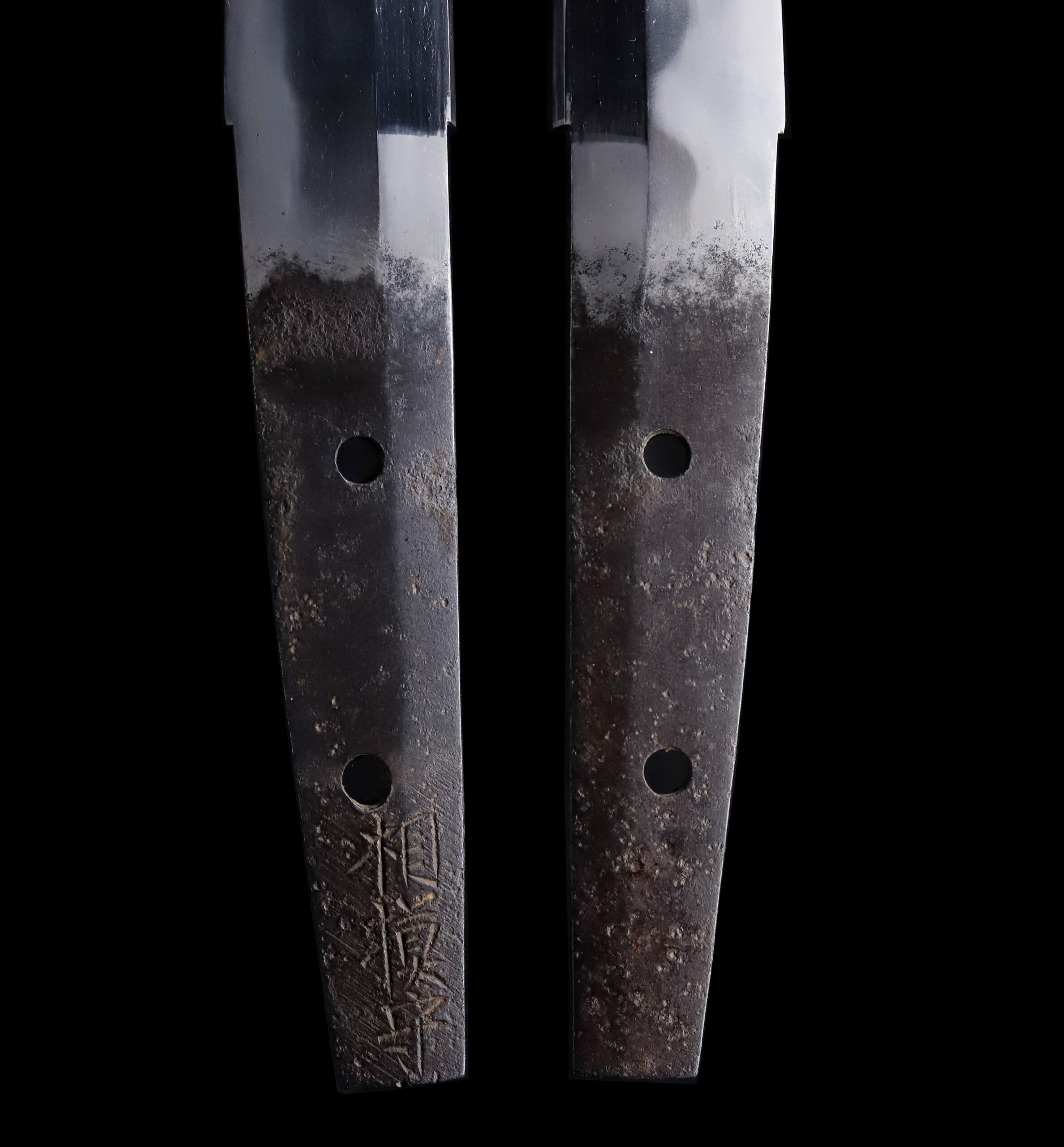
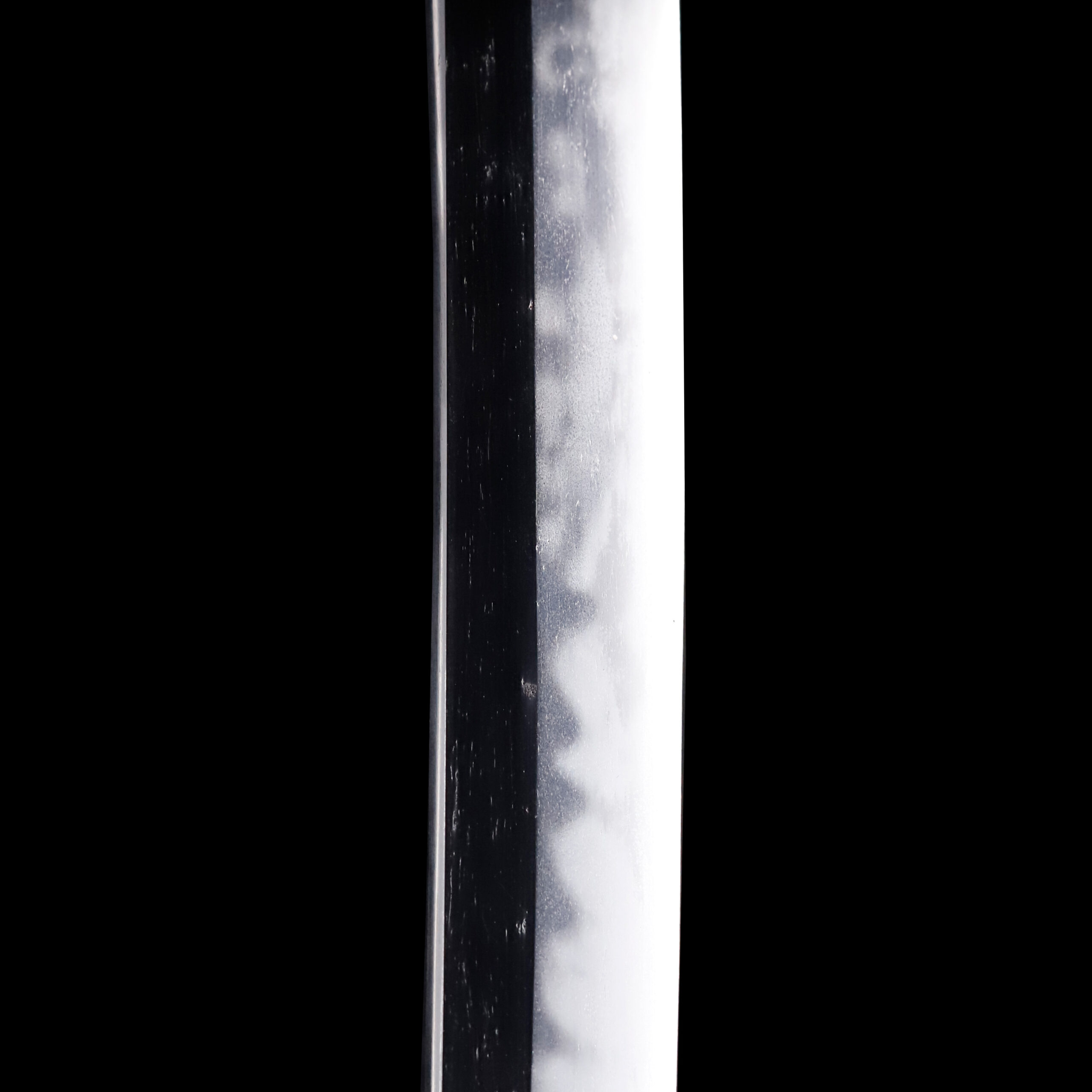
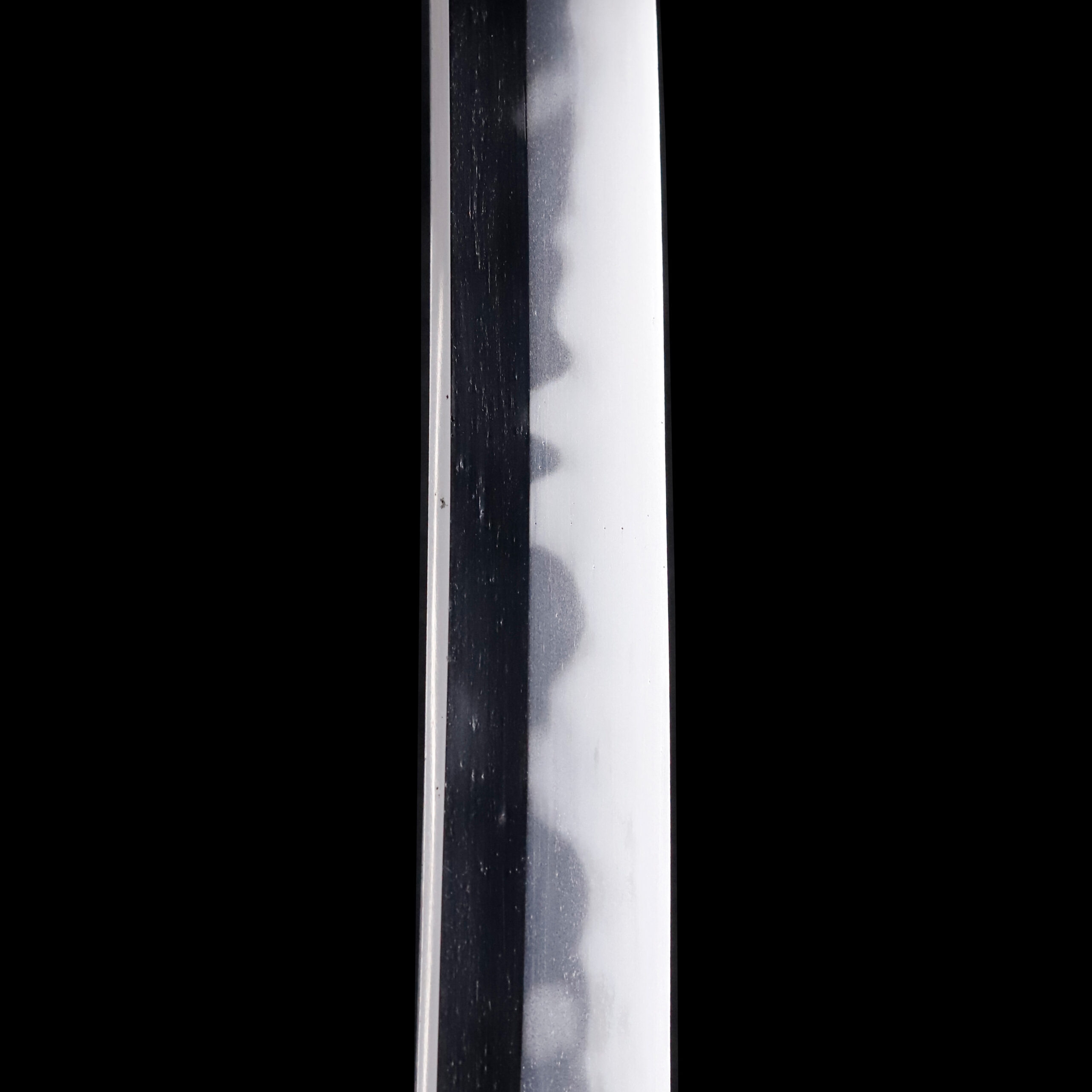
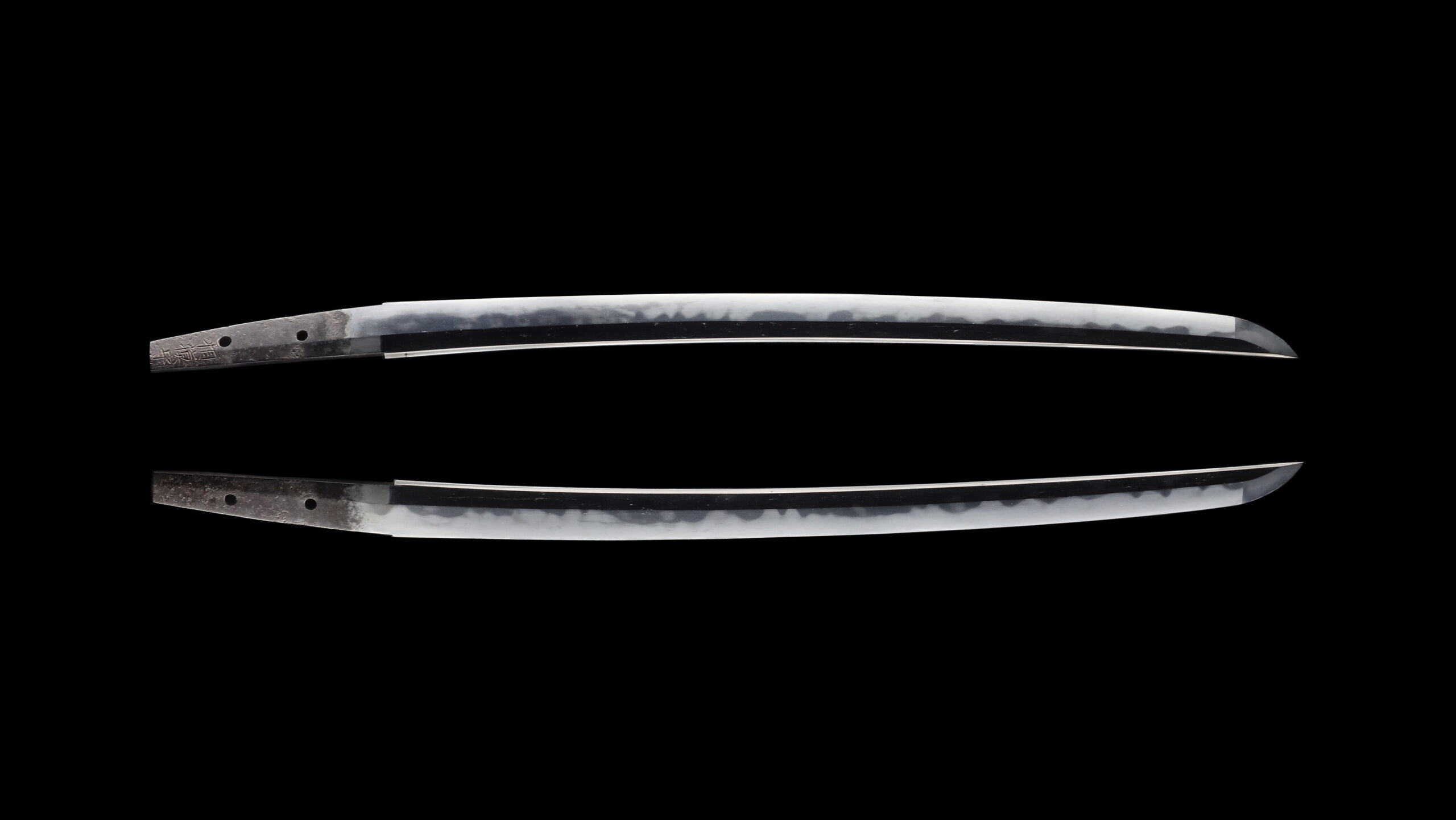
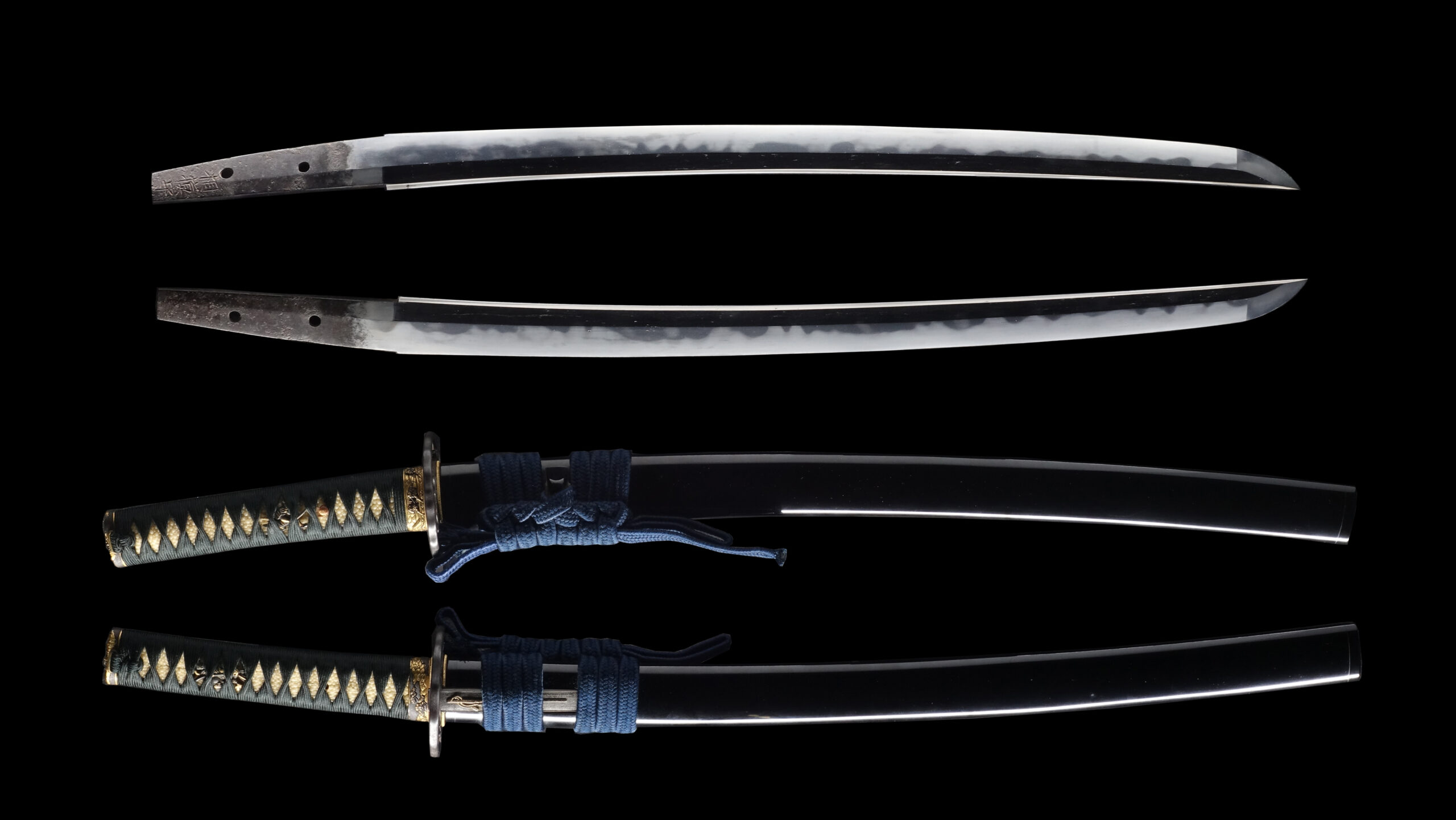
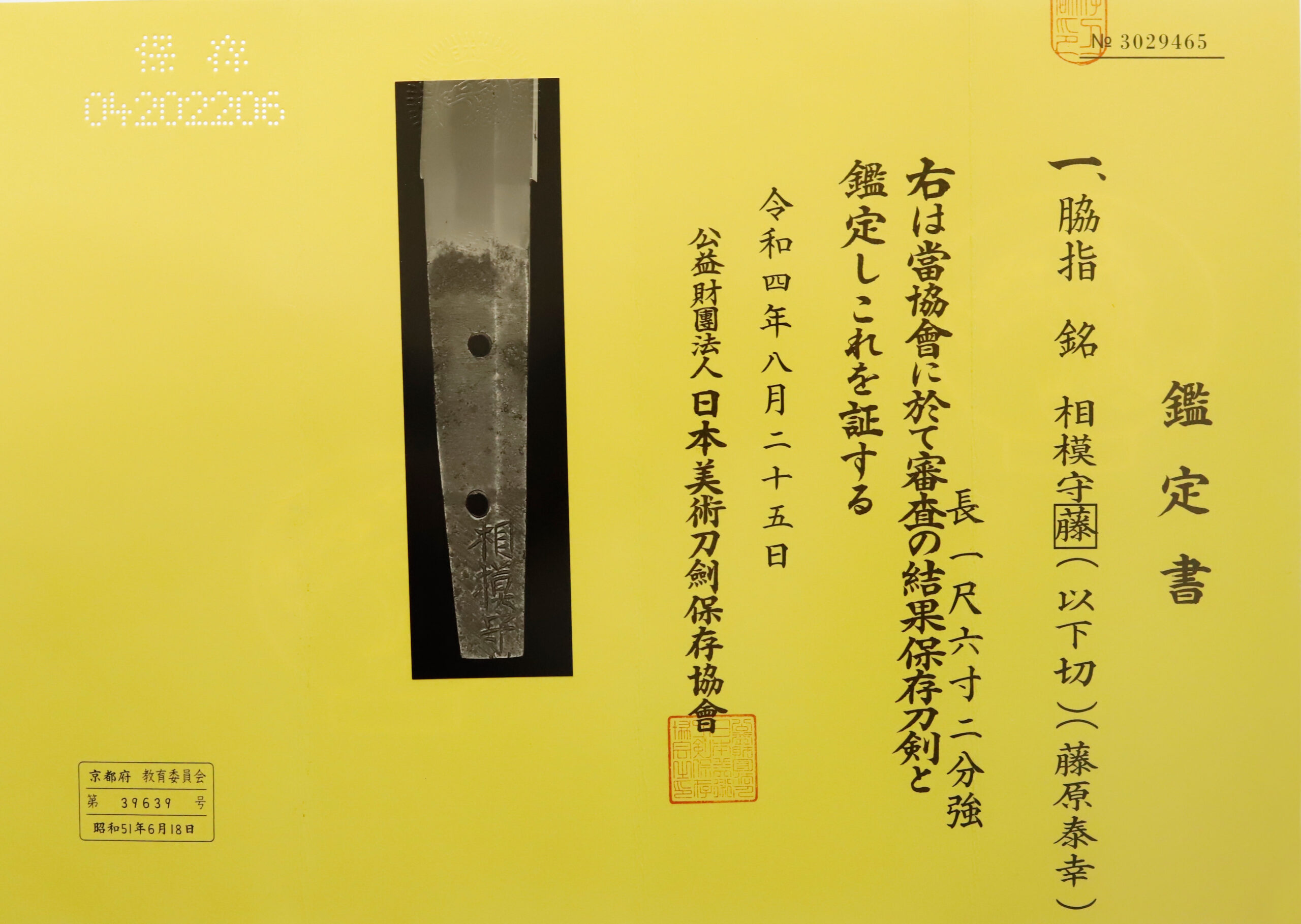
This blade was signed by Sagami no Kami Fujiwara Yasuyuki (相模守藤原泰幸) according to NBTHK’s Hozon appraisal. While “Fujiwara Yasuyuki” was cut due to Suriage (shorting the blade), NBTHK concluded that it was made by Yasuyuki. He is a prominent swordsmith, also known as the son of Noto no Kami Fujiwara Yasuyuki (能登守藤原泰幸). He was active during the early Edo period (Mid-Late 17th century) .
Yasuyuki was originally from the Mino province (today’s Gifu prefecture). However, he moved to Owari province (Today’s Aichi prefecture) to look for better job opportunities. Owari province was active in martial arts during the early Edo period. And there was much demand for swords among high-class Samurai living there. Yasuyuki met those demands by forging excellent quality blades.
As Owari province was active in martial arts during the early Edo period, there was much demand for swords among high-class Samurai. And there were quite a few renowned swordsmiths in Owari province, but many of them only forged blades for the Owari domain. Owari domain was known as Tokugawa Gosanke (徳川御三家) and had powerful political power, closely connected to Tokugawa Shogunate in Edo city. We assume this blade was originally made for a high-class Samurai in Owari province.
Yasuyuki received the honorable official title of Sagami no Kami from the emperor for his superb sword-forging techniques after he moved to Owari province.
Mino Province
Mino Province is one of the most famous and historical sword-forging sites. There were so many schools forging blades during the Samurai period. It especially prospered during Sengoku Jidai(Warring State period) due to the high demand for weapons. And the location of Mino province beat others. Akechi Mitsuhide controlled Mino province, Nobunaga Oda ruled Owari province, and Tokugawa Ieyasu was the lord of Suruga (Neighboring areas). There was high demand from those powerful feudal lords and their retainers.
Furthermore, many wars occurred between the Kanto region and the Kyoto area. Mino is located in the middle, making feudal lords feel convenient to order swords from MINO swordsmiths. Many feudal lords demanded swords forged in the Mino province. The blades forged in MINO provinces also had a reputation for their practical design and sharpness.
The tradition of excellent sword forging skills had been passed throughout the Edo period, and Yasuyuki is a good example. And, to look for better opportunities, many swordsmiths in Mino province moved to other parts of Japan, such as Owari province, located right next to Mino province. Those who moved to Owari from Mino are called Owari Seki. Yasuyuki is one of the most famous Owari Seki swordsmiths. Others are Masatsune (政常)、Ujifusa (氏房), and Nobutaka (信高). We are confident you can appreciate the outstanding craft of Yasuyuki.
This blade is appraised as a Hozon Token(保存刀剣) issued by NBTHK(Nihon Bijutsu Touken Hozon Kyokai:日本美術刀剣保存協会).
Fuchi-Kashira
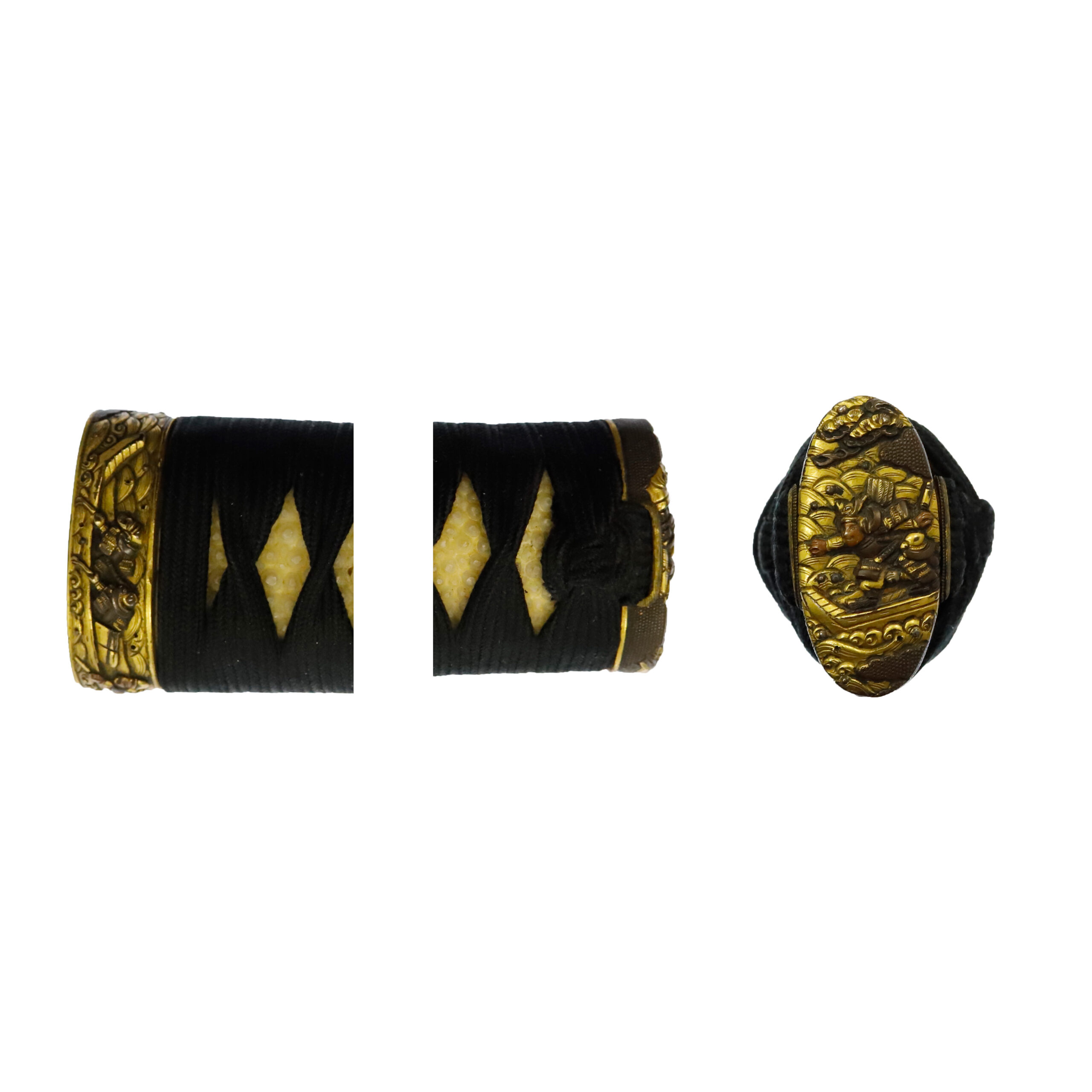
This Fuchi Kashira depicts a scenery of a battle. You would find the figure of fighting Samurai warriors. They are in ships, plowing through the rough waves and advancing valiantly against the enemy. There is a famous theme that has sometimes been seen in sword mountings as a design: the Genpei Kassen (源平合戦). Although we are unsure if this Fuchi Kashira depicts exactly this battle, here we would like to introduce its synopsis as a possibility and share a famous piece of Samurai history with you.
The Genpei Kassen does not refer to one battle. This is a collective term for the civil wars heated in various parts of the country that continued over six years from 1180 until 1185. It is also called the Jishou Juei-no Ran (治承・寿永の乱). This was the conflict between the Minamoto (源) clan (Genji family) and the Taira (平) clan (Heike family). By the call of Mochihito Ou (以仁王), many Samurai raised armies to overthrow the Taira family. It was the trigger of this protracted conflict. Mochihito Ou was unfortunately beaten by the Taira family and passed away in 1180. However, after that, Minamoto family side Samurai defeated the Taira side armies one after another. Finally, the Minamoto side won the battle and overthrew the Taira clan in 1185 at Dan-no Ura (壇ノ浦). It was the final battle of the Genpei Kassen, which led to the destruction of the Taira clan, who reached the height of glory.
Tsuka and Menuki
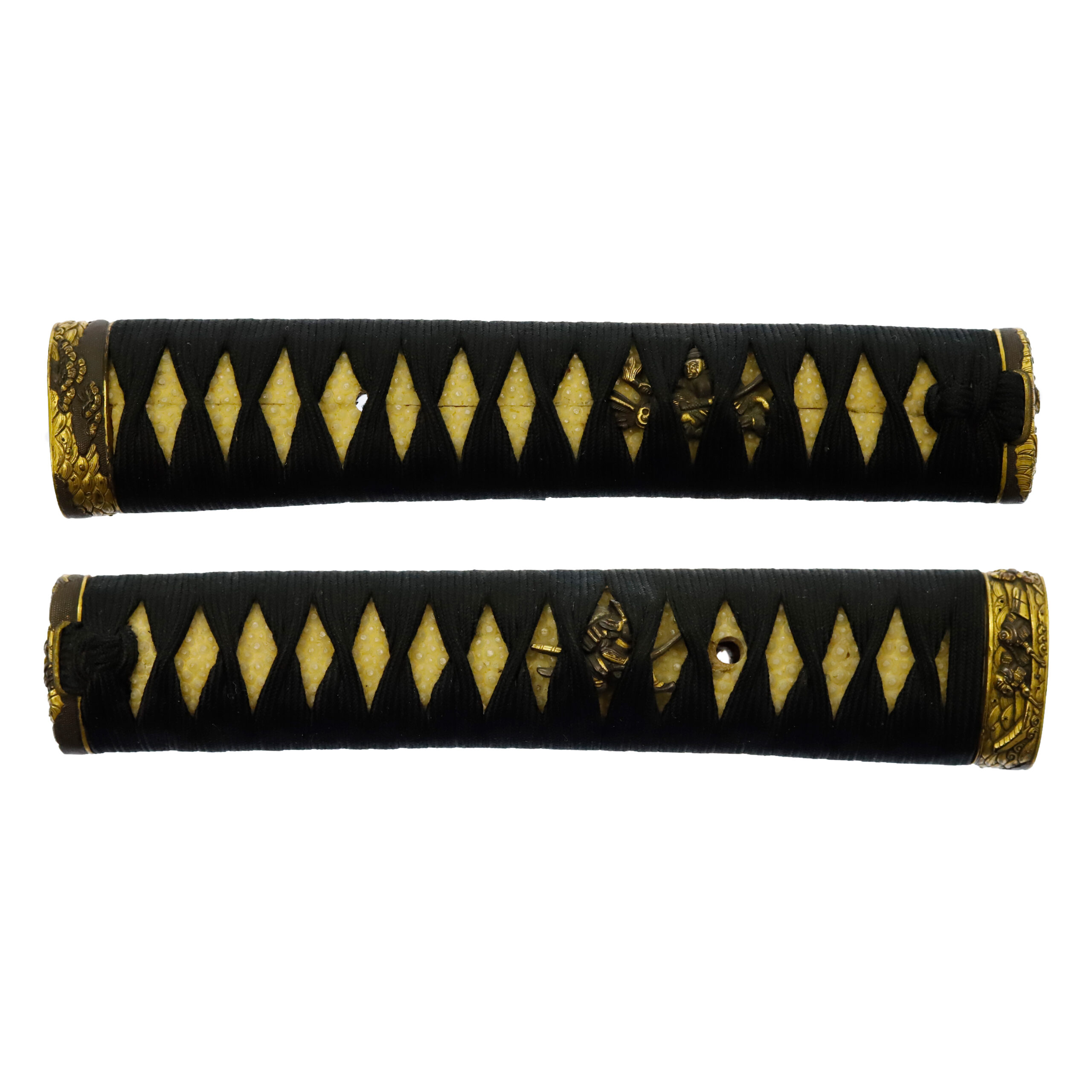
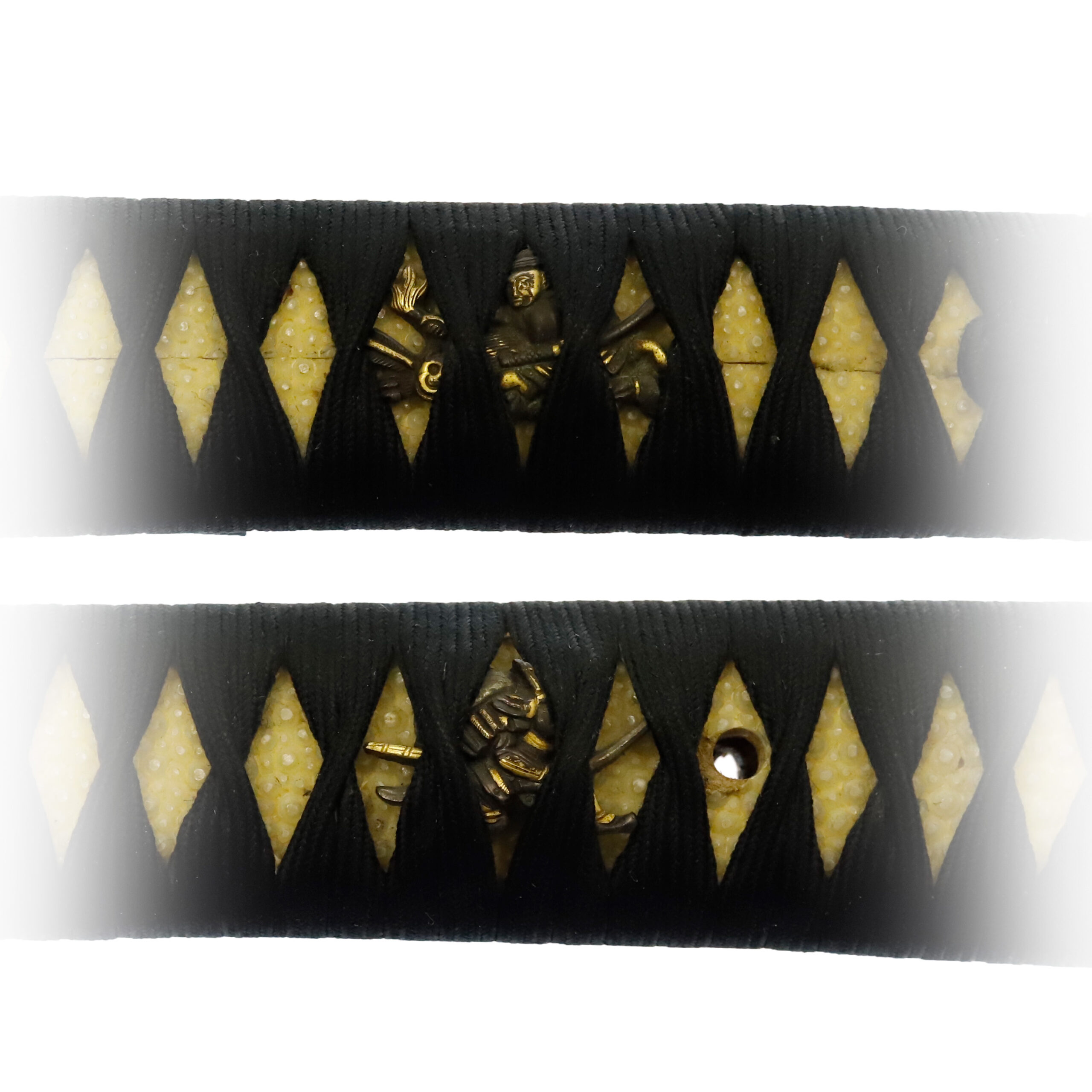
We believe this Menuki’s design is related to the Fuchi Kashira. That is, the models designed for this Menuki are the characters of the Genpei Kassen. Same as the Fuchi Kashira, golden coloring was effectively applied to some parts and added decorativeness to this work.
Tsuba and Habaki
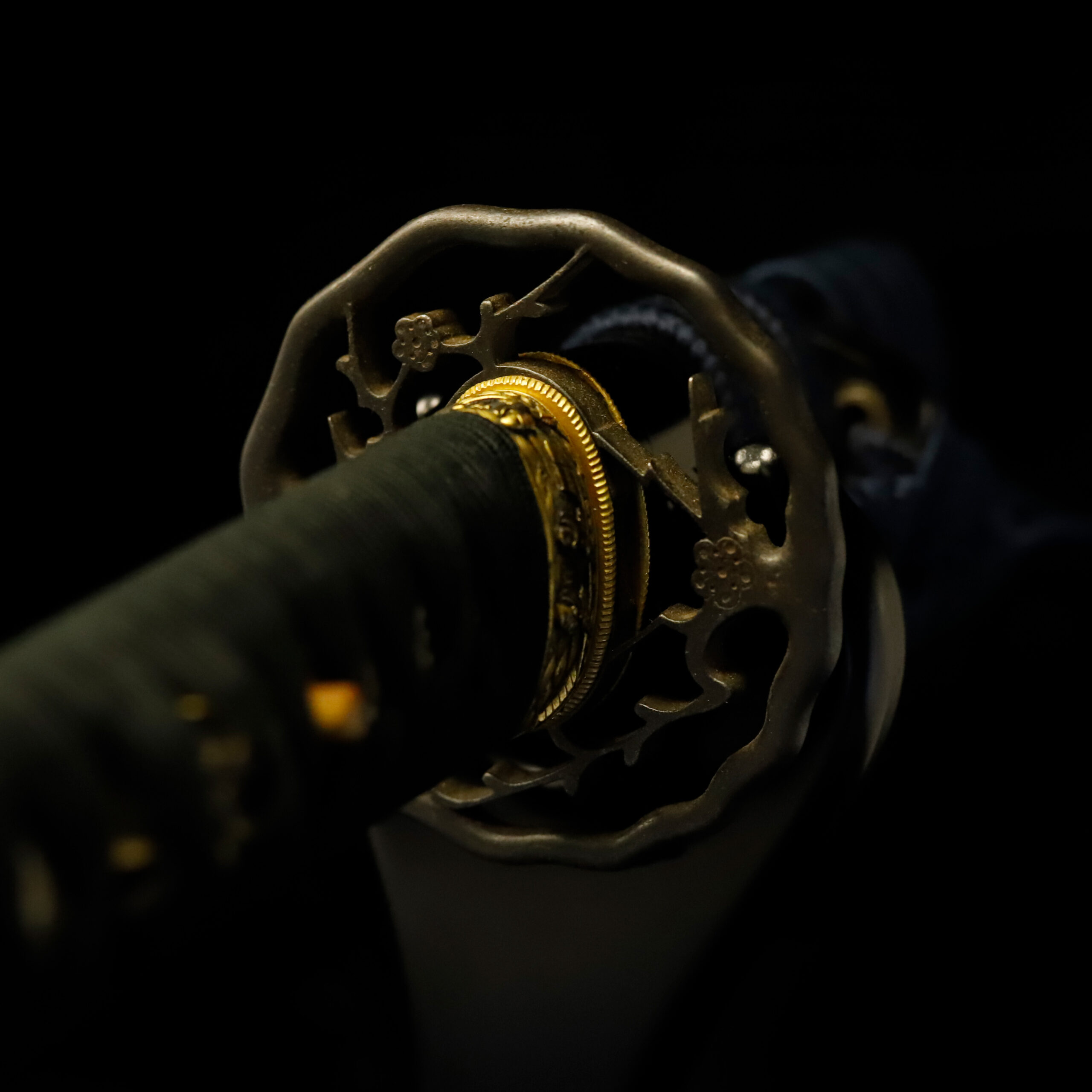
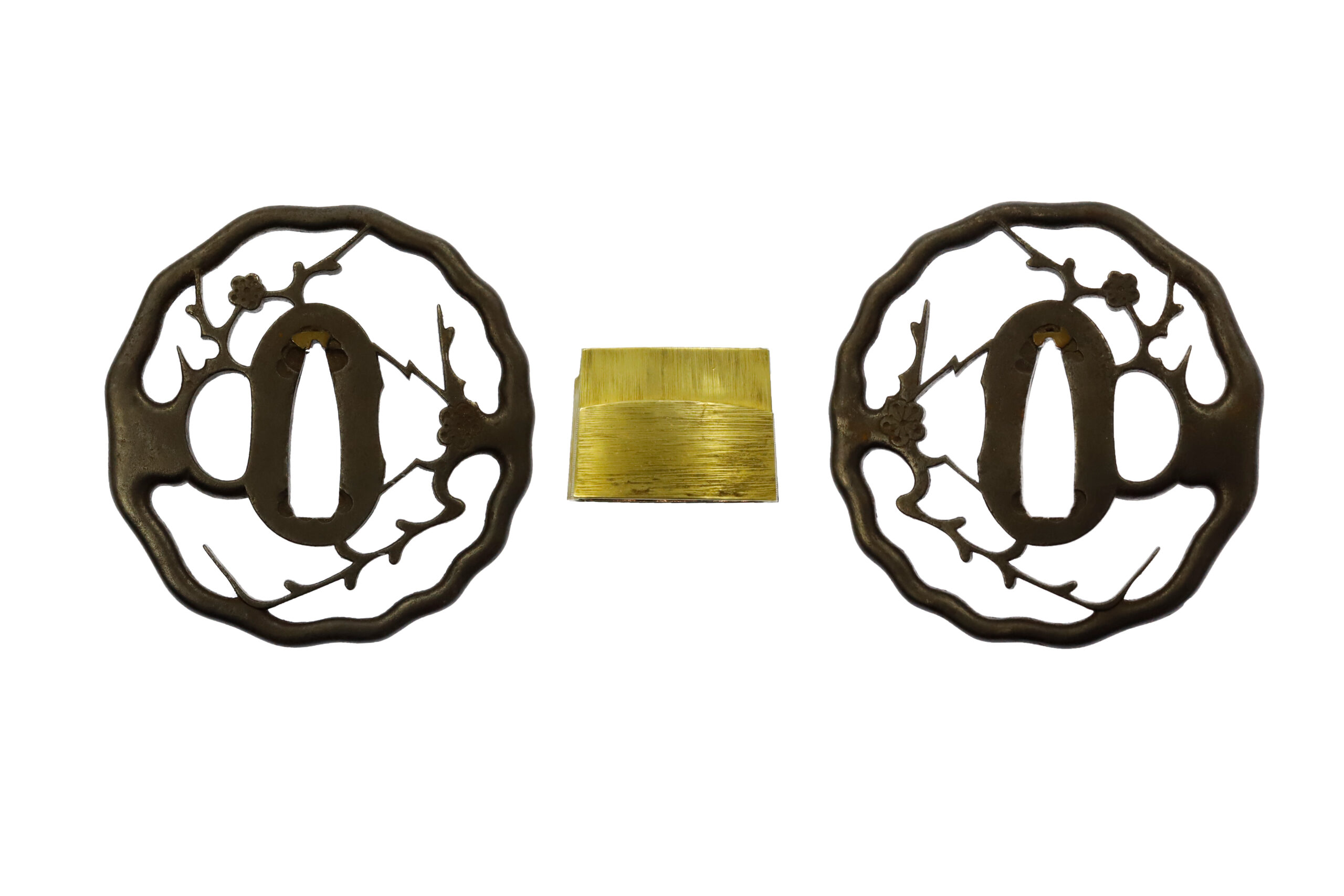
This iron Tsuba has a Kozuka hole. Its outline is a shape that imitates an Ume (梅, Japanese apricot blossom) tree. Japanese apricot blossoms begin to bloom in winter when snow still covers its tree. People thought this flower told the arrival of spring. Same as cherry blossoms, it has been appreciated for a long time in Japan. People enjoy its adorable petal shape, scent, and gracefully branched trees and compose many poems. As it comes out in the cold season, it symbolizes the power of perseverance and vitality. Seeing Japanese apricot blossoms desperately blooming in the bitter cold, Samurai warriors might have thought of the harsh conditions they were facing in a life-or-death battle.
Kozuka
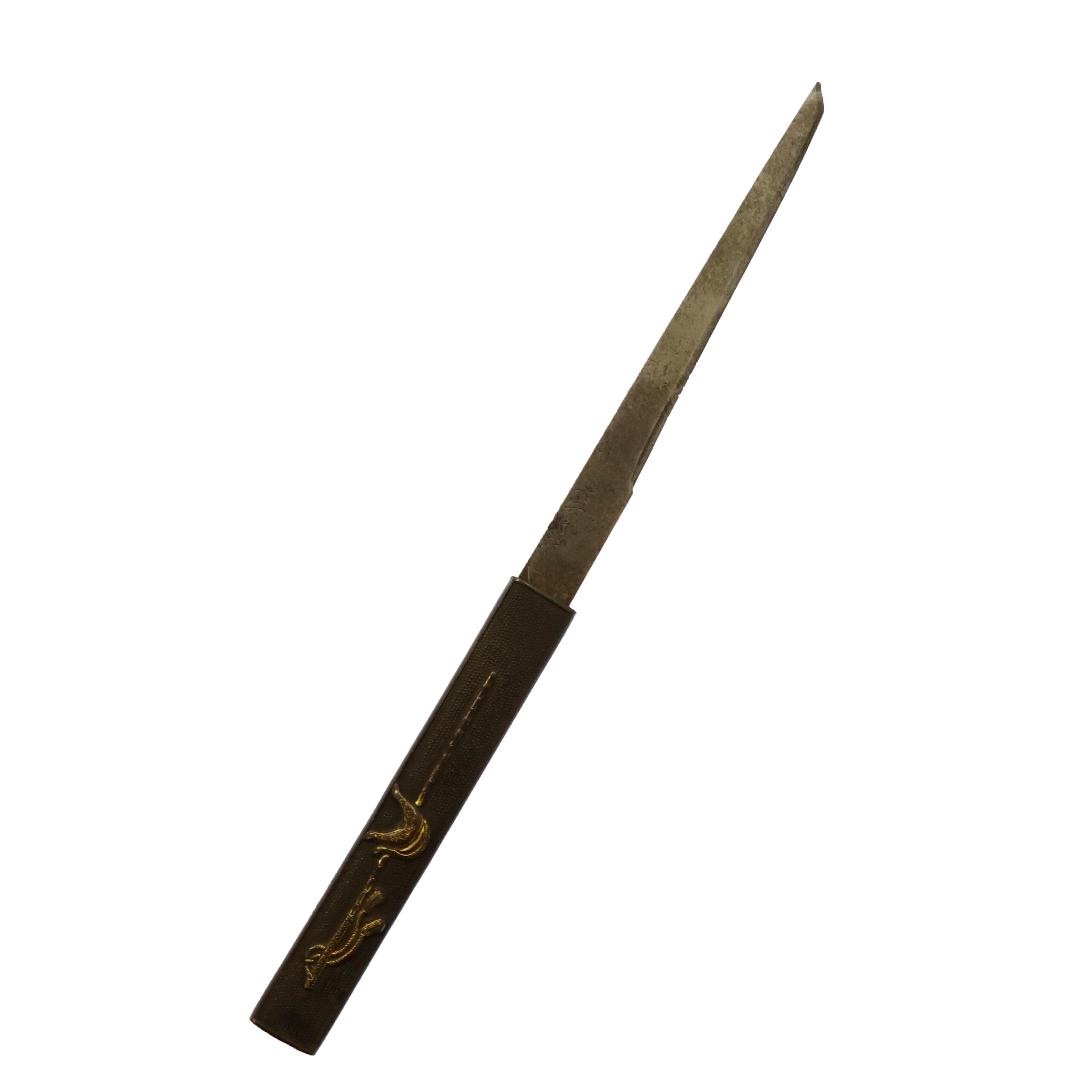
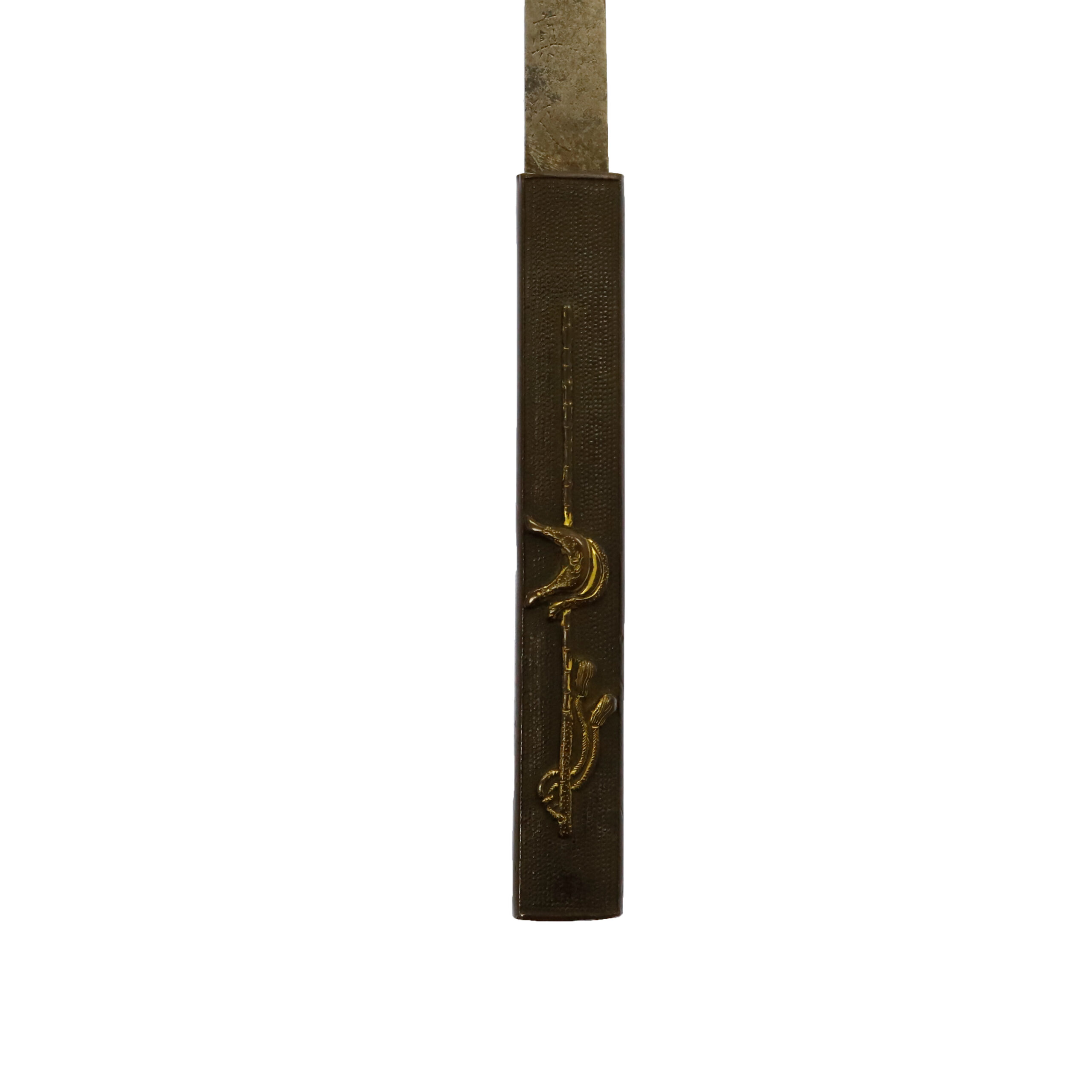
A Kogatana (小刀, small knife) is stored in the Kozuka. The surface of this Kozuka is decorated with the Nanako-Ji (魚子地) technique. The engraved motifs are the Kura (鞍, saddle) and probably a Shikomi Gatana (仕込み刀), which is a kind of hidden weapon. Samurai-related tools are also seen here and are well-suited as decorations for Japanese swords.
Authentication Paper
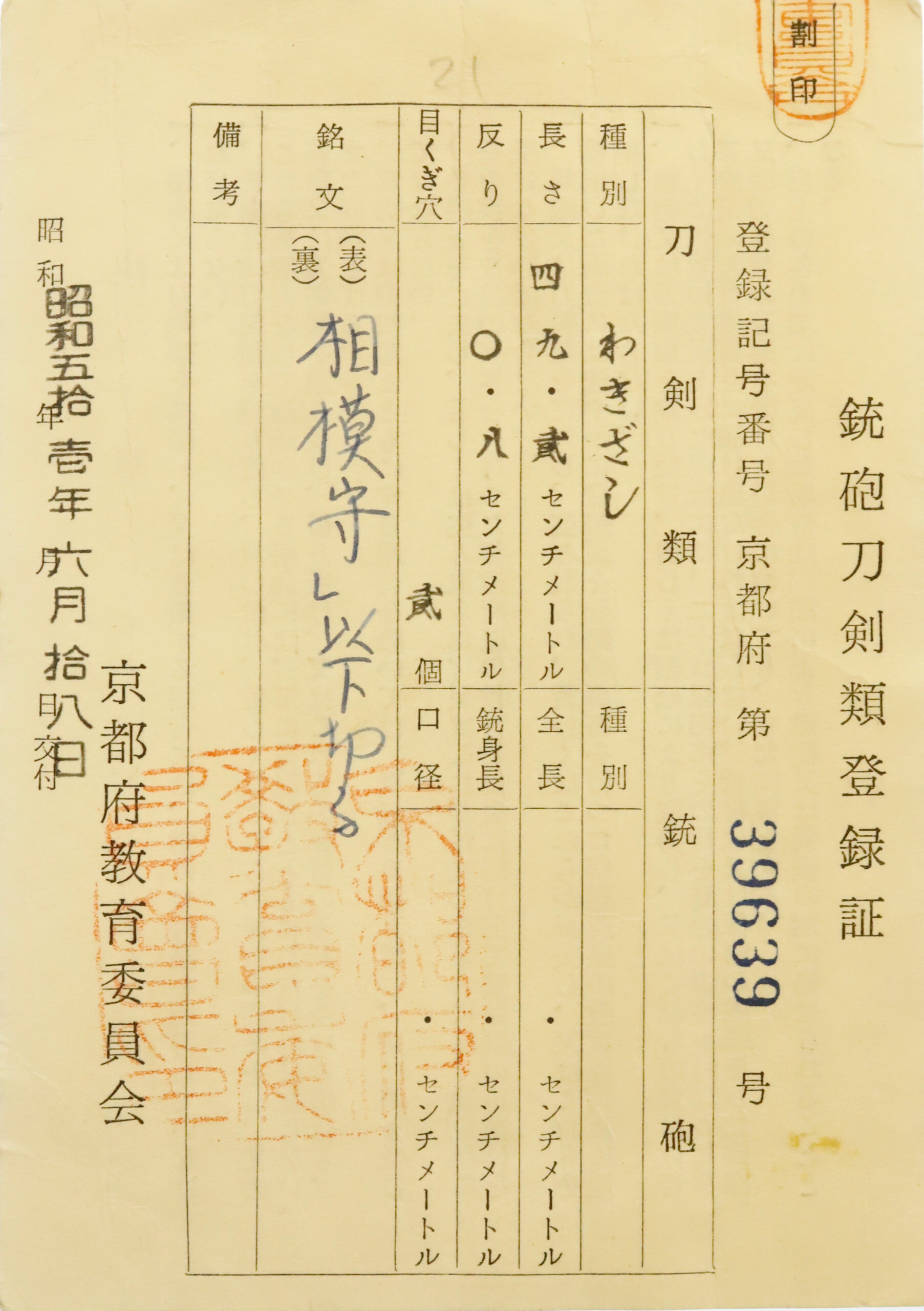
NBTHK,, also known as Nihon Bijutsu Touken Hozon Kyokai (the Society for the Preservation of the Japan Art Sword), is one of the oldest Japanese sword appraising organizations in modern-day Japan. They authenticated the blade on Aug. 25th in the 4th year of Reiwa (2022). They appraised it as Hozon Touken, the blade worth preserving for Japanese society.

 NihontoWatch