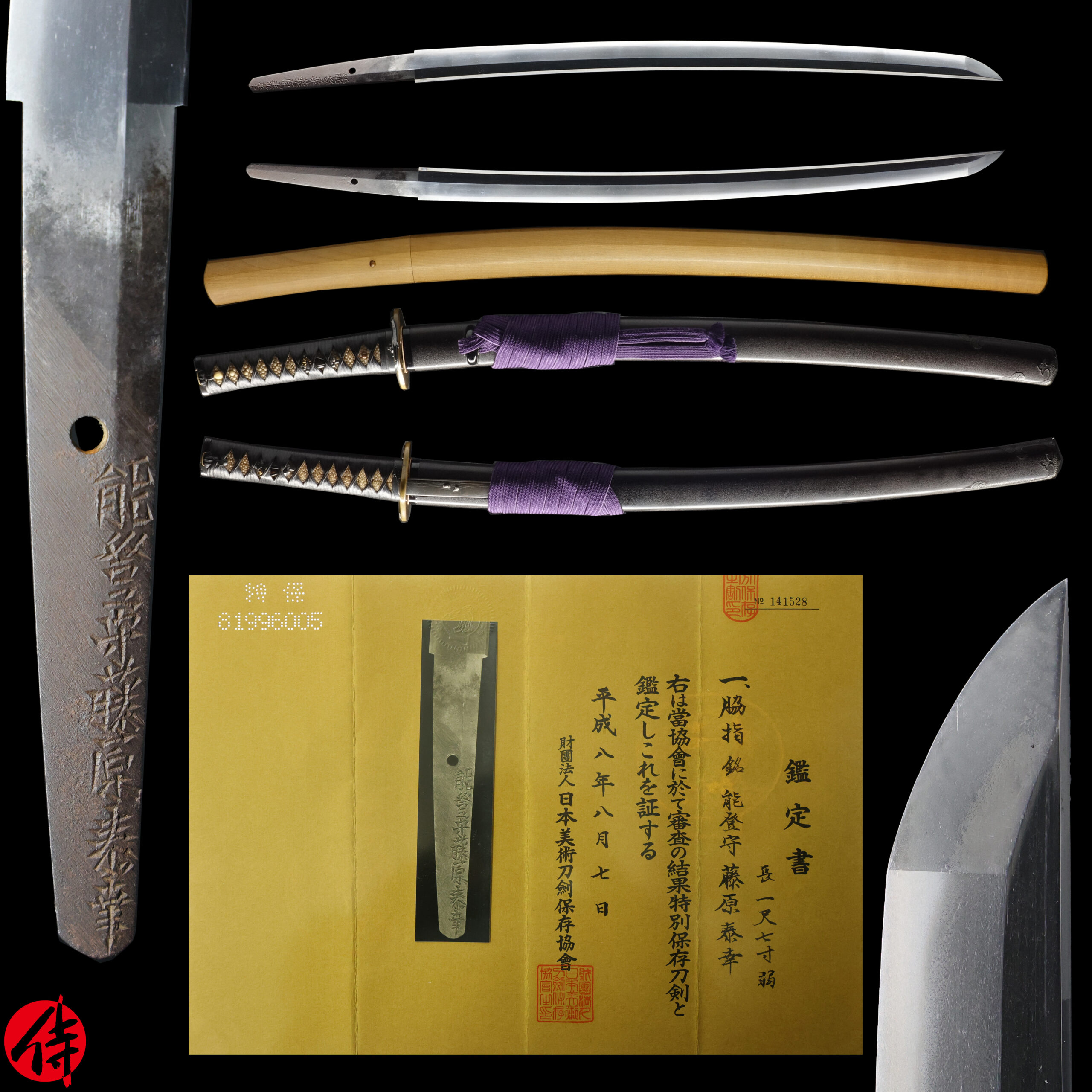
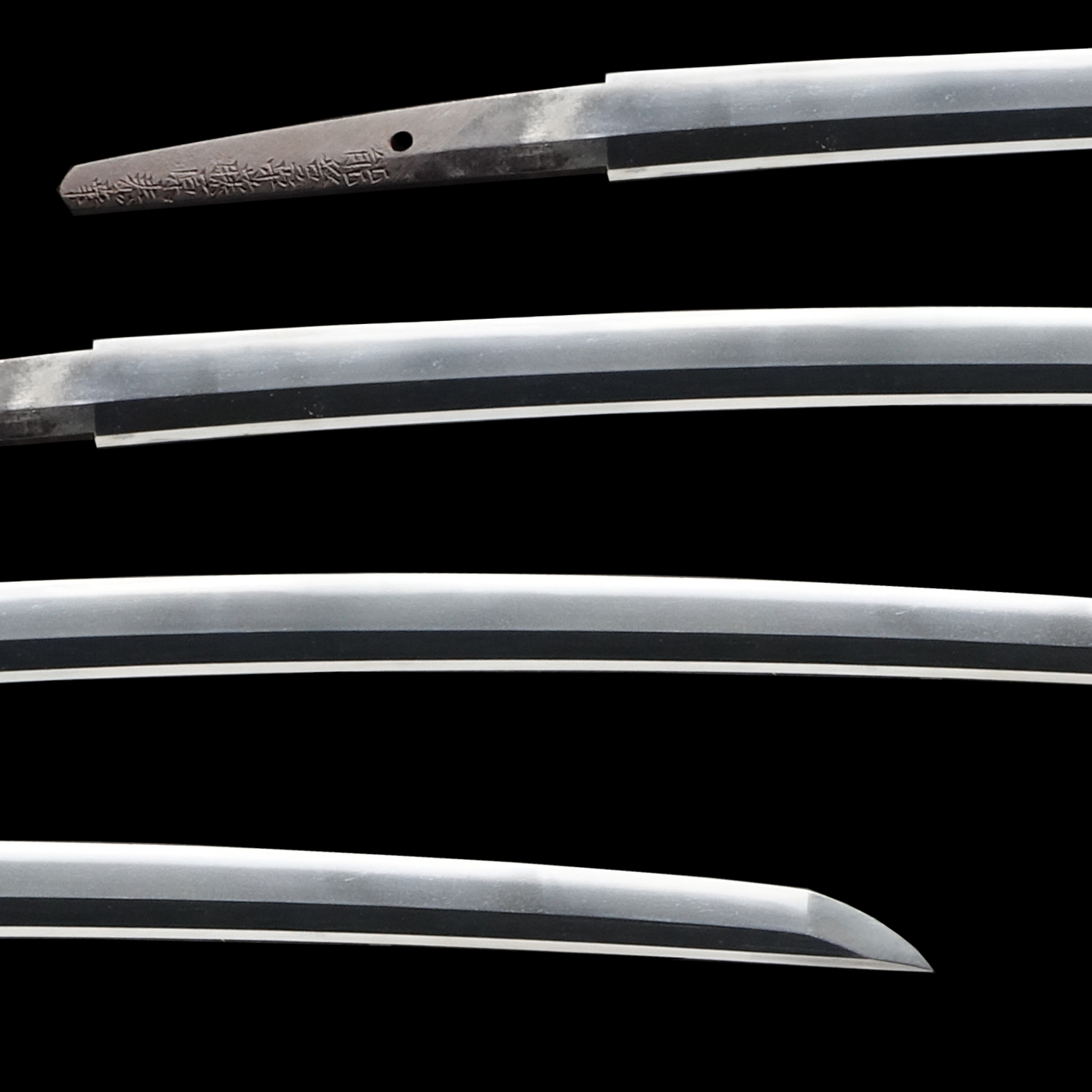
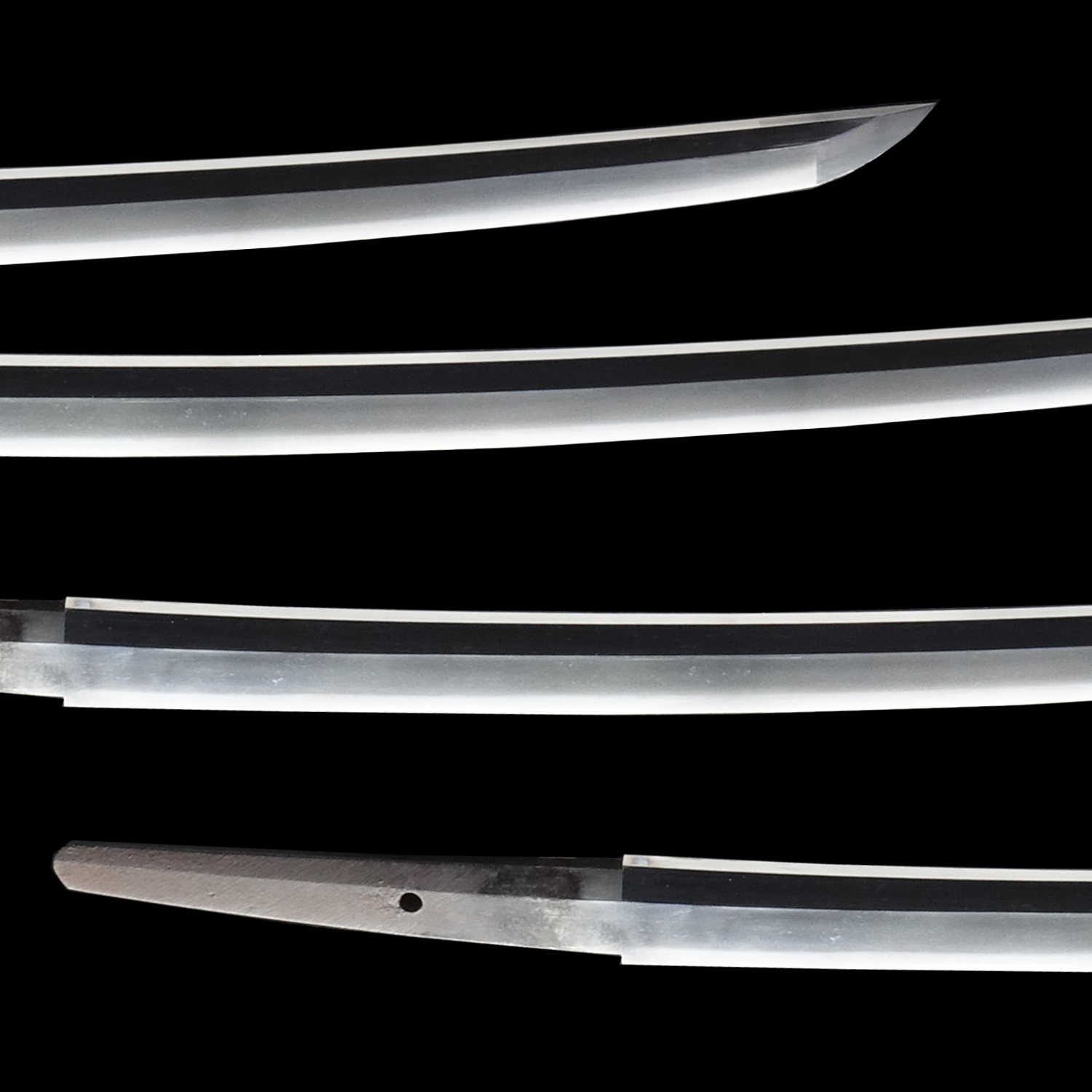
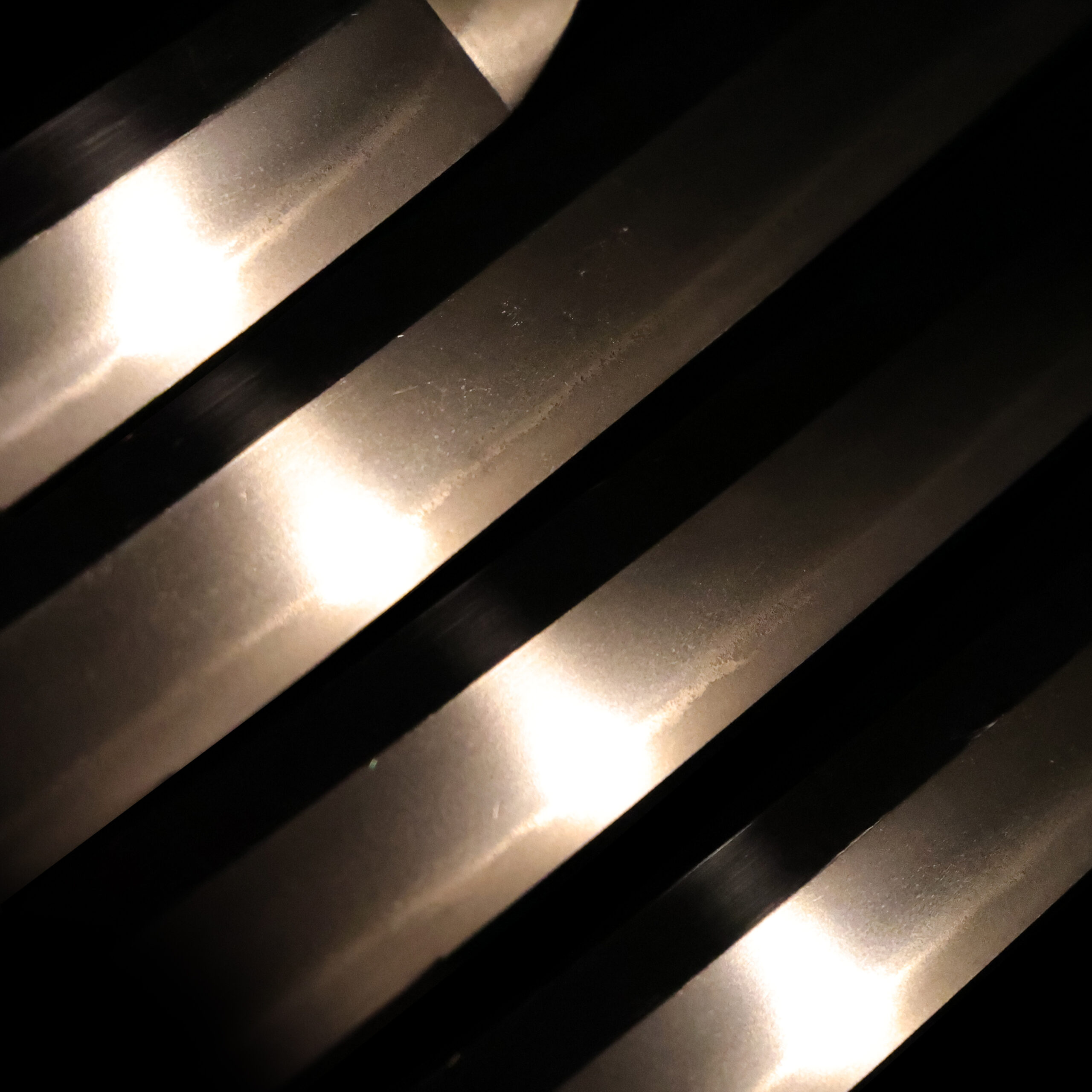
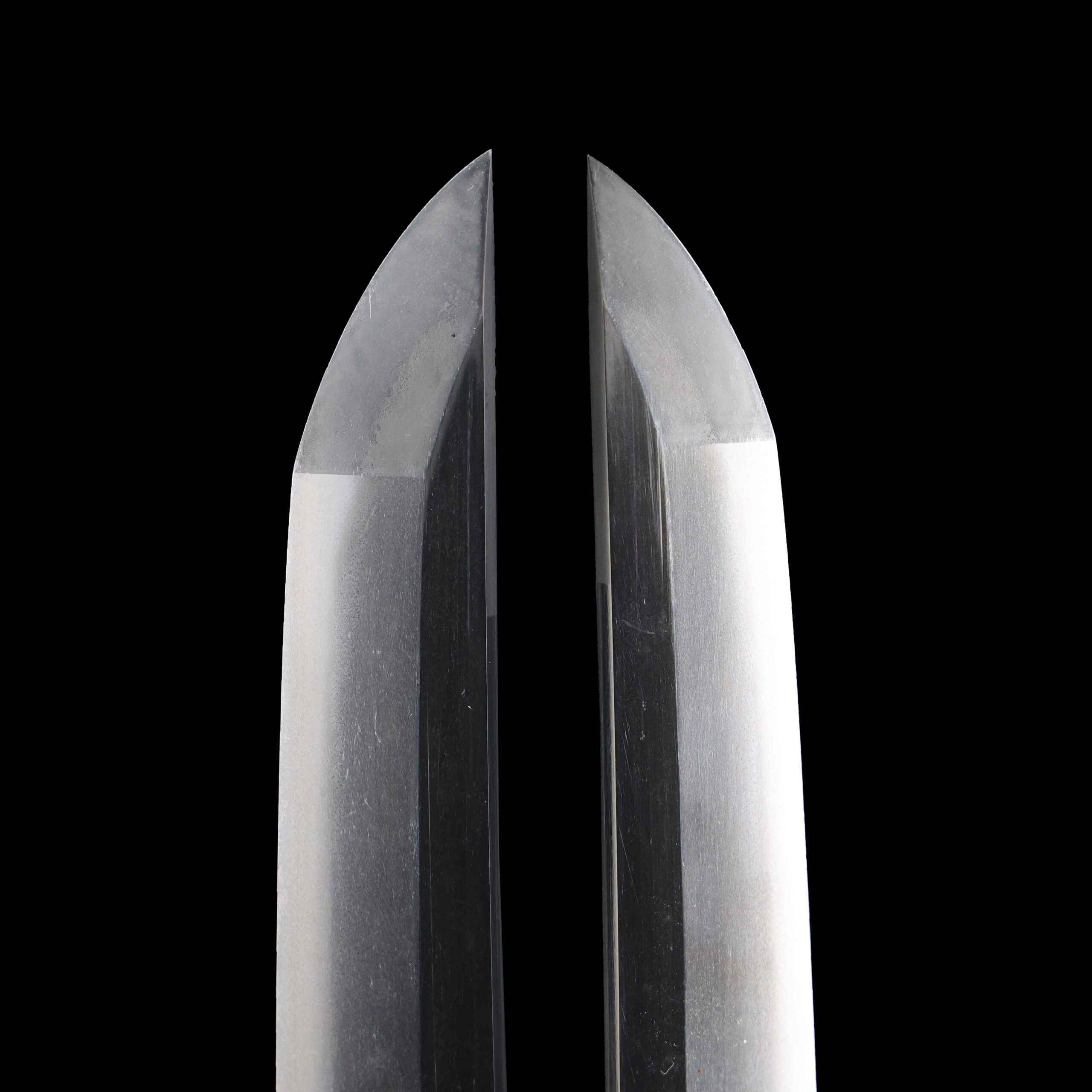
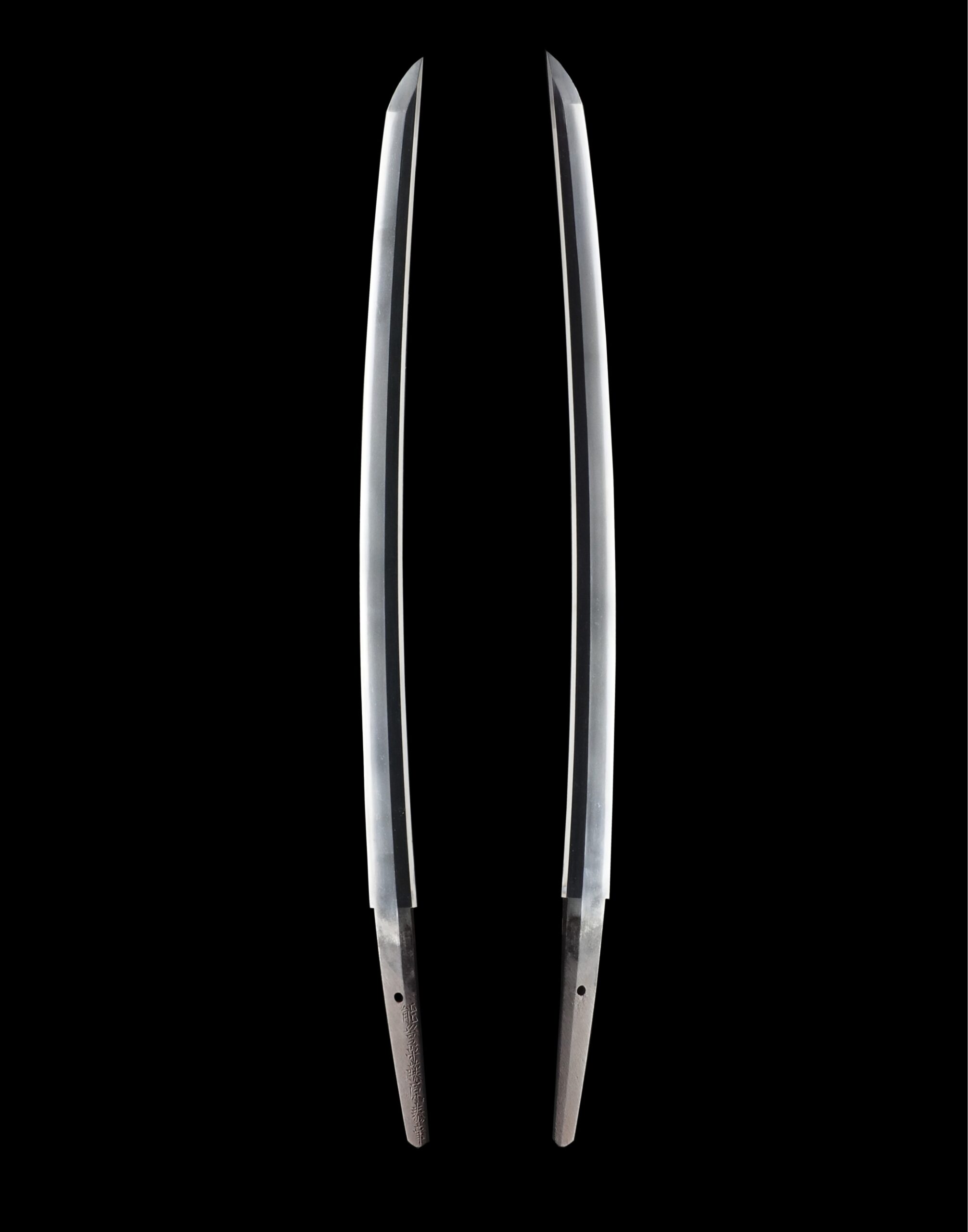
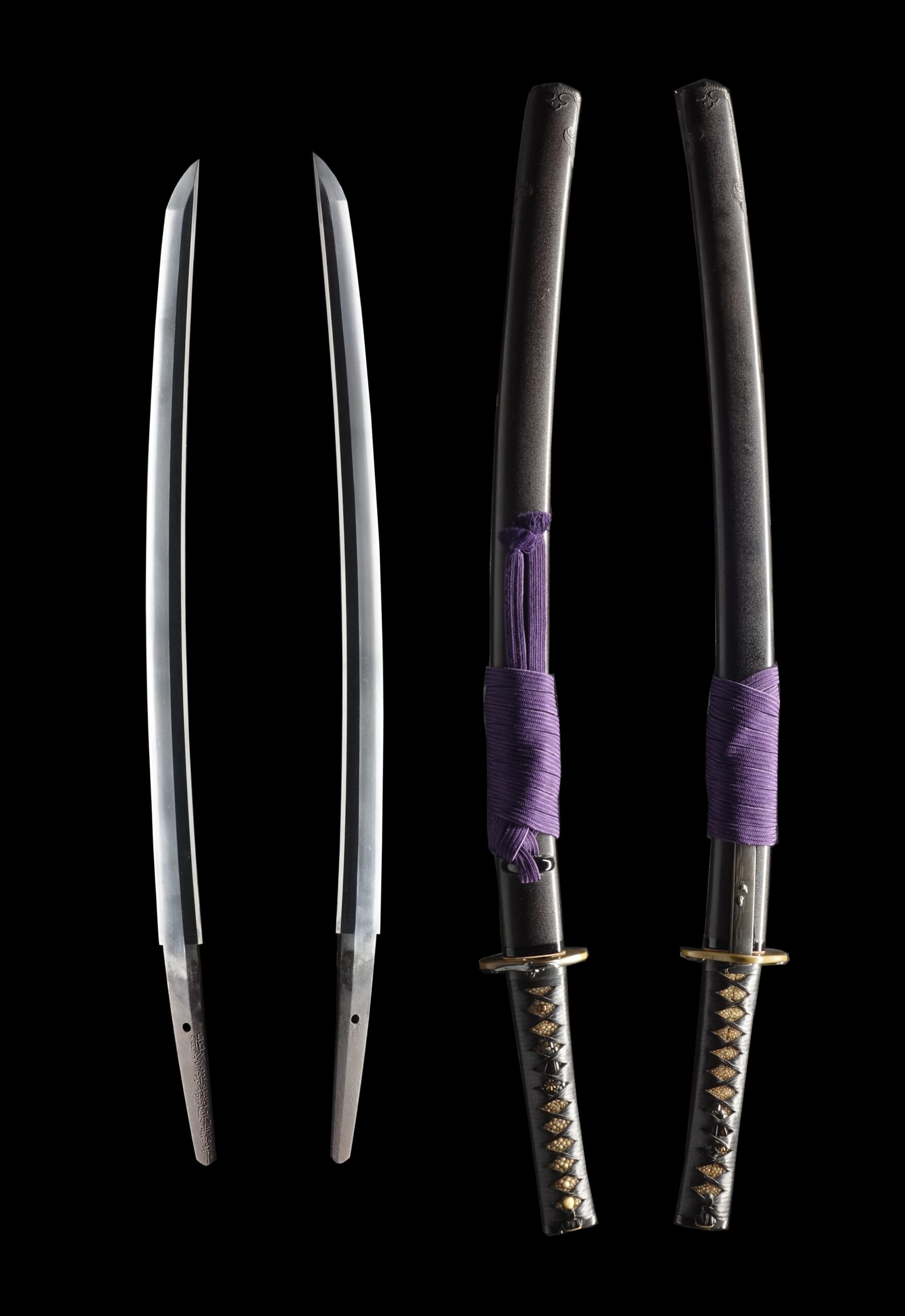
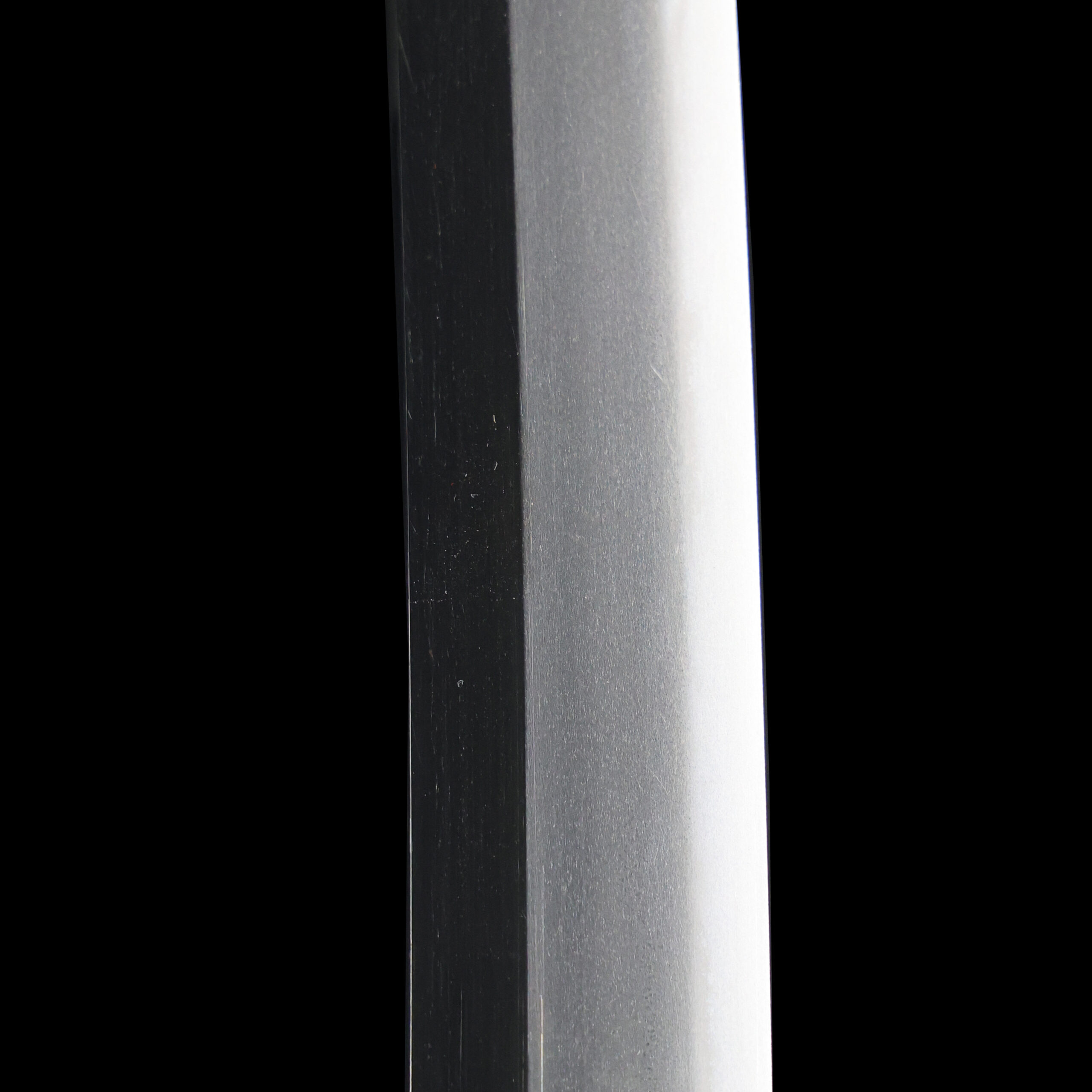
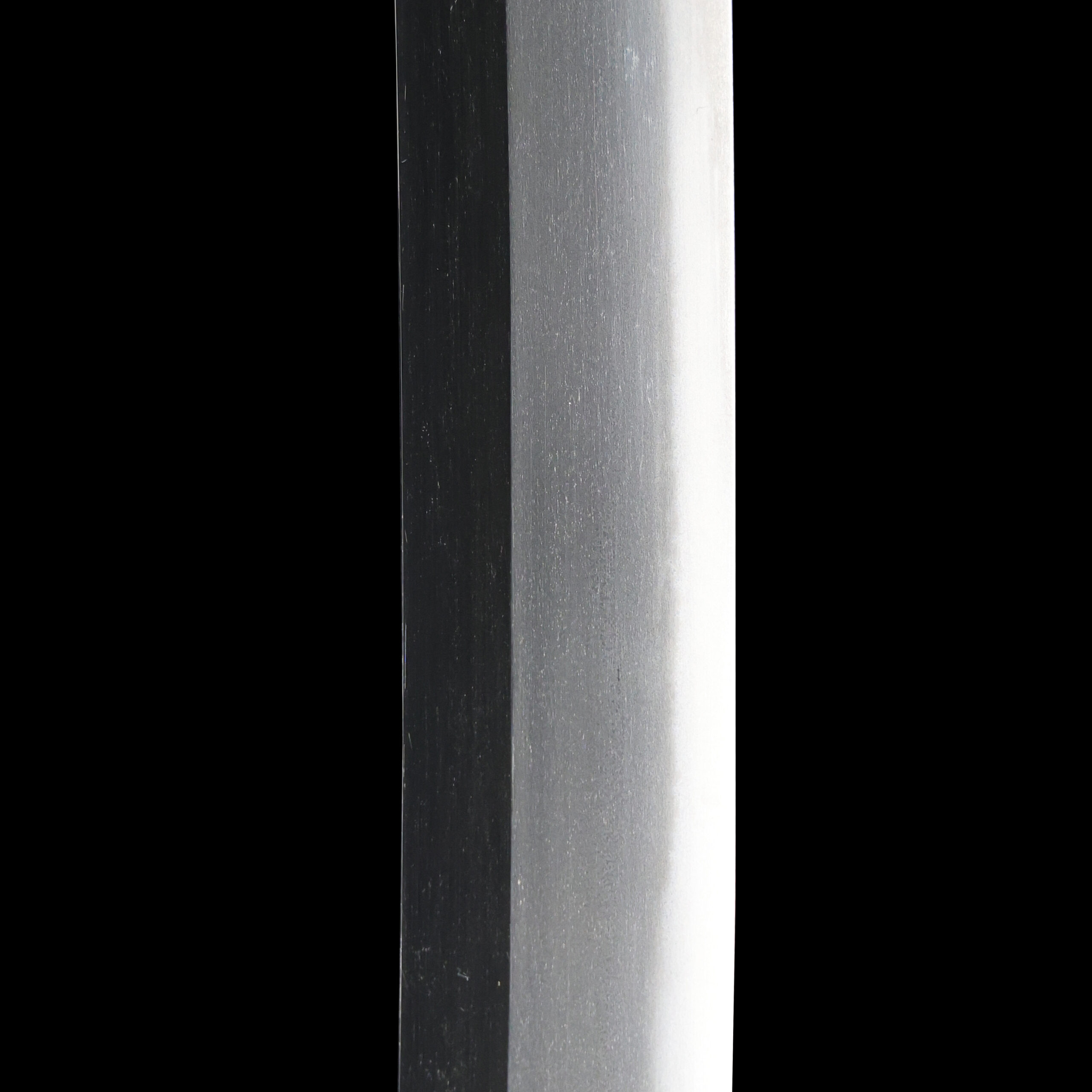
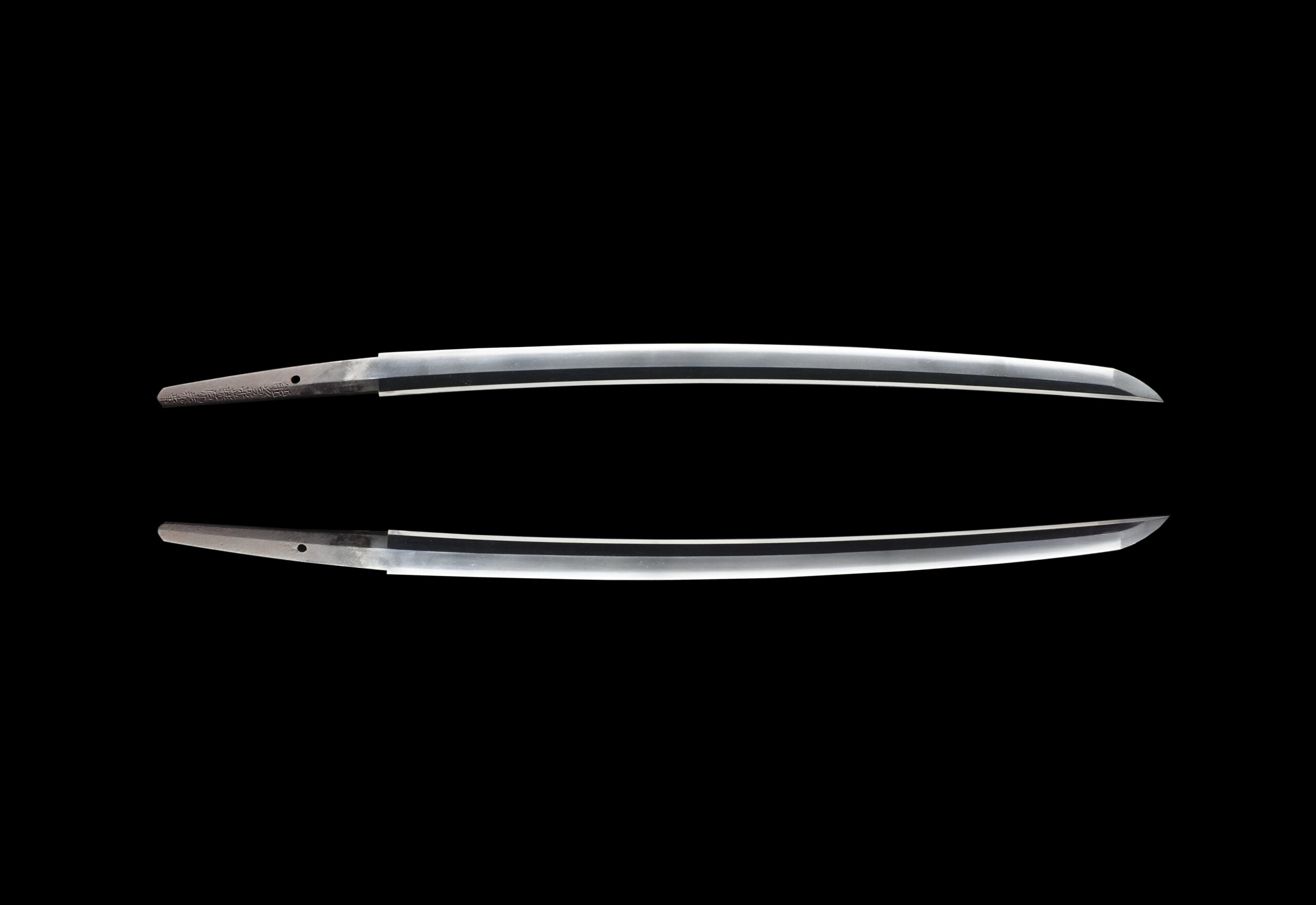
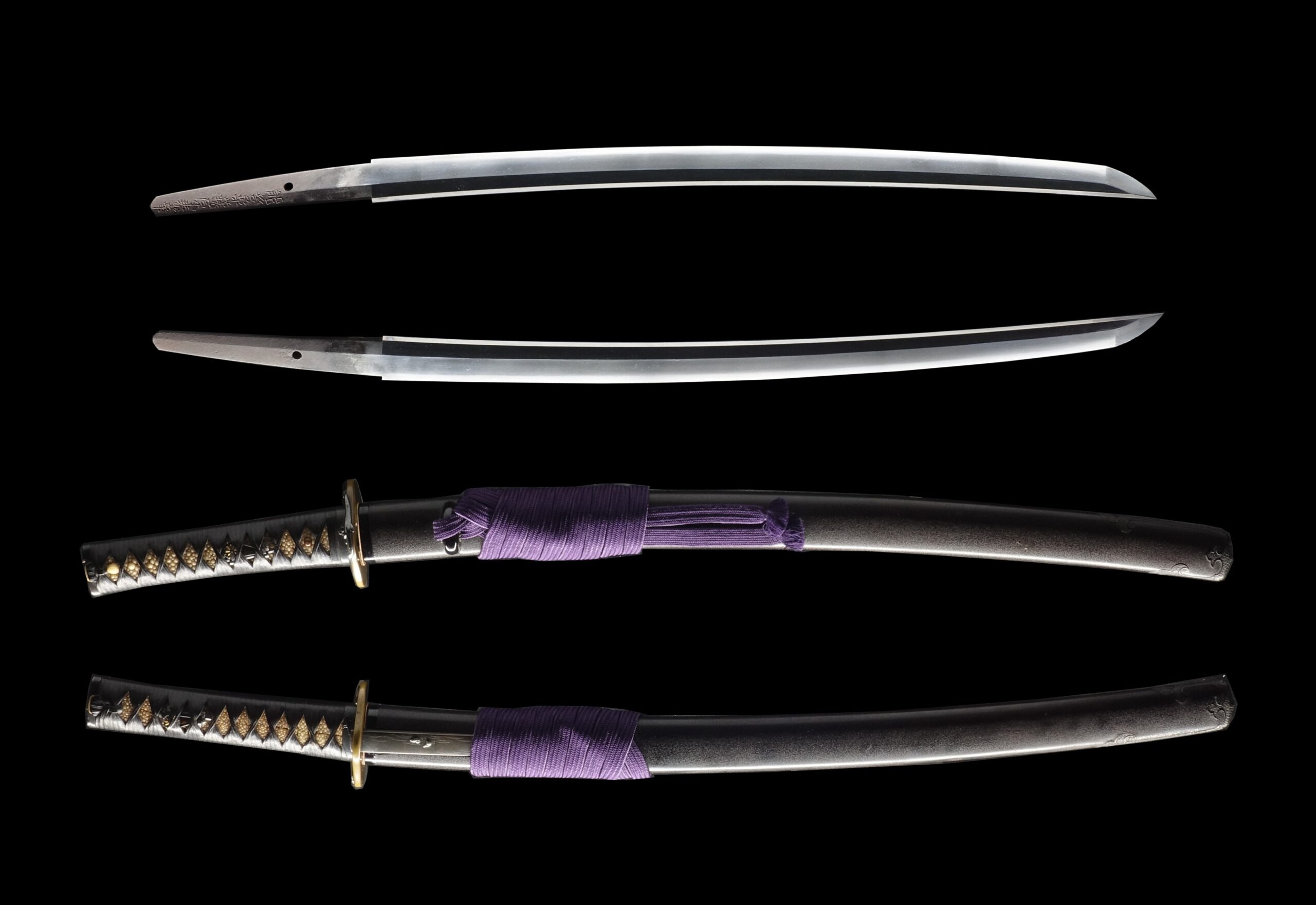
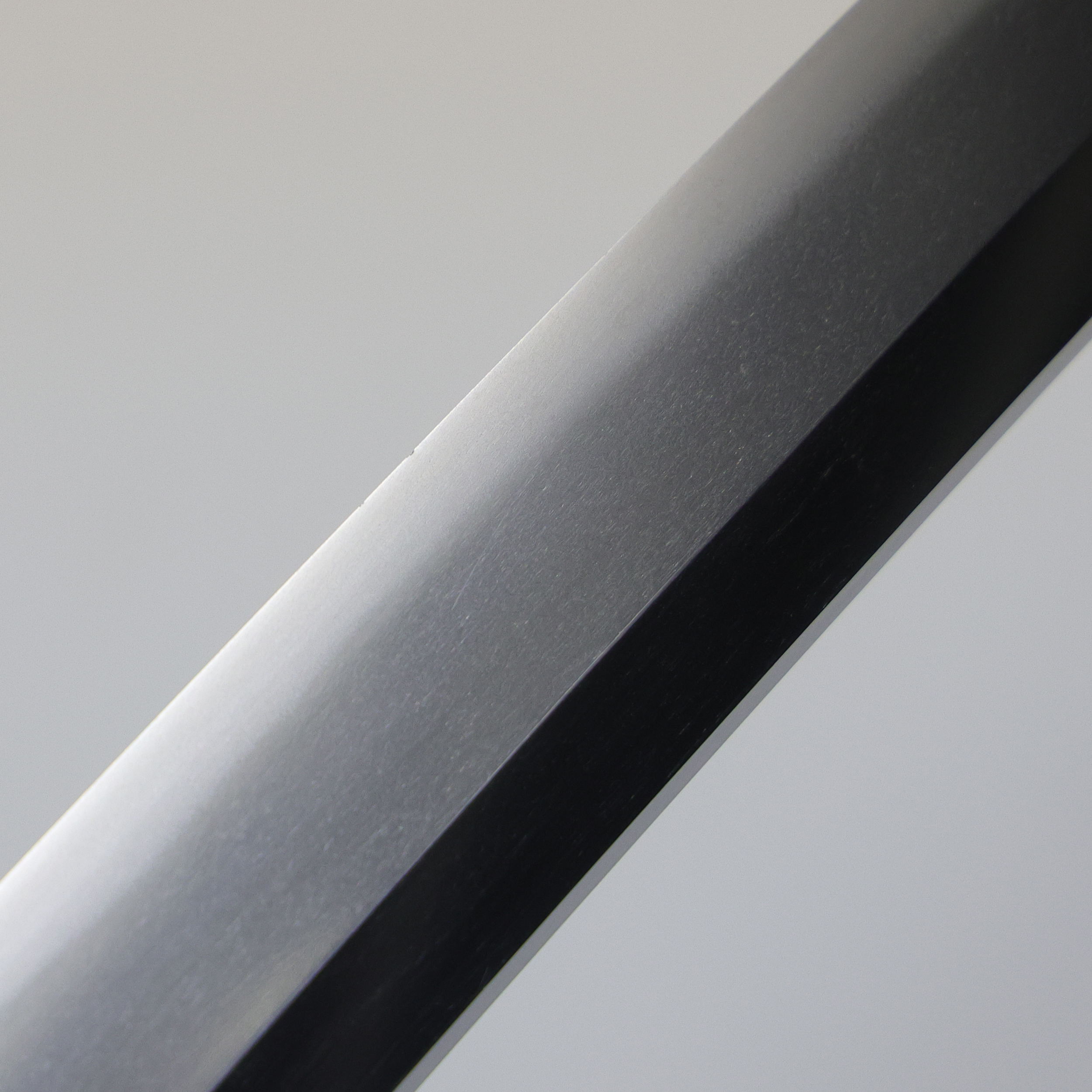
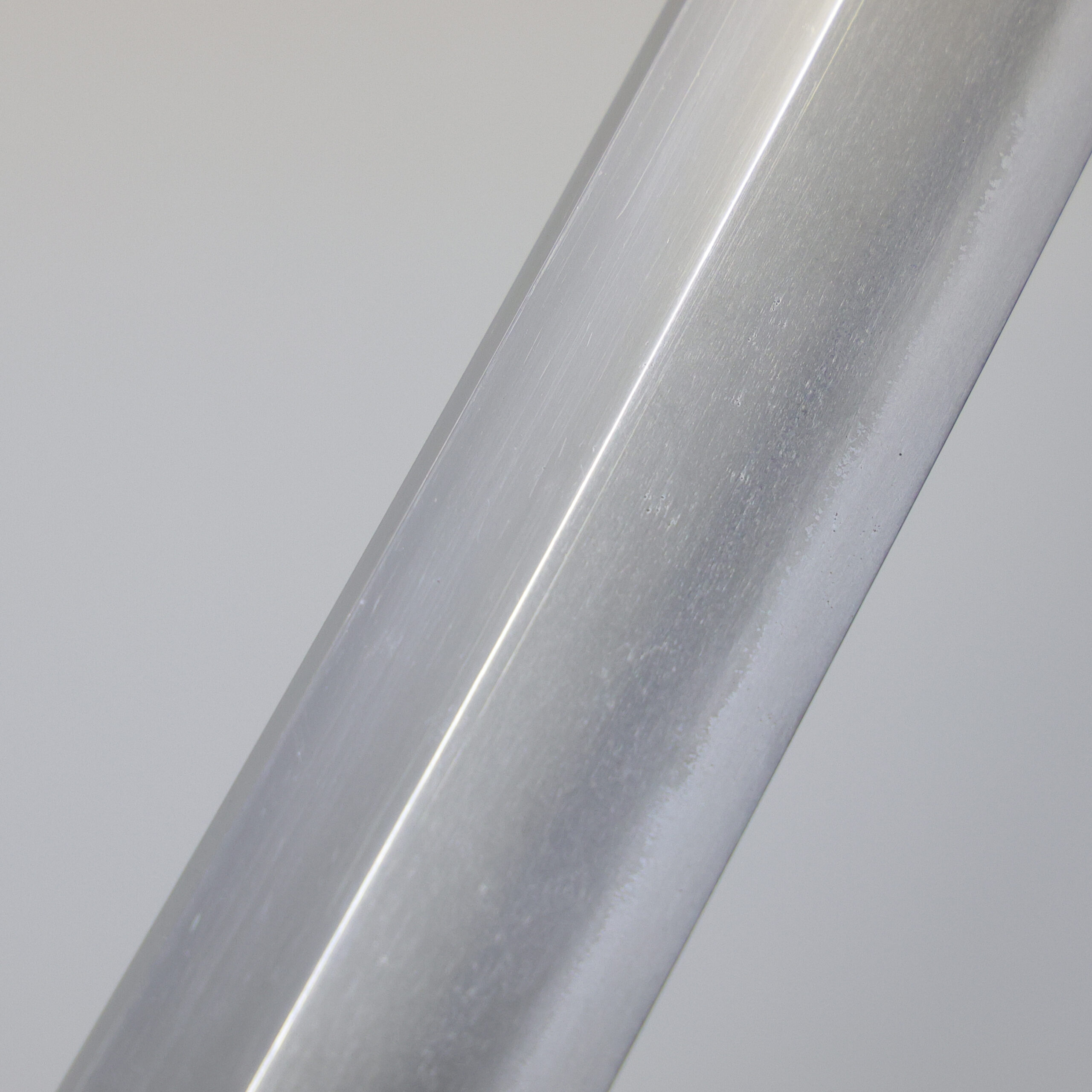
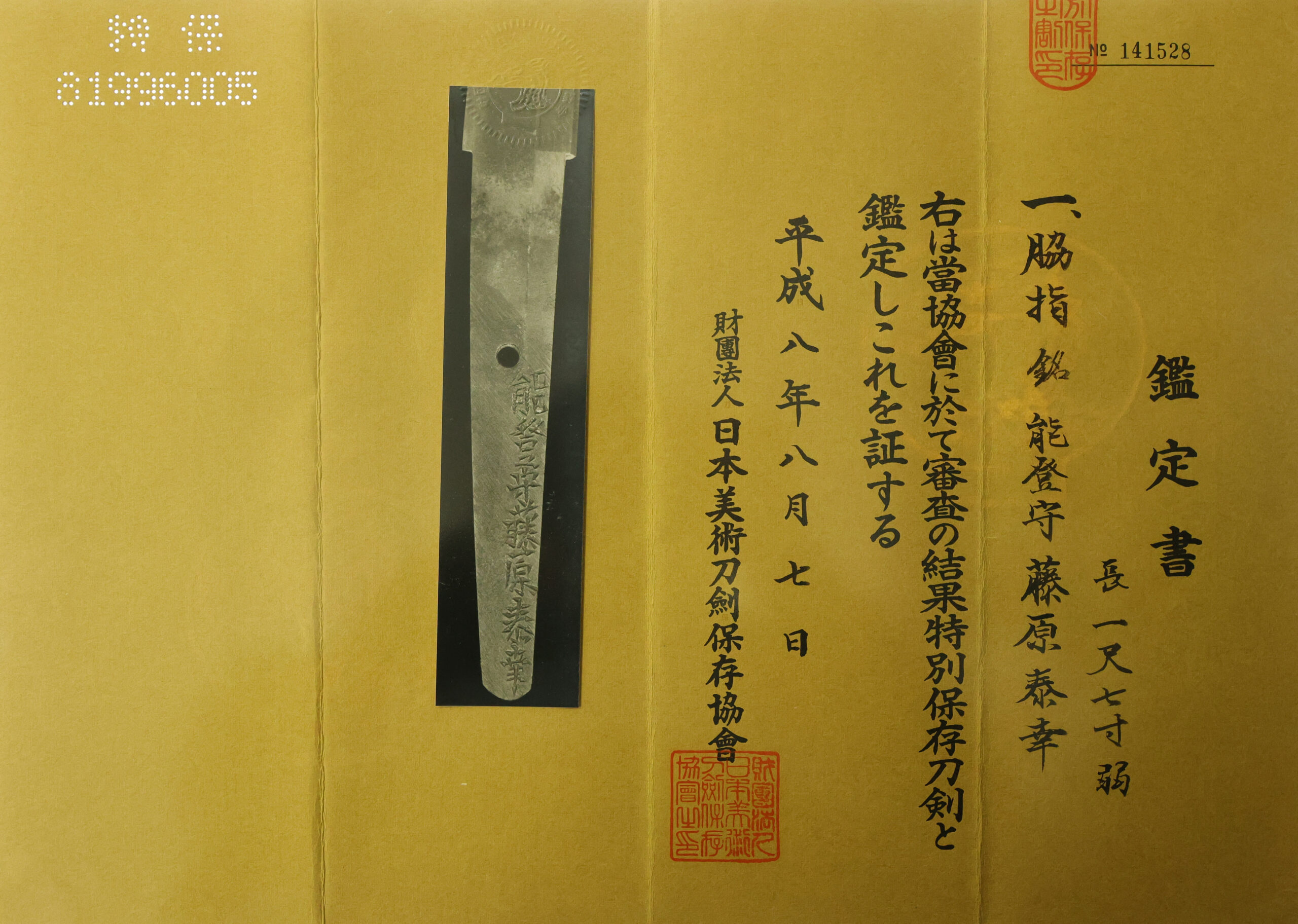
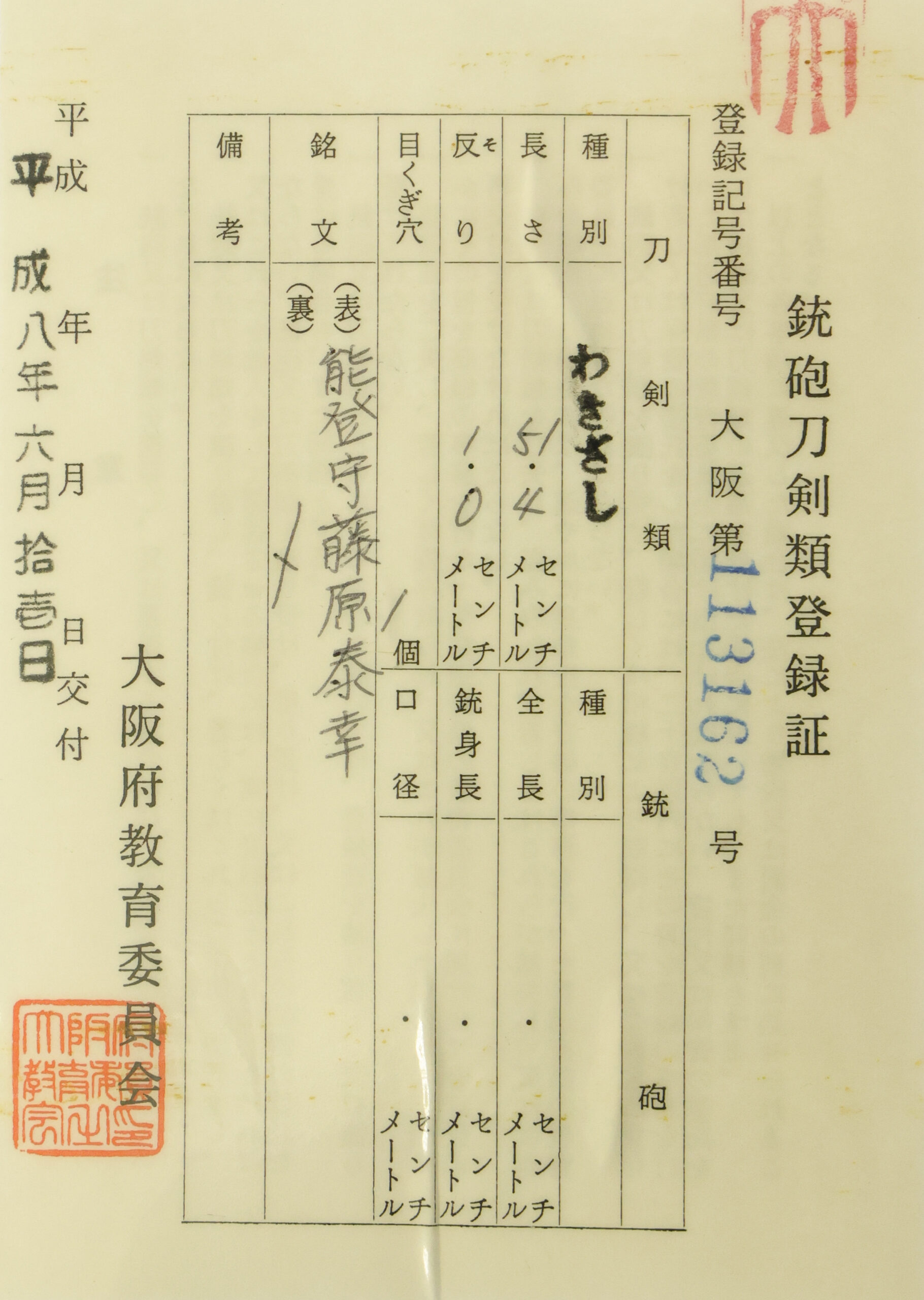
This blade is signed by Noto no Kami Fujiwara Yasuyuki (能登守藤原泰幸) in the Kanei era of the early Edo period (1624-1644), judging from the signature and NBTHK’s appraisal. He is a prominent swordsmith, also known as the father of Sagami no Kami Fujiwara Yasuyuki (相模守藤原泰幸).
Yasuyuki was originally from the Mino province (Today’s Gifu prefecture). However, he moved to Owari province (Today’s Aichi prefecture) to look for better job opportunities in the 15th year of the Keicho era (1610). It was around when Nagoya castle was built, and Owari province was active in martial arts during the early Edo period. There was much demand for swords among high-class Samurai residing near Nagoya castle. Yasuyuki met those demands by forging excellent quality blades.
Yasuyuki received the honorable official title of Noto no Kami from the emperor for his superb sword-forging techniques after he moved to Owari province. Considering that, we believe he resided in Owari when he forged this blade. He was active in sword-forging during the early Edo period. (approx. 1624-1644).
Mino Province
Mino Province is one of the most famous and historical sword-forging sites. There were so many schools forging blades during the Samurai period. It especially prospered during Sengoku Jidai(Warring State period) due to the high demand for weapons. And the location of Mino province beat others. Akechi Mitsuhide controlled Mino province, Nobunaga Oda ruled Owari province, and Tokugawa Ieyasu was the lord of Suruga (Neighboring areas). There was high demand from those powerful feudal lords and their retainers.
Furthermore, many wars occurred between the Kanto region and the Kyoto area. Mino is located in the middle, making feudal lords feel convenient to order swords from MINO swordsmiths. Many feudal lords demanded swords forged in the Mino province. The blades forged in MINO provinces also had a reputation for their practical design and sharpness.
The tradition of excellent sword forging skills had been passed throughout the Edo period, and Yasuyuki is a good example. And, to look for better opportunities, many swordsmiths in Mino province moved to other parts of Japan, such as Owari province, located right next to Mino province. Those who moved to Owari from Mino are called Owari Seki. Yasuyuki is one of the most famous Owari Seki swordsmiths. Others are Masatsune (政常)、Ujifusa (氏房), and Nobutaka (信高). We are confident you can appreciate the outstanding craft of Yasuyuki.
It is appraised as a Tokubetsu Hozon Token (特別保存刀剣) issued by NBTHK (Nihon Bijutsu Touken Hozon Kyokai: 日本美術刀剣保存協会).
*Please keep in mind that there is a tiny chip on the blade as well as some Hike Kizu (scratch) on this blade.
Fuchi-Kashira
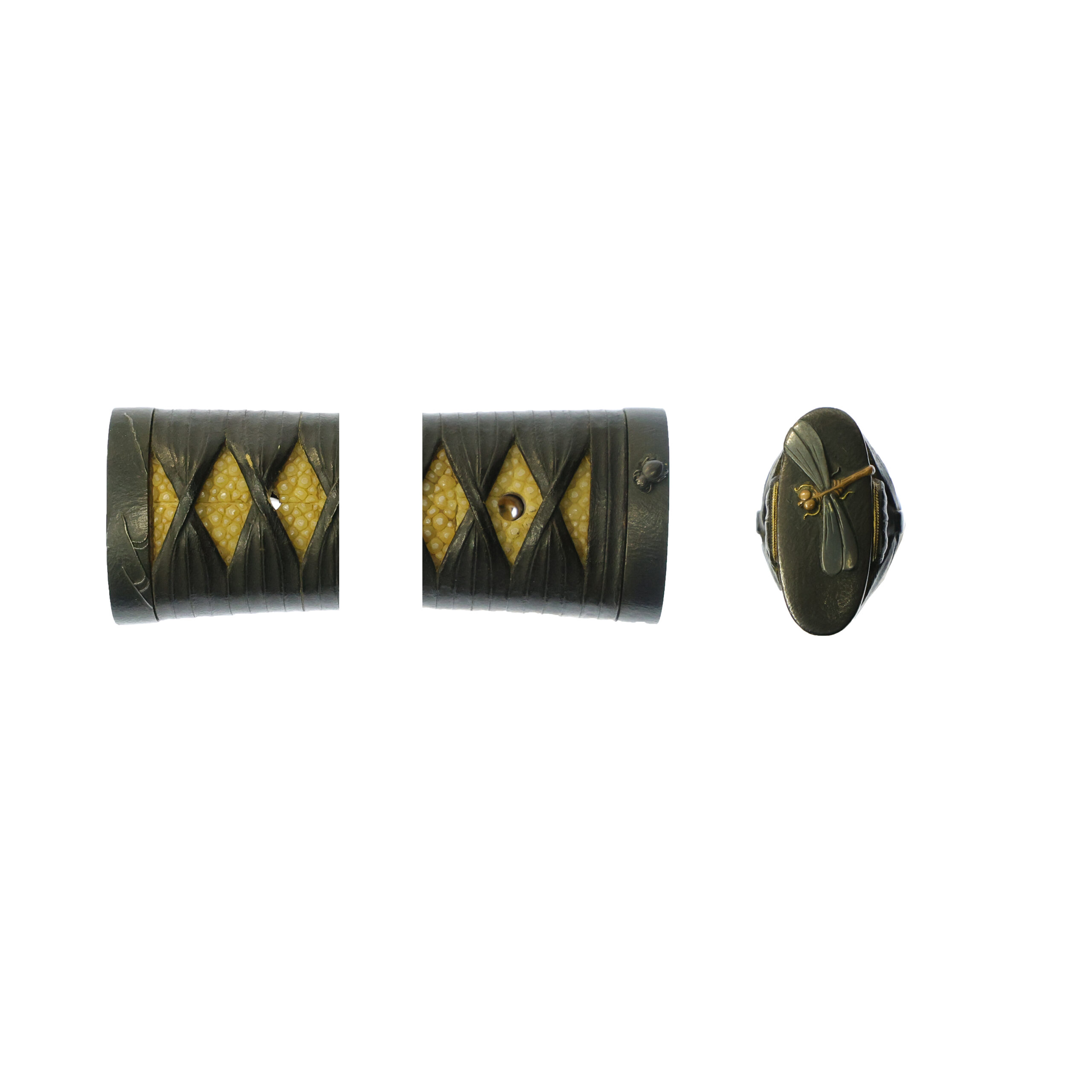
The motif of this Fuchi-Kashira is a dragonfly (蜻蛉, tombo). Dragonflies have been inhabited in Japan for a long time. Since they prey quickly, their heroic figure was sometimes the object of belief. The dragonfly was called the Kachimushi (勝ち虫, winning insect) during the Warring States period because of its fearless character. Dragonflies fly around fast to catch pests, moving only forward, not backward. Therefore, people thought the behaviors of this insect showed the spirit of Futaiten (不退転); it is a state of mind or a state in which a person has some conviction and does not give in to difficulties. It is very persuasive that Samurai warriors cherished this design as an auspicious motif because of the spirit that Samurai should be prepared for the battlefields. Not only for sword mountings, dragonfly patterns were also incorporated into various items such as helmets, armor, battle coats, etcetera.
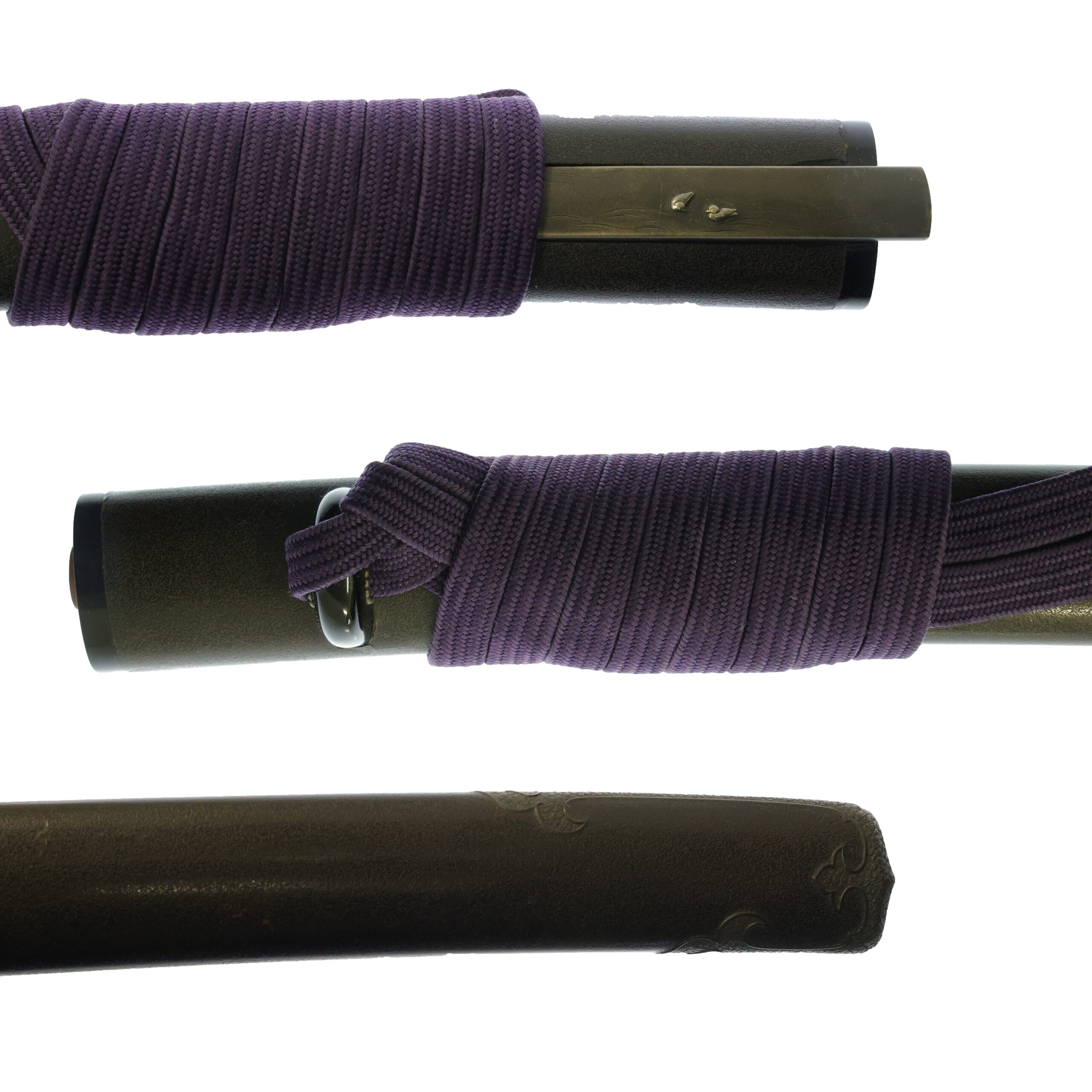
Tsuka and Menuki
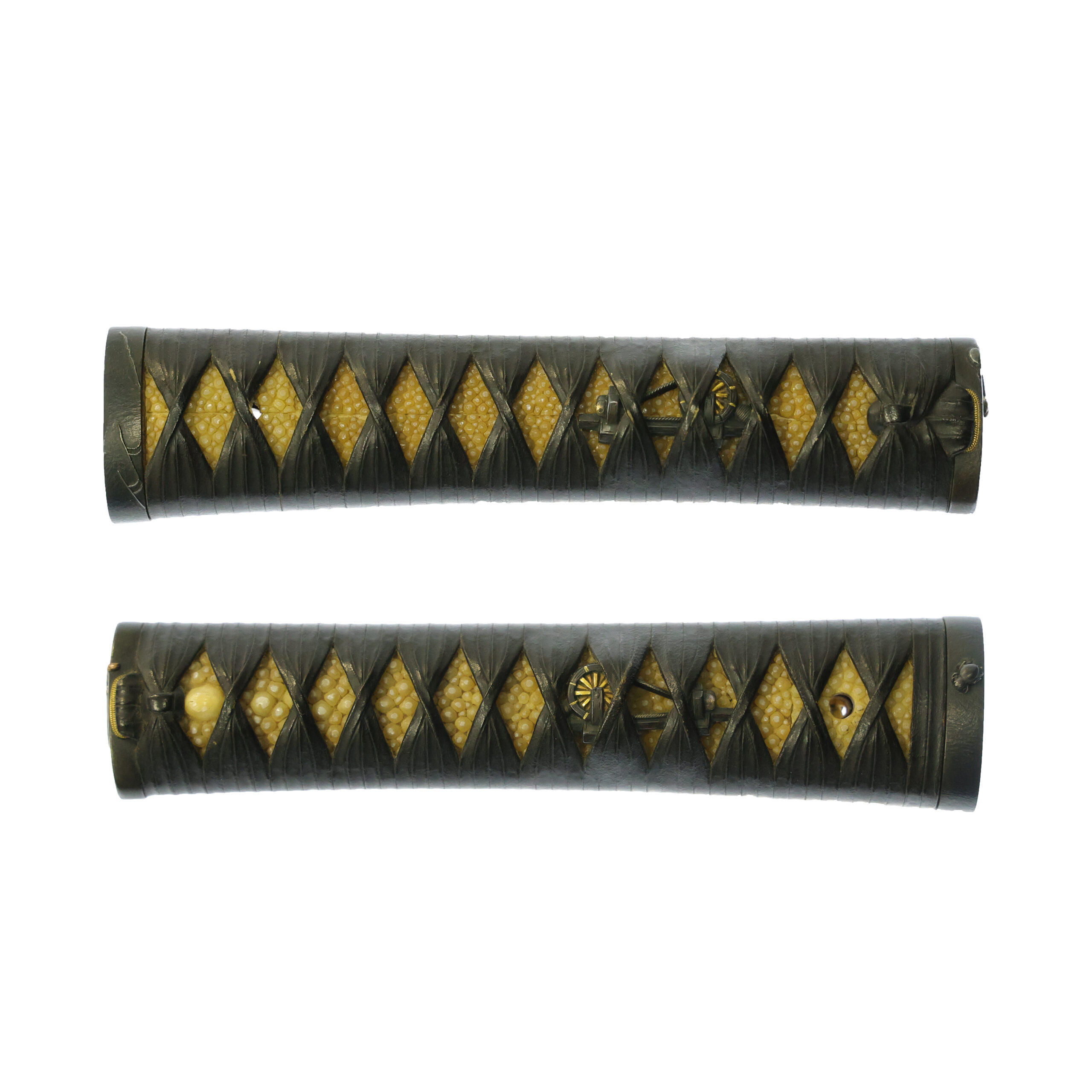
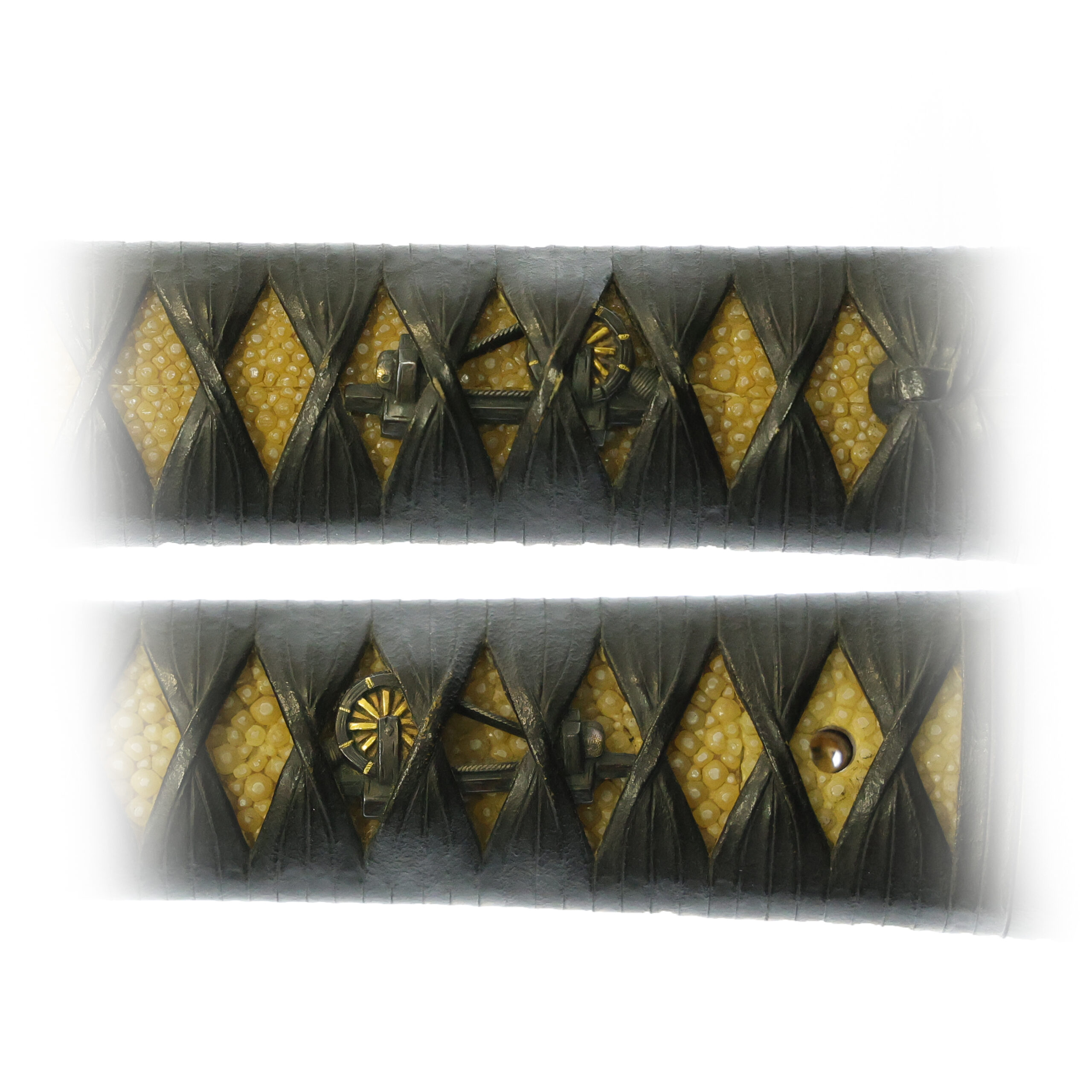
This menuki appears to depict a waterwheel (水車, Suisha). During the Edo period, waterwheels were widely used as power sources in agriculture and daily life, supporting irrigation, threshing, and grain milling. From the mid to late Edo period, their use and technology developed significantly, expanding to rice polishing, flour milling, and even more complex mechanical systems such as karakuri devices. As a motif, the waterwheel symbolizes continuous effort, stability, and sustained prosperity, reflecting its steady motion driven by the natural flow of water.
Tsuba and Habaki
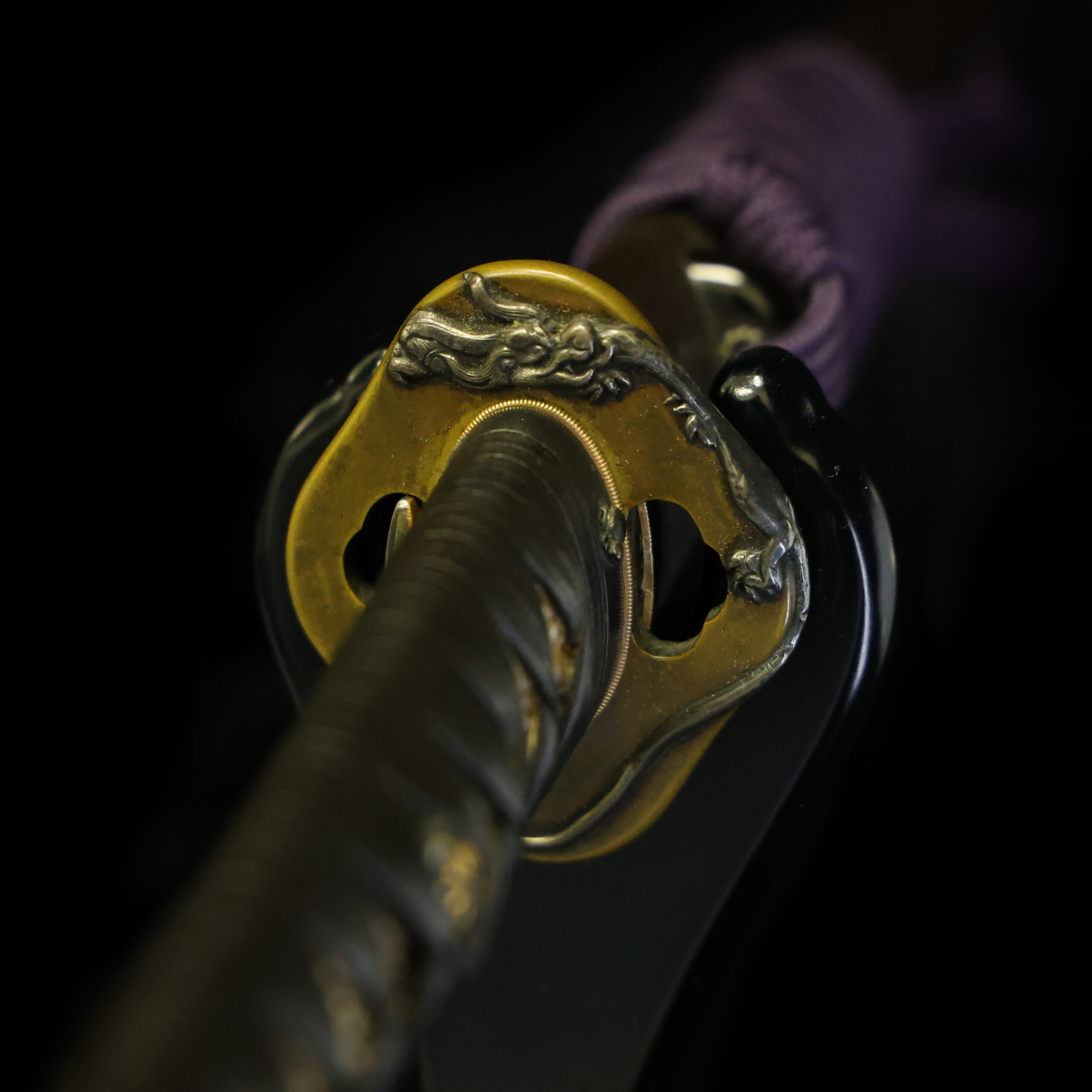
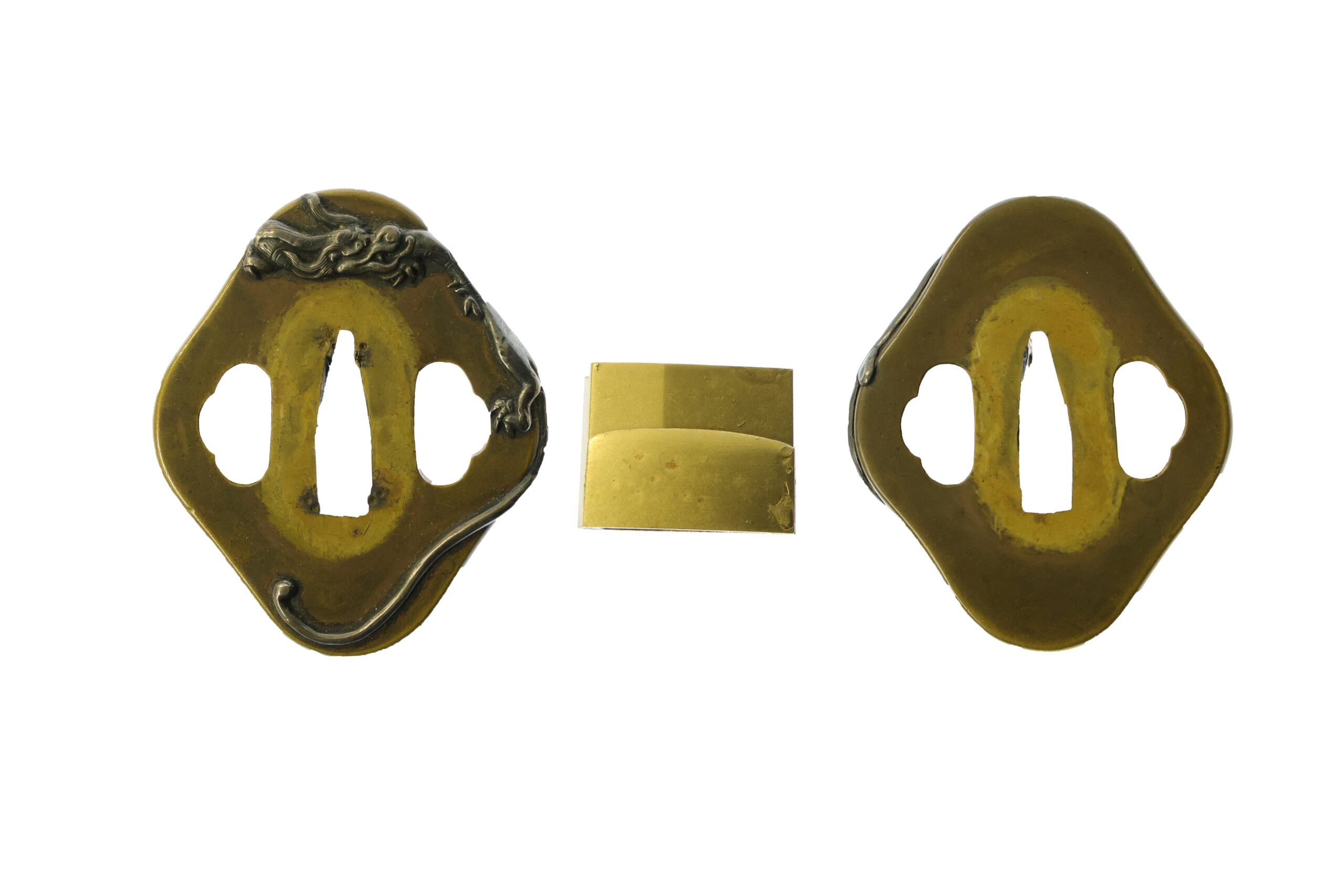
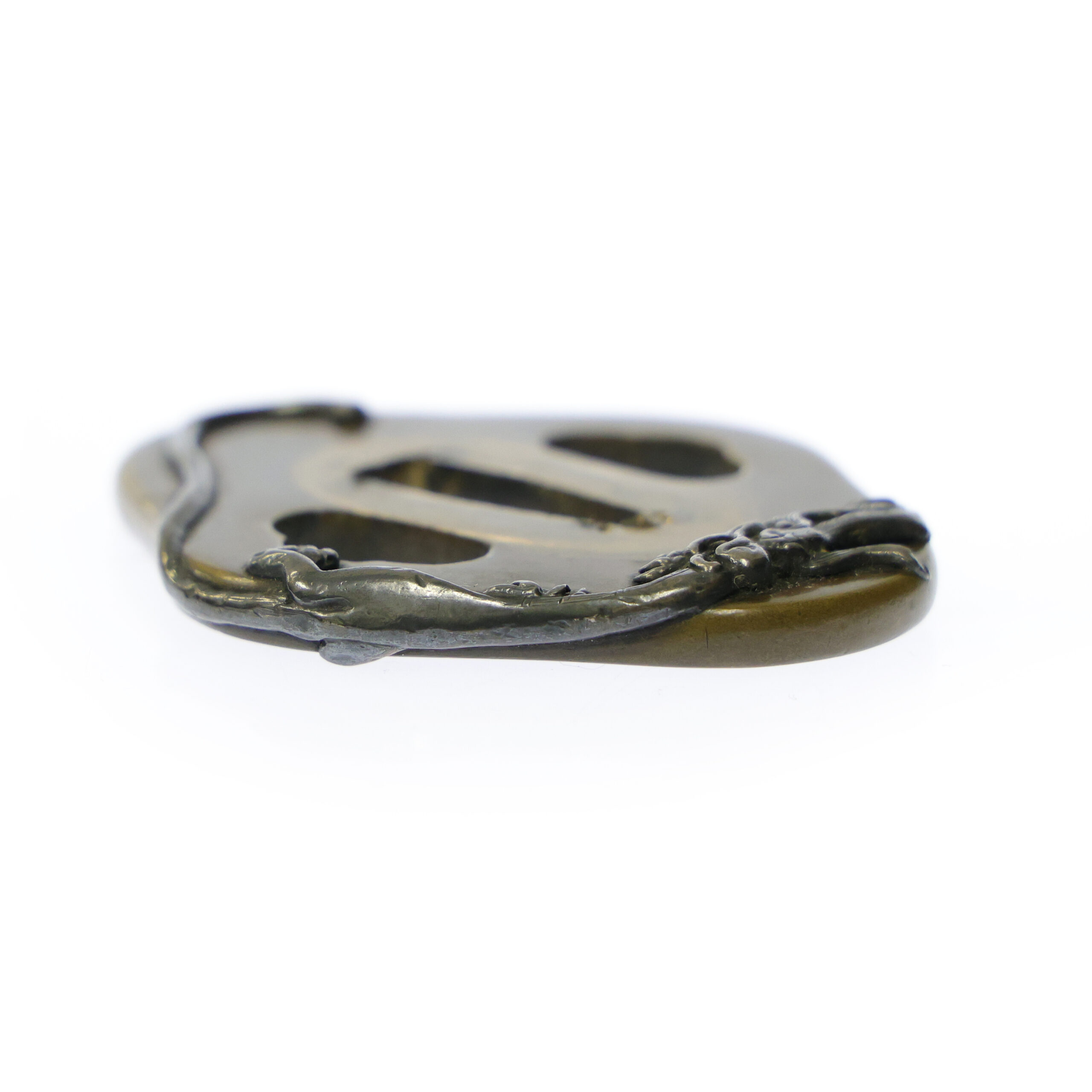
The theme of this Tsuba is a dragon (龍, Ryū).
The dragon was originally an imaginary creature from ancient Chinese traditions and myths. It is considered a symbolic beast of auspicious signs. Its body is described as a combination of nine animals: antlers of a deer, the head of a camel, eyes of a demon, the neck of a snake, the belly of a Mizuchi (a Japanese mythical creature resembling a horned, four-legged serpent), scales of a fish, claws of a falcon, palms of a tiger, and ears of a cow. Because of this extraordinary form, the dragon was believed to reign at the top of all creatures.
In ancient China, dragon motifs were used exclusively for the emperor’s clothing, with strict rules regarding the design and even the number of claws. In Japan, however, such rigid regulations did not exist, and the dragon motif was widely used while still retaining its meaning as an all-purpose auspicious design.
In addition, in Japan the dragon is also revered as a water deity, known as Ryūjin Shinkō (竜神信仰). Since rice cultivation has always depended on water, the dragon became a familiar and powerful symbol deeply connected to Japanese life and culture.
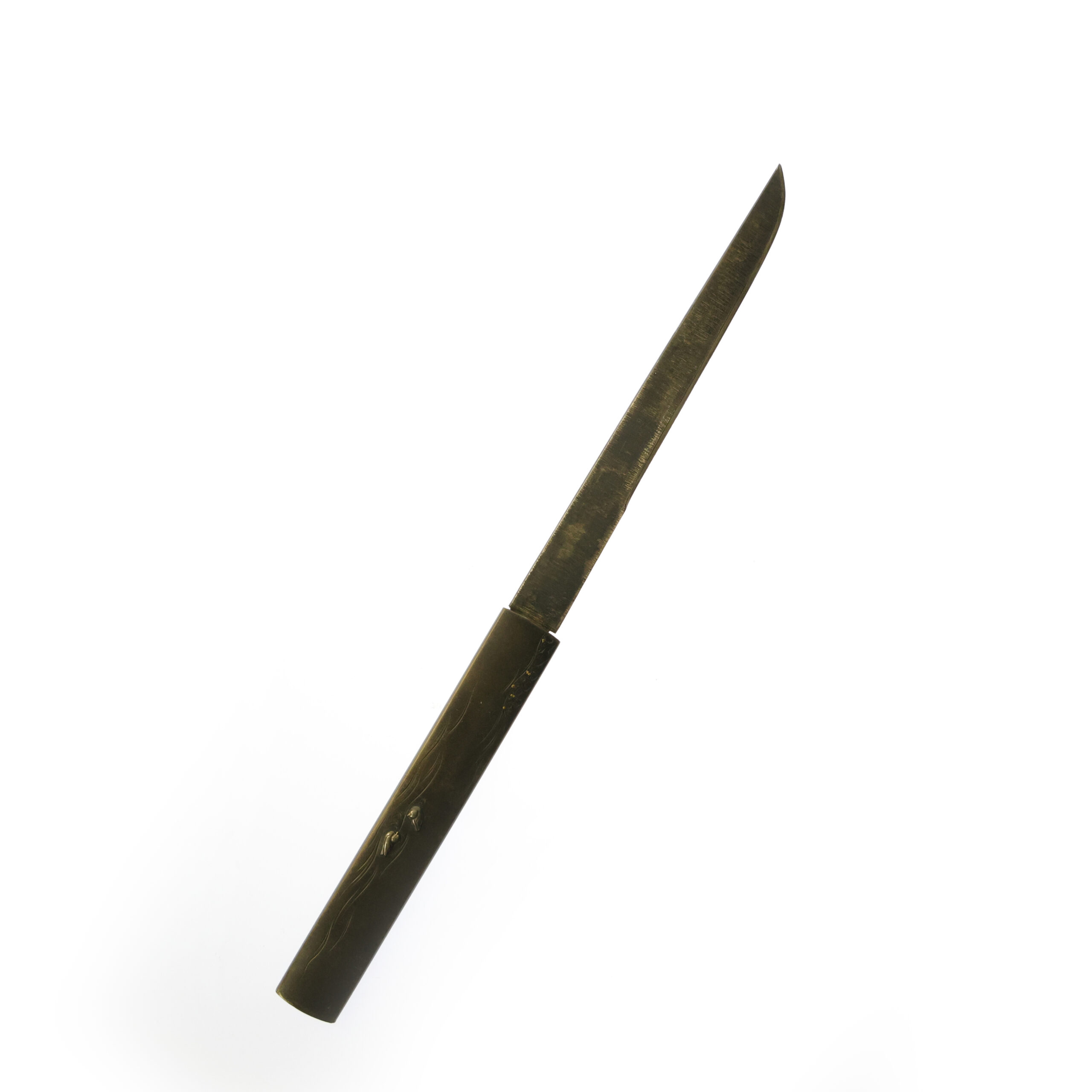
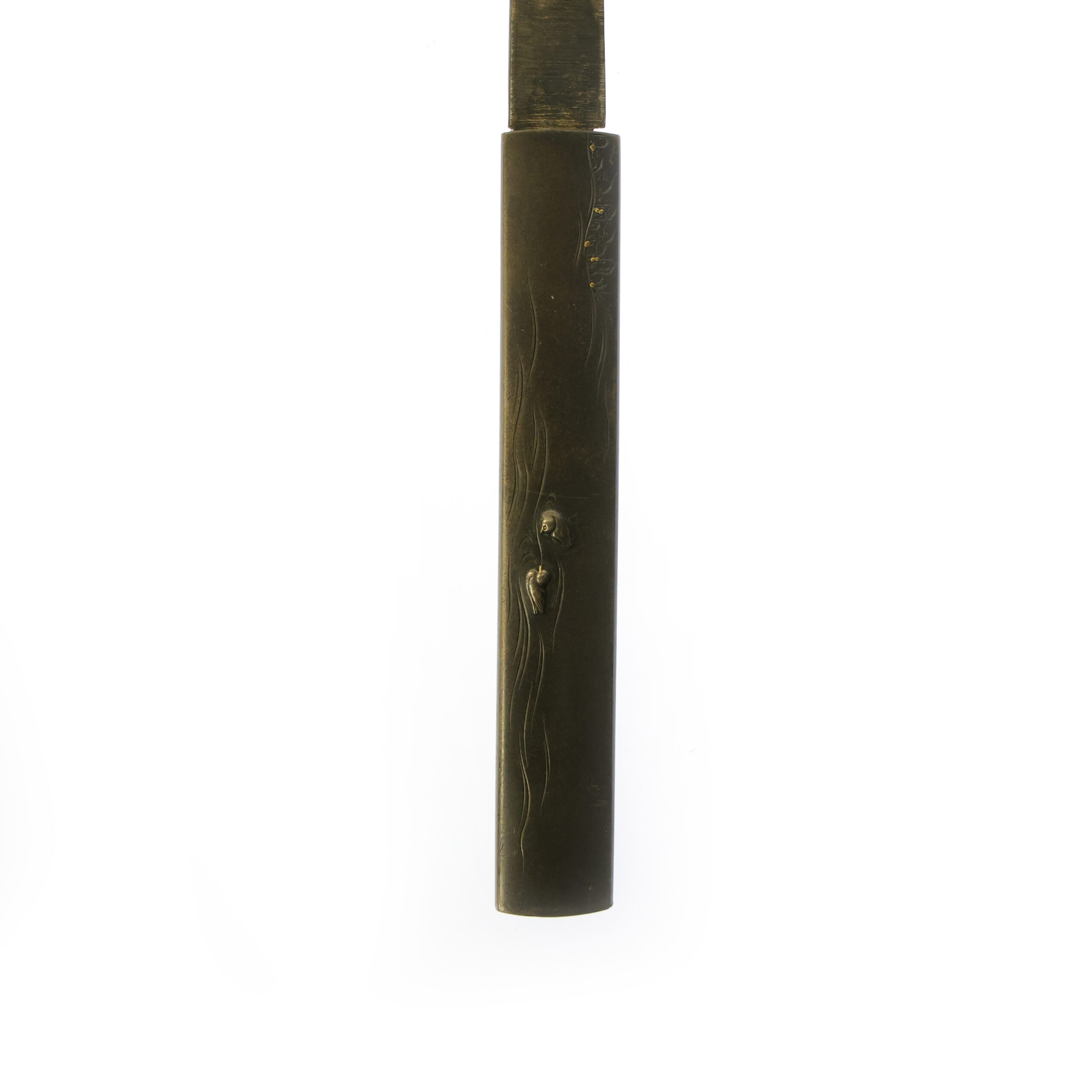
Kozuka
The theme of the kozuka is a waterfowl, most likely a duck (kamo, 鴨). Among the various water birds native to Japan, ducks are among the most familiar and commonly encountered. They can be seen in rivers, lakes, rice fields, and even urban parks throughout the country, particularly during the autumn and winter months when migratory species arrive.
In Japanese culture, ducks are closely associated with seasonal beauty, tranquility, and the gentle transitions of nature. They are also regarded as symbols of fidelity, as many species form strong and lasting pair bonds. For this reason, duck motifs have often been used in art to represent harmony, peaceful companionship, and enduring relationships.
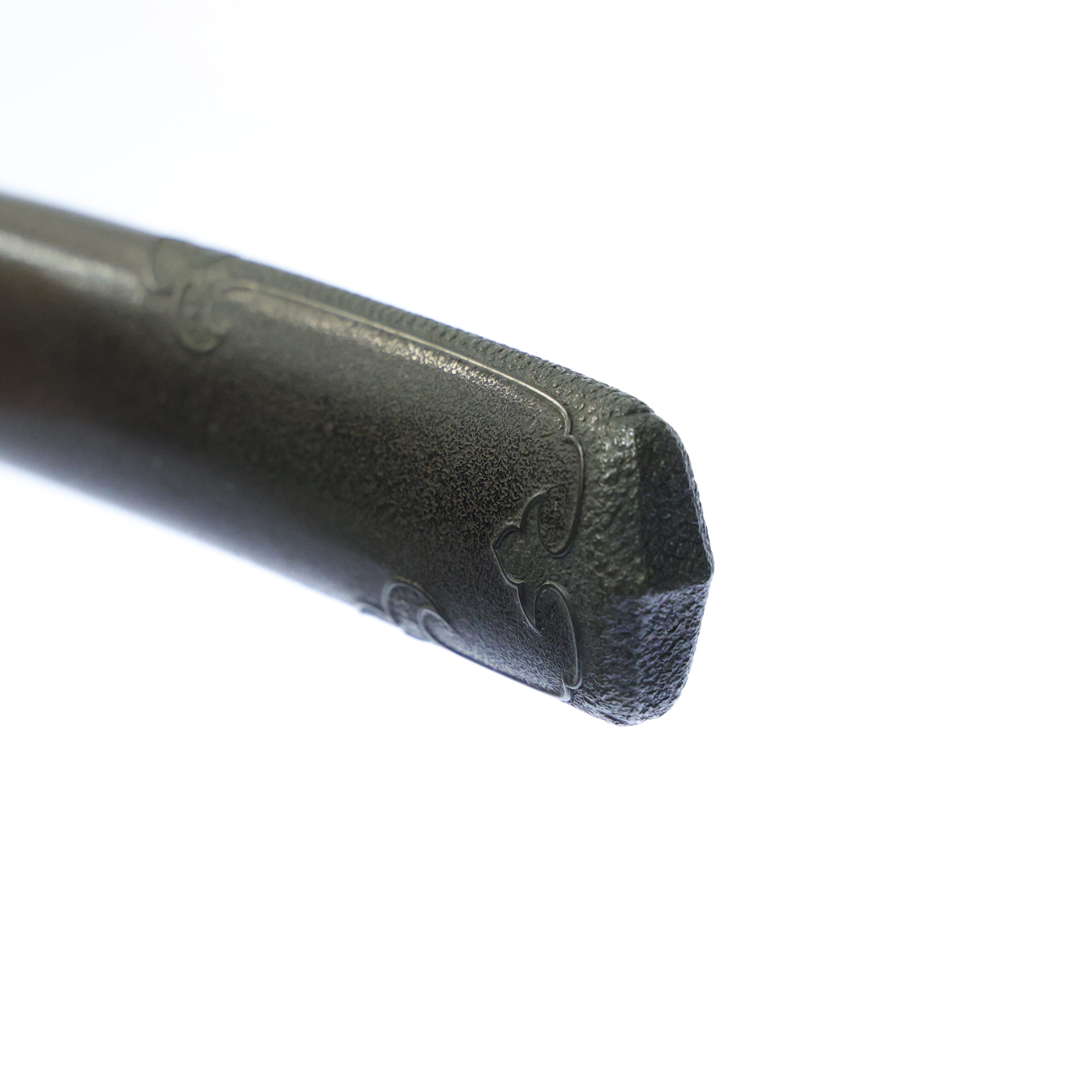
Saya
The surface of this Saya is decorated with the Ishime-Ji (石目地) or Ishime-Nuri (石目塗). Its base was hit by Tagane (鏨, chisel for metalworking), and it makes a rough surface that seems stone.
Authentication Paper
They authenticated the blade on August 7th in the 8th year of Heisei (1996). They appraised it as Tokubetsu Hozon Touken, the blade especially worth preserving for Japanese society.

 NihontoWatch