NihontoWatch MonNihontoWatch
Market
Encyclopedia
Kantei
NihontoWatch MonNihontoWatch
Market
Encyclopedia
Kantei

Description

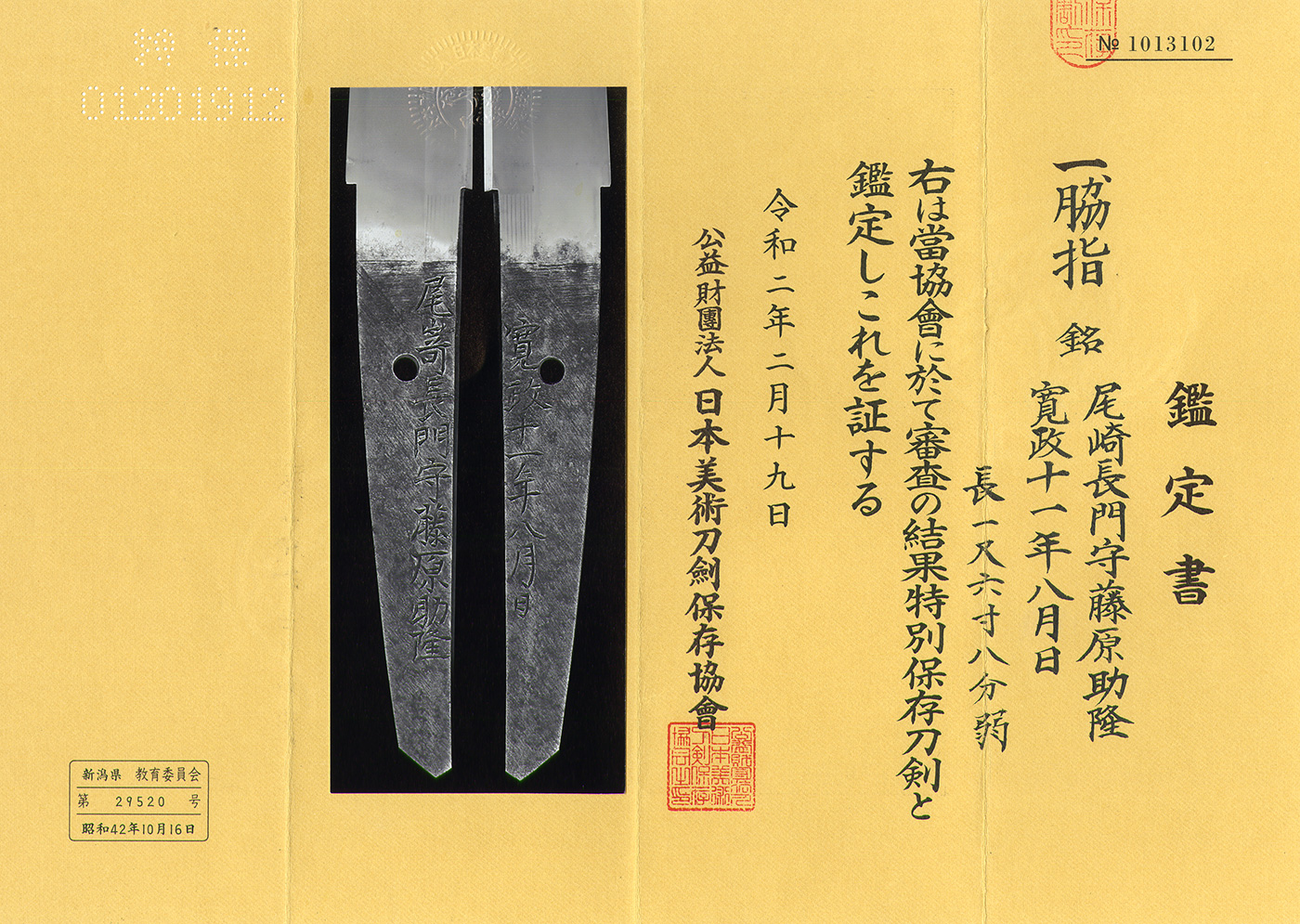
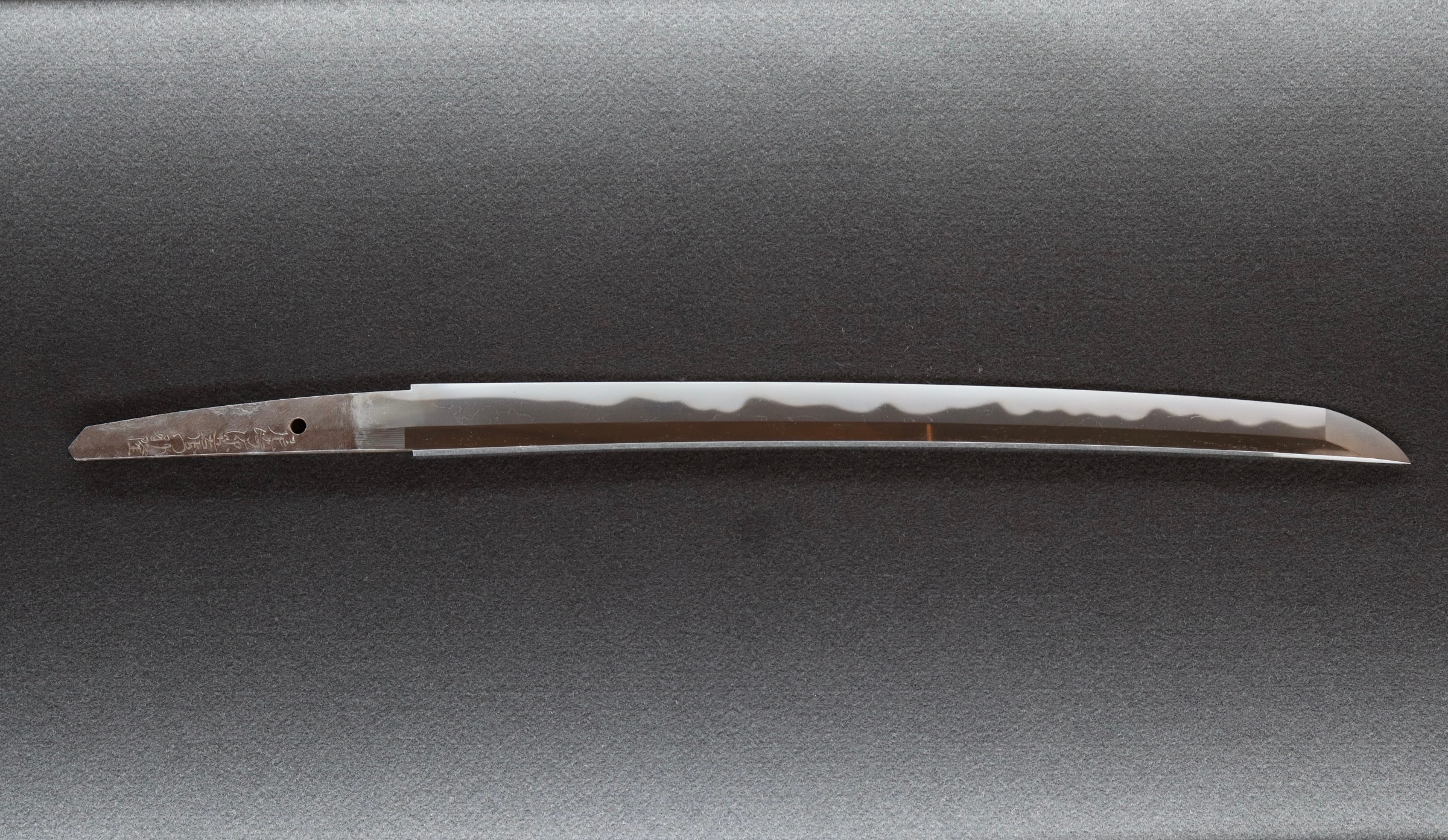
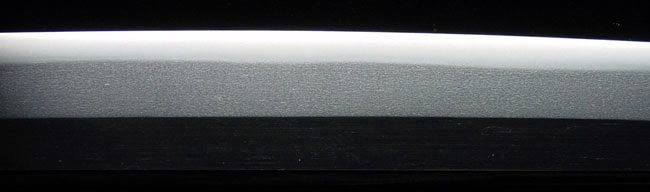
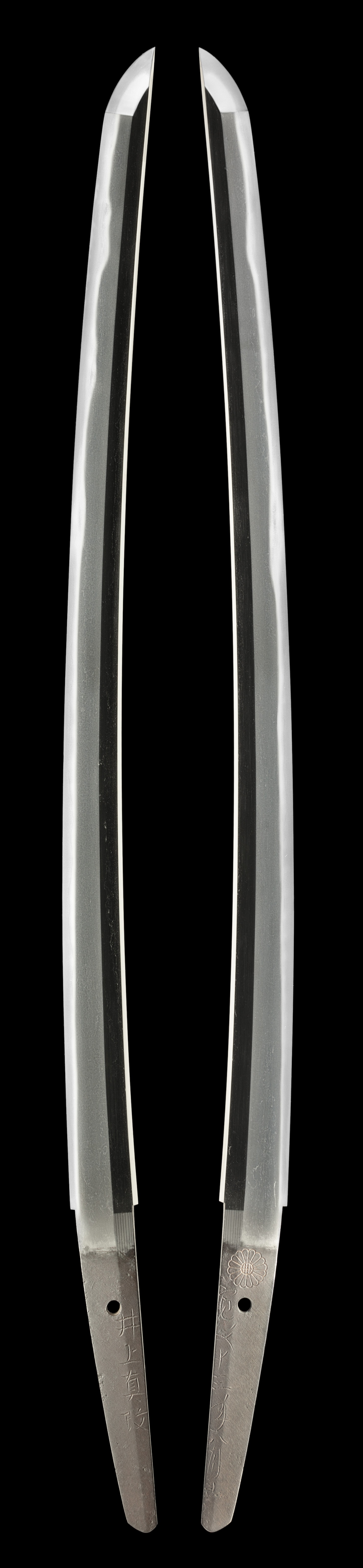
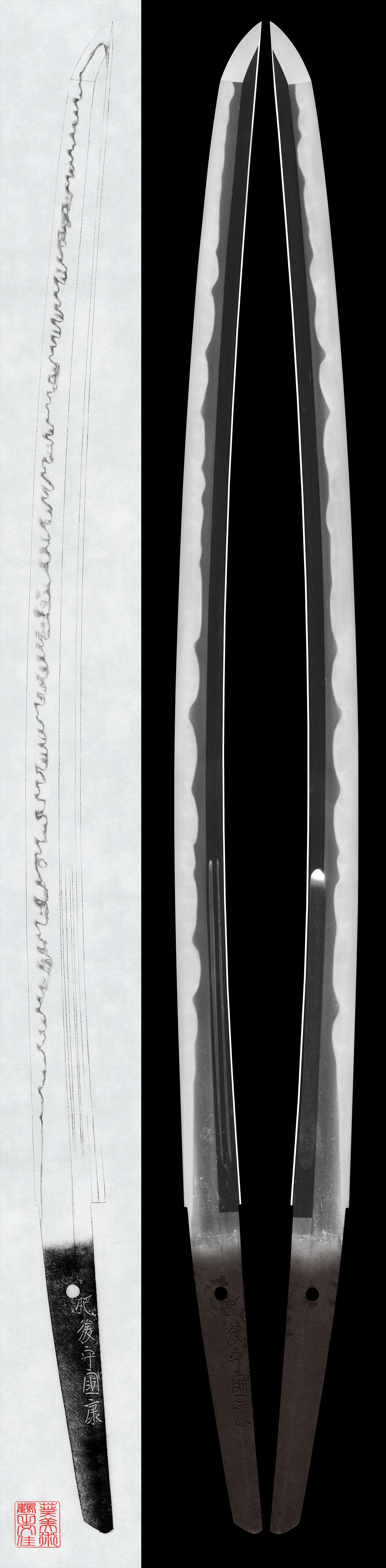
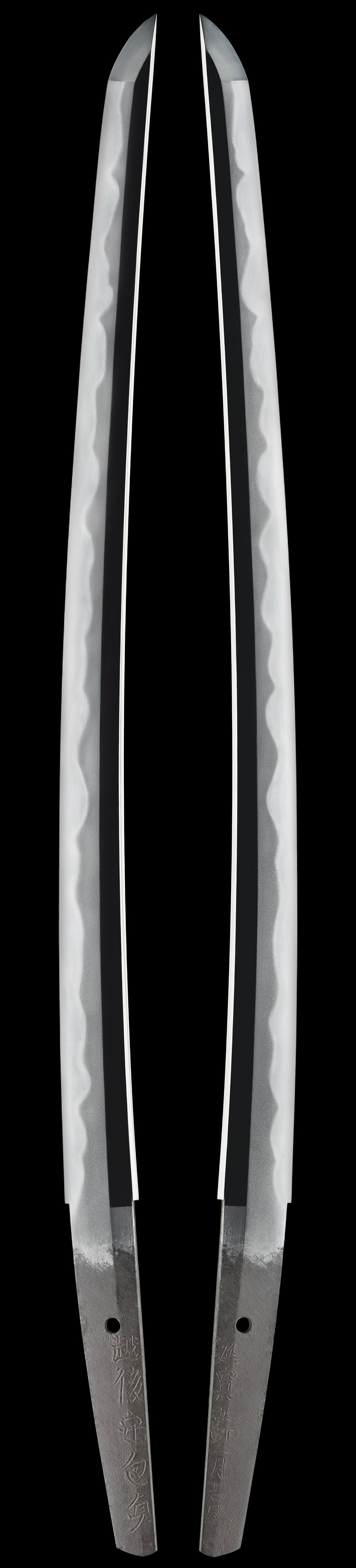
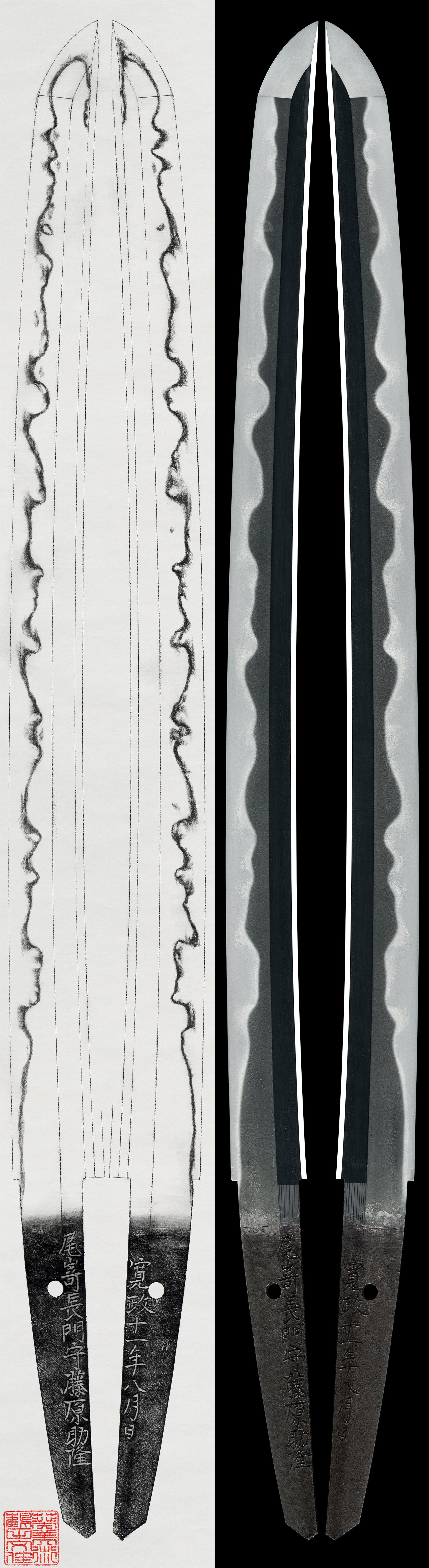
This is a robust Shinshinto period wakizashi by Ozaki Nagato no Kami Fujiwara Suketaka, dated August 1799. It features a wide mihaba, thick kasane, and a beautiful ko-itame hada. The hamon is a nie-deki tōran-ba with prominent rounded 'tama' elements, characteristic of Suketaka's impressive interpretation of the popular style.

Auction History

Auction status: live on sword-auction.com.

NihontoWatch MonNihontoWatch
MarketEncyclopediaKantei
Swords›Osaka Shinto›Suketaka›Wakizashi: Ozaki Nagato no Kami Fujiwara Suketaka, dated August 1799 (NBTHK Tokubetsu Hozon Token)
wakizashiTokubetsu Hozon
Shinto Suketaka

Wakizashi: Ozaki Nagato no Kami Fujiwara Suketaka, dated August 1799 (NBTHK Tokubetsu Hozon Token)

mei · Kansei (1789-1801) · nagasa 50.8cm · sori 0.7cm

Starting atLive auction
¥950,000
0 bids·Ends in 2d 0h·Updated 6m ago
View & bid →
Shinto Suketaka (助隆) · Kansei (1789-1801)3 works for sale →
Wakizashi
Could you name the smith from the blade alone? Today’s kantei →
Shinto Suketaka — 1 of 4
Shinto Suketaka — 2 of 4
Shinto Suketaka — 3 of 4
Shinto Suketaka — 4 of 4
1 / 4
1 / 4
Shinto Suketaka — 1 of 4Shinto Suketaka — 2 of 4Shinto Suketaka — 3 of 4Shinto Suketaka — 4 of 4
Shinto Suketaka (助隆) · Kansei (1789-1801)3 works for sale →
Wakizashi
Could you name the smith from the blade alone? Today’s kantei →
Measurements & details
Smith
Shinto Suketaka
Type
Wakizashi
School
Osaka Shinto
Period
Around 1789–1803(Kansei)
Province
Settsu
Signature
Signed(100% of this smith's designated works are signed)
Measurements
Nagasa 50.8cmSori 0.7cmMotohaba 3.37cmSakihaba 2.31cmKasane 0.7cmWeight 595g
Description

This is a robust Shinshinto period wakizashi by Ozaki Nagato no Kami Fujiwara Suketaka, dated August 1799. It features a wide mihaba, thick kasane, and a beautiful ko-itame hada. The hamon is a nie-deki tōran-ba with prominent rounded 'tama' elements, characteristic of Suketaka's impressive interpretation of the popular style.

About the maker

Suketaka

助隆

Shinto · Settsu · around 1789-1803

Fujishiro Jo saku · Tōken Taikan top 31%

3 pieces on the market now

›

Suketaka's home province was Harima (Banshu). He studied under Kuroda Takazane, and in Kansei 10 (1798) received the honorary title Nagato no Kami. He died in Bunka 2 (1805) at the age of fifty-three. Throughout his career, Suketaka held Tsuda Echizen no Kami Sukehiro in deep private admiration, and this reverence defined his life's work. Among shinshinto period smiths who studied Sukehiro's toranba-style temper -- including Suishinshi Masahide and Tegarayama Masashige -- Suketaka is regarded as particularly skillful.

His blades consistently present a large-scaled taihai with somewhat wide mihaba, shallow sori, and an elongated chu-kissaki. The jihada is a ko-itame-hada so tightly forged it approaches muji, with ji-nie adhering and the jigane bright and clear. The hamon begins with a long yakidashi, then forms a toran-midare-like composition in which large gunome and gunome-choji intermix, creating conspicuous height variations and a billowing, wave-like effect. Thick ashi enter; the nioiguchi is deep; and nie adheres well, with ara-nie appearing in places. The nioiguchi is bright and clear throughout. The boshi is characteristically sugu with ko-maru, showing hakikake toward the tip. The long nakago and application of kesho-yasuri likewise emulate Sukehiro's manner.

The NBTHK notes that Suketaka's toran-midare is "truly so accomplished that it approaches the genuine article," though none among his contemporaries attains the degree of brightness seen in Sukehiro himself. His jigane is praised as carefully refined, evidencing high technical skill, and his works are consistently termed representative pieces. Matched daisho made as true pairs are noted as uncommon, adding to the documentary significance of such examples.

Historical importance

Where Suketaka stands among comparable artisans: across all of nihontō, and within tradition, era, and period. The tiers (Foremost · Leading · Major · Notable) weigh official designations from the NBTHK and Japan's Agency for Cultural Affairs, together with historical honors of lasting repute such as the Sansaku and Meibutsu-chō.

随一
Foremost
屈指
Leading
有数
Major
著名
Notable

Select a lens to see how it's measured.

Designation record
2 designated works
Jūyō
2
3 works by Suketaka on the market→
Suketaka — full profileShinto school

Dated Works

Years he was demonstrably active, proven by signed-and-dated blades

Active period
1794–1803Editorial estimate: 1789–1803
2 of 2 designated works carry a date
1790
1800
1810

Study this maker →

About the school

Osaka Shinto

大坂新刀

Shinto · Settsu

79 pieces on the market now

›

Osaka in the early-to-mid Edo period was a merchant capital, a city of commerce and capital rather than a castle town tied to a single daimyo house, and the swordsmiths who gathered there worked for a wealthy townsman clientele as much as for warriors. The grouping known as Osaka Shinto (大坂新刀) took shape in Settsu from two feeder currents. One was the Horikawa line of Kyoto: Izumi no Kami Kunisada, the elder Kunisada whom later sources call the Oya-Kunisada, came down to Osaka after the death of his master Horikawa Kunihiro in Keicho 19 (1614), and with him came Kawachi no Kami Kunisuke, a late disciple of the same Kunihiro. The other was the Ishido tradition of Settsu and Ise, which had revived the koto Bizen choji in new-sword steel; the Kunisuke house traced its descent to that group, and its second generation, known as Naka-Kawachi, turned the line decisively toward the Ishido clove. From these beginnings the school grew through the Kanbun, Enpo, and Genroku years into the most coherent regional manner of the shinto age. What binds these smiths is a shared steel before any shared temper. The forging is the bright, packed Osaka ko-itame, sometimes called the Osaka-gitae, a jihada so tightly worked that the grain scarcely shows, the ji-nie adhering minutely and fine chikei threading the surface, the jigane clear and lustrous. A second constant is the start of the temper: nearly every blade opens with a straight suguha yakidashi at the base before the hamon declares its individual pattern, and a deep, bright nioiguchi runs the length above it. Within that common grammar the great hands diverge.

Tsuda Echizen no Kami Sukehiro founded the billowing toranba, the surging-wave toran-midare that became the school's most imitated signature. Inoue Shinkai, called the Osaka Masamune, tempered no wave at all but a deeply nie-laden suguha shading into shallow notare, with kinsuji and sunagashi entering vigorously, and the published sources pair the two by contrast as the school's two great champions, Sukehiro outstanding for nioi and Shinkai for fine ko-nie. Ikkanshi Tadatsuna carried the Sukehiro wave into his own sudareba, the surging temper that reads like a hanging bamboo blind, and matched it with the relief carving treasured as Ikkanshi-bori. The Echigo no Kami Kanesada line followed Sukehiro's toran so faithfully that the second generation is read as approaching the model, marking his own work with a leaning katayama-midare and three linked gunome below the yokote; Naka-Kawachi and his brothers Higo no Kami Kuniyasu and Ise no Kami Kuniteru held the rival clove wing, the flamboyant choji crowned by the fist-shaped kobushigata-choji over a beautifully ordered ji. A collector seeks Osaka Shinto for the union of bright steel and brilliant edge, an art-sword (bijutsu-token) appeal in which the jigane itself is half the pleasure. The grouping reads at kantei from its own grammar: look first for the Osaka-gitae, the lustrous near-muji ko-itame, then for the straight yakidashi opening the temper, then for the deep clear nioiguchi; the individual hand follows from the pattern above, Sukehiro's and Kanesada's and Tadatsuna's toran, Shinkai's nie-deep suguha, the Kunisuke wing's fist-shaped clove. The standing of the best members is high in the NBTHK register: Shinkai is rated Sai-jo saku, Tadatsuna and Kunisuke Jo-jo saku, and the line of the second Kanesada is held to rank immediately after Sukehiro and Shinkai, with later admirers such as the shinshinto smith Nagato no Kami Suketaka still copying the toranba a century on. Many of these blades are signed and dated, so their inscriptions double as documentary anchors for the whole tradition, and provenance, where it survives, runs through known houses and modern collectors, the Yamauchi of Tosa, the Itakura, the Imperial collection, and the Meiji sword-lover General Tani Tateki. A signed Shinkai of the Enpo prime or a dated Tadatsuna carrying his own carving is a landmark when it appears, while the productive clove masters of the Kunisuke wing offer a more attainable entry into the brightest steel and edge the early Osaka school produced. Learn more →

17 recorded smiths255 designated works
Leading smiths
SmithEraDesignated
Shinkai真改1649-168279
Tadatsuna忠綱1673-171753
Kanesada包貞1673-168278
Kunisuke國助1658-166310
Kanesada包貞1648-165210
Explore the Osaka Shinto school →

Historical context

Ōsaka: swords for the merchant capital

›

Ōsaka was the merchant capital, and its swords followed the money: luxury wakizashi for townsmen permitted no more than one, and the brilliant showpieces of Sukehiro’s tōranba and of Shinkai, called the Ōsaka Masamune. Swords made, frankly, to be looked at.

Ōsaka: swords for the merchant capital →

NBTHK Certificate
Tokubetsu Hozon Tōken特別保存刀剣
Sword Especially Worthy of Preservation
›

A Hozon-certified blade judged to show notably superior workmanship and a better state of preservation. The bar is higher: re-tempered blades and most unsigned Muromachi/Edo works are excluded.

About the NBTHK›

The NBTHK (Nihon Bijutsu Tōken Hozon Kyōkai, the Society for the Preservation of Japanese Art Swords) is a public-interest incorporated foundation founded in 1948 and supervised by Japan’s Agency for Cultural Affairs (Bunkachō); it is based at the Japanese Sword Museum in Tokyo. Its expert panels physically examine each submitted work (shinsa) and issue a certificate (kanteishō) ranking it by artistic and historical merit. NBTHK papers are the most widely recognized standard of authentication for Japanese swords and fittings.

NBTHK official site→
Seller
A
Aoi Art
🇯🇵Ships from Japan
›
✓Verified dealeraoijapan.com
Settles in JPY
✓Ships worldwide✓English supportWire transferPayPalCredit card
Return policy

If you wish to return an item, please notify us within 3 days of receipt. After this period we cannot accept cancellations. Please ship the return to us within 5 business days. Cancellation is conditional on the item being kept in the same condition as at the time of sale, so please handle it with care.

View all of Aoi Art’s listings→

More works by Shinto Suketaka

View all →
Toushin
Tokuho
Wakizashi - Tokuho - by Shinto Suketaka - Ozaki Gengouemon SuketakaWakizashi - Tokuho - by Shinto Suketaka - Ozaki Gengouemon Suketaka

Wakizashi

ByShinto Suketaka
¥990,000
Katana Yamadaiya
Tokubetsu Kichō
Wakizashi - Tokubetsu Kichō - by Shinto Suketaka - Tokubetsu Kicho Token: Ozaki Suketaka - Forged at the request of Mr. Okamura, Tenmei 6, February 4thWakizashi - Tokubetsu Kichō - by Shinto Suketaka - Tokubetsu Kicho Token: Ozaki Suketaka - Forged at the request of Mr. Okamura, Tenmei 6, February 4th

Wakizashi

ByShinto Suketaka
¥350,000

Previously sold by Shinto Suketaka

View all →
Tozando
Wakizashi - by Shinto Suketaka - Suketaka - Shirasaya, Koshirae, Ubu Nakago, ShintoWakizashi - by Shinto Suketaka - Suketaka - Shirasaya, Koshirae, Ubu Nakago, Shinto
Sold

Wakizashi

ByShinto Suketaka
SOLD
World Seiyudo
Tokuho
Wakizashi - Tokuho - by Shinto Suketaka - Ozaki Gengouemon SuketakaWakizashi - Tokuho - by Shinto Suketaka - Ozaki Gengouemon Suketaka
Sold

Wakizashi

ByShinto Suketaka
SOLD
Kanda Toukodo
Hozon
Wakizashi - Hozon - by Shinto Suketaka - Ozaki Gengoemon Suketaka, August, Kansei 6th YearWakizashi - Hozon - by Shinto Suketaka - Ozaki Gengoemon Suketaka, August, Kansei 6th Year
Sold

Wakizashi

ByShinto Suketaka
SOLD
World Seiyudo
Tokuho
Wakizashi - Tokuho - by Shinto Suketaka - Ozaki Gengoemon SuketakaWakizashi - Tokuho - by Shinto Suketaka - Ozaki Gengoemon Suketaka
Sold

Wakizashi

ByShinto Suketaka
SOLD
Choshuya
Wakizashi - by Shinto Suketaka - Japanese Sword for Sale | Ginza Choshuya | Signed Ozaki Goroemon Suketaka, Kansei 10th Year, 2nd Month, 240Wakizashi - by Shinto Suketaka - Japanese Sword for Sale | Ginza Choshuya | Signed Ozaki Goroemon Suketaka, Kansei 10th Year, 2nd Month, 240
Sold

Wakizashi

ByShinto Suketaka
SOLD
Choshuya
Wakizashi - by Shinto Suketaka - Ozaki Gengoemon Suketaka, Kansei 10th Year, 2nd MonthWakizashi - by Shinto Suketaka - Ozaki Gengoemon Suketaka, Kansei 10th Year, 2nd Month
Sold

Wakizashi

ByShinto Suketaka
SOLD
World Seiyudo
Tokuho
Wakizashi - Tokuho - by Shinto Suketaka - Ozaki Gengouemon Suketaka - Tokubetsu Hozon TokenWakizashi - Tokuho - by Shinto Suketaka - Ozaki Gengouemon Suketaka - Tokubetsu Hozon Token
Sold

Wakizashi

ByShinto Suketaka
SOLD
World Seiyudo
Tokuho
Wakizashi - Tokuho - by Shinto Suketaka - Ozaki Suketaka - Tokubetsu Hozon TokenWakizashi - Tokuho - by Shinto Suketaka - Ozaki Suketaka - Tokubetsu Hozon Token
Sold

Wakizashi

ByShinto Suketaka
SOLD

More from the Osaka Shinto school

View all →
Seikeido
Jūyō
Katana - Jūyō - by Osaka Shinkai - Inoue ShinkaiKatana - Jūyō - by Osaka Shinkai - Inoue Shinkai

Katana

ByOsaka Shinkai
Ask
Iida Koendo
Tokuho
Katana - Tokuho - by Osaka Shinkai - Inoue Shinkai (Kiku Seal) - Enpo 6th Year, AugustKatana - Tokuho - by Osaka Shinkai - Inoue Shinkai (Kiku Seal) - Enpo 6th Year, August

Katana

ByOsaka Shinkai
¥13,200,000
Touken Komachi
Tokuho
Katana - Tokuho - by Osaka Shinkai - 1st Generation Izumi-no-kami KunisadaKatana - Tokuho - by Osaka Shinkai - 1st Generation Izumi-no-kami Kunisada

Katana

ByOsaka Shinkai
¥1,200,000
Yamasiroya
Tokuho
Katana - Tokuho - by Osaka Shinkai - Inoue ShinkaiKatana - Tokuho - by Osaka Shinkai - Inoue Shinkai

Katana

ByOsaka Shinkai
Ask
Aoi Art
Tokuho
Katana - Tokuho - by Shinto Kuniyasu - Higo-no-kami KuniyasuKatana - Tokuho - by Shinto Kuniyasu - Higo-no-kami Kuniyasu

Katana

ByShinto Kuniyasu
¥700,000
Eirakudo
Tokuho
Wakizashi - Tokuho - by Shinto Kanesada - Echizen no Kami Yasusada - Tokubetsu Hozon TokenWakizashi - Tokuho - by Shinto Kanesada - Echizen no Kami Yasusada - Tokubetsu Hozon Token

Wakizashi

ByShinto Kanesada
¥1,200,000
Aoi Art
Tokuho
Katana - Tokuho - by Shinto Kuniyasu - Higo no Kami Kuniyasu (First Generation)Katana - Tokuho - by Shinto Kuniyasu - Higo no Kami Kuniyasu (First Generation)

Katana

ByShinto Kuniyasu
Starting Bid¥950,000
Token-Net
Tokuho
Katana - Tokuho - by Shinto Kanesada - Echigo no Kami Kanemasa (1st Gen.) (Settsu)Katana - Tokuho - by Shinto Kanesada - Echigo no Kami Kanemasa (1st Gen.) (Settsu)

Katana

ByShinto Kanesada
¥2,650,000

Swords

  • Katana
  • Wakizashi
  • Tantō
  • Tachi
  • Naginata
  • Yari
  • Japanese Swords
  • Samurai Swords

Fittings

  • Tsuba
  • Fuchi-Kashira
  • Kozuka
  • Menuki
  • Sword Guards (Tsuba)

Armor

  • Kabuto
  • Samurai Armor
  • All Samurai Armor

By Certification

  • Tokujū
  • Jūyō
  • Tokuho
  • Hozon

Resources

  • Dealer Directory
  • Artist Directory
  • The Daily Kantei
  • Glossary
  • Browse All
Nihontowatch© 2026
TermsPrivacyCookiesAbout

Description

This is a robust Shinshinto period wakizashi by Ozaki Nagato no Kami Fujiwara Suketaka, dated August 1799. It features a wide mihaba, thick kasane, and a beautiful ko-itame hada. The hamon is a nie-deki tōran-ba with prominent rounded 'tama' elements, characteristic of Suketaka's impressive interpretation of the popular style.

Auction History

Auction status: live on sword-auction.com.

NihontoWatch MonNihontoWatch
MarketEncyclopediaKantei
Swords›Osaka Shinto›Suketaka›Wakizashi: Ozaki Nagato no Kami Fujiwara Suketaka, dated August 1799 (NBTHK Tokubetsu Hozon Token)
wakizashiTokubetsu Hozon
Shinto Suketaka

Wakizashi: Ozaki Nagato no Kami Fujiwara Suketaka, dated August 1799 (NBTHK Tokubetsu Hozon Token)

mei · Kansei (1789-1801) · nagasa 50.8cm · sori 0.7cm

Starting atLive auction
¥950,000
0 bids·Ends in 2d 0h·Updated 6m ago
View & bid →
Shinto Suketaka (助隆) · Kansei (1789-1801)3 works for sale →
Wakizashi
Could you name the smith from the blade alone? Today’s kantei →
Shinto Suketaka — 1 of 4
Shinto Suketaka — 2 of 4
Shinto Suketaka — 3 of 4
Shinto Suketaka — 4 of 4
1 / 4
1 / 4
Shinto Suketaka — 1 of 4Shinto Suketaka — 2 of 4Shinto Suketaka — 3 of 4Shinto Suketaka — 4 of 4
Shinto Suketaka (助隆) · Kansei (1789-1801)3 works for sale →
Wakizashi
Could you name the smith from the blade alone? Today’s kantei →
Measurements & details
Smith
Shinto Suketaka
Type
Wakizashi
School
Osaka Shinto
Period
Around 1789–1803(Kansei)
Province
Settsu
Signature
Signed(100% of this smith's designated works are signed)
Measurements
Nagasa 50.8cmSori 0.7cmMotohaba 3.37cmSakihaba 2.31cmKasane 0.7cmWeight 595g
Description

This is a robust Shinshinto period wakizashi by Ozaki Nagato no Kami Fujiwara Suketaka, dated August 1799. It features a wide mihaba, thick kasane, and a beautiful ko-itame hada. The hamon is a nie-deki tōran-ba with prominent rounded 'tama' elements, characteristic of Suketaka's impressive interpretation of the popular style.

About the maker

Suketaka

助隆

Shinto · Settsu · around 1789-1803

Fujishiro Jo saku · Tōken Taikan top 31%

3 pieces on the market now

›

Suketaka's home province was Harima (Banshu). He studied under Kuroda Takazane, and in Kansei 10 (1798) received the honorary title Nagato no Kami. He died in Bunka 2 (1805) at the age of fifty-three. Throughout his career, Suketaka held Tsuda Echizen no Kami Sukehiro in deep private admiration, and this reverence defined his life's work. Among shinshinto period smiths who studied Sukehiro's toranba-style temper -- including Suishinshi Masahide and Tegarayama Masashige -- Suketaka is regarded as particularly skillful.

His blades consistently present a large-scaled taihai with somewhat wide mihaba, shallow sori, and an elongated chu-kissaki. The jihada is a ko-itame-hada so tightly forged it approaches muji, with ji-nie adhering and the jigane bright and clear. The hamon begins with a long yakidashi, then forms a toran-midare-like composition in which large gunome and gunome-choji intermix, creating conspicuous height variations and a billowing, wave-like effect. Thick ashi enter; the nioiguchi is deep; and nie adheres well, with ara-nie appearing in places. The nioiguchi is bright and clear throughout. The boshi is characteristically sugu with ko-maru, showing hakikake toward the tip. The long nakago and application of kesho-yasuri likewise emulate Sukehiro's manner.

The NBTHK notes that Suketaka's toran-midare is "truly so accomplished that it approaches the genuine article," though none among his contemporaries attains the degree of brightness seen in Sukehiro himself. His jigane is praised as carefully refined, evidencing high technical skill, and his works are consistently termed representative pieces. Matched daisho made as true pairs are noted as uncommon, adding to the documentary significance of such examples.

Historical importance

Where Suketaka stands among comparable artisans: across all of nihontō, and within tradition, era, and period. The tiers (Foremost · Leading · Major · Notable) weigh official designations from the NBTHK and Japan's Agency for Cultural Affairs, together with historical honors of lasting repute such as the Sansaku and Meibutsu-chō.

随一
Foremost
屈指
Leading
有数
Major
著名
Notable

Select a lens to see how it's measured.

Designation record
2 designated works
Jūyō
2
3 works by Suketaka on the market→
Suketaka — full profileShinto school

Dated Works

Years he was demonstrably active, proven by signed-and-dated blades

Active period
1794–1803Editorial estimate: 1789–1803
2 of 2 designated works carry a date
1790
1800
1810

Study this maker →

About the school

Osaka Shinto

大坂新刀

Shinto · Settsu

79 pieces on the market now

›

Osaka in the early-to-mid Edo period was a merchant capital, a city of commerce and capital rather than a castle town tied to a single daimyo house, and the swordsmiths who gathered there worked for a wealthy townsman clientele as much as for warriors. The grouping known as Osaka Shinto (大坂新刀) took shape in Settsu from two feeder currents. One was the Horikawa line of Kyoto: Izumi no Kami Kunisada, the elder Kunisada whom later sources call the Oya-Kunisada, came down to Osaka after the death of his master Horikawa Kunihiro in Keicho 19 (1614), and with him came Kawachi no Kami Kunisuke, a late disciple of the same Kunihiro. The other was the Ishido tradition of Settsu and Ise, which had revived the koto Bizen choji in new-sword steel; the Kunisuke house traced its descent to that group, and its second generation, known as Naka-Kawachi, turned the line decisively toward the Ishido clove. From these beginnings the school grew through the Kanbun, Enpo, and Genroku years into the most coherent regional manner of the shinto age. What binds these smiths is a shared steel before any shared temper. The forging is the bright, packed Osaka ko-itame, sometimes called the Osaka-gitae, a jihada so tightly worked that the grain scarcely shows, the ji-nie adhering minutely and fine chikei threading the surface, the jigane clear and lustrous. A second constant is the start of the temper: nearly every blade opens with a straight suguha yakidashi at the base before the hamon declares its individual pattern, and a deep, bright nioiguchi runs the length above it. Within that common grammar the great hands diverge.

Tsuda Echizen no Kami Sukehiro founded the billowing toranba, the surging-wave toran-midare that became the school's most imitated signature. Inoue Shinkai, called the Osaka Masamune, tempered no wave at all but a deeply nie-laden suguha shading into shallow notare, with kinsuji and sunagashi entering vigorously, and the published sources pair the two by contrast as the school's two great champions, Sukehiro outstanding for nioi and Shinkai for fine ko-nie. Ikkanshi Tadatsuna carried the Sukehiro wave into his own sudareba, the surging temper that reads like a hanging bamboo blind, and matched it with the relief carving treasured as Ikkanshi-bori. The Echigo no Kami Kanesada line followed Sukehiro's toran so faithfully that the second generation is read as approaching the model, marking his own work with a leaning katayama-midare and three linked gunome below the yokote; Naka-Kawachi and his brothers Higo no Kami Kuniyasu and Ise no Kami Kuniteru held the rival clove wing, the flamboyant choji crowned by the fist-shaped kobushigata-choji over a beautifully ordered ji. A collector seeks Osaka Shinto for the union of bright steel and brilliant edge, an art-sword (bijutsu-token) appeal in which the jigane itself is half the pleasure. The grouping reads at kantei from its own grammar: look first for the Osaka-gitae, the lustrous near-muji ko-itame, then for the straight yakidashi opening the temper, then for the deep clear nioiguchi; the individual hand follows from the pattern above, Sukehiro's and Kanesada's and Tadatsuna's toran, Shinkai's nie-deep suguha, the Kunisuke wing's fist-shaped clove. The standing of the best members is high in the NBTHK register: Shinkai is rated Sai-jo saku, Tadatsuna and Kunisuke Jo-jo saku, and the line of the second Kanesada is held to rank immediately after Sukehiro and Shinkai, with later admirers such as the shinshinto smith Nagato no Kami Suketaka still copying the toranba a century on. Many of these blades are signed and dated, so their inscriptions double as documentary anchors for the whole tradition, and provenance, where it survives, runs through known houses and modern collectors, the Yamauchi of Tosa, the Itakura, the Imperial collection, and the Meiji sword-lover General Tani Tateki. A signed Shinkai of the Enpo prime or a dated Tadatsuna carrying his own carving is a landmark when it appears, while the productive clove masters of the Kunisuke wing offer a more attainable entry into the brightest steel and edge the early Osaka school produced. Learn more →

17 recorded smiths255 designated works
Leading smiths
SmithEraDesignated
Shinkai真改1649-168279
Tadatsuna忠綱1673-171753
Kanesada包貞1673-168278
Kunisuke國助1658-166310
Kanesada包貞1648-165210
Explore the Osaka Shinto school →

Historical context

Ōsaka: swords for the merchant capital

›

Ōsaka was the merchant capital, and its swords followed the money: luxury wakizashi for townsmen permitted no more than one, and the brilliant showpieces of Sukehiro’s tōranba and of Shinkai, called the Ōsaka Masamune. Swords made, frankly, to be looked at.

Ōsaka: swords for the merchant capital →

NBTHK Certificate
Tokubetsu Hozon Tōken特別保存刀剣
Sword Especially Worthy of Preservation
›

A Hozon-certified blade judged to show notably superior workmanship and a better state of preservation. The bar is higher: re-tempered blades and most unsigned Muromachi/Edo works are excluded.

About the NBTHK›

The NBTHK (Nihon Bijutsu Tōken Hozon Kyōkai, the Society for the Preservation of Japanese Art Swords) is a public-interest incorporated foundation founded in 1948 and supervised by Japan’s Agency for Cultural Affairs (Bunkachō); it is based at the Japanese Sword Museum in Tokyo. Its expert panels physically examine each submitted work (shinsa) and issue a certificate (kanteishō) ranking it by artistic and historical merit. NBTHK papers are the most widely recognized standard of authentication for Japanese swords and fittings.

NBTHK official site→
Seller
A
Aoi Art
🇯🇵Ships from Japan
›
✓Verified dealeraoijapan.com
Settles in JPY
✓Ships worldwide✓English supportWire transferPayPalCredit card
Return policy

If you wish to return an item, please notify us within 3 days of receipt. After this period we cannot accept cancellations. Please ship the return to us within 5 business days. Cancellation is conditional on the item being kept in the same condition as at the time of sale, so please handle it with care.

View all of Aoi Art’s listings→

More works by Shinto Suketaka

View all →
Toushin
Tokuho
Wakizashi - Tokuho - by Shinto Suketaka - Ozaki Gengouemon SuketakaWakizashi - Tokuho - by Shinto Suketaka - Ozaki Gengouemon Suketaka

Wakizashi

ByShinto Suketaka
¥990,000
Katana Yamadaiya
Tokubetsu Kichō
Wakizashi - Tokubetsu Kichō - by Shinto Suketaka - Tokubetsu Kicho Token: Ozaki Suketaka - Forged at the request of Mr. Okamura, Tenmei 6, February 4thWakizashi - Tokubetsu Kichō - by Shinto Suketaka - Tokubetsu Kicho Token: Ozaki Suketaka - Forged at the request of Mr. Okamura, Tenmei 6, February 4th

Wakizashi

ByShinto Suketaka
¥350,000

Previously sold by Shinto Suketaka

View all →
Tozando
Wakizashi - by Shinto Suketaka - Suketaka - Shirasaya, Koshirae, Ubu Nakago, ShintoWakizashi - by Shinto Suketaka - Suketaka - Shirasaya, Koshirae, Ubu Nakago, Shinto
Sold

Wakizashi

ByShinto Suketaka
SOLD
World Seiyudo
Tokuho
Wakizashi - Tokuho - by Shinto Suketaka - Ozaki Gengouemon SuketakaWakizashi - Tokuho - by Shinto Suketaka - Ozaki Gengouemon Suketaka
Sold

Wakizashi

ByShinto Suketaka
SOLD
Kanda Toukodo
Hozon
Wakizashi - Hozon - by Shinto Suketaka - Ozaki Gengoemon Suketaka, August, Kansei 6th YearWakizashi - Hozon - by Shinto Suketaka - Ozaki Gengoemon Suketaka, August, Kansei 6th Year
Sold

Wakizashi

ByShinto Suketaka
SOLD
World Seiyudo
Tokuho
Wakizashi - Tokuho - by Shinto Suketaka - Ozaki Gengoemon SuketakaWakizashi - Tokuho - by Shinto Suketaka - Ozaki Gengoemon Suketaka
Sold

Wakizashi

ByShinto Suketaka
SOLD
Choshuya
Wakizashi - by Shinto Suketaka - Japanese Sword for Sale | Ginza Choshuya | Signed Ozaki Goroemon Suketaka, Kansei 10th Year, 2nd Month, 240Wakizashi - by Shinto Suketaka - Japanese Sword for Sale | Ginza Choshuya | Signed Ozaki Goroemon Suketaka, Kansei 10th Year, 2nd Month, 240
Sold

Wakizashi

ByShinto Suketaka
SOLD
Choshuya
Wakizashi - by Shinto Suketaka - Ozaki Gengoemon Suketaka, Kansei 10th Year, 2nd MonthWakizashi - by Shinto Suketaka - Ozaki Gengoemon Suketaka, Kansei 10th Year, 2nd Month
Sold

Wakizashi

ByShinto Suketaka
SOLD
World Seiyudo
Tokuho
Wakizashi - Tokuho - by Shinto Suketaka - Ozaki Gengouemon Suketaka - Tokubetsu Hozon TokenWakizashi - Tokuho - by Shinto Suketaka - Ozaki Gengouemon Suketaka - Tokubetsu Hozon Token
Sold

Wakizashi

ByShinto Suketaka
SOLD
World Seiyudo
Tokuho
Wakizashi - Tokuho - by Shinto Suketaka - Ozaki Suketaka - Tokubetsu Hozon TokenWakizashi - Tokuho - by Shinto Suketaka - Ozaki Suketaka - Tokubetsu Hozon Token
Sold

Wakizashi

ByShinto Suketaka
SOLD

More from the Osaka Shinto school

View all →
Seikeido
Jūyō
Katana - Jūyō - by Osaka Shinkai - Inoue ShinkaiKatana - Jūyō - by Osaka Shinkai - Inoue Shinkai

Katana

ByOsaka Shinkai
Ask
Iida Koendo
Tokuho
Katana - Tokuho - by Osaka Shinkai - Inoue Shinkai (Kiku Seal) - Enpo 6th Year, AugustKatana - Tokuho - by Osaka Shinkai - Inoue Shinkai (Kiku Seal) - Enpo 6th Year, August

Katana

ByOsaka Shinkai
¥13,200,000
Touken Komachi
Tokuho
Katana - Tokuho - by Osaka Shinkai - 1st Generation Izumi-no-kami KunisadaKatana - Tokuho - by Osaka Shinkai - 1st Generation Izumi-no-kami Kunisada

Katana

ByOsaka Shinkai
¥1,200,000
Yamasiroya
Tokuho
Katana - Tokuho - by Osaka Shinkai - Inoue ShinkaiKatana - Tokuho - by Osaka Shinkai - Inoue Shinkai

Katana

ByOsaka Shinkai
Ask
Aoi Art
Tokuho
Katana - Tokuho - by Shinto Kuniyasu - Higo-no-kami KuniyasuKatana - Tokuho - by Shinto Kuniyasu - Higo-no-kami Kuniyasu

Katana

ByShinto Kuniyasu
¥700,000
Eirakudo
Tokuho
Wakizashi - Tokuho - by Shinto Kanesada - Echizen no Kami Yasusada - Tokubetsu Hozon TokenWakizashi - Tokuho - by Shinto Kanesada - Echizen no Kami Yasusada - Tokubetsu Hozon Token

Wakizashi

ByShinto Kanesada
¥1,200,000
Aoi Art
Tokuho
Katana - Tokuho - by Shinto Kuniyasu - Higo no Kami Kuniyasu (First Generation)Katana - Tokuho - by Shinto Kuniyasu - Higo no Kami Kuniyasu (First Generation)

Katana

ByShinto Kuniyasu
Starting Bid¥950,000
Token-Net
Tokuho
Katana - Tokuho - by Shinto Kanesada - Echigo no Kami Kanemasa (1st Gen.) (Settsu)Katana - Tokuho - by Shinto Kanesada - Echigo no Kami Kanemasa (1st Gen.) (Settsu)

Katana

ByShinto Kanesada
¥2,650,000

Swords

  • Katana
  • Wakizashi
  • Tantō
  • Tachi
  • Naginata
  • Yari
  • Japanese Swords
  • Samurai Swords

Fittings

  • Tsuba
  • Fuchi-Kashira
  • Kozuka
  • Menuki
  • Sword Guards (Tsuba)

Armor

  • Kabuto
  • Samurai Armor
  • All Samurai Armor

By Certification

  • Tokujū
  • Jūyō
  • Tokuho
  • Hozon

Resources

  • Dealer Directory
  • Artist Directory
  • The Daily Kantei
  • Glossary
  • Browse All
Nihontowatch© 2026
TermsPrivacyCookiesAbout
NihontoWatch MonNihontoWatch
Market
Encyclopedia
Kantei
NihontoWatch MonNihontoWatch
Market
Encyclopedia
Kantei