 NihontoWatchNihontoWatch
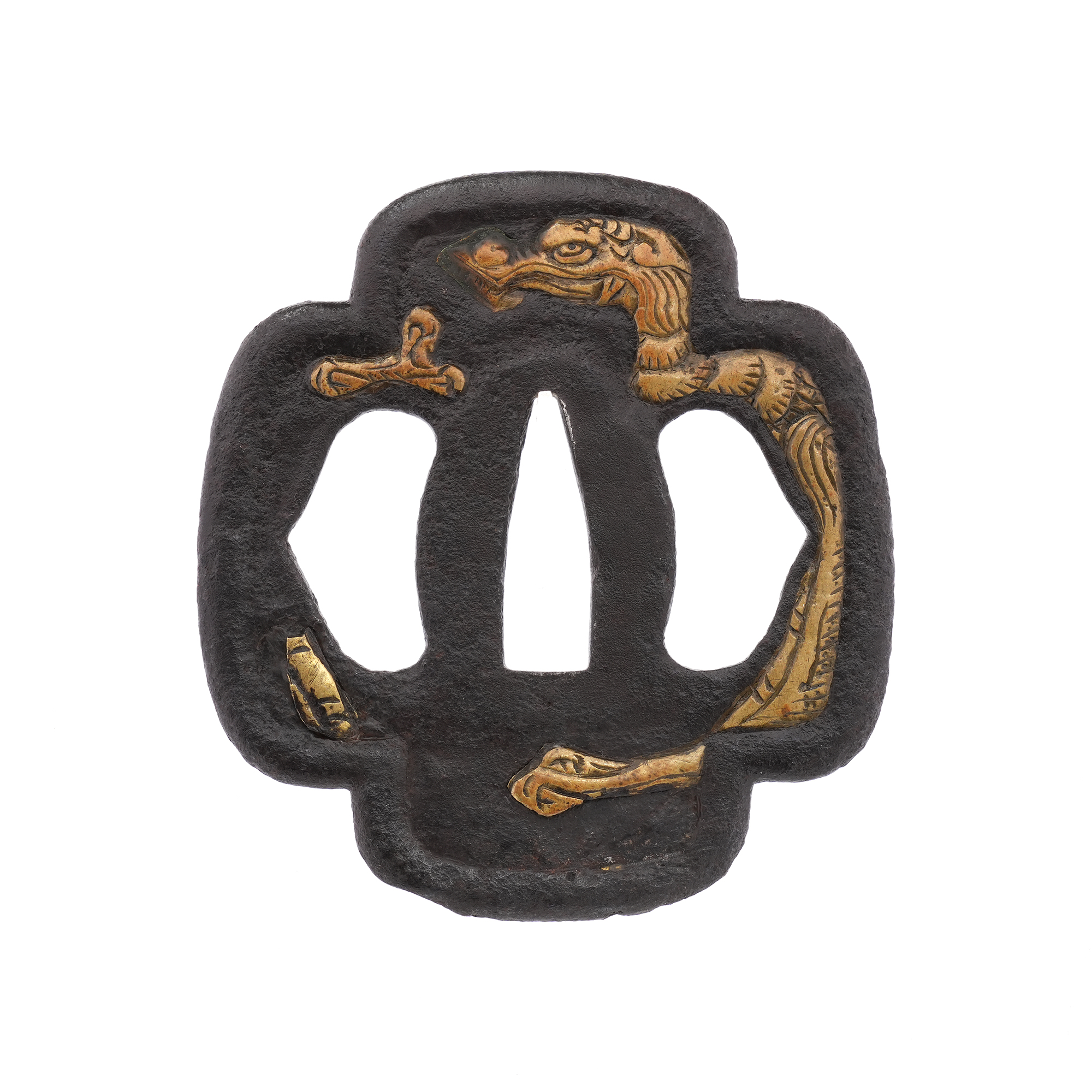
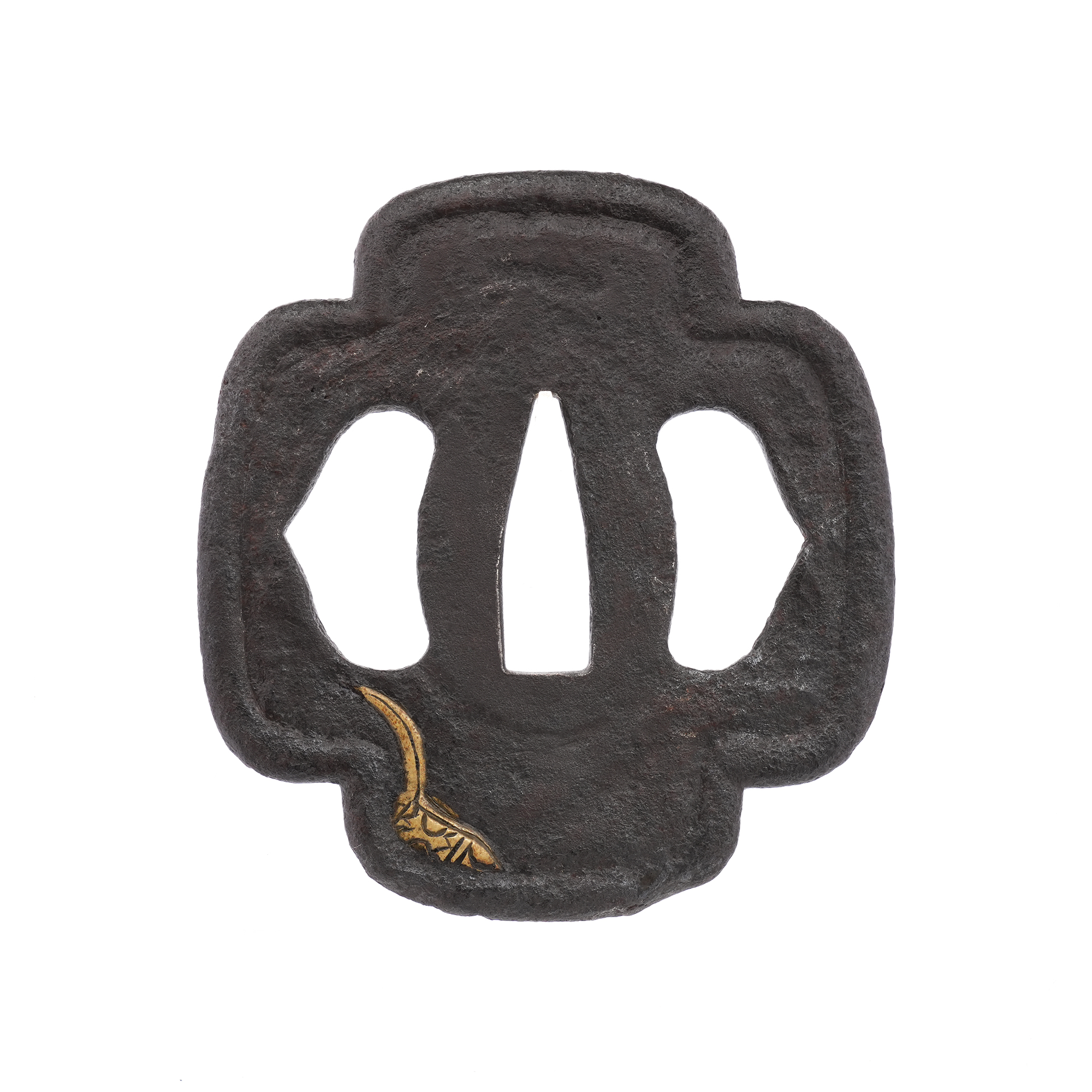
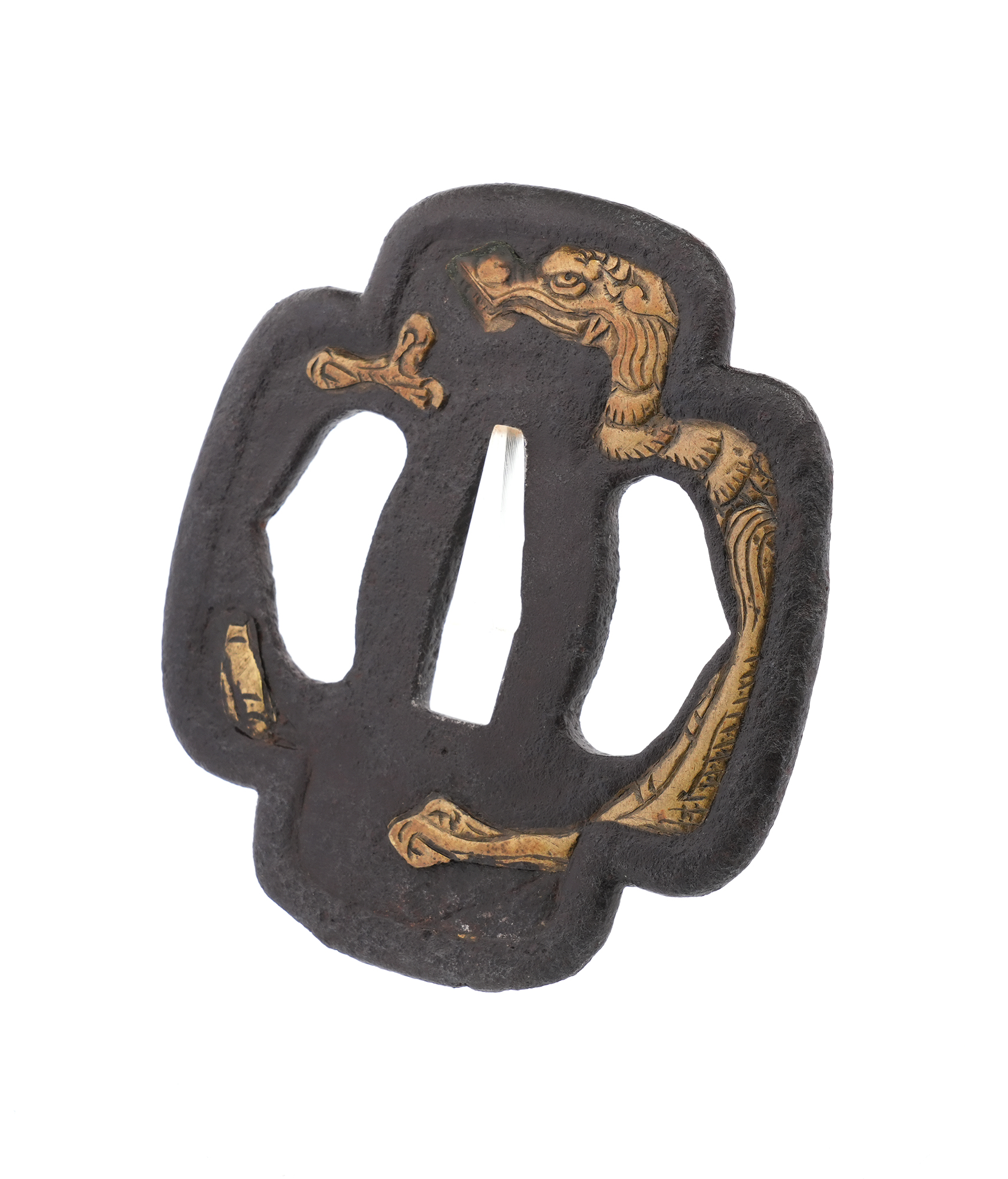
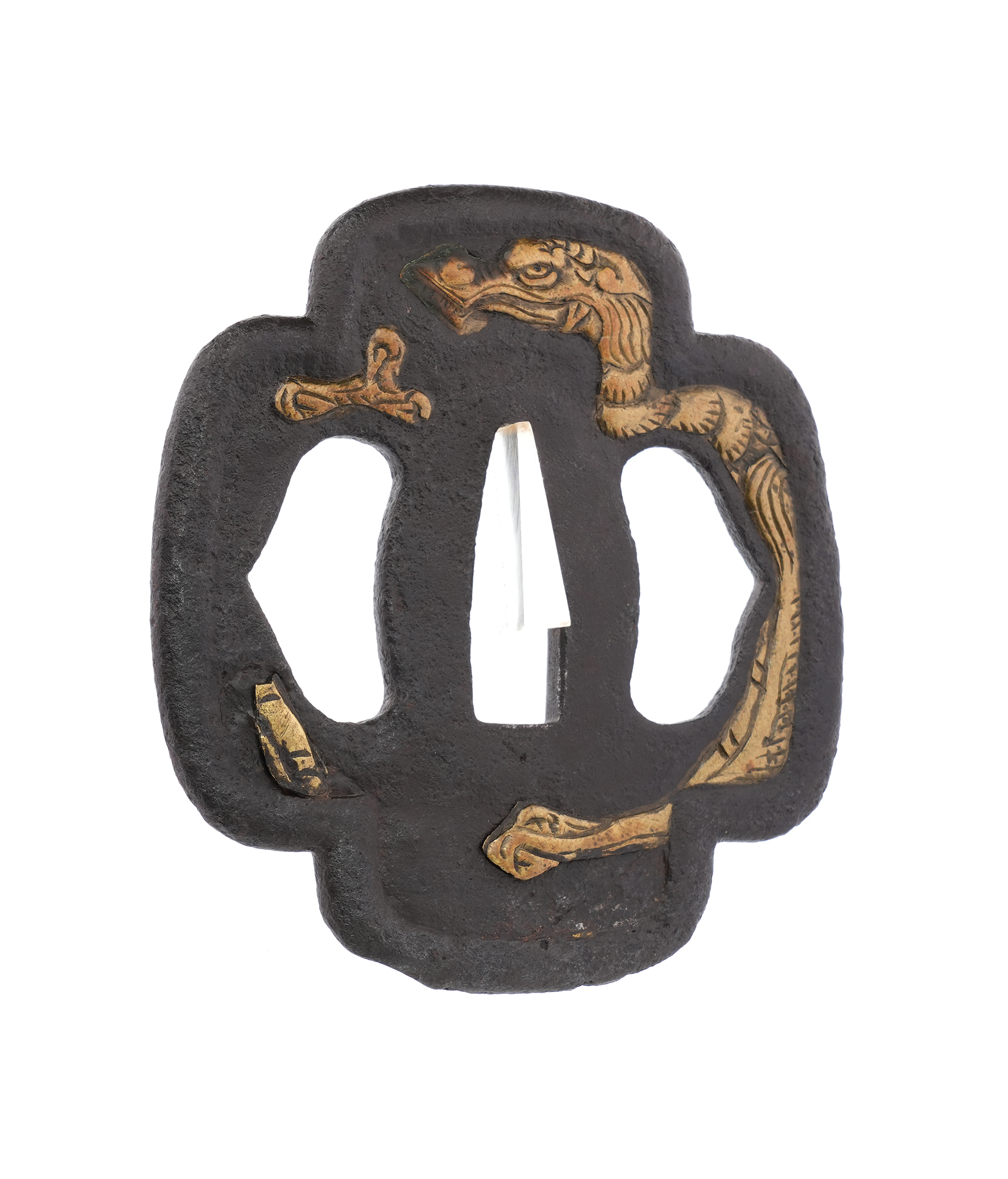
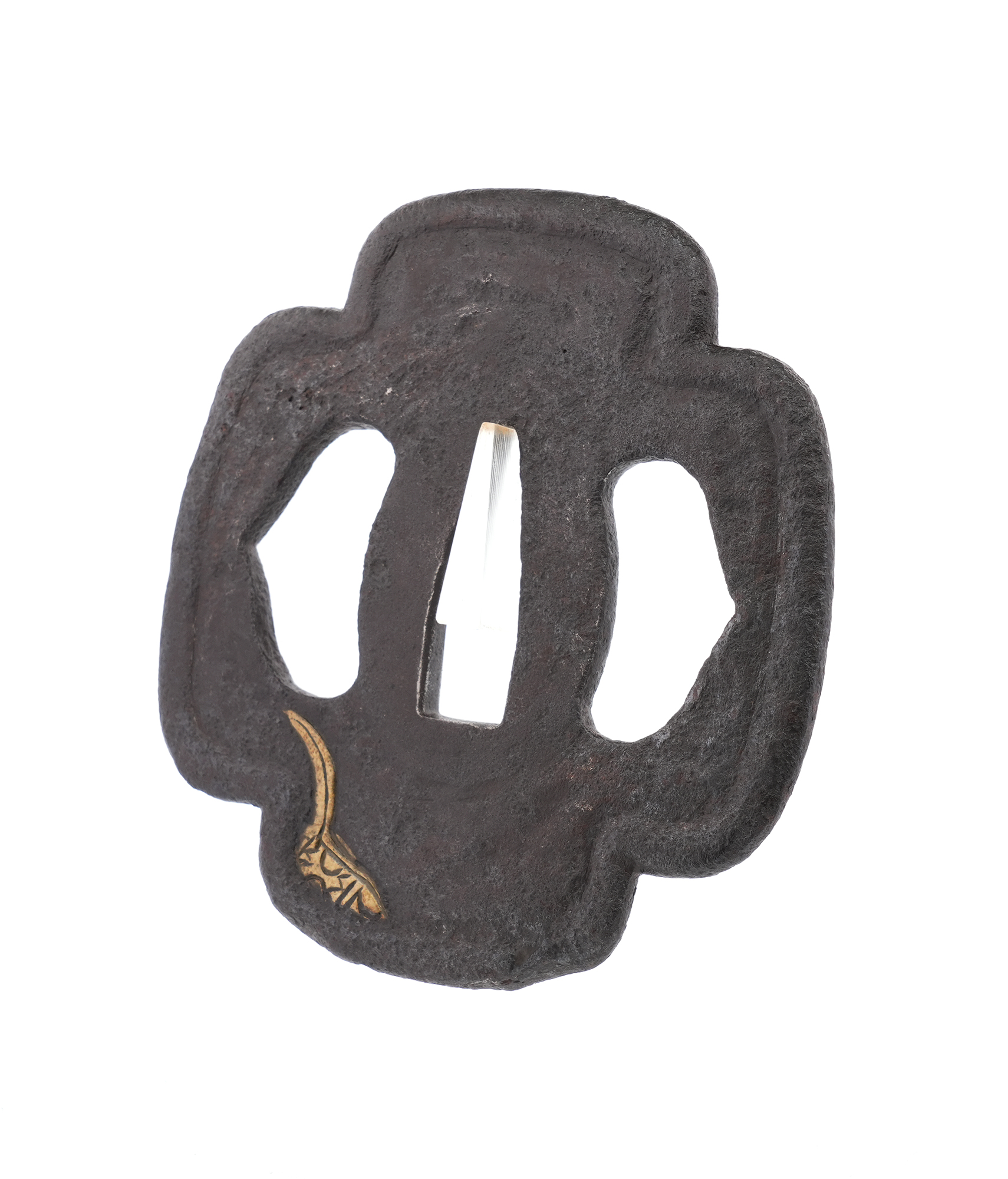
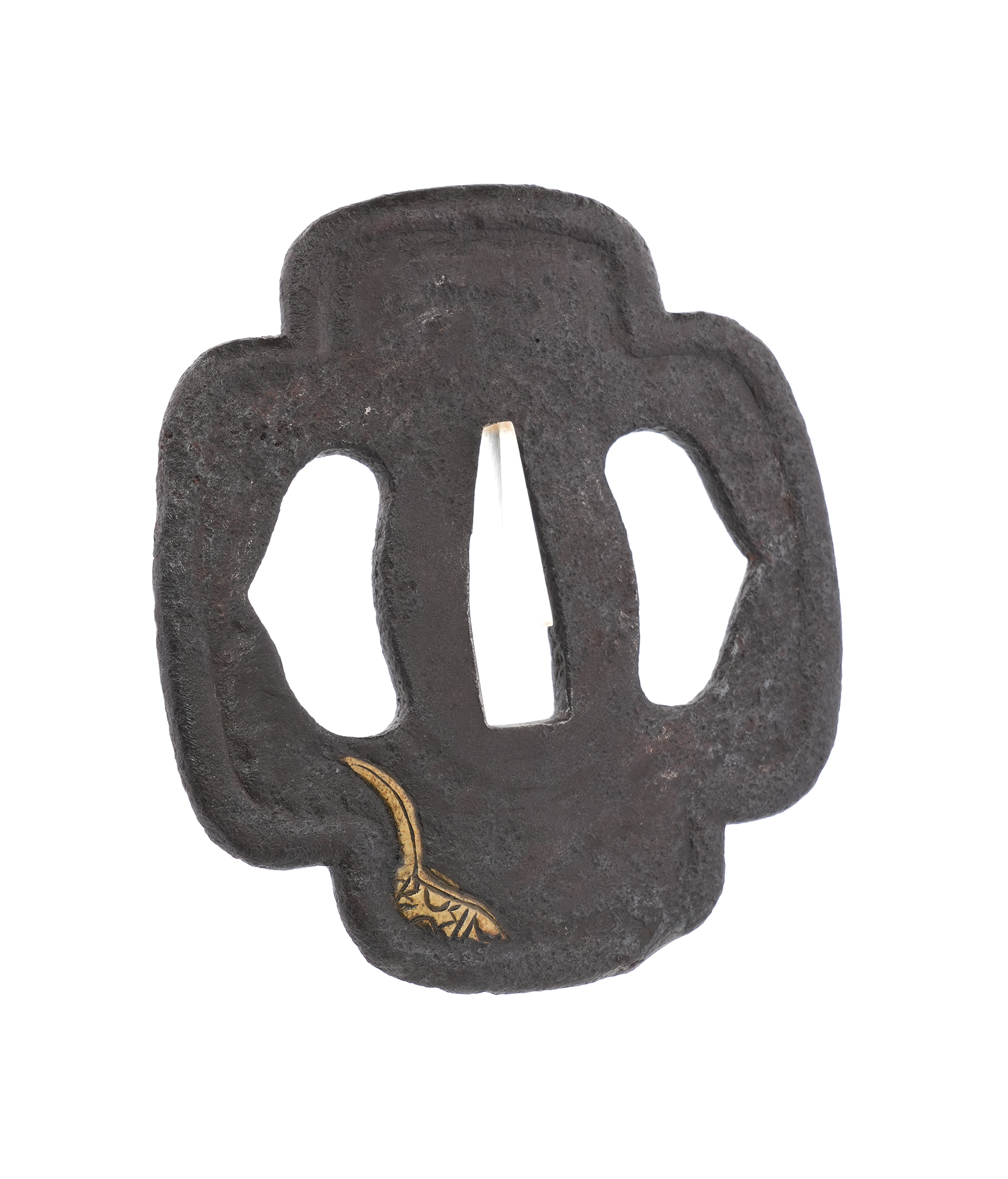
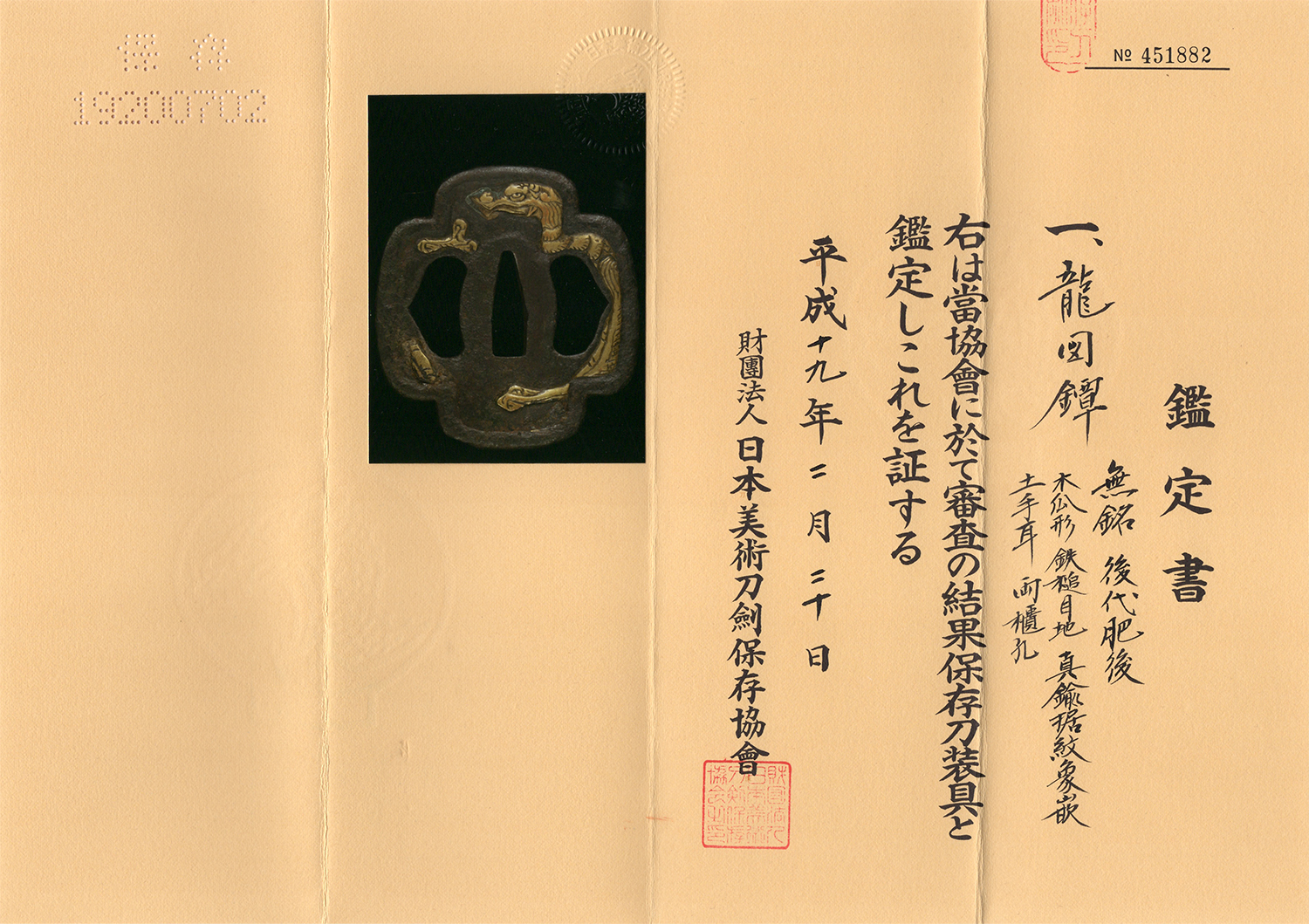
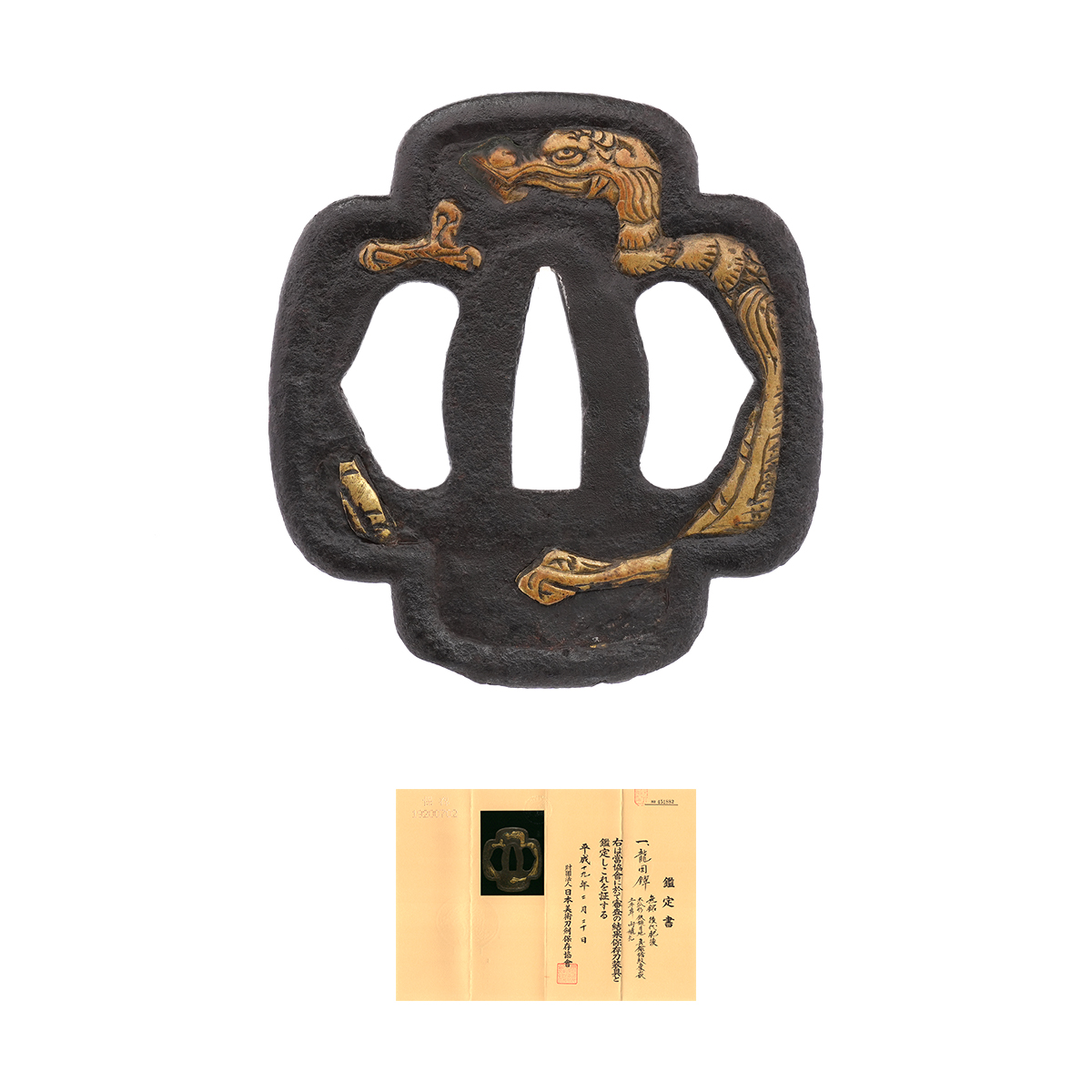
肥後鐔は江戸時代の肥後国、現在の熊本県熊本・八代を中心として発達した刀装金工で、林、平田、西垣、志水の四系統を中心にそれぞれ特色ある作風を展開し、細川三斎の美意識と庇護がその発展に大きな影響を与えたことで知られています。 鉄味を生かした透彫や象嵌をはじめ、鉄、真鍮、赤銅、山銅など多様な素材と技法によって独特の美意識を築き、その作風は後代の肥後金工にも受け継がれました。 本作は鉄地を特徴的な木瓜形に仕立て、左右に大きく両櫃孔を開けた鐔面へ龍を真鍮据紋象嵌で大胆に表した一枚で、龍頭を上部に据え、長い胴を右側から下方へ巡らせながら前脚を切羽台下へ伸ばし、鐔の輪郭と櫃孔を巧みに利用して一匹の龍を画面いっぱいに躍動させています。龍の頭部から頸、胴、脚に至るまで毛彫によって眼、鬣、鱗などを細やかに刻み、黒々と落ち着いた鉄地に古色を帯びた真鍮の色彩が鮮やかに浮かび上がり、ことに龍頭を鐔上部いっぱいに配した構成は迫力があり、縦80ミリという大振りの姿と相まって強い存在感を示しています。裏面では龍の全容を繰り返さず尾の一部のみを真鍮据紋象嵌で表すことで表の華やかさを一層際立たせており、肥後物らしい渋い鉄味と真鍮の華やぎ、さらに龍を鐔そのものの形へ巧みに収めた構図の面白さを併せ持つ、鑑賞性の高い龍図鐔です。
NihontoWatchOffered by Toushin

As written by the shop
(Translation unavailable)
Higo · Higo
120 pieces on the market now
The Higo kinkō (肥後金工) tradition comprises the metalworkers who flourished in Higo province (modern Kumamoto) under the patronage of the Hosokawa daimyō house, from the Momoyama period into the late Edo period. Four families — Hayashi, Hirata, Nishigaki, and Shimizu — are regarded as representing the main line, and the first-generation masters of each were all retained by Hosokawa Sansai (Tadaoki), famed as a great commander and an accomplished master of the tea ceremony, and received his guidance. After the Katō family was dispossessed in Kan'ei 9 (1632) and Sansai's son Tadatoshi was enfeoffed with Kumamoto at 540,000 koku, Sansai entered retirement, choosing Yatsushiro Castle as his place of seclusion. Hirata Hikozō, founder of the Hirata school and descended from the Shōami line, had served Sansai in Kyoto and followed the Hosokawa through Tango and Buzen down to Higo, dying there in Kan'ei 12 (1635); from among his followers emerged Shimizu Jingō (his nephew) and Nishigaki Kanshirō, who together with Hayashi Matashichi of Owari lineage formed the four major schools of Higo metalwork. Matashichi (1613–1699), born in Kumamoto to a family of gunsmiths who had served Katō Kiyomasa before entering Hosokawa service, is regarded as the founder of the Hayashi line. The broader tradition also embraces avocational works by warriors, including tsuba by Sansai himself and by Miyamoto Musashi, who served Hosokawa Tadatoshi from Kan'ei 17 (1640). Shaped by Sansai's direction, the school as a whole is characterized by its combination of outstanding practical function suited to the warrior's taste and a dignified, elevated artistic quality. The Hayashi manner centers on well-forged, lustrous iron — often likened to the deep tone of yōkan — worked in ground openwork (ji-sukashi) with fine kebori engraving and gold nunome-zōgan; Matashichi's tsuba "never give the slightest impression of flatness," conveying an exquisite sense of hiraniku, and his son Shigemitsu's work displays the beautiful purplish patina (murasabi) characteristic of Higo Hayashi-school tsuba.
The Hirata artisans inherited much of the Shōami tradition: while iron grounds are known, they favored irogane such as yamagane, suaka, brass, and shakudō — admired as "Hirata-gane" and "Hikozō-gane" — adding elegant decorative effect through file treatments such as Amida-yasuri and okina-yasuri, on rare occasions employing cloisonné inlay (shippō-zōgan); Hikozō also originated the distinctive rim mounting known as the Odawara fukurin. Shimizu Jingō displays the most intense individuality among Higo metalworkers, boldly placing birds of prey, owls, and rain dragons in brass suemon-zōgan upon hammered, fire-finished iron, while intentionally reserving broad open space on the reverse to deepen the feeling of sabi. The Nishigaki line continued under Nagahisa, who trained in the Gotō Kenjō house before serving the Hosokawa as a retained craftsman. Cherry blossoms and warabite are motifs frequently adopted for Higo tsuba, with Matashichi regarded as the pioneer. Grounded in the aesthetic of the Hosokawa school of tea while inheriting the bold, vigorous spirit of Momoyama, Higo metalwork occupies a singular position in the tosogu canon, extending from tsuba to complete daishō mountings furnished with shakudō fittings bearing the Hosokawa kuyō crest. Matashichi's iron has been "praised without cease" since early times, and his authority was such that other craftsmen were said to "keep their distance by three sha"; because most masters worked unsigned, the few extant signed examples are treasured as precious documents of each hand. Many celebrated works remained in the Hosokawa family itself, passing to the Eisei Bunko collection — testimony to a tradition, later continued by the Kamiyoshi line, whose quiet dignity and refined sabi elegance remain the very embodiment of the warrior aesthetic. Learn more →
| Smith | Era | Designated |
|---|---|---|
| Misumi Masaharu三角正治 | — | 0 |
| Suwa Ikuhei諏訪幾平 | 1832-1903 | 0 |
| Hosokawa Sansai細川三斎 | 1563-1646 | 1 |
| Tsuge Yoshikatsu柘植吉勝 | — | 1 |
| Tani Denji谷伝次 | — | 1 |
Certifies a genuine fitting worth preserving: a correct signature, or, if unsigned, an identifiable era and school, with recognized artistic and craft value.
The NBTHK (Nihon Bijutsu Tōken Hozon Kyōkai, the Society for the Preservation of Japanese Art Swords) is a public-interest incorporated foundation founded in 1948 and supervised by Japan’s Agency for Cultural Affairs (Bunkachō); it is based at the Japanese Sword Museum in Tokyo. Its expert panels physically examine each submitted work (shinsa) and issue a certificate (kanteishō) ranking it by artistic and historical merit. NBTHK papers are the most widely recognized standard of authentication for Japanese swords and fittings.
NBTHK official siteAs a rule we do not accept returns, except when we have sent a different item from the one ordered or when there is a significant discrepancy between the description and the item. If you wish to return an item, please contact us within 3 days of its arrival and then send it back.
¥275,000