NihontoWatch MonNihontoWatch
Market
Encyclopedia
Kantei
NihontoWatch MonNihontoWatch
Market
Encyclopedia
Kantei

Description

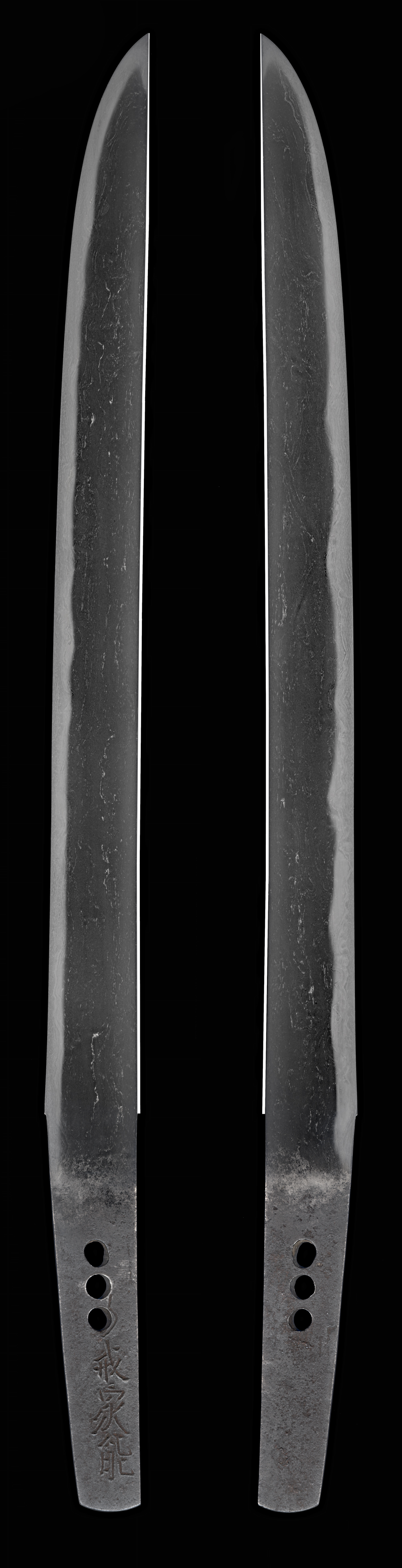
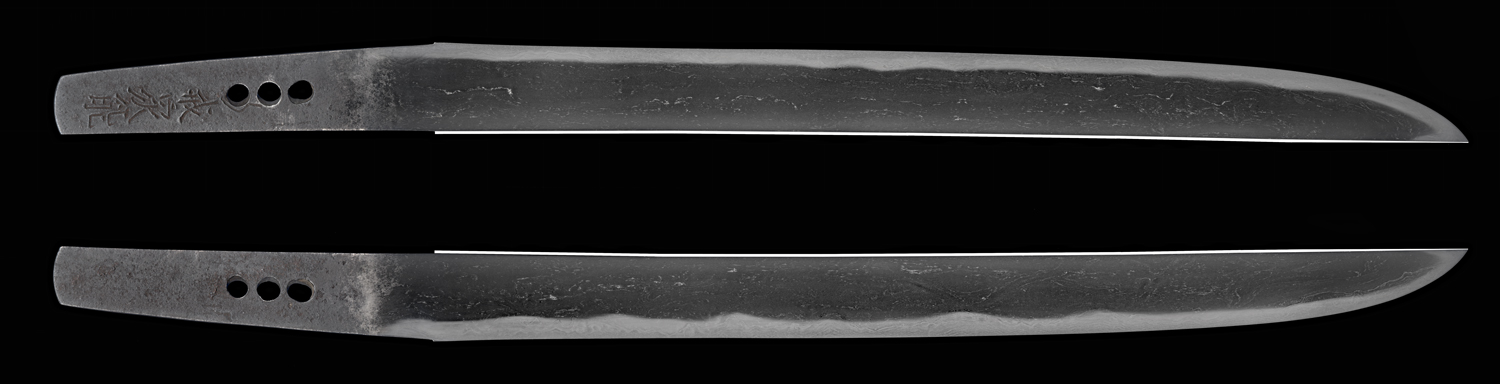
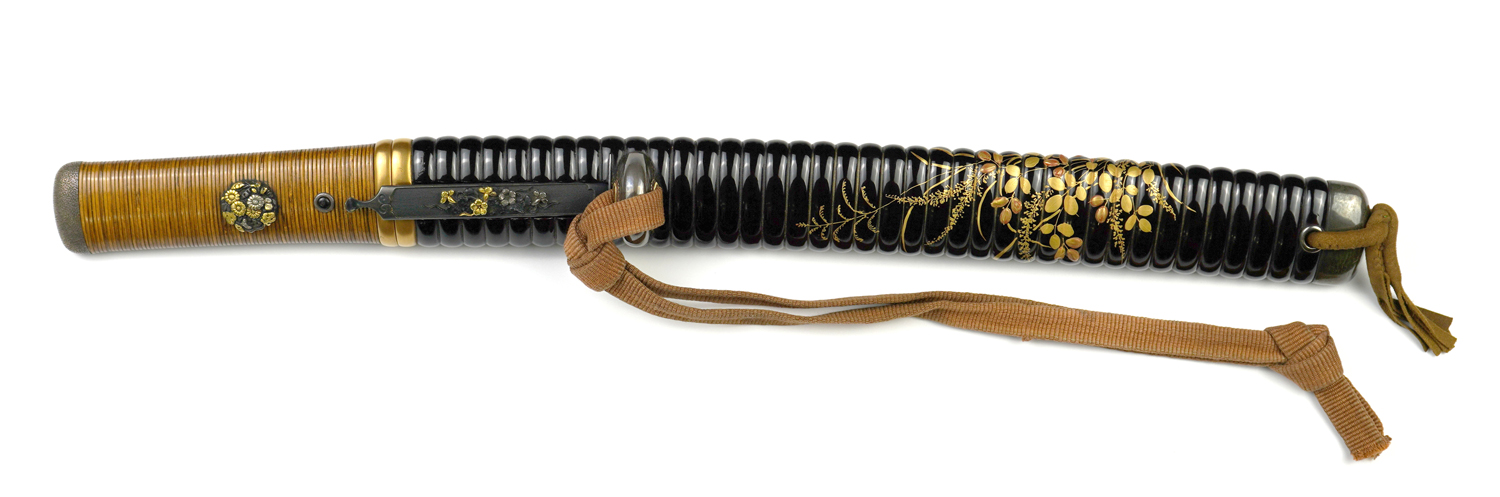
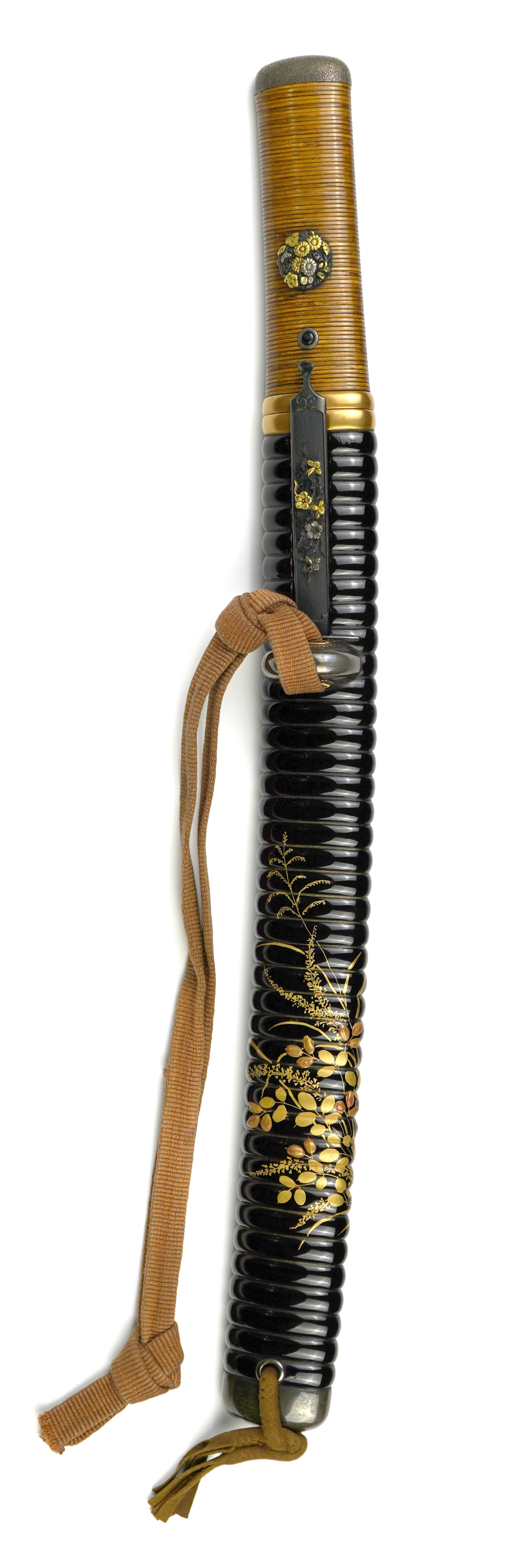
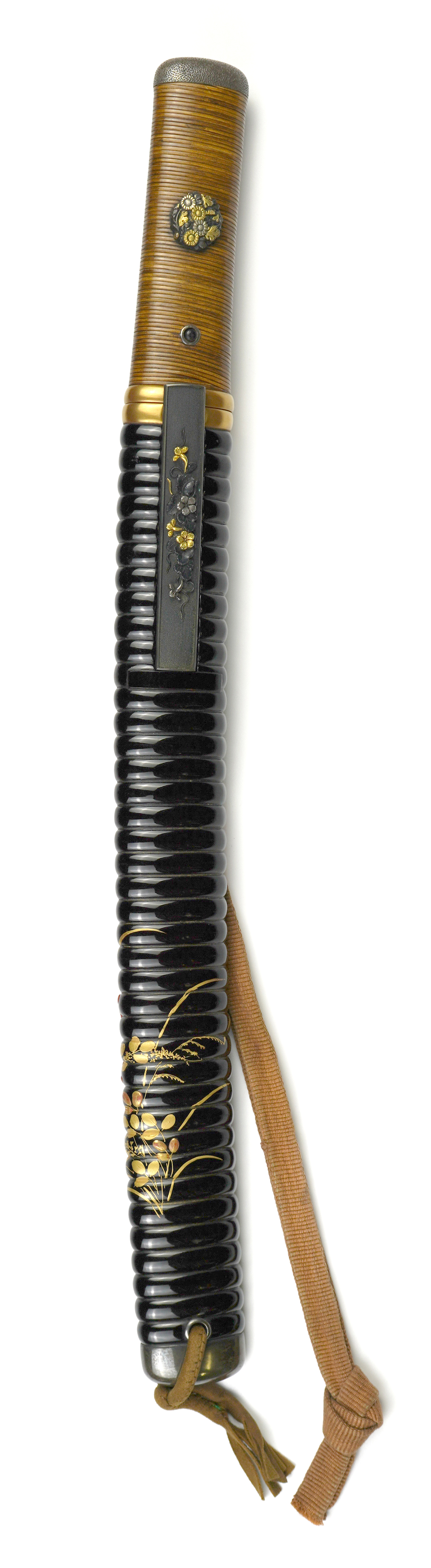
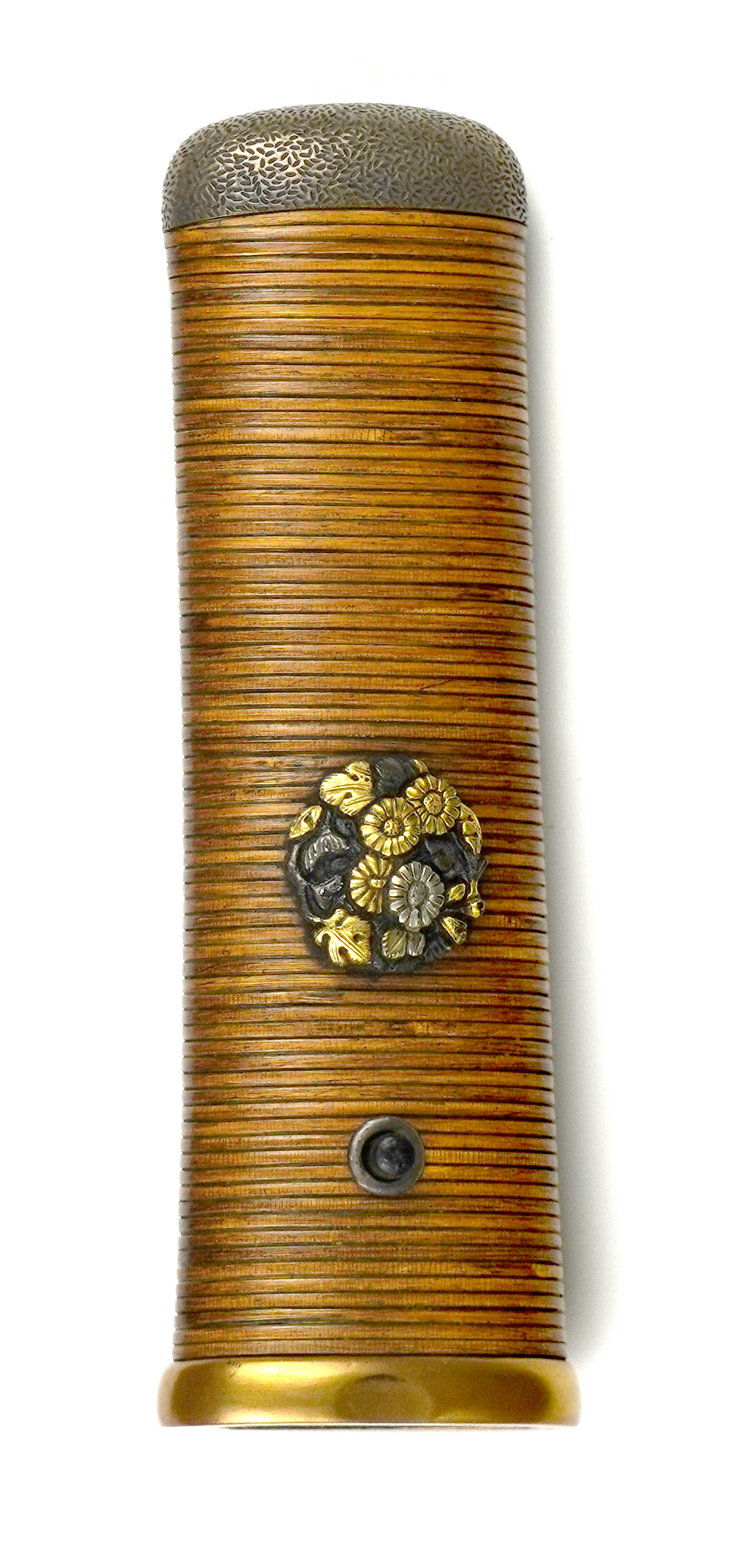
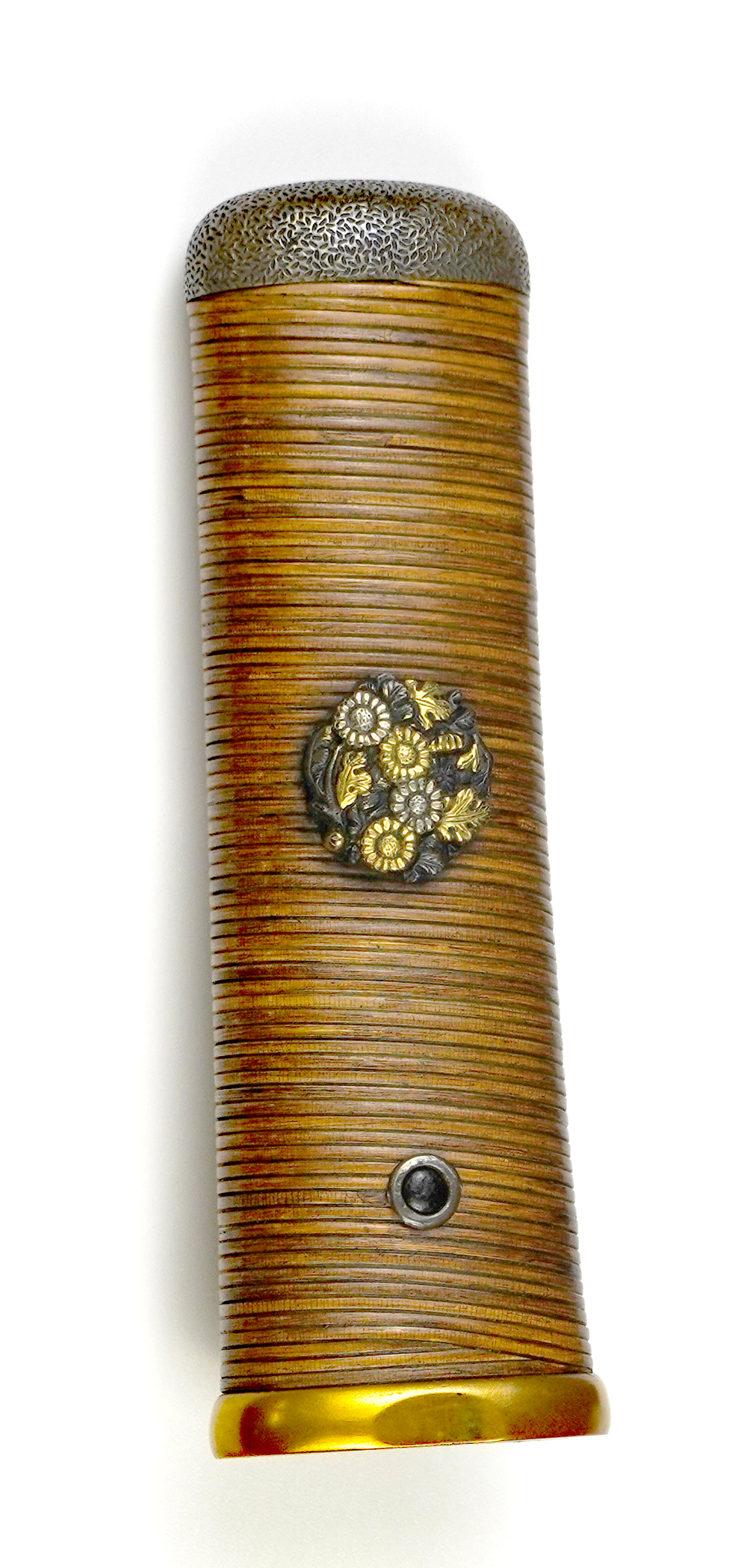
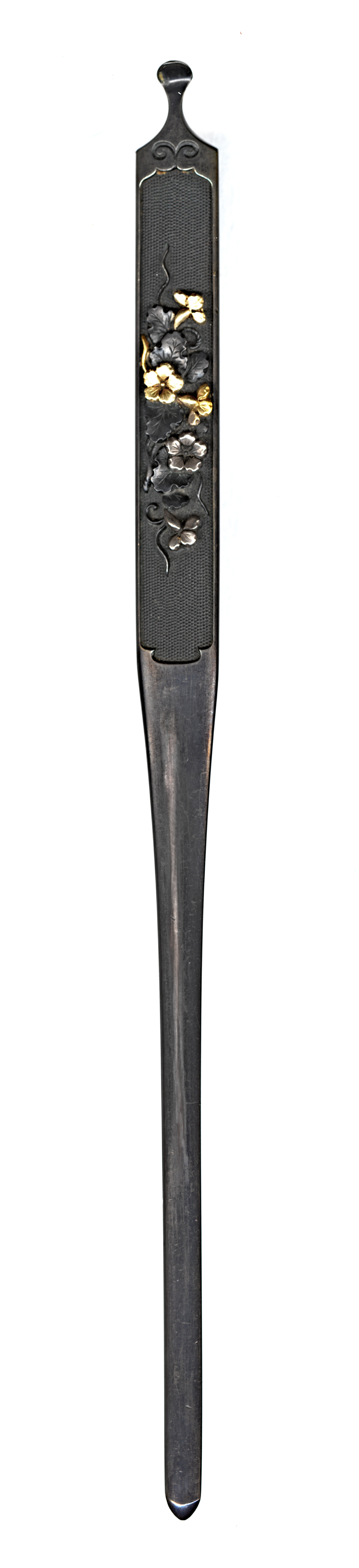
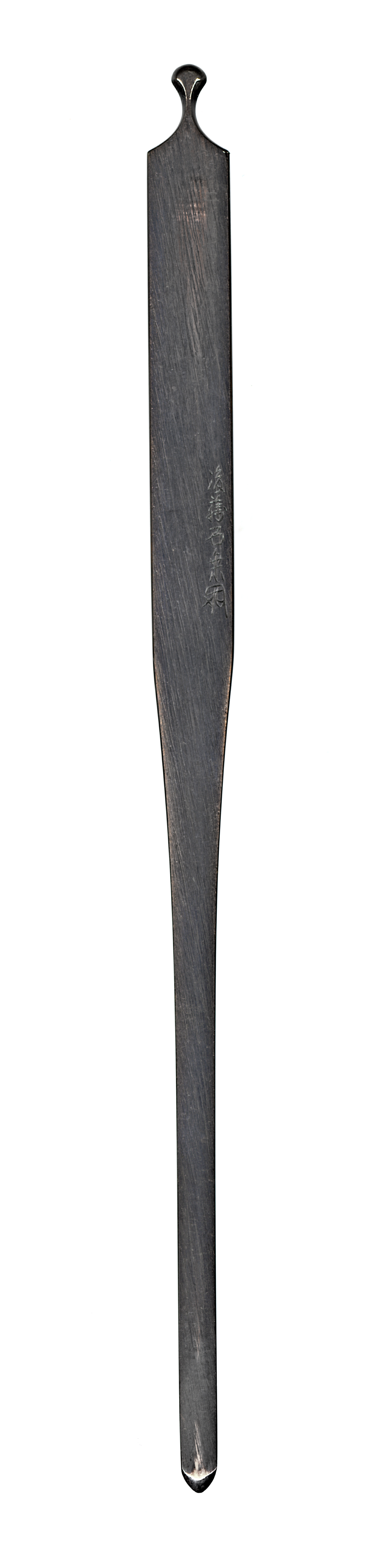
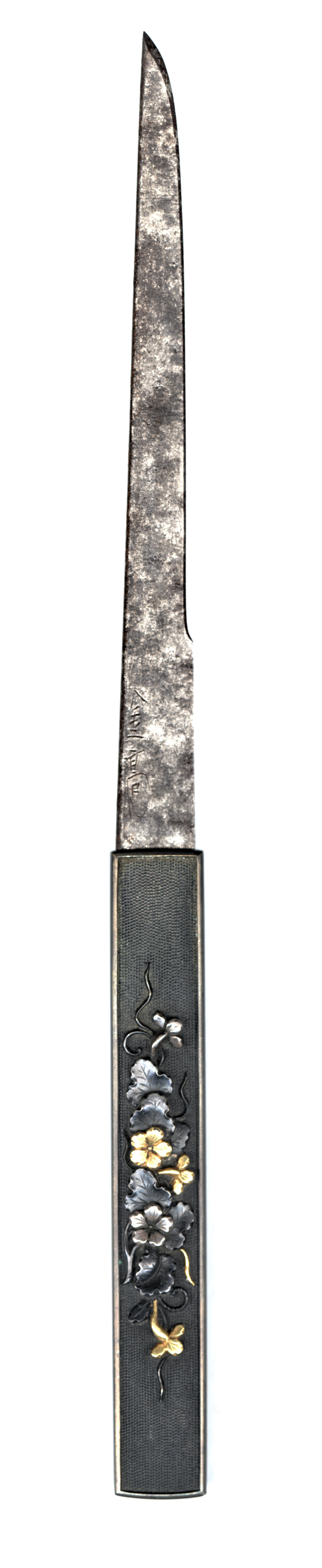
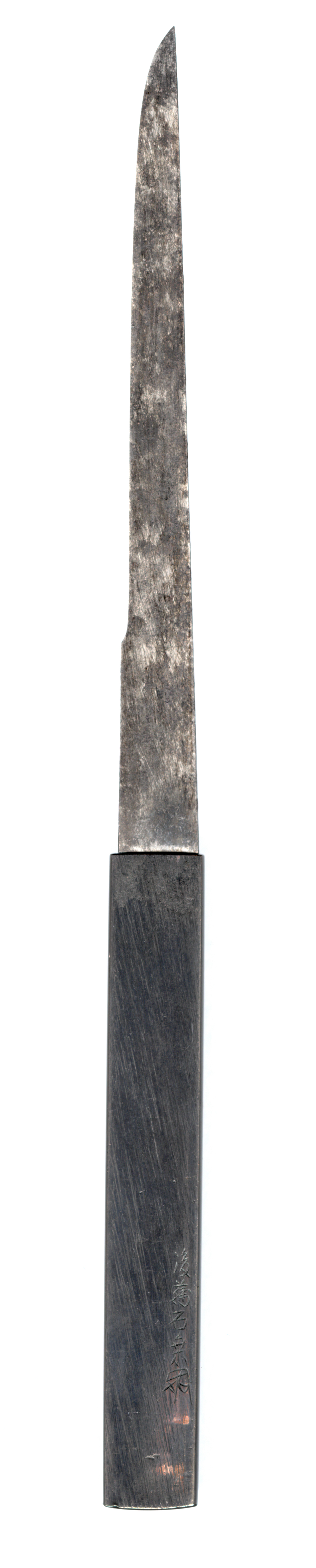
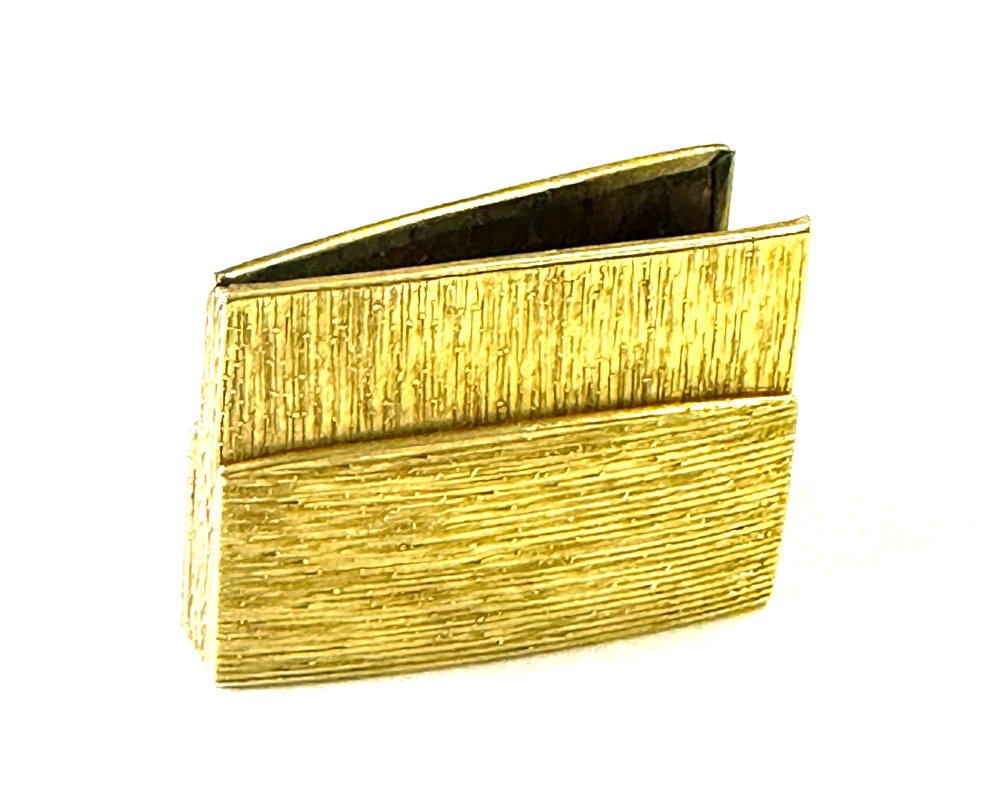
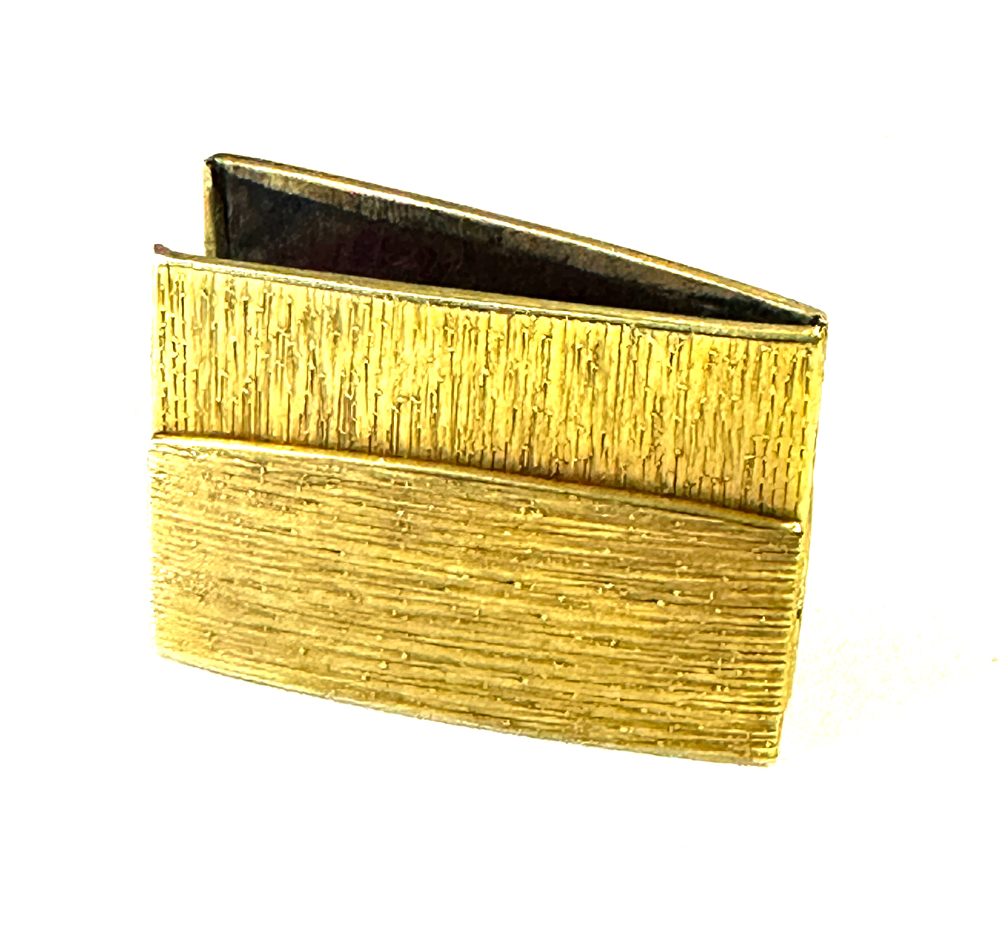
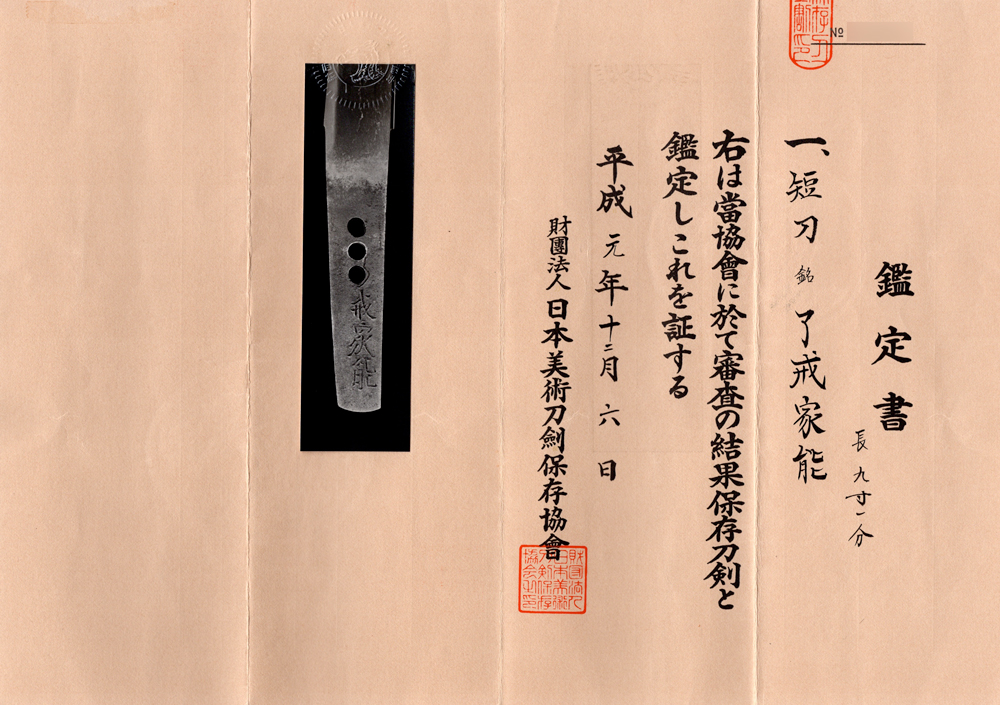
This is a tanto by Ryokai Ieyoshi from Buzen province, dating to the Muromachi period (Kyotoku era). It features a normal width, slight sori, and a blackish jigane with itame hada mixed with mokume. The hamon is notare-cho with gunome交え, ko-nie, and sunagashi. It comes with a black roiro lacquer saya with maki-e koshirae, estimated to be from the mid-Edo period, and an NBTHK Hozon paper.

NihontoWatch MonNihontoWatch
MarketEncyclopediaKantei
Swords›Yamashiro-den›Rai›Ryokai›Ieyoshi›Tanto: Ryokai Ieyoshi
tantoHozon
Ryokai Ieyoshi

Tanto: Ryokai Ieyoshi

mei · Ryokai · Muromachi · nagasa 27.6cm

¥850,000
Visit seller website →
Ryokai Ieyoshi (家能) · Ryokai · Muromachi2 works for sale →
TantoHozon
Could you name the smith from the blade alone? Today’s kantei →
Ryokai Ieyoshi — 1 of 14
Ryokai Ieyoshi — 2 of 14
Ryokai Ieyoshi — 3 of 14
Ryokai Ieyoshi — 4 of 14
Ryokai Ieyoshi — 5 of 14
Ryokai Ieyoshi — 6 of 14
Ryokai Ieyoshi — 7 of 14
Ryokai Ieyoshi — 8 of 14
Ryokai Ieyoshi — 9 of 14
Ryokai Ieyoshi — 10 of 14
Ryokai Ieyoshi — 11 of 14
Ryokai Ieyoshi — 12 of 14
Ryokai Ieyoshi — 13 of 14
Ryokai Ieyoshi — 14 of 14
1 / 14
1 / 14
Ryokai Ieyoshi — 1 of 14Ryokai Ieyoshi — 2 of 14Ryokai Ieyoshi — 3 of 14Ryokai Ieyoshi — 4 of 14Ryokai Ieyoshi — 5 of 14Ryokai Ieyoshi — 6 of 14Ryokai Ieyoshi — 7 of 14Ryokai Ieyoshi — 8 of 14Ryokai Ieyoshi — 9 of 14Ryokai Ieyoshi — 10 of 14Ryokai Ieyoshi — 11 of 14Ryokai Ieyoshi — 12 of 14Ryokai Ieyoshi — 13 of 14Ryokai Ieyoshi — 14 of 14
Ryokai Ieyoshi (家能) · Ryokai · Muromachi2 works for sale →
TantoHozon
Could you name the smith from the blade alone? Today’s kantei →
Measurements & details
Smith
Ryokai Ieyoshi
Type
Tanto
School
Ryokai
Period
Around 1394–1428(Oei)
Province
Buzen
Signature
Signed
Measurements
Nagasa 27.6cmMotohaba 2.9cmKasane 0.5cm
Description

This is a tanto by Ryokai Ieyoshi from Buzen province, dating to the Muromachi period (Kyotoku era). It features a normal width, slight sori, and a blackish jigane with itame hada mixed with mokume. The hamon is notare-cho with gunome交え, ko-nie, and sunagashi. It comes with a black roiro lacquer saya with maki-e koshirae, estimated to be from the mid-Edo period, and an NBTHK Hozon paper.

About the maker

Ieyoshi

家能

Yamashiro-den · Yamashiro · around 1394-1428

2 pieces on the market now

›
2 works by Ieyoshi on the market→
Ieyoshi — full profileYamashiro-den school

Study this maker →

About the school

Ryokai

了戒

Yamashiro-den · Yamashiro

15 pieces on the market now

›

The Ryokai school (了戒) took shape in the late-Kamakura capital of Kyoto, in Yamashiro Province, around the smith Ryokai, who worked through the era names Shoo, Einin, Kagen, Enkyo and Ocho at the turn of the fourteenth century. The old account makes him a son or a pupil of Rai Kunitoshi, and one version has him adopted into Kunitoshi's house; because his dated blades place him almost level with Kunitoshi, however, the NBTHK reads him more naturally as a contemporary (an aitedeshi, a fellow disciple) who formed his own line within the wider Rai circle. Whichever account one follows, his is the Rai Yamashiro hand softened by a degree, and from him the Ryokai name descended for several generations, his son Ryo Hisanobu (久信) following as the second master, with a Kyushu branch, the Chikushi Ryokai of Bungo and Buzen, forming by the Nanbokucho and Muromachi eras. What the members hold in common is a quiet manner read against, and just apart from, the Rai parent. Over a packed itame or ko-itame that flows toward masame and stands a little open, fine ji-nie clings and faint chikei enter, while a whitish shirake-utsuri rises in the ji; this paler, drier utsuri, against the clear midare- or jifu-utsuri of Rai proper, is the first thing that separates a Ryokai blade from its source. The temper is a calm chu- or hoso-suguha, mixing here a little ko-choji, ko-gunome or ko-midare, with ko-ashi and yo entering and sometimes a Kyoto reverse ashi; kinsuji and sunagashi run within a tight nioiguchi that grows austere and, in places, clouds into urumi, the moist soft quality the published sources name again and again as a Ryokai point. The boshi closes sugu into a small ko-maru, often brushed with a touch of hakikake. The school stands so close to Rai Kunitoshi that the two are confused at sight; the attribution settles not on any single feature but on the softer ji and ha, the standing masame, the whitish utsuri and the clouding line, the judges noting that compared with Kunitoshi the activity within the temper runs lonelier and the nioiguchi one degree tighter.

Against the sister Enju school the distinction is the boshi: where Enju turns a large deep o-maru and leaves the line bright, Ryokai closes a small ko-maru and clouds into urumi. The masame and the whitish cast carry the line a step toward Yamato and Yamato-den, and downstream toward Nobukuni and the Soshu-shaded work that followed. To kantei a Ryokai blade is to recognize the Rai air of wa-zori and refined steel, then to read the tells that part it from the parent: the jihada leaning to masame and standing where Rai stays smooth, the shirake in place of bright utsuri, and the tight, clouding nioiguchi. Among the members the founder, Ryokai, holds first standing, rated Jo-saku by Fujishiro and represented by slender ubu tachi and tanto signed with a boldly cut two-character mei, several carved with bonji and suken, alongside the bulk of his attributed record in osuriage mumei katana given to him on the hand; one such tanto the published sources call altogether elegant and a representative work, the signature itself of the archetypal type. Hisanobu, the second master, rated Jo-jo saku, carried the father's suguha on with little change, his rare signed tachi and kodachi prized as documentary evidence, one dated piece establishing through his given name that an earlier nationally designated tachi once read as the father's sole work is in fact a joint work of father and son; the remaining members and the later Kyushu generations continue the manner generically. Provenance follows the founder above all: blades passing through the Isahaya, Date and Maeda families, one preserving a tradition that it was a sword worn by Miyamoto Musashi, and the finest pieces held and studied in long-standing public and private collections including the Tokyo National Museum, the Sano Art Museum and Monobe Jinja. A signed ubu Ryokai blade in particular is among the scarcer things a collector of Kyoto Kamakura work will meet, coming to hand only with patience. Learn more →

4 recorded smiths110 designated works
Leading smiths
SmithEraDesignated
Ryokai了戒1288-130597
Hisanobu久信1304-13085
Nobumasa信正1345-13500
Noshin能真Early Muromachi1
Nobuyoshi宣能1444-14490
Explore the Ryokai school →

Historical context

The Muromachi period (1392 to 1573)

›

Muromachi turned sword making into an industry: the uchigatana rose with massed infantry warfare, Osafune and Seki produced bundle swords beside custom orders, and the Ming trade carried Japanese blades abroad by the tens of thousands.

The Muromachi period (1392 to 1573) →

NBTHK Certificate
Hozon Tōken保存刀剣
Sword Worthy of Preservation
›

Certifies a genuine blade worth preserving: a signature confirmed correct, or, if unsigned, an era, province, and school that the NBTHK can reliably identify.

About the NBTHK›

The NBTHK (Nihon Bijutsu Tōken Hozon Kyōkai, the Society for the Preservation of Japanese Art Swords) is a public-interest incorporated foundation founded in 1948 and supervised by Japan’s Agency for Cultural Affairs (Bunkachō); it is based at the Japanese Sword Museum in Tokyo. Its expert panels physically examine each submitted work (shinsa) and issue a certificate (kanteishō) ranking it by artistic and historical merit. NBTHK papers are the most widely recognized standard of authentication for Japanese swords and fittings.

NBTHK official site→
Seller
K
Katanahanbai
🇯🇵Ships from Japan
›
✓Verified dealerkatanahanbai.com
Settles in JPY
✓Ships worldwide✓English supportWire transferPayPalCredit card
Return policy

For cooling-off, contact us within 3 days including the day you received the item, and ship it so that it arrives within 8 days. After 8 days a return cannot be accepted. Returning an item after 8 days will be treated as a buy-back.

View all of Katanahanbai’s listings→View this item on the dealer’s site→

More works by Ryokai Ieyoshi

View all →
Yazawa Shokai
Hozon
Hozon - by Ryokai Ieyoshi - Naginata Naoshi: Ryo Kai Ieyoshi - Blade Length 34.9cm, Sori 1.0cm, Koto (Muromachi)Hozon - by Ryokai Ieyoshi - Naginata Naoshi: Ryo Kai Ieyoshi - Blade Length 34.9cm, Sori 1.0cm, Koto (Muromachi)

Naginata Naoshi: Ryo Kai Ieyoshi - Blade Length 34.9cm, Sori 1.0cm, Koto (Muromachi)

ByRyokai Ieyoshi
¥300,000

More from the Ryokai school

View all →
Japanese Sword Books and Tsuba
Hozon
Tanto - Hozon - by Ryokai School - Mumei Koto Tanto Papered to Ryokai IyeyoshiTanto - Hozon - by Ryokai School - Mumei Koto Tanto Papered to Ryokai Iyeyoshi

Tantō

ByRyokai School
¥1,650
Toushin
Hozon
Wakizashi - Hozon - by Ryokai Nobukane - NobukaneWakizashi - Hozon - by Ryokai Nobukane - Nobukane

Wakizashi

ByRyokai Nobukane
¥143,000
Choshuya
Jūyō
Katana - Jūyō - by Ryokai School - Unsigned (O-suriage) RyokaiKatana - Jūyō - by Ryokai School - Unsigned (O-suriage) Ryokai

Katana

ByRyokai School
Ask
Nihonto Australia
Tokuho
Katana - Tokuho - by Ryokai - RyokaiKatana - Tokuho - by Ryokai - Ryokai

Katana

ByRyokai
Ask
Toushin
Hozon
Katana - Hozon - by Ryokai Ieyoshi - Ryokai Ieyoshi - MumeiKatana - Hozon - by Ryokai Ieyoshi - Ryokai Ieyoshi - Mumei

Katana

ByRyokai Ieyoshi
¥660,000
Touken Matsumoto
Tokuho
Katana - Tokuho - by Ryokai School - Ryokai SadayoshiKatana - Tokuho - by Ryokai School - Ryokai Sadayoshi

Katana

ByRyokai School
¥2,000,000
Touken Komachi
Tokuho
Katana - Tokuho - by Ryokai School - Katana in Shirasaya: RyokaiKatana - Tokuho - by Ryokai School - Katana in Shirasaya: Ryokai

Katana

ByRyokai School
¥1,100,000
Kanda Toukodo
Hozon
Tanto - Hozon - by Ryokai School - Chikushi RyokaiTanto - Hozon - by Ryokai School - Chikushi Ryokai

Tantō

ByRyokai School
¥400,000

More from the Rai school

View all →
Choshuya
Jūyō
Tanto - Jūyō - by Rai Kunitoshi - Rai KunitoshiTanto - Jūyō - by Rai Kunitoshi - Rai Kunitoshi

Tantō

ByRai Kunitoshi
Ask
Eirakudo
Jūyō
Katana - Jūyō - by Rai Kunimitsu - Raikunimitsu - Juyo TokenKatana - Jūyō - by Rai Kunimitsu - Raikunimitsu - Juyo Token

Katana

ByRai Kunimitsu
¥7,800,000
Choshuya
Tokuho
Tanto - Tokuho - by Rai Kunitoshi - Rai KunitoshiTanto - Tokuho - by Rai Kunitoshi - Rai Kunitoshi

Tantō

ByRai Kunitoshi
¥4,300,000
Yazawa Shokai
Tokuho
Tachi - Tokuho - by Rai Kuniyuki - Consignment: Rai Kuniyuki Mid-Kamakura Period, Blade Length 69.7cm, Sori 1.9cm, in Shirasaya with Tachi KoshiraeTachi - Tokuho - by Rai Kuniyuki - Consignment: Rai Kuniyuki Mid-Kamakura Period, Blade Length 69.7cm, Sori 1.9cm, in Shirasaya with Tachi Koshirae

Tachi

ByRai Kuniyuki
¥3,000,000
Samurai Nippon
Tokuho
Wakizashi - Tokuho - by Rai School - Rai Kuniyuki (Mumei)Wakizashi - Tokuho - by Rai School - Rai Kuniyuki (Mumei)

Wakizashi

ByRai School
¥1,780,000
Nipponto
Jūyō
Katana - Jūyō - by Rai Kunitsugu - Rai Kunitsugu (Listed in Kantou Hibi Sho Zoku 2)Katana - Jūyō - by Rai Kunitsugu - Rai Kunitsugu (Listed in Kantou Hibi Sho Zoku 2)

Katana

ByRai Kunitsugu
Ask
Nipponto
Jūyō
Katana - Jūyō - by Rai Kuniyuki - Kuniyuki (Yamashiro Kyoto Rai School Founder) (From Baron Sugiyama Shigemaru Family)Katana - Jūyō - by Rai Kuniyuki - Kuniyuki (Yamashiro Kyoto Rai School Founder) (From Baron Sugiyama Shigemaru Family)

Katana

ByRai Kuniyuki
Ask
Eirakudo
Tokuho
Katana - Tokuho - by Rai Kunitoshi - Rai Kunitoshi - Tokubetsu Hozon TokenKatana - Tokuho - by Rai Kunitoshi - Rai Kunitoshi - Tokubetsu Hozon Token

Katana

ByRai Kunitoshi
¥3,000,000

More from the Yamashiro tradition

View all →
Samurai Nippon
Tokujū
Katana - Tokuju - by Awataguchi Kuniyoshi - Mumei (Attributed to Awataguchi Kuniyoshi)Katana - Tokuju - by Awataguchi Kuniyoshi - Mumei (Attributed to Awataguchi Kuniyoshi)

Katana

ByAwataguchi Kuniyoshi
Ask
Eirakudo
Jūyō
Katana - Jūyō - by Enju Kunitoki - Kunitoki Katana Juyo TokenKatana - Jūyō - by Enju Kunitoki - Kunitoki Katana Juyo Token

Katana

ByEnju Kunitoki
Ask
Eirakudo
Tokuho
Katana - Tokuho - by Shintogo Kunimitsu - Shintogo Kunimitsu - Tokubetsu Hozon TokenKatana - Tokuho - by Shintogo Kunimitsu - Shintogo Kunimitsu - Tokubetsu Hozon Token

Katana

ByShintogo Kunimitsu
¥7,500,000
Eirakudo
Jūyō
Tachi - Jūyō - by Ayanokoji Sadatoshi - Sadatoshi - Juyo TokenTachi - Jūyō - by Ayanokoji Sadatoshi - Sadatoshi - Juyo Token

Tachi

ByAyanokoji Sadatoshi
¥7,700,000
Eirakudo
Tokuho
Katana - Tokuho - by Nobukuni School - Nobukuni - Tokubetsu Hozon TokenKatana - Tokuho - by Nobukuni School - Nobukuni - Tokubetsu Hozon Token

Katana

ByNobukuni School
¥1,200,000
Eirakudo
Tokuho
Katana - Tokuho - by Chiyozuru Kuniyasu - Echizenrai Rai Kuniyasu - Tokubetsu Hozon TokenKatana - Tokuho - by Chiyozuru Kuniyasu - Echizenrai Rai Kuniyasu - Tokubetsu Hozon Token

Katana

ByChiyozuru Kuniyasu
¥1,500,000
Aoi Art
Hozon
Katana - Hozon - by Nobukuni School - Mumei (Chikuzen Nobukuni)Katana - Hozon - by Nobukuni School - Mumei (Chikuzen Nobukuni)

Katana

ByNobukuni School
¥550,000
Aoi Art
Tokuho
Katana - Tokuho - by Shintogo Kunimitsu - Unsigned (Attributed to Shintogo)Katana - Tokuho - by Shintogo Kunimitsu - Unsigned (Attributed to Shintogo)

Katana

ByShintogo Kunimitsu
¥7,800,000

Swords

  • Katana
  • Wakizashi
  • Tantō
  • Tachi
  • Naginata
  • Yari
  • Japanese Swords
  • Samurai Swords

Fittings

  • Tsuba
  • Fuchi-Kashira
  • Kozuka
  • Menuki
  • Sword Guards (Tsuba)

Armor

  • Kabuto
  • Samurai Armor
  • All Samurai Armor

By Certification

  • Tokujū
  • Jūyō
  • Tokuho
  • Hozon

Resources

  • Dealer Directory
  • Artist Directory
  • The Daily Kantei
  • Glossary
  • Browse All
Nihontowatch© 2026
TermsPrivacyCookiesAbout

¥850,000

View on Katanahanbai

Description

This is a tanto by Ryokai Ieyoshi from Buzen province, dating to the Muromachi period (Kyotoku era). It features a normal width, slight sori, and a blackish jigane with itame hada mixed with mokume. The hamon is notare-cho with gunome交え, ko-nie, and sunagashi. It comes with a black roiro lacquer saya with maki-e koshirae, estimated to be from the mid-Edo period, and an NBTHK Hozon paper.

NihontoWatch MonNihontoWatch
MarketEncyclopediaKantei
Swords›Yamashiro-den›Rai›Ryokai›Ieyoshi›Tanto: Ryokai Ieyoshi
tantoHozon
Ryokai Ieyoshi

Tanto: Ryokai Ieyoshi

mei · Ryokai · Muromachi · nagasa 27.6cm

¥850,000
Visit seller website →
Ryokai Ieyoshi (家能) · Ryokai · Muromachi2 works for sale →
TantoHozon
Could you name the smith from the blade alone? Today’s kantei →
Ryokai Ieyoshi — 1 of 14
Ryokai Ieyoshi — 2 of 14
Ryokai Ieyoshi — 3 of 14
Ryokai Ieyoshi — 4 of 14
Ryokai Ieyoshi — 5 of 14
Ryokai Ieyoshi — 6 of 14
Ryokai Ieyoshi — 7 of 14
Ryokai Ieyoshi — 8 of 14
Ryokai Ieyoshi — 9 of 14
Ryokai Ieyoshi — 10 of 14
Ryokai Ieyoshi — 11 of 14
Ryokai Ieyoshi — 12 of 14
Ryokai Ieyoshi — 13 of 14
Ryokai Ieyoshi — 14 of 14
1 / 14
1 / 14
Ryokai Ieyoshi — 1 of 14Ryokai Ieyoshi — 2 of 14Ryokai Ieyoshi — 3 of 14Ryokai Ieyoshi — 4 of 14Ryokai Ieyoshi — 5 of 14Ryokai Ieyoshi — 6 of 14Ryokai Ieyoshi — 7 of 14Ryokai Ieyoshi — 8 of 14Ryokai Ieyoshi — 9 of 14Ryokai Ieyoshi — 10 of 14Ryokai Ieyoshi — 11 of 14Ryokai Ieyoshi — 12 of 14Ryokai Ieyoshi — 13 of 14Ryokai Ieyoshi — 14 of 14
Ryokai Ieyoshi (家能) · Ryokai · Muromachi2 works for sale →
TantoHozon
Could you name the smith from the blade alone? Today’s kantei →
Measurements & details
Smith
Ryokai Ieyoshi
Type
Tanto
School
Ryokai
Period
Around 1394–1428(Oei)
Province
Buzen
Signature
Signed
Measurements
Nagasa 27.6cmMotohaba 2.9cmKasane 0.5cm
Description

This is a tanto by Ryokai Ieyoshi from Buzen province, dating to the Muromachi period (Kyotoku era). It features a normal width, slight sori, and a blackish jigane with itame hada mixed with mokume. The hamon is notare-cho with gunome交え, ko-nie, and sunagashi. It comes with a black roiro lacquer saya with maki-e koshirae, estimated to be from the mid-Edo period, and an NBTHK Hozon paper.

About the maker

Ieyoshi

家能

Yamashiro-den · Yamashiro · around 1394-1428

2 pieces on the market now

›
2 works by Ieyoshi on the market→
Ieyoshi — full profileYamashiro-den school

Study this maker →

About the school

Ryokai

了戒

Yamashiro-den · Yamashiro

15 pieces on the market now

›

The Ryokai school (了戒) took shape in the late-Kamakura capital of Kyoto, in Yamashiro Province, around the smith Ryokai, who worked through the era names Shoo, Einin, Kagen, Enkyo and Ocho at the turn of the fourteenth century. The old account makes him a son or a pupil of Rai Kunitoshi, and one version has him adopted into Kunitoshi's house; because his dated blades place him almost level with Kunitoshi, however, the NBTHK reads him more naturally as a contemporary (an aitedeshi, a fellow disciple) who formed his own line within the wider Rai circle. Whichever account one follows, his is the Rai Yamashiro hand softened by a degree, and from him the Ryokai name descended for several generations, his son Ryo Hisanobu (久信) following as the second master, with a Kyushu branch, the Chikushi Ryokai of Bungo and Buzen, forming by the Nanbokucho and Muromachi eras. What the members hold in common is a quiet manner read against, and just apart from, the Rai parent. Over a packed itame or ko-itame that flows toward masame and stands a little open, fine ji-nie clings and faint chikei enter, while a whitish shirake-utsuri rises in the ji; this paler, drier utsuri, against the clear midare- or jifu-utsuri of Rai proper, is the first thing that separates a Ryokai blade from its source. The temper is a calm chu- or hoso-suguha, mixing here a little ko-choji, ko-gunome or ko-midare, with ko-ashi and yo entering and sometimes a Kyoto reverse ashi; kinsuji and sunagashi run within a tight nioiguchi that grows austere and, in places, clouds into urumi, the moist soft quality the published sources name again and again as a Ryokai point. The boshi closes sugu into a small ko-maru, often brushed with a touch of hakikake. The school stands so close to Rai Kunitoshi that the two are confused at sight; the attribution settles not on any single feature but on the softer ji and ha, the standing masame, the whitish utsuri and the clouding line, the judges noting that compared with Kunitoshi the activity within the temper runs lonelier and the nioiguchi one degree tighter.

Against the sister Enju school the distinction is the boshi: where Enju turns a large deep o-maru and leaves the line bright, Ryokai closes a small ko-maru and clouds into urumi. The masame and the whitish cast carry the line a step toward Yamato and Yamato-den, and downstream toward Nobukuni and the Soshu-shaded work that followed. To kantei a Ryokai blade is to recognize the Rai air of wa-zori and refined steel, then to read the tells that part it from the parent: the jihada leaning to masame and standing where Rai stays smooth, the shirake in place of bright utsuri, and the tight, clouding nioiguchi. Among the members the founder, Ryokai, holds first standing, rated Jo-saku by Fujishiro and represented by slender ubu tachi and tanto signed with a boldly cut two-character mei, several carved with bonji and suken, alongside the bulk of his attributed record in osuriage mumei katana given to him on the hand; one such tanto the published sources call altogether elegant and a representative work, the signature itself of the archetypal type. Hisanobu, the second master, rated Jo-jo saku, carried the father's suguha on with little change, his rare signed tachi and kodachi prized as documentary evidence, one dated piece establishing through his given name that an earlier nationally designated tachi once read as the father's sole work is in fact a joint work of father and son; the remaining members and the later Kyushu generations continue the manner generically. Provenance follows the founder above all: blades passing through the Isahaya, Date and Maeda families, one preserving a tradition that it was a sword worn by Miyamoto Musashi, and the finest pieces held and studied in long-standing public and private collections including the Tokyo National Museum, the Sano Art Museum and Monobe Jinja. A signed ubu Ryokai blade in particular is among the scarcer things a collector of Kyoto Kamakura work will meet, coming to hand only with patience. Learn more →

4 recorded smiths110 designated works
Leading smiths
SmithEraDesignated
Ryokai了戒1288-130597
Hisanobu久信1304-13085
Nobumasa信正1345-13500
Noshin能真Early Muromachi1
Nobuyoshi宣能1444-14490
Explore the Ryokai school →

Historical context

The Muromachi period (1392 to 1573)

›

Muromachi turned sword making into an industry: the uchigatana rose with massed infantry warfare, Osafune and Seki produced bundle swords beside custom orders, and the Ming trade carried Japanese blades abroad by the tens of thousands.

The Muromachi period (1392 to 1573) →

NBTHK Certificate
Hozon Tōken保存刀剣
Sword Worthy of Preservation
›

Certifies a genuine blade worth preserving: a signature confirmed correct, or, if unsigned, an era, province, and school that the NBTHK can reliably identify.

About the NBTHK›

The NBTHK (Nihon Bijutsu Tōken Hozon Kyōkai, the Society for the Preservation of Japanese Art Swords) is a public-interest incorporated foundation founded in 1948 and supervised by Japan’s Agency for Cultural Affairs (Bunkachō); it is based at the Japanese Sword Museum in Tokyo. Its expert panels physically examine each submitted work (shinsa) and issue a certificate (kanteishō) ranking it by artistic and historical merit. NBTHK papers are the most widely recognized standard of authentication for Japanese swords and fittings.

NBTHK official site→
Seller
K
Katanahanbai
🇯🇵Ships from Japan
›
✓Verified dealerkatanahanbai.com
Settles in JPY
✓Ships worldwide✓English supportWire transferPayPalCredit card
Return policy

For cooling-off, contact us within 3 days including the day you received the item, and ship it so that it arrives within 8 days. After 8 days a return cannot be accepted. Returning an item after 8 days will be treated as a buy-back.

View all of Katanahanbai’s listings→View this item on the dealer’s site→

More works by Ryokai Ieyoshi

View all →
Yazawa Shokai
Hozon
Hozon - by Ryokai Ieyoshi - Naginata Naoshi: Ryo Kai Ieyoshi - Blade Length 34.9cm, Sori 1.0cm, Koto (Muromachi)Hozon - by Ryokai Ieyoshi - Naginata Naoshi: Ryo Kai Ieyoshi - Blade Length 34.9cm, Sori 1.0cm, Koto (Muromachi)

Naginata Naoshi: Ryo Kai Ieyoshi - Blade Length 34.9cm, Sori 1.0cm, Koto (Muromachi)

ByRyokai Ieyoshi
¥300,000

More from the Ryokai school

View all →
Japanese Sword Books and Tsuba
Hozon
Tanto - Hozon - by Ryokai School - Mumei Koto Tanto Papered to Ryokai IyeyoshiTanto - Hozon - by Ryokai School - Mumei Koto Tanto Papered to Ryokai Iyeyoshi

Tantō

ByRyokai School
¥1,650
Toushin
Hozon
Wakizashi - Hozon - by Ryokai Nobukane - NobukaneWakizashi - Hozon - by Ryokai Nobukane - Nobukane

Wakizashi

ByRyokai Nobukane
¥143,000
Choshuya
Jūyō
Katana - Jūyō - by Ryokai School - Unsigned (O-suriage) RyokaiKatana - Jūyō - by Ryokai School - Unsigned (O-suriage) Ryokai

Katana

ByRyokai School
Ask
Nihonto Australia
Tokuho
Katana - Tokuho - by Ryokai - RyokaiKatana - Tokuho - by Ryokai - Ryokai

Katana

ByRyokai
Ask
Toushin
Hozon
Katana - Hozon - by Ryokai Ieyoshi - Ryokai Ieyoshi - MumeiKatana - Hozon - by Ryokai Ieyoshi - Ryokai Ieyoshi - Mumei

Katana

ByRyokai Ieyoshi
¥660,000
Touken Matsumoto
Tokuho
Katana - Tokuho - by Ryokai School - Ryokai SadayoshiKatana - Tokuho - by Ryokai School - Ryokai Sadayoshi

Katana

ByRyokai School
¥2,000,000
Touken Komachi
Tokuho
Katana - Tokuho - by Ryokai School - Katana in Shirasaya: RyokaiKatana - Tokuho - by Ryokai School - Katana in Shirasaya: Ryokai

Katana

ByRyokai School
¥1,100,000
Kanda Toukodo
Hozon
Tanto - Hozon - by Ryokai School - Chikushi RyokaiTanto - Hozon - by Ryokai School - Chikushi Ryokai

Tantō

ByRyokai School
¥400,000

More from the Rai school

View all →
Choshuya
Jūyō
Tanto - Jūyō - by Rai Kunitoshi - Rai KunitoshiTanto - Jūyō - by Rai Kunitoshi - Rai Kunitoshi

Tantō

ByRai Kunitoshi
Ask
Eirakudo
Jūyō
Katana - Jūyō - by Rai Kunimitsu - Raikunimitsu - Juyo TokenKatana - Jūyō - by Rai Kunimitsu - Raikunimitsu - Juyo Token

Katana

ByRai Kunimitsu
¥7,800,000
Choshuya
Tokuho
Tanto - Tokuho - by Rai Kunitoshi - Rai KunitoshiTanto - Tokuho - by Rai Kunitoshi - Rai Kunitoshi

Tantō

ByRai Kunitoshi
¥4,300,000
Yazawa Shokai
Tokuho
Tachi - Tokuho - by Rai Kuniyuki - Consignment: Rai Kuniyuki Mid-Kamakura Period, Blade Length 69.7cm, Sori 1.9cm, in Shirasaya with Tachi KoshiraeTachi - Tokuho - by Rai Kuniyuki - Consignment: Rai Kuniyuki Mid-Kamakura Period, Blade Length 69.7cm, Sori 1.9cm, in Shirasaya with Tachi Koshirae

Tachi

ByRai Kuniyuki
¥3,000,000
Samurai Nippon
Tokuho
Wakizashi - Tokuho - by Rai School - Rai Kuniyuki (Mumei)Wakizashi - Tokuho - by Rai School - Rai Kuniyuki (Mumei)

Wakizashi

ByRai School
¥1,780,000
Nipponto
Jūyō
Katana - Jūyō - by Rai Kunitsugu - Rai Kunitsugu (Listed in Kantou Hibi Sho Zoku 2)Katana - Jūyō - by Rai Kunitsugu - Rai Kunitsugu (Listed in Kantou Hibi Sho Zoku 2)

Katana

ByRai Kunitsugu
Ask
Nipponto
Jūyō
Katana - Jūyō - by Rai Kuniyuki - Kuniyuki (Yamashiro Kyoto Rai School Founder) (From Baron Sugiyama Shigemaru Family)Katana - Jūyō - by Rai Kuniyuki - Kuniyuki (Yamashiro Kyoto Rai School Founder) (From Baron Sugiyama Shigemaru Family)

Katana

ByRai Kuniyuki
Ask
Eirakudo
Tokuho
Katana - Tokuho - by Rai Kunitoshi - Rai Kunitoshi - Tokubetsu Hozon TokenKatana - Tokuho - by Rai Kunitoshi - Rai Kunitoshi - Tokubetsu Hozon Token

Katana

ByRai Kunitoshi
¥3,000,000

More from the Yamashiro tradition

View all →
Samurai Nippon
Tokujū
Katana - Tokuju - by Awataguchi Kuniyoshi - Mumei (Attributed to Awataguchi Kuniyoshi)Katana - Tokuju - by Awataguchi Kuniyoshi - Mumei (Attributed to Awataguchi Kuniyoshi)

Katana

ByAwataguchi Kuniyoshi
Ask
Eirakudo
Jūyō
Katana - Jūyō - by Enju Kunitoki - Kunitoki Katana Juyo TokenKatana - Jūyō - by Enju Kunitoki - Kunitoki Katana Juyo Token

Katana

ByEnju Kunitoki
Ask
Eirakudo
Tokuho
Katana - Tokuho - by Shintogo Kunimitsu - Shintogo Kunimitsu - Tokubetsu Hozon TokenKatana - Tokuho - by Shintogo Kunimitsu - Shintogo Kunimitsu - Tokubetsu Hozon Token

Katana

ByShintogo Kunimitsu
¥7,500,000
Eirakudo
Jūyō
Tachi - Jūyō - by Ayanokoji Sadatoshi - Sadatoshi - Juyo TokenTachi - Jūyō - by Ayanokoji Sadatoshi - Sadatoshi - Juyo Token

Tachi

ByAyanokoji Sadatoshi
¥7,700,000
Eirakudo
Tokuho
Katana - Tokuho - by Nobukuni School - Nobukuni - Tokubetsu Hozon TokenKatana - Tokuho - by Nobukuni School - Nobukuni - Tokubetsu Hozon Token

Katana

ByNobukuni School
¥1,200,000
Eirakudo
Tokuho
Katana - Tokuho - by Chiyozuru Kuniyasu - Echizenrai Rai Kuniyasu - Tokubetsu Hozon TokenKatana - Tokuho - by Chiyozuru Kuniyasu - Echizenrai Rai Kuniyasu - Tokubetsu Hozon Token

Katana

ByChiyozuru Kuniyasu
¥1,500,000
Aoi Art
Hozon
Katana - Hozon - by Nobukuni School - Mumei (Chikuzen Nobukuni)Katana - Hozon - by Nobukuni School - Mumei (Chikuzen Nobukuni)

Katana

ByNobukuni School
¥550,000
Aoi Art
Tokuho
Katana - Tokuho - by Shintogo Kunimitsu - Unsigned (Attributed to Shintogo)Katana - Tokuho - by Shintogo Kunimitsu - Unsigned (Attributed to Shintogo)

Katana

ByShintogo Kunimitsu
¥7,800,000

Swords

  • Katana
  • Wakizashi
  • Tantō
  • Tachi
  • Naginata
  • Yari
  • Japanese Swords
  • Samurai Swords

Fittings

  • Tsuba
  • Fuchi-Kashira
  • Kozuka
  • Menuki
  • Sword Guards (Tsuba)

Armor

  • Kabuto
  • Samurai Armor
  • All Samurai Armor

By Certification

  • Tokujū
  • Jūyō
  • Tokuho
  • Hozon

Resources

  • Dealer Directory
  • Artist Directory
  • The Daily Kantei
  • Glossary
  • Browse All
Nihontowatch© 2026
TermsPrivacyCookiesAbout

¥850,000

View on Katanahanbai
NihontoWatch MonNihontoWatch
Market
Encyclopedia
Kantei
NihontoWatch MonNihontoWatch
Market
Encyclopedia
Kantei