NihontoWatch Mon

NihontoWatch

Market
Encyclopedia
Kantei
NihontoWatch Mon

NihontoWatch

Market
Encyclopedia
Kantei

Description

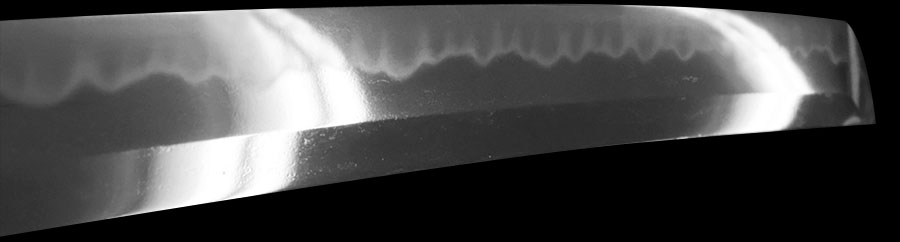
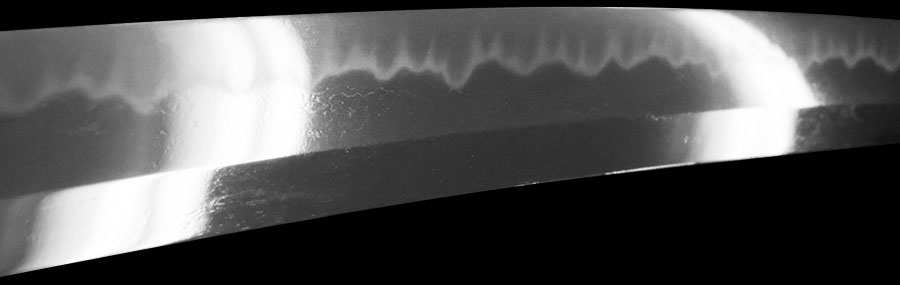
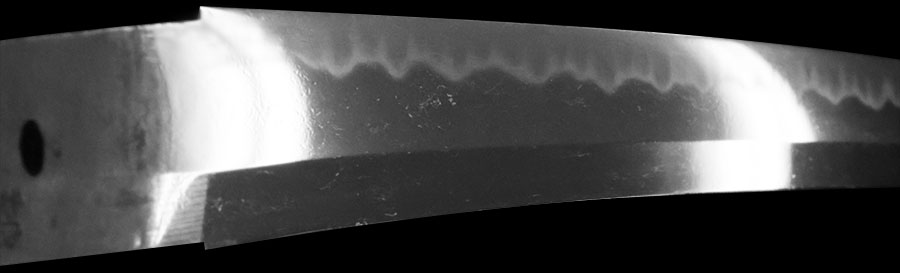
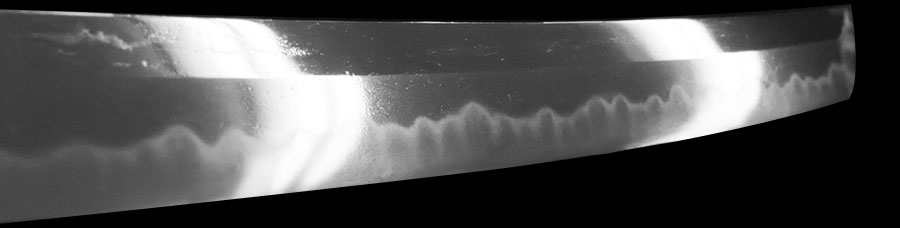
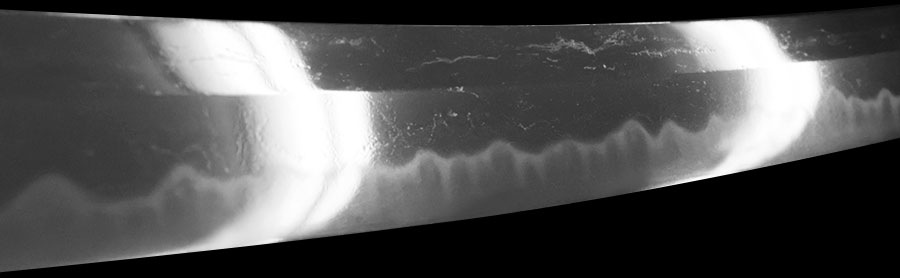
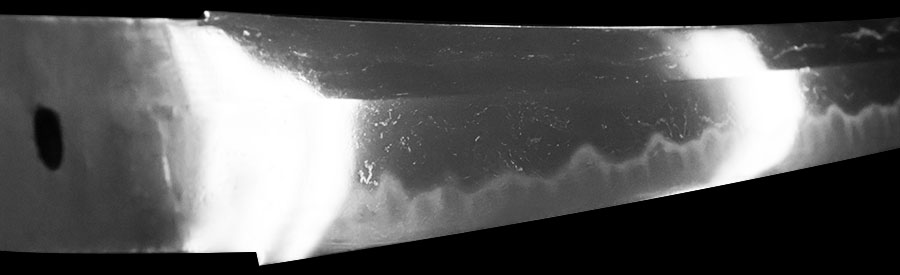
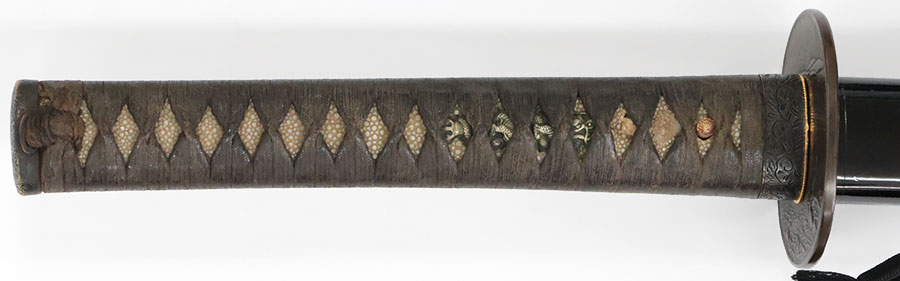
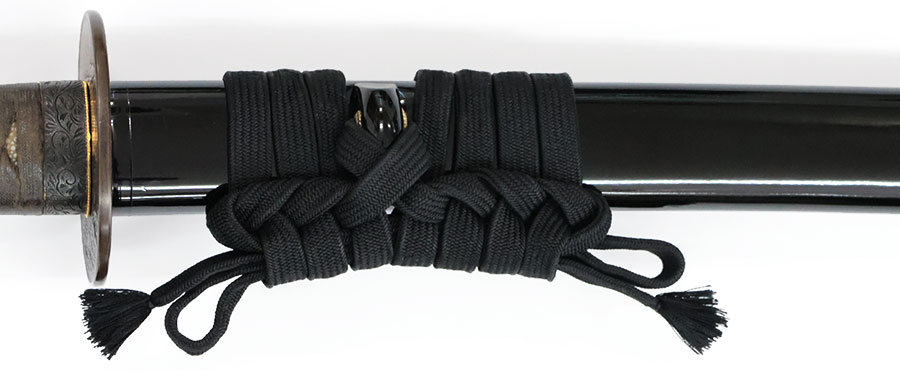
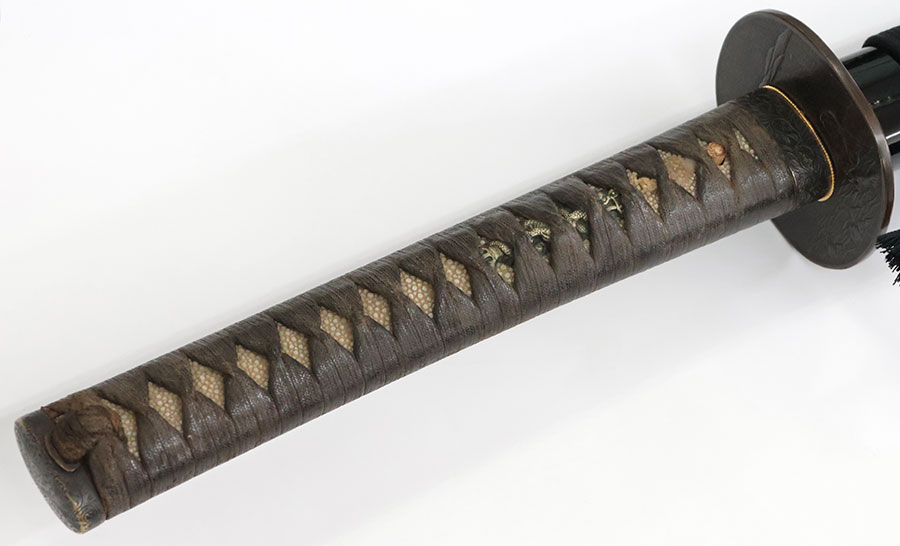
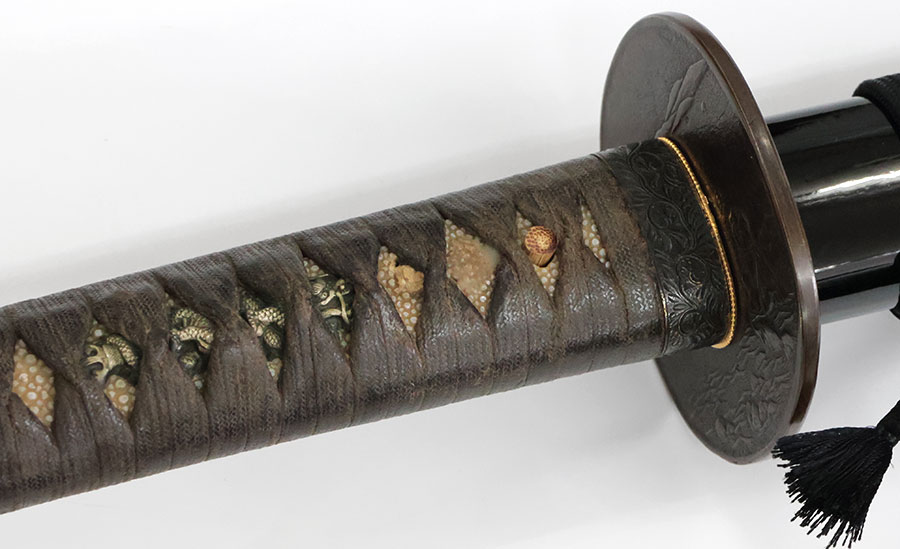
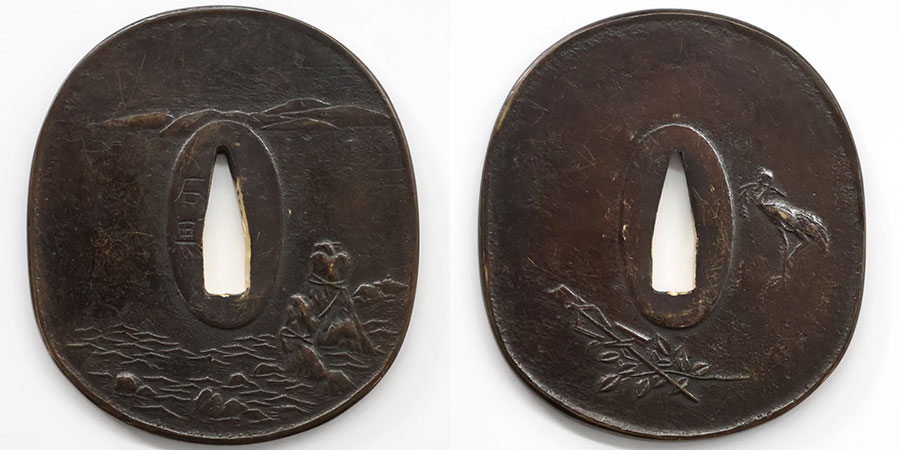
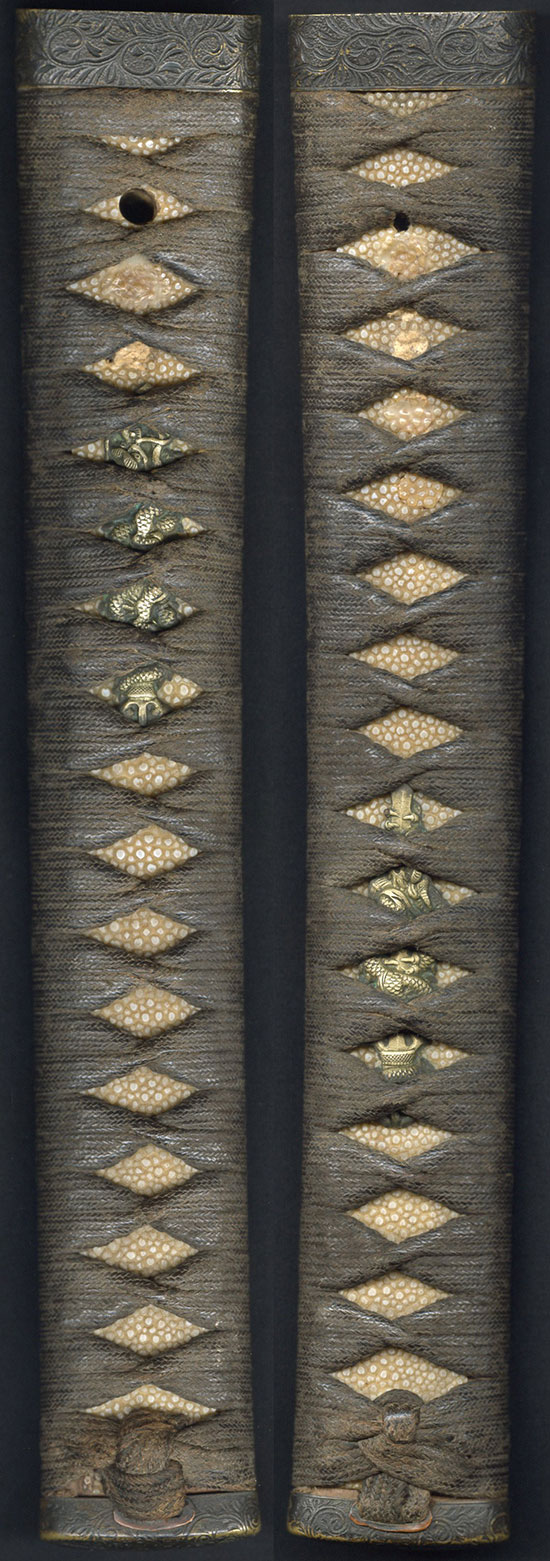
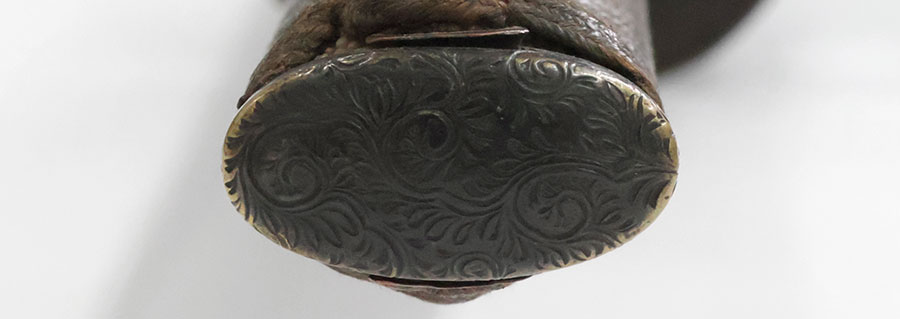
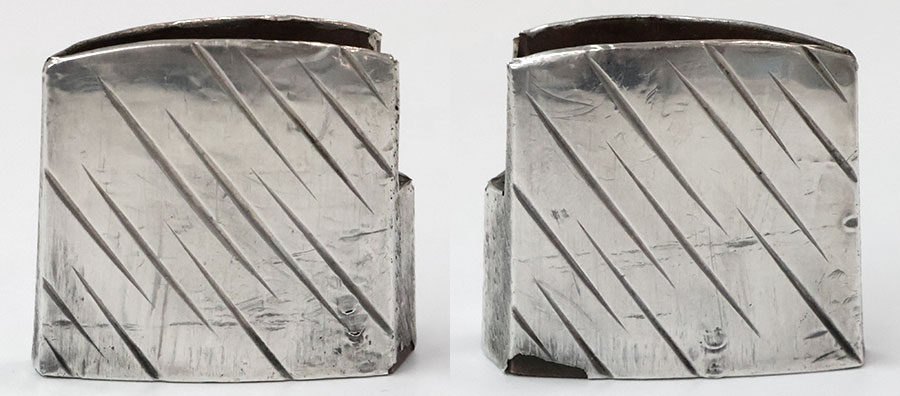
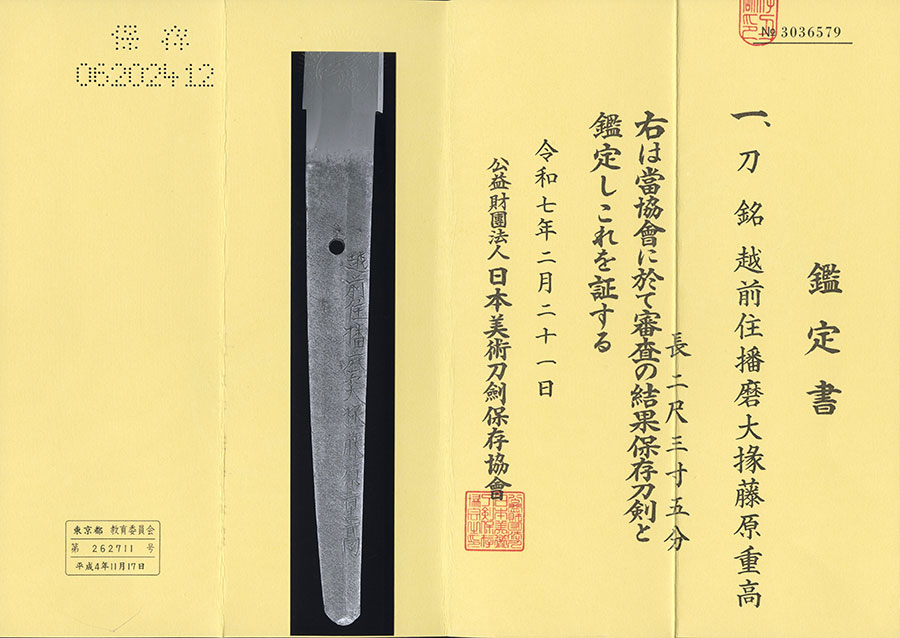
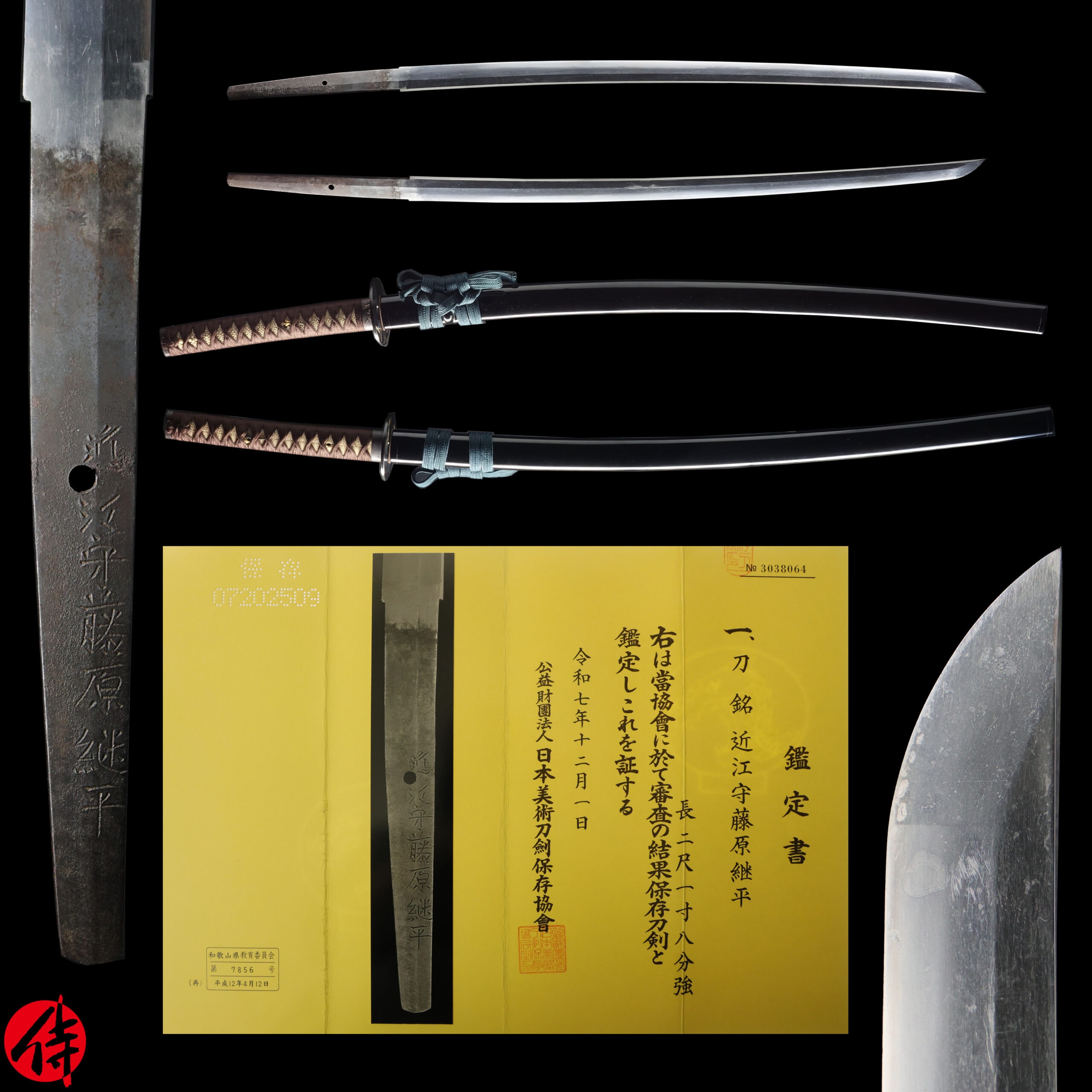
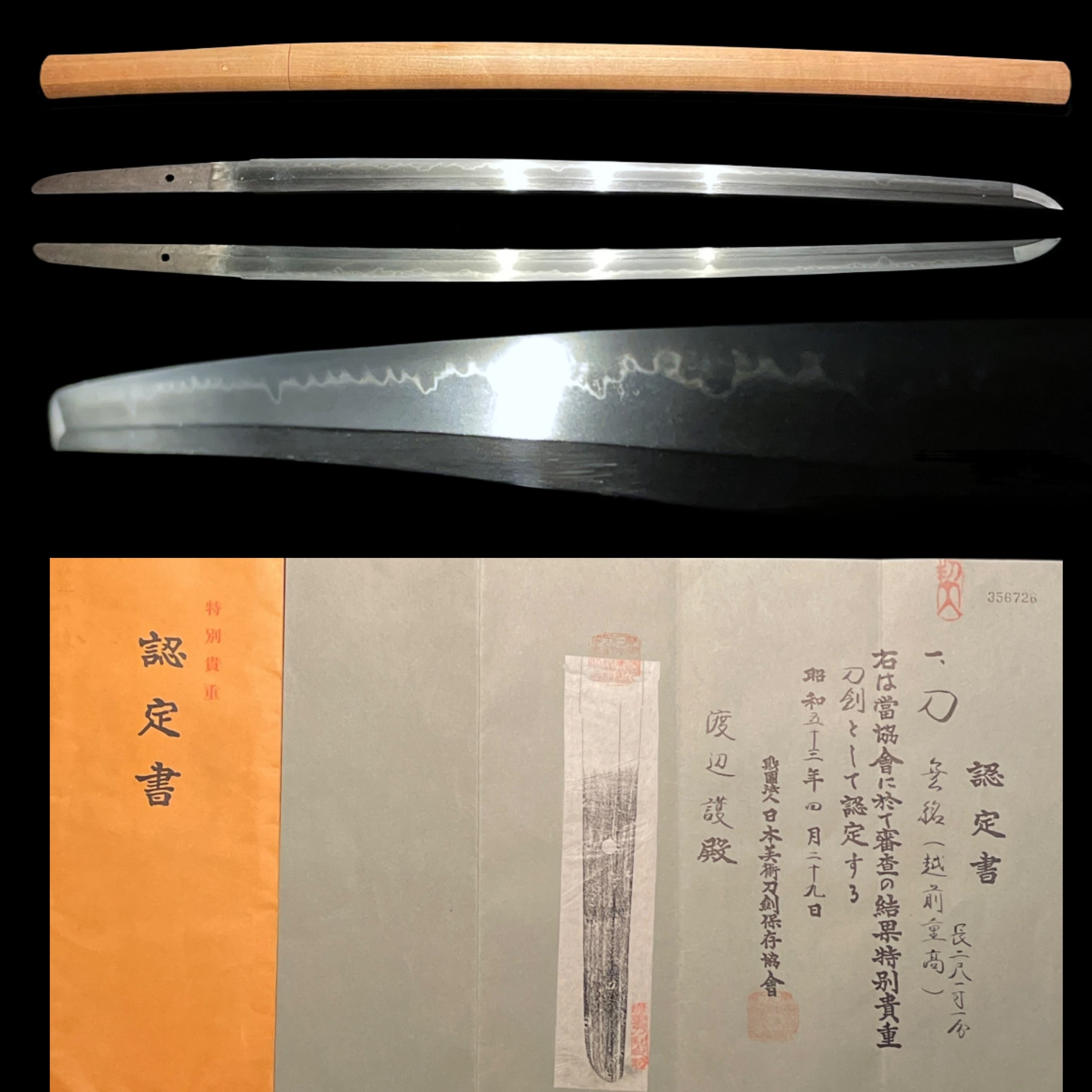
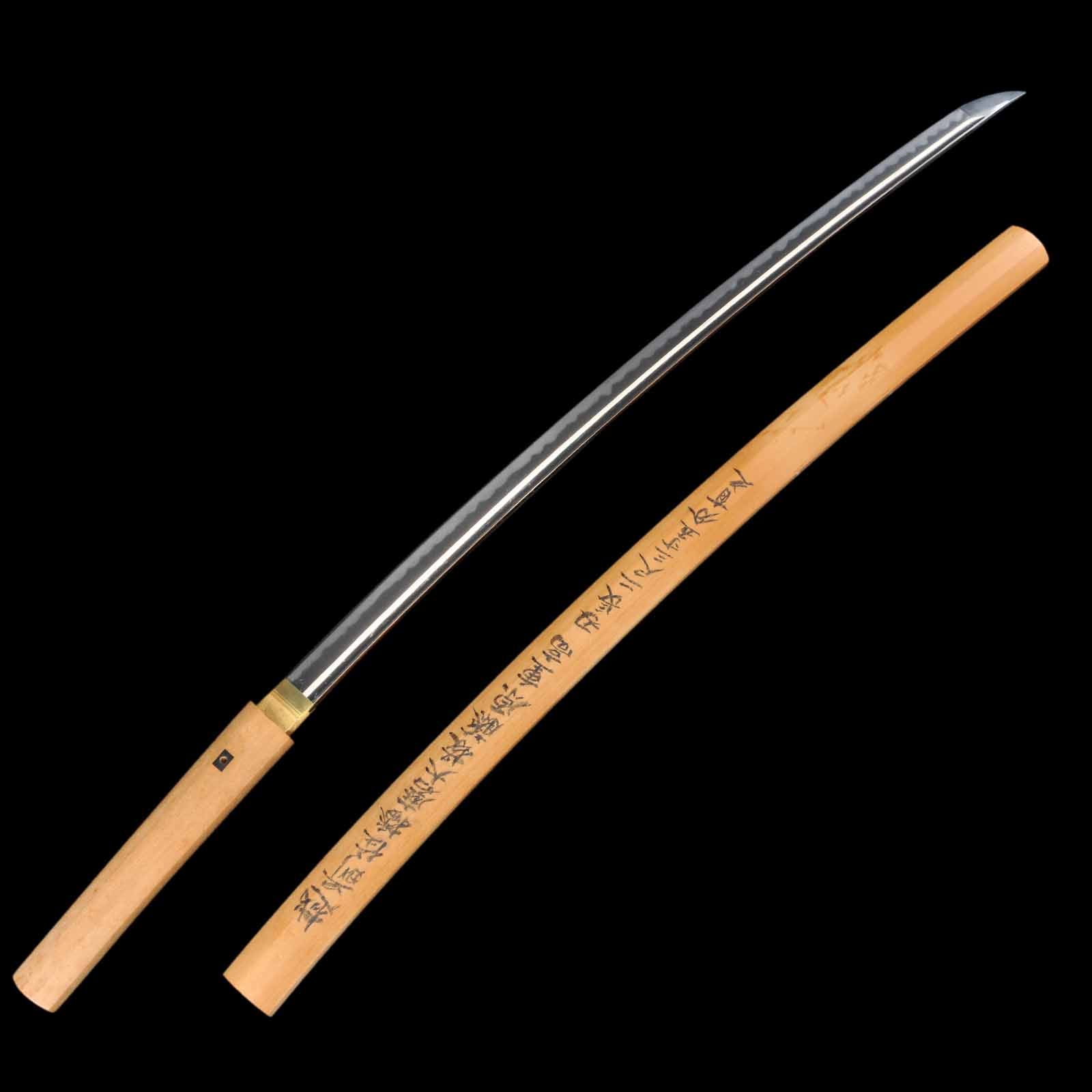
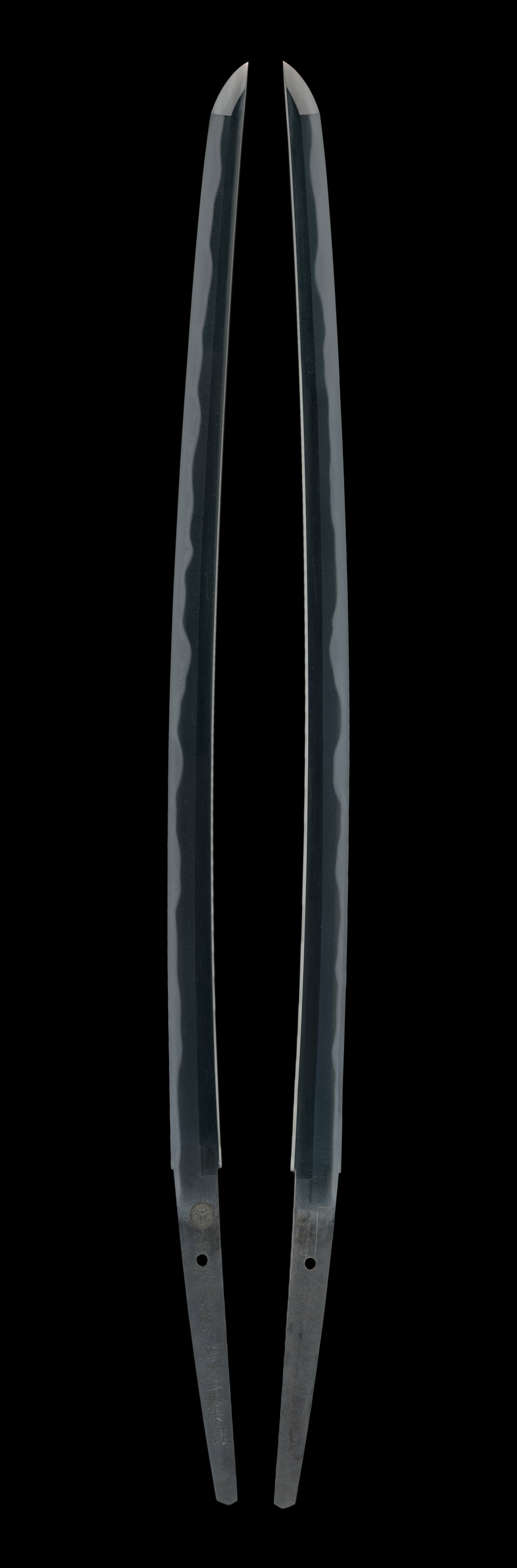
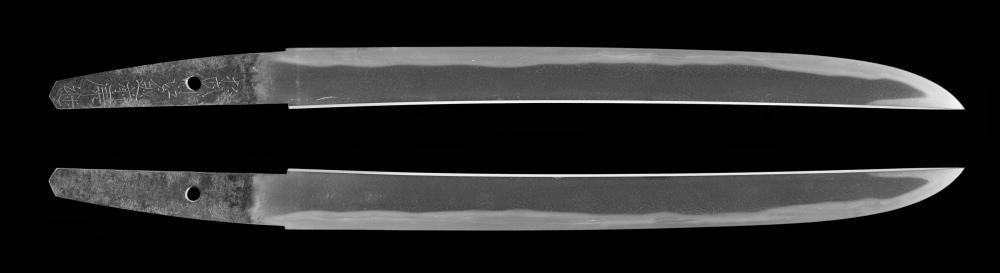
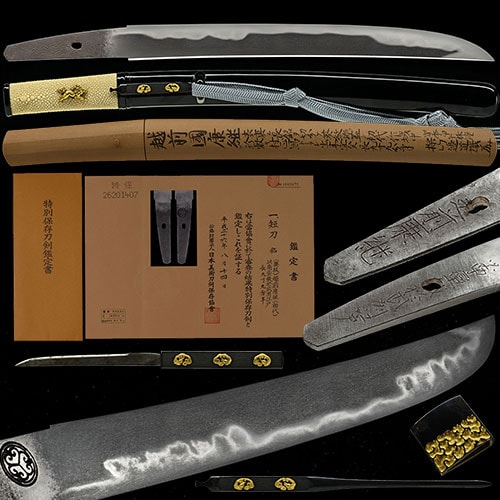
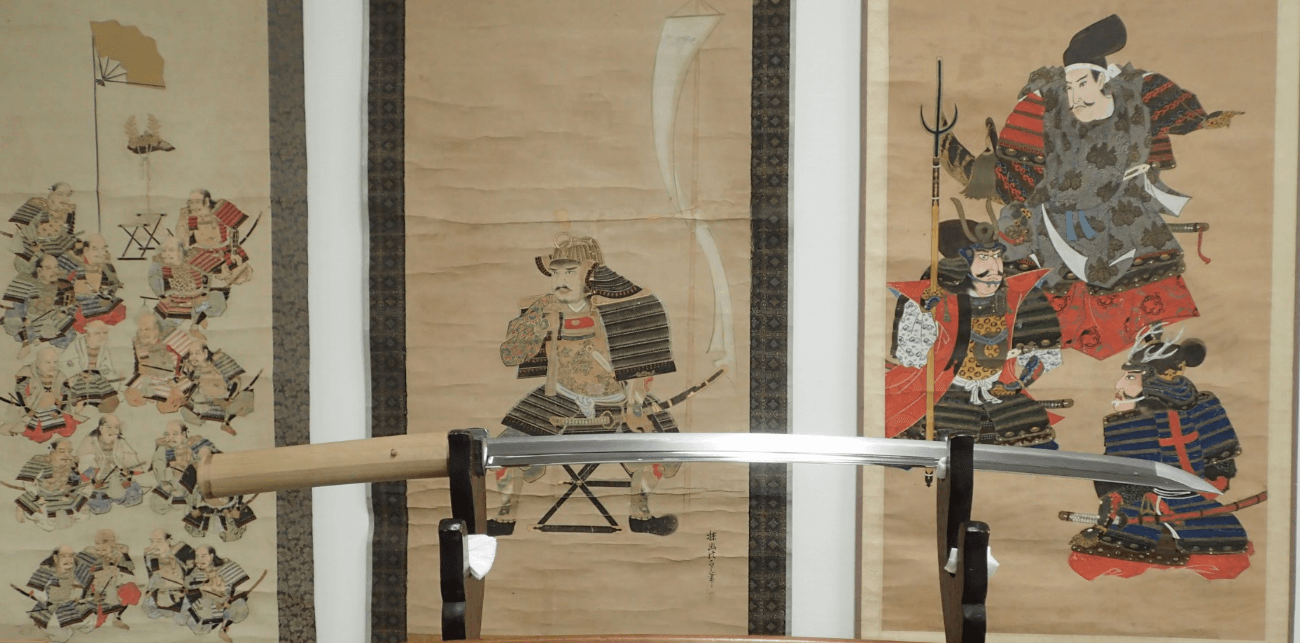
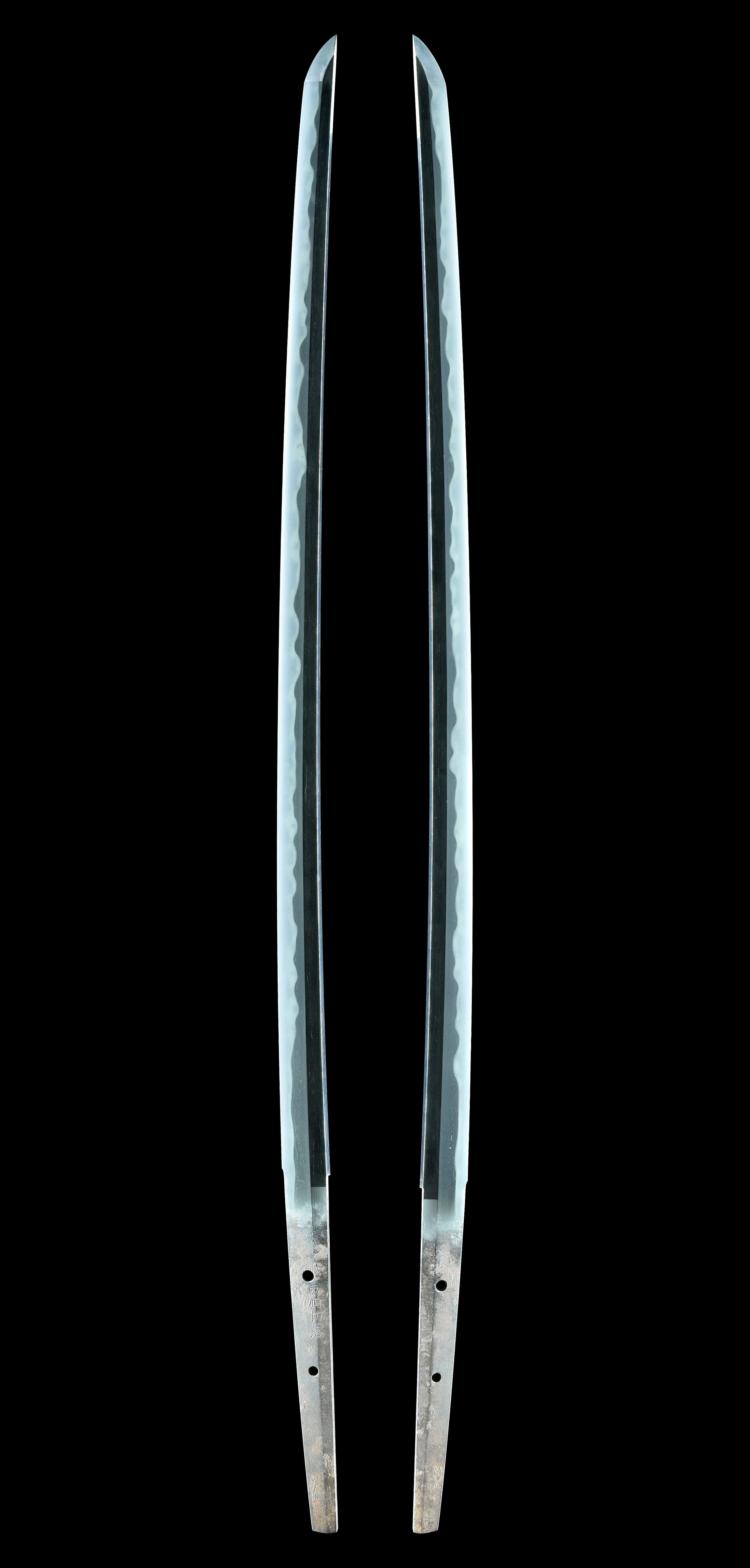
Weight (toshin only): 643g It has arrived! Whenever this sword is presented as a kantei-to at sword appraisal gatherings where enthusiasts congregate, the appraisal bid slips invariably come back with the name "Nagasone Kotetsu Nyudo Okisato." We have acquired a meito by Echizen Ju Harima no Daijo Fujiwara Shigetaka that bears a striking resemblance to the work of Kotetsu. Since ancient times, Echizen Fukui flourished as a center for overseas trade, particularly with the continent. When Yuki Hideyasu—the second son of Tokugawa Ieyasu and adopted son of Toyotomi Hideyoshi—became the lord of the 670,000-koku Fukui Domain, and the third son Tokugawa Hidetada assumed the Shogunate, the province of Echizen prospered greatly, and Shigetaka was celebrated as a master smith of the region. Shigetaka was a master active during the Kanbun Shinto period of the Edo era (1661, 365 years ago), the same era as Nagasone Kotetsu. This sword exhibits the Kanbun Shinto sugata identical to Kotetsu, characterized by a noticeable difference between the motohaba and sakihaba and a shallow sori, reflecting the popularity of thrusting techniques (tsuki-waza) in kendo at that time. The jigane is itame-hada mixed with masame-hada, and the shinogi-ji displays a vigorous masame-hada just like Kotetsu, forged into a resilient steel. The hamon is a nioi-deki with konie, featuring a bright nioi-guchi with many ashi, forming a continuous gunome-ba known as juzuba, which beautifully captures the essence of Nagasone Kotetsu’s workmanship. The koshirae, featuring a kuro-ro-saya, adds further elegance to this Shigetaka blade. The famous Echizen Shinto smiths, including Echizen Yasutsugu, Kotetsu, and Echizen Shigetaka, were highly regarded and popular among the samurai. This sword has been carefully preserved through generations of an old family, but as they have grown older, they have entrusted it to us to pass on to someone who will cherish it at an affordable price. Therefore, we are offering this popular blade by Echizen Ju Harima no Daijo Fujiwara Shigetaka from 365 years ago in the early Edo period at a special, ultra-low price nearly equivalent to that of a gendaito. Please take this opportunity to enjoy it.

NihontoWatch MonNihontoWatch
MarketEncyclopediaKantei
Swords›Shimosaka›越前›Katana by Echizenju Harimadaijo Fujiwara Shigetaka with Hozon Certificate
katanaHozon
Shimosaka School

Katana by Echizenju Harimadaijo Fujiwara Shigetaka with Hozon Certificate

Edo · nagasa 70.9cm · sori 1cm

¥860,000
Visit seller website →
Shimosaka School — 1 of 32
Shimosaka School — 2 of 32
Shimosaka School — 3 of 32
Shimosaka School — 4 of 32
Shimosaka School — 5 of 32
Shimosaka School — 6 of 32
Shimosaka School — 7 of 32
Shimosaka School — 8 of 32
Shimosaka School — 9 of 32
Shimosaka School — 10 of 32
Shimosaka School — 11 of 32
Shimosaka School — 12 of 32
Shimosaka School — 13 of 32
Shimosaka School — 14 of 32
Shimosaka School — 15 of 32
Shimosaka School — 16 of 32
Shimosaka School — 17 of 32
Shimosaka School — 18 of 32
Shimosaka School — 19 of 32
Shimosaka School — 20 of 32
Shimosaka School — 21 of 32
Shimosaka School — 22 of 32
Shimosaka School — 23 of 32
Shimosaka School — 24 of 32
Shimosaka School — 25 of 32
Shimosaka School — 26 of 32
Shimosaka School — 27 of 32
Shimosaka School — 28 of 32
Shimosaka School — 29 of 32
Shimosaka School — 30 of 32
Shimosaka School — 31 of 32
Shimosaka School — 32 of 32
1 / 32
1 / 32
Shimosaka School — 1 of 32Shimosaka School — 2 of 32Shimosaka School — 3 of 32Shimosaka School — 4 of 32Shimosaka School — 5 of 32Shimosaka School — 6 of 32Shimosaka School — 7 of 32Shimosaka School — 8 of 32Shimosaka School — 9 of 32Shimosaka School — 10 of 32Shimosaka School — 11 of 32Shimosaka School — 12 of 32Shimosaka School — 13 of 32Shimosaka School — 14 of 32Shimosaka School — 15 of 32Shimosaka School — 16 of 32Shimosaka School — 17 of 32Shimosaka School — 18 of 32Shimosaka School — 19 of 32Shimosaka School — 20 of 32Shimosaka School — 21 of 32Shimosaka School — 22 of 32Shimosaka School — 23 of 32Shimosaka School — 24 of 32Shimosaka School — 25 of 32Shimosaka School — 26 of 32Shimosaka School — 27 of 32Shimosaka School — 28 of 32Shimosaka School — 29 of 32Shimosaka School — 30 of 32Shimosaka School — 31 of 32Shimosaka School — 32 of 32
Measurements & details
Smith
Shimosaka School
Type
Katana
School
Shimosaka
Period
Edo(1596-1716)
Province
越前
Measurements
Nagasa 70.9cmSori 1cmMotohaba 3.07cmSakihaba 1.88cmKasane 0.75cm
Description

Weight (toshin only): 643g It has arrived! Whenever this sword is presented as a kantei-to at sword appraisal gatherings where enthusiasts congregate, the appraisal bid slips invariably come back with the name "Nagasone Kotetsu Nyudo Okisato." We have acquired a meito by Echizen Ju Harima no Daijo Fujiwara Shigetaka that bears a striking resemblance to the work of Kotetsu. Since ancient times, Echizen Fukui flourished as a center for overseas trade, particularly with the continent. When Yuki Hideyasu—the second son of Tokugawa Ieyasu and adopted son of Toyotomi Hideyoshi—became the lord of the 670,000-koku Fukui Domain, and the third son Tokugawa Hidetada assumed the Shogunate, the province of Echizen prospered greatly, and Shigetaka was celebrated as a master smith of the region. Shigetaka was a master active during the Kanbun Shinto period of the Edo era (1661, 365 years ago), the same era as Nagasone Kotetsu. This sword exhibits the Kanbun Shinto sugata identical to Kotetsu, characterized by a noticeable difference between the motohaba and sakihaba and a shallow sori, reflecting the popularity of thrusting techniques (tsuki-waza) in kendo at that time. The jigane is itame-hada mixed with masame-hada, and the shinogi-ji displays a vigorous masame-hada just like Kotetsu, forged into a resilient steel. The hamon is a nioi-deki with konie, featuring a bright nioi-guchi with many ashi, forming a continuous gunome-ba known as juzuba, which beautifully captures the essence of Nagasone Kotetsu’s workmanship. The koshirae, featuring a kuro-ro-saya, adds further elegance to this Shigetaka blade. The famous Echizen Shinto smiths, including Echizen Yasutsugu, Kotetsu, and Echizen Shigetaka, were highly regarded and popular among the samurai. This sword has been carefully preserved through generations of an old family, but as they have grown older, they have entrusted it to us to pass on to someone who will cherish it at an affordable price. Therefore, we are offering this popular blade by Echizen Ju Harima no Daijo Fujiwara Shigetaka from 365 years ago in the early Edo period at a special, ultra-low price nearly equivalent to that of a gendaito. Please take this opportunity to enjoy it.

About the school

Shimosaka

下坂

Shinto · Echizen

55 pieces on the market now

›

The Shimosaka name began not as a single hand but as a trademark shared by a band of Echizen smiths at the dawn of the shinto era, and the designated record gathers their work under that one signature rather than parsing it into individuals. The published sources read the early inscriptions, the generic Echizen no Kuni Shimosaka and the titled Higo Daijo Fujiwara Shimosaka, as the product of a group, of which the first-generation Yasutsugu served as the representative. Born in Shimosaka village of Sakata district in Omi, Yasutsugu moved to Echizen under the patronage of Yuki Hideyasu, signing in his early years Higo no Daijo Shimosaka before his Keicho 10 to 11 summons to Edo, where he forged before Ieyasu and Hidetada and received the character Yasu and the right to cut the Tokugawa hollyhock crest on his nakago. The titled signature was carried by several Echizen hands at once, and the texts list Yasutsugu, Sadakuni and Kanenori among the smiths whose chisel movement and brush intent are too alike to part on present evidence. From this band the Echizen Yasutsugu line descended, dividing after the second generation into the Edo and Echizen Shimosaka houses, and around it formed the deep relief carving the province made its own. The school is recognized first in its steel. The forging is itame mixed with mokume that stands and opens, often flowing into nagare, carrying thick ji-nie and fine chikei, the kane taking on the blackish cast the sources name outright as Echizen-gane; the same dark, standing jihada recurs from Yasutsugu through his son, through Sadatsugu, Shigetaka and the unnamed Shimosaka hands, and the commentary returns to it as the group's signature. Over it the hamon favors a suguha to chu-suguha or shallow notare into which linked gunome and ko-gunome mix, ko-ashi and yo entering, the nie thick and gathering unevenly into rough patches, kinsuji and sunagashi streaming through, the nioiguchi tending to a sinking shizumi.

The boshi is the steadiest tell, running to a ko-maru swept in hakikake and turning back long, with a Sanpin-flavored reminiscence of the Mishina and Echizen-Seki inheritance. Yet the house is not uniform: Sadakuni works an austere suguha over an unusually refined ji with little of the blackish mokume, Sadatsugu fires the brightest, most choji-laden midare of the circle, and the third generation cleans the forging and brightens the nioiguchi toward his Edo contemporaries. Binding the registers is the carving, the deep Echizen-bori and Kinai-bori of kurikara, Fudo Myoo, bonji and gomabashi set in relief within the hi, which Sadakuni may have first supplied to Yasutsugu's blades. For the collector the school rewards reading by register rather than by a single famous holding. Yasutsugu is its summit, rated Jo-jo saku, retained smith to the shogunal house, whose Sadamune and Toshiro copies (the Namazuo, the lost Oyako, the Shishi) show his own Echizen hand under the model, and whose best katana carry the possession inscriptions of his patron Honda Hida no Kami Narishige and provenance in the Echizen and Kishu Tokugawa houses. The second generation follows so faithfully that his finest blades part from the father chiefly by the form of the character tsugu; the Edo third generation continues the suguha and ko-notare manners with a straight yakidashi and a Hojoji affinity. Around them the specialists define the edges of the idiom: Sadakuni and his quiet suguha with a pair of tanto in the Imperial Collection, Sadatsugu with his Narishige-crested cutting-test blades, and Shigetaka, the most skilled of Yasutsugu's pupils, whose chestnut-tailed kurijiri nakago and Kinai carving (the Honebami and Hossho copies among his masterworks) name him at a glance and whose finest work approaches the master. A signed Shimosaka blade, whether a titled Yasutsugu beneath the aoi-mon, a named piece by one of the band, or a Higo Daijo pre-Yasutsugu register, comes to market only from time to time, valued as the wellspring from which the Echizen Yasutsugu line and its carving tradition arose. Learn more →


16 recorded smiths151 designated works
Leading smiths
SmithEraDesignated
Yasutsugu康繼1596-161573
Yasutsugu康繼1624-164427
Yasutsugu康繼1661-16738
Sadakuni貞國1596-161511
Shigetaka重高1596-16156
Explore the Shimosaka school →

Historical context

Under the Tokugawa peace the daishō became a regulated uniform, and demand gathered in the castle towns, above all Edo itself. The craft split two ways: brilliant display work for connoisseurs, and tested blades whose cutting results were sometimes inlaid in gold.

The Edo period (1615 to 1868) →

NBTHK Certificate
Hozon Tōken保存刀剣
Sword Worthy of Preservation
›

Certifies a genuine blade worth preserving: a signature confirmed correct, or, if unsigned, an era, province, and school that the NBTHK can reliably identify.

About the NBTHK›

The NBTHK (Nihon Bijutsu Tōken Hozon Kyōkai, the Society for the Preservation of Japanese Art Swords) is a public-interest incorporated foundation founded in 1948 and supervised by Japan’s Agency for Cultural Affairs (Bunkachō); it is based at the Japanese Sword Museum in Tokyo. Its expert panels physically examine each submitted work (shinsa) and issue a certificate (kanteishō) ranking it by artistic and historical merit. NBTHK papers are the most widely recognized standard of authentication for Japanese swords and fittings.

NBTHK official site→
Seller
N
Nipponto
Established 1953 · 73 yrs on the market
🇯🇵Ships from Japan
›
✓Verified dealernipponto.co.jp
Settles in JPY
✓Ships worldwide✓English supportPayPalCredit card
Return policy

For returns due to customer circumstances, the cost is the customer's responsibility. For returns due to our mis-shipment or a defective item, we bear the cost.

View all of Nipponto’s listings→View this item on the dealer’s site→

Previously sold — Shimosaka School

Samurai Museum
Hozon
Katana - Hozon - by Shimosaka School - Omi no Kami Fujiwara TsuguhiraKatana - Hozon - by Shimosaka School - Omi no Kami Fujiwara Tsuguhira
Sold

Katana

ByShimosaka School
SOLD
Tokyo Sword
Katana - by Shimosaka School - Echizen Shigetaka - Early Edo PeriodKatana - by Shimosaka School - Echizen Shigetaka - Early Edo Period
Sold

Katana

ByShimosaka School
SOLD
Tozando
Tokuho
Katana - Tokuho - by Shimosaka School - ShigetakaKatana - Tokuho - by Shimosaka School - Shigetaka
Sold

Katana

ByShimosaka School
SOLD
Giheiya
NTHK
Katana - NTHK - by Shimosaka School - Mumei (Chikuzen Shimosaka) with KoshiraeKatana - NTHK - by Shimosaka School - Mumei (Chikuzen Shimosaka) with Koshirae
Sold

Katana

ByShimosaka School
SOLD
Touken Komachi
Katana - by Shimosaka School - Katana with Shirasaya and KoshiraeKatana - by Shimosaka School - Katana with Shirasaya and Koshirae
Sold

Katana

ByShimosaka School
SOLD
Choshuya
Tanto - by Shimosaka School - Japanese Sword for Sale | Ginza Choshuya | Signed Echizen Shimosaka, 1381Tanto - by Shimosaka School - Japanese Sword for Sale | Ginza Choshuya | Signed Echizen Shimosaka, 1381
Sold

Tantō

ByShimosaka School
SOLD
Aoi Art
Hozon
Katana - Hozon - by Shimosaka School - Mumei (Harima Daijo Shigetaka)Katana - Hozon - by Shimosaka School - Mumei (Harima Daijo Shigetaka)
Sold

Katana

ByShimosaka School
SOLD
Aoi Art
Hozon
Katana - Hozon - by Shimosaka School - Echizen ju Fujiwara SadakuniKatana - Hozon - by Shimosaka School - Echizen ju Fujiwara Sadakuni
Sold

Katana

ByShimosaka School
SOLD

More from the Shimosaka school

View all →
Aoi Art
Hozon
Katana - Hozon - by Shimosaka Yasutsugu - Mumei (Attributed to 1st Generation Echizen Yasutsugu) with Saidan-mei and Kiritsuke-meiKatana - Hozon - by Shimosaka Yasutsugu - Mumei (Attributed to 1st Generation Echizen Yasutsugu) with Saidan-mei and Kiritsuke-mei

Katana

ByShimosaka Yasutsugu
Starting Bid¥2,000,000
Toukentakarado
Jūyō
Katana - Jūyō - by Shimosaka Yasutsugu - (Aoi mon) Echizen Yasutsugu, resident of Bushū EdoKatana - Jūyō - by Shimosaka Yasutsugu - (Aoi mon) Echizen Yasutsugu, resident of Bushū Edo

Katana

ByShimosaka Yasutsugu
¥8,000,000
Token-Net
Jūyō
Katana - Jūyō - by Shimosaka Yasutsugu - Oite Busyu Edo Echizen Yasutsugu motte Nanban-tetsu (1st Gen.)Katana - Jūyō - by Shimosaka Yasutsugu - Oite Busyu Edo Echizen Yasutsugu motte Nanban-tetsu (1st Gen.)

Katana

ByShimosaka Yasutsugu
¥9,800,000
Shoubudou
Tokuho
Wakizashi - Tokuho - by Shimosaka Yasutsugu - Oie Bushu Edo Echizen Yasutsugu (1st Generation)Wakizashi - Tokuho - by Shimosaka Yasutsugu - Oie Bushu Edo Echizen Yasutsugu (1st Generation)

Wakizashi

ByShimosaka Yasutsugu
¥2,500,000
Eirakudo
Tokuho
Tanto - Tokuho - by Shimosaka Yasutsugu - 1st Gen. Yasutsugu - Tokubetsu Hozon TokenTanto - Tokuho - by Shimosaka Yasutsugu - 1st Gen. Yasutsugu - Tokubetsu Hozon Token

Tantō

ByShimosaka Yasutsugu
¥5,000,000
Nihonto Australia
Tokuho
Katana - Tokuho - by Shimosaka Yasutsugu - First Generation Echizen Yasutsugu Katana, Utsushi of Ataki Sadamune, with NBTHK CertificateKatana - Tokuho - by Shimosaka Yasutsugu - First Generation Echizen Yasutsugu Katana, Utsushi of Ataki Sadamune, with NBTHK Certificate

Katana

ByShimosaka Yasutsugu
Ask
Toushin
Hozon
Katana - Hozon - by Shimosaka Hirotaka - Futatsudo Kiriotosu (Hokki no Kami Hirotaka) - 2-997Katana - Hozon - by Shimosaka Hirotaka - Futatsudo Kiriotosu (Hokki no Kami Hirotaka) - 2-997

Katana

ByShimosaka Hirotaka
¥1,100,000
Touken Sakata
Jūyō
Katana - Jūyō - by Shimosaka Yasutsugu - Yasutsugu Nyudo (2nd Gen.) made with Namban-tetsu in Bushu EdoKatana - Jūyō - by Shimosaka Yasutsugu - Yasutsugu Nyudo (2nd Gen.) made with Namban-tetsu in Bushu Edo

Katana

ByShimosaka Yasutsugu
¥6,700,000

Swords

  • Katana
  • Wakizashi
  • Tantō
  • Tachi
  • Naginata
  • Yari

Fittings

  • Tsuba
  • Fuchi-Kashira
  • Kozuka
  • Menuki

Armor

  • Kabuto
  • Samurai Armor

By Certification

  • Tokujū
  • Jūyō
  • Tokuho
  • Hozon

Resources

  • Dealer Directory
  • Artist Directory
  • The Daily Kantei
  • Glossary
  • Browse All
Nihontowatch© 2026
TermsPrivacyCookiesAbout

Description

Weight (toshin only): 643g It has arrived! Whenever this sword is presented as a kantei-to at sword appraisal gatherings where enthusiasts congregate, the appraisal bid slips invariably come back with the name "Nagasone Kotetsu Nyudo Okisato." We have acquired a meito by Echizen Ju Harima no Daijo Fujiwara Shigetaka that bears a striking resemblance to the work of Kotetsu. Since ancient times, Echizen Fukui flourished as a center for overseas trade, particularly with the continent. When Yuki Hideyasu—the second son of Tokugawa Ieyasu and adopted son of Toyotomi Hideyoshi—became the lord of the 670,000-koku Fukui Domain, and the third son Tokugawa Hidetada assumed the Shogunate, the province of Echizen prospered greatly, and Shigetaka was celebrated as a master smith of the region. Shigetaka was a master active during the Kanbun Shinto period of the Edo era (1661, 365 years ago), the same era as Nagasone Kotetsu. This sword exhibits the Kanbun Shinto sugata identical to Kotetsu, characterized by a noticeable difference between the motohaba and sakihaba and a shallow sori, reflecting the popularity of thrusting techniques (tsuki-waza) in kendo at that time. The jigane is itame-hada mixed with masame-hada, and the shinogi-ji displays a vigorous masame-hada just like Kotetsu, forged into a resilient steel. The hamon is a nioi-deki with konie, featuring a bright nioi-guchi with many ashi, forming a continuous gunome-ba known as juzuba, which beautifully captures the essence of Nagasone Kotetsu’s workmanship. The koshirae, featuring a kuro-ro-saya, adds further elegance to this Shigetaka blade. The famous Echizen Shinto smiths, including Echizen Yasutsugu, Kotetsu, and Echizen Shigetaka, were highly regarded and popular among the samurai. This sword has been carefully preserved through generations of an old family, but as they have grown older, they have entrusted it to us to pass on to someone who will cherish it at an affordable price. Therefore, we are offering this popular blade by Echizen Ju Harima no Daijo Fujiwara Shigetaka from 365 years ago in the early Edo period at a special, ultra-low price nearly equivalent to that of a gendaito. Please take this opportunity to enjoy it.

NihontoWatch MonNihontoWatch
MarketEncyclopediaKantei
Swords›Shimosaka›越前›Katana by Echizenju Harimadaijo Fujiwara Shigetaka with Hozon Certificate
katanaHozon
Shimosaka School

Katana by Echizenju Harimadaijo Fujiwara Shigetaka with Hozon Certificate

Edo · nagasa 70.9cm · sori 1cm

¥860,000
Visit seller website →
Shimosaka School — 1 of 32
Shimosaka School — 2 of 32
Shimosaka School — 3 of 32
Shimosaka School — 4 of 32
Shimosaka School — 5 of 32
Shimosaka School — 6 of 32
Shimosaka School — 7 of 32
Shimosaka School — 8 of 32
Shimosaka School — 9 of 32
Shimosaka School — 10 of 32
Shimosaka School — 11 of 32
Shimosaka School — 12 of 32
Shimosaka School — 13 of 32
Shimosaka School — 14 of 32
Shimosaka School — 15 of 32
Shimosaka School — 16 of 32
Shimosaka School — 17 of 32
Shimosaka School — 18 of 32
Shimosaka School — 19 of 32
Shimosaka School — 20 of 32
Shimosaka School — 21 of 32
Shimosaka School — 22 of 32
Shimosaka School — 23 of 32
Shimosaka School — 24 of 32
Shimosaka School — 25 of 32
Shimosaka School — 26 of 32
Shimosaka School — 27 of 32
Shimosaka School — 28 of 32
Shimosaka School — 29 of 32
Shimosaka School — 30 of 32
Shimosaka School — 31 of 32
Shimosaka School — 32 of 32
1 / 32
1 / 32
Shimosaka School — 1 of 32Shimosaka School — 2 of 32Shimosaka School — 3 of 32Shimosaka School — 4 of 32Shimosaka School — 5 of 32Shimosaka School — 6 of 32Shimosaka School — 7 of 32Shimosaka School — 8 of 32Shimosaka School — 9 of 32Shimosaka School — 10 of 32Shimosaka School — 11 of 32Shimosaka School — 12 of 32Shimosaka School — 13 of 32Shimosaka School — 14 of 32Shimosaka School — 15 of 32Shimosaka School — 16 of 32Shimosaka School — 17 of 32Shimosaka School — 18 of 32Shimosaka School — 19 of 32Shimosaka School — 20 of 32Shimosaka School — 21 of 32Shimosaka School — 22 of 32Shimosaka School — 23 of 32Shimosaka School — 24 of 32Shimosaka School — 25 of 32Shimosaka School — 26 of 32Shimosaka School — 27 of 32Shimosaka School — 28 of 32Shimosaka School — 29 of 32Shimosaka School — 30 of 32Shimosaka School — 31 of 32Shimosaka School — 32 of 32
Measurements & details
Smith
Shimosaka School
Type
Katana
School
Shimosaka
Period
Edo(1596-1716)
Province
越前
Measurements
Nagasa 70.9cmSori 1cmMotohaba 3.07cmSakihaba 1.88cmKasane 0.75cm
Description

Weight (toshin only): 643g It has arrived! Whenever this sword is presented as a kantei-to at sword appraisal gatherings where enthusiasts congregate, the appraisal bid slips invariably come back with the name "Nagasone Kotetsu Nyudo Okisato." We have acquired a meito by Echizen Ju Harima no Daijo Fujiwara Shigetaka that bears a striking resemblance to the work of Kotetsu. Since ancient times, Echizen Fukui flourished as a center for overseas trade, particularly with the continent. When Yuki Hideyasu—the second son of Tokugawa Ieyasu and adopted son of Toyotomi Hideyoshi—became the lord of the 670,000-koku Fukui Domain, and the third son Tokugawa Hidetada assumed the Shogunate, the province of Echizen prospered greatly, and Shigetaka was celebrated as a master smith of the region. Shigetaka was a master active during the Kanbun Shinto period of the Edo era (1661, 365 years ago), the same era as Nagasone Kotetsu. This sword exhibits the Kanbun Shinto sugata identical to Kotetsu, characterized by a noticeable difference between the motohaba and sakihaba and a shallow sori, reflecting the popularity of thrusting techniques (tsuki-waza) in kendo at that time. The jigane is itame-hada mixed with masame-hada, and the shinogi-ji displays a vigorous masame-hada just like Kotetsu, forged into a resilient steel. The hamon is a nioi-deki with konie, featuring a bright nioi-guchi with many ashi, forming a continuous gunome-ba known as juzuba, which beautifully captures the essence of Nagasone Kotetsu’s workmanship. The koshirae, featuring a kuro-ro-saya, adds further elegance to this Shigetaka blade. The famous Echizen Shinto smiths, including Echizen Yasutsugu, Kotetsu, and Echizen Shigetaka, were highly regarded and popular among the samurai. This sword has been carefully preserved through generations of an old family, but as they have grown older, they have entrusted it to us to pass on to someone who will cherish it at an affordable price. Therefore, we are offering this popular blade by Echizen Ju Harima no Daijo Fujiwara Shigetaka from 365 years ago in the early Edo period at a special, ultra-low price nearly equivalent to that of a gendaito. Please take this opportunity to enjoy it.

About the school

Shimosaka

下坂

Shinto · Echizen

55 pieces on the market now

›

The Shimosaka name began not as a single hand but as a trademark shared by a band of Echizen smiths at the dawn of the shinto era, and the designated record gathers their work under that one signature rather than parsing it into individuals. The published sources read the early inscriptions, the generic Echizen no Kuni Shimosaka and the titled Higo Daijo Fujiwara Shimosaka, as the product of a group, of which the first-generation Yasutsugu served as the representative. Born in Shimosaka village of Sakata district in Omi, Yasutsugu moved to Echizen under the patronage of Yuki Hideyasu, signing in his early years Higo no Daijo Shimosaka before his Keicho 10 to 11 summons to Edo, where he forged before Ieyasu and Hidetada and received the character Yasu and the right to cut the Tokugawa hollyhock crest on his nakago. The titled signature was carried by several Echizen hands at once, and the texts list Yasutsugu, Sadakuni and Kanenori among the smiths whose chisel movement and brush intent are too alike to part on present evidence. From this band the Echizen Yasutsugu line descended, dividing after the second generation into the Edo and Echizen Shimosaka houses, and around it formed the deep relief carving the province made its own. The school is recognized first in its steel. The forging is itame mixed with mokume that stands and opens, often flowing into nagare, carrying thick ji-nie and fine chikei, the kane taking on the blackish cast the sources name outright as Echizen-gane; the same dark, standing jihada recurs from Yasutsugu through his son, through Sadatsugu, Shigetaka and the unnamed Shimosaka hands, and the commentary returns to it as the group's signature. Over it the hamon favors a suguha to chu-suguha or shallow notare into which linked gunome and ko-gunome mix, ko-ashi and yo entering, the nie thick and gathering unevenly into rough patches, kinsuji and sunagashi streaming through, the nioiguchi tending to a sinking shizumi.

The boshi is the steadiest tell, running to a ko-maru swept in hakikake and turning back long, with a Sanpin-flavored reminiscence of the Mishina and Echizen-Seki inheritance. Yet the house is not uniform: Sadakuni works an austere suguha over an unusually refined ji with little of the blackish mokume, Sadatsugu fires the brightest, most choji-laden midare of the circle, and the third generation cleans the forging and brightens the nioiguchi toward his Edo contemporaries. Binding the registers is the carving, the deep Echizen-bori and Kinai-bori of kurikara, Fudo Myoo, bonji and gomabashi set in relief within the hi, which Sadakuni may have first supplied to Yasutsugu's blades. For the collector the school rewards reading by register rather than by a single famous holding. Yasutsugu is its summit, rated Jo-jo saku, retained smith to the shogunal house, whose Sadamune and Toshiro copies (the Namazuo, the lost Oyako, the Shishi) show his own Echizen hand under the model, and whose best katana carry the possession inscriptions of his patron Honda Hida no Kami Narishige and provenance in the Echizen and Kishu Tokugawa houses. The second generation follows so faithfully that his finest blades part from the father chiefly by the form of the character tsugu; the Edo third generation continues the suguha and ko-notare manners with a straight yakidashi and a Hojoji affinity. Around them the specialists define the edges of the idiom: Sadakuni and his quiet suguha with a pair of tanto in the Imperial Collection, Sadatsugu with his Narishige-crested cutting-test blades, and Shigetaka, the most skilled of Yasutsugu's pupils, whose chestnut-tailed kurijiri nakago and Kinai carving (the Honebami and Hossho copies among his masterworks) name him at a glance and whose finest work approaches the master. A signed Shimosaka blade, whether a titled Yasutsugu beneath the aoi-mon, a named piece by one of the band, or a Higo Daijo pre-Yasutsugu register, comes to market only from time to time, valued as the wellspring from which the Echizen Yasutsugu line and its carving tradition arose. Learn more →

16 recorded smiths151 designated works
Leading smiths
SmithEraDesignated
Yasutsugu康繼1596-161573
Yasutsugu康繼1624-164427
Yasutsugu康繼1661-16738
Sadakuni貞國1596-161511
Shigetaka重高1596-16156
Explore the Shimosaka school →

Historical context

Under the Tokugawa peace the daishō became a regulated uniform, and demand gathered in the castle towns, above all Edo itself. The craft split two ways: brilliant display work for connoisseurs, and tested blades whose cutting results were sometimes inlaid in gold.

The Edo period (1615 to 1868) →

NBTHK Certificate
Hozon Tōken保存刀剣
Sword Worthy of Preservation
›

Certifies a genuine blade worth preserving: a signature confirmed correct, or, if unsigned, an era, province, and school that the NBTHK can reliably identify.

About the NBTHK›

The NBTHK (Nihon Bijutsu Tōken Hozon Kyōkai, the Society for the Preservation of Japanese Art Swords) is a public-interest incorporated foundation founded in 1948 and supervised by Japan’s Agency for Cultural Affairs (Bunkachō); it is based at the Japanese Sword Museum in Tokyo. Its expert panels physically examine each submitted work (shinsa) and issue a certificate (kanteishō) ranking it by artistic and historical merit. NBTHK papers are the most widely recognized standard of authentication for Japanese swords and fittings.

NBTHK official site→
Seller
N
Nipponto
Established 1953 · 73 yrs on the market
🇯🇵Ships from Japan
›
✓Verified dealernipponto.co.jp
Settles in JPY
✓Ships worldwide✓English supportPayPalCredit card
Return policy

For returns due to customer circumstances, the cost is the customer's responsibility. For returns due to our mis-shipment or a defective item, we bear the cost.

View all of Nipponto’s listings→View this item on the dealer’s site→

Previously sold — Shimosaka School

Samurai Museum
Hozon
Katana - Hozon - by Shimosaka School - Omi no Kami Fujiwara TsuguhiraKatana - Hozon - by Shimosaka School - Omi no Kami Fujiwara Tsuguhira
Sold

Katana

ByShimosaka School
SOLD
Tokyo Sword
Katana - by Shimosaka School - Echizen Shigetaka - Early Edo PeriodKatana - by Shimosaka School - Echizen Shigetaka - Early Edo Period
Sold

Katana

ByShimosaka School
SOLD
Tozando
Tokuho
Katana - Tokuho - by Shimosaka School - ShigetakaKatana - Tokuho - by Shimosaka School - Shigetaka
Sold

Katana

ByShimosaka School
SOLD
Giheiya
NTHK
Katana - NTHK - by Shimosaka School - Mumei (Chikuzen Shimosaka) with KoshiraeKatana - NTHK - by Shimosaka School - Mumei (Chikuzen Shimosaka) with Koshirae
Sold

Katana

ByShimosaka School
SOLD
Touken Komachi
Katana - by Shimosaka School - Katana with Shirasaya and KoshiraeKatana - by Shimosaka School - Katana with Shirasaya and Koshirae
Sold

Katana

ByShimosaka School
SOLD
Choshuya
Tanto - by Shimosaka School - Japanese Sword for Sale | Ginza Choshuya | Signed Echizen Shimosaka, 1381Tanto - by Shimosaka School - Japanese Sword for Sale | Ginza Choshuya | Signed Echizen Shimosaka, 1381
Sold

Tantō

ByShimosaka School
SOLD
Aoi Art
Hozon
Katana - Hozon - by Shimosaka School - Mumei (Harima Daijo Shigetaka)Katana - Hozon - by Shimosaka School - Mumei (Harima Daijo Shigetaka)
Sold

Katana

ByShimosaka School
SOLD
Aoi Art
Hozon
Katana - Hozon - by Shimosaka School - Echizen ju Fujiwara SadakuniKatana - Hozon - by Shimosaka School - Echizen ju Fujiwara Sadakuni
Sold

Katana

ByShimosaka School
SOLD

More from the Shimosaka school

View all →
Aoi Art
Hozon
Katana - Hozon - by Shimosaka Yasutsugu - Mumei (Attributed to 1st Generation Echizen Yasutsugu) with Saidan-mei and Kiritsuke-meiKatana - Hozon - by Shimosaka Yasutsugu - Mumei (Attributed to 1st Generation Echizen Yasutsugu) with Saidan-mei and Kiritsuke-mei

Katana

ByShimosaka Yasutsugu
Starting Bid¥2,000,000
Toukentakarado
Jūyō
Katana - Jūyō - by Shimosaka Yasutsugu - (Aoi mon) Echizen Yasutsugu, resident of Bushū EdoKatana - Jūyō - by Shimosaka Yasutsugu - (Aoi mon) Echizen Yasutsugu, resident of Bushū Edo

Katana

ByShimosaka Yasutsugu
¥8,000,000
Token-Net
Jūyō
Katana - Jūyō - by Shimosaka Yasutsugu - Oite Busyu Edo Echizen Yasutsugu motte Nanban-tetsu (1st Gen.)Katana - Jūyō - by Shimosaka Yasutsugu - Oite Busyu Edo Echizen Yasutsugu motte Nanban-tetsu (1st Gen.)

Katana

ByShimosaka Yasutsugu
¥9,800,000
Shoubudou
Tokuho
Wakizashi - Tokuho - by Shimosaka Yasutsugu - Oie Bushu Edo Echizen Yasutsugu (1st Generation)Wakizashi - Tokuho - by Shimosaka Yasutsugu - Oie Bushu Edo Echizen Yasutsugu (1st Generation)

Wakizashi

ByShimosaka Yasutsugu
¥2,500,000
Eirakudo
Tokuho
Tanto - Tokuho - by Shimosaka Yasutsugu - 1st Gen. Yasutsugu - Tokubetsu Hozon TokenTanto - Tokuho - by Shimosaka Yasutsugu - 1st Gen. Yasutsugu - Tokubetsu Hozon Token

Tantō

ByShimosaka Yasutsugu
¥5,000,000
Nihonto Australia
Tokuho
Katana - Tokuho - by Shimosaka Yasutsugu - First Generation Echizen Yasutsugu Katana, Utsushi of Ataki Sadamune, with NBTHK CertificateKatana - Tokuho - by Shimosaka Yasutsugu - First Generation Echizen Yasutsugu Katana, Utsushi of Ataki Sadamune, with NBTHK Certificate

Katana

ByShimosaka Yasutsugu
Ask
Toushin
Hozon
Katana - Hozon - by Shimosaka Hirotaka - Futatsudo Kiriotosu (Hokki no Kami Hirotaka) - 2-997Katana - Hozon - by Shimosaka Hirotaka - Futatsudo Kiriotosu (Hokki no Kami Hirotaka) - 2-997

Katana

ByShimosaka Hirotaka
¥1,100,000
Touken Sakata
Jūyō
Katana - Jūyō - by Shimosaka Yasutsugu - Yasutsugu Nyudo (2nd Gen.) made with Namban-tetsu in Bushu EdoKatana - Jūyō - by Shimosaka Yasutsugu - Yasutsugu Nyudo (2nd Gen.) made with Namban-tetsu in Bushu Edo

Katana

ByShimosaka Yasutsugu
¥6,700,000

Swords

  • Katana
  • Wakizashi
  • Tantō
  • Tachi
  • Naginata
  • Yari

Fittings

  • Tsuba
  • Fuchi-Kashira
  • Kozuka
  • Menuki

Armor

  • Kabuto
  • Samurai Armor

By Certification

  • Tokujū
  • Jūyō
  • Tokuho
  • Hozon

Resources

  • Dealer Directory
  • Artist Directory
  • The Daily Kantei
  • Glossary
  • Browse All
Nihontowatch© 2026
TermsPrivacyCookiesAbout
NihontoWatch Mon

NihontoWatch

Market
Encyclopedia
Kantei
NihontoWatch Mon

NihontoWatch

Market
Encyclopedia
Kantei