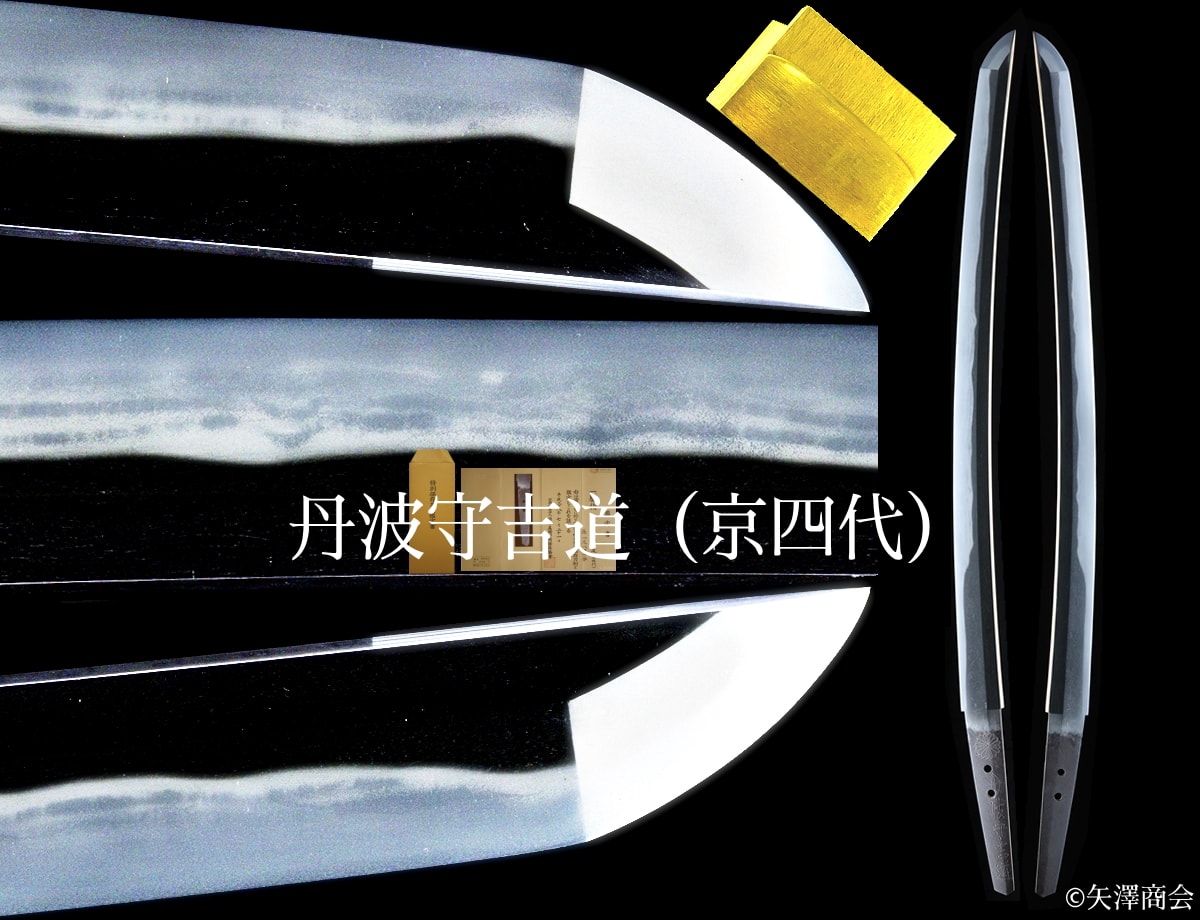
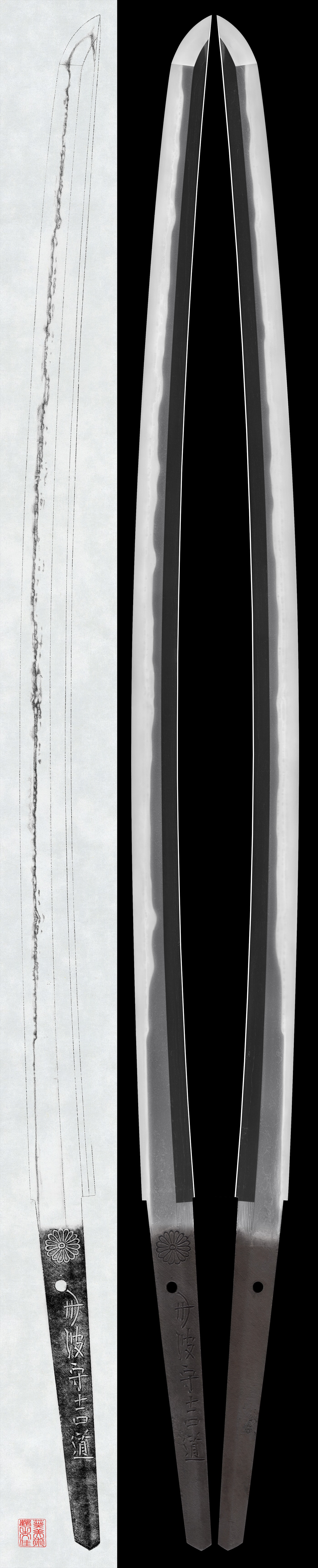
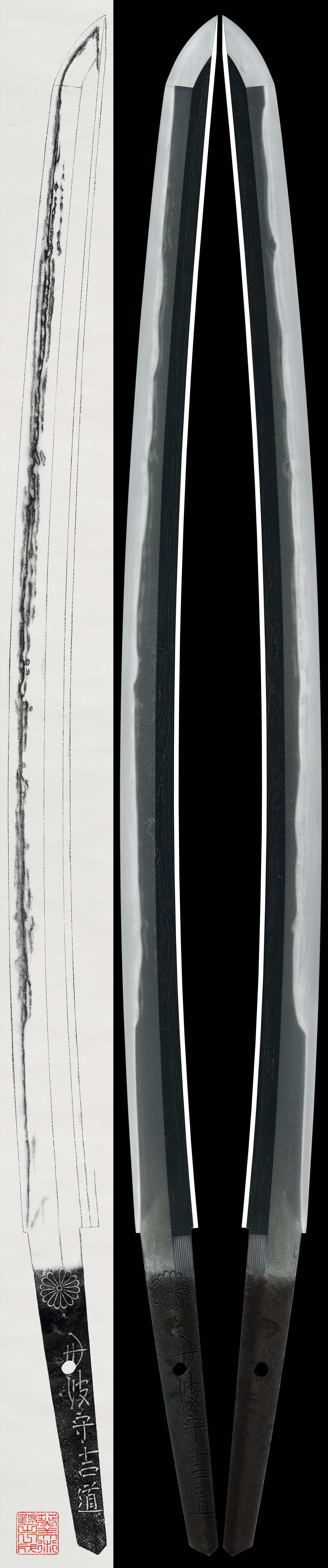
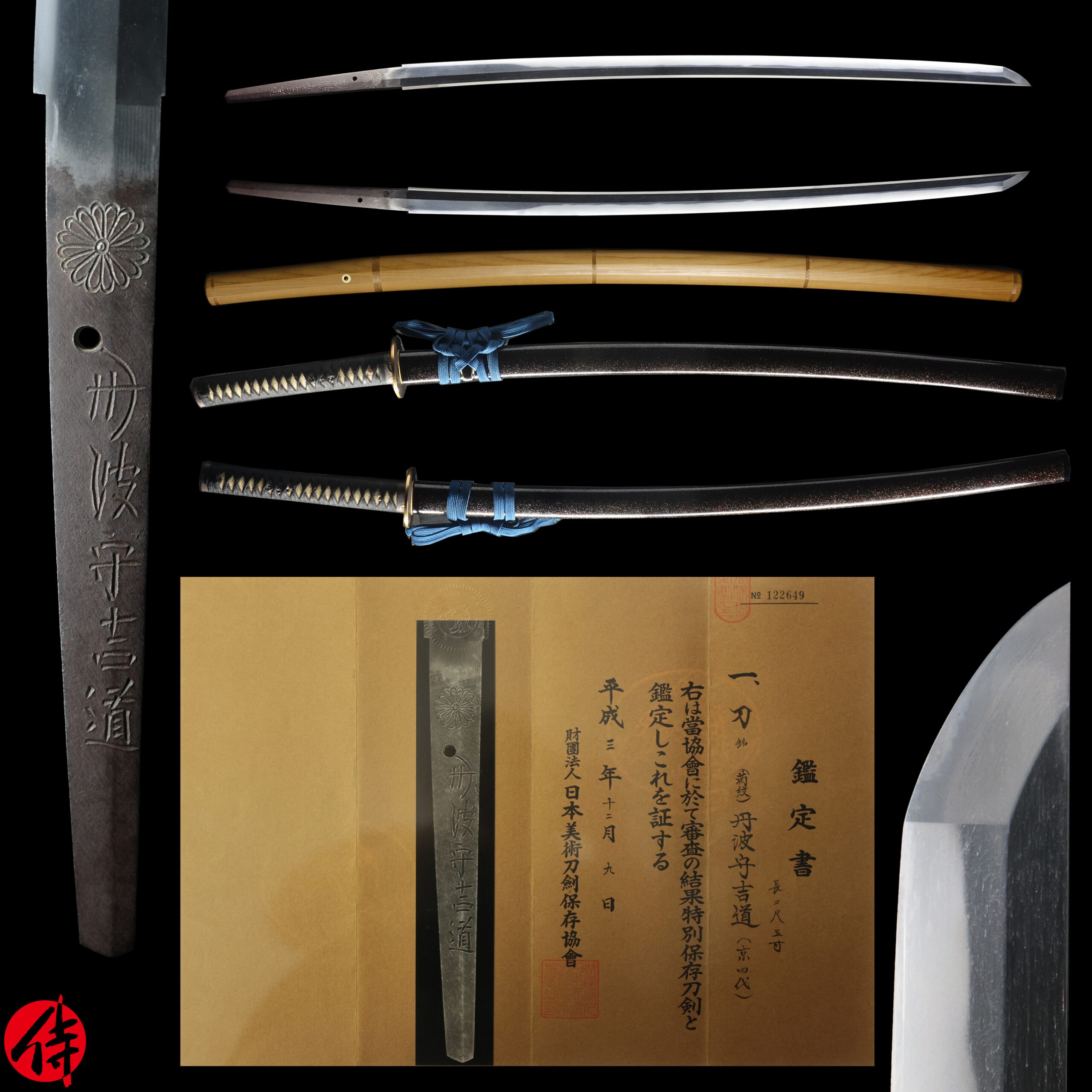
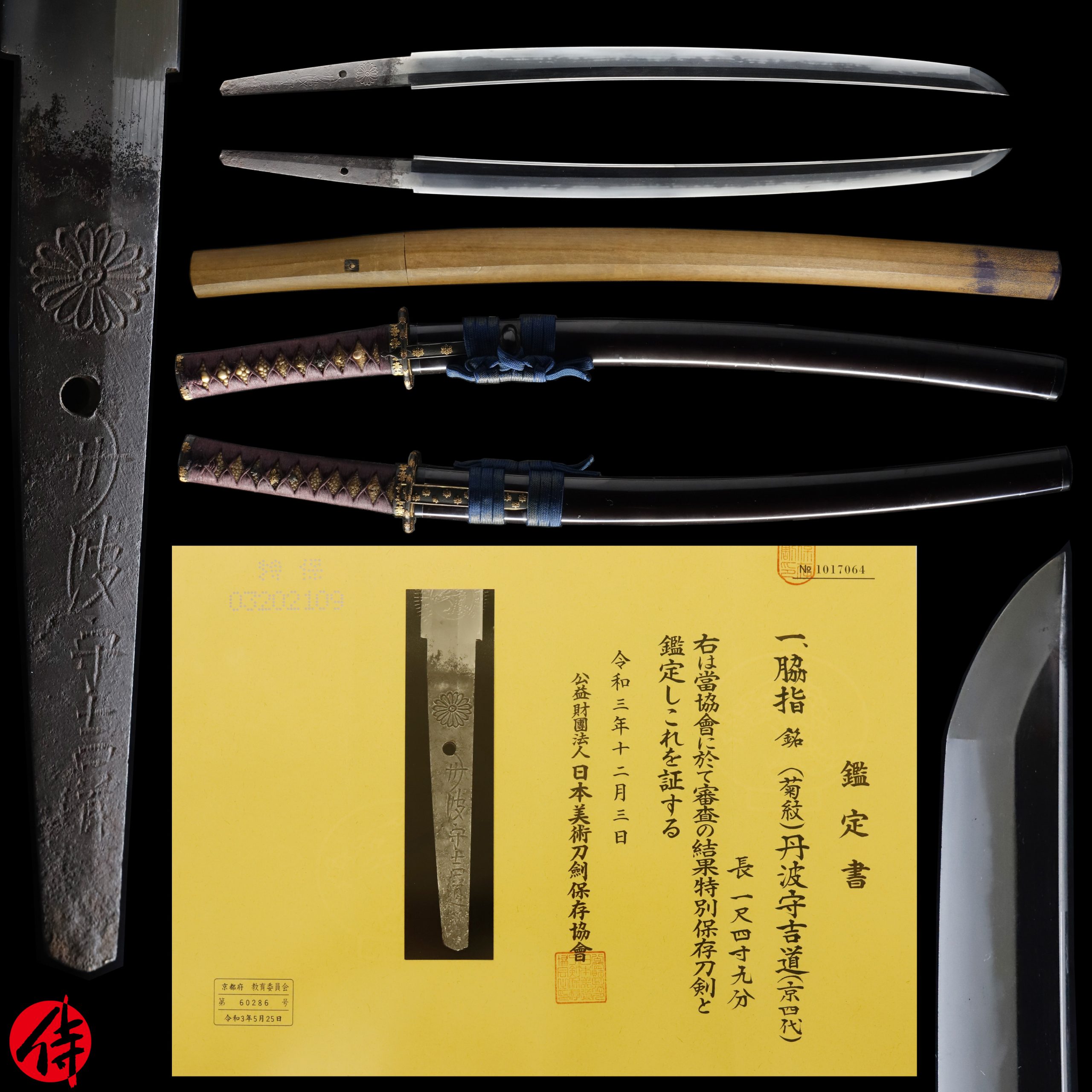
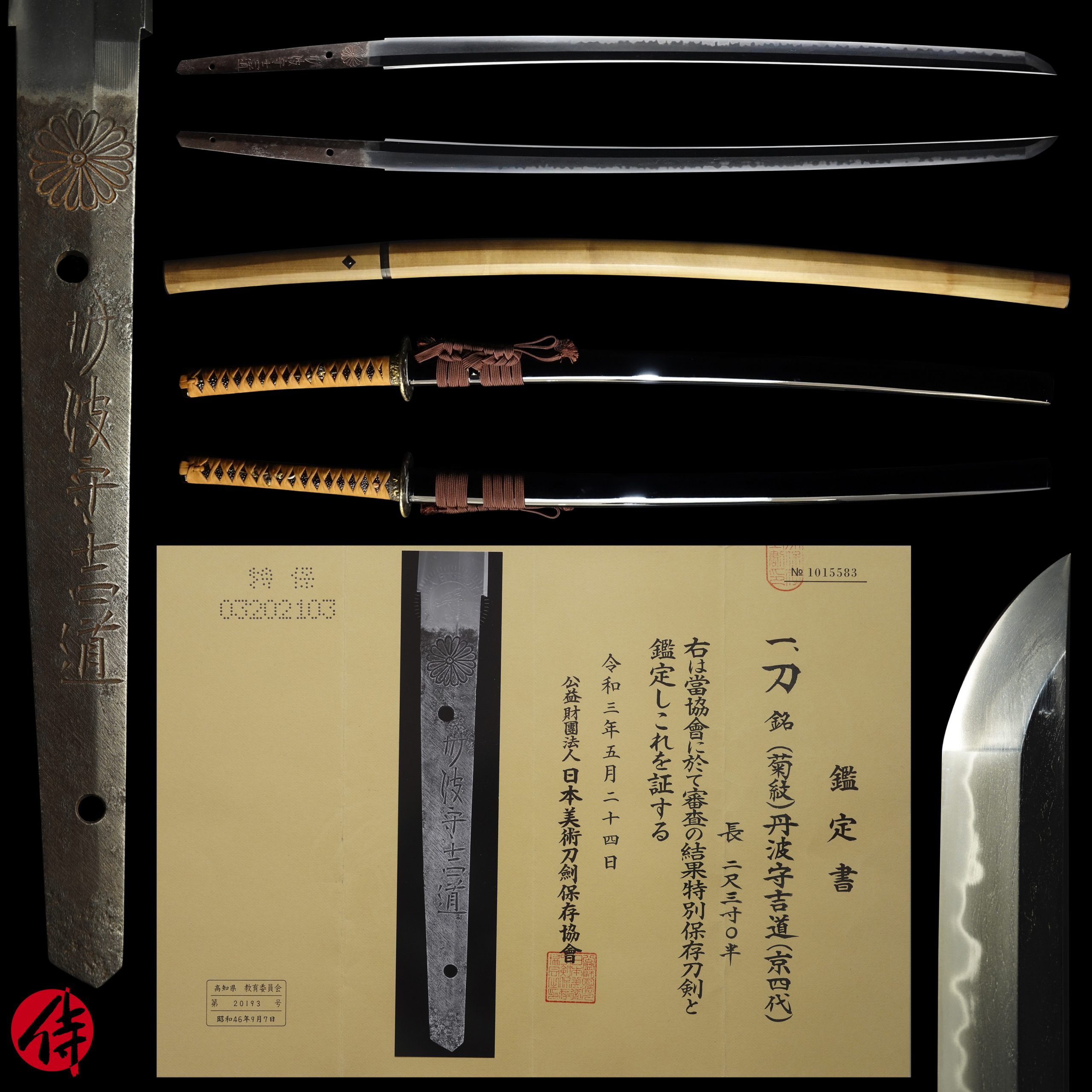
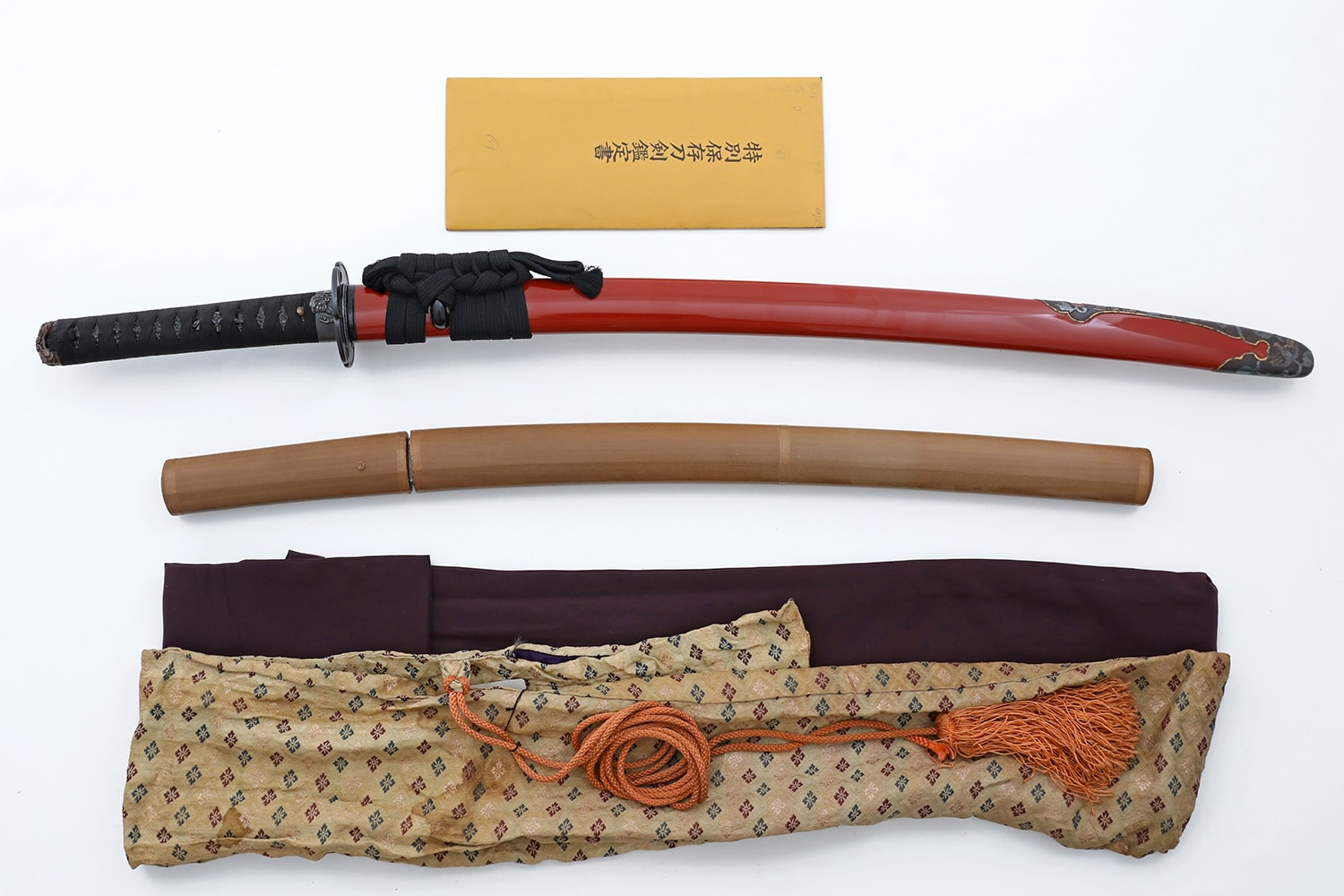
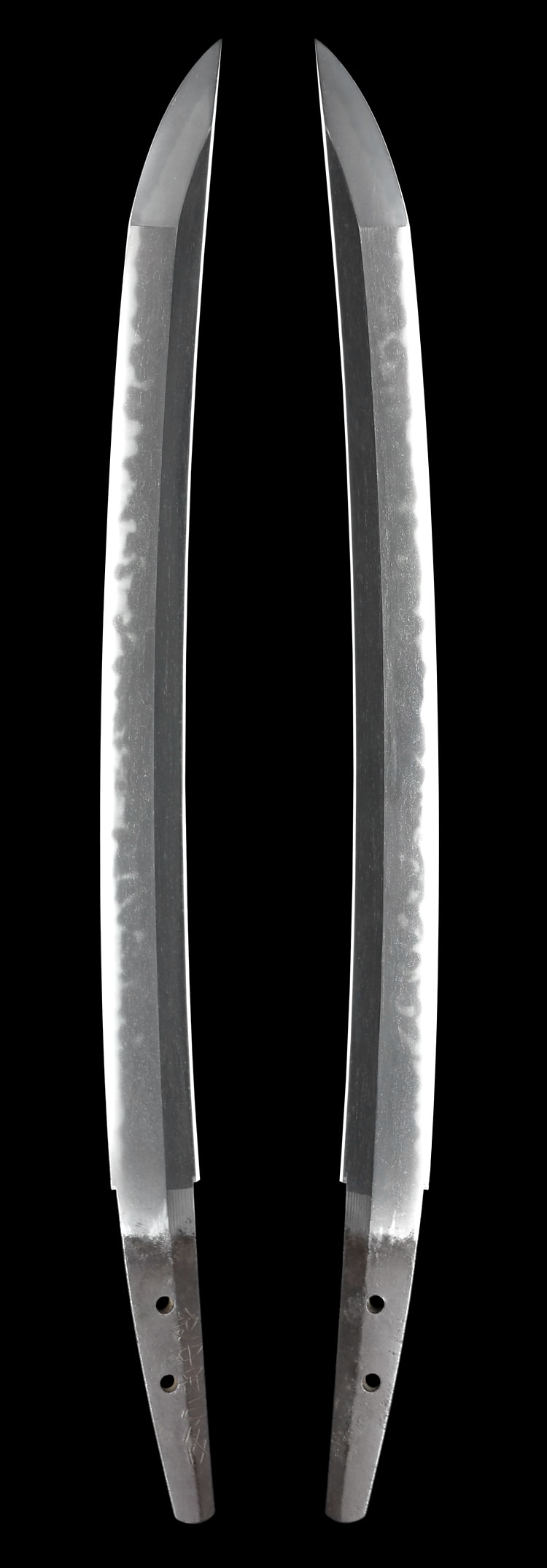
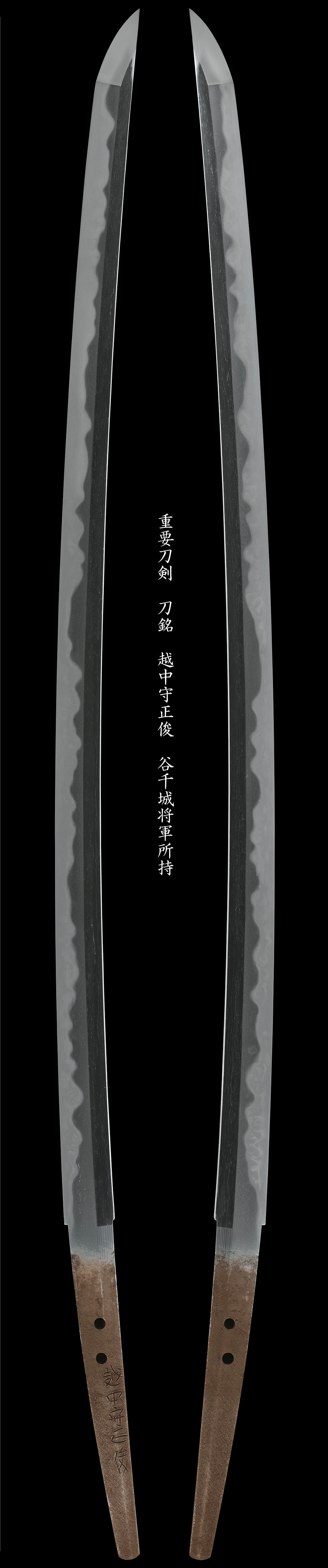
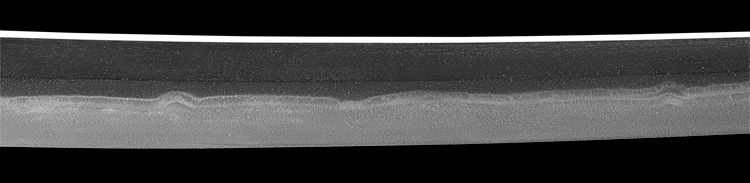
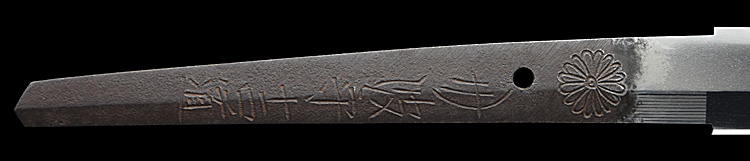
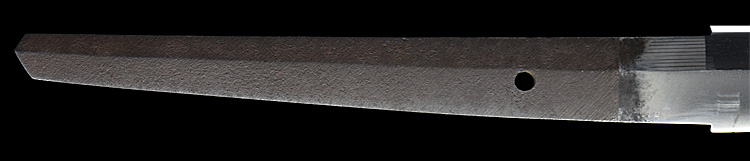
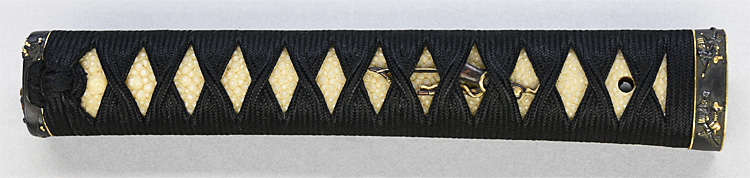
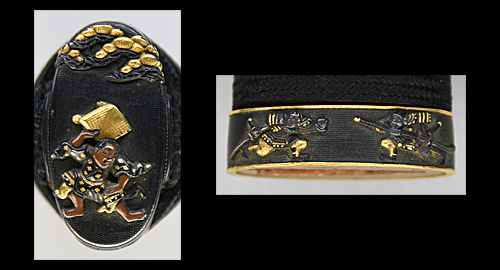
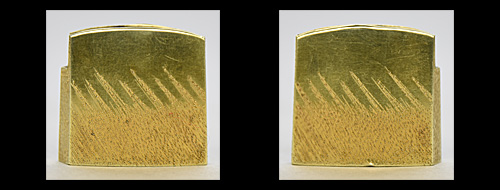
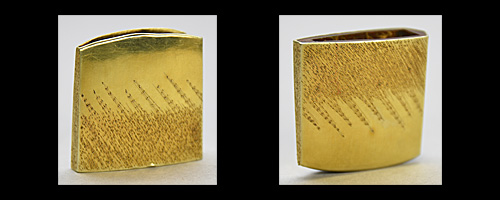
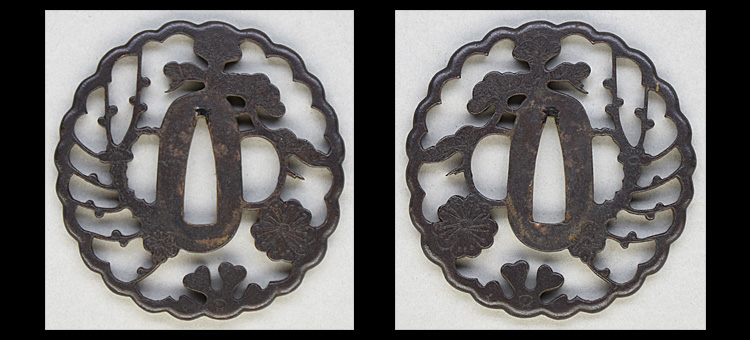
This katana is signed by Tanba no Kami Yoshimichi, the 4th generation of the Kyo Mishina school, and features a Kikumon (chrysanthemum crest). It is a highly regarded Owazamono (great cutting sword). The blade exhibits a beautiful suren-ba hamon and comes with a black roiro-nuri uchigatana koshirae.
 NihontoWatch
mei · Mishina · Enpo (1673-1681)




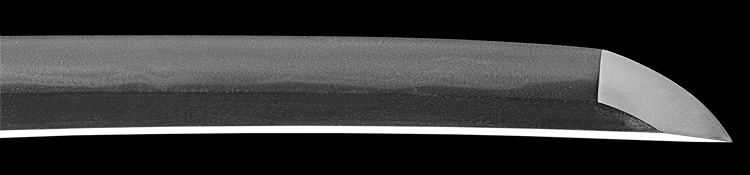
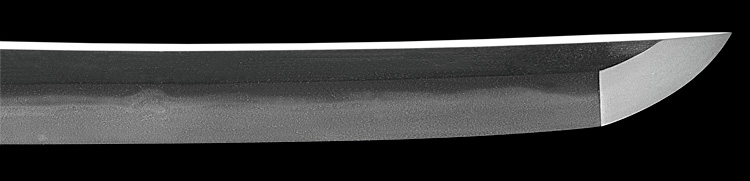
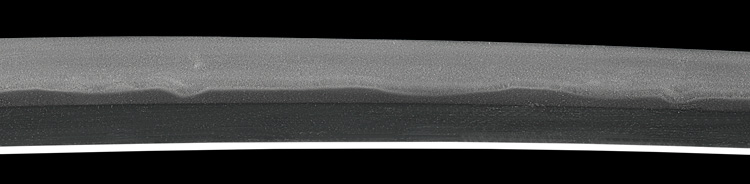











Shinto · Yamashiro · around 1673-1681
Fujishiro Chu-jo saku · Tōken Taikan top 76%
5 pieces on the market now
Shinto · Yamashiro
62 pieces on the market now
The Mishina school (三品), one of the two dominant smithing groups of early Edo Kyoto beside the Horikawa, grew from the late-Mino workshop of Kanemichi of Seki, whose dated blades run through the Tenbun, Eiroku, and Tenshō eras. During the closing decades of the sixteenth century Kanemichi came up to the capital with his four sons and settled at Nishinotōin Ebisugawa, where the eldest, Iga no Kami Kinmichi, is recorded as having greatly raised the name of the line. Learn more →
| Smith | Era | Designated |
|---|---|---|
| Kinmichi金道 | 1596-1615 | 23 |
| Yoshimichi吉道 | 1596-1615 | 36 |
| Masatoshi正俊 | 1596-1615 | 31 |
| Kanemichi兼道 | 1681-1704 | 5 |
| Yoshimichi吉道 | 1661-1673 | 6 |
A Hozon-certified blade judged to show notably superior workmanship and a better state of preservation. The bar is higher: re-tempered blades and most unsigned Muromachi/Edo works are excluded.
The NBTHK (Nihon Bijutsu Tōken Hozon Kyōkai, the Society for the Preservation of Japanese Art Swords) is a public-interest incorporated foundation founded in 1948 and supervised by Japan’s Agency for Cultural Affairs (Bunkachō); it is based at the Japanese Sword Museum in Tokyo. Its expert panels physically examine each submitted work (shinsa) and issue a certificate (kanteishō) ranking it by artistic and historical merit. NBTHK papers are the most widely recognized standard of authentication for Japanese swords and fittings.
NBTHK official siteWithin one week of the item's arrival (cooling-off is possible within Japan only). For defects that differ from the purchase conditions, we will accept the return and refund the payment. For other cases such as overseas, we will consult separately.
This katana is signed by Tanba no Kami Yoshimichi, the 4th generation of the Kyo Mishina school, and features a Kikumon (chrysanthemum crest). It is a highly regarded Owazamono (great cutting sword). The blade exhibits a beautiful suren-ba hamon and comes with a black roiro-nuri uchigatana koshirae.
NihontoWatchmei · Mishina · Enpo (1673-1681)
Shinto · Yamashiro · around 1673-1681
Fujishiro Chu-jo saku · Tōken Taikan top 76%
5 pieces on the market now
Shinto · Yamashiro
62 pieces on the market now
The Mishina school (三品), one of the two dominant smithing groups of early Edo Kyoto beside the Horikawa, grew from the late-Mino workshop of Kanemichi of Seki, whose dated blades run through the Tenbun, Eiroku, and Tenshō eras. During the closing decades of the sixteenth century Kanemichi came up to the capital with his four sons and settled at Nishinotōin Ebisugawa, where the eldest, Iga no Kami Kinmichi, is recorded as having greatly raised the name of the line. Learn more →
| Smith | Era | Designated |
|---|---|---|
| Kinmichi金道 | 1596-1615 | 23 |
| Yoshimichi吉道 | 1596-1615 | 36 |
| Masatoshi正俊 | 1596-1615 | 31 |
| Kanemichi兼道 | 1681-1704 | 5 |
| Yoshimichi吉道 | 1661-1673 | 6 |
A Hozon-certified blade judged to show notably superior workmanship and a better state of preservation. The bar is higher: re-tempered blades and most unsigned Muromachi/Edo works are excluded.
The NBTHK (Nihon Bijutsu Tōken Hozon Kyōkai, the Society for the Preservation of Japanese Art Swords) is a public-interest incorporated foundation founded in 1948 and supervised by Japan’s Agency for Cultural Affairs (Bunkachō); it is based at the Japanese Sword Museum in Tokyo. Its expert panels physically examine each submitted work (shinsa) and issue a certificate (kanteishō) ranking it by artistic and historical merit. NBTHK papers are the most widely recognized standard of authentication for Japanese swords and fittings.
NBTHK official siteWithin one week of the item's arrival (cooling-off is possible within Japan only). For defects that differ from the purchase conditions, we will accept the return and refund the payment. For other cases such as overseas, we will consult separately.