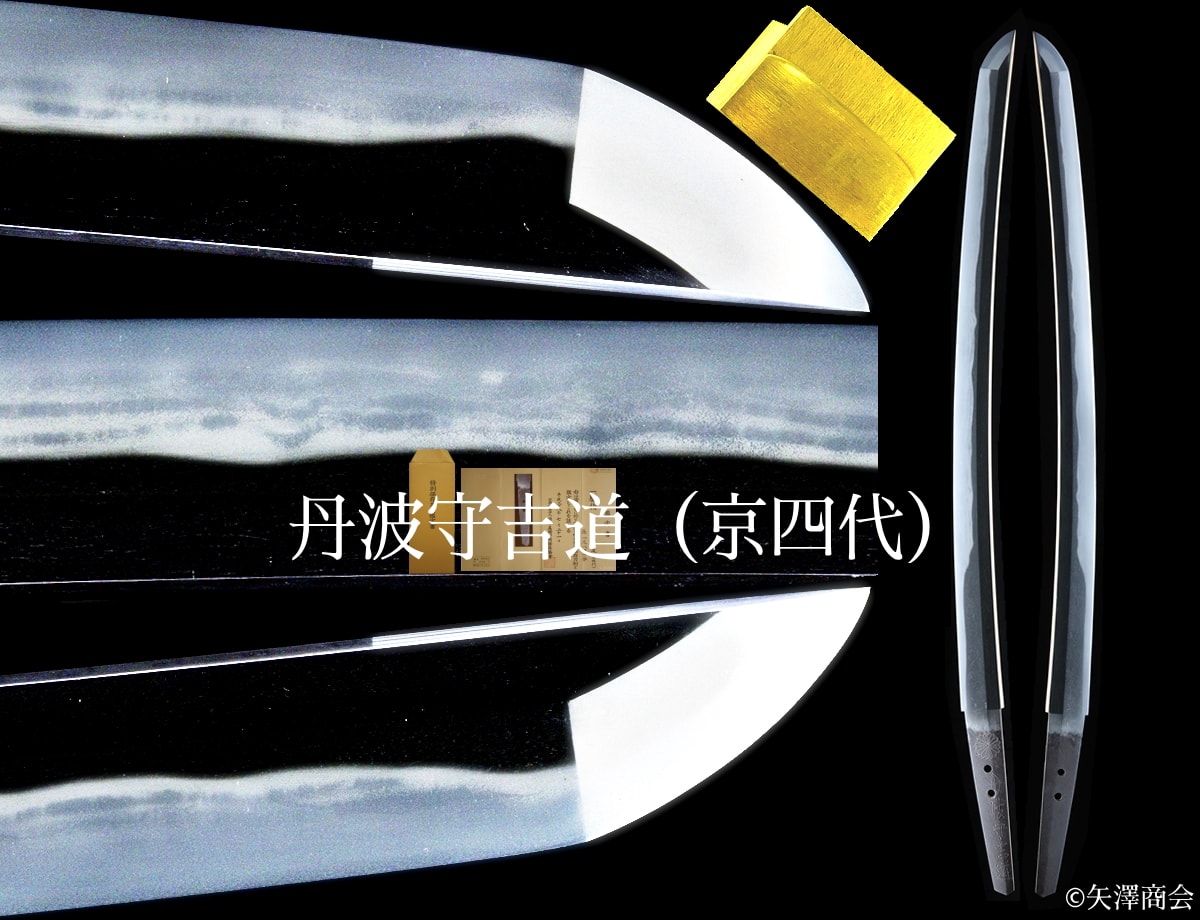
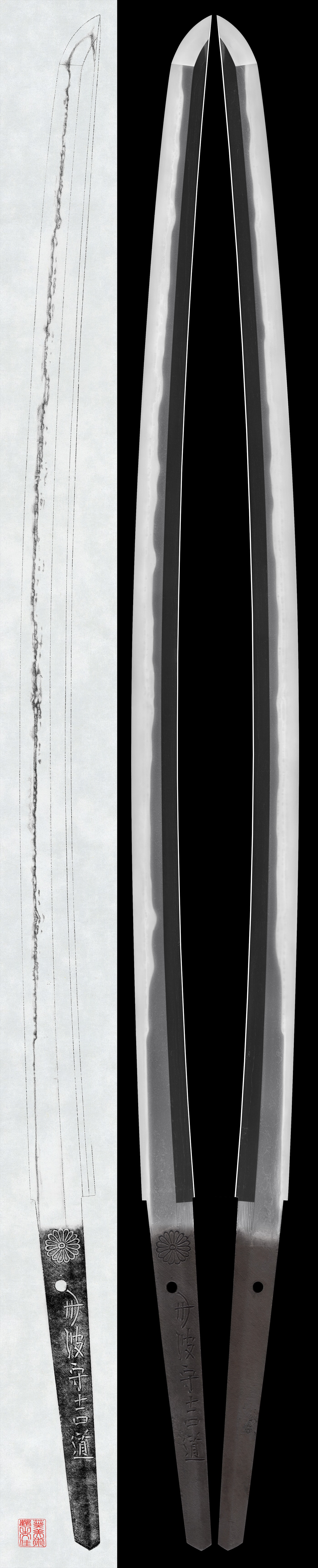
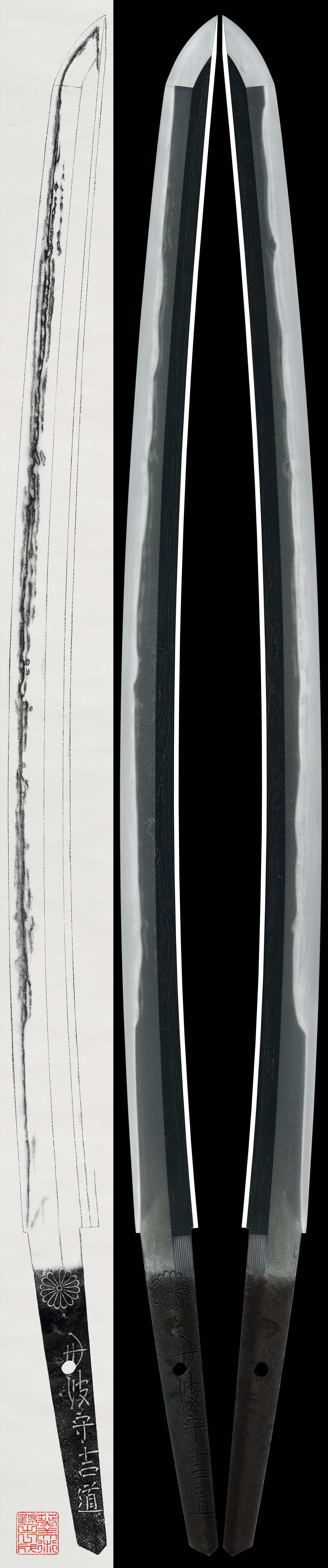
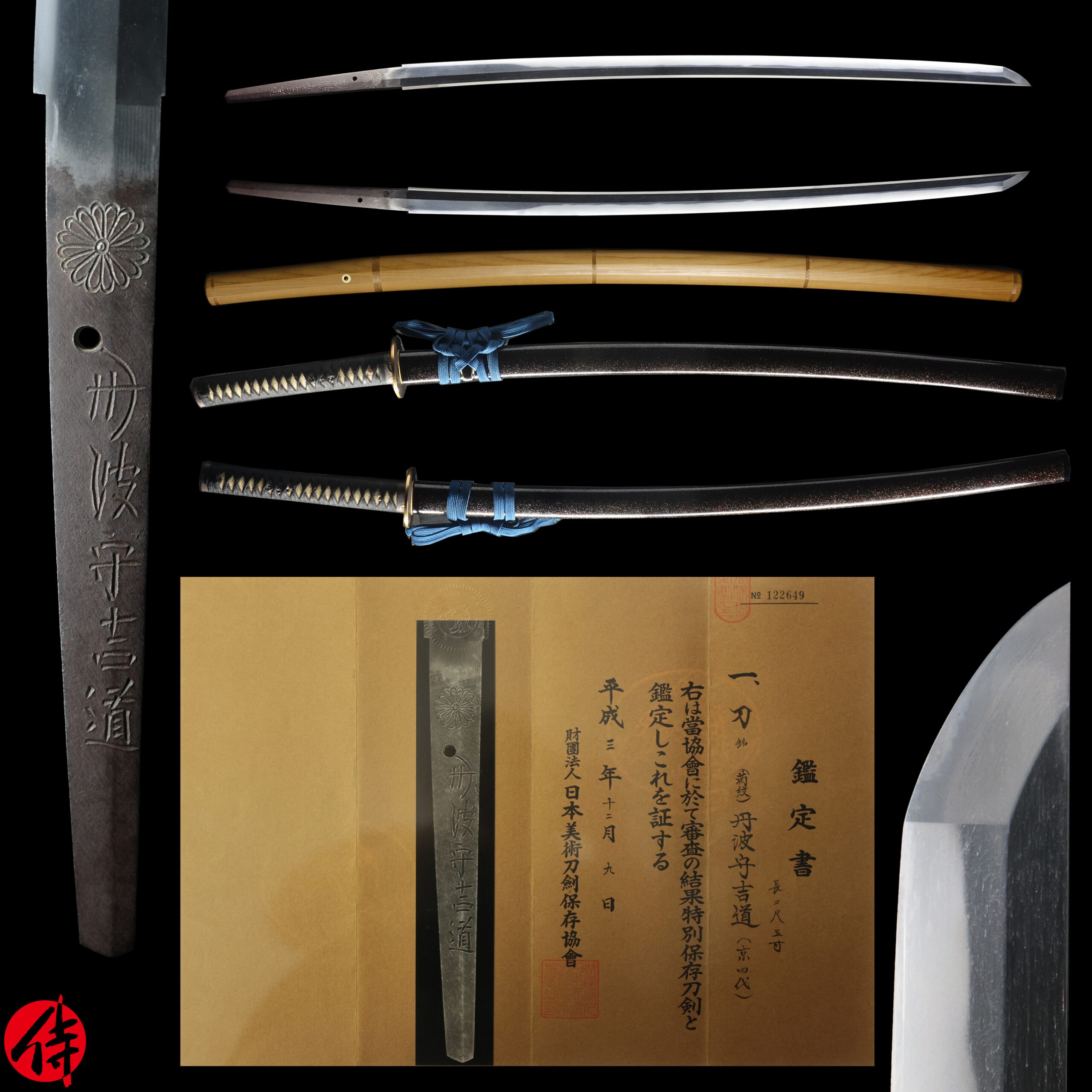
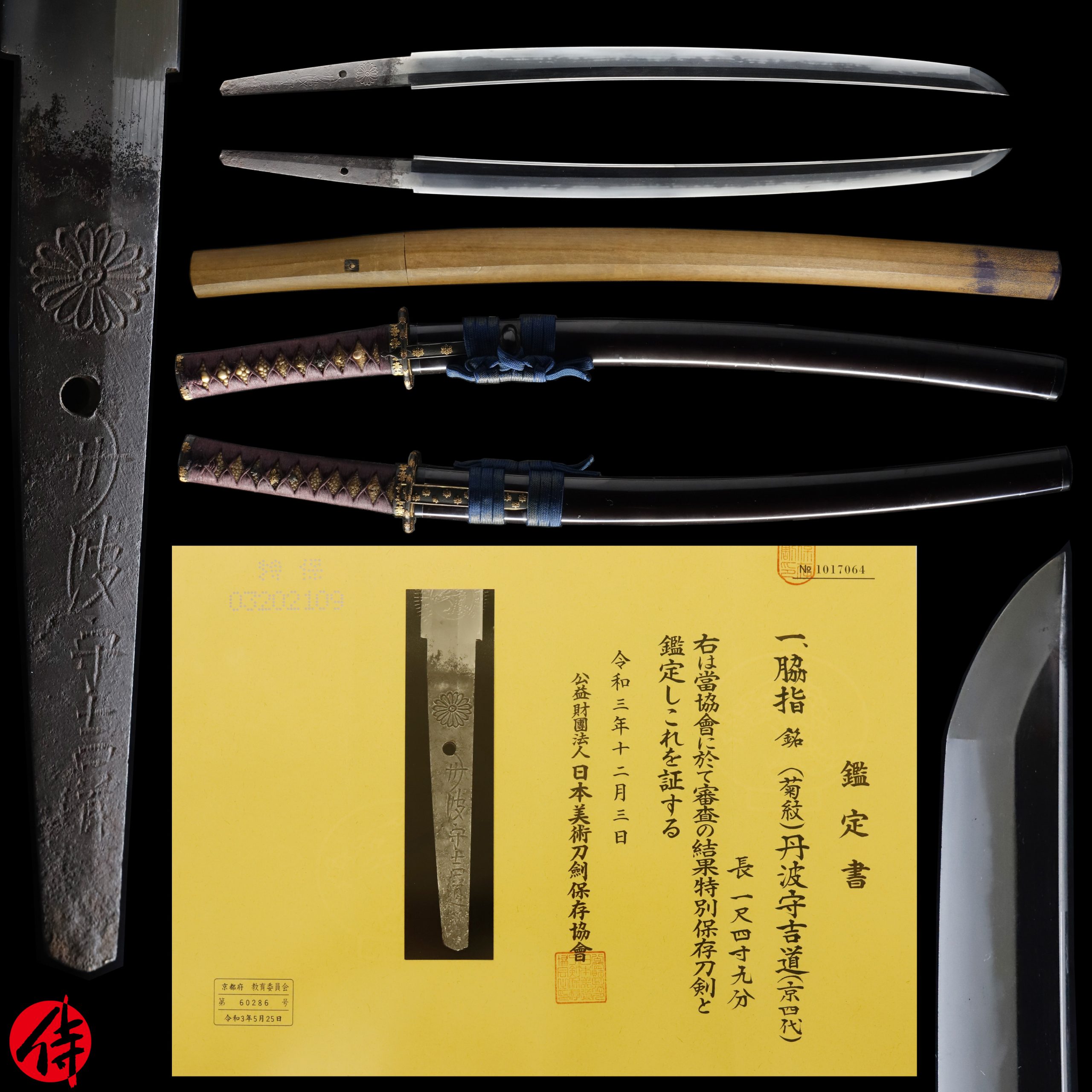
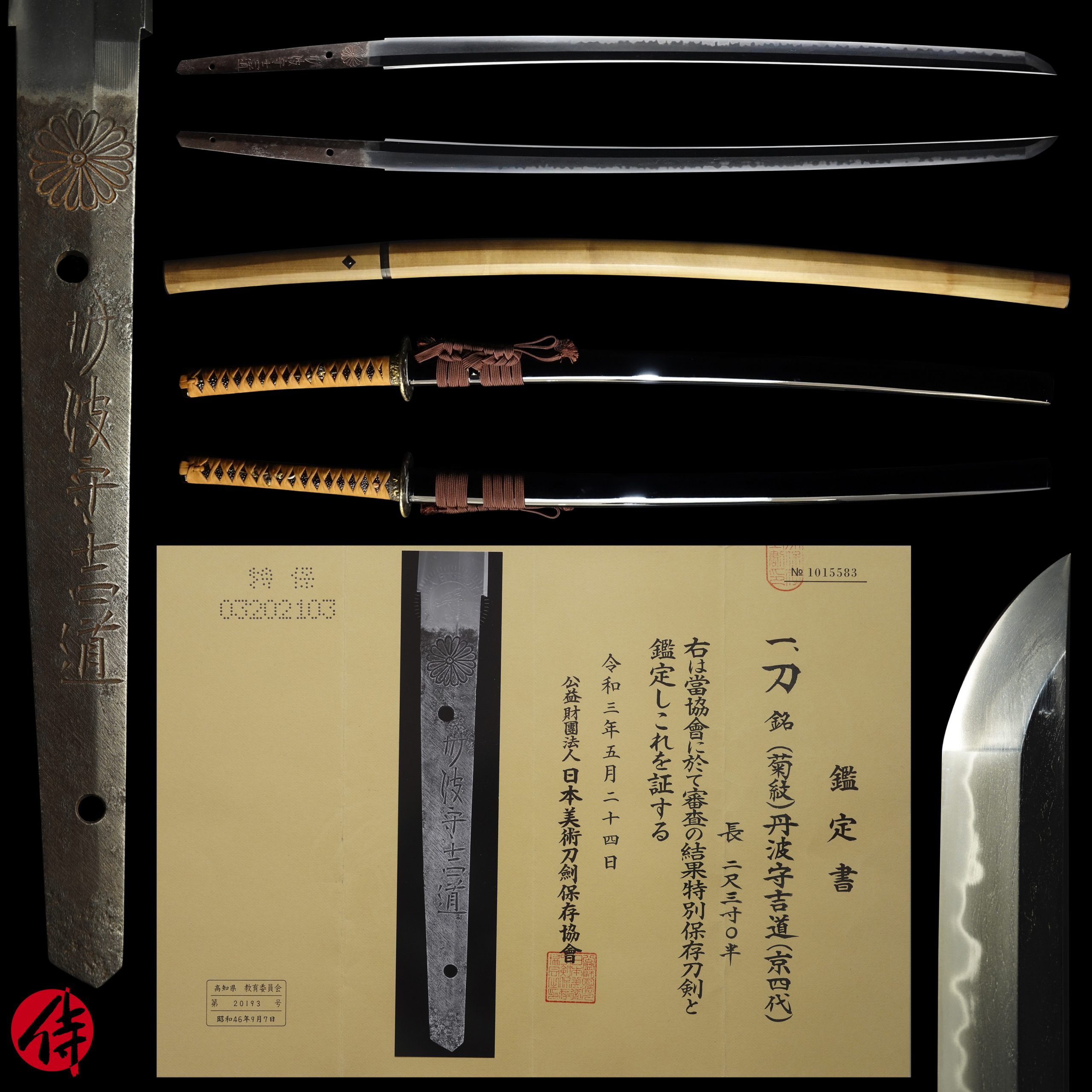
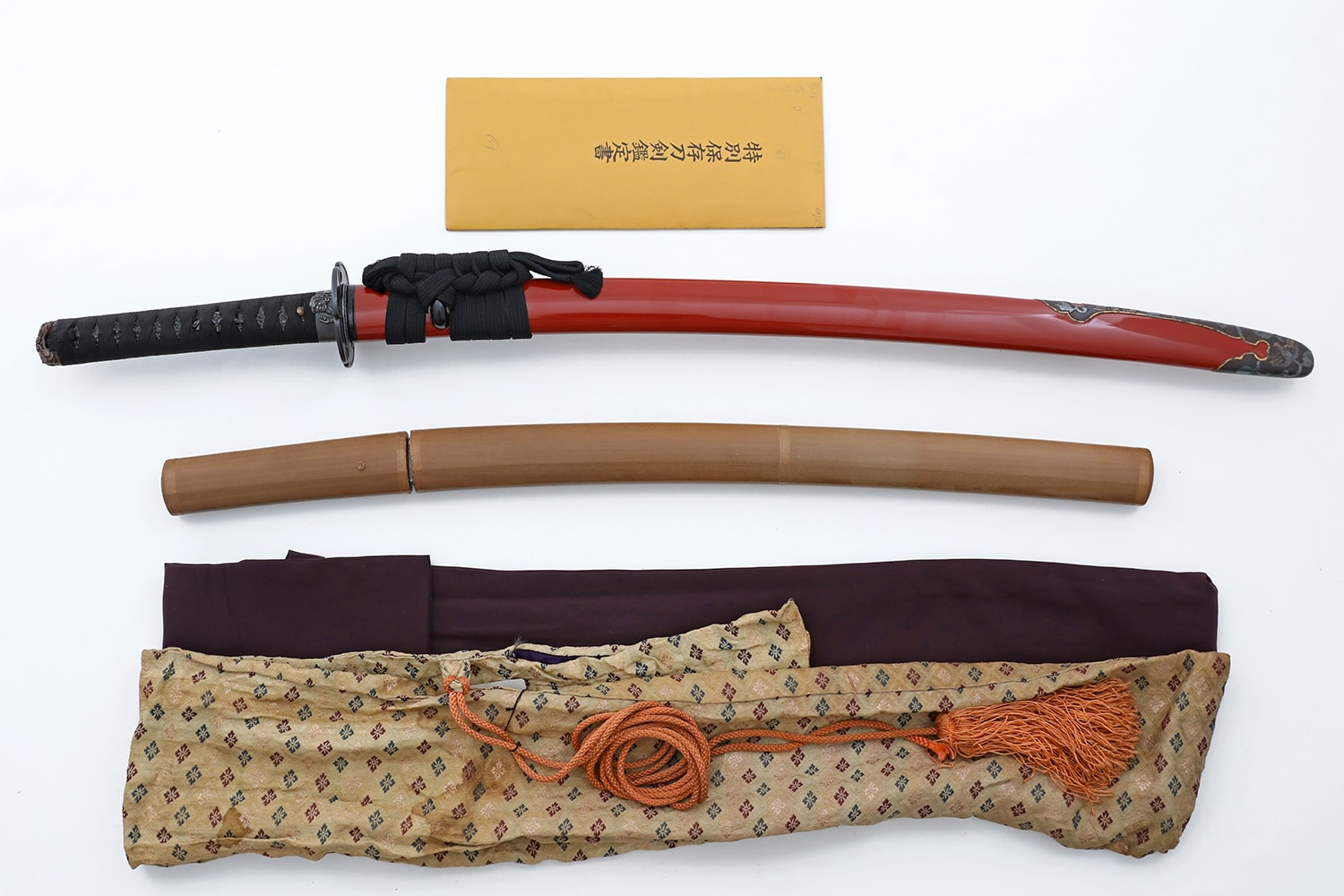
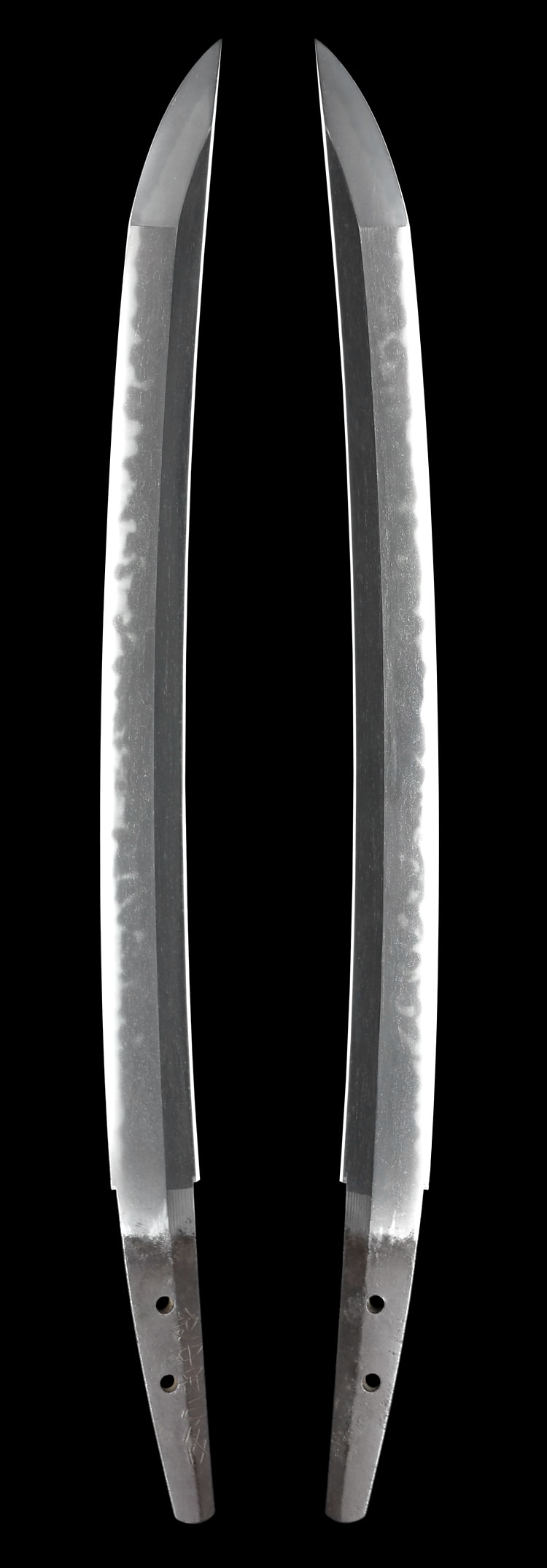
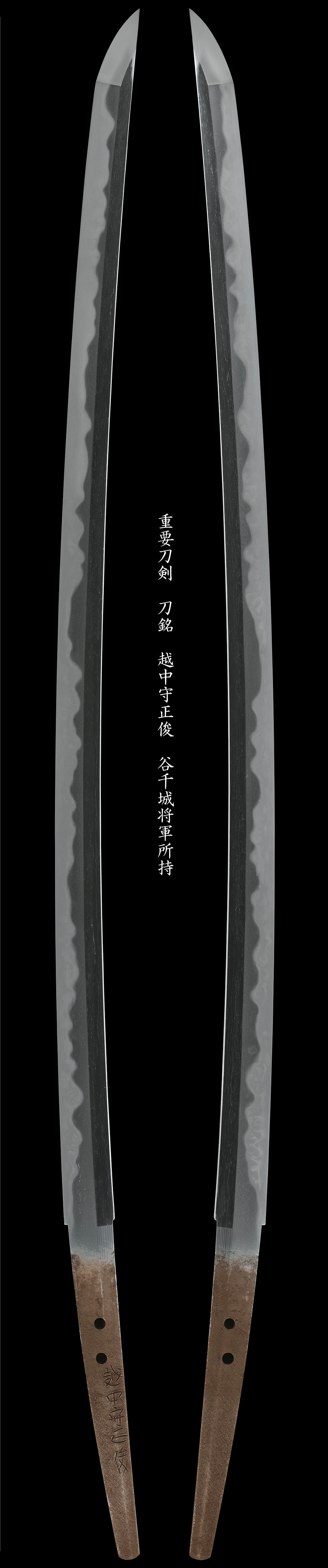
This is a katana by the 4th generation Tanba no Kami Yoshimichi, active in Yamashiro during the early Edo period. It features a wide, gently undulating gunome hamon with a soft nioiguchi, distinct from the family's characteristic sudare-ba. The blade comes with an NBTHK Tokubetsu Hozon certificate and is housed in a shirasaya.
 NihontoWatch
mei · Enpo (1673-1681) · nagasa 60.9cm · sori 1.5cm
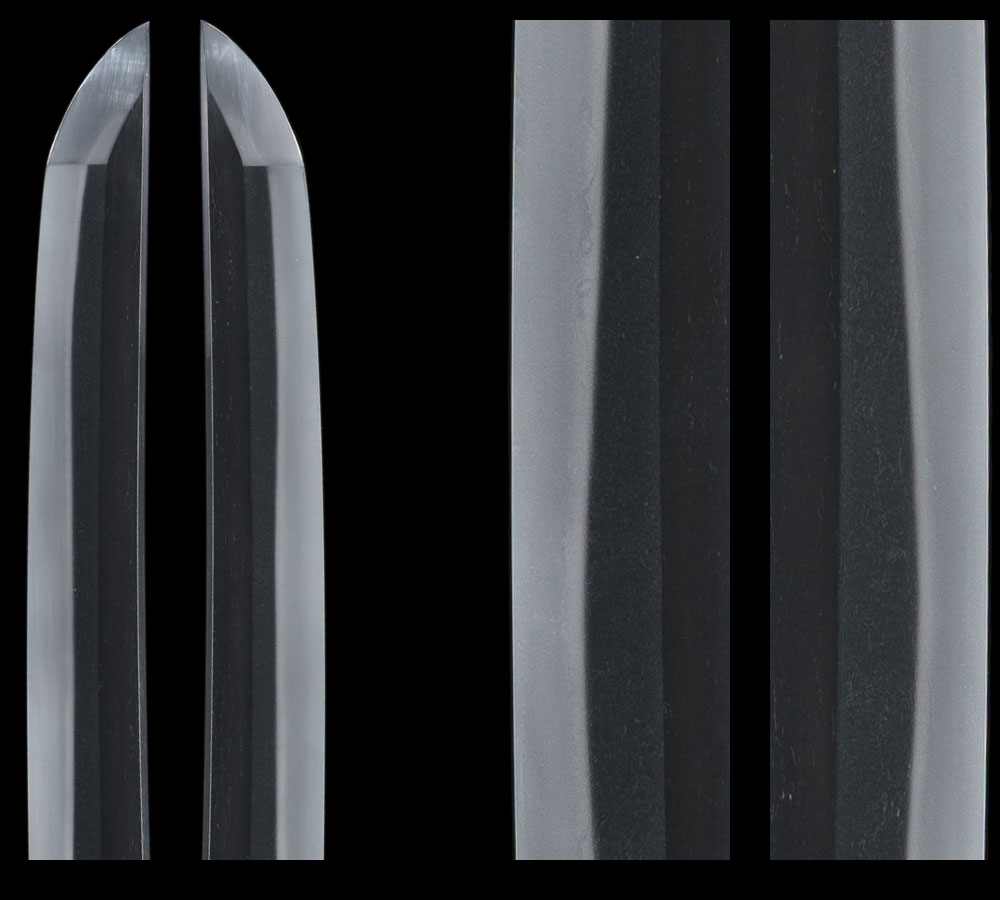
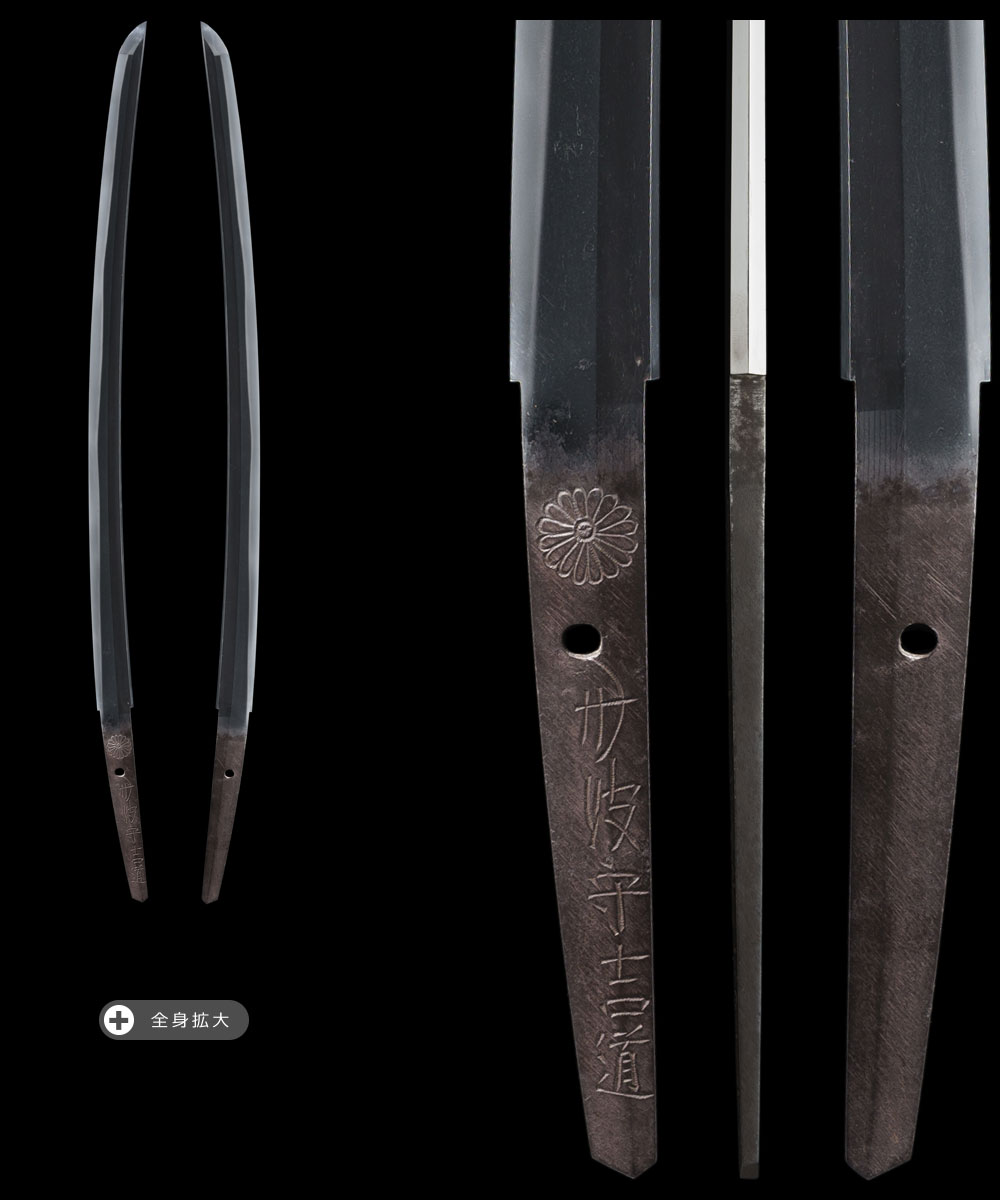
Shinto · Yamashiro · around 1673-1681
Fujishiro Chu-jo saku · Tōken Taikan top 76%
5 pieces on the market now
Shinto · Yamashiro
62 pieces on the market now
The Mishina school (三品), one of the two dominant smithing groups of early Edo Kyoto beside the Horikawa, grew from the late-Mino workshop of Kanemichi of Seki, whose dated blades run through the Tenbun, Eiroku, and Tenshō eras. During the closing decades of the sixteenth century Kanemichi came up to the capital with his four sons and settled at Nishinotōin Ebisugawa, where the eldest, Iga no Kami Kinmichi, is recorded as having greatly raised the name of the line. Learn more →
| Smith | Era | Designated |
|---|---|---|
| Kinmichi金道 | 1596-1615 | 23 |
| Yoshimichi吉道 | 1596-1615 | 36 |
| Masatoshi正俊 | 1596-1615 | 31 |
| Kanemichi兼道 | 1681-1704 | 5 |
| Yoshimichi吉道 | 1661-1673 | 6 |
We could not find an authenticity certificate on the seller’s listing. Japanese swords and fittings are normally papered by the NBTHK (or the NTHK). Without one, the attribution is the seller’s own assessment and has not been independently verified — treat it with caution and ask the dealer about certification before buying.
Returns accepted within 7 days of arrival if item is unchanged from condition at time of sale; customer bears return shipping for personal-reason returns, company covers errors/shipping damage.
This is a katana by the 4th generation Tanba no Kami Yoshimichi, active in Yamashiro during the early Edo period. It features a wide, gently undulating gunome hamon with a soft nioiguchi, distinct from the family's characteristic sudare-ba. The blade comes with an NBTHK Tokubetsu Hozon certificate and is housed in a shirasaya.
NihontoWatchmei · Enpo (1673-1681) · nagasa 60.9cm · sori 1.5cm
Shinto · Yamashiro · around 1673-1681
Fujishiro Chu-jo saku · Tōken Taikan top 76%
5 pieces on the market now
Shinto · Yamashiro
62 pieces on the market now
The Mishina school (三品), one of the two dominant smithing groups of early Edo Kyoto beside the Horikawa, grew from the late-Mino workshop of Kanemichi of Seki, whose dated blades run through the Tenbun, Eiroku, and Tenshō eras. During the closing decades of the sixteenth century Kanemichi came up to the capital with his four sons and settled at Nishinotōin Ebisugawa, where the eldest, Iga no Kami Kinmichi, is recorded as having greatly raised the name of the line. Learn more →
| Smith | Era | Designated |
|---|---|---|
| Kinmichi金道 | 1596-1615 | 23 |
| Yoshimichi吉道 | 1596-1615 | 36 |
| Masatoshi正俊 | 1596-1615 | 31 |
| Kanemichi兼道 | 1681-1704 | 5 |
| Yoshimichi吉道 | 1661-1673 | 6 |
We could not find an authenticity certificate on the seller’s listing. Japanese swords and fittings are normally papered by the NBTHK (or the NTHK). Without one, the attribution is the seller’s own assessment and has not been independently verified — treat it with caution and ask the dealer about certification before buying.
Returns accepted within 7 days of arrival if item is unchanged from condition at time of sale; customer bears return shipping for personal-reason returns, company covers errors/shipping damage.