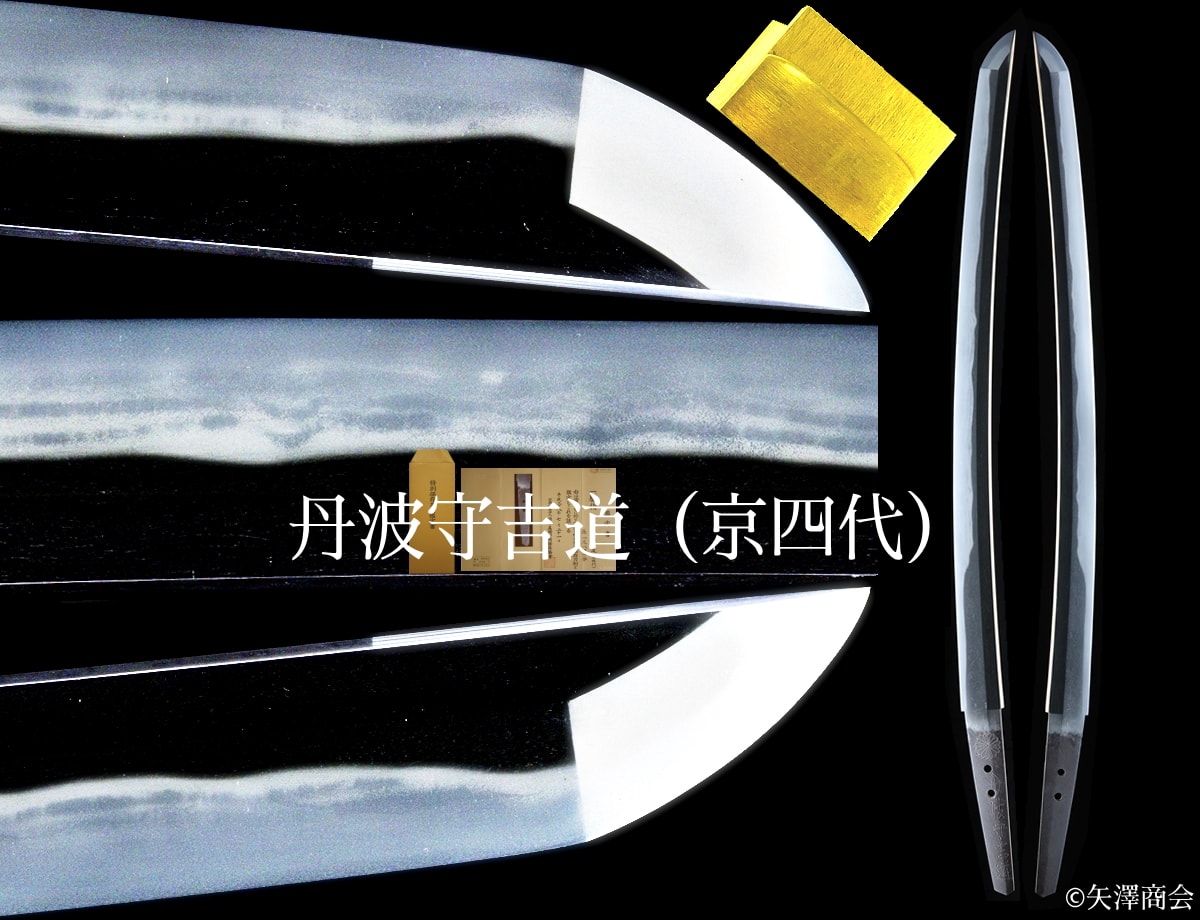
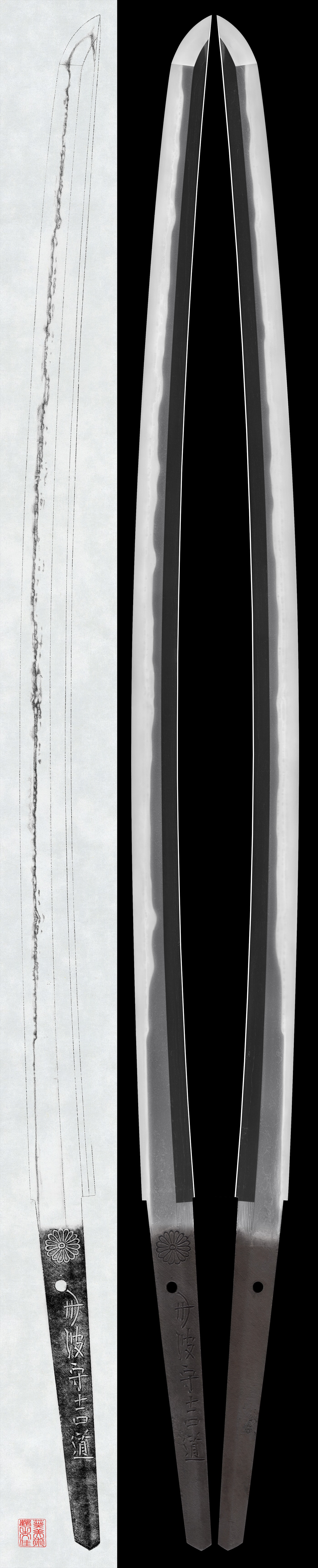
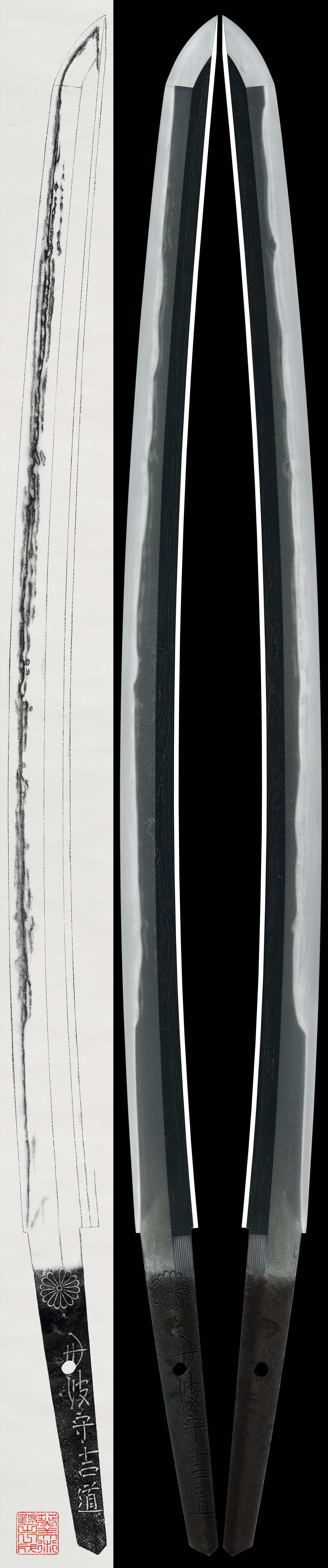
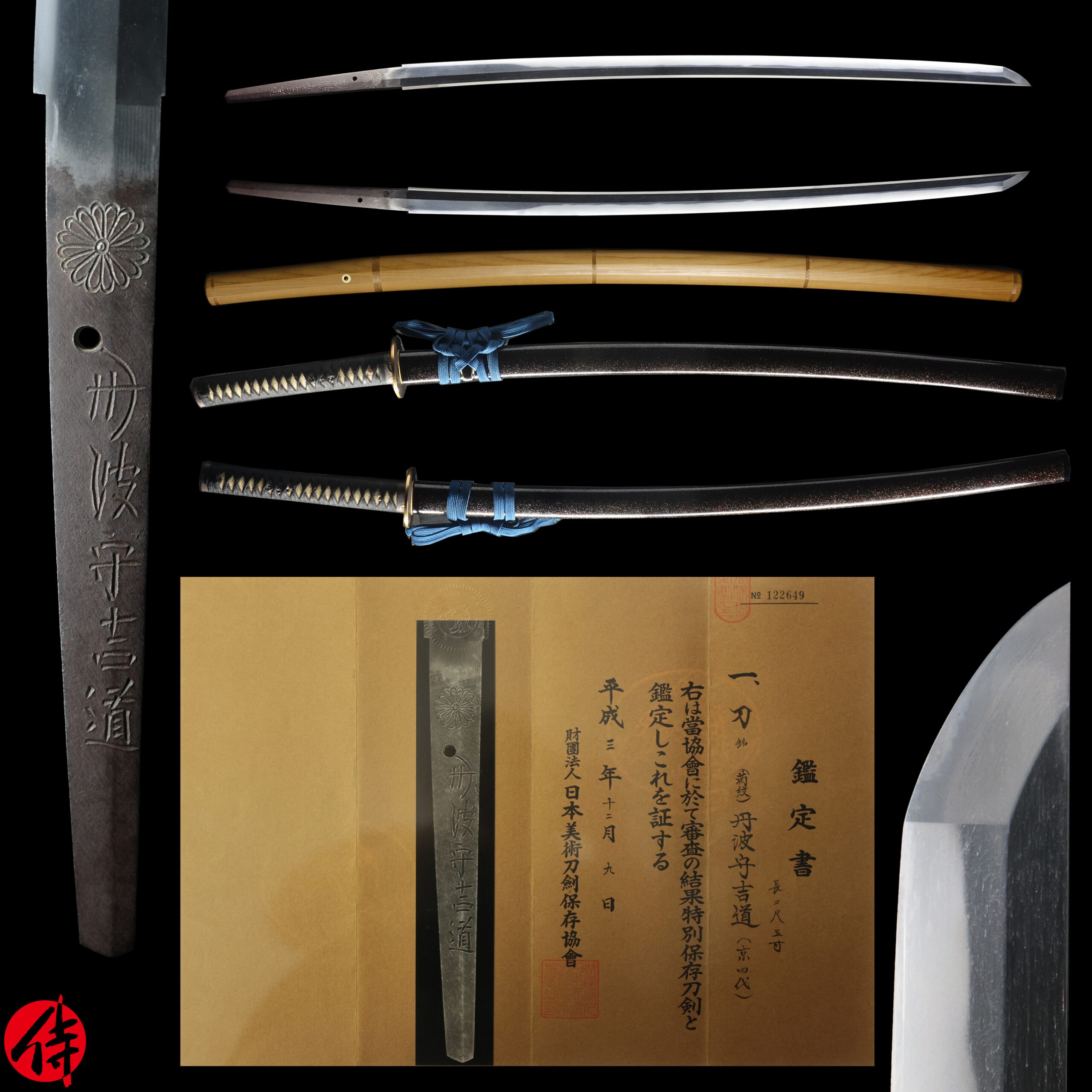
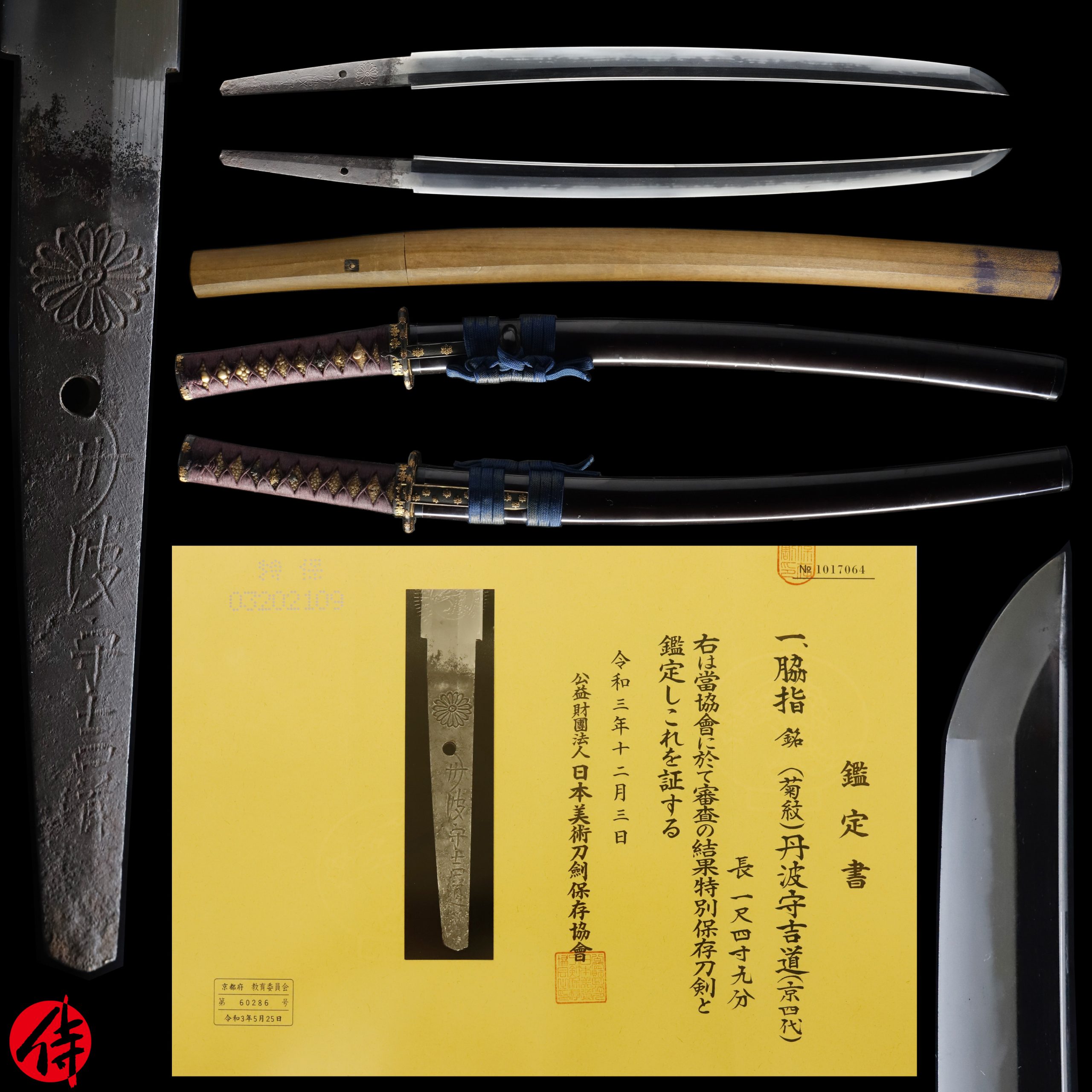
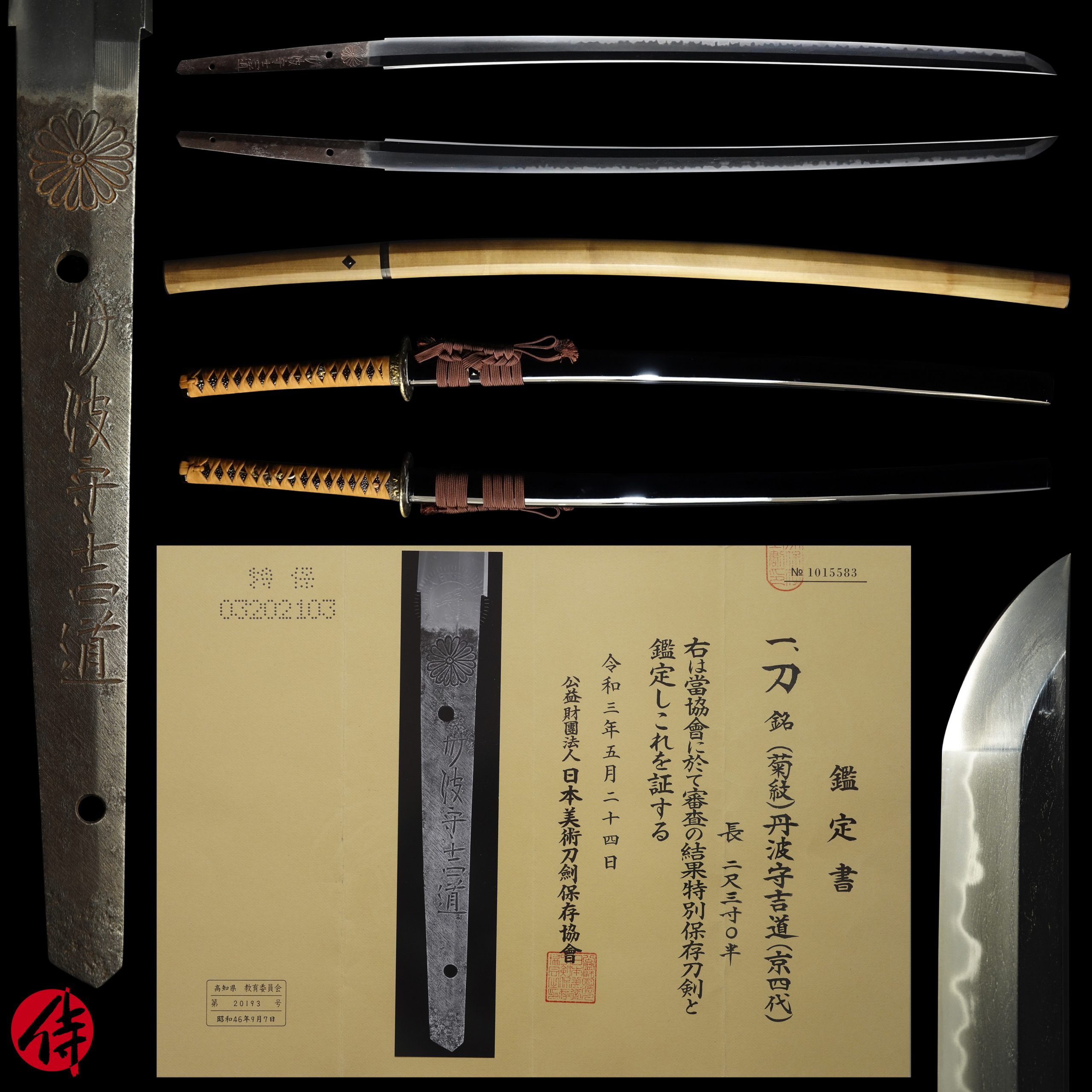
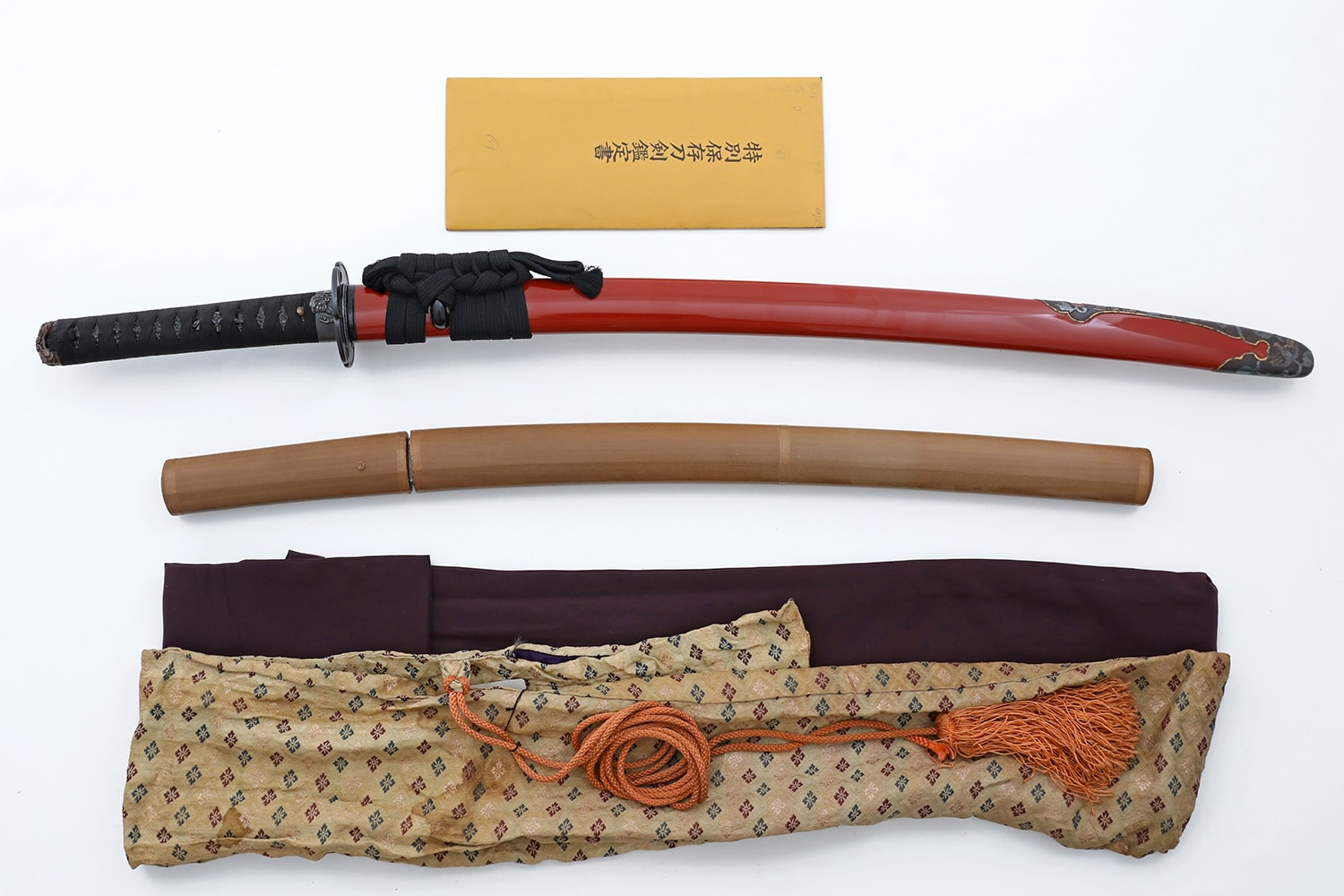
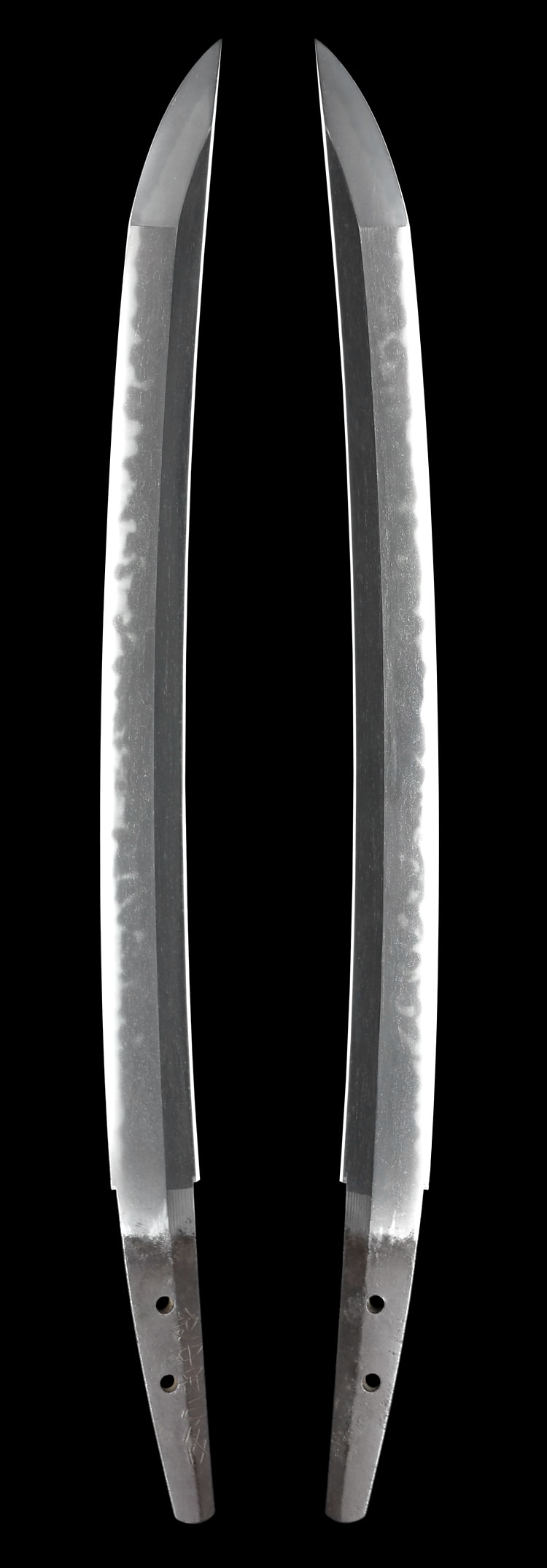
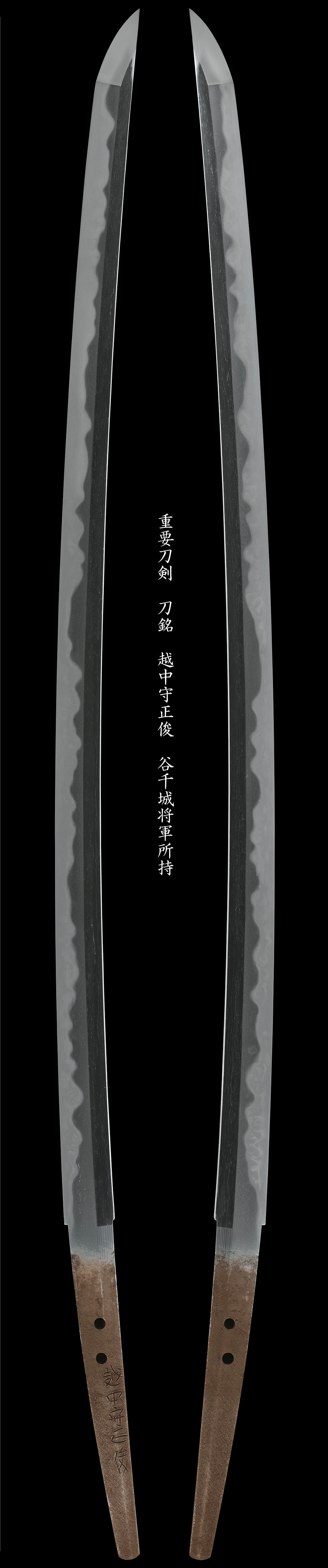
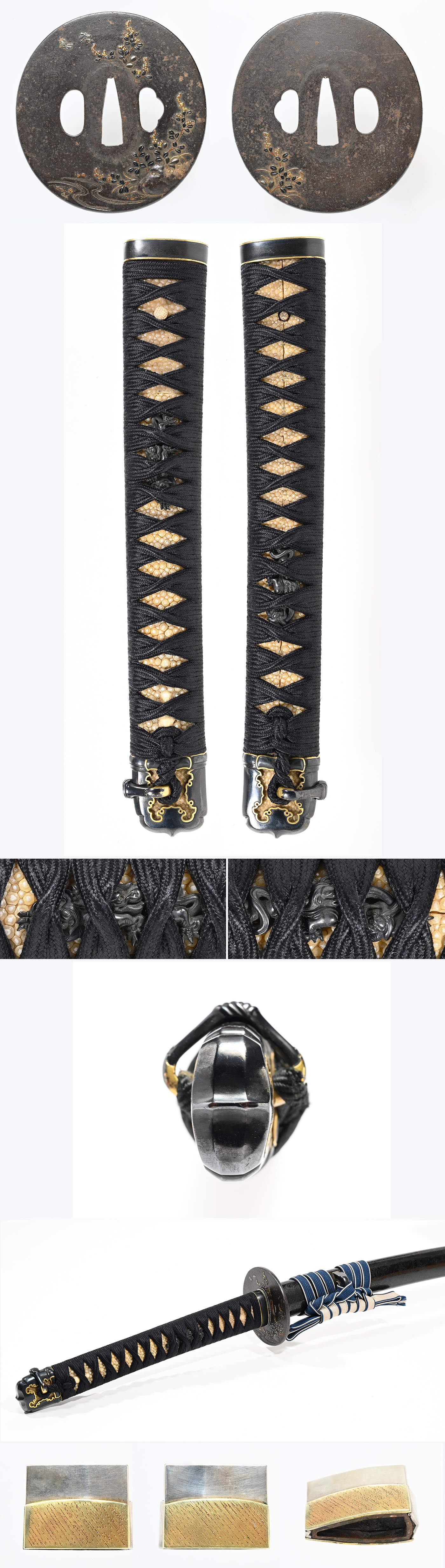
This is a katana made by Tanba no Kami Yoshimichi, a collaboration between the 4th and 5th generations of the Kyo school. The sword features a chrysanthemum crest and is attributed to the Yamashiro province. It was made around the Edo period (A.D. 1688) and has been newly polished.
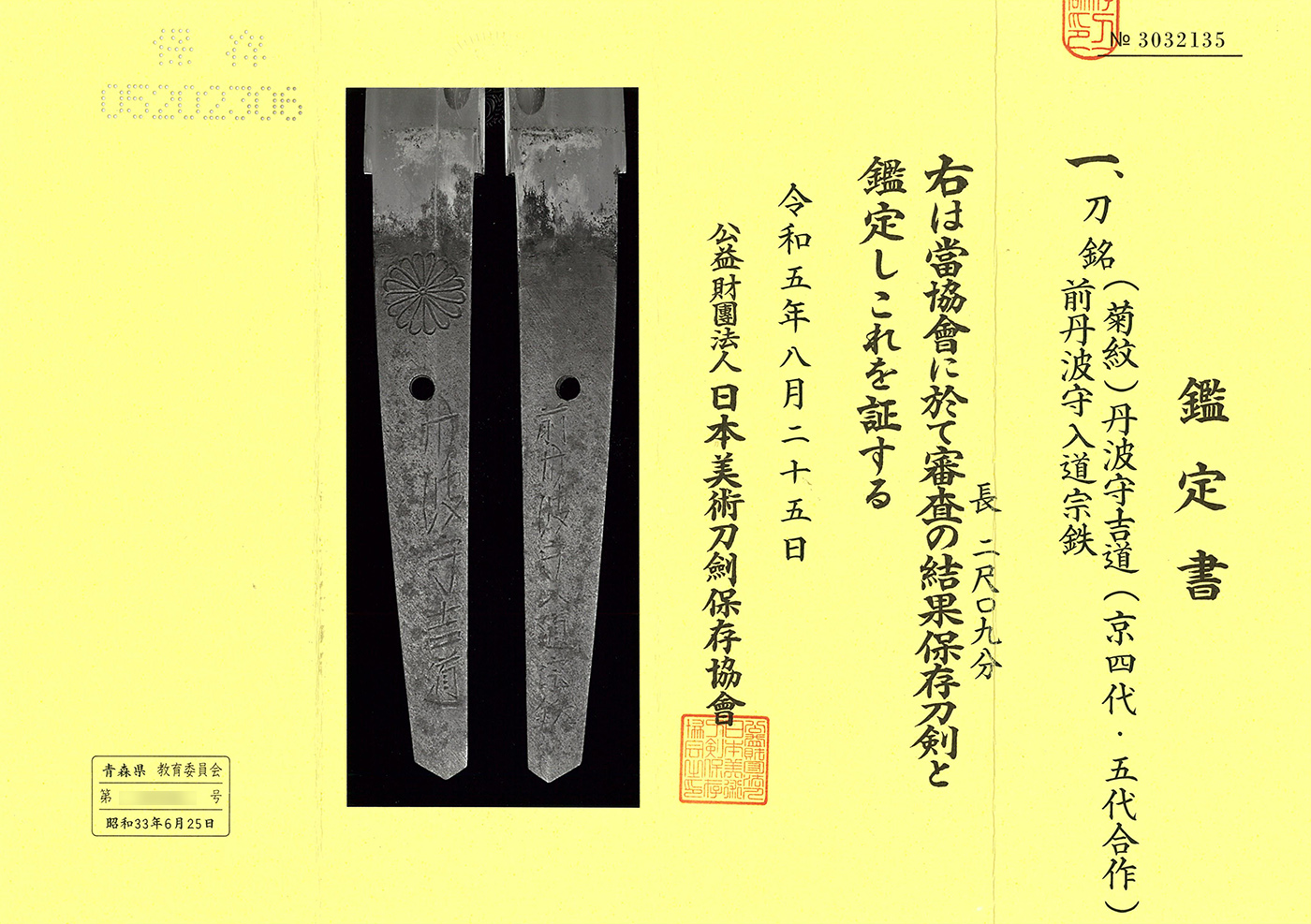
Certificate reading — 銘 (菊紋)丹波守吉道(京四代・五代合作) 前丹波守入道宗鉄
 NihontoWatch
mei · Enpo (1673-1681) · nagasa 63.6cm · sori 1.8cm

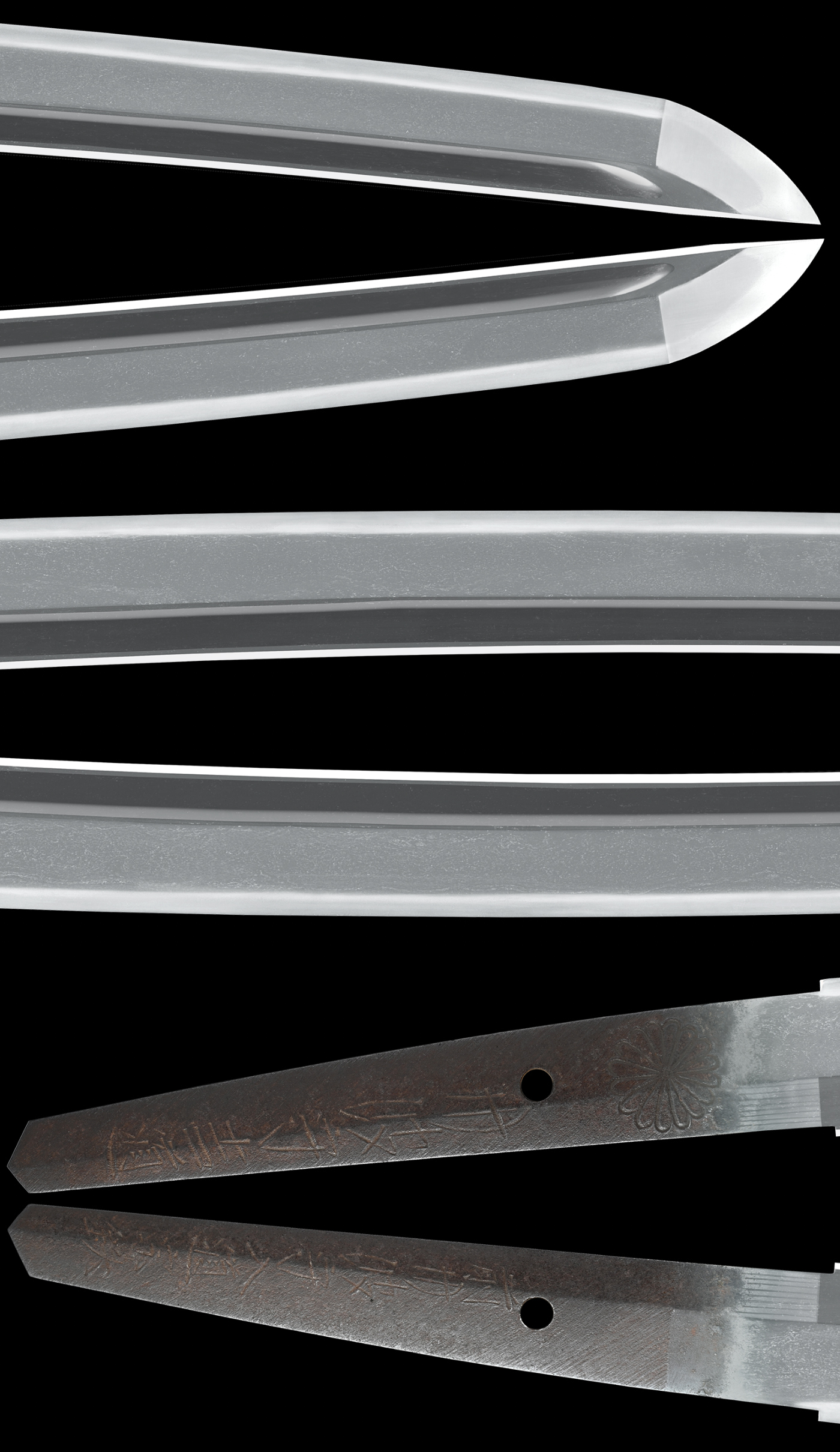
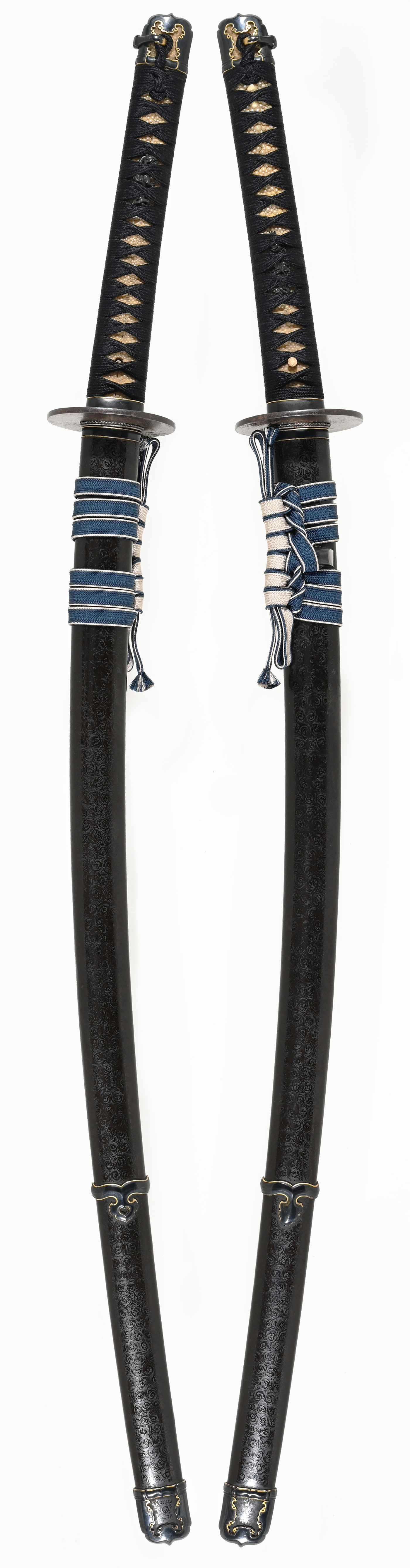
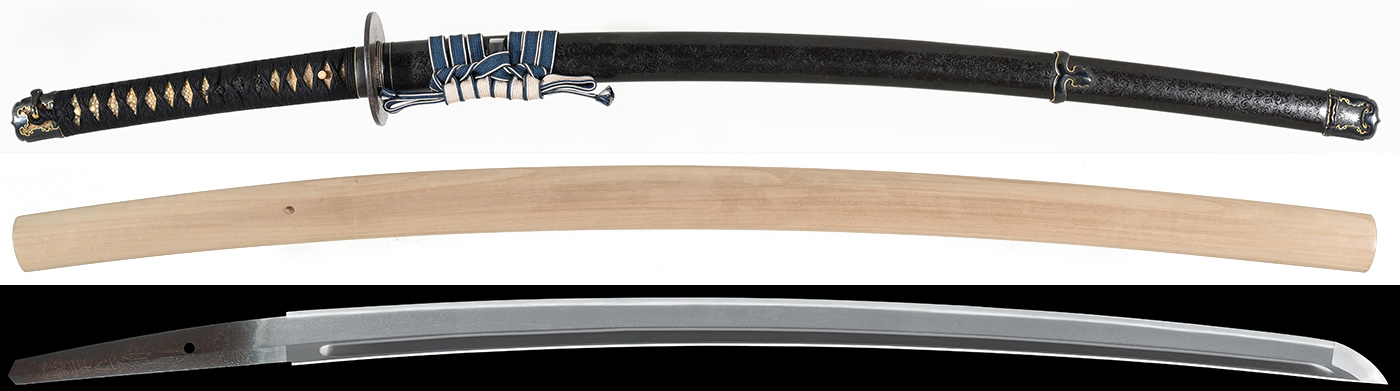
Shinto · Yamashiro · around 1673-1681
Fujishiro Chu-jo saku · Tōken Taikan top 76%
5 pieces on the market now
Shinto · Yamashiro
62 pieces on the market now
The Mishina school (三品), one of the two dominant smithing groups of early Edo Kyoto beside the Horikawa, grew from the late-Mino workshop of Kanemichi of Seki, whose dated blades run through the Tenbun, Eiroku, and Tenshō eras. During the closing decades of the sixteenth century Kanemichi came up to the capital with his four sons and settled at Nishinotōin Ebisugawa, where the eldest, Iga no Kami Kinmichi, is recorded as having greatly raised the name of the line. Learn more →
| Smith | Era | Designated |
|---|---|---|
| Kinmichi金道 | 1596-1615 | 23 |
| Yoshimichi吉道 | 1596-1615 | 36 |
| Masatoshi正俊 | 1596-1615 | 31 |
| Kanemichi兼道 | 1681-1704 | 5 |
| Yoshimichi吉道 | 1661-1673 | 6 |
Certifies a genuine blade worth preserving: a signature confirmed correct, or, if unsigned, an era, province, and school that the NBTHK can reliably identify.
The NBTHK (Nihon Bijutsu Tōken Hozon Kyōkai, the Society for the Preservation of Japanese Art Swords) is a public-interest incorporated foundation founded in 1948 and supervised by Japan’s Agency for Cultural Affairs (Bunkachō); it is based at the Japanese Sword Museum in Tokyo. Its expert panels physically examine each submitted work (shinsa) and issue a certificate (kanteishō) ranking it by artistic and historical merit. NBTHK papers are the most widely recognized standard of authentication for Japanese swords and fittings.
NBTHK official siteReturns possible within 3 days of arrival. Customer pays return shipping and bank transfer fees. Excluded: condition differs from sale, 3+ days passed, overseas delivery, in-store purchases, and deposit transactions.
This is a katana made by Tanba no Kami Yoshimichi, a collaboration between the 4th and 5th generations of the Kyo school. The sword features a chrysanthemum crest and is attributed to the Yamashiro province. It was made around the Edo period (A.D. 1688) and has been newly polished.
Certificate reading — 銘 (菊紋)丹波守吉道(京四代・五代合作) 前丹波守入道宗鉄
NihontoWatchmei · Enpo (1673-1681) · nagasa 63.6cm · sori 1.8cm
Shinto · Yamashiro · around 1673-1681
Fujishiro Chu-jo saku · Tōken Taikan top 76%
5 pieces on the market now
Shinto · Yamashiro
62 pieces on the market now
The Mishina school (三品), one of the two dominant smithing groups of early Edo Kyoto beside the Horikawa, grew from the late-Mino workshop of Kanemichi of Seki, whose dated blades run through the Tenbun, Eiroku, and Tenshō eras. During the closing decades of the sixteenth century Kanemichi came up to the capital with his four sons and settled at Nishinotōin Ebisugawa, where the eldest, Iga no Kami Kinmichi, is recorded as having greatly raised the name of the line. Learn more →
| Smith | Era | Designated |
|---|---|---|
| Kinmichi金道 | 1596-1615 | 23 |
| Yoshimichi吉道 | 1596-1615 | 36 |
| Masatoshi正俊 | 1596-1615 | 31 |
| Kanemichi兼道 | 1681-1704 | 5 |
| Yoshimichi吉道 | 1661-1673 | 6 |
Certifies a genuine blade worth preserving: a signature confirmed correct, or, if unsigned, an era, province, and school that the NBTHK can reliably identify.
The NBTHK (Nihon Bijutsu Tōken Hozon Kyōkai, the Society for the Preservation of Japanese Art Swords) is a public-interest incorporated foundation founded in 1948 and supervised by Japan’s Agency for Cultural Affairs (Bunkachō); it is based at the Japanese Sword Museum in Tokyo. Its expert panels physically examine each submitted work (shinsa) and issue a certificate (kanteishō) ranking it by artistic and historical merit. NBTHK papers are the most widely recognized standard of authentication for Japanese swords and fittings.
NBTHK official siteReturns possible within 3 days of arrival. Customer pays return shipping and bank transfer fees. Excluded: condition differs from sale, 3+ days passed, overseas delivery, in-store purchases, and deposit transactions.