
















The twentieth century nearly killed the craft twice: wartime distortion, then the occupation ban. The NBTHK’s founding in 1948 and licensed forging from 1953 rebuilt the sword as an art, crowned by Living National Treasures and the mukansa rank.
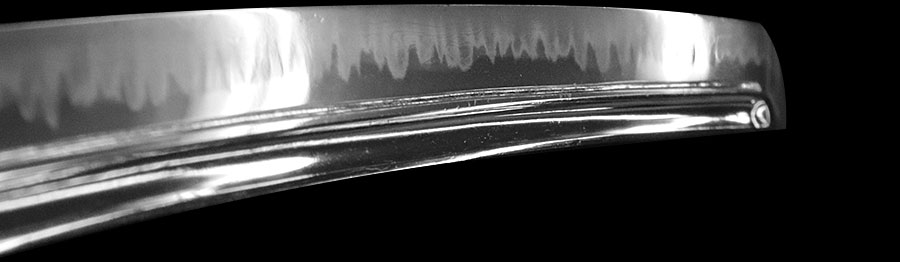
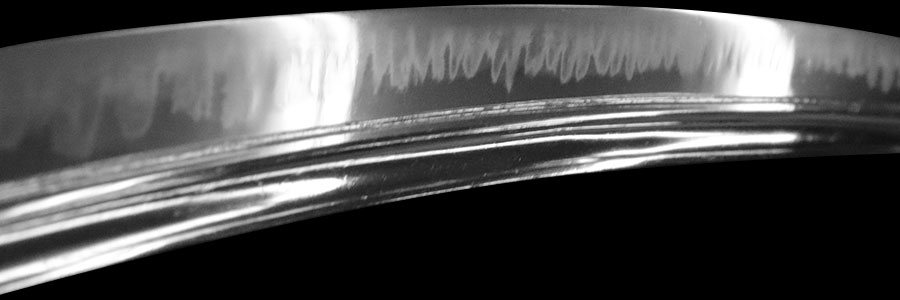
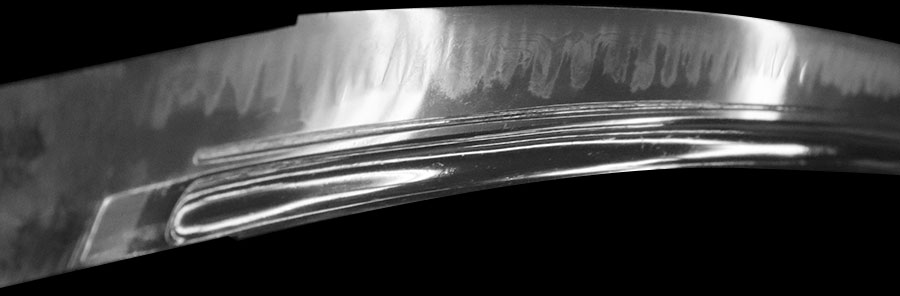
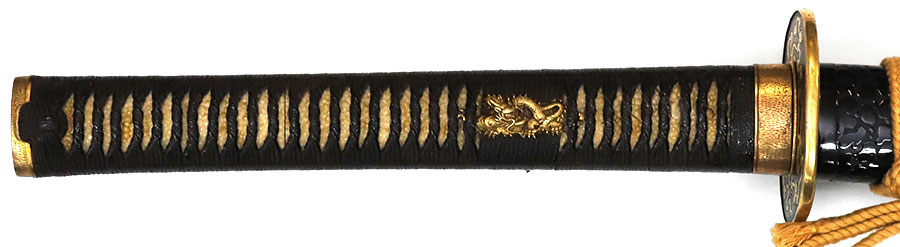
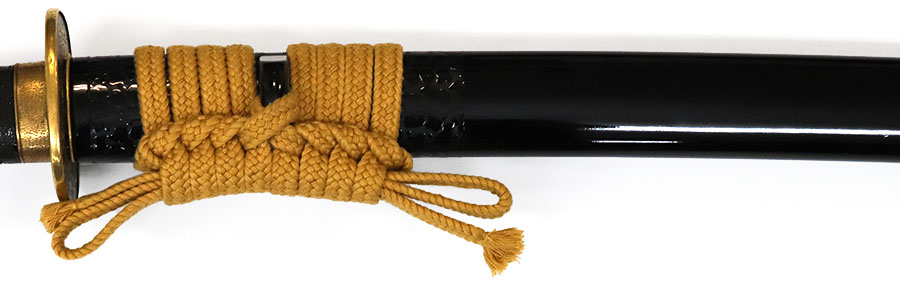
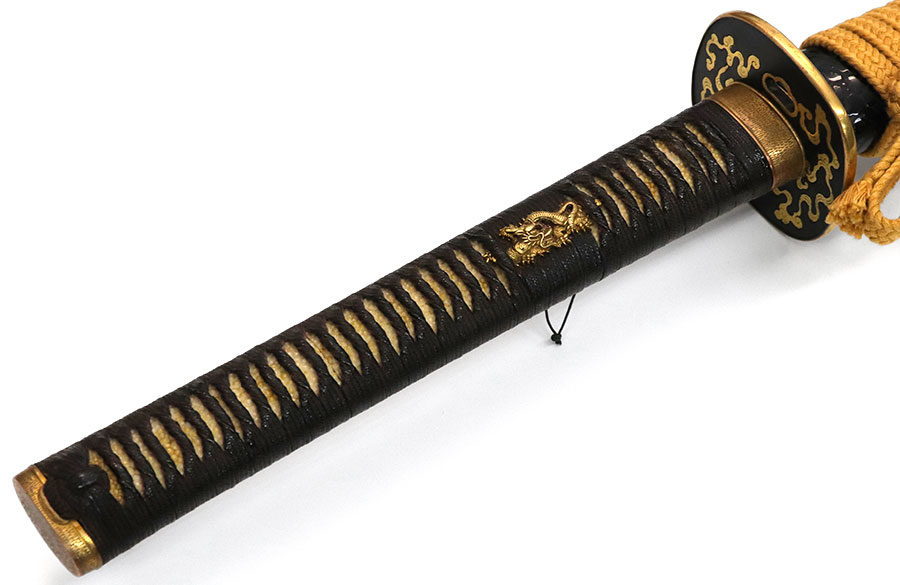
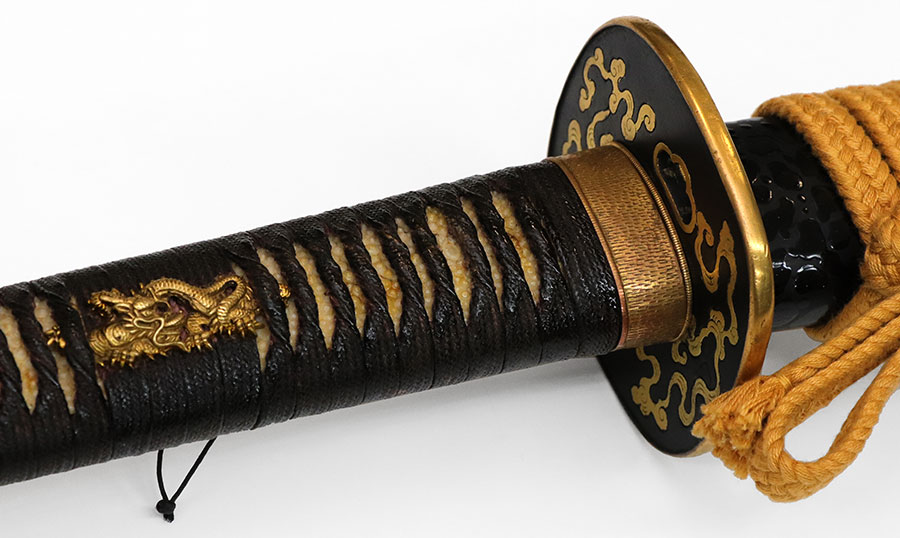
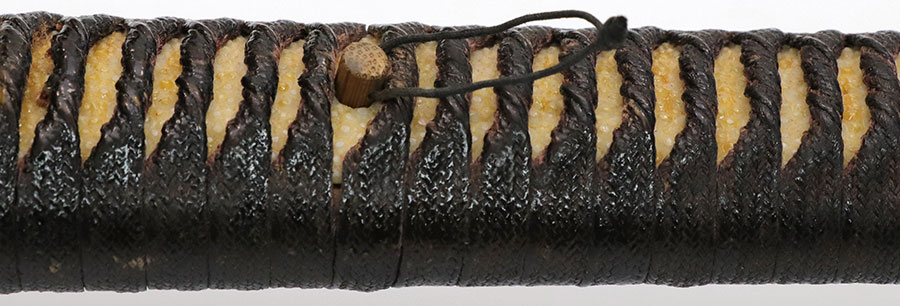
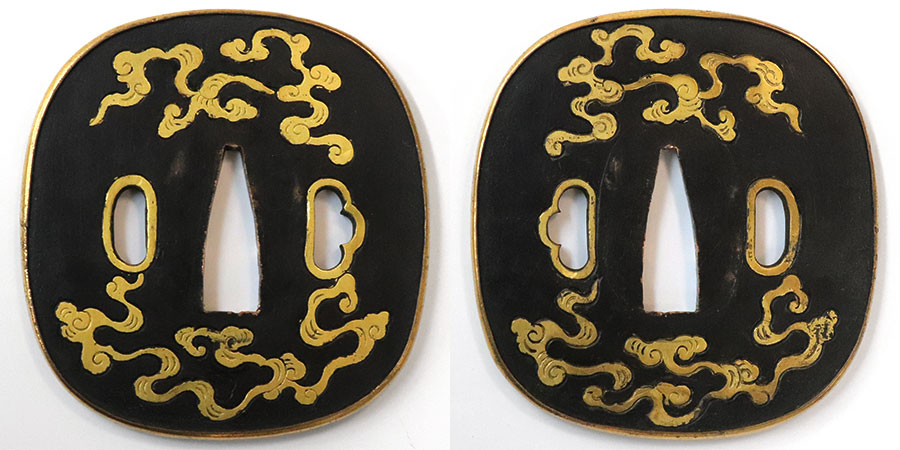
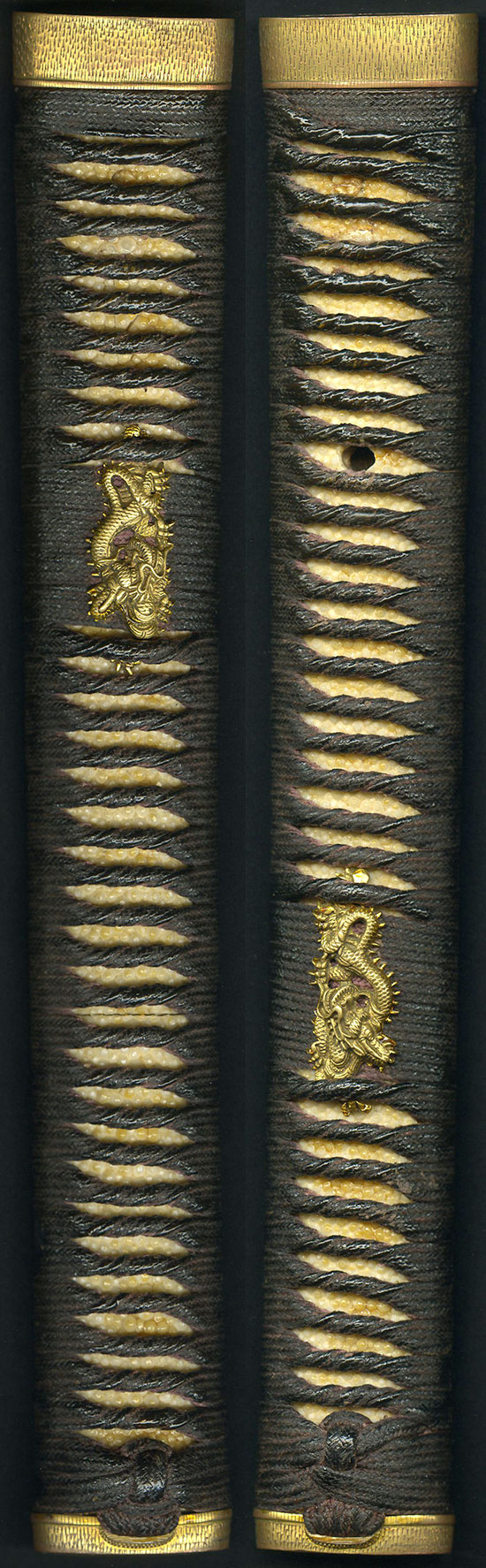
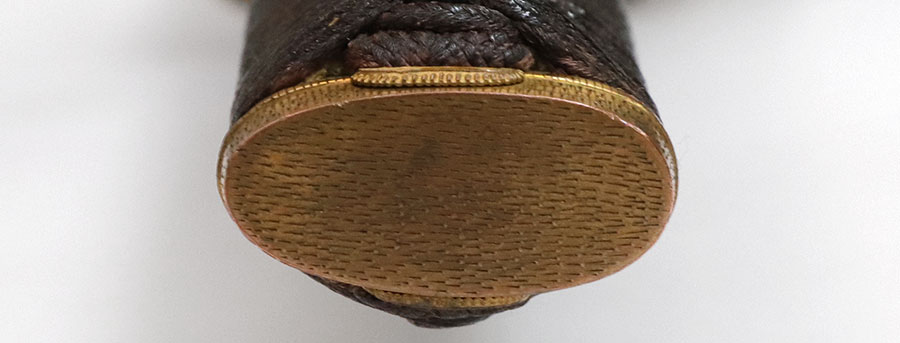
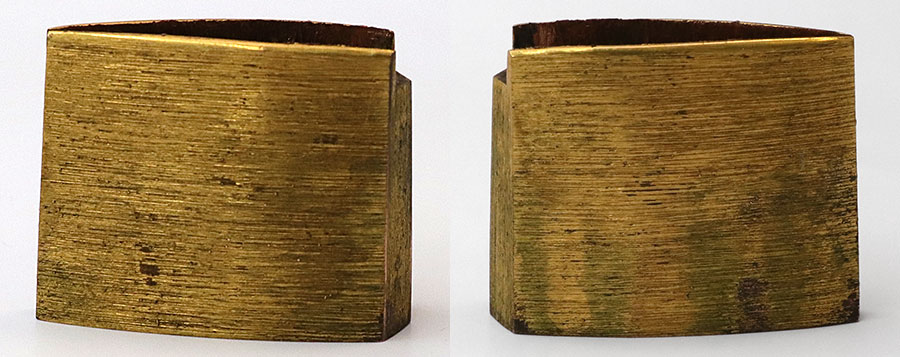
A Mukansa tosho and designated Important Intangible Cultural Property of Kumamoto Prefecture, the famous swordsmith Minamoto Shigeyoshi (real name Tanigawa Matsukichi, born in Taisho 9) served as a director of the All Japan Swordsmith Association. He is a master craftsman representing Japan, having received the highest honors at the Shinsaku Meito Ten (Exhibition of New Masterpiece Swords), including the Kaicho-sho, Chokan-sho, Kanzan-sho, and Mainichi Shimbun-sha Sho. He is also renowned as the smith who dedicated his life to studying the Bakumatsu master Minamoto Kiyomaro in the modern era. This katana has a long nagasa with a wide motohaba and sakihaba, featuring an extended kissaki that copies the grand and magnificent sugata of Minamoto Kiyomaro. The jigane is forged in a powerful itame-hada, and the horimono consists of beautifully carved futasuji-hi. The hamon is a variation of Kiyomaro’s gunome-midare, fired with great spirit, brilliantly manifesting nie-sunagashi and kinsuji within the ha, effectively recreating the work of Minamoto Kiyomaro here. The koshirae further enhances the splendor of this sword; it features a magnificent saya and a tsuka wrapped in monkey skin (saru-no-kawa)—a traditional Higo koshirae technique rarely seen today. The production cost at the time is said to have been over 2.5 million yen. As this is the first time it has appeared on the market, we are offering it at a special low price through the courtesy of the owner. Please enjoy this masterpiece.
Showa (1926-1989) · nagasa 73.7cm · sori 1.3cm


Kumamoto · around 1926-1989
9 pieces on the market now
The twentieth century nearly killed the craft twice: wartime distortion, then the occupation ban. The NBTHK’s founding in 1948 and licensed forging from 1953 rebuilt the sword as an art, crowned by Living National Treasures and the mukansa rank.
We could not find an authenticity certificate on the seller’s listing. Japanese swords and fittings are normally papered by the NBTHK (or the NTHK). Without one, the attribution is the seller’s own assessment and has not been independently verified — treat it with caution and ask the dealer about certification before buying.
For returns due to customer circumstances, the cost is the customer's responsibility. For returns due to our mis-shipment or a defective item, we bear the cost.
A Mukansa tosho and designated Important Intangible Cultural Property of Kumamoto Prefecture, the famous swordsmith Minamoto Shigeyoshi (real name Tanigawa Matsukichi, born in Taisho 9) served as a director of the All Japan Swordsmith Association. He is a master craftsman representing Japan, having received the highest honors at the Shinsaku Meito Ten (Exhibition of New Masterpiece Swords), including the Kaicho-sho, Chokan-sho, Kanzan-sho, and Mainichi Shimbun-sha Sho. He is also renowned as the smith who dedicated his life to studying the Bakumatsu master Minamoto Kiyomaro in the modern era. This katana has a long nagasa with a wide motohaba and sakihaba, featuring an extended kissaki that copies the grand and magnificent sugata of Minamoto Kiyomaro. The jigane is forged in a powerful itame-hada, and the horimono consists of beautifully carved futasuji-hi. The hamon is a variation of Kiyomaro’s gunome-midare, fired with great spirit, brilliantly manifesting nie-sunagashi and kinsuji within the ha, effectively recreating the work of Minamoto Kiyomaro here. The koshirae further enhances the splendor of this sword; it features a magnificent saya and a tsuka wrapped in monkey skin (saru-no-kawa)—a traditional Higo koshirae technique rarely seen today. The production cost at the time is said to have been over 2.5 million yen. As this is the first time it has appeared on the market, we are offering it at a special low price through the courtesy of the owner. Please enjoy this masterpiece.
Showa (1926-1989) · nagasa 73.7cm · sori 1.3cm


Kumamoto · around 1926-1989
9 pieces on the market now
The twentieth century nearly killed the craft twice: wartime distortion, then the occupation ban. The NBTHK’s founding in 1948 and licensed forging from 1953 rebuilt the sword as an art, crowned by Living National Treasures and the mukansa rank.
We could not find an authenticity certificate on the seller’s listing. Japanese swords and fittings are normally papered by the NBTHK (or the NTHK). Without one, the attribution is the seller’s own assessment and has not been independently verified — treat it with caution and ask the dealer about certification before buying.
For returns due to customer circumstances, the cost is the customer's responsibility. For returns due to our mis-shipment or a defective item, we bear the cost.