Sengoku Seki was an industry: smiths organized under their tutelary Kasuga shrine, arming the war bands of central Japan. Magoroku Kanemoto’s sanbonsugi and the finest Kanesada work prove quality survived inside mass production.
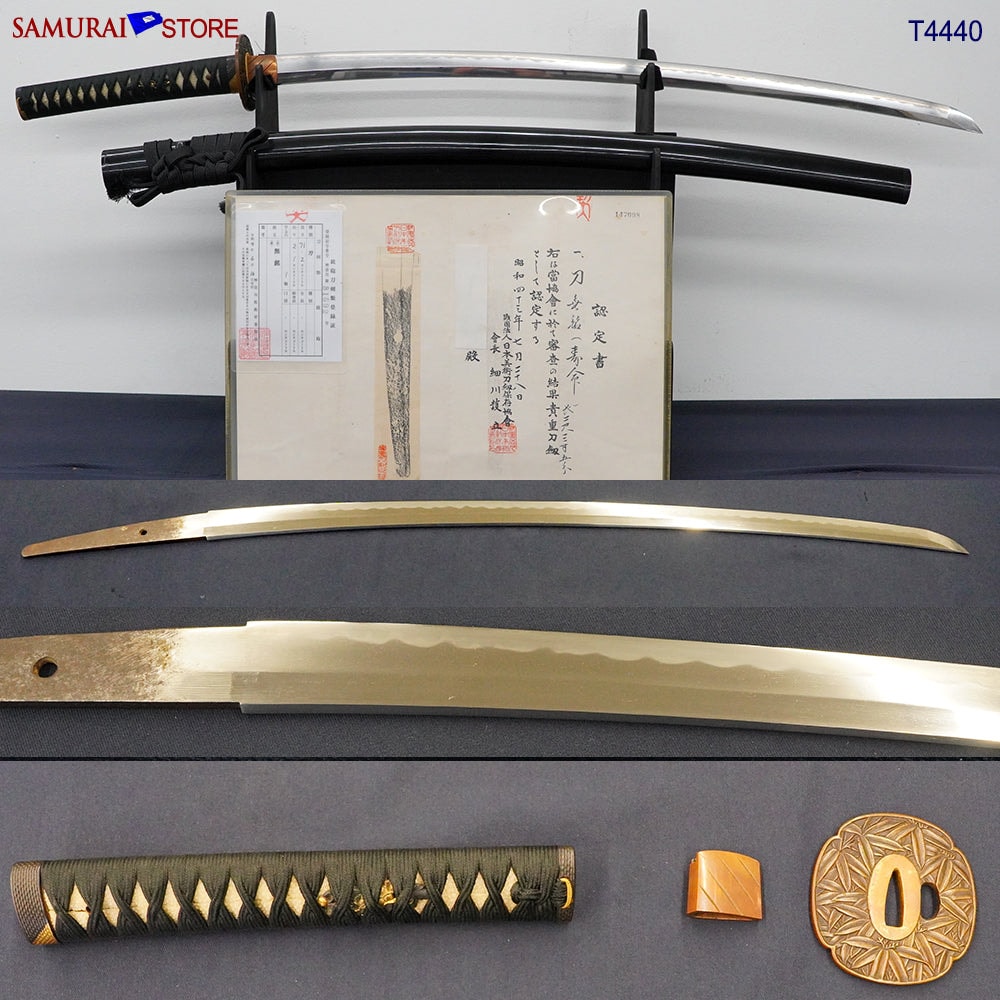
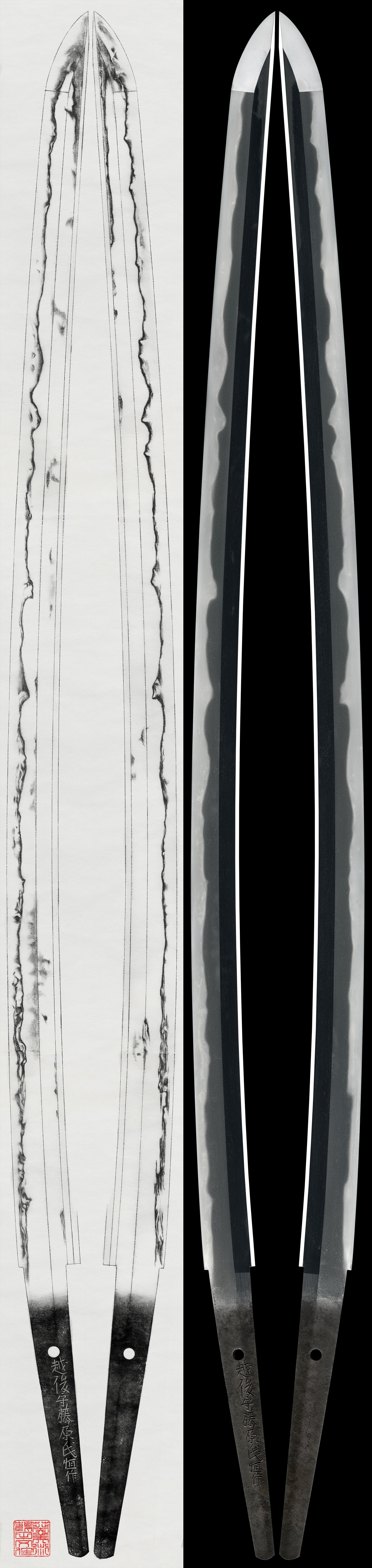
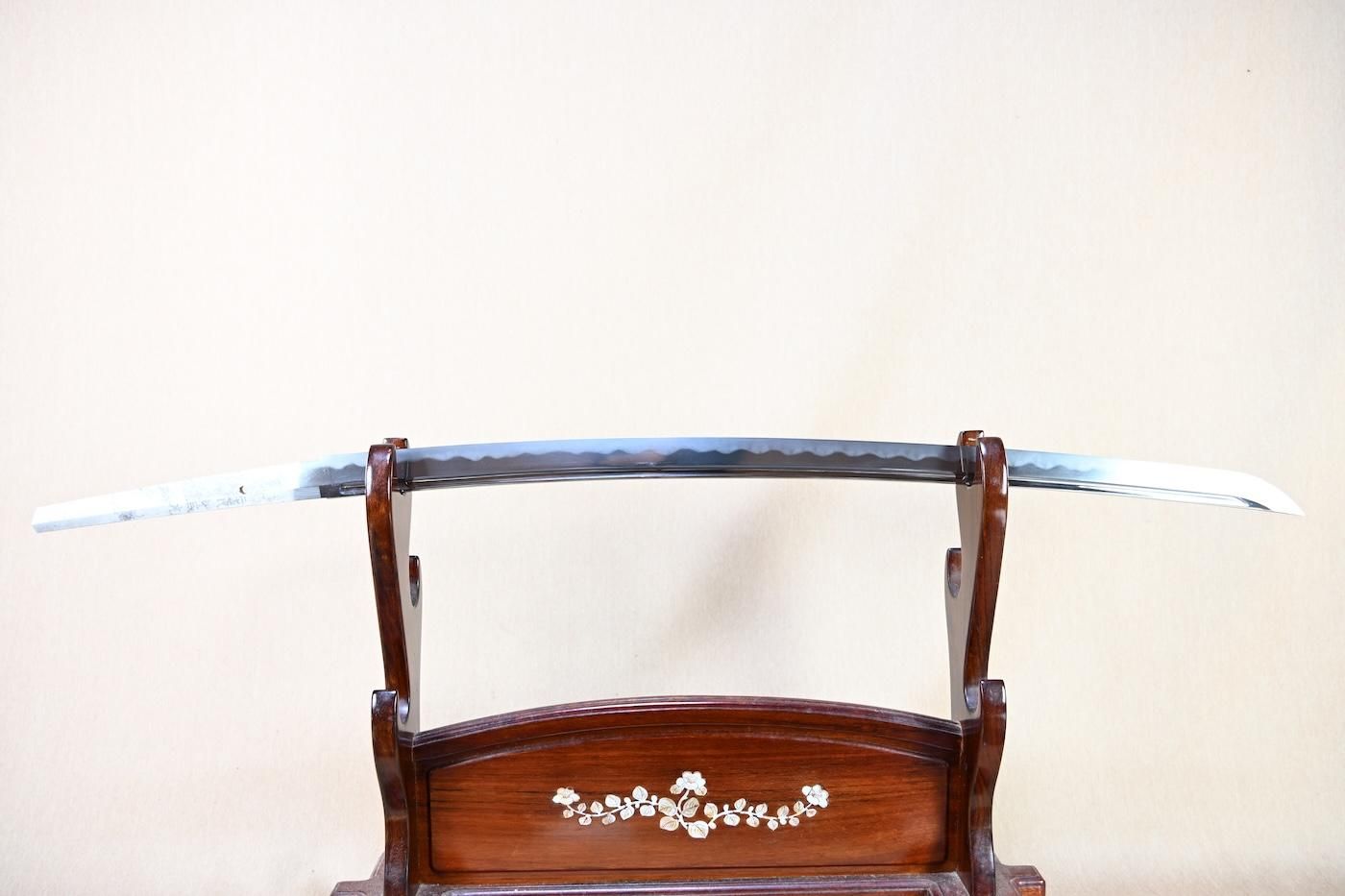
Since ancient times, there is perhaps no sword as famous in the nihonto world as Toshinaga. Because the name can also be read as "Jumyo" (longevity), these swords have been greatly cherished as auspicious objects for celebrating health and long life, and were frequently used as gifts among daimyo. This katana is a work by Kawachi no Kami Fujiwara Toshinaga, made around the Bunroku era (1593) of the Azuchi-Momoyama period (430 years ago), roughly the same time Toyotomi Hideyori was born to Toyotomi Hideyoshi. This sword was originally a katana of about 2 shaku 3 sun, but a samurai of later generations, wishing to use such an auspicious sword as his own sashiryo, shortened it by performing machi-okuri to match his own swordsmanship. The sugata shows an elegant form with a noticeable difference between the moto-mihaba and saki-mihaba. The jigane features a well-tightened ko-itame hada with masame hada appearing as well; while there are some o-hada due to the passage of time, they are charming characteristics. A faint shirake-utsuri appears on the ji, showing a brightly forged, high-quality jigane. The hamon is a nioi-deki suguha-style with nie, brightly and skillfully executed. On this occasion, an elderly collector has entrusted this sword to us, stating that since they have lived a sufficiently long life thanks to this blade, they wish to pass this auspicious Kawachi no Kami Fujiwara Toshinaga to a successor at an affordable price. Therefore, we are offering it at a special discount. Please enjoy this celebrated sword by Kawachi no Kami Fujiwara Toshinaga.
 NihontoWatch
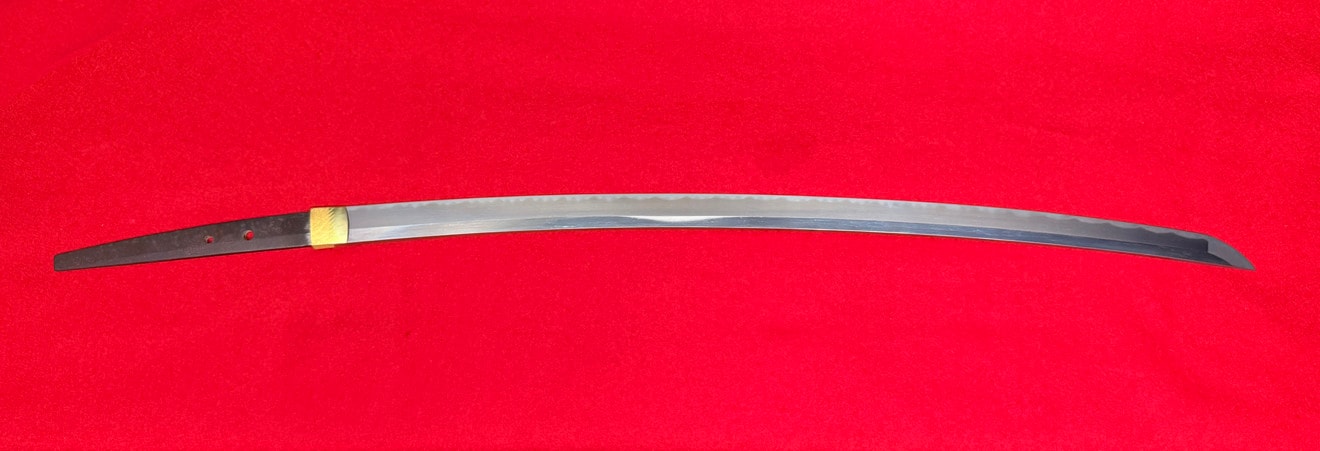
Tenmon (1532-1555) · nagasa 65.8cm · sori 1.4cm














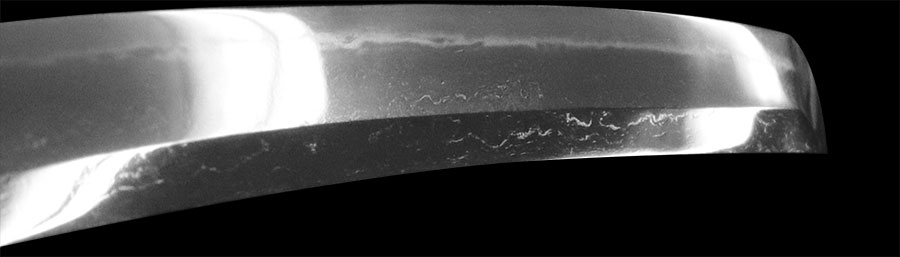
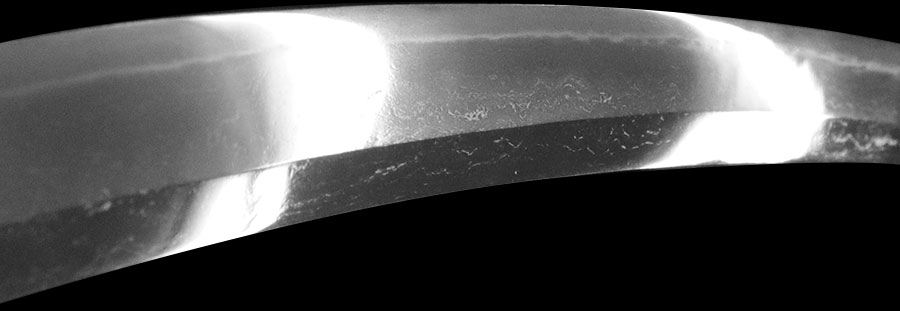
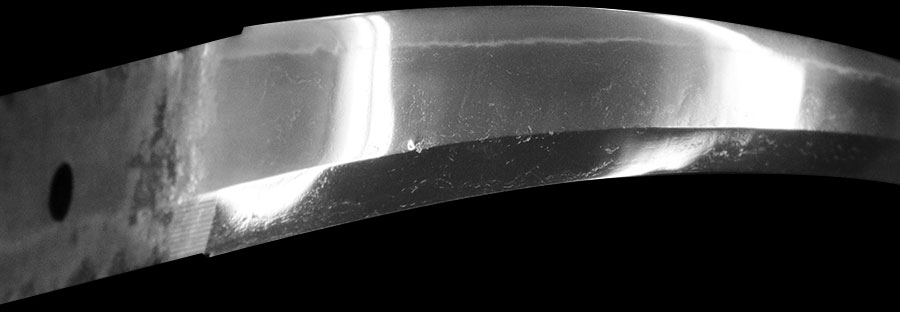
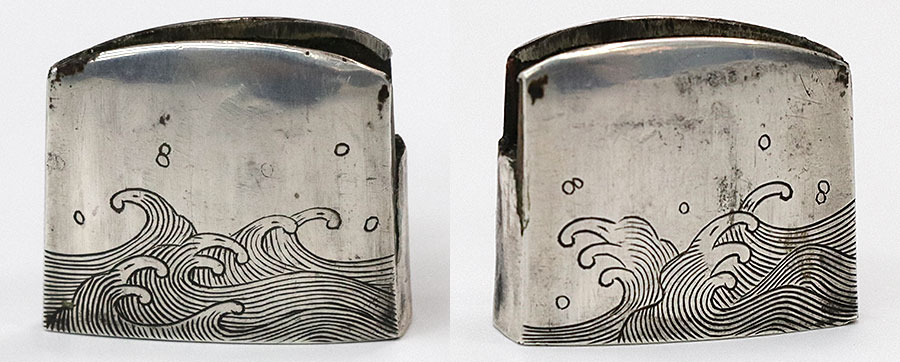
Mino-den · Mino · around 1532-1555
2 pieces on the market now
Mino-den · Mino
15 pieces on the market now
Mino in the Muromachi period
Sengoku Seki was an industry: smiths organized under their tutelary Kasuga shrine, arming the war bands of central Japan. Magoroku Kanemoto’s sanbonsugi and the finest Kanesada work prove quality survived inside mass production.
We could not find an authenticity certificate on the seller’s listing. Japanese swords and fittings are normally papered by the NBTHK (or the NTHK). Without one, the attribution is the seller’s own assessment and has not been independently verified — treat it with caution and ask the dealer about certification before buying.
For returns due to customer circumstances, the cost is the customer's responsibility. For returns due to our mis-shipment or a defective item, we bear the cost.
¥350,000