NihontoWatch Mon

NihontoWatch

Market
Encyclopedia
Kantei
NihontoWatch Mon

NihontoWatch

Market
Encyclopedia
Kantei

Description

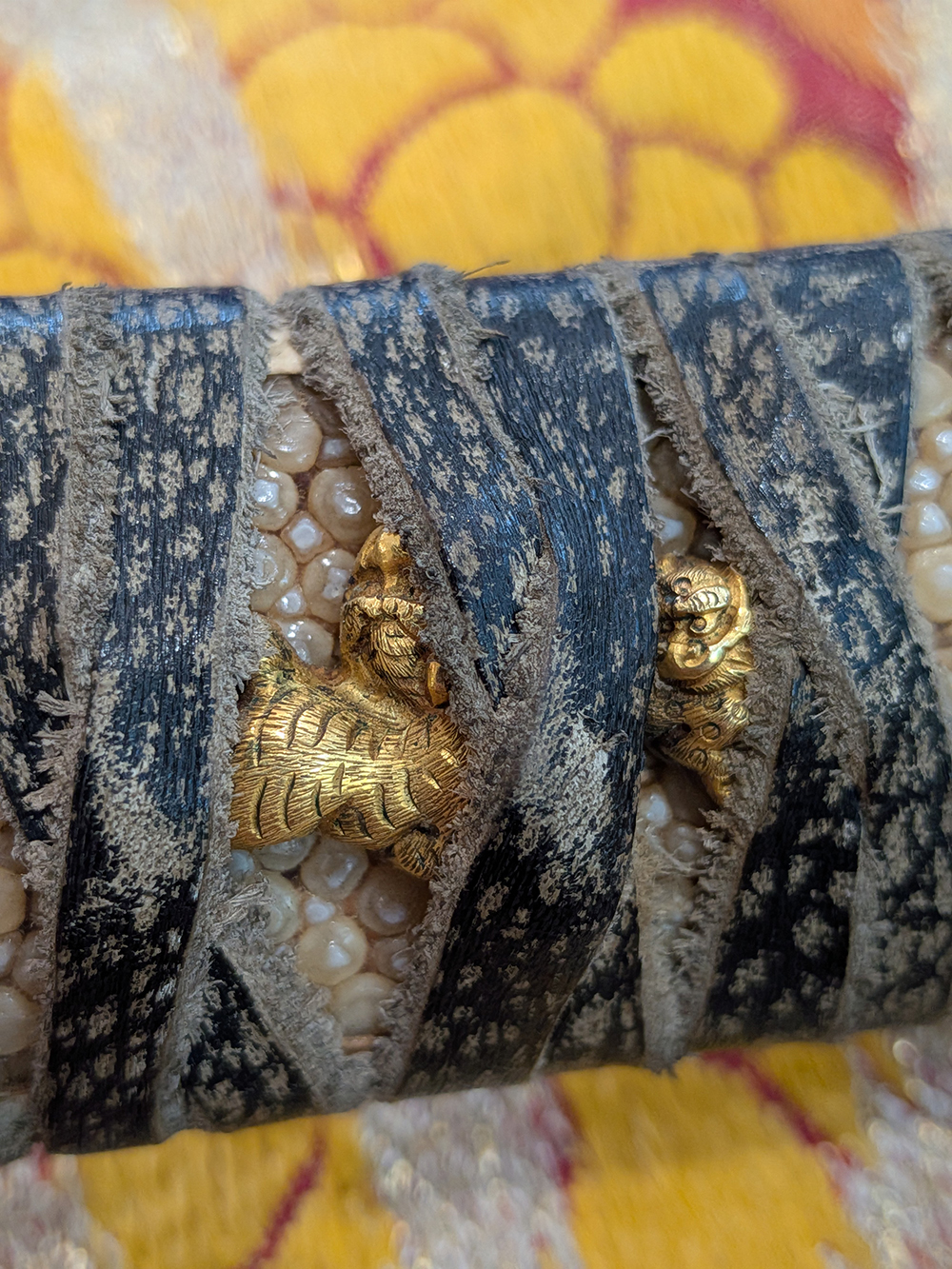
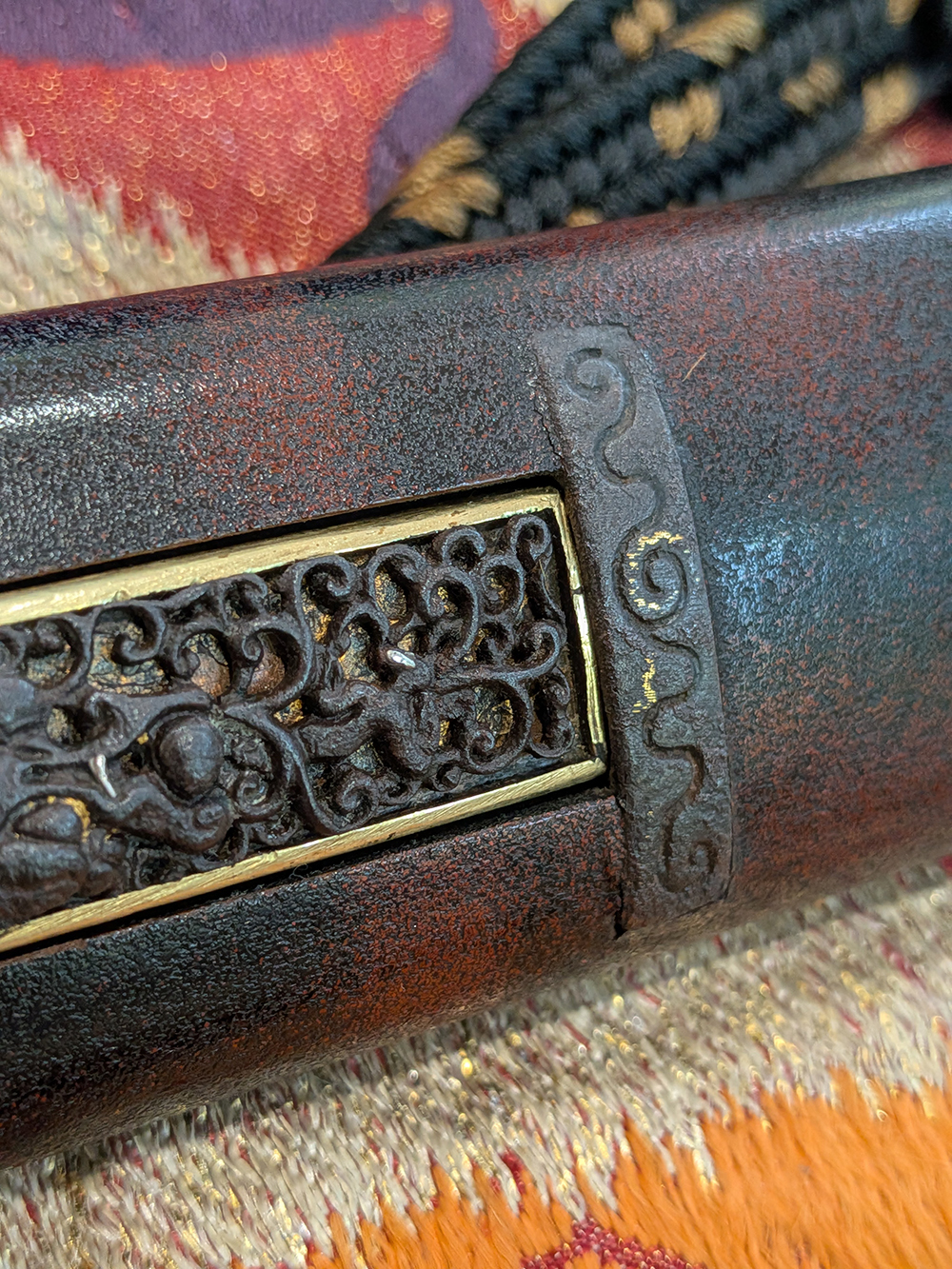
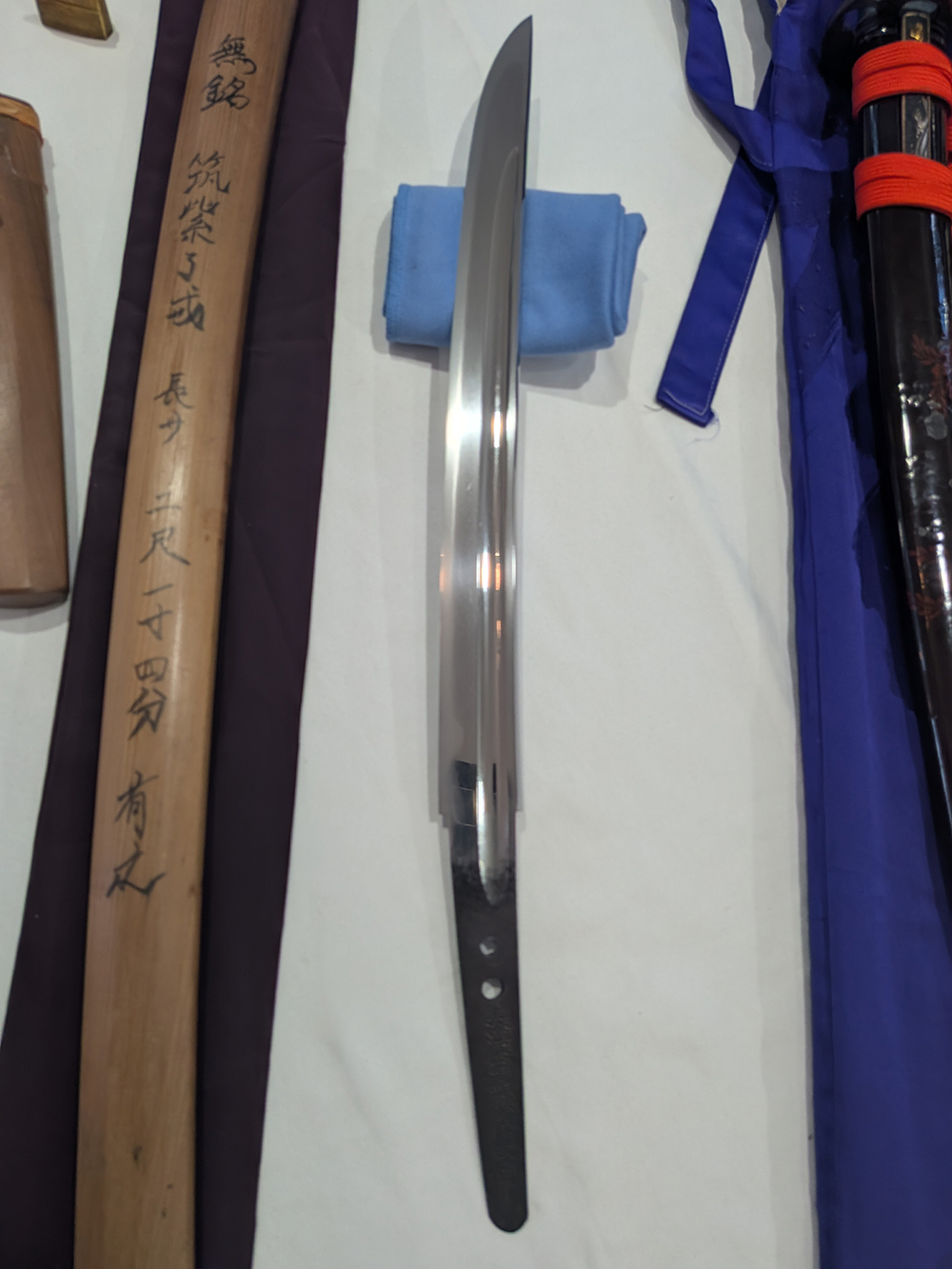
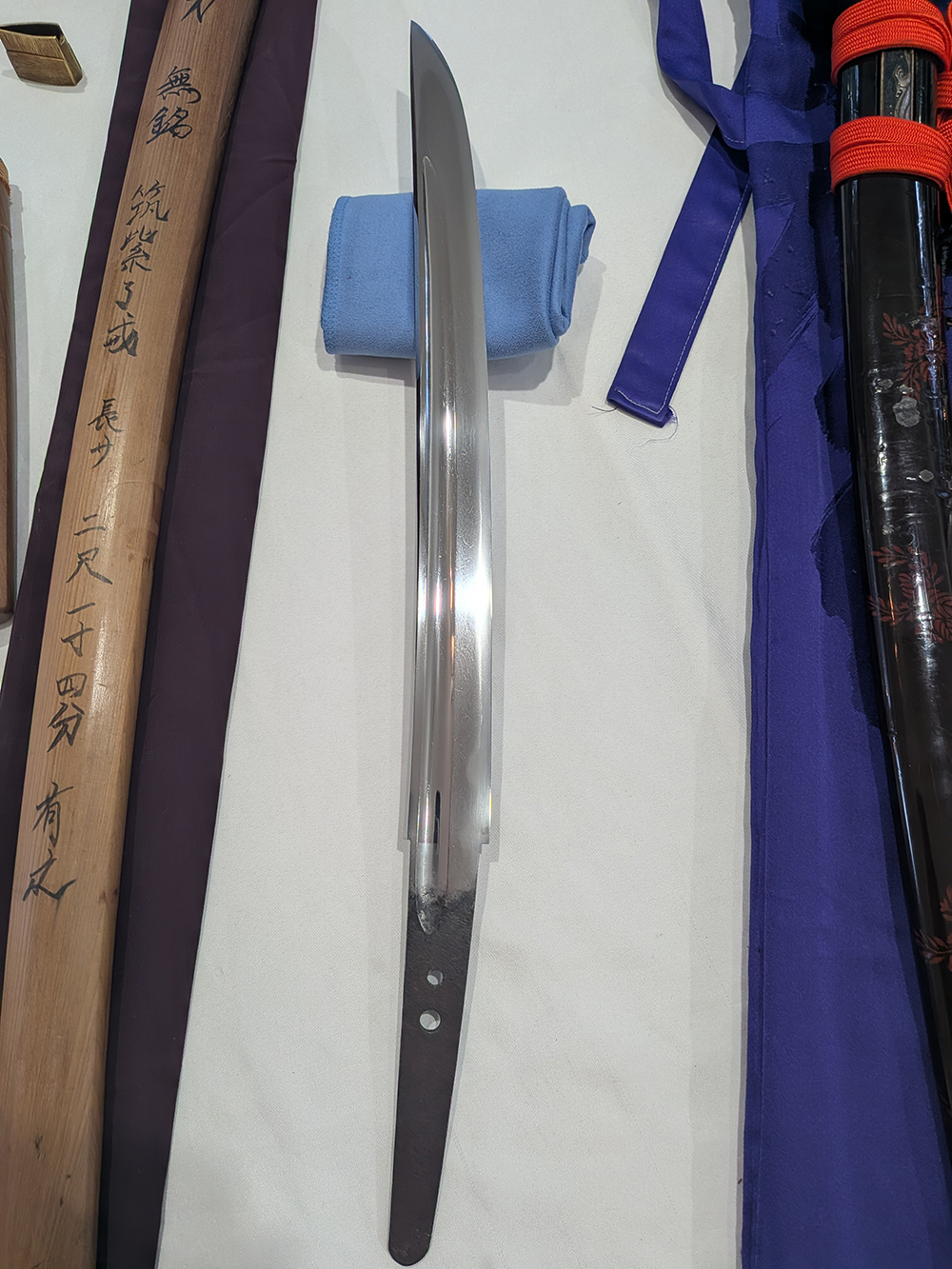
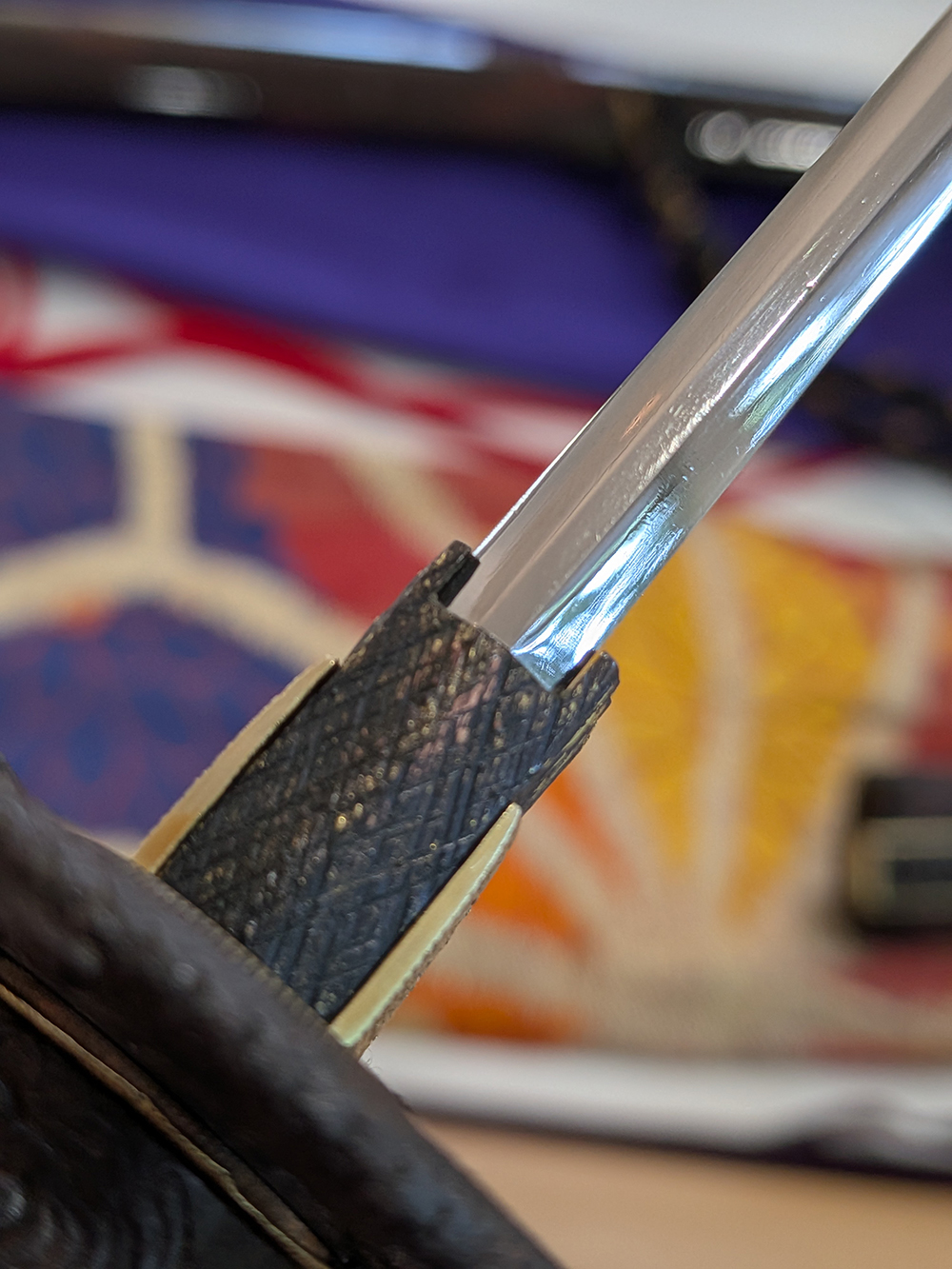
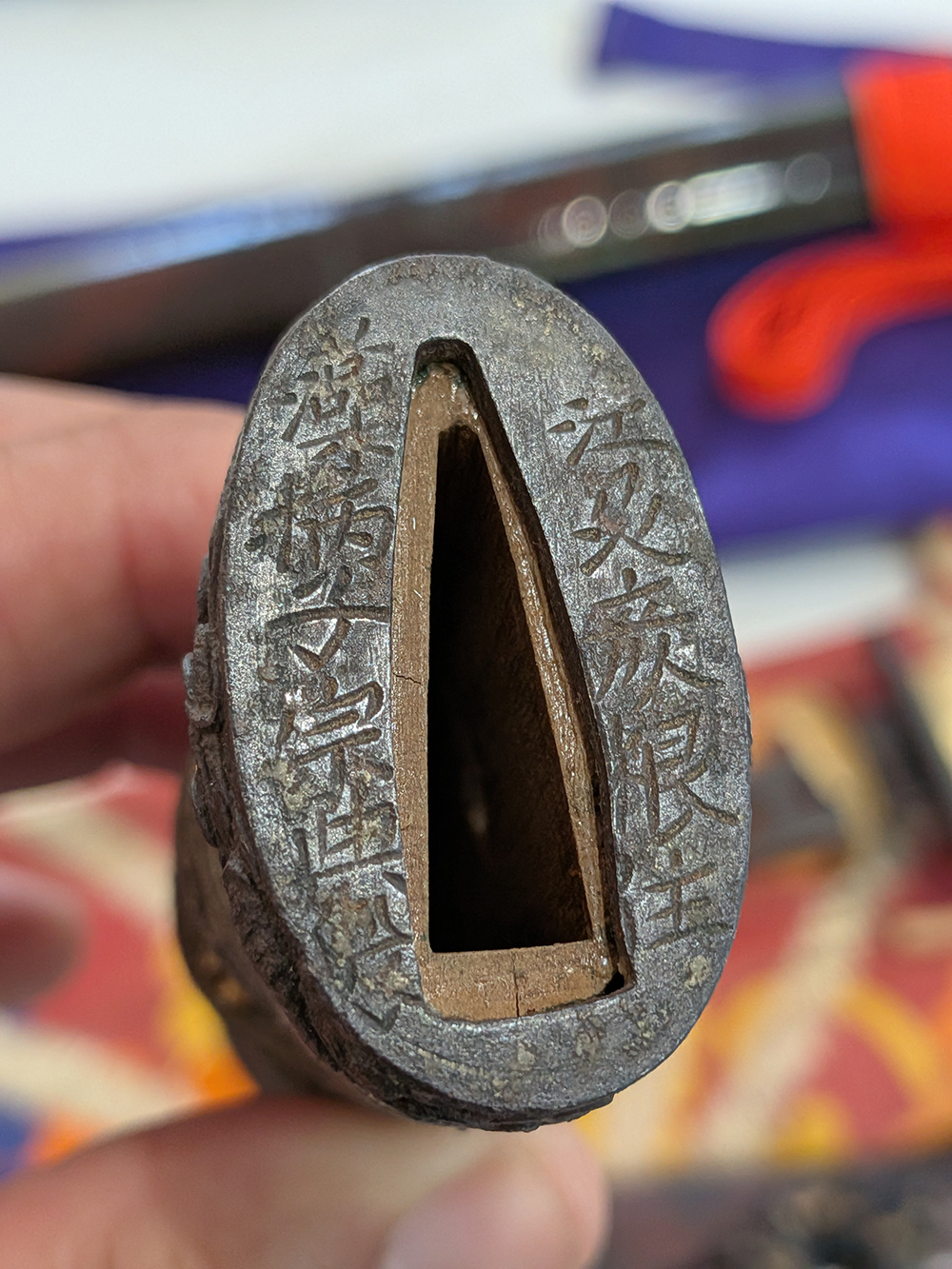
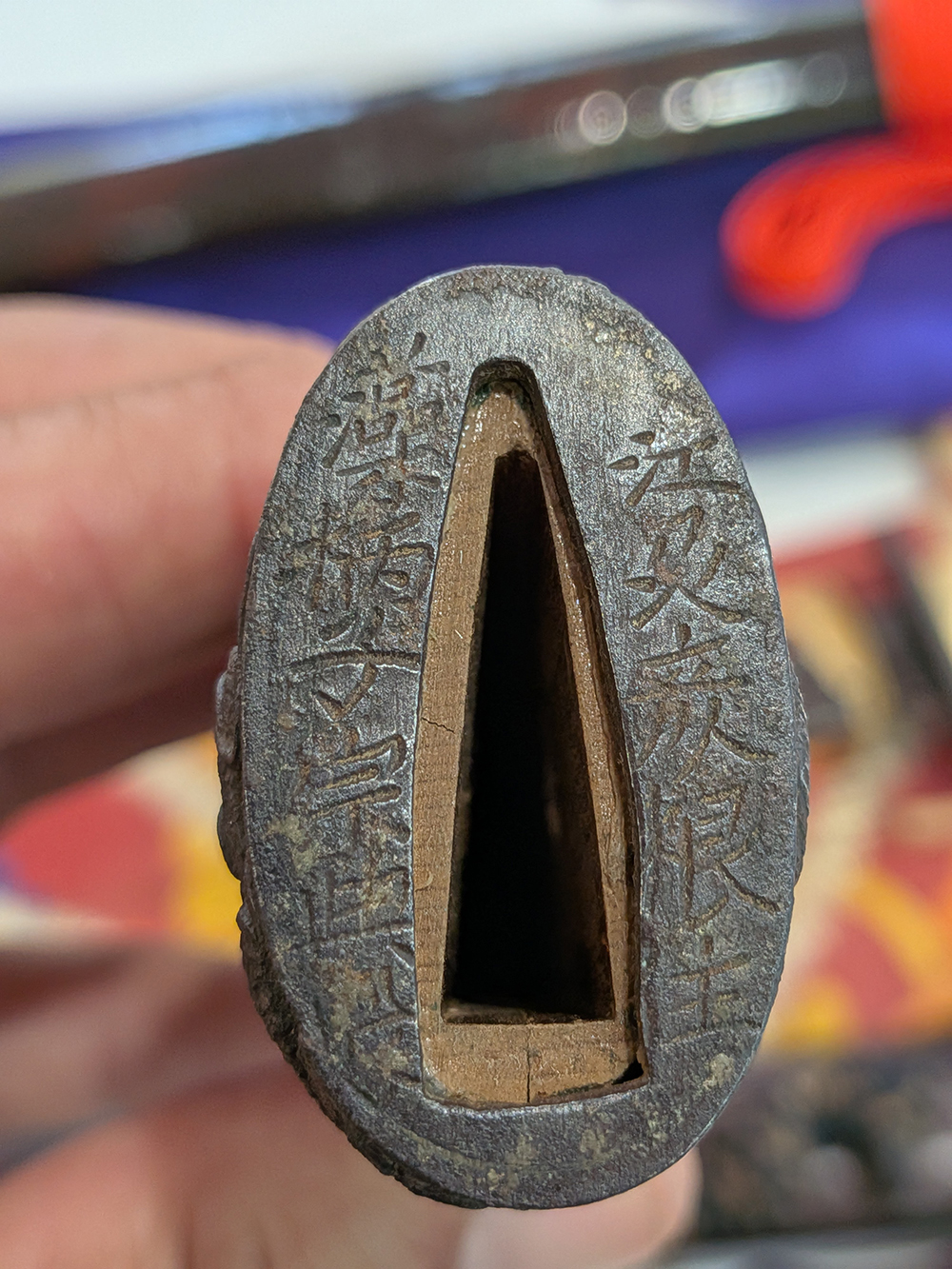
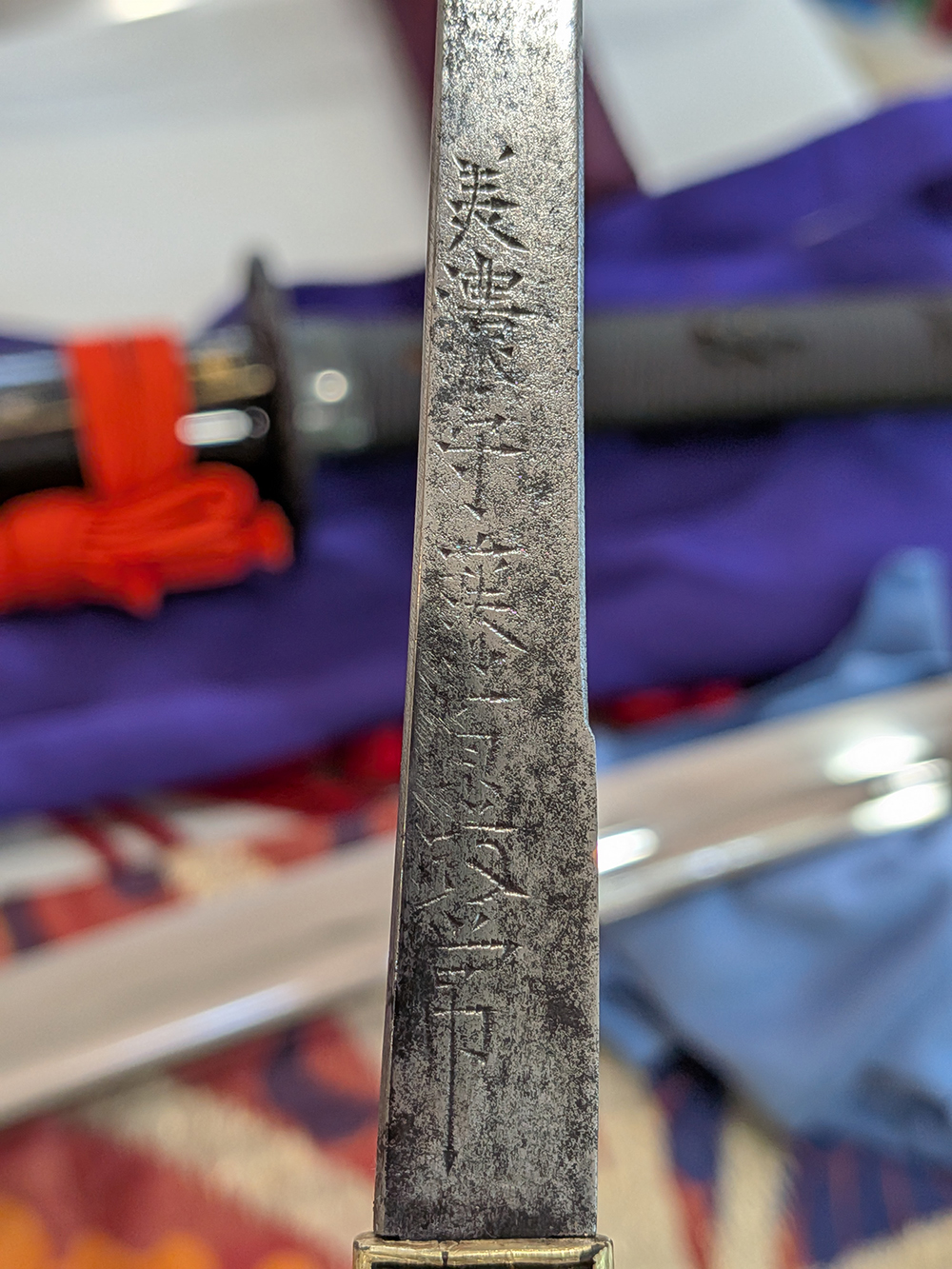
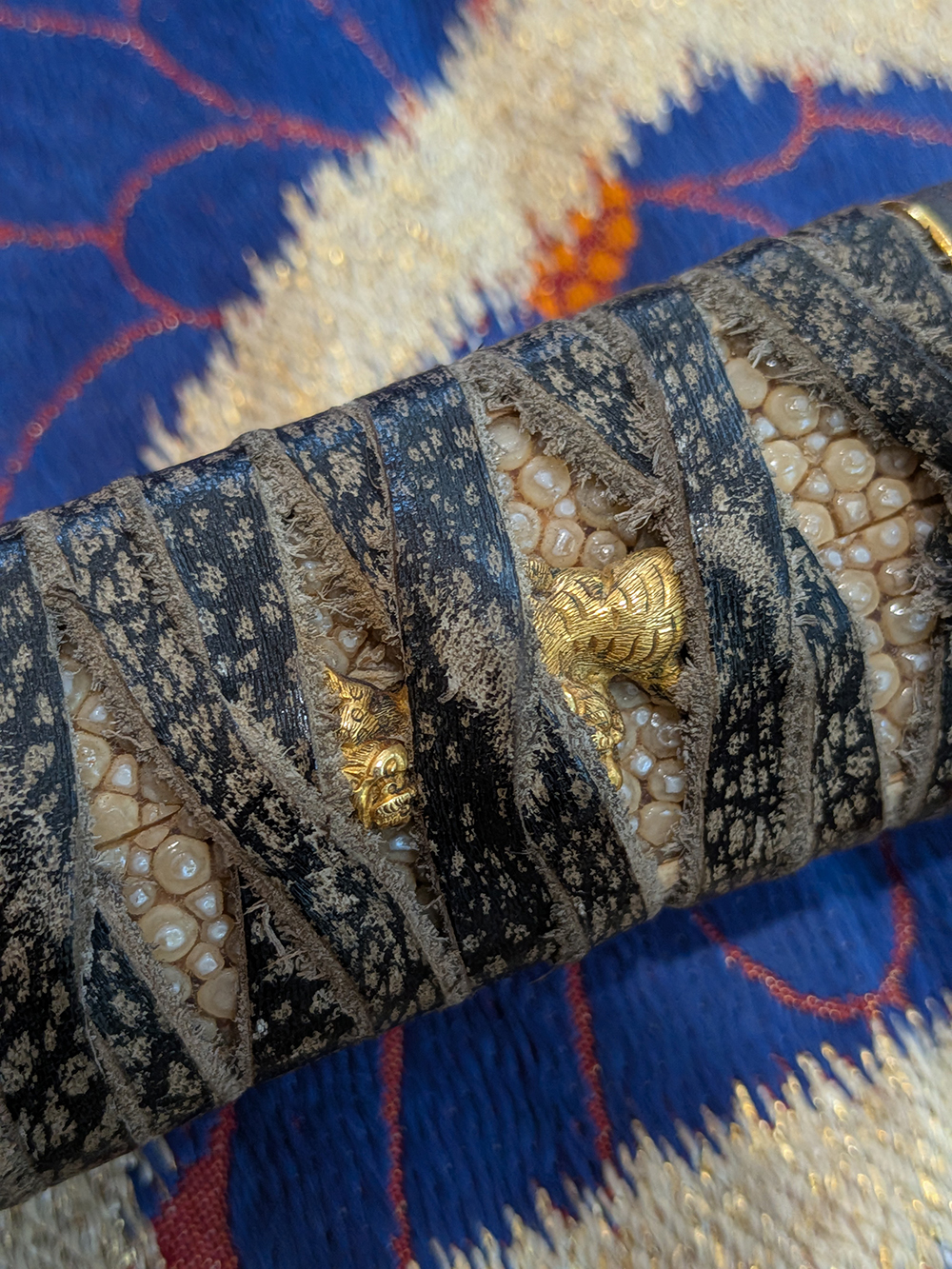
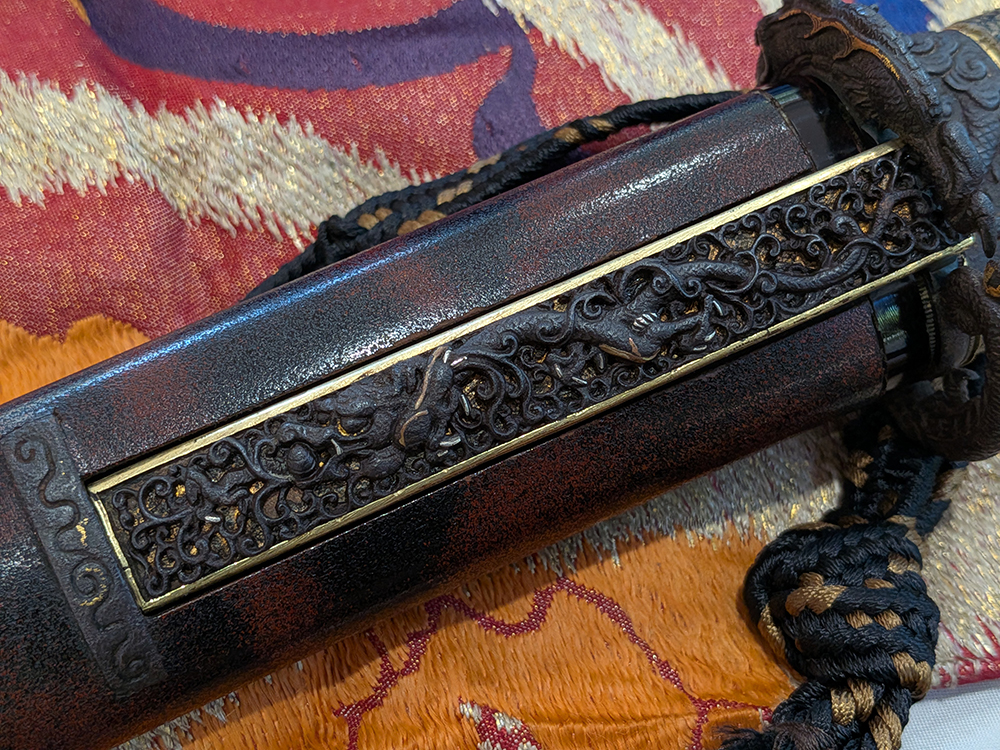
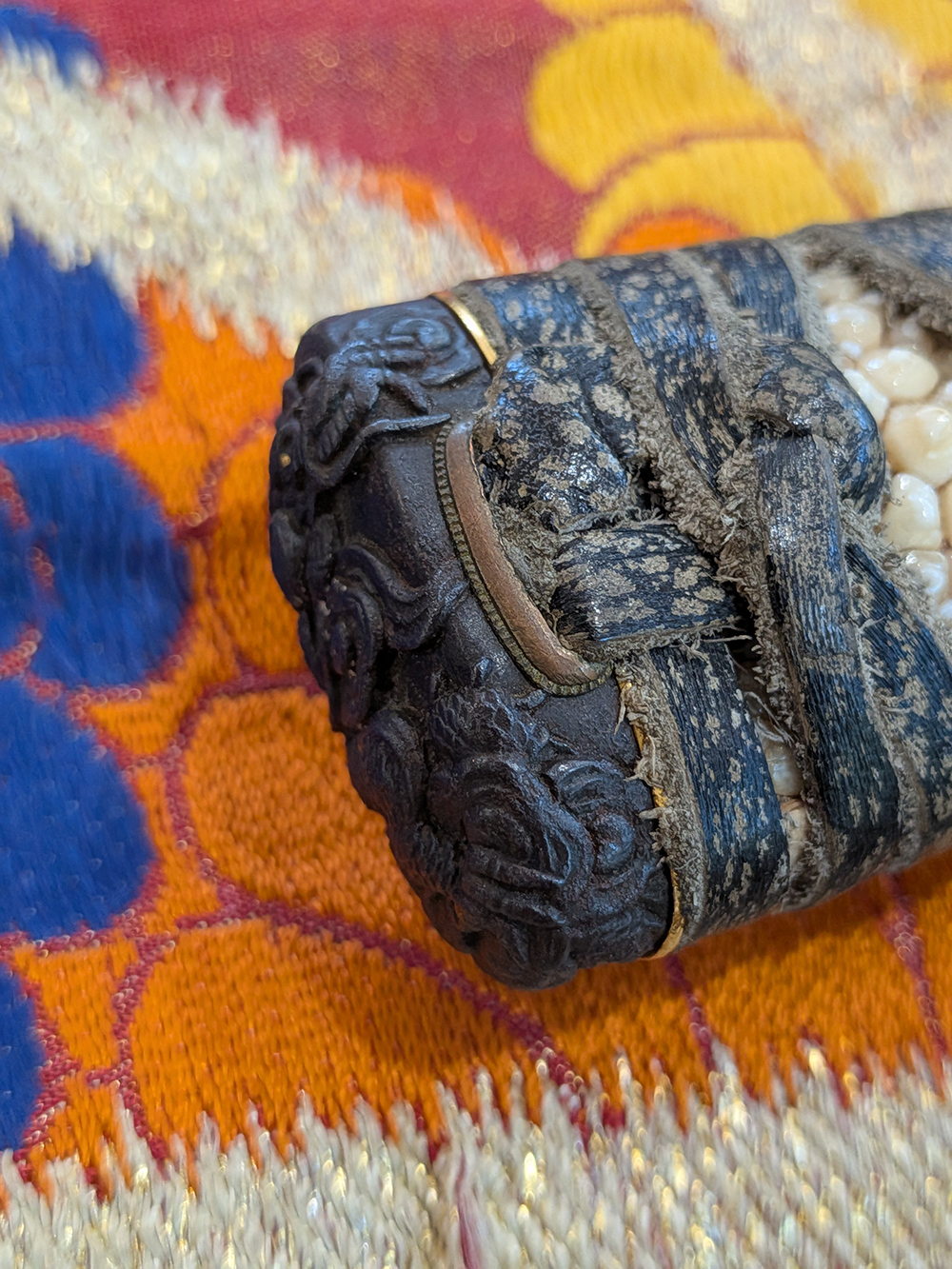
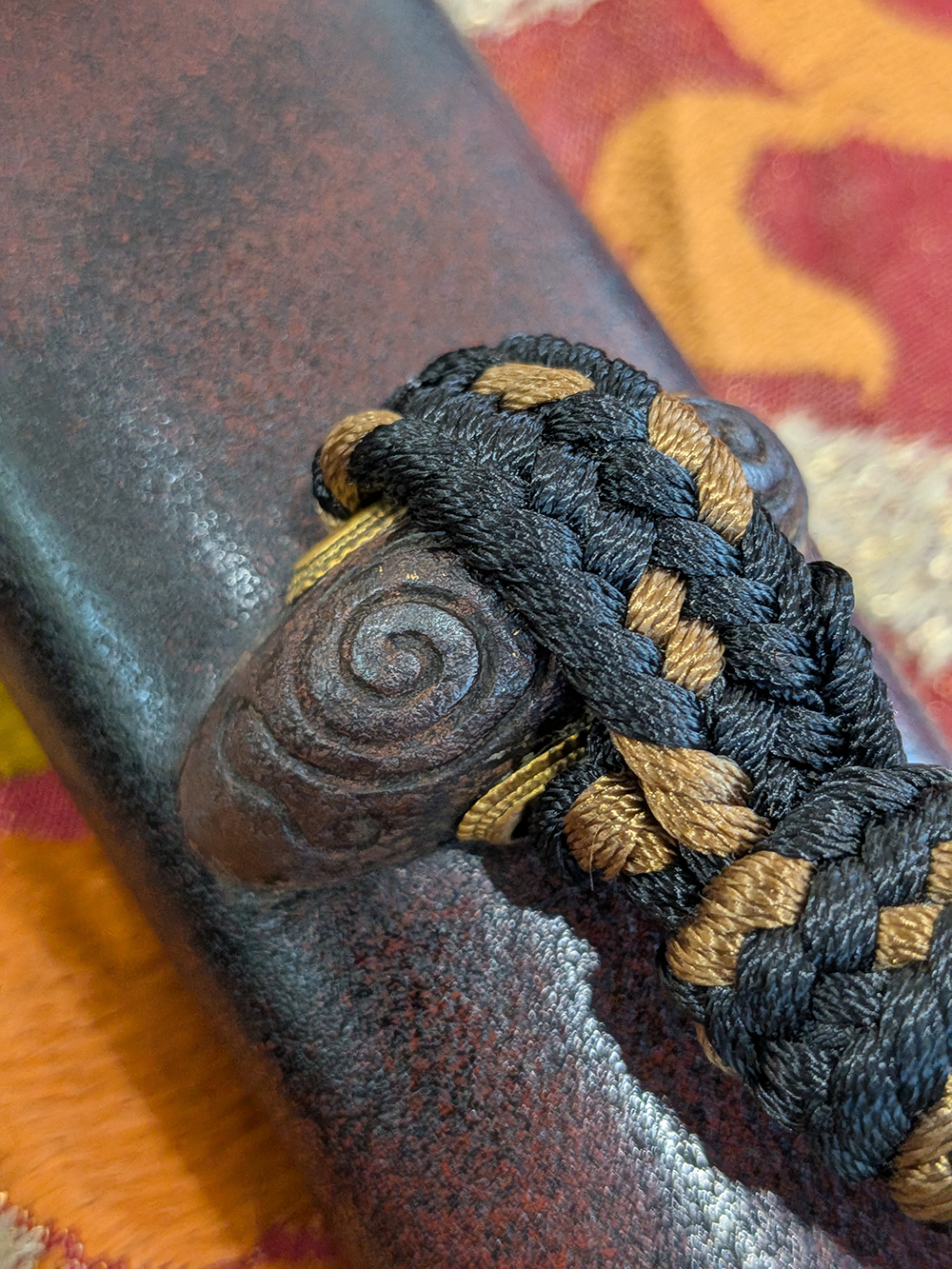
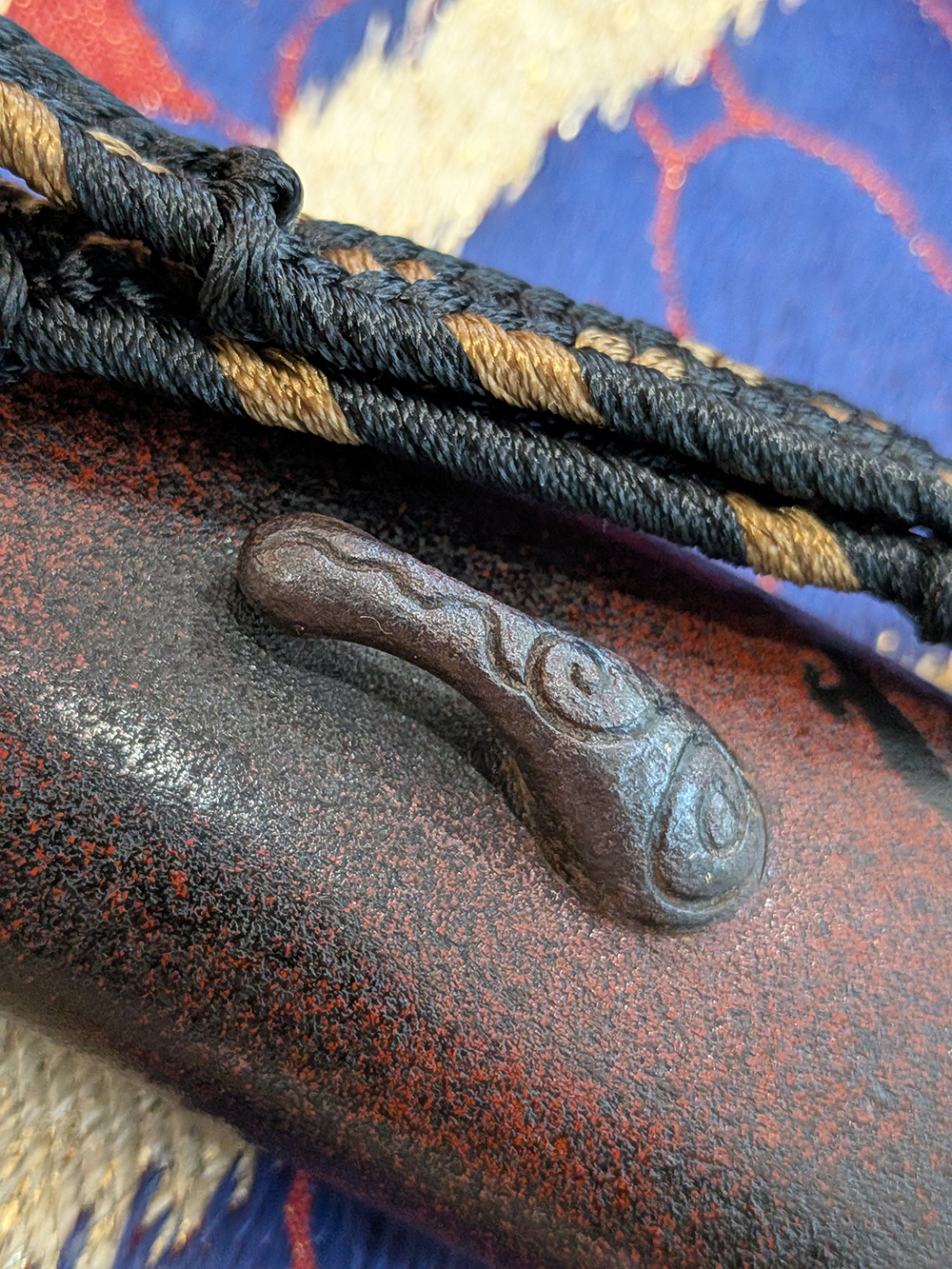
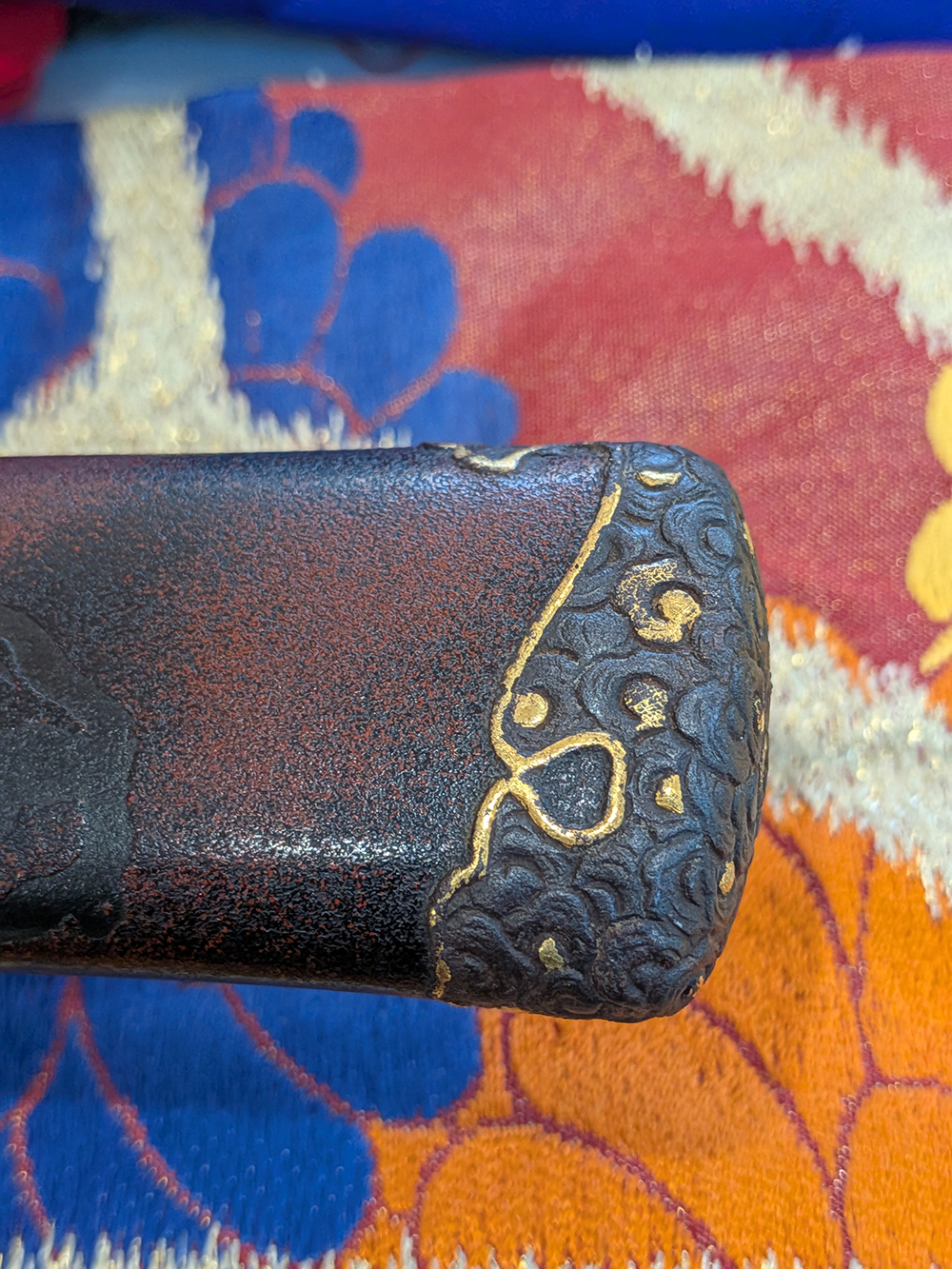
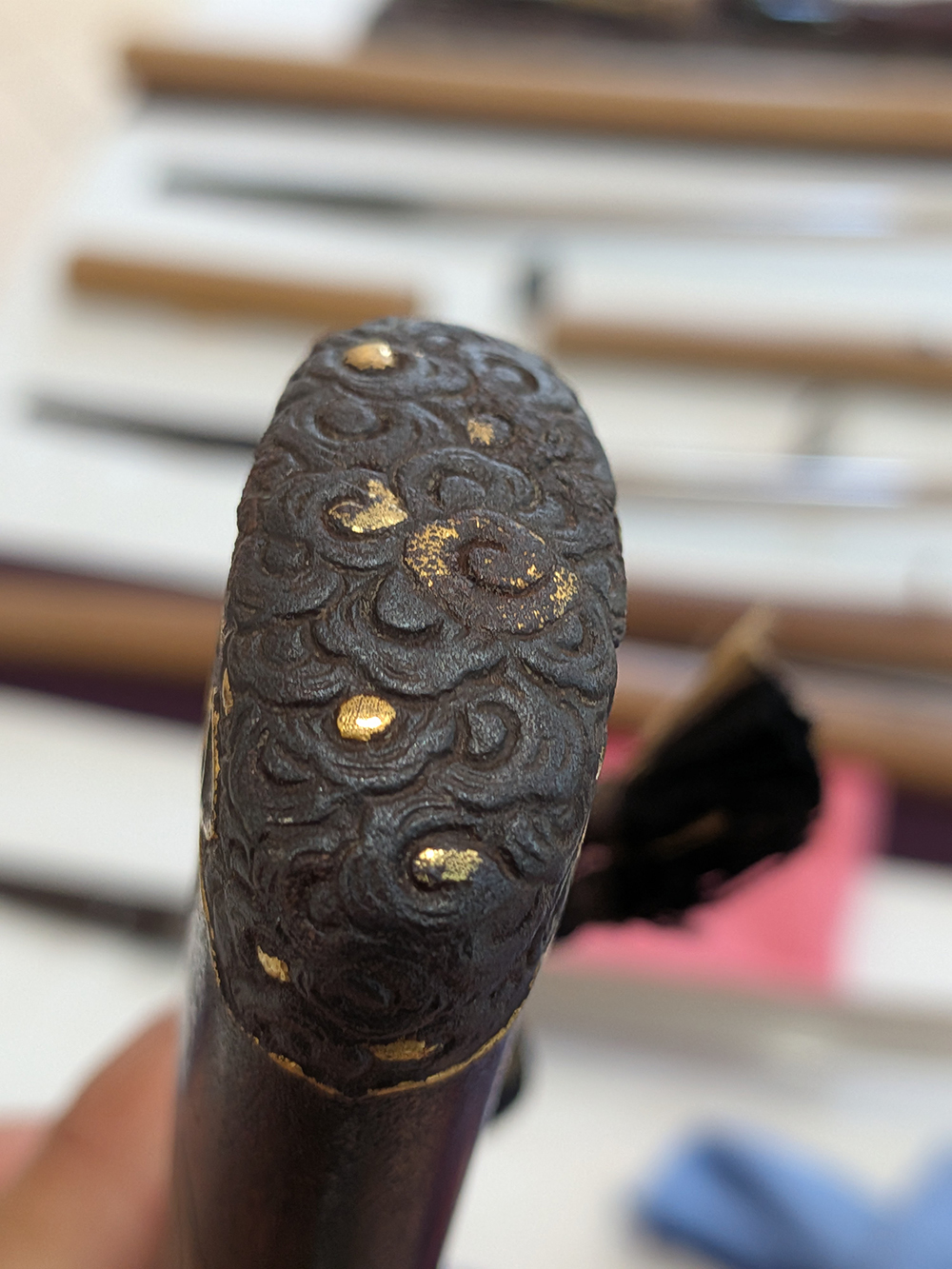
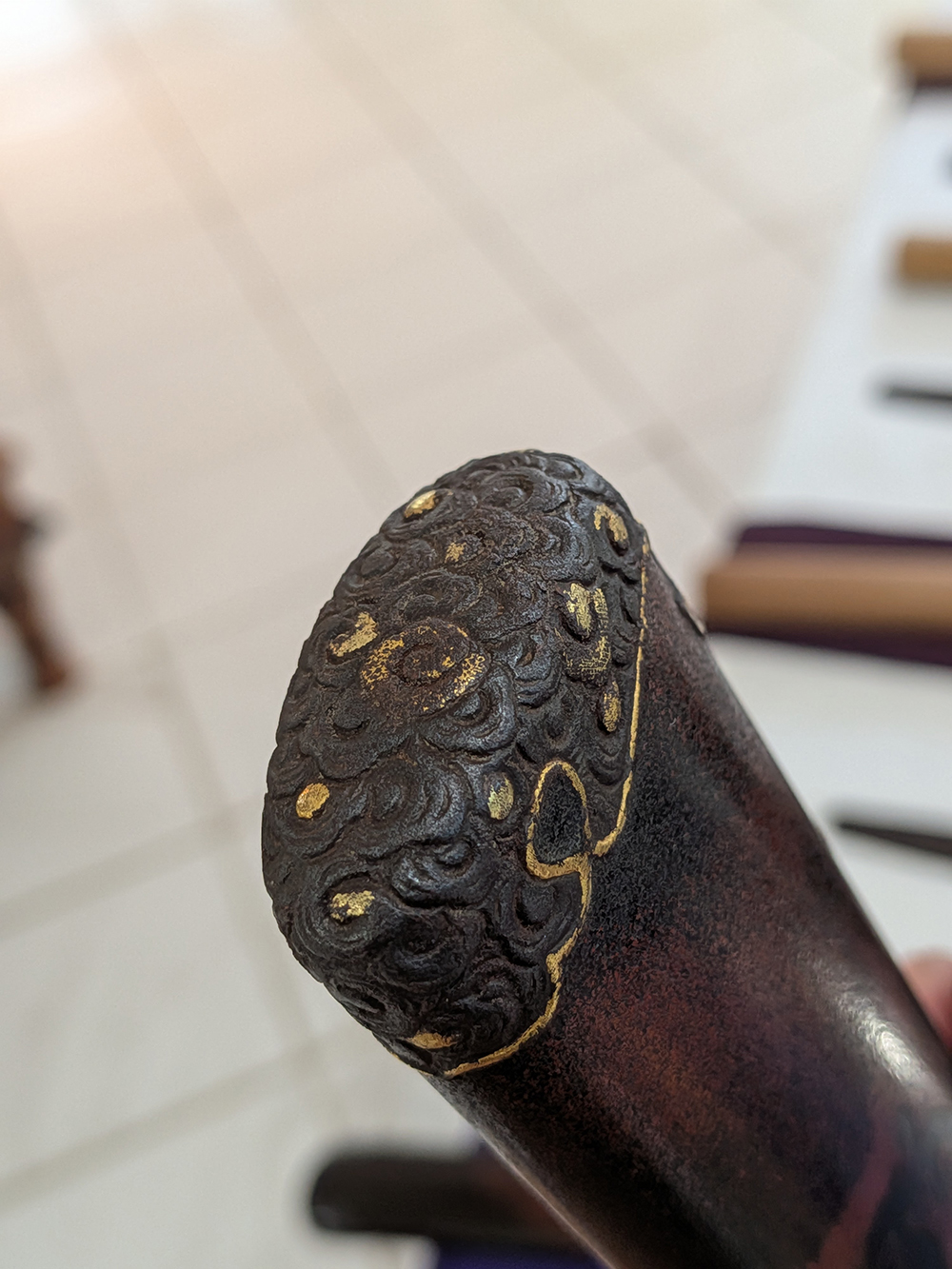
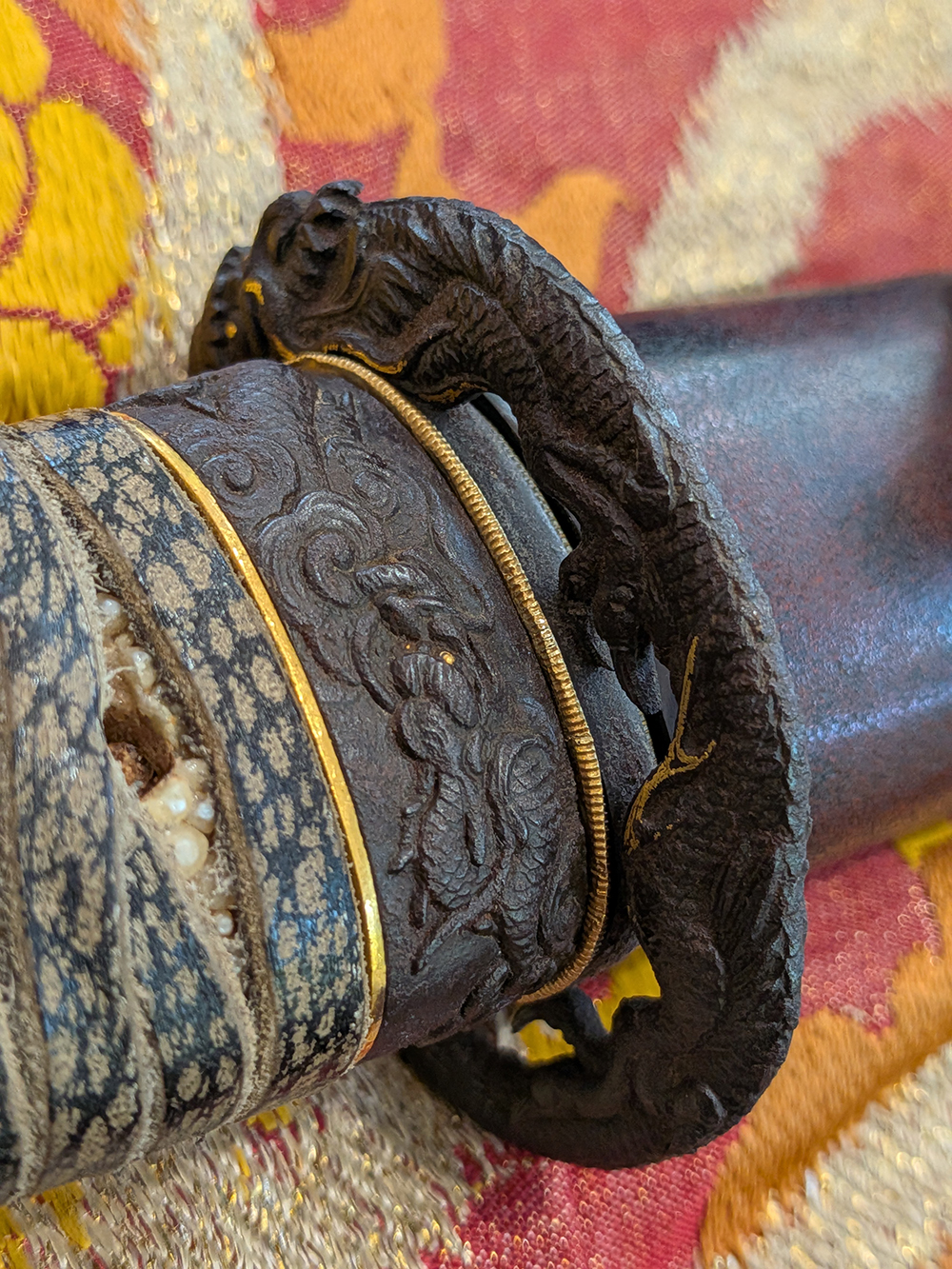
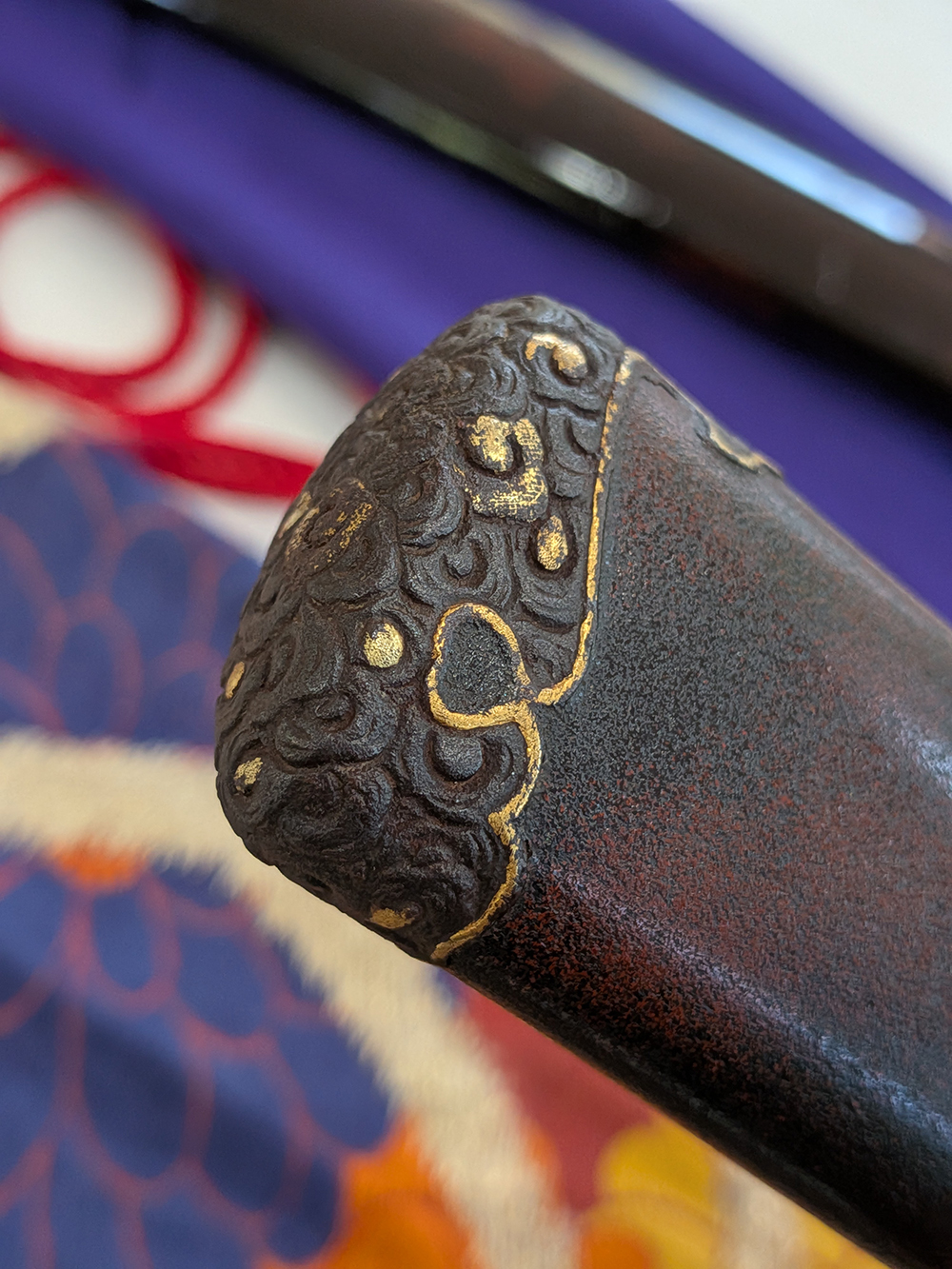
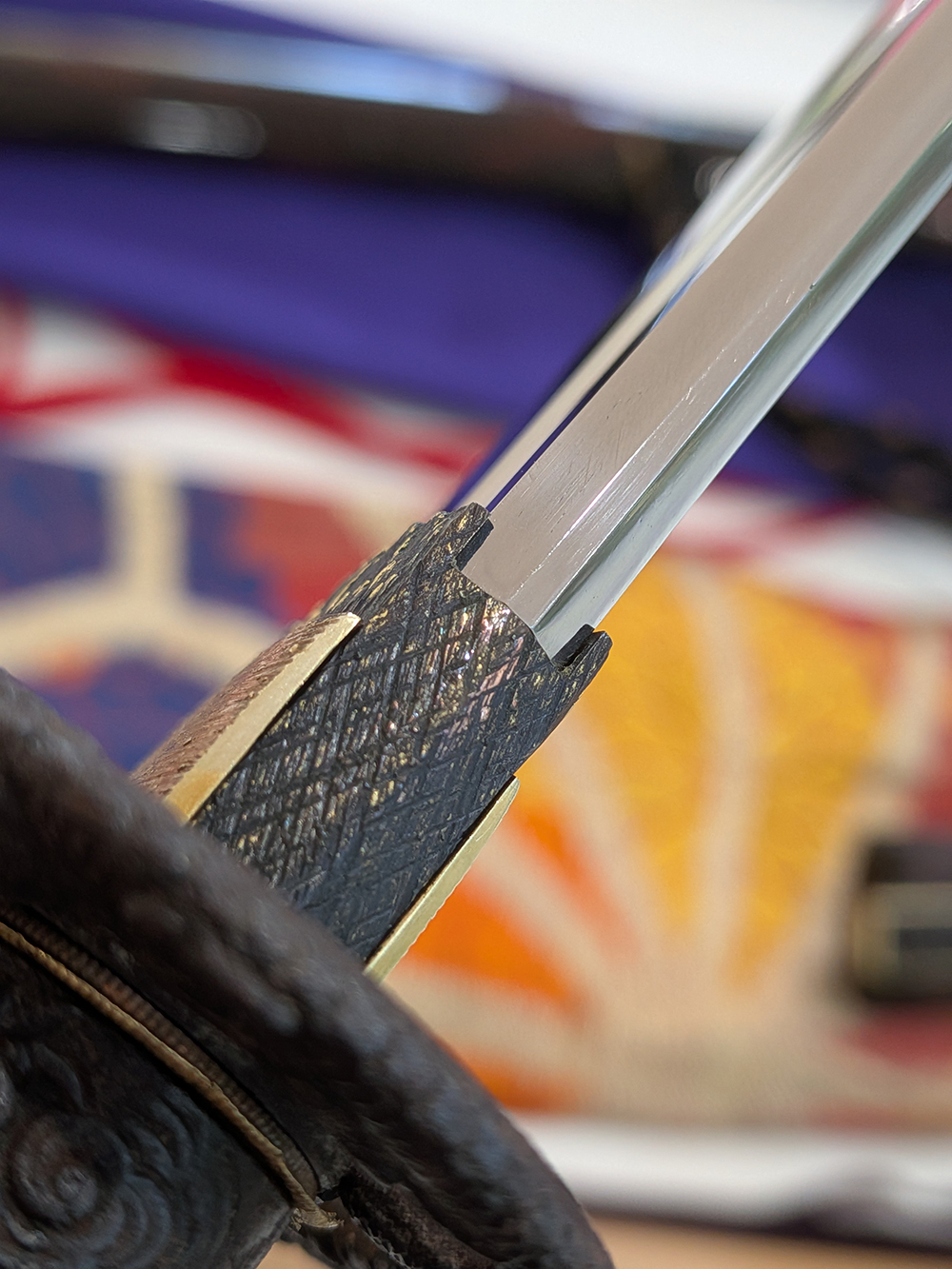
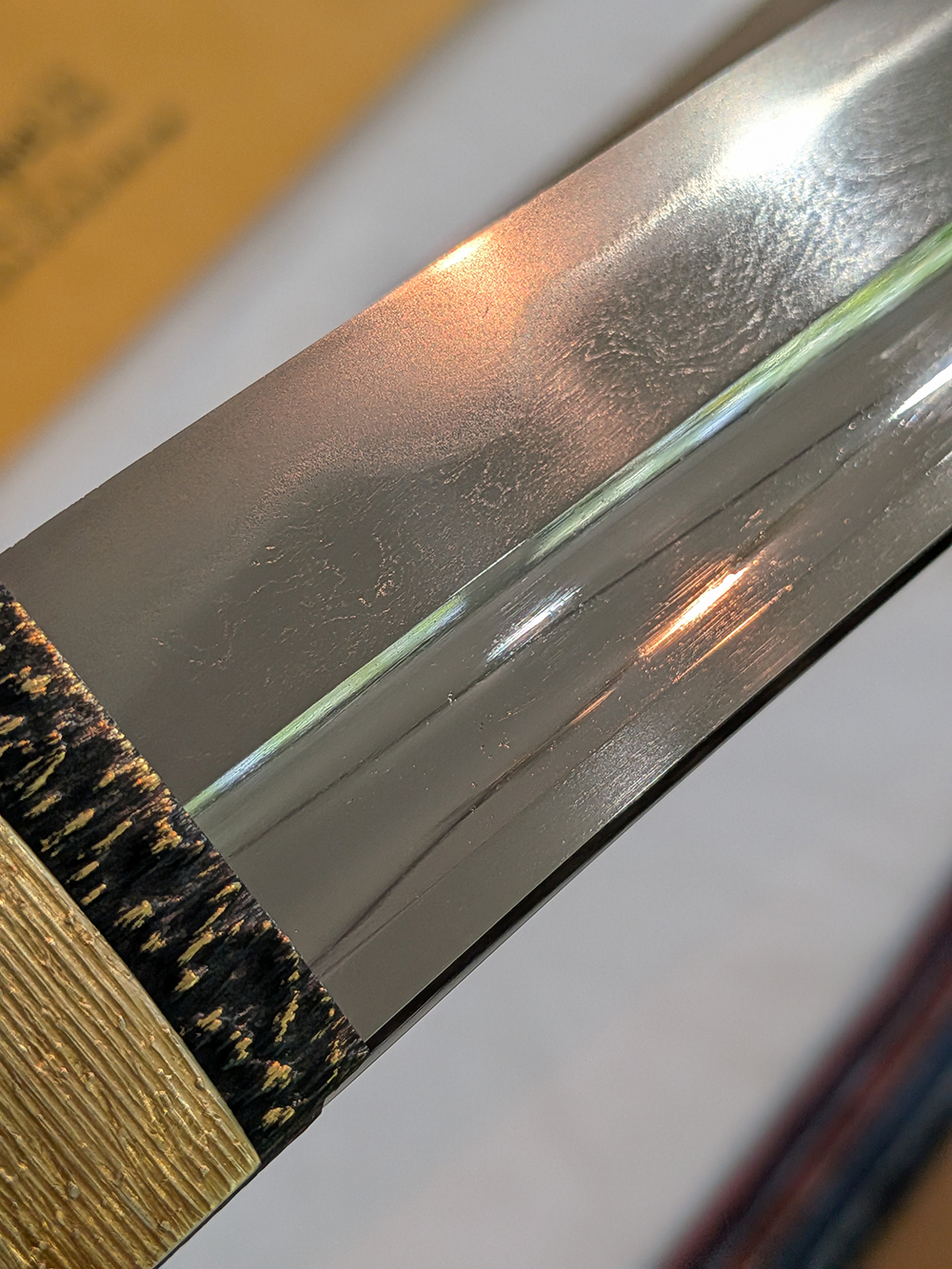
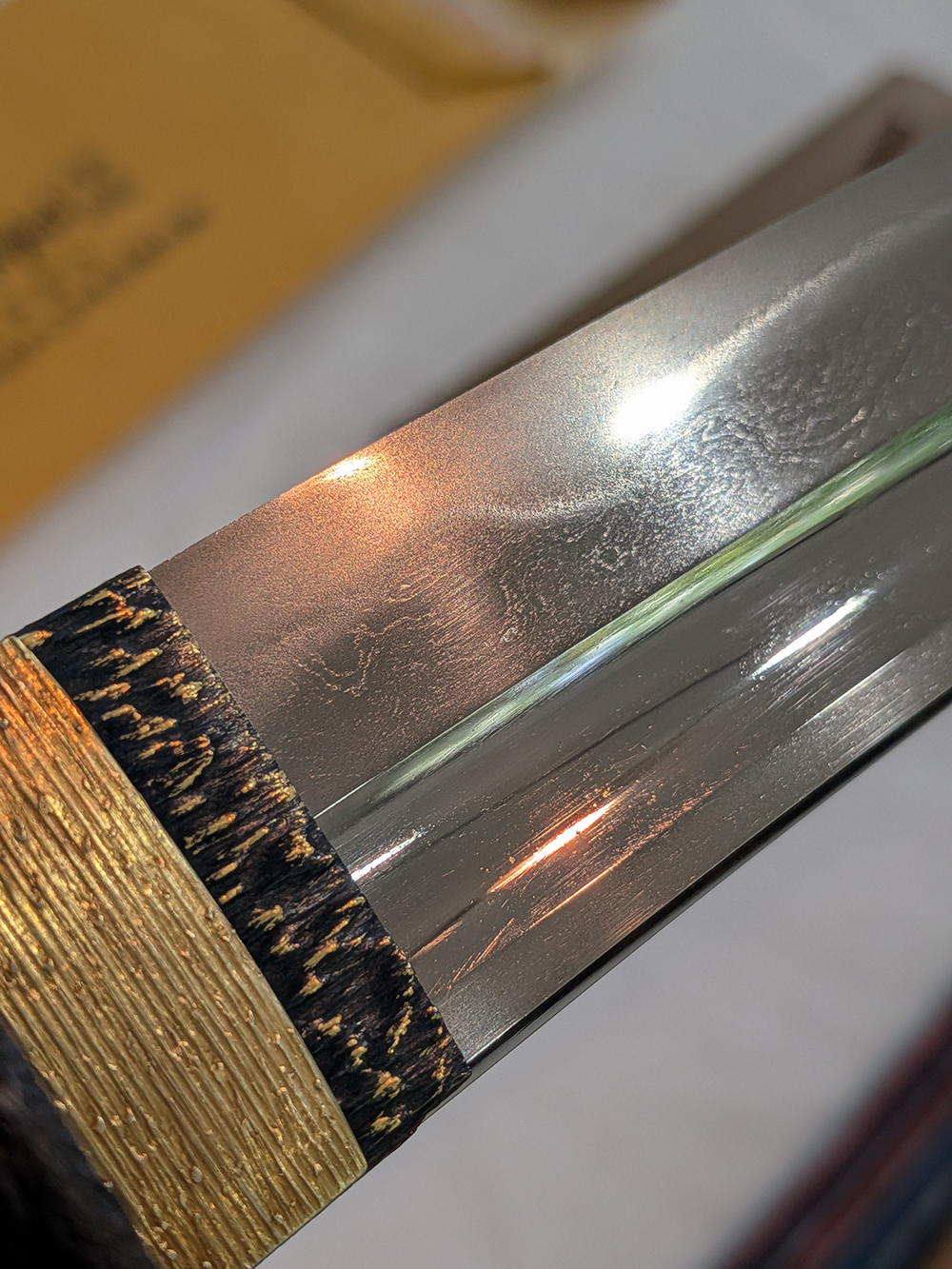
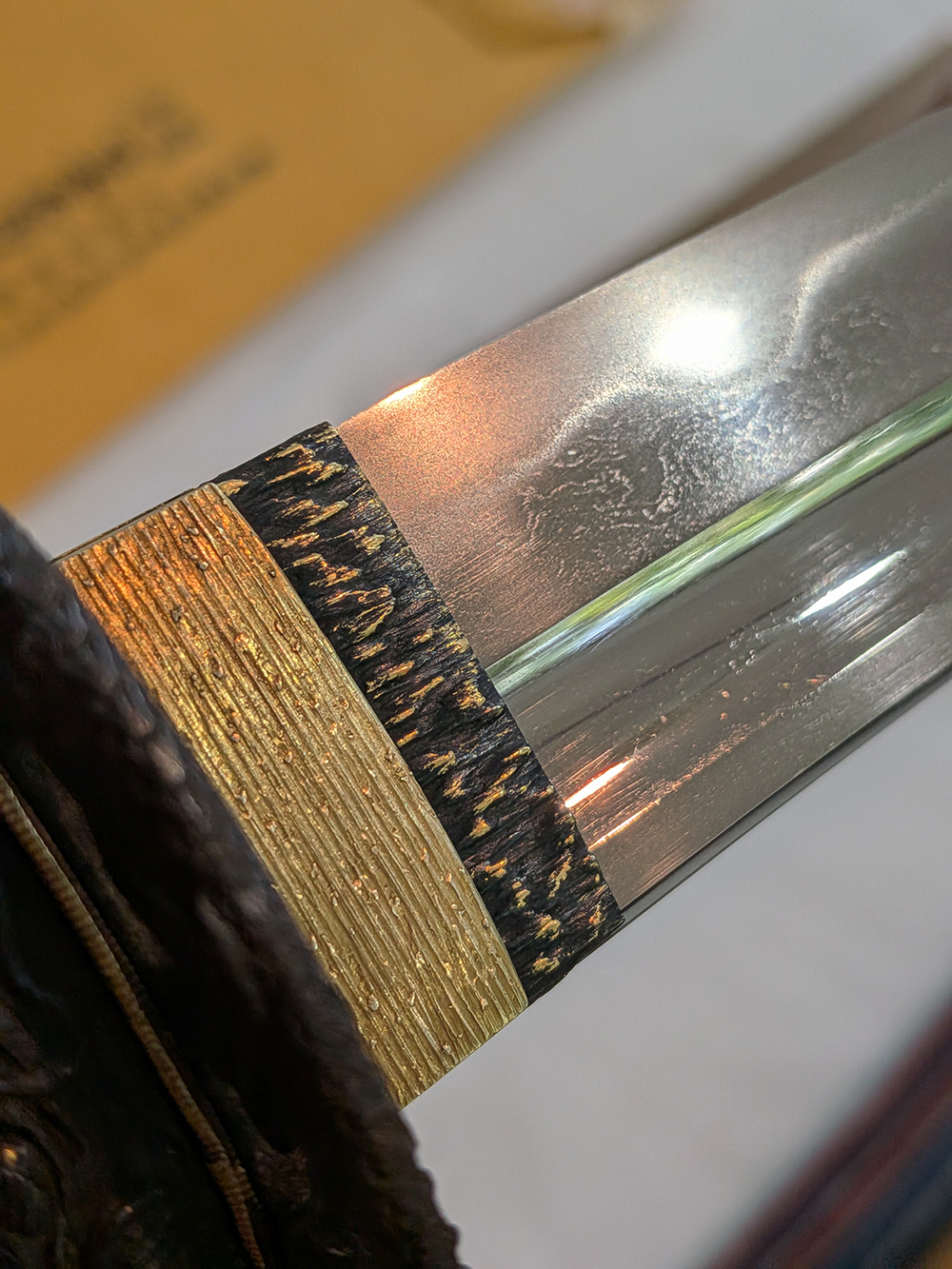
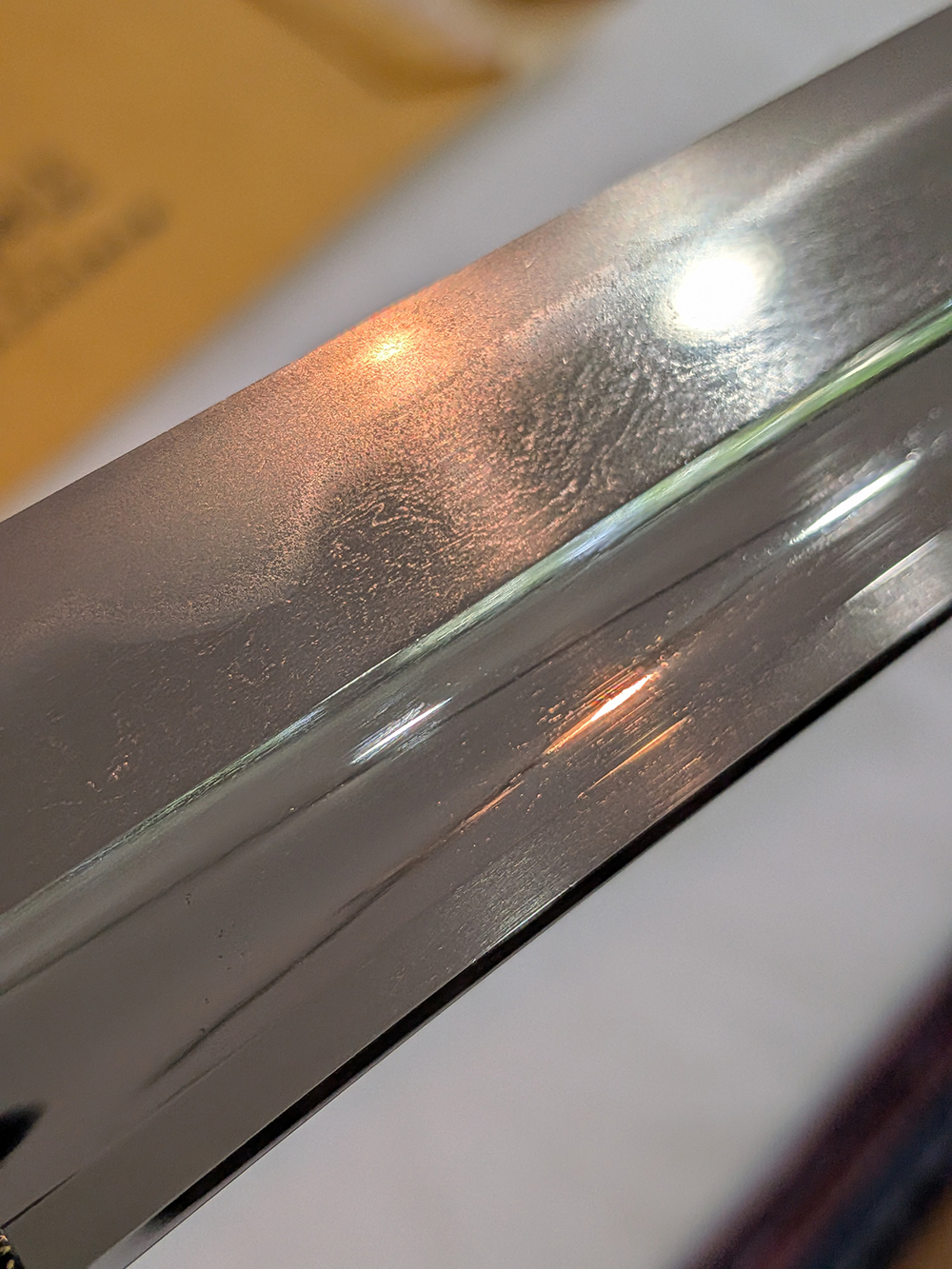
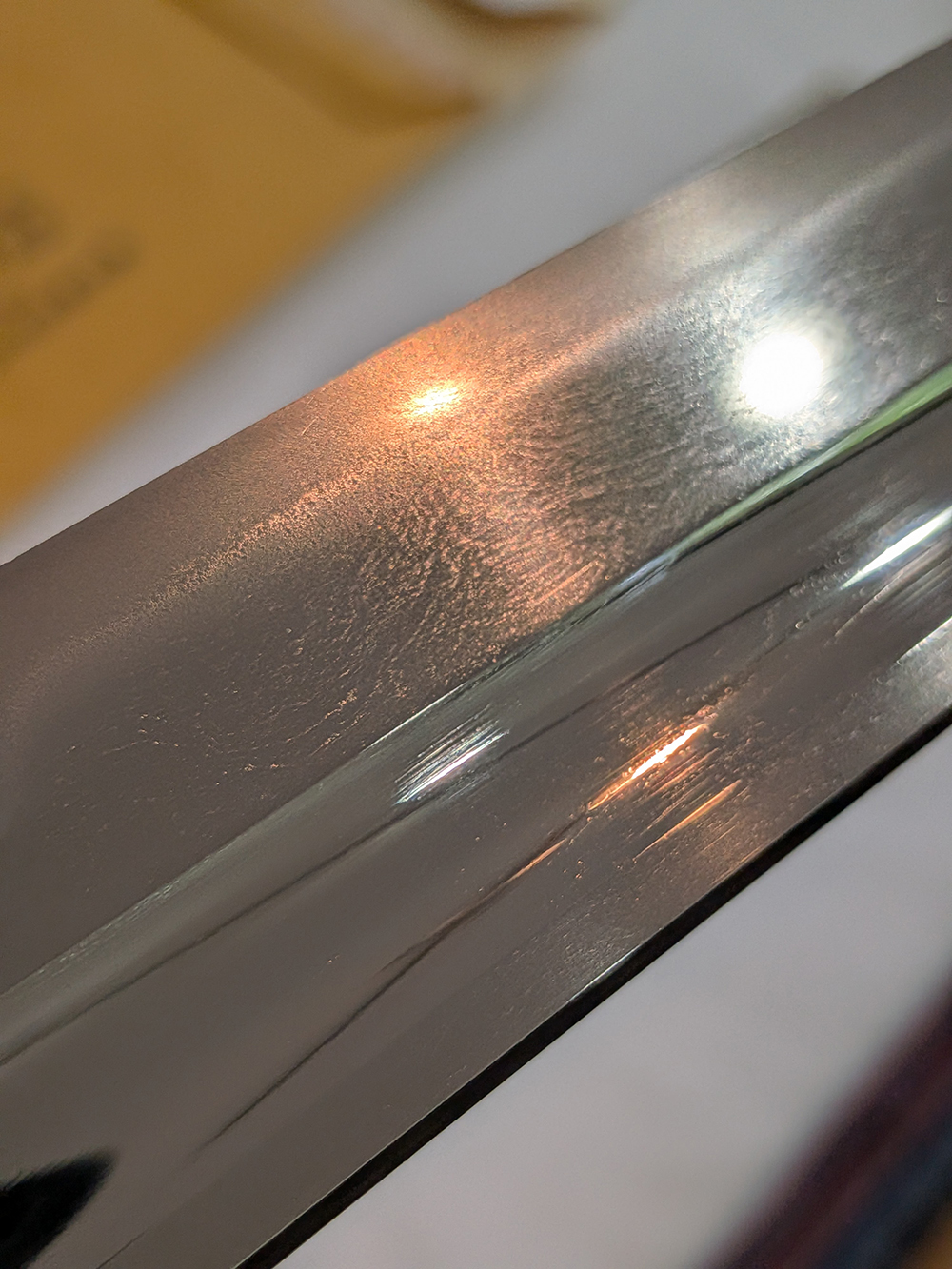
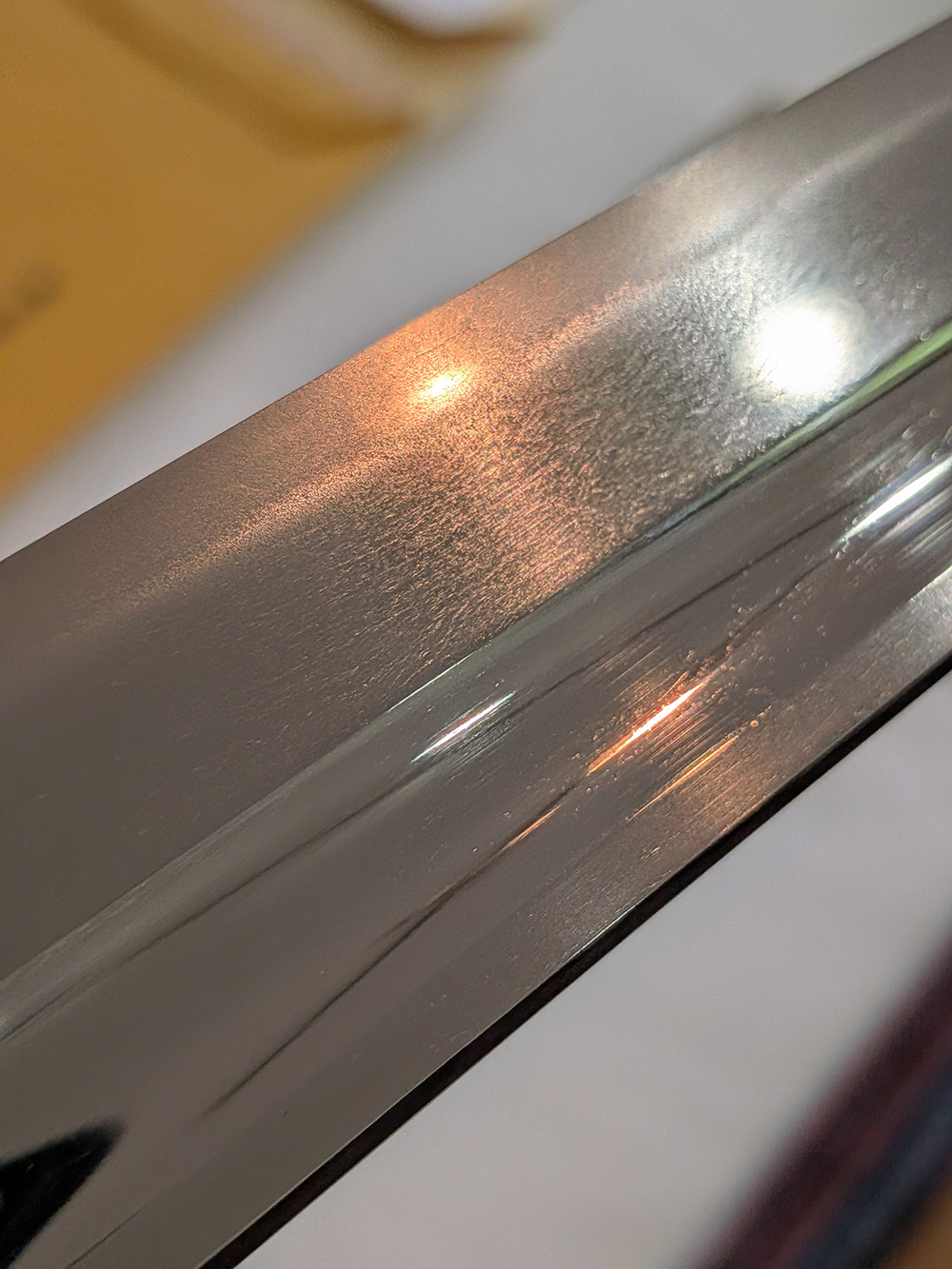
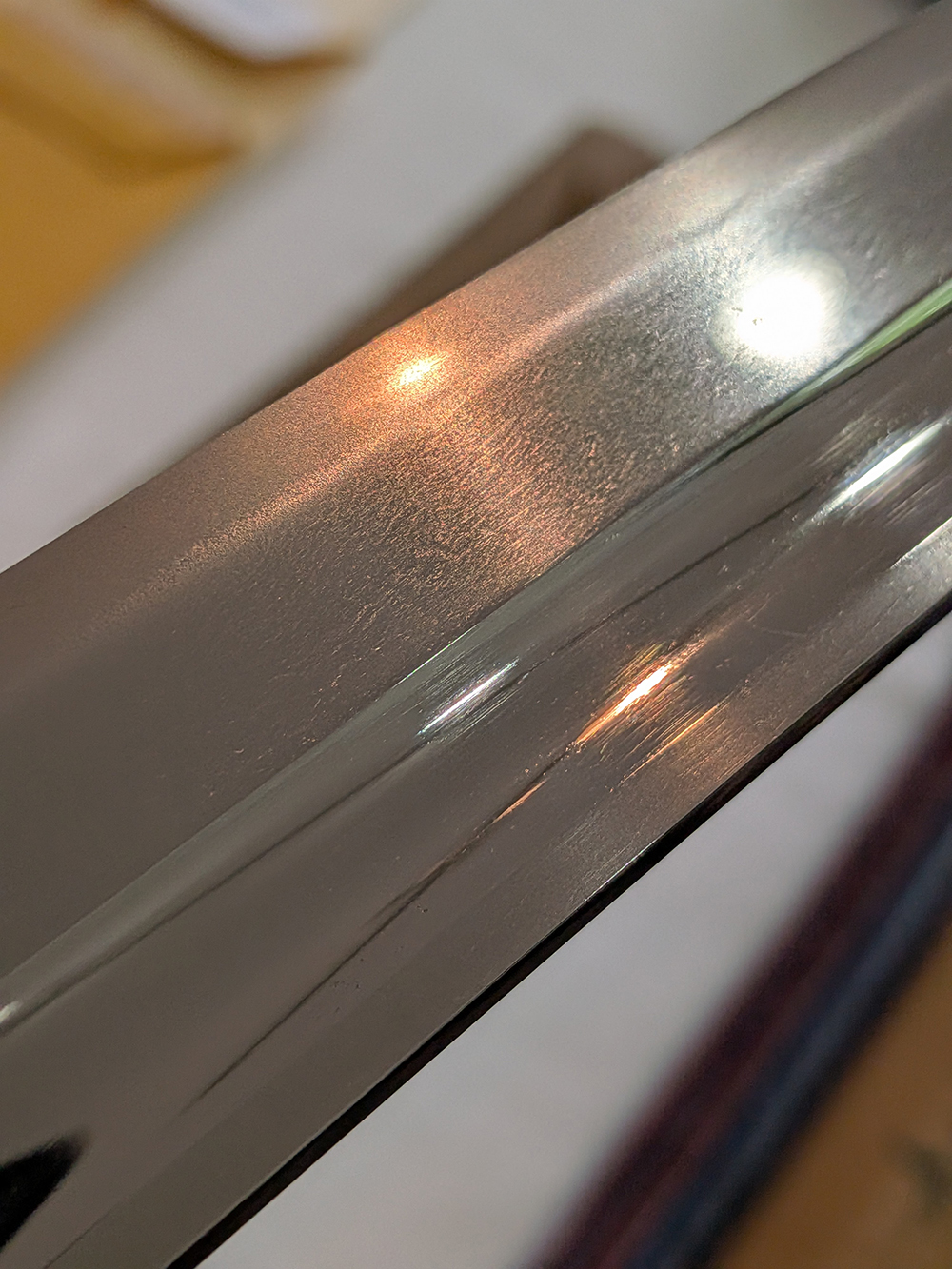
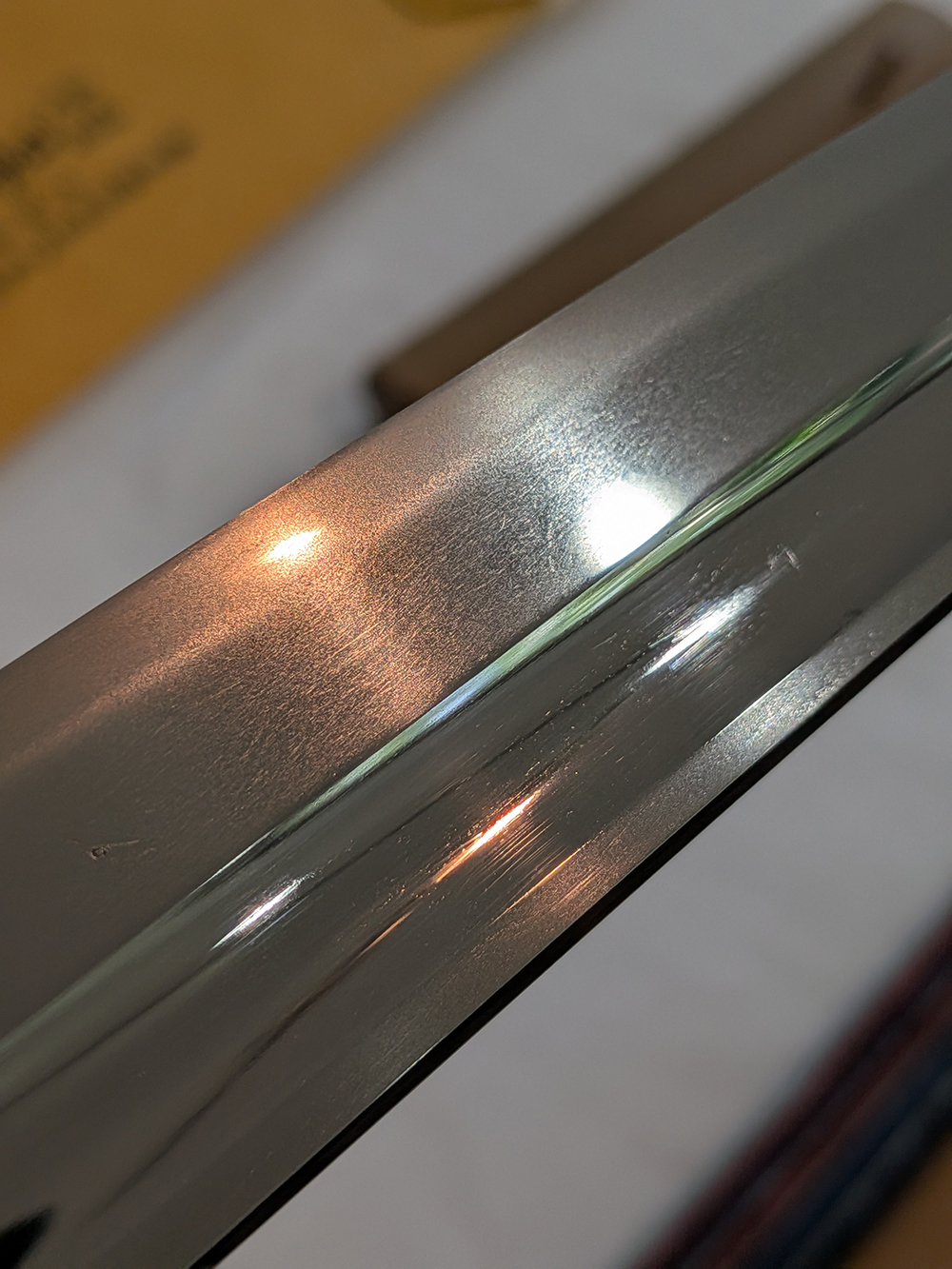
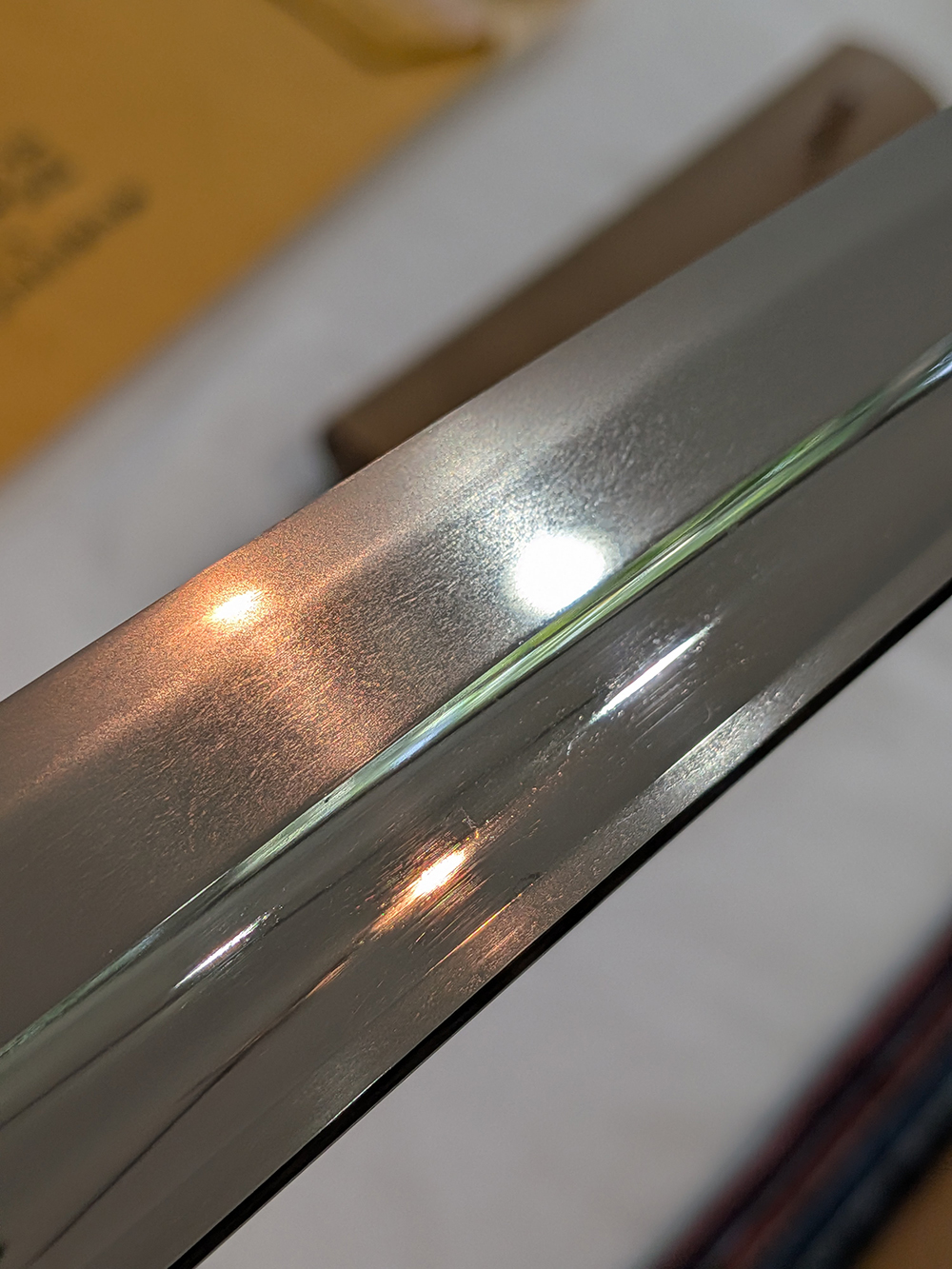
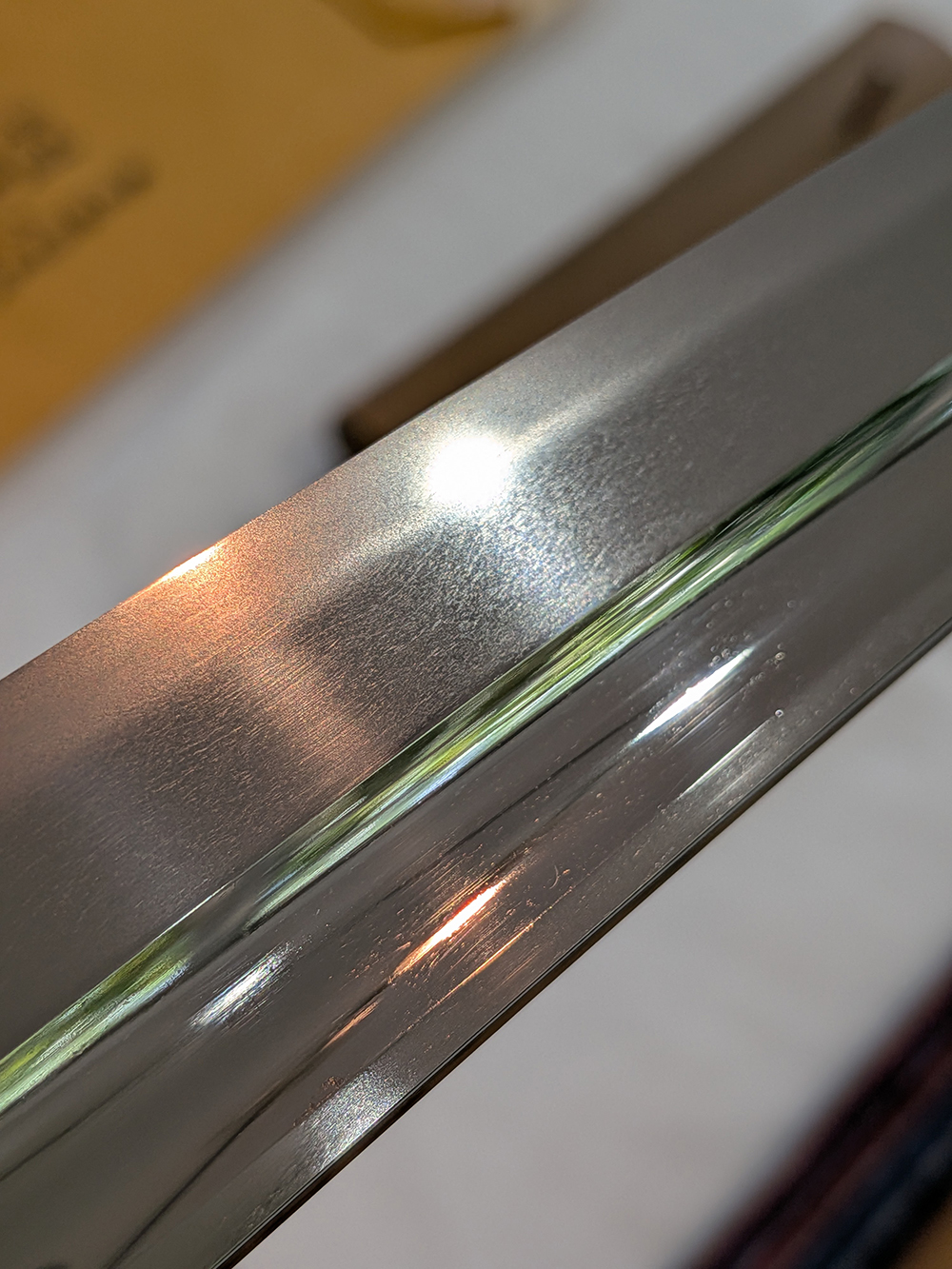
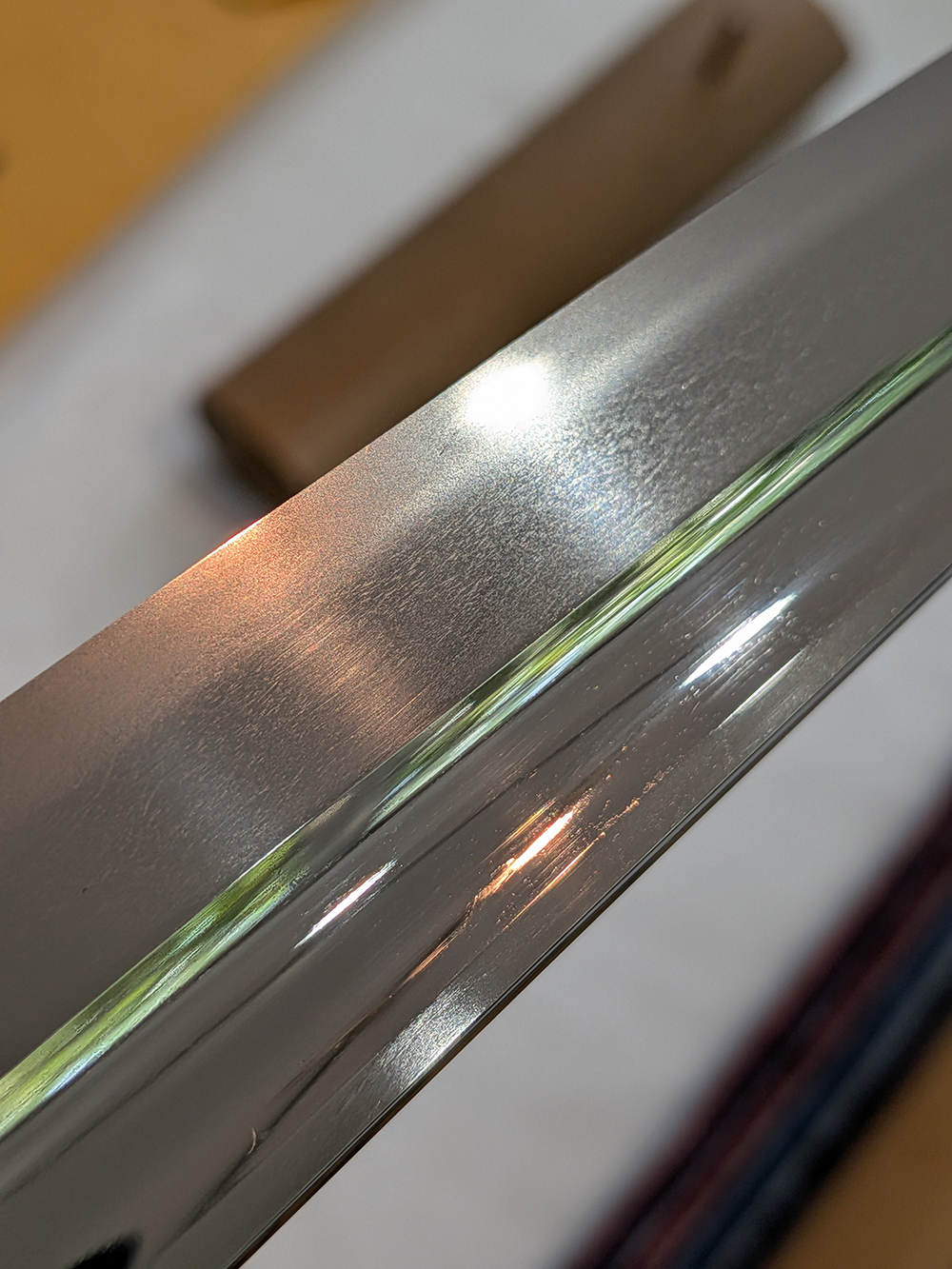
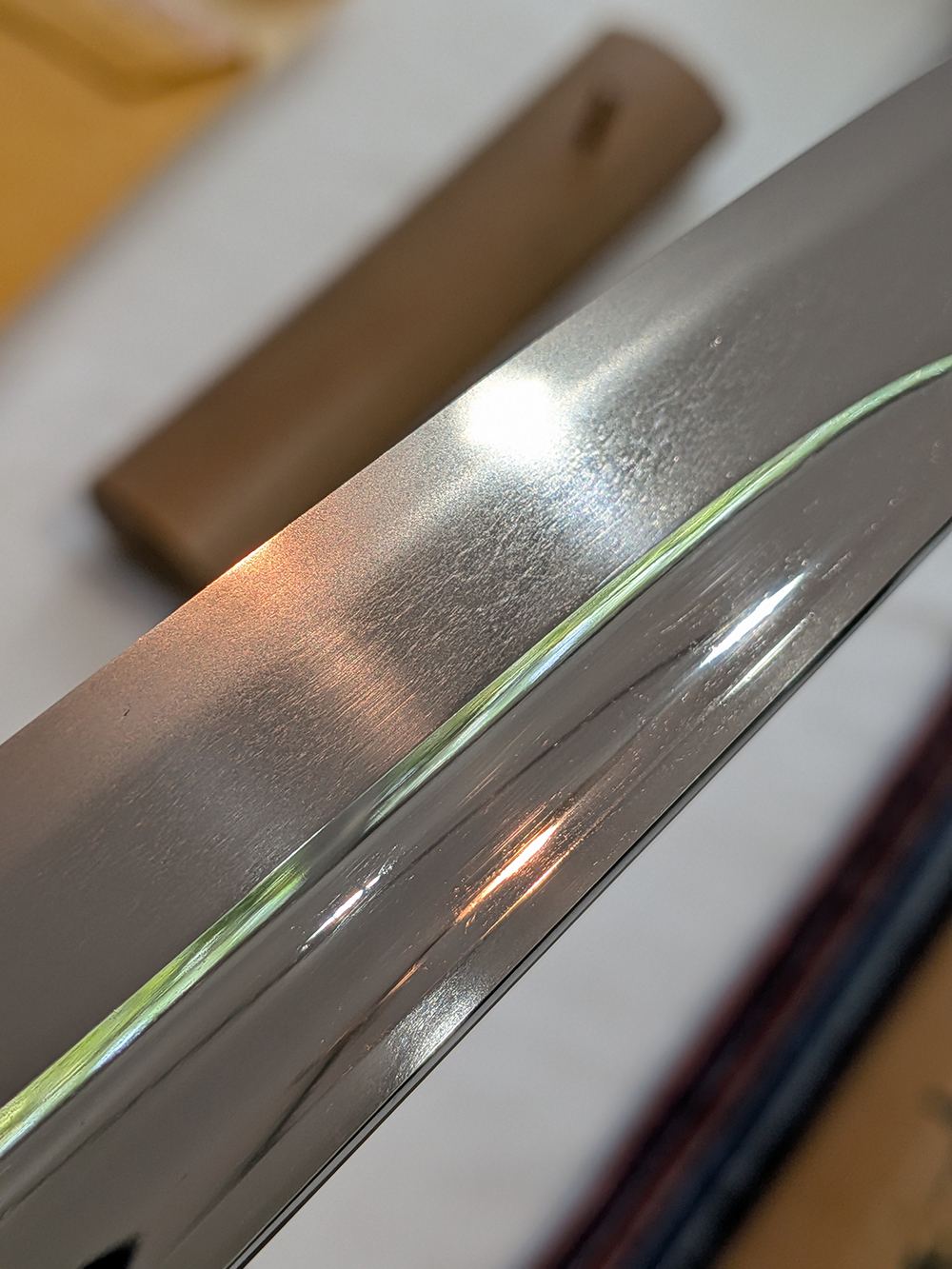
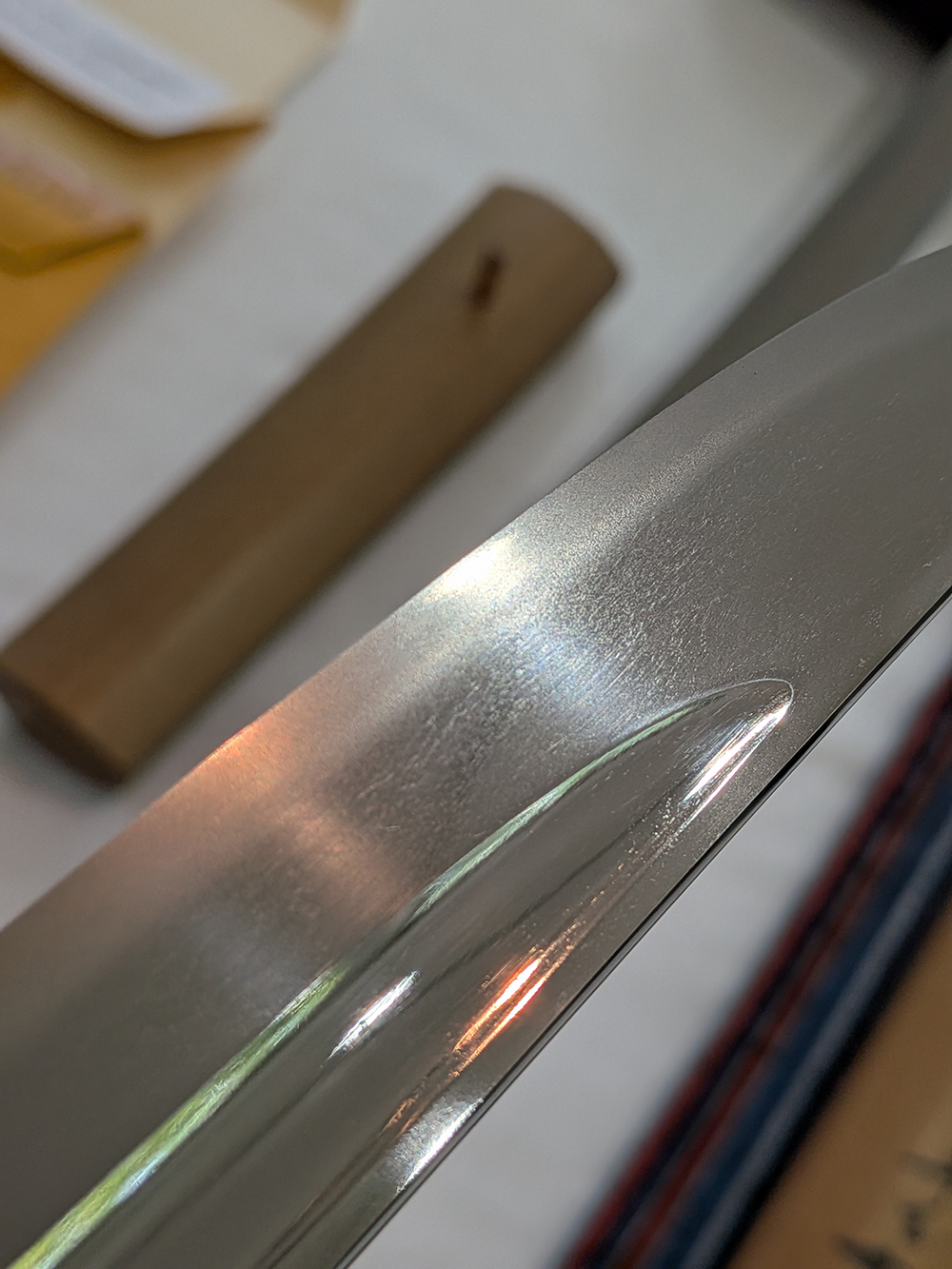
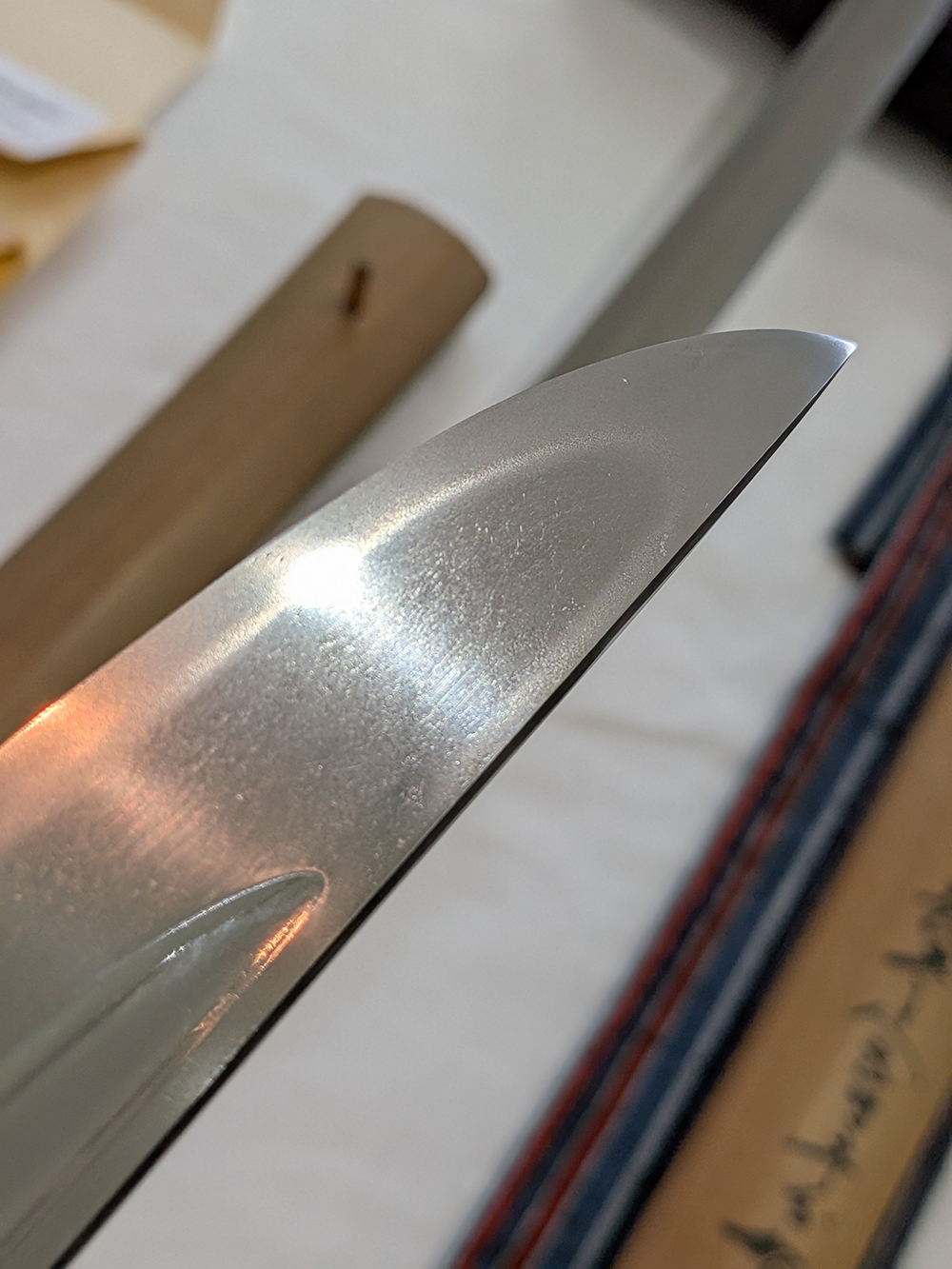
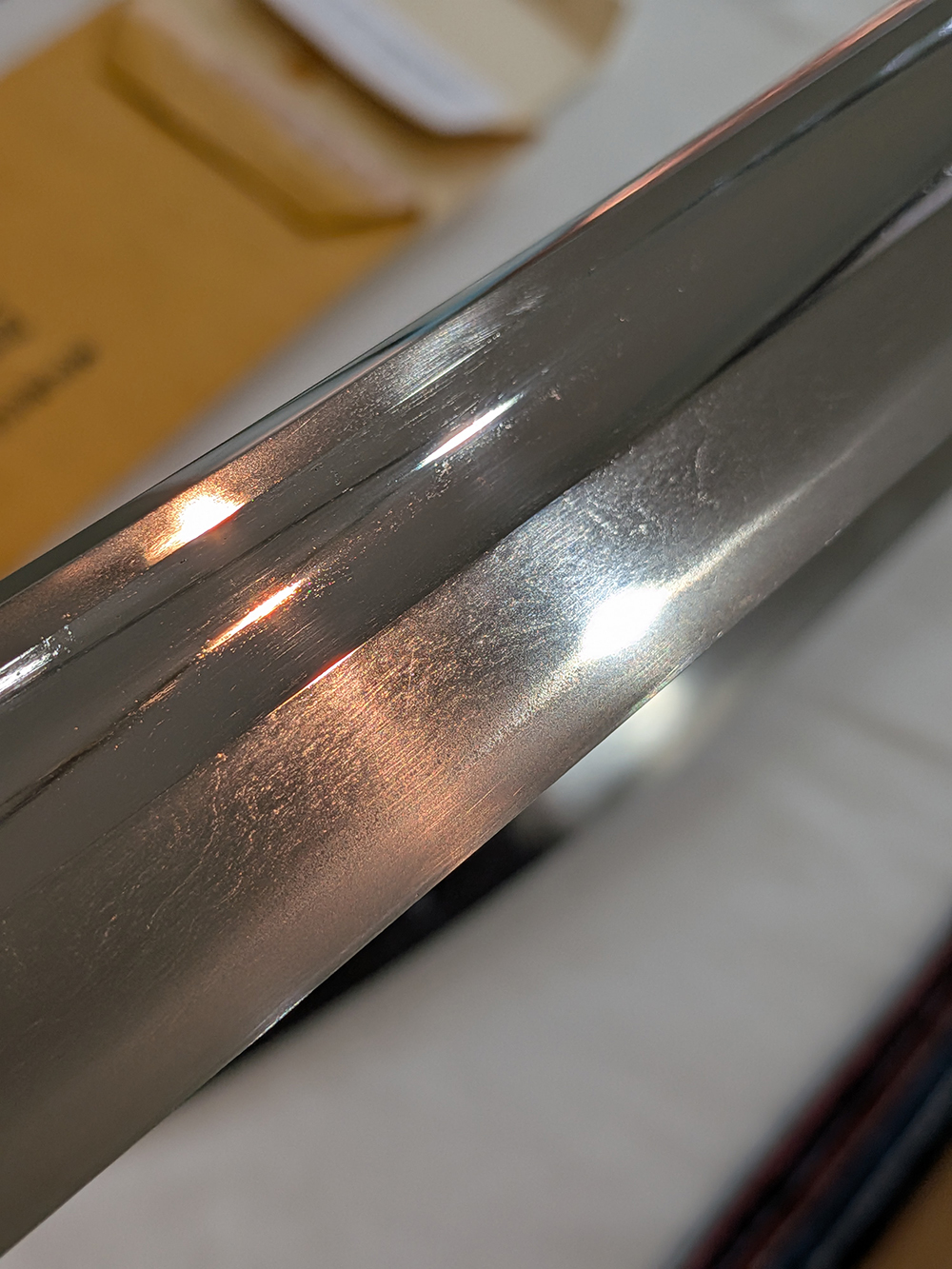
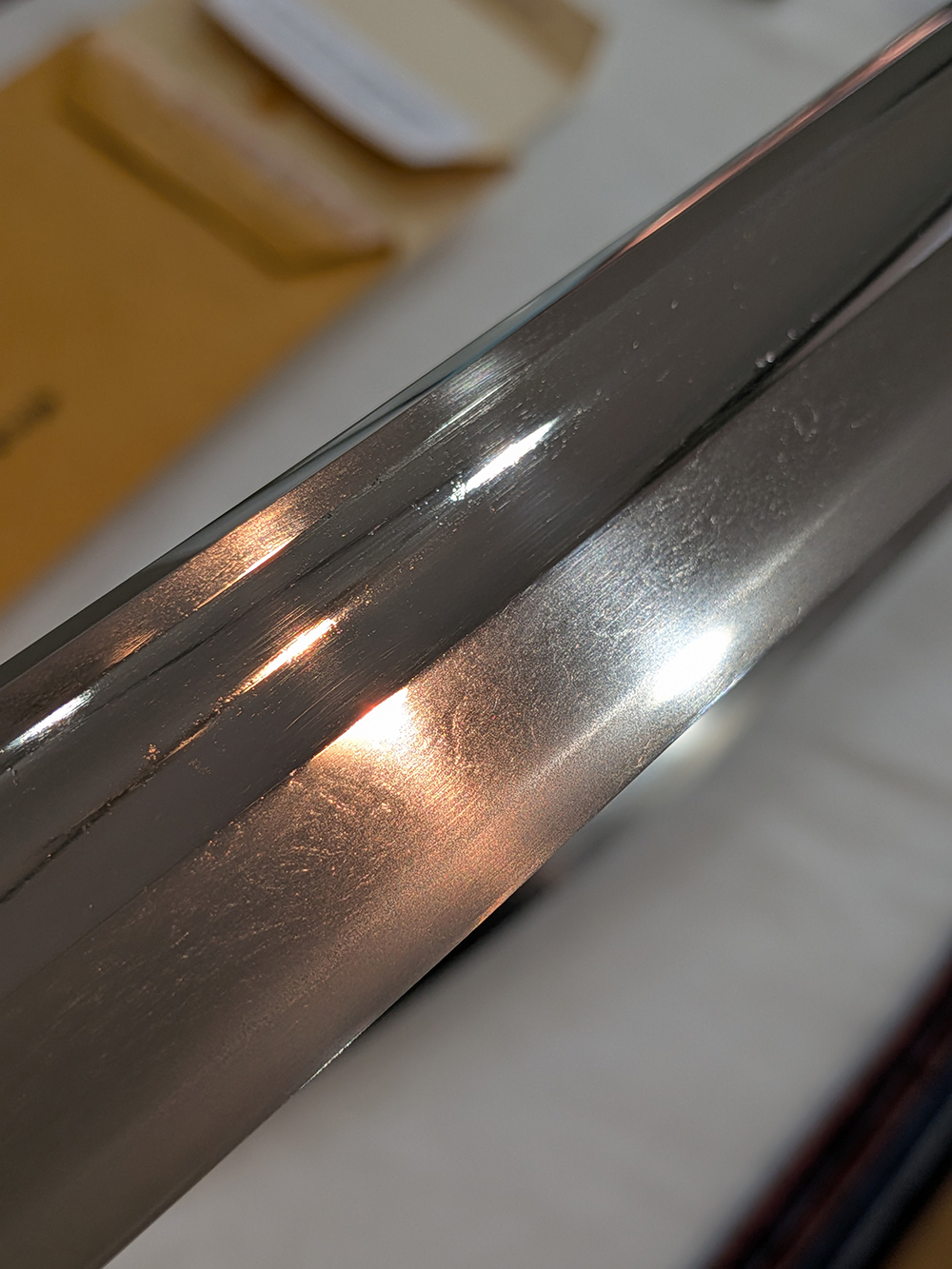
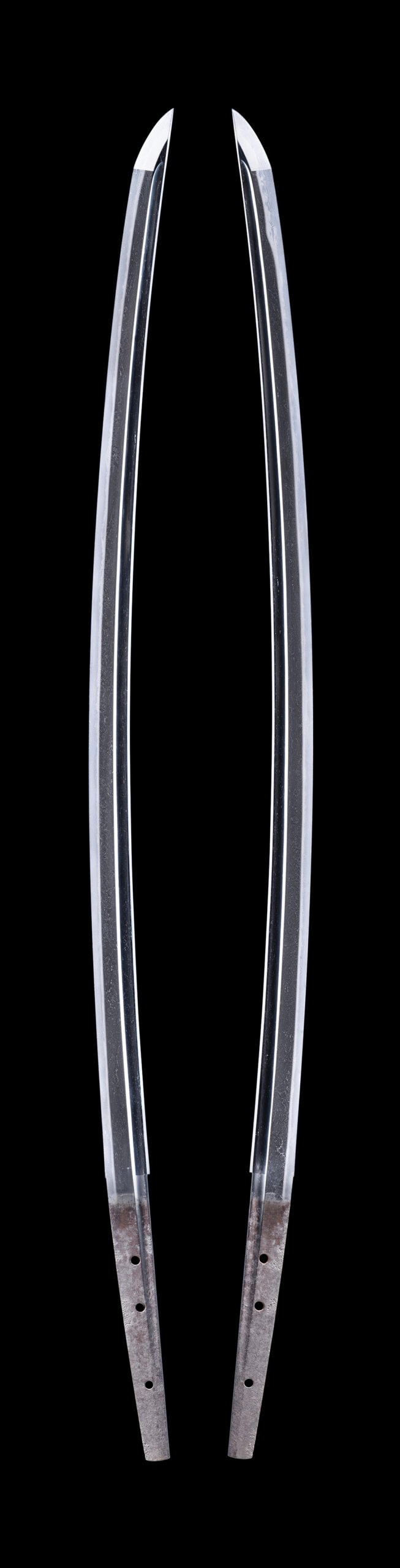
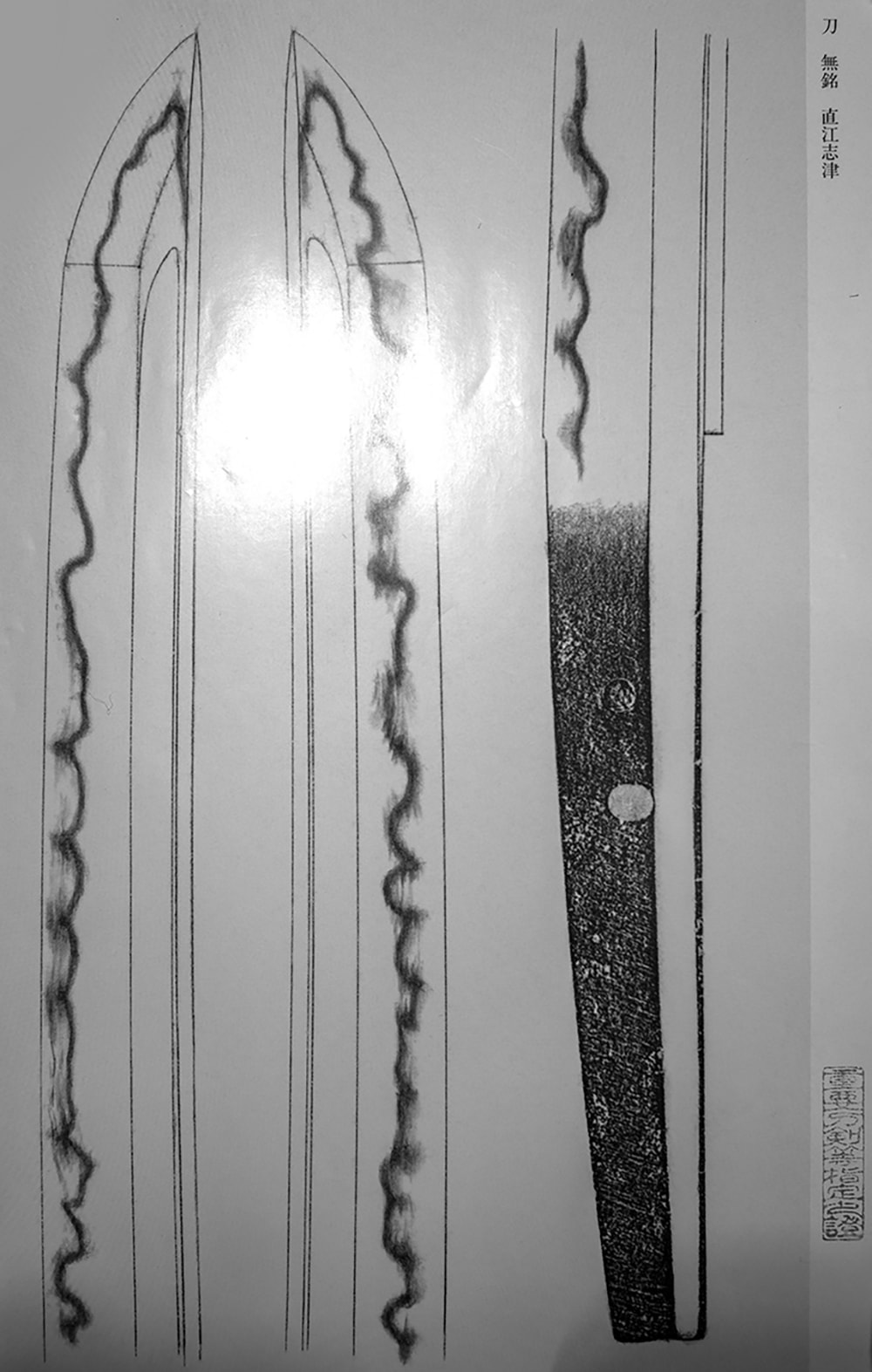
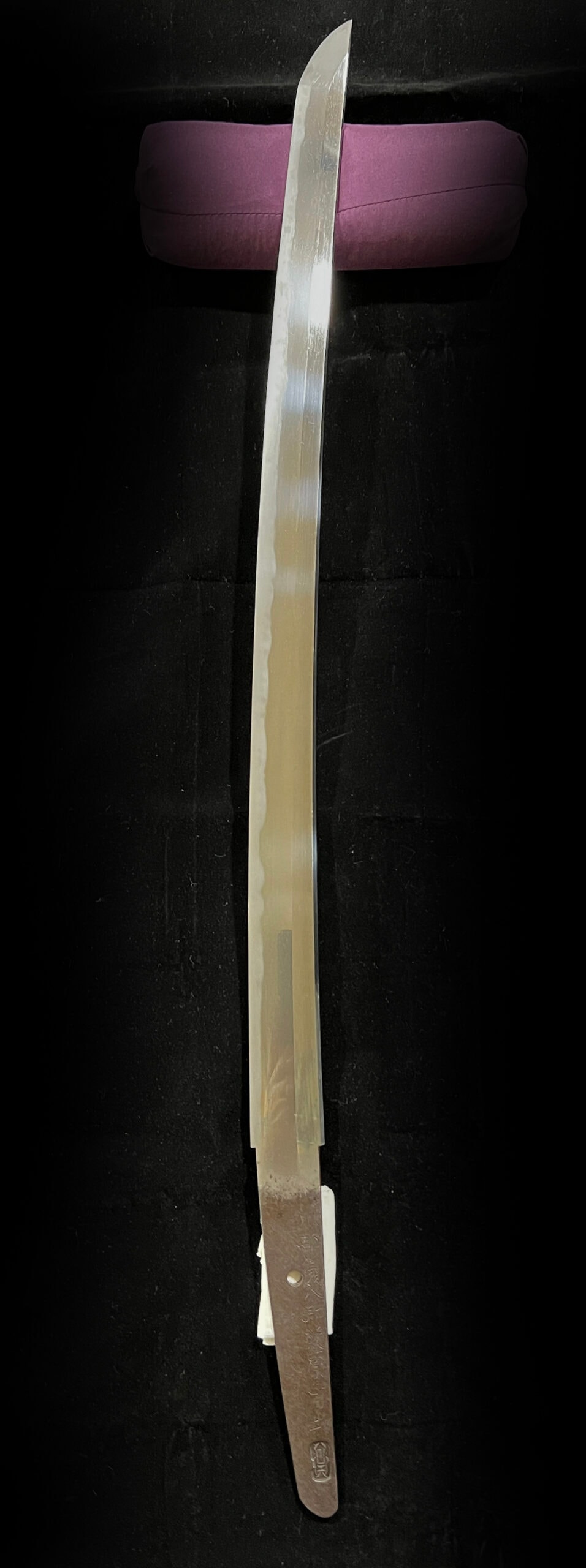
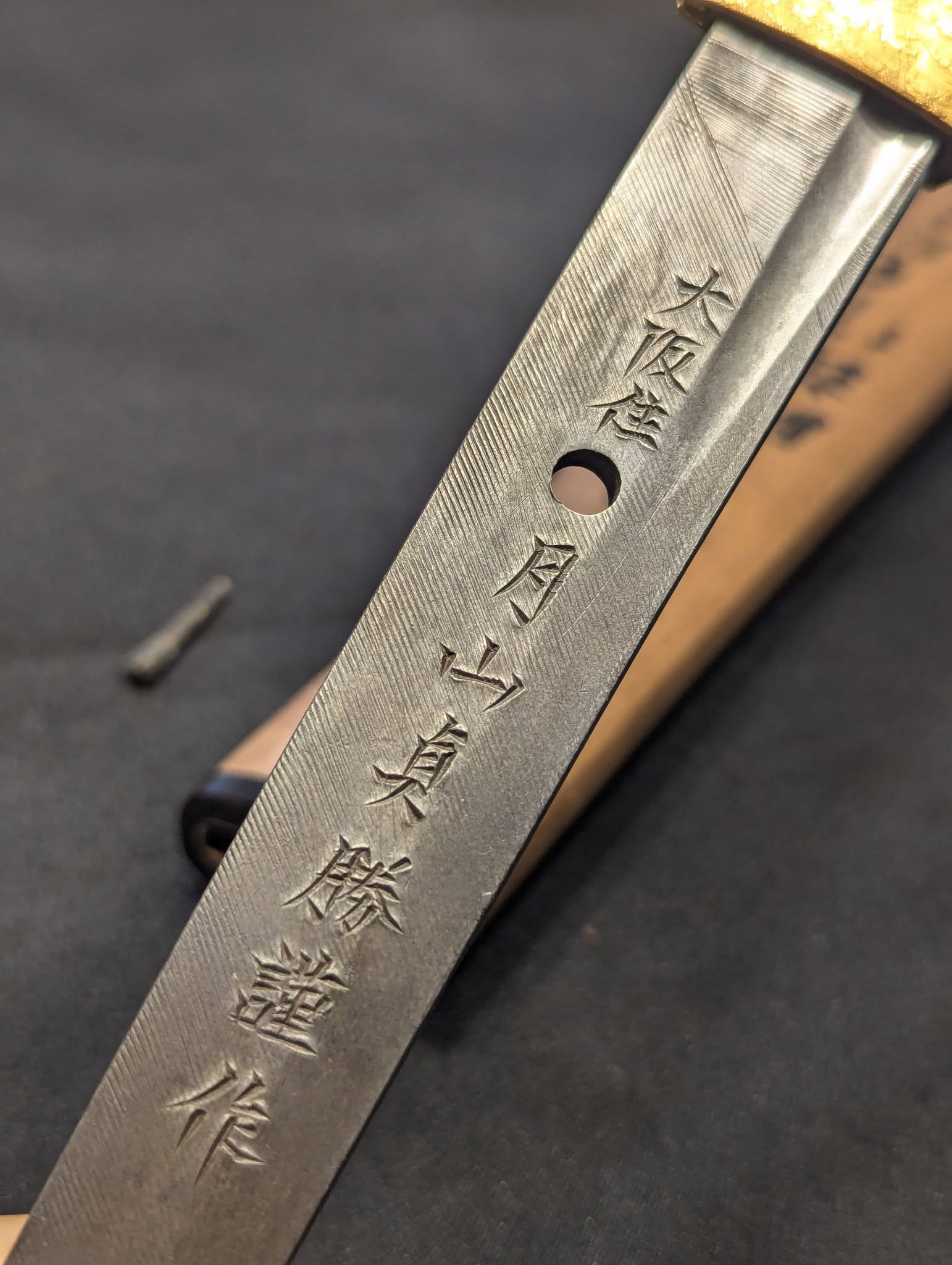
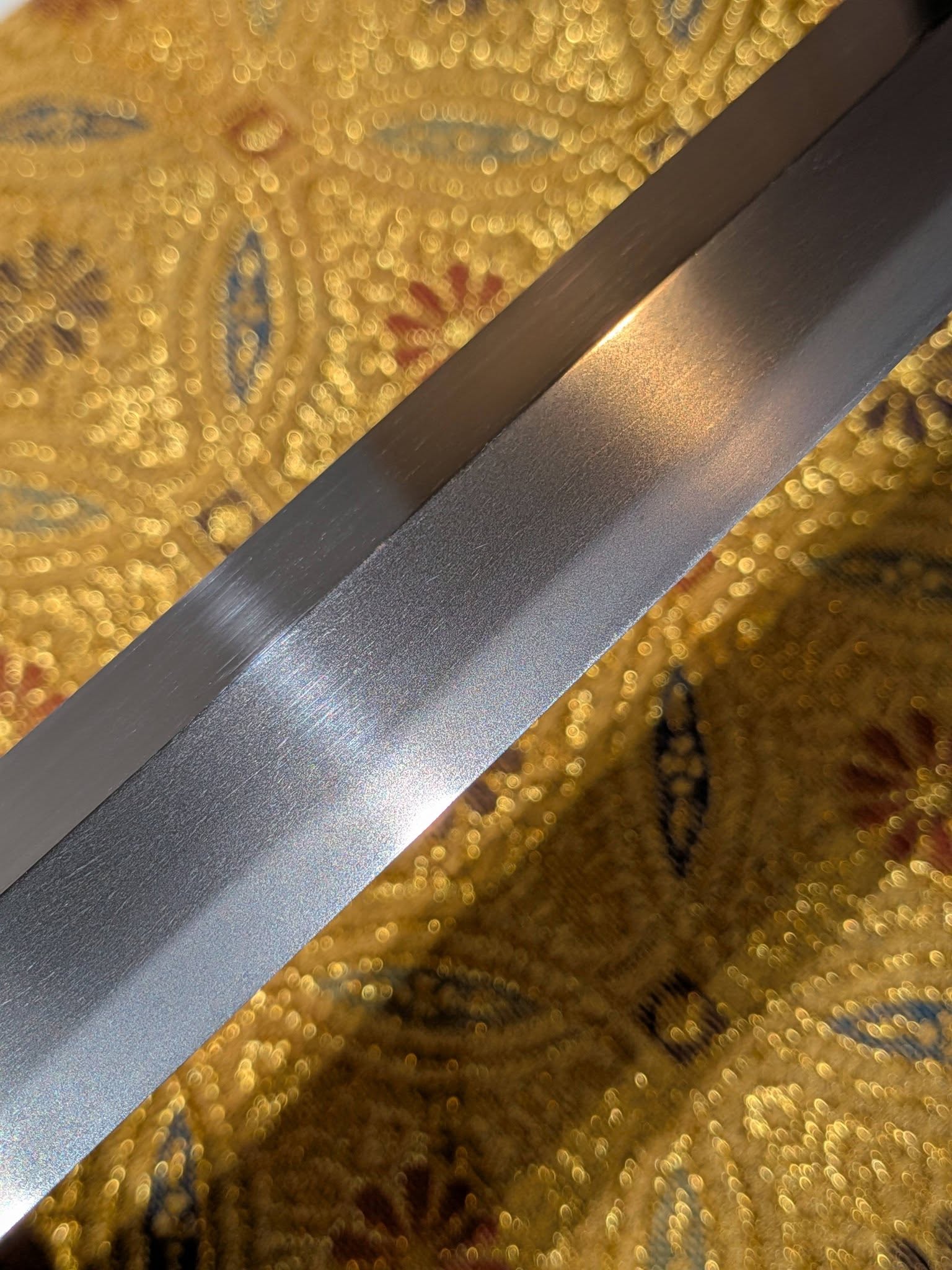
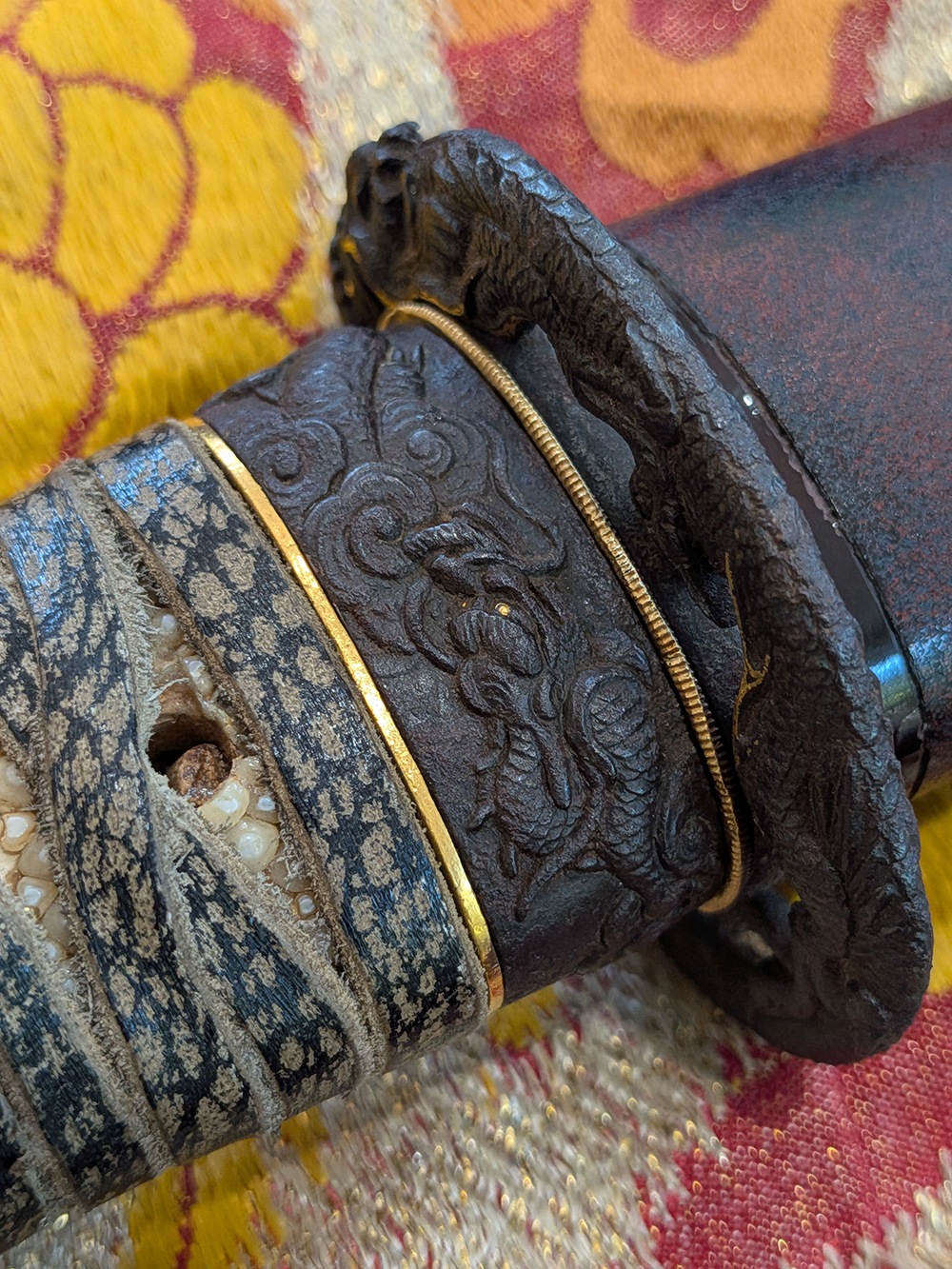
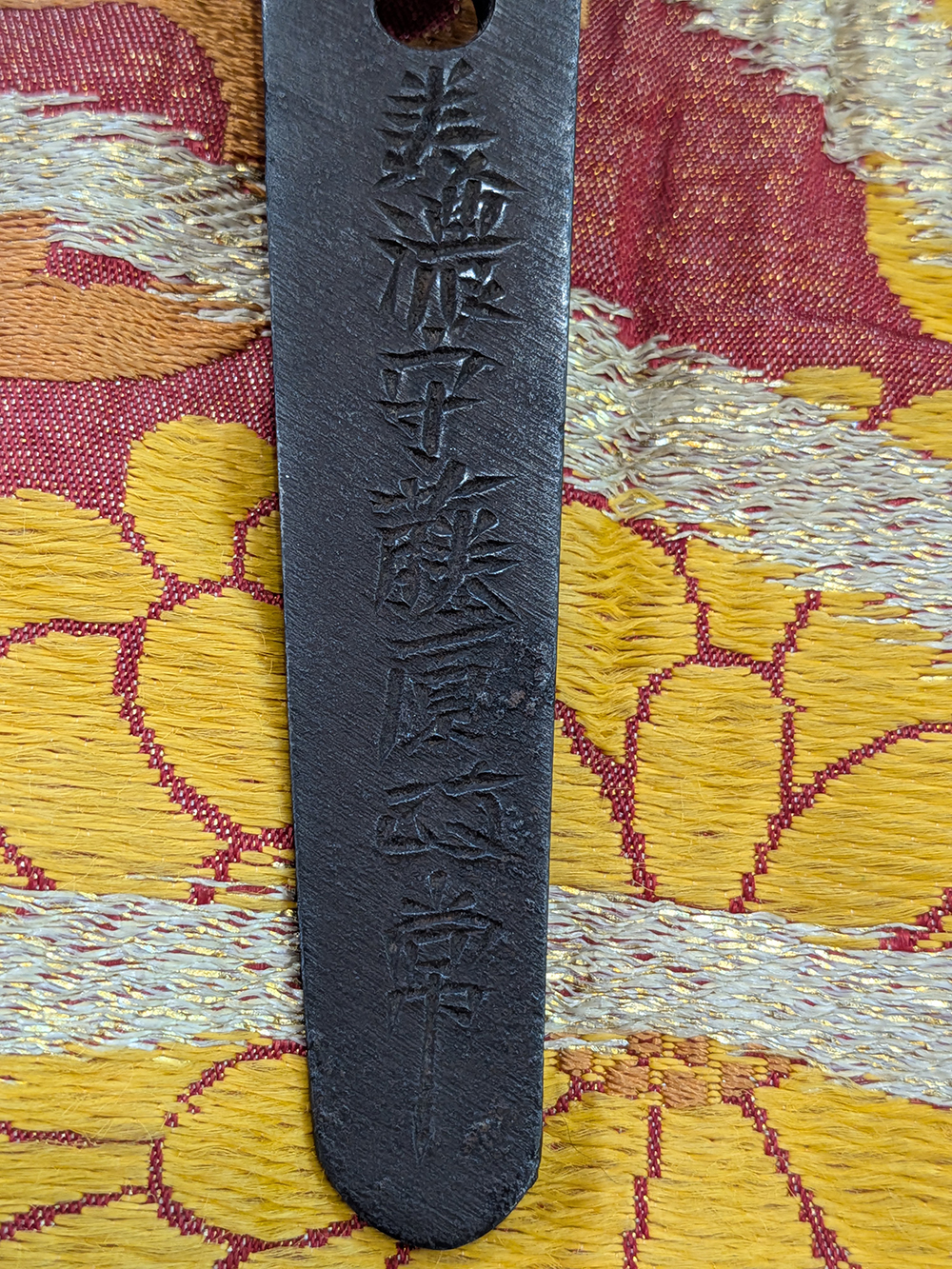
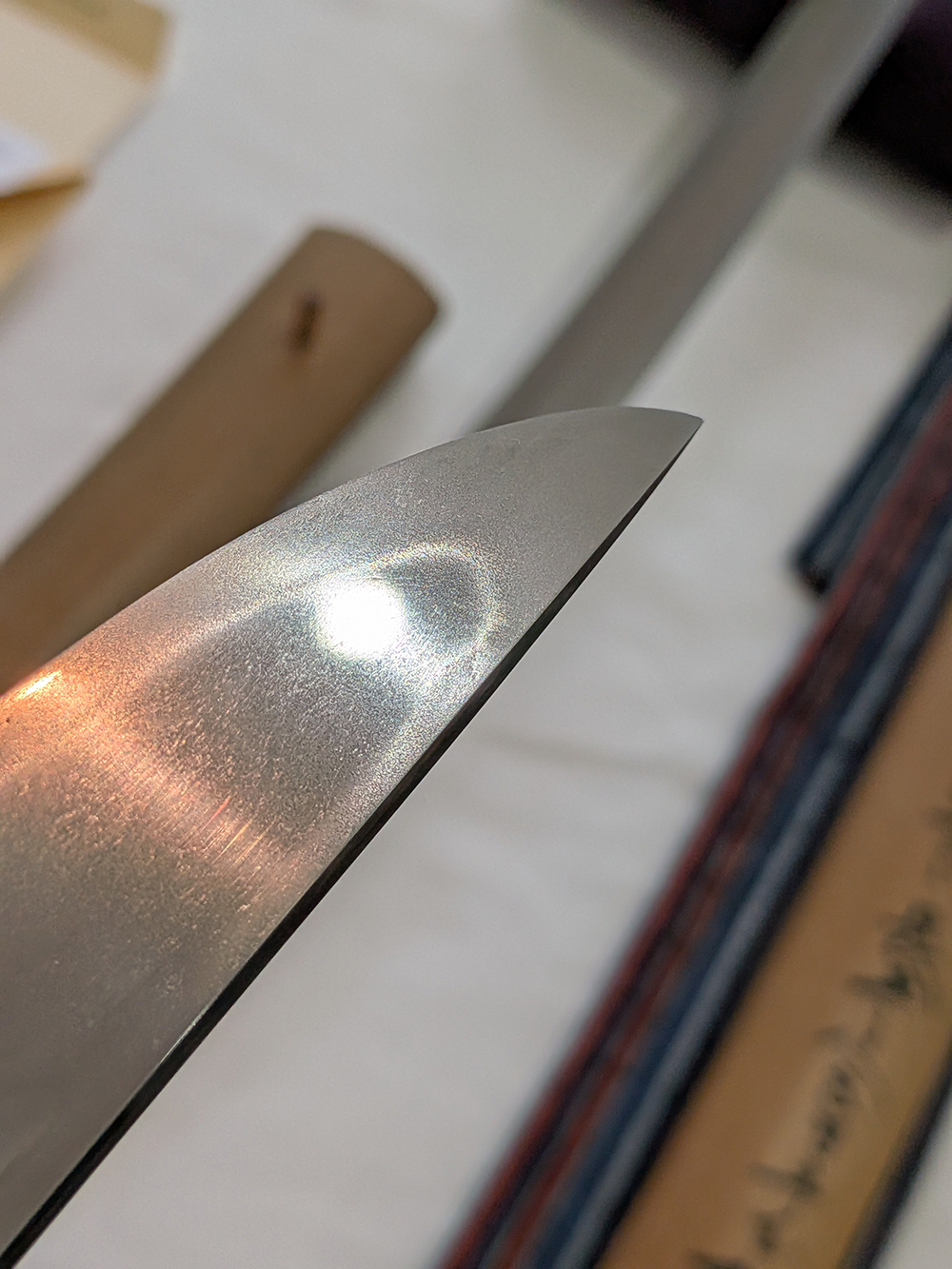
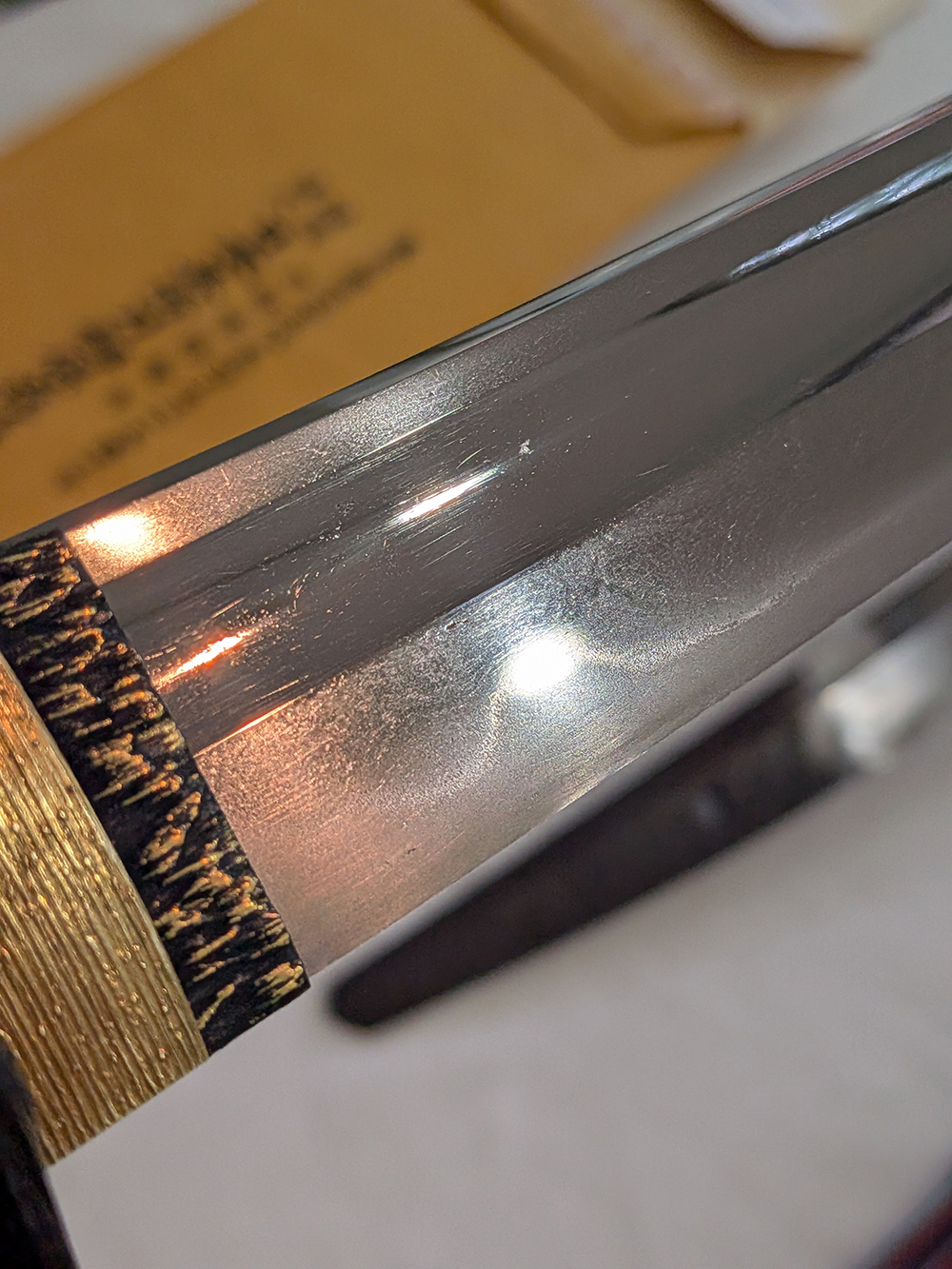
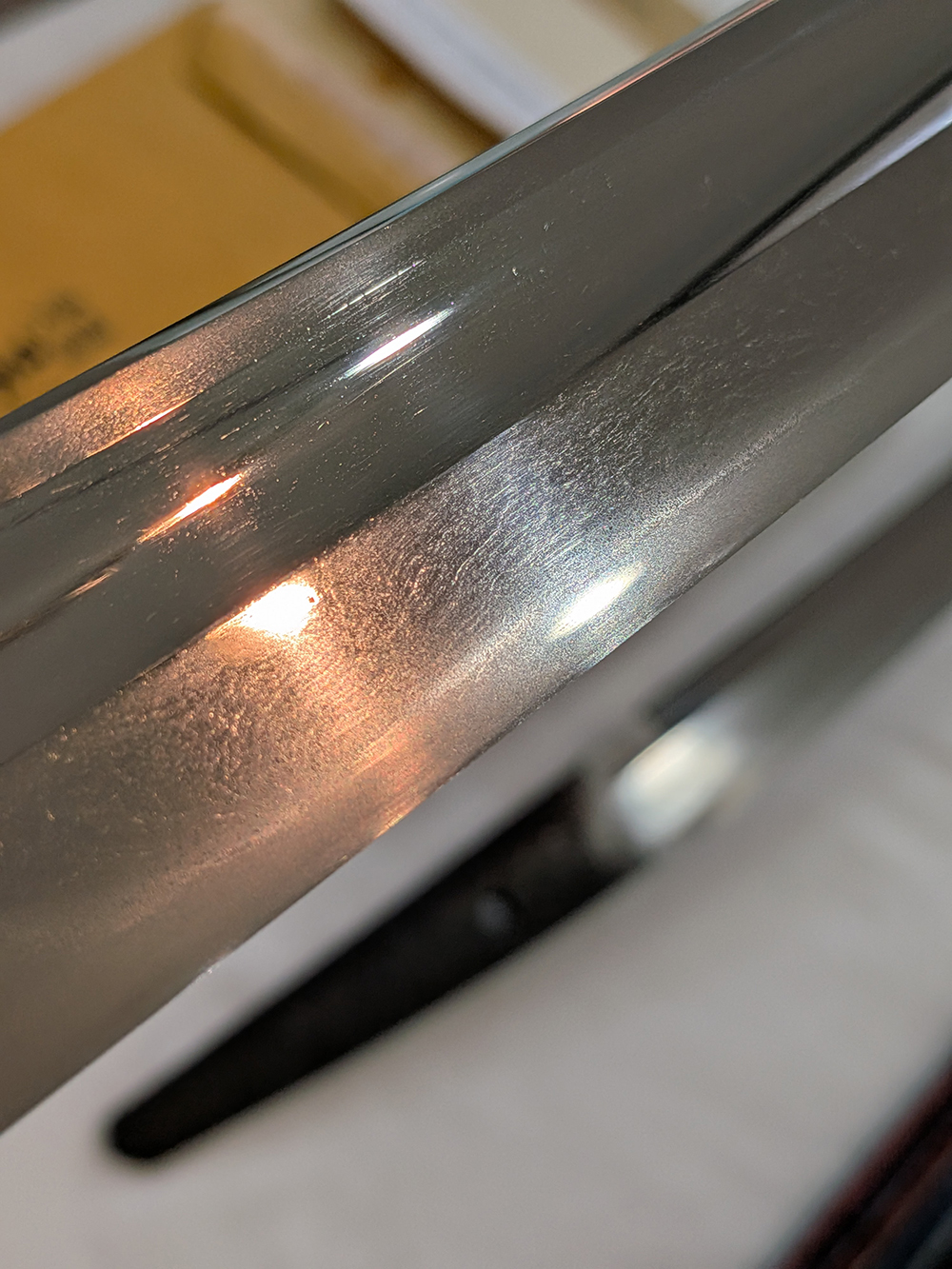
This is a tanto by the third-generation Masatsune of Owari province, active during the Kan'ei era (1624-1644). The blade features a ko-itame hada and suguha hamon in nie-deki, with an ubu nakago signed 'Mino no Kami Fujiwara Masatsune'. It is presented in a rare Nanban koshirae, a complete mounting style that is seldom seen beyond tsuba.

NihontoWatch MonNihontoWatch
MarketEncyclopediaKantei
Fittings›Mino-den›Owari Masatsune›Masatsune›Tanto: Owari Masatsune in a rare Nanban koshirae
tanto
Owari Masatsune

Tanto: Owari Masatsune in a rare Nanban koshirae

mei · Mino · Shinto

Price on request
Visit seller website →
Owari Masatsune — 1 of 40
Owari Masatsune — 2 of 40
Owari Masatsune — 3 of 40
Owari Masatsune — 4 of 40
Owari Masatsune — 5 of 40
Owari Masatsune — 6 of 40
Owari Masatsune — 7 of 40
Owari Masatsune — 8 of 40
Owari Masatsune — 9 of 40
Owari Masatsune — 10 of 40
Owari Masatsune — 11 of 40
Owari Masatsune — 12 of 40
Owari Masatsune — 13 of 40
Owari Masatsune — 14 of 40
Owari Masatsune — 15 of 40
Owari Masatsune — 16 of 40
Owari Masatsune — 17 of 40
Owari Masatsune — 18 of 40
Owari Masatsune — 19 of 40
Owari Masatsune — 20 of 40
Owari Masatsune — 21 of 40
Owari Masatsune — 22 of 40
Owari Masatsune — 23 of 40
Owari Masatsune — 24 of 40
Owari Masatsune — 25 of 40
Owari Masatsune — 26 of 40
Owari Masatsune — 27 of 40
Owari Masatsune — 28 of 40
Owari Masatsune — 29 of 40
Owari Masatsune — 30 of 40
Owari Masatsune — 31 of 40
Owari Masatsune — 32 of 40
Owari Masatsune — 33 of 40
Owari Masatsune — 34 of 40
Owari Masatsune — 35 of 40
Owari Masatsune — 36 of 40
Owari Masatsune — 37 of 40
Owari Masatsune — 38 of 40
Owari Masatsune — 39 of 40
Owari Masatsune — 40 of 40
1 / 40
1 / 40
Owari Masatsune — 1 of 40Owari Masatsune — 2 of 40Owari Masatsune — 3 of 40Owari Masatsune — 4 of 40Owari Masatsune — 5 of 40Owari Masatsune — 6 of 40Owari Masatsune — 7 of 40Owari Masatsune — 8 of 40Owari Masatsune — 9 of 40Owari Masatsune — 10 of 40Owari Masatsune — 11 of 40Owari Masatsune — 12 of 40Owari Masatsune — 13 of 40Owari Masatsune — 14 of 40Owari Masatsune — 15 of 40Owari Masatsune — 16 of 40Owari Masatsune — 17 of 40Owari Masatsune — 18 of 40Owari Masatsune — 19 of 40Owari Masatsune — 20 of 40Owari Masatsune — 21 of 40Owari Masatsune — 22 of 40Owari Masatsune — 23 of 40Owari Masatsune — 24 of 40Owari Masatsune — 25 of 40Owari Masatsune — 26 of 40Owari Masatsune — 27 of 40Owari Masatsune — 28 of 40Owari Masatsune — 29 of 40Owari Masatsune — 30 of 40Owari Masatsune — 31 of 40Owari Masatsune — 32 of 40Owari Masatsune — 33 of 40Owari Masatsune — 34 of 40Owari Masatsune — 35 of 40Owari Masatsune — 36 of 40Owari Masatsune — 37 of 40Owari Masatsune — 38 of 40Owari Masatsune — 39 of 40Owari Masatsune — 40 of 40
Measurements & details
Smith
Owari Masatsune
Type
Tanto
School
Owari Masatsune
Period
Around 1615–1624(Tenshō–Kan'ei)
Province
Owari
Signature
Signed(100% of this smith's designated works are signed)
Description

This is a tanto by the third-generation Masatsune of Owari province, active during the Kan'ei era (1624-1644). The blade features a ko-itame hada and suguha hamon in nie-deki, with an ubu nakago signed 'Mino no Kami Fujiwara Masatsune'. It is presented in a rare Nanban koshirae, a complete mounting style that is seldom seen beyond tsuba.

About the maker

Masatsune

政常

Owari Masatsune (Mino-derived Owari shinto; retained by the Owari Tokugawa) · Owari · around 1615-1624

Fujishiro Jo saku · Tōken Taikan top 23%

4 pieces on the market now

›

Masatsune was born at Nodo in Mino Province and first signed Kanetsune, a smith of the Seki tradition who carried that Mino root into the new swords of Owari. The published sources follow his career in unusual detail. In Eiroku 10 he set up an independent branch and moved to Komaki village, changing his name to Masatsune around that time; in Tensho 19 he received the court title Sagami no Kami; in Keicho 5 he followed Matsudaira Tadayoshi to Kiyosu, and he became a retained smith of the Owari Tokugawa house. In Keicho 12 he took the tonsure and retired, passing the name Sagami no Kami Masatsune to his son, but when the second generation died suddenly two years later he returned to the forge, and from that time he signed Masatsune Nyudo. He died in Genna 5 at the age of eighty-four. In later generations he was counted among the Owari Sansaku, the three founding smiths of Owari shinto, beside Hoki no Kami Nobutaka and Hida no Kami Ujifusa.

His recognized hand is the bright straight temper of his hira-zukuri tanto and wakizashi, the form in which his surviving work is most numerous. Over a tightly forged ko-itame mixed with mokume, the steel flows toward masame and carries thick ji-nie, with fine chikei entering and, on several pieces, a mizukage-like feature rising diagonally from below the machi. The temper is a chu-suguha, at times a wide suguha, laid in ko-nie, into which small gunome enter with ko-ashi. What separates his suguha from a plain Seki straight temper is the worked habuchi: it frays into hotsure, with nijuba, kuichigai-ba and uchinoke mixed in and fine sunagashi running through, while the nioiguchi stays bright. The published commentary calls one such tanto a thoroughly characteristic example, with 「相模守政常の典型的な直刃の作例」[[c:1]] (a typical example of Sagami no Kami Masatsune's suguha).

The jigane is the constant beneath both of his manners. It is an itame that overall tends toward masame, with ji-nie attached and, on the better tanto, chikei standing out and the steel reading bright. Where the forging tightens into ko-itame mixed with mokume the impression is of strength, and the published sources single out the diagonal mizukage at the machi and the abundant ji-nie as the marks of his sound forging. On the wakizashi the grain at times stands a little, with the upper half flowing toward the mune, and the carvings he favours, a suken or bonji above the koshimoto with gomabashi on the reverse, are described as crisp and well harmonised with the blade.

His second manner is the Owari-Seki wet temper, carried on his katana, naginata and yari. Over an itame that flows into masame with ji-nie, he tempers a wide suguha tone or a shallow notare-gunome base with togariba and small gunome mixed in, ashi and yo entering, the nie sometimes coarse and gathered in clusters, kinsuji and sunagashi seen, and the nioiguchi tending to a subdued shizumi. The published sources name this directly: on his large Keicho-form katana they read 「尾張関得意の濡れ刃」[[c:2]] (the wet temper for which the Owari-Seki smiths are noted). His naginata and yari are large and dignified, the boshi at times pointed and Jizo-like; the sources credit him as 「短刀, 薙刀の名手として名高い」[[c:3]] (famed as an outstanding maker of tanto and naginata), while noting that the very finest among the naginata are few.

What sets him apart within Owari shinto is exactly what the judges name. His suguha hand, with its fraying habuchi, bright nioiguchi and masame-flowing ji-nie, is the constant by which his tanto are known, and his wet temper marks the Mino-into-Owari Seki descent that the other Owari founders share. On one wakizashi that departs from his usual restraint, bolder in temper and brighter in nie with an antique flavour in the jigane, the published sources judge that he was reaching higher still, 「相州上工, 就中貞宗や信国あたりを狙ったものであろうか」[[c:4]] (aiming, it would seem, at the superior Soshu craftsmen, especially such masters as Sadamune and Nobukuni), and call the result 「同作中出色の一口」[[c:5]] (an outstanding example among his works). His line continued through the second-generation Mino no Kami Fujiwara Masatsune, an adopted son and son of Gifu Daido, whose signed katana and yari survive in the same record.

For the collector, Masatsune is a well-documented founder of an Owari line rather than a rare ghost. Fujishiro grades him Jo saku. He has no National Treasures and no Important Cultural Properties; his record runs instead through the modern Juyo rank, with seventeen blades in the Tokubetsu Juyo and Juyo tiers, and two further pieces designated in the prewar Juyo Bijutsuhin, among them a katana that passed through the Tokugawa Iesato collection and is now held by the Tokugawa Reimeikai Foundation. Provenance touches the daimyo and court houses, with recorded denrai to the Tokugawa family and the Imperial family, and one blade preserved at Akihasan Hongu Akiha Shrine. Because the published sources are agreed that 「刀及び鎬造の脇指は極めて少ない」[[c:6]] (katana and shinogi-zukuri wakizashi are extremely few), a signed katana is the scarce thing, valued as material for the study of the smith himself; his hira-zukuri tanto, wakizashi, yari and naginata come to the serious collector from time to time, and a signed Owari Masatsune of his own hand, not the second generation, remains a satisfying and reachable document of how Owari shinto began.

Historical importance

Where Masatsune stands among comparable artisans: across all of nihontō, and within tradition, era, and period. The tiers (Foremost · Leading · Major · Notable) weigh official designations from the NBTHK and Japan's Agency for Cultural Affairs, together with historical honors of lasting repute such as the Sansaku and Meibutsu-chō.

随一
Foremost
屈指
Leading
有数
Major
著名
Notable

Select a lens to see how it's measured.

Designation record
20 designated works
Jūyō Bijutsuhin
2
Gyobutsu (Imperial)
1
Jūyō
17
4 works by Masatsune on the market→
Masatsune — full profileOwari Masatsune (Mino-derived Owari shinto; retained by the Owari Tokugawa) school
About the school

Owari Masatsune

尾張政常

Mino-den · Owari

12 pieces on the market now

›

The line begins with a Mino man. The setsumei record that Sagami no Kami Masatsune (政常) was born at Nōdo in Mino Province, where he first signed Kanetsune (兼常) and is variously said to have been the son or a disciple of Kanetsune of Seki. In Eiroku 10 (1567) he established an independent branch line and moved to Komaki village, likely changing his name to Masatsune about that time; in the fifth month of Tenshō 19 (1591) he received the court title Sagami no Kami, and in Keichō 5 (1600) he followed Matsudaira Tadayoshi to Kiyosu in Owari, where he became a retained smith (kakae-kō) of the Owari Tokugawa house. Several records place him at Kiyosu alongside Hōki no Kami Nobutaka and Hida no Kami Ujifusa, the three later counted as the Owari Sansaku (Three Smiths of Owari). After taking the tonsure and retiring in Keichō 12 (1607), he passed the name to his son; when that second generation died suddenly two years later he resumed forging under the nyūdō signature Masatsune Nyūdō, and is said to have died in Genna 5 (1619) at the age of eighty-four. A separate second generation, Mino no Kami Fujiwara Masatsune, is recorded as the son of Daidō of Gifu, adopted into the line, who carried on its spear and naginata work. A Mino foundation worked toward suguha defines the shared hand. The forging is itame mixed with mokume, frequently flowing into masame toward the mune and shinogi-ji, with the grain standing somewhat (hada-dachi), abundant ji-nie, and chikei; a mizukage-like feature rising from the machi is noted on several tantō and wakizashi.

The temper that the setsumei call his specialty is a chū- to broad suguha in ko-nie-deki, the habuchi worked with hotsure, nijūba, kuichigai-ba, and uchi-noke, with ko-gunome and ko-ashi mixed in, fine kinsuji and sunagashi running through, and a bright nioiguchi. Beside this restrained mode runs a bolder midareba of gunome and ko-notare with togariba, sometimes hakogakari or saka-gakari, where the nie grows coarse and clustered and the nioiguchi turns shizumi (subdued); the Owari-Seki "wet" nure quality appears in the wider blades. The bōshi tends to straight with ko-maru and hakikake in the suguha works, midare-komi with a rounded or long return in the midareba works. Carving is plain but crisp: suken, bonji, gomabashi, koshi-hi with soe-hi, and the rarely seen shin no Kurikara in openwork. Among extant works, the setsumei agree, hira-zukuri wakizashi and tantō are the most numerous and of high skill, yari and naginata are comparatively common with the spears often hira-sankaku sasaho form, while katana and shinogi-zukuri wakizashi are extremely few. For kantei this rarity gives weight to the long swords: the 67th Jūyō Kanetsune-signed katana, dated by its sakizori and large kissaki to about Eiroku, anchors the smith's early phase, and the 31st Jūyō Masatsune Nyūdō katana shows the flowing masame, shallow notare, and shizumi nioiguchi read as his own. Named pieces include the Sagami no Kami Masatsune Nyūdō wakizashi held by the Imperial Household Agency and the katana once with Tokugawa Iesato and the Reimeikai Foundation; one wakizashi survives in akikusa-mon koshirae with fittings by Mogarashi Sōten of Hikone. The setsumei note that in his bolder work Masatsune looked to the Sagami masters Sadamune and Nobukuni while keeping the togari and Sanbon-sugi traces of his Mino root, placing his line as the Owari channel through which the Mino-den passed into shintō. Learn more →

2 recorded smiths21 designated works
Leading smiths
SmithEraDesignated
Masatsune政常1615-162420
Masatsune政常1661-16730
Masatsune政常1688-17040
Masatsune政常1661-16730
Kanetsune兼常1573-15921
Explore the Owari Masatsune school →

Historical context

Under the Tokugawa peace the daishō became a regulated uniform, and demand gathered in the castle towns, above all Edo itself. The craft split two ways: brilliant display work for connoisseurs, and tested blades whose cutting results were sometimes inlaid in gold.

The Edo period (1615 to 1868) →

Warning — certificate not found

We could not find an authenticity certificate on the seller’s listing. Japanese swords and fittings are normally papered by the NBTHK (or the NTHK). Without one, the attribution is the seller’s own assessment and has not been independently verified — treat it with caution and ask the dealer about certification before buying.

Seller
N
Nihon Art
🇺🇸Ships from United States
›
✓Verified dealernihonart.com
View all of Nihon Art’s listings→View this item on the dealer’s site→

More from Nihon Art

View all →
​
Tokuho
Katana - Tokuho - by Nakajima Rai Kuniyasu - Katana by Rai Kuniyasu in KoshiraeKatana - Tokuho - by Nakajima Rai Kuniyasu - Katana by Rai Kuniyasu in Koshirae

Katana

ByNakajima Rai Kuniyasu
Ask
​
Jūyō
Katana - Jūyō - by Naoe Shizu School - Naoe Shizu - Juyo TokenKatana - Jūyō - by Naoe Shizu School - Naoe Shizu - Juyo Token

Katana

ByNaoe Shizu School
Ask
​
Jūyō
Katana - Jūyō - by Enju School - Enju - Juyo TokenKatana - Jūyō - by Enju School - Enju - Juyo Token

Katana

ByEnju School
Ask
​
Tokuho
Wakizashi - Tokuho - by Suishinshi Masahide - Suishinshi MasahideWakizashi - Tokuho - by Suishinshi Masahide - Suishinshi Masahide

Wakizashi

BySuishinshi Masahide
Ask
​
NTHK
Katana - NTHK - by Gassan Sadakatsu - Katana by Gassan Sadakatsu with Kanzan SayagakiKatana - NTHK - by Gassan Sadakatsu - Katana by Gassan Sadakatsu with Kanzan Sayagaki

Katana

ByGassan Sadakatsu
Ask
​
Tokuho
Katana - Tokuho - by Nakajima Rai Kuniyasu - Rai KuniyasuKatana - Tokuho - by Nakajima Rai Kuniyasu - Rai Kuniyasu

Katana

ByNakajima Rai Kuniyasu
Ask
​
Hozon
Daisho - Hozon - by Chiyozuru School - Daisho: Chiyozuru Katana & Fuyuhiro Wakizashi in Edo Period KoshiraeDaisho - Hozon - by Chiyozuru School - Daisho: Chiyozuru Katana & Fuyuhiro Wakizashi in Edo Period Koshirae

Daishō

ByChiyozuru School
Ask

Swords

  • Katana
  • Wakizashi
  • Tantō
  • Tachi
  • Naginata
  • Yari

Fittings

  • Tsuba
  • Fuchi-Kashira
  • Kozuka
  • Menuki

Armor

  • Kabuto
  • Samurai Armor

By Certification

  • Tokujū
  • Jūyō
  • Tokuho
  • Hozon

Resources

  • Dealer Directory
  • Artist Directory
  • The Daily Kantei
  • Glossary
  • Browse All
Nihontowatch© 2026
TermsPrivacyCookiesAbout

Description

This is a tanto by the third-generation Masatsune of Owari province, active during the Kan'ei era (1624-1644). The blade features a ko-itame hada and suguha hamon in nie-deki, with an ubu nakago signed 'Mino no Kami Fujiwara Masatsune'. It is presented in a rare Nanban koshirae, a complete mounting style that is seldom seen beyond tsuba.

NihontoWatch MonNihontoWatch
MarketEncyclopediaKantei
Fittings›Mino-den›Owari Masatsune›Masatsune›Tanto: Owari Masatsune in a rare Nanban koshirae
tanto
Owari Masatsune

Tanto: Owari Masatsune in a rare Nanban koshirae

mei · Mino · Shinto

Price on request
Visit seller website →
Owari Masatsune — 1 of 40
Owari Masatsune — 2 of 40
Owari Masatsune — 3 of 40
Owari Masatsune — 4 of 40
Owari Masatsune — 5 of 40
Owari Masatsune — 6 of 40
Owari Masatsune — 7 of 40
Owari Masatsune — 8 of 40
Owari Masatsune — 9 of 40
Owari Masatsune — 10 of 40
Owari Masatsune — 11 of 40
Owari Masatsune — 12 of 40
Owari Masatsune — 13 of 40
Owari Masatsune — 14 of 40
Owari Masatsune — 15 of 40
Owari Masatsune — 16 of 40
Owari Masatsune — 17 of 40
Owari Masatsune — 18 of 40
Owari Masatsune — 19 of 40
Owari Masatsune — 20 of 40
Owari Masatsune — 21 of 40
Owari Masatsune — 22 of 40
Owari Masatsune — 23 of 40
Owari Masatsune — 24 of 40
Owari Masatsune — 25 of 40
Owari Masatsune — 26 of 40
Owari Masatsune — 27 of 40
Owari Masatsune — 28 of 40
Owari Masatsune — 29 of 40
Owari Masatsune — 30 of 40
Owari Masatsune — 31 of 40
Owari Masatsune — 32 of 40
Owari Masatsune — 33 of 40
Owari Masatsune — 34 of 40
Owari Masatsune — 35 of 40
Owari Masatsune — 36 of 40
Owari Masatsune — 37 of 40
Owari Masatsune — 38 of 40
Owari Masatsune — 39 of 40
Owari Masatsune — 40 of 40
1 / 40
1 / 40
Owari Masatsune — 1 of 40Owari Masatsune — 2 of 40Owari Masatsune — 3 of 40Owari Masatsune — 4 of 40Owari Masatsune — 5 of 40Owari Masatsune — 6 of 40Owari Masatsune — 7 of 40Owari Masatsune — 8 of 40Owari Masatsune — 9 of 40Owari Masatsune — 10 of 40Owari Masatsune — 11 of 40Owari Masatsune — 12 of 40Owari Masatsune — 13 of 40Owari Masatsune — 14 of 40Owari Masatsune — 15 of 40Owari Masatsune — 16 of 40Owari Masatsune — 17 of 40Owari Masatsune — 18 of 40Owari Masatsune — 19 of 40Owari Masatsune — 20 of 40Owari Masatsune — 21 of 40Owari Masatsune — 22 of 40Owari Masatsune — 23 of 40Owari Masatsune — 24 of 40Owari Masatsune — 25 of 40Owari Masatsune — 26 of 40Owari Masatsune — 27 of 40Owari Masatsune — 28 of 40Owari Masatsune — 29 of 40Owari Masatsune — 30 of 40Owari Masatsune — 31 of 40Owari Masatsune — 32 of 40Owari Masatsune — 33 of 40Owari Masatsune — 34 of 40Owari Masatsune — 35 of 40Owari Masatsune — 36 of 40Owari Masatsune — 37 of 40Owari Masatsune — 38 of 40Owari Masatsune — 39 of 40Owari Masatsune — 40 of 40
Measurements & details
Smith
Owari Masatsune
Type
Tanto
School
Owari Masatsune
Period
Around 1615–1624(Tenshō–Kan'ei)
Province
Owari
Signature
Signed(100% of this smith's designated works are signed)
Description

This is a tanto by the third-generation Masatsune of Owari province, active during the Kan'ei era (1624-1644). The blade features a ko-itame hada and suguha hamon in nie-deki, with an ubu nakago signed 'Mino no Kami Fujiwara Masatsune'. It is presented in a rare Nanban koshirae, a complete mounting style that is seldom seen beyond tsuba.

About the maker

Masatsune

政常

Owari Masatsune (Mino-derived Owari shinto; retained by the Owari Tokugawa) · Owari · around 1615-1624

Fujishiro Jo saku · Tōken Taikan top 23%

4 pieces on the market now

›

Masatsune was born at Nodo in Mino Province and first signed Kanetsune, a smith of the Seki tradition who carried that Mino root into the new swords of Owari. The published sources follow his career in unusual detail. In Eiroku 10 he set up an independent branch and moved to Komaki village, changing his name to Masatsune around that time; in Tensho 19 he received the court title Sagami no Kami; in Keicho 5 he followed Matsudaira Tadayoshi to Kiyosu, and he became a retained smith of the Owari Tokugawa house. In Keicho 12 he took the tonsure and retired, passing the name Sagami no Kami Masatsune to his son, but when the second generation died suddenly two years later he returned to the forge, and from that time he signed Masatsune Nyudo. He died in Genna 5 at the age of eighty-four. In later generations he was counted among the Owari Sansaku, the three founding smiths of Owari shinto, beside Hoki no Kami Nobutaka and Hida no Kami Ujifusa.

His recognized hand is the bright straight temper of his hira-zukuri tanto and wakizashi, the form in which his surviving work is most numerous. Over a tightly forged ko-itame mixed with mokume, the steel flows toward masame and carries thick ji-nie, with fine chikei entering and, on several pieces, a mizukage-like feature rising diagonally from below the machi. The temper is a chu-suguha, at times a wide suguha, laid in ko-nie, into which small gunome enter with ko-ashi. What separates his suguha from a plain Seki straight temper is the worked habuchi: it frays into hotsure, with nijuba, kuichigai-ba and uchinoke mixed in and fine sunagashi running through, while the nioiguchi stays bright. The published commentary calls one such tanto a thoroughly characteristic example, with 「相模守政常の典型的な直刃の作例」[[c:1]] (a typical example of Sagami no Kami Masatsune's suguha).

The jigane is the constant beneath both of his manners. It is an itame that overall tends toward masame, with ji-nie attached and, on the better tanto, chikei standing out and the steel reading bright. Where the forging tightens into ko-itame mixed with mokume the impression is of strength, and the published sources single out the diagonal mizukage at the machi and the abundant ji-nie as the marks of his sound forging. On the wakizashi the grain at times stands a little, with the upper half flowing toward the mune, and the carvings he favours, a suken or bonji above the koshimoto with gomabashi on the reverse, are described as crisp and well harmonised with the blade.

His second manner is the Owari-Seki wet temper, carried on his katana, naginata and yari. Over an itame that flows into masame with ji-nie, he tempers a wide suguha tone or a shallow notare-gunome base with togariba and small gunome mixed in, ashi and yo entering, the nie sometimes coarse and gathered in clusters, kinsuji and sunagashi seen, and the nioiguchi tending to a subdued shizumi. The published sources name this directly: on his large Keicho-form katana they read 「尾張関得意の濡れ刃」[[c:2]] (the wet temper for which the Owari-Seki smiths are noted). His naginata and yari are large and dignified, the boshi at times pointed and Jizo-like; the sources credit him as 「短刀, 薙刀の名手として名高い」[[c:3]] (famed as an outstanding maker of tanto and naginata), while noting that the very finest among the naginata are few.

What sets him apart within Owari shinto is exactly what the judges name. His suguha hand, with its fraying habuchi, bright nioiguchi and masame-flowing ji-nie, is the constant by which his tanto are known, and his wet temper marks the Mino-into-Owari Seki descent that the other Owari founders share. On one wakizashi that departs from his usual restraint, bolder in temper and brighter in nie with an antique flavour in the jigane, the published sources judge that he was reaching higher still, 「相州上工, 就中貞宗や信国あたりを狙ったものであろうか」[[c:4]] (aiming, it would seem, at the superior Soshu craftsmen, especially such masters as Sadamune and Nobukuni), and call the result 「同作中出色の一口」[[c:5]] (an outstanding example among his works). His line continued through the second-generation Mino no Kami Fujiwara Masatsune, an adopted son and son of Gifu Daido, whose signed katana and yari survive in the same record.

For the collector, Masatsune is a well-documented founder of an Owari line rather than a rare ghost. Fujishiro grades him Jo saku. He has no National Treasures and no Important Cultural Properties; his record runs instead through the modern Juyo rank, with seventeen blades in the Tokubetsu Juyo and Juyo tiers, and two further pieces designated in the prewar Juyo Bijutsuhin, among them a katana that passed through the Tokugawa Iesato collection and is now held by the Tokugawa Reimeikai Foundation. Provenance touches the daimyo and court houses, with recorded denrai to the Tokugawa family and the Imperial family, and one blade preserved at Akihasan Hongu Akiha Shrine. Because the published sources are agreed that 「刀及び鎬造の脇指は極めて少ない」[[c:6]] (katana and shinogi-zukuri wakizashi are extremely few), a signed katana is the scarce thing, valued as material for the study of the smith himself; his hira-zukuri tanto, wakizashi, yari and naginata come to the serious collector from time to time, and a signed Owari Masatsune of his own hand, not the second generation, remains a satisfying and reachable document of how Owari shinto began.
Historical importance

Where Masatsune stands among comparable artisans: across all of nihontō, and within tradition, era, and period. The tiers (Foremost · Leading · Major · Notable) weigh official designations from the NBTHK and Japan's Agency for Cultural Affairs, together with historical honors of lasting repute such as the Sansaku and Meibutsu-chō.

随一
Foremost
屈指
Leading
有数
Major
著名
Notable

Select a lens to see how it's measured.

Designation record
20 designated works
Jūyō Bijutsuhin
2
Gyobutsu (Imperial)
1
Jūyō
17
4 works by Masatsune on the market→
Masatsune — full profileOwari Masatsune (Mino-derived Owari shinto; retained by the Owari Tokugawa) school
About the school

Owari Masatsune

尾張政常

Mino-den · Owari

12 pieces on the market now

›

The line begins with a Mino man. The setsumei record that Sagami no Kami Masatsune (政常) was born at Nōdo in Mino Province, where he first signed Kanetsune (兼常) and is variously said to have been the son or a disciple of Kanetsune of Seki. In Eiroku 10 (1567) he established an independent branch line and moved to Komaki village, likely changing his name to Masatsune about that time; in the fifth month of Tenshō 19 (1591) he received the court title Sagami no Kami, and in Keichō 5 (1600) he followed Matsudaira Tadayoshi to Kiyosu in Owari, where he became a retained smith (kakae-kō) of the Owari Tokugawa house. Several records place him at Kiyosu alongside Hōki no Kami Nobutaka and Hida no Kami Ujifusa, the three later counted as the Owari Sansaku (Three Smiths of Owari). After taking the tonsure and retiring in Keichō 12 (1607), he passed the name to his son; when that second generation died suddenly two years later he resumed forging under the nyūdō signature Masatsune Nyūdō, and is said to have died in Genna 5 (1619) at the age of eighty-four. A separate second generation, Mino no Kami Fujiwara Masatsune, is recorded as the son of Daidō of Gifu, adopted into the line, who carried on its spear and naginata work. A Mino foundation worked toward suguha defines the shared hand. The forging is itame mixed with mokume, frequently flowing into masame toward the mune and shinogi-ji, with the grain standing somewhat (hada-dachi), abundant ji-nie, and chikei; a mizukage-like feature rising from the machi is noted on several tantō and wakizashi.
The temper that the setsumei call his specialty is a chū- to broad suguha in ko-nie-deki, the habuchi worked with hotsure, nijūba, kuichigai-ba, and uchi-noke, with ko-gunome and ko-ashi mixed in, fine kinsuji and sunagashi running through, and a bright nioiguchi. Beside this restrained mode runs a bolder midareba of gunome and ko-notare with togariba, sometimes hakogakari or saka-gakari, where the nie grows coarse and clustered and the nioiguchi turns shizumi (subdued); the Owari-Seki "wet" nure quality appears in the wider blades. The bōshi tends to straight with ko-maru and hakikake in the suguha works, midare-komi with a rounded or long return in the midareba works. Carving is plain but crisp: suken, bonji, gomabashi, koshi-hi with soe-hi, and the rarely seen shin no Kurikara in openwork. Among extant works, the setsumei agree, hira-zukuri wakizashi and tantō are the most numerous and of high skill, yari and naginata are comparatively common with the spears often hira-sankaku sasaho form, while katana and shinogi-zukuri wakizashi are extremely few. For kantei this rarity gives weight to the long swords: the 67th Jūyō Kanetsune-signed katana, dated by its sakizori and large kissaki to about Eiroku, anchors the smith's early phase, and the 31st Jūyō Masatsune Nyūdō katana shows the flowing masame, shallow notare, and shizumi nioiguchi read as his own. Named pieces include the Sagami no Kami Masatsune Nyūdō wakizashi held by the Imperial Household Agency and the katana once with Tokugawa Iesato and the Reimeikai Foundation; one wakizashi survives in akikusa-mon koshirae with fittings by Mogarashi Sōten of Hikone. The setsumei note that in his bolder work Masatsune looked to the Sagami masters Sadamune and Nobukuni while keeping the togari and Sanbon-sugi traces of his Mino root, placing his line as the Owari channel through which the Mino-den passed into shintō. Learn more →
2 recorded smiths21 designated works
Leading smiths
SmithEraDesignated
Masatsune政常1615-162420
Masatsune政常1661-16730
Masatsune政常1688-17040
Masatsune政常1661-16730
Kanetsune兼常1573-15921
Explore the Owari Masatsune school →

Historical context

Under the Tokugawa peace the daishō became a regulated uniform, and demand gathered in the castle towns, above all Edo itself. The craft split two ways: brilliant display work for connoisseurs, and tested blades whose cutting results were sometimes inlaid in gold.

The Edo period (1615 to 1868) →

Warning — certificate not found

We could not find an authenticity certificate on the seller’s listing. Japanese swords and fittings are normally papered by the NBTHK (or the NTHK). Without one, the attribution is the seller’s own assessment and has not been independently verified — treat it with caution and ask the dealer about certification before buying.

Seller
N
Nihon Art
🇺🇸Ships from United States
›
✓Verified dealernihonart.com
View all of Nihon Art’s listings→View this item on the dealer’s site→

More from Nihon Art

View all →
​
Tokuho
Katana - Tokuho - by Nakajima Rai Kuniyasu - Katana by Rai Kuniyasu in KoshiraeKatana - Tokuho - by Nakajima Rai Kuniyasu - Katana by Rai Kuniyasu in Koshirae

Katana

ByNakajima Rai Kuniyasu
Ask
​
Jūyō
Katana - Jūyō - by Naoe Shizu School - Naoe Shizu - Juyo TokenKatana - Jūyō - by Naoe Shizu School - Naoe Shizu - Juyo Token

Katana

ByNaoe Shizu School
Ask
​
Jūyō
Katana - Jūyō - by Enju School - Enju - Juyo TokenKatana - Jūyō - by Enju School - Enju - Juyo Token

Katana

ByEnju School
Ask
​
Tokuho
Wakizashi - Tokuho - by Suishinshi Masahide - Suishinshi MasahideWakizashi - Tokuho - by Suishinshi Masahide - Suishinshi Masahide

Wakizashi

BySuishinshi Masahide
Ask
​
NTHK
Katana - NTHK - by Gassan Sadakatsu - Katana by Gassan Sadakatsu with Kanzan SayagakiKatana - NTHK - by Gassan Sadakatsu - Katana by Gassan Sadakatsu with Kanzan Sayagaki

Katana

ByGassan Sadakatsu
Ask
​
Tokuho
Katana - Tokuho - by Nakajima Rai Kuniyasu - Rai KuniyasuKatana - Tokuho - by Nakajima Rai Kuniyasu - Rai Kuniyasu

Katana

ByNakajima Rai Kuniyasu
Ask
​
Hozon
Daisho - Hozon - by Chiyozuru School - Daisho: Chiyozuru Katana & Fuyuhiro Wakizashi in Edo Period KoshiraeDaisho - Hozon - by Chiyozuru School - Daisho: Chiyozuru Katana & Fuyuhiro Wakizashi in Edo Period Koshirae

Daishō

ByChiyozuru School
Ask

Swords

  • Katana
  • Wakizashi
  • Tantō
  • Tachi
  • Naginata
  • Yari

Fittings

  • Tsuba
  • Fuchi-Kashira
  • Kozuka
  • Menuki

Armor

  • Kabuto
  • Samurai Armor

By Certification

  • Tokujū
  • Jūyō
  • Tokuho
  • Hozon

Resources

  • Dealer Directory
  • Artist Directory
  • The Daily Kantei
  • Glossary
  • Browse All
Nihontowatch© 2026
TermsPrivacyCookiesAbout
NihontoWatch Mon

NihontoWatch

Market
Encyclopedia
Kantei
NihontoWatch Mon

NihontoWatch

Market
Encyclopedia
Kantei