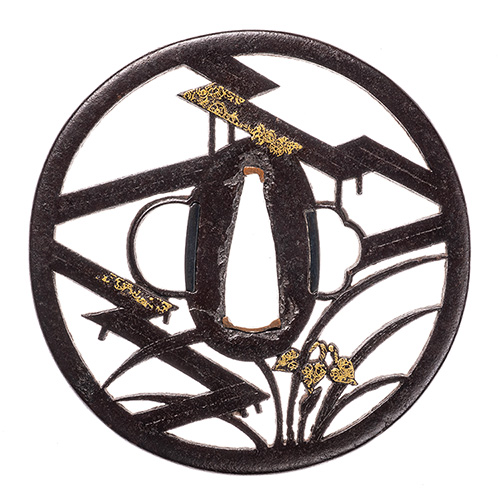
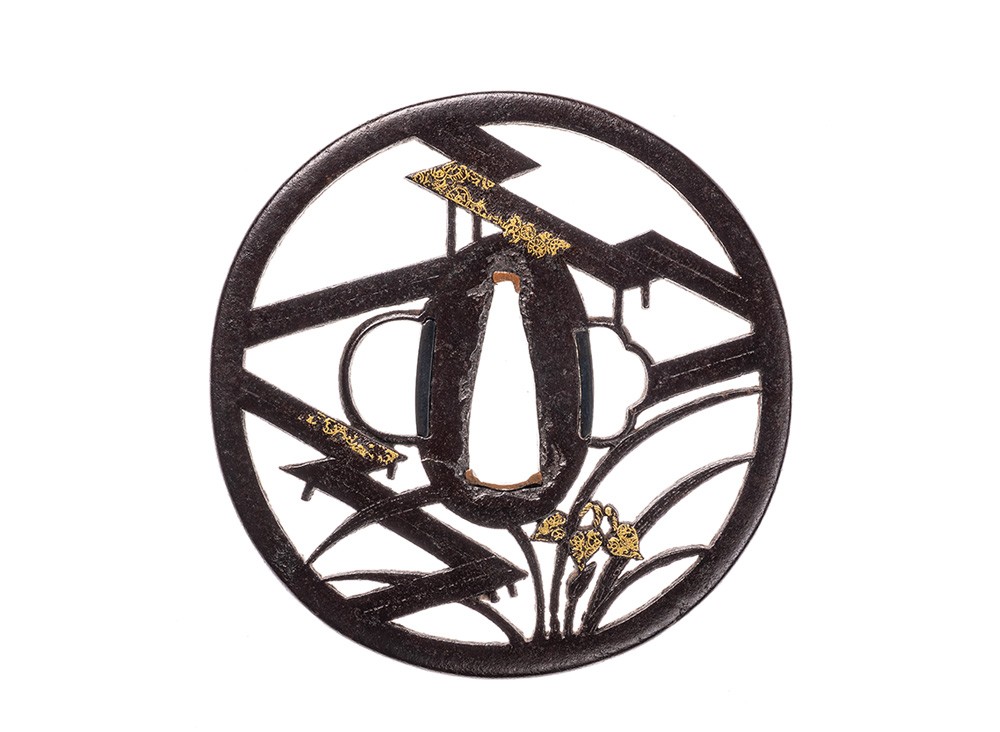
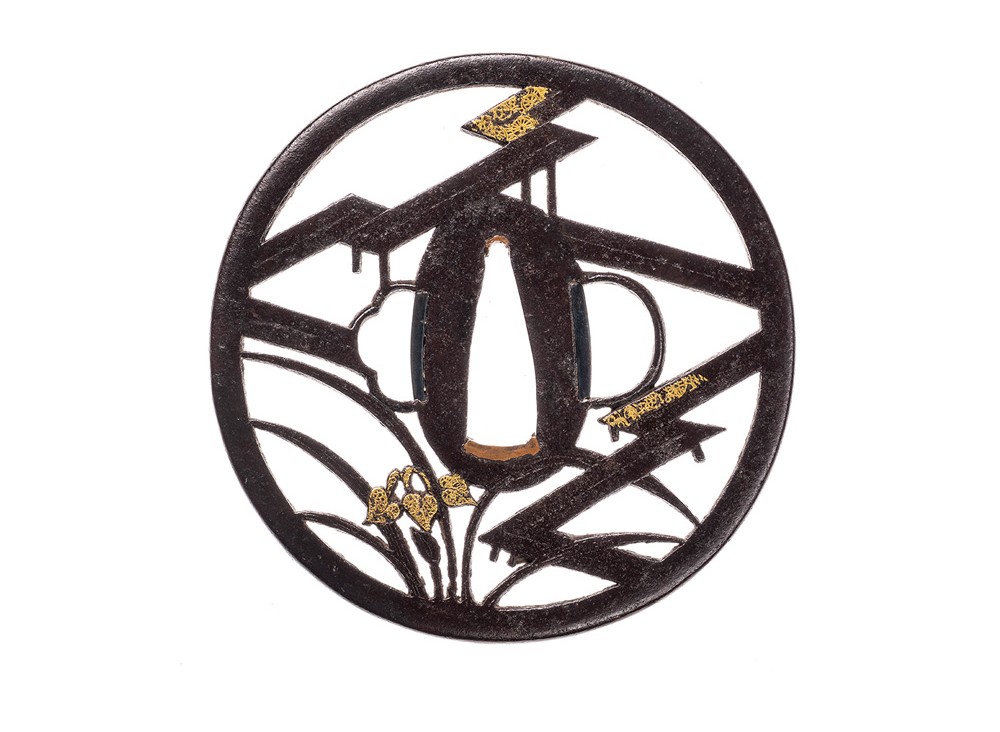
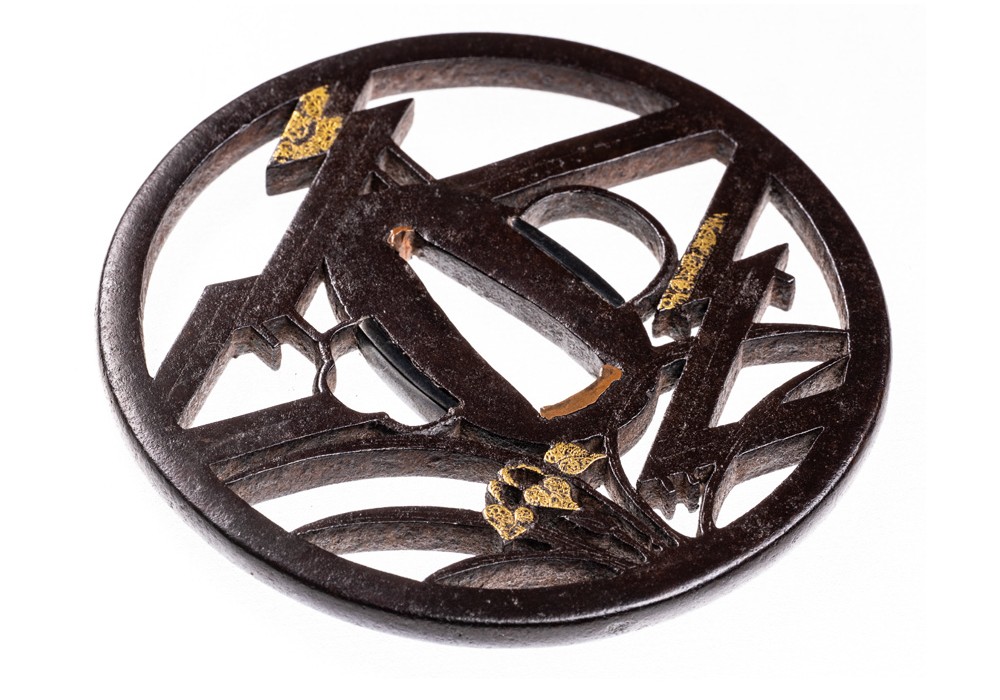
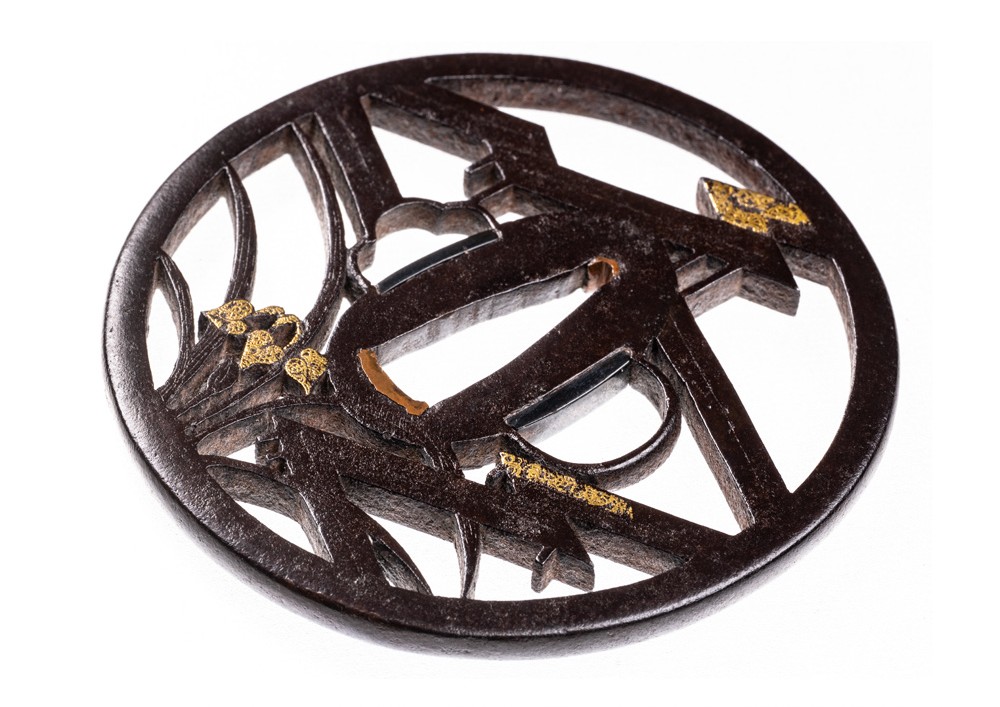
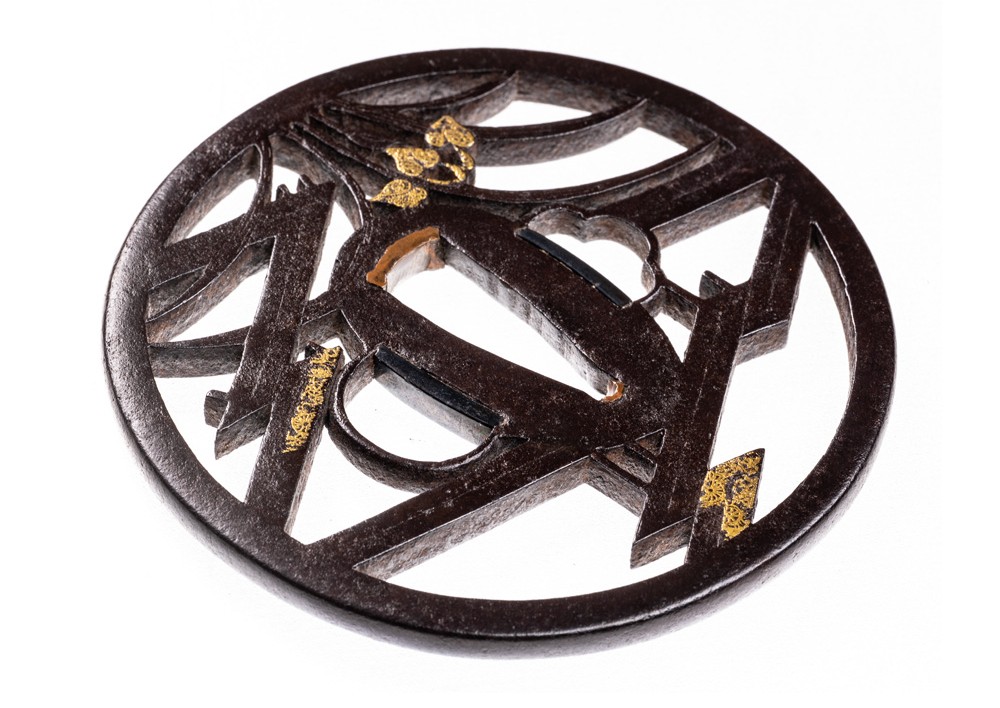
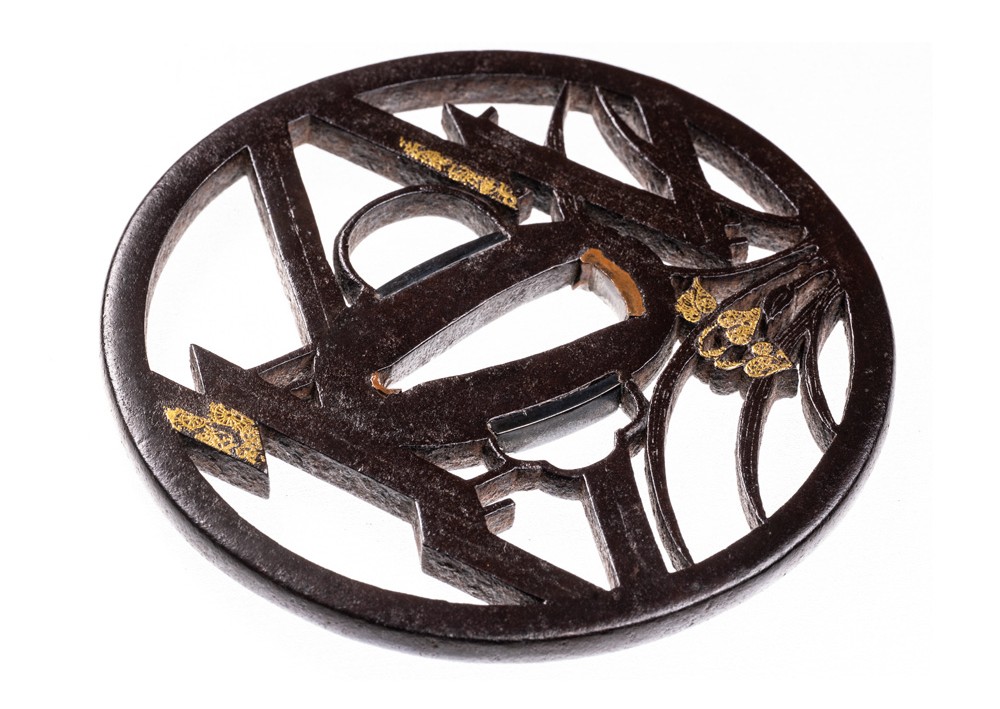
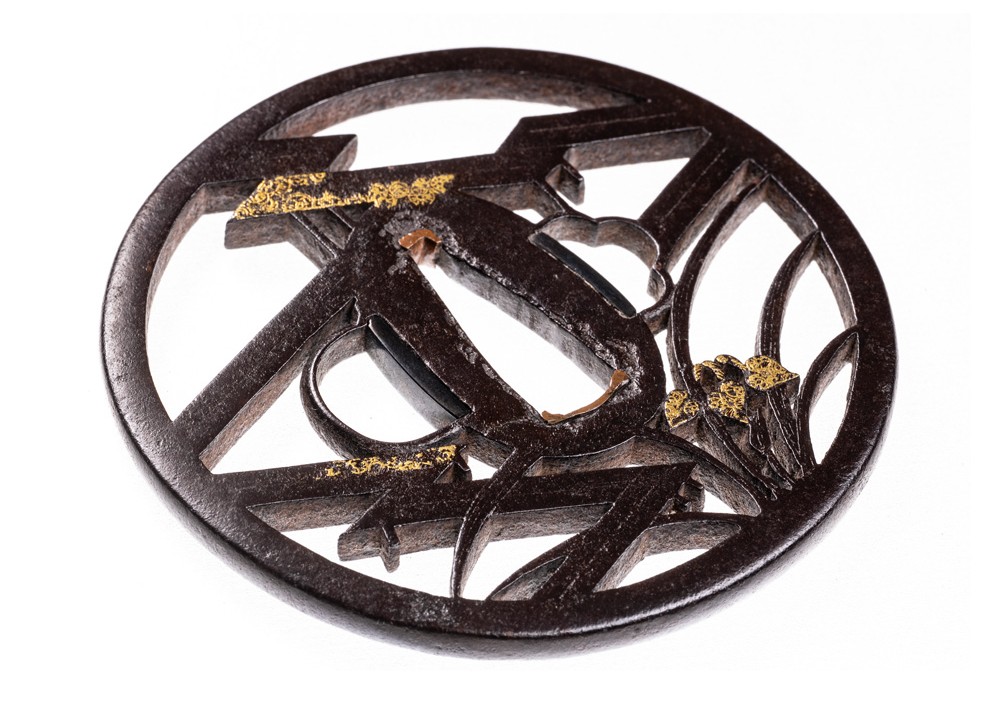
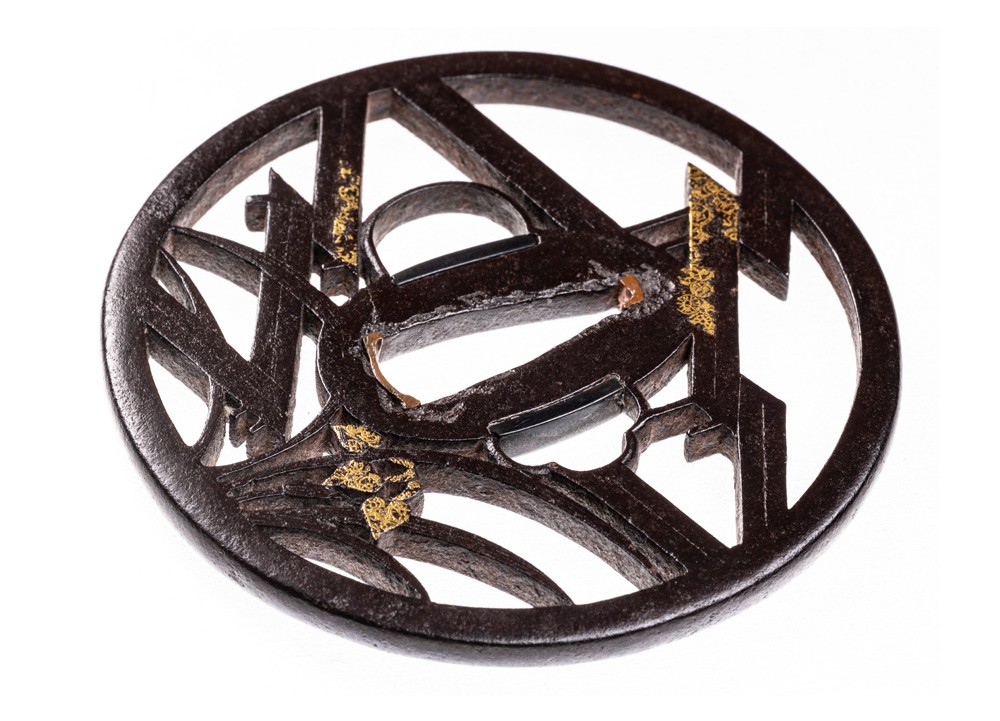
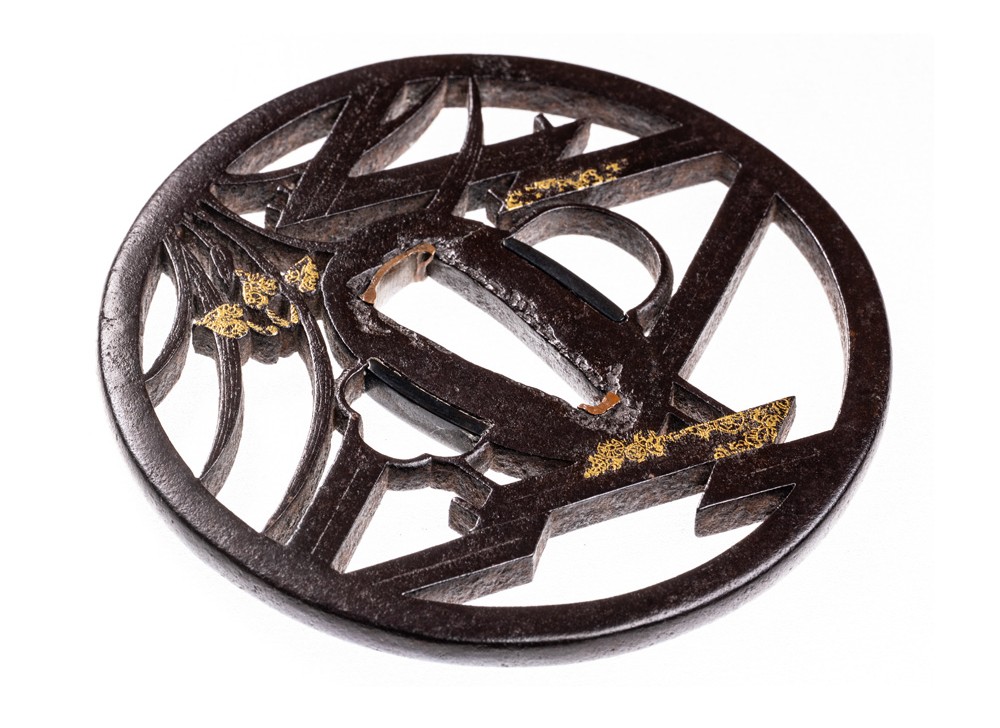
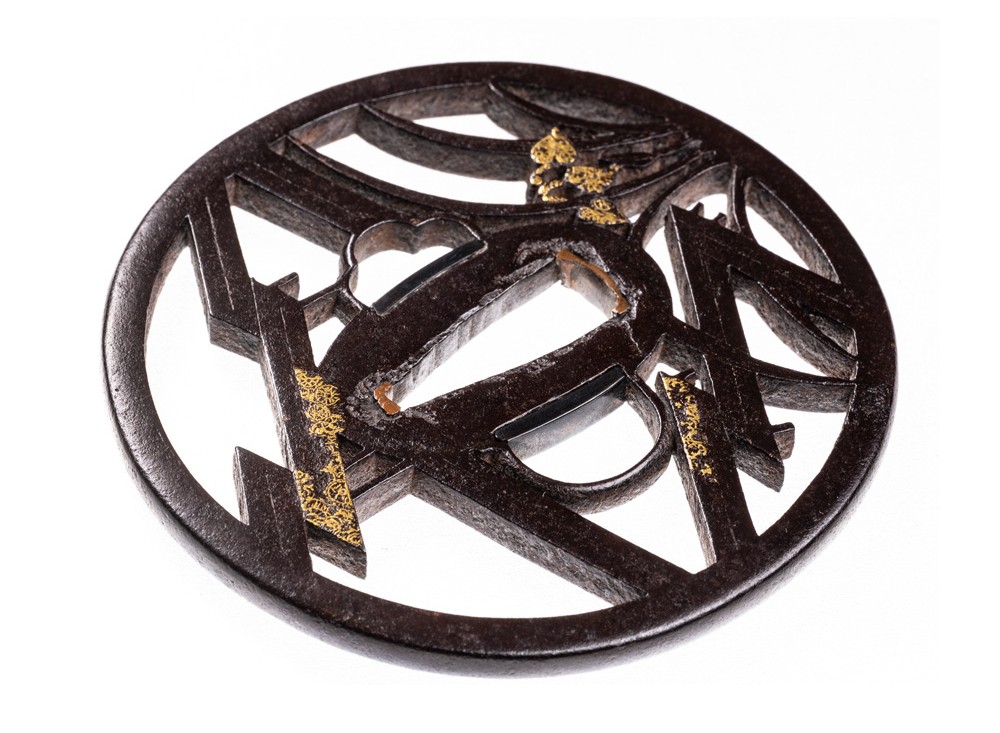
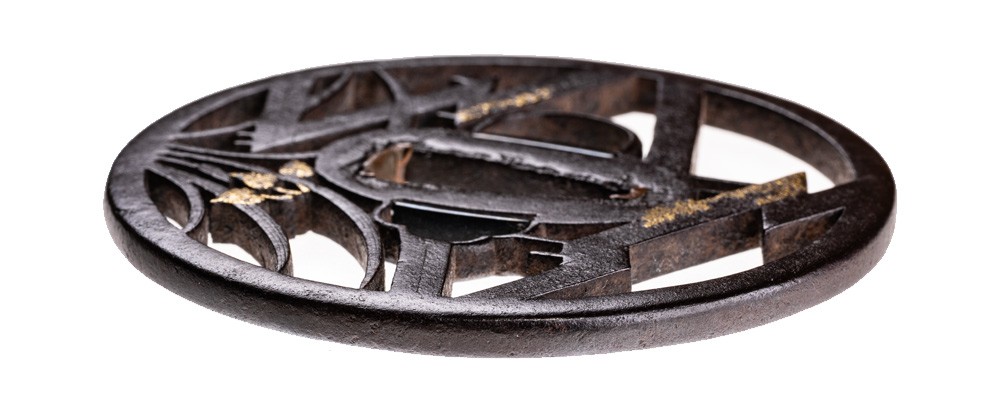
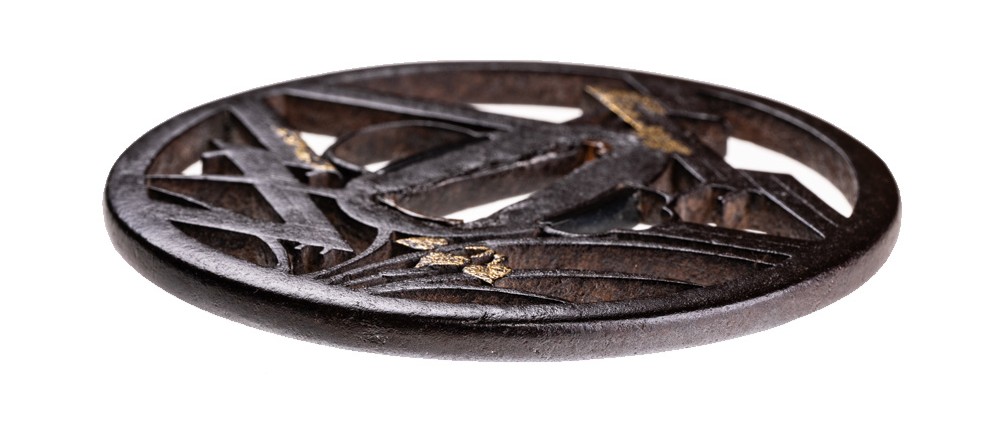
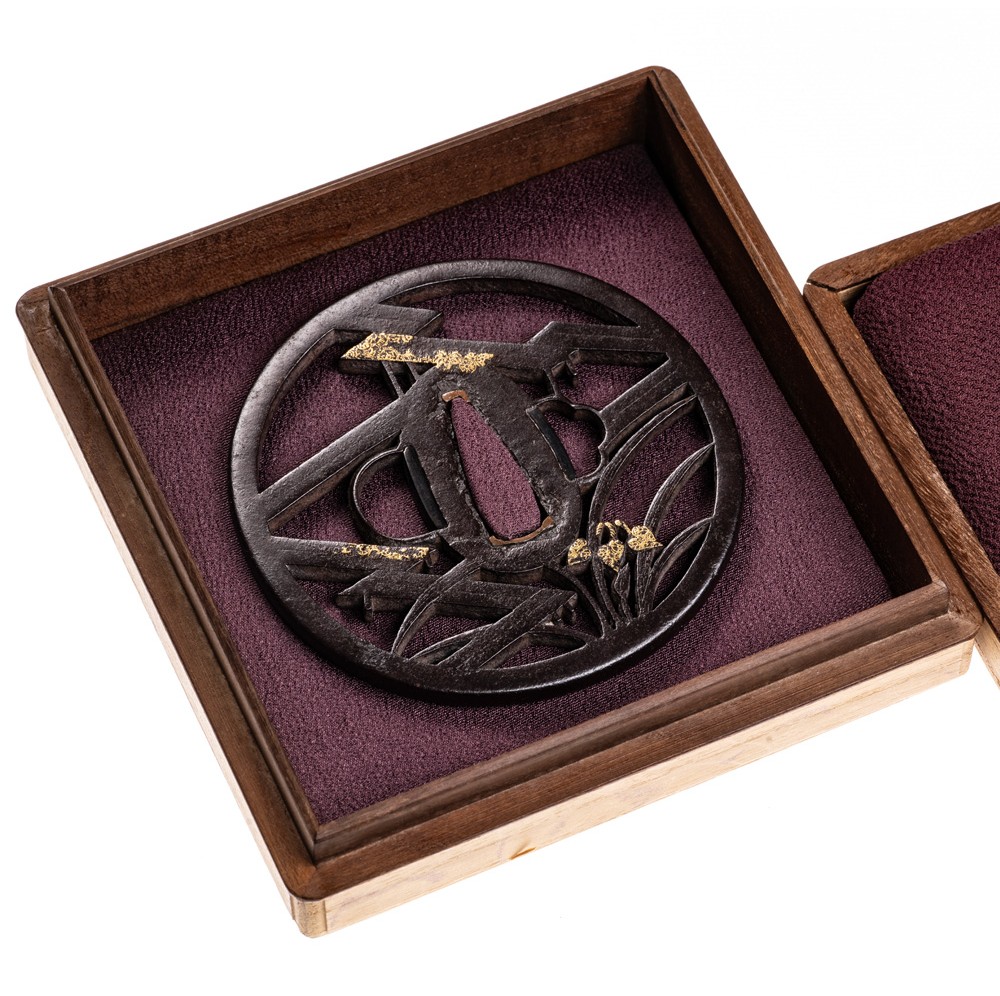
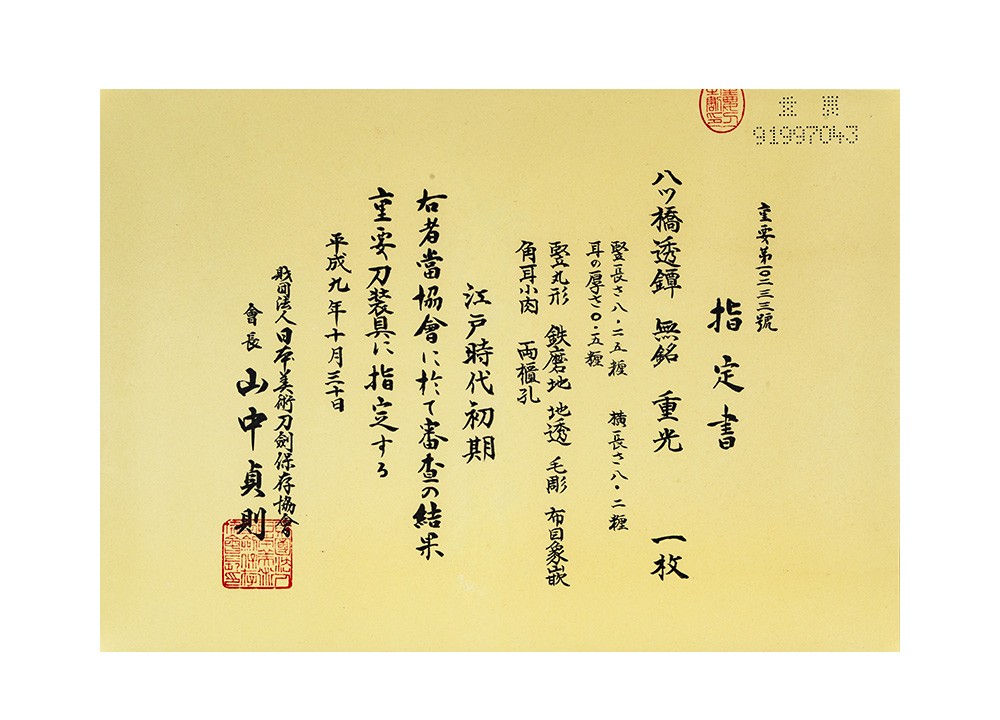
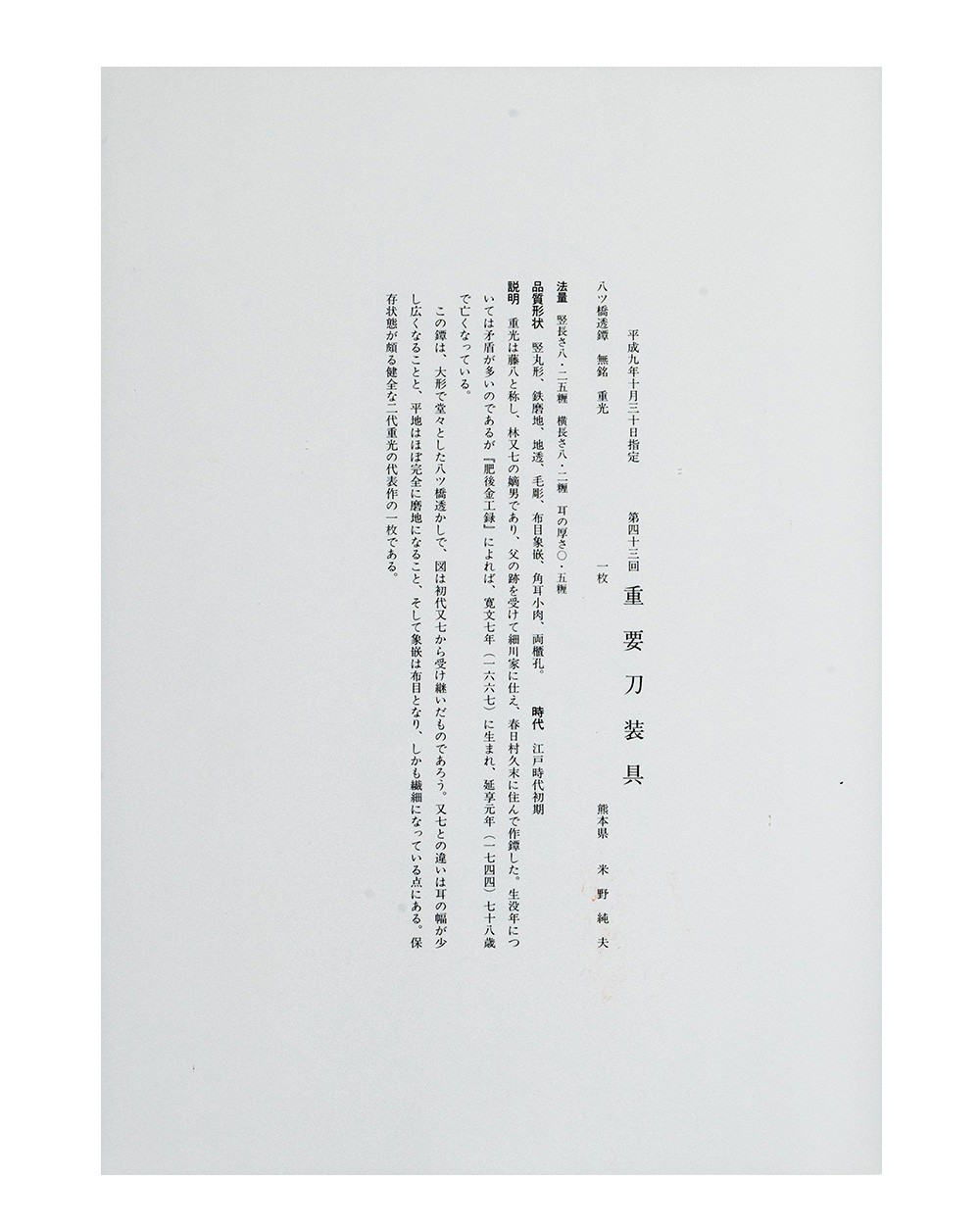
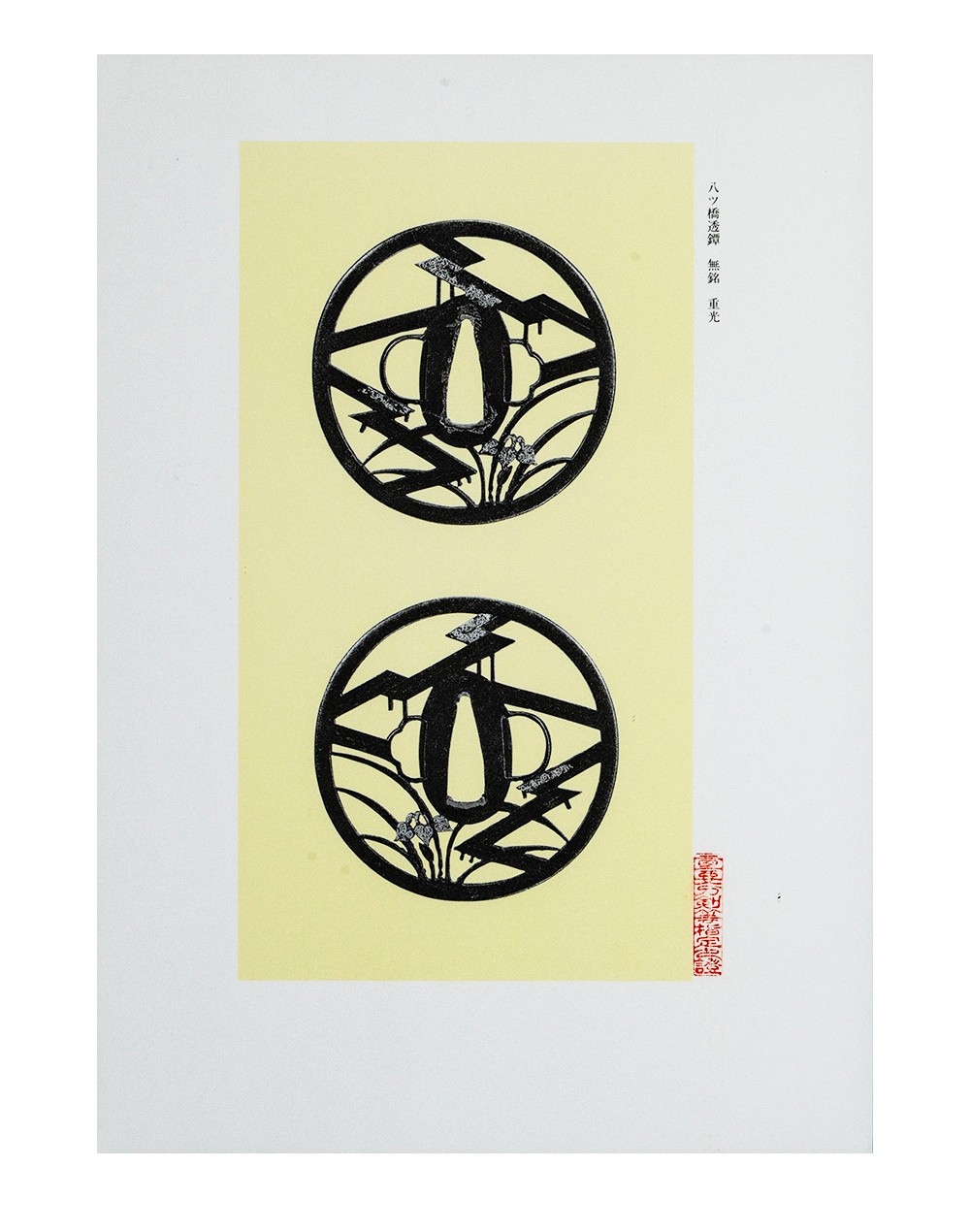
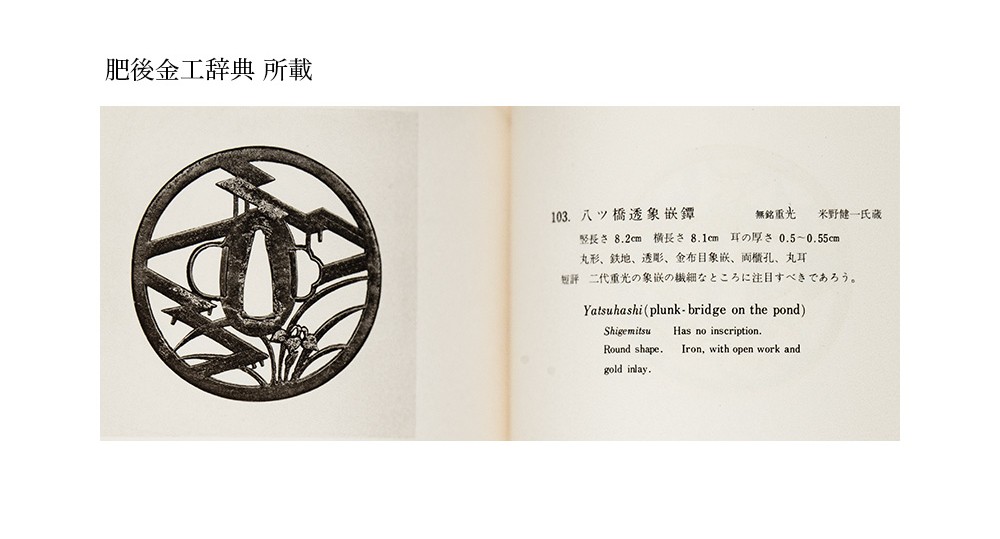
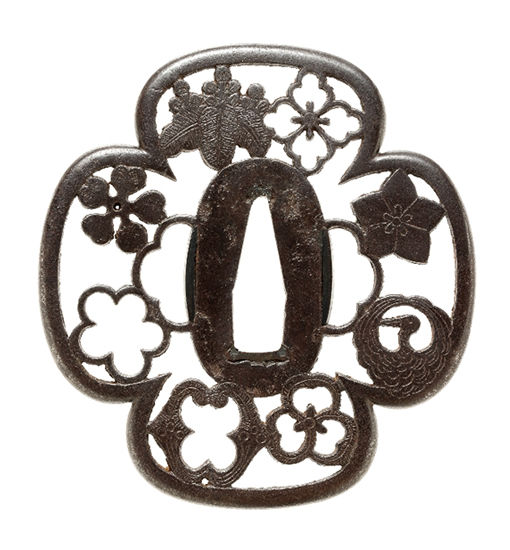
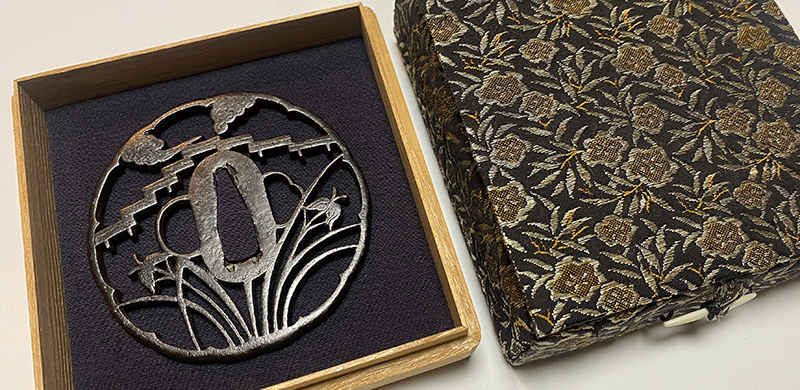
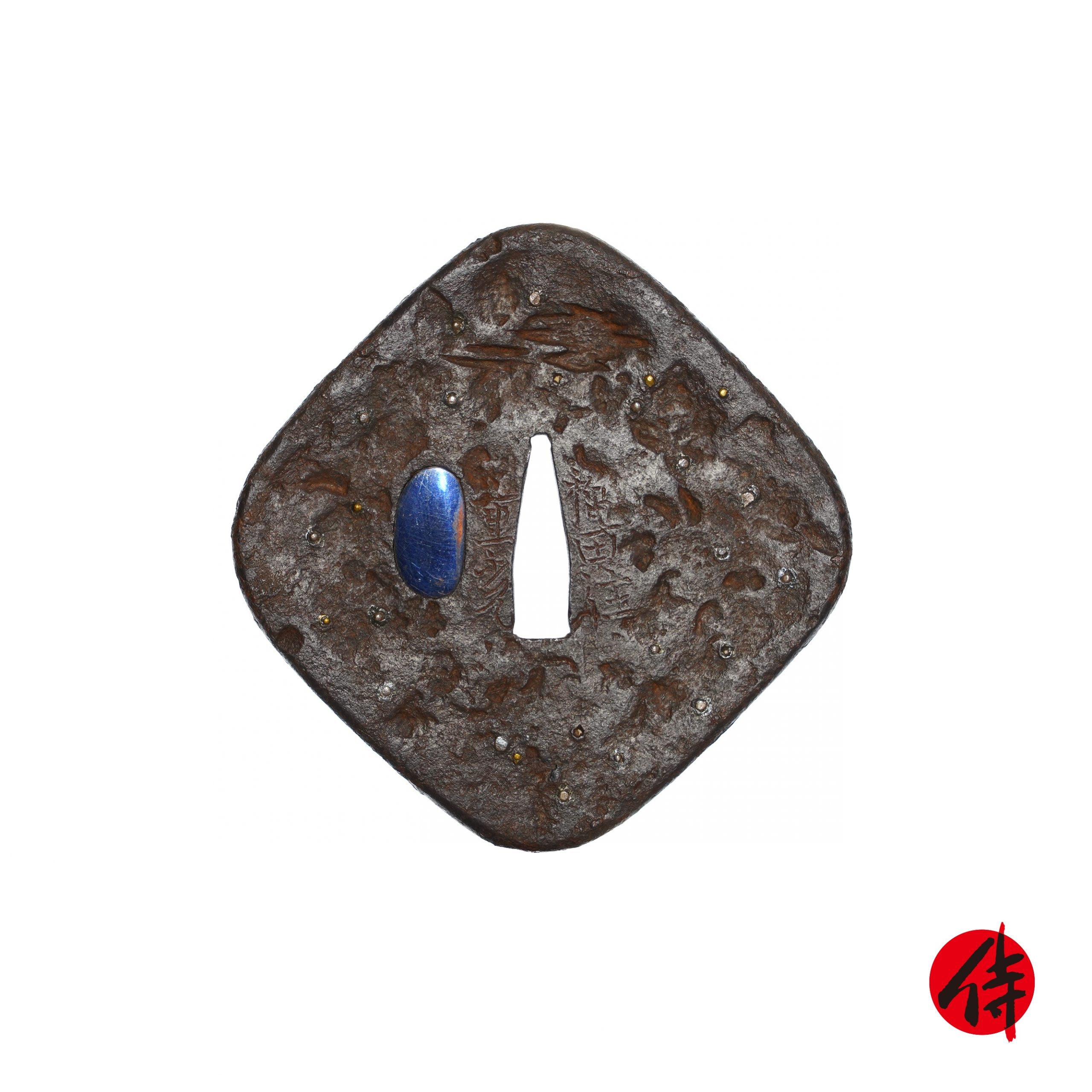
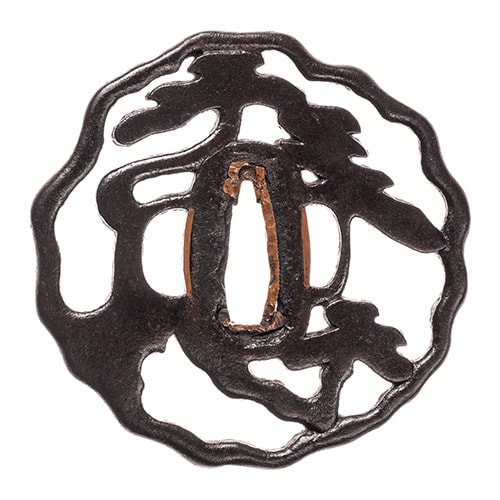
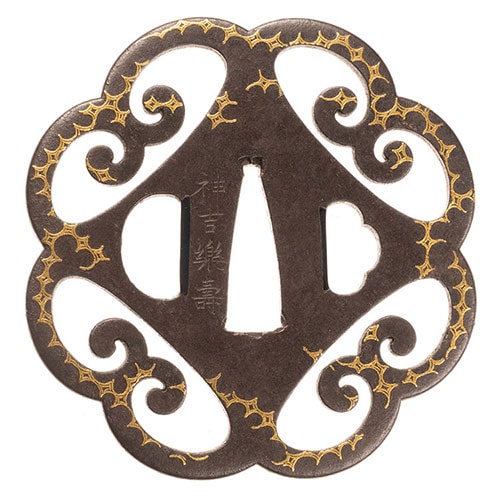
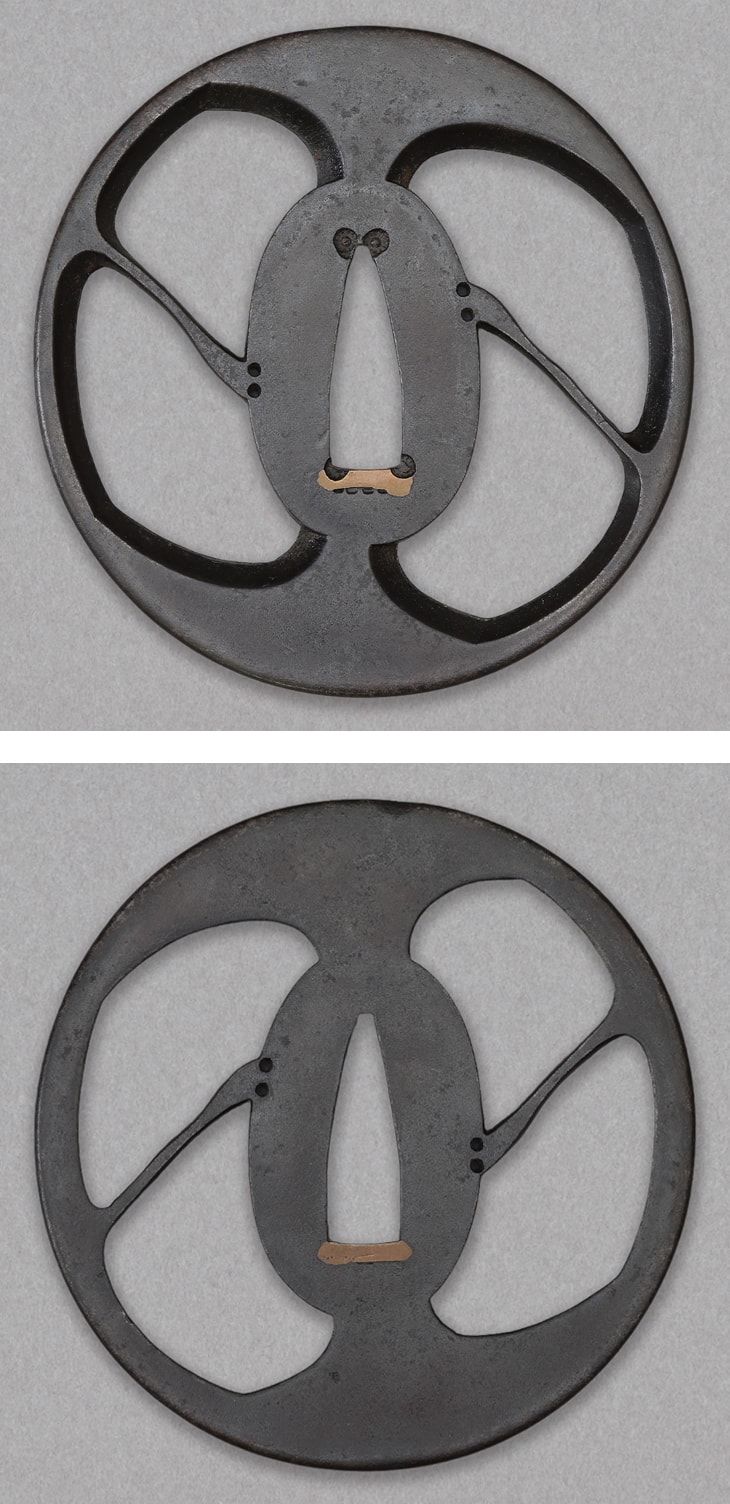
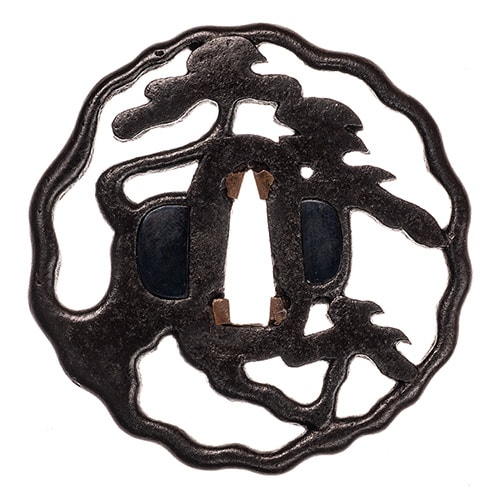
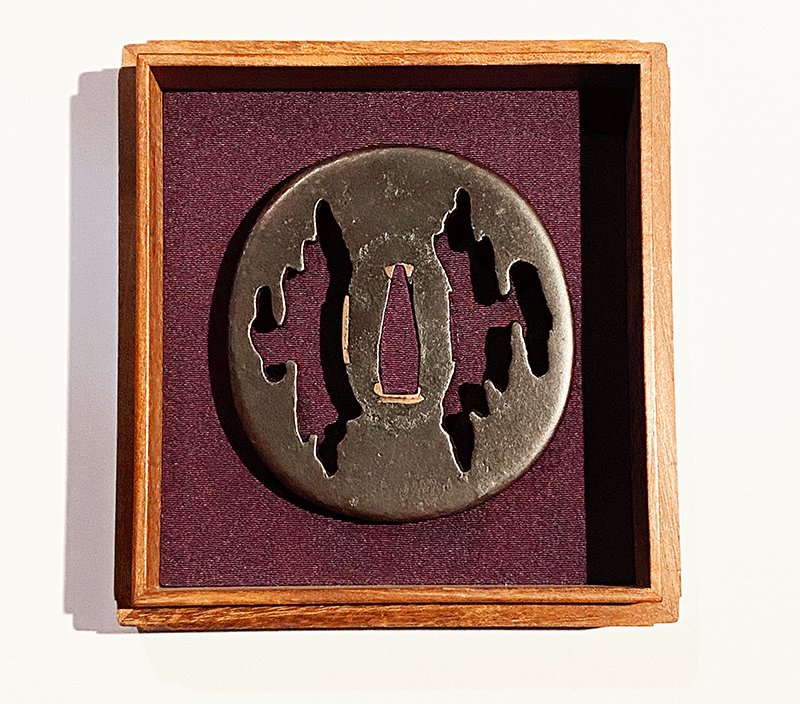
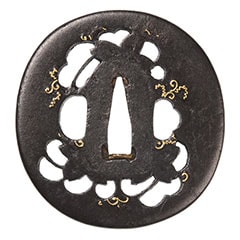
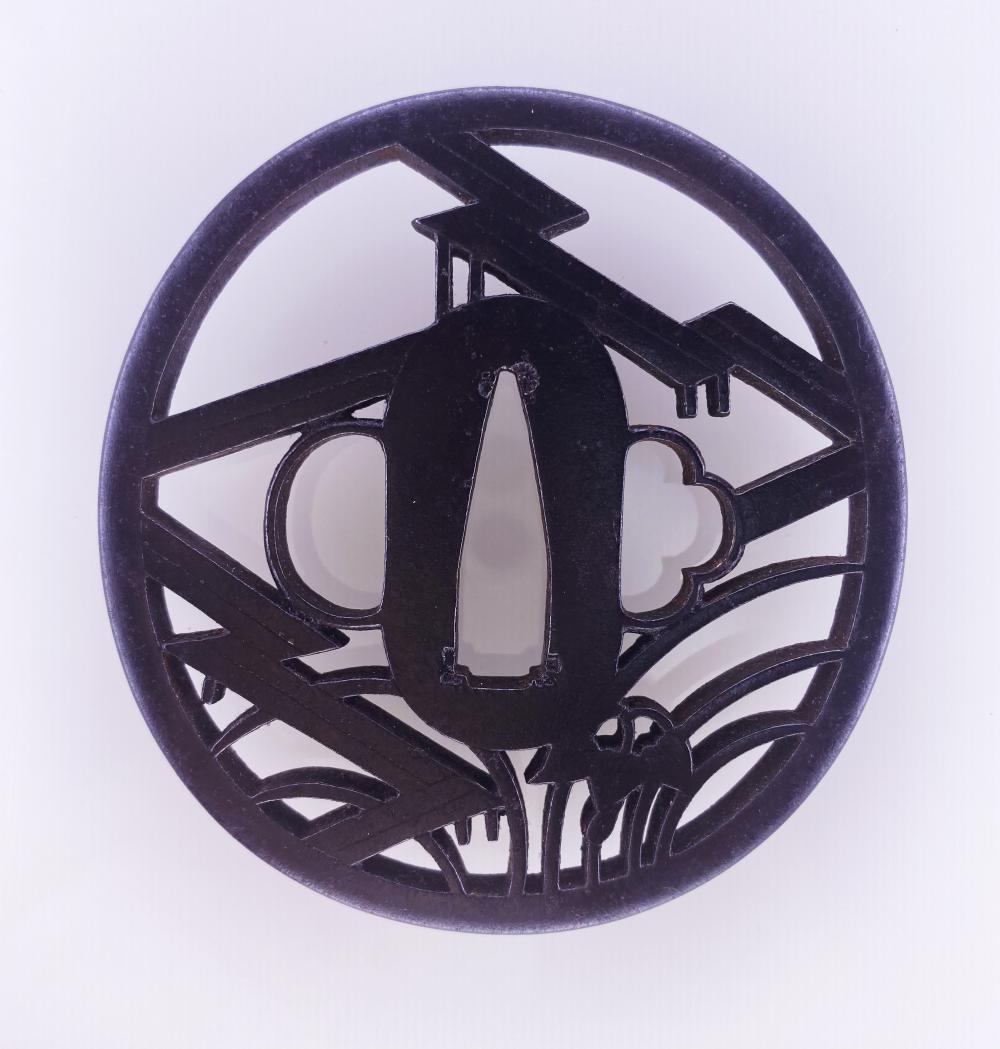
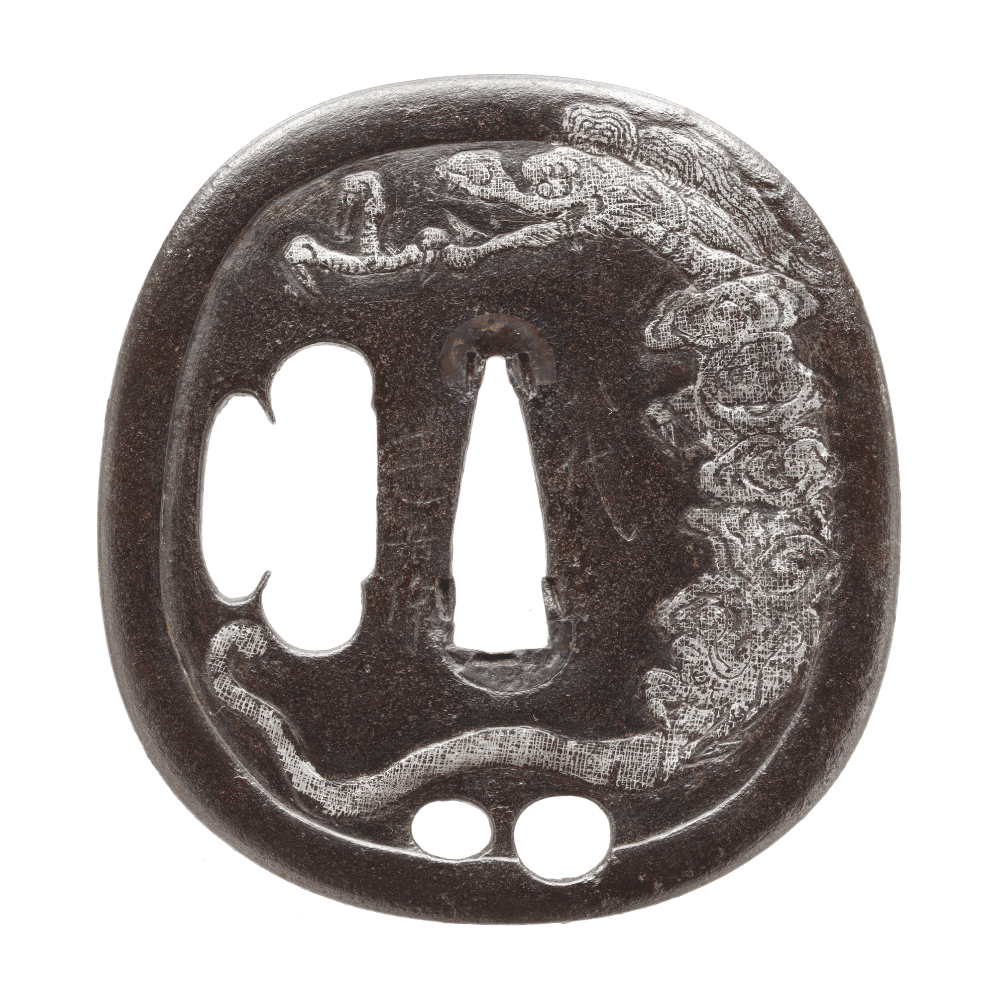
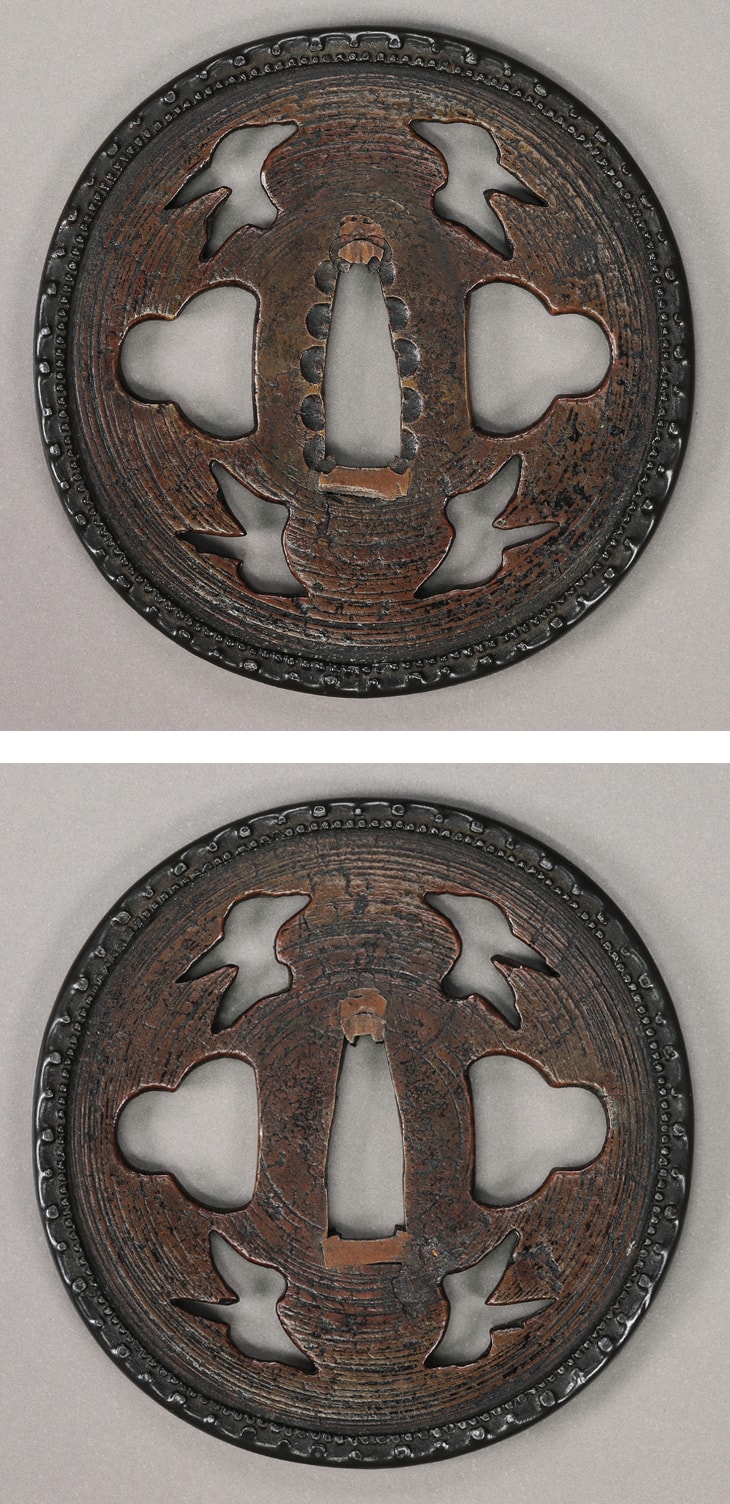
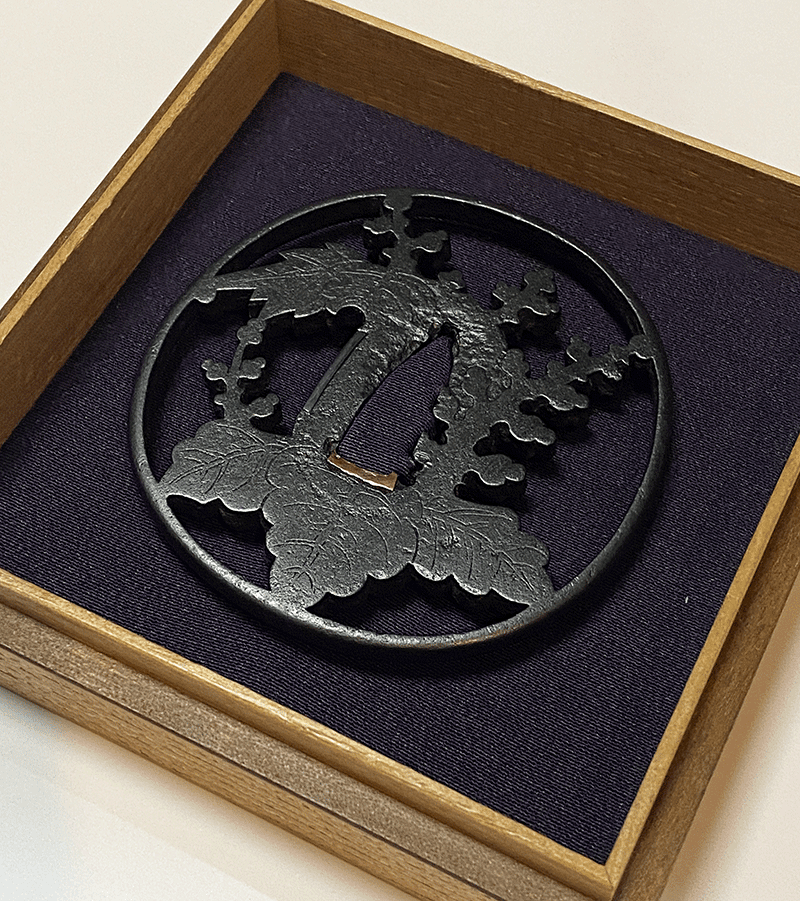
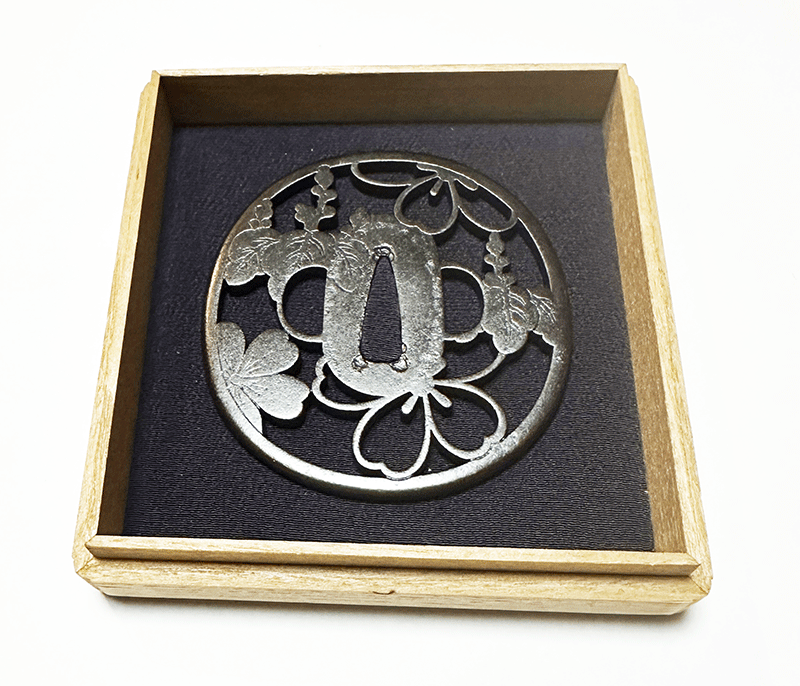
This is a Juyo Tosogu designated tsuba by Hayashi Shigemitsu, the second generation of the Hayashi school in Higo province. It features a Yatsuhashi (Eight Bridges) design in sukashi (openwork) on an iron ground. Shigemitsu was a skilled craftsman and a藩工 (han-ko, domain smith) for the Hosokawa family, known for his intricate ironwork.
mei · Hayashi · Edo


Hayashi Shigemitsu
Edo
Higo
Signed
Jūyō (NBTHK)
Higo · Higo
2 pieces on the market now
Hayashi Shigemitsu is the second-generation head of the Higo Hayashi (Kasuga) line of iron tsuba, the eldest son and heir of the founder Matashichi. The setsumei make him consistent: common name Tohei (one record Tohachi), he succeeded his father in Hosokawa service on a five-man stipend, lived at Hisasue in Kasuga village and cut guards there. His art is the forged iron plate cut in openwork, taking up his father's designs (the distant-view pine, three-tier pine, eight-bridges, tossed-paulownia and buke-kan devices) on a well-forged ground that shows the lustrous purple and yokan-coloured patina the records prize in Higo iron, finished with hairline engraving and the occasional fine cloth-inlay. The records repeatedly weigh him against the founder and name two consistent points of difference: his flat field is worked almost entirely to a polished ground, and his openwork is finer and more delicate, the whole a little gentler than his father's, which they call his own characteristic flavour. The Higo-kinko record gives his dates as born Kanbun 7 (1667), died Enkyo 1 (1744) aged 78, but the corpus repeatedly notes the dates are contradictory, so a single death date must not be asserted.
Where Shigemitsu stands among comparable artisans: across all of nihontō, and within tradition, era, and period. The tiers (Foremost · Leading · Major · Notable) weigh official designations from the NBTHK and Japan's Agency for Cultural Affairs, together with historical honors of lasting repute such as the Sansaku and Meibutsu-chō.
Select a lens to see how it's measured.
Higo · Higo
28 pieces on the market now
The Hayashi school of Higo metalworkers traces its origins to Hayashi Matahichi, founder of the lineage, who was born in Kumamoto in Keichō 18 (1613). His personal name was Seisaburō Shigeharu, and "Matahichi" served as his professional art name.
The family's ancestral roots lay in Owari Province, where they worked as gunsmiths (teppō kaji), though tradition holds they also produced tsuba from time to time. In the generation of Matahichi's father, Seibei, the family relocated to Higo Kumamoto in service to Katō Kiyomasa as gunsmiths. Learn more →
| Smith | Era | Designated |
|---|---|---|
| Matashichi又七 | — | 52 |
| Shigemitsu重光 | — | 11 |
| Shigeyuki重之 | — | 0 |
| Matahachi又八 | — | 0 |
| Toshichi藤七 | — | 0 |
Exceptional craft of very high artistic value, judged to rank with a nationally recognized Important Art Object (Jūyō Bijutsuhin).
The NBTHK (Nihon Bijutsu Tōken Hozon Kyōkai, the Society for the Preservation of Japanese Art Swords) is a public-interest incorporated foundation founded in 1948 and supervised by Japan’s Agency for Cultural Affairs (Bunkachō); it is based at the Japanese Sword Museum in Tokyo. Its expert panels physically examine each submitted work (shinsa) and issue a certificate (kanteishō) ranking it by artistic and historical merit. NBTHK papers are the most widely recognized standard of authentication for Japanese swords and fittings.
NBTHK official siteReturns/exchanges/cancellations not accepted after shipment except for significant defects; if defective, return/exchange possible within 3 days of arrival (return shipping paid by customer).
This is a Juyo Tosogu designated tsuba by Hayashi Shigemitsu, the second generation of the Hayashi school in Higo province. It features a Yatsuhashi (Eight Bridges) design in sukashi (openwork) on an iron ground. Shigemitsu was a skilled craftsman and a藩工 (han-ko, domain smith) for the Hosokawa family, known for his intricate ironwork.
mei · Hayashi · Edo


Hayashi Shigemitsu
Edo
Higo
Signed
Jūyō (NBTHK)
Higo · Higo
2 pieces on the market now
Hayashi Shigemitsu is the second-generation head of the Higo Hayashi (Kasuga) line of iron tsuba, the eldest son and heir of the founder Matashichi. The setsumei make him consistent: common name Tohei (one record Tohachi), he succeeded his father in Hosokawa service on a five-man stipend, lived at Hisasue in Kasuga village and cut guards there. His art is the forged iron plate cut in openwork, taking up his father's designs (the distant-view pine, three-tier pine, eight-bridges, tossed-paulownia and buke-kan devices) on a well-forged ground that shows the lustrous purple and yokan-coloured patina the records prize in Higo iron, finished with hairline engraving and the occasional fine cloth-inlay. The records repeatedly weigh him against the founder and name two consistent points of difference: his flat field is worked almost entirely to a polished ground, and his openwork is finer and more delicate, the whole a little gentler than his father's, which they call his own characteristic flavour. The Higo-kinko record gives his dates as born Kanbun 7 (1667), died Enkyo 1 (1744) aged 78, but the corpus repeatedly notes the dates are contradictory, so a single death date must not be asserted.
Where Shigemitsu stands among comparable artisans: across all of nihontō, and within tradition, era, and period. The tiers (Foremost · Leading · Major · Notable) weigh official designations from the NBTHK and Japan's Agency for Cultural Affairs, together with historical honors of lasting repute such as the Sansaku and Meibutsu-chō.
Select a lens to see how it's measured.
Higo · Higo
28 pieces on the market now
The Hayashi school of Higo metalworkers traces its origins to Hayashi Matahichi, founder of the lineage, who was born in Kumamoto in Keichō 18 (1613). His personal name was Seisaburō Shigeharu, and "Matahichi" served as his professional art name.
The family's ancestral roots lay in Owari Province, where they worked as gunsmiths (teppō kaji), though tradition holds they also produced tsuba from time to time. In the generation of Matahichi's father, Seibei, the family relocated to Higo Kumamoto in service to Katō Kiyomasa as gunsmiths. Learn more →
| Smith | Era | Designated |
|---|---|---|
| Matashichi又七 | — | 52 |
| Shigemitsu重光 | — | 11 |
| Shigeyuki重之 | — | 0 |
| Matahachi又八 | — | 0 |
| Toshichi藤七 | — | 0 |
Exceptional craft of very high artistic value, judged to rank with a nationally recognized Important Art Object (Jūyō Bijutsuhin).
The NBTHK (Nihon Bijutsu Tōken Hozon Kyōkai, the Society for the Preservation of Japanese Art Swords) is a public-interest incorporated foundation founded in 1948 and supervised by Japan’s Agency for Cultural Affairs (Bunkachō); it is based at the Japanese Sword Museum in Tokyo. Its expert panels physically examine each submitted work (shinsa) and issue a certificate (kanteishō) ranking it by artistic and historical merit. NBTHK papers are the most widely recognized standard of authentication for Japanese swords and fittings.
NBTHK official siteReturns/exchanges/cancellations not accepted after shipment except for significant defects; if defective, return/exchange possible within 3 days of arrival (return shipping paid by customer).