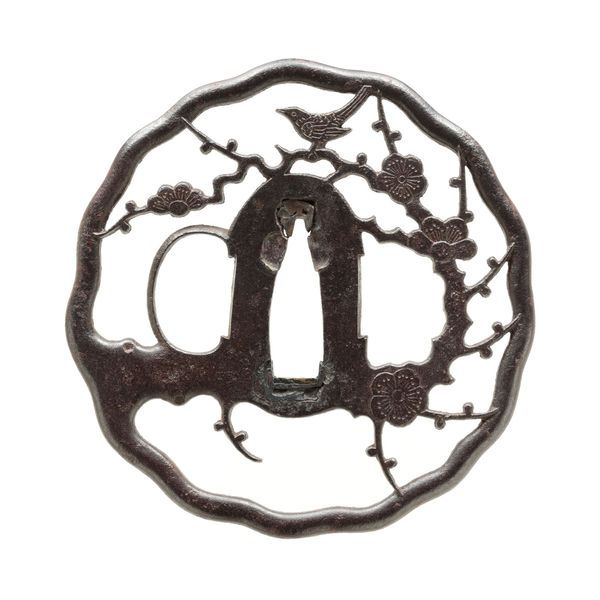
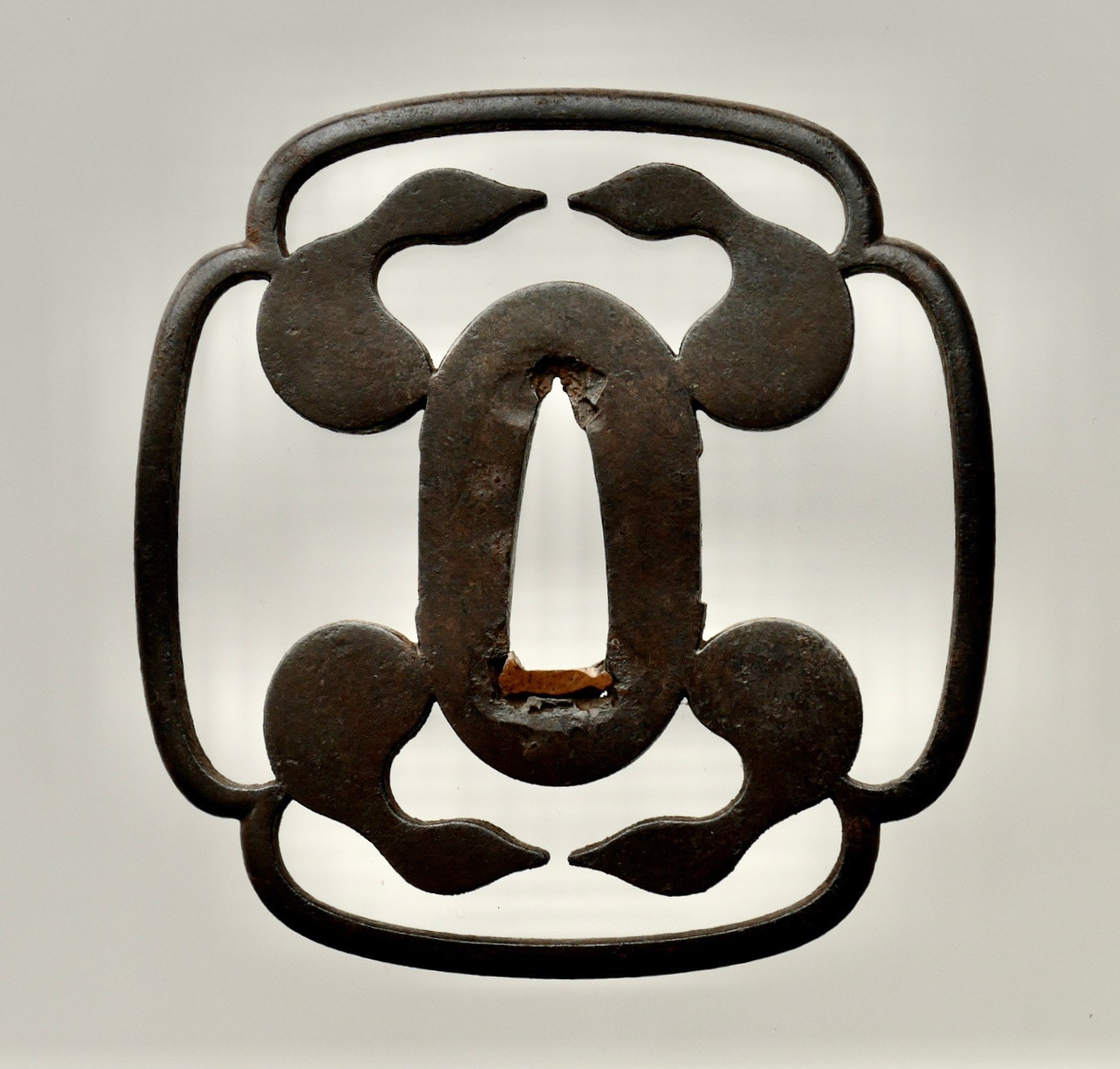
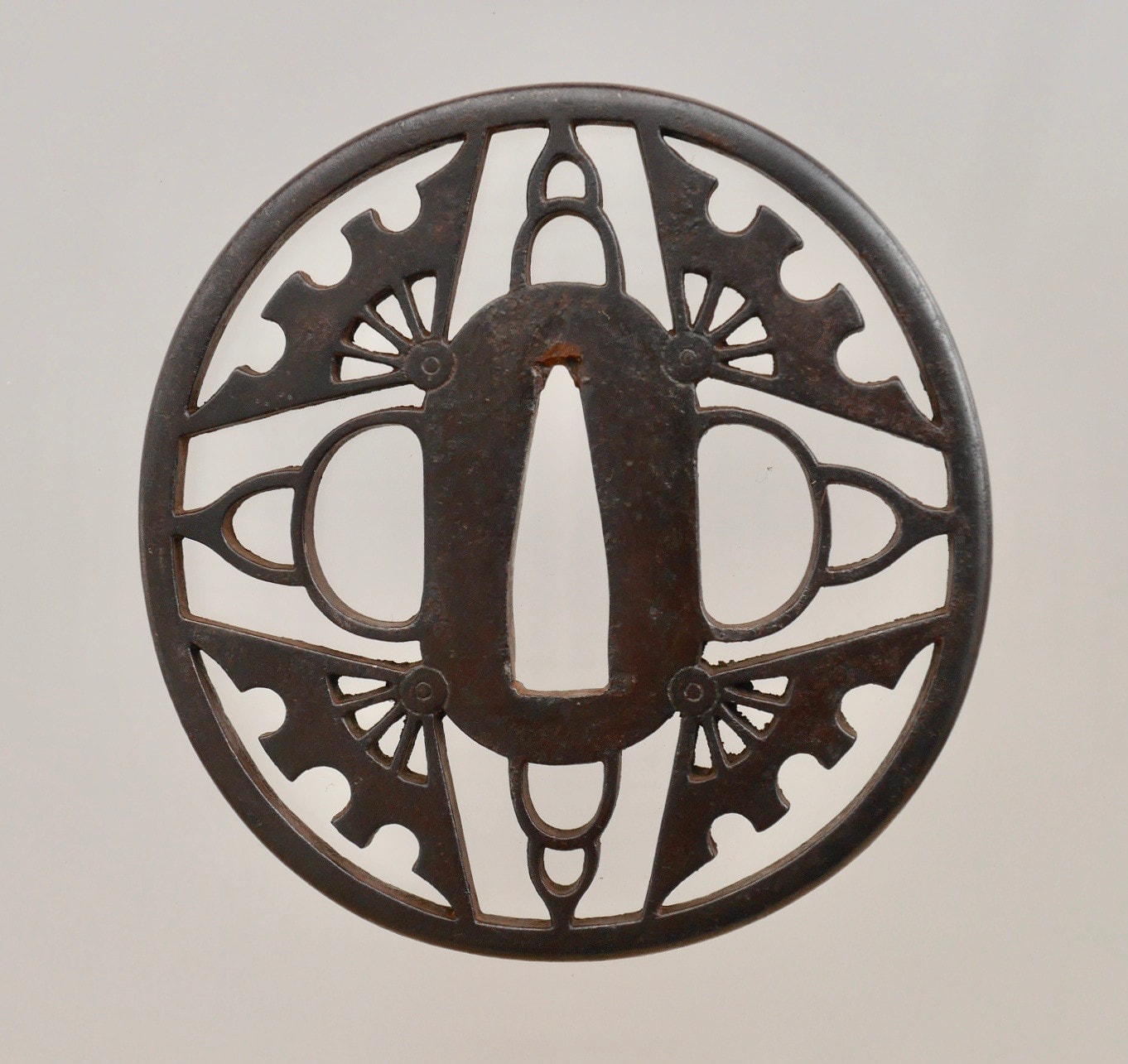
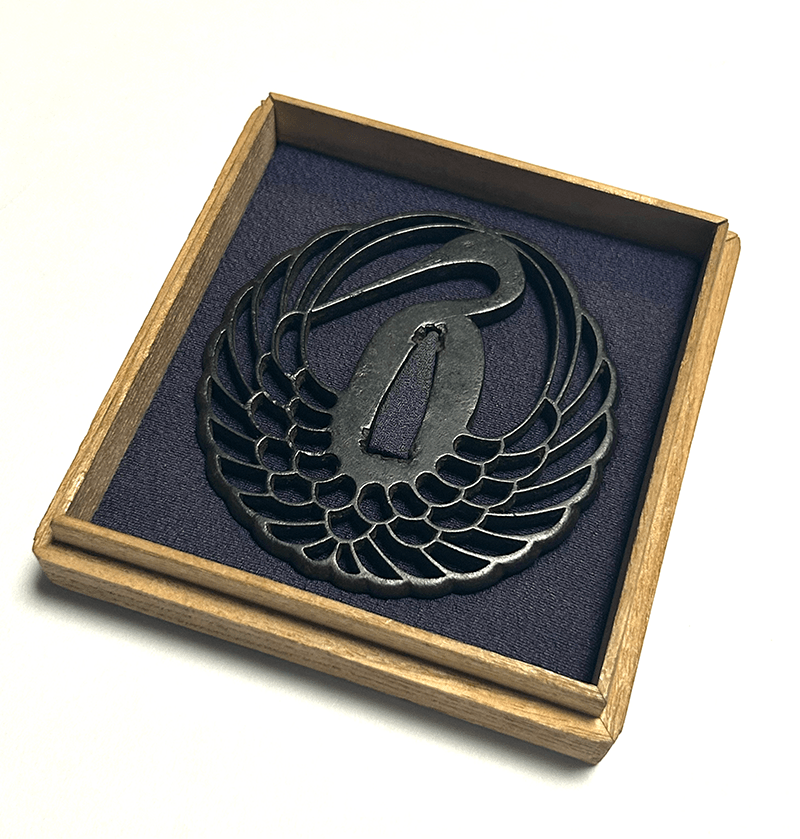
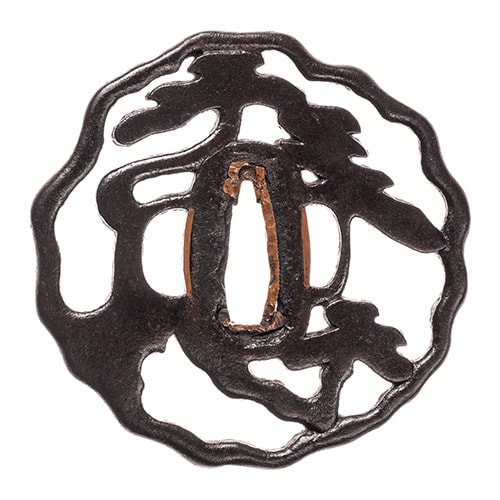
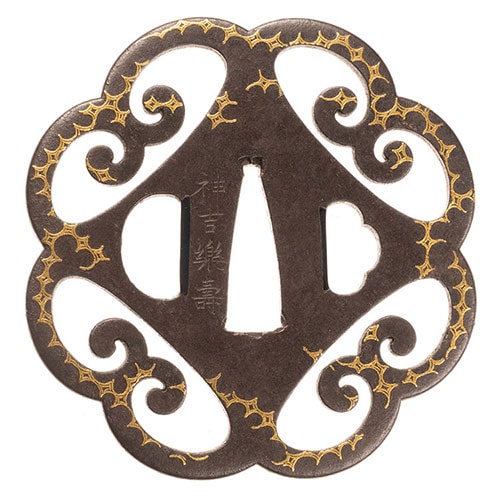
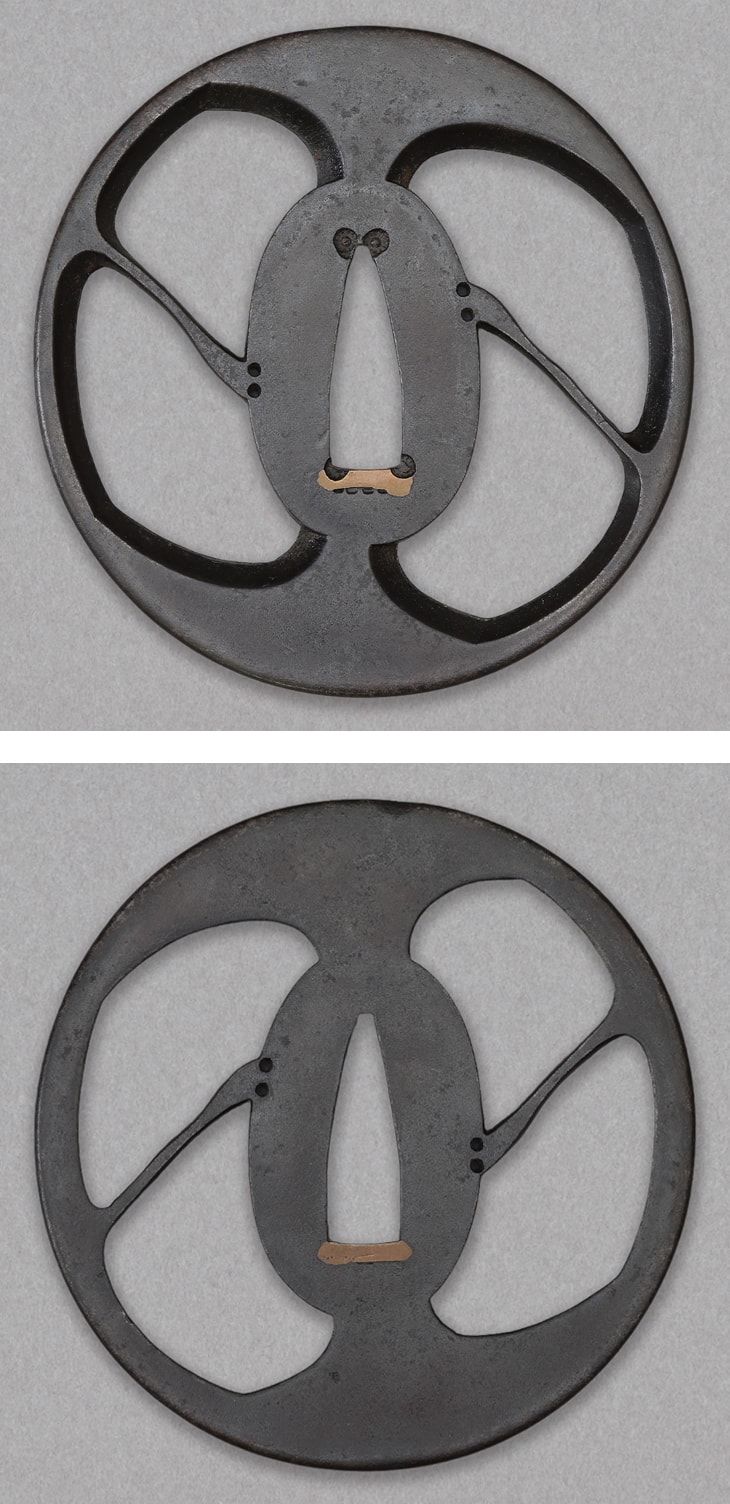
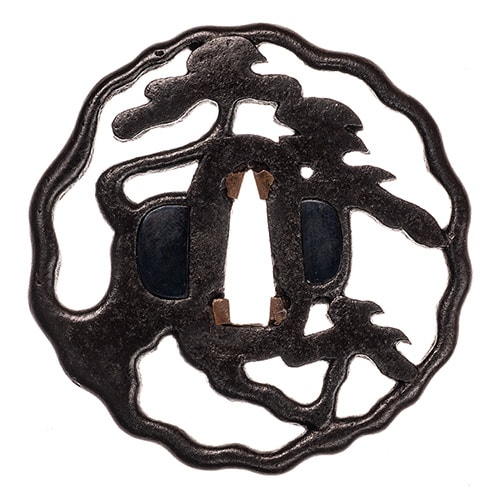
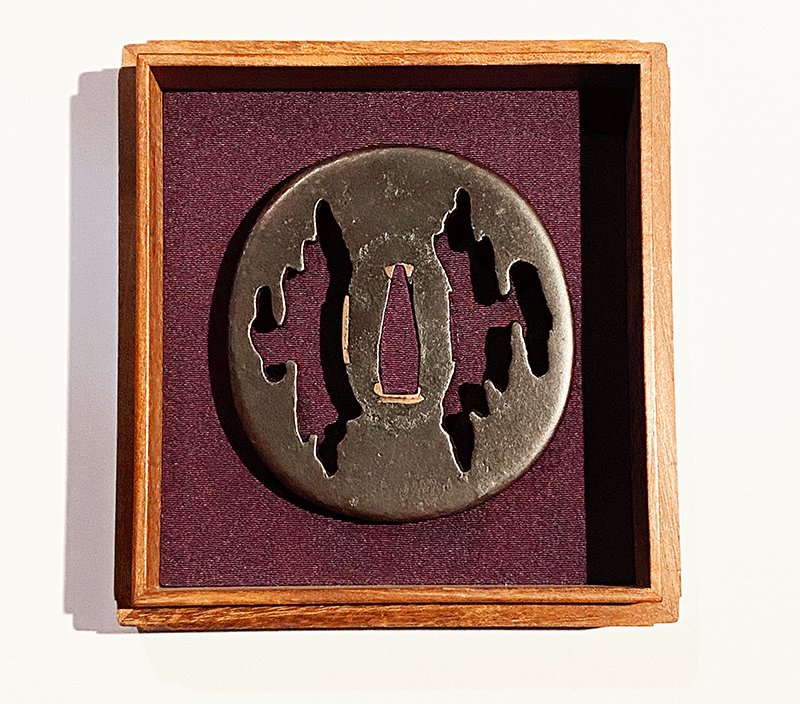
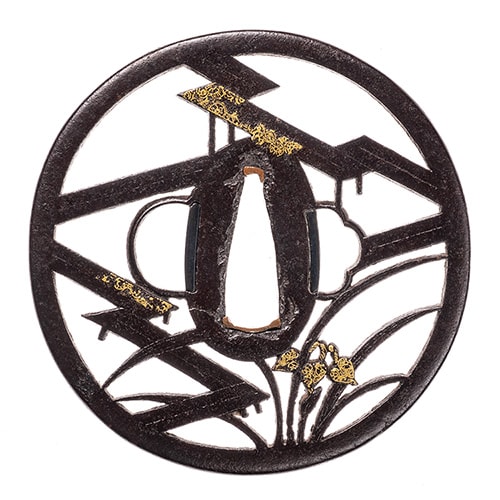
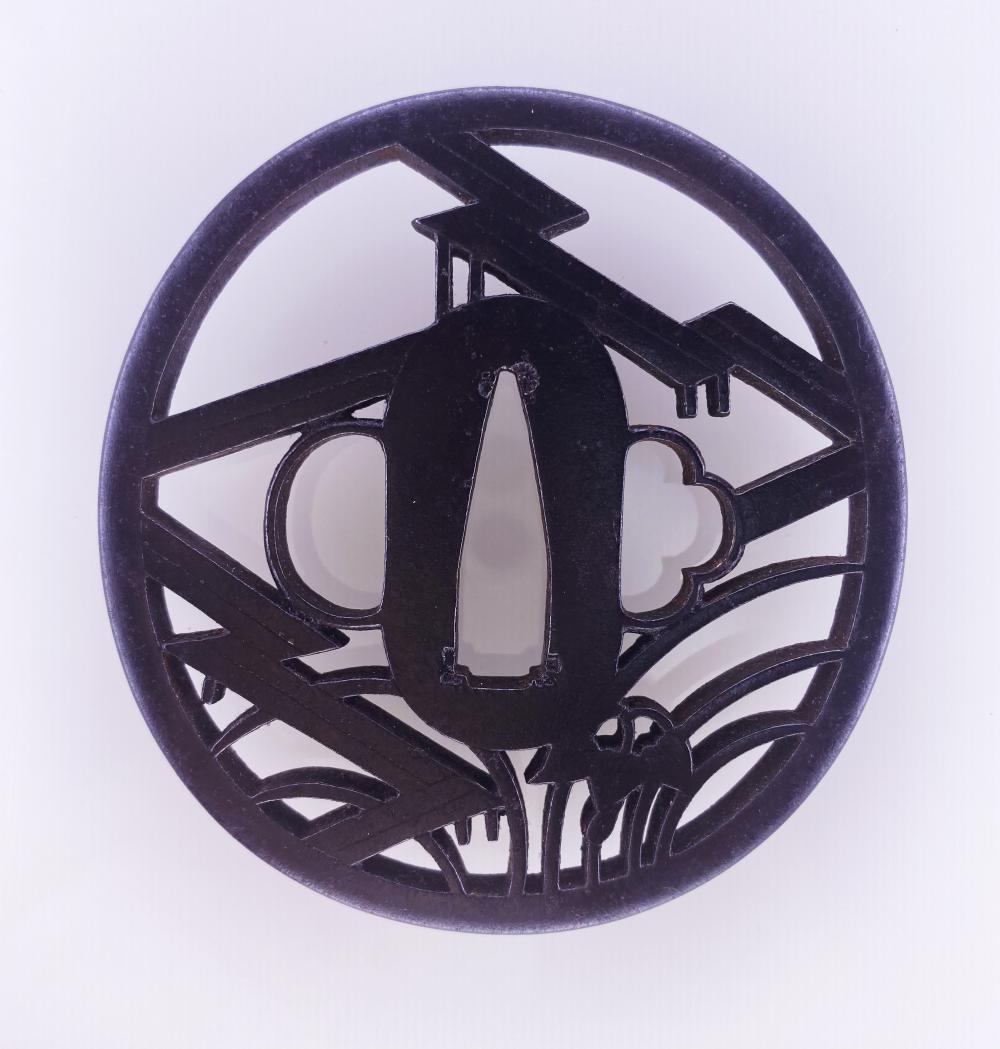
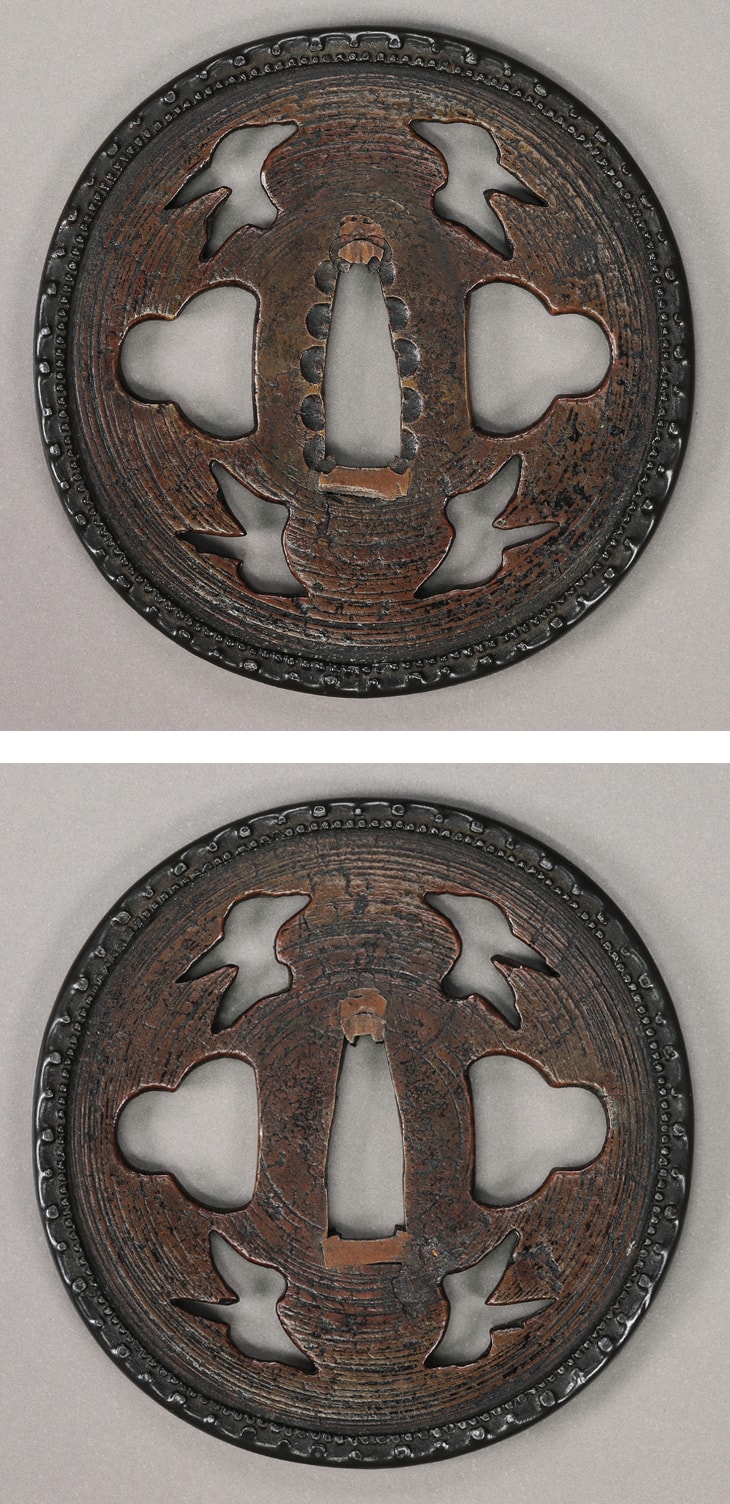
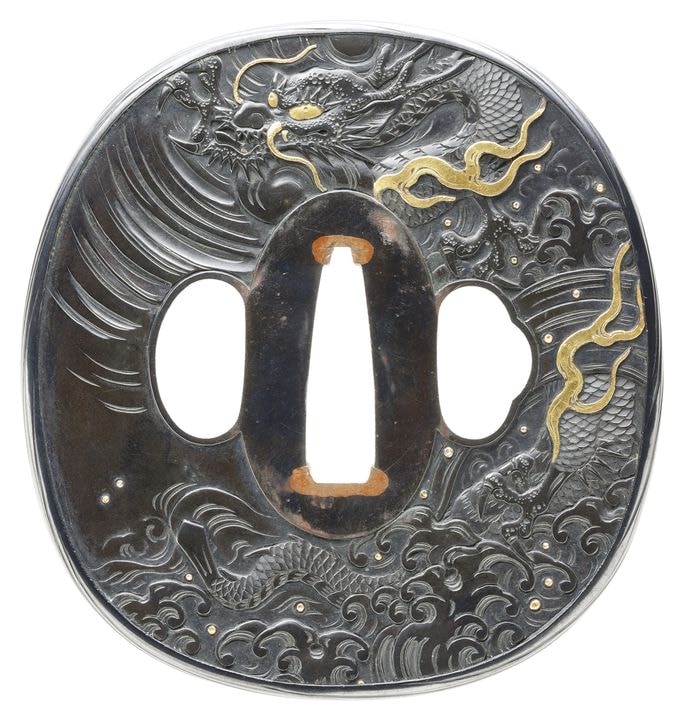
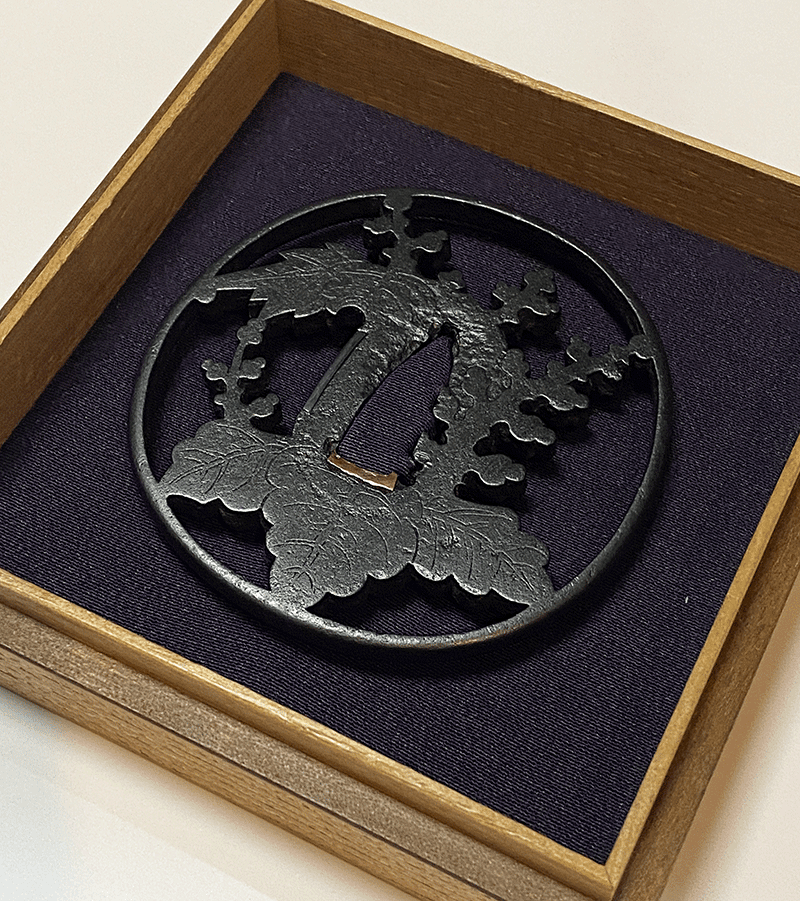
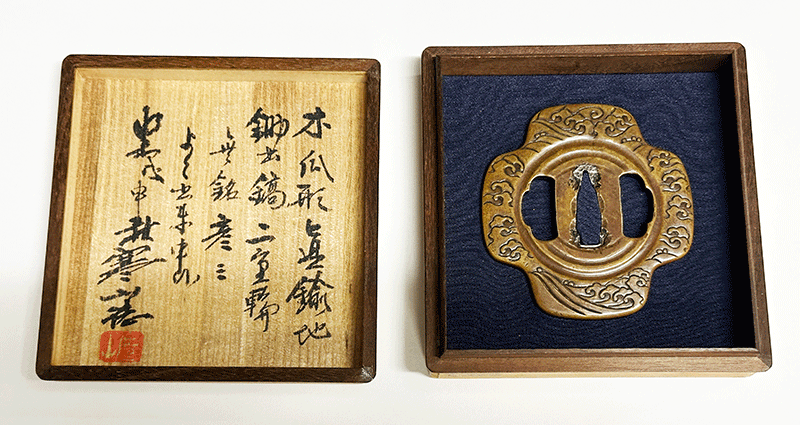
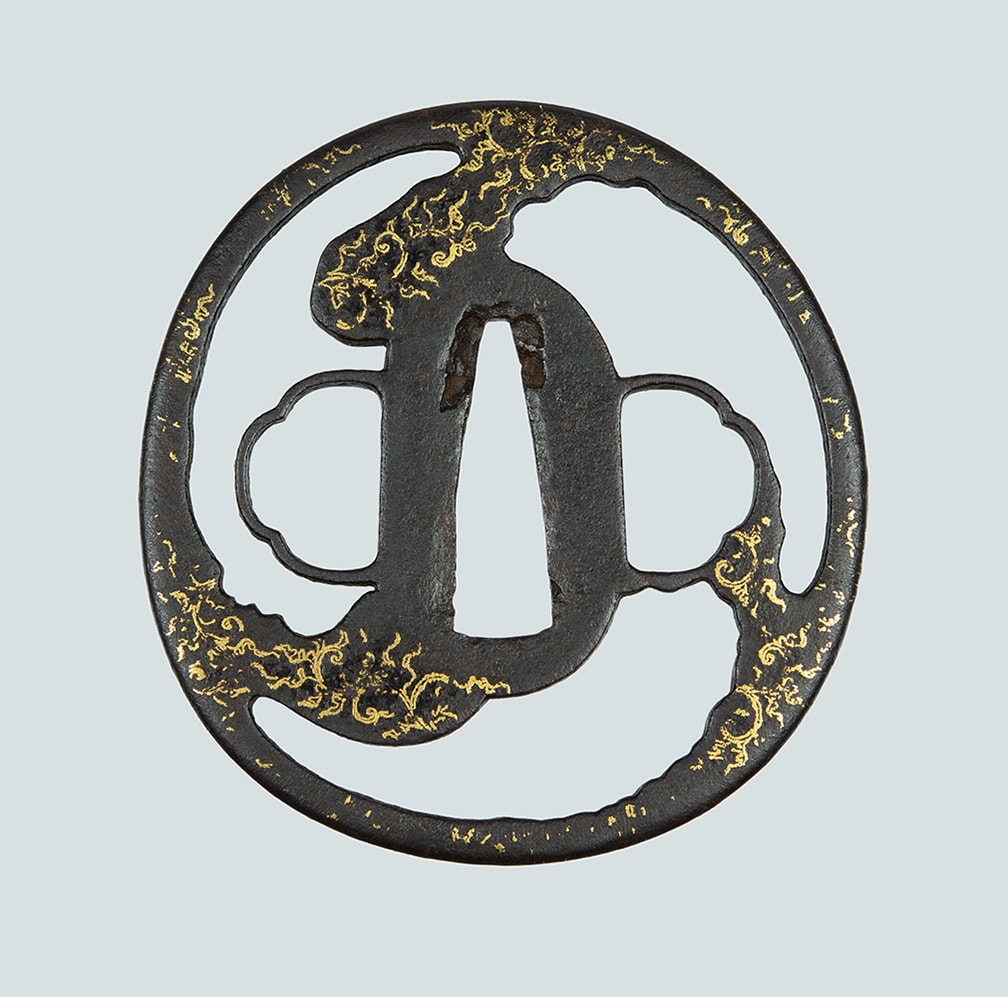
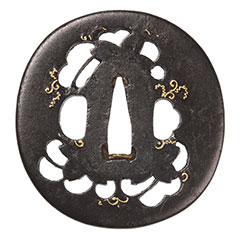
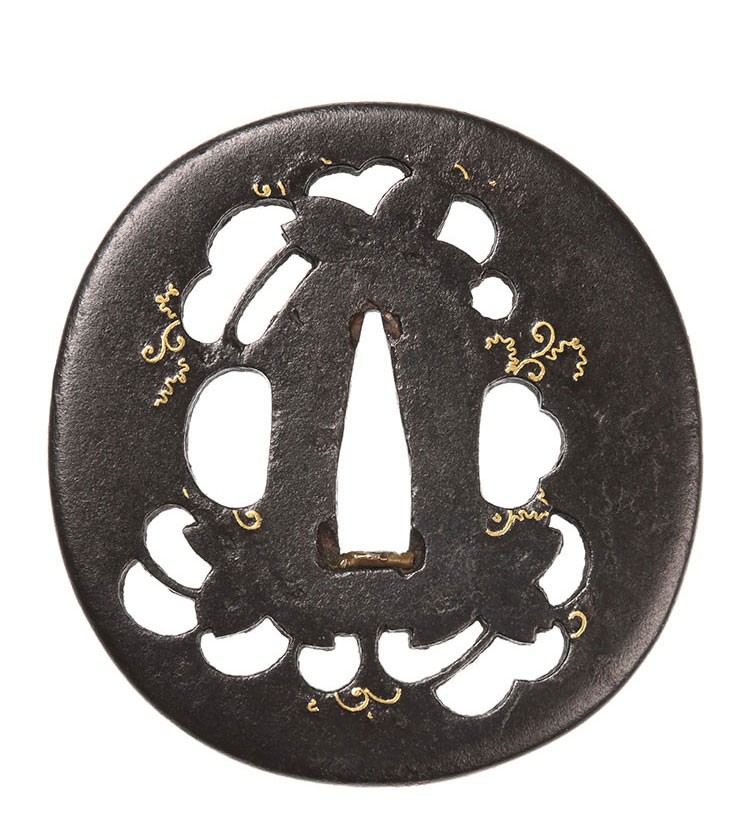
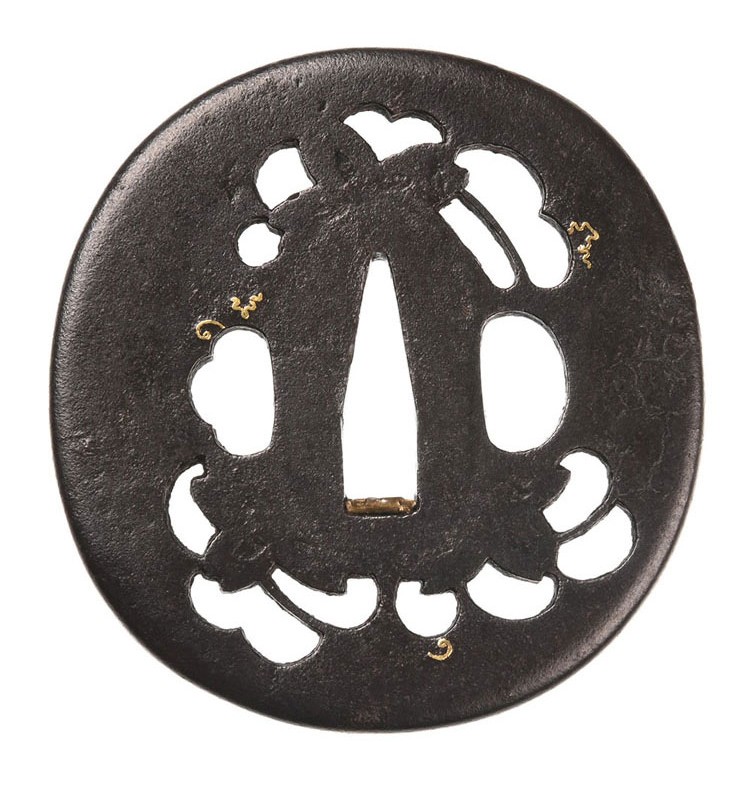
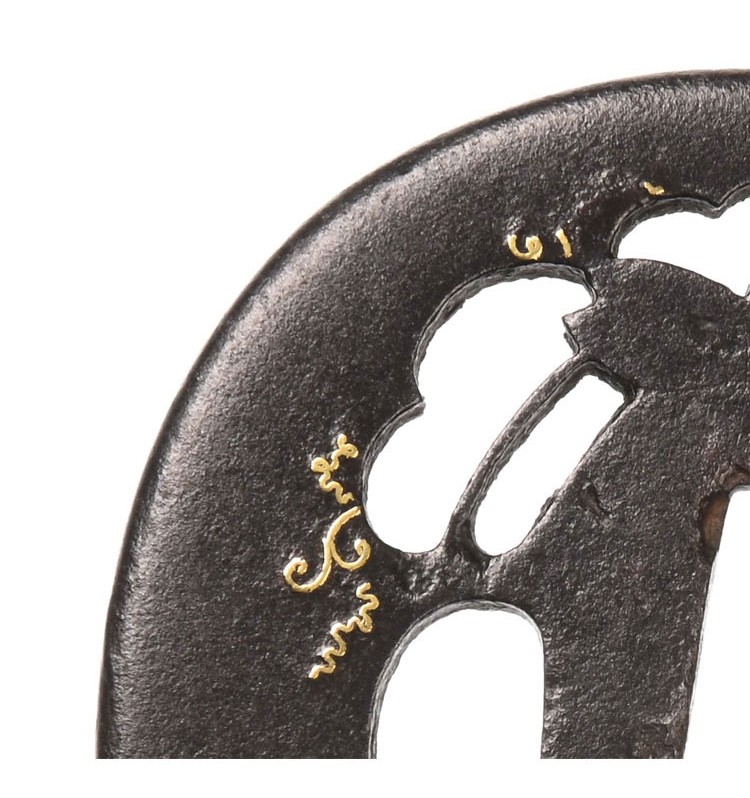
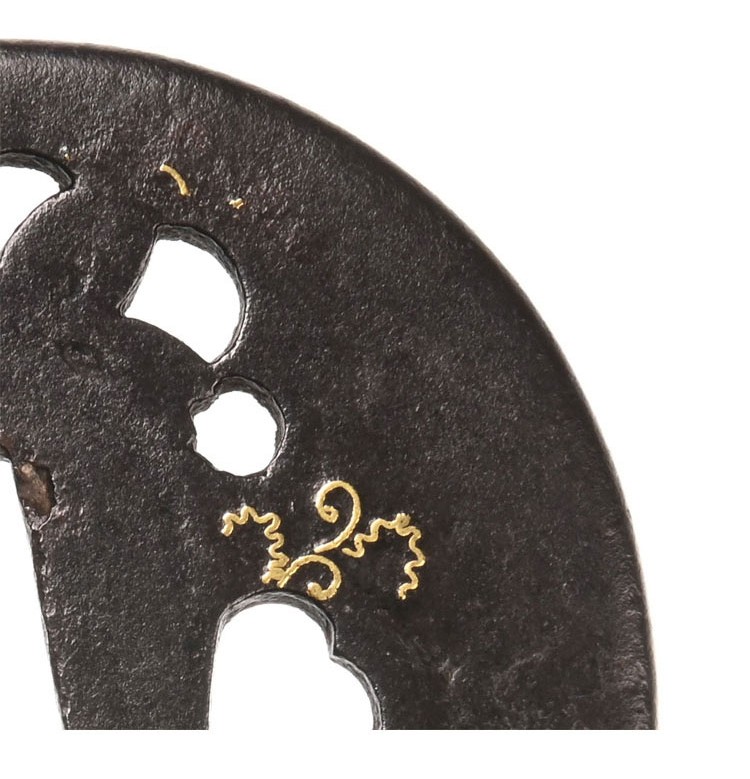
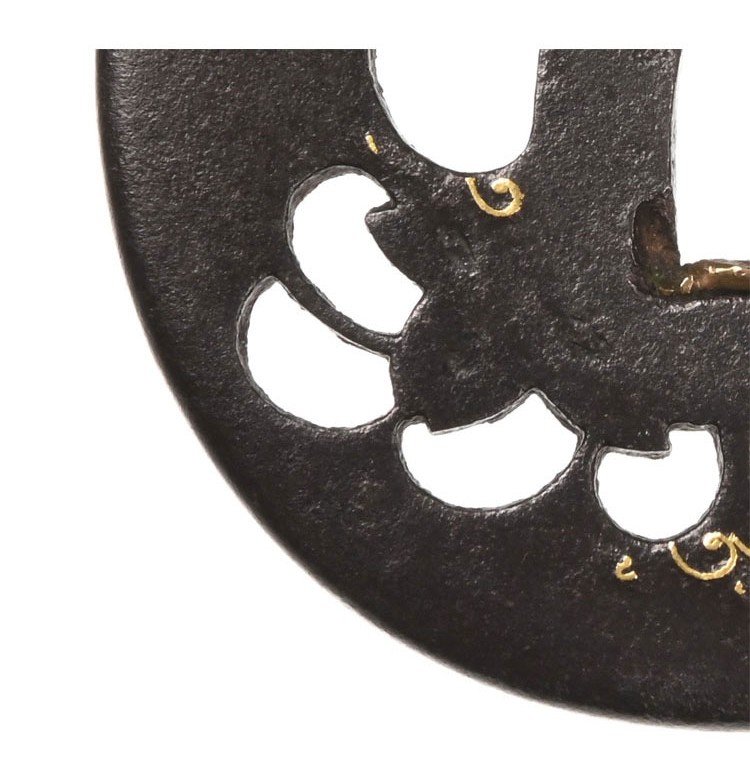
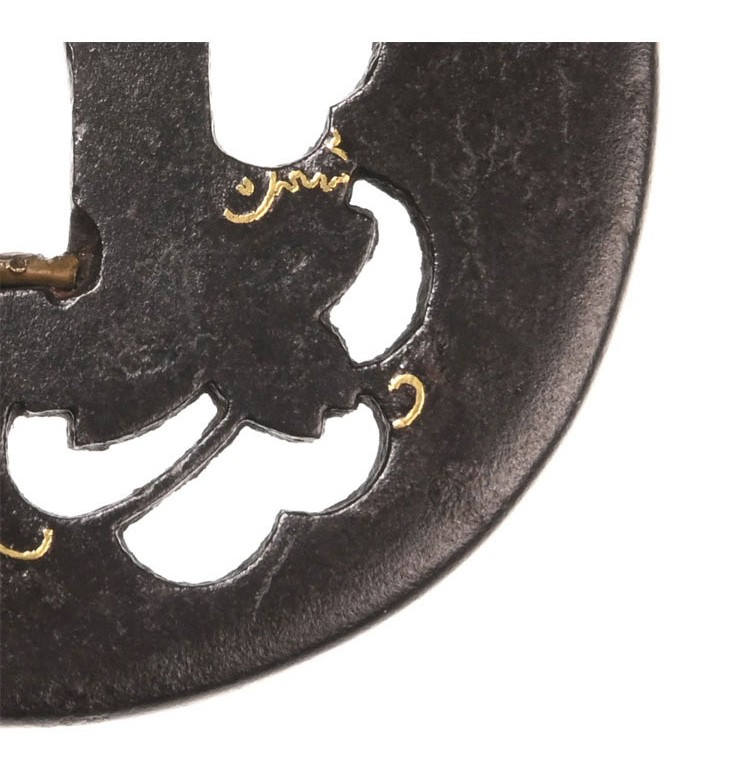
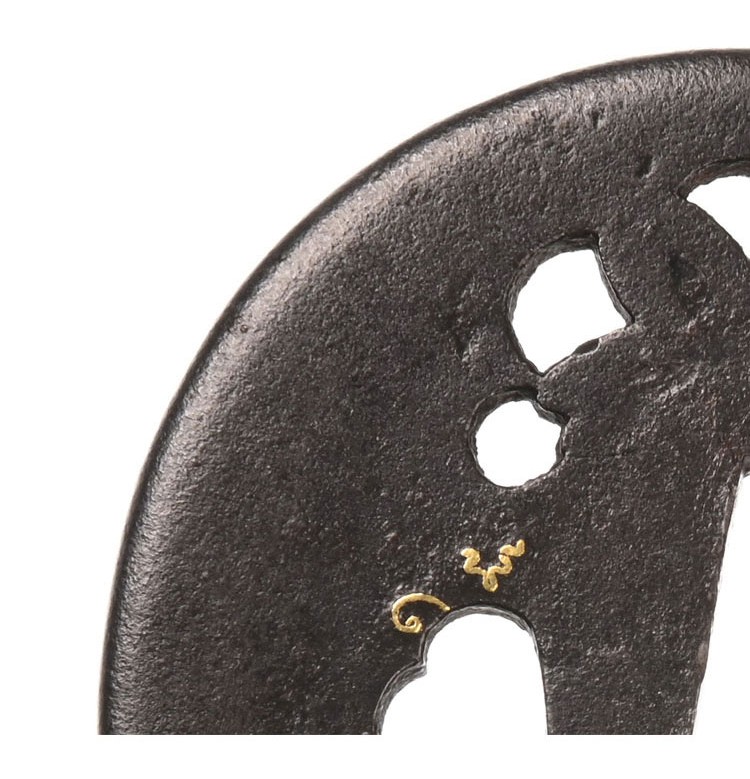
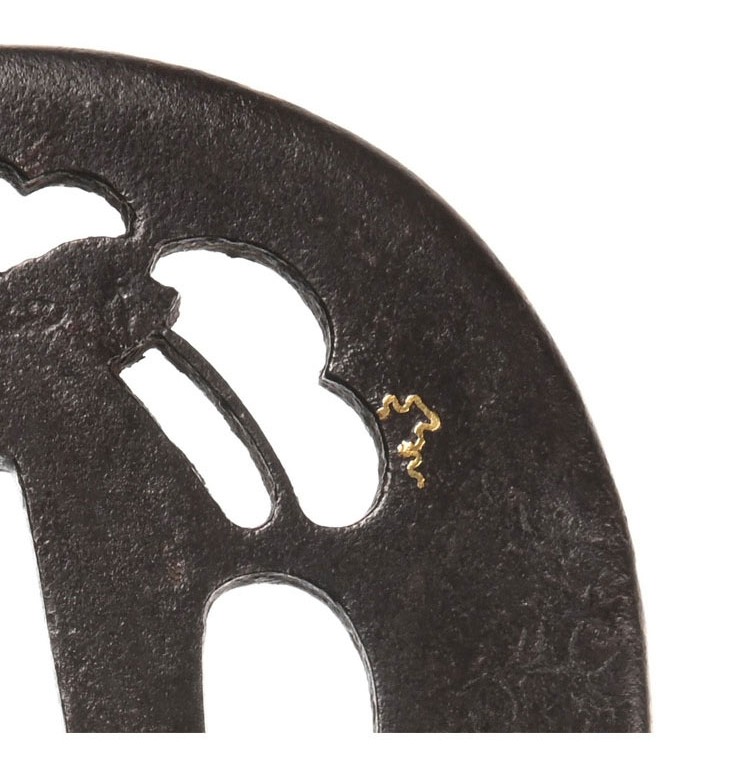
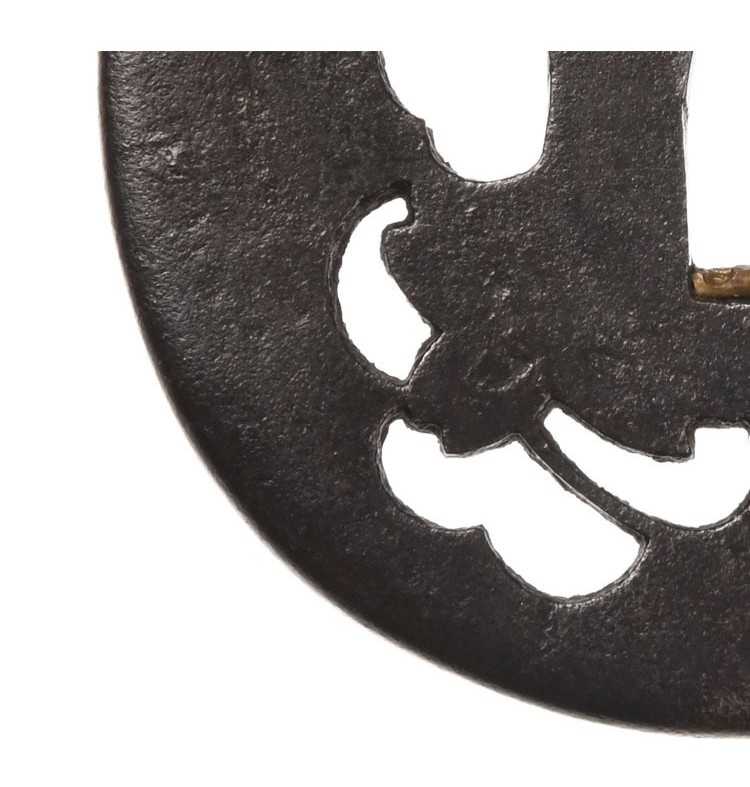
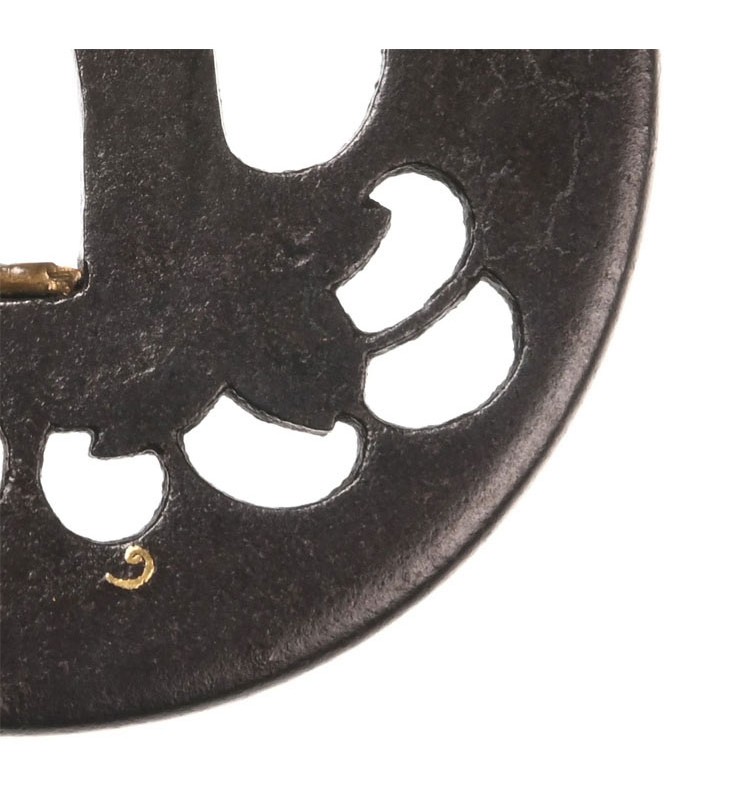
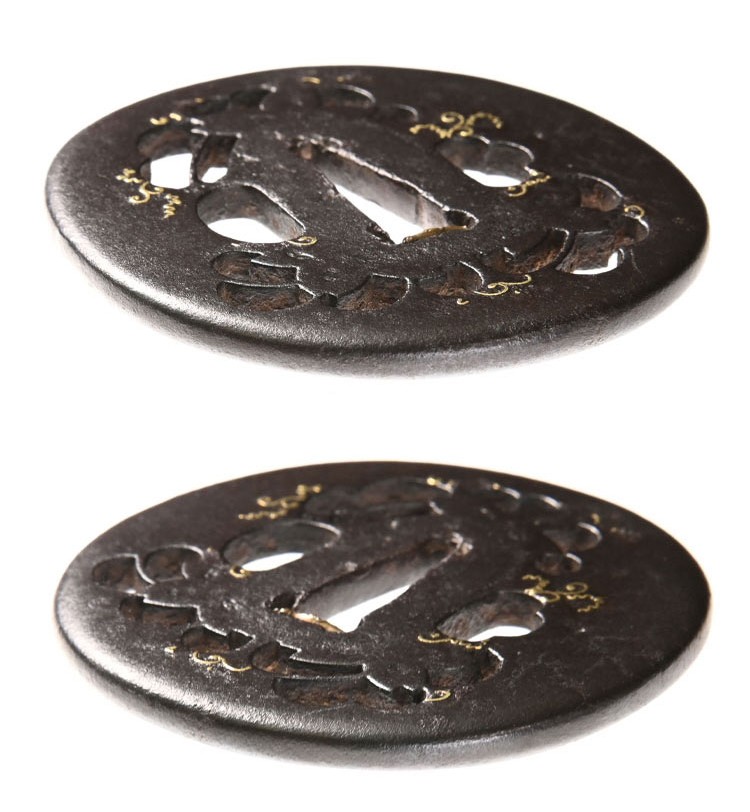
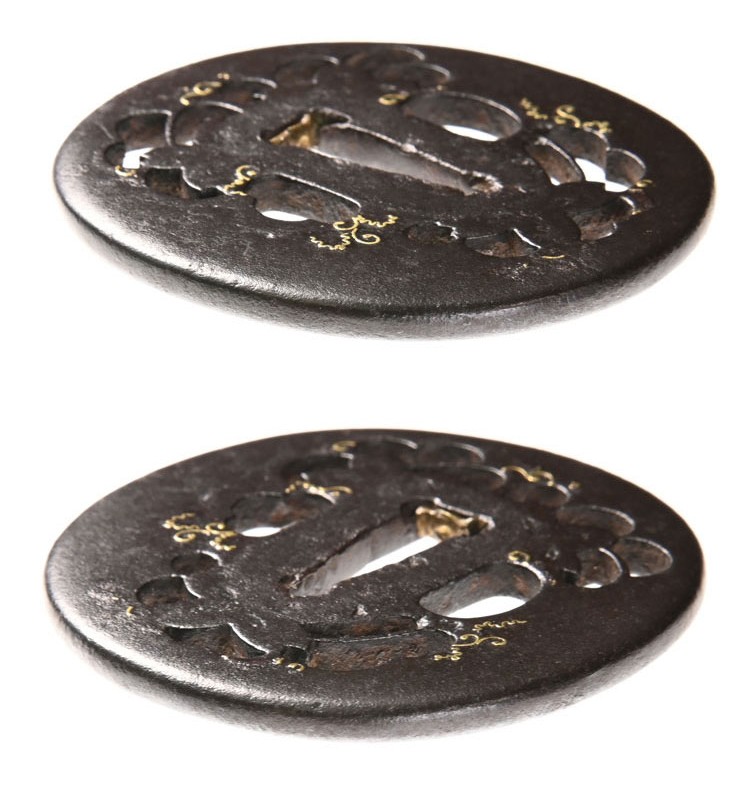
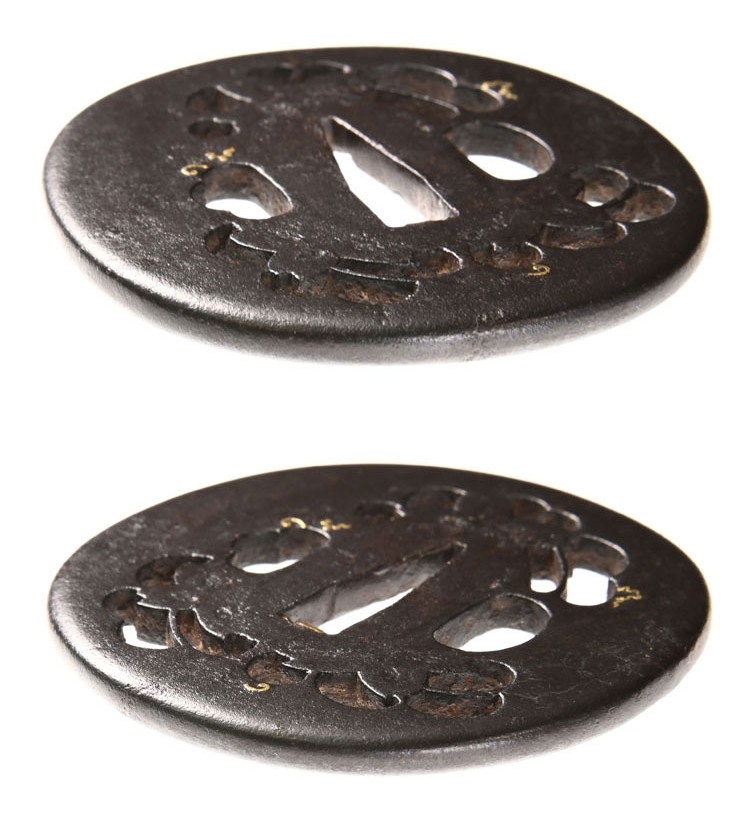
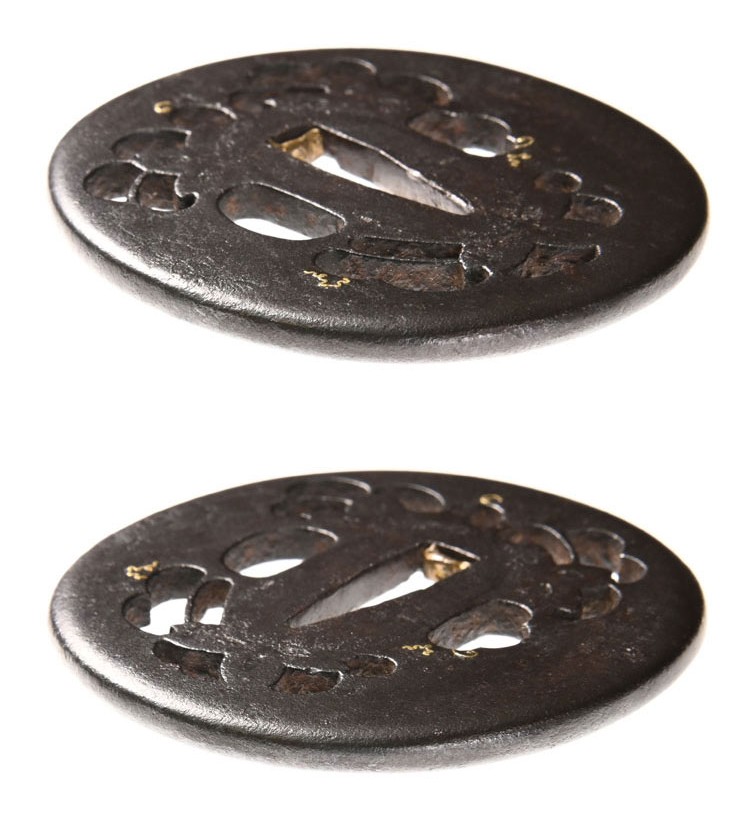
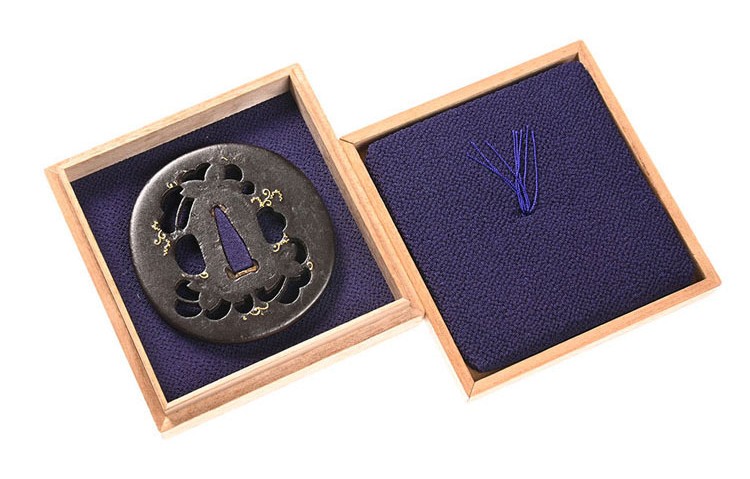
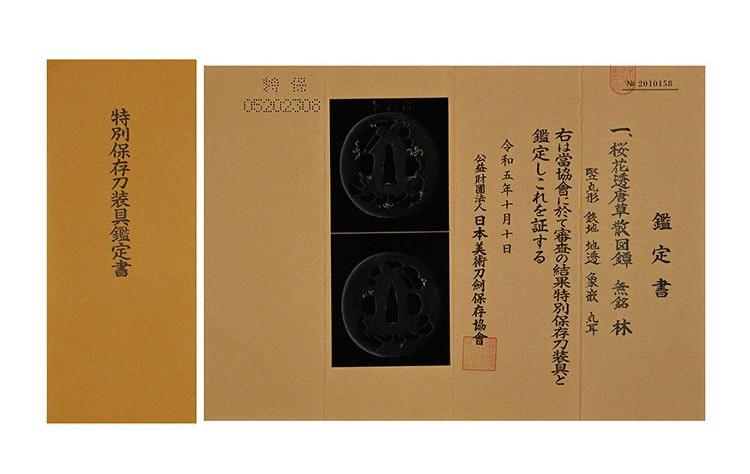
This is a tsuba by the Hayashi school from Higo province. It features an openwork design of cherry blossoms and karakusa (arabesque) on an iron ground. The tsuba is certified as Tokubetsu Hozon by the NBTHK.
Certificate reading — 無銘(林)
 NihontoWatch
Hayashi · Edo
Higo · Higo
32 pieces on the market now
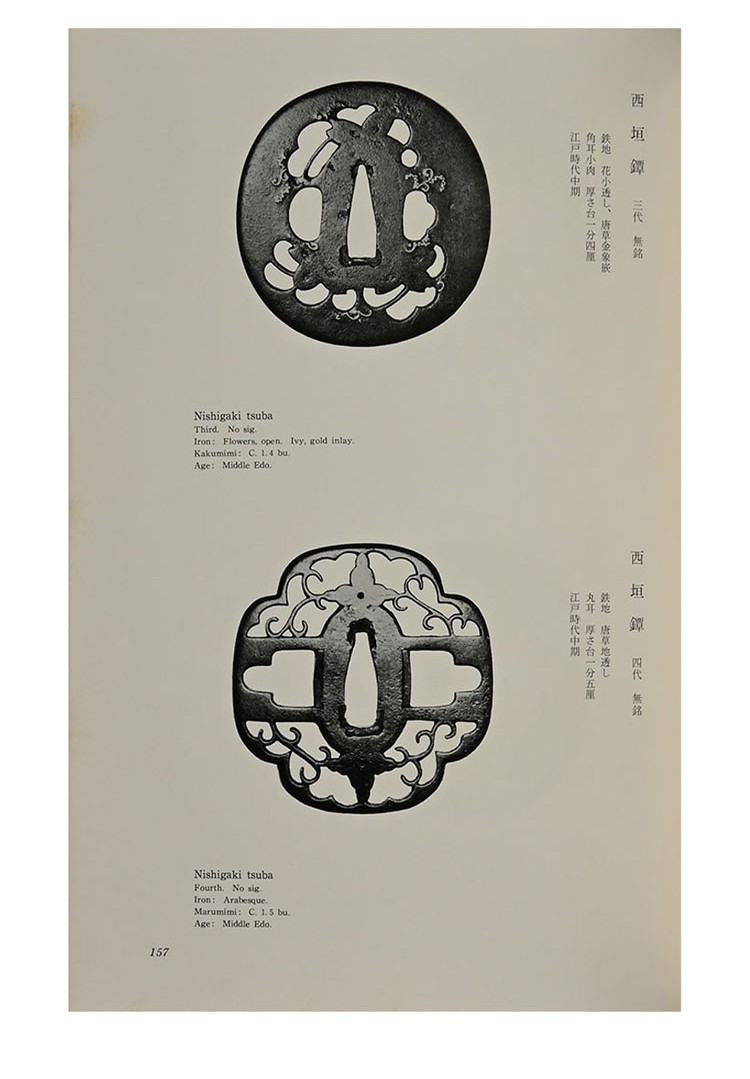
The Hayashi school of Higo metalworkers traces its origins to Hayashi Matahichi, founder of the lineage, who was born in Kumamoto in Keichō 18 (1613). His personal name was Seisaburō Shigeharu, and "Matahichi" served as his professional art name. The family's ancestral roots lay in Owari Province, where they worked as gunsmiths (teppō kaji), though tradition holds they also produced tsuba from time to time. In the generation of Matahichi's father, Seibei, the family relocated to Higo Kumamoto in service to Katō Kiyomasa as gunsmiths. Following the dispossession of the Katō house, they entered the service of the Hosokawa clan. Under the cultivation and encouragement of Hosokawa Sansai (Tadaoki)—a renowned tea master and patron of the arts—Matahichi matured as a sword-fitting maker, bringing the Hayashi aesthetic to full flowering. He died in Genroku 12 (1699) at the age of eighty-seven, having established a tradition that would be revived by later craftsmen such as Kamiyoshi Fukanobu in the late Edo period. The hallmark of Hayashi workmanship resides in the exceptional quality of the forged iron plate, repeatedly described in the records as possessing a dense, lustrous character likened to the dark tone of yōkan (sweet bean jelly). This singular iron—often displaying the purplish patina (shisaku) characteristic of Higo tsuba—is worked with a viscous, clinging texture that could only be achieved through meticulous forging. The tsuchime-ji (hammer-textured ground) is handled with subtle modulation, imparting a softened feeling to carved surfaces and openwork edges.
Design motifs draw upon classical themes imbued with scholarly resonance: bamboo rendered with springy resilience, as if stirred by a pure breeze; pine branches expressing spacious elegance; cranes and cherry blossoms arranged in compositions of refined simplicity. Openwork techniques include both bold ji-sukashi (ground openwork) executed with decisive chisel thrusts, and more delicate kage-sukashi (shadow openwork) that leaves subtle relief. Decoration is restrained yet effective: gold inlay in the horikomi-zōgan (carved-in inlay) manner, often featuring the maker's favored "withered tree" (kareki) motif or twisted-rope (nawa-me) patterns rendered as perfectly round beads. The integration of design, carving, and inlay achieves a coherent whole in which each element supports the others without ostentation. The artistic philosophy animating Hayashi work is characterized in the appraisals as possessing the bearing of a kunshi—the gentleman of exemplary virtue in classical thought—combining martial discipline with cultivated refinement. This sensibility, described as fūin (cultivated resonance), pervades every aspect of production: the elevated choice of motif, the spacious yet rigorous composition, the subdued finish that conceals deep refinement within. Matahichi's rare chisel-cut signatures (tagane-mei), when present, are themselves wrought with brushwork-like handling, further evidence of his consummate artistry. Later Hayashi-school craftsmen such as Fukanobu devoted themselves to reviving this tradition, producing works marked by sincere and dignified manner, free from eccentricity. The Hayashi aesthetic—rooted in superior materials, accomplished technique, and an ethos resonant with Edo-period bushidō—represents one of the defining achievements of Higo metalwork, wherein the appeal of iron tsuba is elevated to convey both formal beauty and spiritual depth. Learn more →
| Smith | Era | Designated |
|---|---|---|
| Matashichi又七 | — | 52 |
| Shigemitsu重光 | — | 11 |
| Tohachi藤八 | — | 0 |
| Shigeyuki重之 | — | 0 |
| Matahachi又八 | — | 0 |
A Hozon-certified fitting of notably superior craftsmanship and condition, often with signature or workmanship of high reference value.
The NBTHK (Nihon Bijutsu Tōken Hozon Kyōkai, the Society for the Preservation of Japanese Art Swords) is a public-interest incorporated foundation founded in 1948 and supervised by Japan’s Agency for Cultural Affairs (Bunkachō); it is based at the Japanese Sword Museum in Tokyo. Its expert panels physically examine each submitted work (shinsa) and issue a certificate (kanteishō) ranking it by artistic and historical merit. NBTHK papers are the most widely recognized standard of authentication for Japanese swords and fittings.
NBTHK official siteReturns/exchanges/cancellations not accepted after shipment except for significant defects; if defective, return/exchange possible within 3 days of arrival (return shipping paid by customer).
¥360,000
This is a tsuba by the Hayashi school from Higo province. It features an openwork design of cherry blossoms and karakusa (arabesque) on an iron ground. The tsuba is certified as Tokubetsu Hozon by the NBTHK.
Certificate reading — 無銘(林)
NihontoWatchHayashi · Edo
Higo · Higo
32 pieces on the market now
The Hayashi school of Higo metalworkers traces its origins to Hayashi Matahichi, founder of the lineage, who was born in Kumamoto in Keichō 18 (1613). His personal name was Seisaburō Shigeharu, and "Matahichi" served as his professional art name. The family's ancestral roots lay in Owari Province, where they worked as gunsmiths (teppō kaji), though tradition holds they also produced tsuba from time to time. In the generation of Matahichi's father, Seibei, the family relocated to Higo Kumamoto in service to Katō Kiyomasa as gunsmiths. Following the dispossession of the Katō house, they entered the service of the Hosokawa clan. Under the cultivation and encouragement of Hosokawa Sansai (Tadaoki)—a renowned tea master and patron of the arts—Matahichi matured as a sword-fitting maker, bringing the Hayashi aesthetic to full flowering. He died in Genroku 12 (1699) at the age of eighty-seven, having established a tradition that would be revived by later craftsmen such as Kamiyoshi Fukanobu in the late Edo period. The hallmark of Hayashi workmanship resides in the exceptional quality of the forged iron plate, repeatedly described in the records as possessing a dense, lustrous character likened to the dark tone of yōkan (sweet bean jelly). This singular iron—often displaying the purplish patina (shisaku) characteristic of Higo tsuba—is worked with a viscous, clinging texture that could only be achieved through meticulous forging. The tsuchime-ji (hammer-textured ground) is handled with subtle modulation, imparting a softened feeling to carved surfaces and openwork edges.
Design motifs draw upon classical themes imbued with scholarly resonance: bamboo rendered with springy resilience, as if stirred by a pure breeze; pine branches expressing spacious elegance; cranes and cherry blossoms arranged in compositions of refined simplicity. Openwork techniques include both bold ji-sukashi (ground openwork) executed with decisive chisel thrusts, and more delicate kage-sukashi (shadow openwork) that leaves subtle relief. Decoration is restrained yet effective: gold inlay in the horikomi-zōgan (carved-in inlay) manner, often featuring the maker's favored "withered tree" (kareki) motif or twisted-rope (nawa-me) patterns rendered as perfectly round beads. The integration of design, carving, and inlay achieves a coherent whole in which each element supports the others without ostentation. The artistic philosophy animating Hayashi work is characterized in the appraisals as possessing the bearing of a kunshi—the gentleman of exemplary virtue in classical thought—combining martial discipline with cultivated refinement. This sensibility, described as fūin (cultivated resonance), pervades every aspect of production: the elevated choice of motif, the spacious yet rigorous composition, the subdued finish that conceals deep refinement within. Matahichi's rare chisel-cut signatures (tagane-mei), when present, are themselves wrought with brushwork-like handling, further evidence of his consummate artistry. Later Hayashi-school craftsmen such as Fukanobu devoted themselves to reviving this tradition, producing works marked by sincere and dignified manner, free from eccentricity. The Hayashi aesthetic—rooted in superior materials, accomplished technique, and an ethos resonant with Edo-period bushidō—represents one of the defining achievements of Higo metalwork, wherein the appeal of iron tsuba is elevated to convey both formal beauty and spiritual depth. Learn more →
| Smith | Era | Designated |
|---|---|---|
| Matashichi又七 | — | 52 |
| Shigemitsu重光 | — | 11 |
| Tohachi藤八 | — | 0 |
| Shigeyuki重之 | — | 0 |
| Matahachi又八 | — | 0 |
A Hozon-certified fitting of notably superior craftsmanship and condition, often with signature or workmanship of high reference value.
The NBTHK (Nihon Bijutsu Tōken Hozon Kyōkai, the Society for the Preservation of Japanese Art Swords) is a public-interest incorporated foundation founded in 1948 and supervised by Japan’s Agency for Cultural Affairs (Bunkachō); it is based at the Japanese Sword Museum in Tokyo. Its expert panels physically examine each submitted work (shinsa) and issue a certificate (kanteishō) ranking it by artistic and historical merit. NBTHK papers are the most widely recognized standard of authentication for Japanese swords and fittings.
NBTHK official siteReturns/exchanges/cancellations not accepted after shipment except for significant defects; if defective, return/exchange possible within 3 days of arrival (return shipping paid by customer).
¥360,000