Norimitsu was born in Kanbun 6 as the son of Etchu no Kami Kanekuni, a smith of the Yamato Monju school; his common name was Tsutsui Terukuni, and he initially succeeded to his father's mei, signing as Kanekuni, but entered the priesthood from the end of Genroku to the beginning of Hoei and changed his mei to Norimitsu.
He studied under the Osaka Shodai Yoshimichi, lived first in Osaka, also made swords in Awa, and later resided in Kujo, Yamatokoriyama, Yamato province. Renowned as a wazamono, he signed as "Tsutsui Etchu no Kami Terukuni Nyudo Norimitsu," "Oite Washu Koriyama Tsutsui Etchu no Kami Nyudo Norimitsu," and so on, and passed away at the age of 81 on Enkyo 4, January 11.
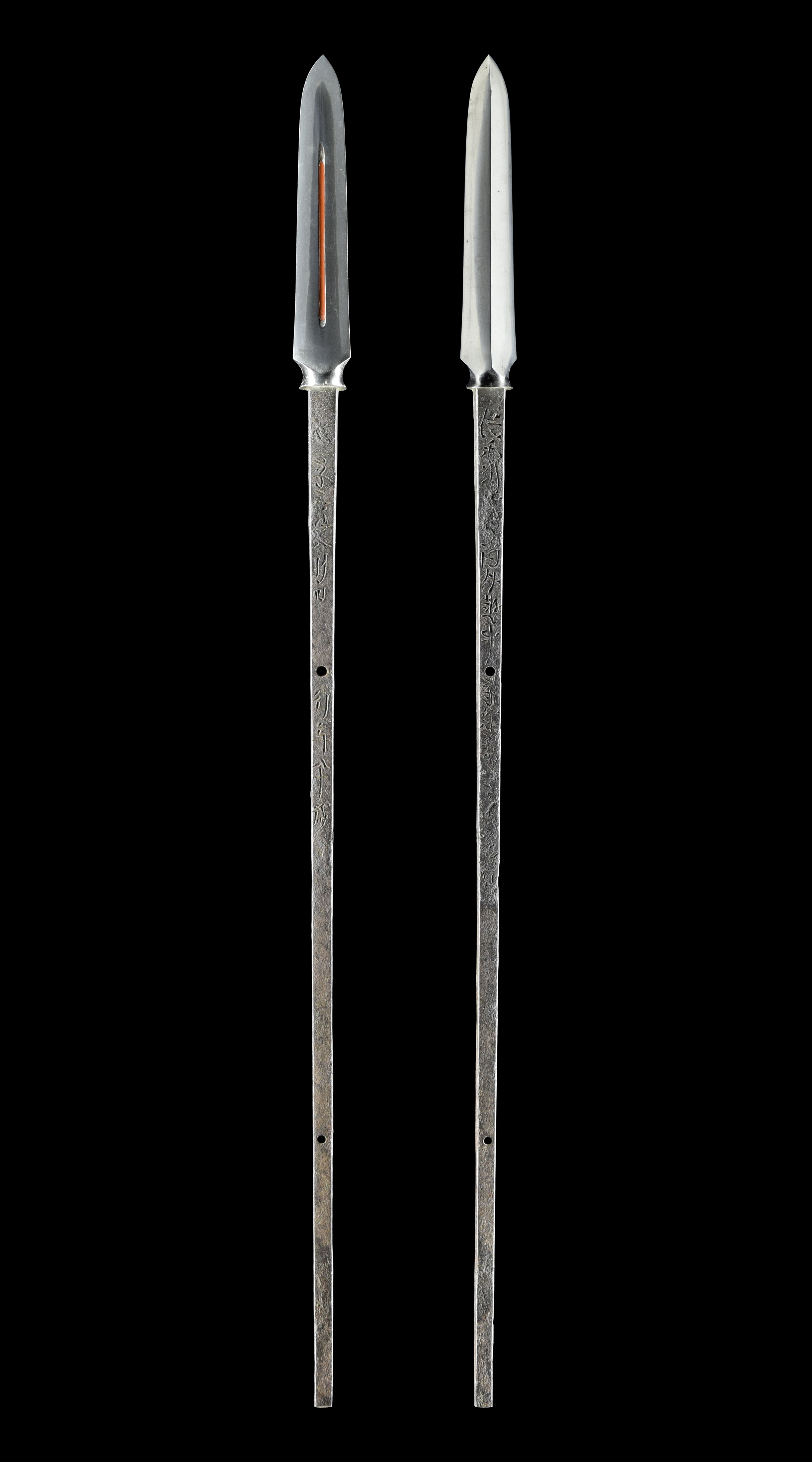
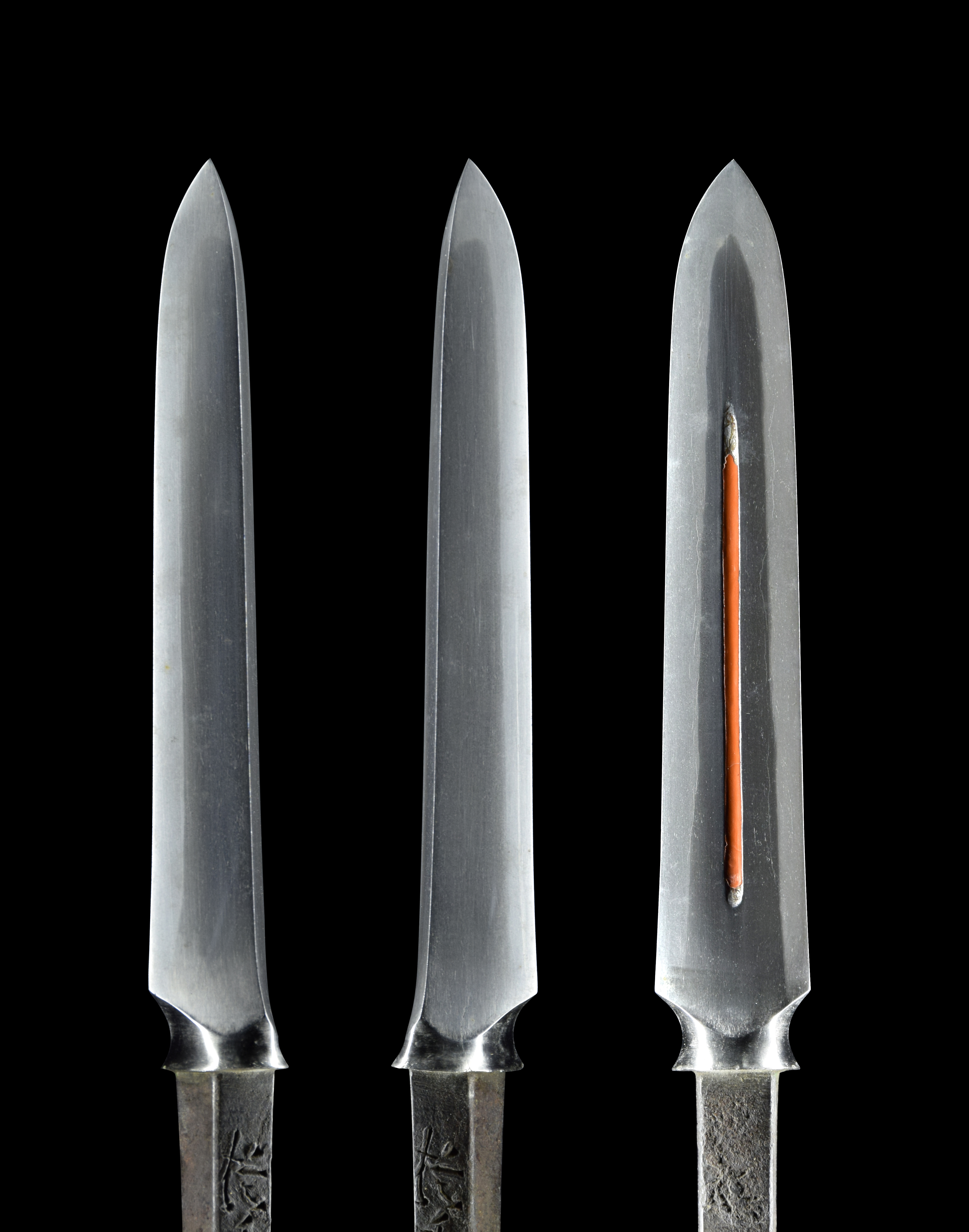
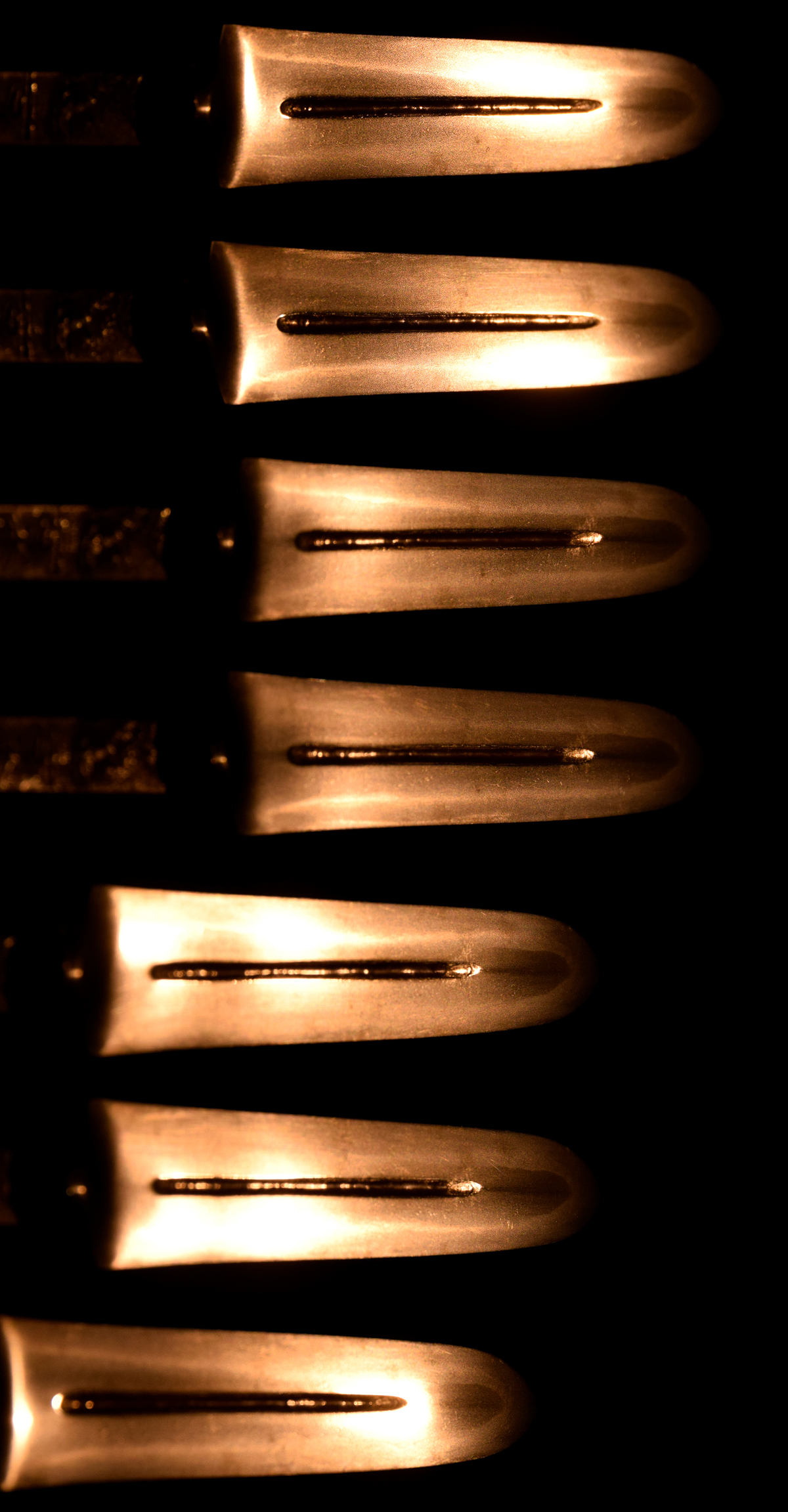
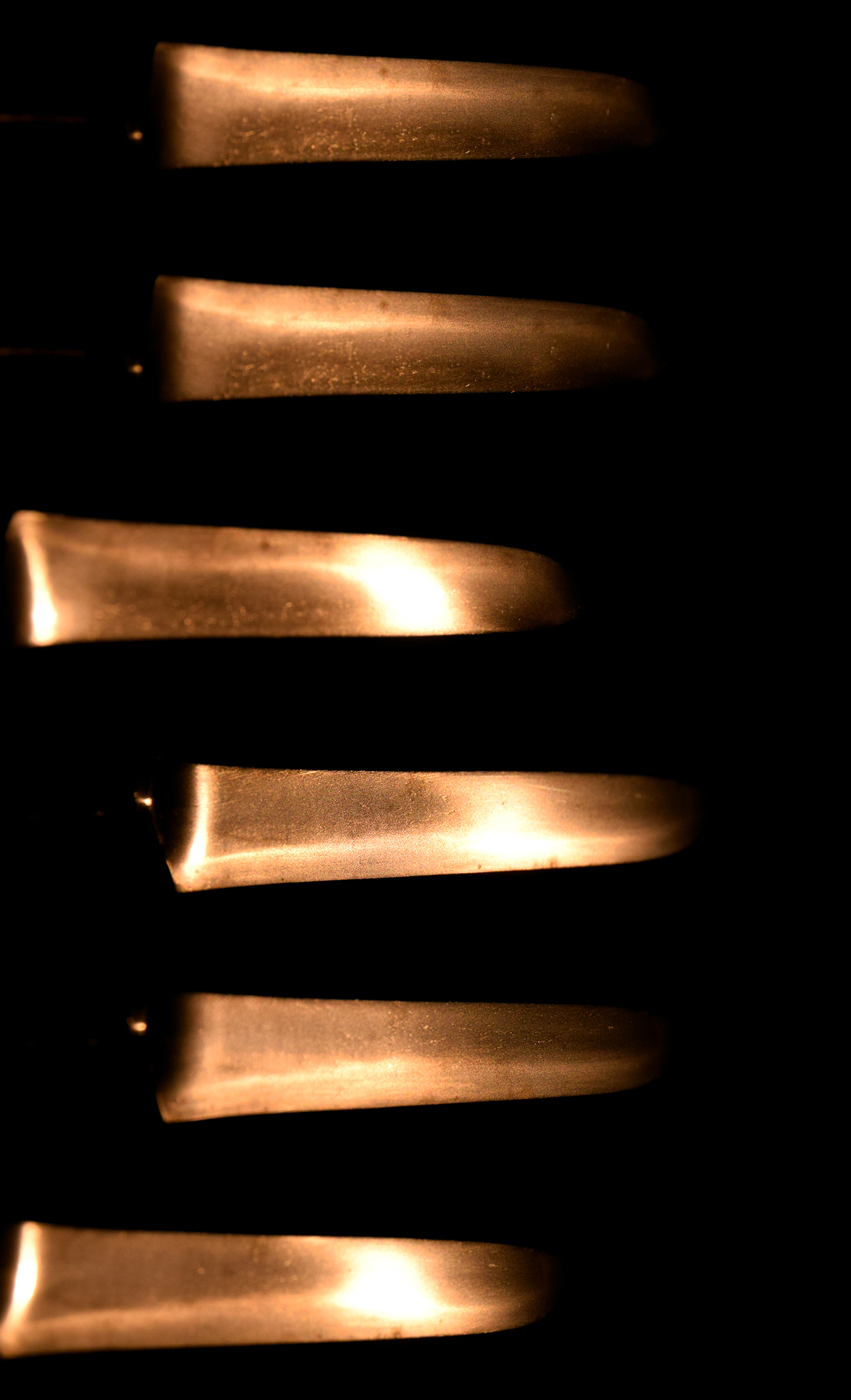
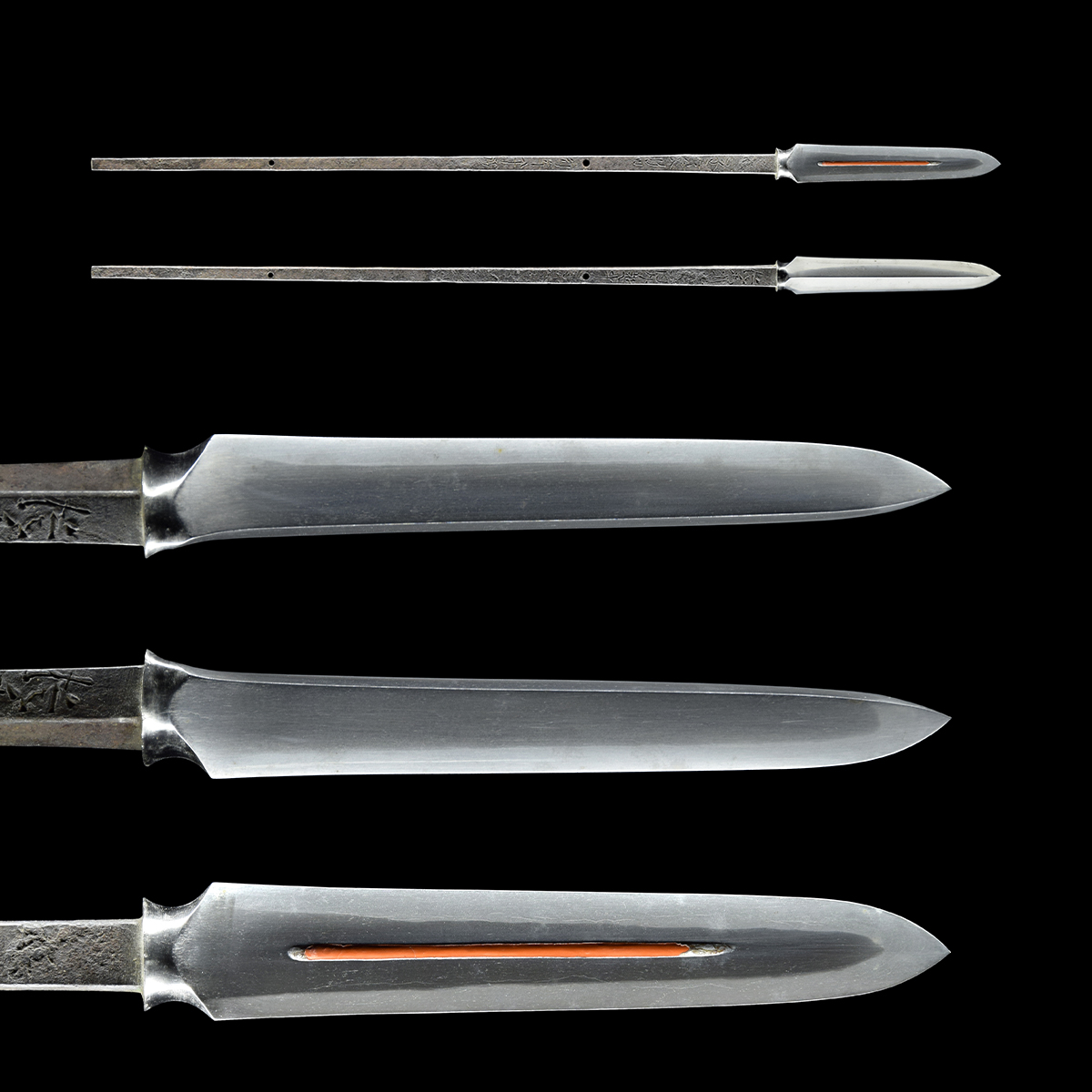
This yari is in hirasankaku-zukuri, with a well-proportioned difference in width between the moto and saki, presenting a handsome form characteristic of a yari. The jigane has a strong masagame, is covered in jinie with chikei, and the hamon is in suguha style showing very slight variations in width; a sense of refinement can be felt within its tranquility, and the boshi returns in a straight, round maru.
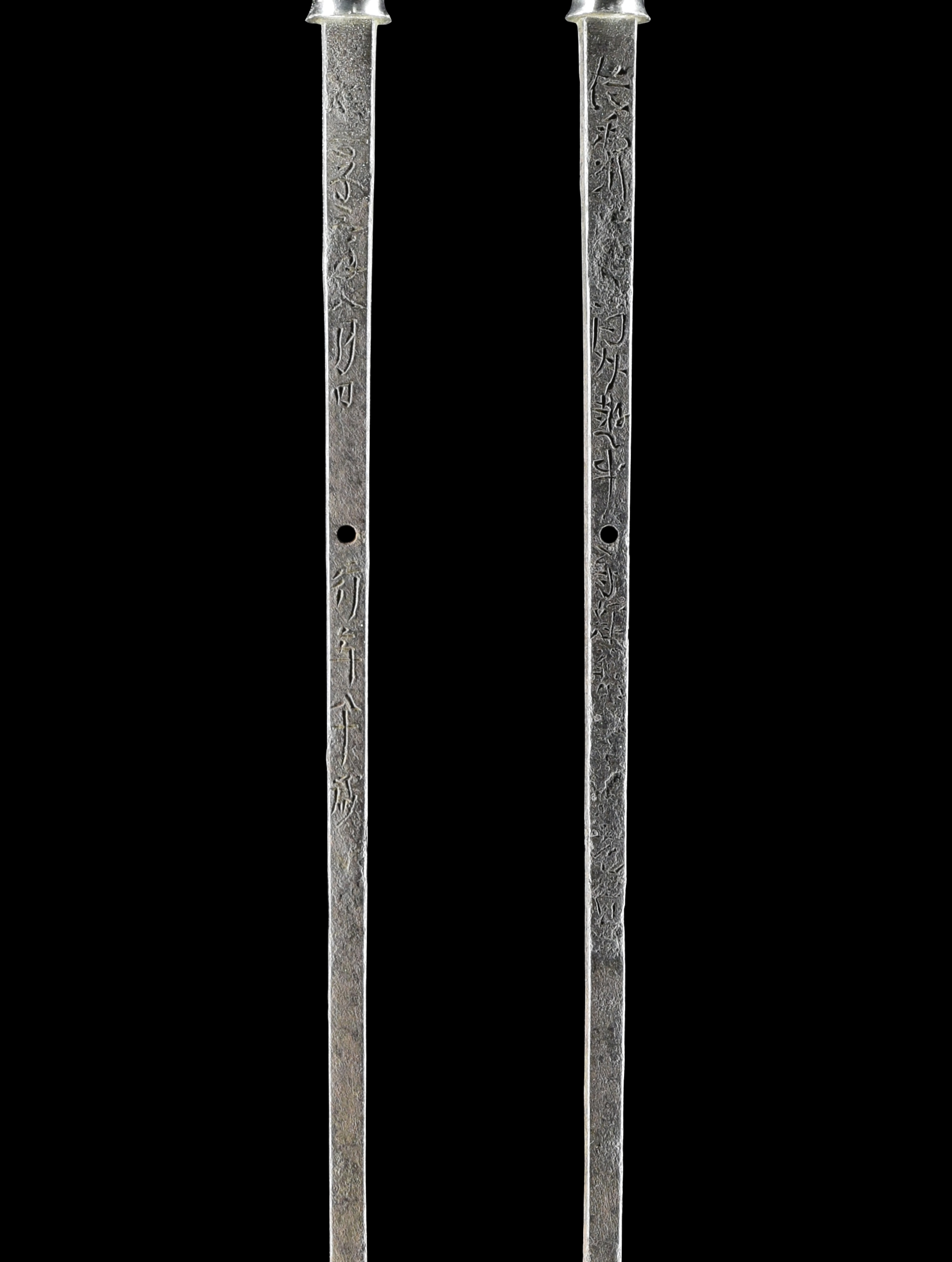
Part of the meibun is difficult to decipher and has been marked as □□, but in reality, I believe there is no mistake that it reads "Oite Washu Koriyama Tsutsui Etchu no Kami Terukuni Nyudo Norimitsu Enkyo 3, August day, at the age of 80." As can be seen from the date, this is a late-period work forged at the age of eighty, one year before Norimitsu died, and it is a precious piece where his matured skill quietly breathes.
Furthermore, as can be inferred from the fact that this yari is registered in Nara Prefecture, it has been carefully passed down locally for a long time without going outside the region, and it can be called a highly valuable, famous yari as a late-period work of Norimitsu.
Machine translation from the shop's Japanese · may contain errors ·
Norimitsu was born in Kanbun 6 as the son of Etchu no Kami Kanekuni, a smith of the Yamato Monju school; his common name was Tsutsui Terukuni, and he initially succeeded to his father's mei, signing as Kanekuni, but entered the priesthood from the end of Genroku to the beginning of Hoei and changed his mei to Norimitsu.
He studied under the Osaka Shodai Yoshimichi, lived first in Osaka, also made swords in Awa, and later resided in Kujo, Yamatokoriyama, Yamato province. Renowned as a wazamono, he signed as "Tsutsui Etchu no Kami Terukuni Nyudo Norimitsu," "Oite Washu Koriyama Tsutsui Etchu no Kami Nyudo Norimitsu," and so on, and passed away at the age of 81 on Enkyo 4, January 11.
This yari is in hirasankaku-zukuri, with a well-proportioned difference in width between the moto and saki, presenting a handsome form characteristic of a yari. The jigane has a strong masagame, is covered in jinie with chikei, and the hamon is in suguha style showing very slight variations in width; a sense of refinement can be felt within its tranquility, and the boshi returns in a straight, round maru.
Part of the meibun is difficult to decipher and has been marked as □□, but in reality, I believe there is no mistake that it reads "Oite Washu Koriyama Tsutsui Etchu no Kami Terukuni Nyudo Norimitsu Enkyo 3, August day, at the age of 80." As can be seen from the date, this is a late-period work forged at the age of eighty, one year before Norimitsu died, and it is a precious piece where his matured skill quietly breathes.
Furthermore, as can be inferred from the fact that this yari is registered in Nara Prefecture, it has been carefully passed down locally for a long time without going outside the region, and it can be called a highly valuable, famous yari as a late-period work of Norimitsu.
Historical context
The Edo period (1615 to 1868)
›
For two and a half centuries of peace the sword was the warrior’s legal badge rather than his weapon. Each great city developed its own manner, Edo’s tested strength against Ōsaka’s polished brilliance, until demand thinned in the era’s last decades.
We could not find an authenticity certificate on the seller’s listing. Japanese swords and fittings are normally papered by the NBTHK (or the NTHK). Without one, the attribution is the seller’s own assessment and has not been independently verified — treat it with caution and ask the dealer about certification before buying.
As a rule we do not accept returns, except when we have sent a different item from the one ordered or when there is a significant discrepancy between the description and the item. If you wish to return an item, please contact us within 3 days of its arrival and then send it back.


 NihontoWatch