The Bicchu no Kuni Mizuta school was active with the descendants of Ko-Aoe Tametsugu centered in Mizuta Village, Aga District (present-day Maniwa City, Okayama Prefecture), as well as Ebara Village in Shitsuki District and Matsuyama Village in Azae District, in response to the demands of the powerful Mimura clan and Sengoku period military commanders such as the Mori and Ukita.
Thereafter, from the end of the Sengoku period to the Genroku era, the school flourished, producing over 60 smiths in Edo, Osaka, and other locations, and among the lineage, figures such as Ikeda Kishinmaru Kunishige are also famous.
In the home province of Bicchu, there were two branches: the Kunishige lineage representing the Otsuki school, and the Tameie lineage who were the heads of the Kono school; because Tameie established his base in Azae, adjacent to Mizuta Village, he is called the "Shinto Shodai Tameie," and the same mei flourished for twelve generations until Meiji (the Meikan records up to the eighth generation), and they are also commonly referred to as Azae Mizuta.
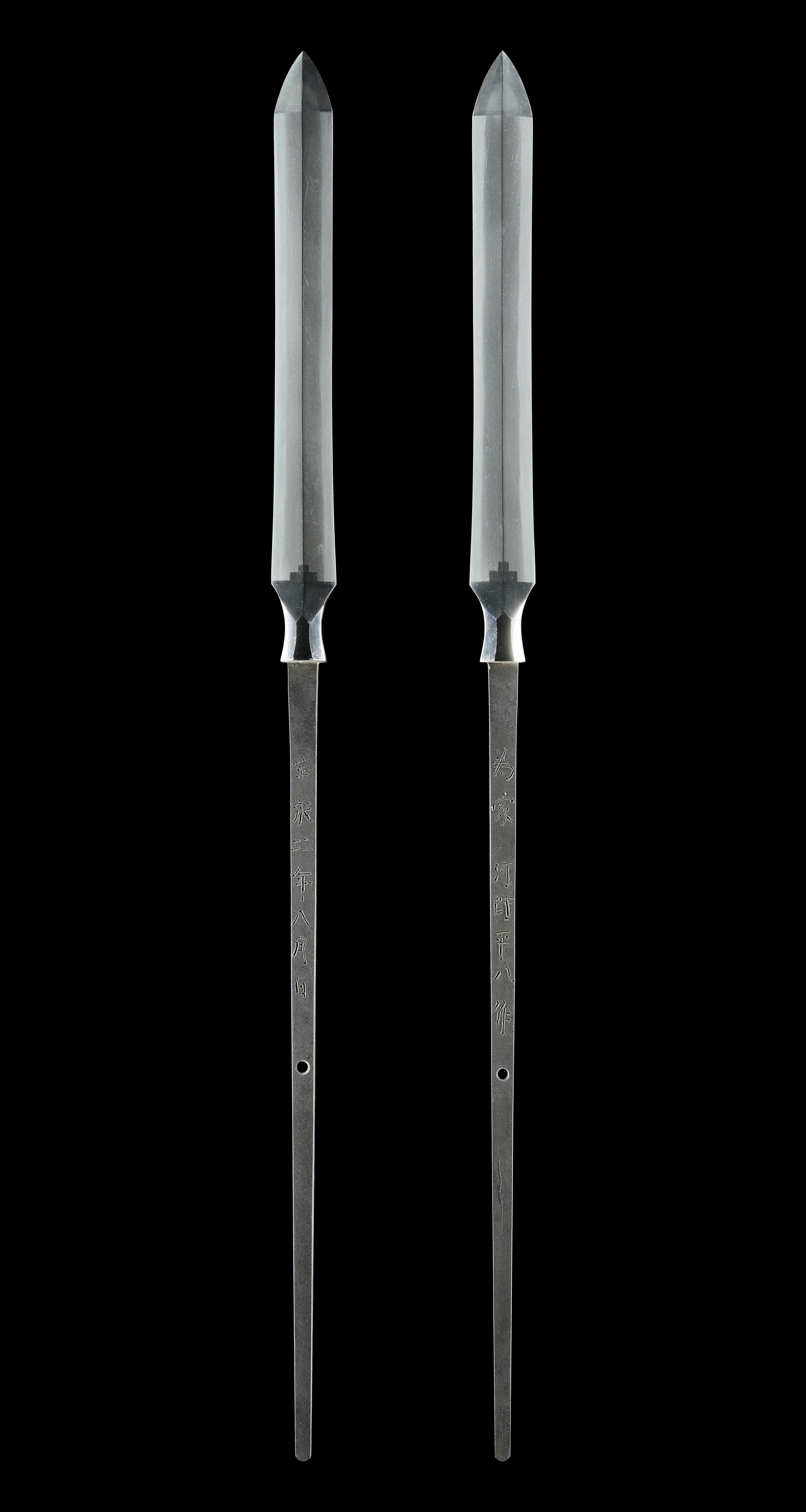
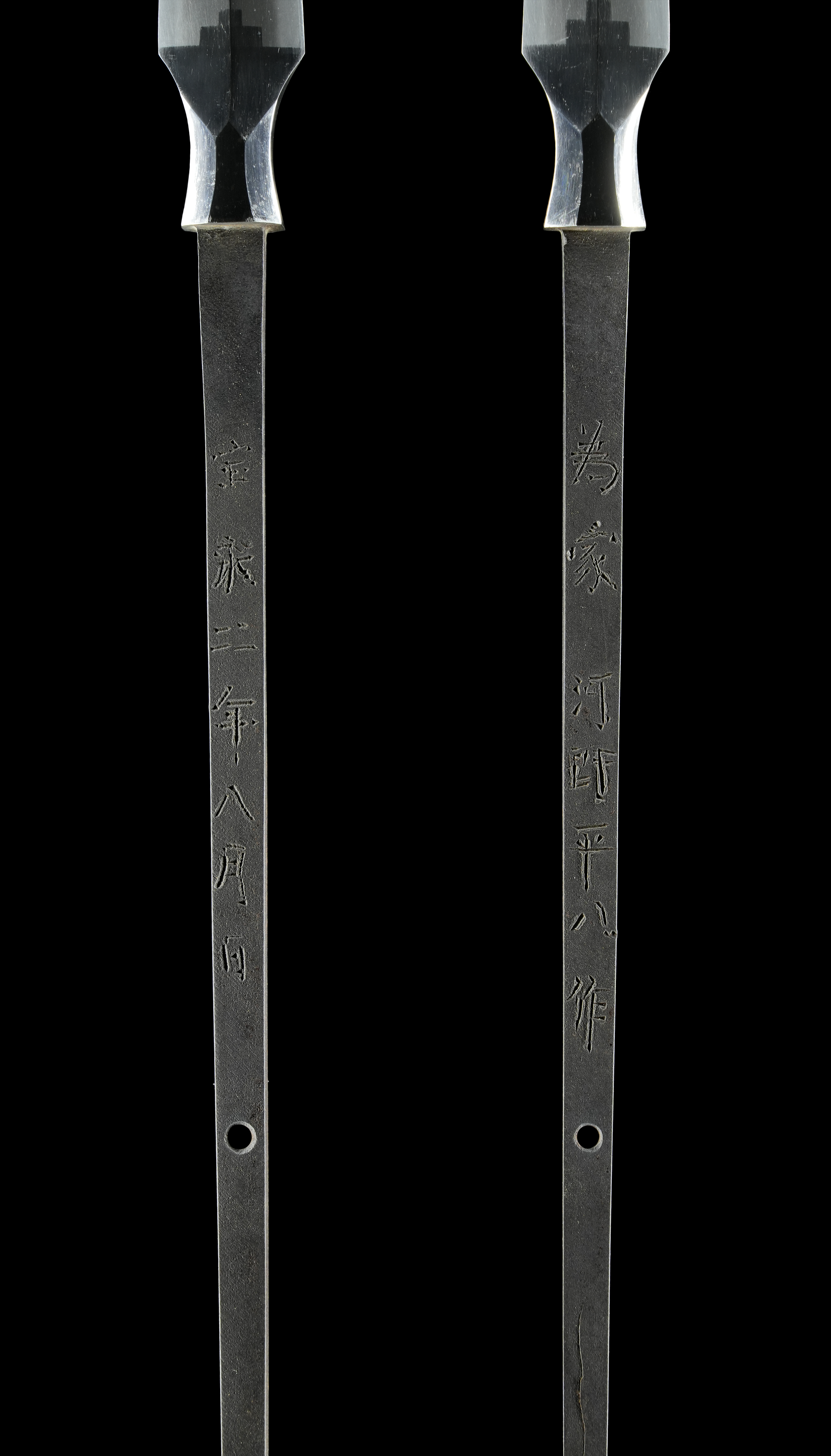
The maker of this yari, Heihachi, is of the Kono clan as the meibun indicates, but unfortunately that zokumei Tameie is not found in the Meikan; however, judging from the nenkio, it is speculated that he may be a figure between the fourth and fifth generations.
The style of the Kunishige lineage is characterized by o-midare based on ara-nie and muneyaki, said to be aimed at the old masterpiece Go Yoshihiro, whereas the Tameie lineage specialized in a style reminiscent of the old masterpiece Aoe school, which is their family tradition; that style is said to feature many works with hiro-suguha mixed with notare and also having muneyaki, and as a characteristic of the nakago, while the nakago of the Kunishige lineage is an extreme katayama, the Tameie school differs in that they take a ken-gyo shape.
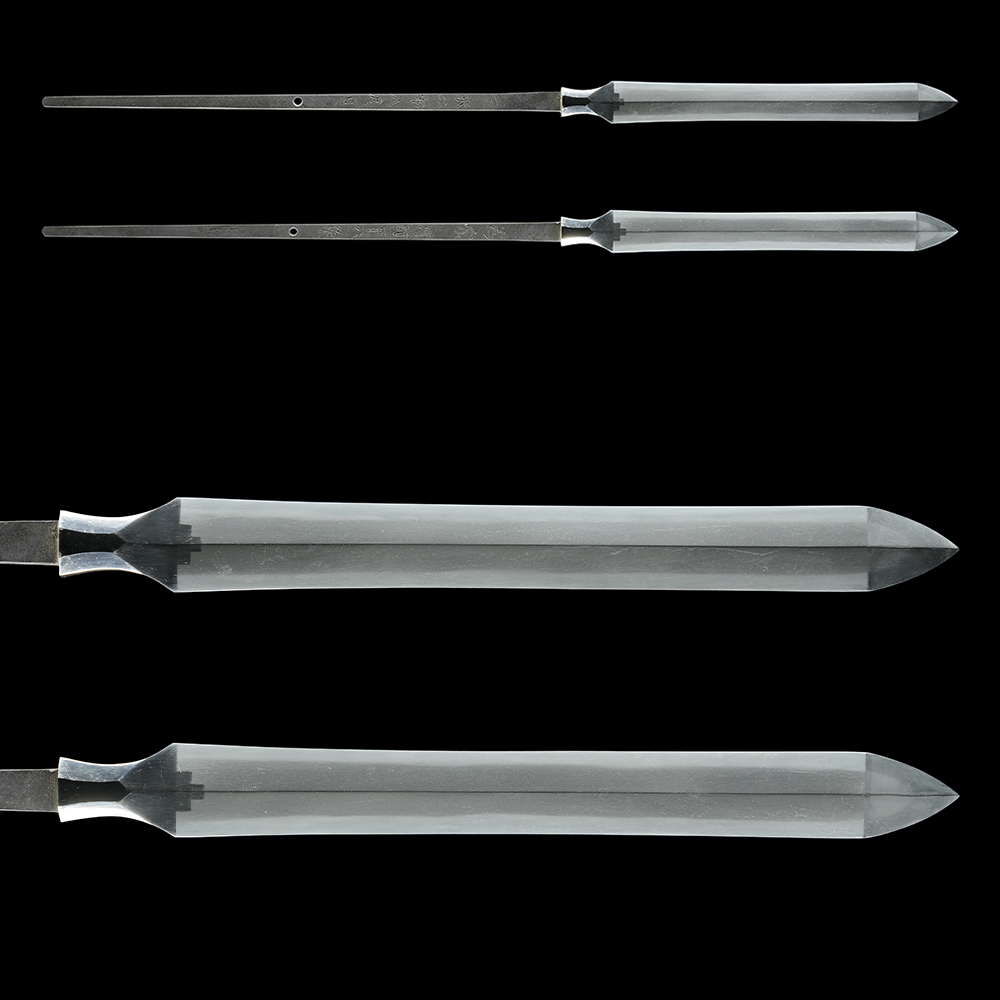
Those with a length exceeding 1 shaku including the kerakubi are called o-mi-yari, and this yari is also classified as an o-mi-yari.
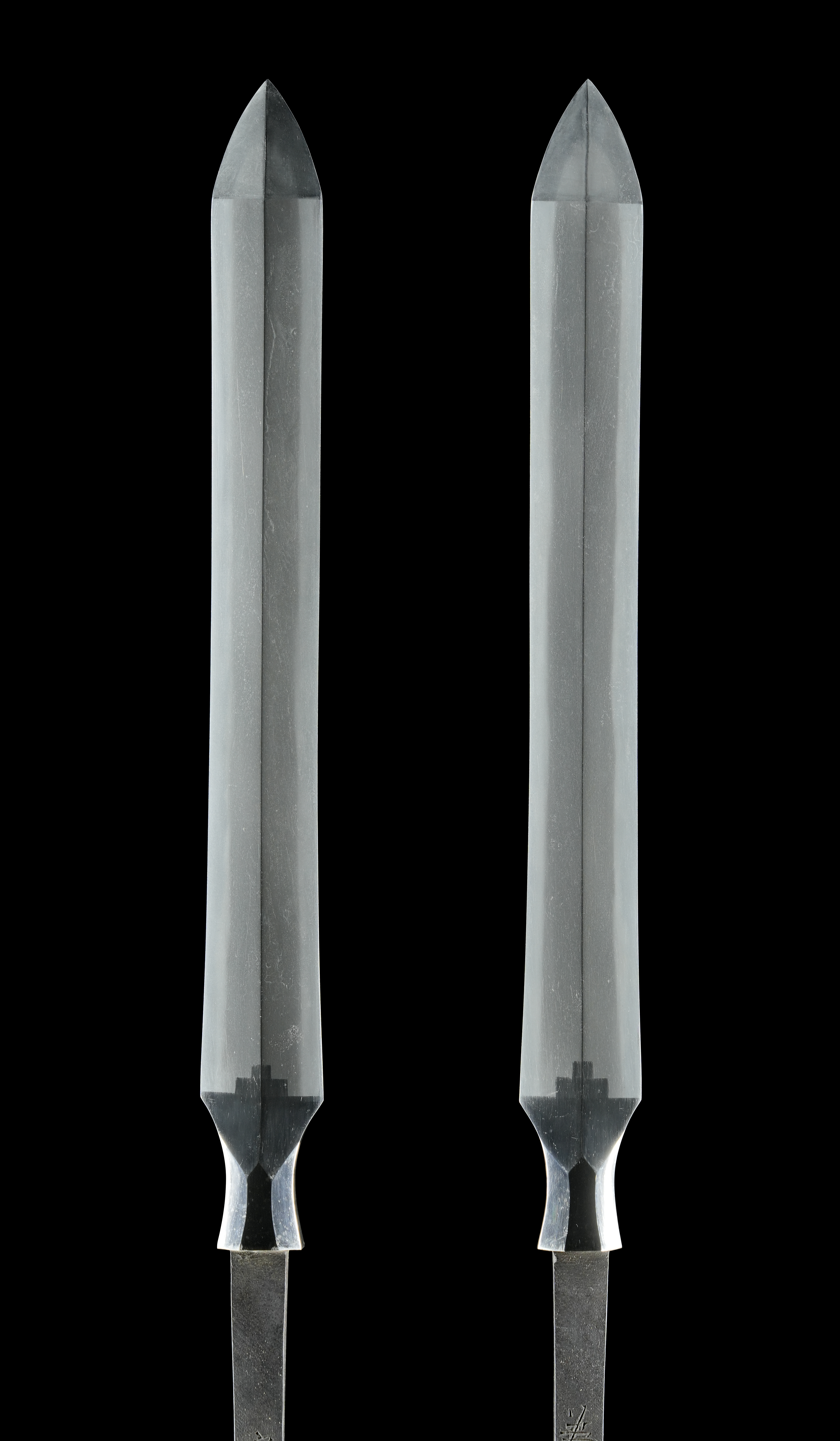
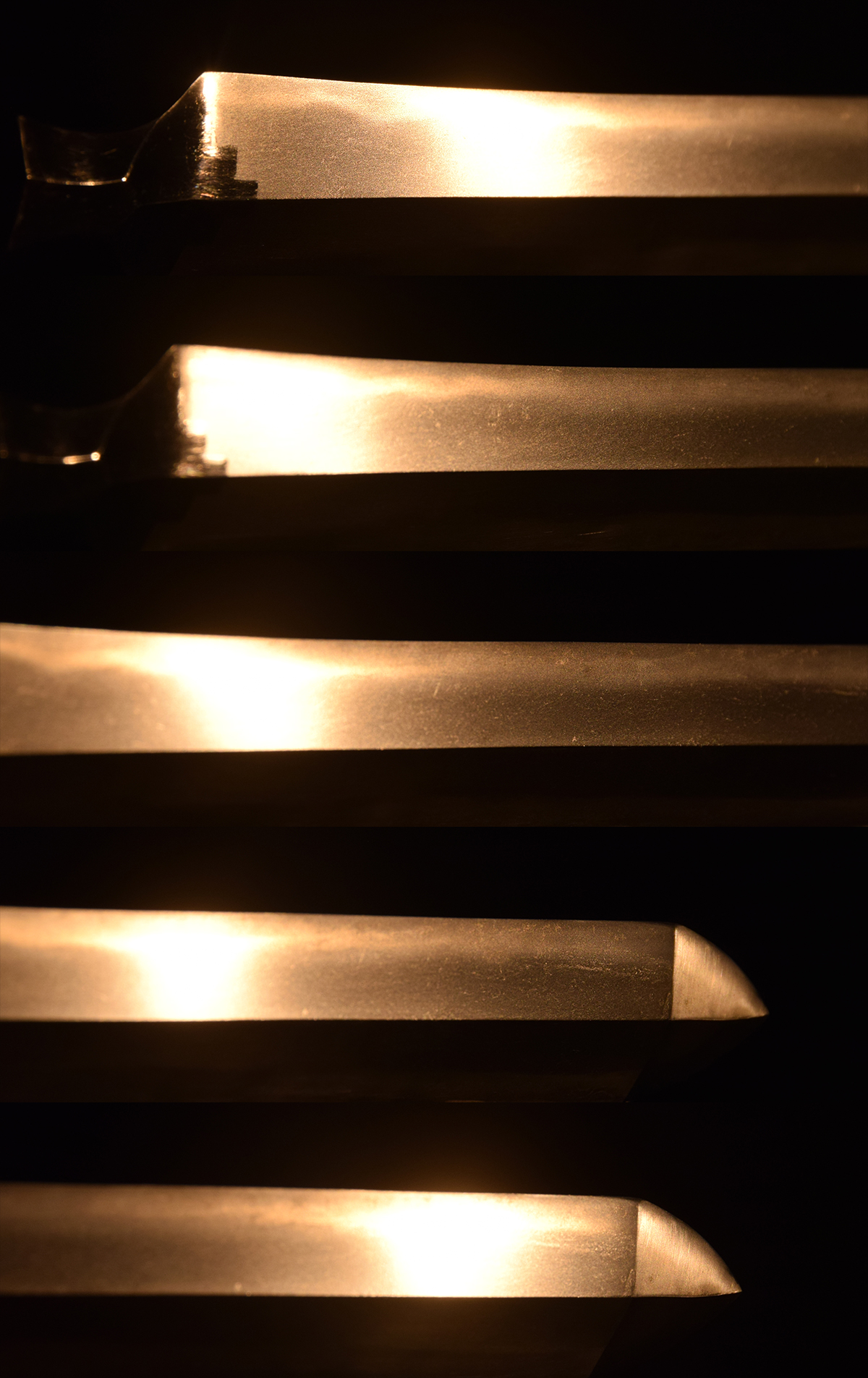
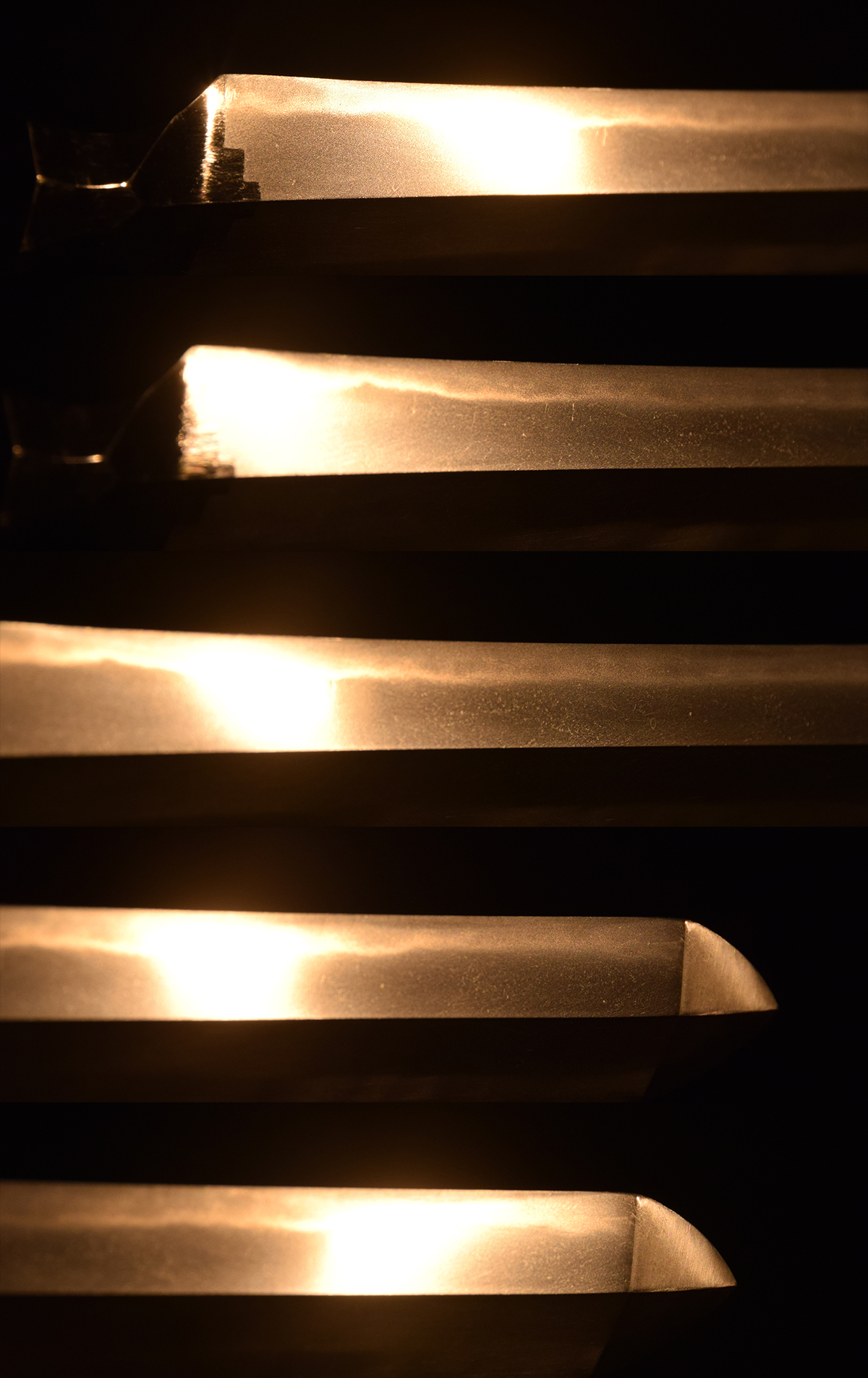
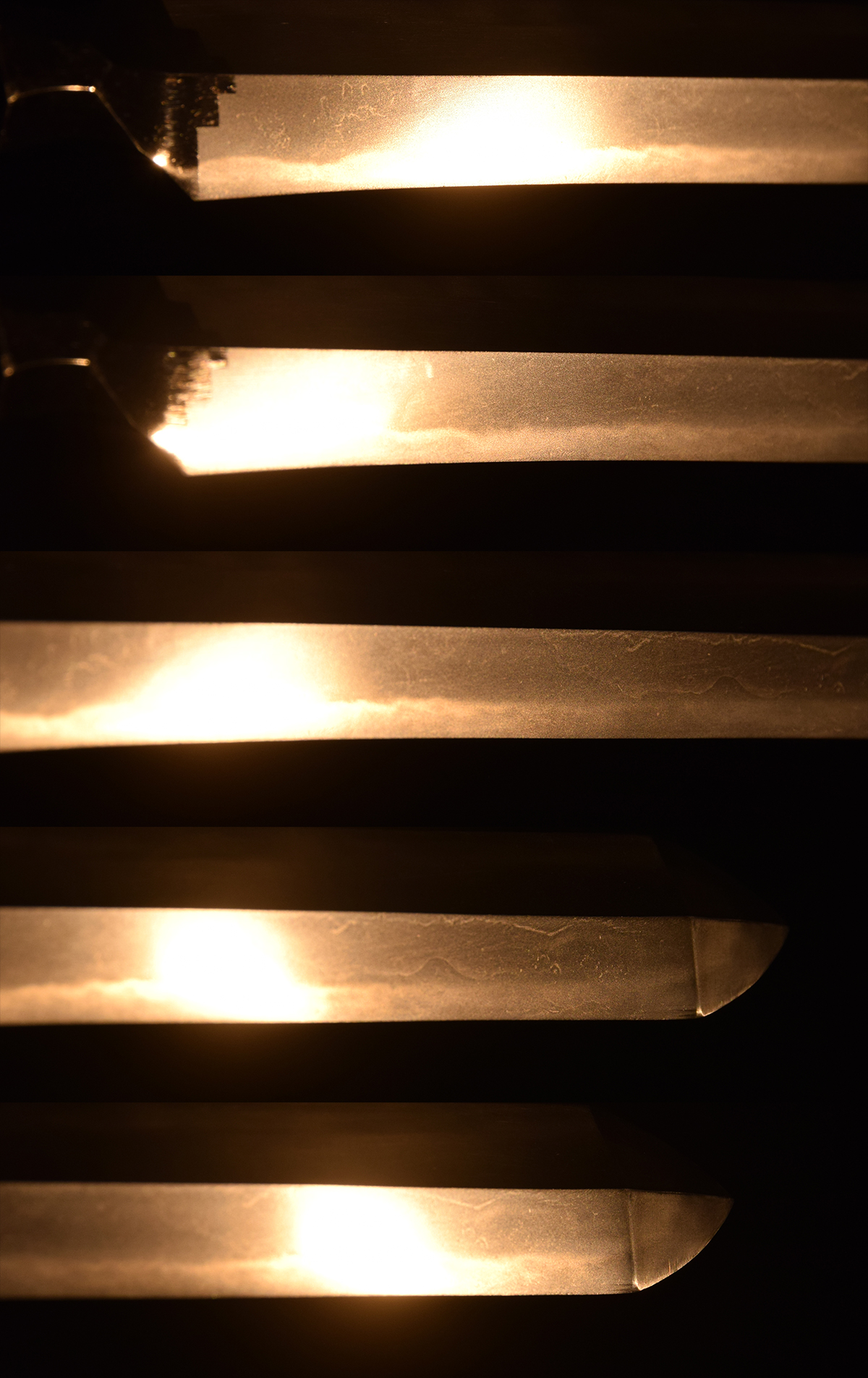
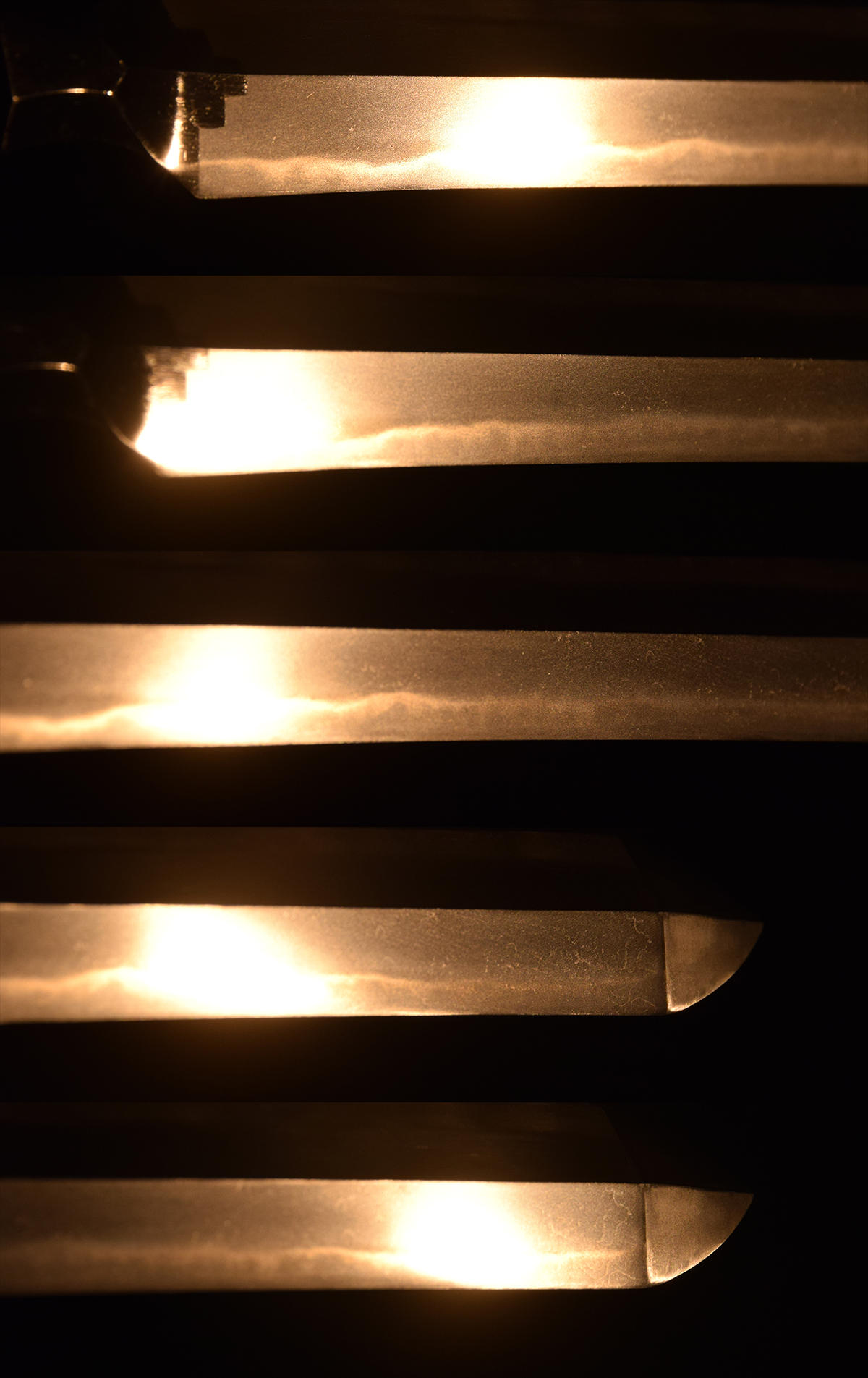
This yari is in ryo-shinogi-zukuri and the tip presents a severe ken-gyo shape with a defined yokote, with a wide mihaba and thick kasane, being robust. On a jigane of ko-itame kitae, it is tempered in a nie-deki suguha truly typical of Azae Mizuta, mixed with ko-notare in places, with frequent ashi entering the hachu, and the boshi is sugu with a saki-maru kaeri.
Machine translation from the shop's Japanese · may contain errors ·
The Bicchu no Kuni Mizuta school was active with the descendants of Ko-Aoe Tametsugu centered in Mizuta Village, Aga District (present-day Maniwa City, Okayama Prefecture), as well as Ebara Village in Shitsuki District and Matsuyama Village in Azae District, in response to the demands of the powerful Mimura clan and Sengoku period military commanders such as the Mori and Ukita.
Thereafter, from the end of the Sengoku period to the Genroku era, the school flourished, producing over 60 smiths in Edo, Osaka, and other locations, and among the lineage, figures such as Ikeda Kishinmaru Kunishige are also famous.
In the home province of Bicchu, there were two branches: the Kunishige lineage representing the Otsuki school, and the Tameie lineage who were the heads of the Kono school; because Tameie established his base in Azae, adjacent to Mizuta Village, he is called the "Shinto Shodai Tameie," and the same mei flourished for twelve generations until Meiji (the Meikan records up to the eighth generation), and they are also commonly referred to as Azae Mizuta.
The maker of this yari, Heihachi, is of the Kono clan as the meibun indicates, but unfortunately that zokumei Tameie is not found in the Meikan; however, judging from the nenkio, it is speculated that he may be a figure between the fourth and fifth generations.
The style of the Kunishige lineage is characterized by o-midare based on ara-nie and muneyaki, said to be aimed at the old masterpiece Go Yoshihiro, whereas the Tameie lineage specialized in a style reminiscent of the old masterpiece Aoe school, which is their family tradition; that style is said to feature many works with hiro-suguha mixed with notare and also having muneyaki, and as a characteristic of the nakago, while the nakago of the Kunishige lineage is an extreme katayama, the Tameie school differs in that they take a ken-gyo shape.
Those with a length exceeding 1 shaku including the kerakubi are called o-mi-yari, and this yari is also classified as an o-mi-yari.
This yari is in ryo-shinogi-zukuri and the tip presents a severe ken-gyo shape with a defined yokote, with a wide mihaba and thick kasane, being robust. On a jigane of ko-itame kitae, it is tempered in a nie-deki suguha truly typical of Azae Mizuta, mixed with ko-notare in places, with frequent ashi entering the hachu, and the boshi is sugu with a saki-maru kaeri.
Historical context
The Edo period (1615 to 1868)
›
Under the Tokugawa peace the daishō became a regulated uniform, and demand gathered in the castle towns, above all Edo itself. The craft split two ways: brilliant display work for connoisseurs, and tested blades whose cutting results were sometimes inlaid in gold.
We could not find an authenticity certificate on the seller’s listing. Japanese swords and fittings are normally papered by the NBTHK (or the NTHK). Without one, the attribution is the seller’s own assessment and has not been independently verified — treat it with caution and ask the dealer about certification before buying.
As a rule we do not accept returns, except when we have sent a different item from the one ordered or when there is a significant discrepancy between the description and the item. If you wish to return an item, please contact us within 3 days of its arrival and then send it back.


 NihontoWatch