The first generation Kunisuke was a native of Ise Kameyama, named Kobayashi Jinbei, and was a highly skilled swordsmith belonging to the Omi Ishido lineage. He studied as a pupil of Horikawa Kunihiro in his later years, and after Kunihiro's death, he further refined his skills under his senior apprentice, Echigo no Kami Kunitomo. In Kanei 2 (1625), he received the title of Kawachi no Kami and subsequently moved to Osaka. Along with Izumi no Kami Kunisada, he is considered a founder of the Osaka smiths and achieved great fame as a master craftsman. Furthermore, his sons—the eldest son Musashi no Kami Kunitsugu, the second son the second generation Kawachi no Kami Kunisuke (Nakagawachi), the third son Higo no Kami Kuniyasu, and the fourth son Ise no Kami Kuniteru—were all known as master smiths, and the school's collective strength was among the most prominent.
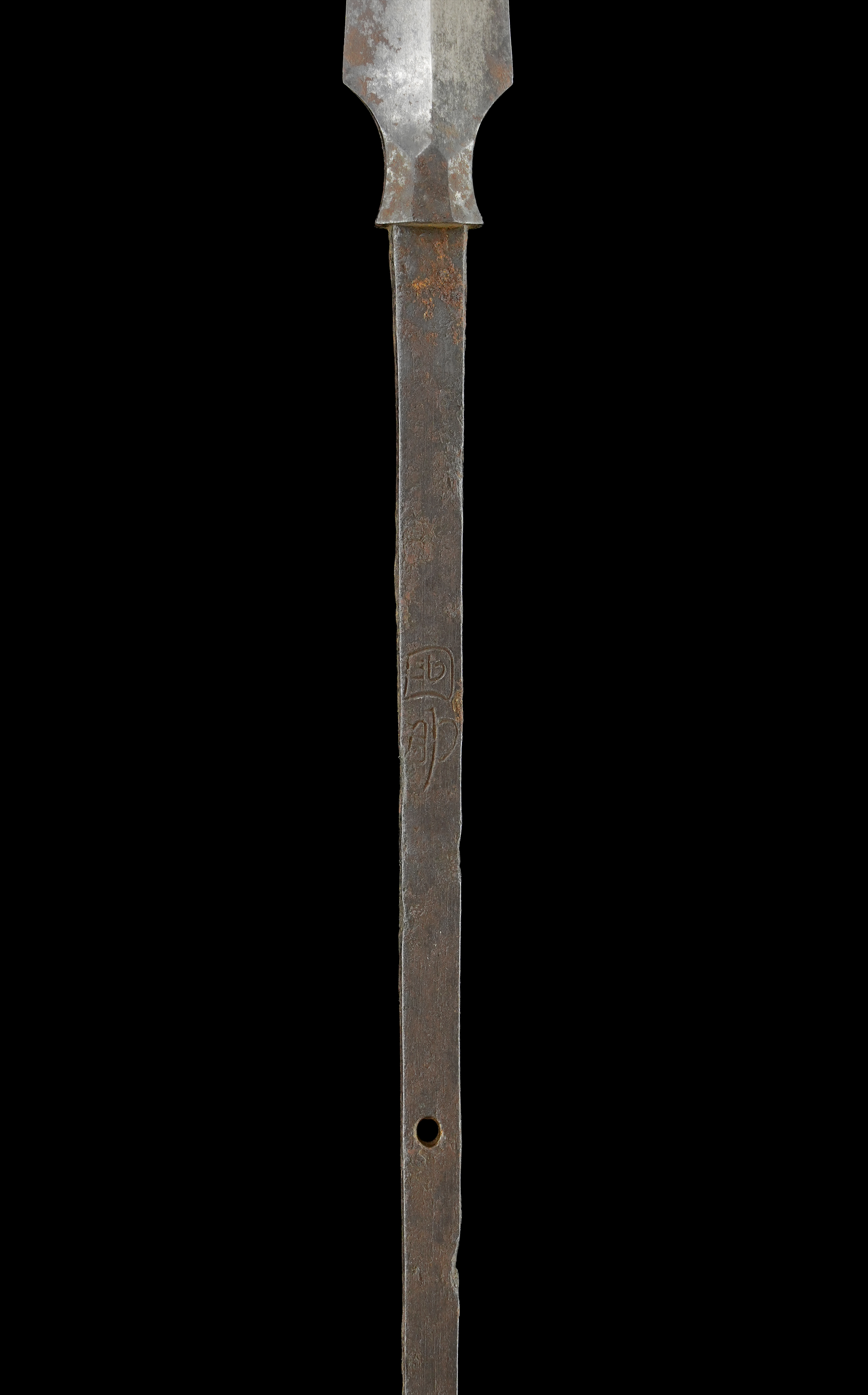
Works by the first generation Kunisuke are generally few in number, and his fine works are evaluated as having a high quality that places them at the top tier even within the Horikawa school. His mei has the characteristic of cutting "Kawachi no Kami" slightly small and "Fujiwara Kunisuke" large, and a tendency for this difference to narrow in his later years can be seen, showing the transitions of the workshop in the style of the mei.
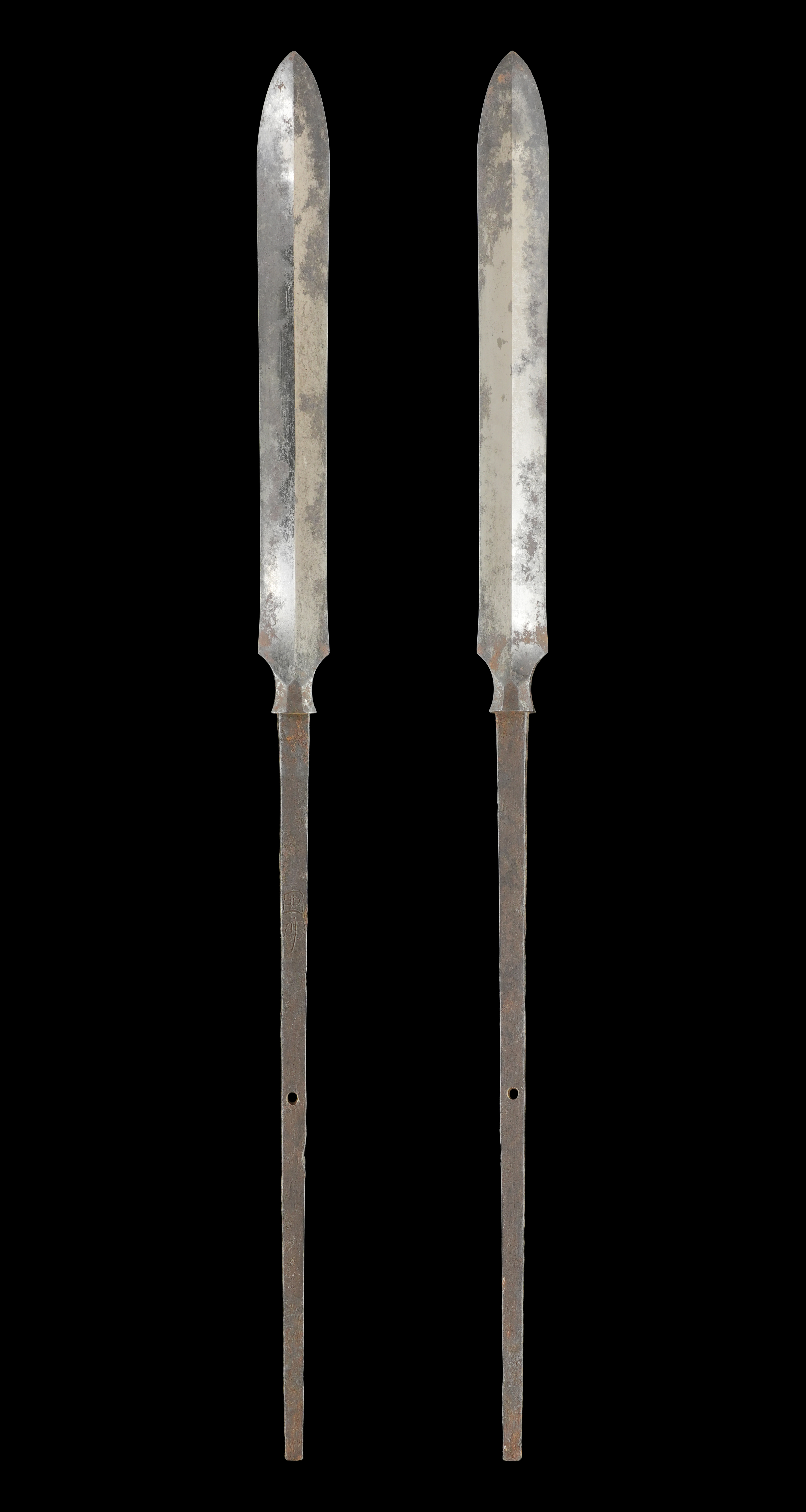
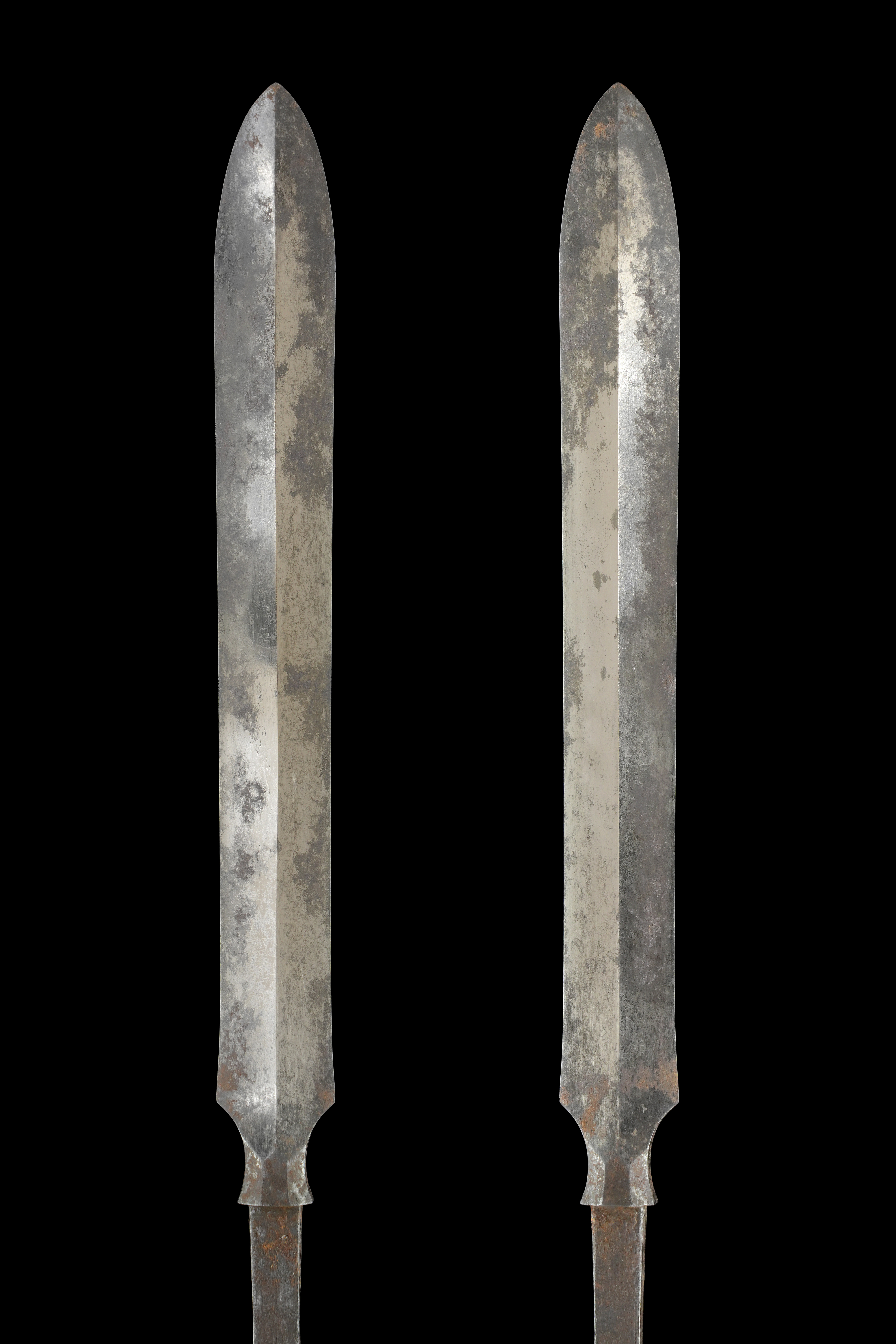
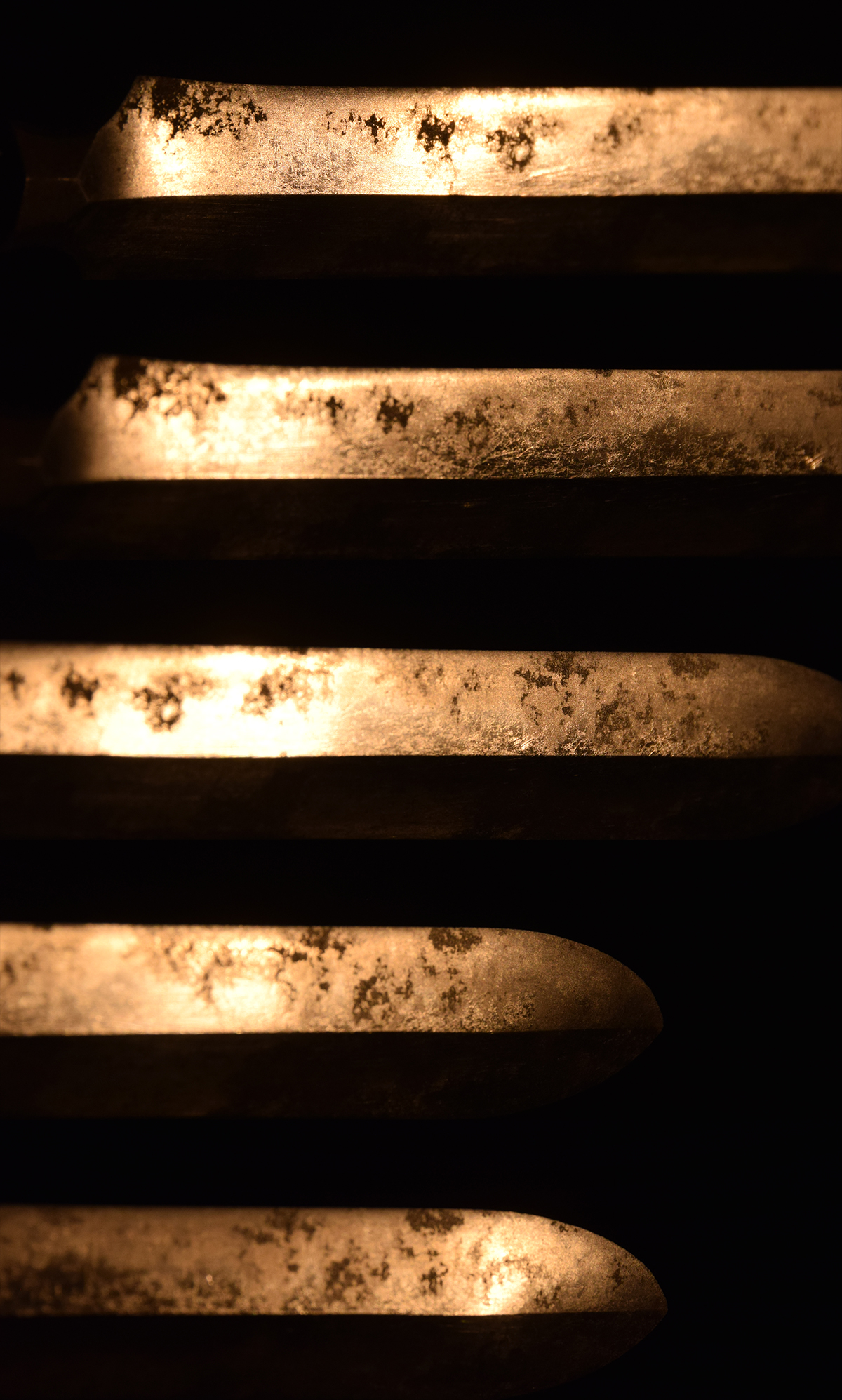
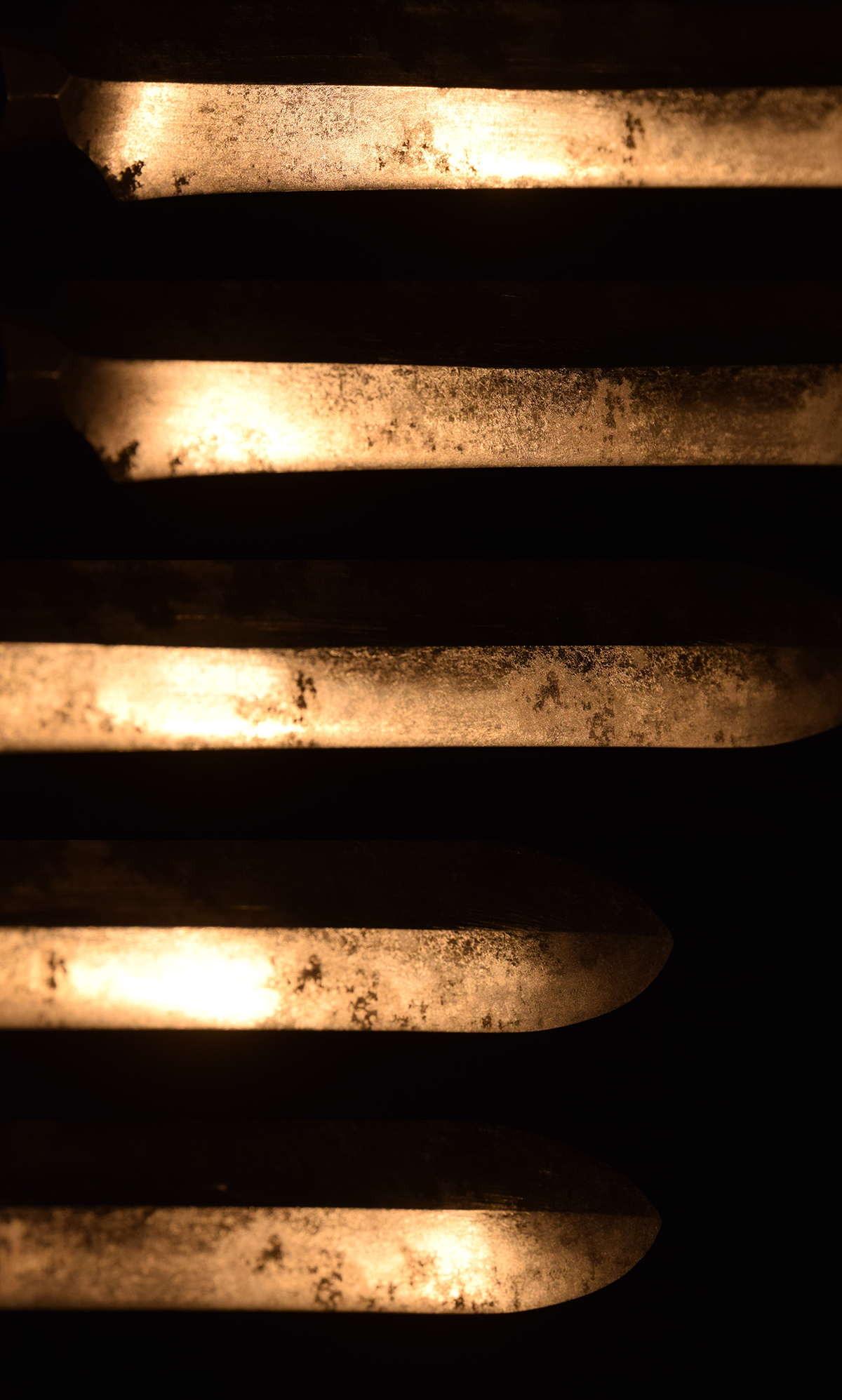
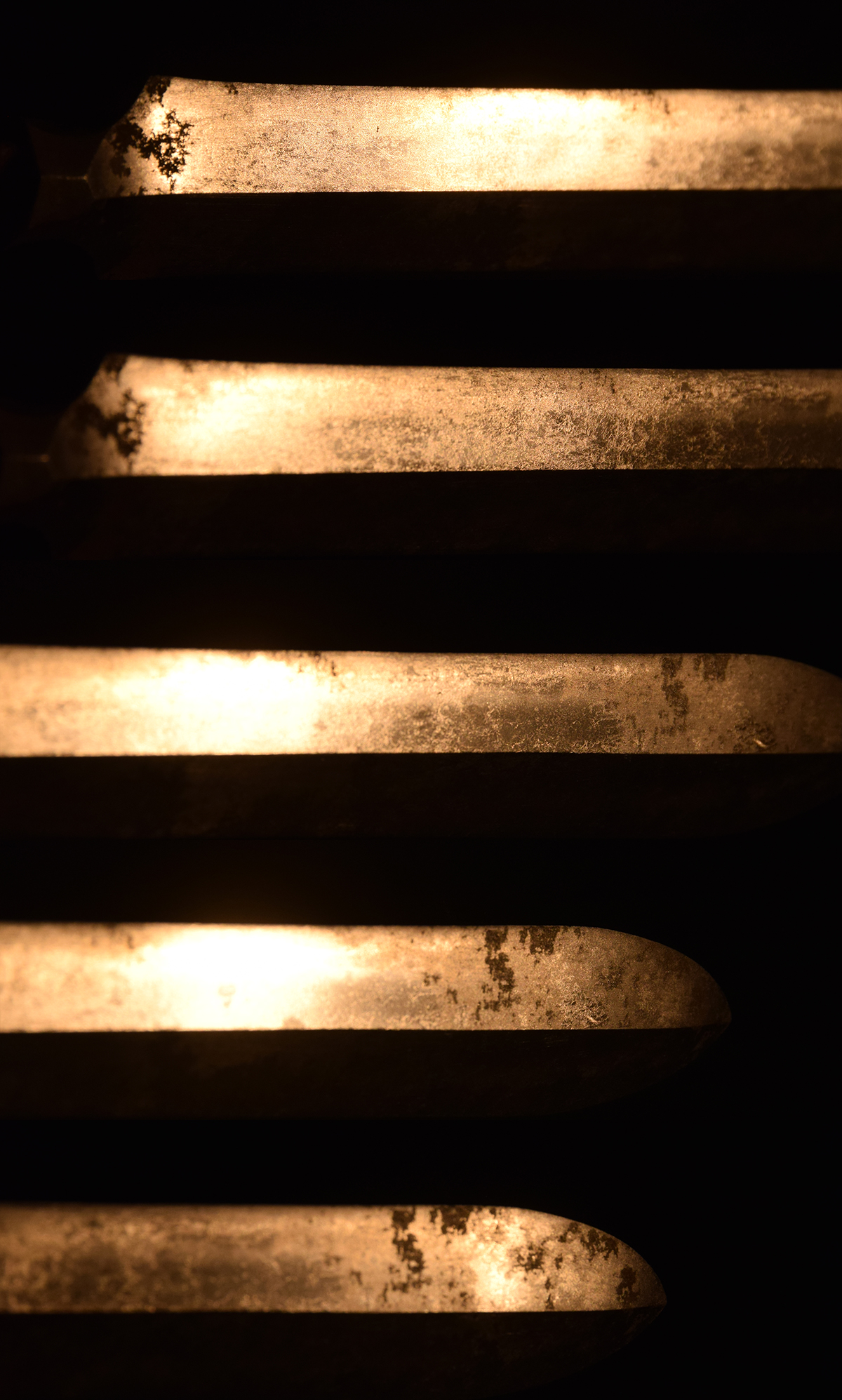
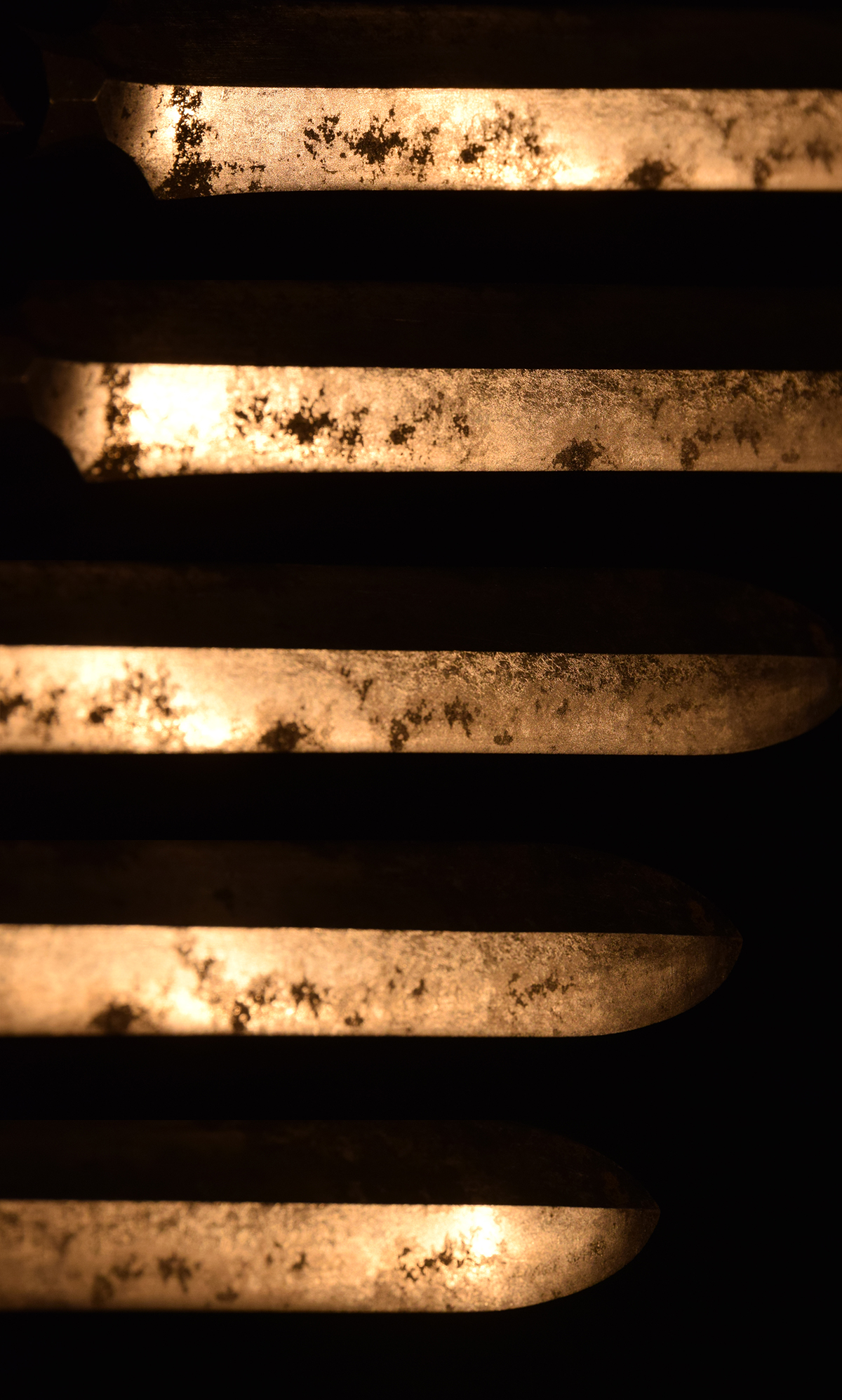
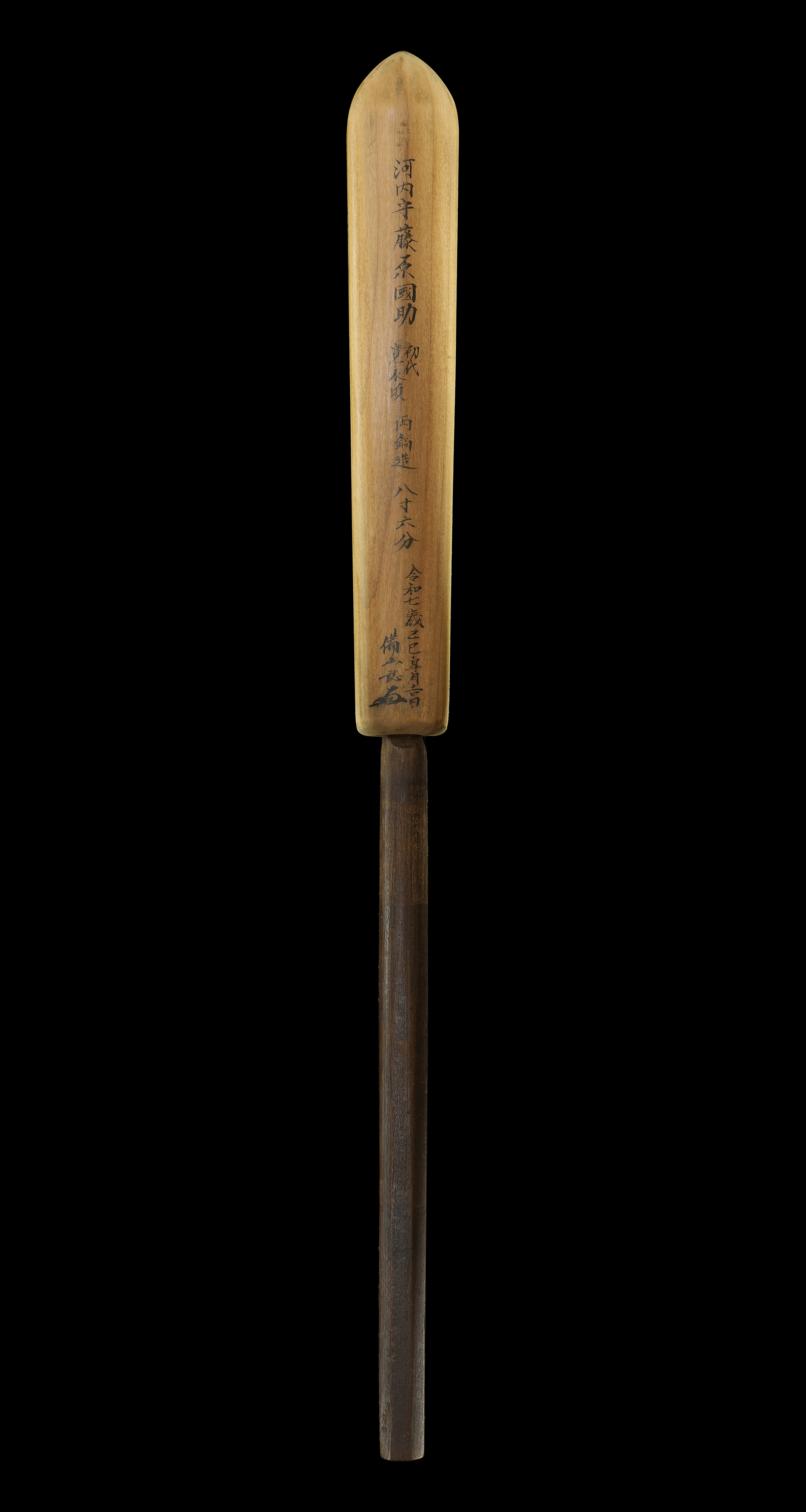
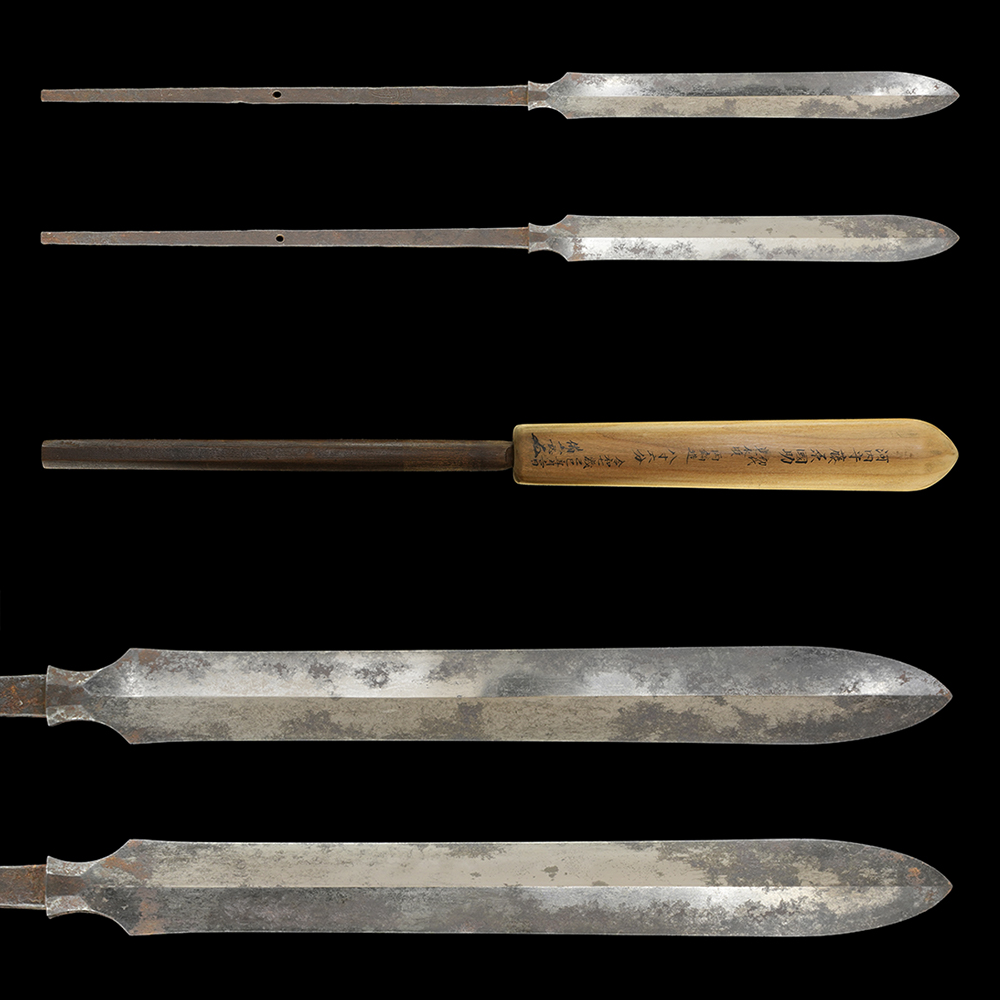
This yari is a piece that first catches the eye with its dignified sugata, featuring a ryoshino-zukuri construction with the lower part slightly narrowed and a ryugo shape. Although the details of the jiba cannot be appreciated at present due to rust, the kitae visible through it reveals a precise jigane where the ko-itame is well-kneaded and tight, with ji-nie attached, showing extremely beautiful quality. The hamon is a suguha style with a wide yakihaba, showing variations in the nioiguchi, allowing one to feel the elegant hataraki within the刃 characteristic of the Kunisuke school.
This yari is a piece whose original beauty will be splendidly revived by applying appropriate polishing, and it is a blade whose value, worthy of bearing the name of the first generation Kunisuke, can be further enhanced by your hands.
Machine translation from the shop's Japanese · may contain errors ·
The first generation Kunisuke was a native of Ise Kameyama, named Kobayashi Jinbei, and was a highly skilled swordsmith belonging to the Omi Ishido lineage. He studied as a pupil of Horikawa Kunihiro in his later years, and after Kunihiro's death, he further refined his skills under his senior apprentice, Echigo no Kami Kunitomo. In Kanei 2 (1625), he received the title of Kawachi no Kami and subsequently moved to Osaka. Along with Izumi no Kami Kunisada, he is considered a founder of the Osaka smiths and achieved great fame as a master craftsman. Furthermore, his sons—the eldest son Musashi no Kami Kunitsugu, the second son the second generation Kawachi no Kami Kunisuke (Nakagawachi), the third son Higo no Kami Kuniyasu, and the fourth son Ise no Kami Kuniteru—were all known as master smiths, and the school's collective strength was among the most prominent.
Works by the first generation Kunisuke are generally few in number, and his fine works are evaluated as having a high quality that places them at the top tier even within the Horikawa school. His mei has the characteristic of cutting "Kawachi no Kami" slightly small and "Fujiwara Kunisuke" large, and a tendency for this difference to narrow in his later years can be seen, showing the transitions of the workshop in the style of the mei.
This yari is a piece that first catches the eye with its dignified sugata, featuring a ryoshino-zukuri construction with the lower part slightly narrowed and a ryugo shape. Although the details of the jiba cannot be appreciated at present due to rust, the kitae visible through it reveals a precise jigane where the ko-itame is well-kneaded and tight, with ji-nie attached, showing extremely beautiful quality. The hamon is a suguha style with a wide yakihaba, showing variations in the nioiguchi, allowing one to feel the elegant hataraki within the刃 characteristic of the Kunisuke school.
This yari is a piece whose original beauty will be splendidly revived by applying appropriate polishing, and it is a blade whose value, worthy of bearing the name of the first generation Kunisuke, can be further enhanced by your hands.
Historical context
The Edo period (1615 to 1868)
›
For two and a half centuries of peace the sword was the warrior’s legal badge rather than his weapon. Each great city developed its own manner, Edo’s tested strength against Ōsaka’s polished brilliance, until demand thinned in the era’s last decades.
We could not find an authenticity certificate on the seller’s listing. Japanese swords and fittings are normally papered by the NBTHK (or the NTHK). Without one, the attribution is the seller’s own assessment and has not been independently verified — treat it with caution and ask the dealer about certification before buying.
As a rule we do not accept returns, except when we have sent a different item from the one ordered or when there is a significant discrepancy between the description and the item. If you wish to return an item, please contact us within 3 days of its arrival and then send it back.

 NihontoWatch