短刀 信国
Price on request
Smith
Specifications
Nagasa
19.7 cm
Sori
0.2 cm
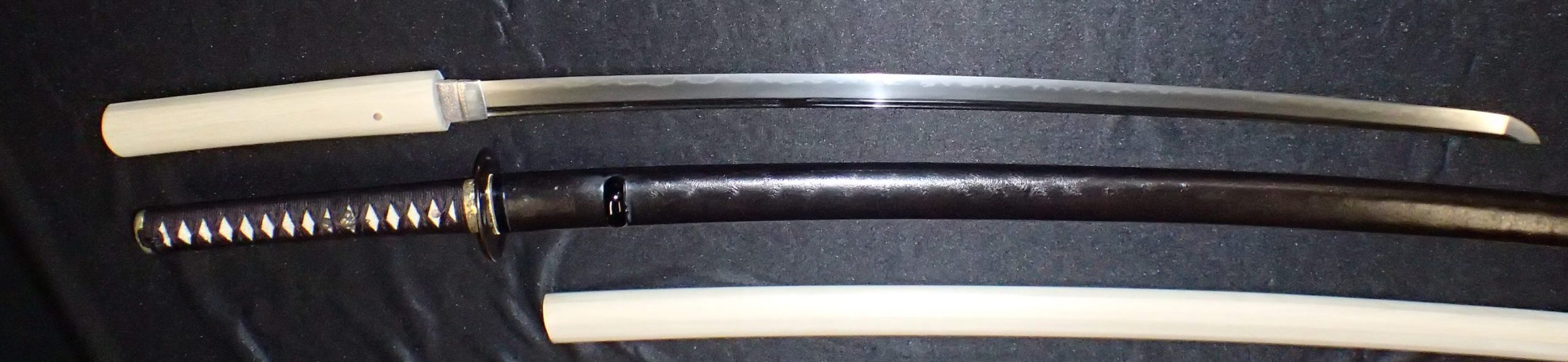
【Description】 Mei: Mumei (Den Naoe Shizu) Nagasa: 69.8 cm Sori: 1.5 cm Motohaba: 3.1 cm Sakihaba: 2.2 cm Motokasane: 0.7 cm Sakikasane: 0.5 cm Mekugi-ana: 3 Jidai: Nanbokucho Period Kuni: Mino 【Shape】 Shinogi-zukuri, Iori-mune. The mihaba is wide, the kasane is thick, and the sori is shallow. It has an O-kissaki, presenting a powerful and magnificent sugata characteristic of the Nanbokucho period. 【Jigane】 Itame-hada mixed with Mokume-hada. The hada is well-refined and visible, with abundant jinie and chikei appearing. 【Hamon】 Based on Notare mixed with Gunome. The hamon is bright and clear with deep nioiguchi. Ashi and yo enter frequently, and inside the ha, there are active sunagashi and kinsuji. 【Boshi】 Midare-komi with a sharp, long kaeri. 【Koshirae】 Uchigatana Koshirae Tsuba: Round shape, iron ground with openwork (sukashi). Fuchi-Kashira: Shakudo Nanako ground, autumn insects motif, high-relief carving (takabori) with gold iro-e. Menuki: Shakudo ground, dragon motif with gold iro-e. Tsuka: White same-gawa wrapped with black silk ito in morohineri-maki style. Saya: Black roiro-nuri (polished black lacquer). 【Explanation】 The Naoe Shizu school refers to the swordsmiths who moved from Shizu in Mino Province to Naoe (present-day Yoro District, Gifu Prefecture) following Kaneuji, one of the Masamune Jittetsu (Ten Famous Students of Masamune). This blade is mumei and has been attributed to Naoe Shizu. It features a grand sugata with an O-kissaki, and the jigane and hamon show the characteristic strength and brilliance of the Soshu-den style. The koshirae is also tastefully coordinated with high-quality shakudo fittings, making it an excellent piece for both appreciation and collection.
 NihontoWatchBETA
Price on request
19.7 cm
0.2 cm
【Description】 Mei: Mumei (Den Naoe Shizu) Nagasa: 69.8 cm Sori: 1.5 cm Motohaba: 3.1 cm Sakihaba: 2.2 cm Motokasane: 0.7 cm Sakikasane: 0.5 cm Mekugi-ana: 3 Jidai: Nanbokucho Period Kuni: Mino 【Shape】 Shinogi-zukuri, Iori-mune. The mihaba is wide, the kasane is thick, and the sori is shallow. It has an O-kissaki, presenting a powerful and magnificent sugata characteristic of the Nanbokucho period. 【Jigane】 Itame-hada mixed with Mokume-hada. The hada is well-refined and visible, with abundant jinie and chikei appearing. 【Hamon】 Based on Notare mixed with Gunome. The hamon is bright and clear with deep nioiguchi. Ashi and yo enter frequently, and inside the ha, there are active sunagashi and kinsuji. 【Boshi】 Midare-komi with a sharp, long kaeri. 【Koshirae】 Uchigatana Koshirae Tsuba: Round shape, iron ground with openwork (sukashi). Fuchi-Kashira: Shakudo Nanako ground, autumn insects motif, high-relief carving (takabori) with gold iro-e. Menuki: Shakudo ground, dragon motif with gold iro-e. Tsuka: White same-gawa wrapped with black silk ito in morohineri-maki style. Saya: Black roiro-nuri (polished black lacquer). 【Explanation】 The Naoe Shizu school refers to the swordsmiths who moved from Shizu in Mino Province to Naoe (present-day Yoro District, Gifu Prefecture) following Kaneuji, one of the Masamune Jittetsu (Ten Famous Students of Masamune). This blade is mumei and has been attributed to Naoe Shizu. It features a grand sugata with an O-kissaki, and the jigane and hamon show the characteristic strength and brilliance of the Soshu-den style. The koshirae is also tastefully coordinated with high-quality shakudo fittings, making it an excellent piece for both appreciation and collection.
NihontoWatchBETAPrice on request
19.7 cm
0.2 cm