Edo was the sword’s age of connoisseurship: the Hon’ami appraisers, the shogunal register of famous blades of 1719, and a thriving literature turned the sword into an object of study even as it ceased to be drawn in war.
 NihontoWatchNihontoWatch
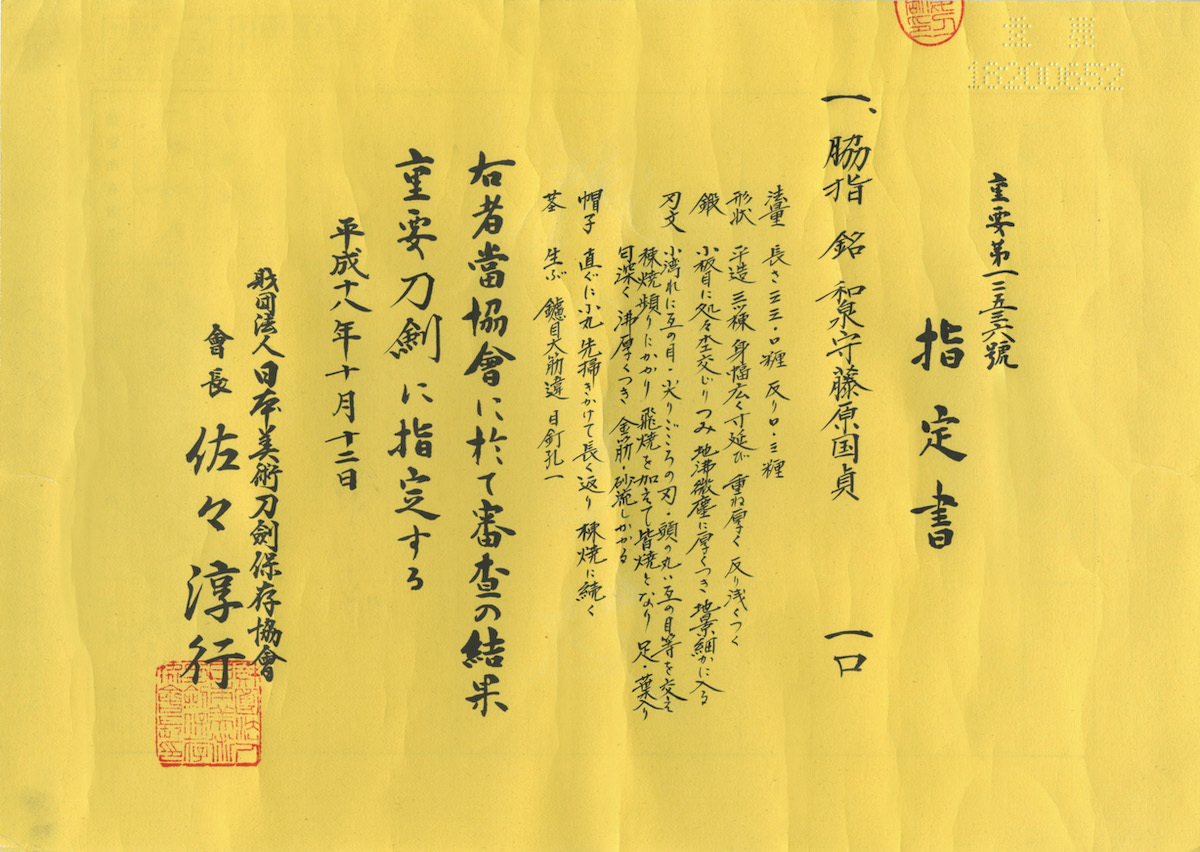
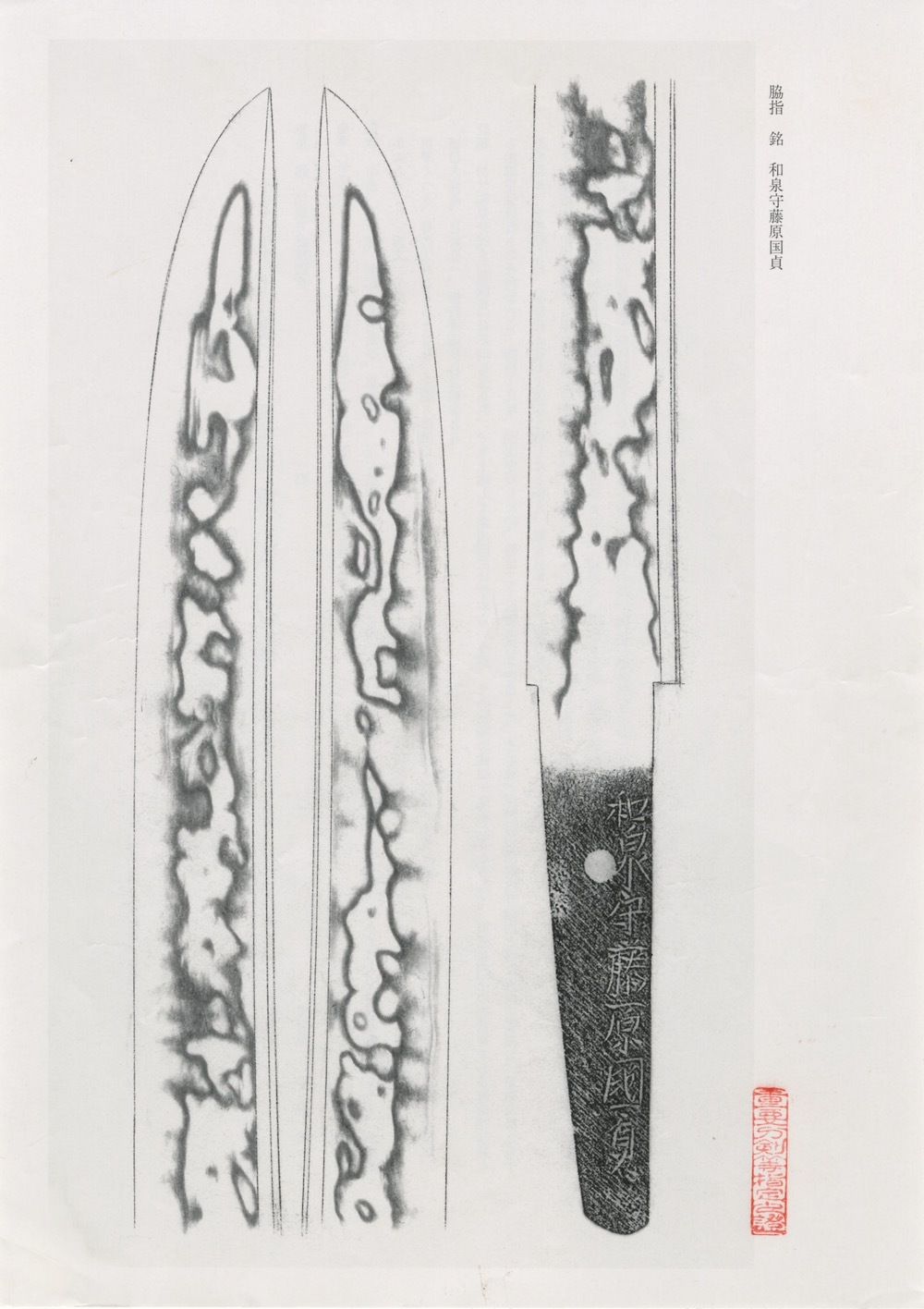
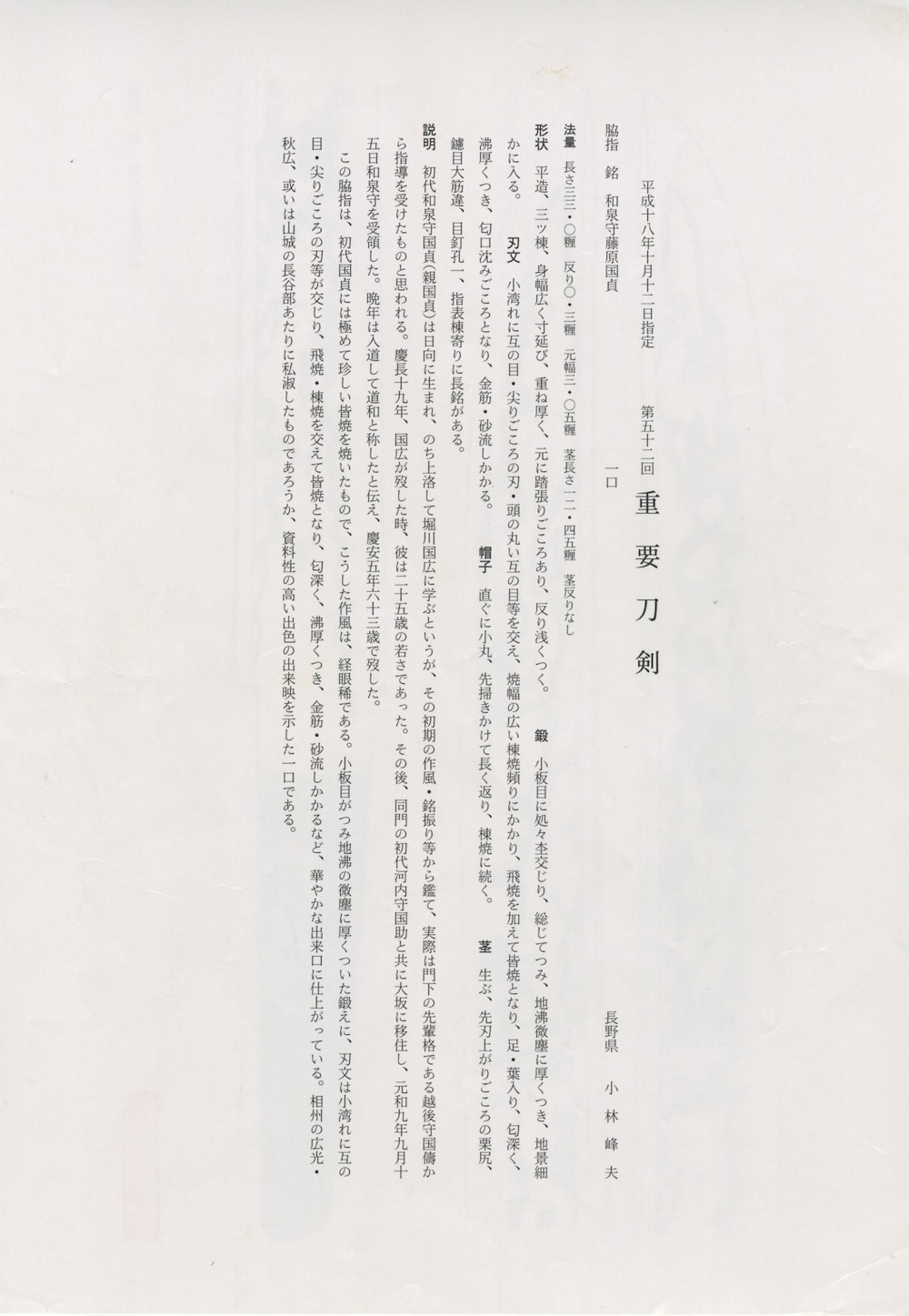
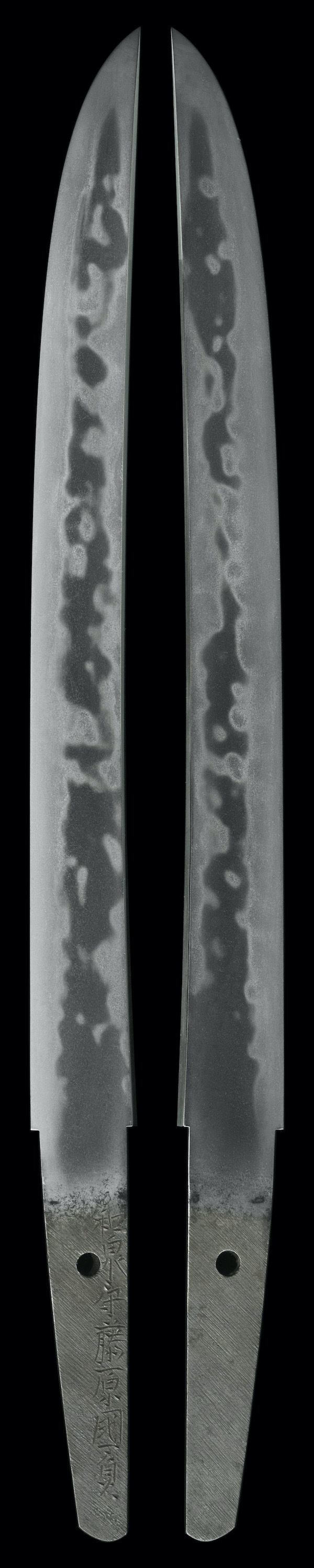
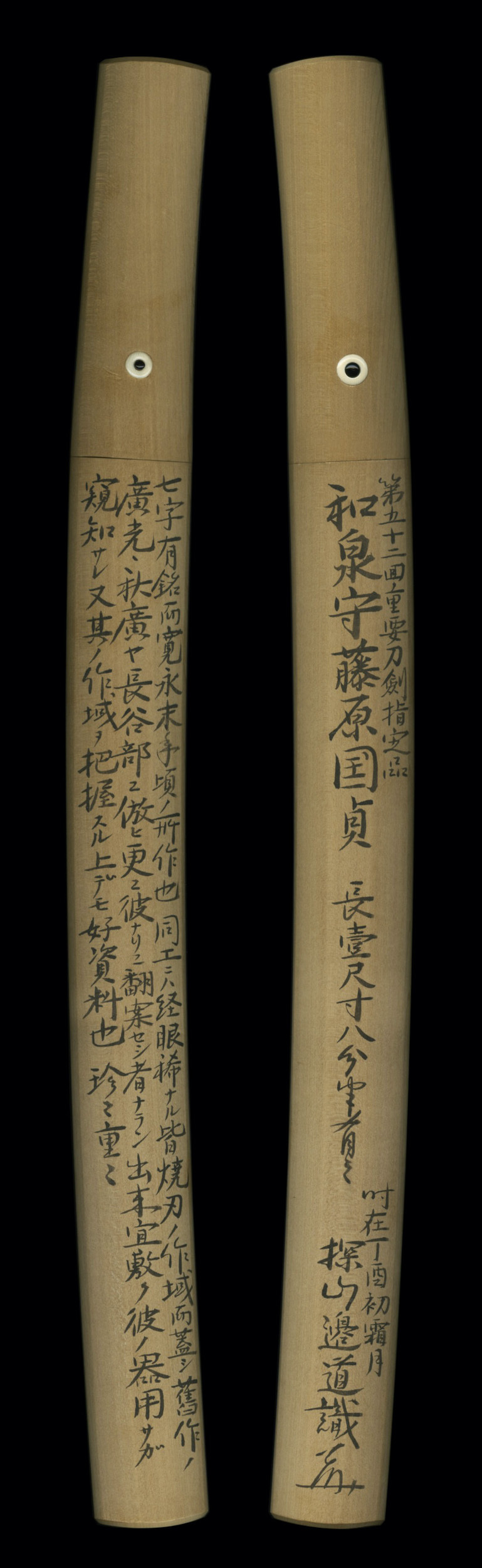
重要刀剣『和泉守藤原国貞』 刀剣種別 『脇指(寸伸び短刀)』 『Wakizashi(Tanto)』 銘『和泉守藤原国貞』 『Izuminkoami fujiwara KUNISADA』 日本刀 鑑定書『日本美術刀剣保存協会 重要 刀剣』 NBTHK 『Juyo Paper』 時代『寛永頃』 Production age 『AD1624』 初代和泉守国貞(親国貞)は日向に生まれ、にち上洛して堀川国広に学ぶというが、その初期の作風・銘振り等から鑑みて、実際は門下の先輩格である越後守国儔から指導を受けたものと思われる。慶長十九年、国広が歿した時、彼は二十五歳の若さであった。その後、同門の初代河内守国助と共に大阪に移住し、元和九年九月十五日泉野守を受領した。晩年は入道して道和と称したと伝え、慶安五年六十三歳で歿した。 この脇指は、初代国貞には極めて珍しい皆焼を焼いたもので、こうした作風は、経眼稀である。小板目が詰み地沸の微塵に厚くついた鍛えに、刃文は小湾れに互の目・尖りごころの刃等が交じり、皆焼・棟焼を交えて皆焼となり、匂深く、沸厚くつき、金筋・砂流しかかるなど、華やかな出来口に仕上がっている。相州の広光・秋広、或いは山城の長谷部あたりに私淑したものであろうか、資料性の高い出色の出来映えを示した見事な一口である。 『形状』平造、三ツ棟、身幅広く寸延び、重ね厚く、元に踏張りごころあり、反り浅くつく。 『鍛』小板目に所々杢交じり、総じてつみ、地沸微塵に厚くつき、地景細かに入りる。 『刃文』小湾れに互の目・尖りごころの刃・頭の丸い互の目等を交え、焼幅の広い棟焼頻りにかかり、飛焼を加えて皆焼となり、足・葉入り、匂深く、沸厚くつき、匂口沈みごころとなり、金筋・砂流しかかる 『帽子』直ぐに小丸、先掃掛けて長く反り、棟焼に続く。 『茎』生ぶ、先刃上がりの栗尻、鑢目大筋違、目釘孔一、指表棟寄りに長銘あり。 『附』白鞘 『寸法(Size)』 長さ(Blade length)33cm、反り(Sori)0.3cm、 元幅(Width of moto)3.05cm、 元重(Thickness of moto)0.75cm
初代和泉守国貞(親国貞)は日向に生まれ、のち上洛して堀川国広に学ぶというが、その初期の作風・銘振り等から鑑て、実際は門下の先輩格である越後守国儔から指導を受けたものと思われる。慶長十九年、国広が歿した時、彼は二十五歳の若さであった。その後、同門の初代河内守国助と共に大坂に移住し、元和九年九月十五日和泉守を受領した。晩年は入道して道和と称したと伝え、慶安五年六十三歳で歿した。 この脇指は、初代国貞には極めて珍しい皆焼を焼いたもので、こうした作風は、経眼稀である。小板目がつみ地沸の微塵に厚くついた鍛えに、刃文は小湾れに互の目・尖りごころの刃等が交じり、飛焼・棟焼を交えて皆焼となり、匂深く、沸厚くつき、金筋・砂流しかかるなど、華やかな出来口に仕上がっている。相州の広光・秋広、或いは山城の長谷部あたりに私淑したものであろうか、資料性の高い出色の出来映を示した一口である。
NihontoWatchOffered by Taiseido
This piece has sold




The Edo period (1615 to 1868)
Edo was the sword’s age of connoisseurship: the Hon’ami appraisers, the shogunal register of famous blades of 1719, and a thriving literature turned the sword into an object of study even as it ceased to be drawn in war.
A blade of top-grade workmanship and condition, formally judged to rank with a nationally recognized Important Art Object (Jūyō Bijutsuhin). Awarded only at the NBTHK’s competitive annual examination.
Of Japan’s roughly 2.5 million registered swords, only 12,348 (about 1 in 202) have ever attained Jūyō.
The NBTHK (Nihon Bijutsu Tōken Hozon Kyōkai, the Society for the Preservation of Japanese Art Swords) is a public-interest incorporated foundation founded in 1948 and supervised by Japan’s Agency for Cultural Affairs (Bunkachō); it is based at the Japanese Sword Museum in Tokyo. Its expert panels physically examine each submitted work (shinsa) and issue a certificate (kanteishō) ranking it by artistic and historical merit. NBTHK papers are the most widely recognized standard of authentication for Japanese swords and fittings.
NBTHK official siteWhen the item reaches you, please check immediately for damage and that it matches your order. We bear the shipping cost for a return; please send it freight-collect. Costs other than the item price cannot be refunded.